Mexico City

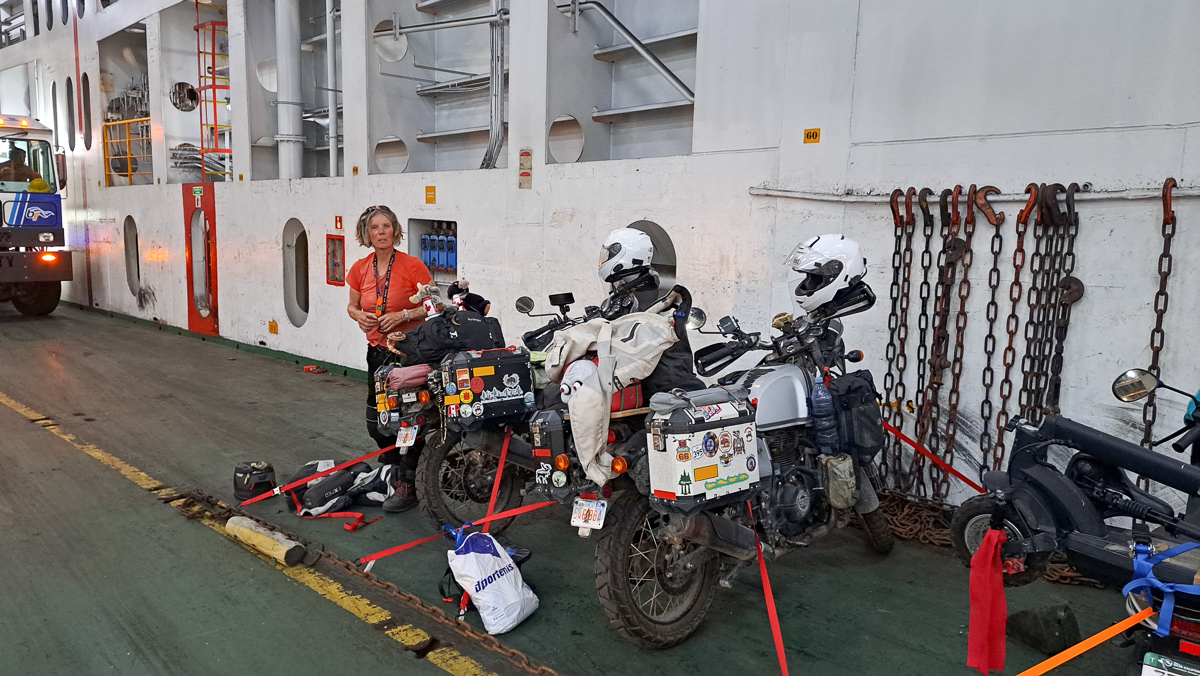
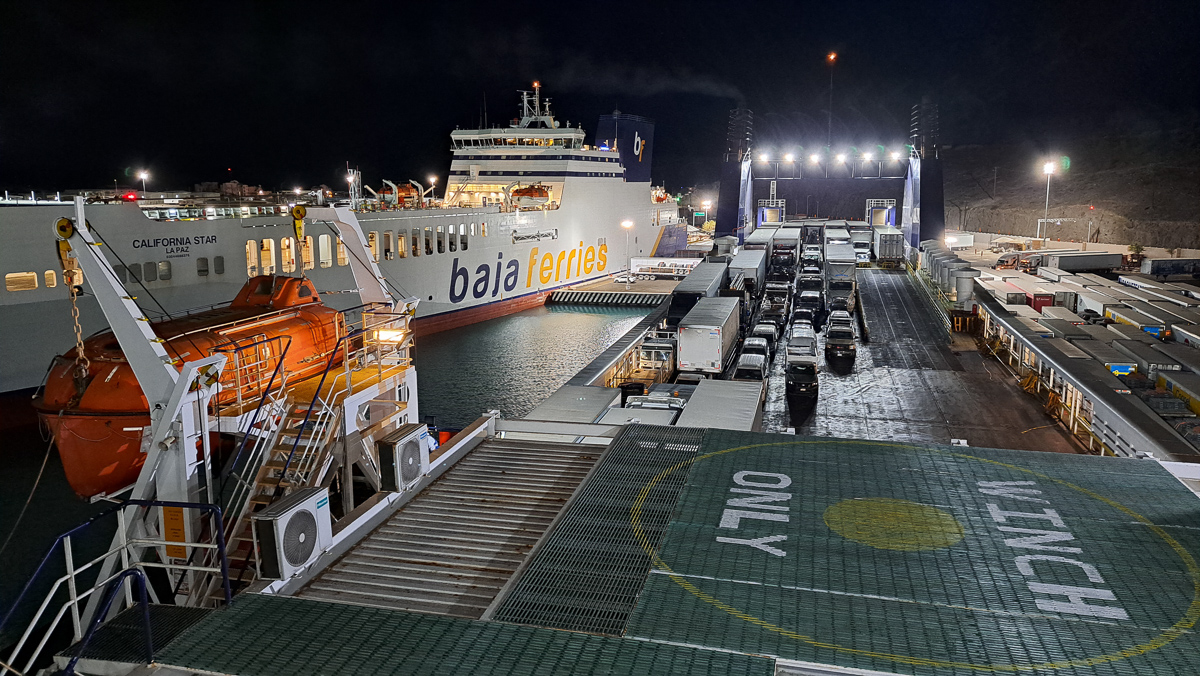
From La Paz, on the end of the Baja California peninsula, we were heading for Mexico City (CDMX), because Clare unfortunately had to return to the UK for a week, on family business. We’d normally avoid such a big city, but it offers direct flights to London, and a couple of young Aussies we’d met in California said it was great fun. ‘Not to be missed!’ So, there we go. The ride started with an overnight ferry from La Paz to Mazatlán on the mainland. It was ok, but “bring your own tiedown straps” was a PITA. However – Be Prepared – we now have them for our next ferry crossing.
We took a pretty direct route from the Mazatlán ferry dock towards CDMX. UK FCDO recommended against going into some areas on the way, because of the threat of violent crime, which in turn meant our travel insurance would probably be null-in-void, even if a problem wasn’t crime related. Thankfully the toll roads are considered safe. We took them. They did indeed feel safe but stunningly boring. They’re big modern roads. The traffic is light, largely trucks – time is money – but Mexican trucks are rarely fast. Our Himalayans gleefully overtook them. Moto tolls seem modest until at the end of the day we realised we’d spent twice as much on tolls as fuel (fuel being roughly £1/litre). Ouch! Once in a FCDO “safe” area we took the normal roads as Mexican towns and villages are often vibrant and lively but the famous topes (speed bumps) and potholes need constant attention.

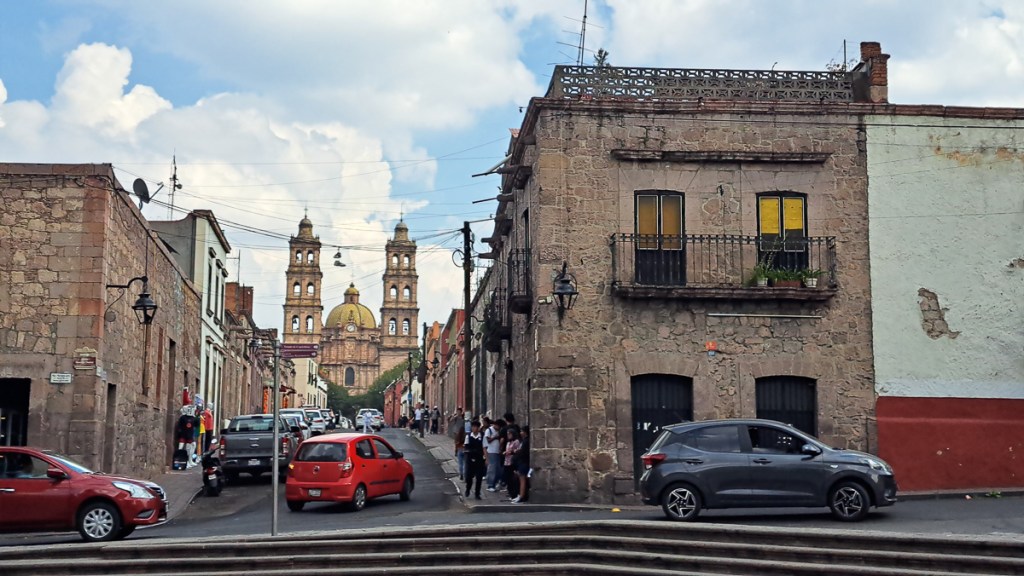
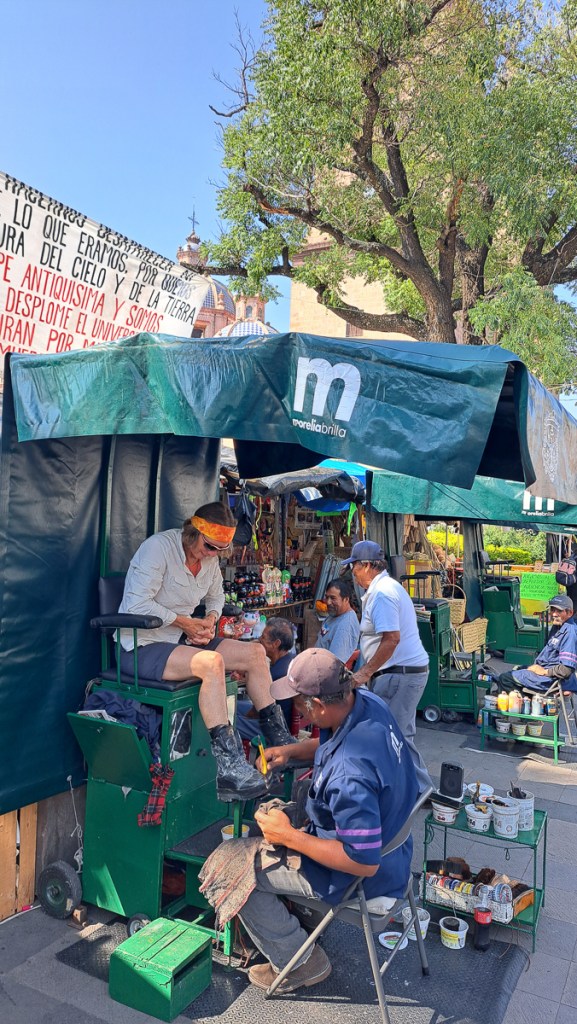
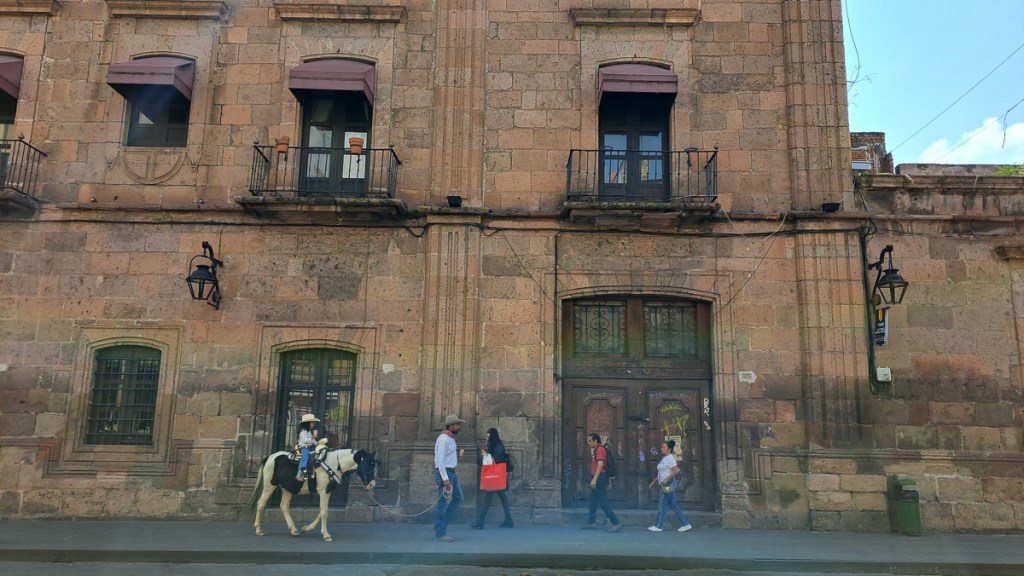
We did it in four days: Day 1 ended in Tequila (yes, it is! No, we didn’t), the local hills blue with the agave farms. Day 2 ended in Morelia. Not internationally prominent, but a lovely old centre to this provincial capital, so we spent day 3 there too.
Finally, on day 4, getting into CDMX was tedious, especially as we forgot to allow the satnav to use motorways. We wound our way round back streets in a very tedious fashion. CDMX is one of the worlds big cities – over 9 million people in the city itself, 23 million in the conurbation. But we got to our very nice CDMX apartment around sunset.

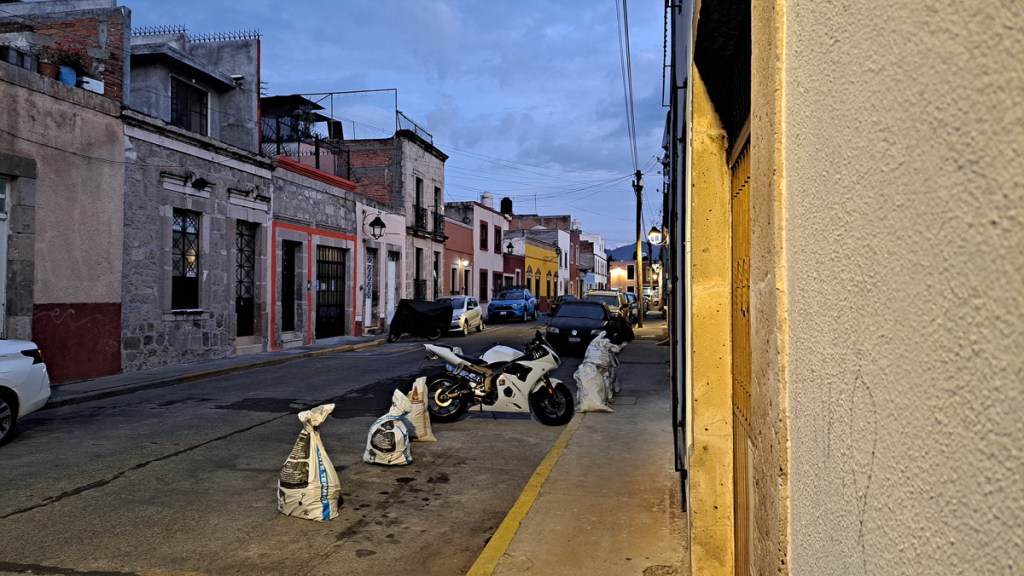
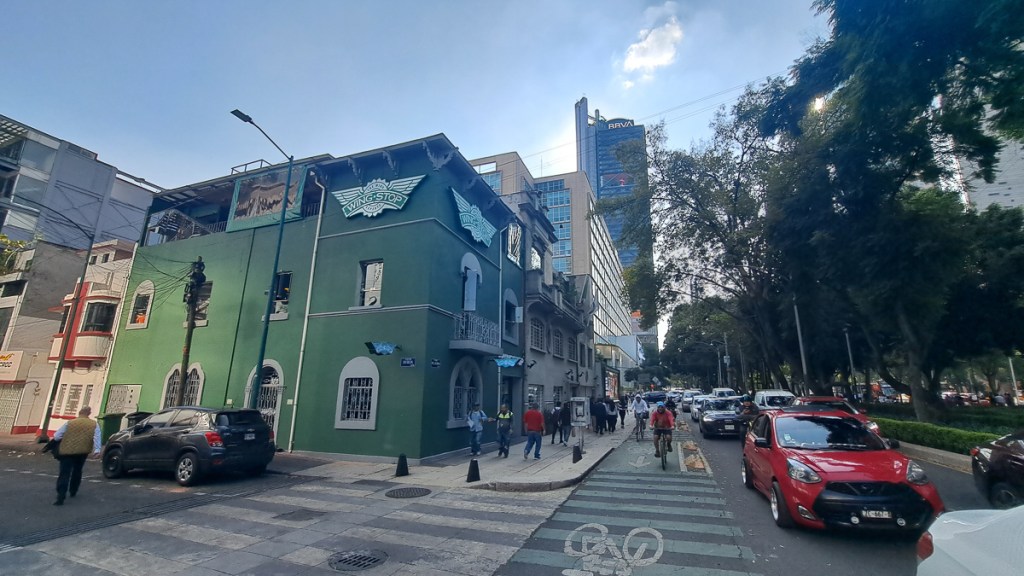
Our rather smart (think yuppie) accommodation in a block with 24 hour concierge and gated car park was in a modest neighbourhood. Busy, often tatty or improvised little shops and street food, lined these streets together with moto wrecks. But it really buzzed, enterprise was everywhere, broom laden folks kept it clean, the streets throbbed with traders.

It was a short walk to the supermarket, motorcycle workshops, and other useful things. I even availed myself of the local scrap metal merchant to replace a missing pull-up bar in the apartment (supplied & cut to length for $1). A longer stroll would get us to the Royal Enfield dealer, in the lower floors of a smart retail development – they even had one of those destination cafes, although perhaps wisely, it was associated with Ducati and Piaggio, not RE (but Chai would be nice!)). Naturally the city centre tended towards the posher end of things, but most places didn’t feel exclusive.

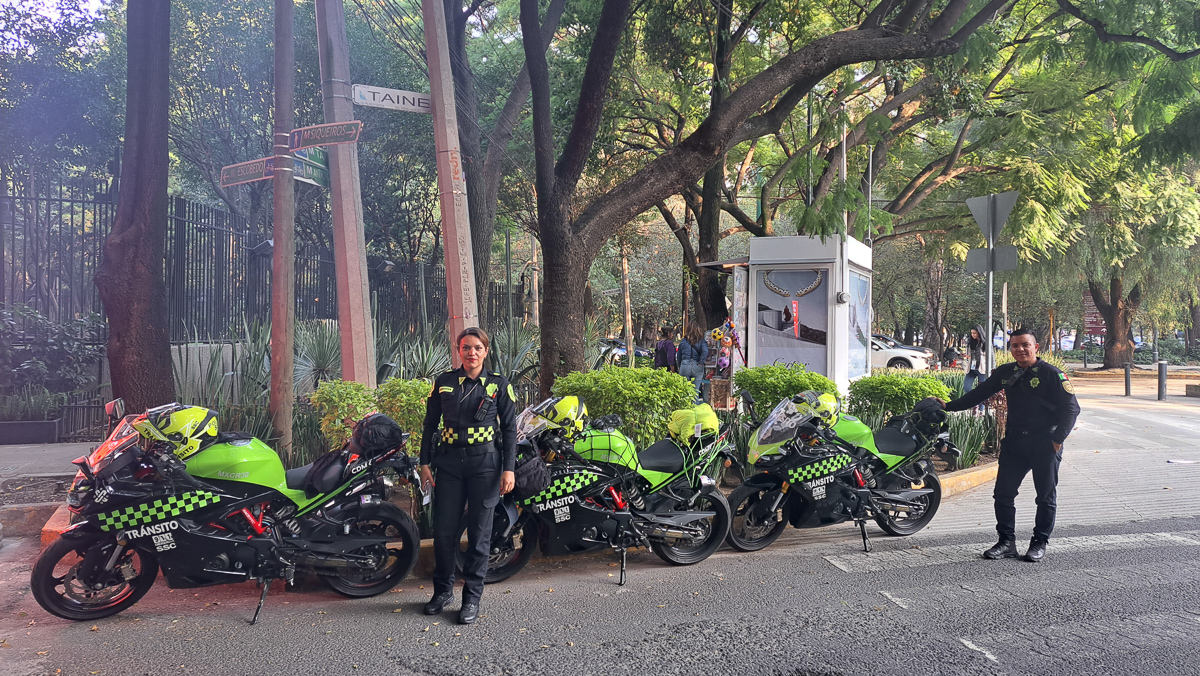
The city quickly grew on us. As our walks grew in length we started using the very diverse public transport. CDMX must have some rough areas, and times, but everywhere we went was busy and felt safe. CDMX is also crawling with diverse police forces, and when I went into a big car/moto parts place to buy some lamps, I couldn’t help noticing the security guard toted a shotgun – it was nearly as long as she was tall. Establishments of any size have security, although usually not so heavily armed.

At the end of our street, a single railway line ran diagonally across the grid of streets. I only ever saw one train on these tracks – a big loco very slowly pushed a few big hopper waggons. On the front of the first waggon, three workers perched, whistling and hollering to anyone who might be in the way. They not only at the diagonal junctions, but also along the track, as the railway’s spare space to the sides had recently been made a “parque linea”, with a pavement one side, and a cycle track the other. I found it a great route to go for a morning run, flat, easy to follow and not too busy. Turn at the Soumaya art museum for 5Km run, or Temple Wok for 8km. It took some acclimatisation though: CDMX is at 2,200 metres. If I connect the diagnostics to the bike, air pressure is reported as 11psi (sea level is nominally 15psi, although the air filter reduces it to 14.5). So it felt like hard work. I didn’t much trouble the numerous outdoor gym installations. And the hopper waggons? They were heading for the giant Corona Cervecaria’s gates. Must be barley, or collecting the spent grain.

La Dia de los Muertos

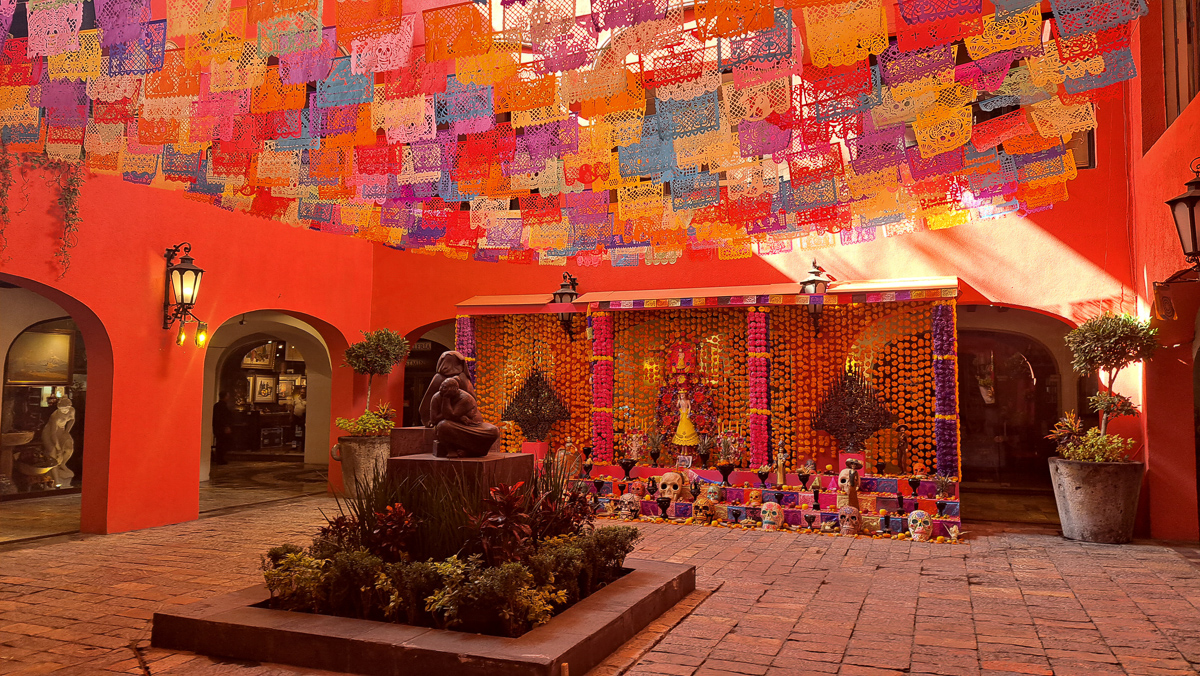
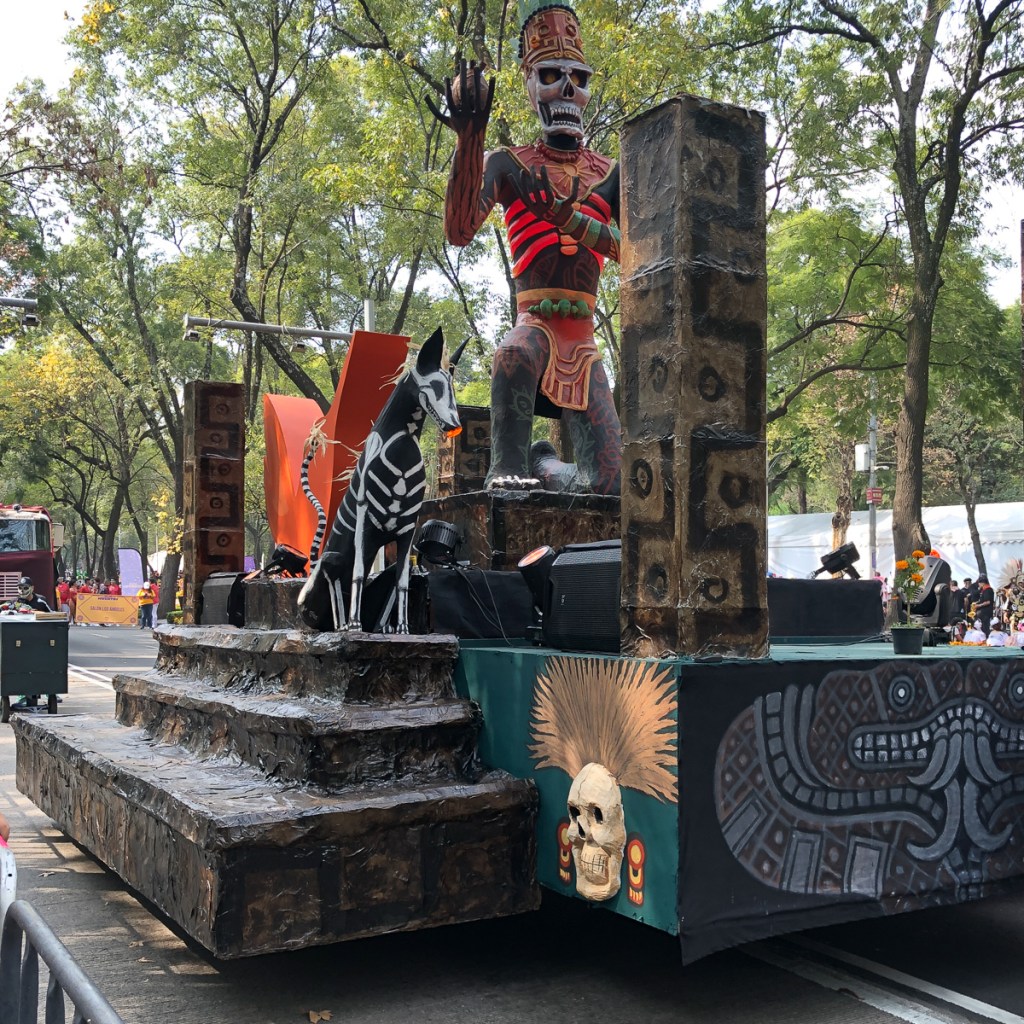
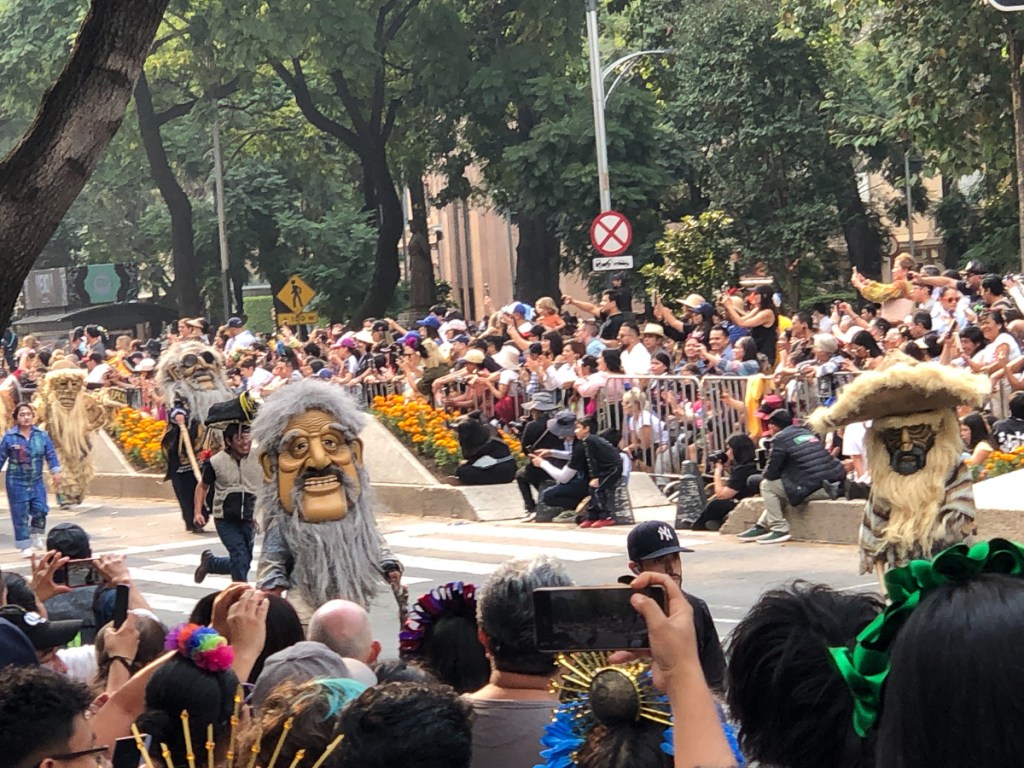
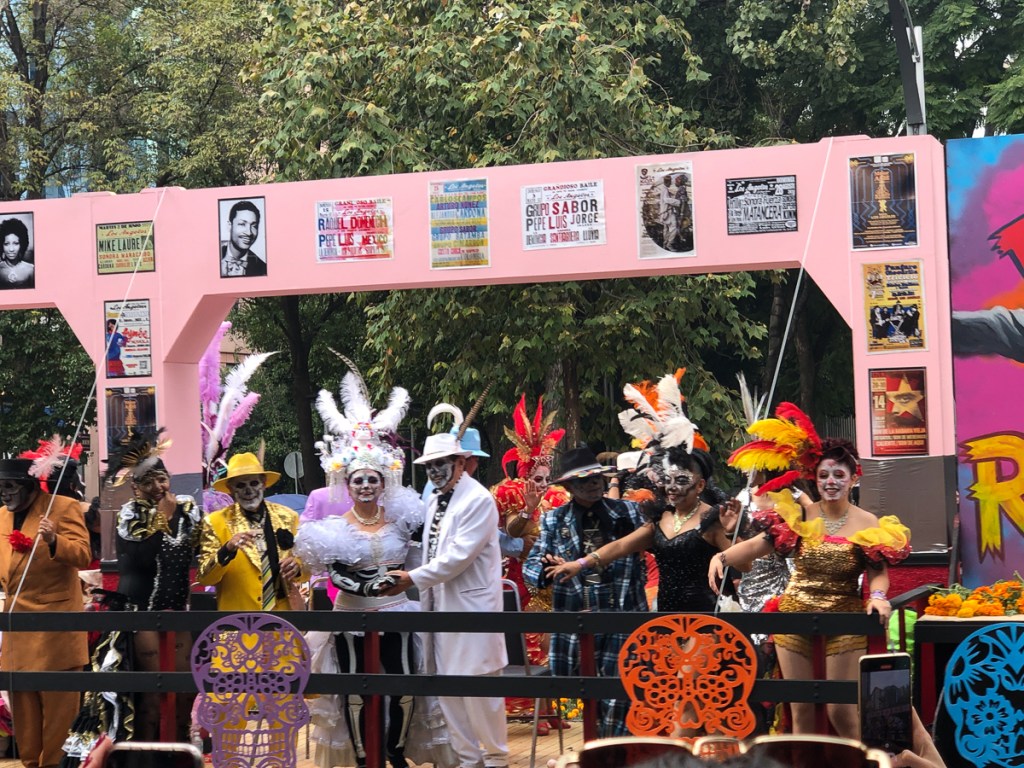
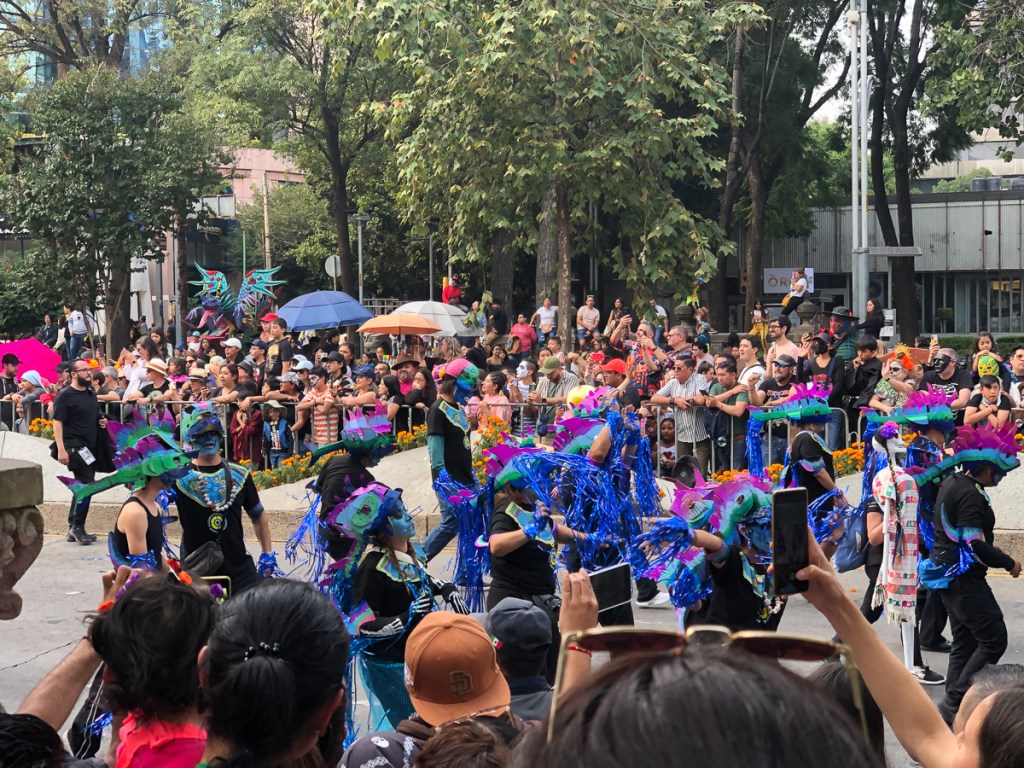
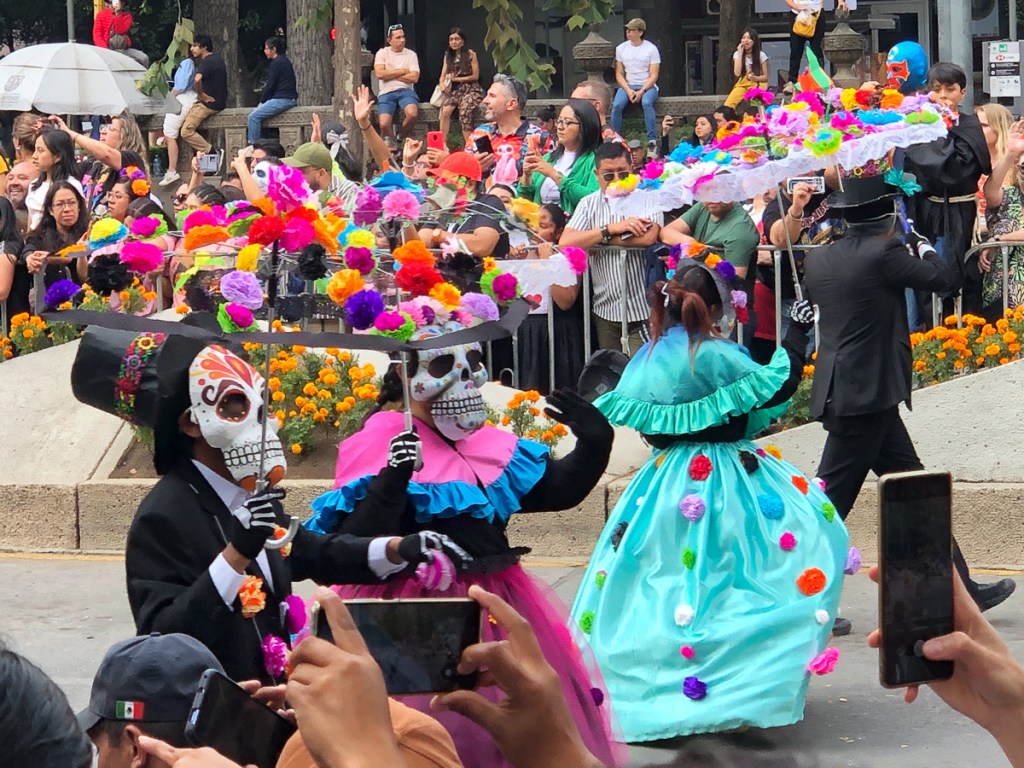
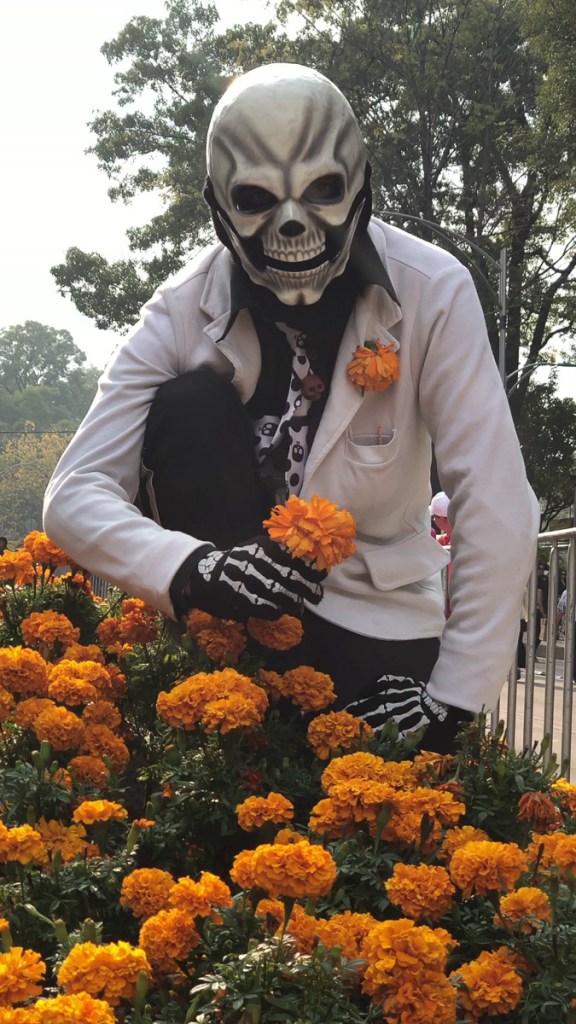
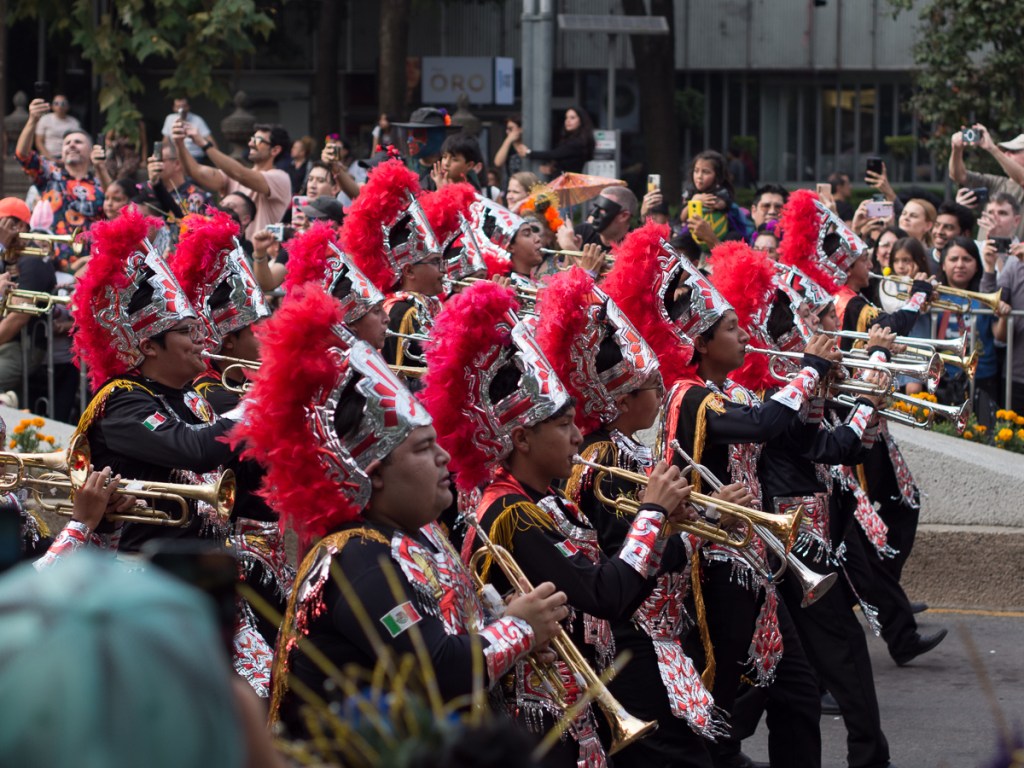
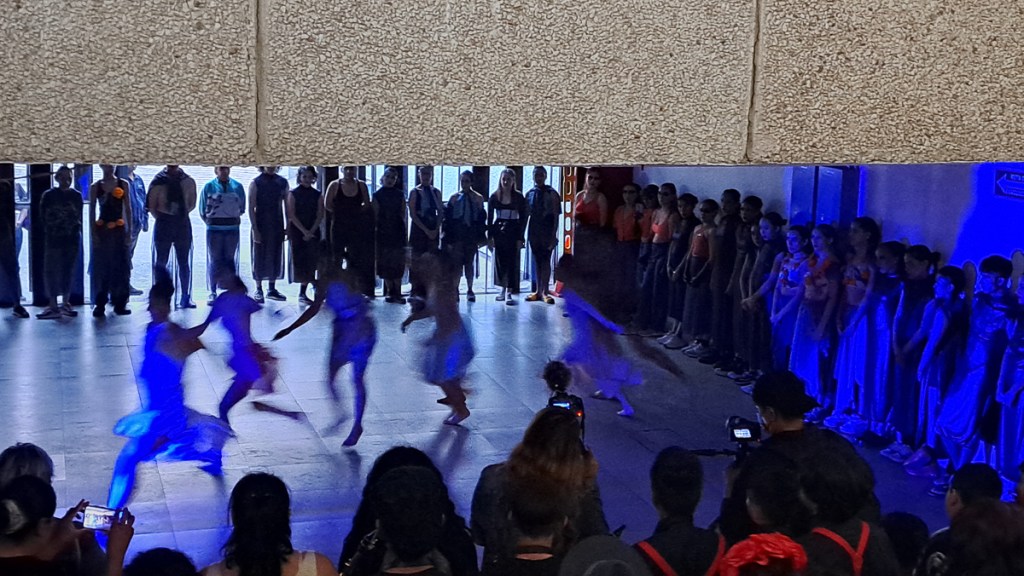
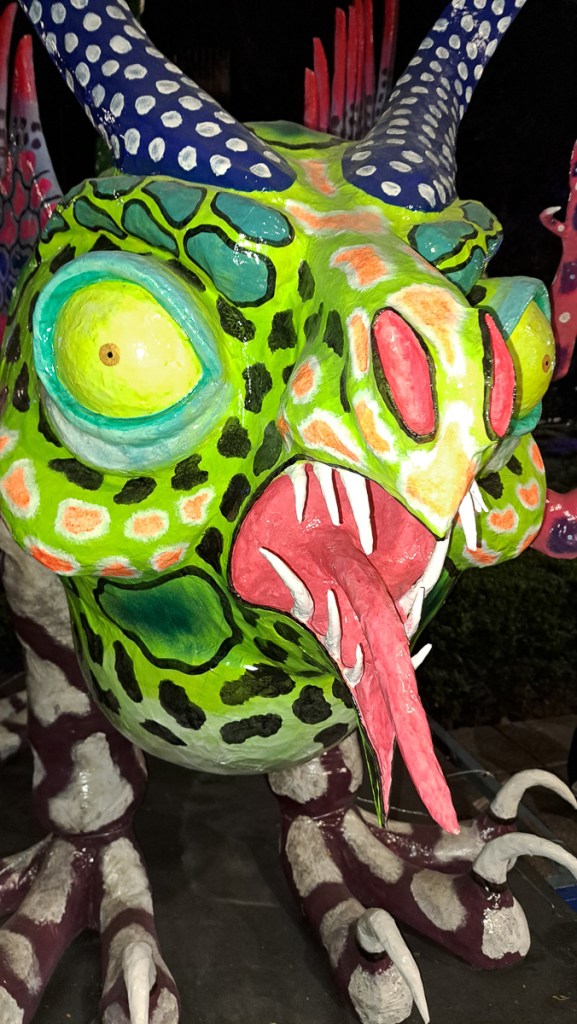
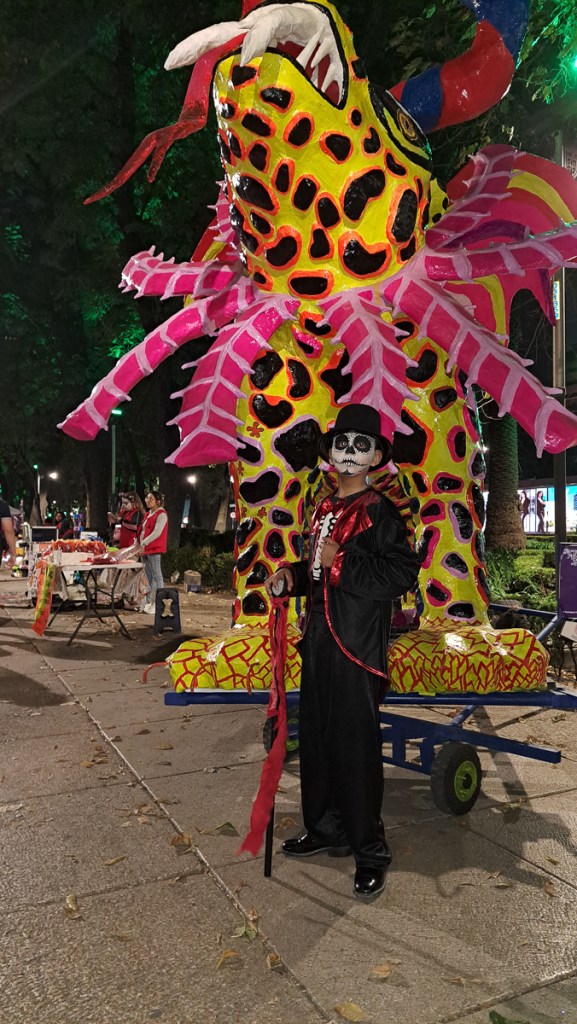
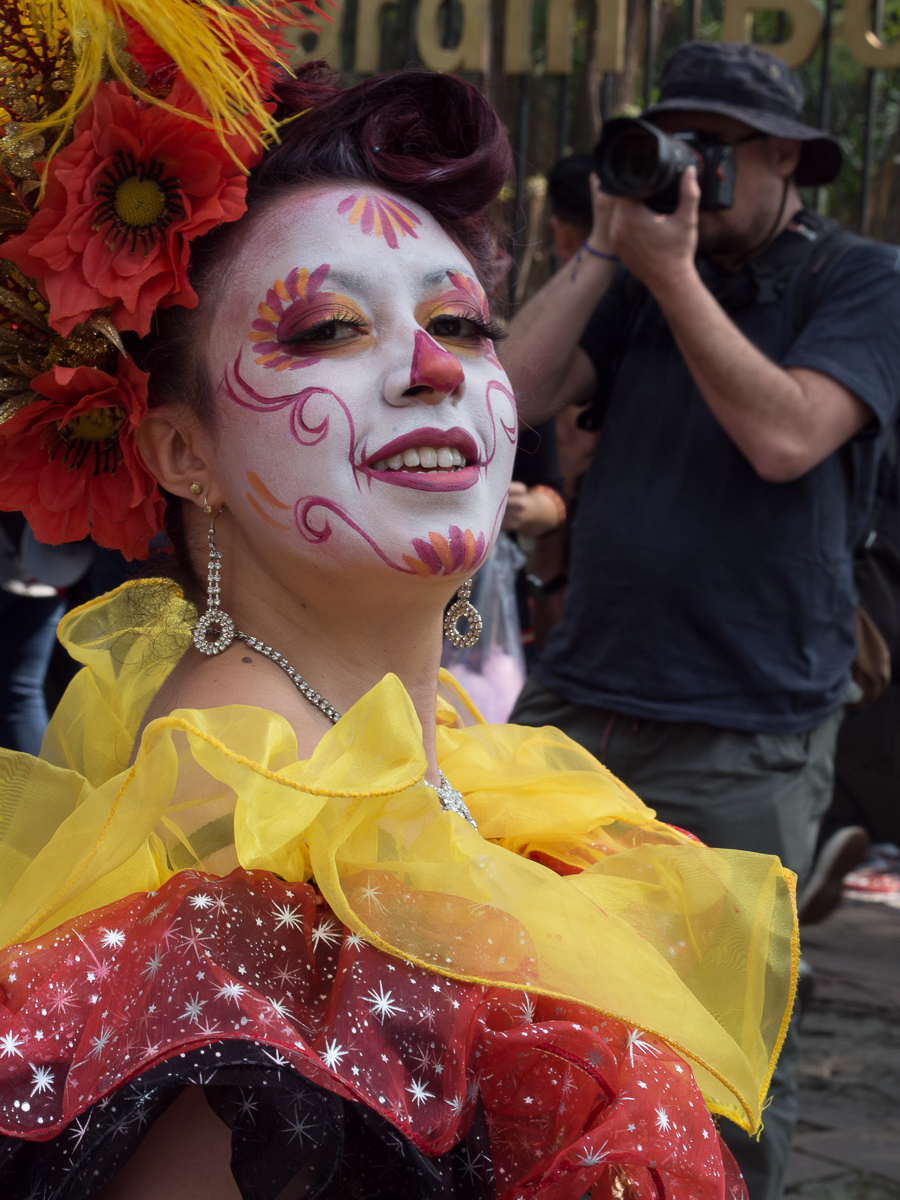
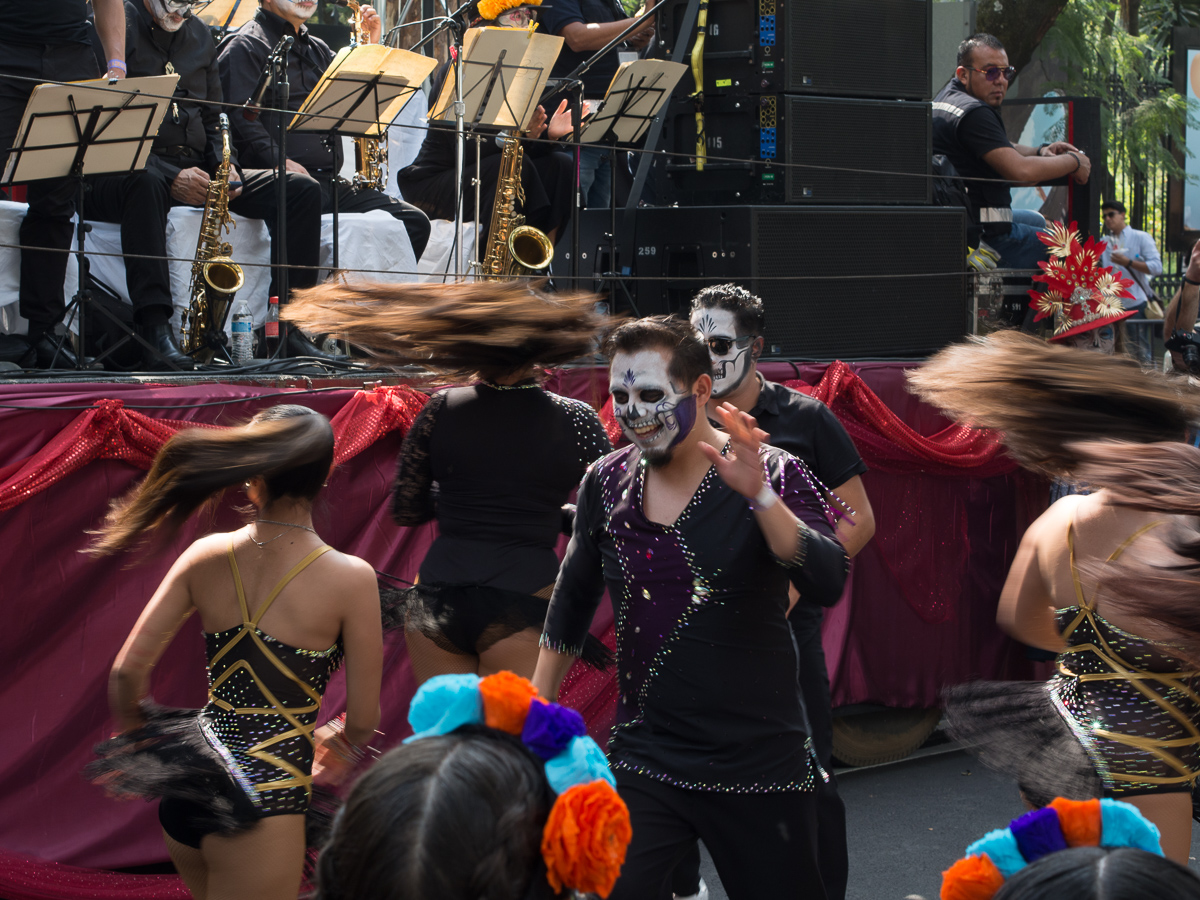
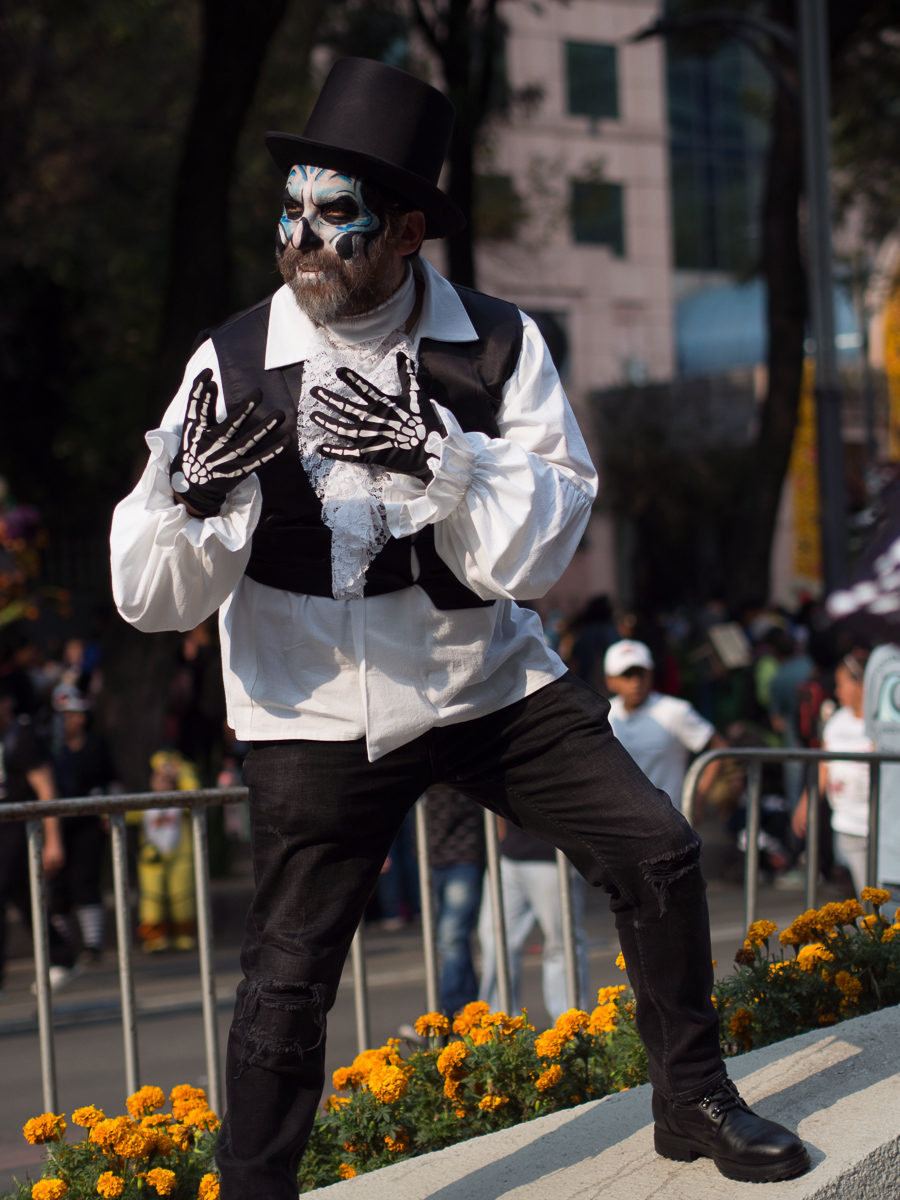
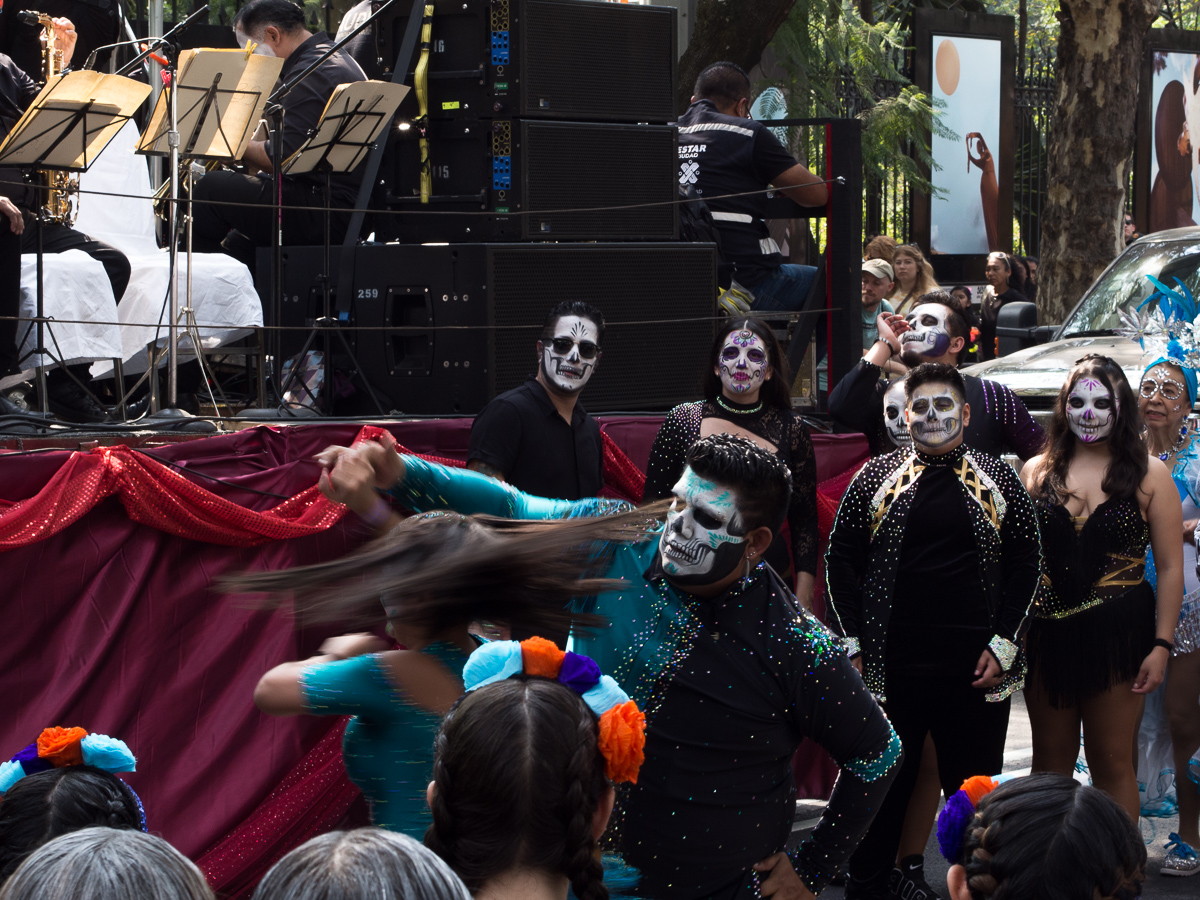
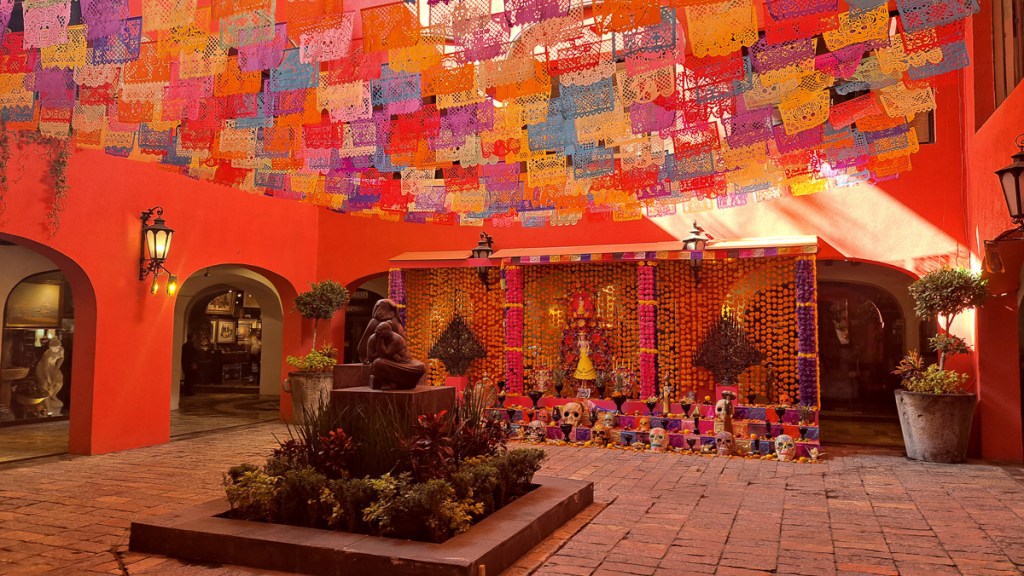
Unusually for us, we actually planned for The Day of the Dead, and arrived in time to enjoy the festival, before Clare flew home. It’s a visual and aural spectacle, so we’ll leave it to the photos…

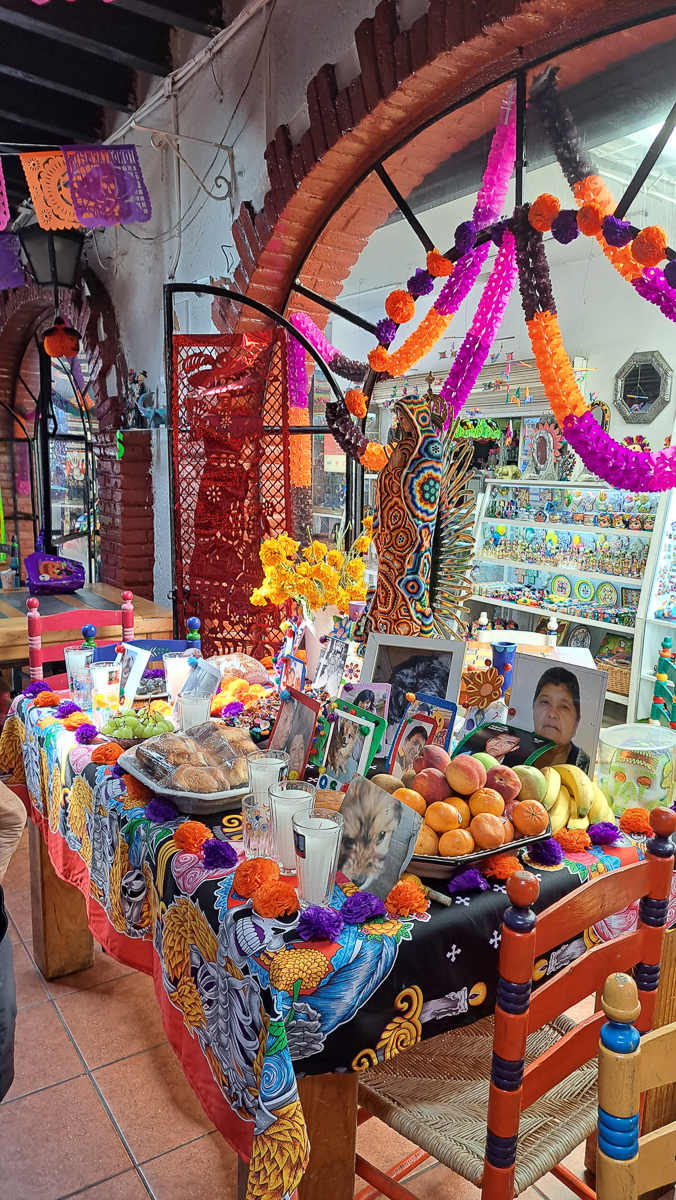
Parade
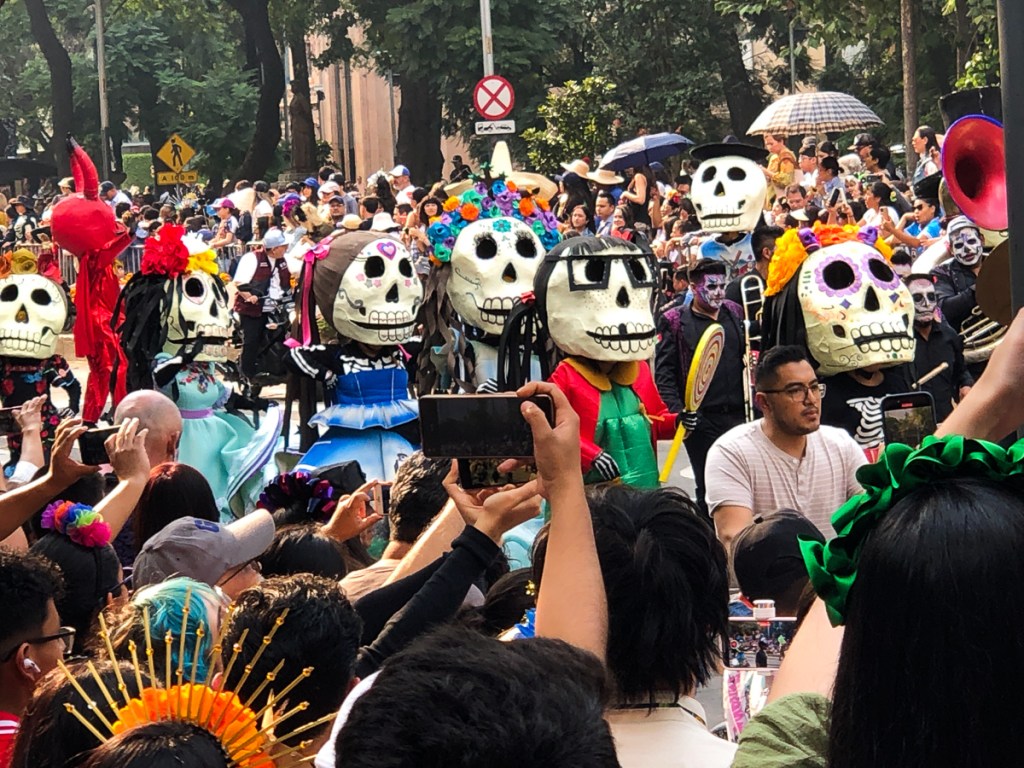
Parade.

In the City

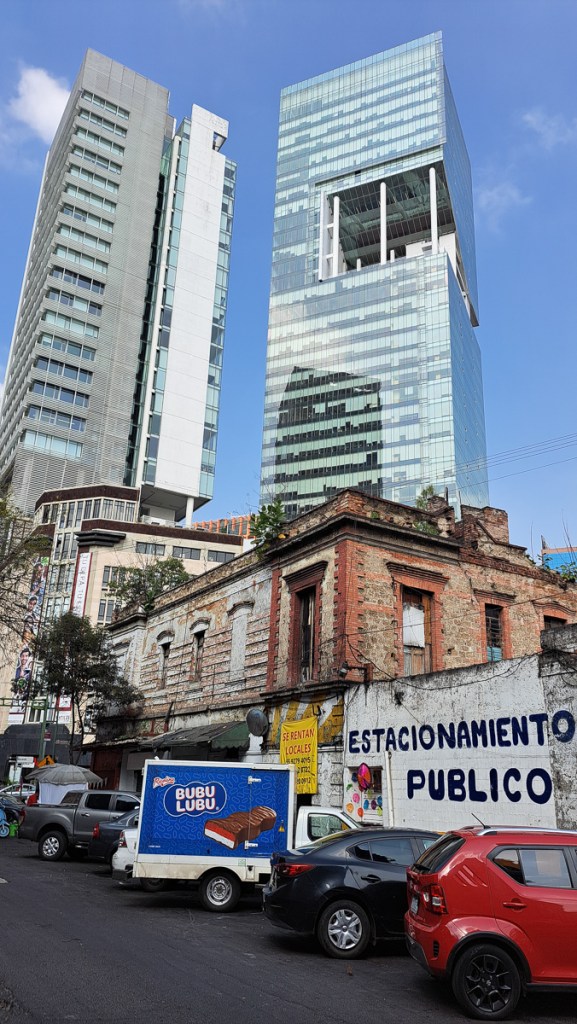
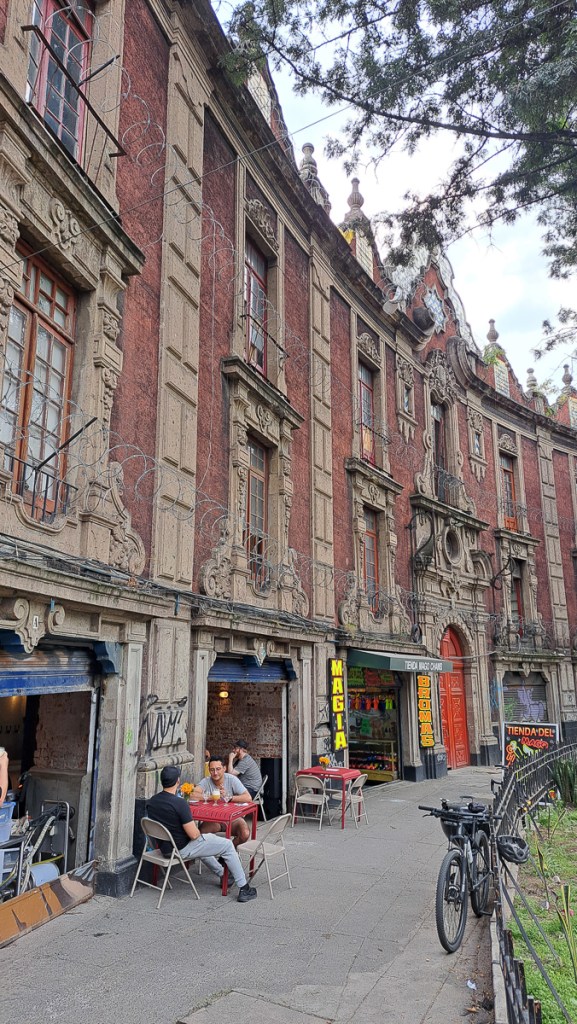
Apart from ruins, the oldest buildings are imperial Spanish, together with later ones from different republics or briefly the Mexican empire. They’re generally pretty ornate, going on florid. Many now crumbling, many in use and often cherished, especially churches. Above them gleam typical late 20th/early 21st century skyscrapers of glass. Much as any big city nowadays, although CDMX has many more vacant lots or little used old shells than London.
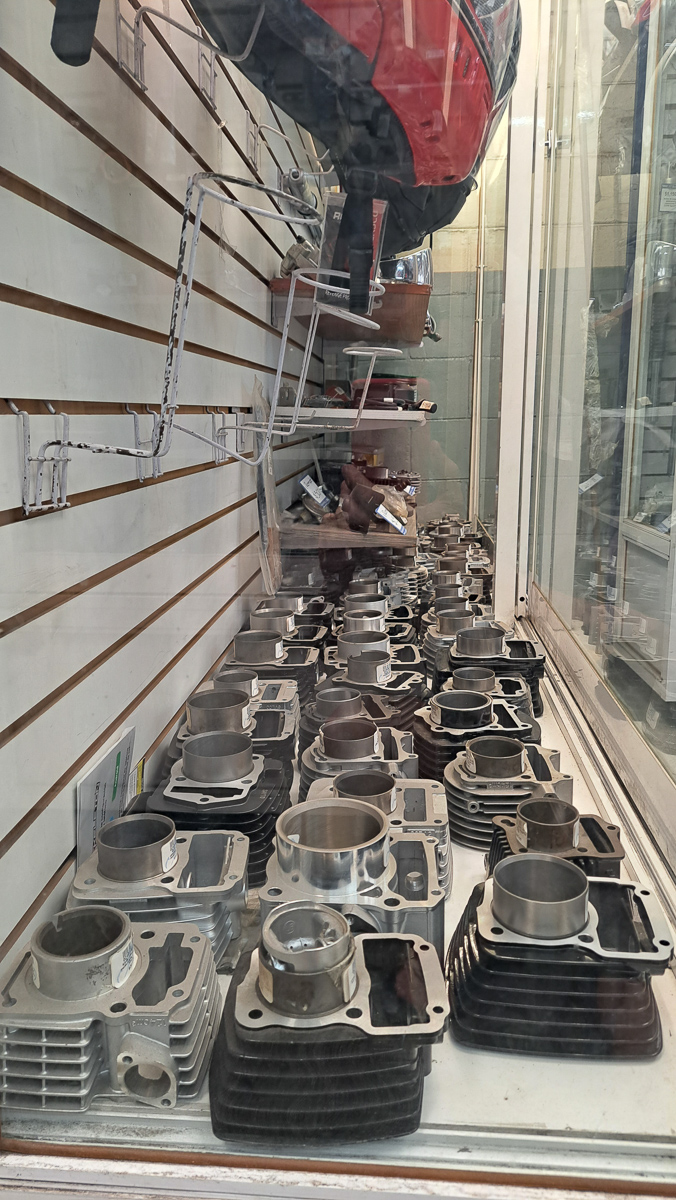
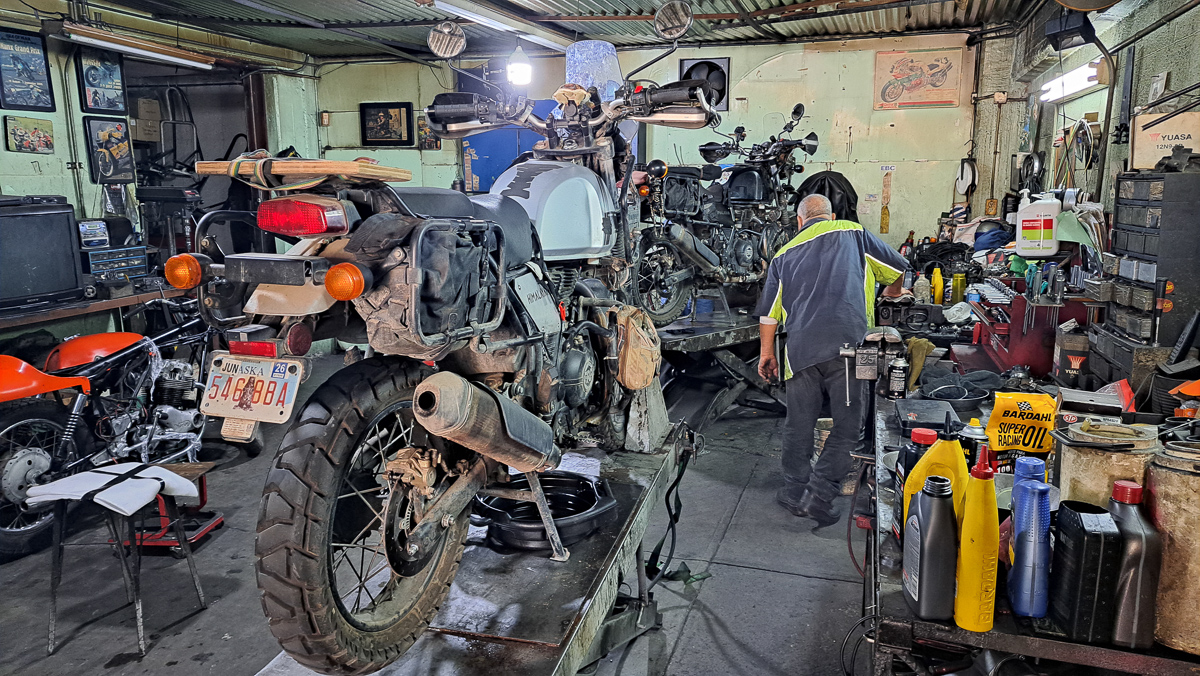
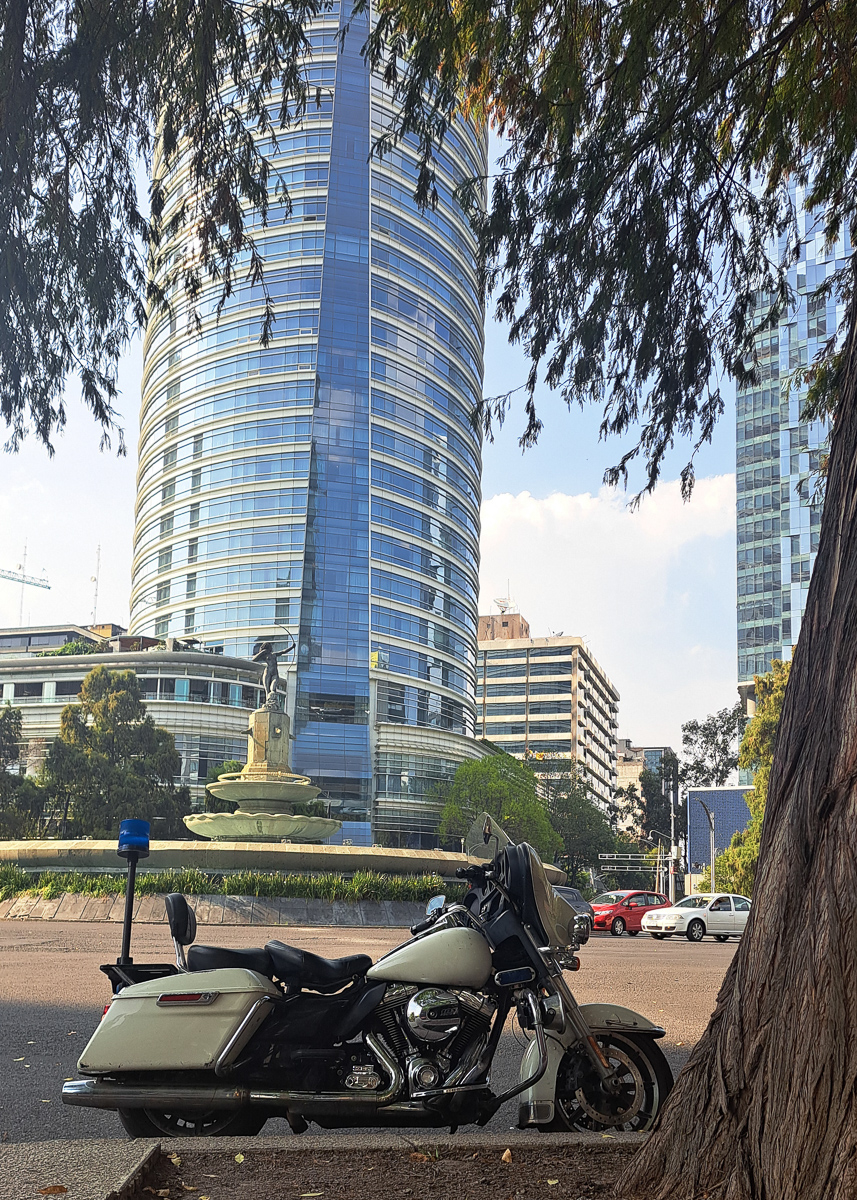
CDMX is also full of motorcycles. Mostly quite small, locally manufactured, all that’s needed for urban use. But there were quite a few bigger imports too, which made it easy to find somewhere to get the messy parts of the bikes – 18,000 mile service now done.
The aussies were right – it’s a great city. And that’s with us oldies eschewing the bars and nightlife.
La Paz

The small city of La Paz sits near the south end of the Baja California peninsula. From there we would take the ferry to the mainland. La Paz faces into the Sea of Cortez, which divides Baja California from the mainland. The sea is warm, shallow and sheltered, attracting wildlife. It’s a beach hotspot.

We intended to spend a few days in La Paz but it was such a wonderful location it turned into a week.  I’d marked on the map that swimming with whale sharks was a possibility but knew little else – information online was confusing, so we’d check that out when we got there. 

Our Casa Buena accommodation was a real hit as it had a very comfortable room, a social area and a swimming pool that you could actually do lengths in.  15m wouldn’t qualify for a training pool but was wonderful to push off, stretch and not stub your fingers on the other end. And, apparently, Itchy Boots stayed here when she came through.

The town itself is a tourist resort which has managed to find the balance between tourist tack and a functional Mexican town.  The promenade provided access to the golden sandy beach although the advice was not to swim from the town’s waterfront.  There were plenty of cleaner beaches further along.

On our arrival in La Paz we pulled over at the posh marina (not inside, it wasn’t free!), and the gatehouse attendant dug out a jolly fellow called Oscar, who did boat trips, only to find out that the sharks are seasonal and won’t be in for another month but the boat trips to the island of Espiritu de Santa are still happening. ‘You’ll be able to swim with sea lions,’ he enthused.  Sea lions, they’ll do.  ‘Lunch on the beach and snorkelling over coral reefs during the afternoon.  Arriving back about 5,’ he continued.  Great!  But we couldn’t go for at least two days because the winds were too strong and the harbour was closed. 

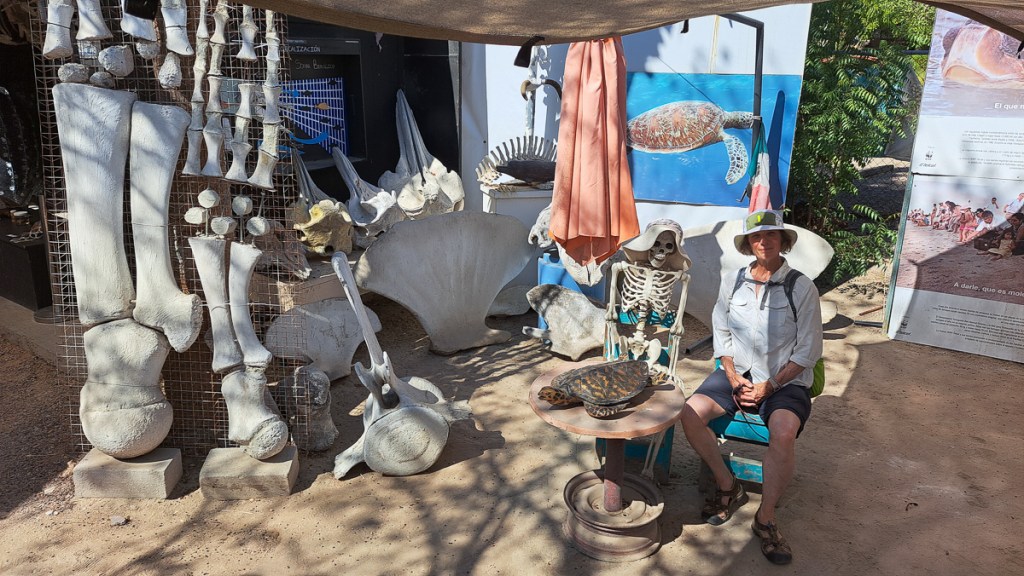
The ferry from La Paz to Mazatlan goes three times a week and we had to be in Mexico City by 30th Oct. Putting our crossing back two days was still perfectly achievable. We instantly extended our stay visiting the museums and wandering around the town to fill the days.  The Baja California Sur Regional Museum was as to be expected – stairways to well organised rooms, displays annotated in Spanish, QR codes available for English translation.  The second museum was a real treat.  The Museo de la Ballena y Ciencias del Mar was a sandy grit base with three shacks housing exhibits with plenty more aquatic bone collections outside.  Pickled brains were a blast from the past and reminded me of my supper the night before which luckily Gid ate.  Hippopotamus and whales were on the same display and one of the earliest separations on the time line.  There were also a few electronic displays in Spanish but the cooling fans were the biggest attraction.

We started to understand where things were in town, and appreciate the steep price gradient as one got nearer to the Malecon (promenade). Speaking of which, Gid chose the statue of Jacques Cousteau as a running turn-around point, but couldn’t find him the first time and fell short. The run had to be completed by 8am, as by then it was getting much too hot. Locals knew that, the prom is pretty busy 7-8 but everyone soon vanishes, emerging again just before dark.

We arrived at the jetty at the appointed time ready for our boat trip.  The wind had died down but the sea was still producing some big swells.  We were one of two couples booked in for the ‘swim with sea lions’ boat trip, along with an extended family.

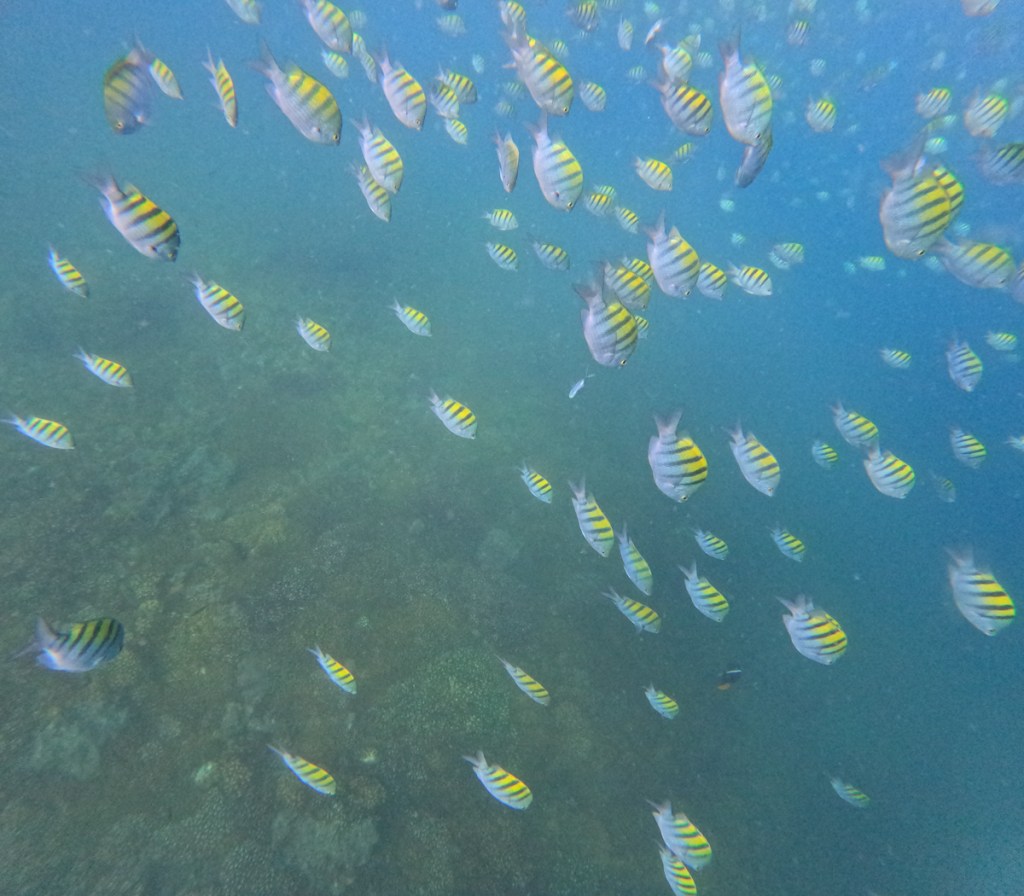
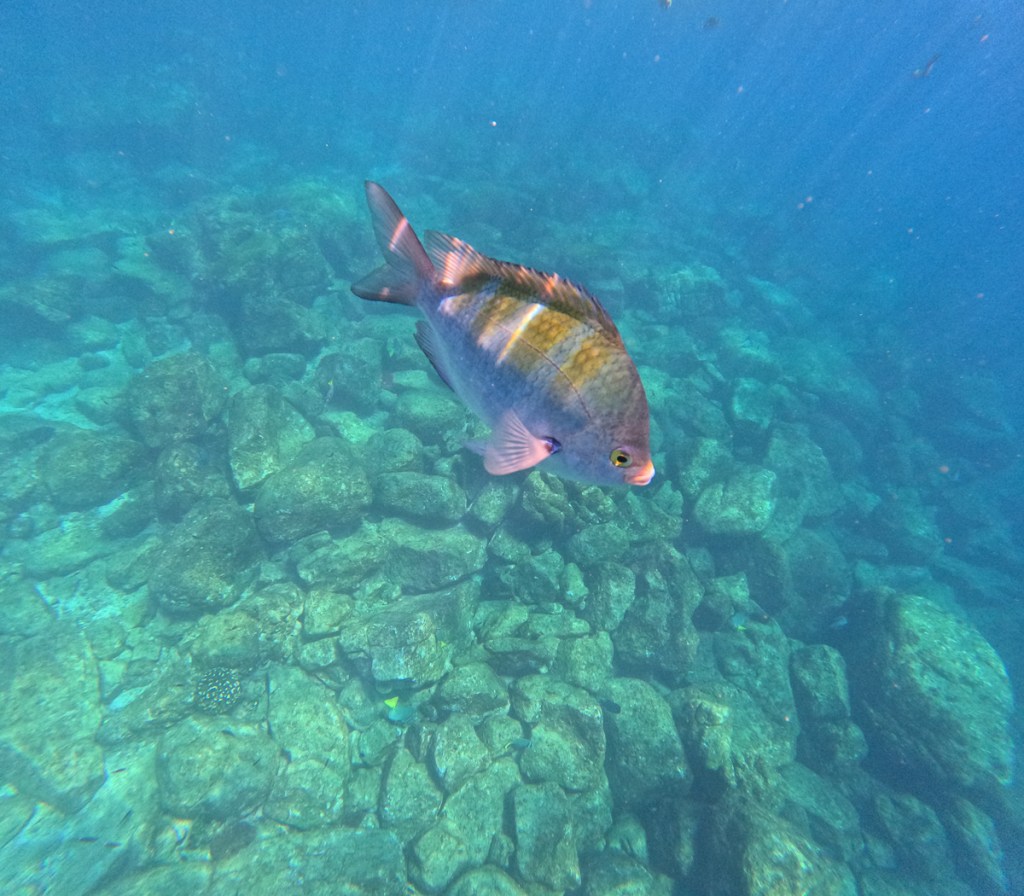
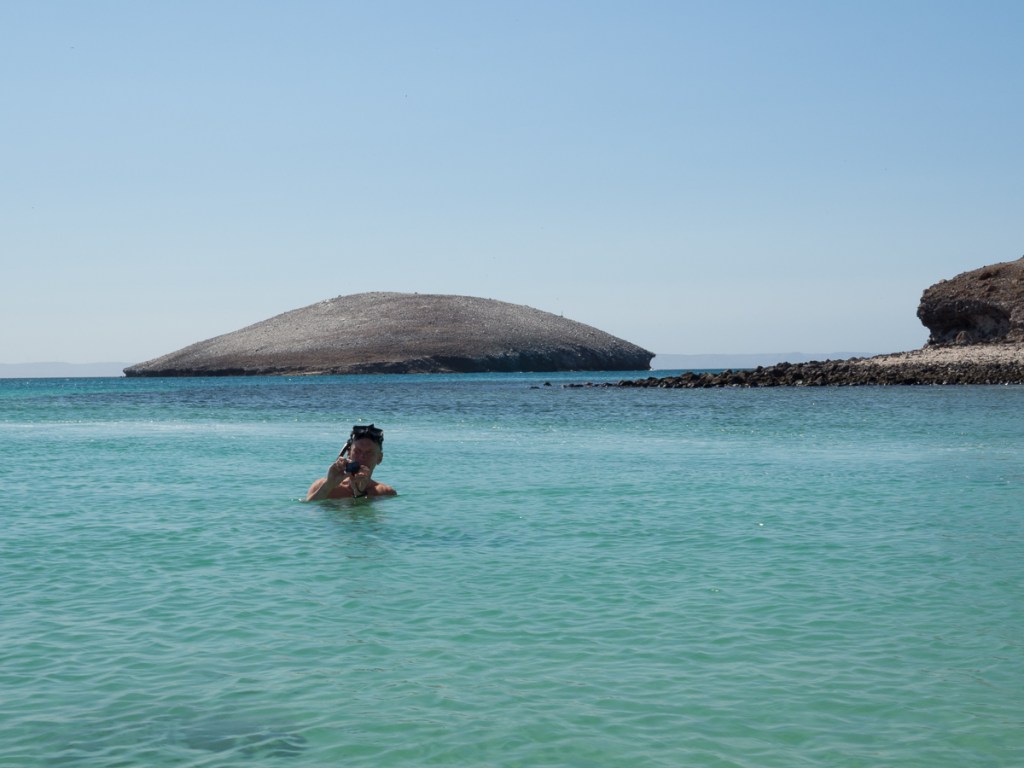
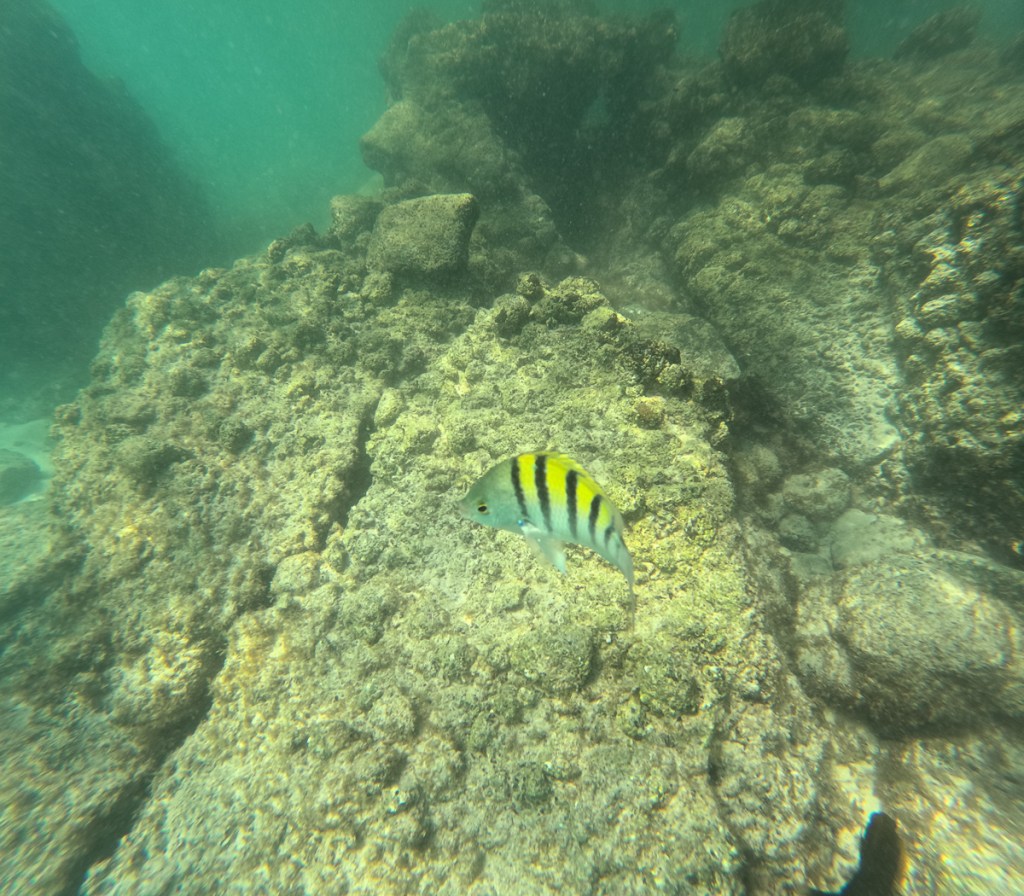
We set off full of expectation. It soon became evident that it was too rough for our crew.  As to be expected really, the swell was still up.  The two children were whimpering as the boat bounced along spray flying high.  Once we were heading away from the shelter of the land the chop became more intense.  Our plaining hull rose over one wave crashing onto the next covering us in spray. One wave came over the bow and ran a river down the footwell over our feet.  The children panicked. It might swamp the boat. The next wave we jumped had us all briefly zero-g above our seats. Gid and I would thrive on this excitement being seasoned sea-kayakers but the two children instantly burst into tears.  That was the end of that.  Sea lions were off!  The day turned into a snorkelling over coral in the sheltered bays exercise.  It was pleasant enough, and scratched our “beach itch”, but not what we had paid for. 

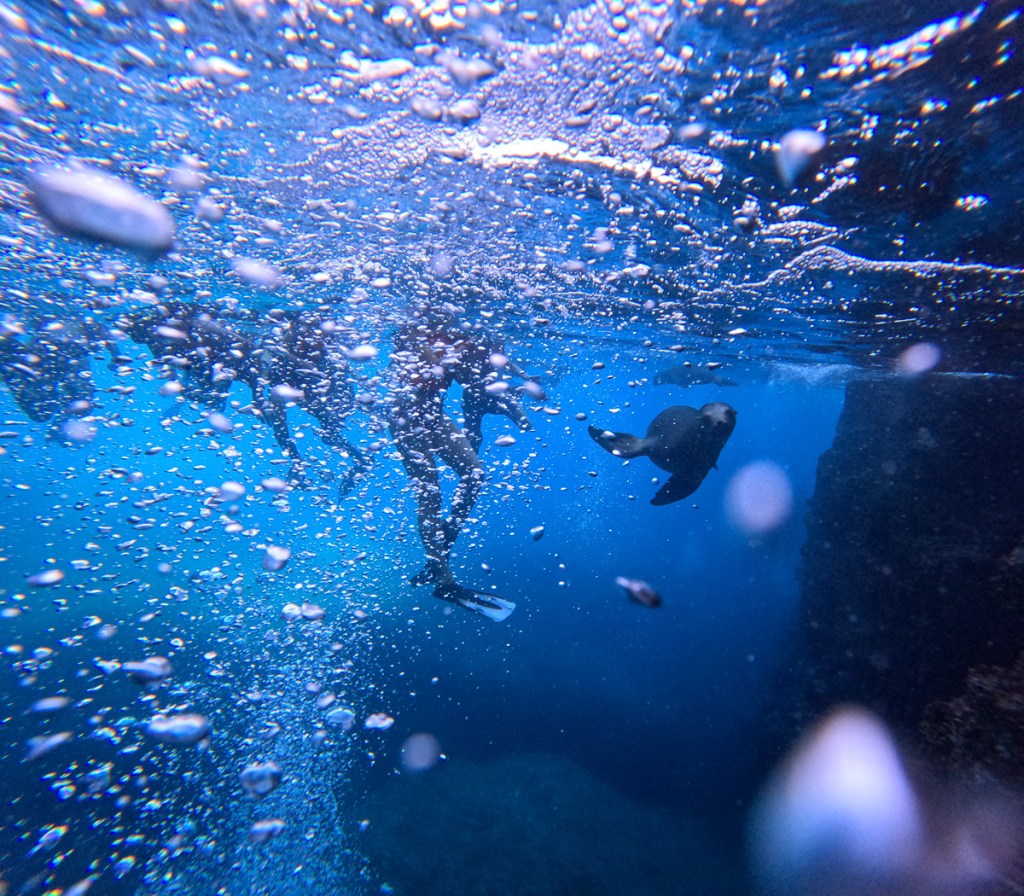
As we set off for home from our snorkelling pursuits Andrea, our guide, announced that we would visit the nearby lighthouse rock as it was reported that sea lions were there.  I assumed that they had had radio communication with the other tour boats in the area.  A smile was back on my face.. It wasn’t far to the rocks which we circled in the boat looking for sea lions.  Nothing!  Andrea asked who wanted to snorkel anyway.  Gid and I jumped at it but the rest were set for home.  We were quickly ready and in the water.  Circling the lighthouse rock the visibility was great on one side but less so on the other.  Just as we were ready to call it a day a squeal of excitement alerted us.  A single sea lion swam lazily past us.   Success!?

At breakfast the following day our German friends exuded enthusiasm for their trip where they had made it out to the island.  They were full of how wonderful the experience had been – swimming with numerous sea lions.  They talked of how close the sea lions came, the acrobatics they performed, the babies on the rocks and the unmistakeable bark of the sea lions.

It had to be done.  We extended our stay at the guest house again.  Thankfully we hadn’t booked the ferry yet – back that went another two days.  Once on the mainland we had to make Mexico City in three days now.  Perfectly do-able providing everything went well.

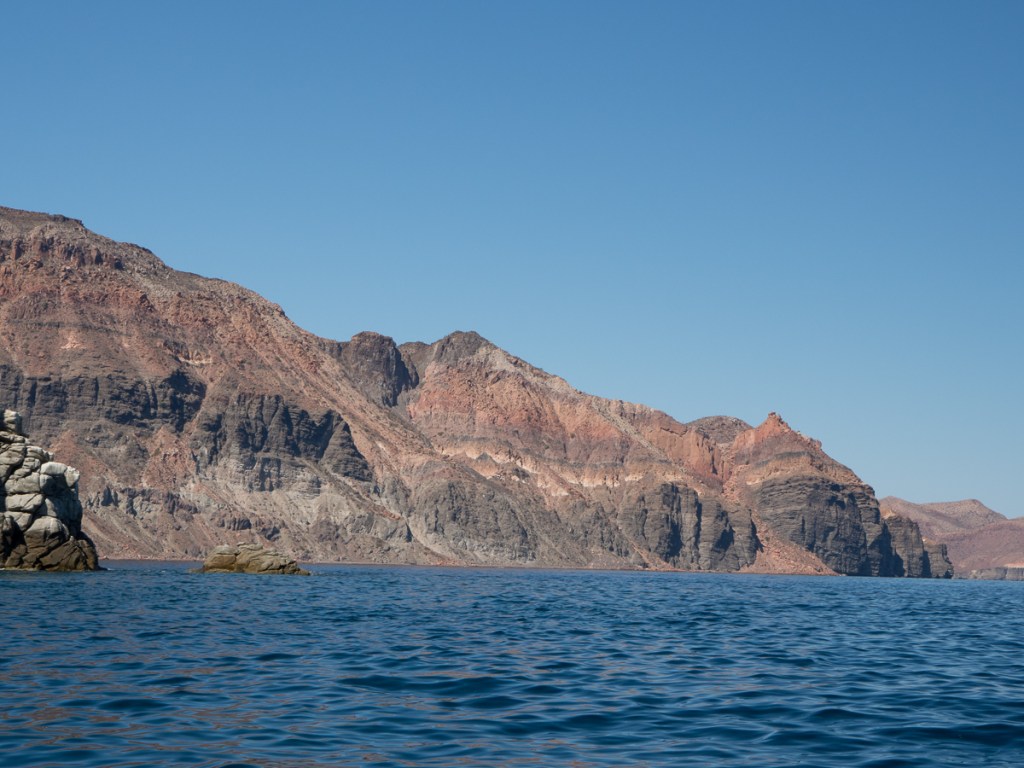
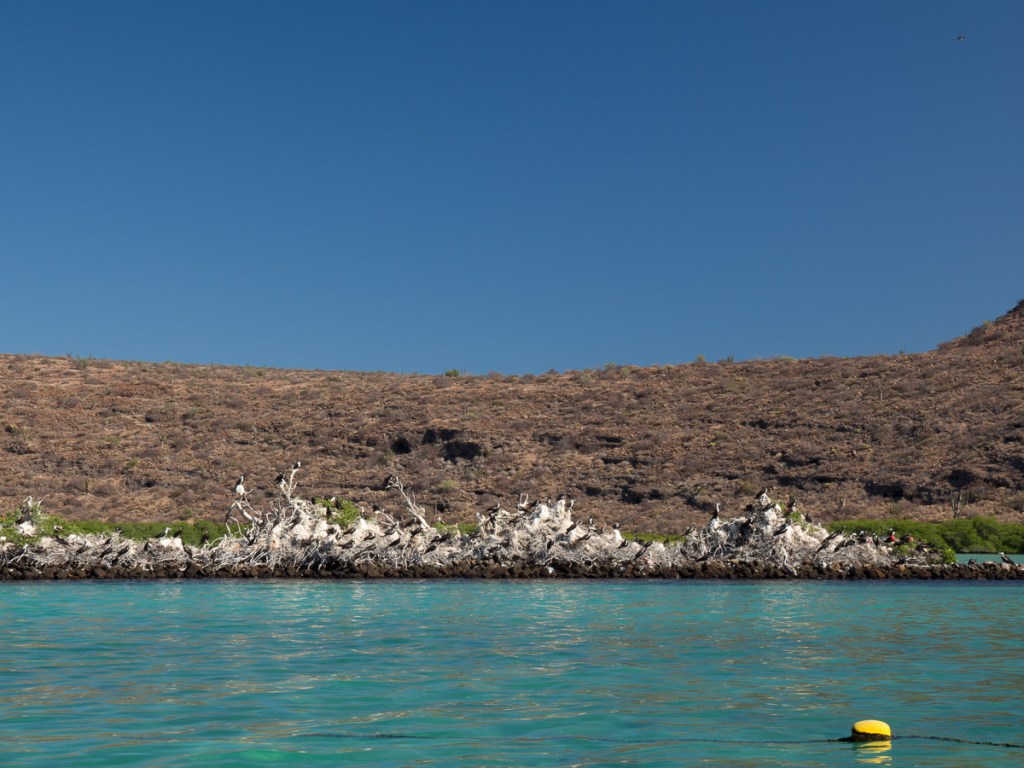
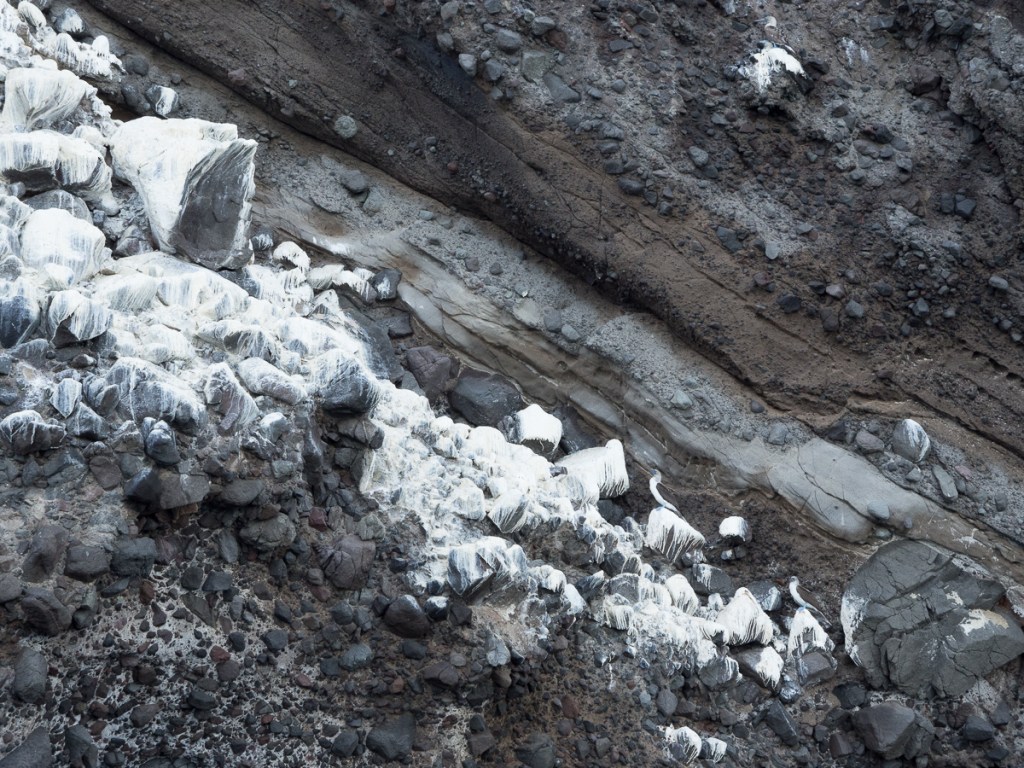
Our second boat trip was a totally different experience.  A more professional set up that cost twice as much but our guide, Andrea, gave a more extensive dialogue about the marine biology and geology we passed along the way, and more of a look at the local birds too.  It cost twice as much but was worth every peso. And, the sea was now flat.

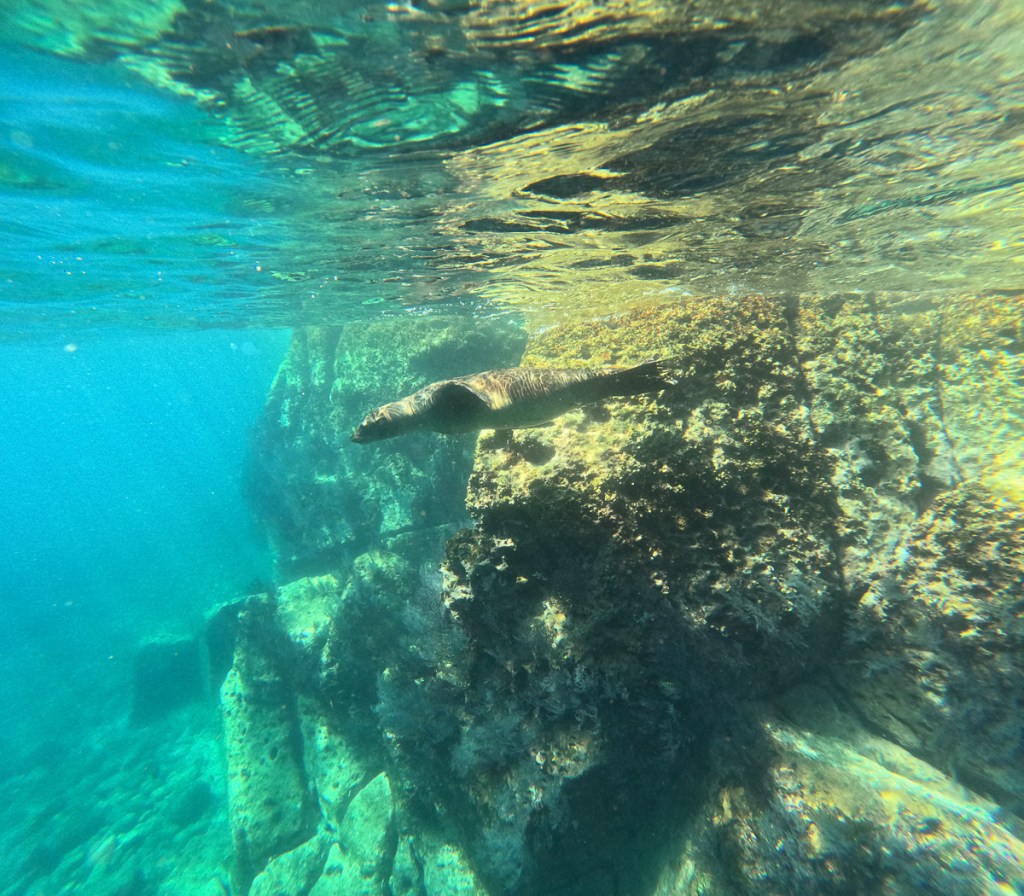
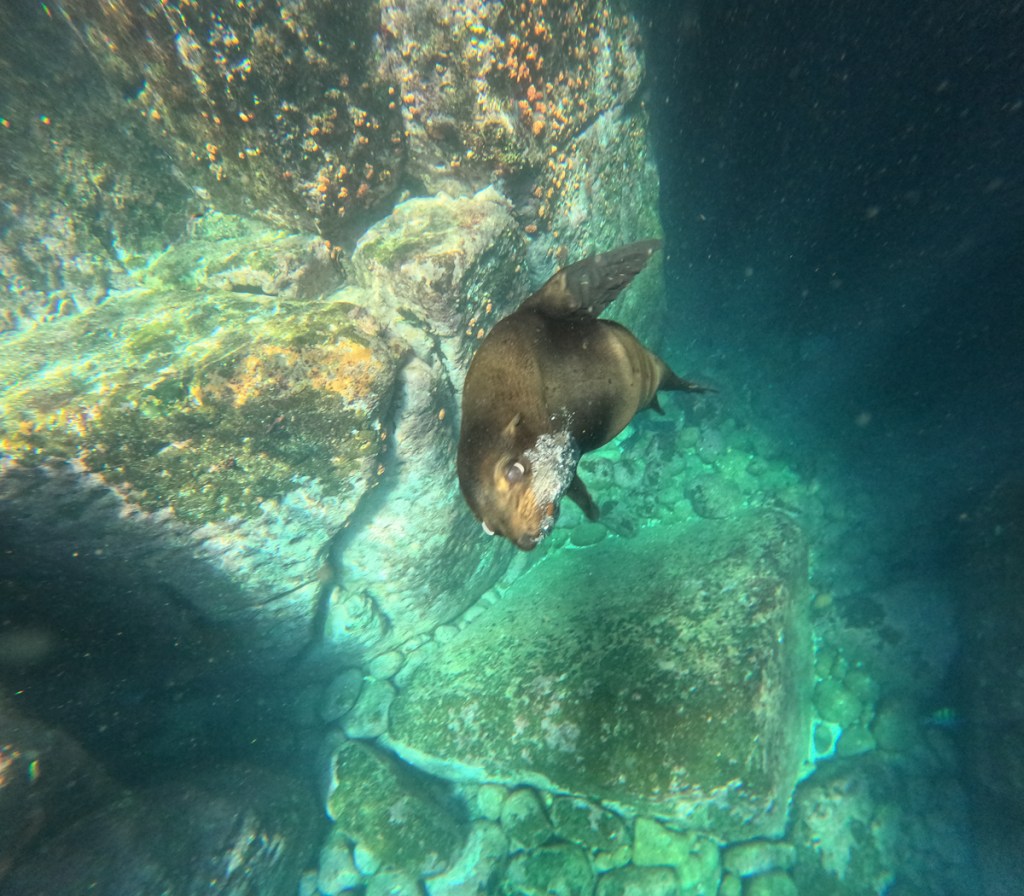
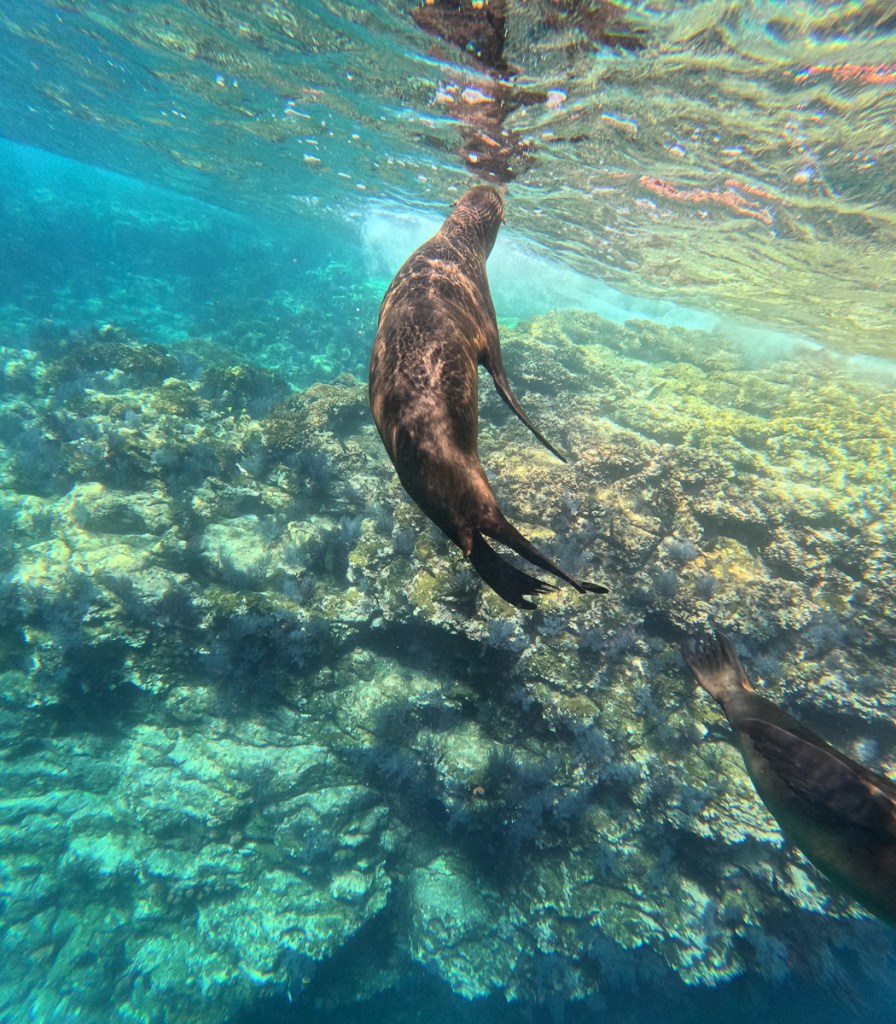
Indeed, we swam with numerous sea lions.  They came really close, performed superb acrobatics, the babies were on the rocks and the unmistakeable bark of the sea lions surrounded us. 

California Sea Lions – A pup and (probably) an adolescent male. No, those aren’t the tasty fish.

More videos here!

And there was another delicious ceviche lunch – a food we’d never heard of before La Paz.