This is a quick update post by Gideon, with unfortunate news.
From Peru, we made a quick transition across – not down – Chile, to Argentina. We expected to return to Chile at some point south.
But, after only a few days in Argentina, Clare had an accident. She’s not badly hurt (thanks for asking!), but has a broken collarbone and cracked rib. At the very least, she can’t ride for many weeks.
The Argentine emergency and medical services have been effective and helpful. No other vehicle involved, so no complications with las policias. Who very helpfully recovered her bike to the station, for retrieval later. No charge for this excellent service. The ambulance and hospital also very easy to deal with, even with my limited Spanish. some fees, but very modest. After a few hours with the medics, Clare was discharged into my care at a convenient hotel. Travel insurance engaged quickly, but it doesn’t look like it’s any sort of claim scenario, as the costs have been negligible.
The accident was rather hard to explain. We had just come out of some roadworks onto tarmac, in a sparse queue of traffic, which was slowly gaining speed, but still at maybe 25-35kph. I was behind, Clare’s bike suddenly started to fishtail and swerve, before falling on its right side and sliding across the road to the verge. Luckily no traffic coming the other way. There was a strip of thin, slimey, mud from the water-sprayed roadworks, and I guess there was virtually zero grip for a little bit. Neither of us spotted it coming, although I wasn’t directly behind and didn’t see or traverse that muddy bit. Neither bike nor Clare hit much solid. So really quite a minor tumble, she’s quite unlucky to break stuff. Maybe the Helite saved some injury, maybe not as she might have hit the ground still seated. A lot of bikers do apparently repeatedly break collarbones. I dropped my bike on the verge and ran over. Someone stopped. One guy called the emergencies, I cared, a lady prayed. Bike is ok, BTW, a few scuffs.
Clare can’t ride in the time left available to us. And maybe won’t want to afterwards. Or maybe it’s just not wise, after this warning, to continue into the known difficult riding conditions in Patagonia – we are quite old, and not expert riders on loose surfaces, after all. We have some awkward choices to make.
Stash the bikes, fly home, and return in either 3 or 7 months. If riding more seems ok.
Send the bikes home, then continue in a hire car. Shipping is very expensive though.
“Sell” the bikes, then continue in a hire car. We can’t actually sell them in Argentina, but we can lend them to another foreigner on a poder (like an English Power of Attorney). The poder is needed to take out insurance and cross borders. Once they exit Argentina we can sort out the Alaskan title and registration.
The dominating factor is, bizarrely to UK eyes, the Argentine (all of SA, actually) regulations appertaining to foreign vehicles brought in by non-residents. Still, we’ll find a (legal) way through.
Decisions – But these are still first world problems. We’ll sort it out.
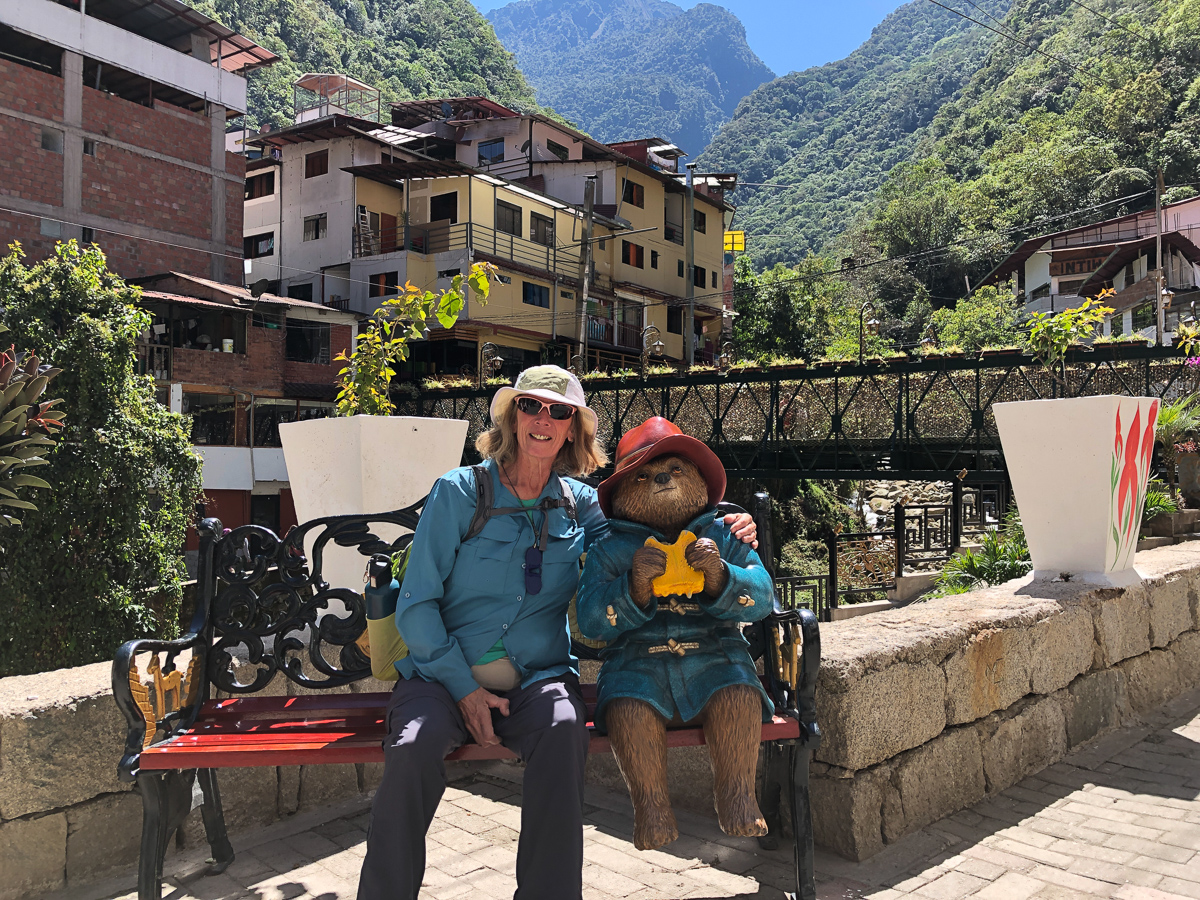
Peru, home of the much loved Paddington Bear, was high on my list of places for which I had high expectations. Somehow I felt I already had some affinity with the Andean country.
These expectations were not met. Certainly not initially.
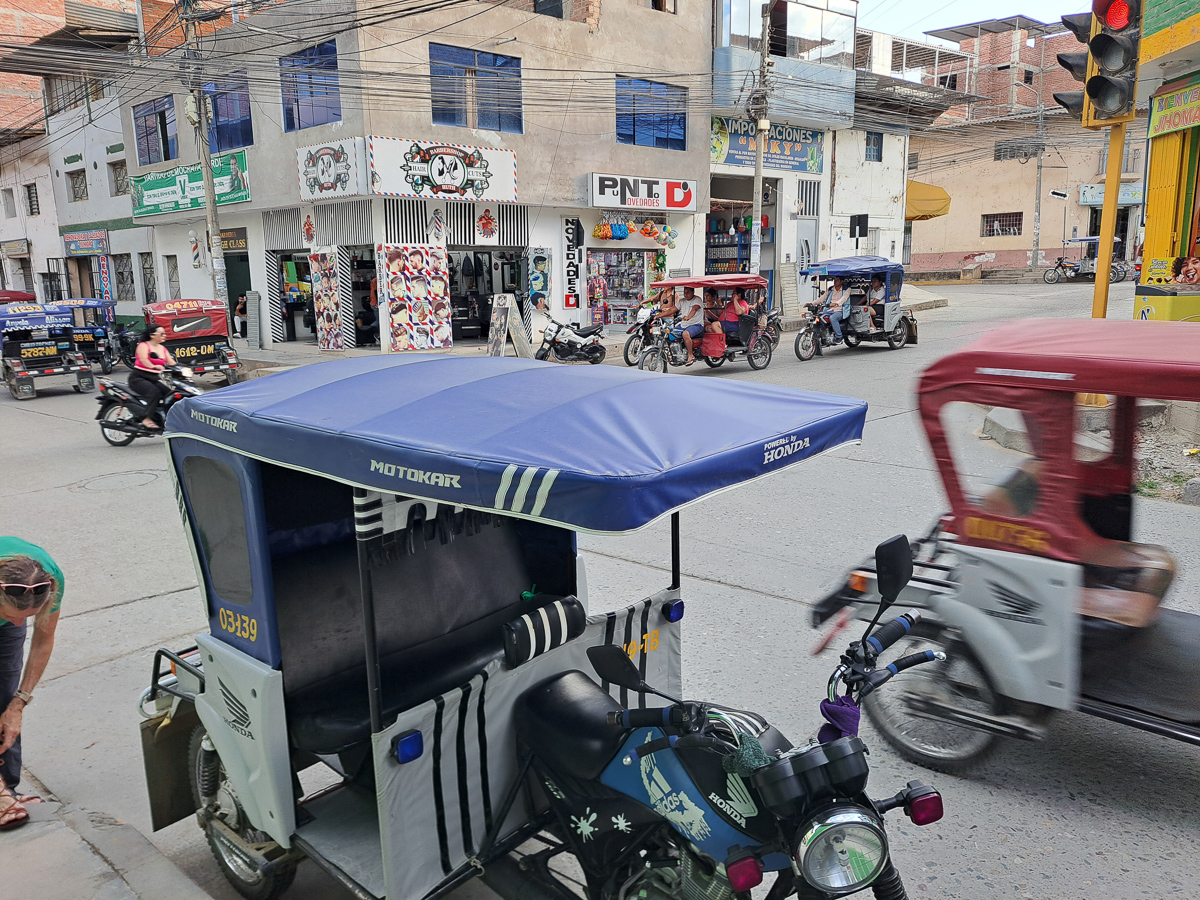
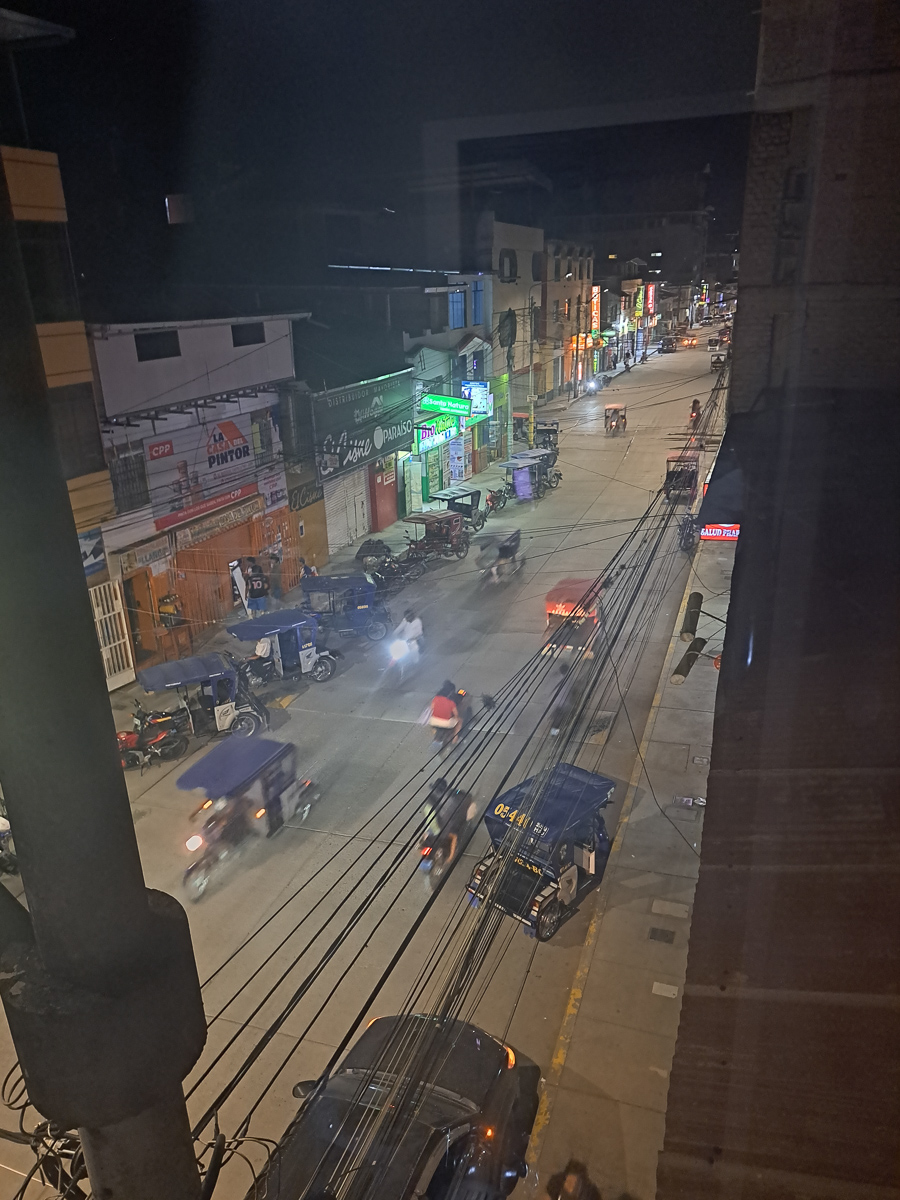
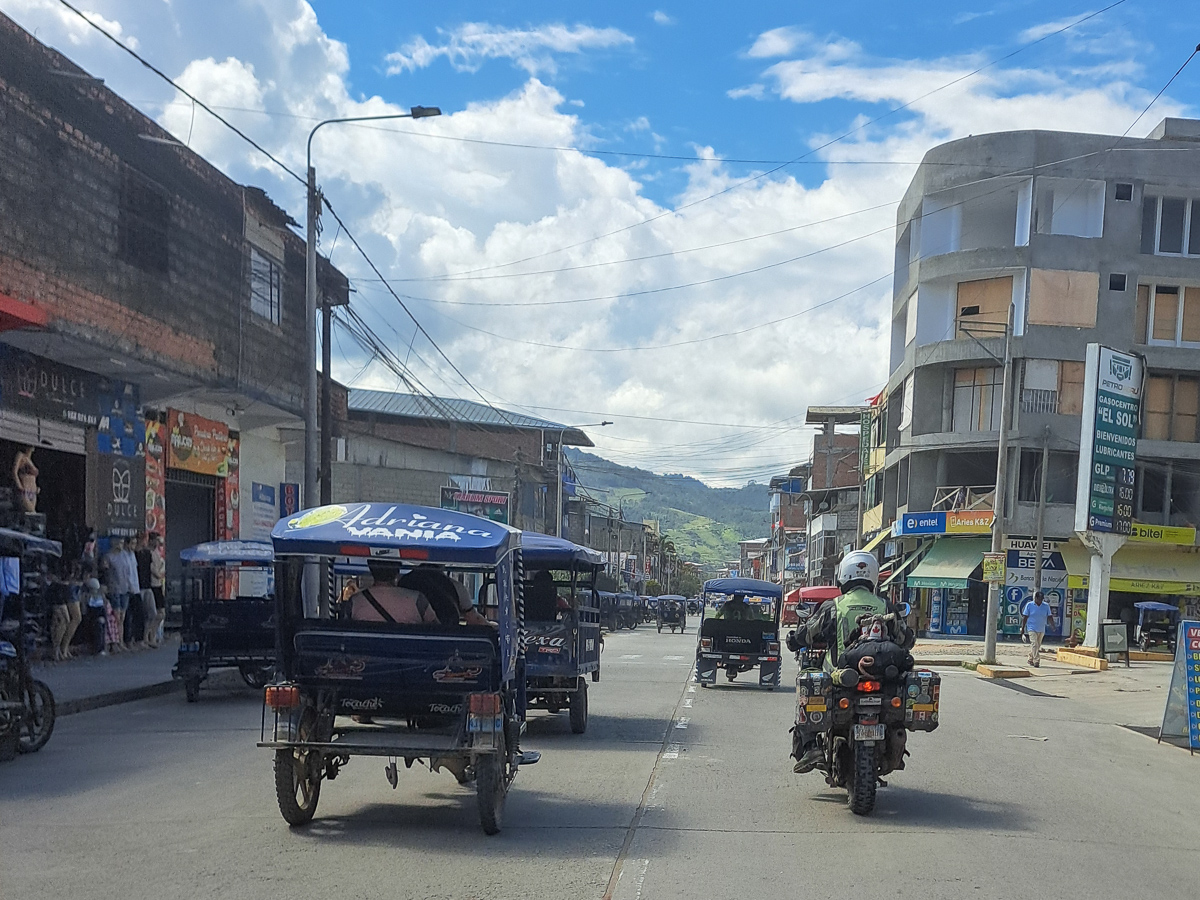
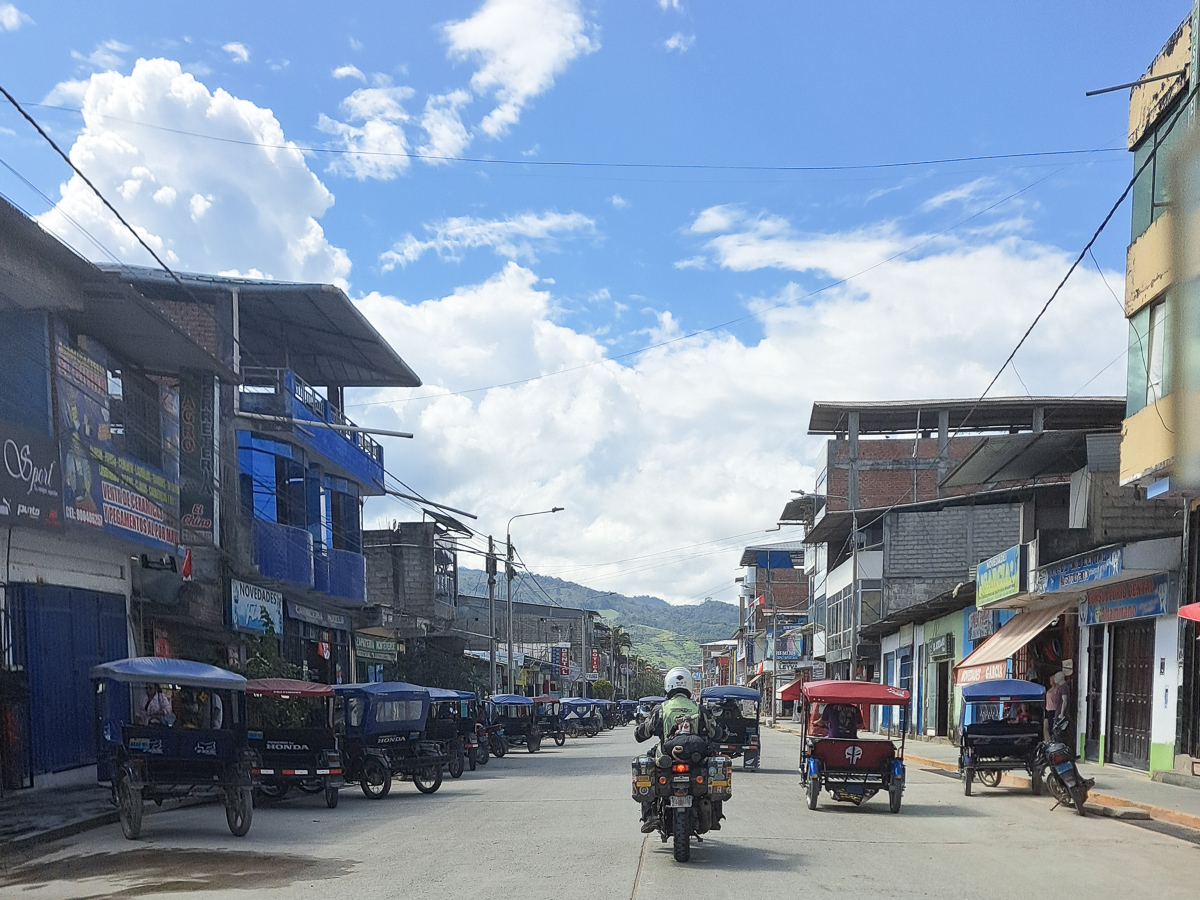
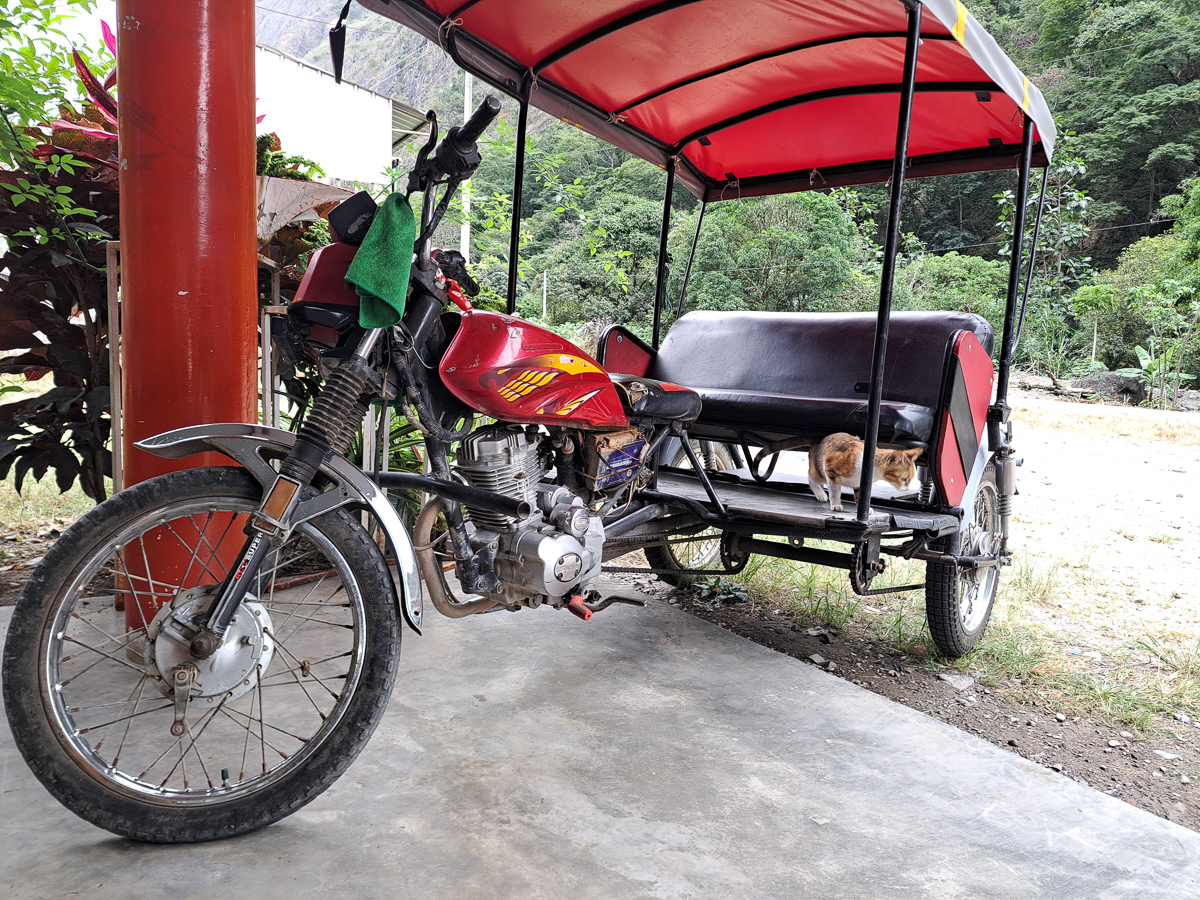
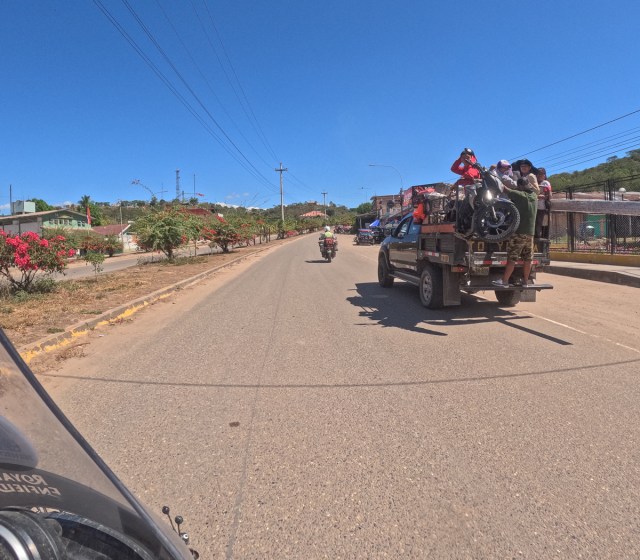
We arrived at Jaen knowing that towns are often hectic with people in a hurry charging left and right. This was no exception but rather than motos pushing into every space it was tuktuks. They seemed to explode out of every imaginable place. Tim, back at Donkey Sunrise in La Union, Colombia, had said that motorbikes out numbered cars by 4-1 but in Jaen the tuktuks must have been 6-1.
Gid was frazzled. He was trying to read his navigation, look up to check road names and get in position on the road to execute his plan. What a laugh – we couldn’t move for shoving tuktuks. The Ecuadorean SIM card that was supposed to work in Peru didn’t, and it took well over an hour to buy a Peruvian one, while I sweated in a busy street astride my bike, worrying if Gid was illegally parked. Almost all ATMs charge a fiver to dispense a measly $100-worth of Soles, in a country where credit cards are often not accepted. It’s not impossible, but Peru is definitely a bit harder to cope with than Colombia and Ecuador.
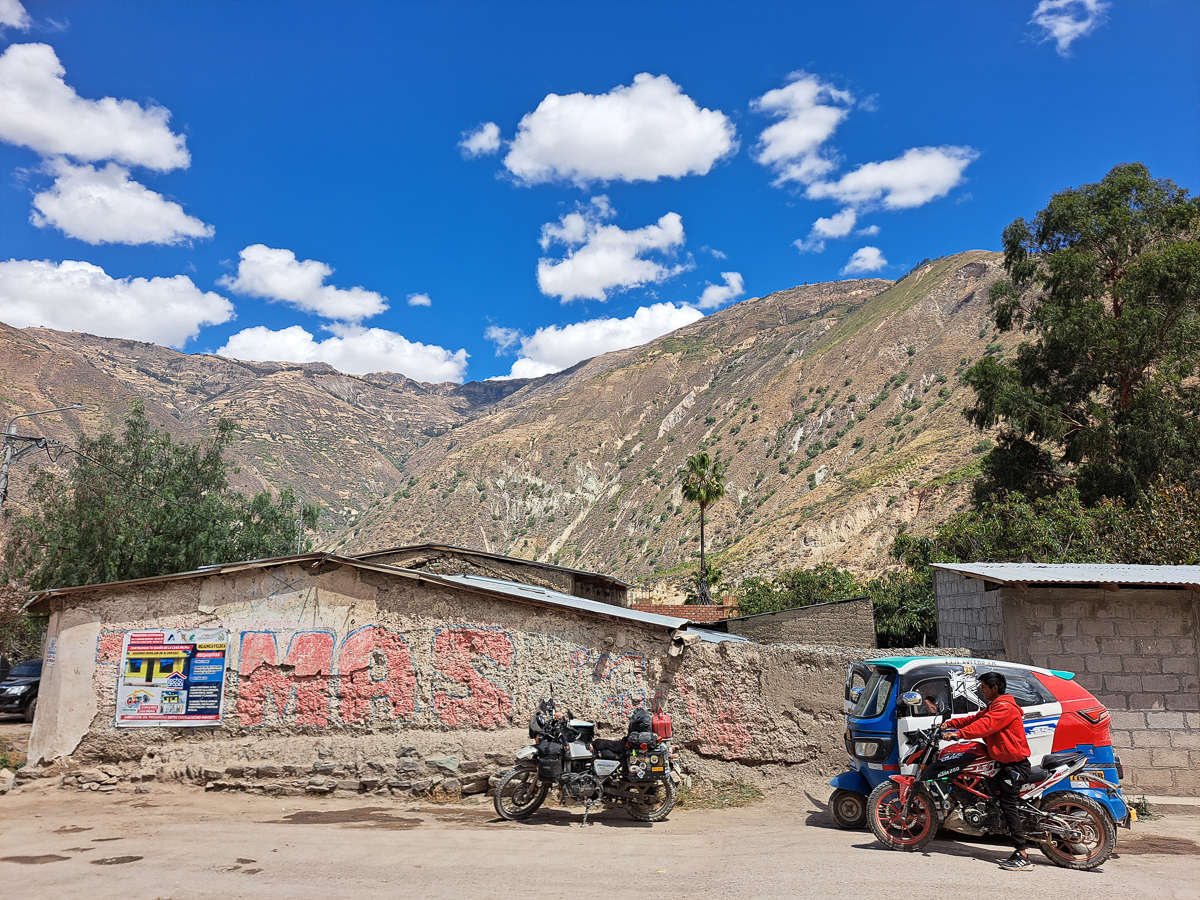
We didn’t take any photos right in Jaen’s thickets of pushy tuktuks, it was too intense. Here are some in calmer places. Peru’s unique CG125 3×1 tuktuks.
Gradually we got the measure of dealing with the traffic although there does seem to be a consensus in the South America Moto WhatsApp that the drivers in Peru are more aggressive. Maybe it’s only northern Peru. In the south it’s only the long distance taxi drivers (nutters).
Because our time is now tight in terms of making it down to Ushuaia, southern Argentina, and back to home by late November we have made a must do list. Machu Picchu is at the top for Peru but might be difficult as we are arriving in the peak holiday season and the site, in order to limit traffic damage, has limited tickets available. Gid was also keen on some sort of Amazon jungle experience. It seems like to really get immersed in the rain forest some sort of multi day trip is much more worthwhile. With time now a prime commodity multi-days excursions are off.
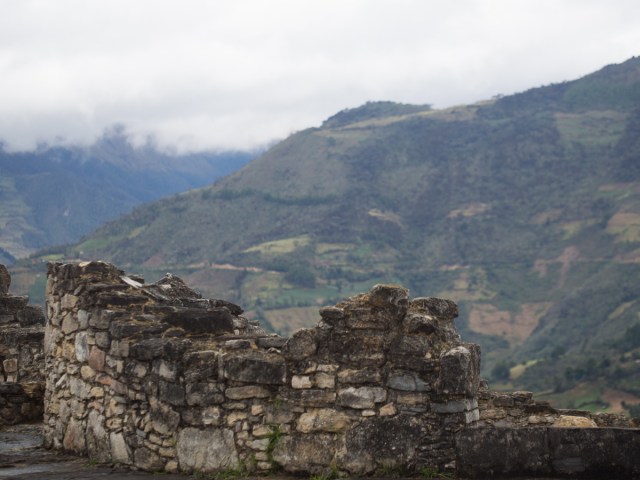
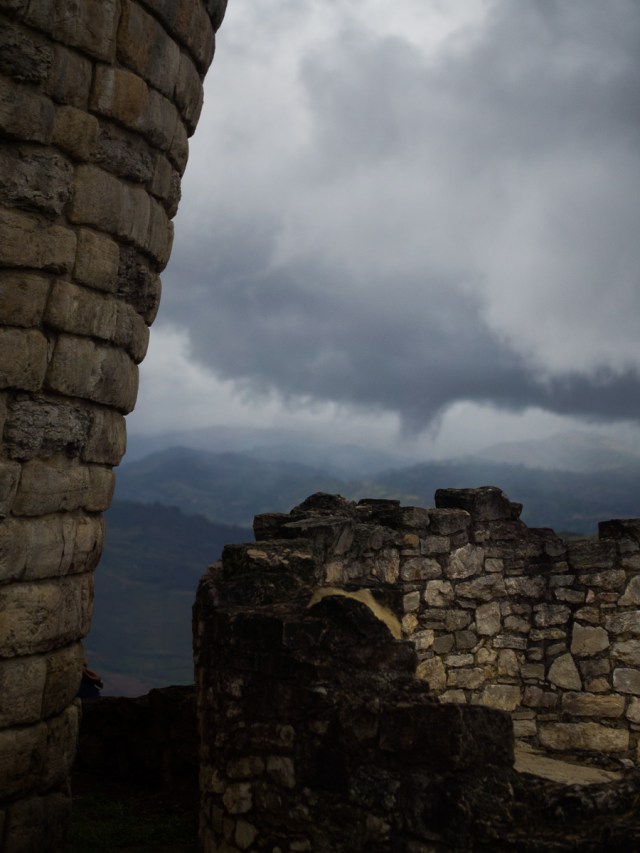
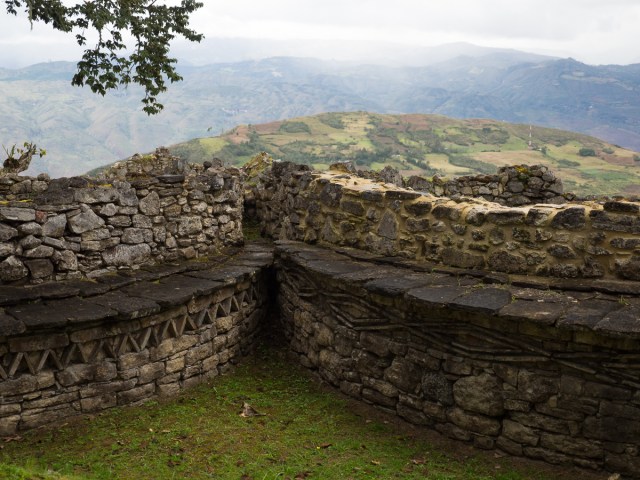
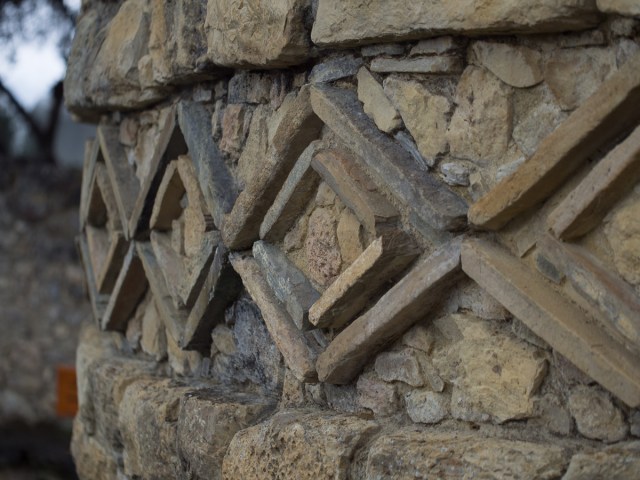
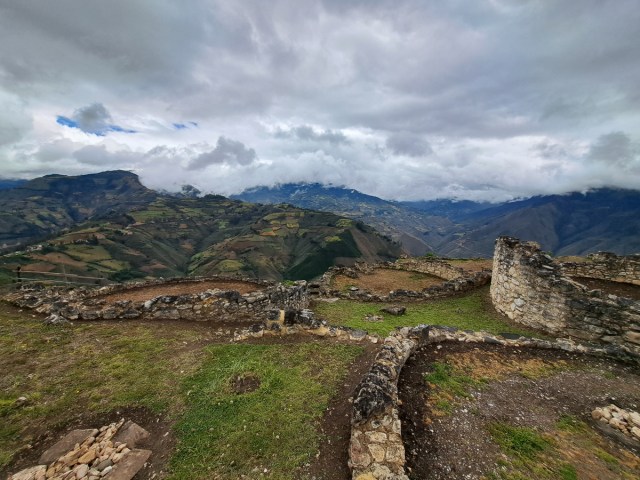
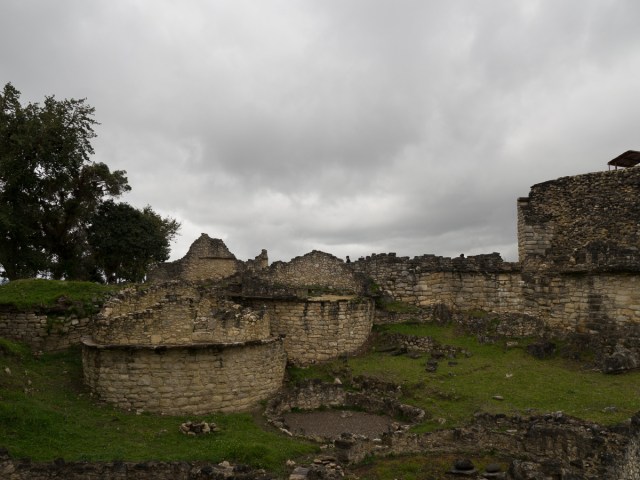
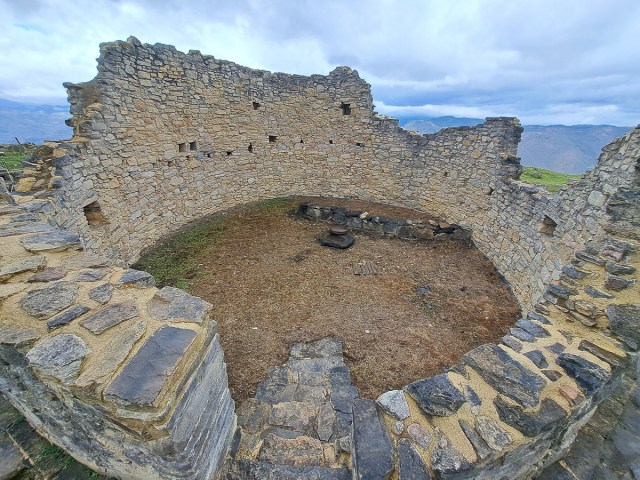
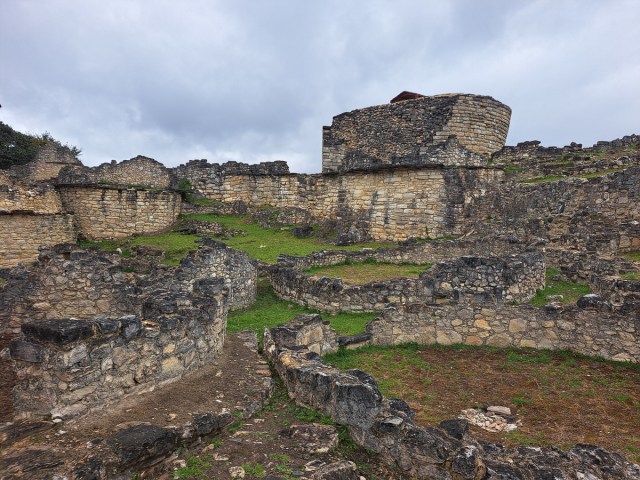
Searching the internet and the Lonely Planet guide we picked what is fast becoming the Machu Picchu of northern Peru. Kuelap is older and higher than the southern treasure and now with a 25min cable car ride to reach it replacing the 10km hike up the mountain side it is becoming much more popular. The Incas are well known in the UK but their great empire, like Alexander the Great‘s, was very short lived, a century or so. They conquered and built on top of the 800 year older Chachapoyas people’s site.
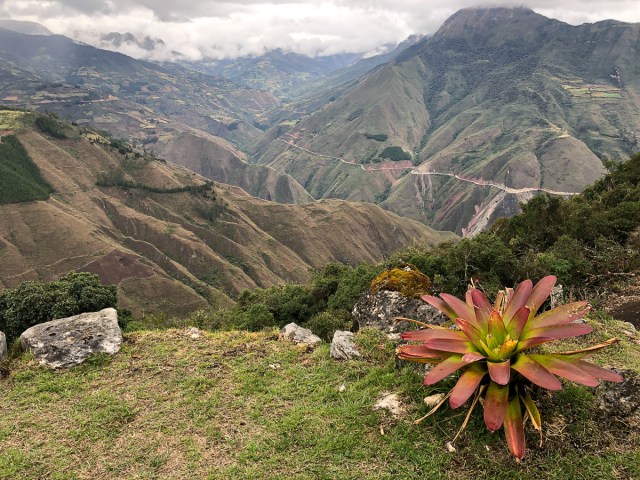
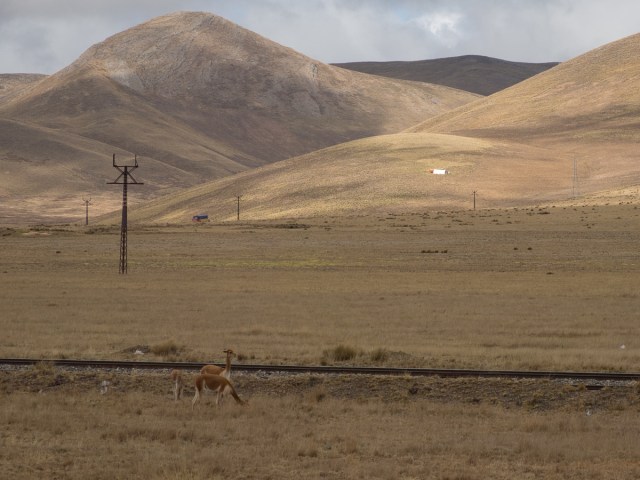
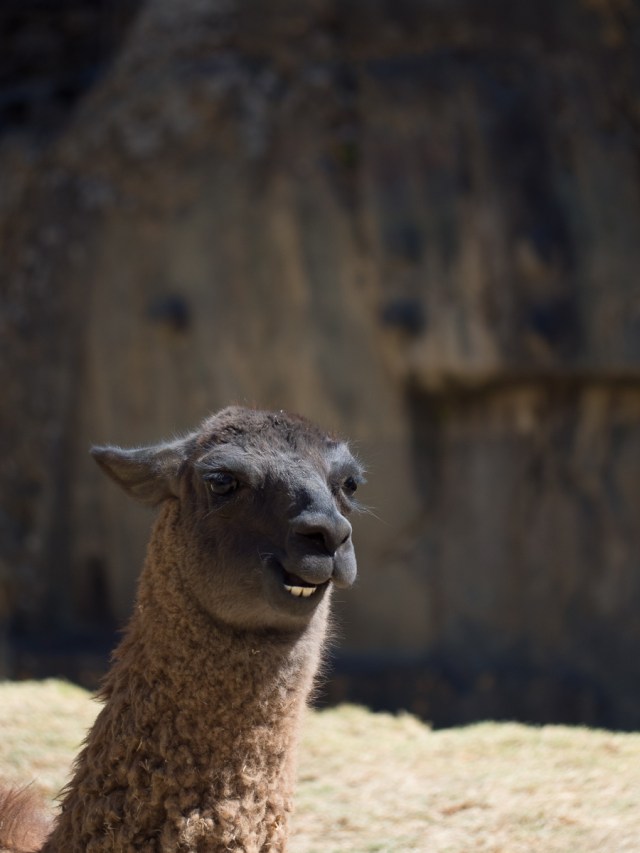
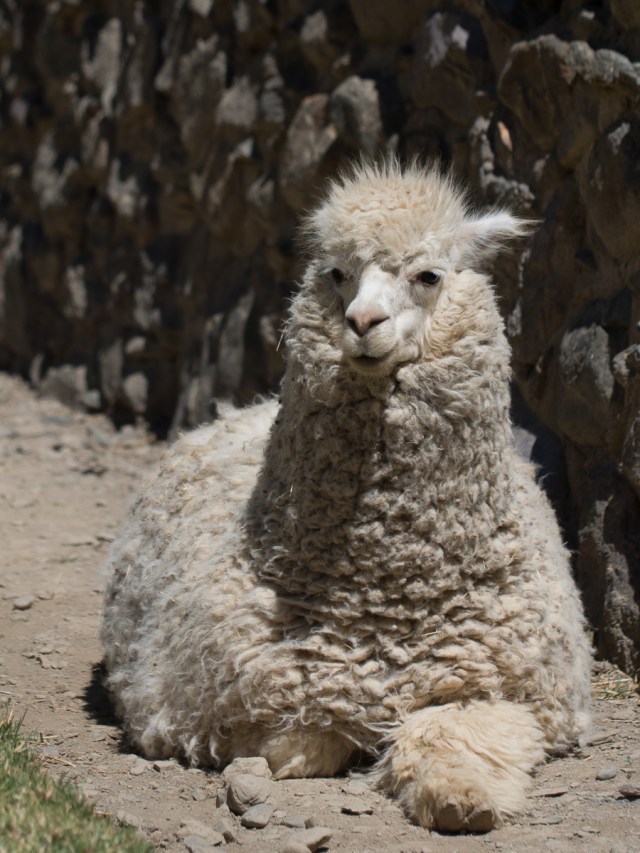
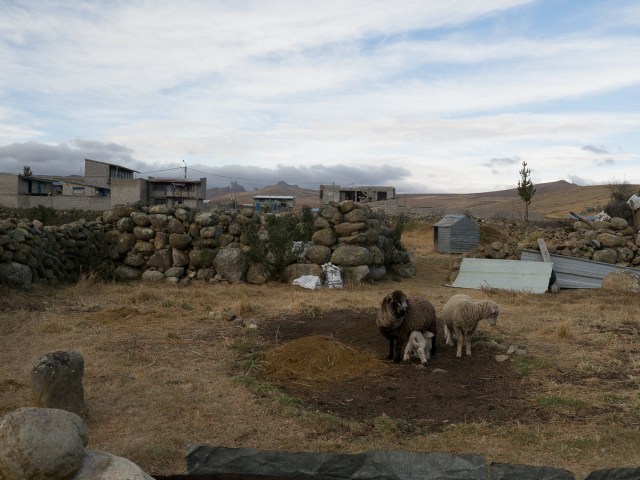
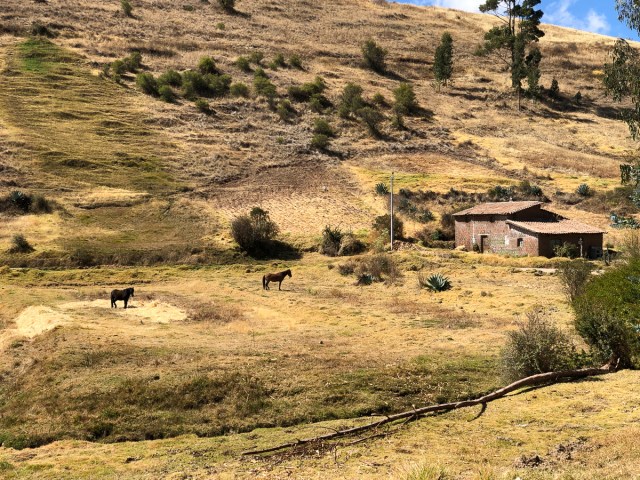
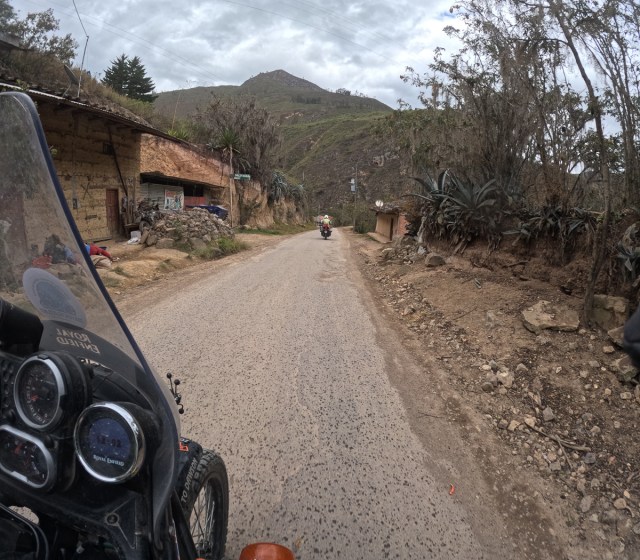
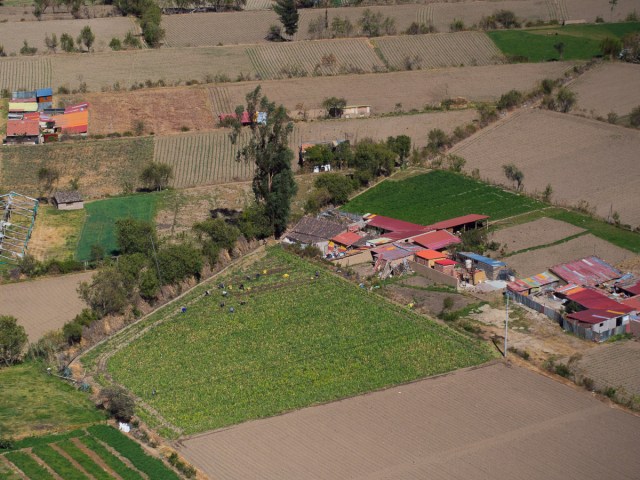
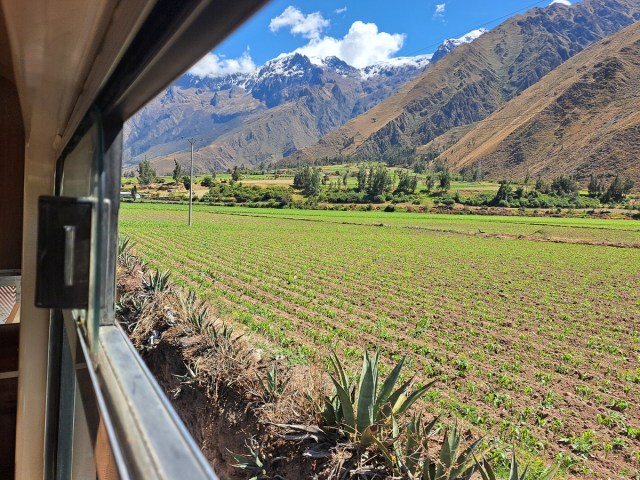
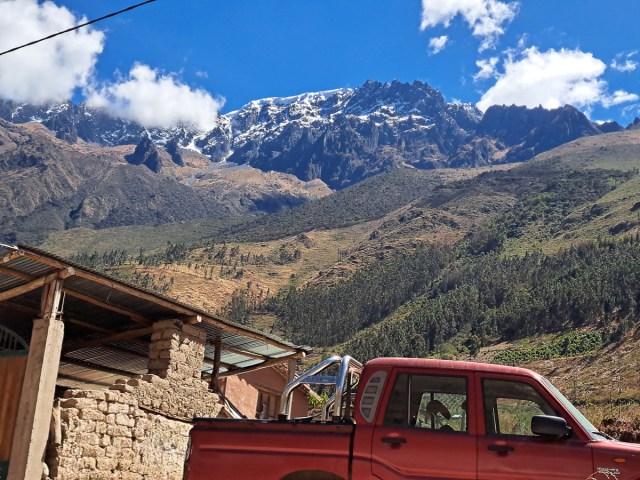
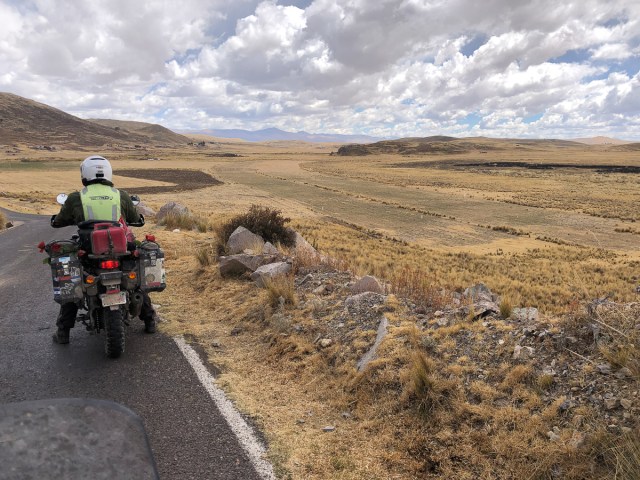
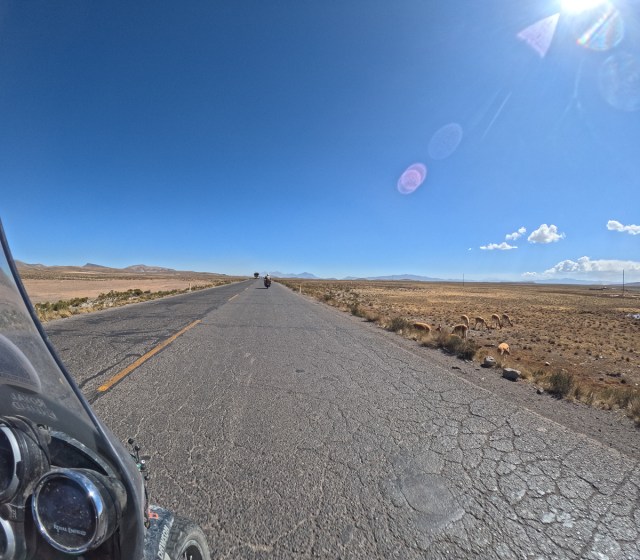
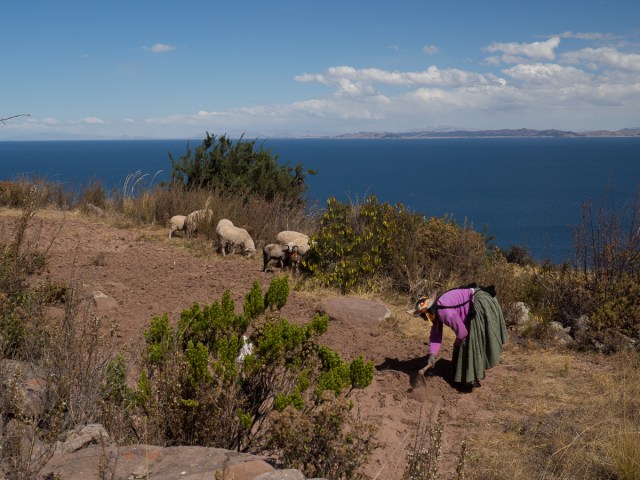
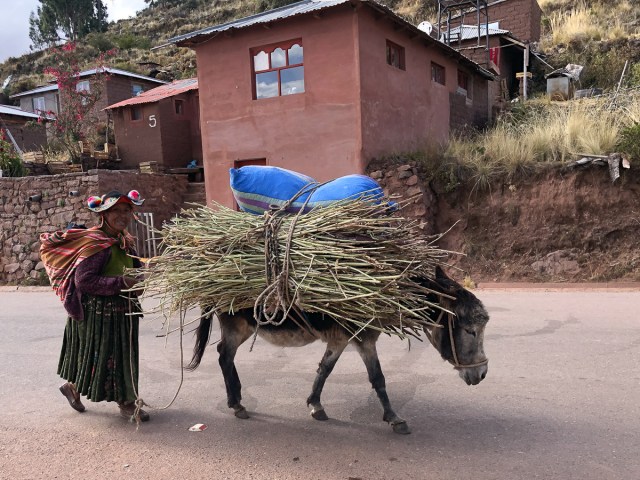
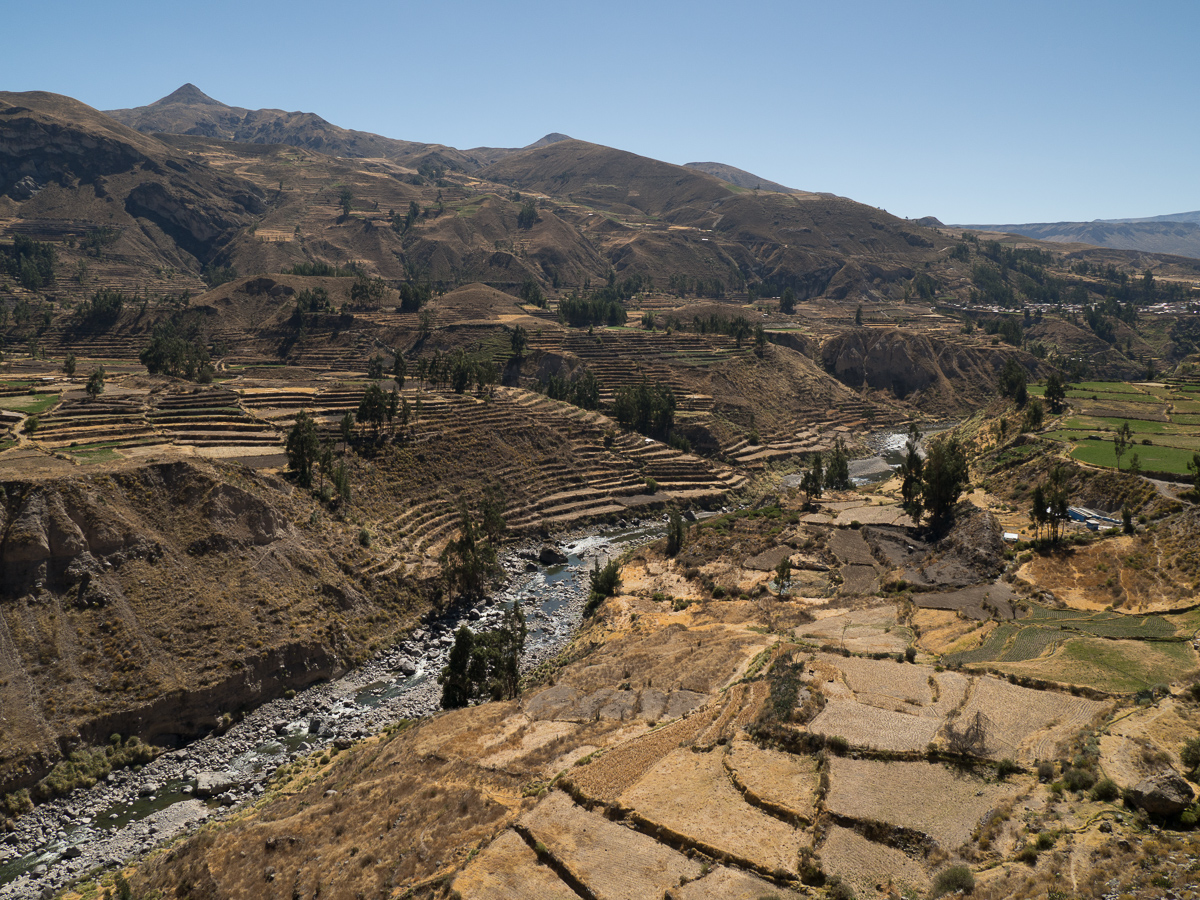
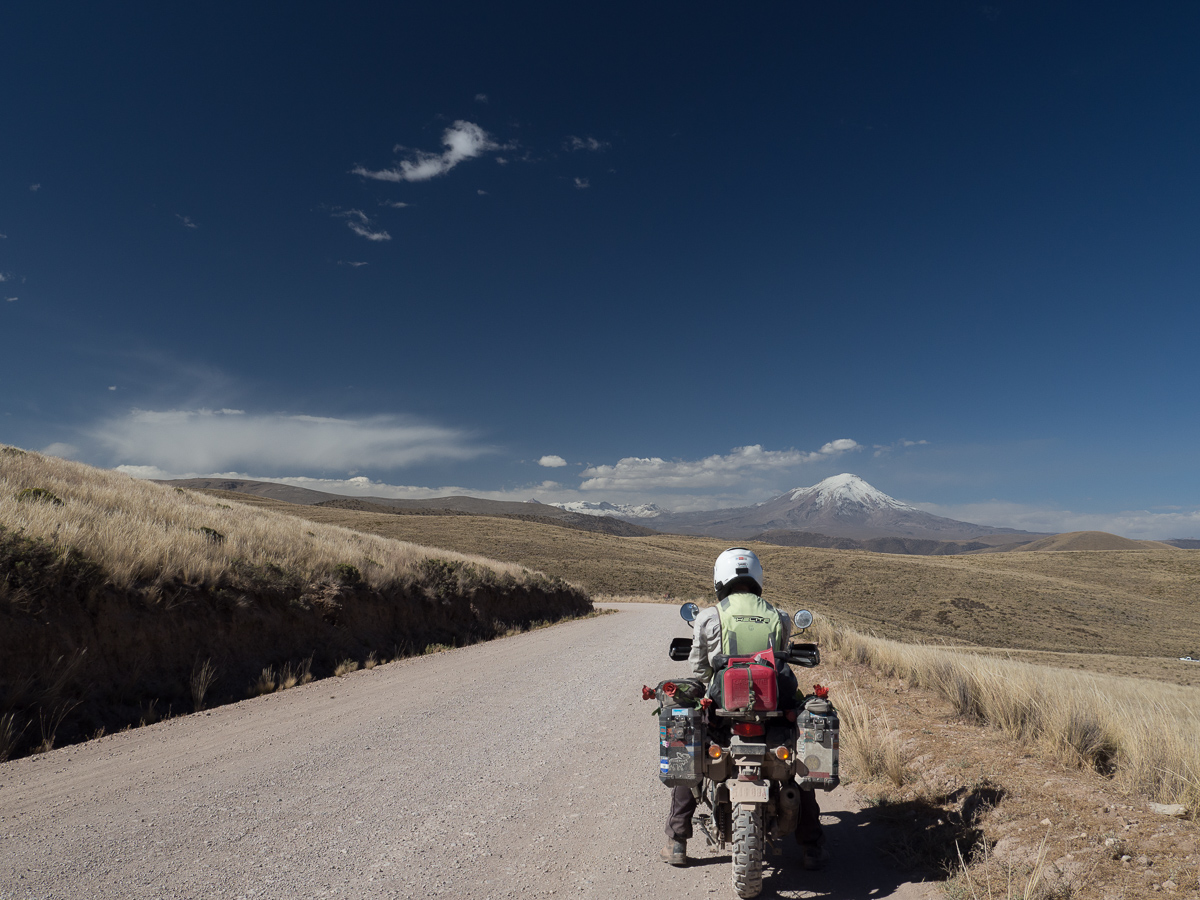
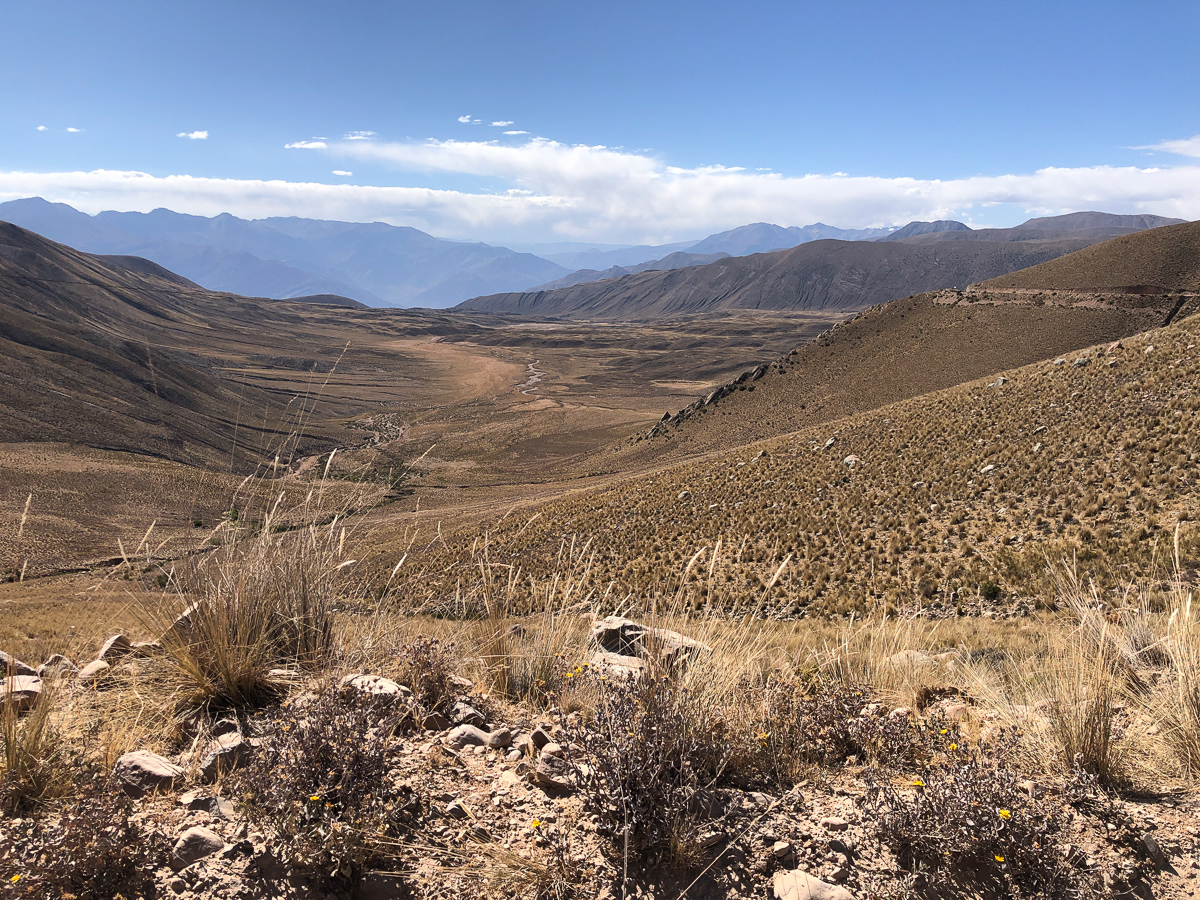
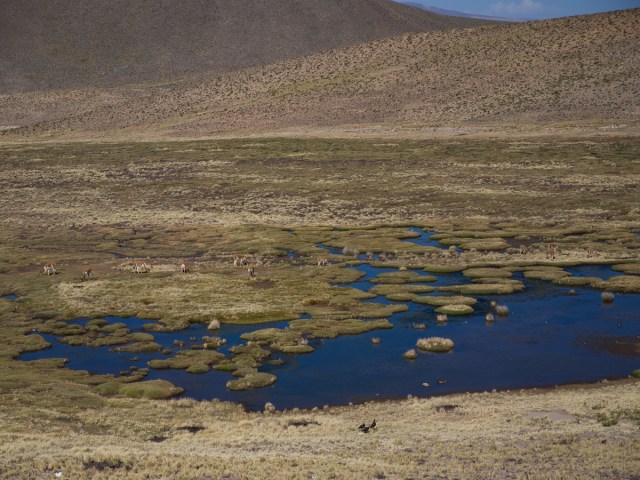
Trying to stay off the Pan American Hwy has had us on some awesome mountain roads. The views across puna landscapes have been fabulous with livestock farming of sheep, cattle and llamas highly evident. Spotting the smaller wild relative of alpacas, vicunas, was also great to see. And countless little tiny terraced fields, many still clearly worked by hand, with all manner of arable farming, especially potatoes.
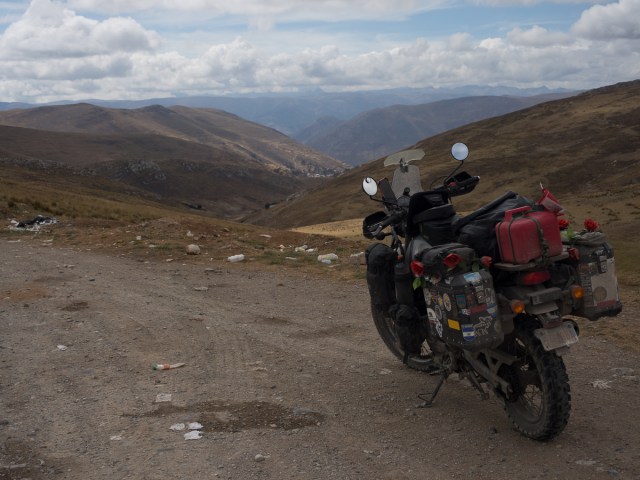
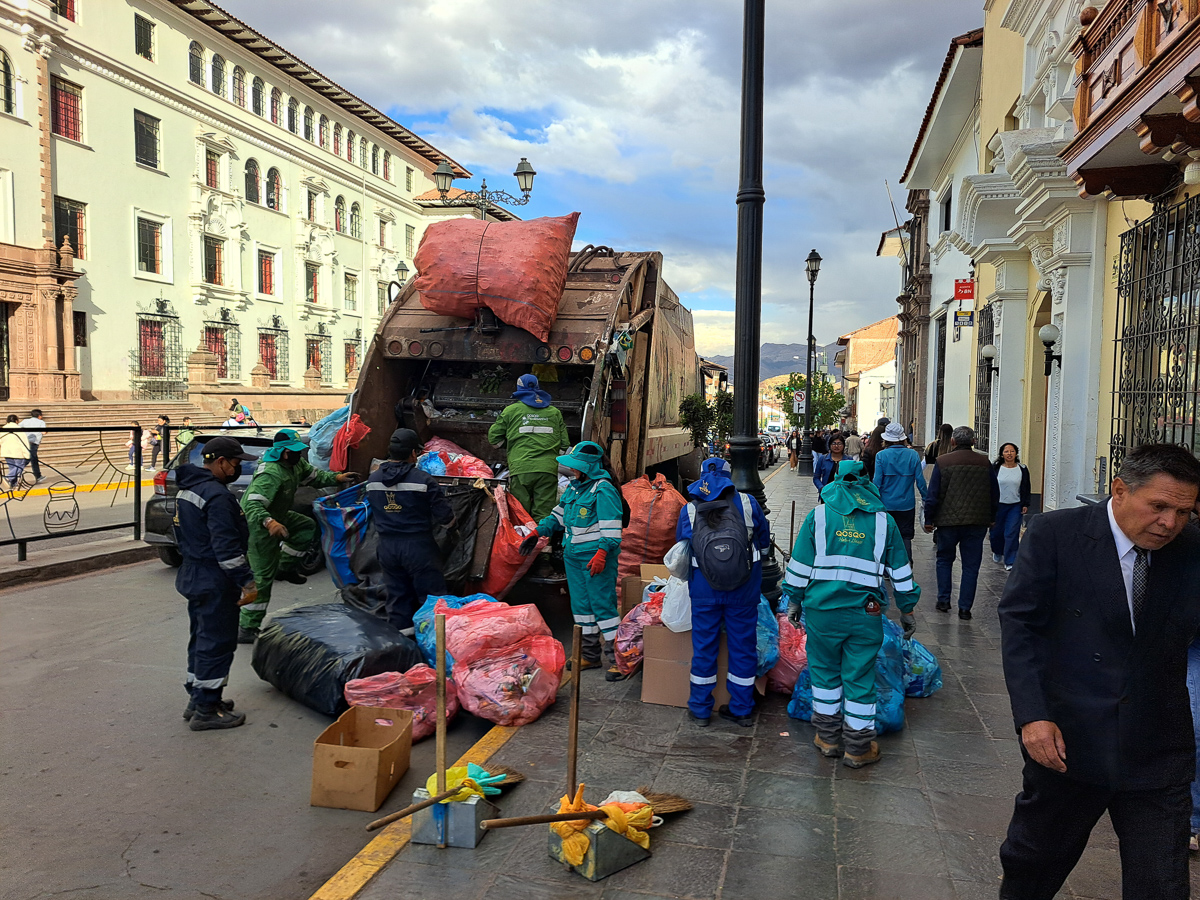
A disappointing thing has been the amount of trash along the way. Crossing the puna landscape was on a well surfaced road which had lay-bys every few hundred metres. There aren’t that many viewing spots on the central and south American roads so it should have been pleasant to see them except for the fly tipping. We’re not talking about the occasional can or wrapper thrown out of car windows, which we’ve frequently seen since Mexico, this was bags of rubbish piled high. Perhaps it is villages off the main roads where a municipal rubbish collection isn’t possible but it’s a shame to see so much rubbish along the roads. Especially, apparently in the middle of nowhere.
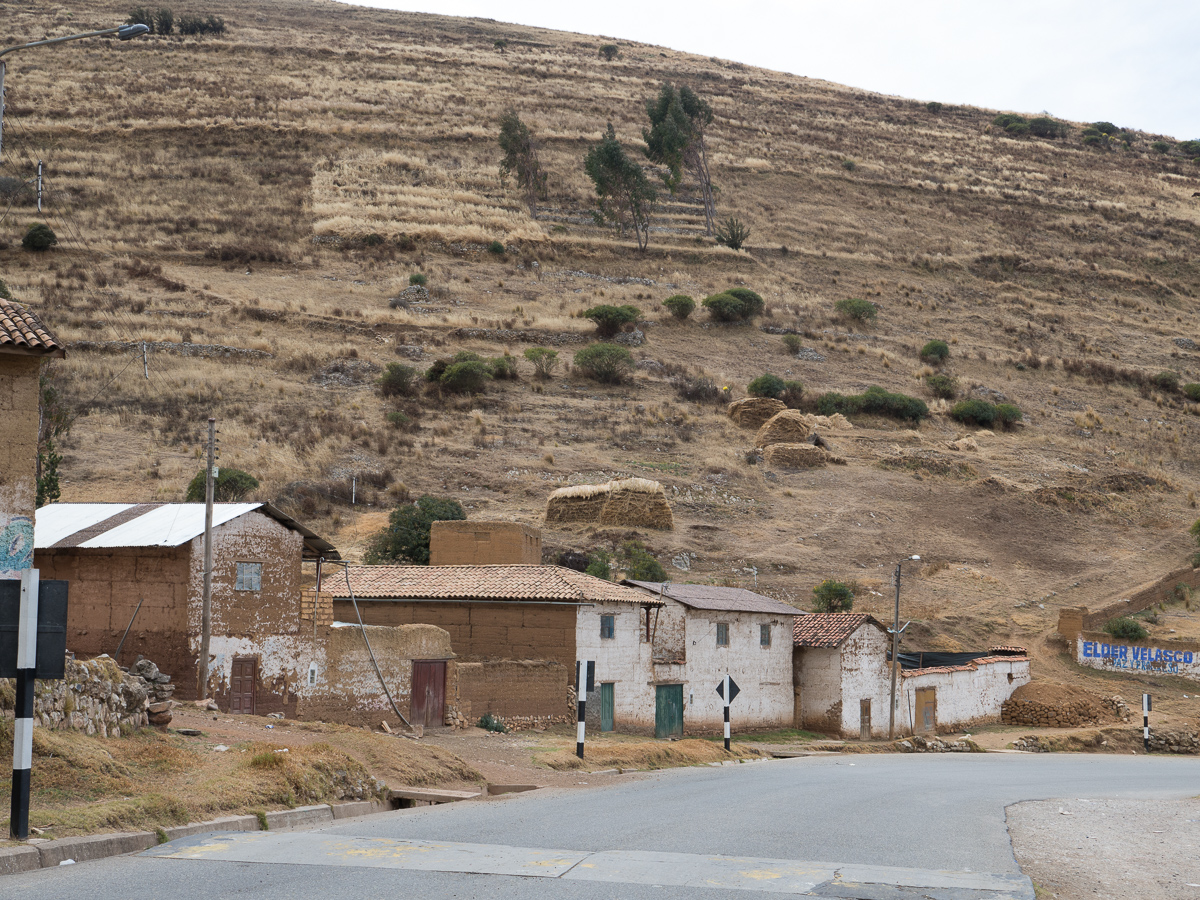
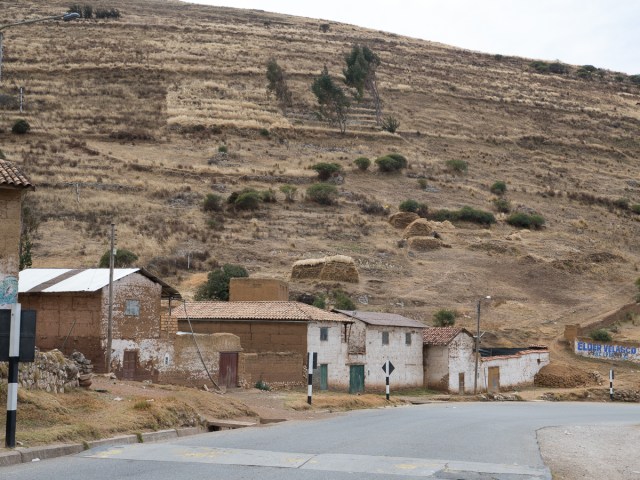
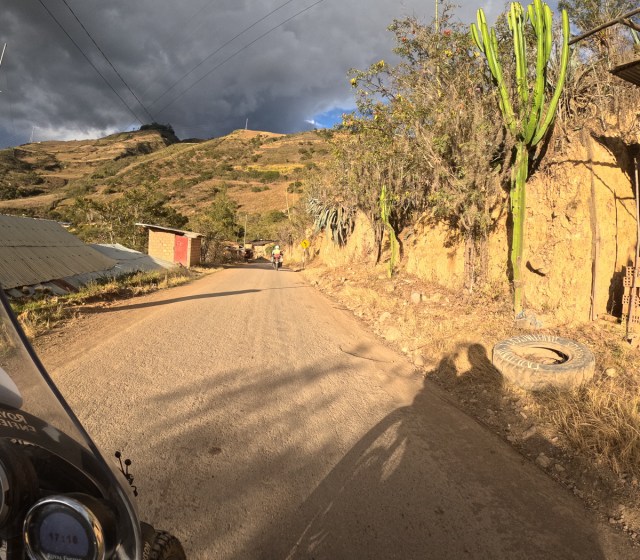
At times our attempts to stay off the major highways has been torturous. We’ve passed many run down villages and plenty of beautiful ones too but a recurring trend has been the lack of shops to stock up on food supplies and, at times, the distances between available accommodation. Part of the problem with the shops is that in a village, all the locals know where it is, so, it doesn’t need a sign, does it? Gid remembers from his childhood near Bristol, Mrs Luton’s shop. It was exactly the same: tiny, served about 20 households, stocked bugger-all, and you had to know it was there. It isn’t now.
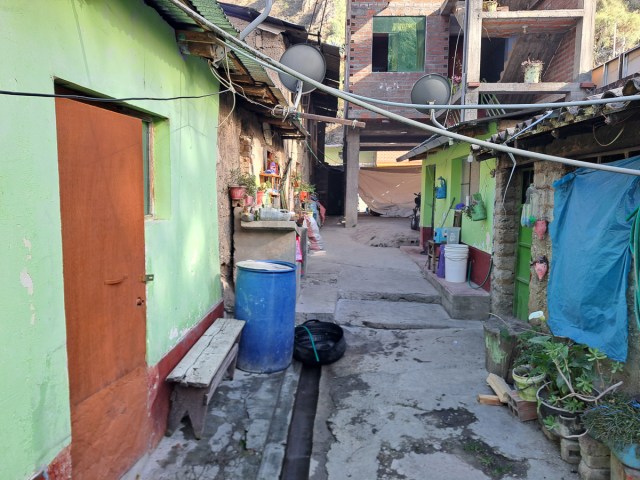
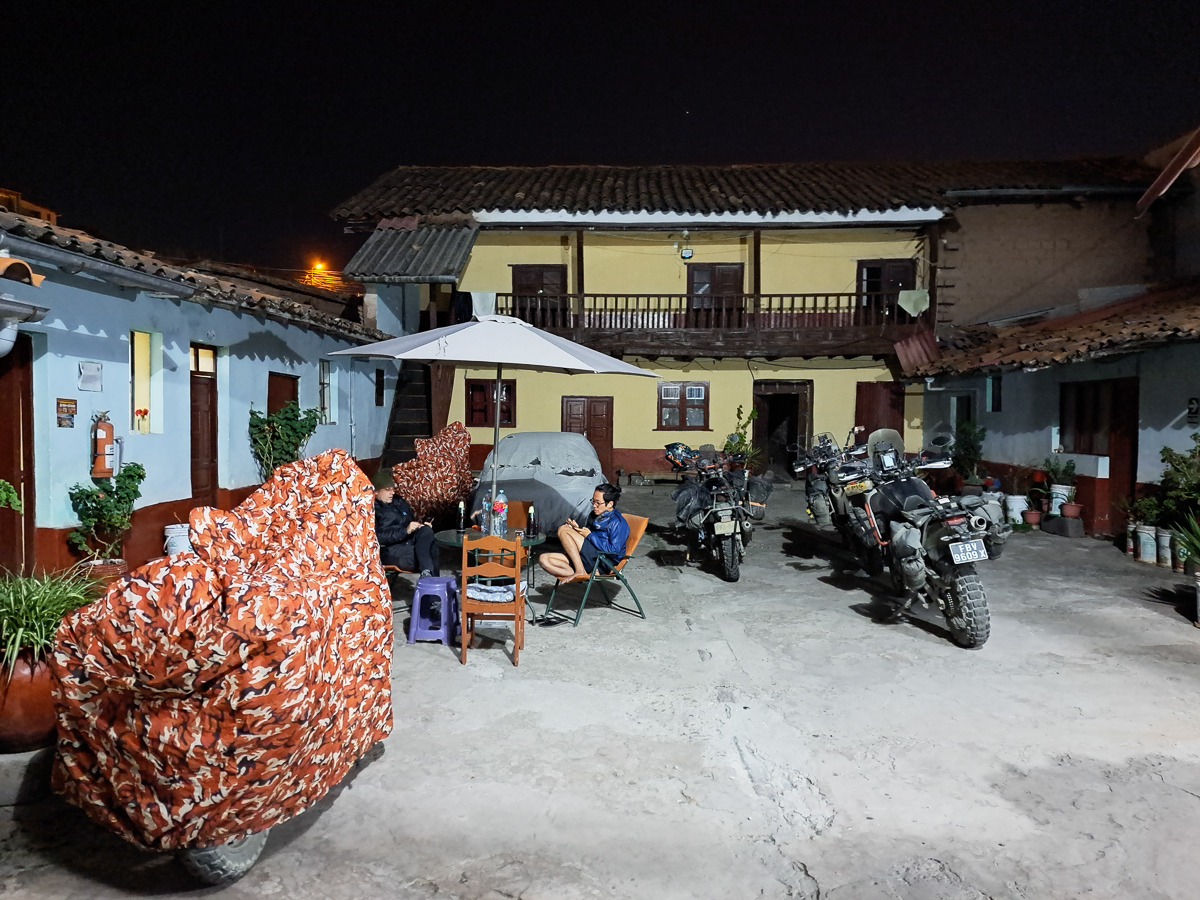
Occasionally accommodation listed in the apps doesn’t exist or is closed or we find an unexpected place along the way. A difficulty is the need to get the bikes off the road into some sort of secure area. While on some of the minor roads we had the choice of stopping early as we passed somewhere or pressing on to an alleged, on this occasion, hospedaje I had found. Gid was sceptical that it would exist but on we went. When we arrived at the village I saw a sign at the end corner of the street and thought that would be it. Gid recognised the place from the picture in Google – “hospedaje” barely visible on a colourful but very busy banner. It looked doubtful but in Gid went to enquire. Bingo – it was accommodation and our bikes could go in the shop over night. Sorted. After a friendly dismissal of the registration process we were shown up to our room. Boy band posters were still on the door and whilst it had an on-suite bathroom the bed itself was barely wider than a single. Our hosts – Elisabeth, Epifanio and Jasmine were delightful and invited us down for supper where we shared conversation care of Google Translate and Gid’s limited Español.
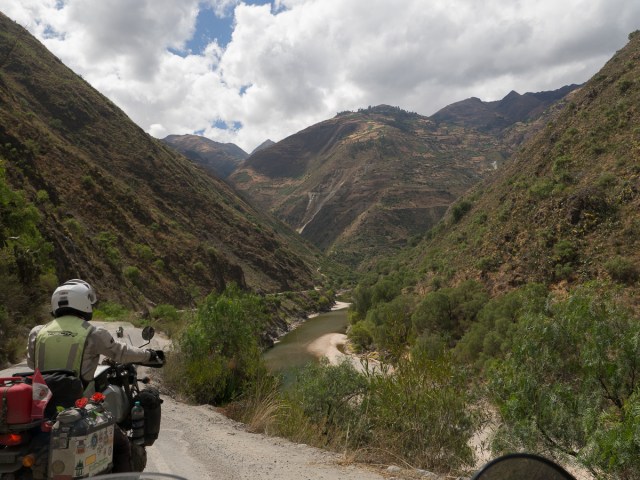
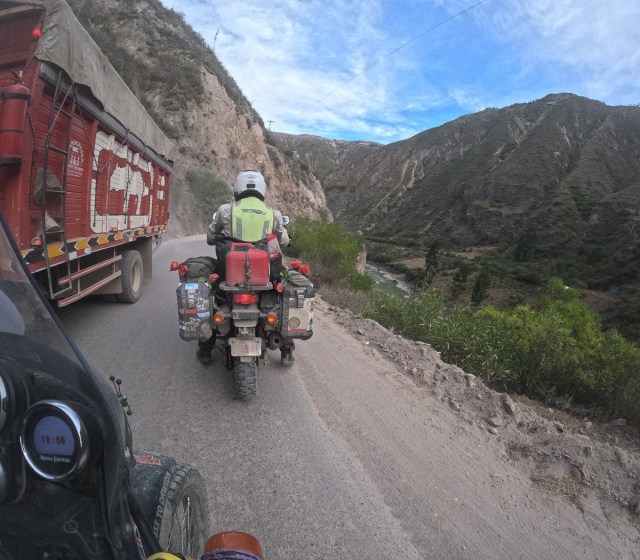
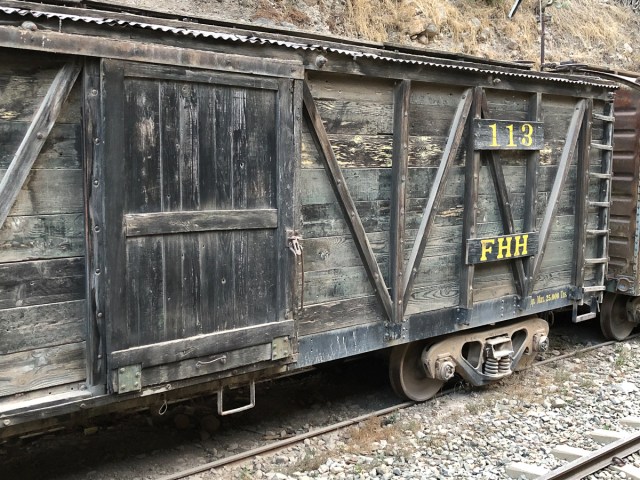
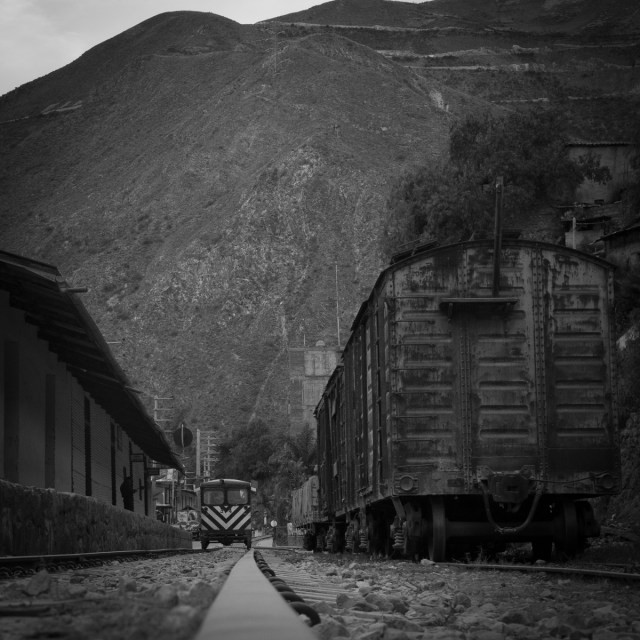
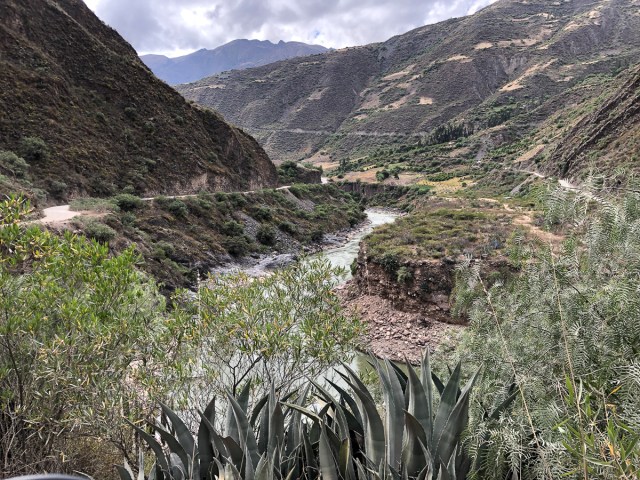
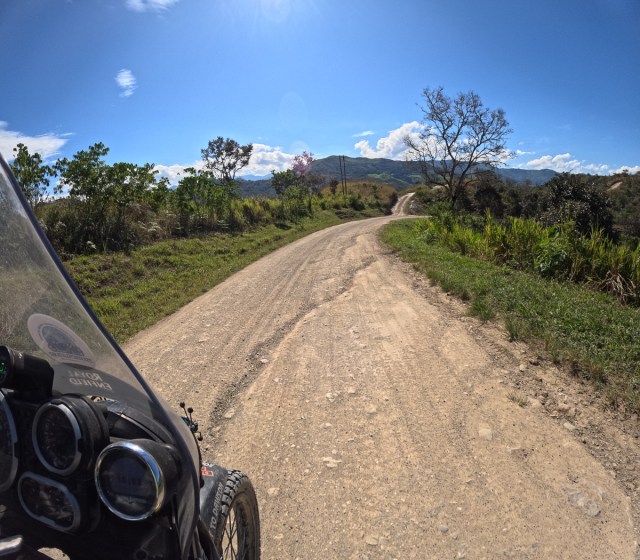
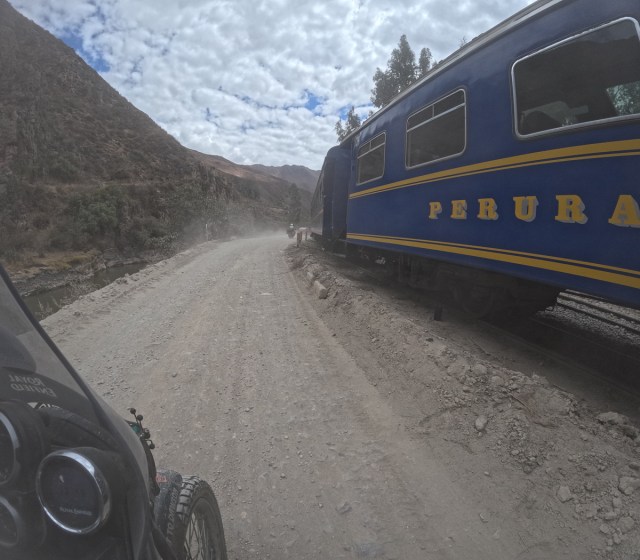
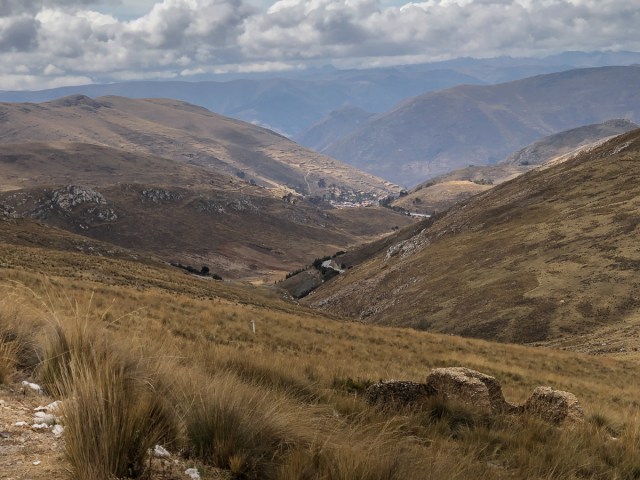
One particularly torturous day had us riding for ten hours and we’d only covered 150mi. The first half of that grandly titled “Ruta 3S” was along a definite dirt road, narrow at times, with trucks using it too. The river at the bottom of the valley to our right was coursing along frequently visible way down below. A sheer drop. On one section that had a chalky cliff face to the left and sheer drop of one hundred metres or so to the right I had a close escape. The narrow road surface was chalky with a slight rise on the left cliff face side. I probably wasn’t happy on the slight slope and tried to cross the small central ridge. As to be expected really the back wheel shot sideways, sliding downwards, about one foot Gid tells me. Far too near to the sheer drop. As a result of that the front wheel was now facing the cliff. Some how I managed to correct this without coming off. But shortly after that I stopped and undid my Helite airbag leash that had me securely attached to the bike. If the bike was going over that edge I wanted a fighting chance of not being dragged down with it. The hospedaje in the railway terminus village of Mariscal Caceres was basic, but a great relief after such an arduous road.
Entertainment available
Leading on from this section we joined a surfaced road. Or that’s what the map recorded. Really! Gid was furious. The language coming through the intercom was blue. ‘How can this be classed as surfaced!’ he stormed down the device. After a while we spotted a small section of tarmac. Ok, so in the long distant past it was surfaced but certainly not any more. Unfortunately an ex-surfaced road tends to be bumpier and less predictable than a plain gravel road. The potholes are sharp edged causing us and four wheelers to dodge all over the place.
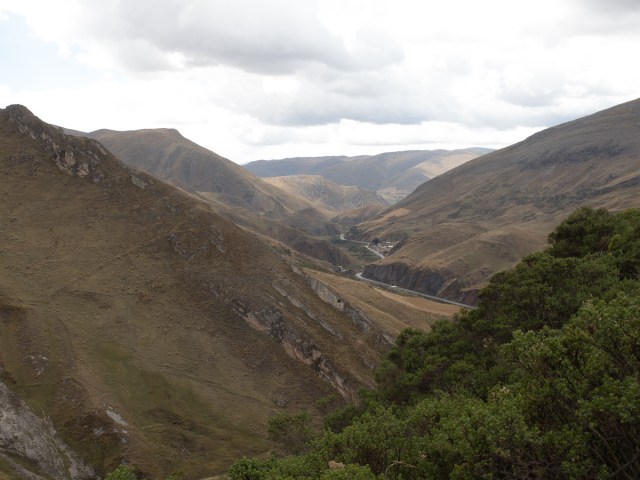
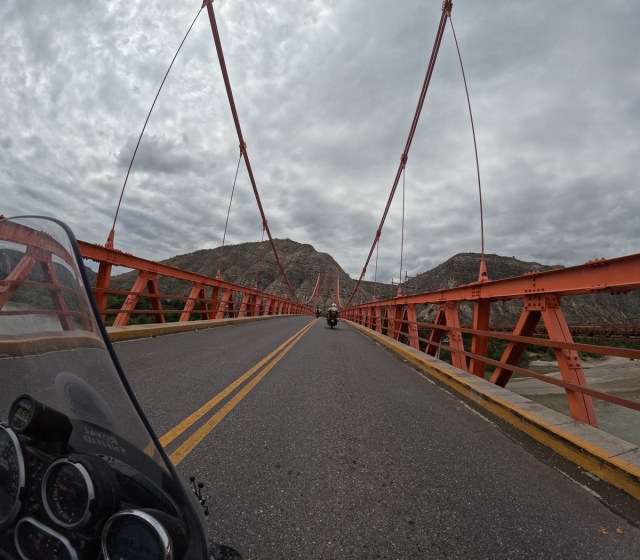
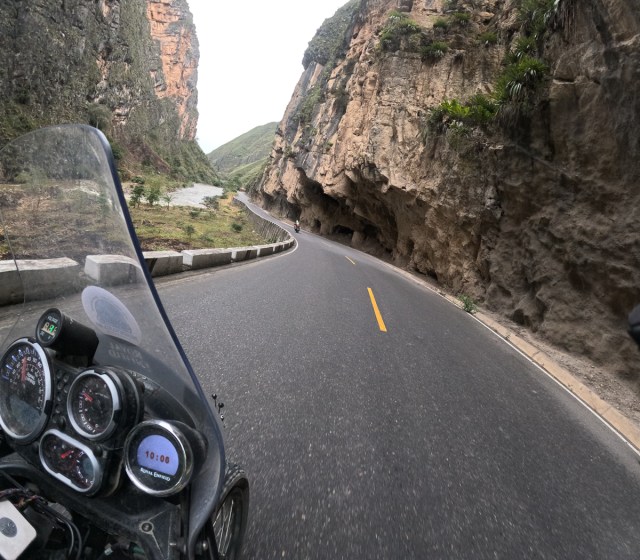
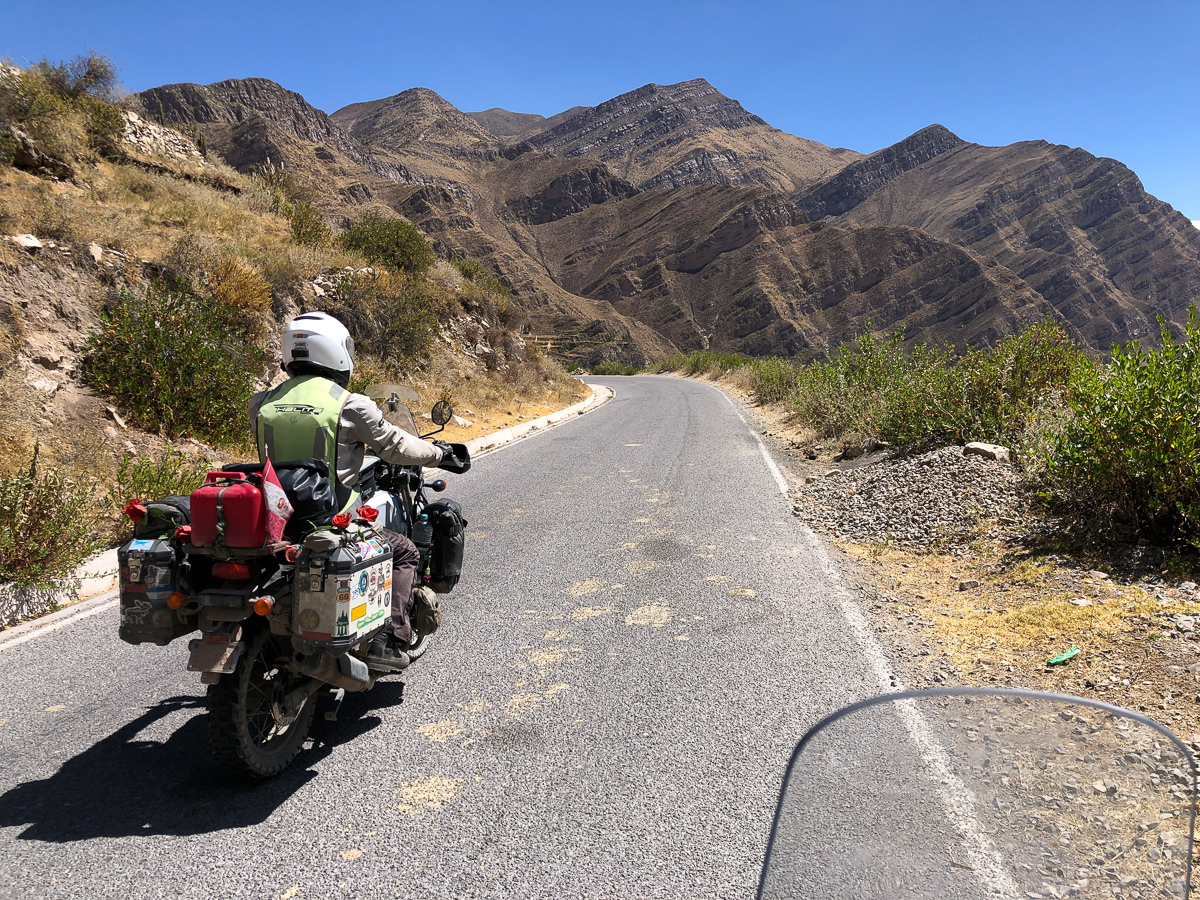
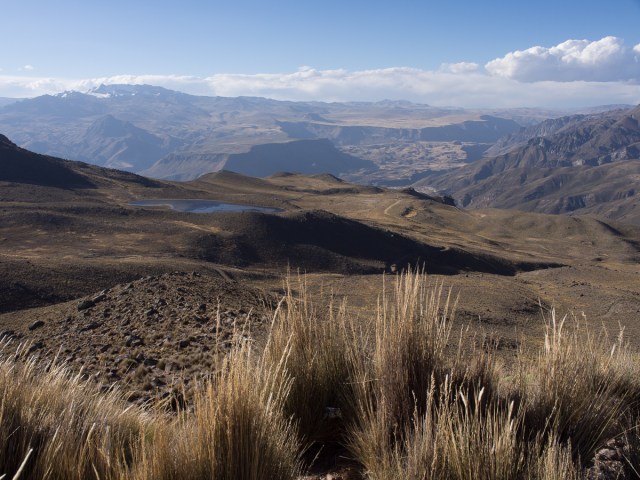
In amongst some nightmarish riding moments have been the most stunning views. We’ve covered two kilometres vertically on a couple of occasions as we make our way up and down the ’foothills’. Sometimes this is on immaculate tarmac that our home councils would envy. At other times, there’s potholes or gravel lurking round half the bends. Our brake pads that were going to be good for another X,000 miles are taking a hammering.
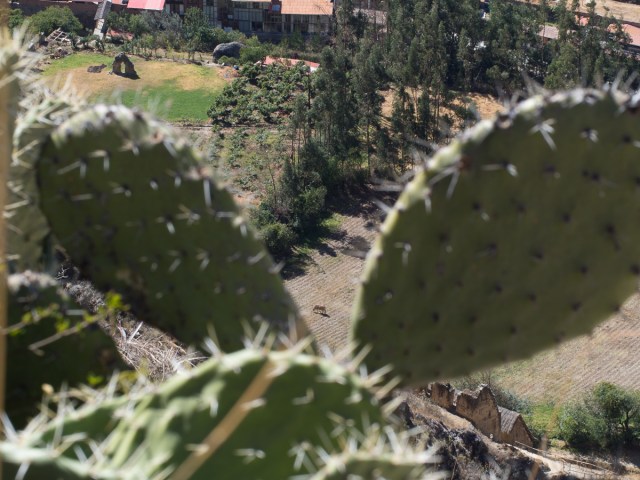
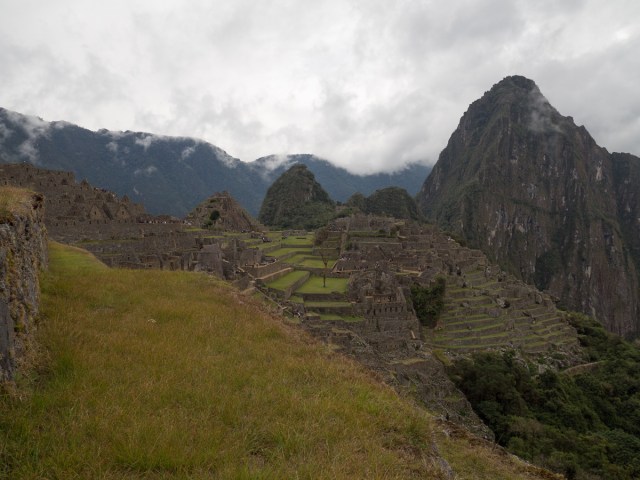
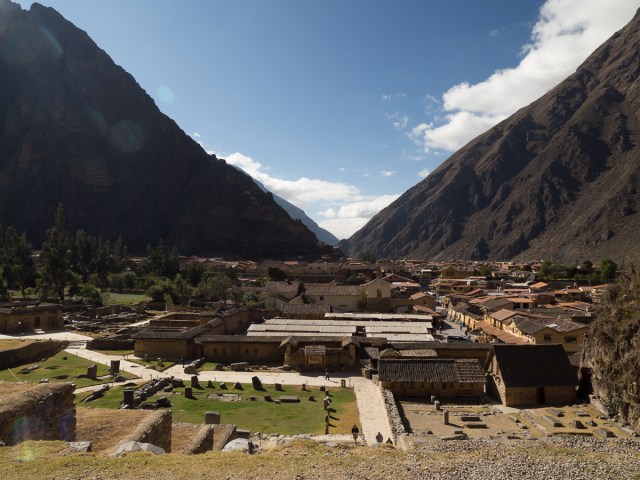
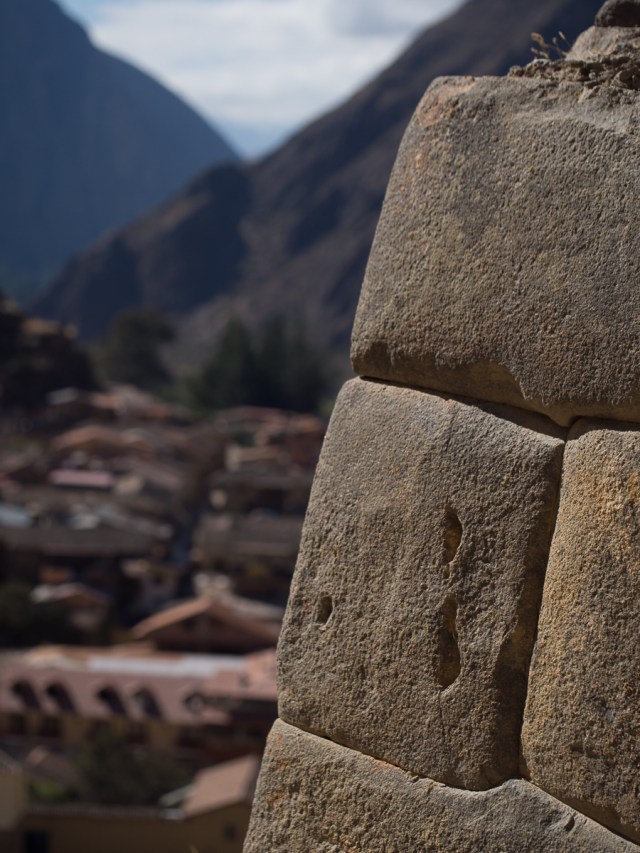
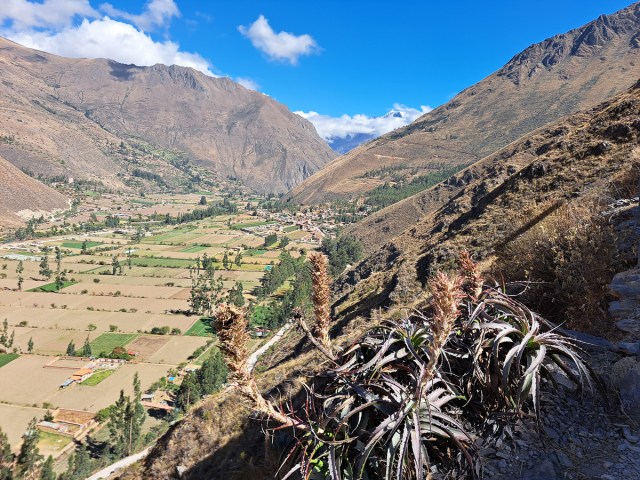
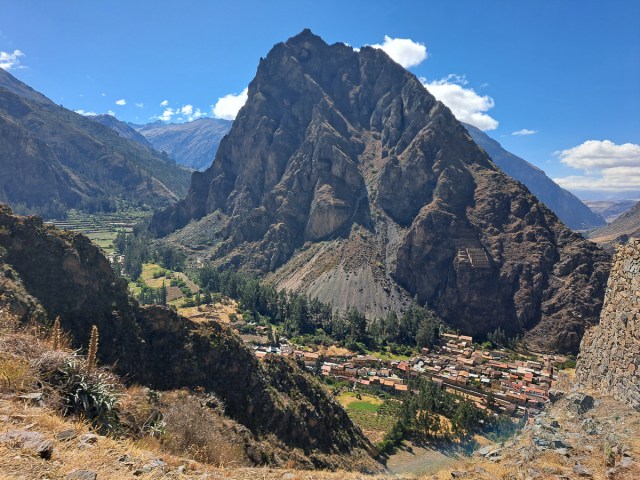
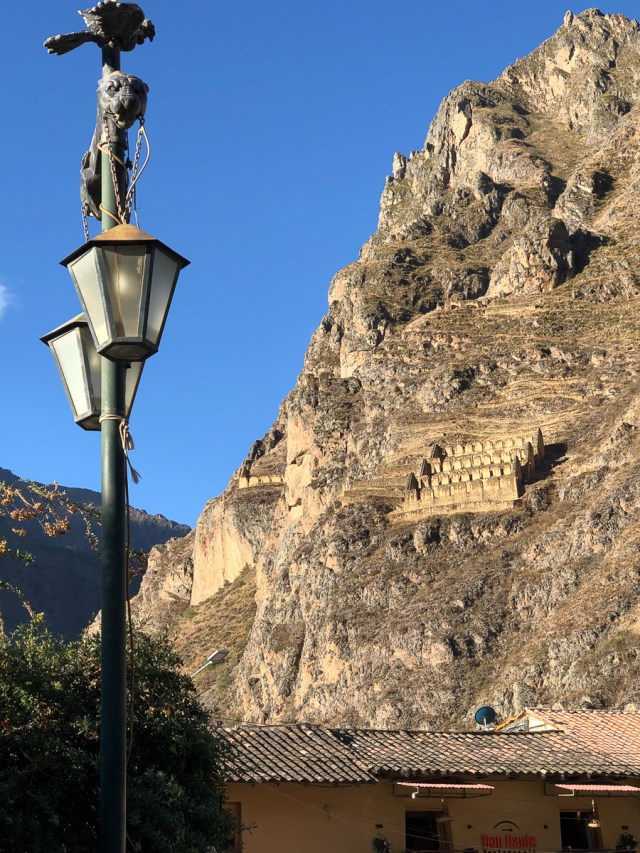
Machu Picchu is the most popular tourist destination in South America but with that comes the difficulty of getting tickets. August being the peak of the northern hemisphere tourist season means that on-line tickets were sold-out months ago. On arriving at our accommodation at the nearby town of Ollantaytambo, itself an interesting tourist destination on the edge of the sacred valley and the site of the Inca -Spaniard battle back in 1537, our hotelier was most vociferous that in August there was no way we would get tickets. Gid explained that we were going to catch the train to Machu Picchu and buy a ticket, at the Ministry of Culture, for the following day. We weren’t entirely certain this would work, as the online information about it is drowned out by all the agencies and touts trying to hard-sell the tickets they’d block-booked months earlier, and smug online travel gurus who’d also known their arrival day in advance.
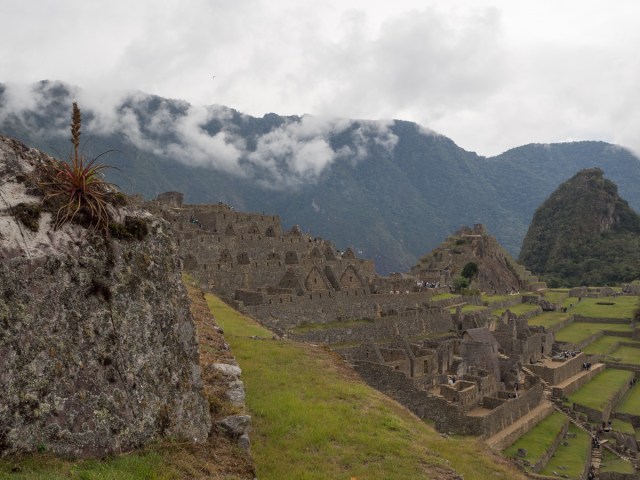
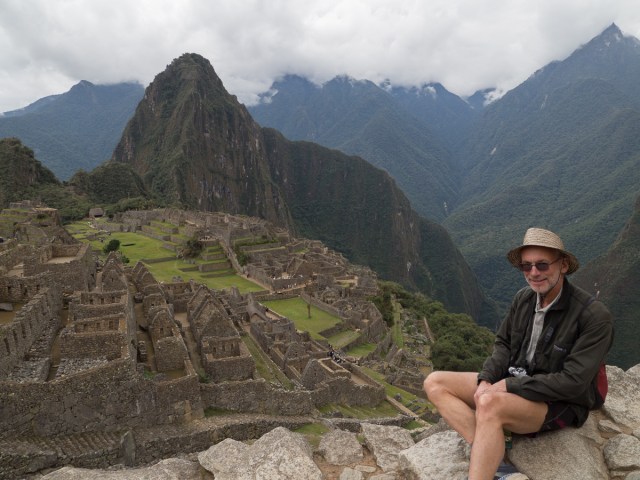
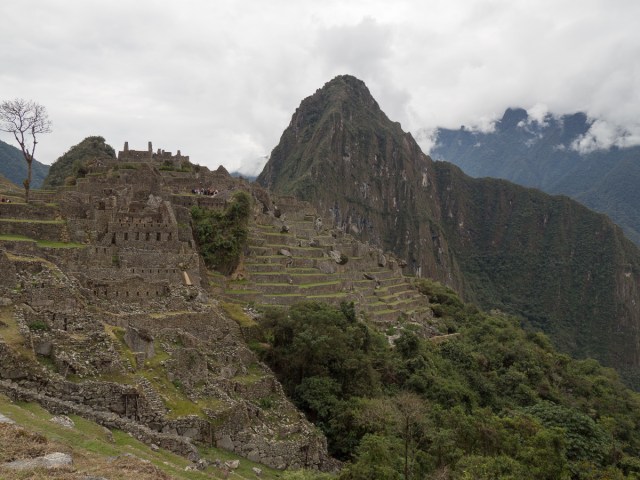
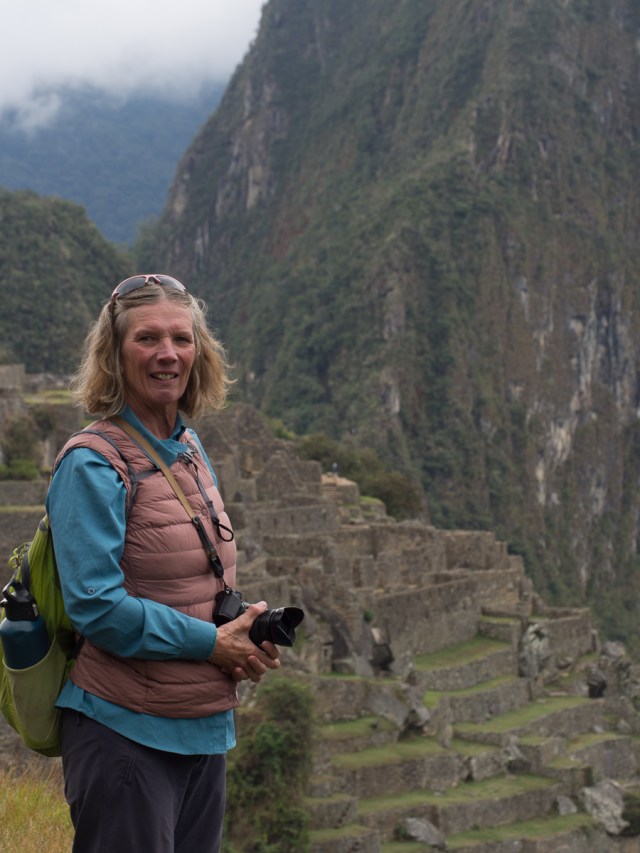
Our plan worked. Swallowing our outrage at the extortionate cost of the rail ticket we arrived at Machu Picchu mid morning still in time for some choice in visiting times tomorrow. An aged fellow traveller didn’t like the buy a ticket for tomorrow system but wasn’t getting anywhere with his same day arguments. Midday was our time. It couldn’t have been better. We had all morning to clamber up the very steep path from town to ruins, as Gid was too mean to pay $12 each for the bus. Too late to catch the early morning softer light for our photographs but not quite peak of the day heat either. As it happened it was overcast and could barely have been better for photography and comfort.
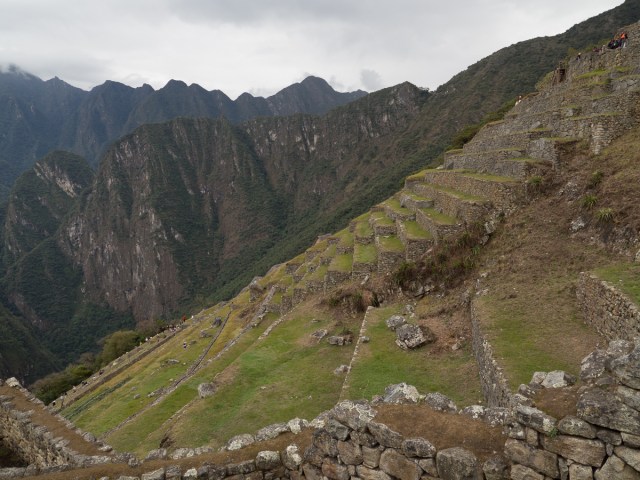
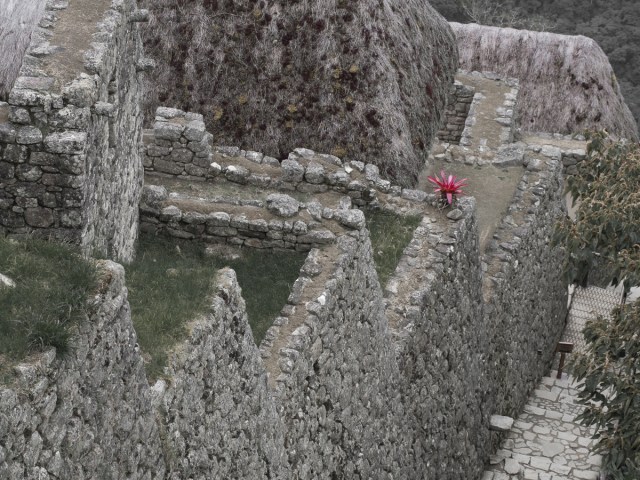
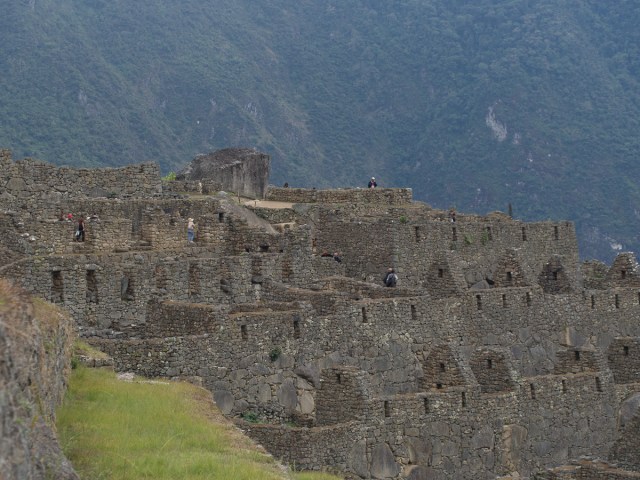
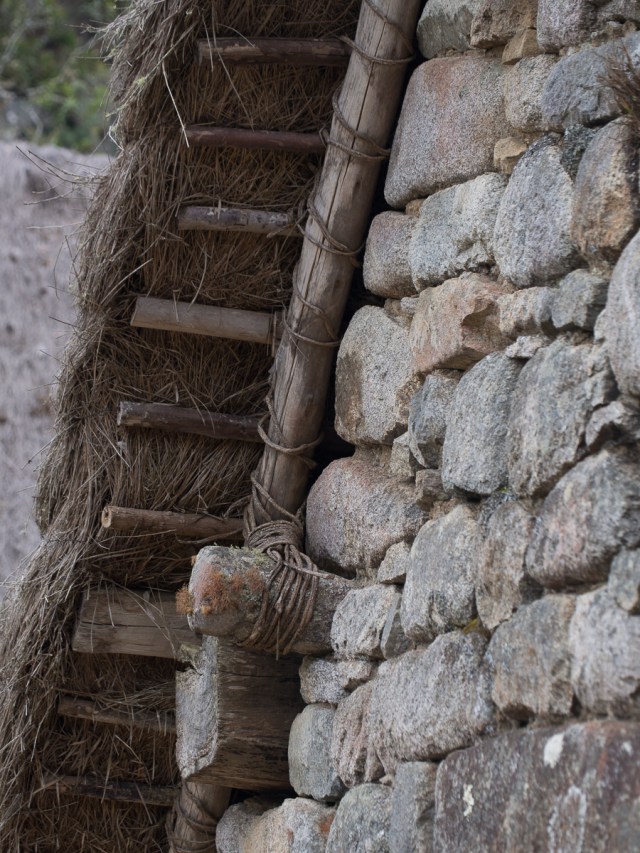
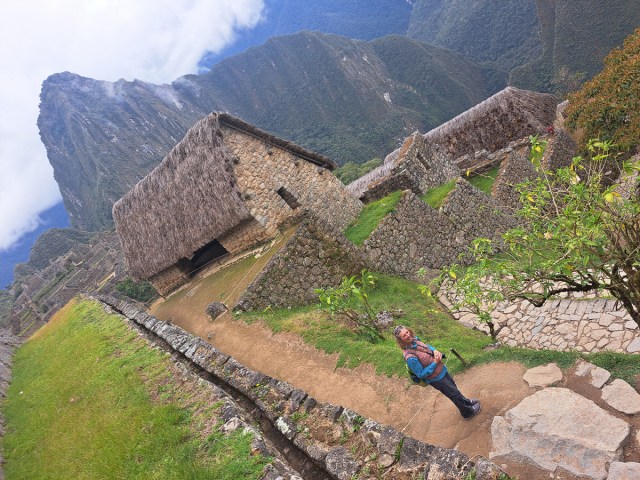
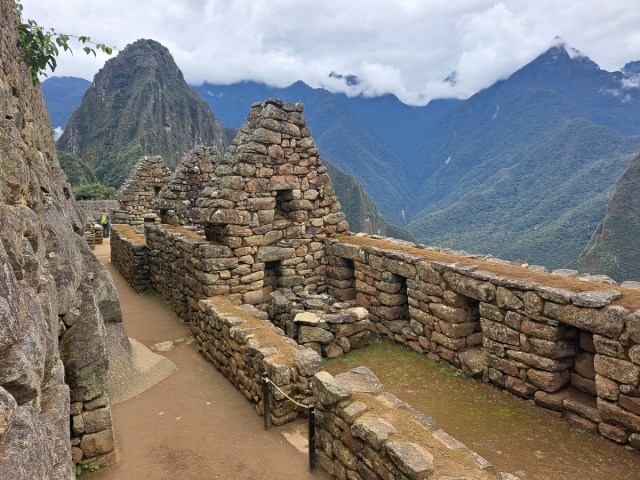
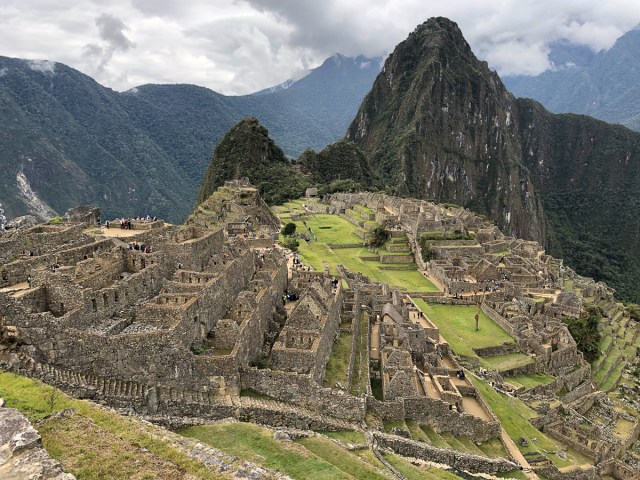
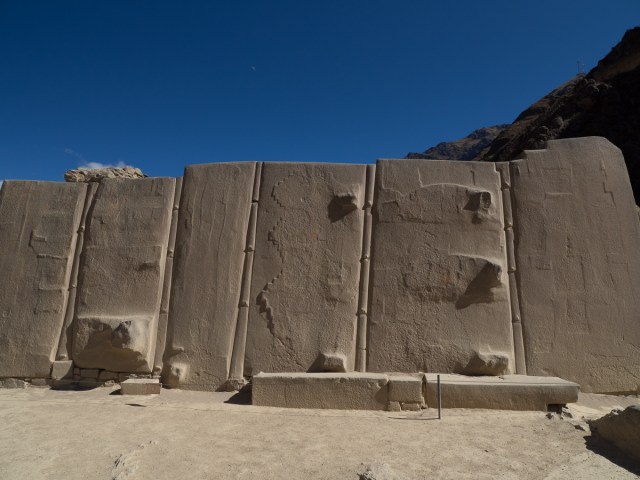
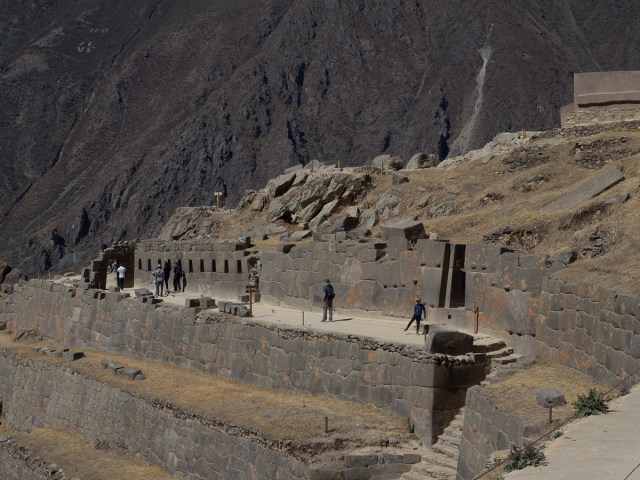
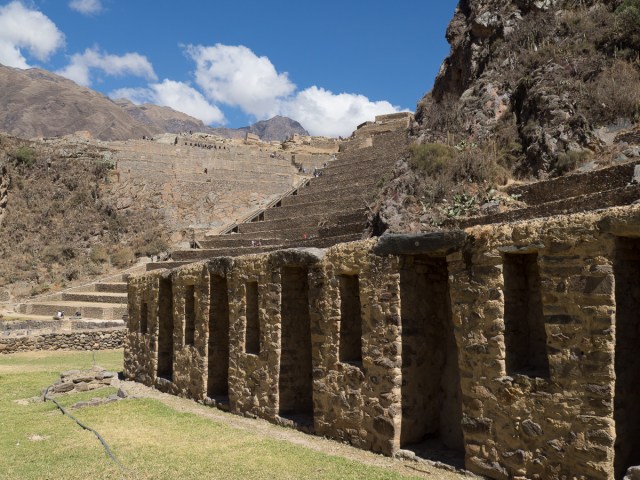
What a sight! The beautiful mountain setting and the expanse of the ruins spreading up the slope is awesome. The restoration has been sensitively done with the occasional reconstructed building and one area lower down that is still rubble. But most of the site has outlines of the buildings with the walkways and community areas in between. I had thought that the ruins overlooking Ollantaytambo were impressive but Machu Picchu is on another level.
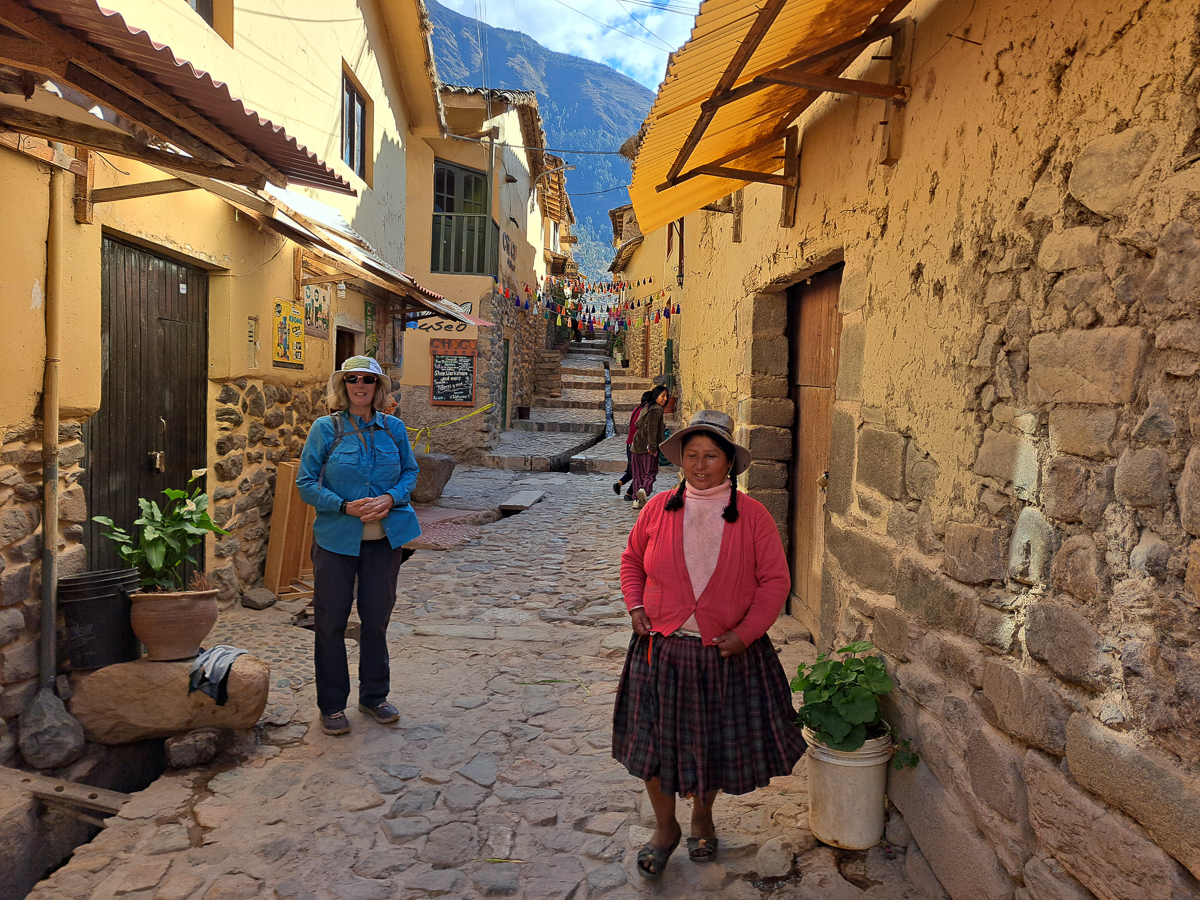
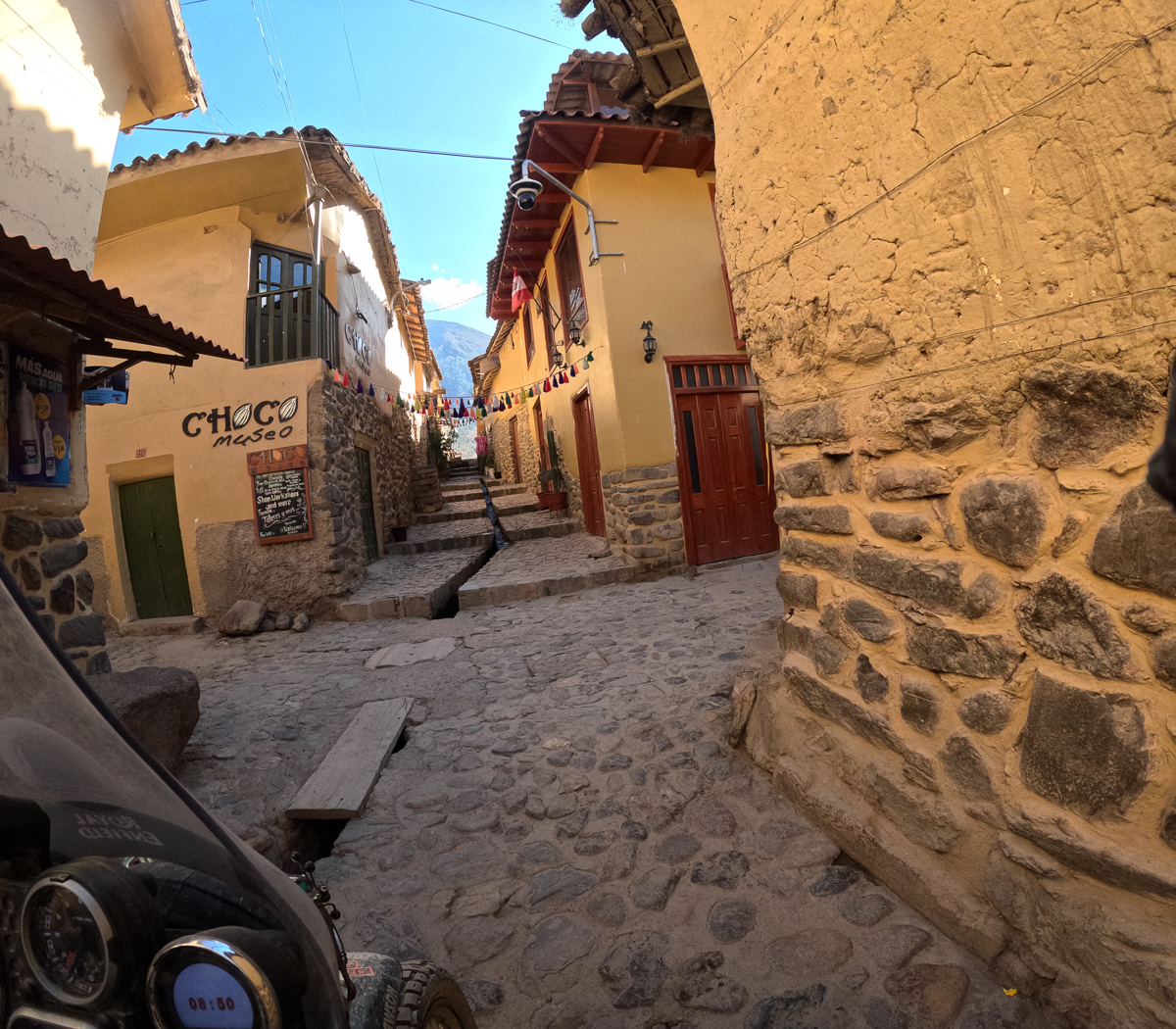
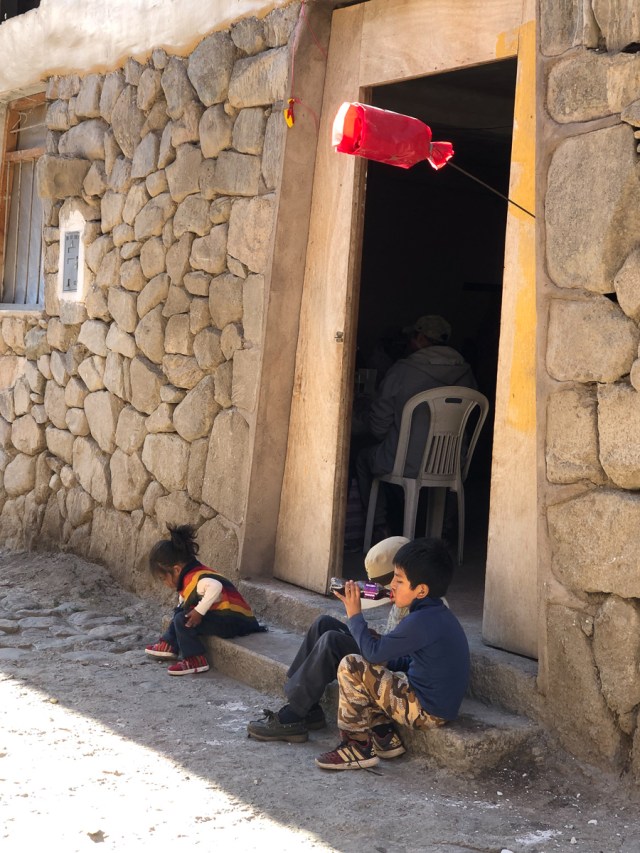
Ollantaytambo ain’t so bad a place, either:
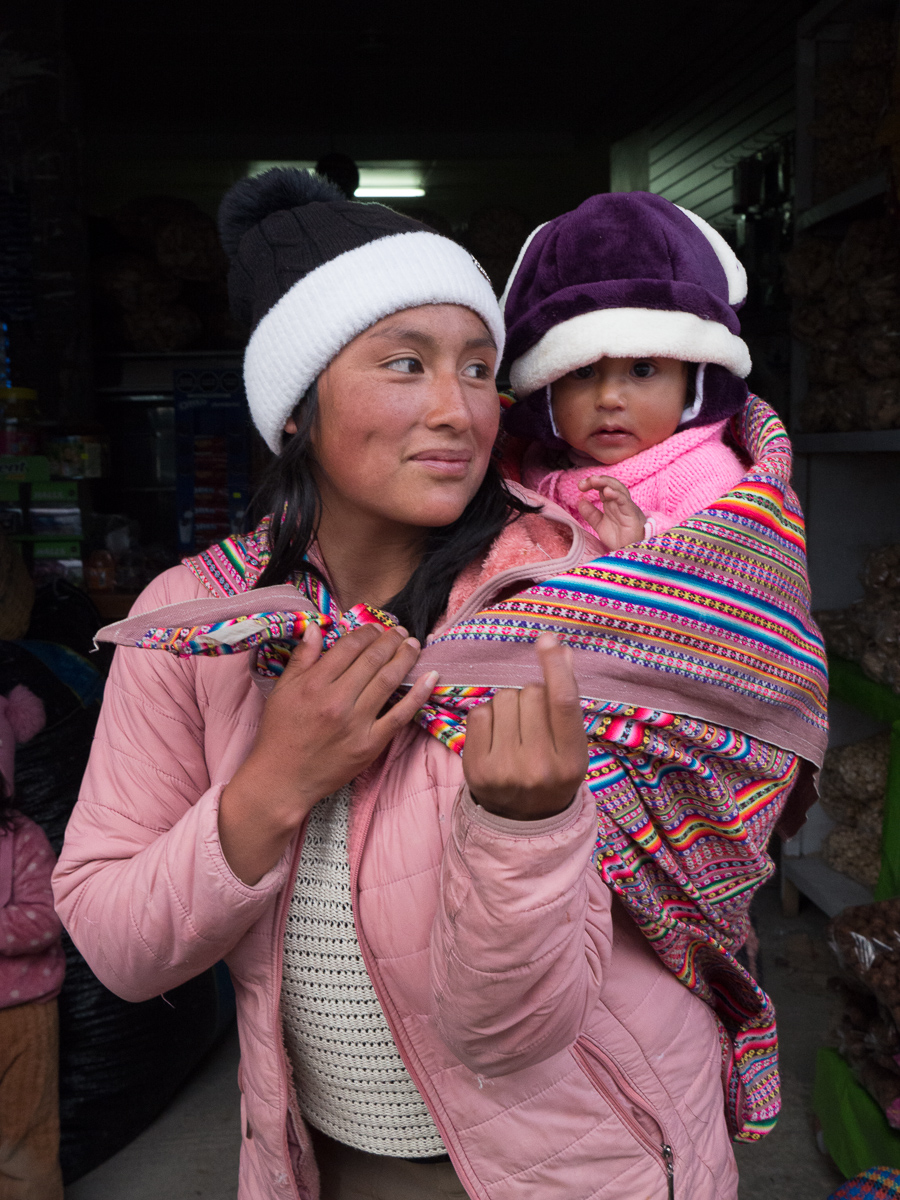
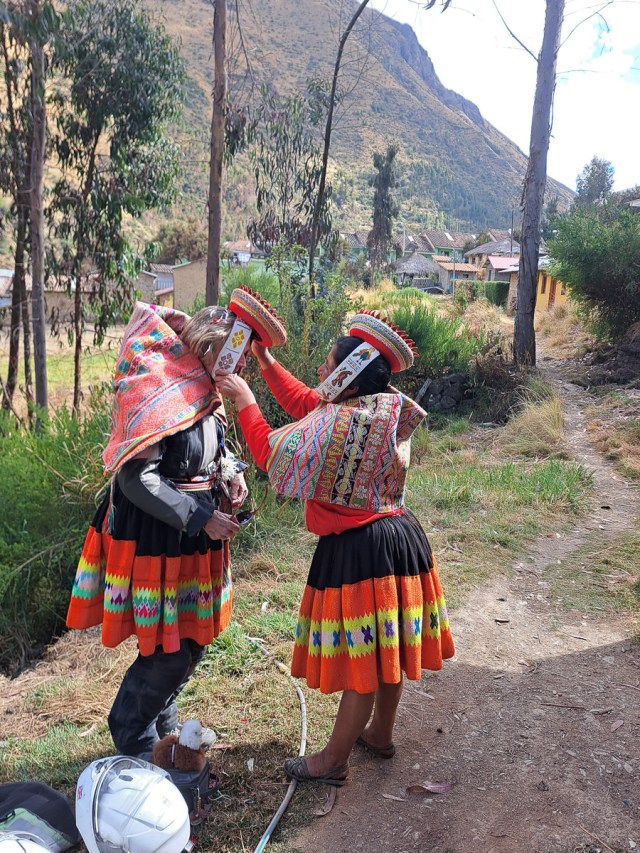
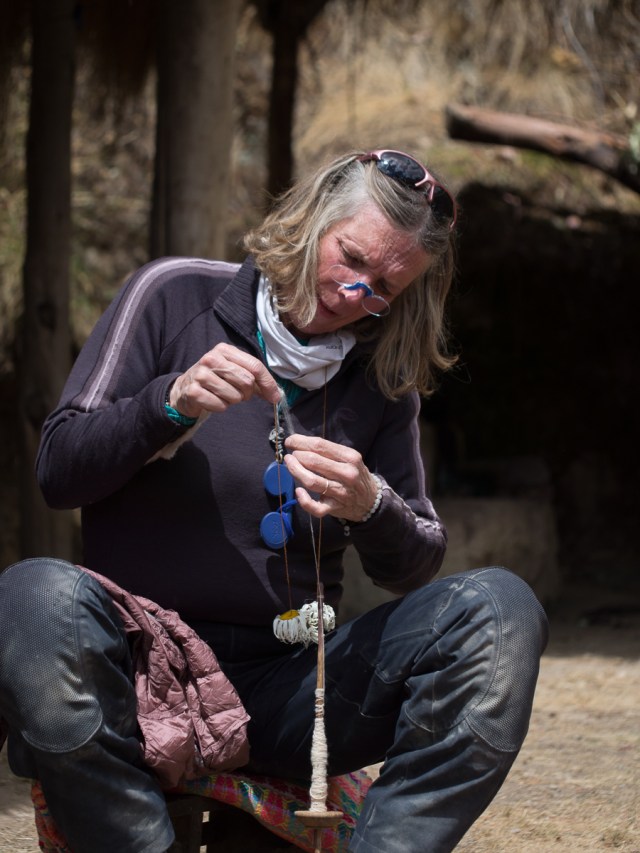
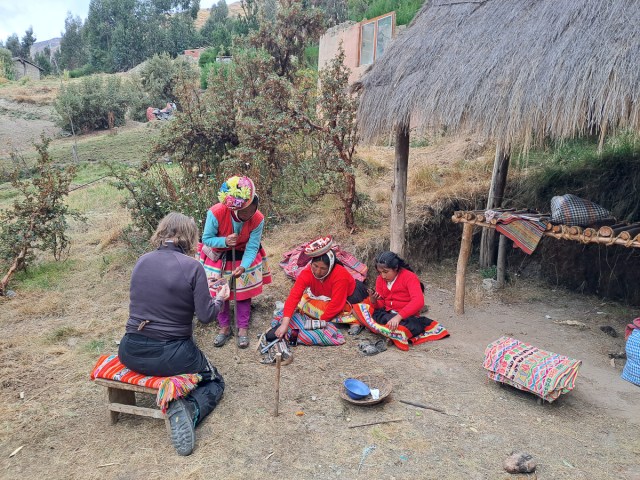
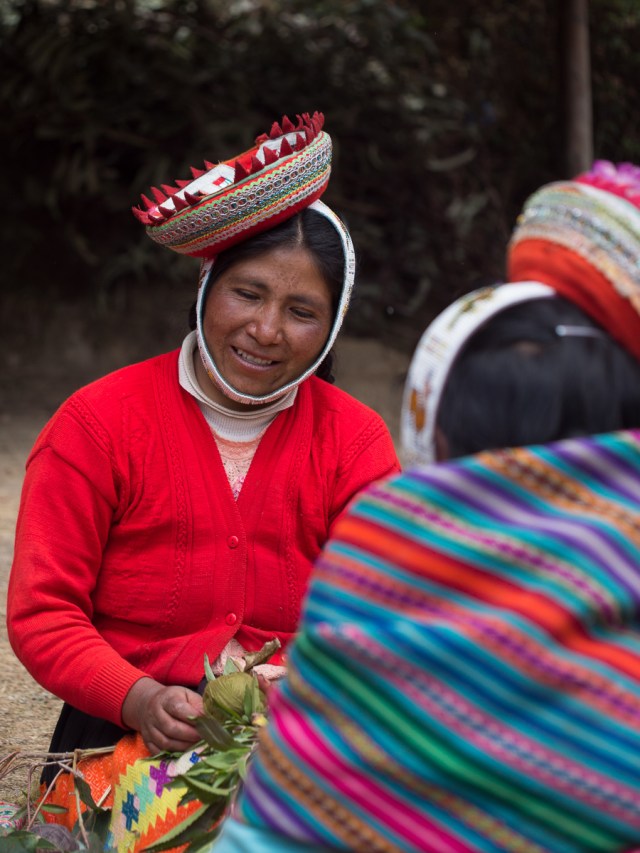
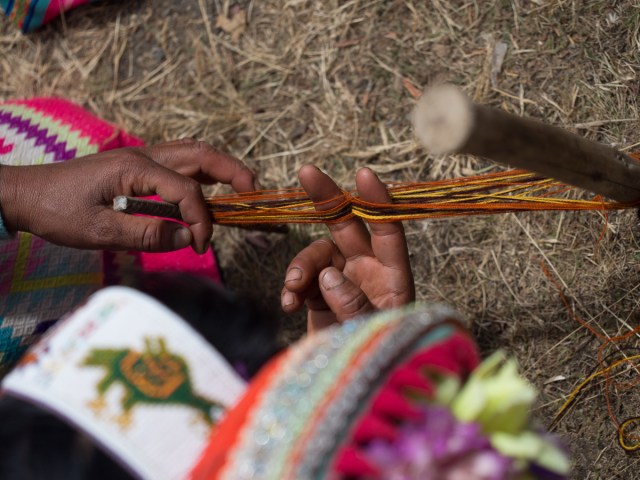
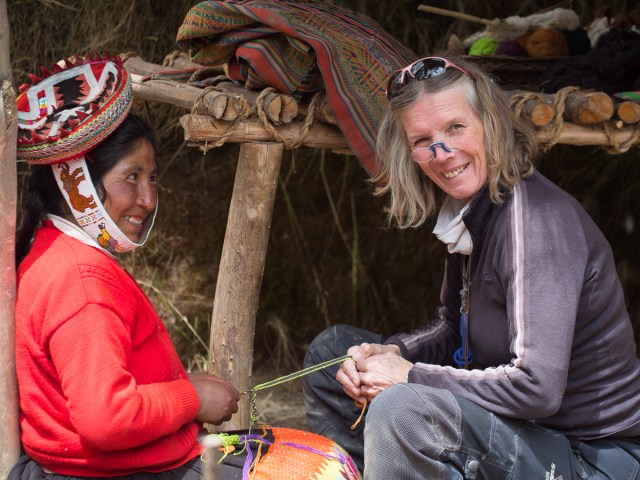
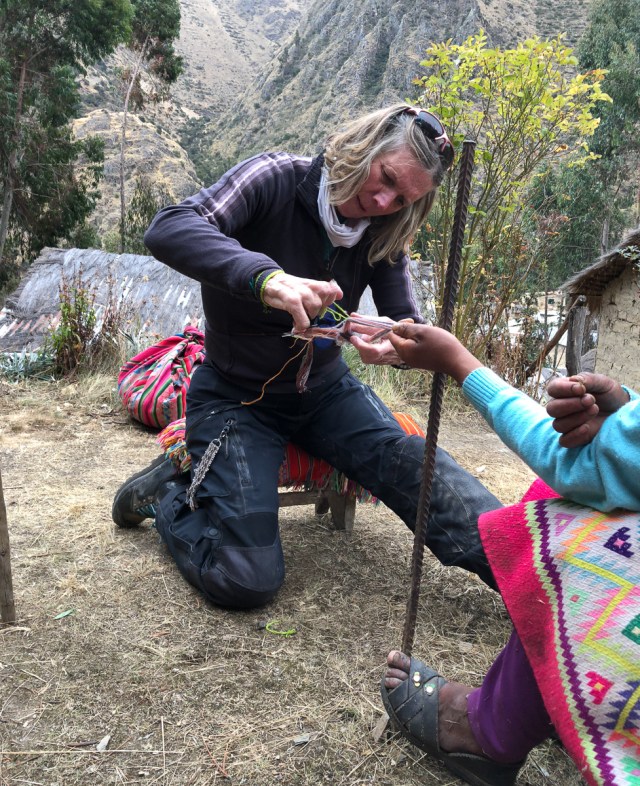
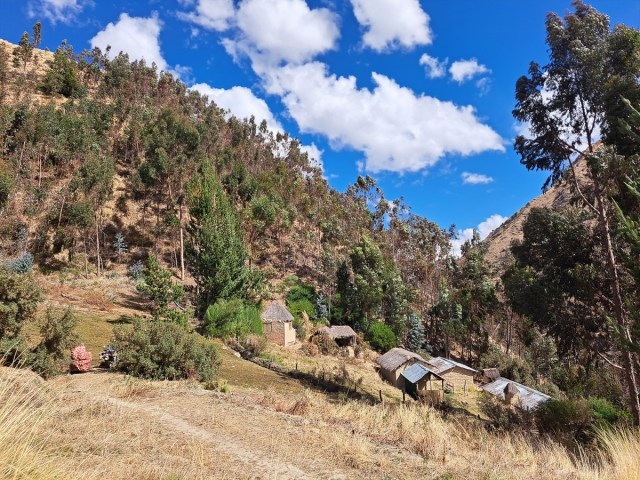
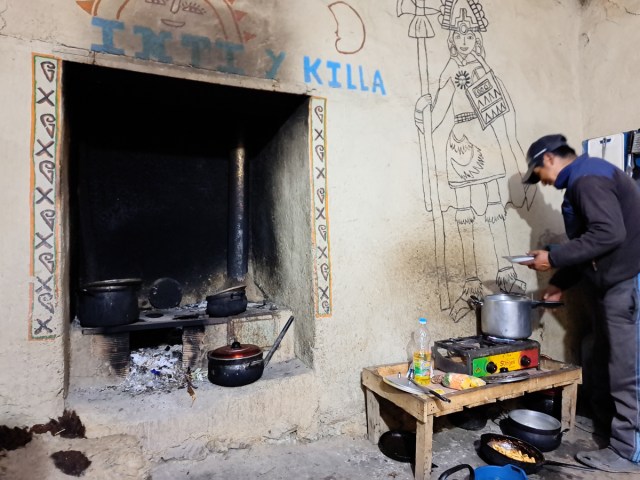
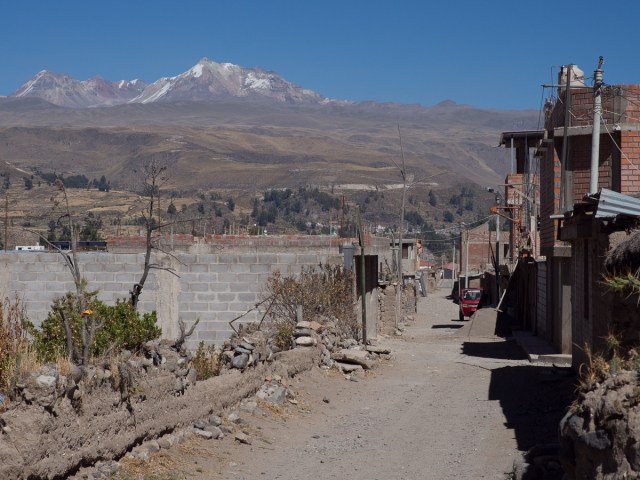
The second treat in the area was visiting Patacancha- a weaving village. I’d had this on the map since the UK and was keen to learn about Peruvian weaving. Before Machu Pichu we’d visited the village, 20km north of Ollantaytambo up a twisting dirt road to try to arrange it. The welcoming villagers at the bus stop directed us to Maria, Suzannah and Oleanda for tuition, Mariano for accommodation and gave us Annabella to take back into town. Returning a few days later we did some dye making, dying and weaving – a variation of back-strap, fun, but the available time was probably far to short to learn anything particularly useful. The homestay with our chatty host, Mariano, was a real bonus on the trip. Frost on our bikes in the morning was quite a surprise. They were tucked behind a bush up a footpath onto our hosts land. Gid wiggled both bikes up and down the footpath, across a makeshift bridge with a couple of alarming slides along the wet, grassy, way.
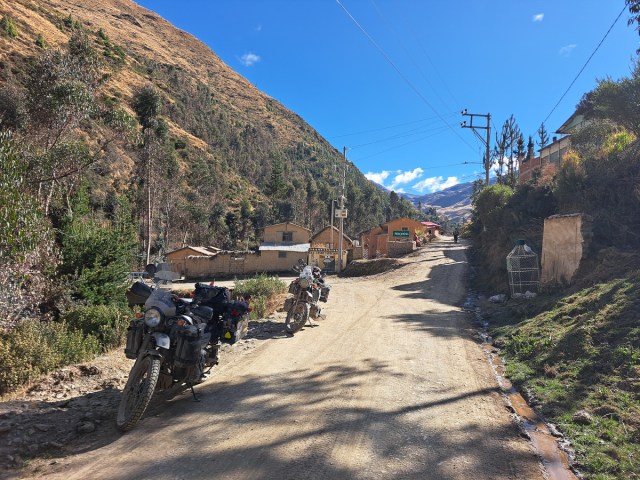
Patacancha Bus Stop
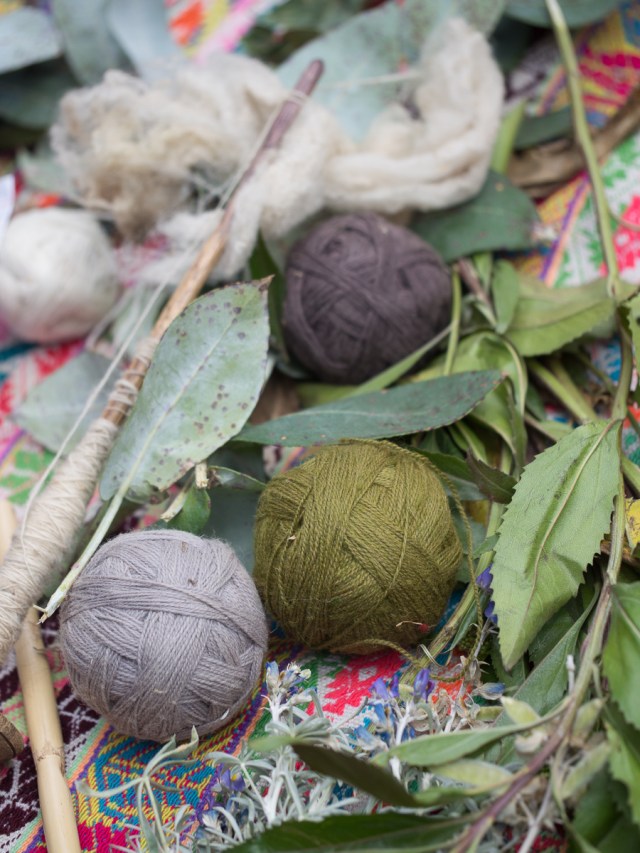
Preparing Cochineal dye
Vegetable dyes
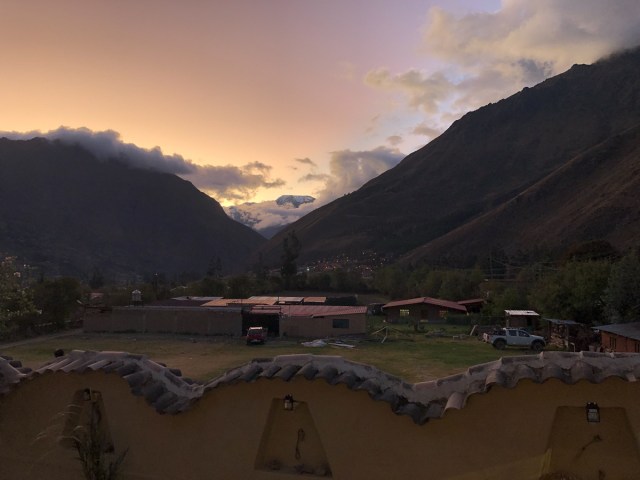
Dawn in Patacancha
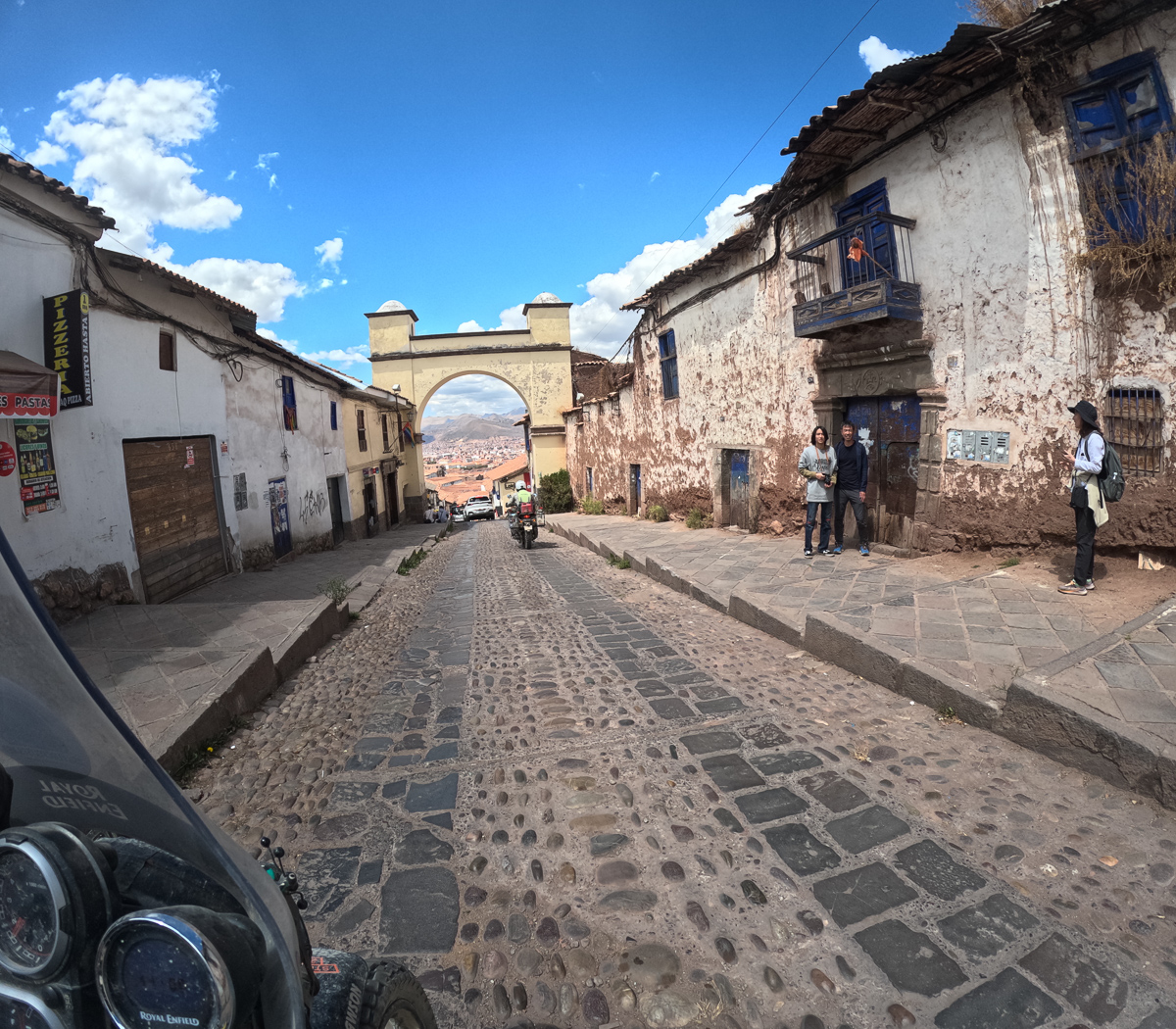
Leaving the area and setting off again on surfaced roads was quite a treat. It wasn’t long before we entered historic Cusco and were once again joggling about down steep roads on cobblestones. Having been very focused on planning to cover the ground it seemed a little disconcerting to hit the tourist scene again. My bike needed some attention and Cusco, where we arranged to met up with fellow biker travellers Damian, Alli and Yann, seemed the obvious choice. I’d had new steering bearings at the service in Medellin but when braking once again there seemed to be some travel in the headset. Demon Damian, a wandering motorcycle racer, overland biker and bike mechanic, suggested that the new bearings could have bedded in and just need tightening which did seem to do the trick. Equally, my back brake needed some adjustment but the alarming squealing noise my bike had made on two occasions when first moving in the morning was more concerning. We’d had a few suggestions as to what it might be but Damian was quite shocked when I said I didn’t warm the bike up before riding. I’ve got a fast idle lever but rarely bother to use it. It’s only now that we’re in a colder climate that it seems to be necessary. Unlike other bikers I can’t leave the cold bike ticking over as it just cuts out but have now rigged up a choke stay to hold it in position.
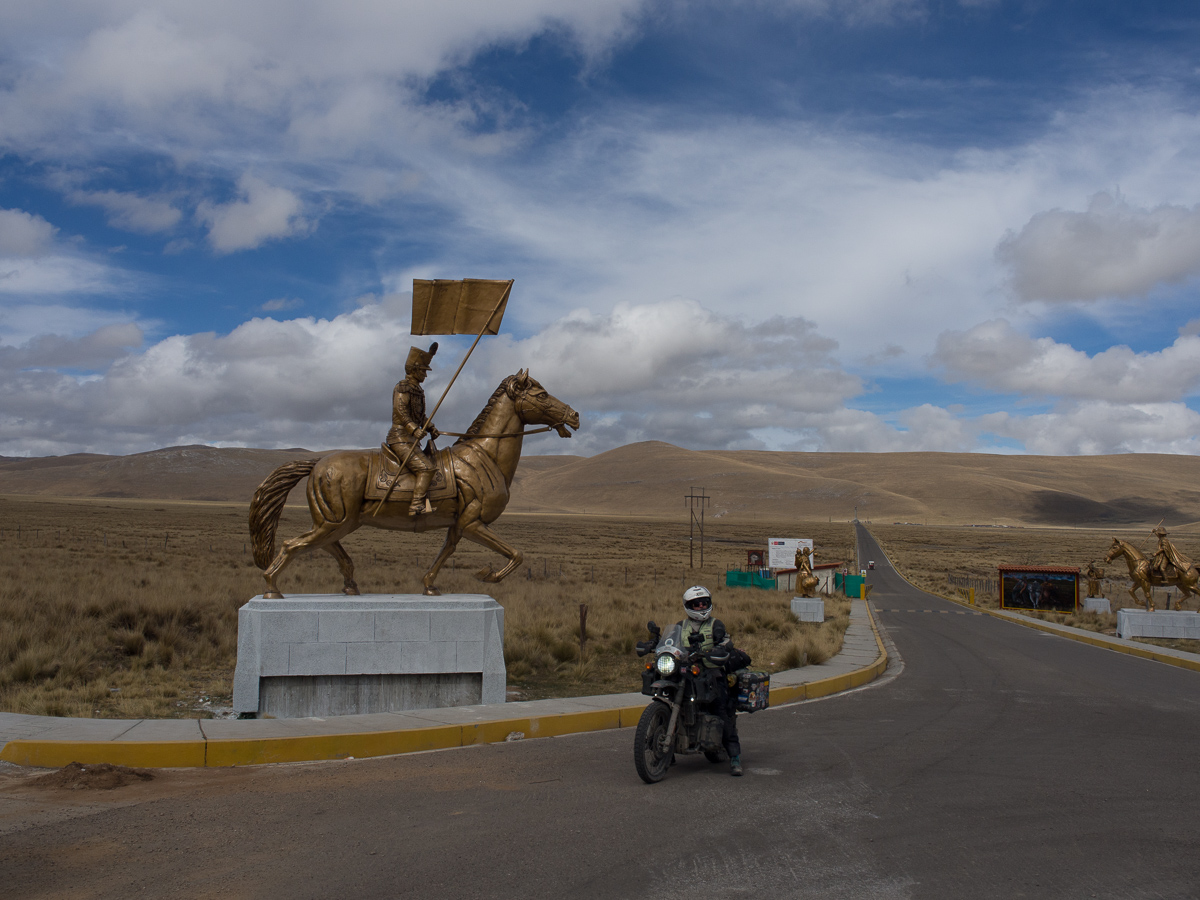
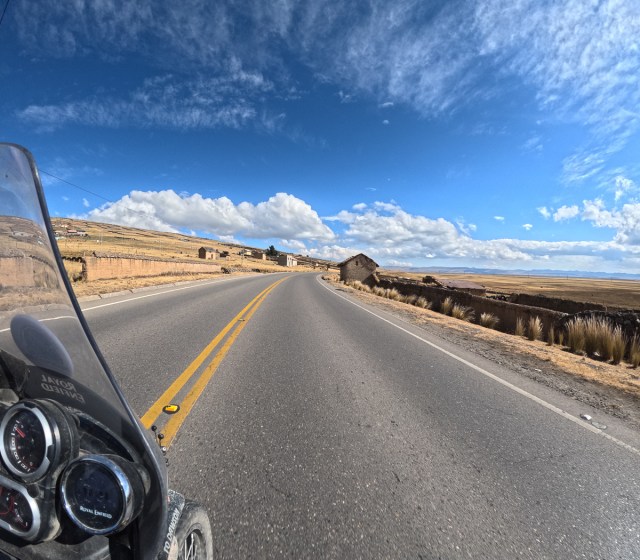
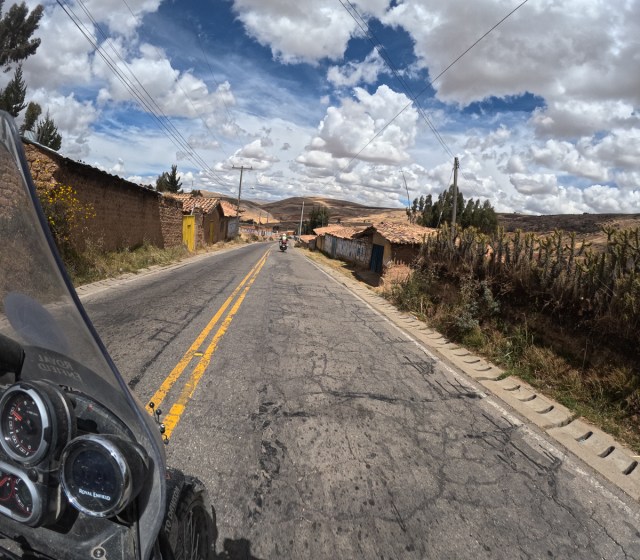
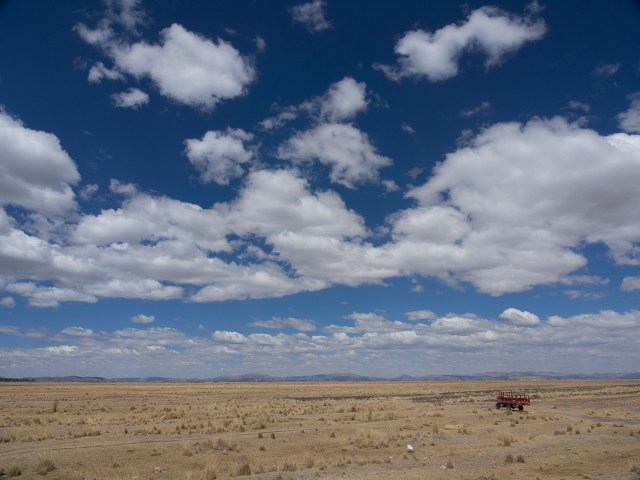
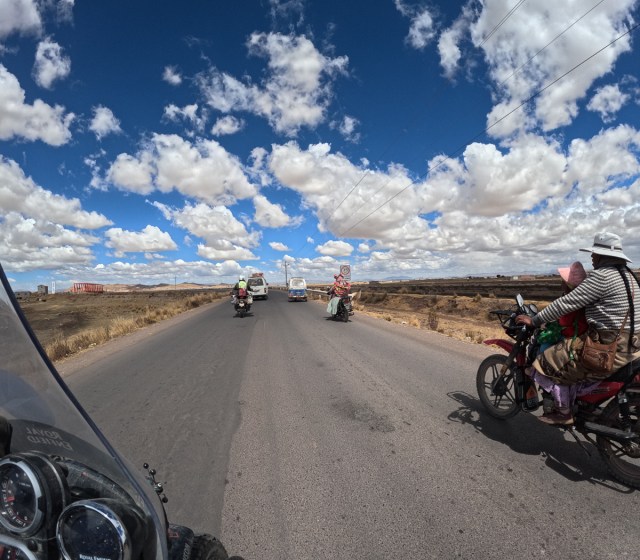
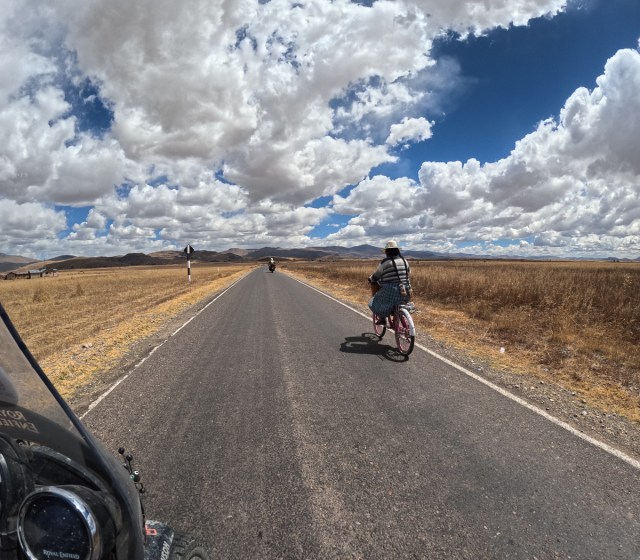
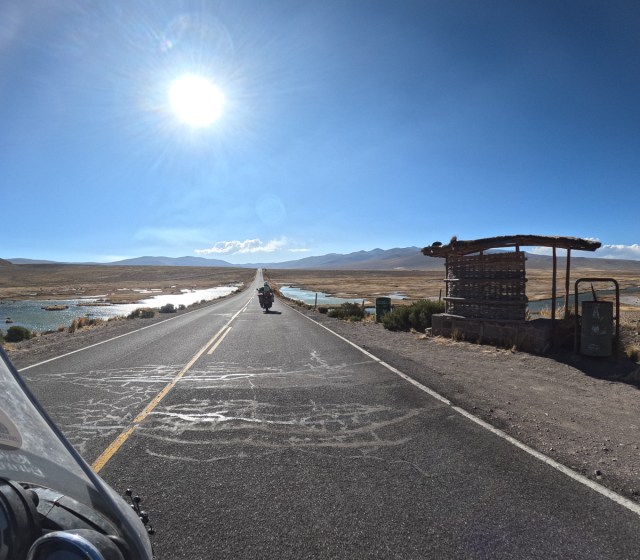
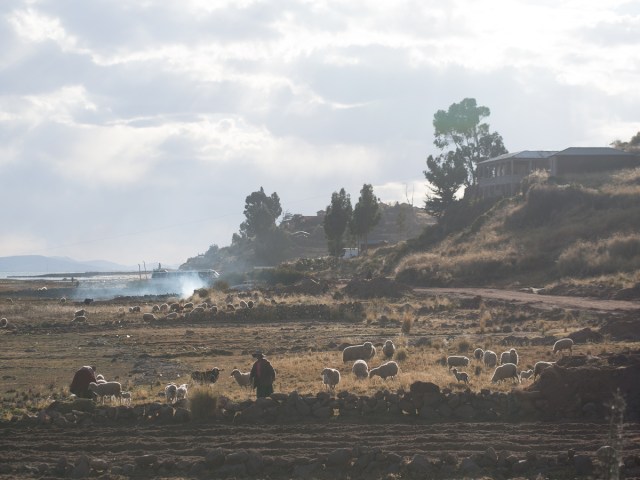
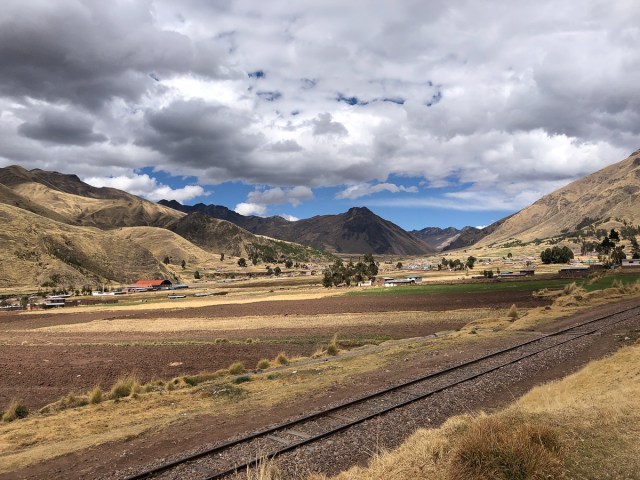
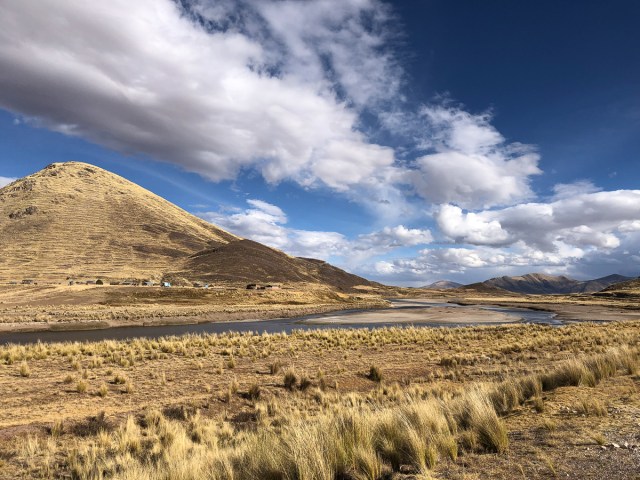
Lake Titicaca was our next tourist target. To get there, the road crossed a wide, flat, plain: the northern tip of the Altiplano. At 3,800m it’s quite high, but still populated. Scattered buildings line the road, and the grassland is used for low density livestock. After the bucking, twisting, mountain roads, the midwestern-style straight and flat blacktop was a fast-progress relief, if dull from a technical motorcycling perspective.
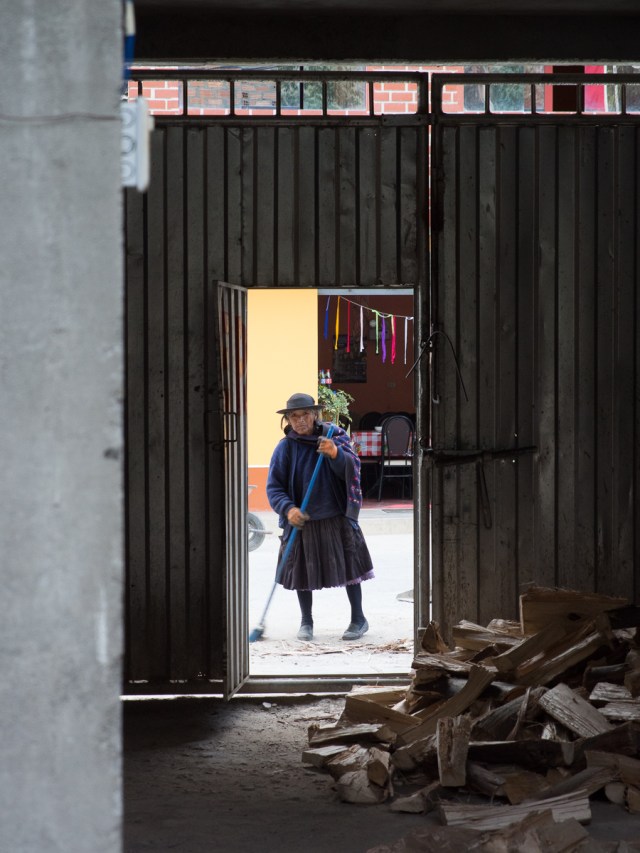
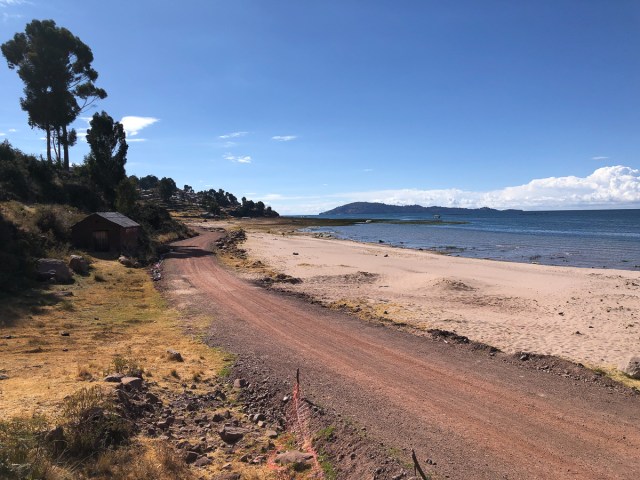
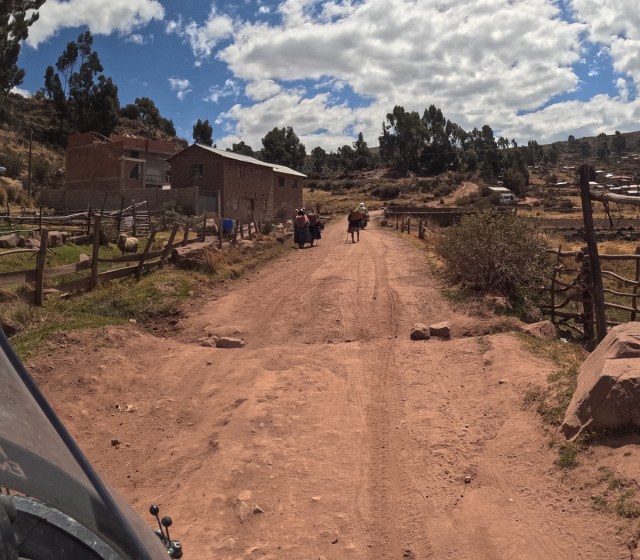
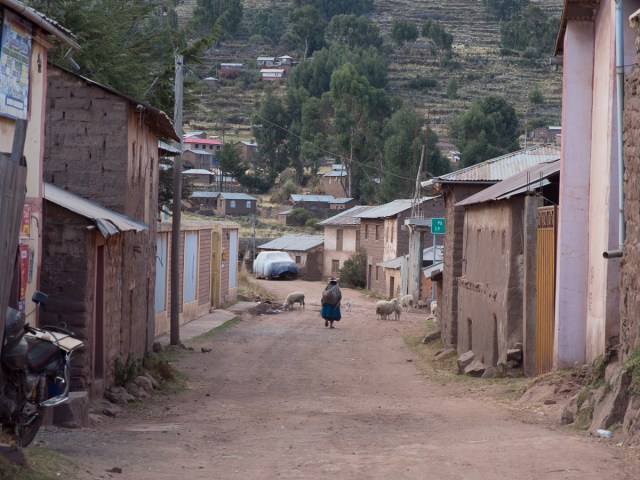
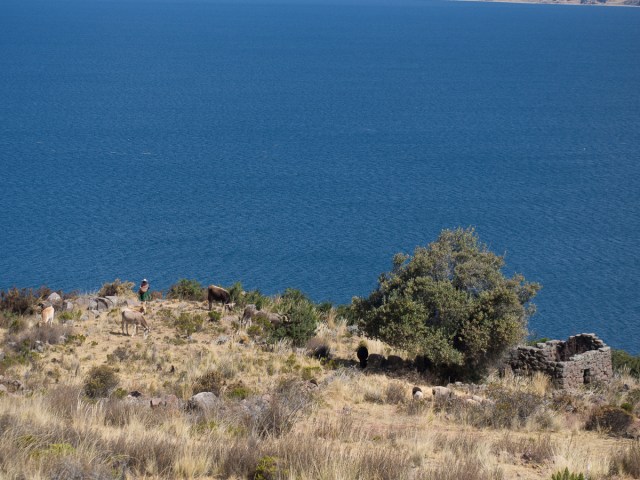
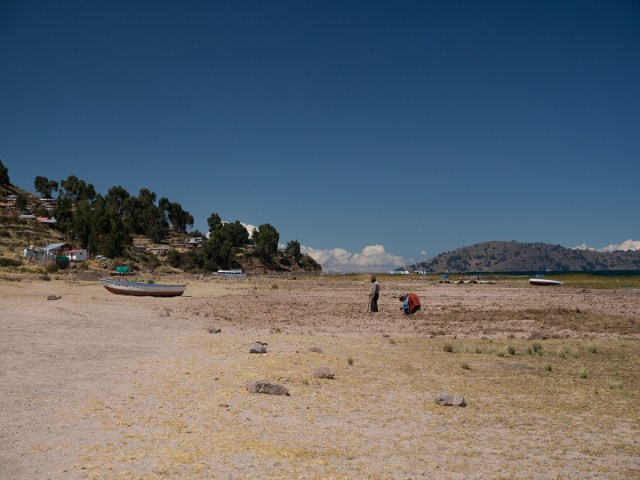
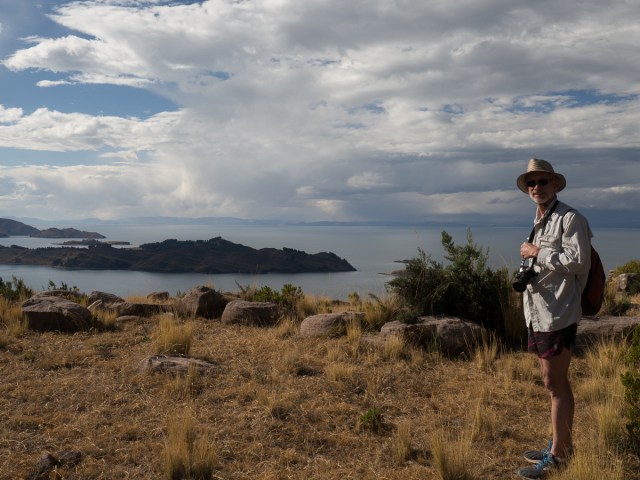
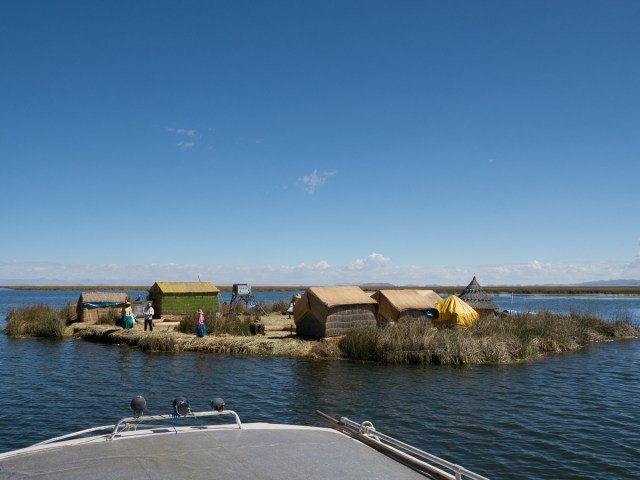
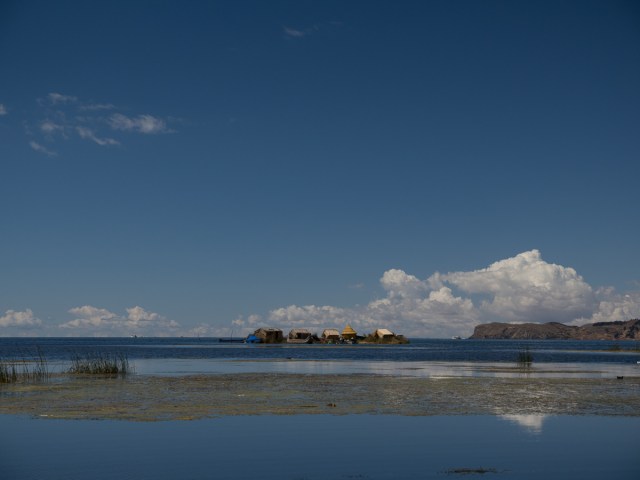
Gid read about Lake Titicaca’s floating islands and was intrigued. The Capachica peninsula was supposed to offer a similar experience, in terms of off the beaten track and rural village with a few ruins to explore, as the real islands in Lake Titicaca. Plus there was no worrying about bike parking and ferries. The peninsula was delightful. We stopped in the village square where the church was being renovated and one shop was open with a couple chatting away. In the corner there seemed to be a restaurant. Despite it’s cooking smells it wasn’t ready to serve at nearly 12:30 and ‘No’ they didn’t have a toilet. We explored a possible route onwards and decided quite quickly that it was degenerating into a dusty/sandy track. We turned back heading for the square noting an old lady’s bare feet as she turned off up the hill. It didn’t take long for the artesana (crafts) shop to open but the locked toilets stayed firmly shut.
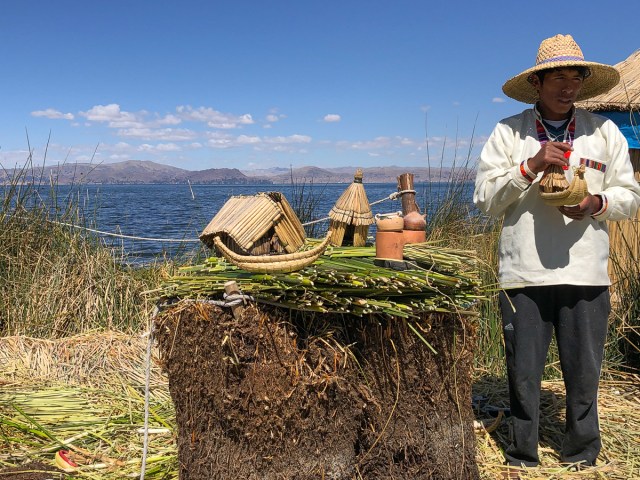
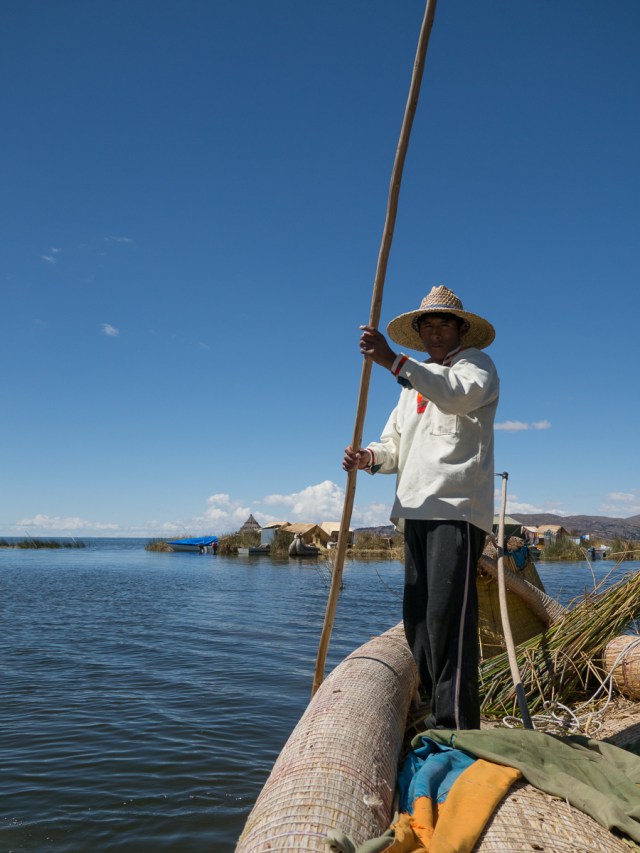
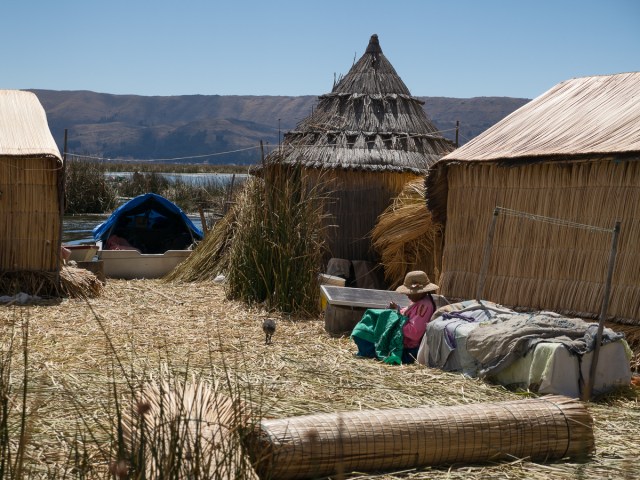
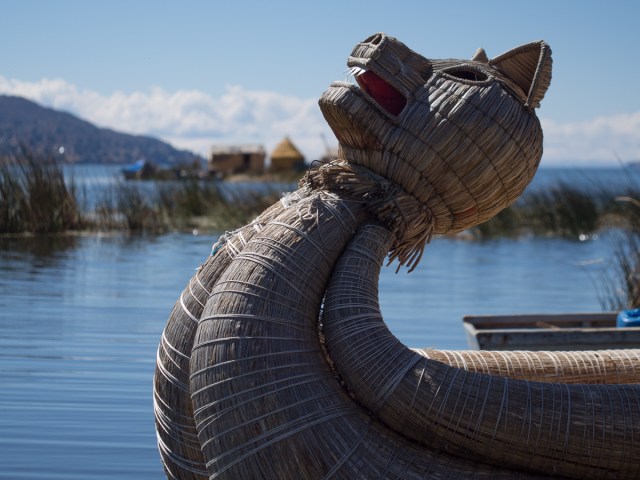
Despite Gid loosing some interest in the floating islands, concerned that it was just a tourist hype, we took the boat trip out to see one. It was delightful. A man in his thirties, who had lived on handmade floating islands all his life, gave us a detailed presentation on how the islands are constructed, how long they last, the maintenance required and how four families lived on this floating island less than the area of two tennis courts. It was fourteen years old, approximately half its life expectancy. The small reed houses, into one of which we were allowed to peer, were raised to keep out the damp. Two reed boats were used to catch fish, a rifle to shoot birds flying overhead and nearby nesting birds provided eggs. What more could you want? Well, us to buy a cushion cover and model boat, obviously. Useful on a moto trip.
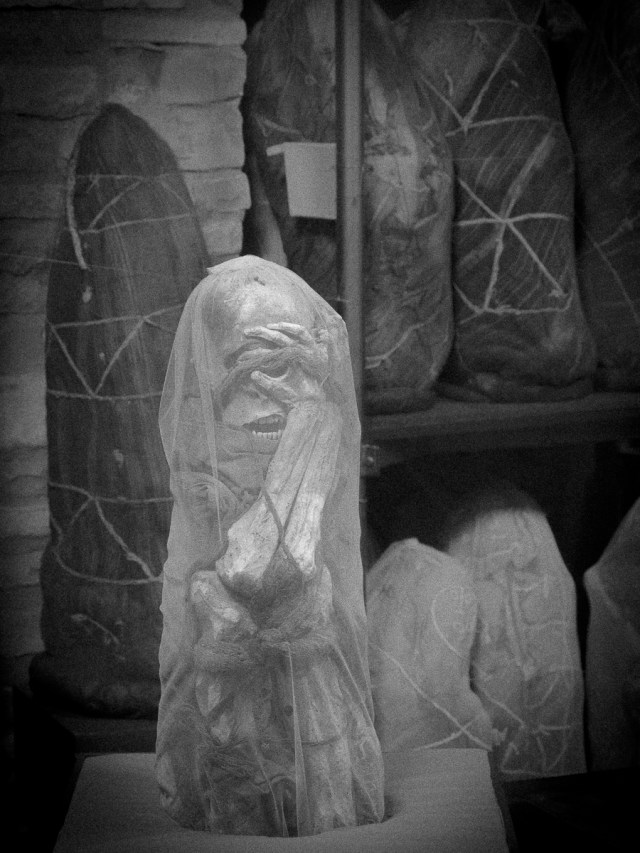
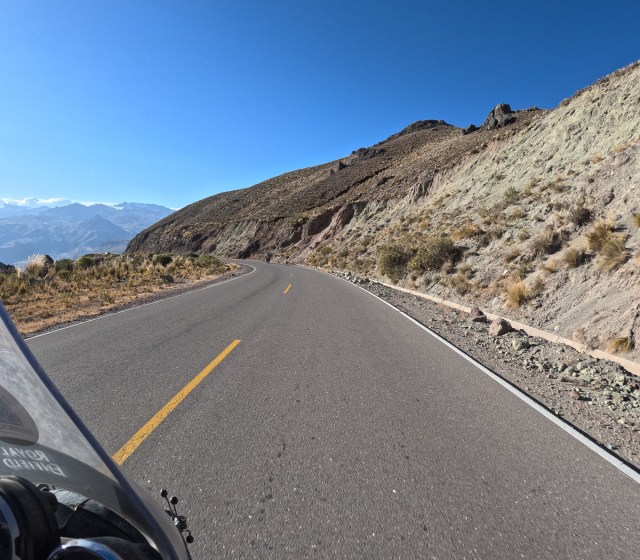
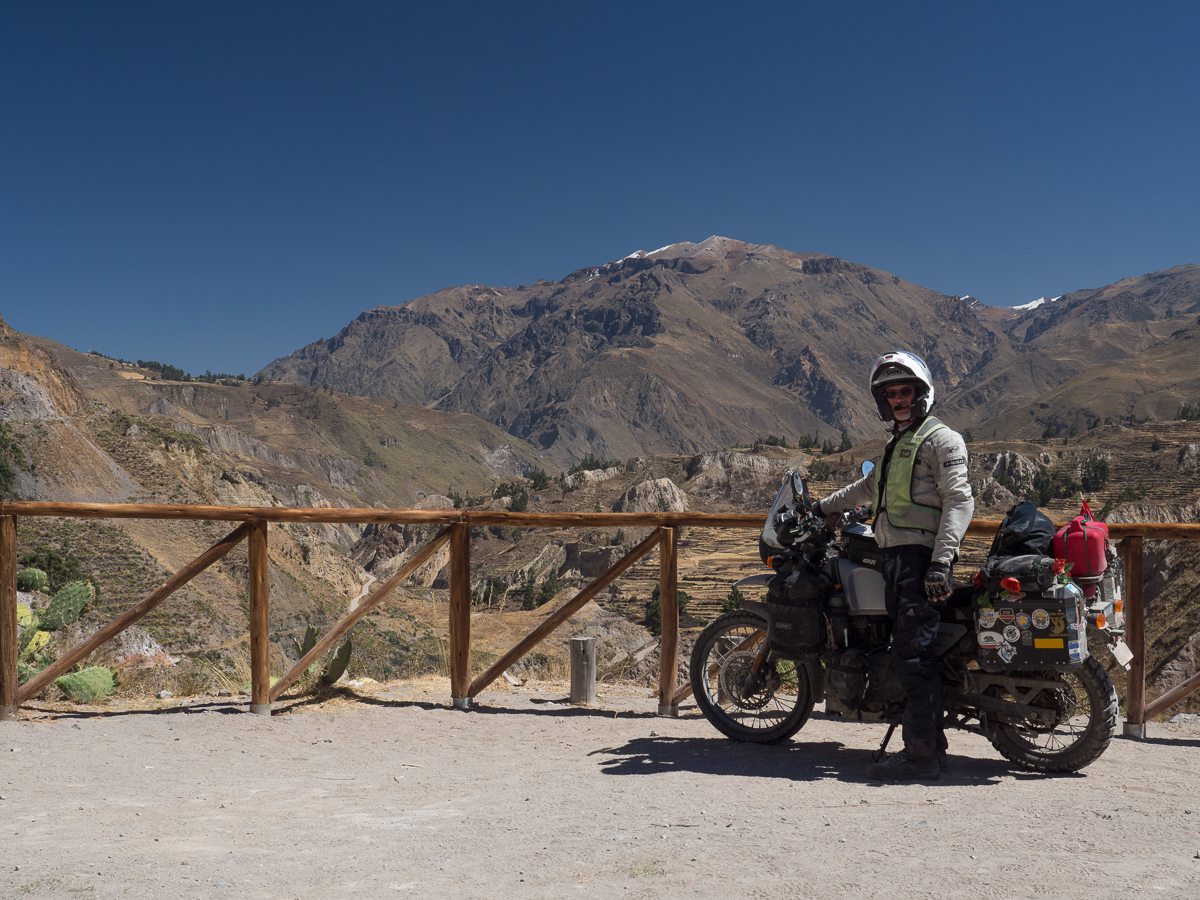
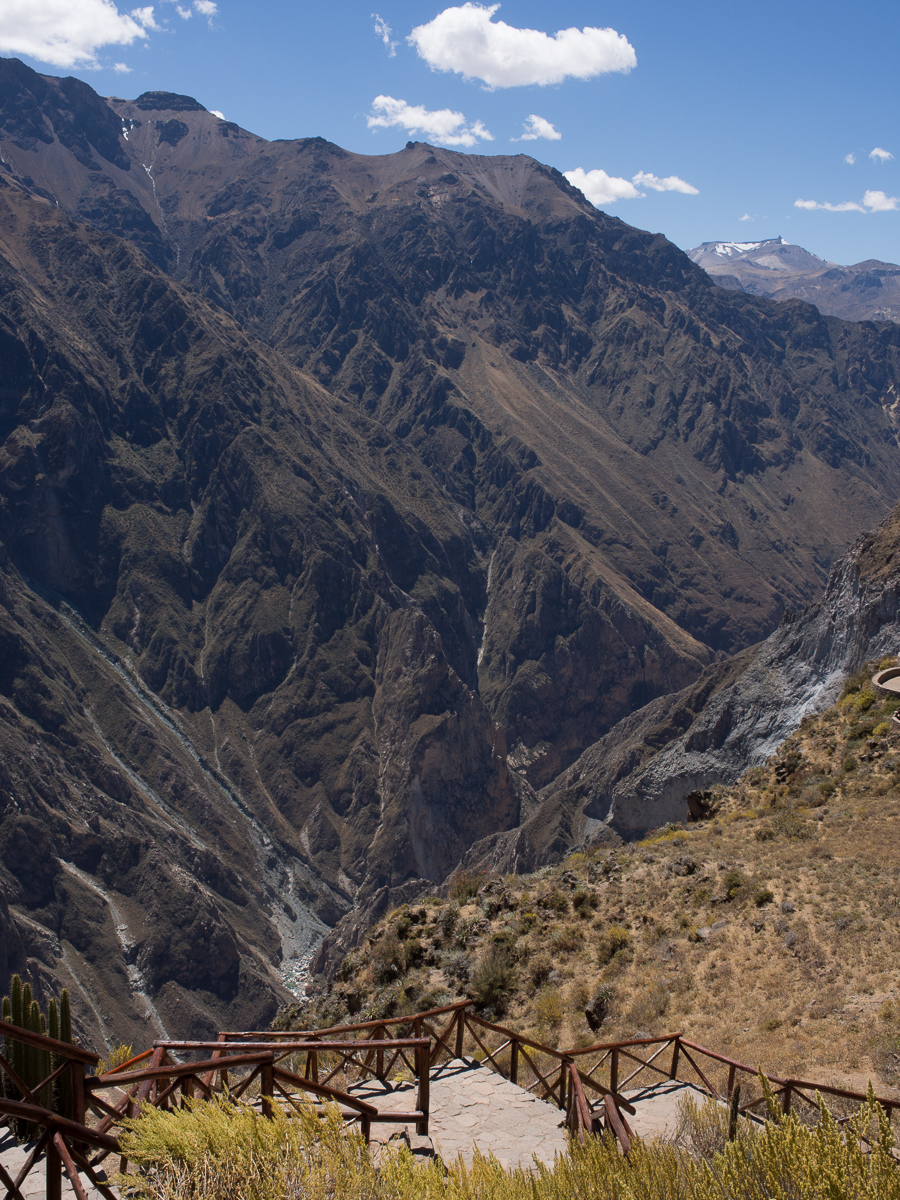
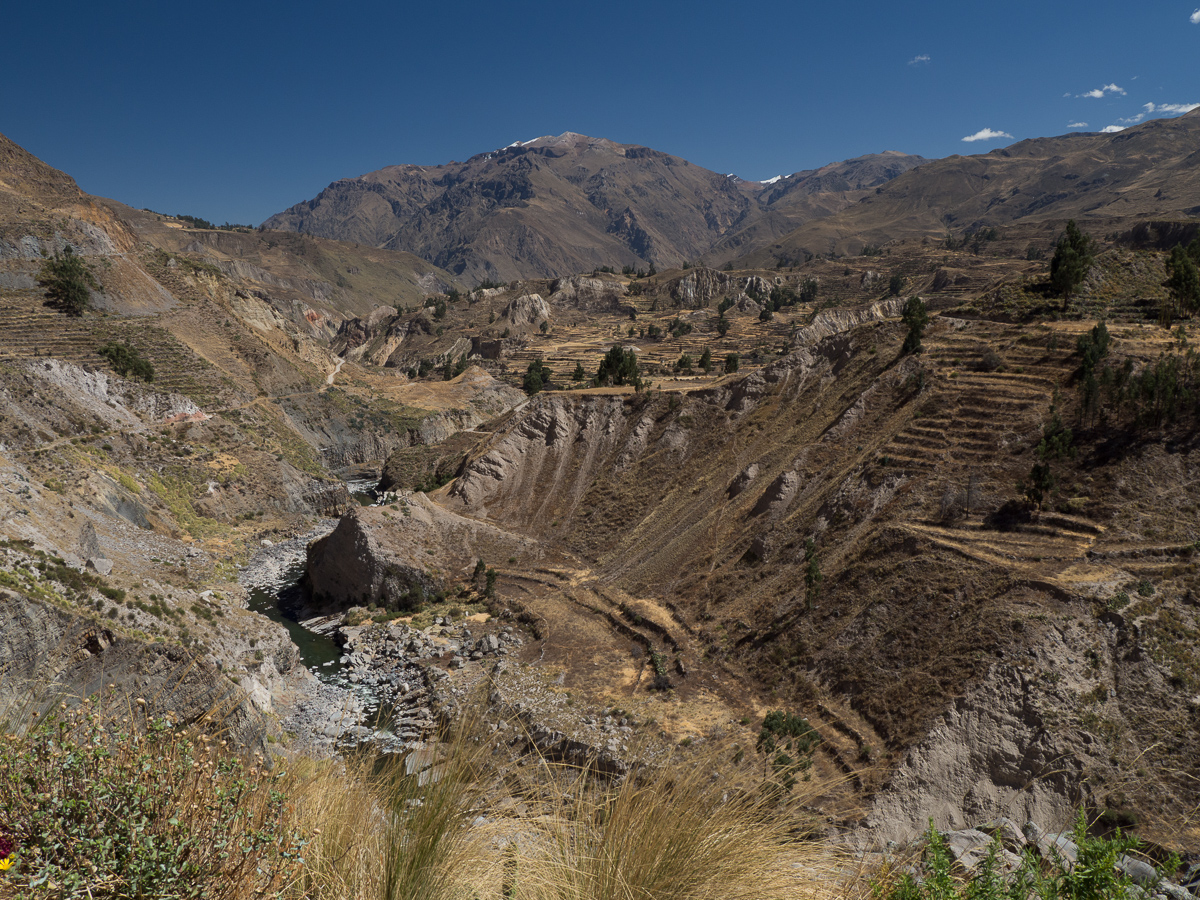
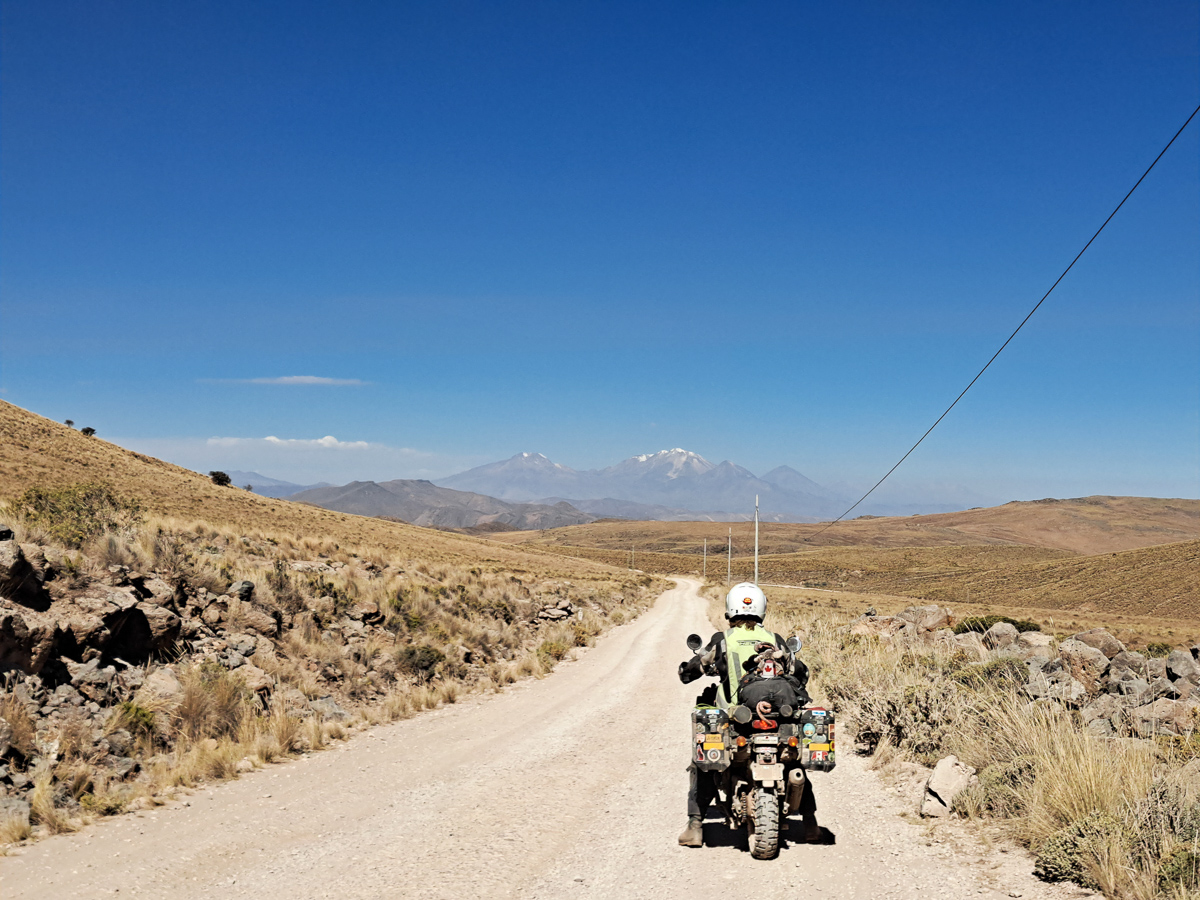
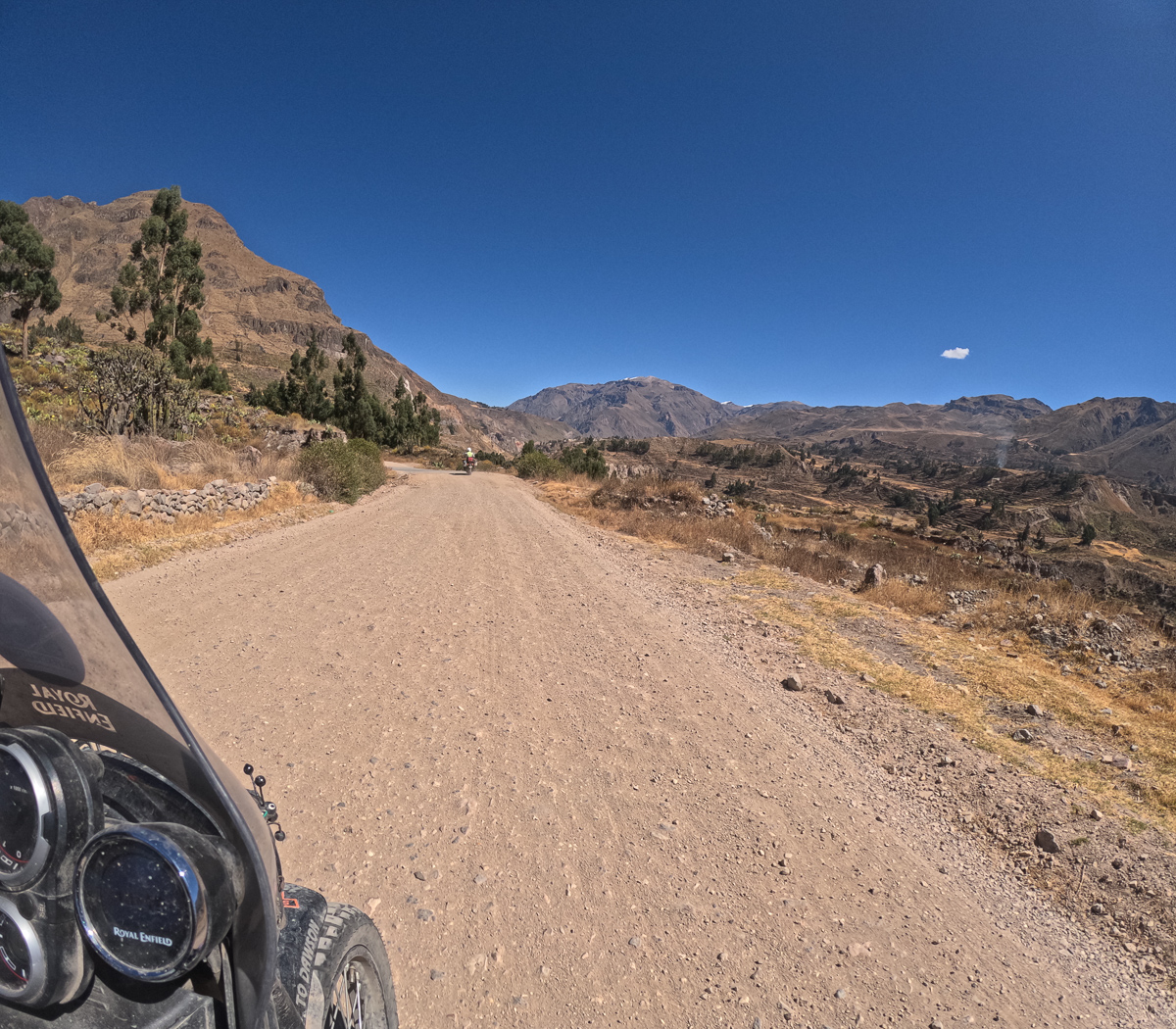
Mindful of how time was passing we were unsure of whether to go to Arequipa but were persuaded by the location of a Royal Enfield dealer, tales of frozen mummies and snow capped mountains. To get there would also take in the Valle del Colca and, maybe, Andean condors. Sold, we were on our way. Reaching our night stop in Chivay took us over 4800 metres high on sinuous smooth asphalt. In the slightly lower areas (a grassy terrain called puna) we saw lots of vicunas, but towards the top vegetation was pretty sparse and so was wildlife. Right at the top, though, Gid on a pee break saw a couple of mountain viscachas. Setting off from Chivay, we took the tourist road, occasionally peering down into the depths of the Colca Canyon. Looking up though, we were delighted to see at least a couple of condors. We were keen to continue the loop round to Arequipa despite knowing the tourist cars turn back to Chivay. Gid was confident of our route. An orange road should be hard surfaced, we weren’t going to take any nadgery dirt road. We should have known better – just because it’s orange on the maps (=”primary” – about 4 out of 7 levels), doesn’t mean it’s surfaced or easy.
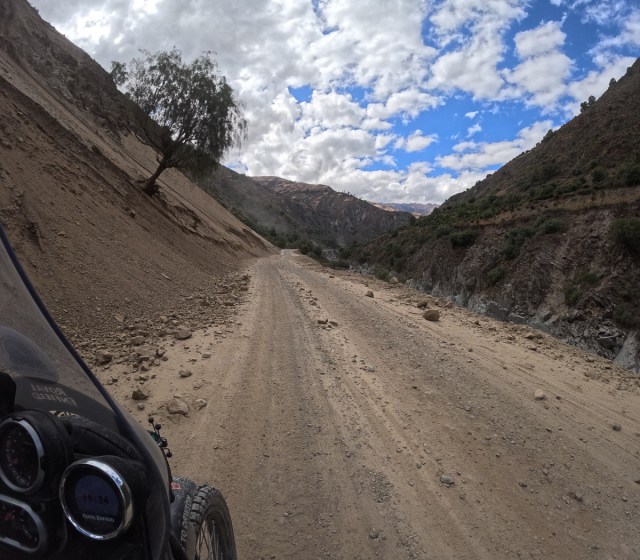
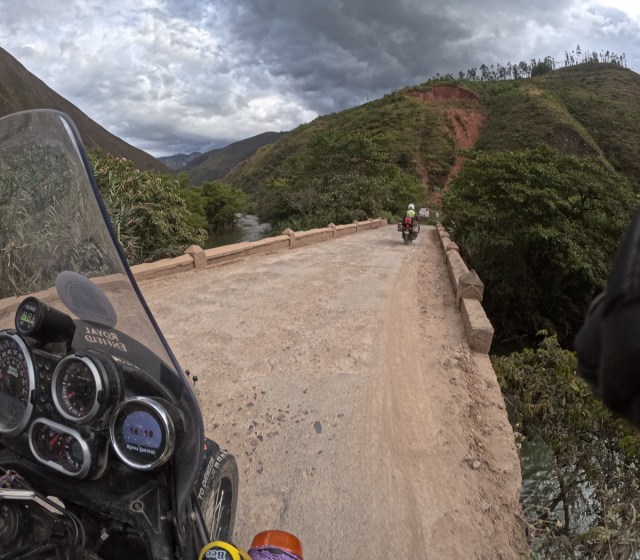
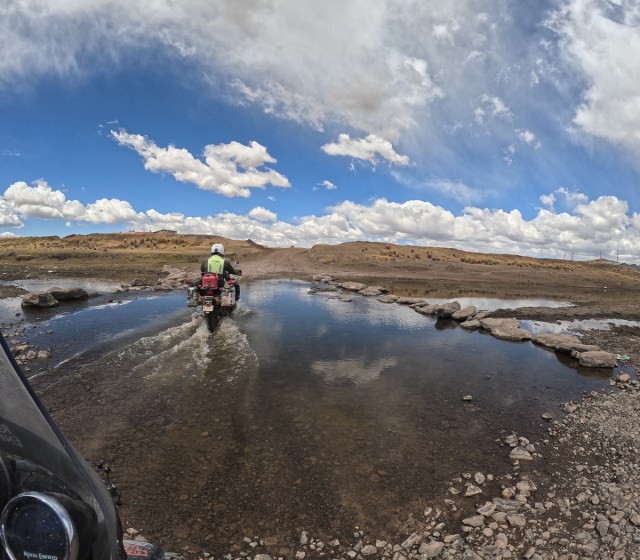
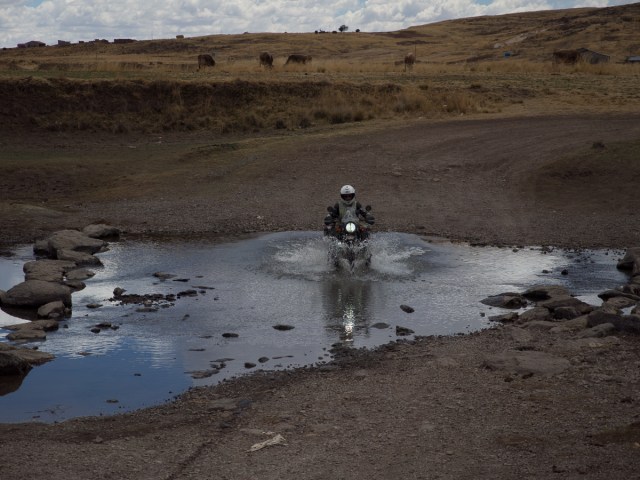
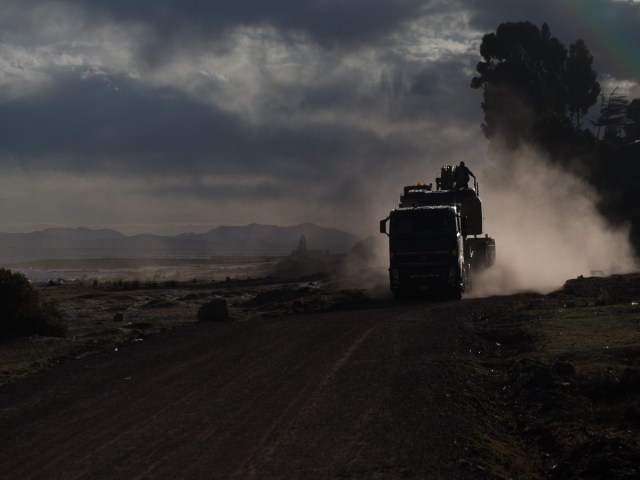
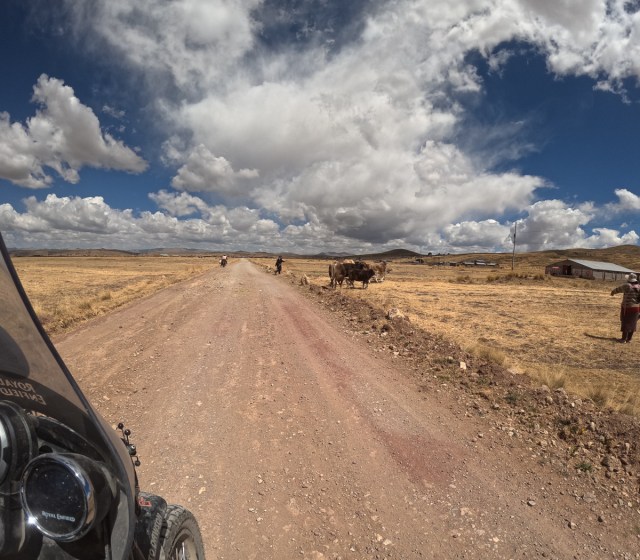
It was clear right from Huambo – the end of the tour bus route – that Ruta 109 was now dirt road but it was wide and well surfaced. 111km to go caused a slight hesitation but potentially the alternative road was smaller. Off we went. Not long into the route we passed a small village and saw a condor soaring above. This was going to be delightful. Initially the surface fluctuated between reasonable hard packed gravel and washboard but as the kilometres passed and we wound our way round the mountain road we were beside sheer drops and on looser stuff. Gid squirmed losing the back wheel on fine sand. I managed to hold the bike up with a slide left then right but it felt like treacherous stuff. Trucks ahead seemed reassuring until we caught them up and couldn’t see a damn thing with the dust they threw up. We managed to pass one just round a corner as the wind took the dust-cloud away clearing the view. We comfortably pulled ahead until we again hit deeper sand. Gid got through calling back that I’d need to go slowly and put my feet down for extra stability. That worked until my back wheel caught on a large buried rock. I rocked backwards and forwards trying to ride over it but with feet sliding in the loose sand I was concerned about tipping over. With the truck approaching from behind and me stuck in the middle of the road Gid, now clear of the sand, parked his bike and rushed back. At 4000m that’s no mean feat. He pulled the child’s head sized rock from under my back wheel and off I went but he couldn’t make it back to his bike before the truck passed.
We were managing ok, the bleak scenery was worth a photo stop, but probably we averaged only 20-25mph, which makes 100km/60 miles quite a long ride – we don’t have the skills to drift and slide the bikes for higher speeds on loose stuff, and maybe the loaded down and modest Himalayans wouldn’t shrug off the hammering that would involve, even if RE show it in their (unloaded, day trip) publicity photos.
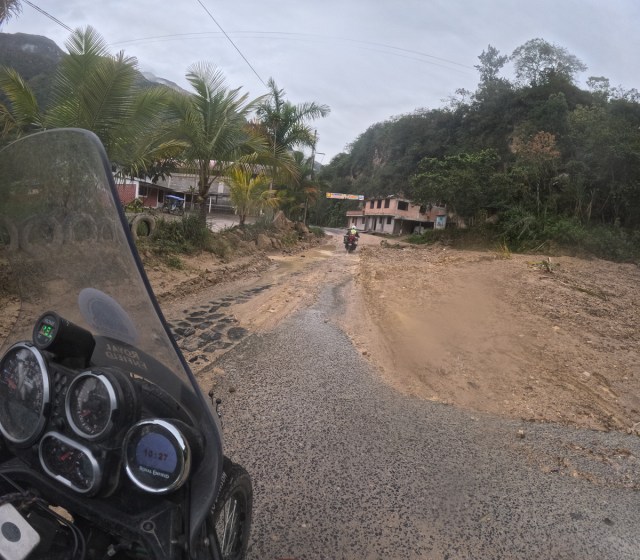
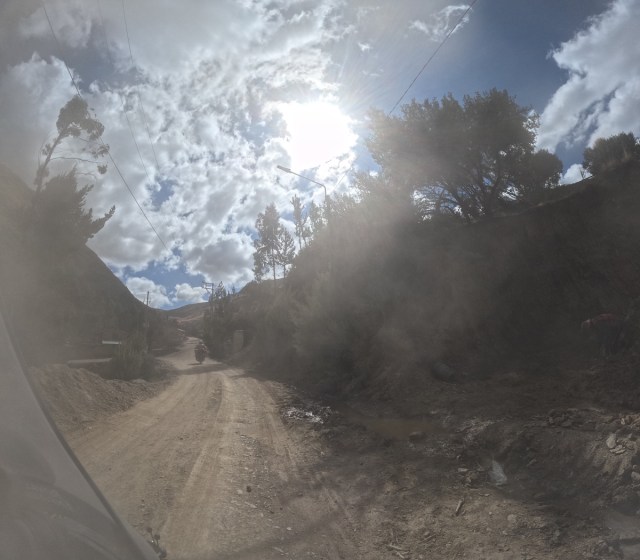
Then the road works began. Each one left the road in a very precarious state for two wheelers – loose fine sand, thick wet mud and other vehicles close behind. The road is too narrow to close only one side, and the terrain (and little traffic) doesn’t lend itself to constructing diversions. So the road is closed for a phase of work, then opened for traffic to clear. One such stretch took 40 mins to pass. Once through we thought that was it but hit a second major road ‘building’ disruption. Again we were stopped for 45 mins or so watching as the water lorry sprayed water across the road followed by the grader going backwards and forwards many times. We saw a roller arrive at the top of the road works and were quite relieved to think that the wet mud was at least going to be compressed. Wrong! Down came the approaching traffic. That was all the compression the wet mud got. We set off at the front of a ‘long’ line of trucks. The one immediately behind me thought it was a good idea to try to overtake. I blocked its way, not keen on being forced near the edge of a mountain road on wet mud. We made it! Pleased to have that ordeal behind us on we sped. Well, briefly. The last hour or more of our trip was blighted by awful quality deep dust road with an inaccessible new highway alongside us and copious amounts of fine sand. As we reached the unexpectedly sprawling town of Majes it was getting dark and we couldn’t see the diversion signs stuck up high on posts but were still faced with large quantities of this horrible fine sand. It must have taken 30 minutes – by then truly dark – to pick our way through the small town of Majes/El Pedregal. Our nightmare trip ended at seven pm having had one condor viewing stop since we set off at 10am that morning. Several days later when I look back I can barely raise a smile at what some would call an adventure!
In Arequipa we decided to go for an early bike service. The last service’s semi-synthetic oil might not be good for a full 6,000 miles of thrashing up and down many miles of mountain dirt roads. Equally, my clutch noise, whilst much reduced in these warmer climes and with a concerted effort to run/warm the engine before riding, is still occasionally discernible albeit much reduced. The original plan had been to service at the Royal Enfield dealer in Santiago, Chile, where the service schedule would be a bit late and more expensive than Peru. Better to be safe than sorry, although it might leave us hunting for more oil in Ushuaia.
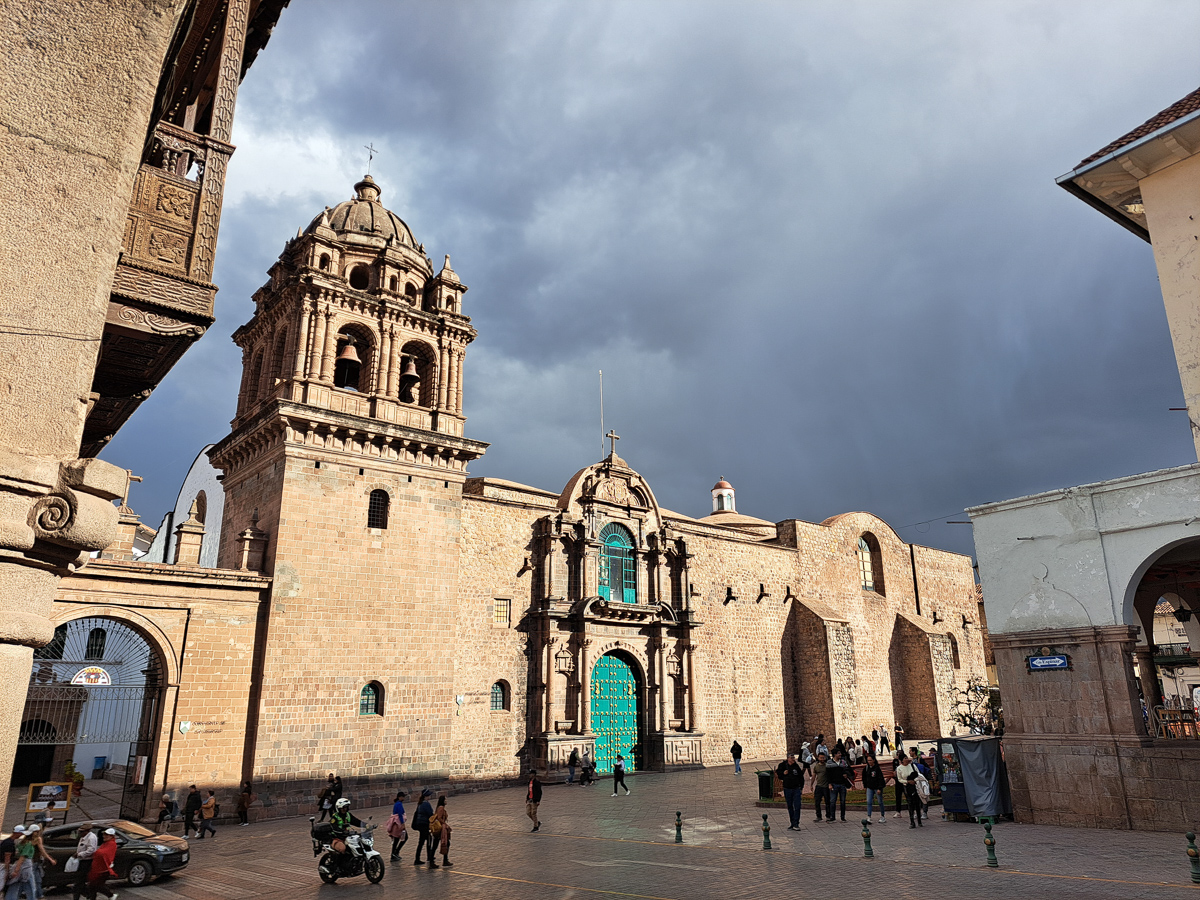
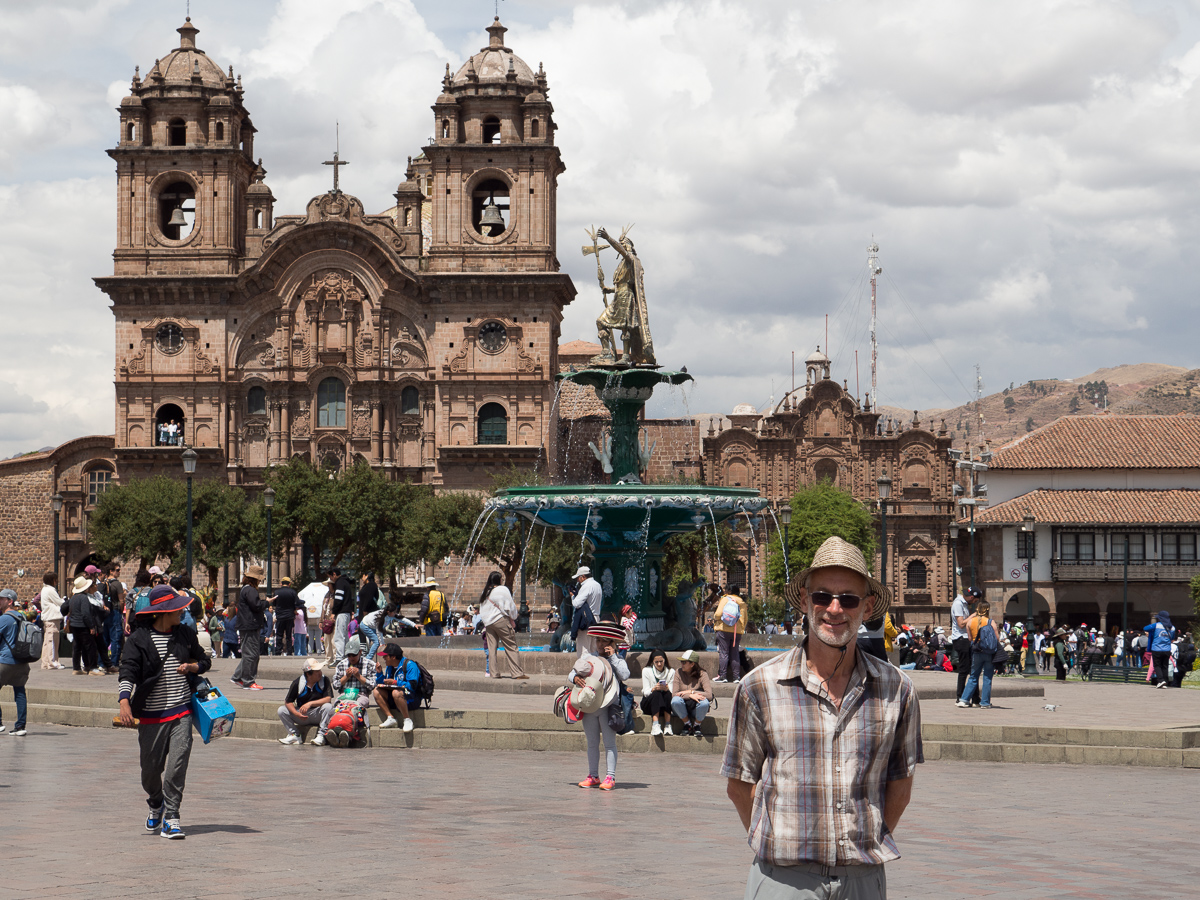
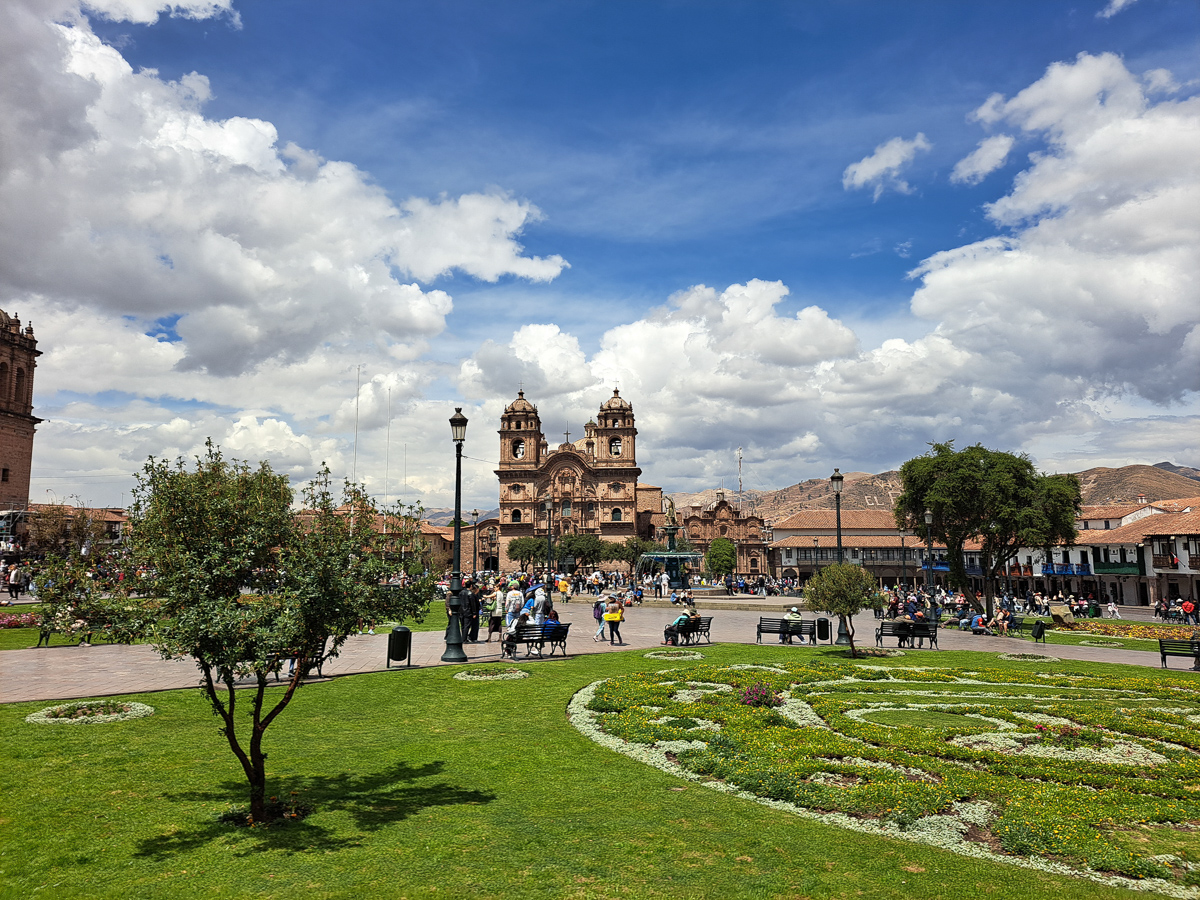
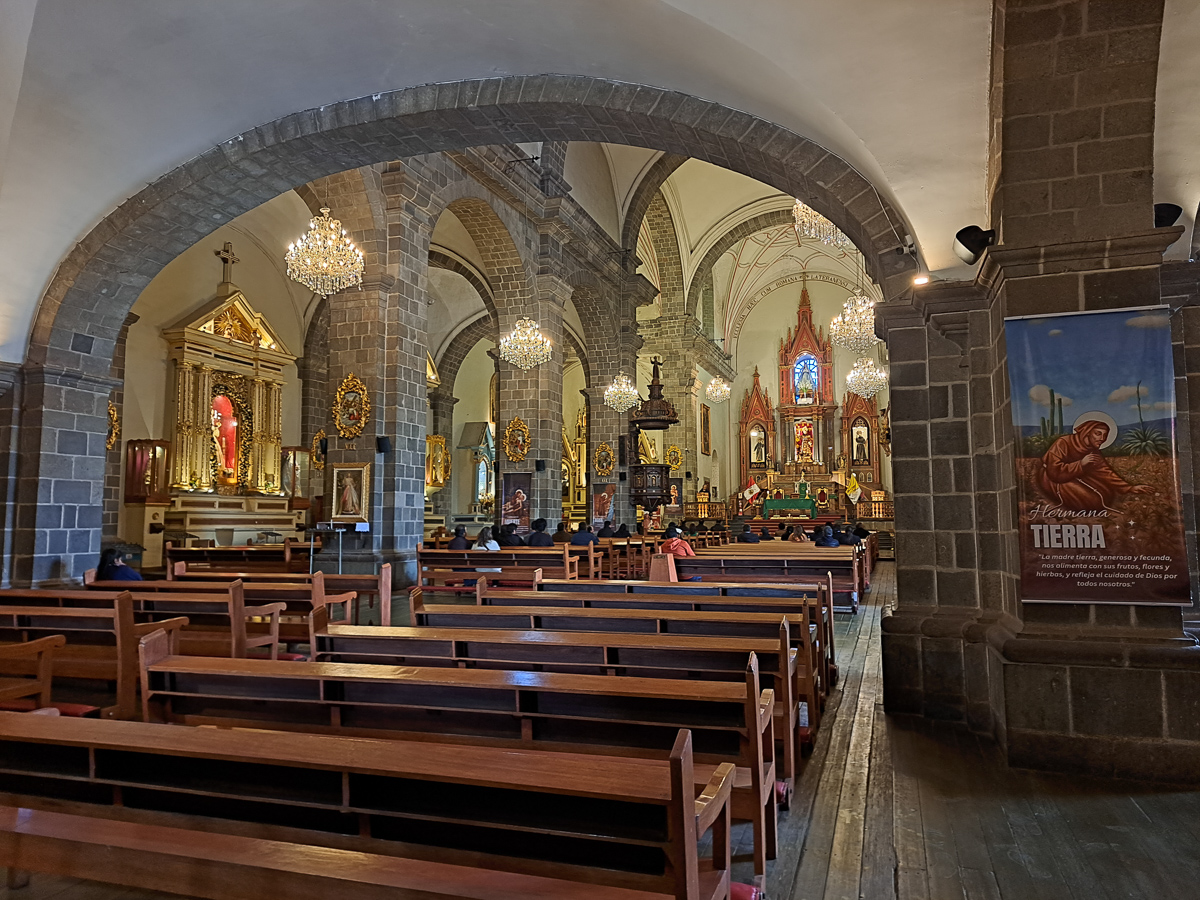
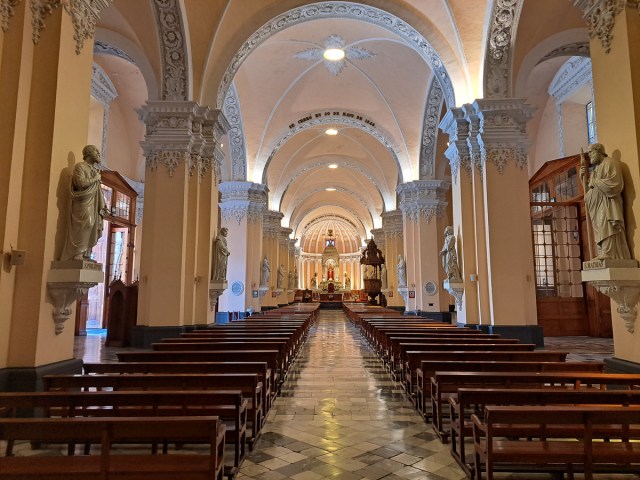
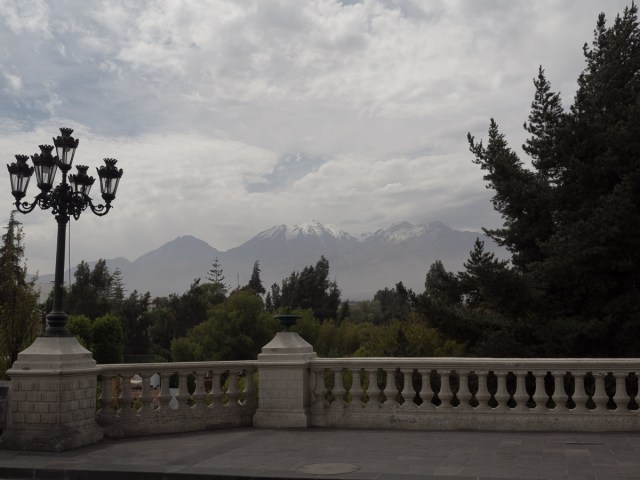
The city itself is like many other ancient Latin cities. Its inner centre has the ancient square on this occasion the cathedral, a combination of museum, main church and chapels spans one complete side built in the local white rock and is then surrounded by large municipal buildings and perhaps a few tourist shops.
Our lodging as is our preferred option for city breaks is an AirB&B apartment which gives secured parking, some room to spread out in and often some sort of gym. We’re looking out over a park which is a nice touch on this occasion.
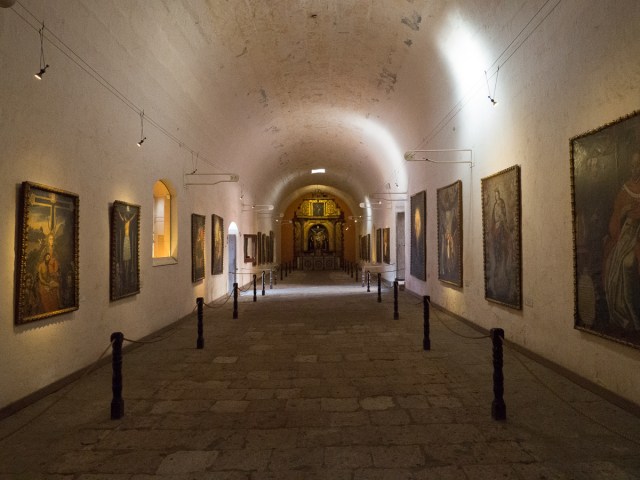
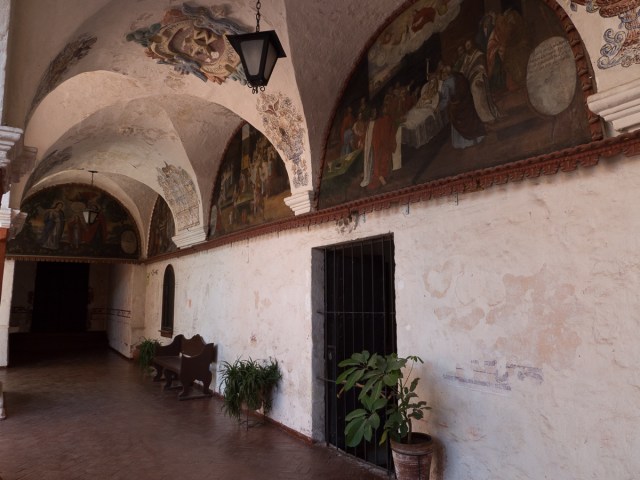
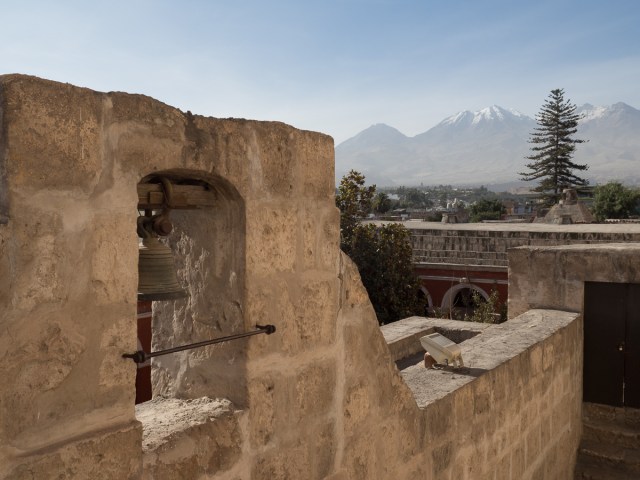
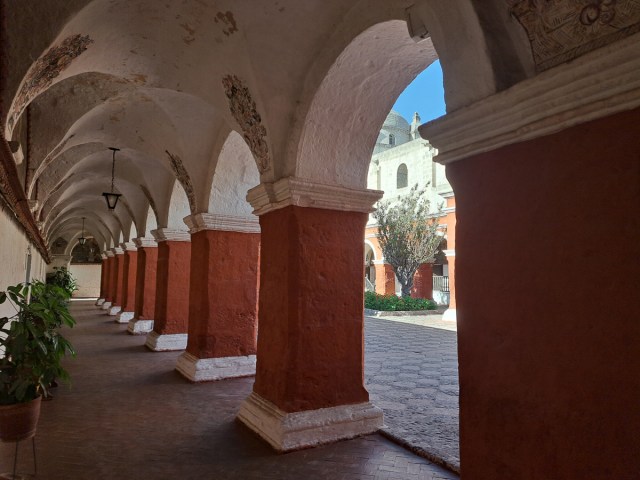
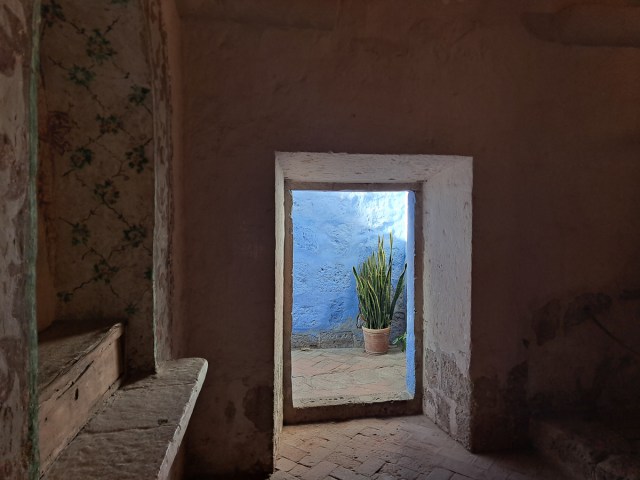
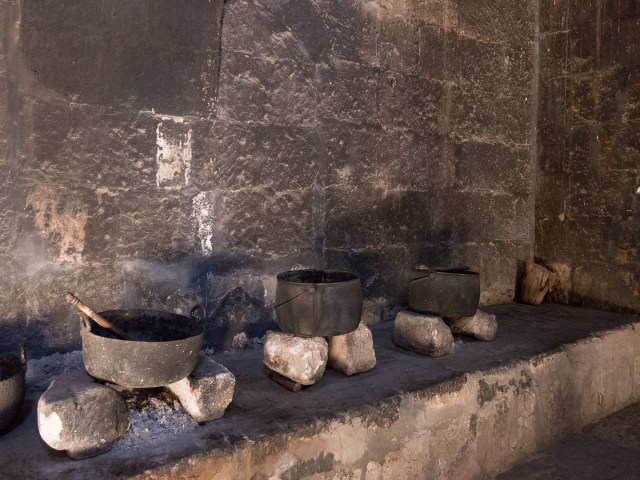
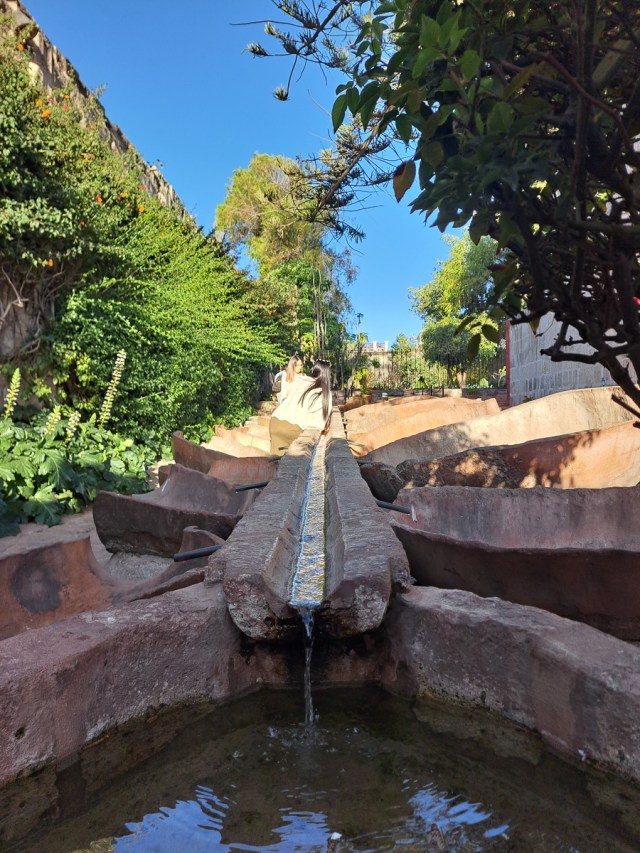
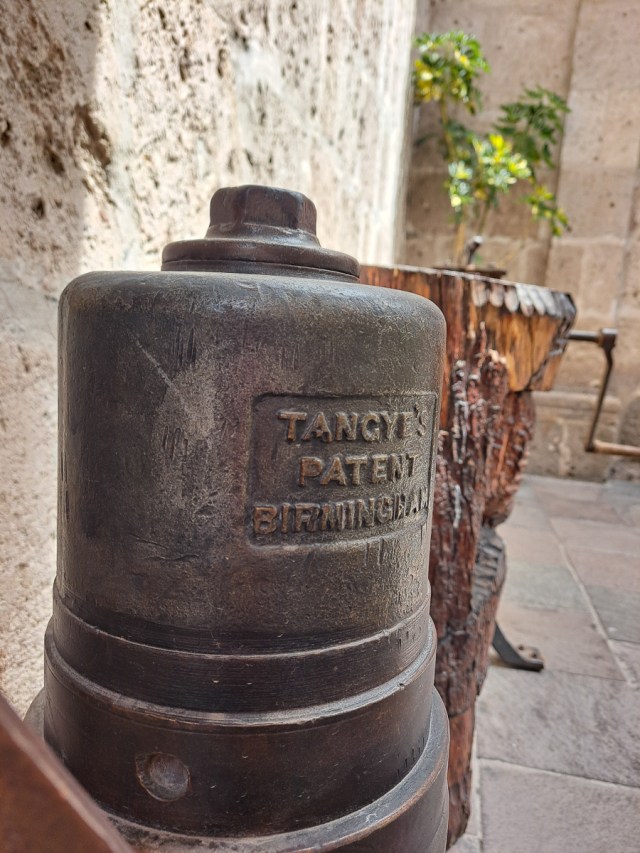
Having seen the cathedral we headed in the opposite direction to visit the Unesco listed convent. It’s an ancient self contained unit with numerous kitchens, chapels, prayer rooms, accommodations etc. each connected by narrow streets. Twenty sliced in half large earthenware pots creating a laundry system in one corner. The second floor, in the main, no longer exists as a result of many earthquakes but rambling through the expanse gave a feel of the tranquillity that must have existed.
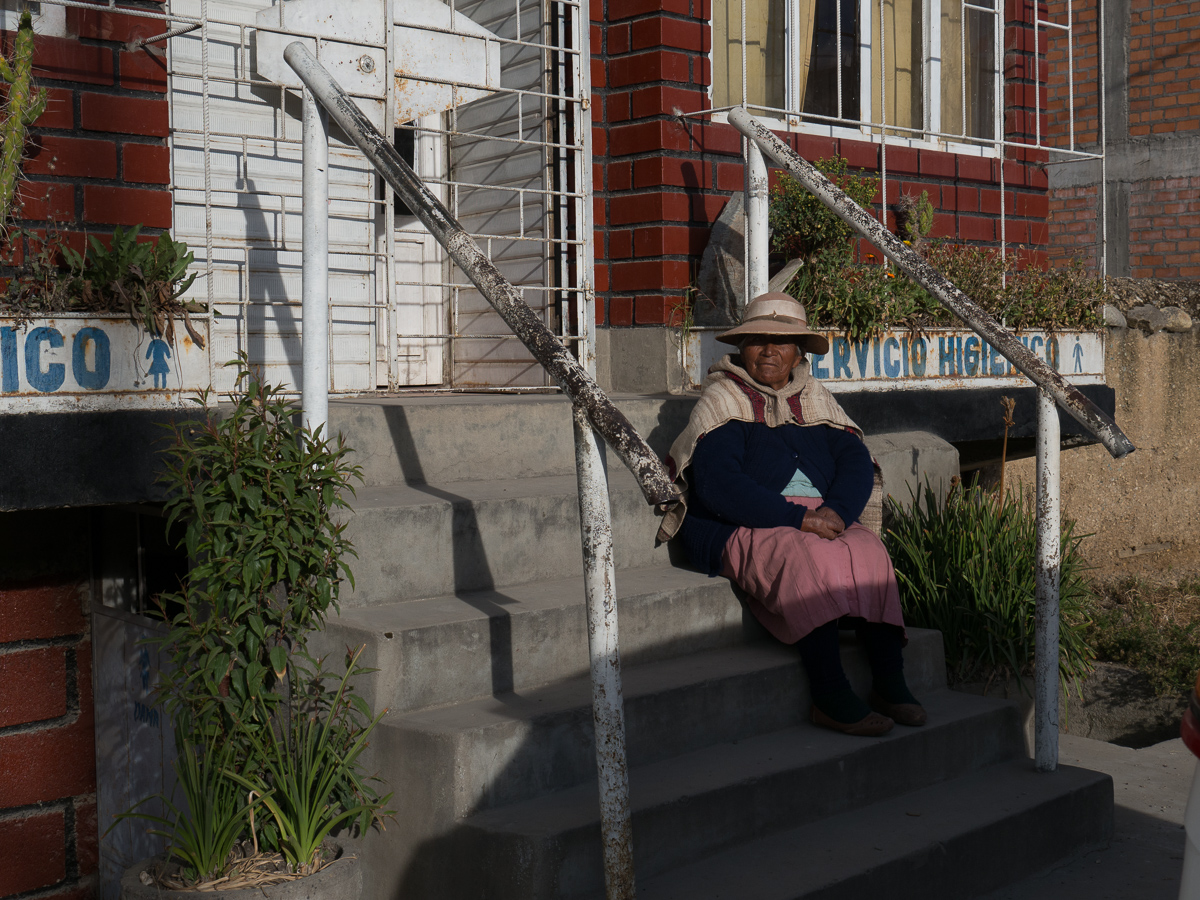
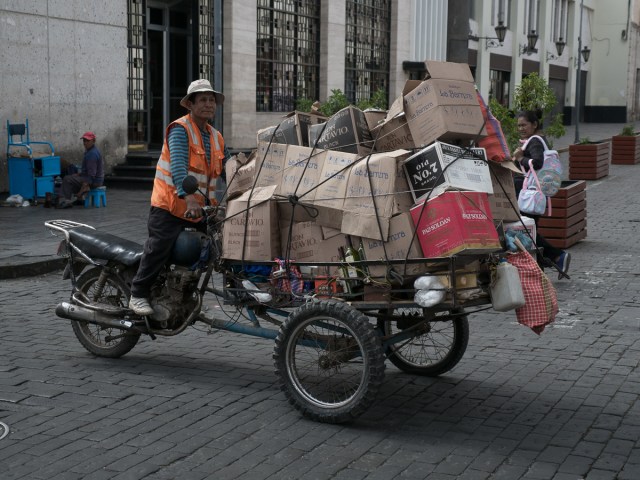
Returning to our accommodation at around five took us through the rougher end of town. The traffic was dense and so was the foot fodder. The pavements were heaving as we wound our way past street vendors selling everything from single cigarettes to pop to gadgets to fried convenience food. These edged the pavements while small booths for shops lined the inner streets occasionally leading back through small accesses to rows of similar booths generally selling all the same stuff. One lady sat on steps leading to the first floor with shelves lined with pop and snacks on either side of her. Every space was crammed!
The logistics for getting the parts to Arequipa proved a bit on the sluggish side – nearly a week. As we waited for our bikes to undergo their services we spent a lot of time asleep, idling, or working on the computer. Gid had a cold, which he gave to me, and both our spines appreciated the idling. Seems we needed a rest. The parts finally arrived in the middle of Friday, and we picked them up last thing, back to our apartment. Saturday morning we rushed back to the taller, Clare’s bike seemed to have an oil leak – actually it turned out to just be a rather messy oil drain that hadn’t been cleaned – the Hims have a bash plate, and it does need some care, or a post-drain scrub-out, to not end up with oil caught in it and dripping everywhere. Cleaned up (and the clutch cover bolts tightened), we trundled off to the nearby gas station: Which led to another return, Gid’s tank was super-pressurised after sitting in the sun, which typically means the tank expansion hose was pinched when the tank went back on – how Clare’s fuel leak happened in Colombia. Freed up. Finally we set off. A bit hastily, it turned out, the next days were long old rides, it took Gid several days to notice that the rear axles were crooked, Clare’s so much that a lot of whacking was needed to free it! Asking around, this isn’t untypical, a lot of expert bikers always do their own work on quality grounds.
The Arequipa delay has also given us more time to contemplate the end of the trip. We have always known that our end-of-November deadline – actually the end of our 18-month travel insurance – means we’ll be heading into the chilly, windy, south at the end of spring, not summer. But getting out again may take a significant chunk of time too. The problem is the motorcycles. South American nations really don’t like private imports of vehicles, which means we can’t “just sell them”. Whereas shipping them home will cost more than a well-used Himalayan is worth, and these sturdy, versatile, but rather slow bikes aren’t what we want to ride in the UK. We always knew this, but the many different solutions discussed online, and used by fellow travellers need a bit more consideration.
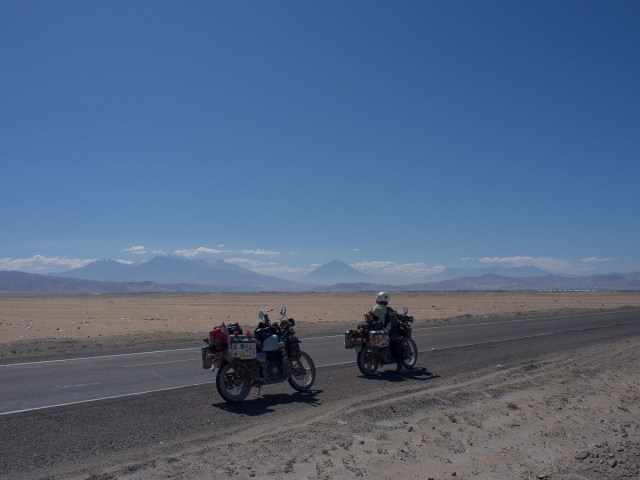
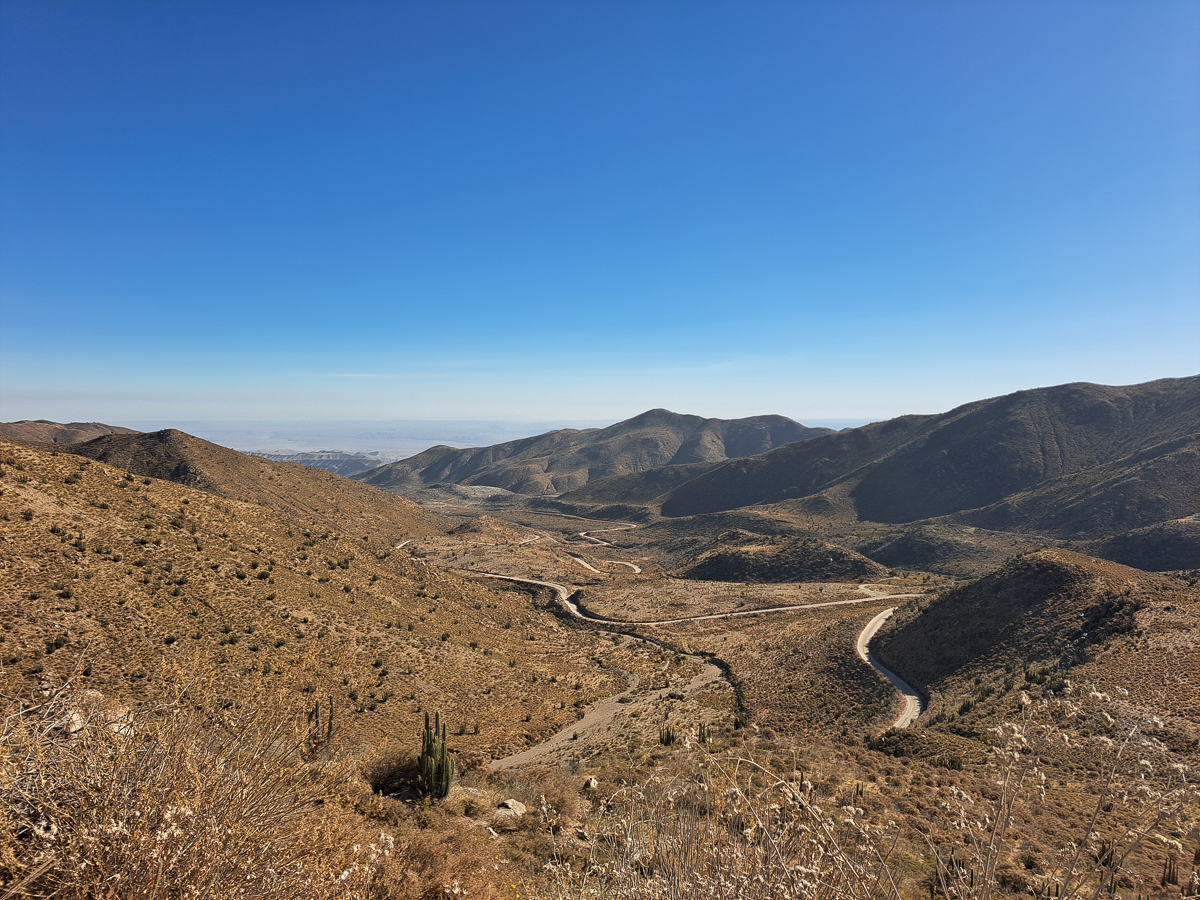
Our last days in Peru were curious, we thought we’d check out the hot, sunny, sea level Pacific coast, since we’ve not seen the Pacific since Panama. How wrong. Thanks to the Humboldt Current, it was cool, foggy, damp. Not Marbella in summer, more like Minehead in March. Still, the mining works at Ilo were impressive. We headed back up the hill, back to the daytime warmth of the Atacama desert – and the Chilean border.






























 2silvercyclistsdotnet