Clare’s Three Mistakes

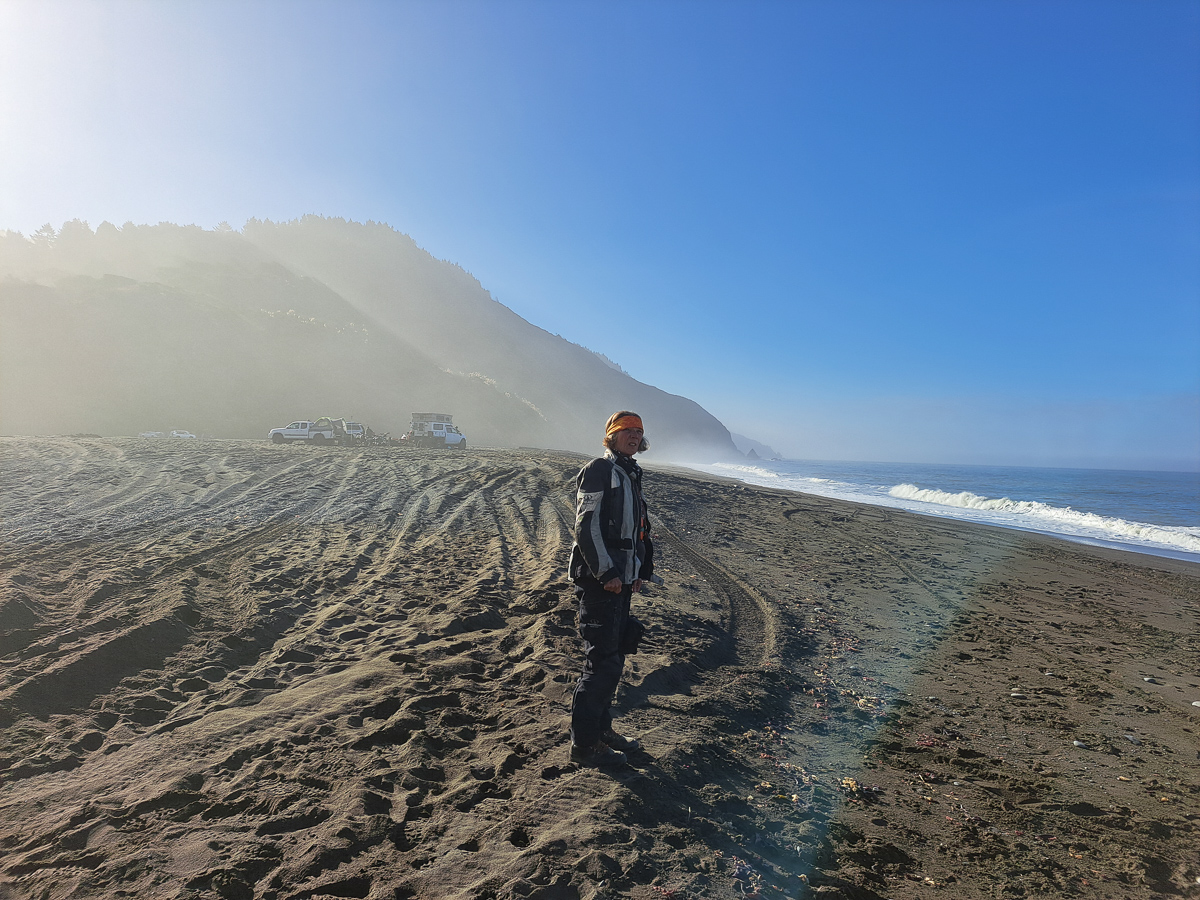
As related in the previous post, we stayed on two occasions at Lake Lahontan State Park near Reno. The first time we arrived there, we didn’t really know what to expect, and were dismayed to find a notice saying swimming was off. But as it was late in the day with no other campsite nearby we proceeded anyway.  The tarmacked park road gave way to gravel which as we turned down toward a chosen patch of beach gave way to hard sand, and much softer areas.  Across this we proceeded slowly hunting for the most solid surface and seemed, with the odd squirm or two, to reach a ‘parking area’, before the obviously soft looking beach, and its tent-beckoning patch of shady trees.
Lake Lahontan – Idyllic, isn’t it?

The 4x4s, of course, went right down onto the beach.  They revved up and sped through what in places was deep soft sand.  One, however, clearly picked the wrong route or went too slowly.  It sunk a good 8 inches in.  Further wheel spins were just cutting deeper.  I fetched some broken branch pieces putting them under the tyres. Initially it looked as though they were just going to get whizzed through and spat out but they did hold long enough for some progress to be made.  Eventually the vehicle was pulled out by a second 4×4 who, chains attached, gave the mission some real welly.

On our second visit to the same spot at the lake we suffered more excitement.  Gid had a squirm or two reaching the ‘parking spot’.  I thought I’d picked a good line.  However, my bike went into a number of squirms.  My feet shot down trying to stabilise the bike.  Gid was shouting, ‘Back brake, back brake,’ as I wobbled precariously close to him standing by his bike. Maybe the squirms were our new front tyres? I stayed upright.  Just!

That excitement over it wasn’t too long before a second wobbly moment.  This was on the approach to Virginia City’s high street on our second visit.  It was on a direct, and entertaining route from Lahontan Lake to Reno so we ran it a couple of times collecting parts for the forthcoming bike services.  We approached Main Street ascending the steep Six Mile Canyon road.  It’s quite a sharp drop down over a lip into that road from Main Street and of course quite a steep tricky climb back up.  On our first visit where we had approached up the hill to turn left at the junction I’d made a bit of a mess of it.  Luckily I had pulled up to the left side of Gid at the top of the lip and the road was clear so I went straight across.  This time – I had a perfect plan.  The approach road has several stop signs at minor crossings.  You had to slow right down but not actually stop as the visibility was so good.  I had given Gid plenty of space as I approached everyone of them.  So had the biker tailing me.  I could see the Main Street ahead.  The approach was very steep crossing one last crossroads and then continuing steeply up the other side before reaching the main street. Or so I thought.  Gid stopped as expected at the stop sign but he didn’t immediately proceed.  He stayed there!  I was much too close now as I had expected him to slow and go, moving on quite quickly.  It was just a minor cross roads after all.  Wrong!  This was the main street and he had to wait for traffic.  I pulled up behind him quickly realising my mistake and how stupid this was.  I was on such a steep angle that my front brake wasn’t holding the bike.  It was sliding backwards.  Gid had now moved on but I had a death grip on my front brake.  It wasn’t holding!  Getting myself together, I balanced enough to put my foot on the rear brake.  That held the bike. In first gear, slowly I let out the clutch.  Would it have enough pull to move forwards from this spot at this steep angle? The engine revved like hell but gradually it inched forwards. I slowly pulled away.  I needed to take a sharp right to go round the parked car and stay on my side of the road.  I was moving. Sod the right side of the road.  Thankfully the approaching car was coming slowly and was some way back.  I gradually pulled round on the wrong side.  But I was up.

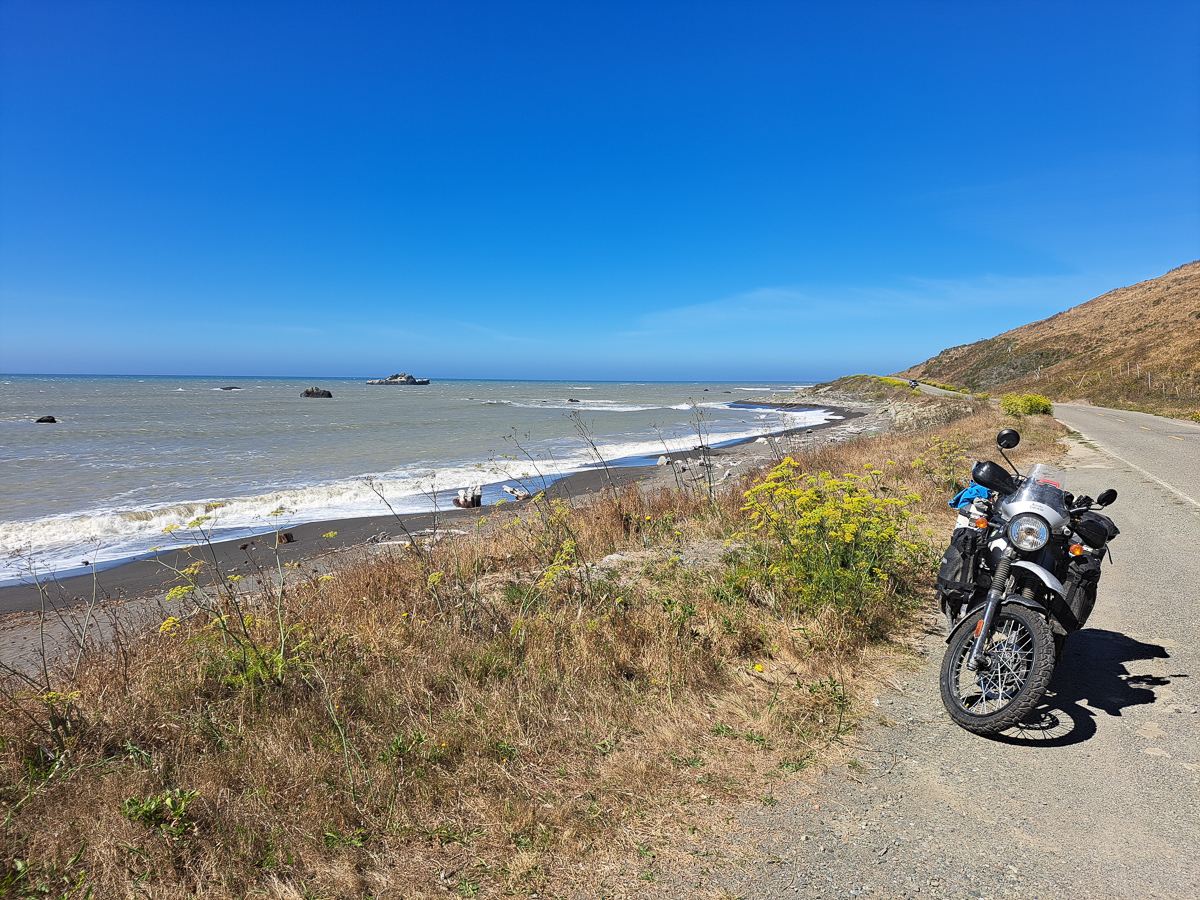
My third mistake was the big one.  We’d left the southbound highway, 101, to meander up and down the coastal hills and along the minor coastal road heading south towards San Francisco.  It was wonderful!  The route twisted this way and that.  The views along the beach were beautiful and quite deserted.

We’d ended up in a small village called Petrolia.  Following a quick lunch we set off again.  The main road, now called HWY1, was just east of us  It was the big road all the way into the City and the route the Garmin had displayed.  Gid had looked on our Michelin map and checked on his phone and come up with an alternative road across the wilderness nearer to the coast again. Garmin wasn’t happy.  Normally once we’ve continued on a route for a while it concedes and reroutes accepting the new alternative.  This time it didn’t.  It was having none of it.  We arrived at the point where Gid declared,  ‘It’s left here.’  There wasn’t a road in any sense of what we’d experienced so far.  Forrest, an aptly named forestry worker, on his Himalayan, was standing at the corner discussing with his friend, hanging out of a pickup, their next move.  The route they had hoped to take was closed so they were heading off along the same track.  The pickup driver was a little apprehensive.  Forrest was local and assured us all that what we could see was what we would get.  And I believed him?
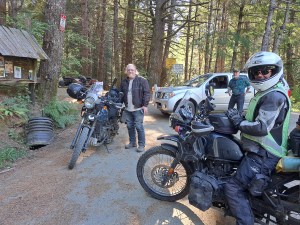
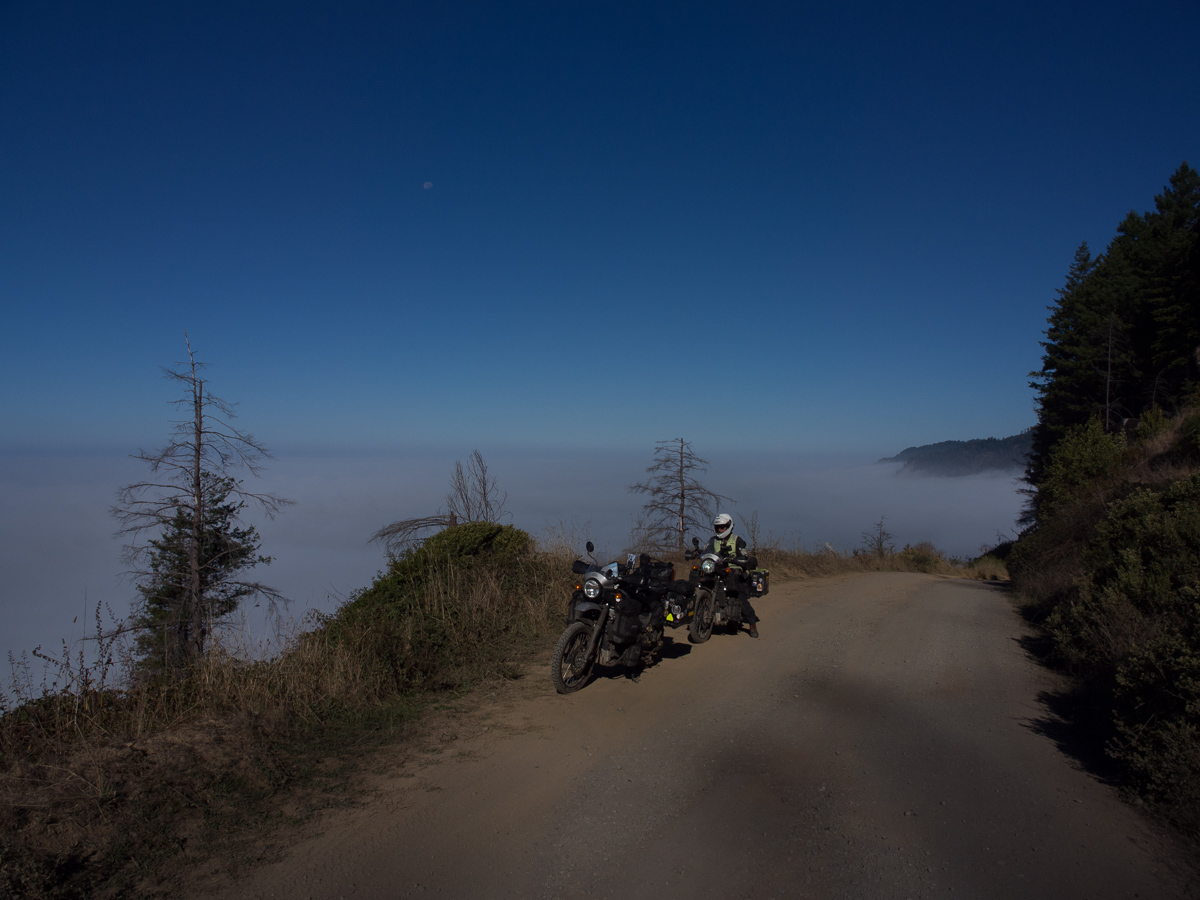
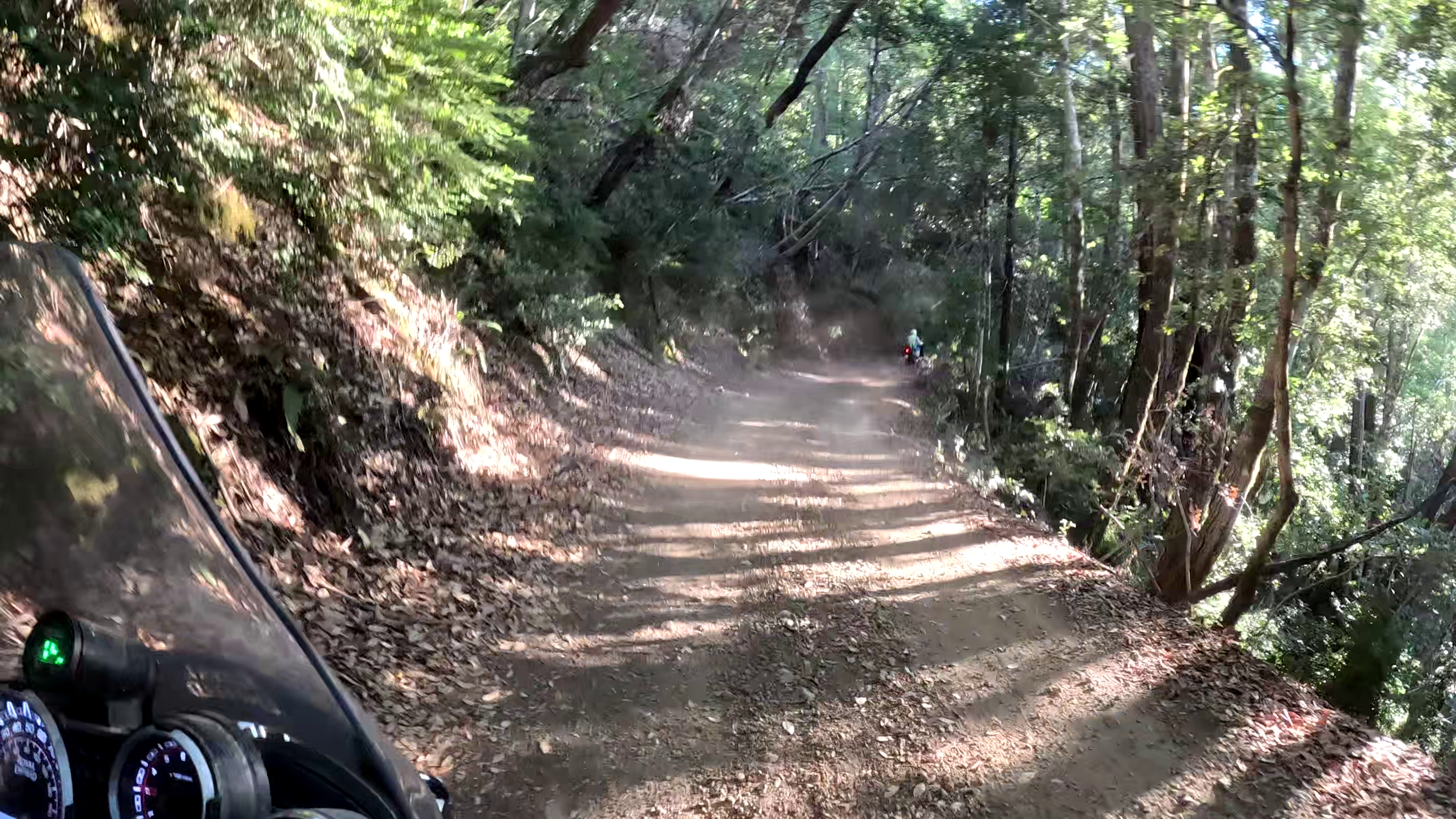
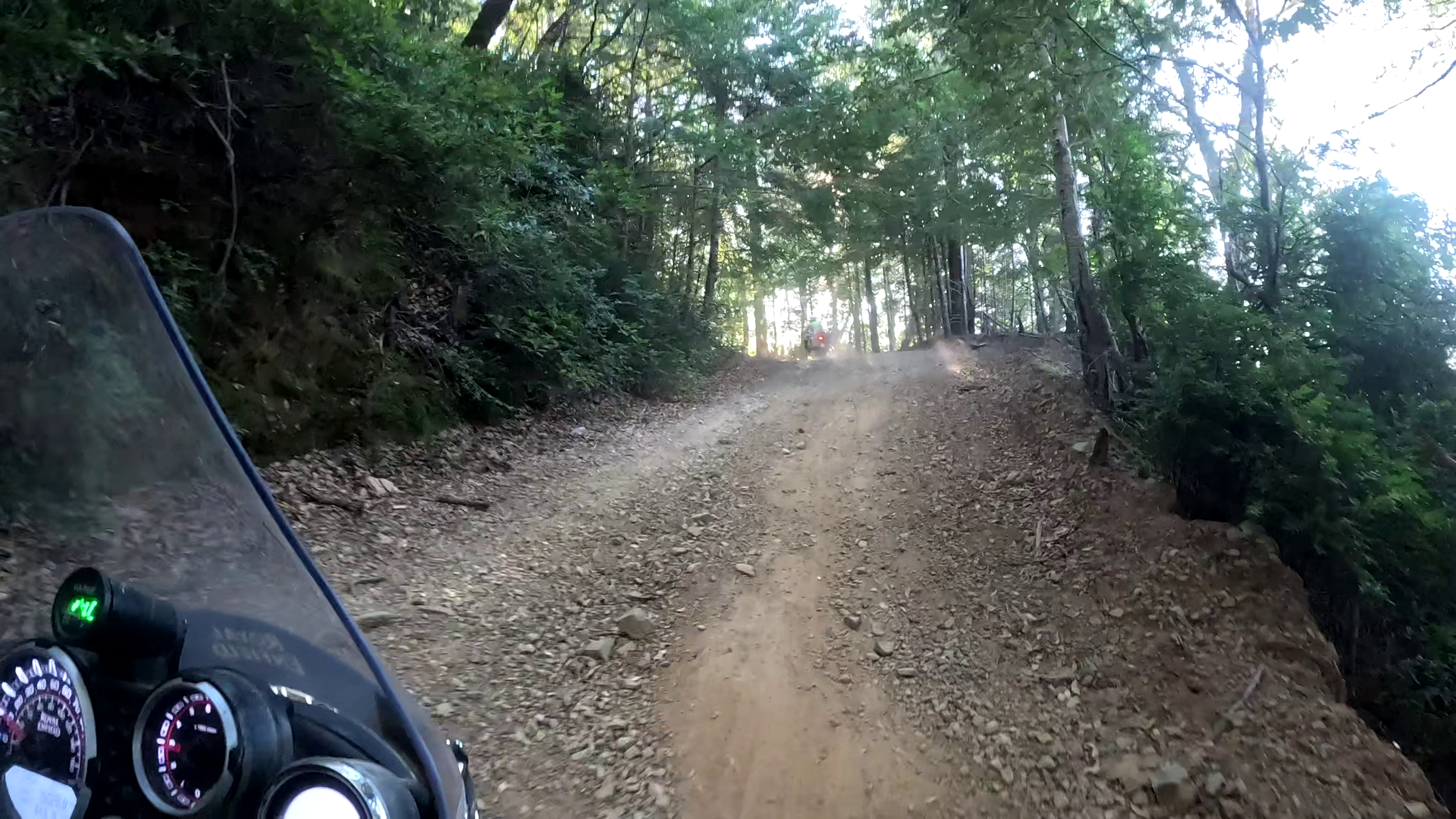
Usal Road it was called. It was dusty dirt, gravel and a good mix of bigger stones disappearing upwards between the trees.  But nothing daunting.  Away I went.  It wasn’t long before we were both distressed.  Our route wound its way up and down along a narrow track with an ever deteriorating surface.  Soon it had deep gullies carved out by rain coursing down the hillside and diverting down the track.  In places these were twelve to eighteen inches deep weaving from left to right exposing rocks, roots and gravel.  One minute a single gully the next a delta of grooved out rivulets wound it’s way ahead of us.  At one point I suddenly stopped.  ‘Left, Gid, left,’ I shouted down the intercom. A deep gulley was opening up diagonally ahead of us, but I’d missed the safe route on the left.  The gulley started on the left but was getting far bigger as it carved right. The narrow path wide enough for one tyre took you along the clear side. I’d done this sort of thing on my mountain bike numerous times before but they are a whole lot lighter and easier to throw around.  Kiwi Adventurer, a lady we’d met in Canada, had said she swapped her nappies for a motorbike and found off-roading easy.  ‘You just open the throttle to raise the front wheel up over the obstacles,’ she’d said. Now I was going to try it.  Gid was calling after me, ‘Well what are you going to do?’  I didn’t wait to reply.  I couldn’t think this too much I had to get on and do it.  I got the bike moving and aimed for the slight dip on my side where I was going to ride over the lump in the middle, rise up the other side of the gully and turn sharply to head up the track again.  Miraculously I managed it.  Don’t ask me how but along we went again.  Gradually it seemed like one roller coaster moment was followed by another.  Soon I was berming on my motorbike. In a couple of places the cliff edge curved round in a clear arch above an uneven mess on the track.  I knew how to tackle this.  I’d encouraged my grandson often enough when he was learning on his pushbike. He’d set off without enough speed to sweep right round and slide down in a heap when only half way.  I needed some good firm throttle and the courage to edge the bike perpendicular to the curve.

Unfortunately, we were so focussed on surviving the difficult stuff, that we took no photos, and the GoPro only captured a short bit of the easier stuff, towards the end of the first day. So these pictures only show the easy bits!
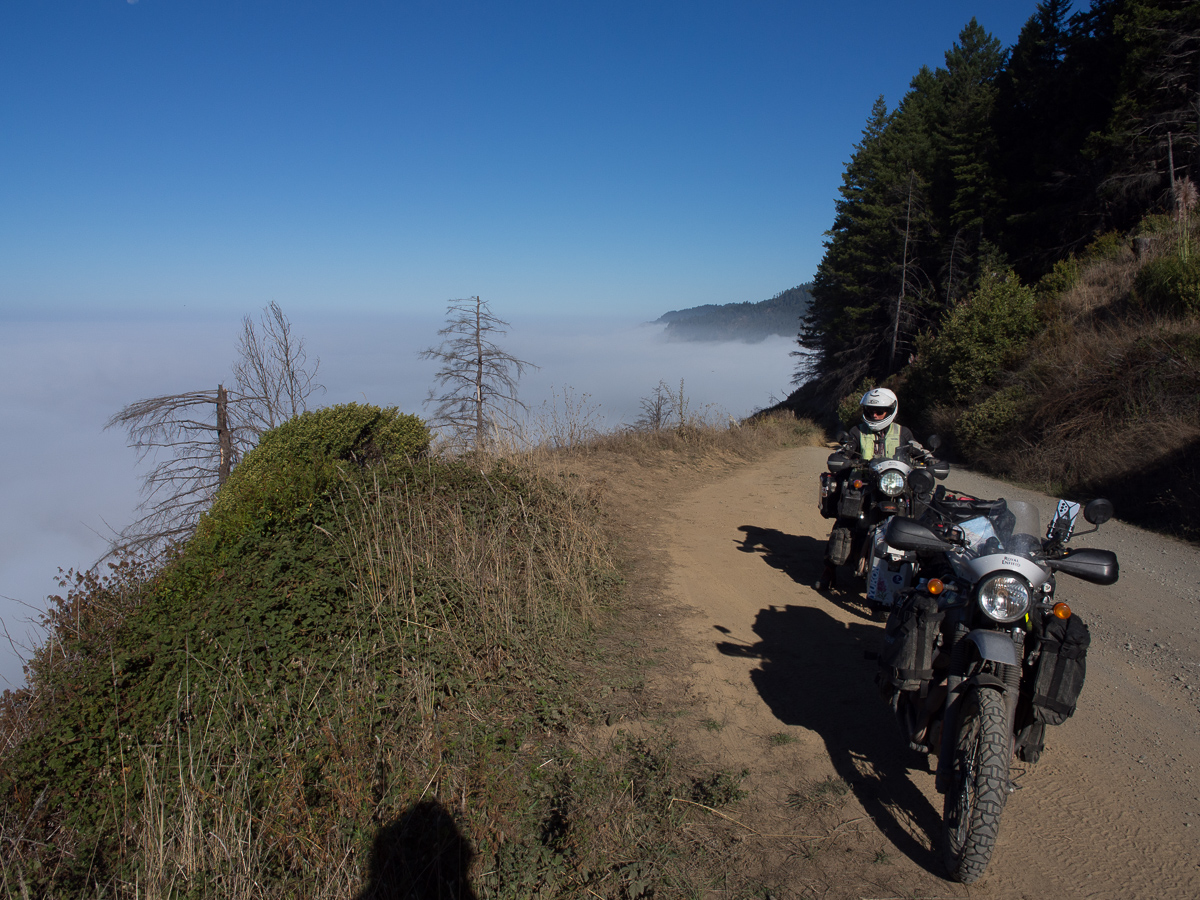
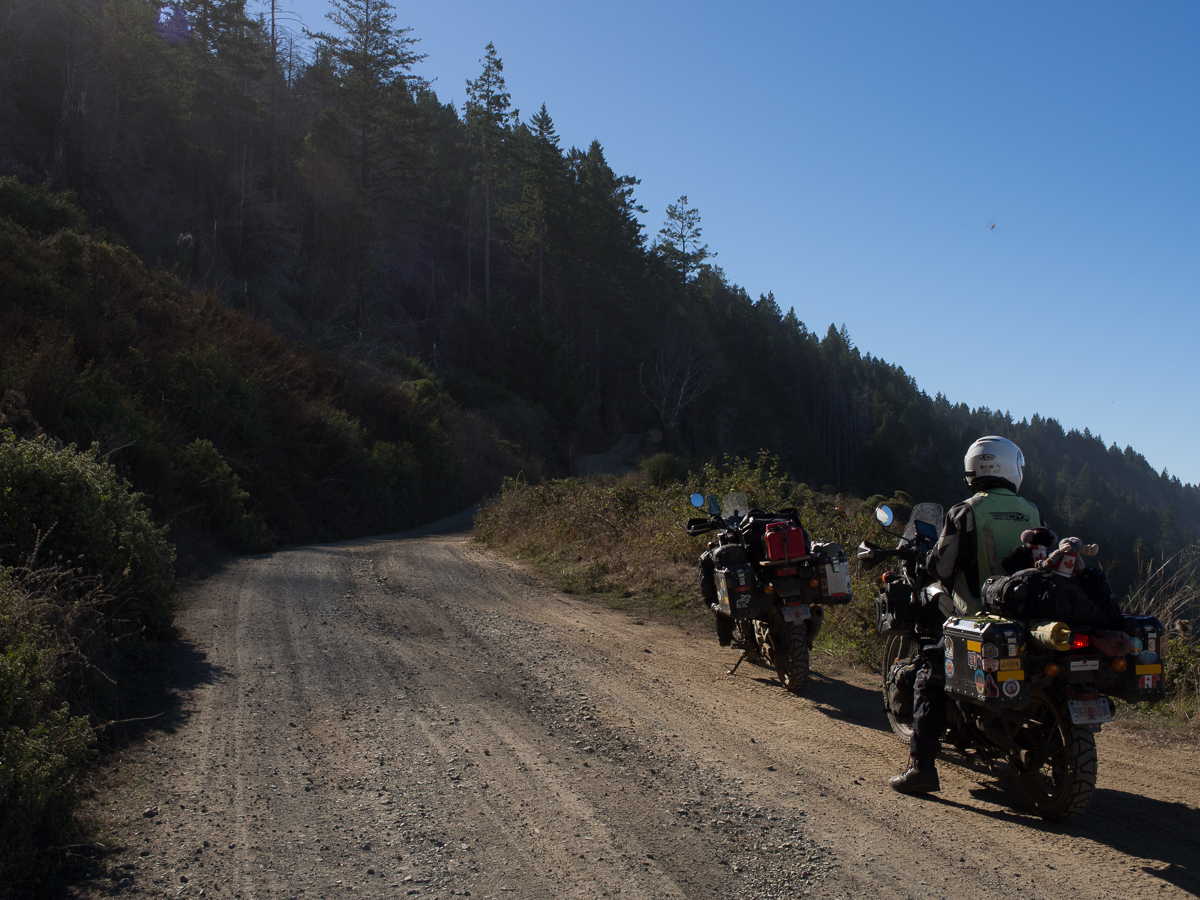
All of this was taking it’s toll.  My nervous energy was draining.  Gid had declared down the intercom, ‘Firstly, I’m sorry for getting us into this mess.  And secondly we can’t stop at the half way campsite because neither of us will sleep a wink with fear of what’s to come.’  Forrest had passed us enroute and was stunned when we said this was way beyond our skill level.  We’d never done anything like this before.  But time was passing, by the campsite we had only an hour of daylight left:  We camped. It was slightly reassuring that there were a few dozen other campers, apart from Forrest, with macho trucks.
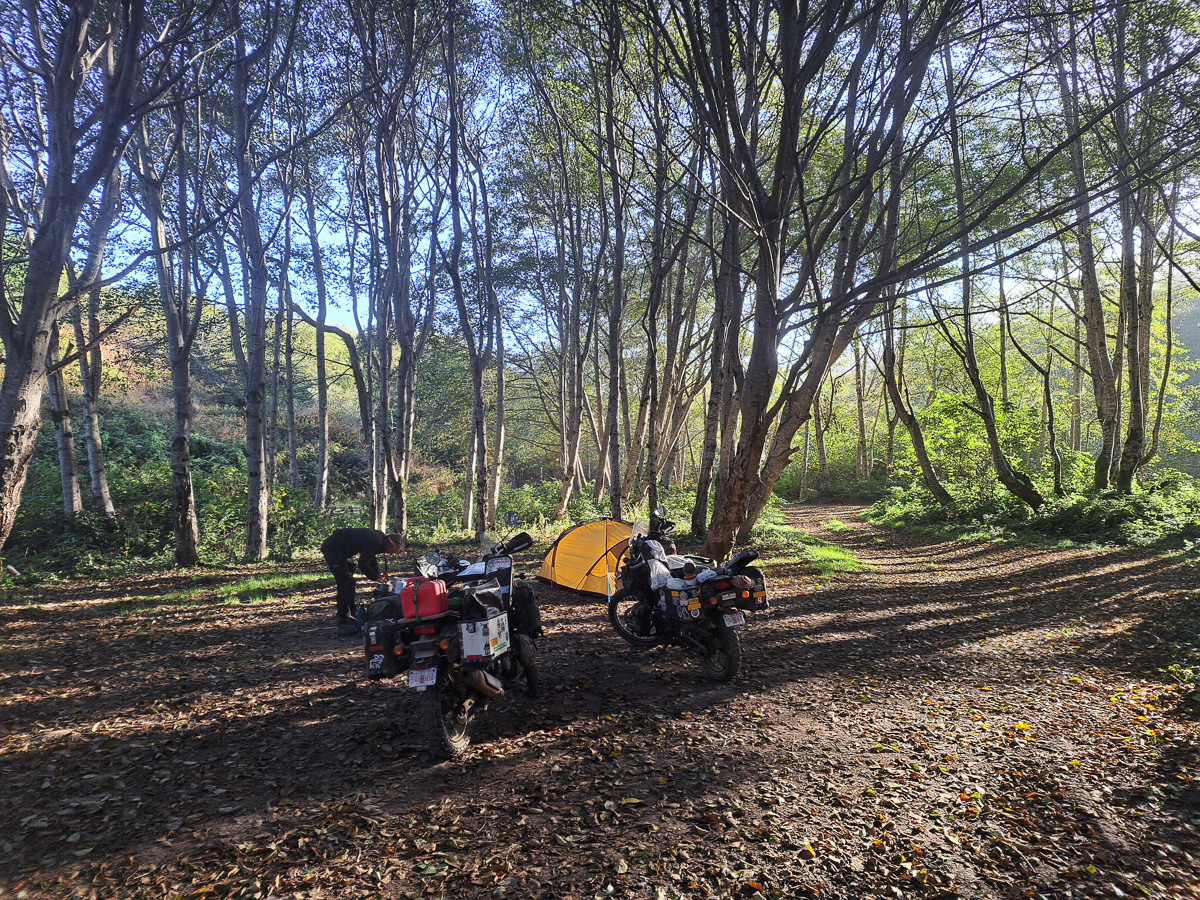
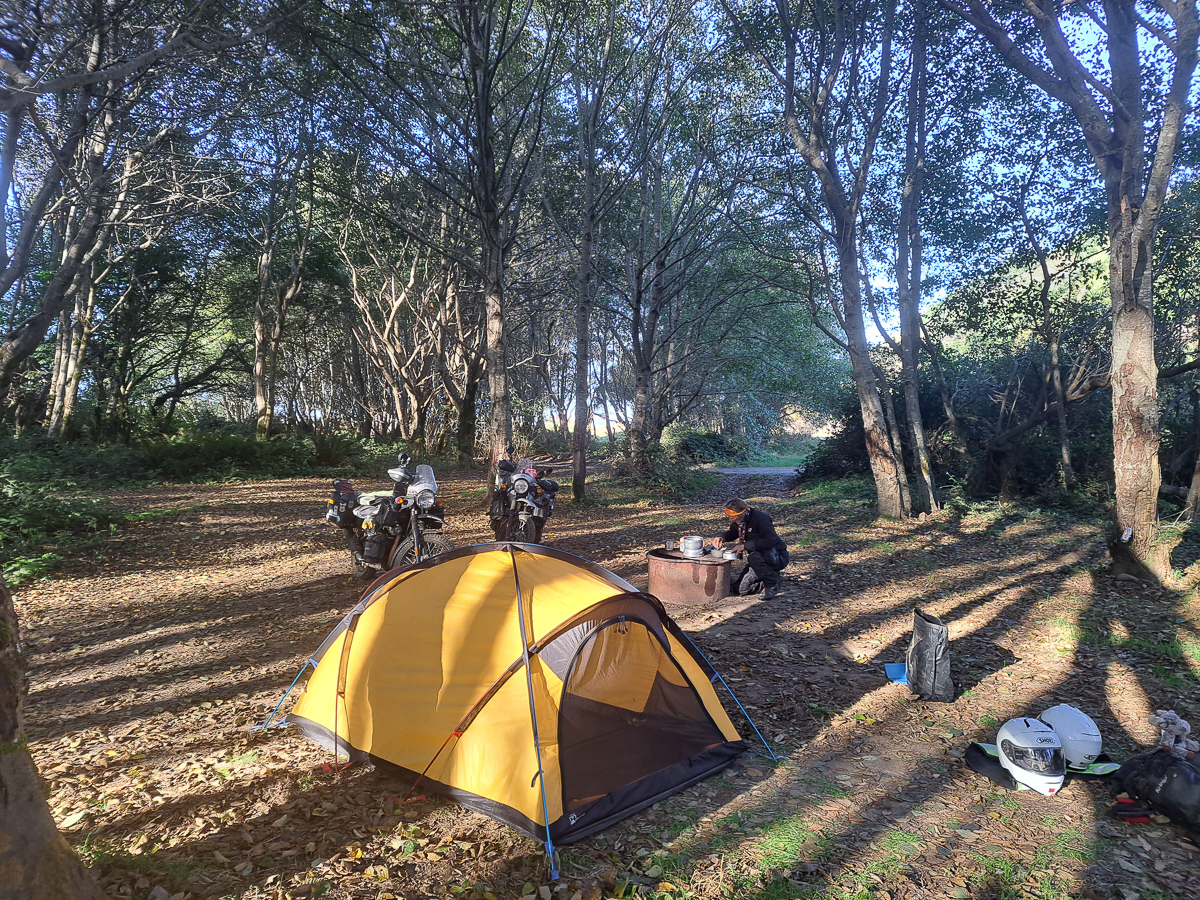
As I lay there, the following morning, contemplating the rest of the route the pines wept for me.  Great big splodges landed on our tent.  I lay there dreading the moment when I had to get up.  I lay there aware of my aching shoulders and forearms.  Although the Garmin had not adopted this route latterly, when struggling yesterday, I had been able to see Hwy 1 on it.  We had seemed to zig and zag left and right but not make any actual progress towards it.  The distance we’d covered, 23 miles at a speed of ten miles an hour, had become a nightmare. Seven miles we still had to cover – new horrors were still to come.

We’d seen one wrecked pickup that had careered off the edge.  Jammed in the trees it hadn’t got very far, and looked like it had done so on its roof.  The canopy of trees above our heads hadn’t been much of a comfort as the redwoods grow up to 100 metres tall.  Look down from the track edge you couldn’t see the bottom!  As we set off on the final seven miles we were aware of convoys approaching the beach/campsite.  How the hell were we going to cope with meeting a convoy of cars, party intent 4x4s, coming towards us?  The sun was also very low – beams carving through the trees..  At times it totally dazzled us. Firstly Gid cried out, ‘I can’t see, I can’t see!’  Seconds later I was screaming too blinded by the sun.  The panic in me was rising.  Albeit momentarily, I couldn’t even see the road. Gid was leading and beeped his horn at each tight blind bend.  He soon stopped as no-one in a car would hear him – sound systems blaring, windows wound up.  We did meet a couple of cars.  Gid called out, ‘second bike coming’ as he passed them by but one had already moved on towards me.  It stopped quickly enough when I came into view but I shook my head at the small gap I was supposed to ride through.  It pulled a few extra inches up the edge.  I inched past.  We finally made it to HWY 1, nerves shredded.
An Historical Tour

Apologies, this is published about 3 months after we got back! A certain lack of immediacy pervades it.

So, exit the wilds of Scandinavia to a different mode of touring. From here on,we have crowds of cities, book-loads of history.

We knew little of Finland before. One salient point striking us Britons, not just about Finland but everywhere until near home, was how recent so many countries are. From Finland through to Poland, for most of the last several hundred years they had been part of the Czar’s empire. Freed in the Russian Revolution, all but much of Finland were back under Russia’s thumb by 1940 or 45, until the end of the 1980s. So “independence” in the modern age lasted just 20 years or so, before restarting in 1990 or thereabouts. And in that 20 years, they’d fought amongst themselves quite a bit. In the last hundred years north eastern Europe’s national borders have been far from static, and don’t entirely match the language and cultural boundaries. So a lot of the “history” felt as if it were still lurking nearby, and might resume any moment. Well it did resume: The ongoing war in Ukraine added a very big dose of edginess to that feeling.

I should probably apologise for my historical ignorance demonstrated below, and for accidentally treading on anyone’s sensitivities.

We rented a budget apartment in Helsinki for a few days. Importantly, we were able to get one with secure parking, although access was convoluted. It was a sunny 4km hike into central Helsinki. Nice to wander and explore, as true tourists. We found a huge deli supermarket, the first time since Copenhagen there had been such a choice of yummy, or healthy, things. Though, no, there weren’t any paper maps of eastern Europe in the shops. Lots of history to visit and try to comprehend.

The Russian Orthodox Cathedral in Helsinki (I think!)
Russian Orthodox Architecture
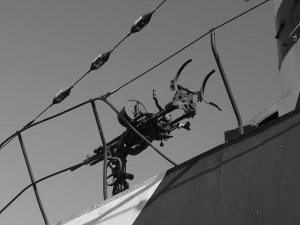
An Industrial Era cannon defending Helsinki
Industrial era cannon on island of Suomenlinna outside Helsinki
A WW11 era Finnish submarine from the Winter Wars
WW11 Finnish submarine Vesikko

On 16th August, 2 months after our ferry to Holland, we boarded the comfy ferry from Helsinki, to Tallin, capital of Estonia. Aboard we chatted with pair of Latvian bikers and admired their Smartin Adventure luggage and crash protection on their bikes, a new TransAlp and a T7. Another  young Lithuanian was on a CFMoto. Of course, we all had been to Nordkapp.

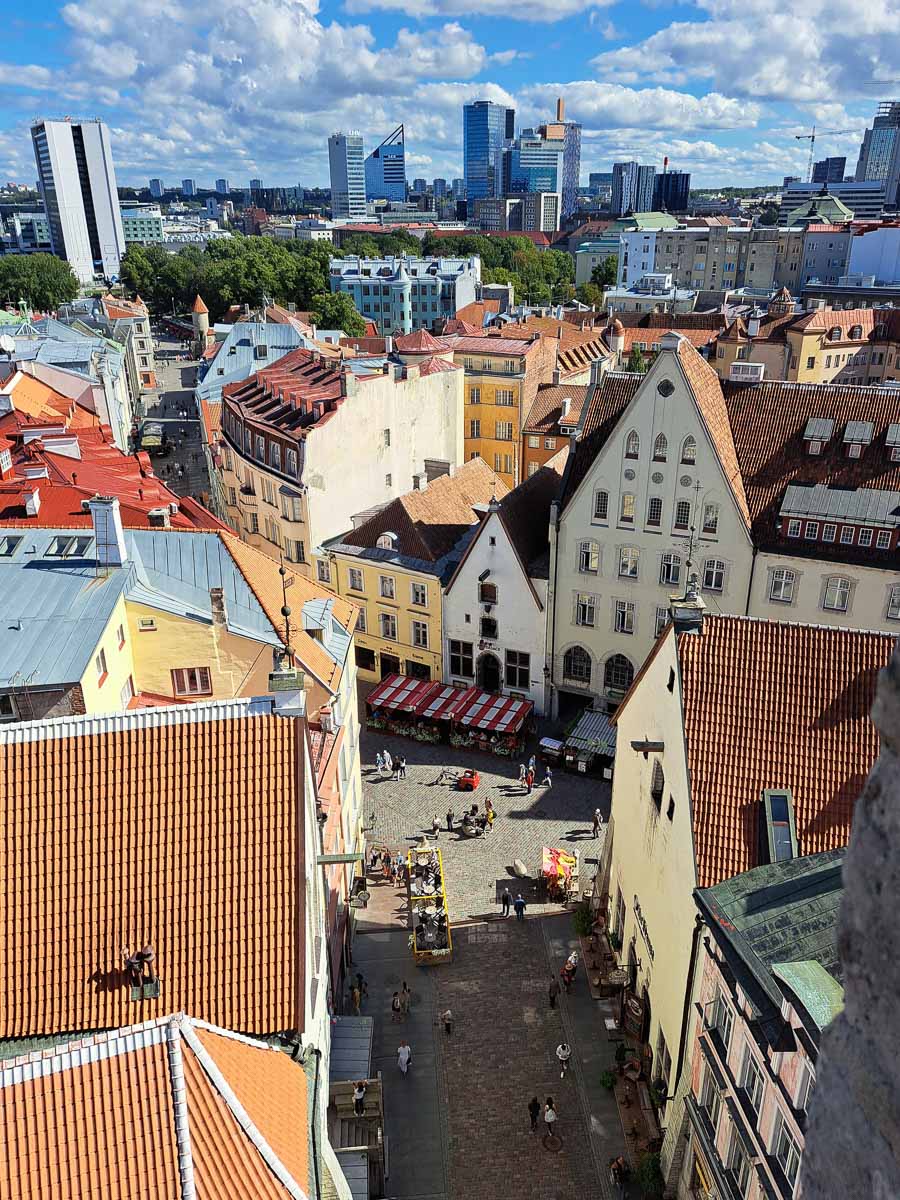
In Tallin we stayed at a curious camping-in-a-garden, in a sort of cubicle in a sort of gazebo. It worked well enough, and was walkable to the centre. It’s a lovely old town, although far less old than it looks, being rebuilt, after WW11 laid much of it flat. Like many Baltic ports, it is famously an “Hanseatic” city, founded by the medieval trading alliance. We started learning about the Livonians, and were surprised to learn that they and others brought (presumably, imposed) Christianity to these parts only around the time the Muslim Ottomans finally extinguished the Christian Byzantine Empire at Constantinople, in the 15th century, 800 years after the monks brought Christianity to the back-end-of-beyond island of Britain. But, of course, the Romans never controlled this territory or anywhere nearby. What did they ever do for us, eh?

We knew Clare’s bike would be due a major service while we were away, now it was due, and my rear tyre looked pretty sad. Unfortunately no outfit in Helsinki could fit the big service in over our three days planned stop, but Helsinki Honda did do me a new tyre. I’ve ended up defaulting to Bridgestone’s BT23, my earlier fitting of 80:20 road/offroad adventure tyres brought no reward on dry gravel tracks or wet grass, and they’re never in stock; the BT23s seem to always be ready, be it Oban, Worthing or Helsinki. Yamaha Tallin did Clare’s big service and a fork service too. Mechanic one of those slightly curmudgeonly sorts who will often go a bit beyond. Good value, that was.  Two pillion runs as we shuttled about for a day exploring Tallin.

We explored further east in Estonia, along the northern coast, ending up in Narva, whose medieval fortress looks across a river at a contemporary Russian fortress. Nearby is a heavily secured border crossing, much less busy than it was before 2022. The mediaeval fortress was interesting to explore, but had been rebuilt. We recalled our cycling adventures in the ‘stans, also part of the Czar’s empire, later the Soviet Union, now independent. There also, the great historical castles were quite often thoroughly maintained, and kept in good repair. We saw a lot more of it as we worked our way west. A very different approach to here in the UK, dotted with scenic ruins, most of which have been left unrepaired since Cromwell blew them up.

We’re in Narva. That over there is Russia, the sea is not far to our right.

I’d always thought of the three Baltic states as “small”, but actually they are each very roughly twice the size of Wales; yet the combined population is less than twice that of Wales, so there’s plenty of forest. Somewhere in the Baltic capitals, we managed to acquire a paper road atlas of the three countries. It made planning a lot easier, and just fitted in my map case. Many of the minor roads were unsurfaced, often the atlas legend was a good guide. As remarked in our Finland posting, we’re pretty slow on dirt roads! Having escaped from the Soviet Union only 30 years ago, and being sparsely populated, the countryside in the Baltics is often a bit unimproved. As always in countries with lots of space, there are derelict buildings – it must make more sense to start again on a new plot.

It’s a small world. We stopped at a rather posh campsite, and there, again, was a German couple from the Tallin campsite-in-a-garden. Less probably then arrived 2 guys, Danes, a father on a Harley and son supporting in car, we’d met before at a curious backroad roadhouse in Finland. But, to confuse us, they’d parted from the second biking father & caged son they were then with, and, they’d exchanged facial hairstyles – the beard had moved to the son. Monthly shaves, like me! Beer was a reasonable €1.50 for a can, so I had my first since Denmark or Germany.

Speaking of beer, somewhere random in Estonia, we turned a corner on a country road, and dropped straight into a random breath test. Clear, of course, and no trouble, but a reminder that from Tallin on, there are really rather a lot of police about. In Scandinavia they are almost invisible. Poland, too, we were pulled over there for no apparent reason, and the cop’s explanation seemed rather, err, weak. Apparently there had been a lot of accidents, so he was certain he wanted to check our V5s (vehicle registration documents). Not sure how those avoid accidents, and he didn’t check our insurance, tyres, or breath. Perhaps he was just curious – seemed a nice chap.

We moved on to Latvia. And wondered in our ignorant English fashion – why are there three countries here, anyway? As so often: Language and religion. Each of the three is quite distinct: Estonia’s language is related to Finnish, and Lutheranism dominates religious life, plus a fair following of Orthodox churches. Latvia’s language is one of the last remnants of the Baltic family, and again Lutherans are the most common religious community. Lithuanian is also a Baltic language, but quite different from Latvian, and most of the population is Catholic. We were also noting, whenever we learned about recent history, that the monolithic Soviet Union, that dominated a lot of the UK’s foreign attention in our youth (the far off sixties, seventies and eighties), wasn’t quite so monolithic after all. The three Baltic states (and for that matter, the ‘stans) did a lot of stuff their own way, and were quite careful of their borders and differences. Much more like the USA than the UK, except that Russia was rather more dominant than the USA’s most populous state.

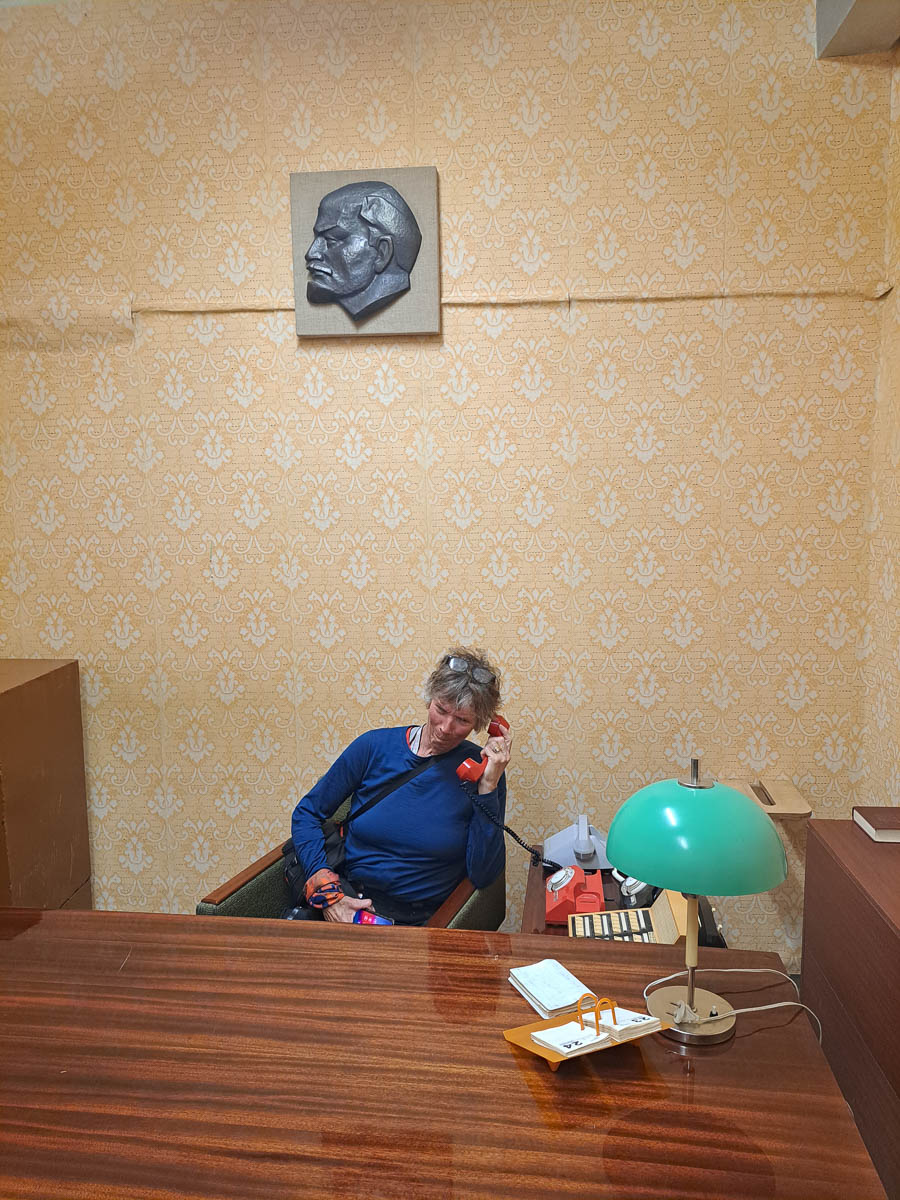
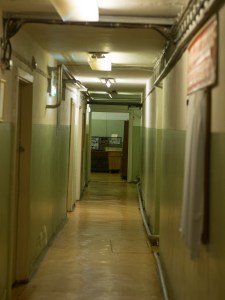
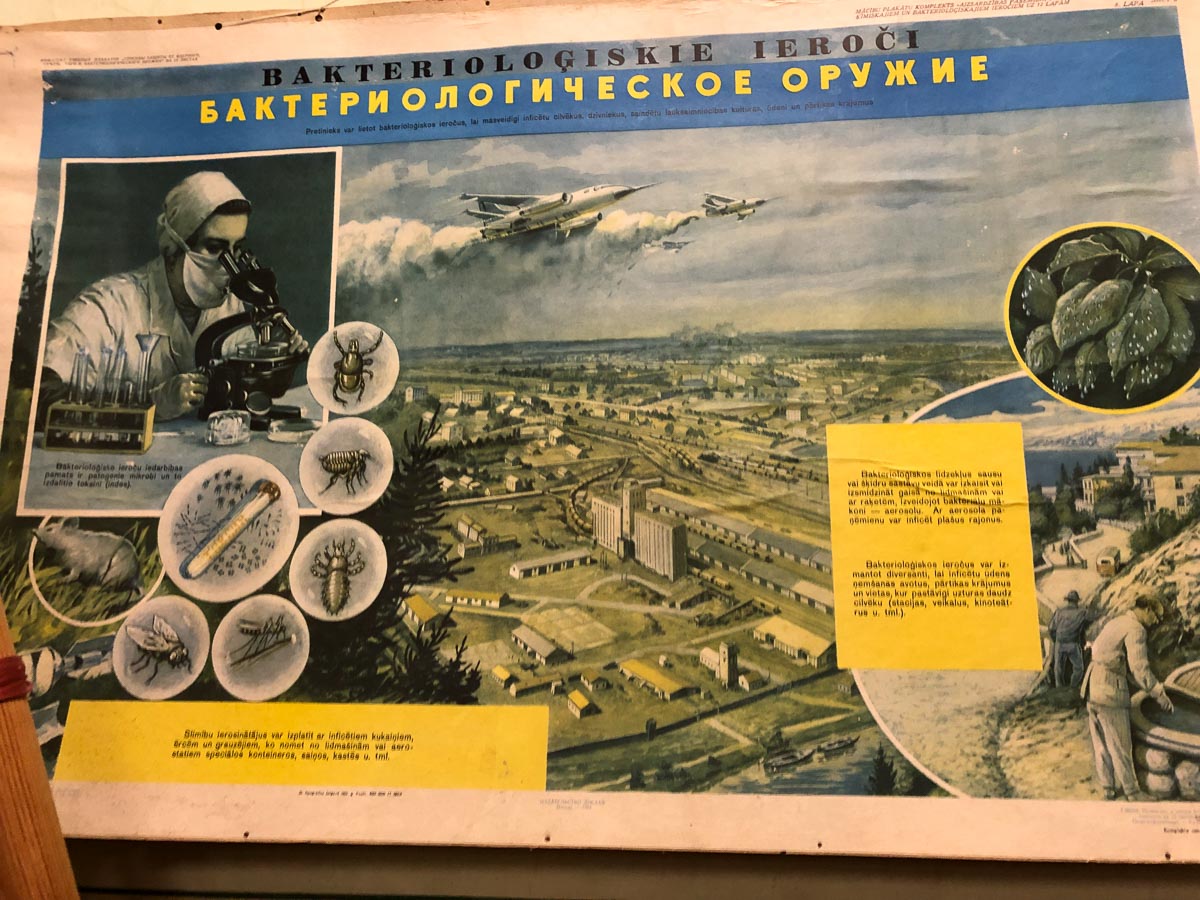
One of the most fascinating places in Latvia was a 1980s bunker, built by, and for, the government, so they could continue during and after a nuclear war (that’d be, ahem, our bombs then. Blush). The Latvian civilian politburo probably weren’t treated to the latest technology available, and, the Soviets didn’t much go on consumer electronics, and it had to work in a nuclear war, and, it was a bunker, so the technology and ambience looked pretty archaic. You could film Stalin, or Hitler, or Churchill working in this bunker and “continuity” wouldn’t baulk at almost all the equipment. It would have impressed Lloyd George or the Kaiser though. And it might still work, unlike modern electronics with a 5 year life. The generators do still work, as they use them to power the sanitorium above the bunker.

It’s ok – Clare doesn’t speak Latviski or Русский!

It might seem a bit of an odd, though pleasant and countrified, location for the, still operating, sanitorium, but apparently it was built there only to disguise the bunker. Did MI6 know about the bunker? Well, Latvia wasn’t alone – try googling “UK cold war bunker”. Indeed – Subterranea Britannica describes several, albeit smallish, cold war bunkers in our home county Sussex alone!

Bunker green by Dulux
They still run, we’re told
Not sure if way in or way out!
Tactfully, there’s no national emblem on those planes

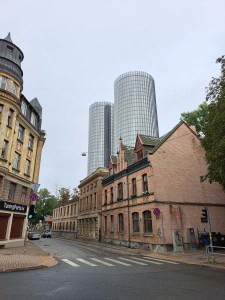
Riga gave us a shock by having an actual, congested, rush hour. After two months of absent or free traffic, this was a shock. Rather smelly, too, as many of the vehicles date from the early days of Europe’s diesel boom. Well, we have one at home, too. Riga’s old town was attractive, but mostly a late 20th century facsimile as it was flattened in WW2. We listened to a church organ concert and visited the city market. Perhaps Latvia has more liberal trade practices than it’s neighbours as I was able to buy medicines that needed a prescription in some countries (not in the UK), and a SIM card for Europe because my roaming had ended after 2 months (thanks Boris). We stayed in a cheap hotel, and were entertained by the top floor guests who were migrant workers – all men – from Uzbekistan, Kyrgyzstan and more. We had language-hampered reminiscences of our time in those lands. The communal kitchen was very well used, but fortunately I didn’t have to take Clare any plov.

Riga, new and old
Babushkas!
Riga, old and new

Out of town, sometimes in town, our time in the Baltics probably produced around one castle a day. There’s loads. Many are in good repair, some are ruins. Trakei was particularly striking.

Trakei, Lithuania
Trakei, Lithuania. What’s she done to deserve that?

Lithuania’s Hill of Crosses grabbed our attention shortly after crossing into Lithuania. Pretty much all summer, if we’d seen a religious site, it was Lutheran, or latterly, sometimes Orthodox. Hill of Crosses is all beads and Popes (three, IIRC). It was sort of charming, attractively scruffy, but also a little creepy. Its actual religious purpose is, well, it just is. No miracles or martyrdoms. It does

to mark an element of national consciousness for Lithuanians. Perhaps in repressive times crosses were tolerated and national symbols not.

We travelled east to Vilnius, capital of Lithuania. Vilnius is scarily close to the Belarussian border. Unusually for us, we didn’t think of going and peering over the fence, to add Belarus to our little list of countries we have seen close over a border, but not visited (for the record: Iran, China, Afghanistan, Russia). This is a tense part of the world: NATO countries’ territory squeezes nervously through a narrow gap between Russia and Belarus; and that exclave of Russia, Kaliningrad, is surrounded by NATO countries except for its Baltic coast.

Vilnius is a nice old town, mostly original as it wasn’t flattened in WW2. It’s also less medieval, less Hanseatic than the coastal capitals (the Hanseatic League was nautical), it’s more 18th or 19th century. But our enduring memory of it is the horrible museum of the worst period of the 20th century when they endured two Soviet occupations and one Nazi one. The small museum is actually in the old KGB premises and mostly details the Soviets’ appalling oppression and methods. It was also eye opening how long resistance against the Soviets endured, nearly till Stalin’s death.

Vilnius Cathedral, outside
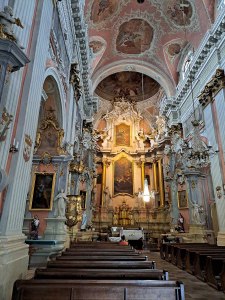
Vilnius Cathedral, inside

So it’s no wonder that Vilnius was enthusiastically hosting its second Military Tattoo with bands and parades by many NATO allies. Just the second, in 2023: They started in 2022, odd that. It was free to attend, and we waited on a bench for it to open. We were joined by a military officer off duty with an injury. He had relatives studying in UK, and we chatted about, well, stuff. Alas, that was it for the entertainment, the VIPs were all in situ, the parade descended the boulevard towards our temporary auditorium, prepared for the ceremonial entry, and – the heavens opened. And how. Totally torrential, and it didn’t stop. Military intelligence had warned of it, and they’d been handing out free ponchos for a while, as even the VIPs had no roof. But this was mega rain. Even the submariners gave up*. Also, the wind started blowing parts of the auditorium over. The outside audience, including us, broke and ran, hiding under the great portico of Vilnius Cathedral. Which unfortunately was also very tall, and facing into the wind, so only kept some of the rain off. I think the event was abandoned.

*Fiction on my part, Lithuania does not operate submarines.

Off from Vilnius, by the afternoon we were in Poland …. what? I haven’t written about motorcycling in the Baltics? Oh? Well it’s fine. Pretty good, not too busy, main roads – where there are motorways we avoided them. Pleasant minor roads. A lot of forest, but it’s normally cut way way back from the road. A lot of the minor roads are unsurfaced, and many then have very loose surfaces, but aren’t much corrugated. Most of the countryside is flat, and the population is modest (and doubtless easily displaced in Czarist or Soviet times), so the roads are usually pretty straight. So unless you actively want to ride dirt roads, it’s not especially interesting riding. There were some pleasantly winding bits though. There are campsites, and cheap hotels, and apartments for short rents. Food is cheapish but you won’t find low fat yoghurt and muesli.

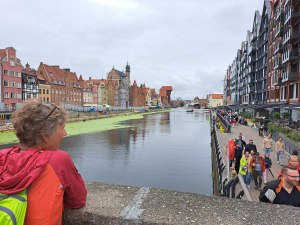
Oh yes, Poland. Ah Zlotys. Didn’t have any. But cards accepted, so we’re good. This border area of Poland is quietly pleasant, a sort of Kotzvolds perhaps. Everyone has been friendly all along, this is no different. I can’t remember if there was really a border; it’s all very European and easy. The day after, we arrived in Gdansk, as following our Baltic theme, we’d take the coast, rather than head for Warsaw and other cities. We rented a little apartment. With secure-ish parking, but rubbish instructions to get in. Including, we didn’t know that non-resident motor vehicles aren’t allowed in the day. So the apparent baffling one-way system is, actually, and really, a no-way system. Good job we didn’t know, because we got in, eventually. And, unusually for a flat advertised as in the city centre, it actually was.

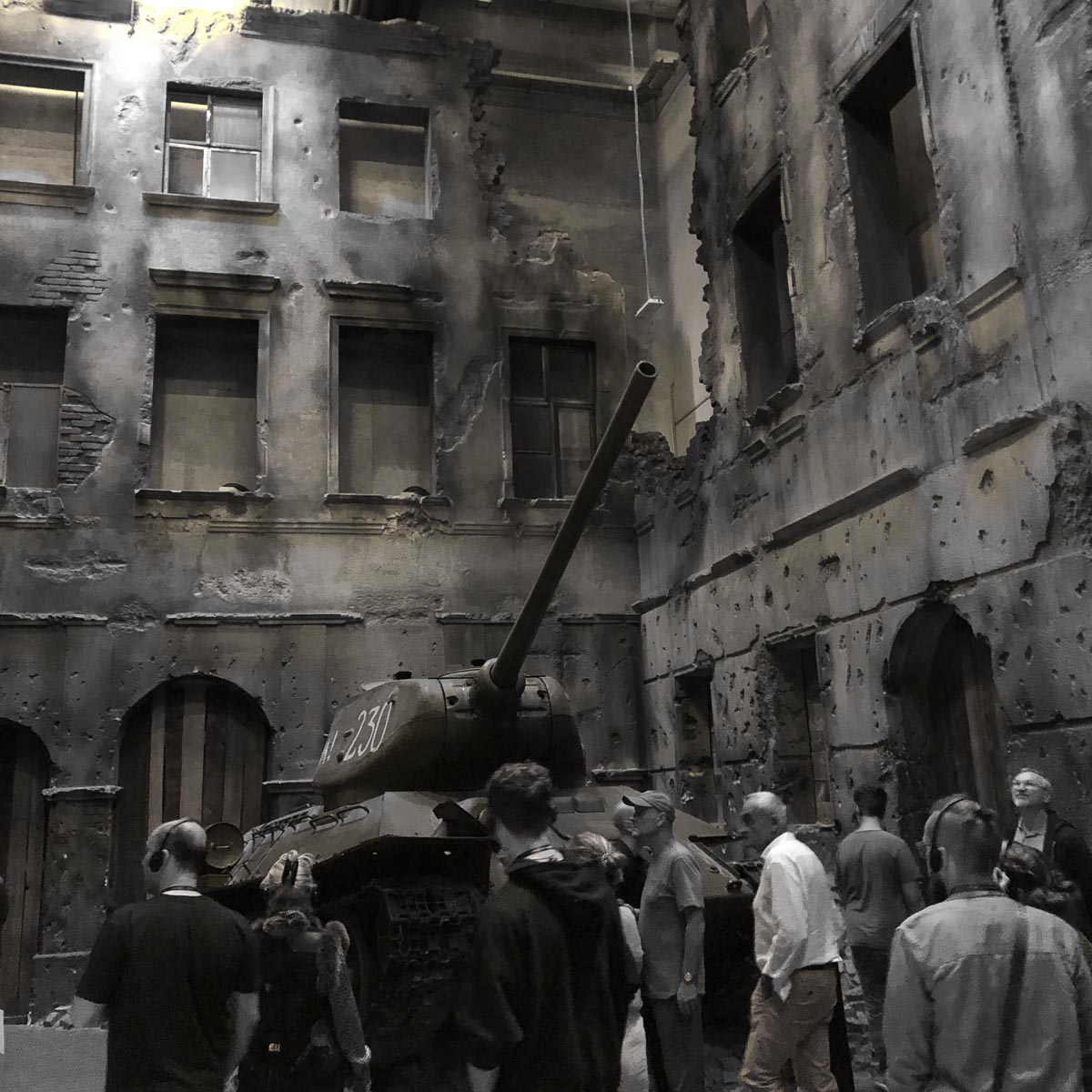
Gdansk is a fair sized city, yet the central old town area is compact and very walkable. Again, “old” town means rebuilt after WW11 to look like the old town. A clue is probably that walls and roofs tend to be straight. Attractive though. We spent a day sightseeing (and getting a haircut) and another day seeing most, though not all, of the WW11 museum. Like the museum in Vilnius, it could, maybe should, give one nightmares. Learned a lot. WW11 was large in Britain’s historical background during my 70s childhood, and I vaguely remembered the 37m+ death toll from WW11 – now we were in areas where the bloodbath was at its worst. In comparison, history I’ve read since suggests that the UK government was quite careful to limit its casualties to under 0.5m, as the memory of losing 4m in WW1 was fresh.

Now, following the Baltic coast west from Gdansk on motorcycles, for us, was a mediocre plan. This is Poland’s riviera, and like England’s, it has an air of having seen better days. But it was still crowded, and even at the fag end of the season, plenty of Poles and maybe others, were ambling about, idling outside tat shops or licking ice-creams. It’s not as pedestrian and bicycle friendly as Germany or Holland, but there’s a lot of crossings! Chug, chug went the bikes, 50kph almost all the way. Still we saw some beautiful beaches, the Baltic was warm and not very salty, and camping was cheapish.

We crossed into Germany, still in a holiday zone. Even though this was our first time ever in the ex-DDR, everything looked smarter, and bigger, and shinier, especially the prices. More cycle lanes. The Ruge campsites were organised to a painful level of do-this, don’t do that. It’s rather the same in our UK Camping and Caravan Club; could it be camping brings it on? Of course, if you actually got past the notices and systems and spoke to the Fraulein of the campsite, she couldn’t be more helpful.  I can’t remember whether Poland or Germany, away from the coast, we stayed at a huge, old, much underused, disorganised campsite with creepy dark pathways to giant, echoing, slightly decrepit shower blocks. No notices there.

Although there were still lots of (other) tourists, the roads became much freer. The speed limit went back up to 100kph (for the first time on ordinary main roads since leaving Germany in June). More to the point, we welcomed the end of the ex-eastern bloc habit of posting micro limits covering a few metres, with ambiguous endings. 1 ferry, to island of Ruge, very scenic and perfect, very expensive.

At home we have a Simon Weir guidebook, and before we’d left home, we’d grabbed a few GPS files from it. They were nice roads, strung together with little bits of Autobahn. Little used autobahn at that, so the answers are: Just about 140kph true flat out in 6th, and gets-wobbly-at-the-front at about 170kph. But our IT was frustrating at times, and reversing GPS routes doesn’t work well when there are slip roads onto dual carriageways, especially if you don’t know the local town names. Oops. A cheerful old codger in the welcome caravan at a huge campsite relieved the frustration with a bit of comedy. He was a right joker he was, directed us to a wriggly pitch full of odd noises. Woke up in the morning to a tent full of molehills. I had a minor scare, thinking my bike was leaking oil, but it was just the very thin Norwegian “Racing” chain lube reacting to warm continental temperatures.

Celle, and SilberSee camping. Celle’s a charming old town, with enough to see. We stayed two days. The campsite was lovely, loads of space, freeform pitching, few punters, and a big, warm, lake with a beach. And a simple restaurant. We dived in and caved in. My diary says: “Decided to walk into Celle but bus arrived. Driver chatty, used to play darts with BAOTR at Bergen Belsen (!). Wandered town, old and neat and pretty, homogenous tho. Castle,  more palace, outside impressive. Walked back via supermarket,  but 500m from home the same bus driver insisted on giving us a freebie. Swam again”. We fixed a minor electrical issue on Clare’s bike and cleaned a leaking fork seal on mine, both satisfactorily.

The next campsite, the distinguished looking owner saw the bikes and became chatty. The more so as we each explored our previous travels.  Stunning photos arrayed on his wall. Herr Wolf had had some epic journeys especially in Africa, way back when. On, natürlich, a BMW flat twin. With a sidecar, which, in retrospect, he wasn’t convinced about. The bike was still in his barn, worn and dusty and sans sidecar, but looking sound.

7th Sept. Having decided to skip a flog across the Ruhr and then Essex we entered France. The frontier signage was even less than usual. Clare didn’t notice until we sat down for lunch when I mentioned it. Immediately, a lady passed and said Bonjour, then Bon Appetit. Voila!

Our trip ended with some lovely French roads, charming villages, towns and cafes. A last minute booking on the Dieppe ferry, which drops us almost back home after a 4 hour crossing. Before that, a last leisurely coffee outside a harbourside cafe filled with old radios. Finally we survived the challenge of getting out of Newhaven, on the wrong, or right, side of the road, in the dark.

The Continent sees us off in style – two days before we’d have been thrown out!

We were away for just a few days short of our post-Brexit 90 day limit, and covered almost exactly 8,000 miles. What a lovely trip!

Forests, more Forests – Finland

The plan had long been that, after reaching Nordkapp, we’d bum about a bit in northern Norway, travel south through Finland, then home east via the Baltic coast. Well, we’re well on our way, here’s an update.

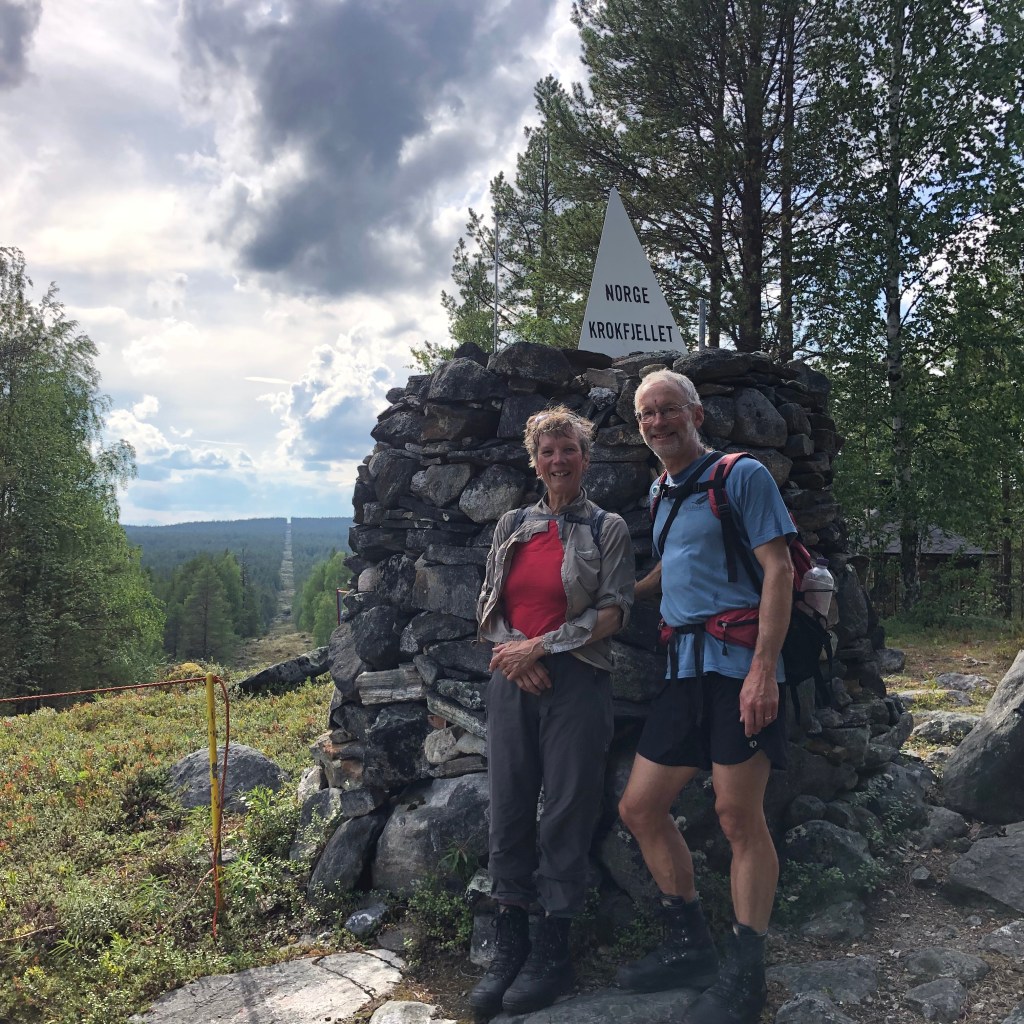
We did indeed bum around in Norway a bit more. Rode around the the most easterly bit of Norway, peered over the border at Russia. Took a short hike to the “triple border” where Norway, Finland, and Russia meet. Only Norway guards it, and the very civil national service lads explained the rules. As you might expect, nobody was allowed to approach the Russian segment. Then, to our surprise, they said that, since Brexit, we were also not allowed on the Finnish segment. I’ve no idea why. Happy Europeans romped around it, taking pictures with the guards. But we got our first glimpse of Finland, and saw another lump of Russian forest, while we picnicked in Norway.

Border Guards get plenty of photo practice! Norway left, Russia right, Finland behind Gid.

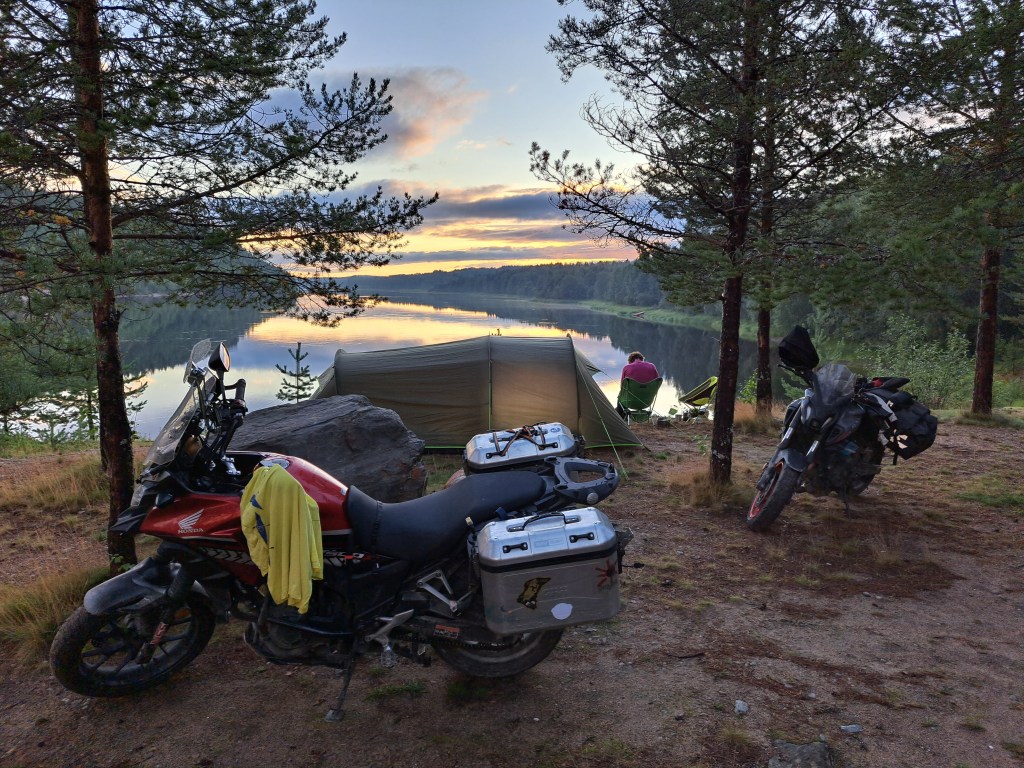
Finland was going to offer us miles and miles of peaceful gravel roads with us wild camping where we pleased by a lovely lake for a swim (sans, obviously though mysteriously, any biting insects). It was not to be.

Firstly, the Finns have tarmaced a bigger proportion of their roads than we’d assumed. Which is just as well, because, well, of us.

Our access at home requires passing 50-500 metres of roughish track, that has to be taken slowly because it’s so uneven, and also quite crowded. I (Gid) feel quite chuffed that standing up on my 500X, I can take some of it at nearly 30mph/50kph quite comfortably, and remembering driving cars in Canada, and riding dry tracks on a slick tyred MTB, I thought biking on well graded gravel would be fine. However, our home surface is mostly quite compacted, so firm under tyre but, err … faced with a real gravel road, that’s a lot flatter, but also usually rather looser, I can go …about the same… Clare’s somewhat slower (and actually standing isn’t feasible on her MT07). Well 50kph max doesn’t really cut it if you want to ride 300 kilometres a day. Plus, it’s uncomfortable sitting, and arduous standing for long periods (my longest was about 25km, I think). It’s also possible that our firm and rather slick road tyres and Clare’s firm suspension don’t help – we both recall enjoying a led trip on CRF250s around Fuerta Ventura’s dirt tracks: Although that probably wasn’t much faster, it felt a lot more natural: tyres, pressures, soft springs and lightness probably account for that. And also, perhaps critically, neither of us has the skills to use offroad steering techniques (ie slinging the back end out to use drive to make the turn, whatever it’s called), and have to corner at speeds where the front wheel can get enough grip, which was often “dead slow”. A real eye opener, and if we aspire to do longish trips where the roads are gravel, we need to resolve.

So, we pretty much stayed on Finland’s tarmac. Mile after empty mile of it. Little traffic. Lots of trees. Occaisional reindeer, who own the road. Seriously, lots of trees. And so, mostly, formal campsites, too. They usually have pretty good facilities. Even some informal, but known, campsites had toilets, which was nice. And everything seemed a bit cheaper than Norway, though not by much.

Shop cashier told us to go back 3km and take the track to the lake. A lovely camp spot.
For €20 this had showers and a huge lake.

We had some nice stops as well, especially those connected with Sami culture. Ok, and Santa’s HQ. Clare found out about a famous hiking trail, the Bear’s Ring. Of course, we got to the tourist info for it at 4pm on Sunday, just before it closed. To be told that the bus link to resolve the logistics ran on Monday at 9am. But not on Tuesdays. Cue absolutely frantic getting ready-ness. We’d been scratching our heads about carrying capacity, couldn’t resolve it. My ancient 35 litre packable sack would suffice, both it and me groaning, but Clare had only a micro bag. In the end we bought a new 50 litre rucksack, Intersport’s cheapest. I took the heavier stuff and Clare took the bulk.

The Bear’s Ring is 82km, and the terrain is middling for a hike. We took the default 4 day/3 night option, although a slight misunderstanding of the (must be used) camp locations put us a bit out of sync with other folks from the bus: But, maybe the peace was a good thing.

Apart from a cafe in the middle, good for 1 meal, there’s no resupply option, so food has to be carried. We were super lucky with weather, fine, fine, fine and fine… until, literally the last, steepest, hour. When it rained in biblical fashion. Before we could don waterproofs, we were soaked. After 30 minutes, wading up and down the torrential path, we spied a shelter hut, crowded. Where we all sat and stood the last of it out. Before leaving, we emptied our boots. I was wearing shorts, and my boots had cupfuls in. Clare’s fabric trousers had at least deflected such gross amounts. Let’s be clear: We both had decent waterproofs, but it happened too quick to don our overtrousers.

I think this was late on the last day, before the sky turned black…

We indulged in an hotel for a night to recover. The boots took a few days…

From there, it wasn’t so far to Helsinki. Where starts, really, a quite different phase. From wildness and scenery and lots of camping, we’re now faced with dense history, a border every week. A cultural and historical tour of a part of the world that our anglo-centric history gives us little knowledge of. Another post, I think.

Nordkapp?

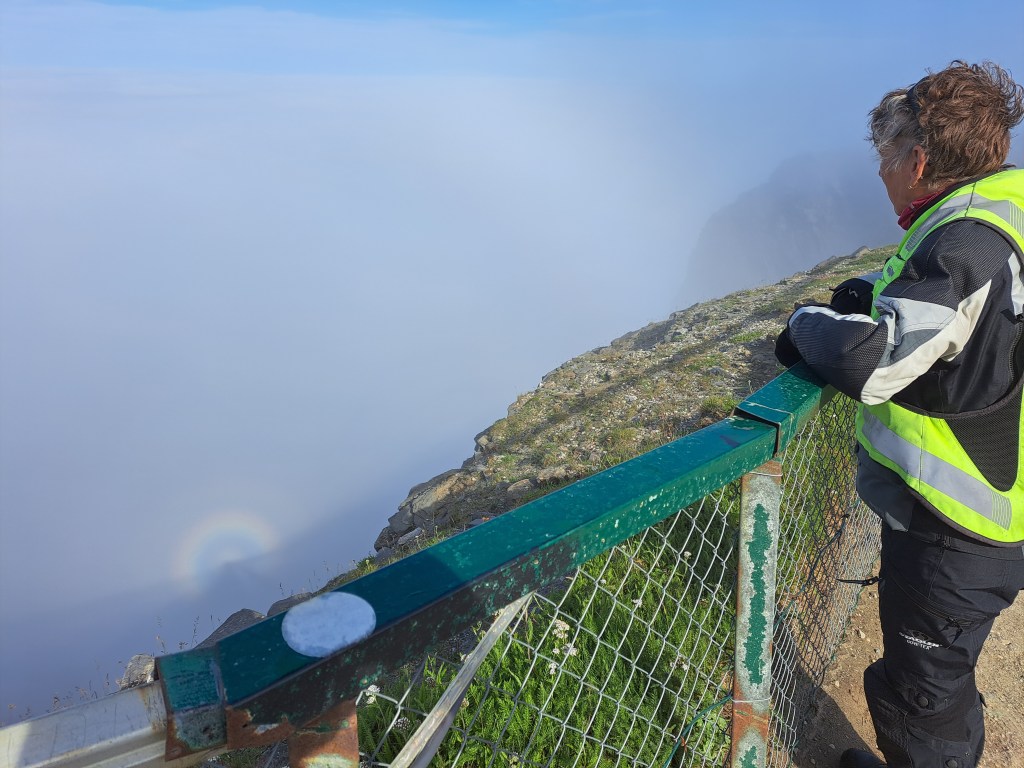
23rd July. Well, here we are: Nordkapp, the iconic European touring destination. We know we’re at 71° North plus a bit. But where, actually is the kapp bit? It seems the problem with Nordkapp is that it’s a 300m high cliff. Warm land, cold sea… so yup, it’s under this cloud somewhere, as are we. The extensive flat, stoney area is full of people, especially motorcyclists røyking, wandering around saying “where is it?” in a multitude of tongues.

Photo of the plateau on 25th, with much less cloud. Or wind.

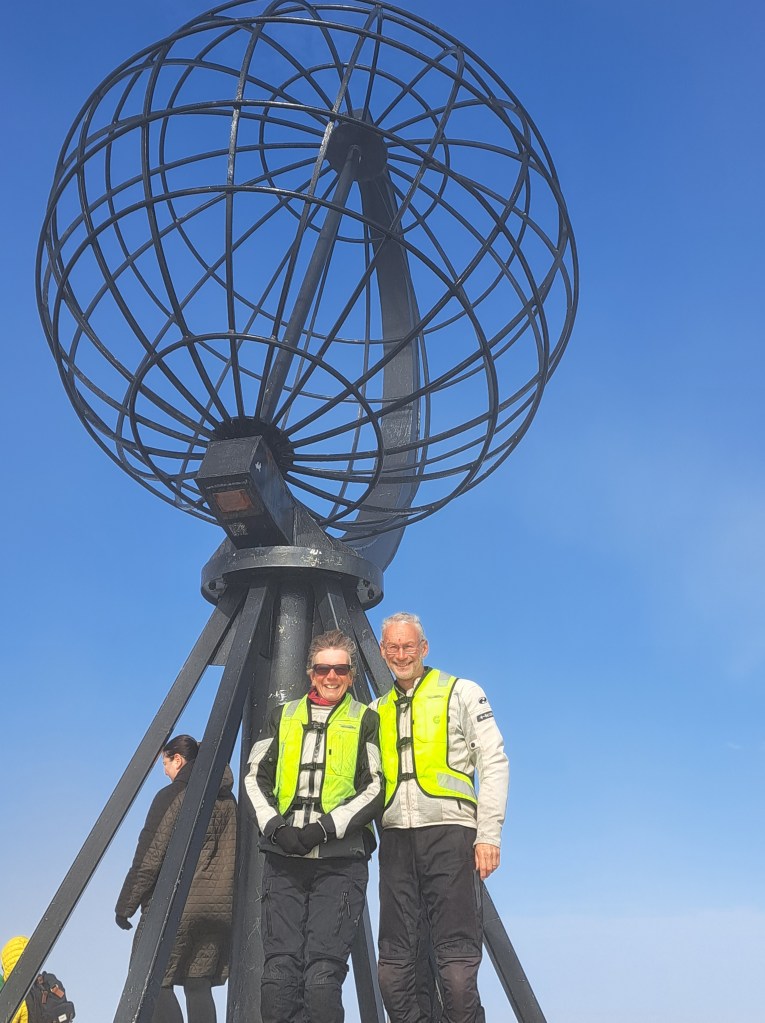
The more numerous folk who have sensibly travelled in motorhomes, are inside them, probably drinking, waiting for the sun to break through. They’re not inside the commodious cafe/museum/shop building, because, like the motorcyclists, they will be charged £25 each to enter, and it’s “røyking forbudt”. There’s a lot of bicycles, too. But the actual cyclists are inside because, commendably, hikers and cyclists are free. And don’t, by and large, royk. The other reason they’re inside is it’s blowing a hooley, and blooming cold, and they’ve just climbed 300m. A nice tourist took our murky picture at the monument.

But we dun it! It does feel like a diminished achievement compared to this cyclist from Milan, and these other long haulers from Belgium (…wistful moment…), but we dun it: It’s taken us 5 weeks, and about 5,850 km/3635 miles. Rather indirect and explorey miles.

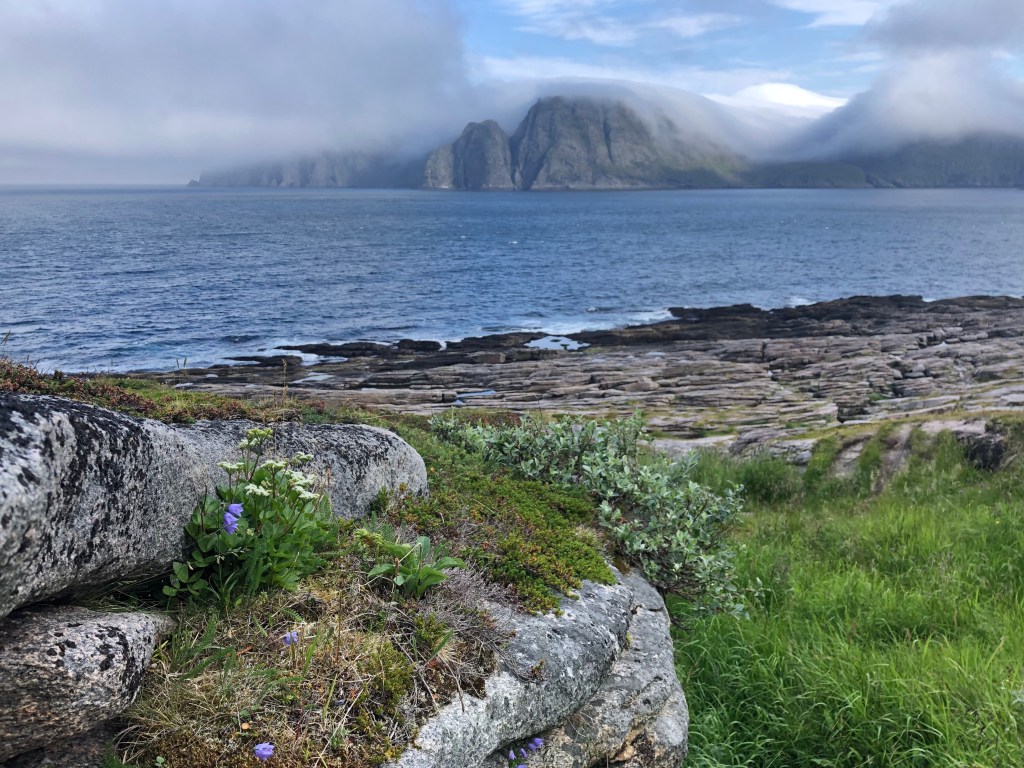
Two days later, we hiked to the roadless point that is actually the northernmost point. A much nicer day, and, this place, Knivskjellodden, slopes gently into the sea, so we lunch at maybe 20m, in clear blue sky. We can see Nordkapp, hurrah! The poor folks at the visitor centre can’t see us though, because the top of it is inside a cloud. Rather beautifully. We think Nordkapp is the leftmost bit of land.

To be fair, we did then pop in briefly at the top, and the clouds did break at odd moments. So we got a new photo.

And Clare found a rainbow.

Except… did I write “actually the northernmost point”? Ah, well, of what though? Trophy or not, Nordkapp and Knivskjellodden are actually on an island. It’s not, therefore, the northernmost point of the European mainland. And the island of Svalbard (Spitzbergen) is hundreds of km offshore, to the north. But, you can’t ride, or walk, to Svalbard. Nordkapp, then, is the most northerly point of Europe you can get to by road.

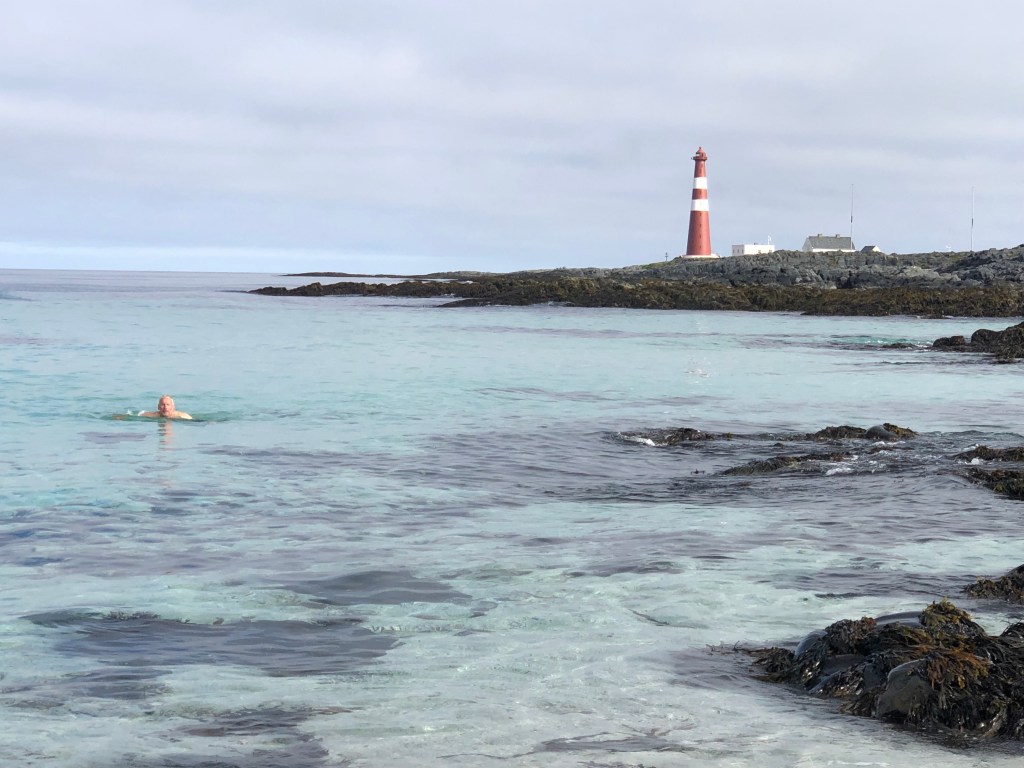
So, another quest required: Ride a day east to Slettnes, the most northerly point of the european mainland that you can get to by road. From there it’s an 2 night hike to Cape Nordkinn, the most northerly point of the european mainland. But we’re not set up for that, and settled for a short potter. Here’s the trophy shot of me (Gid) having a chilly dip in the Arctic Ocean, with Slettnes Fyr in the background. While I was drying in the sun, a minke whale came by just offshore. A memorable day.

We’ve taken longer than most motorcyclists to get here, but explored a lot. Our thanks, anyways, for the great advice from Norwegian and other motorcyclists and occasionally non motorcyclists we met along the way. Especially Froda, and we hope you got your other rubbish home safely.

Onwards – east, and then south, aiming, roughly, for Helinski.

Yo Yam! Hi Honda!

Time, perhaps, to reactivate our blog?

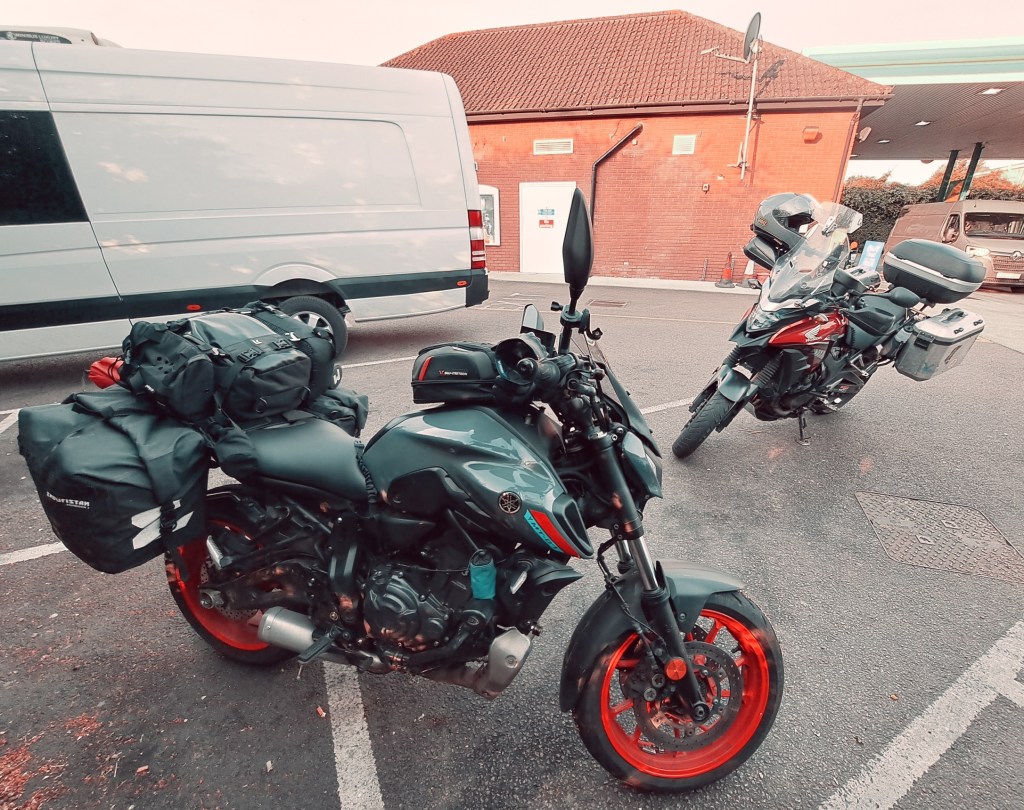
Five years have passed: Eventful, frustrating ones – grounded by this, that, pandemics, injuries, tennis, the other – but finally we’re ready to go on another (modest) adventure. The new bikes are ready, and loaded to go:

Yes! These have engines. It’s all the fault of our Cairns Warmshowers host, Nick. Nick’s travel theory is that mountains call for engines. At least one of us is definitely convinced.

So, we’re all loaded up with the intention of trundling slowly, but much faster than before, to Norway’s North Cape. There’s definitely mountains en route. In maybe 2015 we cycled from Bergen south to Denmark, so we’ve crawled up some of them. After Nordkapp, we hope for a long, relaxed loop home via Finland and the Baltic states, then west along the Baltic coast. Brexit, alas, has limited us to 90 days, as there are no non-Schengen countries on the route. We planned this so long ago that St Petersburg was originally contemplated, but no longer.

Fingers crossed we manage it this year, unlike 2020, 2021, 2022…