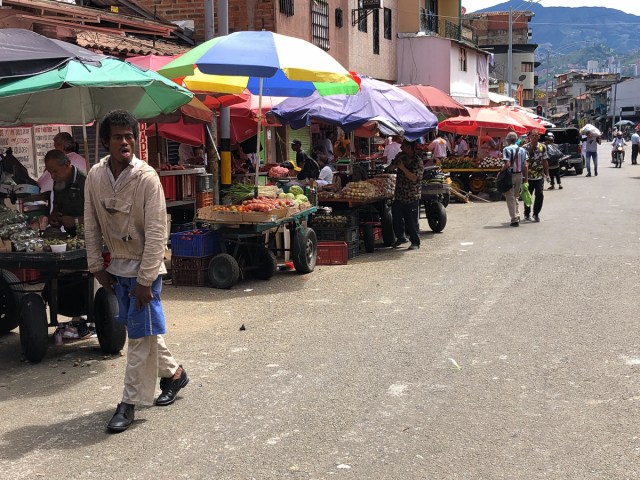
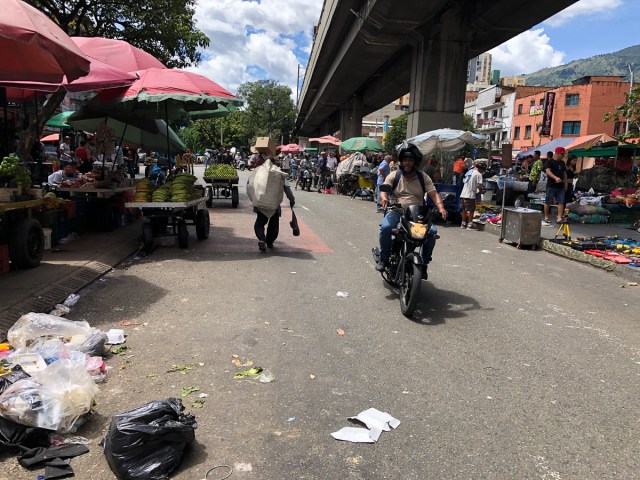
Bogotá was heaving! The capital Bogotá itself has a population equal to the whole of Panama. Step outside our AirBnB and it felt like it! Latin American cities always feel hectic. Streets swarm with vehicles, often motos. Pavements are busy, more so than in much of Europe, and shed loads more than we’d seen in the USA where the sidewalks are really just vacant spacers between the traffic and the buildings, populated by a few weirdos like us.
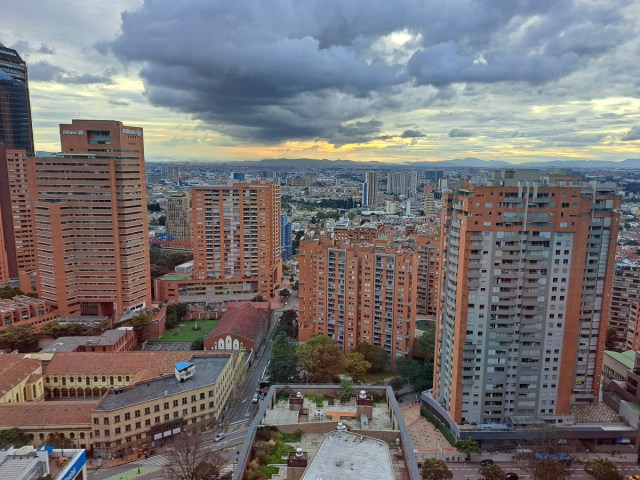
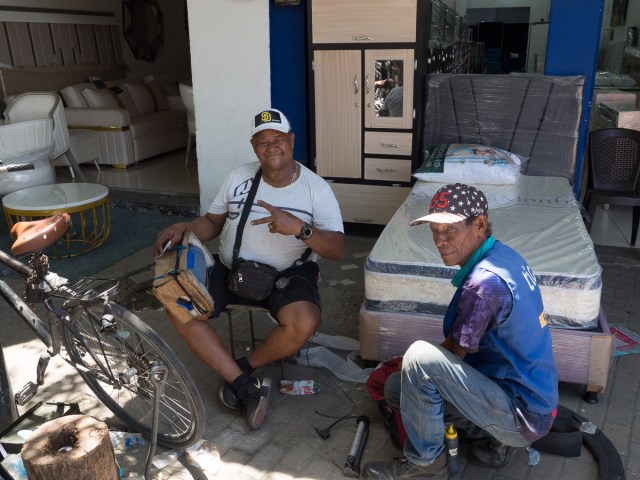
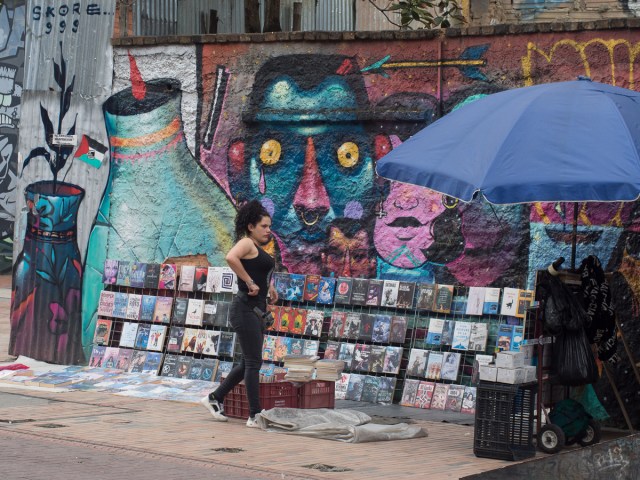
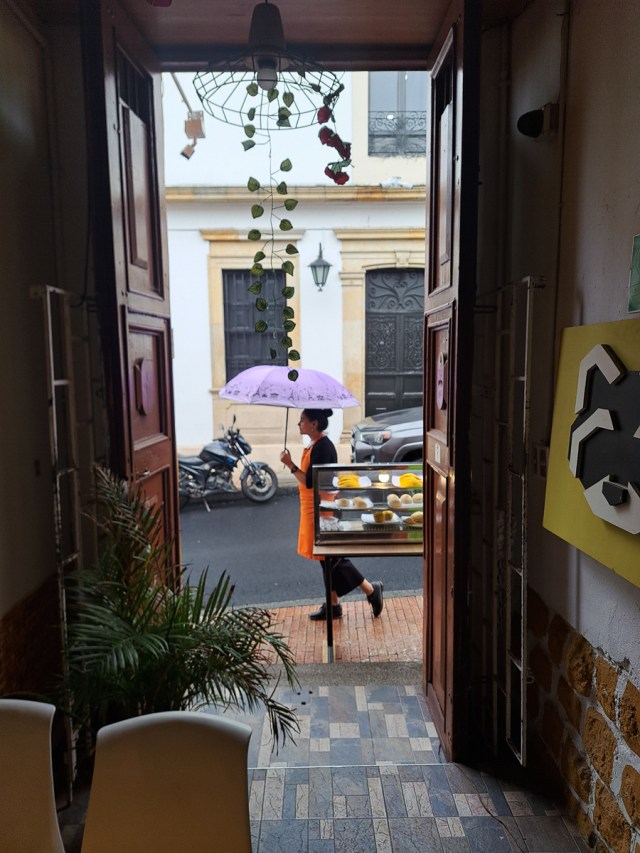
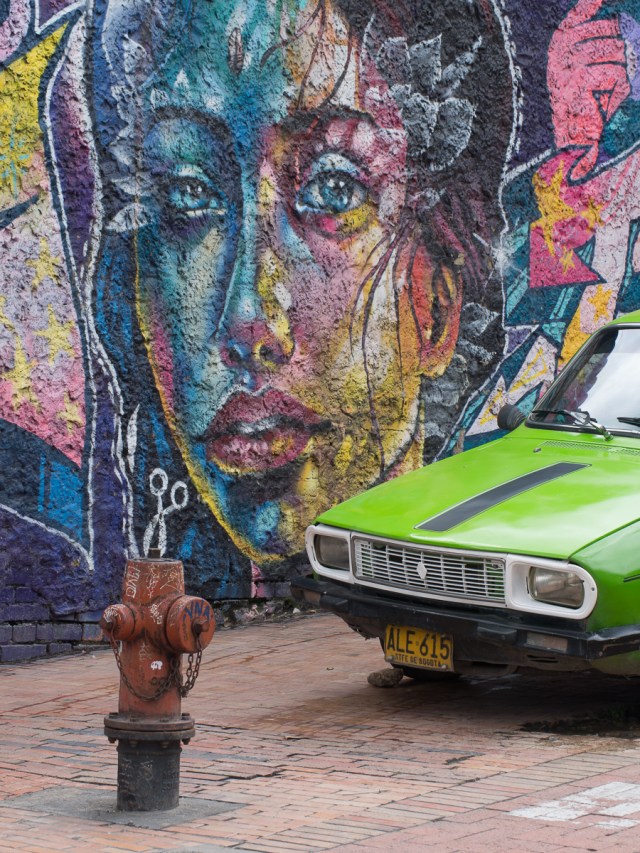

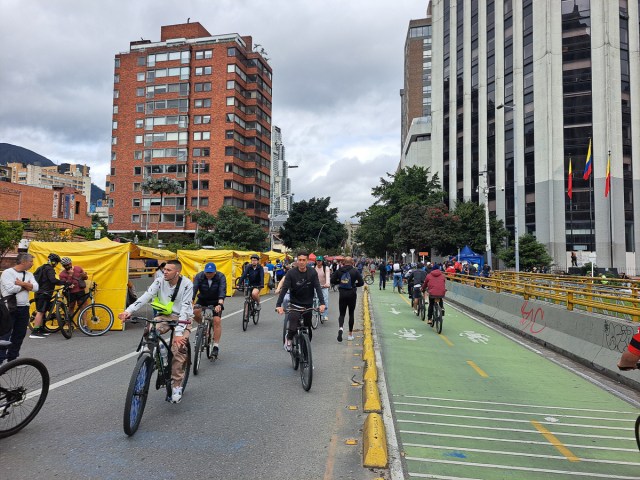
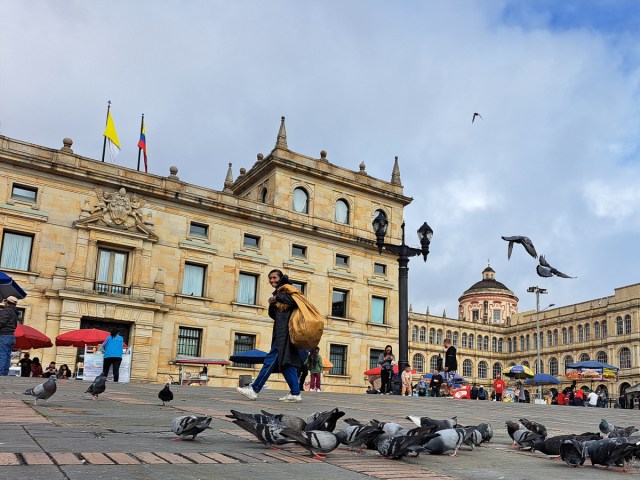
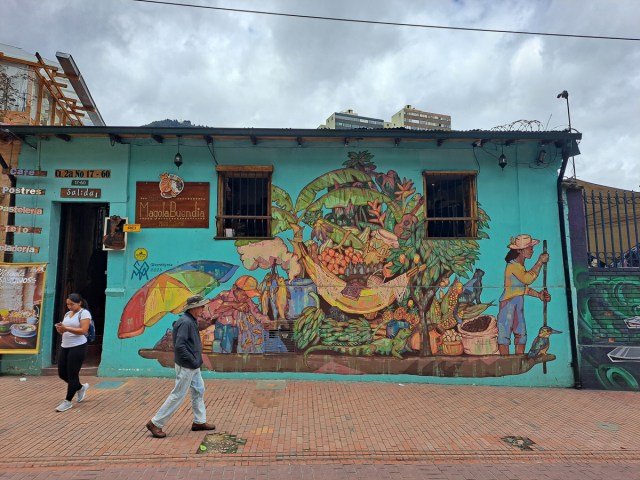
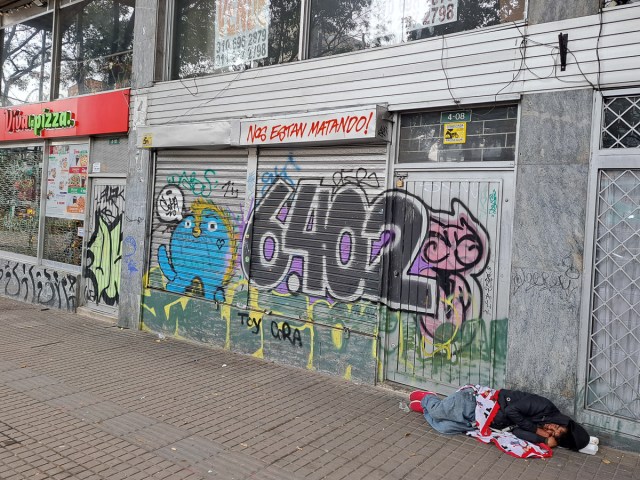
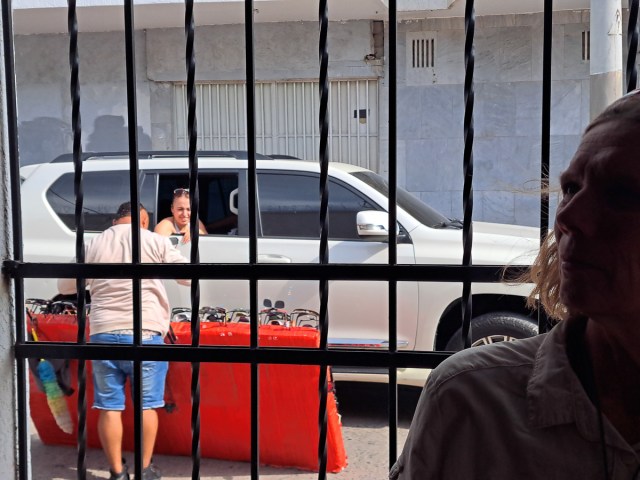
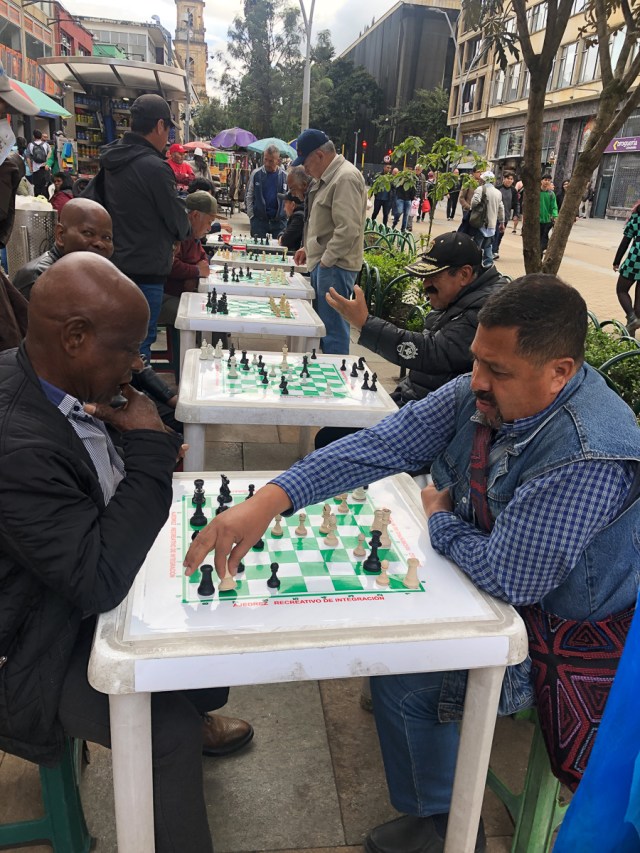
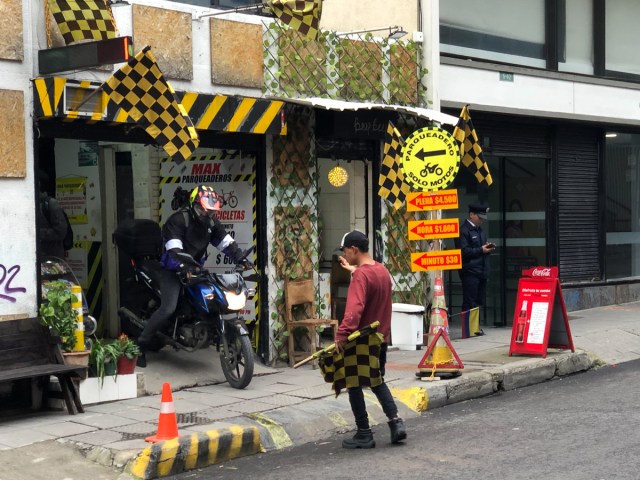

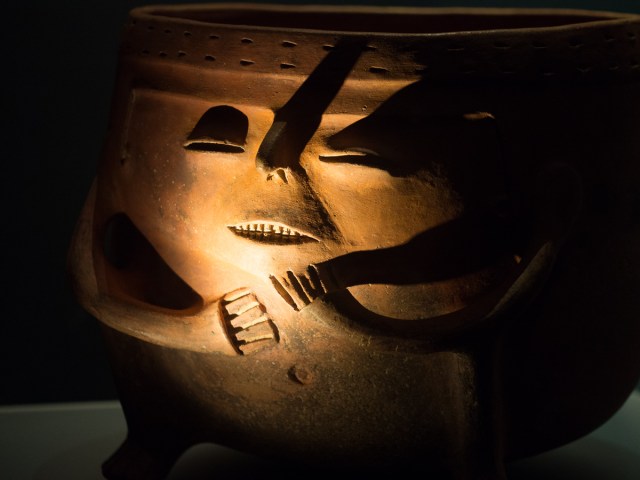
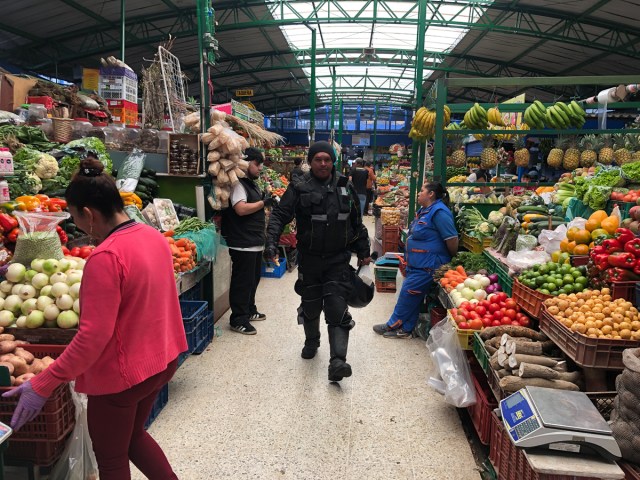
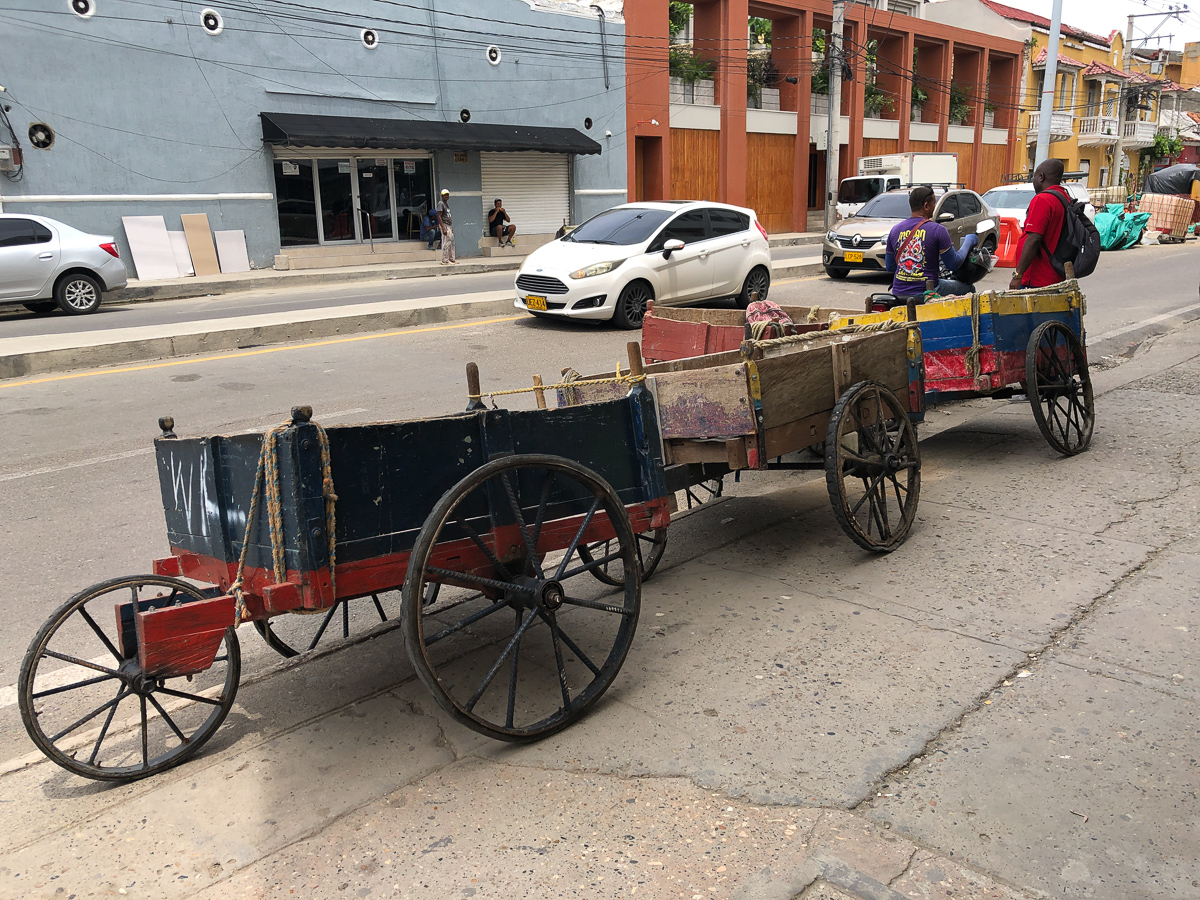
We spent nearly three weeks in Bogotá as I hurt my back slumping around the transit terminals waiting for motorbike paperwork and our flights. Maybe we should have used sea freight after all? A physio finally fixed me but the whole event did mar our start in South America. Thankfully our lodgings were near the city centre which had a pedestrian precinct for quite a stretch leading into the city centre creating lots of space to walk albeit weaving between the street vendors.
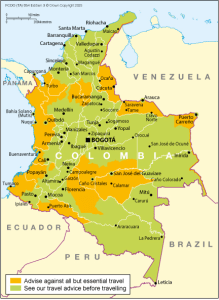
Gid seemed to think we should restart our trip south from the Caribbean coast. It wasn’t the Darien region (advised against by UK government, as is the whole Pacific coast) and I couldn’t see the connection but I was perfectly happy to take a trip to the flamingo lagoon. Ciudad Perdida, The Lost City, my original northern mission, was out of the question with my dodgy back. There was no way I would manage a four day trek in sweltering heat, sleeping in hammocks overnight. The flamingos as our most north-eastern point would be fine.
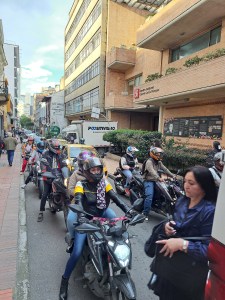
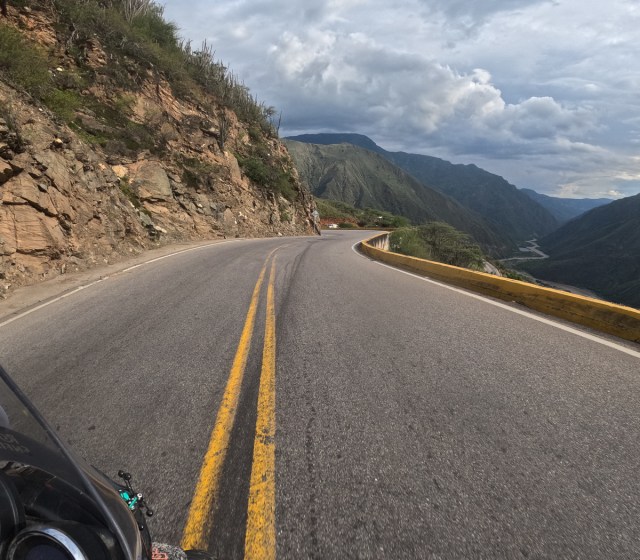
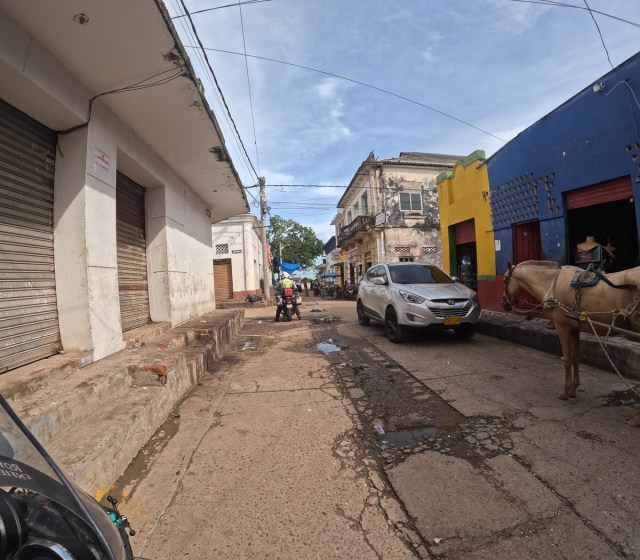
We’d got so used to, in Central America, the relatively small amount of traffic and short distances between places. We’d been pottering about going from one place to another in a day or so that it was a bit of a shock to find it would take several days to reach our next destination. In fact, to start with we didn’t comprehend that at all. Colombia is about twice the size of all of Central America excluding Mexico and has taken some readjustment. Equally, after 4-wheeled Costa Rica and Panama, in Colombia motos are back with a vengeance. In some villages the swarming motos have equalled the numbers at Sturgis on a full-on day at the rally. The roads are generally ok but there some very holey patches with the locals doing leg pointers as they progress – leg/hole to the left, leg/hole to the right. The double legs out was a new one on us which clearly means – speed bump across the road.
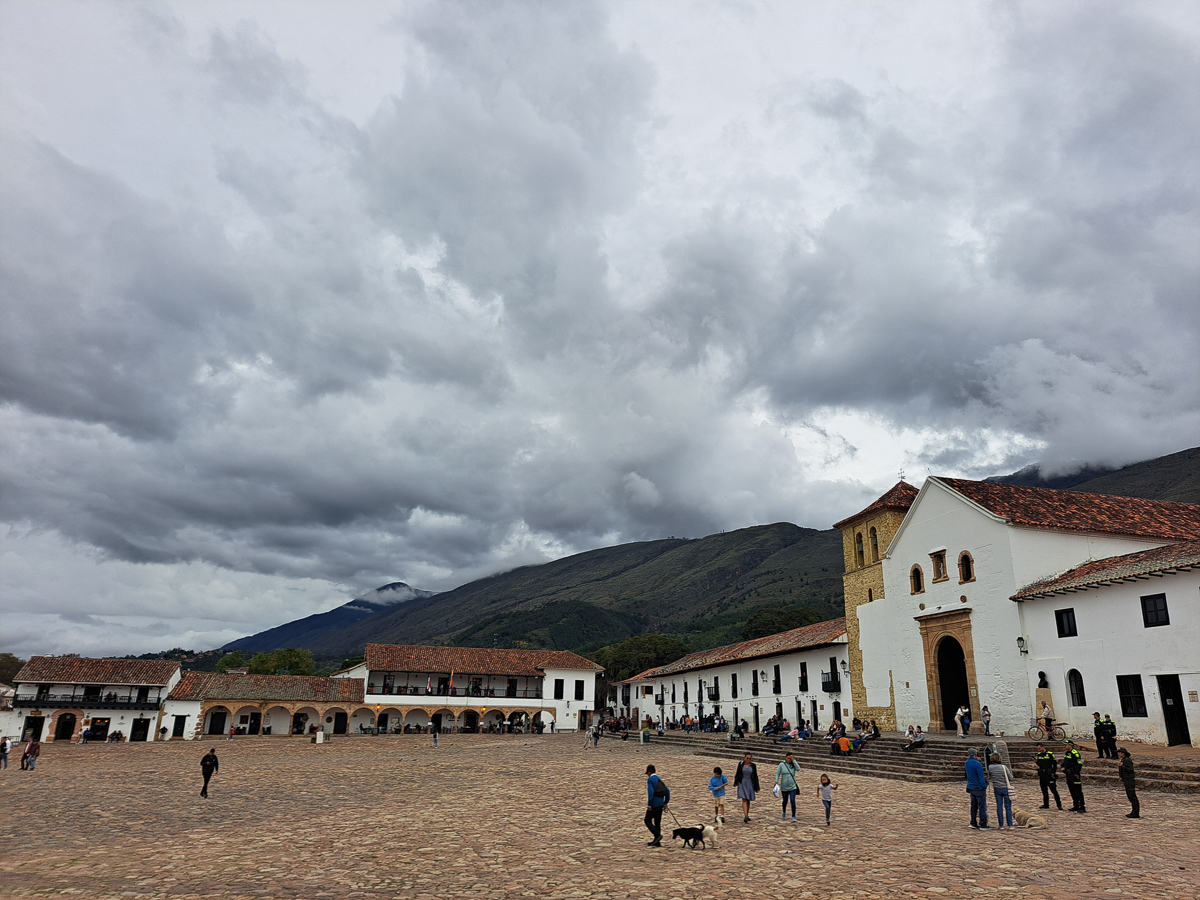
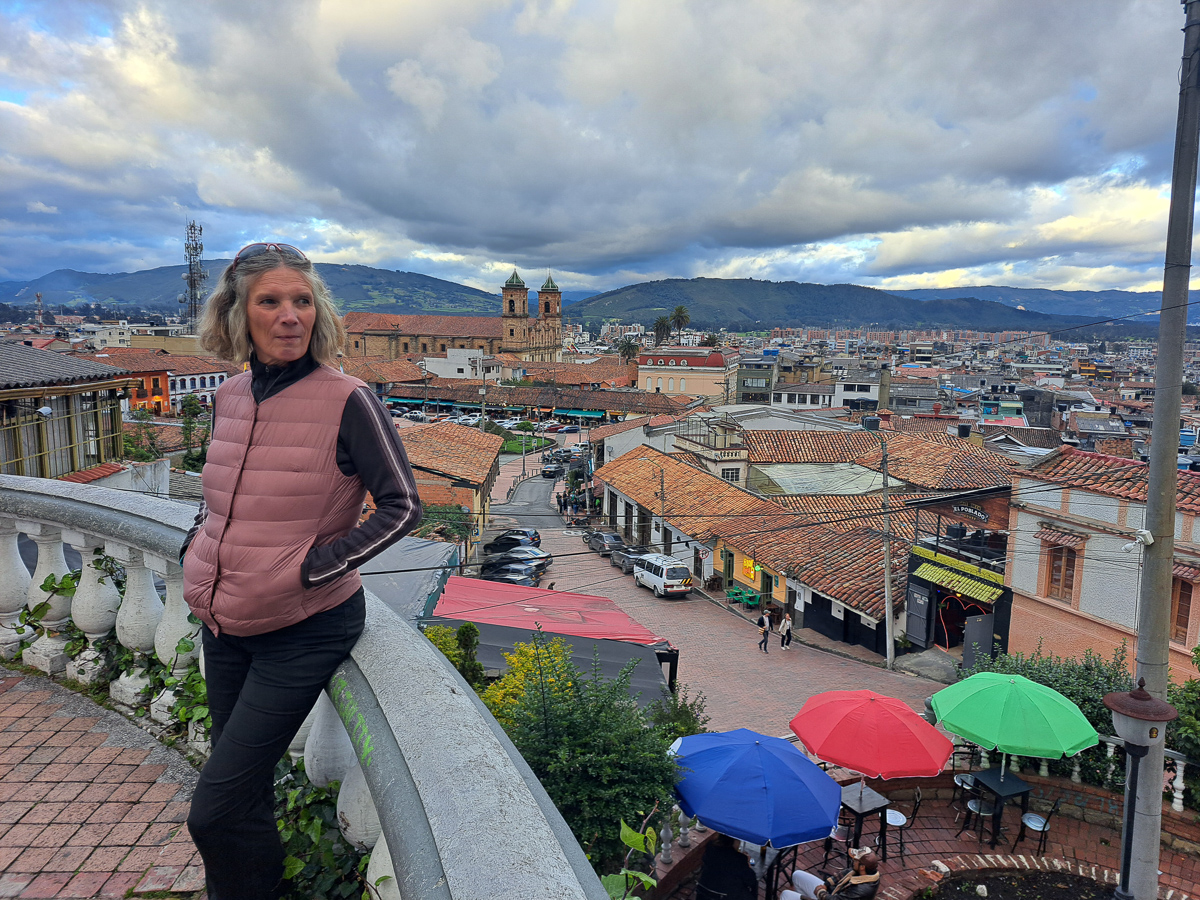
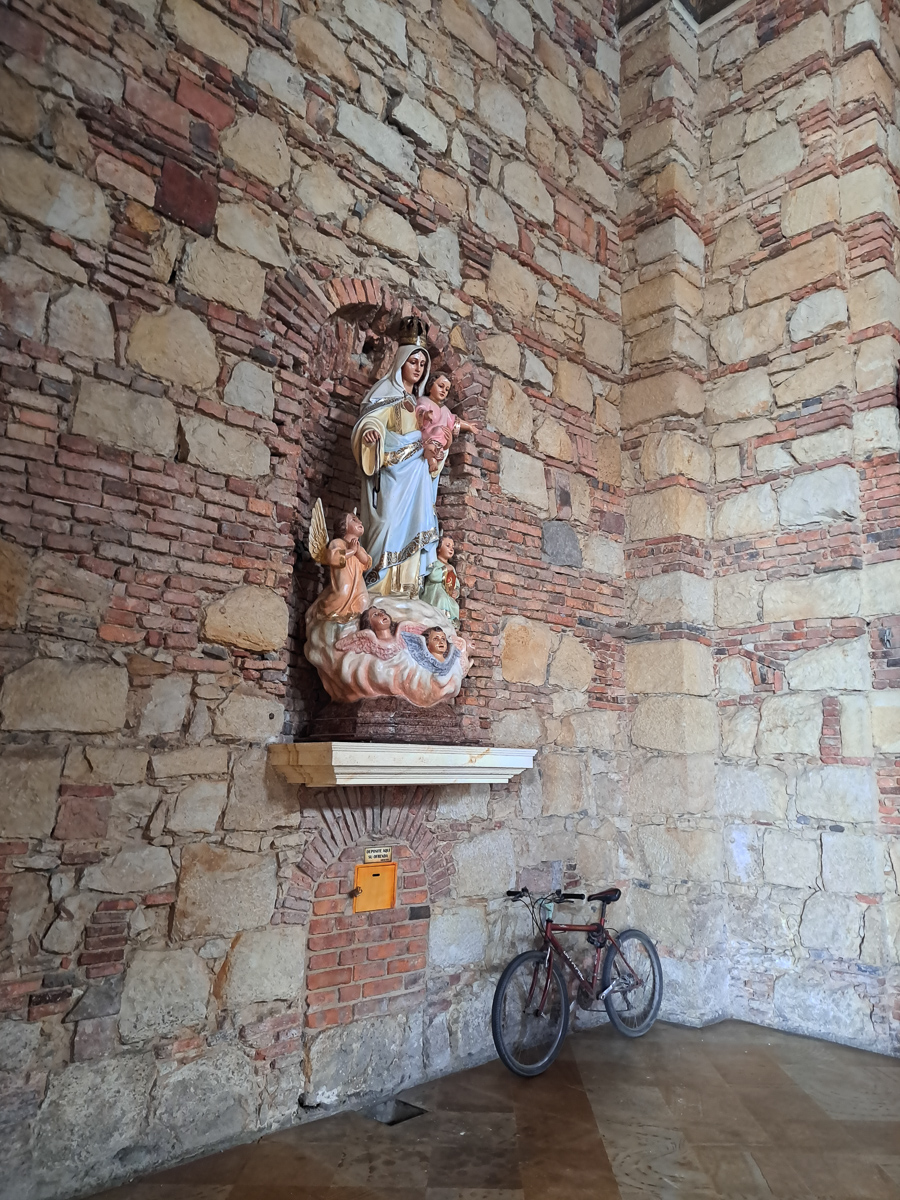
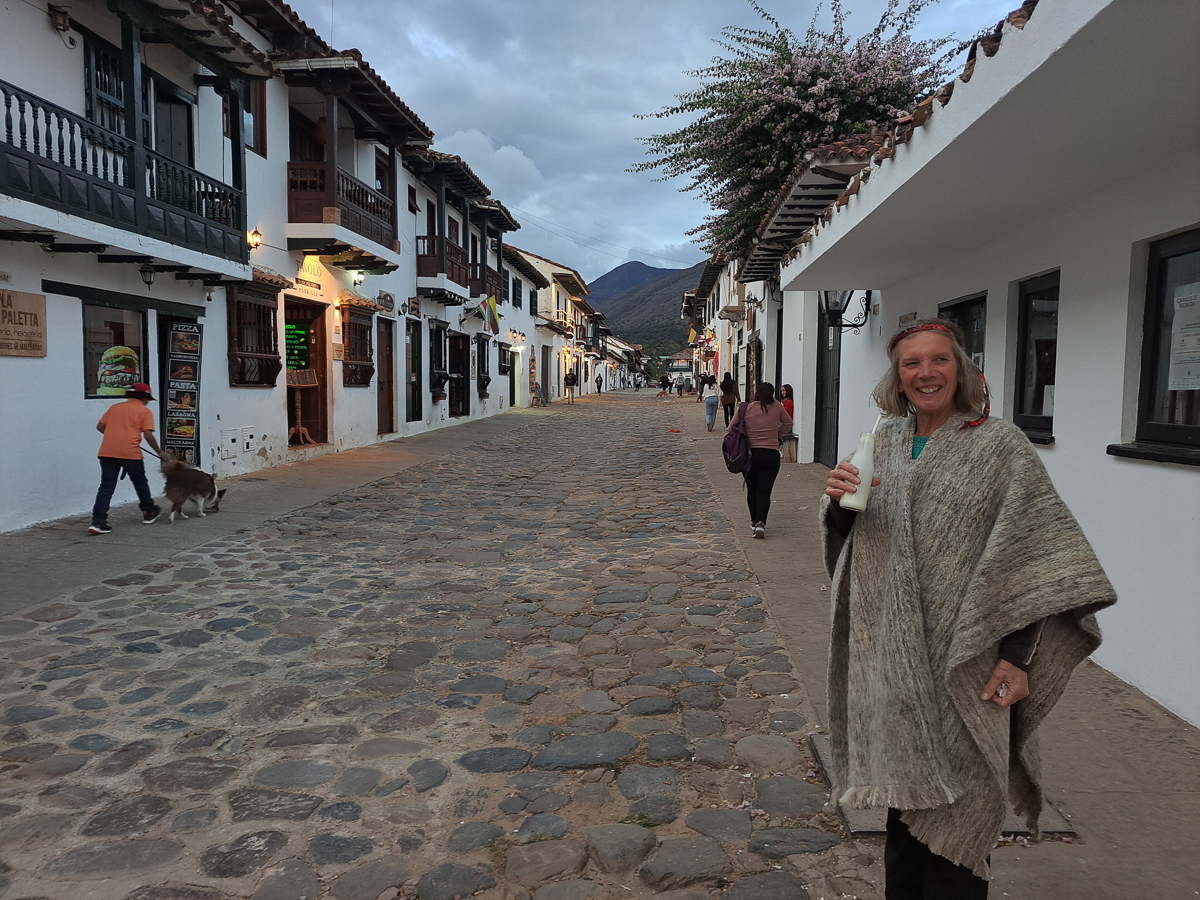

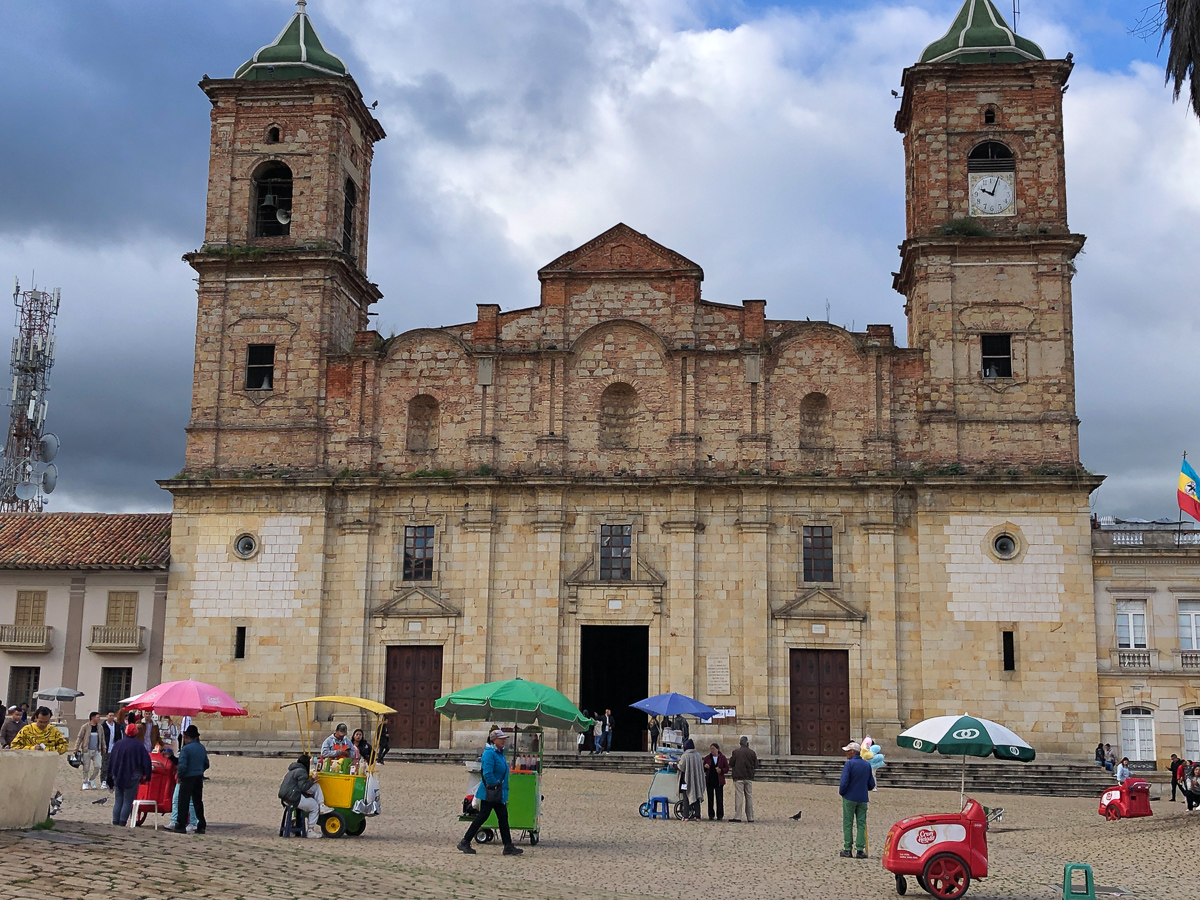

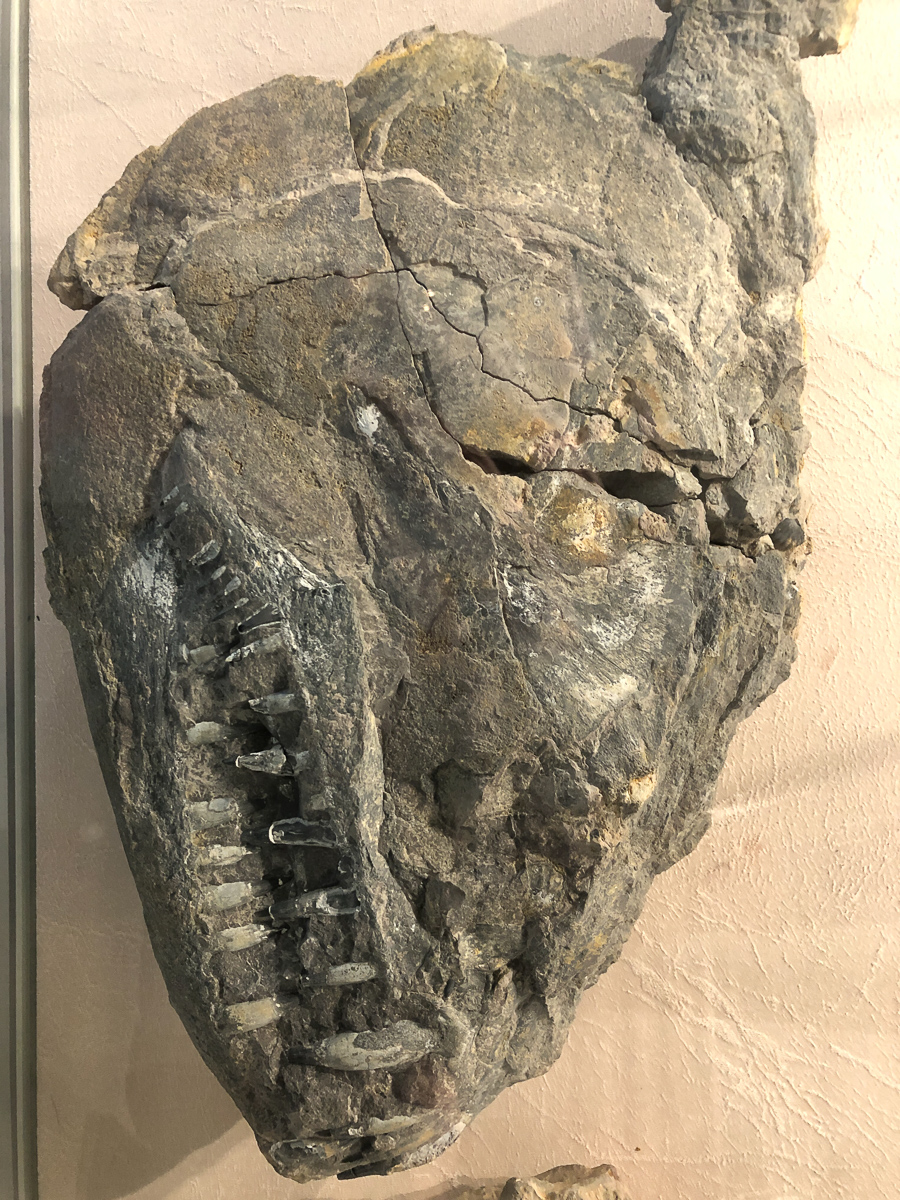
After crossing the isthmus of Panama we were now crossing dried out oceans in Colombia as we headed north – possibly a part of the same tectonic movements in the region which took place millions of years ago. At Villa de Leyva there are an extraordinary number of fossils dating back to when the region was a part of the sea. Amongst many other fossils, three different sorts of ammonites at the lower end of the food chain and a giant Kronosaurus as an apex predator were all found in the area. The Kronosaurus lies, uncovered but still embedded, exactly where it was found and it is one of very few exhibits in the world where a museum has been built in situ.

Gid claimed, as we rode north, that with towns on the road signage being over 300km away the area we were riding through was sparsely populated but when we arrived on the outskirts of Cartagena that all changed. We still had 12km to reach our accommodation on the city beach. 12km of rush hour traffic frantically dashing about to cut ahead of the car, bus, truck etc in front. Shoulder checks are essential – a life saver – advanced rider trainers will tell you but I wouldn’t risk doing one. In the moment it takes to glance back checking for a clear space and look forwards again half a dozen bikes will have flooded in. Equally, it was totally counter productive to slow down to gain some space between you and the vehicle ahead as this just provided space for streams of 150cc bikes to swarm in. It was a very dangerous manoeuvre to change course to miss a hole in the road as that would place you immediately into the path of the next stream of 150s cramming by. That’s not counting the occasional obvious kid (boys only), riding like an absolute maniac. We were stunned that we only saw one biker on the ground; he looked a bit stunned, too.
The 12km of nerve racking stuff ended in further dismay. Our accommodation had been booked but not paid for in advance. There’s no reception to pay at, only a key box and an ominous email. That’ll be no entry then. The email gave a number of ways to pay that I’m sure would all be great if you’re Colombian but none of our PayPal payment, credit cards etc. were acceptable. After a period of dismay it all worked out – most things do. The cleaning lady and local ‘landlord’ arrived. After some mis-communication we scraped together enough cash. Worryingly she kept saying ‘cancellado’ – we presumed she was about to cancel our booking – but it means “paid” in Spanish. All was sorted. Note to the admin dept (Gid): Don’t use Booking.com to book apartments one hour before arrival.
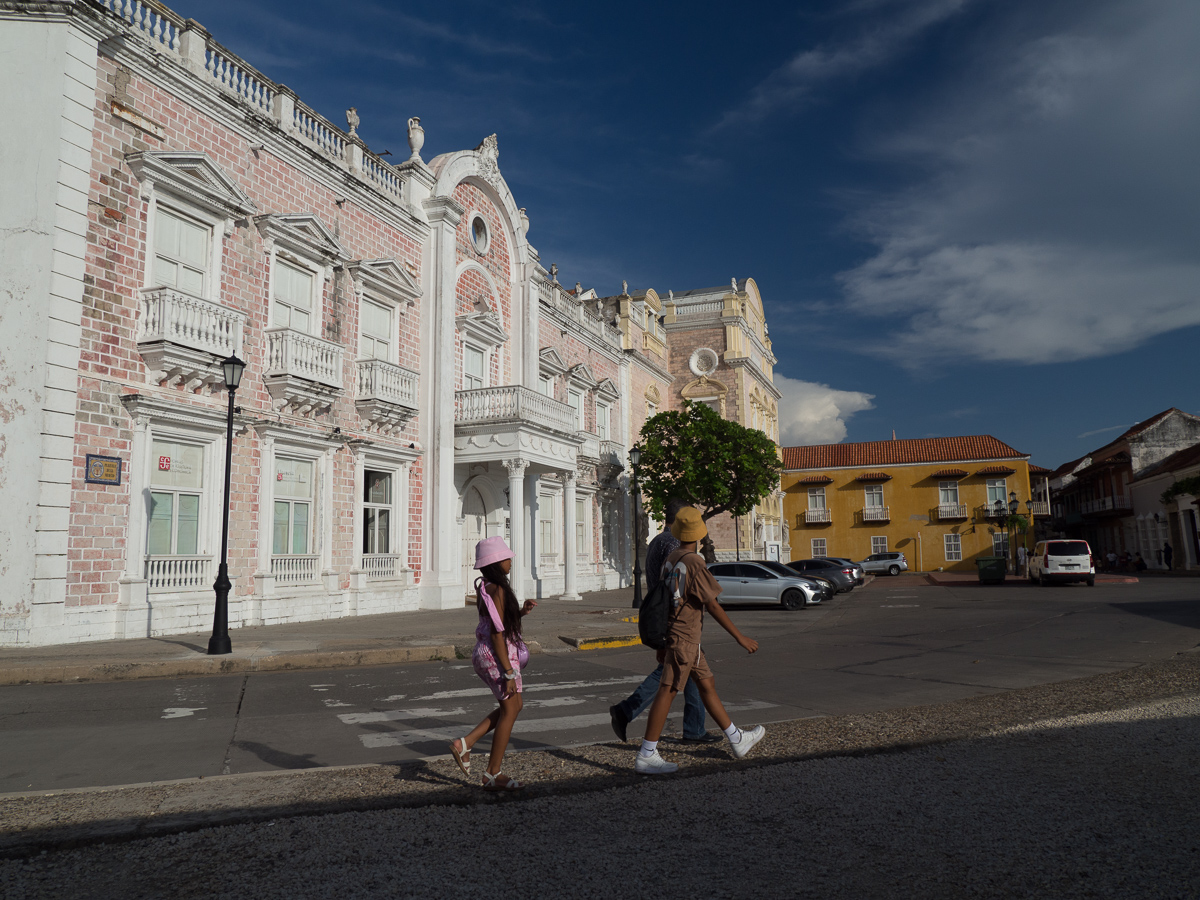
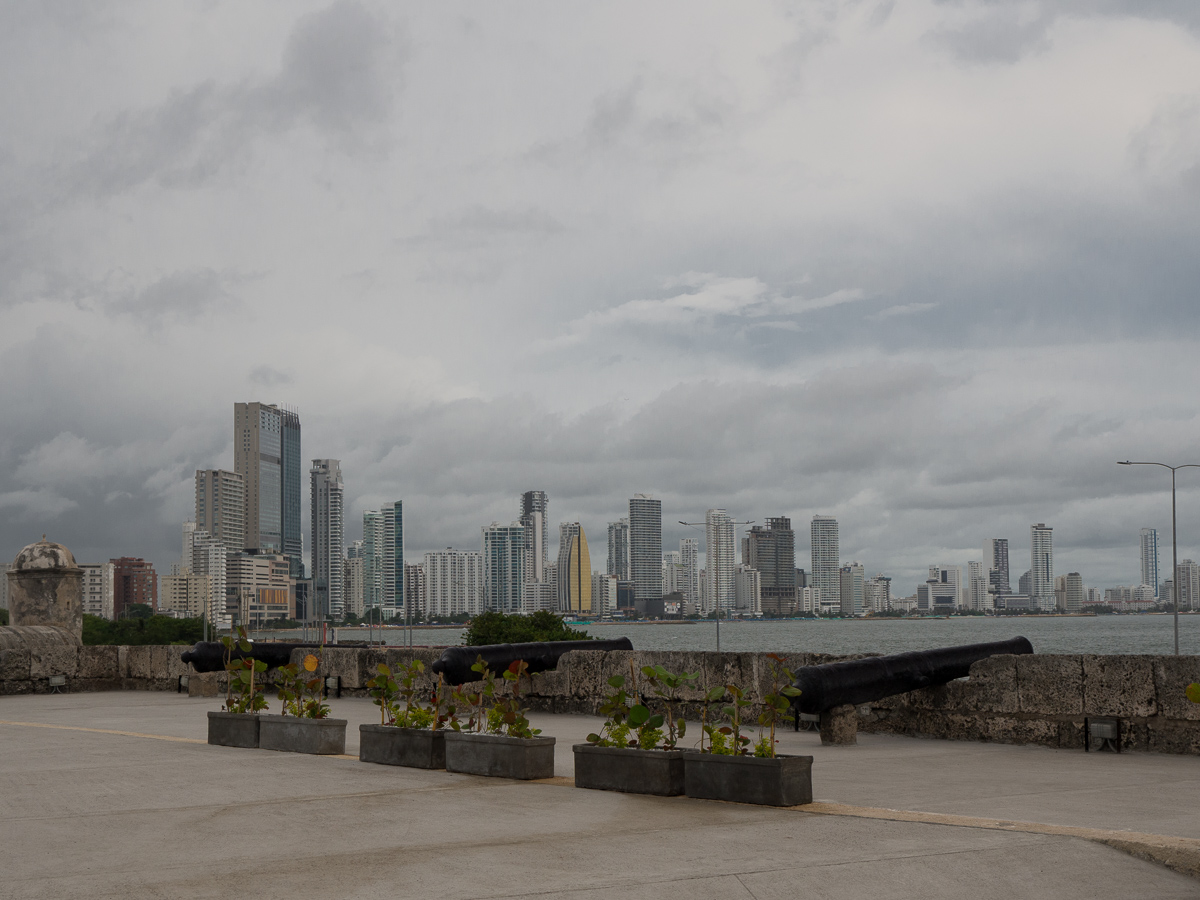
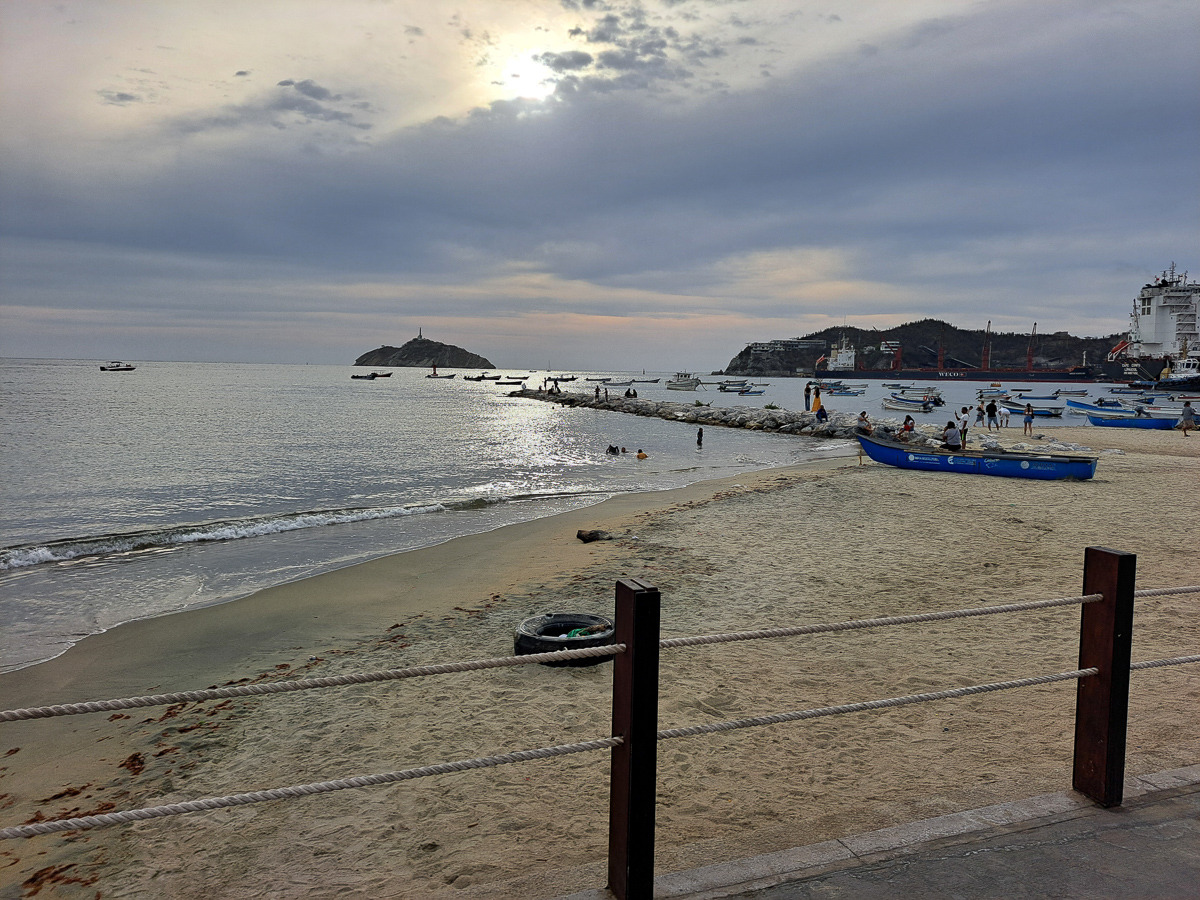
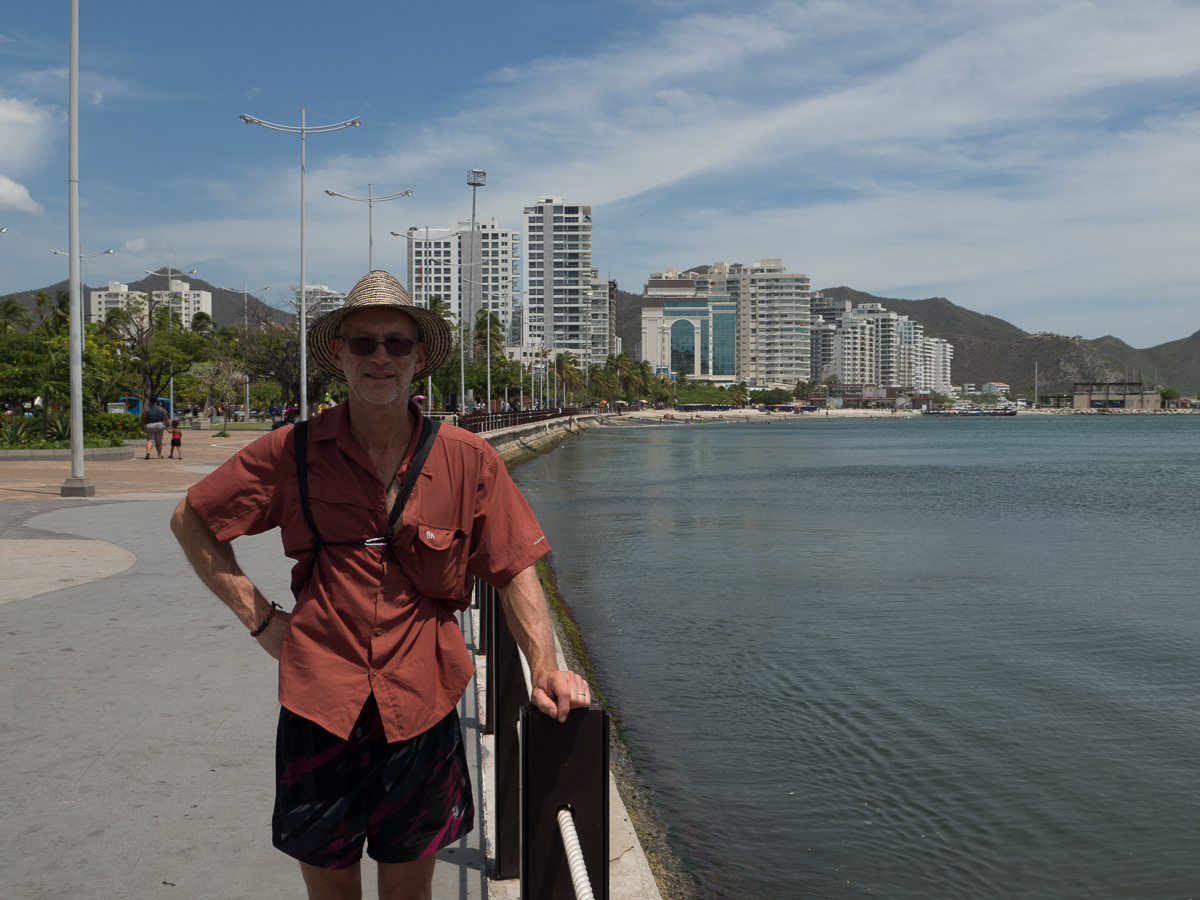
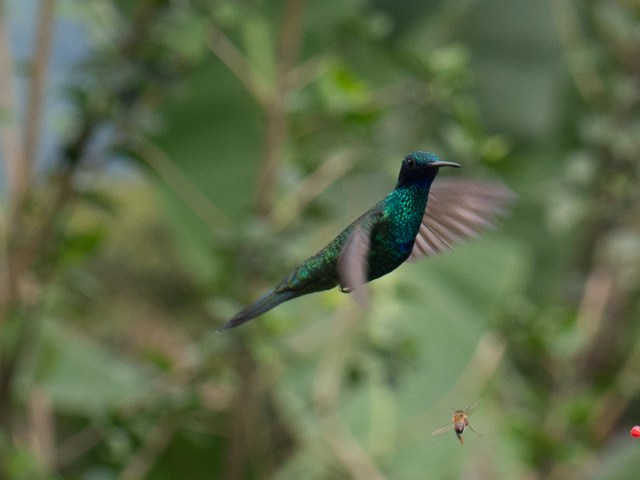
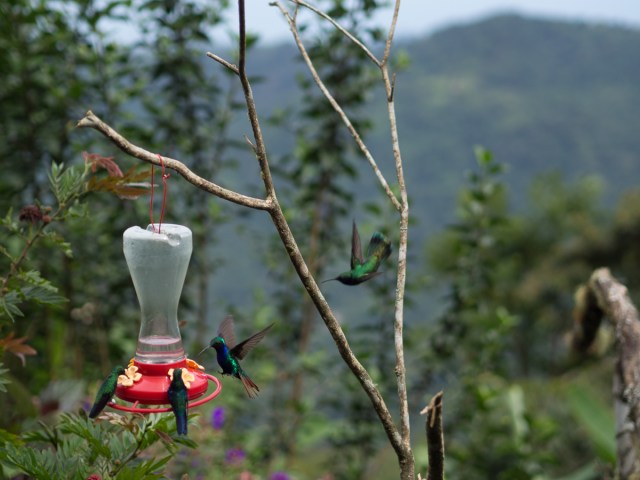
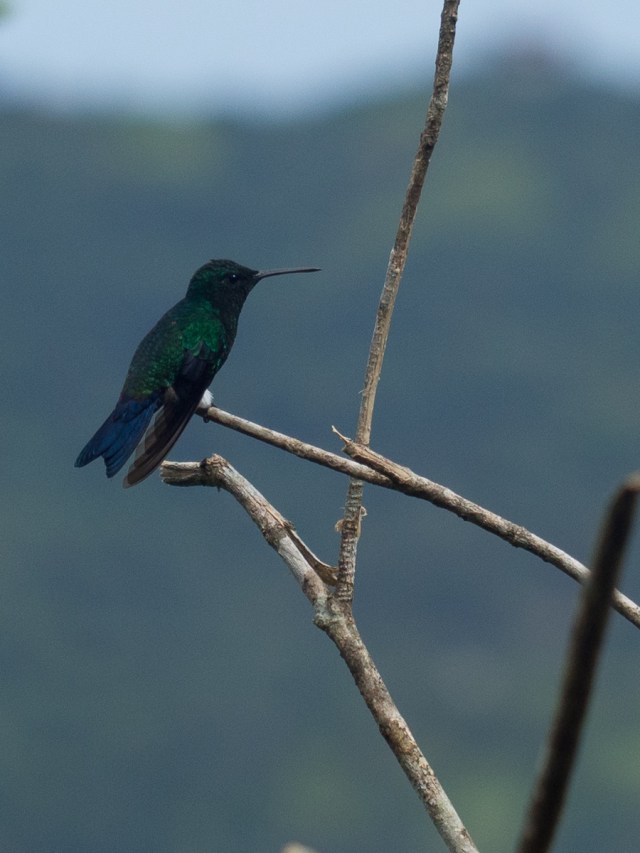
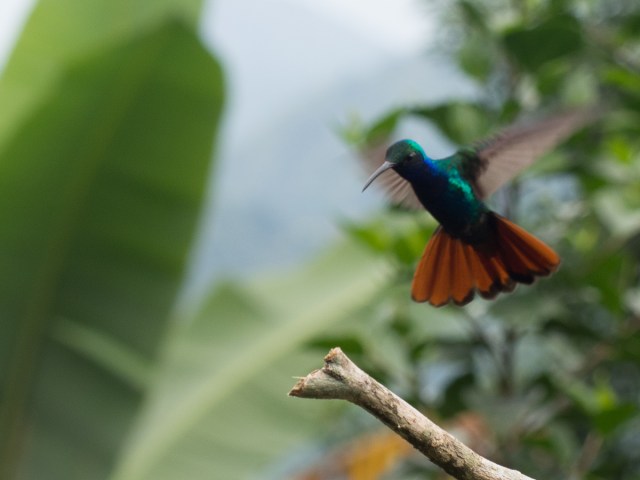
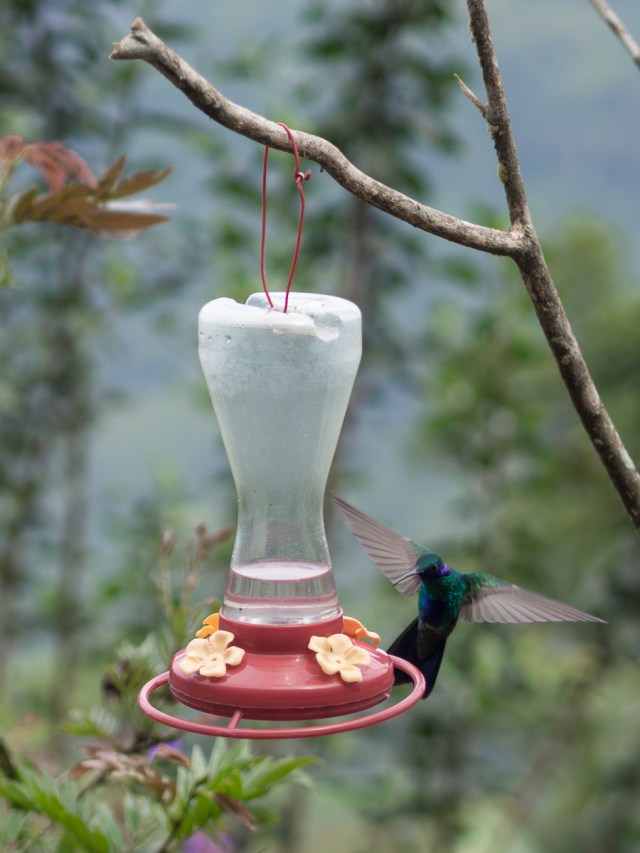
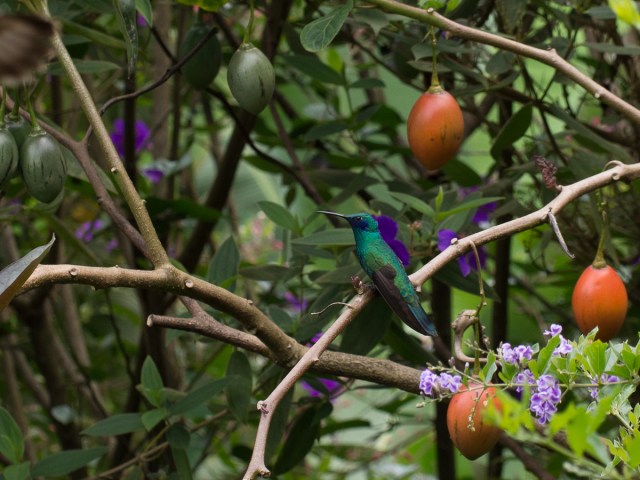
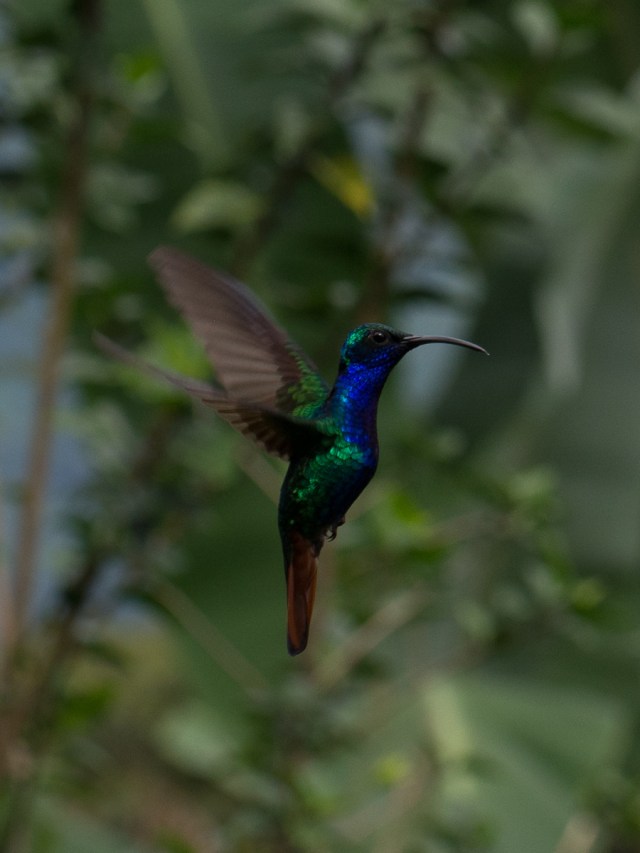
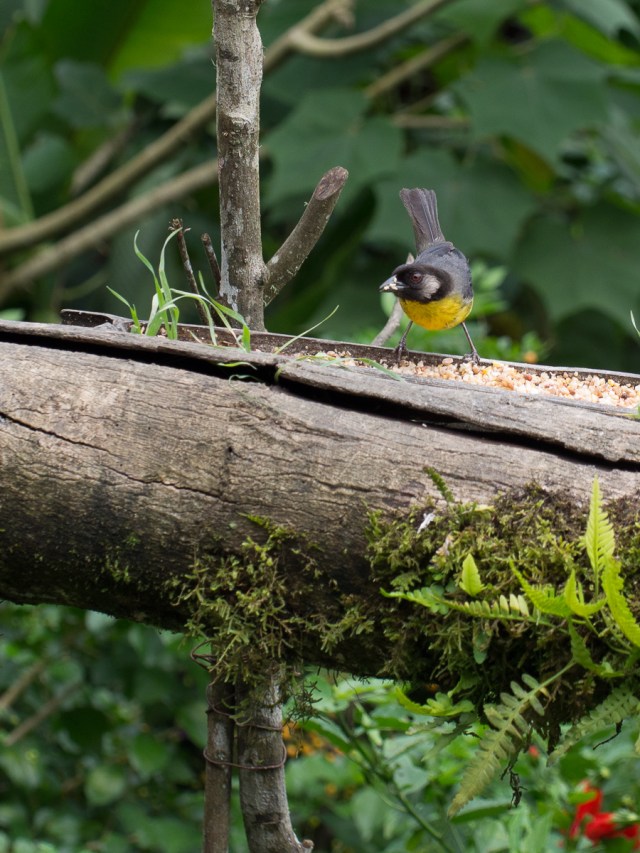
On reaching the Carribbean we realised how comfortable Bogota had been. Cartagena and Santa Marta are on the coast where the heat and humidity was oppressive. The former was a major tourist spot, reminding Gid of St Malo in Brittany, with it’s UNESCO listed city wall, while Santa Marta was more relaxed and the base of our bird watching tour in the nearby Sierra Nevada National Park (nice and cool, over 1500m high). Finally, we got some photos of hummingbirds, albeit at a feeder.



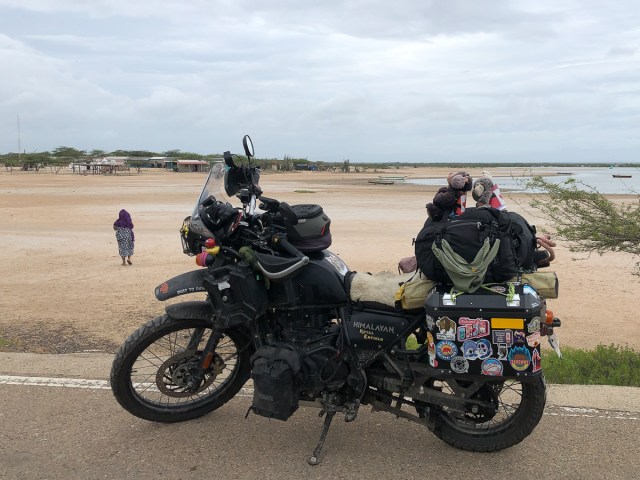
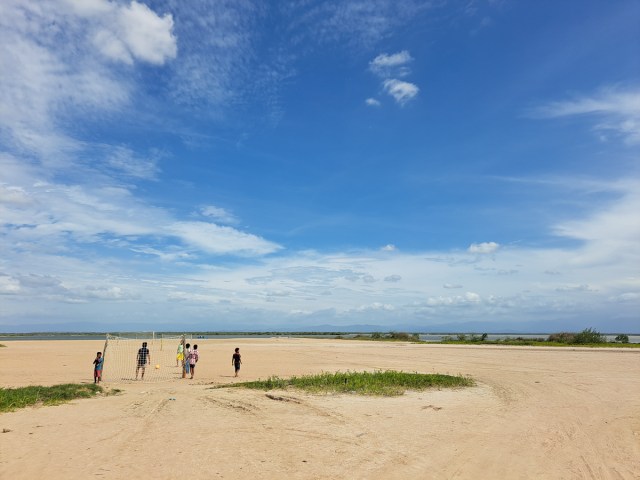
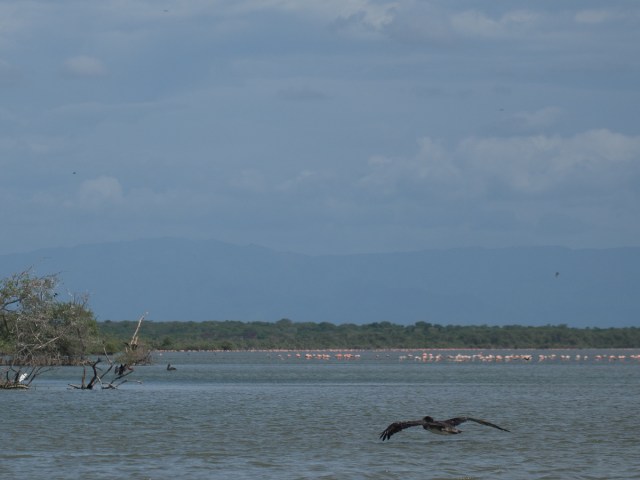
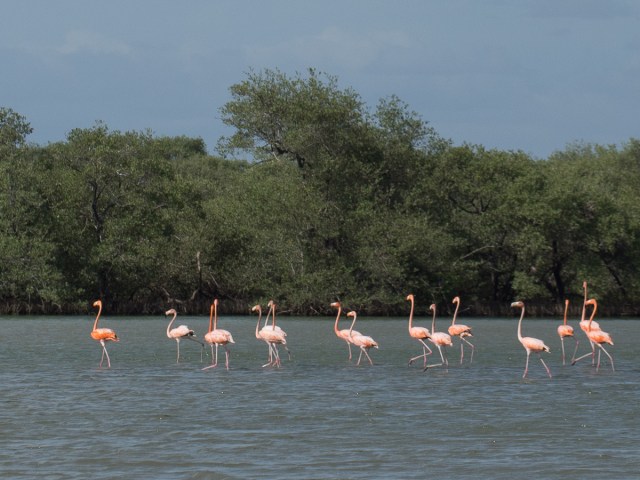
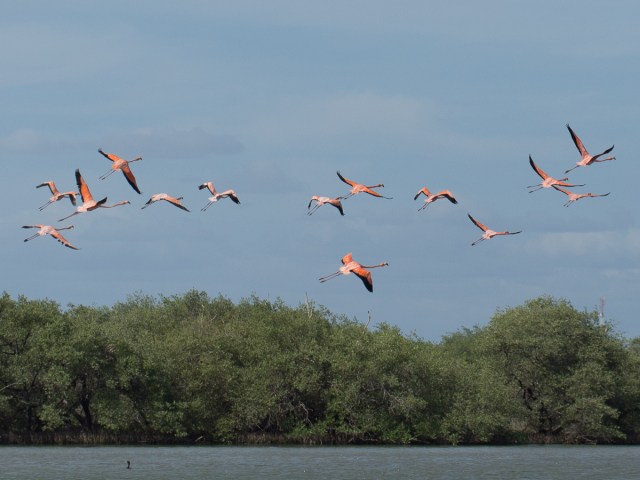
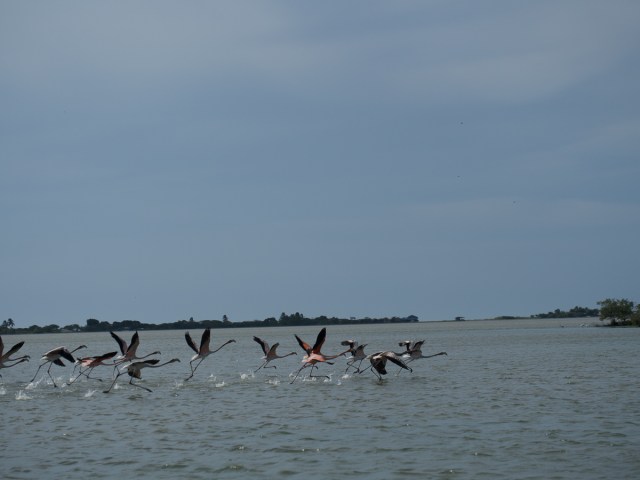
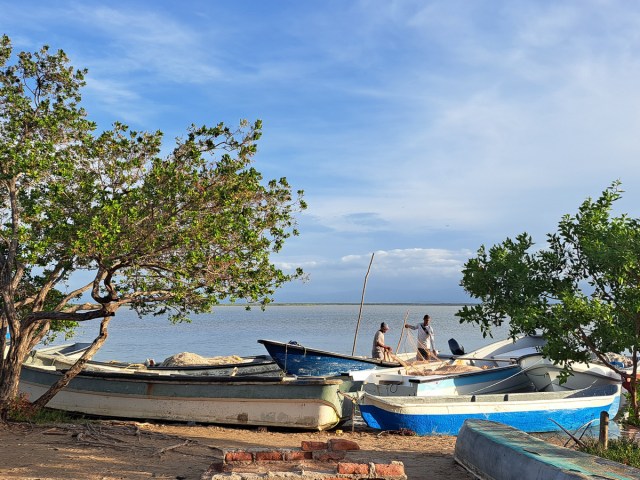
Further east along the Caribbean coast the flamingos live in a saline lagoon near the village of Camarones. We passed through the main village, heading for the end of the peninsula where there was a sort of sub village with a few buildings, boats dragged up on the beach. The paved road petered out deteriorating into sand. Hard packed thankfully. We had arrived at lunch time and were pounced upon by two ‘likely-lads’. One sold us a highly over priced meal while the other was a boatman/guide who seemed far more genuine. Lonely Planet states the best time of year to see flamingos and of course we’d missed that. I asked the young boatman if the birds were still here or had they, per LP, flown away. He replied that they were still around, at least a couple of thousand of them were.
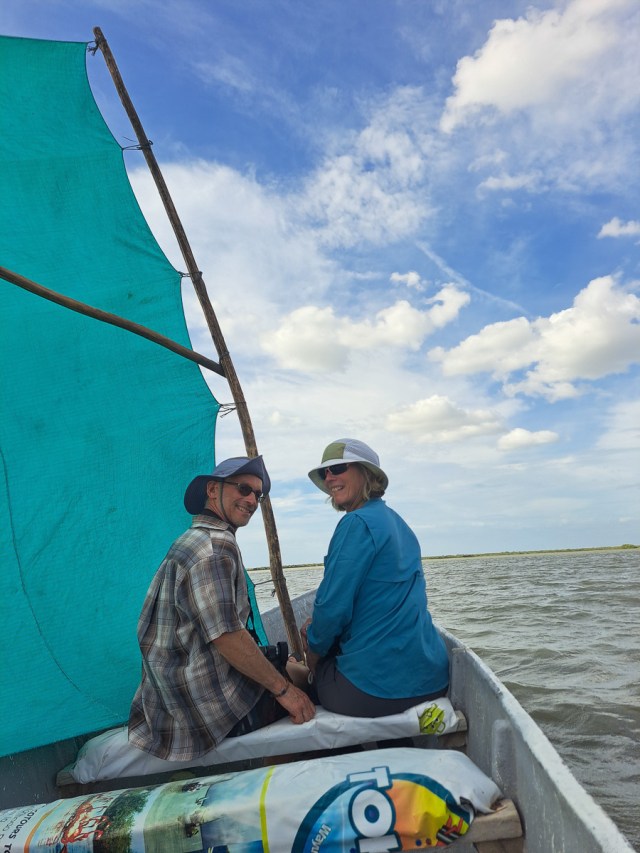
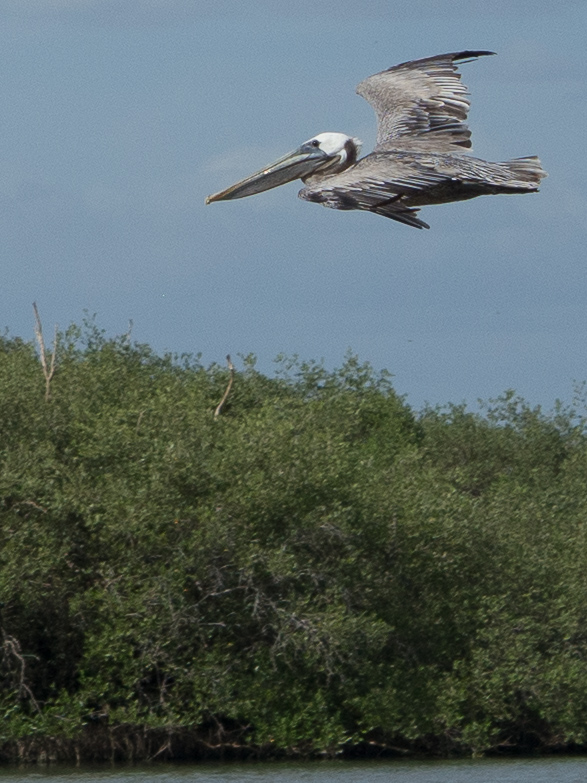
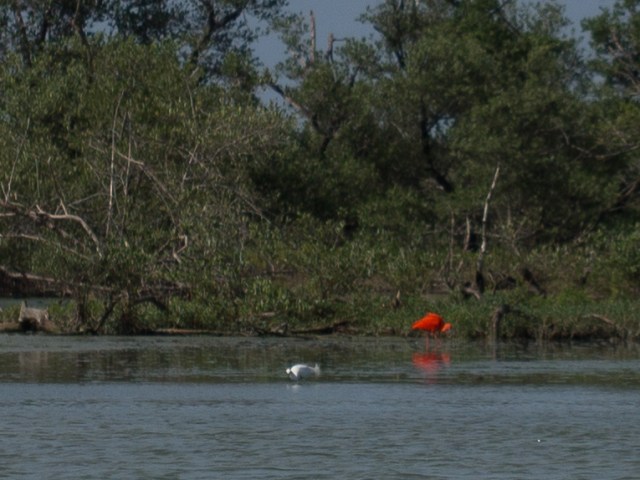
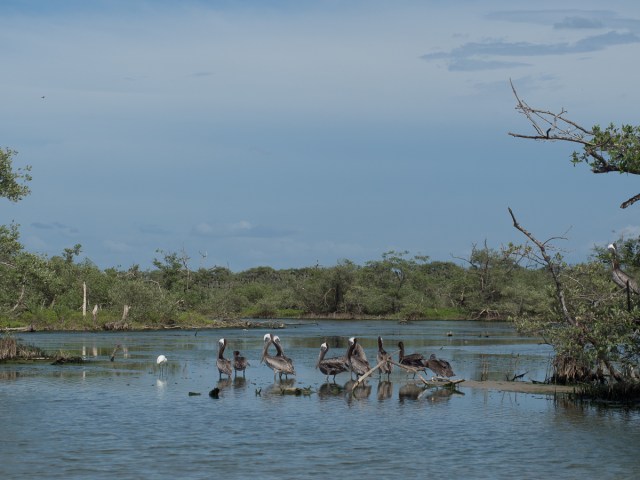
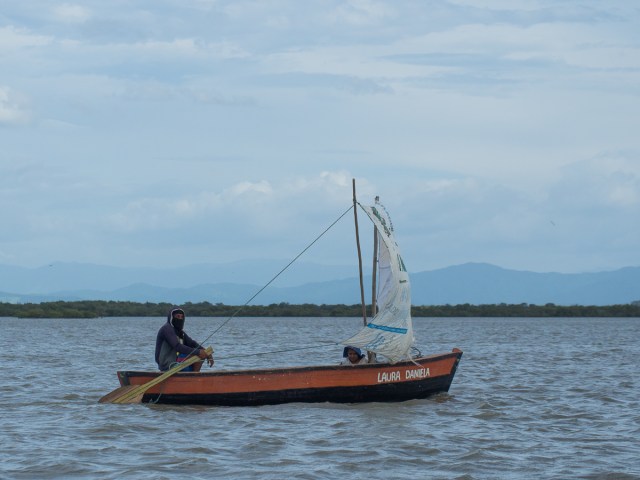
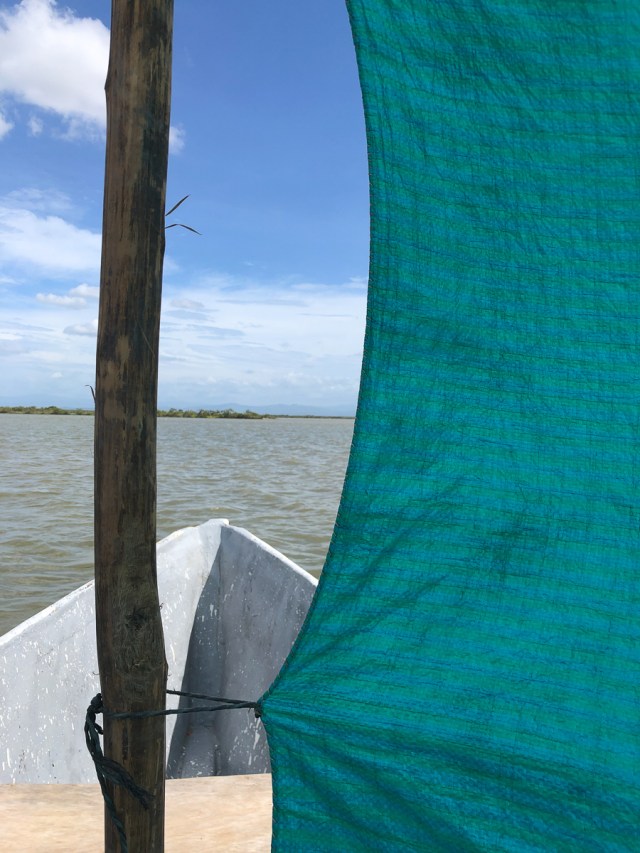
Having eaten, neither of us felt keen to extend our stay beyond one night as the village seemed fairly run down and we stood out as tourists, so we arrange our flamingo trip for that afternoon, with little break after our hot ride and lunch. It was fabulous. Well worth venturing out to see them. Them and a couple of scarlet ibis amongst many egrets, herons, white ibis, vultures, frigate birds, terns, pelicans and cormorants. The sailing canoe was impressive, too, we recalled our own attempts to sail canoes back home. It probably does help if it weighs… more than a Himalayan, instead of 25Kg like the typical Royalex lightweight canoes we used to use.

Having ticked the box of the Caribbean we headed back south.
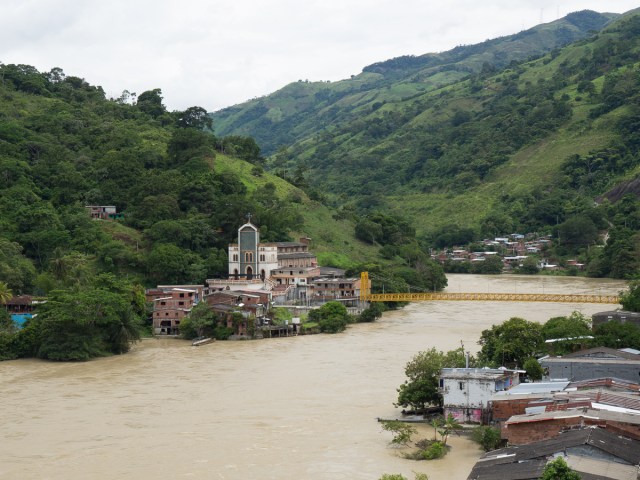

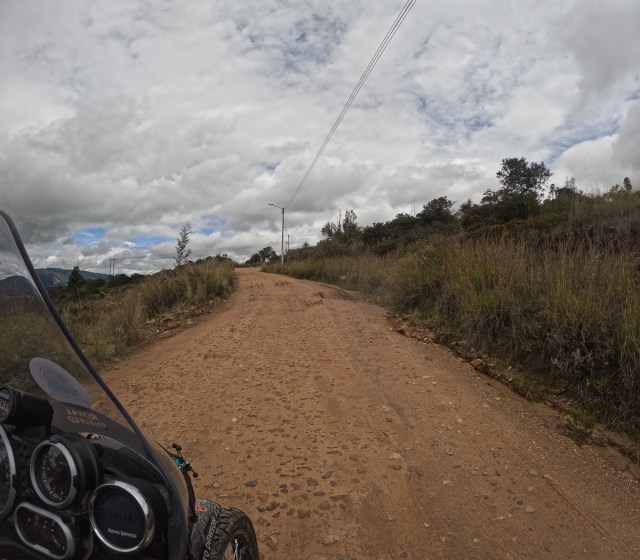
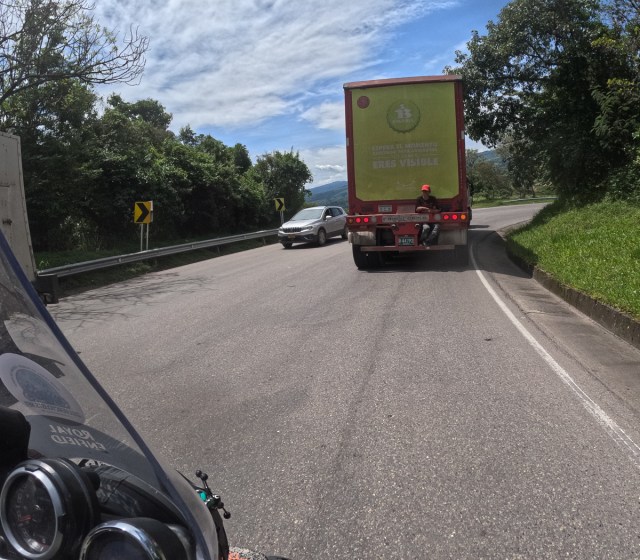
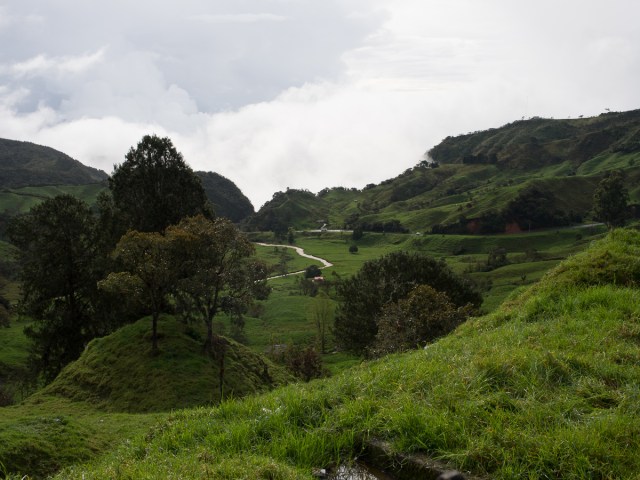
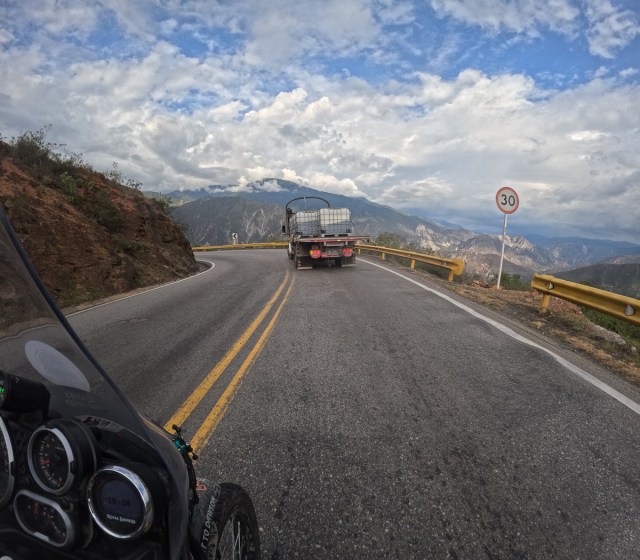
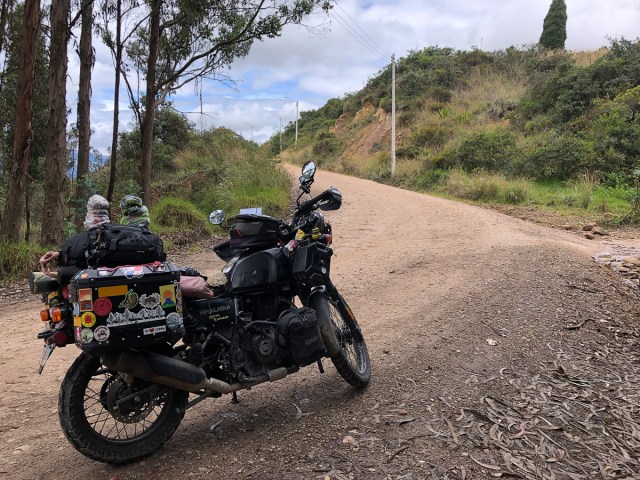
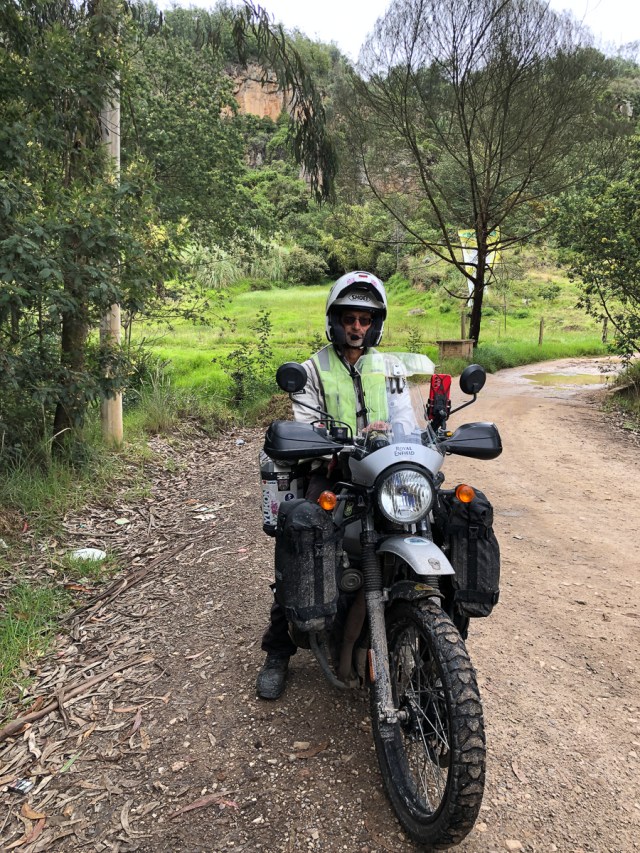

Medellin was our next destination where the bikes could be serviced and checked over by a Royal Enfield main dealer. We hadn’t got any problems but it seemed foolish to miss the opportunity and an oil change was due. Rather than our previous experiences of arriving in cities late in the day and mixing it with the locals during rush hour we decided to stop in a small town – Yasumal, a little way short of Medellin. The theory was great. It was going to be less stressful. Yasumal wasn’t big, and the mapping just showed the usual LatAm grid of streets. There’s a few hotels from which we needed to find one with decent parking getting the bikes off the road and into safety. A good plan.
The navigation’s first ‘left here’ had us both saying, ‘You’ve got to be joking’. We craned our heads up and saw the narrow road disappear skywards. Up the next road you could see a flatten out a bit at the top but we were too late to take it. We had to take one of them! The next one it was then. I was leading and up I went very focused on not stalling as I steadily ground my way up the narrow lumpy road in the rain. I was going the wrong way! The arrows and the on-coming traffic gave it away. Gid had stopped at the first crossroads but I wasn’t stopping on an incline like this. At the second crossroads it flattened out a bit and as I stopped a couple of people came to help. Hand waving wasn’t working too well but Gid finally arrived at my crossroads taking over the conversation with the locals, but with no more success. We weren’t lost. We knew exactly where we were and where the hotel was. The one-way system and road blocks were the problem. Nothing corresponded to our mapping. One of the men decided to lead us there by foot. Gid wasn’t happy. ‘Clutch’ll burn out, can’t go this slow, let’s just get out of here!’ was streaming down the intercom. I put my faith in the man and followed him up the next road with Gid shrieking that he’d done this route before. ‘It only leads to where you were, the road is blocked!’. Still I followed the man. At the road block our man spoke to the policia who agreed we could go the wrong way up the next bit. Our man led on. He was soon beckoning us down a dark, steep entrance way under a building. Down I went. Gid still wasn’t happy. It turned out to be an underground motorcycle parking lot manned by an attendant. Once that was established things brightened up. Our man, once the bikes were parked out of the way in a corner thanks to the attendant, took us on to the hotel we had mentioned, which, it turned out, was only accessible on foot. Later, Gid, his good humour returning, pointed out that the church in the pretty, tiered, busy central plaza was the largest flat area we’d seen in the whole town! A coffee on a balcony helped too!
Gid adds: Although some elements of that hotel hunt were awful, one thing that wasn’t was the weather. With the rain it was lovely and cool. Normally, the worst thing about in-town hotel searches is the combination of baking heat and moto gear. Often, when we’re just travelling rather than aiming for a specific stop for that night, we don’t do more than eyeball Google in the morning or at lunch, to spot an area with some places to stay. Online rarely clearly states that a place has secure parking – our difficult criteria – so it’s simplest to go there and trawl the streets. This usually works ok except for:
- The heat. We’re usually looking for a hostal or hotel by 3:30pm. About peak heat time. So we’re crawling along the baking streets, in full motorcycling kit (ATGATT), or stopped staring at navigators or asking locals. Then Gid (why me?) has to dismount and wander the streets (still ATGATT). We’re both liquid, usually, by the time we find somewhere. Only a few recepcionistas let us into the parking to undress before doing all their documents and paying. Ugh!
- Helpful locals. It’s churlish to say it, but usually it ends up taking longer, and finding a worse hotel, than we would have on our own. Do I know a suitable hotel in my home town (Worthing) for someone with X special requirement, and not expensive? No, haven’t a clue. Maybe it worked out in Yasumal, as the guy took us to secure parking first.
- The two occasions on this trip where a town was totally booked out because of some event. Move on. Except once, decades ago, I arrived in Yellowknife, by airline, no tent. Wedding. Full. Nowhere to move on to. Pre-Internet. Oh sht. The mozzies feasted that night.*
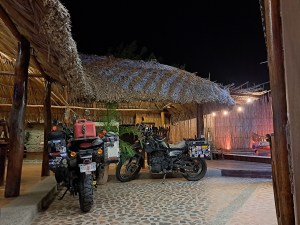
With our hotel hunting we are learning another new skill. That of riding the bikes up steps into the hotel lobby. I’d seen this in central Asia on our bicycle trip. It was easy enough to lift our 2016-18 pedal bikes into the lobby but in the morning the only way those motos alongside our bicycles got there was up the steps. Now it was our turn, well Gid’s. So far I’ve wimped out. Our second attempt was crowded with on-lookers just to add to the drama, and glass doors on either side. Gid: The actual manoeuvre isn’t too difficult, the problem is that if the bike was to stop on the way up the plank, the rider’s feet are in mid-air, so a topple is inevitable. In the video, that’s why the helper is there. The other problem is a slippy tiled floor inside, and possibly needing to stop dead abruptly, one could easily climb the plank then fall over a locked front wheel. It’s much easier on my own bike, as I’m dialled into it. On Clare’s, as I’m unused to it, the 2022 is much more prone to stalling or cutting out.
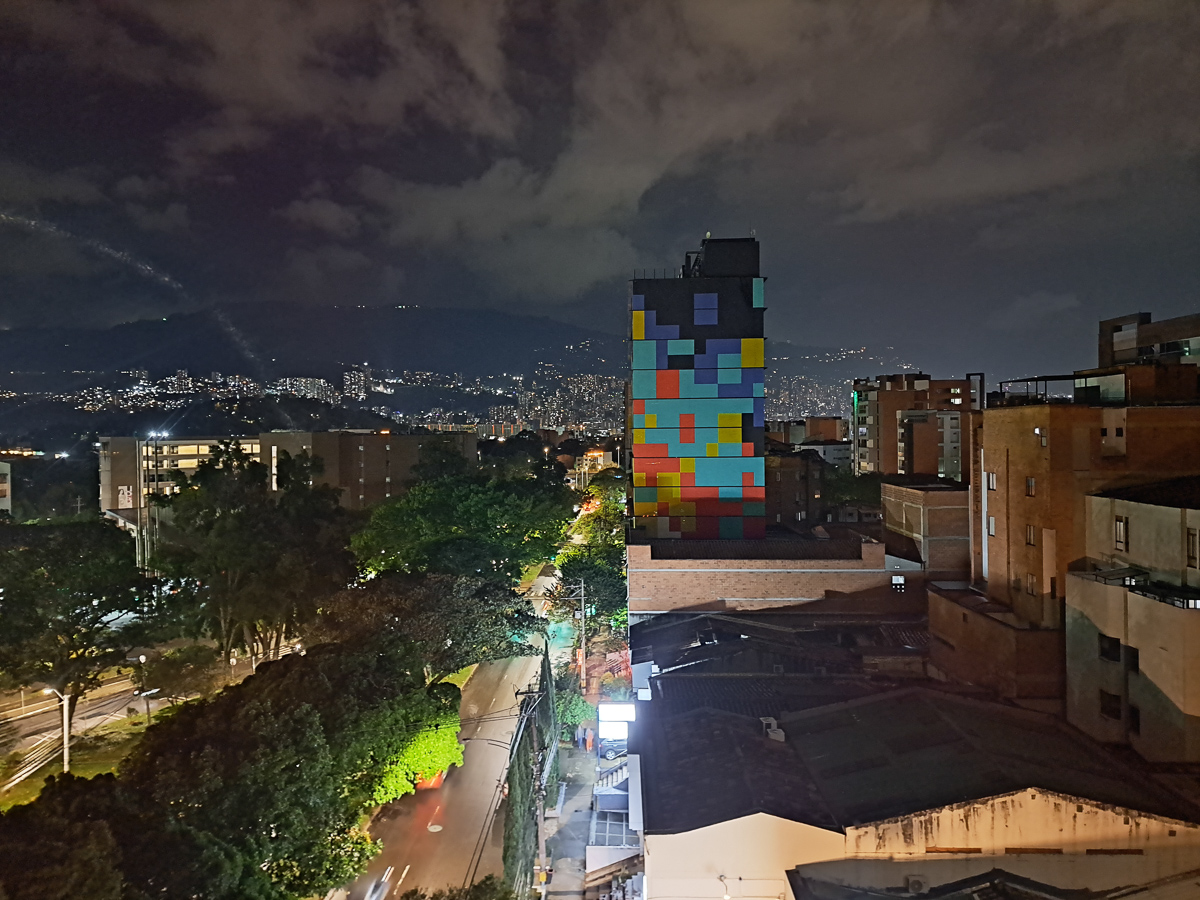
Medellin itself seemed pretty ordinary until you looked beneath the surface at it’s history. Wow, what a history! Firstly we wandered over to the city museum and its music exhibition. It displayed a few record covers and details of a few musicians but a common theme quickly emerged. That of the part that music and art played in transforming the city in the early 2000s from its hard core criminality into the thriving and prosperous place that it is today. With our interest aroused we went on to the Pablo Escobar museum. He was a Colombian drug lord who started his life of crime at the tender age of 12. He flourished in his chosen career progressing from selling stolen tomb stones, that he recycled, through a number of other more minor forms of criminality until he become the leader of the Medellin drugs cartel in his early twenties. He opened up and then monopolised the route for sales of cocaine into the US market and was arguably one of the richest drug lords ever. Having served a short term in prison for drugs possession and escaped numerous attempts at capture he was shot dead in the late nineties during a police raid by a bullet through his head. Some say it was suicide claiming he said, ‘It’s better to be buried on Colombian soil than live in a cell in the US.’
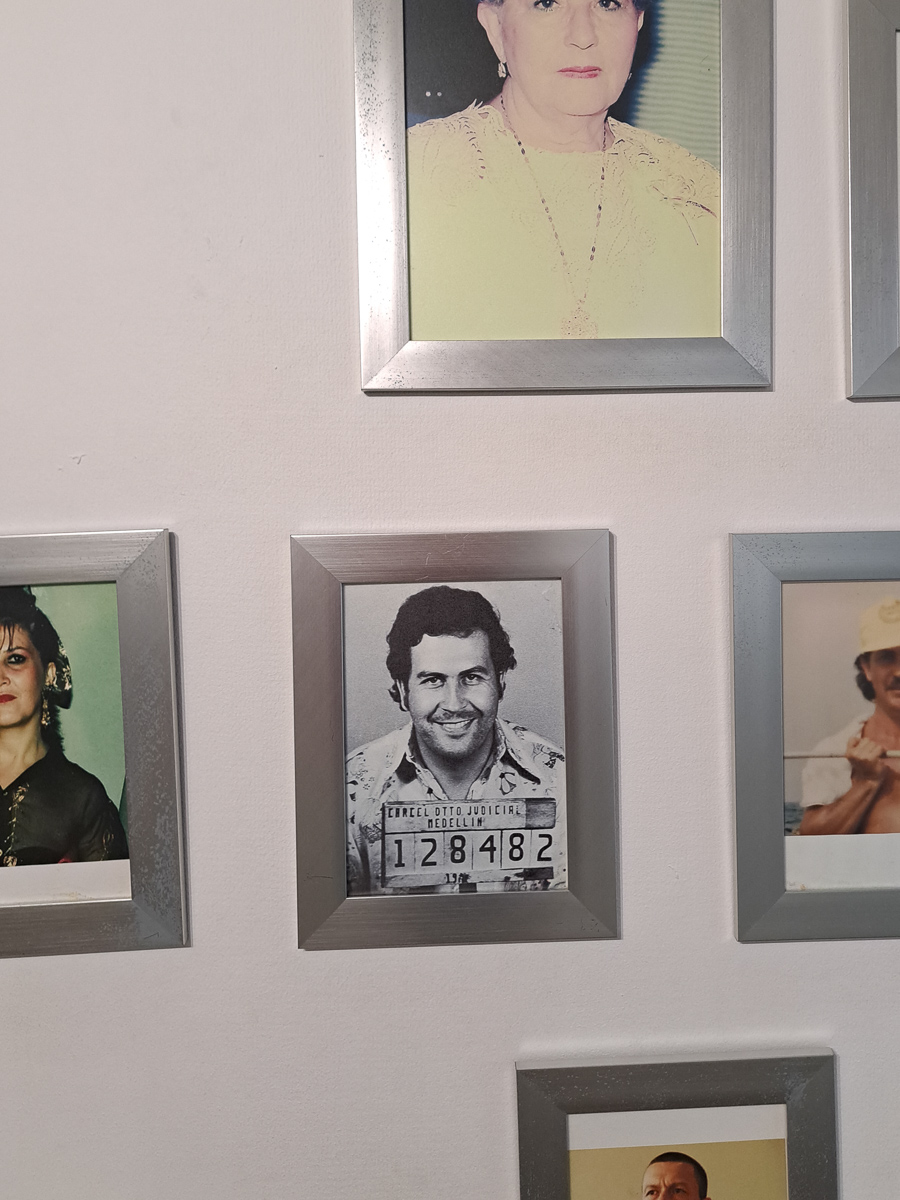
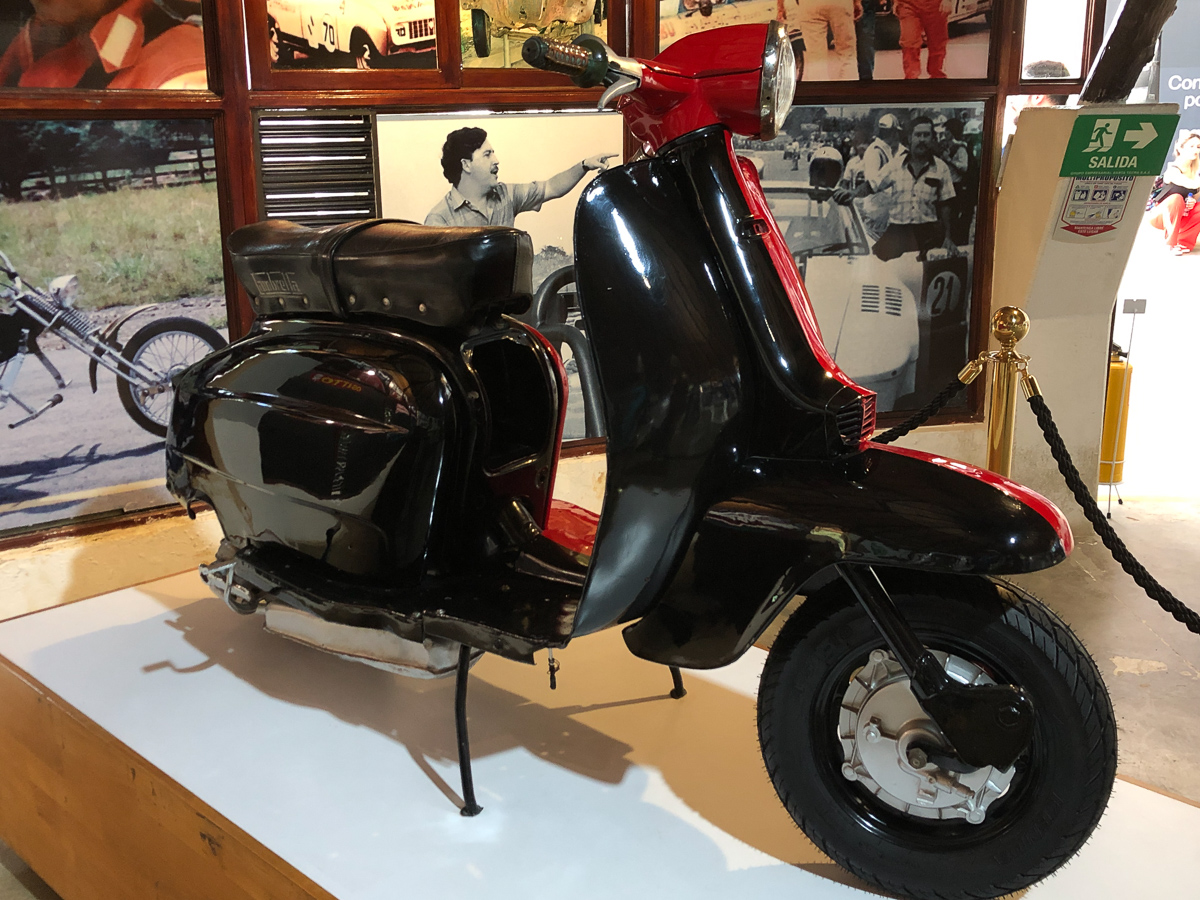
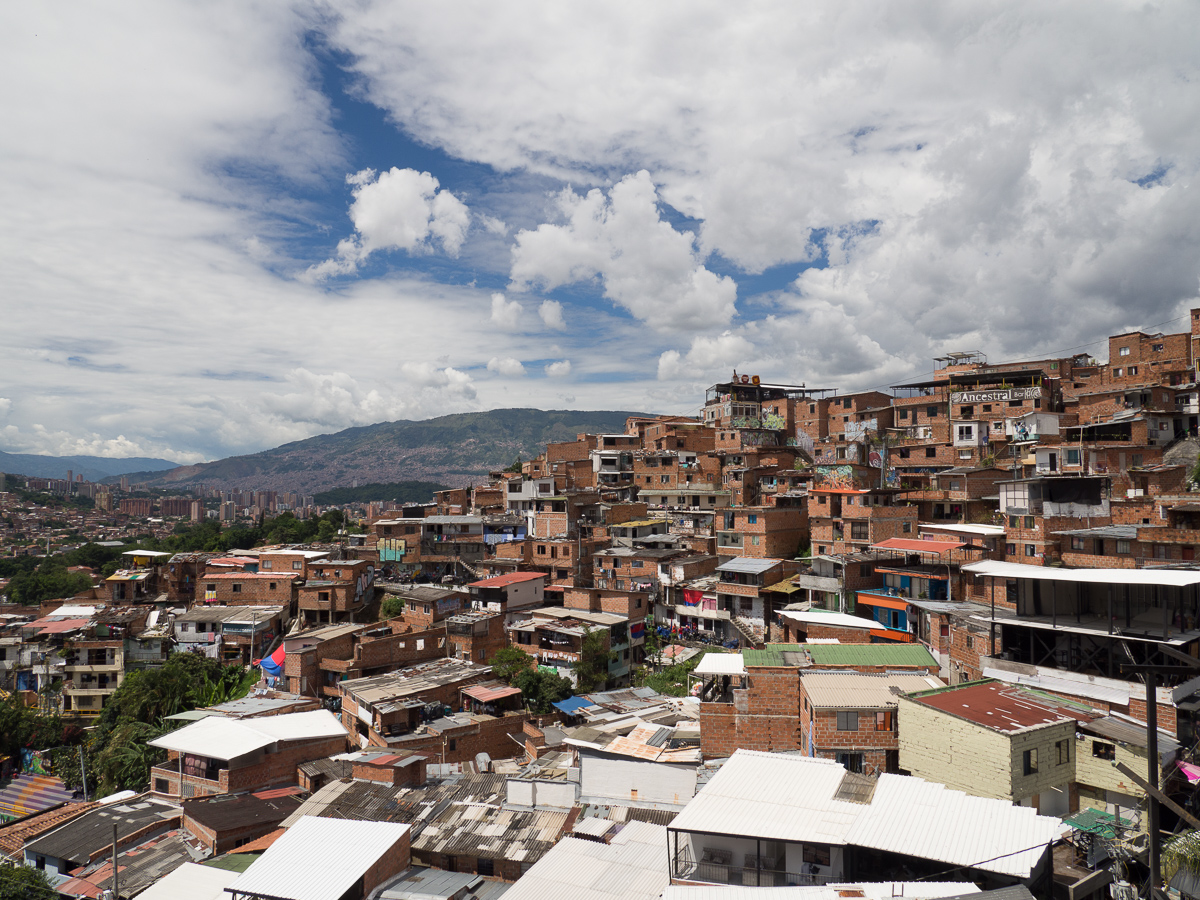
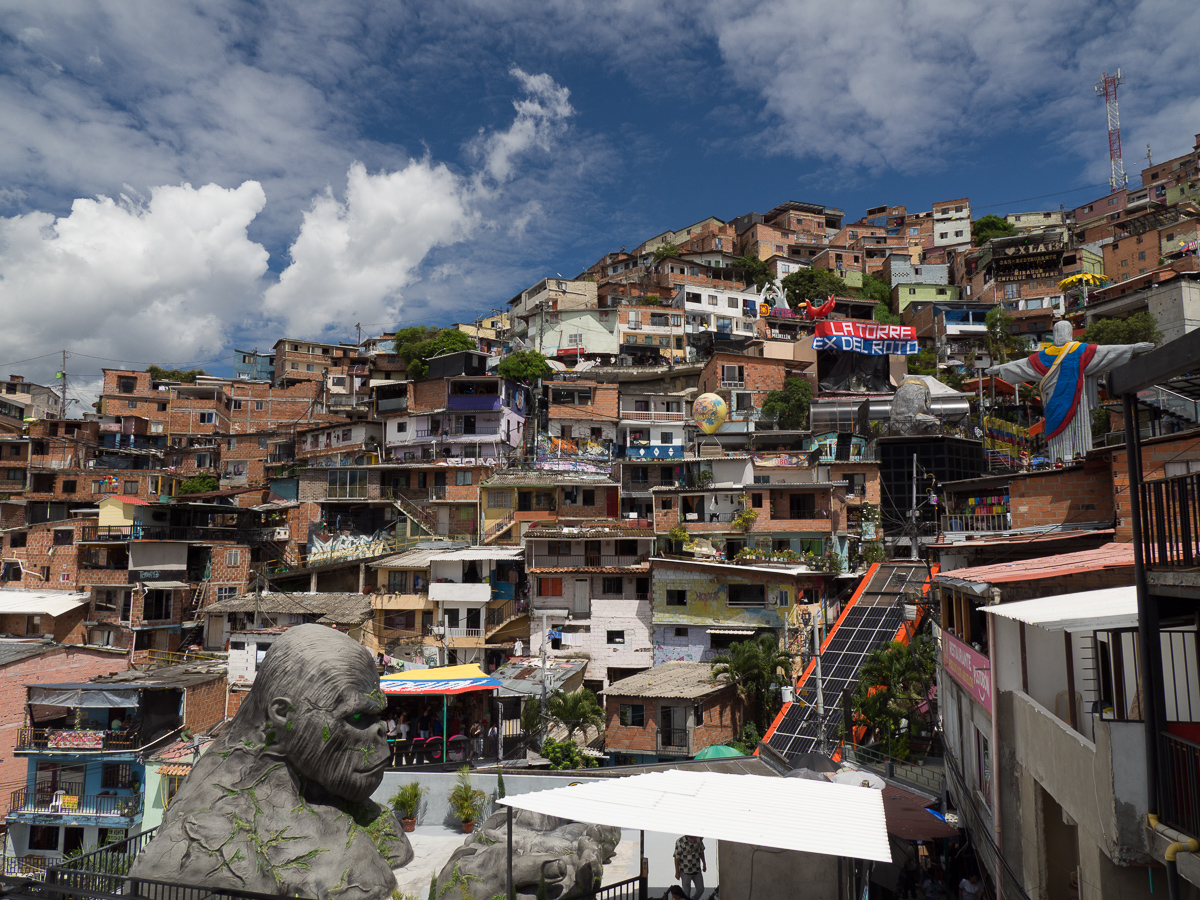
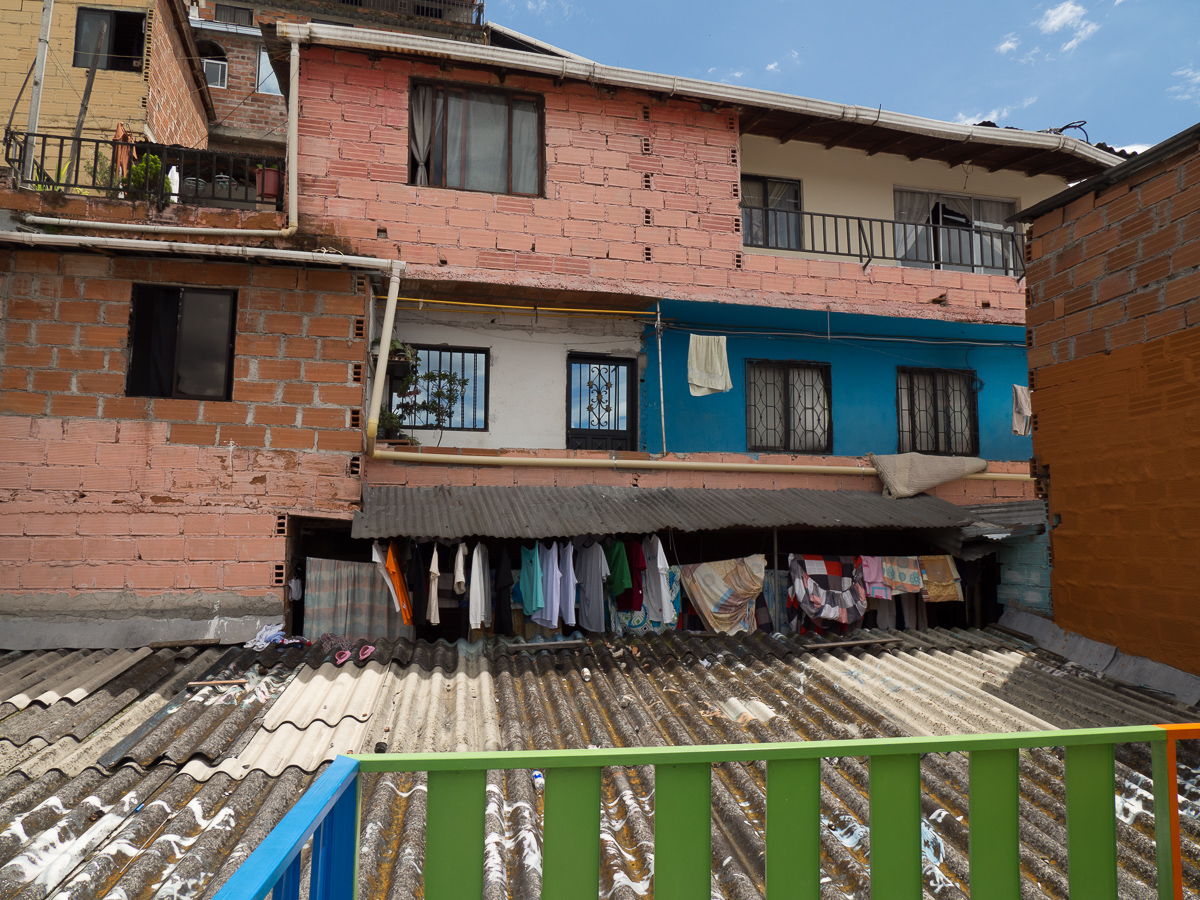
The third part of this story was in Comuna 13. This is the area of Medellin where fighting factions were rife at the end of the last century and the beginning of this which played out with fierce battles on the streets. The problems were all around the local residents who hid in their homes to avoid the gun fire. The military, police and local residents were all involved in what was all but a war zone for many years. In the early noughties this was turned around in part by engaging the teens, the next gun fodder, in what became a new future through art and music – as well as the application of overwhelming force by the military. Today the residents, many of whom would now be dead should the problems have continued, make a living showing tourists around. Marta, our guide, grew up in the region and vividly remembers the troubles that drove her mother away. She still lives high up in the community together with her father and the rest of her family.
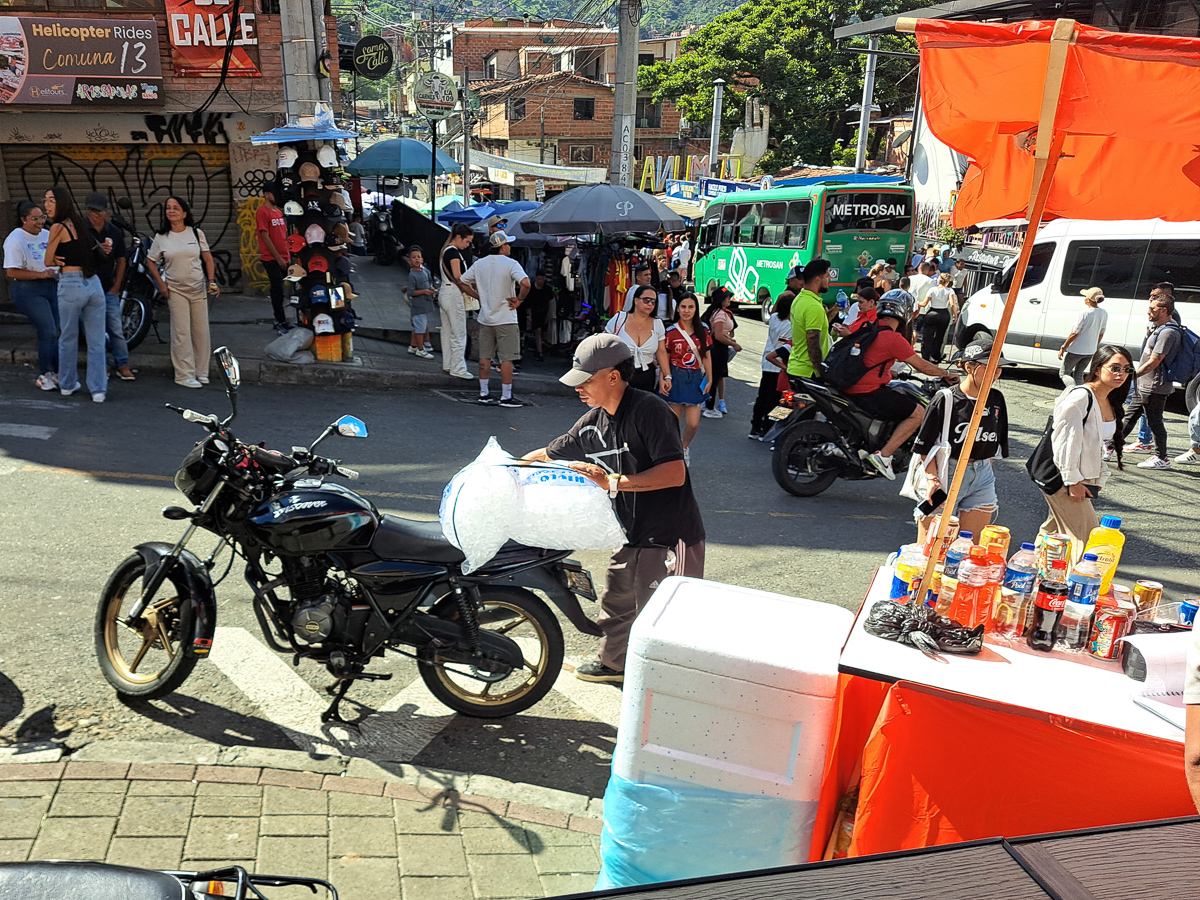
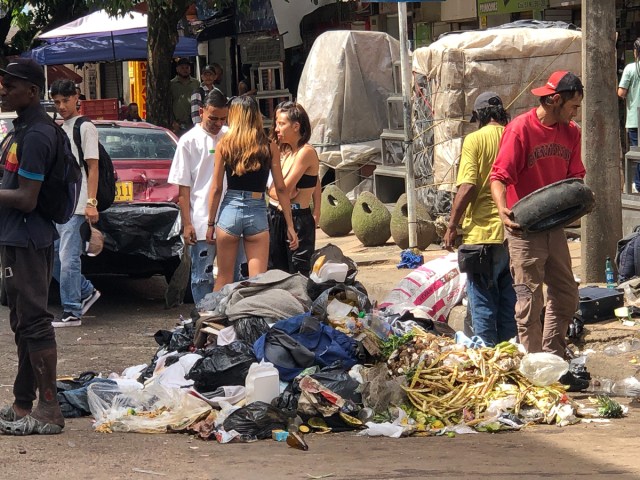
The other notable presence in Medellin for us are the sculptures of Botero the renowned local Colombian artist and sculptor. To get there we trapsed through the streets with evidence of a number of locals indulging in Escobar’s legacy. They were either preparing a fix sprinkling white powder from their mini packet of local produce or crashed out on the street. Almost without exception male, not old, and thin. These fellows really did look rough. Unlike Bogata where the streets near the centre of the capital were lined with stalls of anything portable that could be reused neatly laid out before running into a long line of tourist stalls, here it was one step up from squalor. There were local stalls – socks, phone cases, t-shirts etc and a local band but the biggest impact on us was the feeling of poverty. Piles of ‘junk’, piles of refuse, piles of debris lined the street, and a persistent whiff of various body products. Metres away from clean, tiled, modern eateries were street dwellers rummaging through piles of rubbish grabbing discarded wrappings in a hope of finding something to eat.

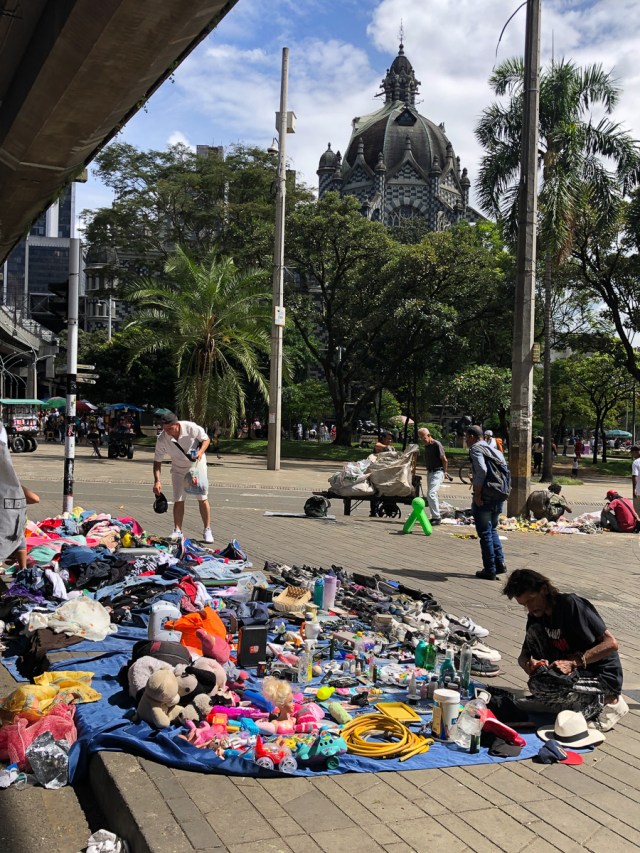

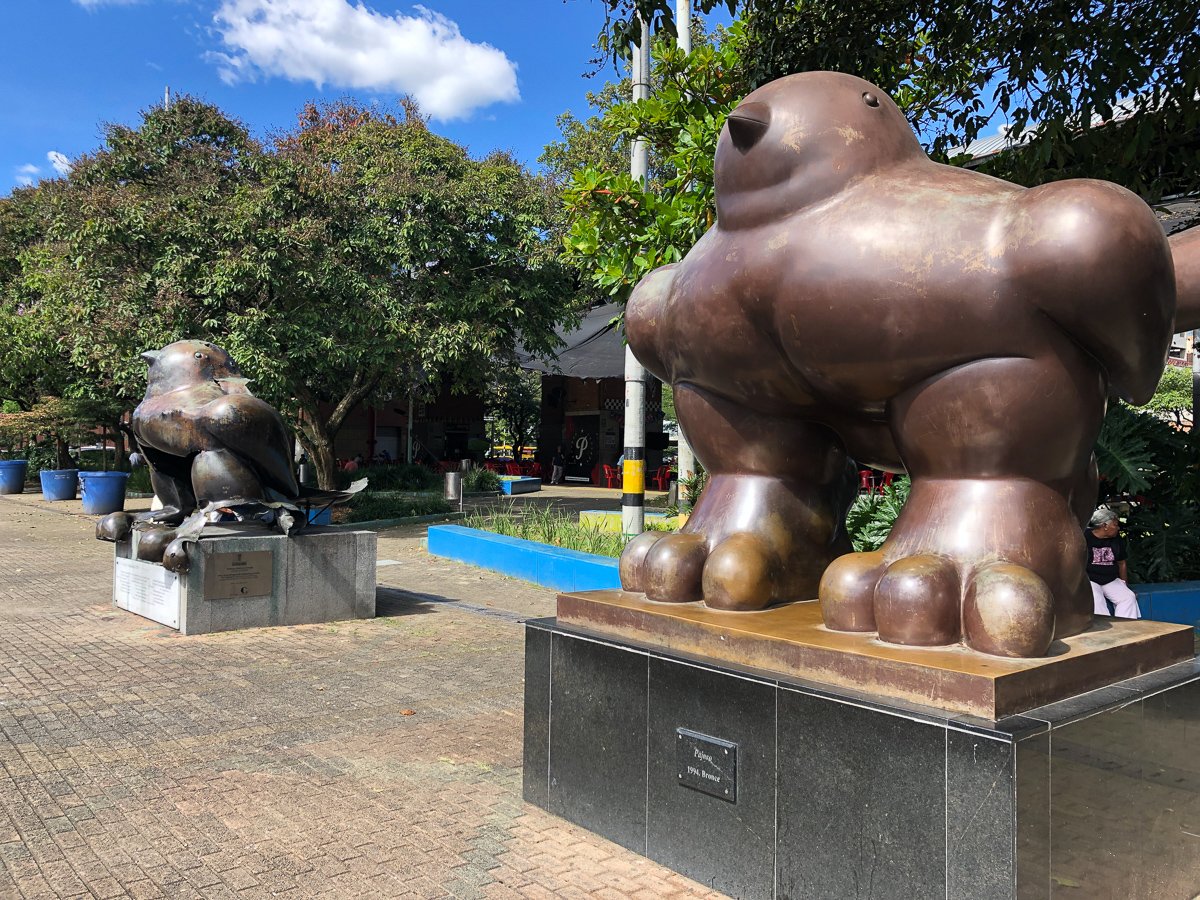
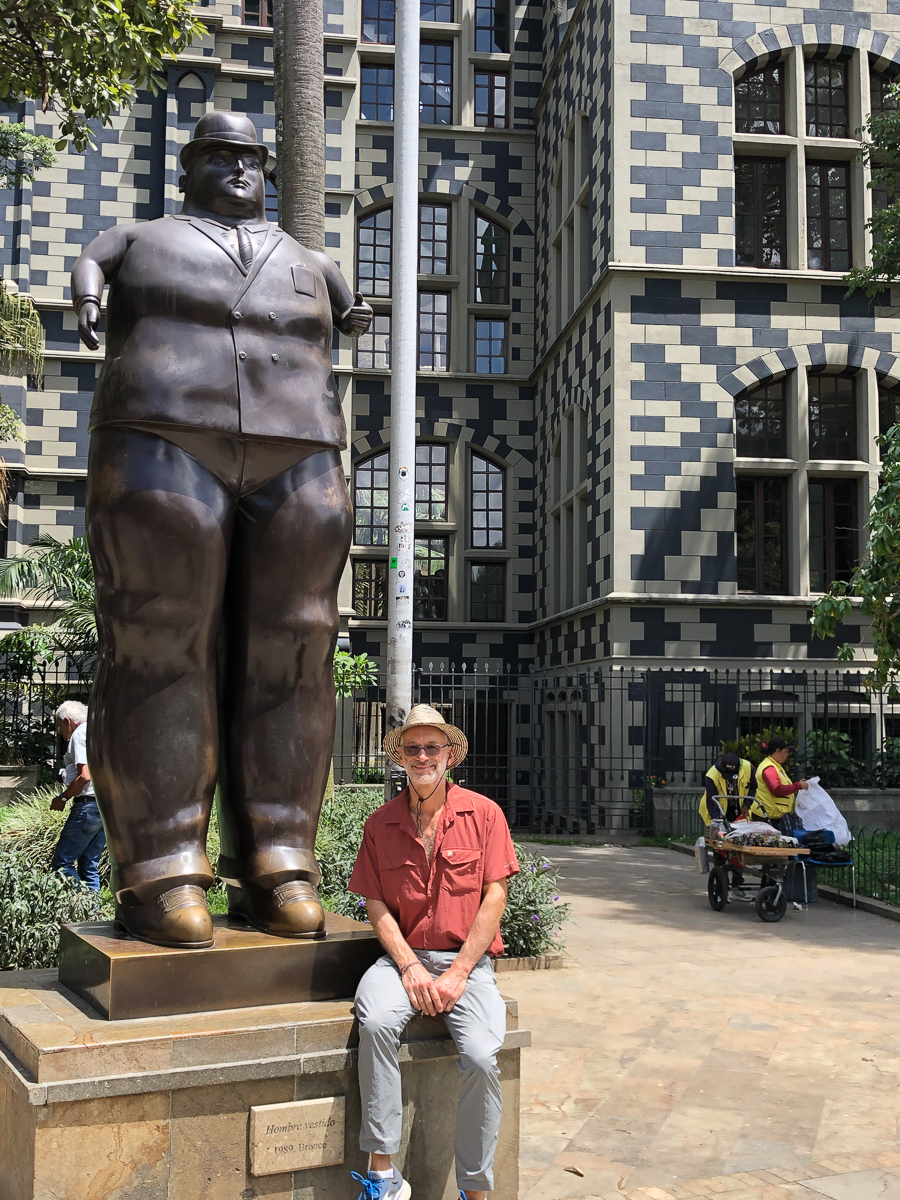
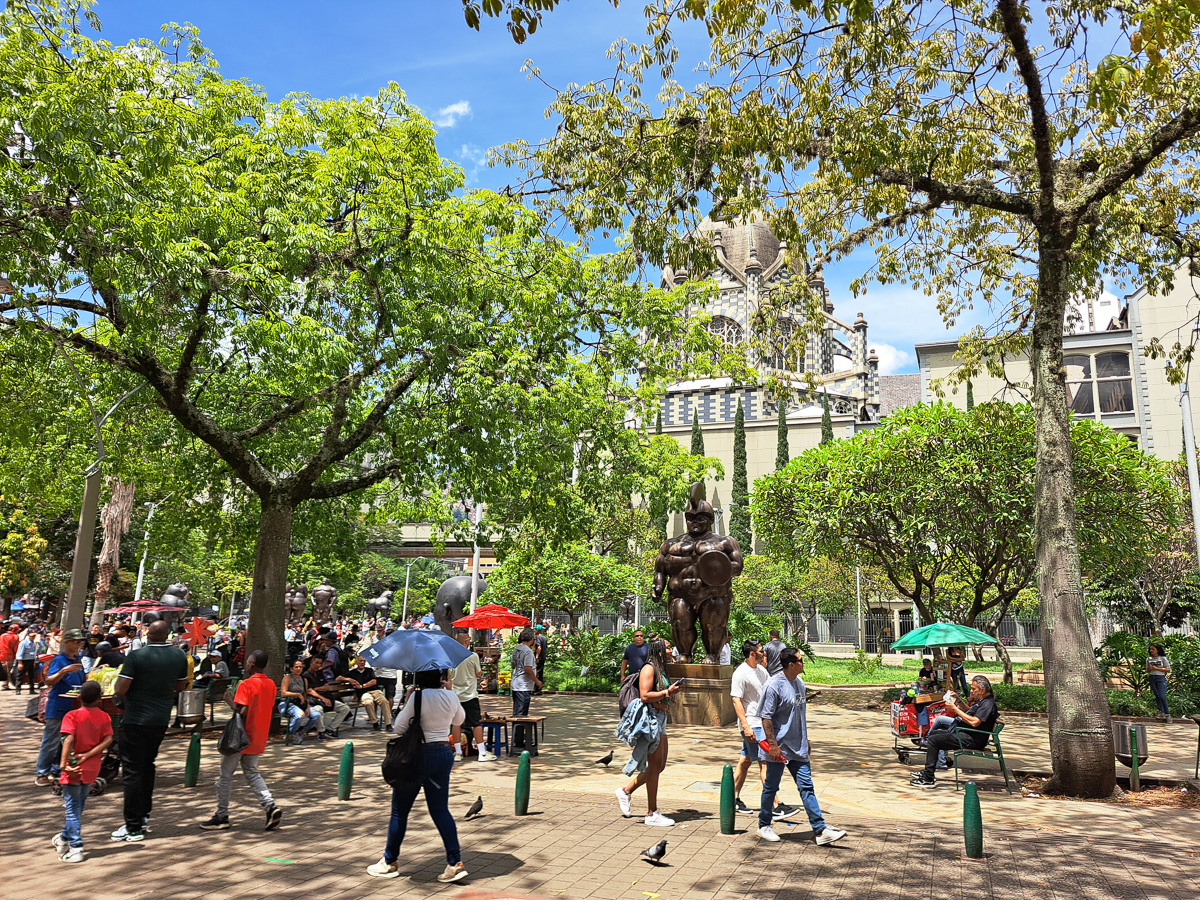
Botero’s sculptures were a short distance away set around a pristine square in front of a museum where tourists pose for pictures. The famous original ‘The Bird’ sculpture bombed in 1995 during a fair killing 27 people and injuring many others is a short distance away set in a another spacious square. It’s replacement The Bird sculpture set along side as another reminder of recent troubles.
This blog only describes our first two thirds of Colombia. Stay tuned for the last bit.
 2silvercyclistsdotnet