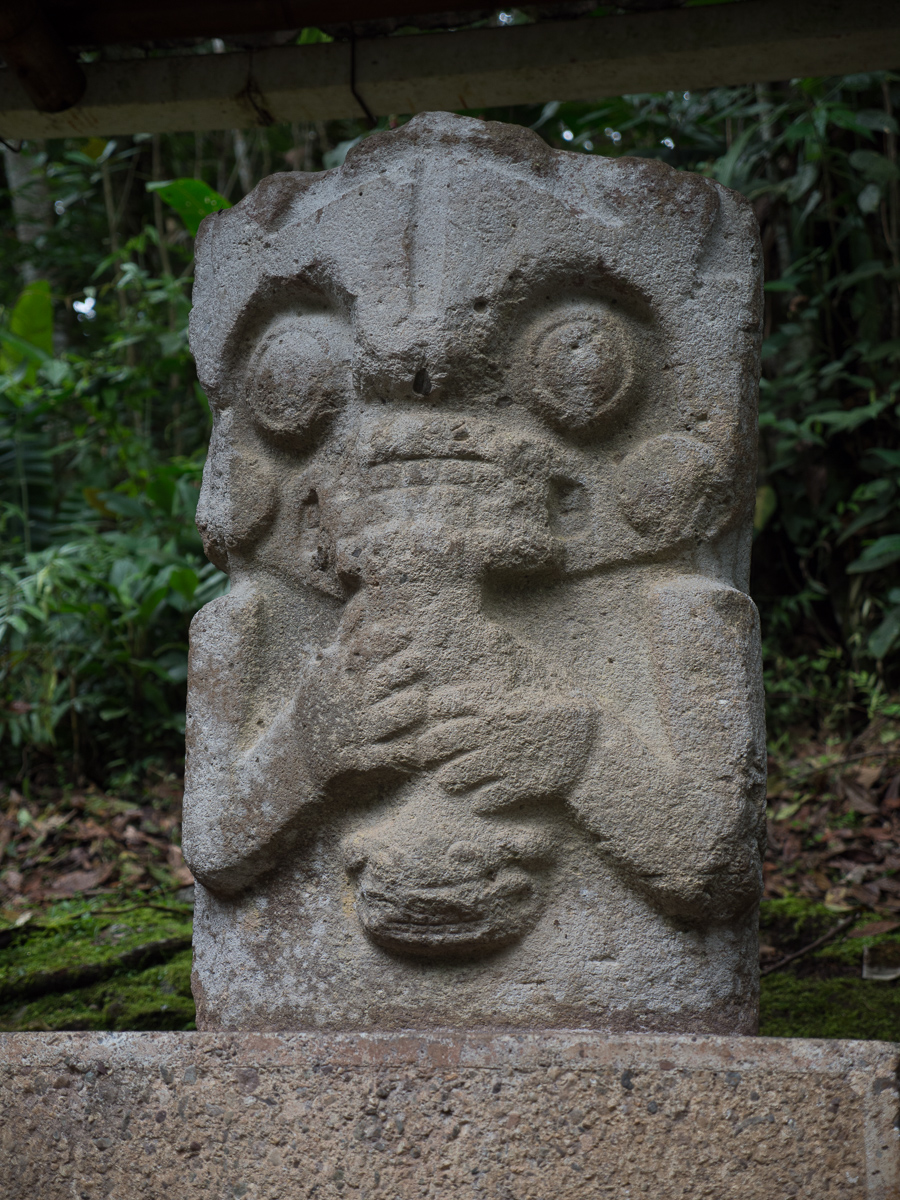
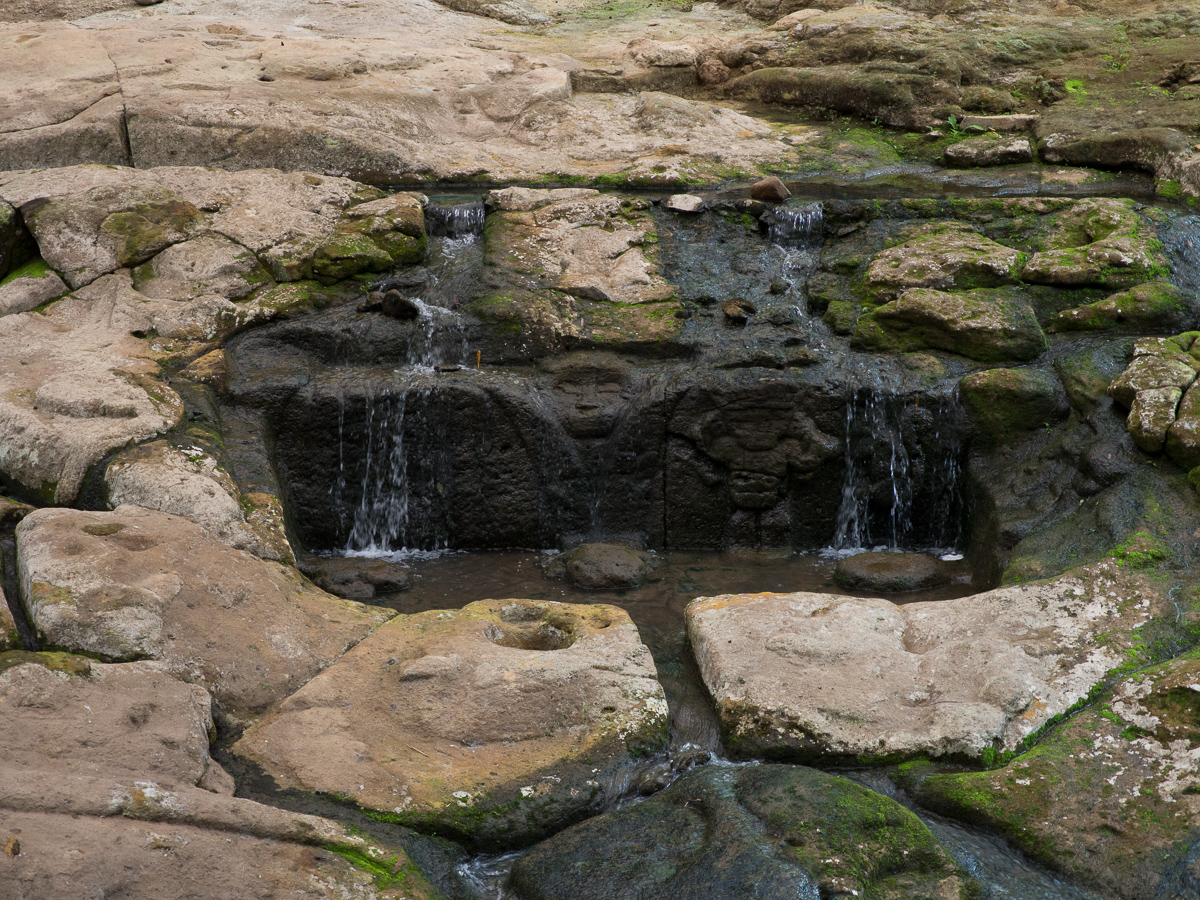
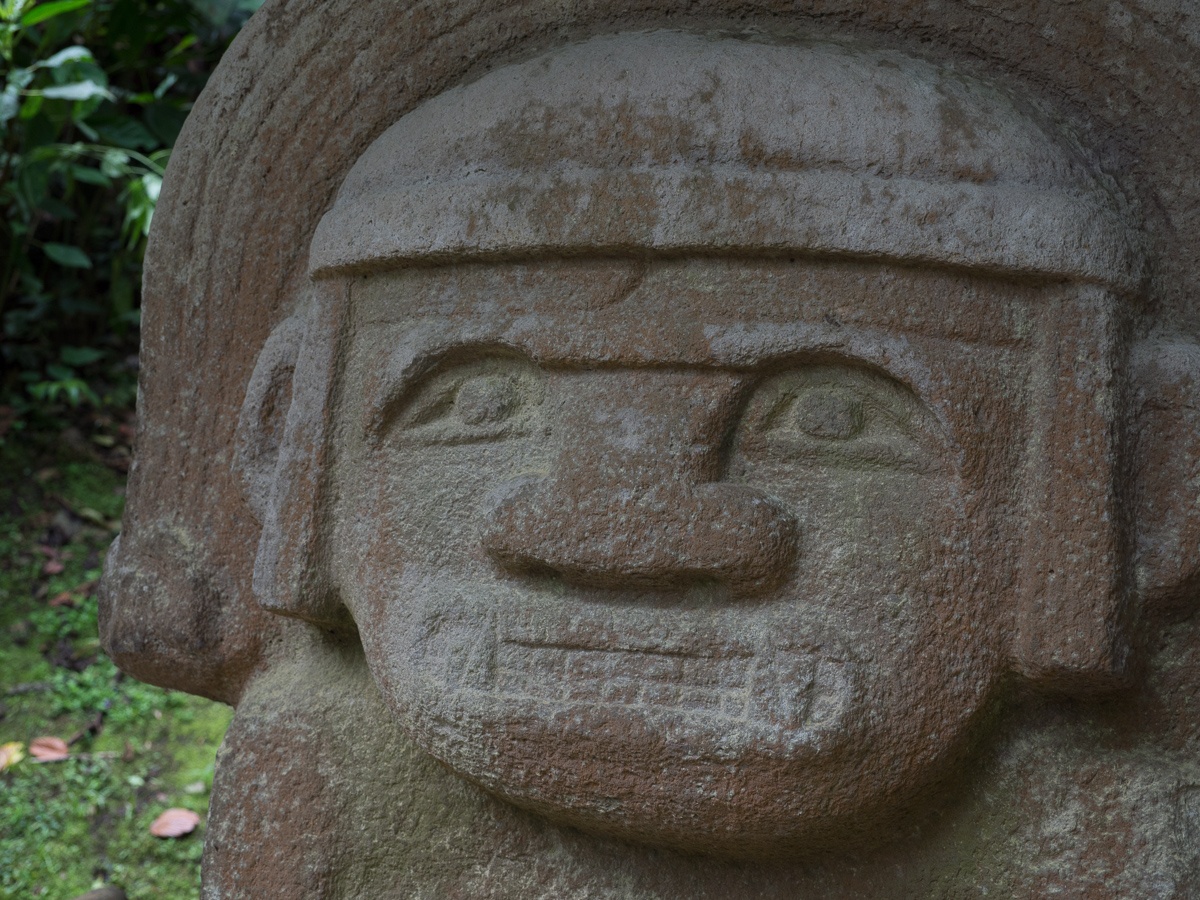
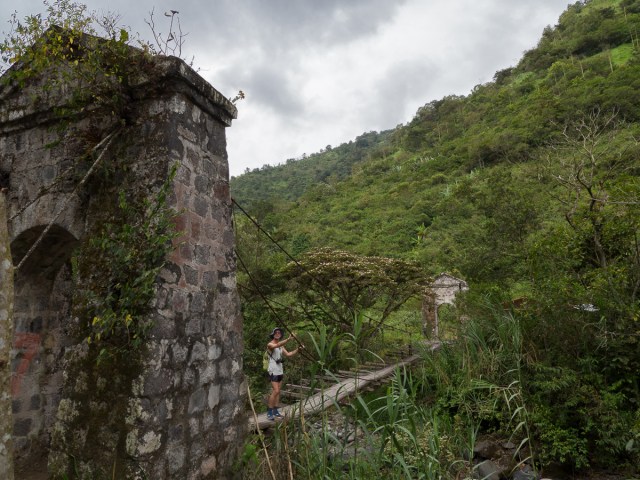
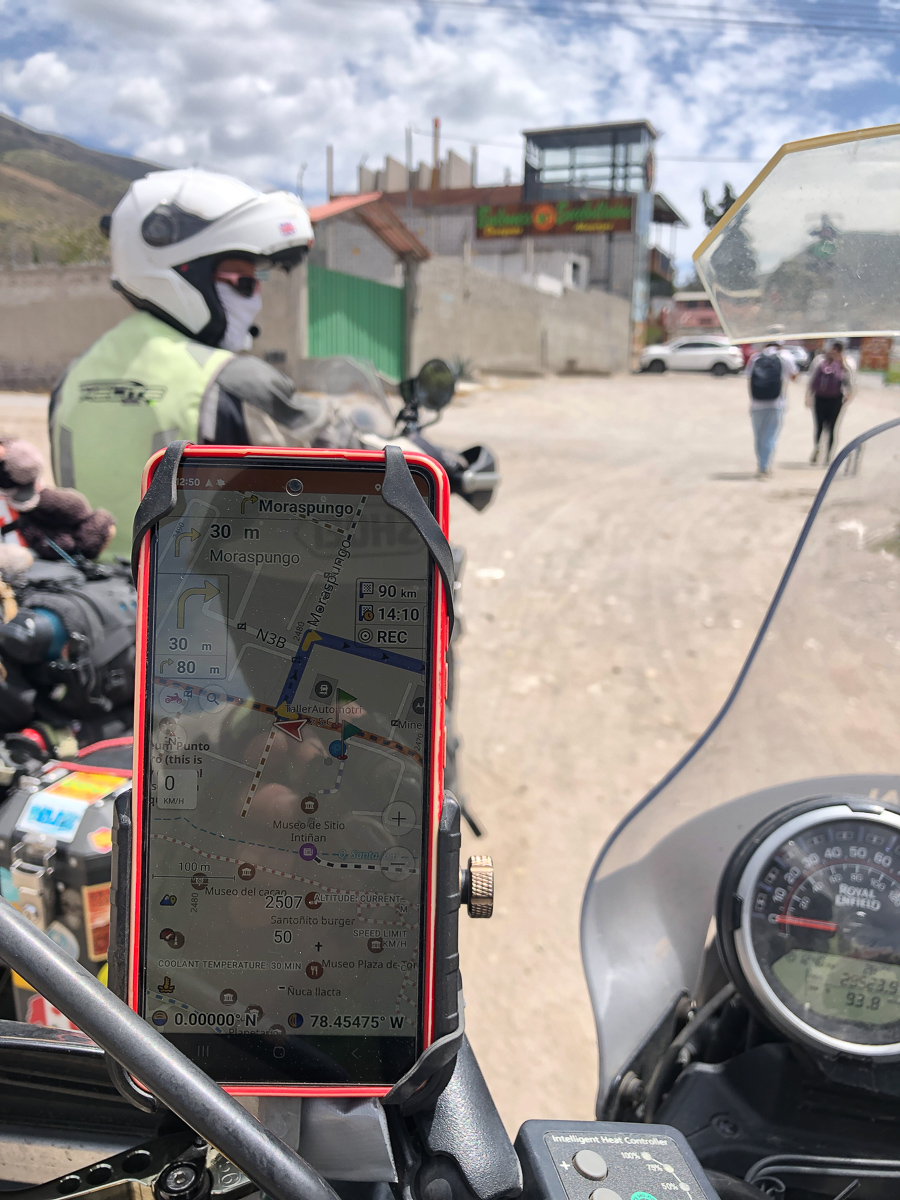
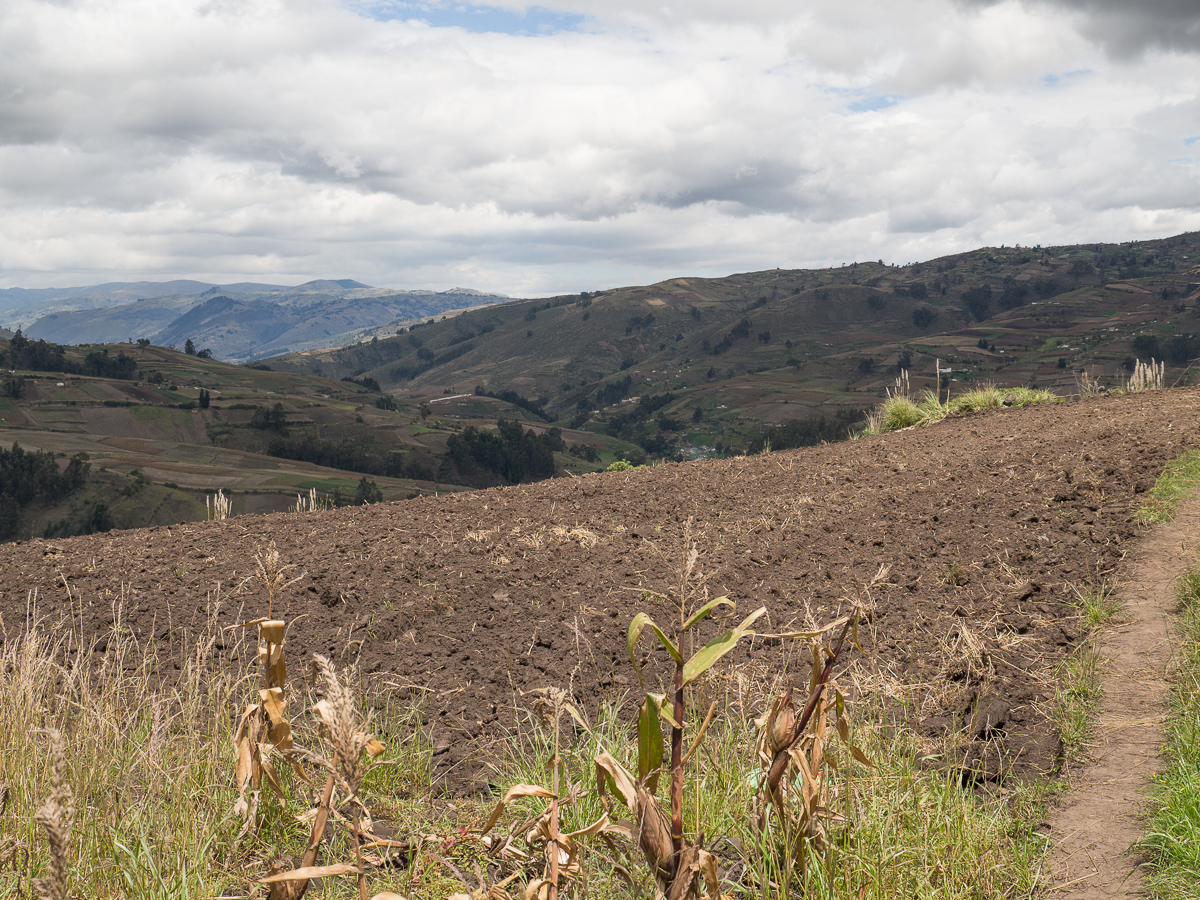
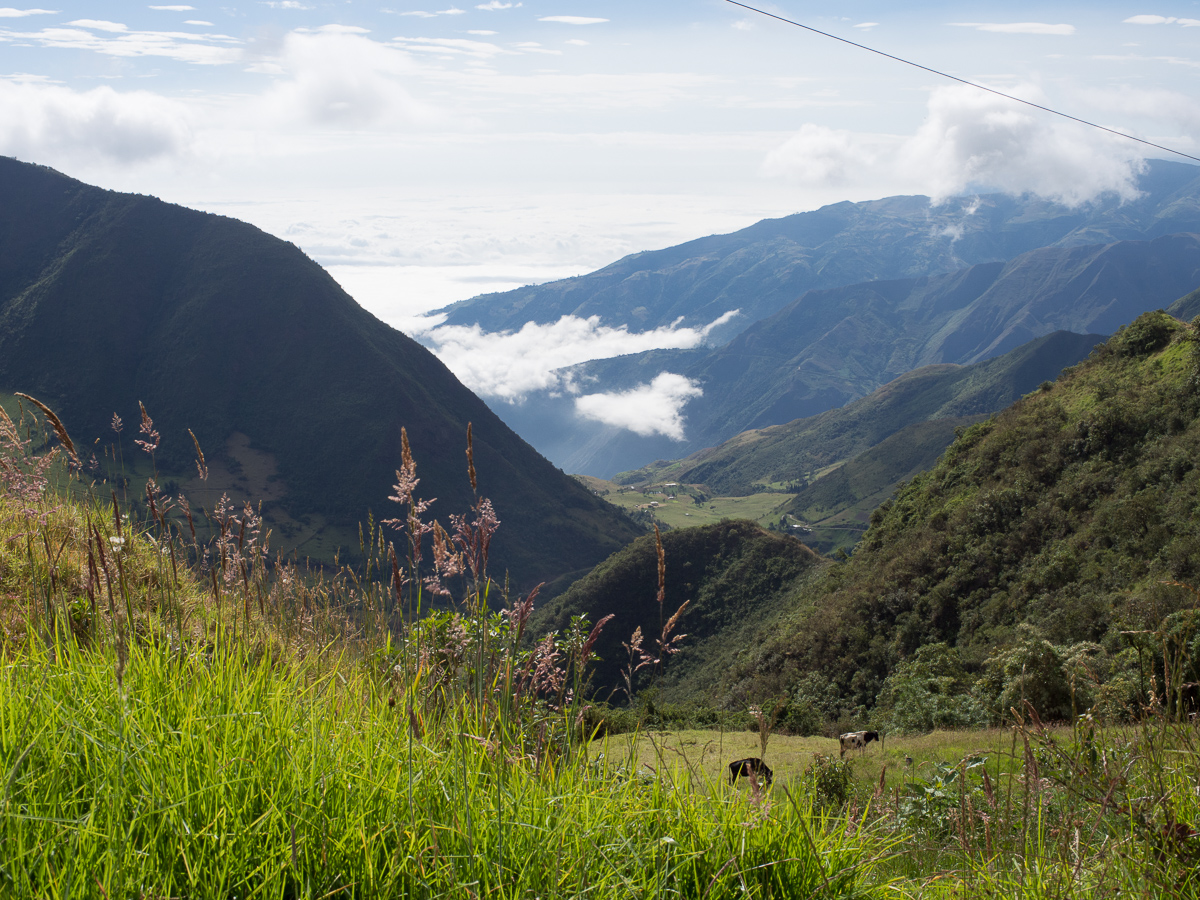
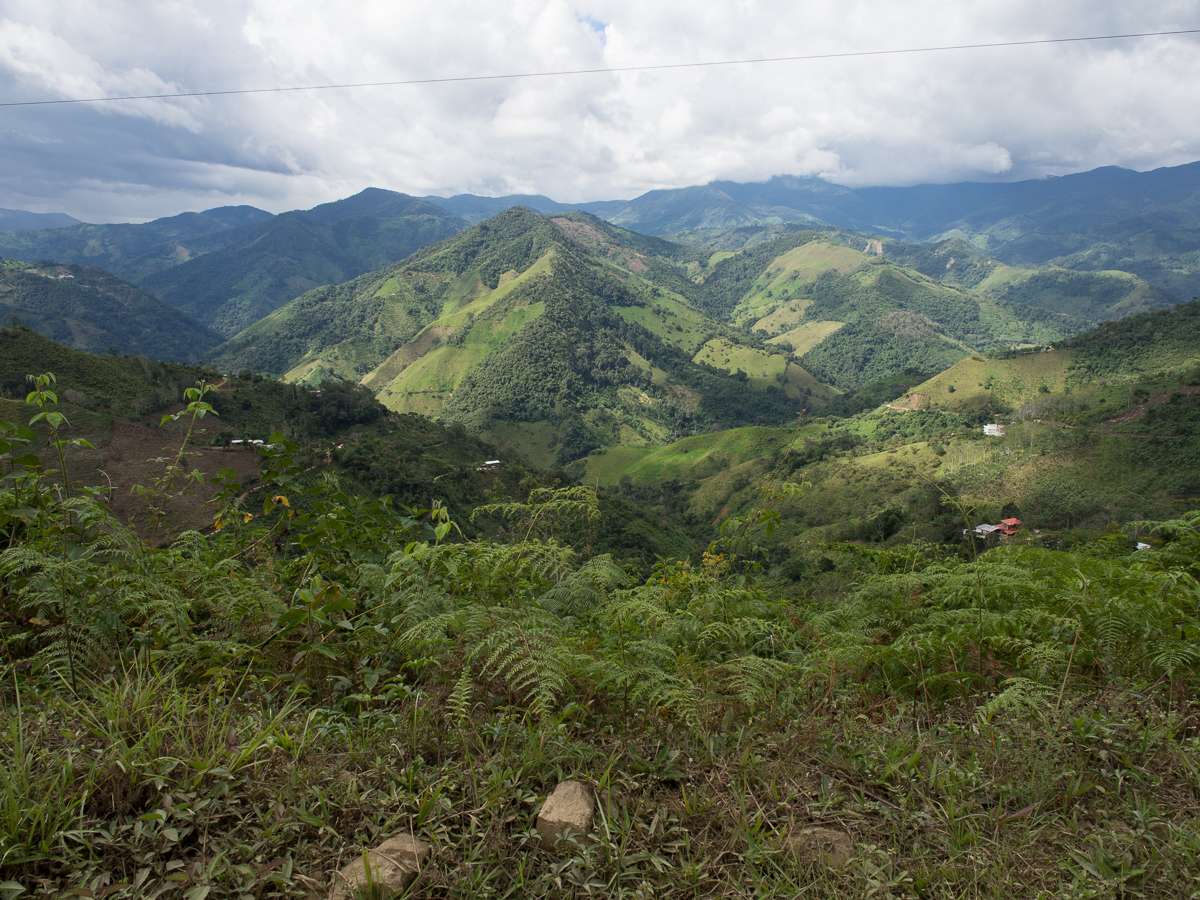
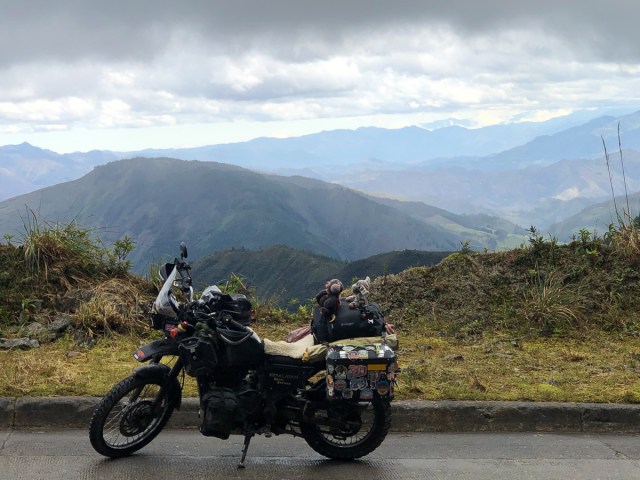
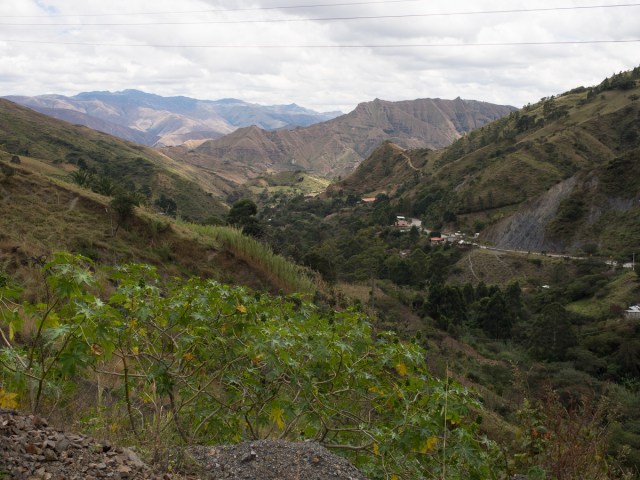
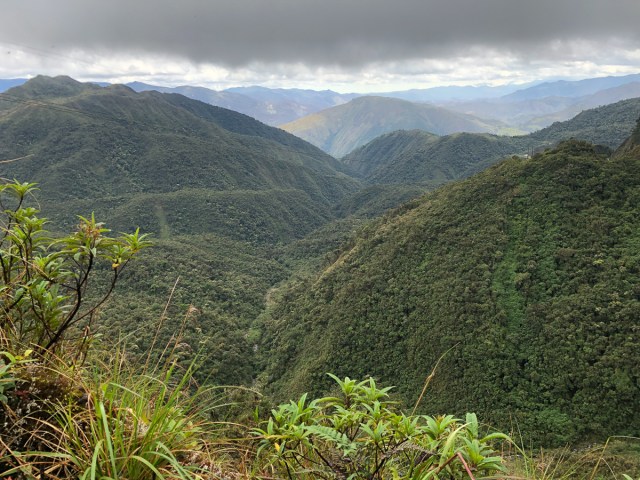
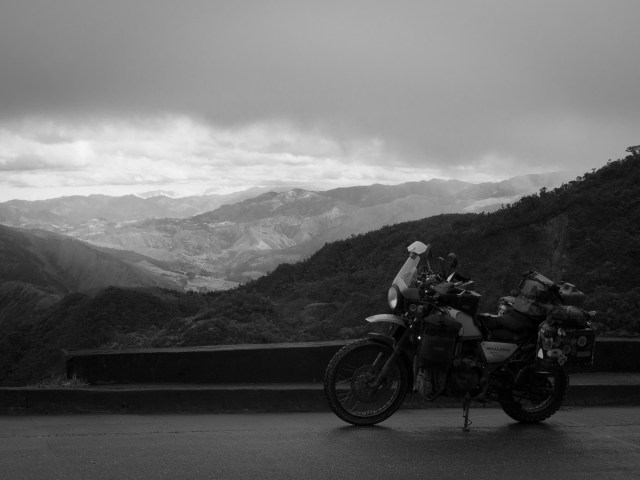
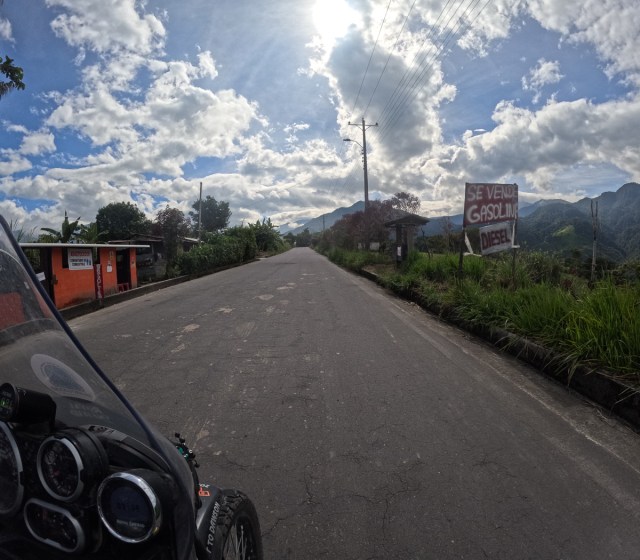
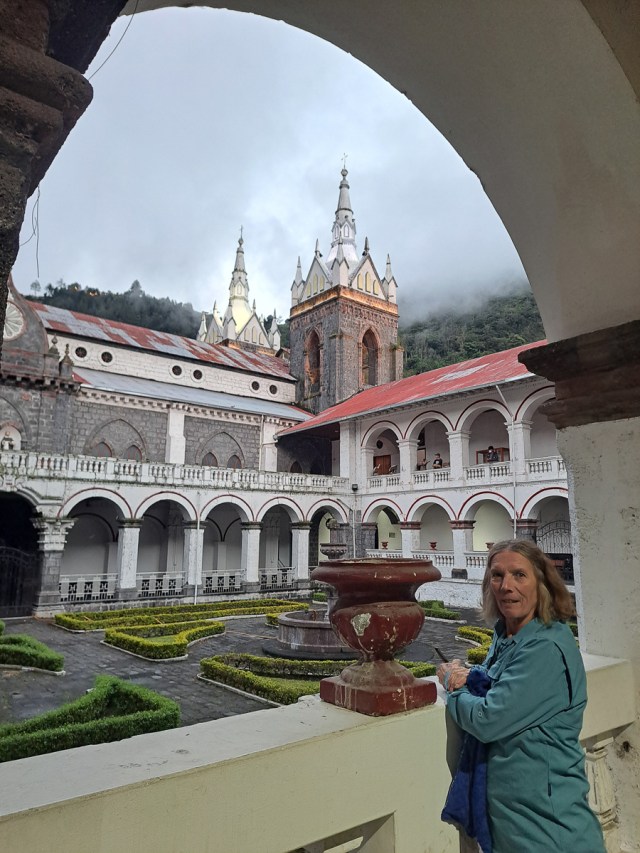
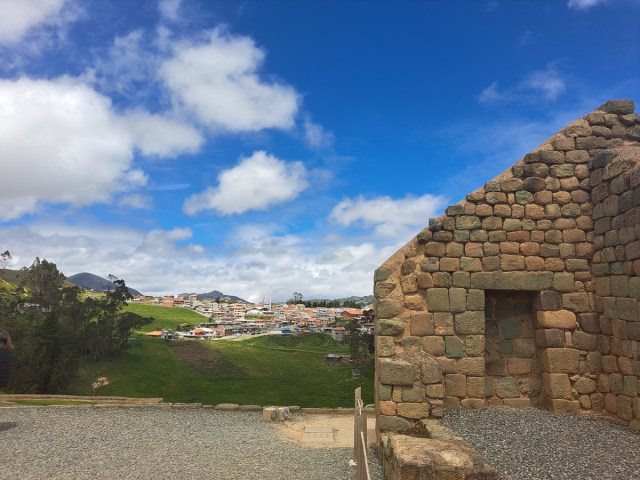
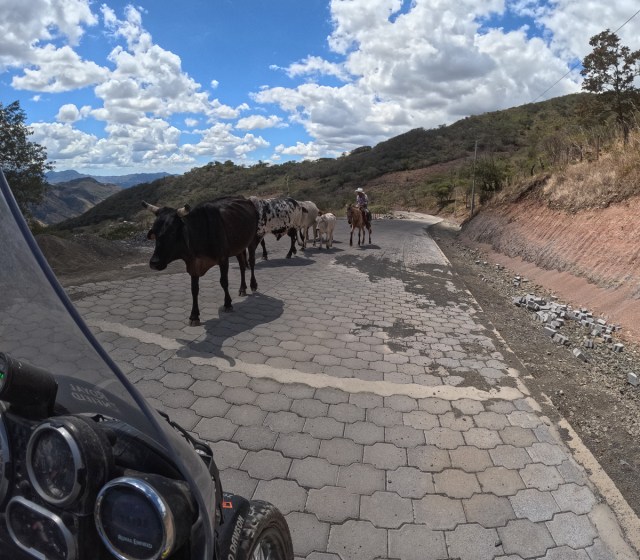
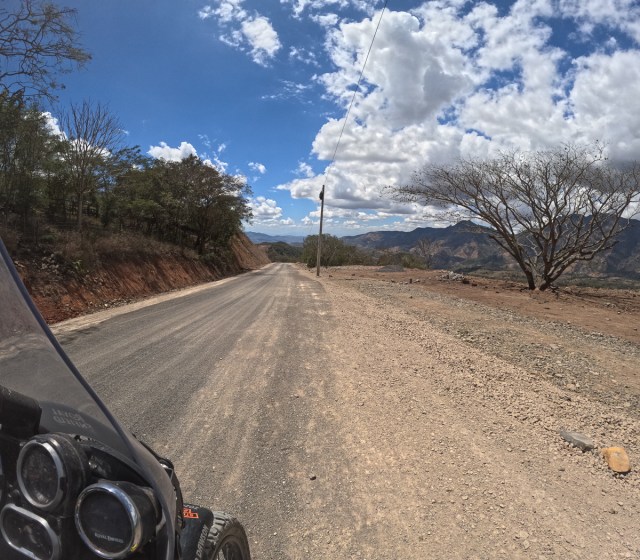
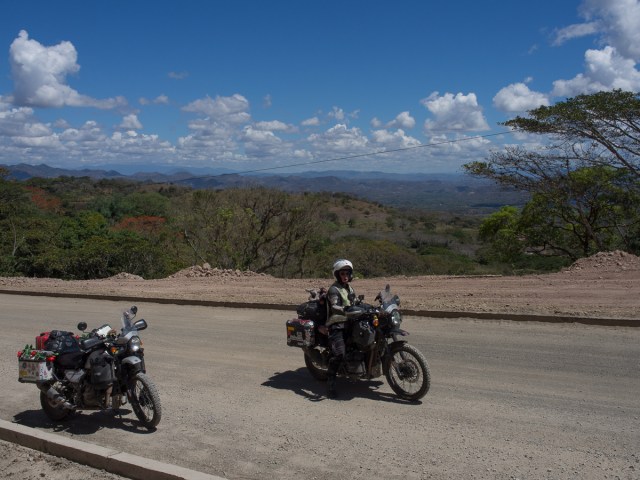
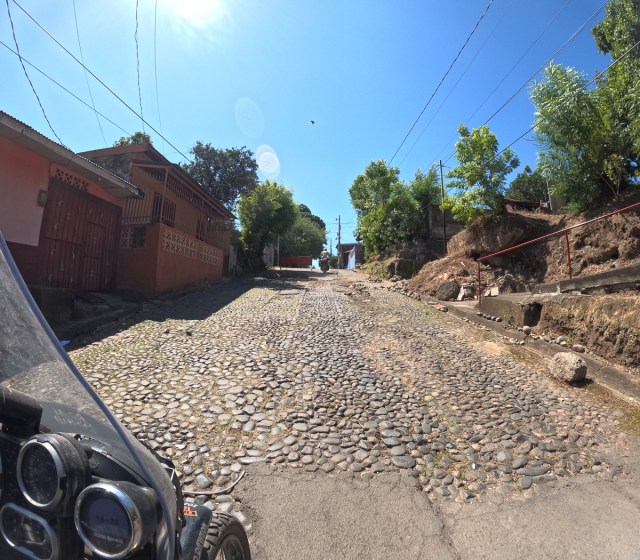
Colombia to Ecuador

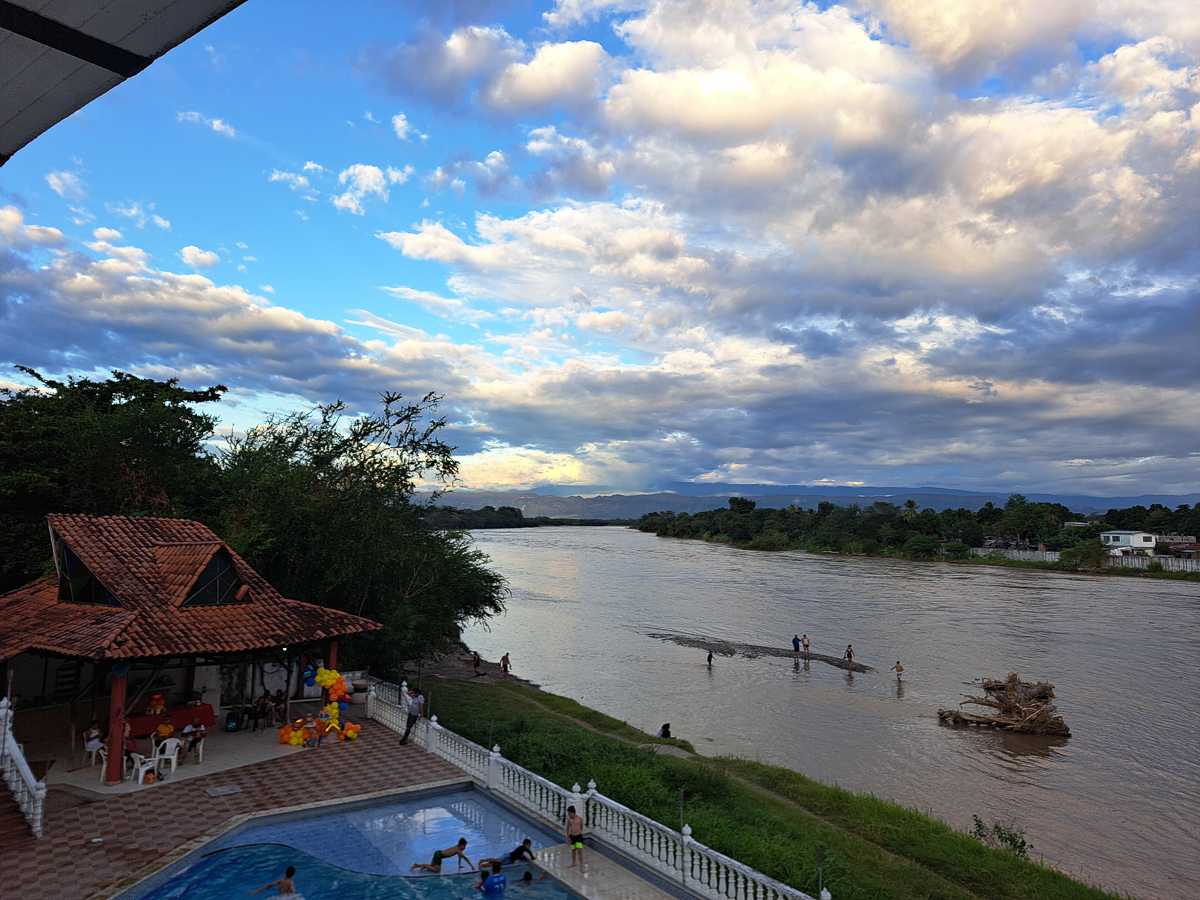
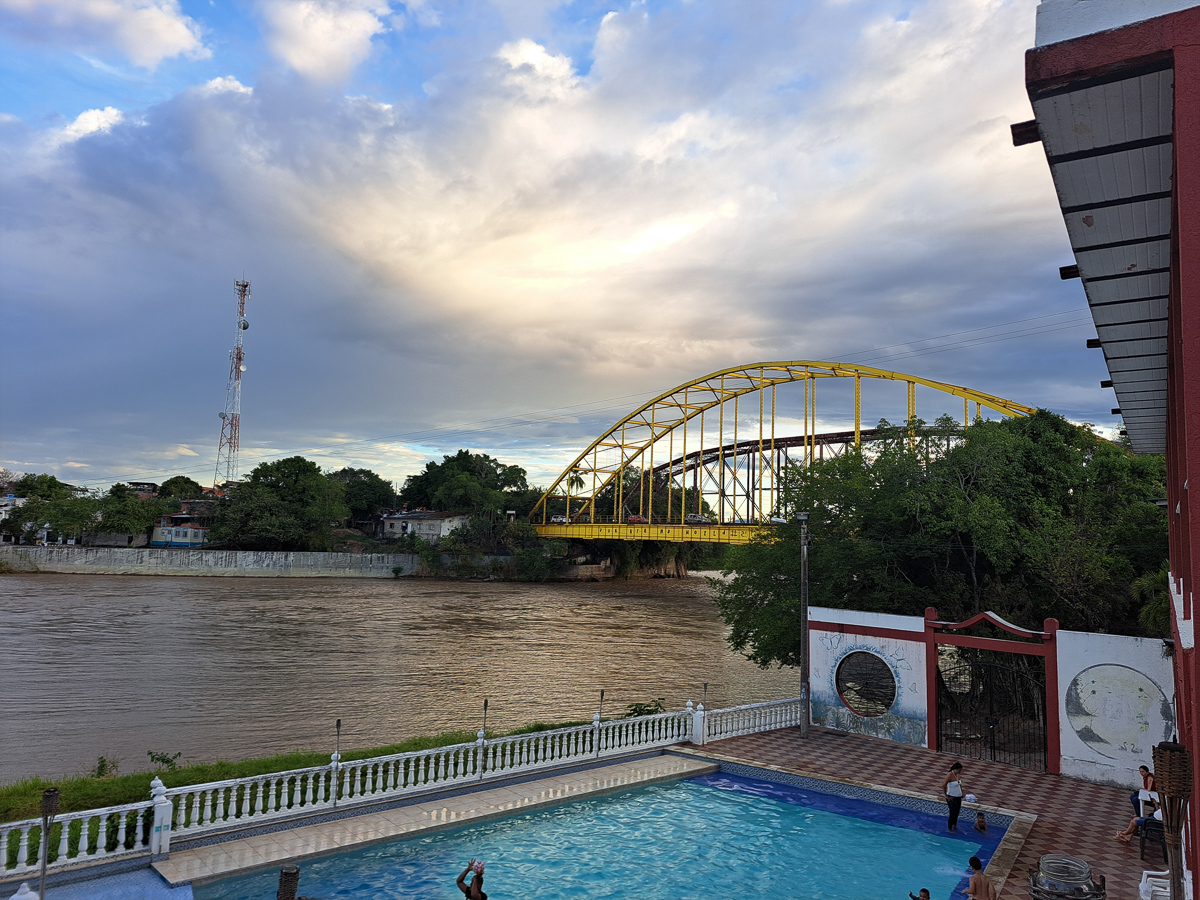
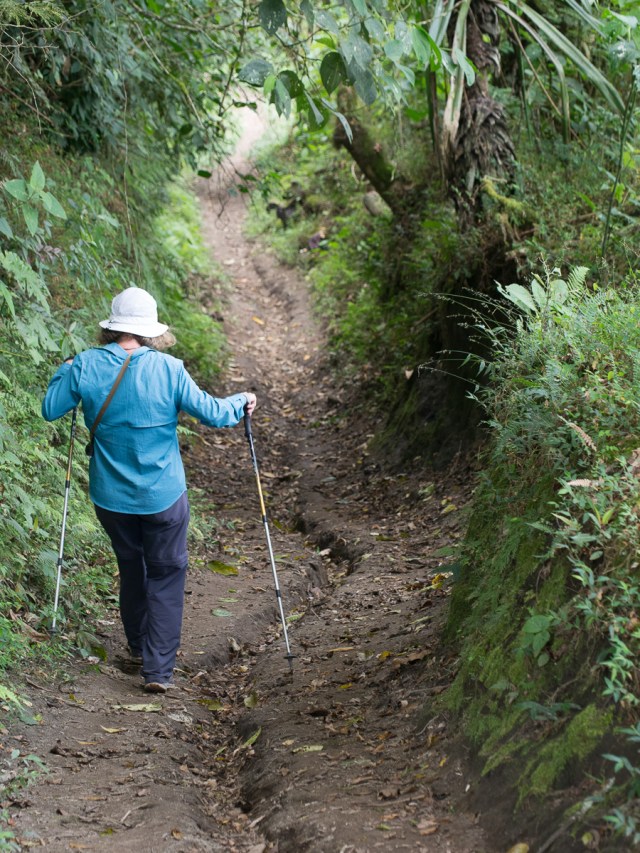
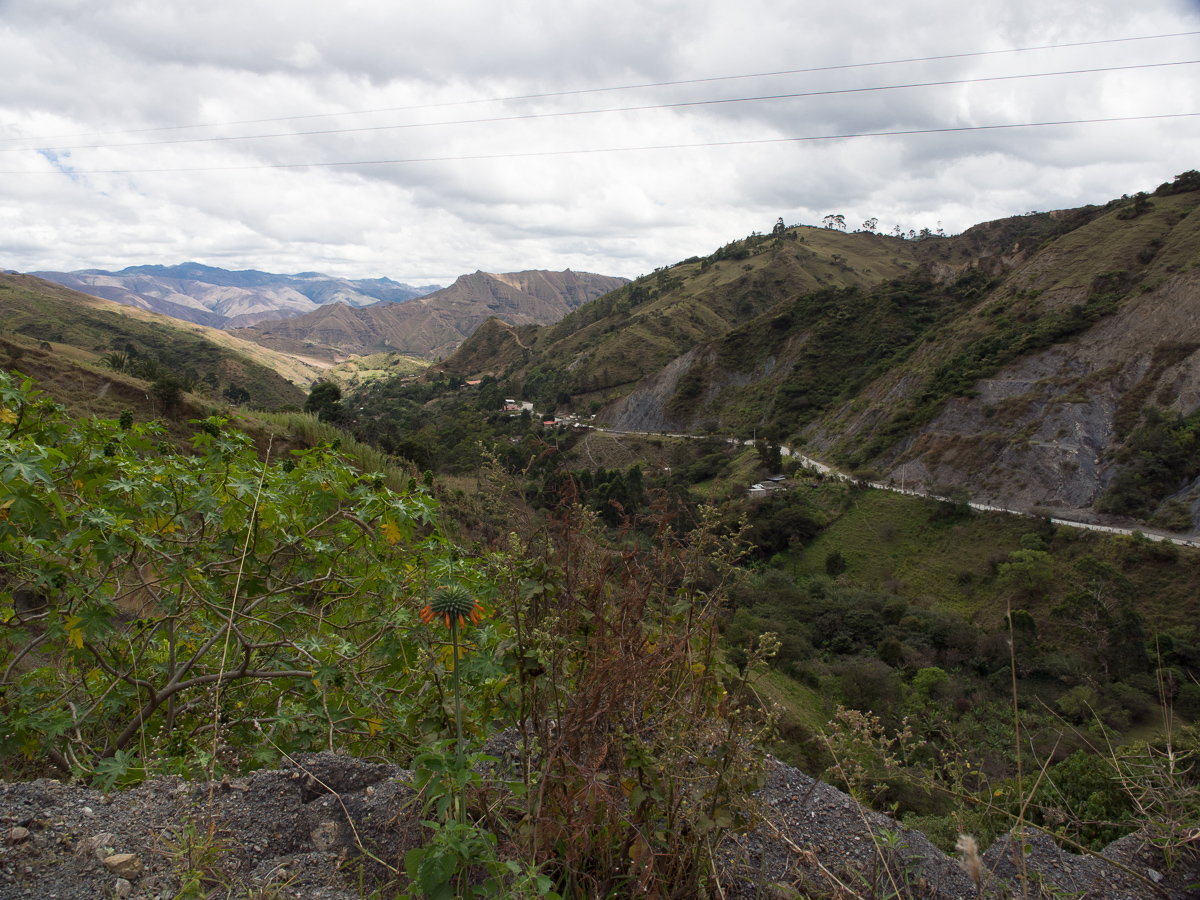
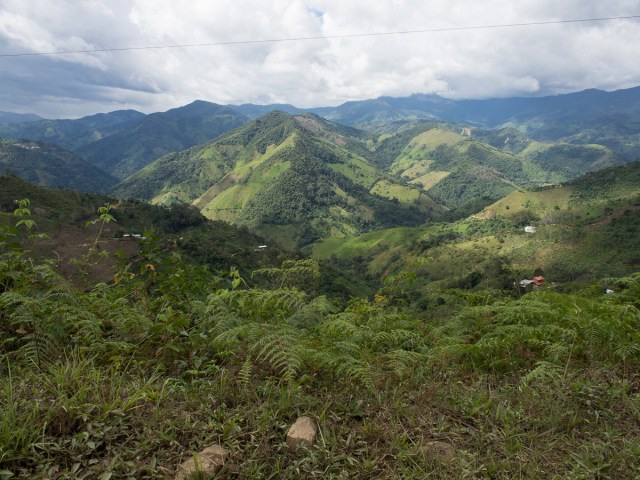
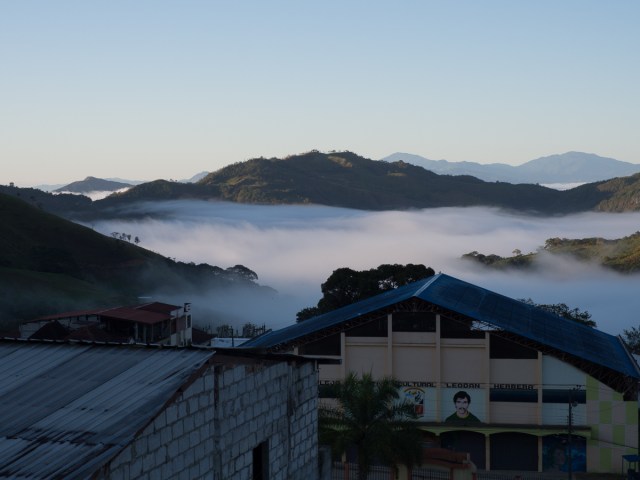
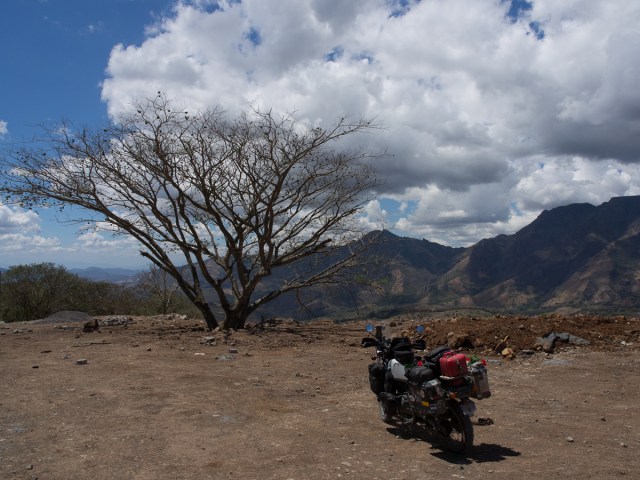
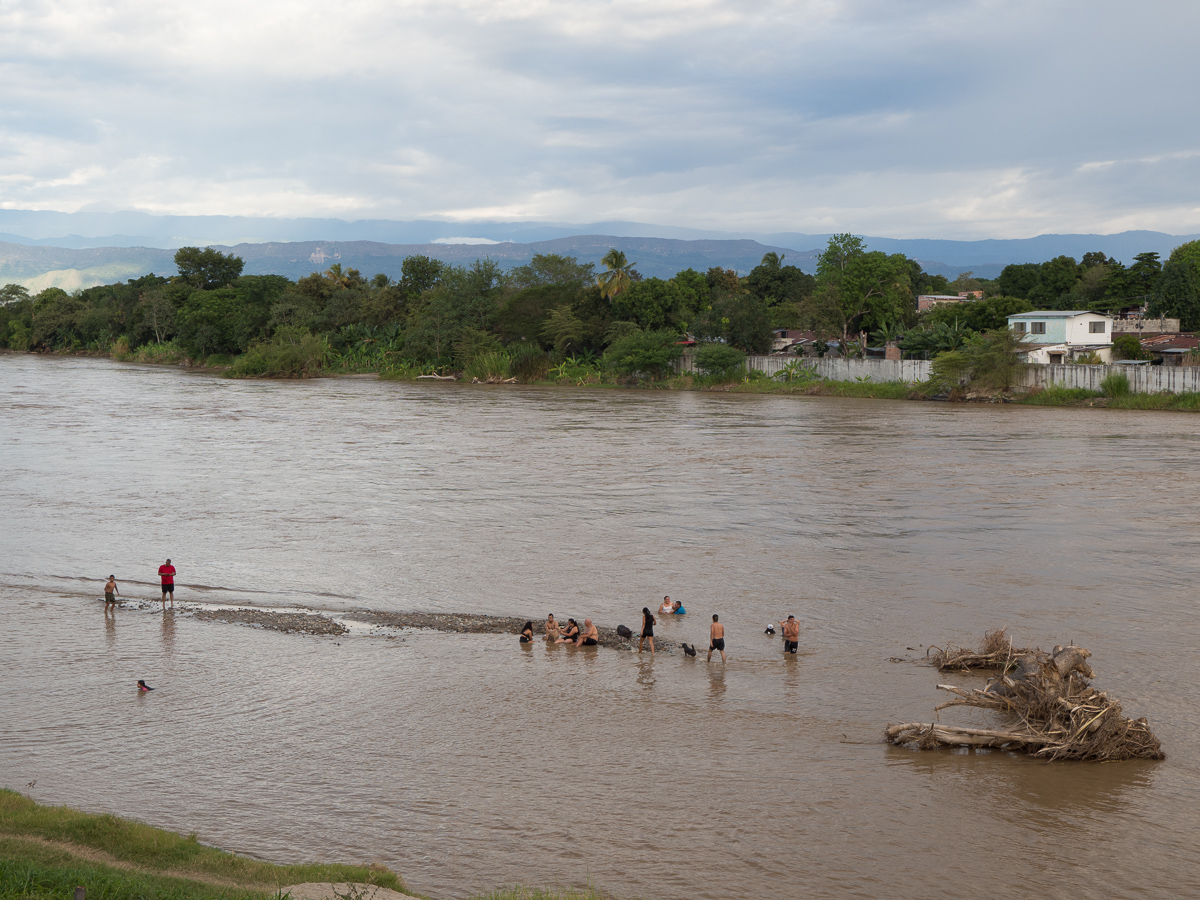
Sweeping back up and round seems to be our Colombian style. From Donkey Sunrise we headed back towards Bogota to cross the Cordillera Oriental (eastern mountain range) on our way down to Villaviejo to see the Tatacoa ’desert’.  We knew we wouldn’t make it in a day so stopped in Saldaña with beautiful views of the river.
Setting off to complete our route to Villaviejo proved interesting as the hotelier was telling us the road was blocked. ‘The rice growers are protesting and have blocked the road,’ he said.  We still had a fair way to go so thought we’d set off and see how far we could get.  He hung around looking at his phone and strolled over to show us that it was possible to get through using the back roads but still didn’t mention, or we didn’t understand, that the road was blocked immediately – barely three hundred metres away.  We set off crossed the bridge and there it was.  Tractors and lorries blocking the road!

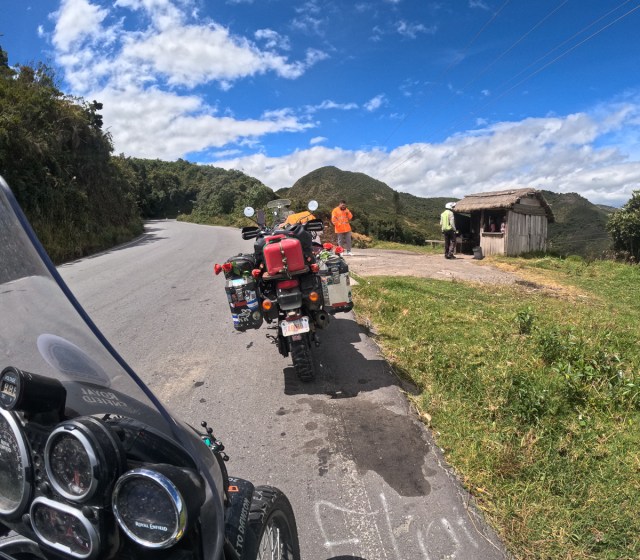
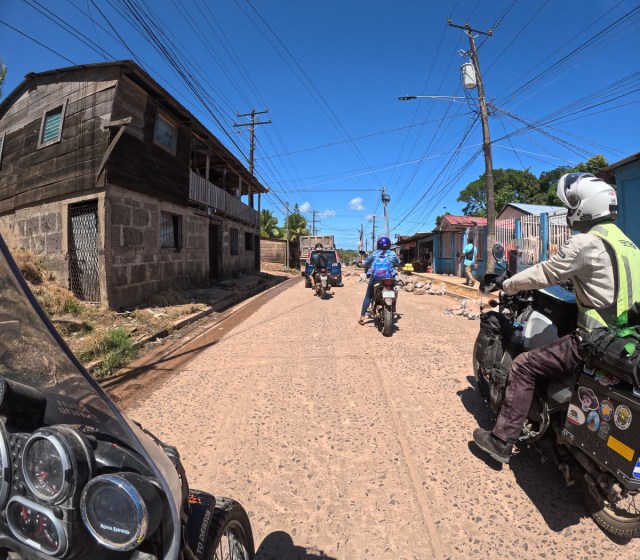
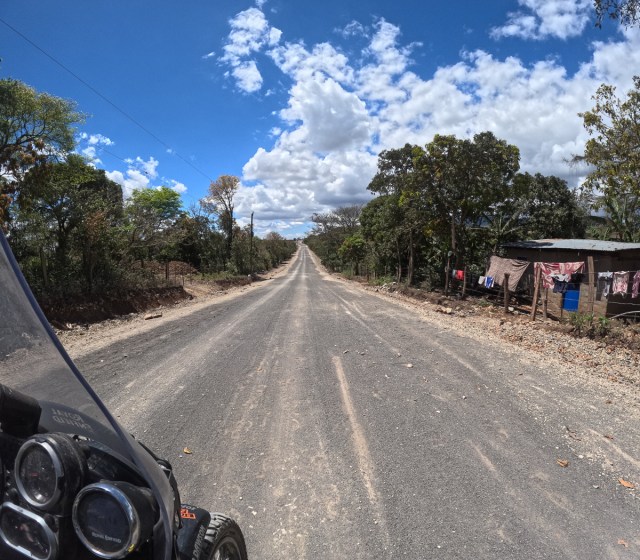
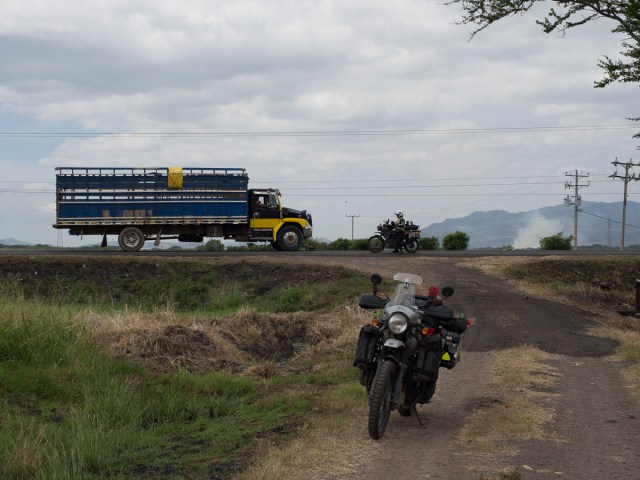
We snuck behind the lorry parked to our right and thought we’d cracked it as we were following a few other vehicles.  The tarmac soon gave way to dirt but it wasn’t a bad road.  After a few miles an approaching moto was talking to each driver.  He told us we could take the next left.  ‘Motos could get through but not four wheels,’ he said.  The lane was a little sandy in places but ahead of one stationary truck we could see a few vehicles passing on the highway.  All looked good.  Approaching the end we started to notice something strange in front of the parked truck. Tractors had dumped a whole pile of mud over a metre high blocking the entire width of the road. One end was smoother where light bikes had nipped over and gone.  Us, on our Hims, nearing 300kg weren’t going to nip over the loose dirt as demonstrated by a local, skinny old man on his 90cc step-through.

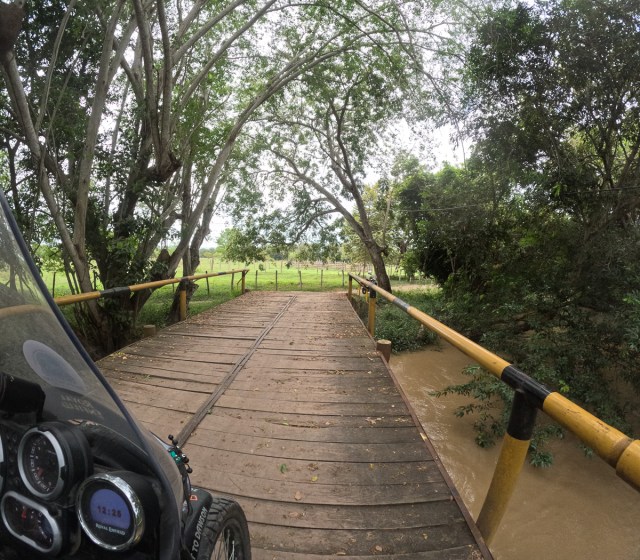
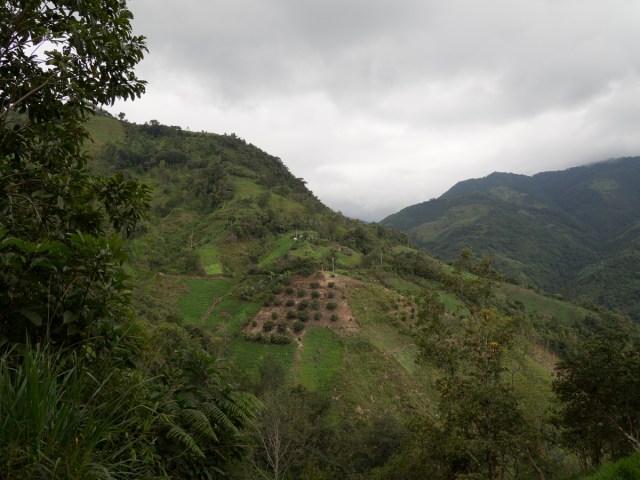
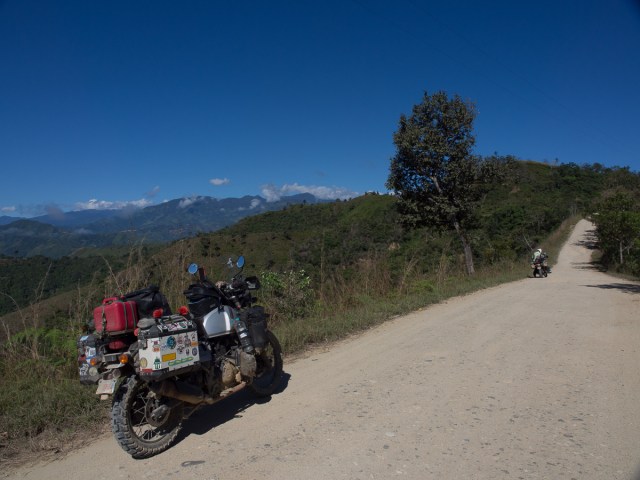
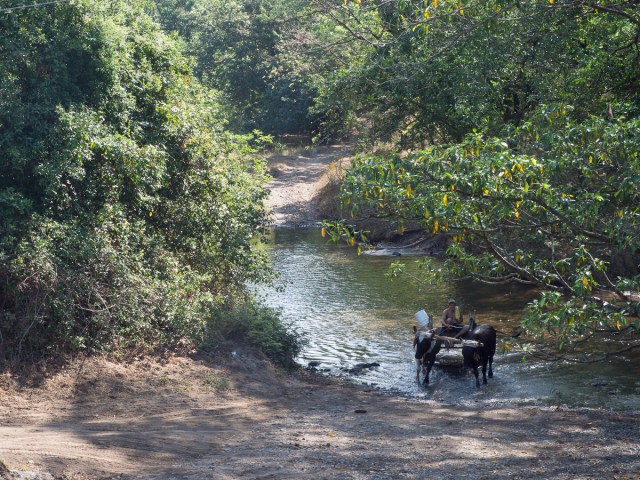
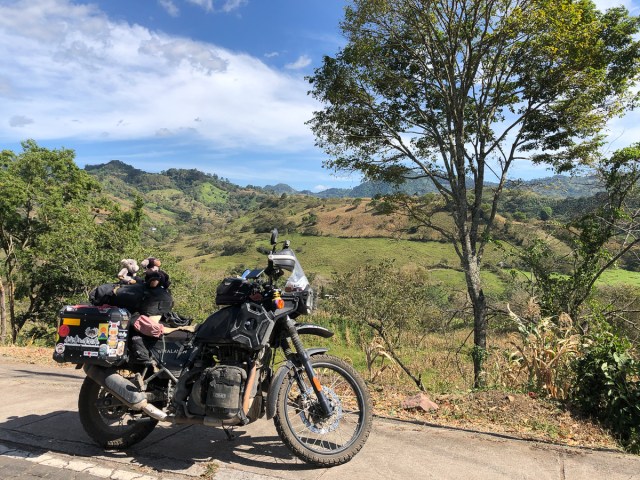
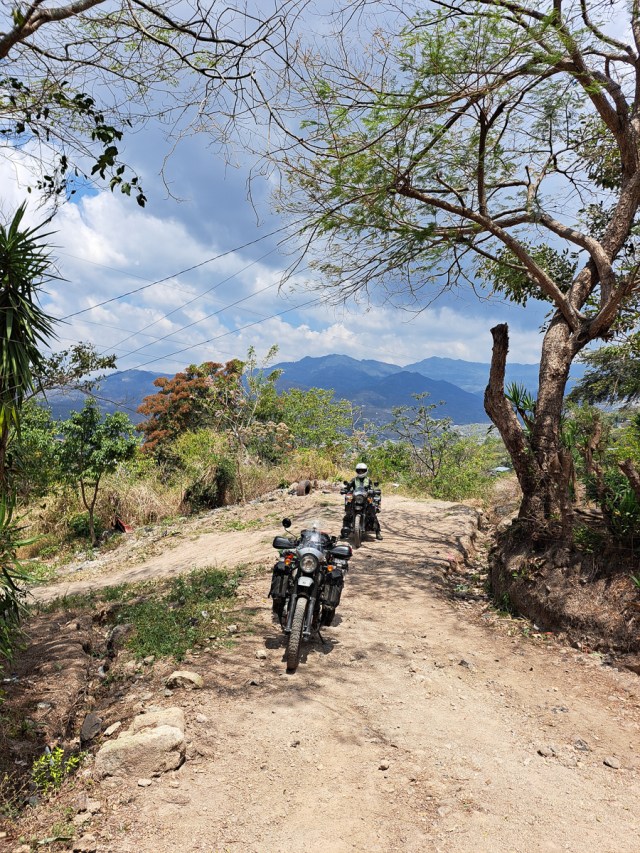
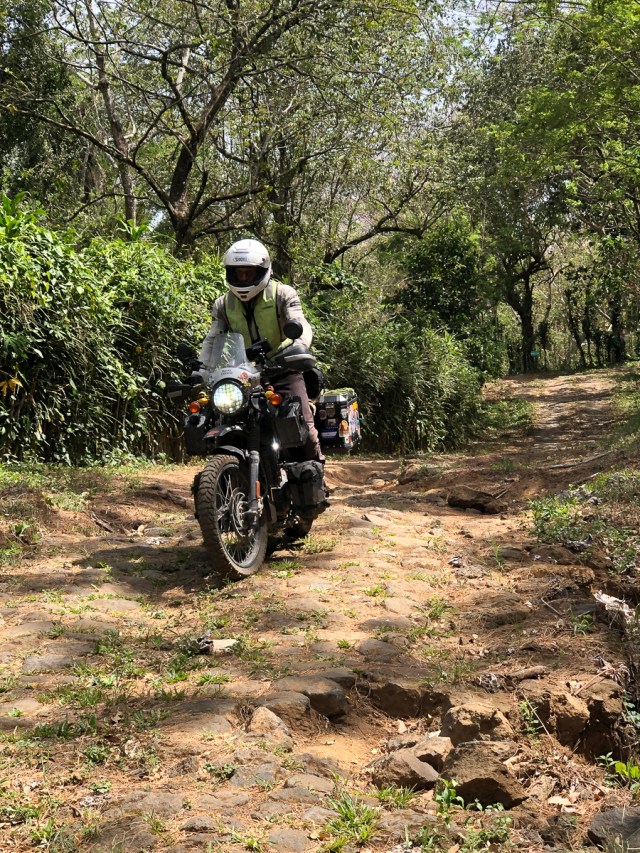
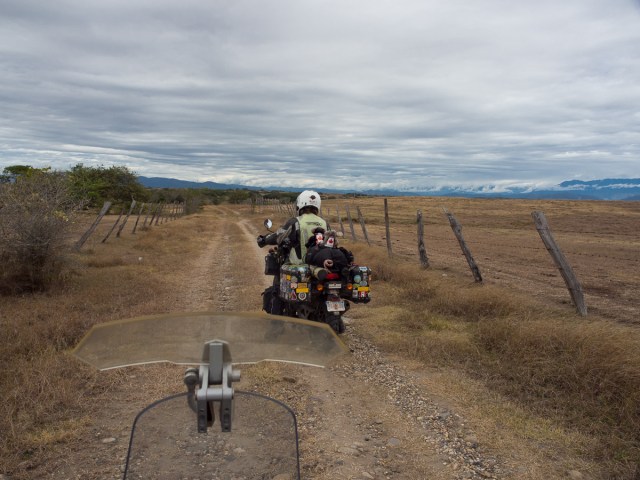
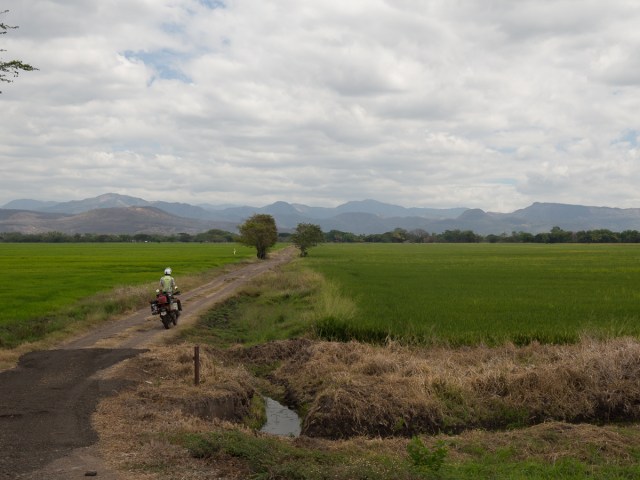
We turned back and set off again. This time heading off on a more remote track breaking away from the bigger dirt road.  It was stony, rutted in places – a farmers track with beautiful views which crossed a stream and did, according to the SatNav, seem to make it back to the highway.  None of the other wiggle-arounders seemed to share our route, but it was on our GPS as – something.  Surely no one would bother to block this?  One hour later having covered 8km we were speeding along the highway again.

Our loss of time didn’t matter as our destination wasn’t too far away and we could cut off a chunk by taking the ferry across the river.  We found our way through the town and down towards the river Magdalena.  A big fast flowing river which unbeknownst to us was in spate. The water was swelling up over the nearby fields and flooded the route down to the moto ferry.  A visible but distant local signalled with crossed forearms that the ferry was cancelled.  Try the car ferry that’s back up the road a bit another local suggested.  That was also out of action.  A long loop to a bridge at Nieve then.  An hour and a half later we arrived at our destination, Villaviejo.
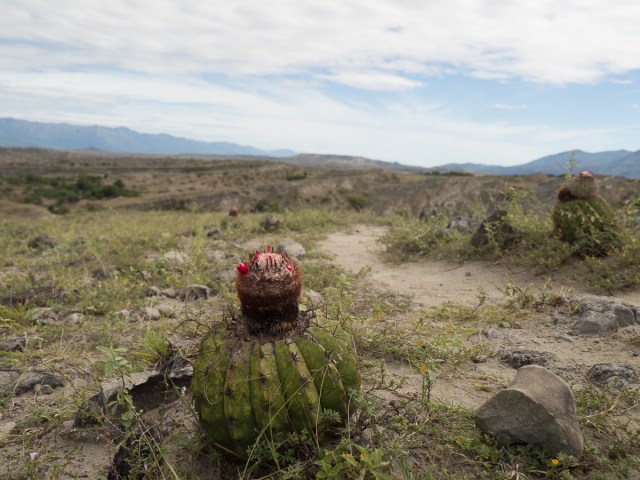
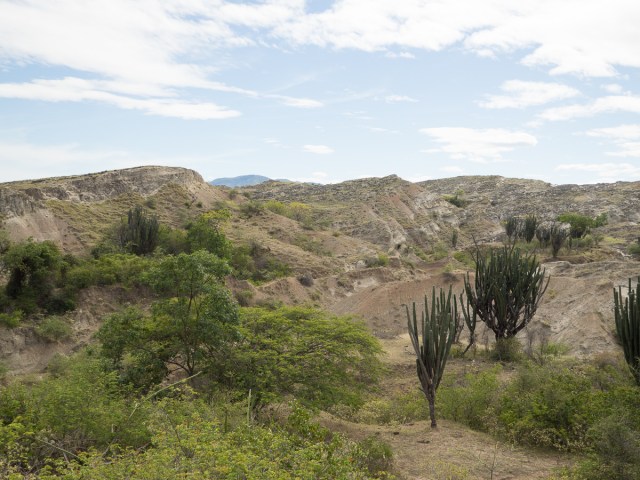
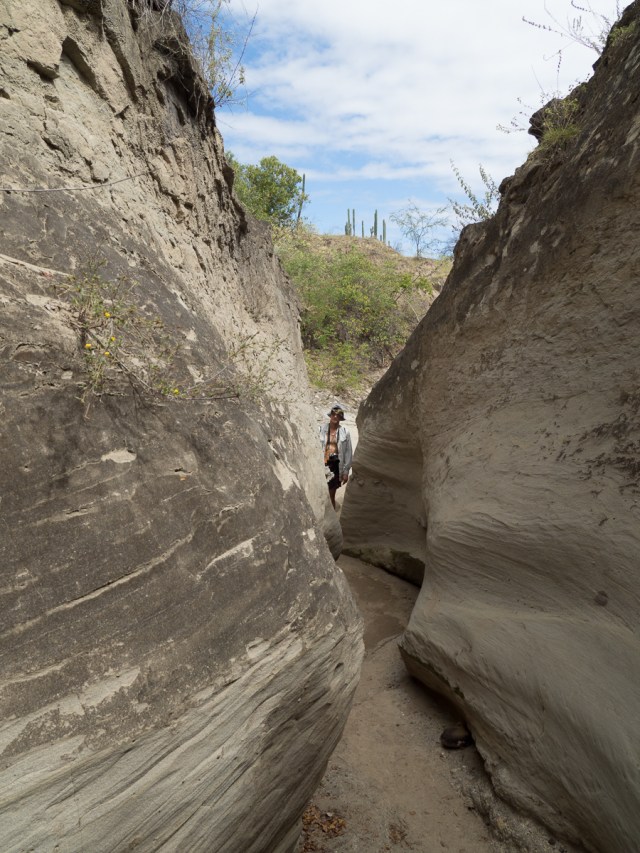
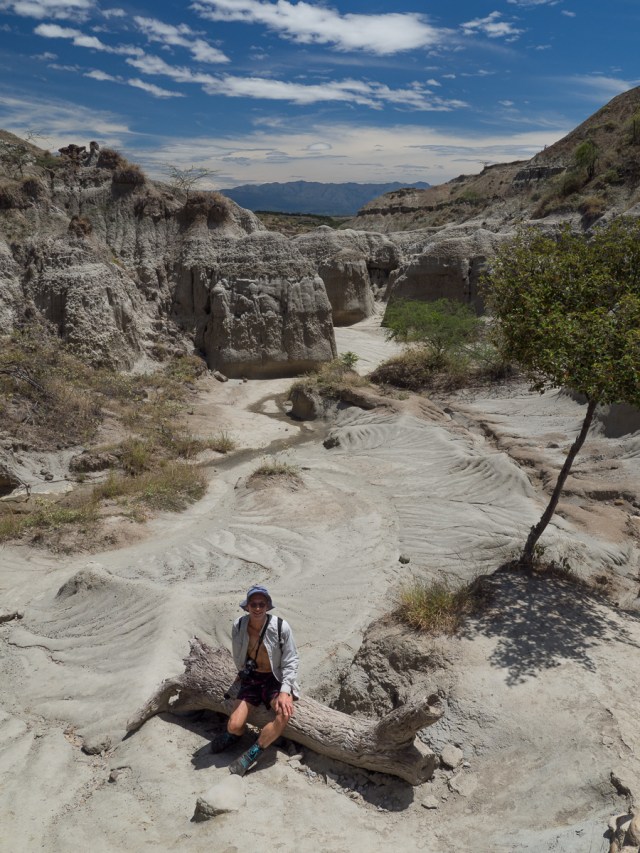
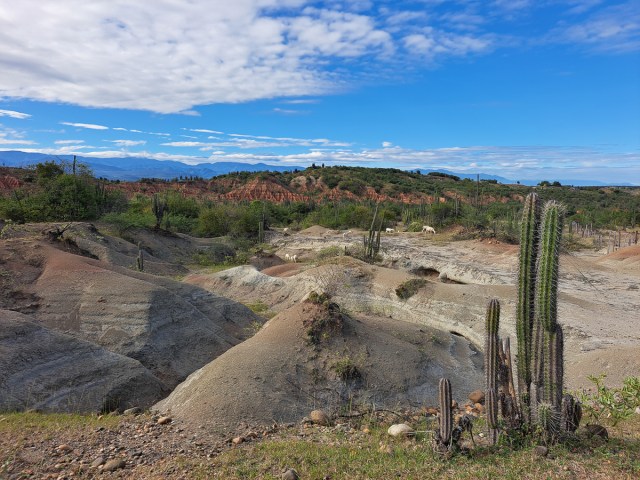
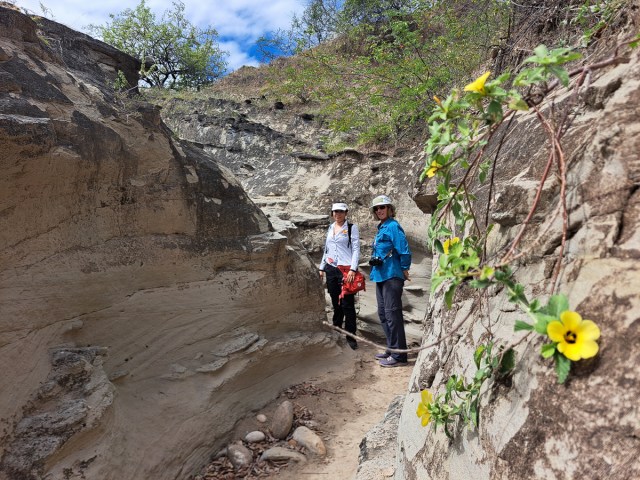
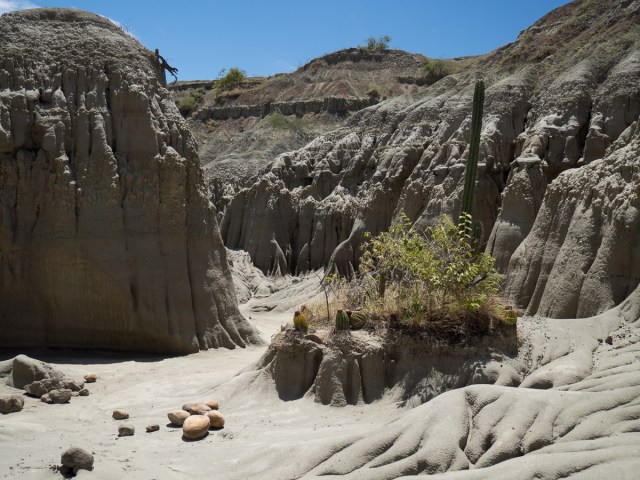
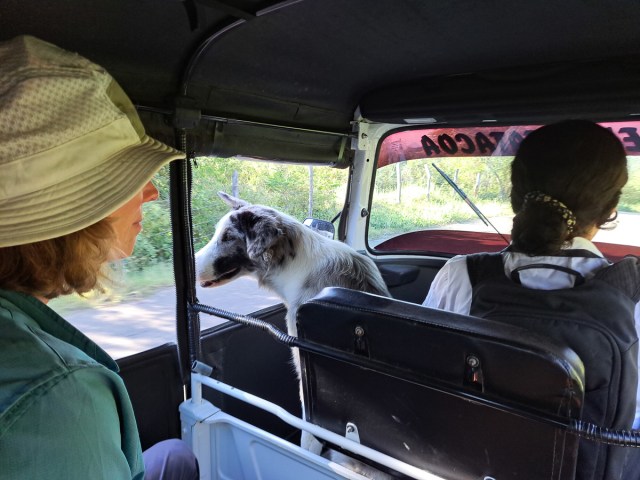
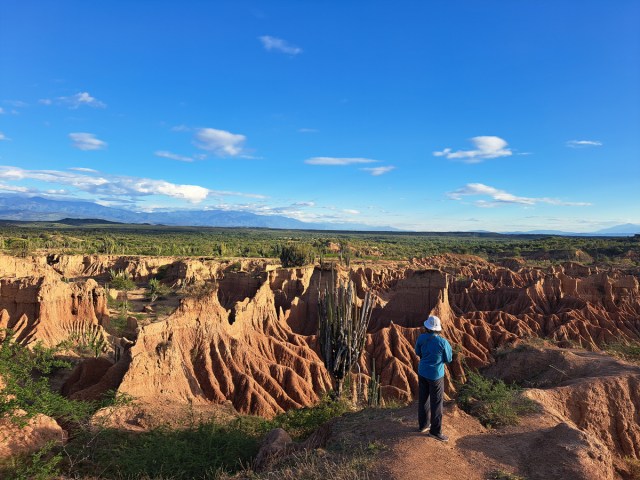
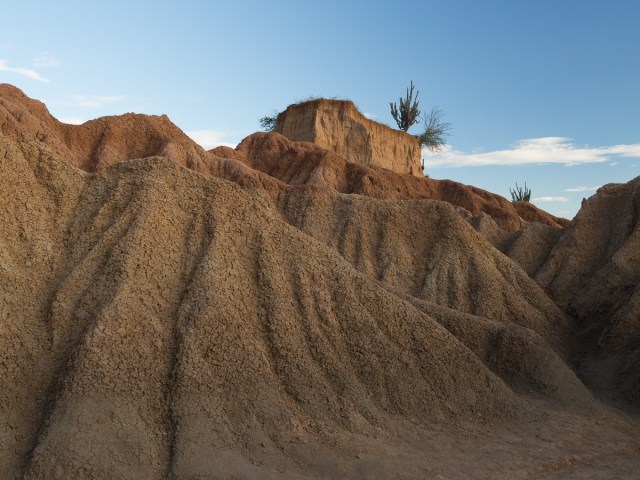
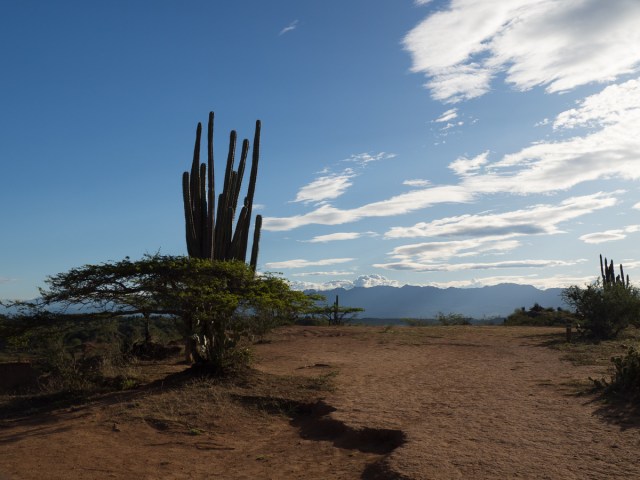
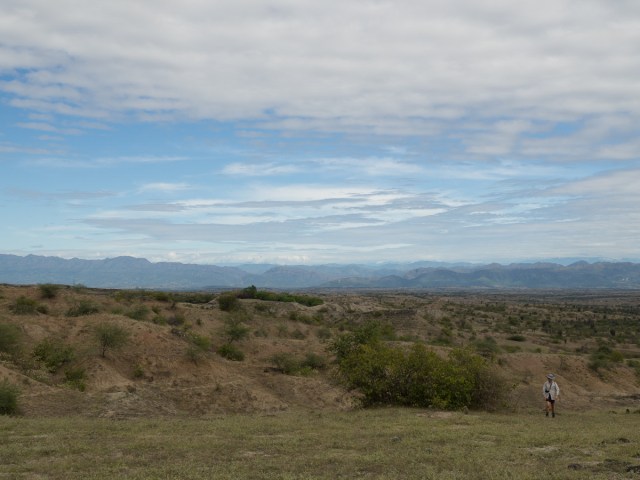
The Tatacoa desert ambles were very pleasant. Our guide, Catrina, was very knowledgeable describing geographical features as we strolled through the Gray gorge.  After a siesta she picked us up, for part two of our day, in a tuktuk which is always great fun.  She took us off to the Red canyons and later on up to an observatory. The observatory was small but perfectly functional. It’s owner Guilliame, a very knowledgeable man who enthused about his topic stating it was self funded and, as we were endlessly told, struggling financially.  Having looked through the telescope we ended up on our backs peering up at the sky while he enthusiastically waved his torch around creating arcs in the sky. Thankfully Gid passed the trial and answered most of his questions when he stopped to draw breath and test us.

As we were released and returning to our feet I noticed something scurrying away.  Initially I thought it might be a cockroach but it seemed rather big for that. I kept on about it and was just able to pick out it’s route in the dark.  With a beam of light hitting it it was revealed to be a scorpion.  We’d been snuggling up to a scorpion as we flapped our arms around pointing in the direction of this constellation or that.
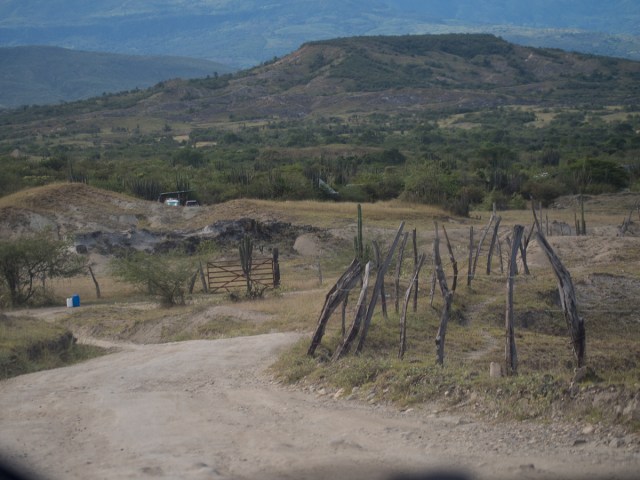
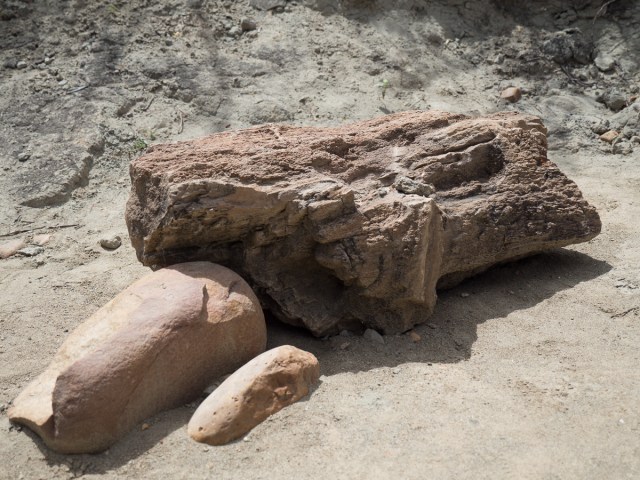
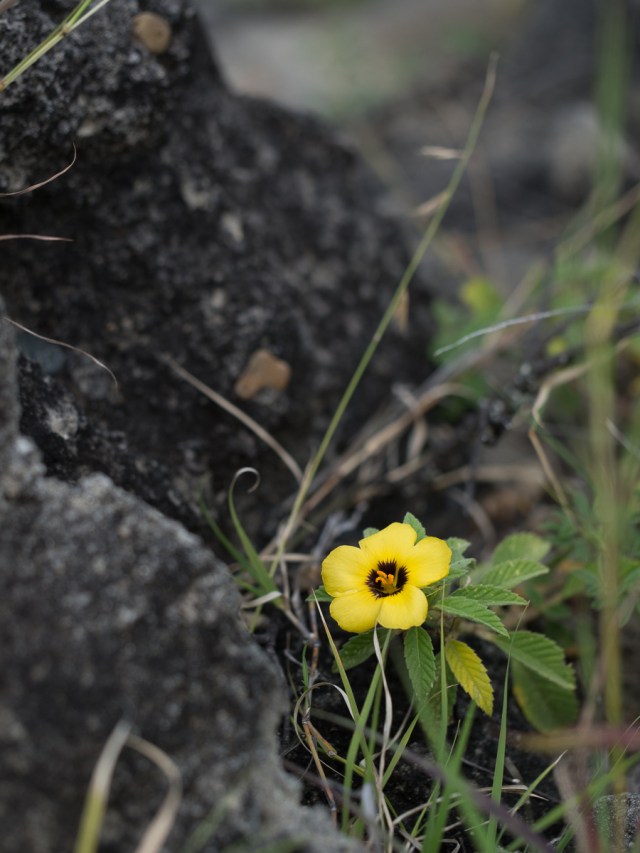
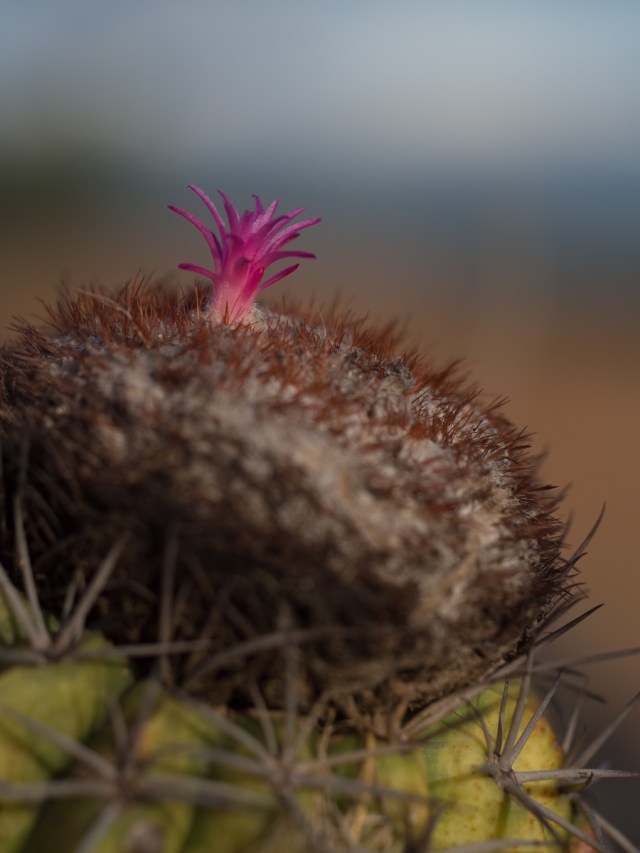
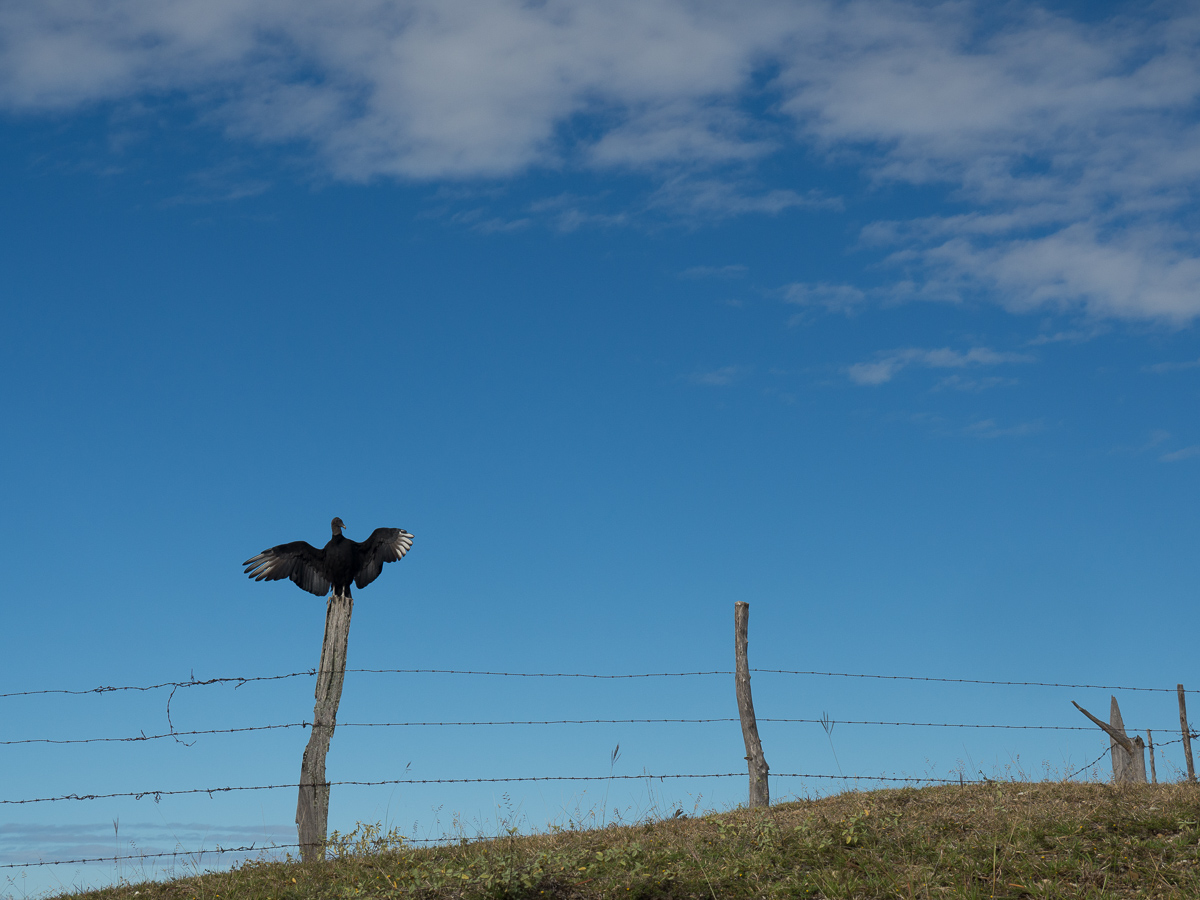
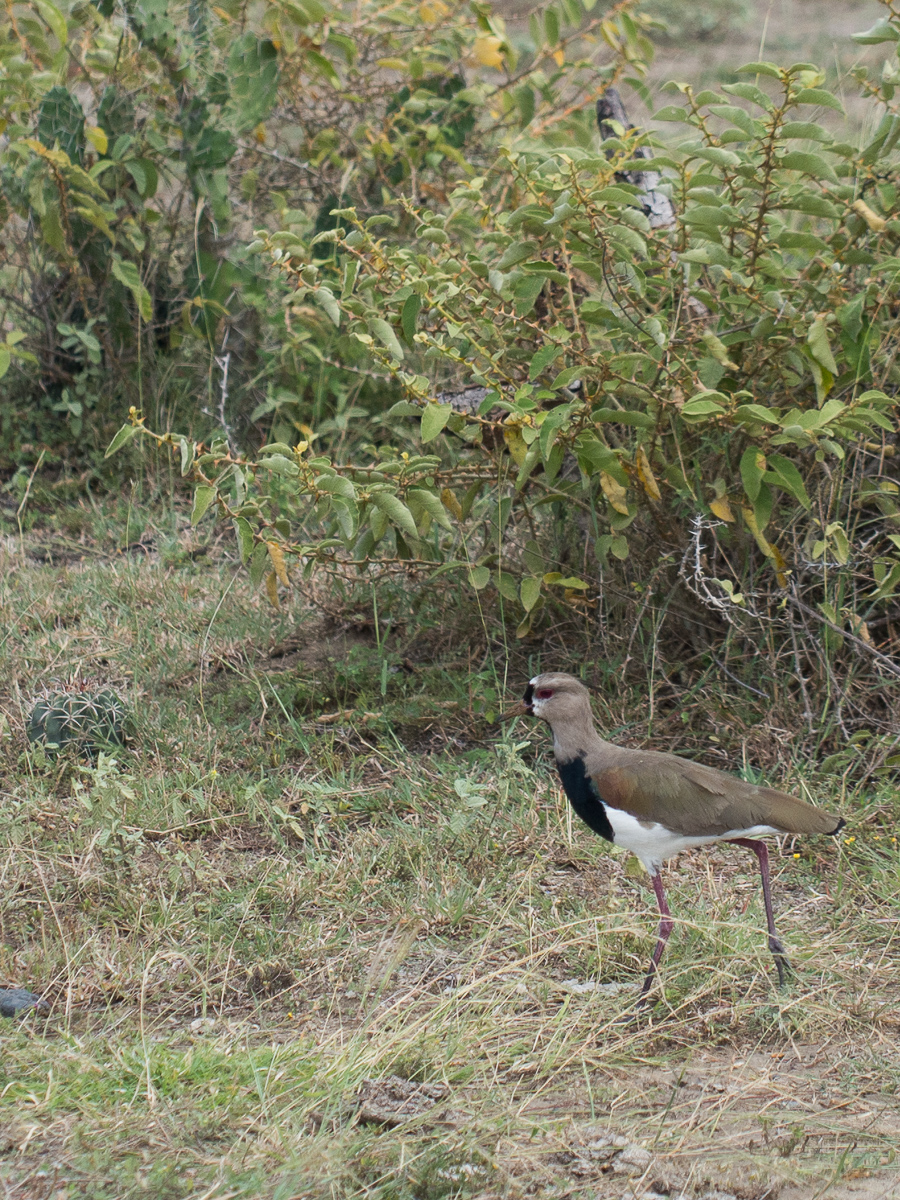
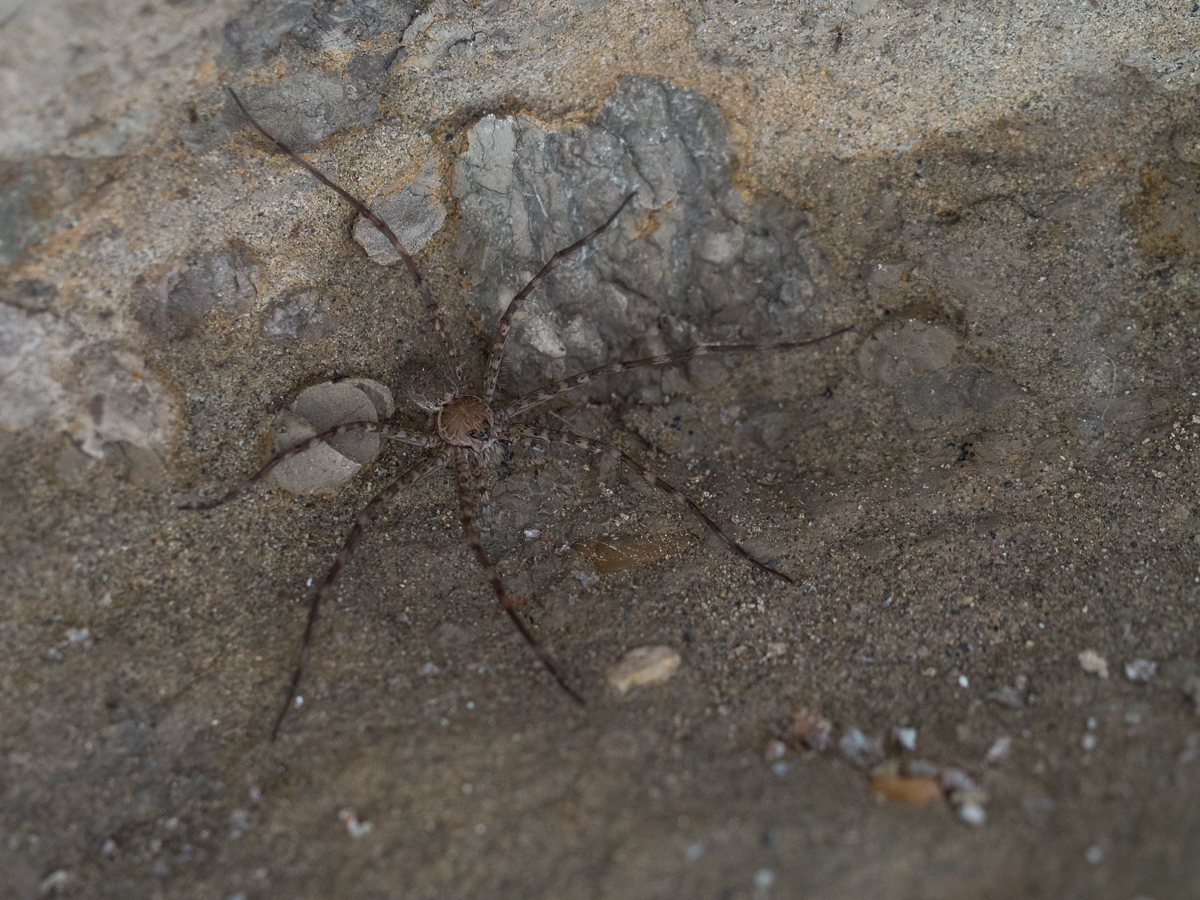
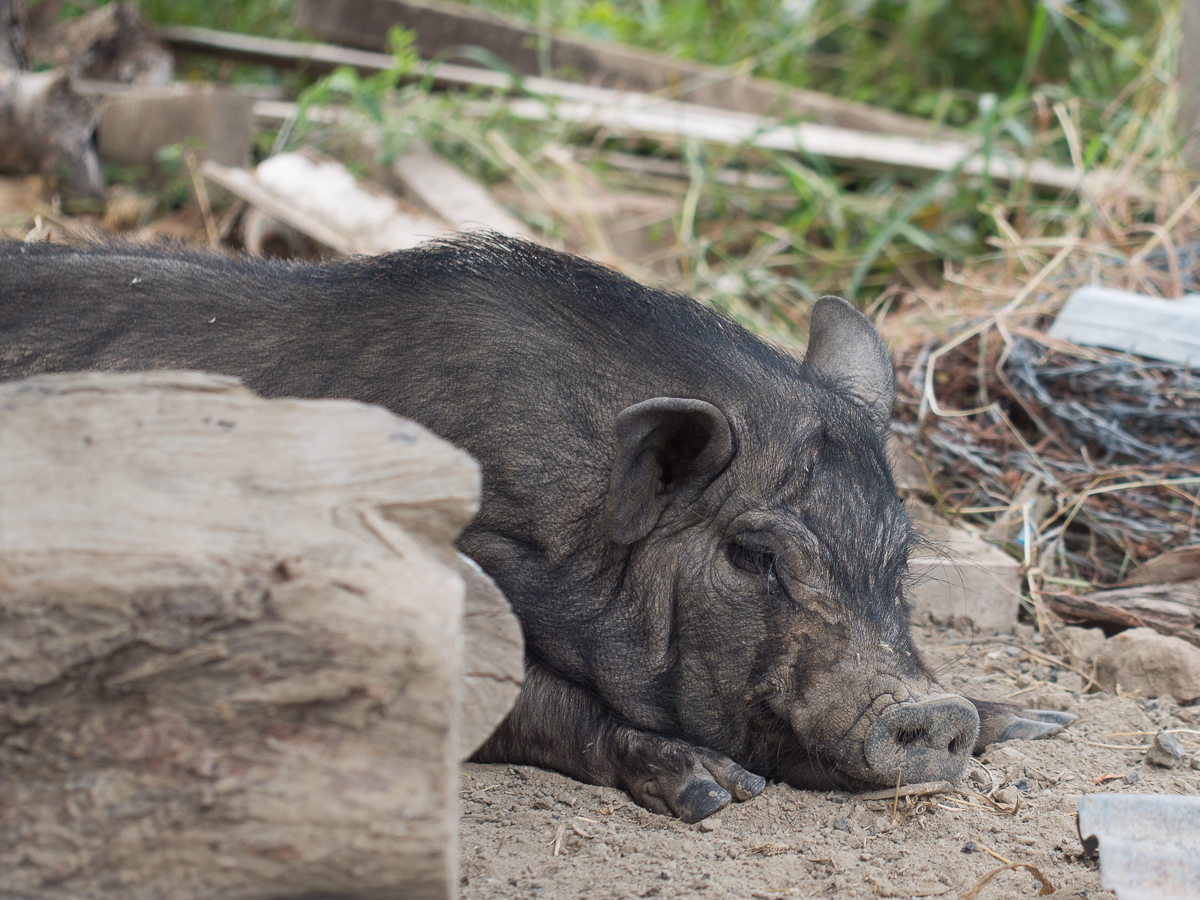
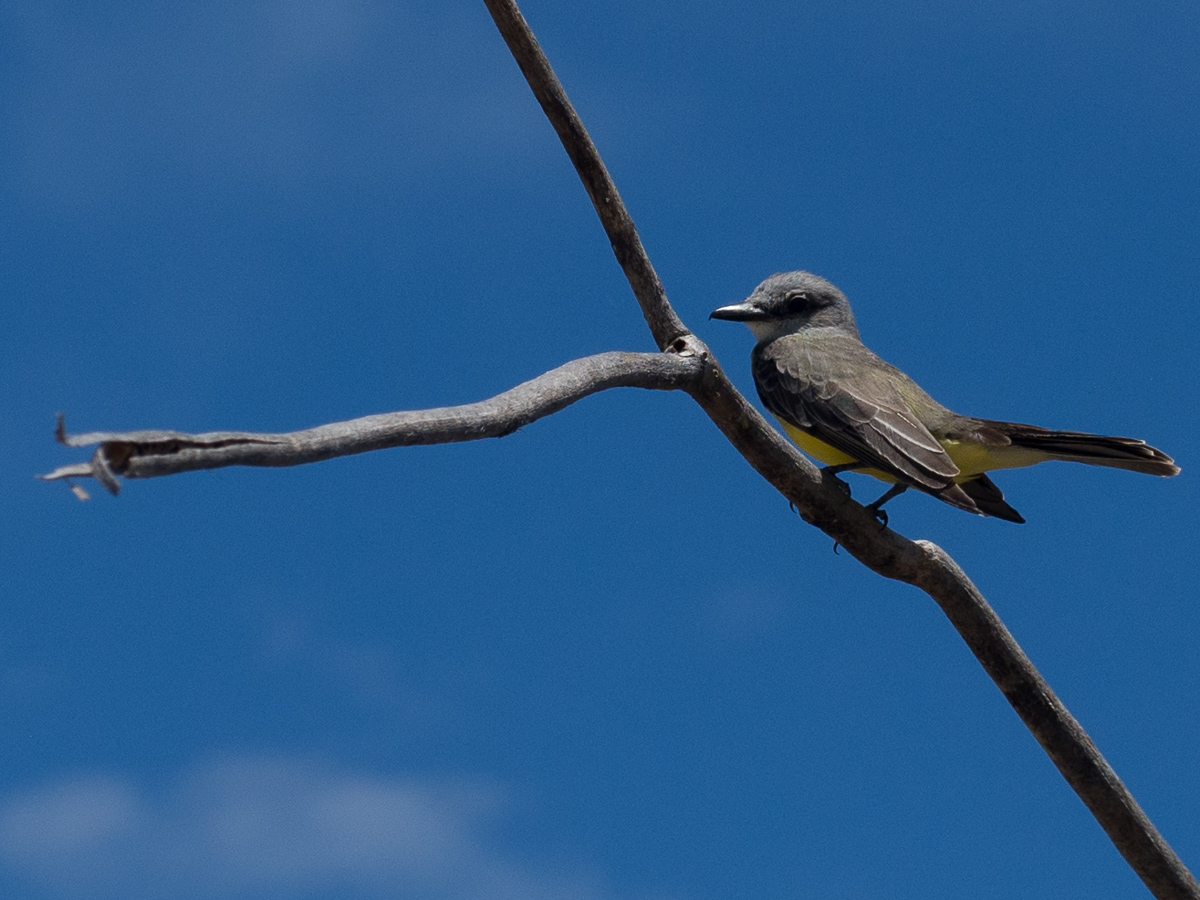
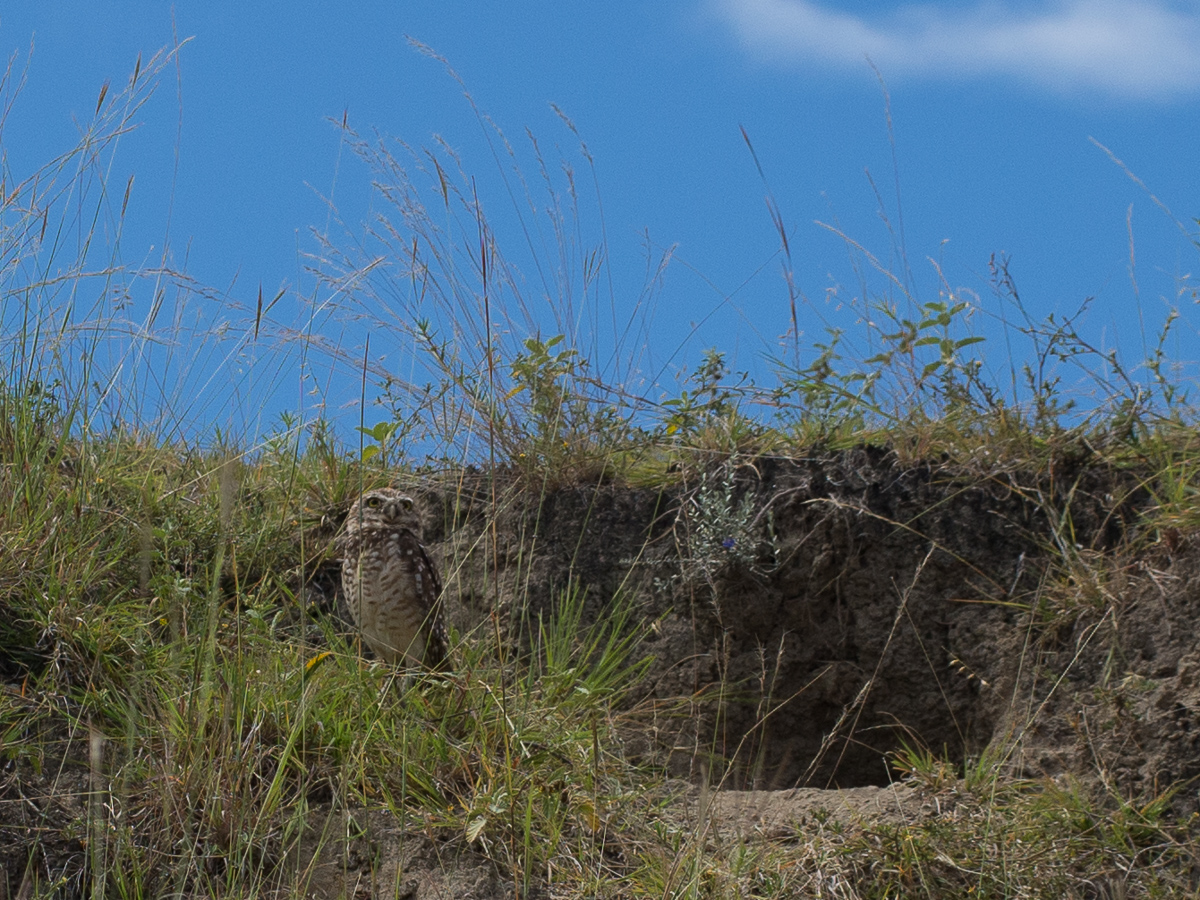
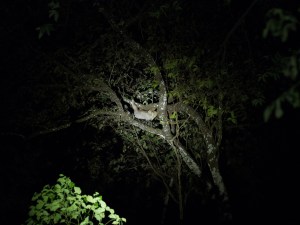
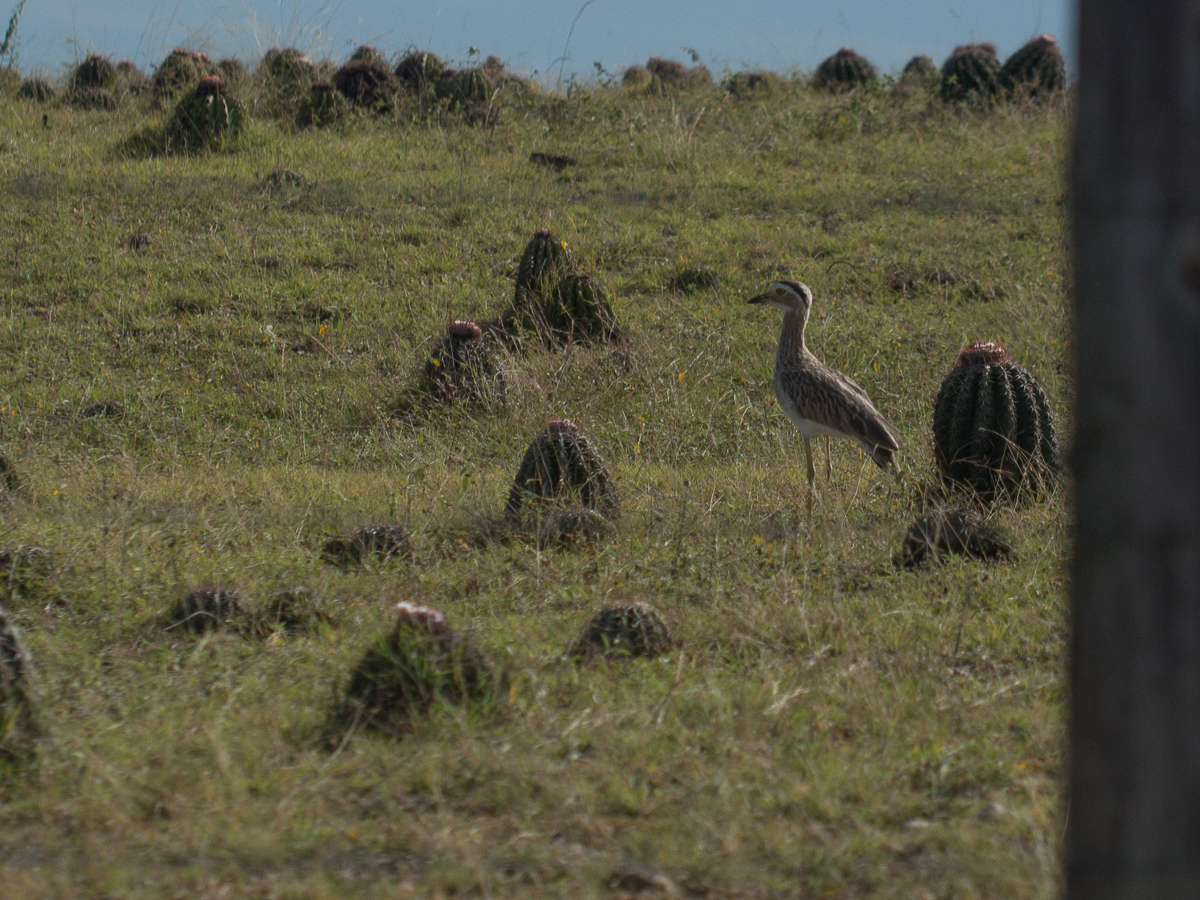
Tatacoa beasties can have their own gallery….
Time is pressing.  We’ve taken thirteen months to get from Alaska down to southern Colombia. Two months in Colombia – we can finally spell it correctly.  We’re about to cross into Ecuador where we will cross the equator.  That’ll be half way then and we have four and a half months left on our travel insurance. That seems like very bad planning but the trip has to be completed inside nine months or over fifteen because of the limitations of the seasons.  Having started in Alaska in June, at the onset of the summer, one year on it’s the start of the winter in the tip of the southern hemisphere.  Apart from the possibility of snow at sea level in Ushuaia we have to cross the Andes mountain range to reach it.  Hence we need to delay our arrival in the southern hemisphere in order to complete our trip. Our plan is to head down the warmer coastal route and cross the mountain range at the last possible chance in a hope that the mountain roads will be snow free and open.  Fingers crossed.

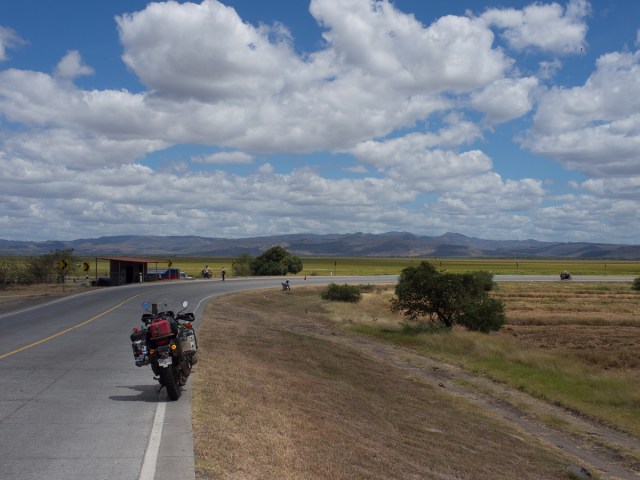
But we still have to make progress southbound and getting that right is tricky.  Our route from Villaviejo according to our navigation devices was three hours long when we set off but took seven hours thanks to another road block by the rice growers, road works where an endless stream of trucks came through and delayed us another half hour, followed by a political procession which also blocked the road.  Add in a coffee break and lunch – the combination of the lot more than doubled the time it took.  Over three or four months it should even out but we certainly need to err on the side of caution when estimating the time it will take.

Our plan has always been to stop just short of a border and cross the following morning. Hence we proceed through the three hour process and set off in the new country early to mid afternoon. Plenty of time to make a destination before it gets dark.  But San Agustin was an awkward distance to the border. More than a day but not two days or so we thought. Gid was keen to throw in some planning time to reassess our schedule for our southerly route and thought that our previously planned half day visit to San Agustin Archaeological ruins would give that opportunity.
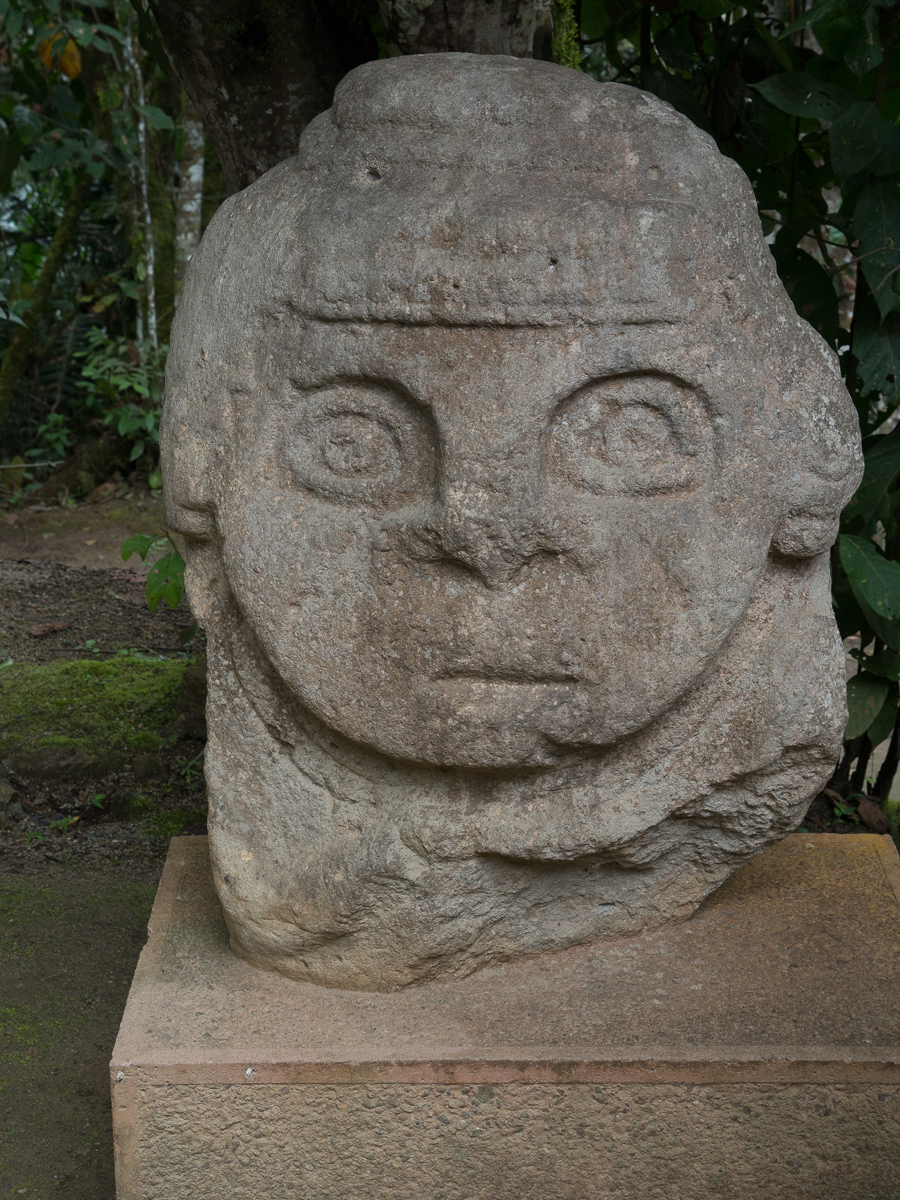
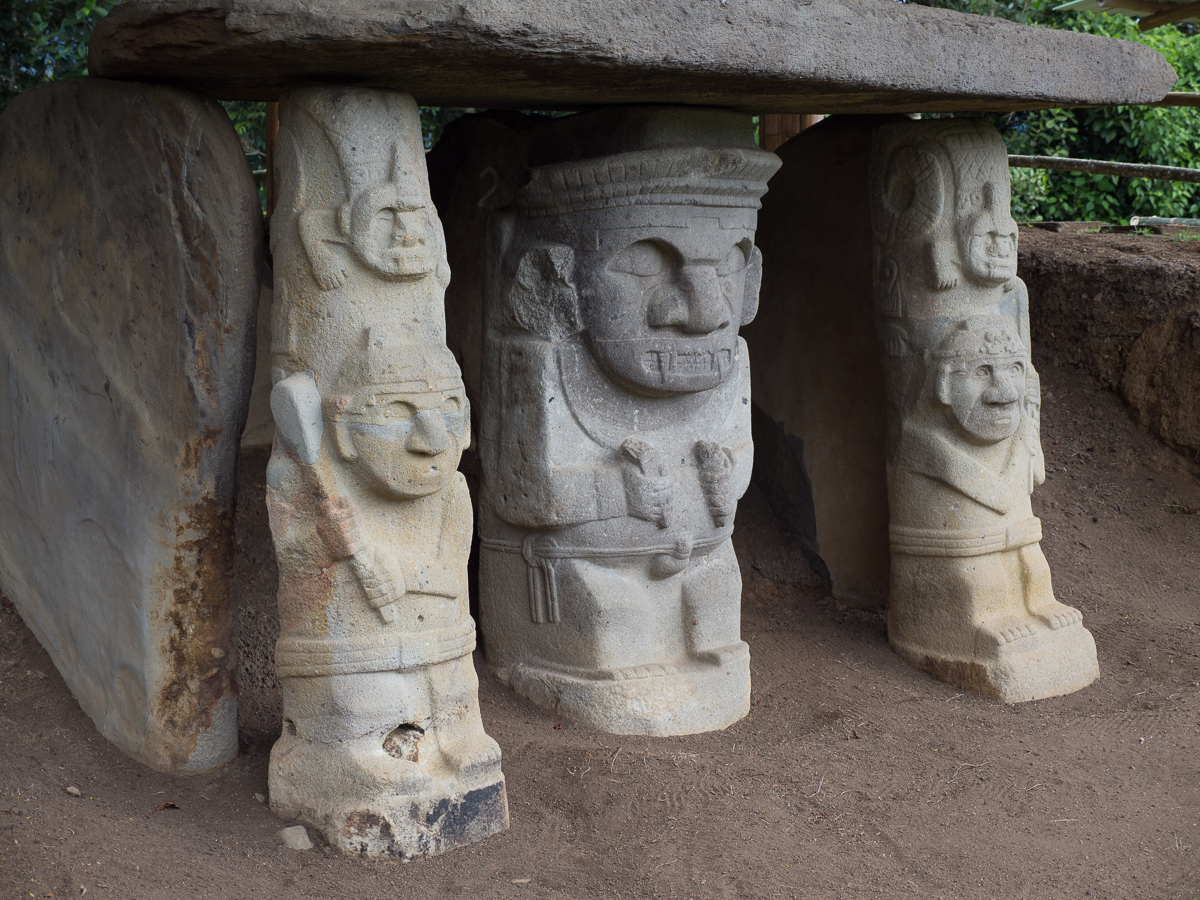
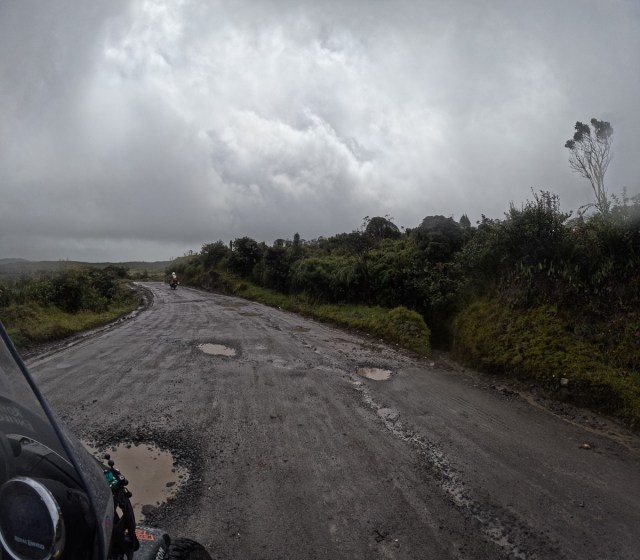
Leaving San Agustin we set off with a clearer idea of our timing but once again we were caught out by reality.  Our host said it takes four hours to reach Popayan and looking at the map we had thought we’d make it a whole lot further south and be near the border for a next morning’s crossing.  The 90km of dirt road, Ruta 20, across the Puracé National Natural Park in the pouring rain put paid to that. An adventure all on it’s own as we squeezed past articulated lorries who seemed to think of course the road was theirs (not that we argued) but at times we where struggling not to slide off the muddy road into the soft ‘gutter’ at the edge. Once through that we thought now we’d make up some time.  That was before we came round a high mountain pass to look down into the valley, across a river, and up the other side.  Blocked!  A complete grid lock.  Luckily, on motos we can squeeze past a lot of it but as it winds backwards and forwards down then up the mountain side it was again slow.  We never did find out what the hold up was as at the front of the queue it was clear.  But, the army had clearly been doing something major down at the river crossing, and received lots of hoots and thumbs up from appreciative citizens.
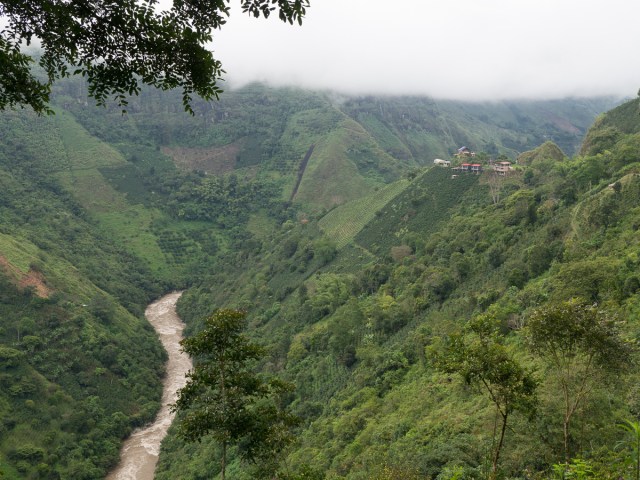
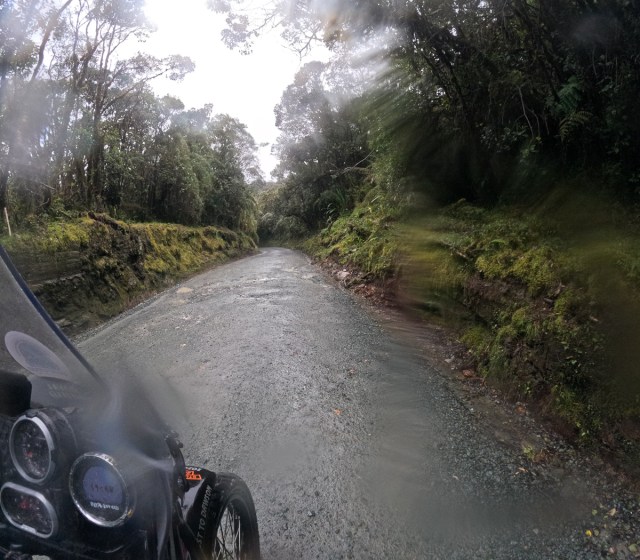
South of Popayan we found a roadside resort – both tired and frustrated we stopped.  It had two splendid pools, a bar, and no electricity.  With no idea of what was ahead we still hoped that with an early start we could make the border tomorrow.  An early start was breakfast at eight.  It wasn’t offered any earlier but if we’d known that it would be nearer eight thirty we might have declined in order to get on the road.  We had a drink break and stopped to put on rain clothes as the weather deteriorated and we were climbing up into the clouds but pressed on along the fine Ruta 25 to make the border.

We arrived at the Ipiales border at 3pm. Having read that the South American borders are quicker than Central America’s we went ahead.  We’ll be out in a couple of hours or so I thought.  The passport paper work might be quicker but the queues weren’t and neither was the Ecuadorian Temporary Import Permit (TIP) for our bikes.  Four hours later, already dusk, we left, finally on our way again.  At eight o’clock we saw a big HOSTAL sign aglow in the darkness.  We beeped at the gate and waved until the owners emerged to check us out.  They opened up and weren’t our first Ecuadorian hosts nice!  Soon Clare was wrapped in a big blanket with a mug of chocolate caliente, or two.

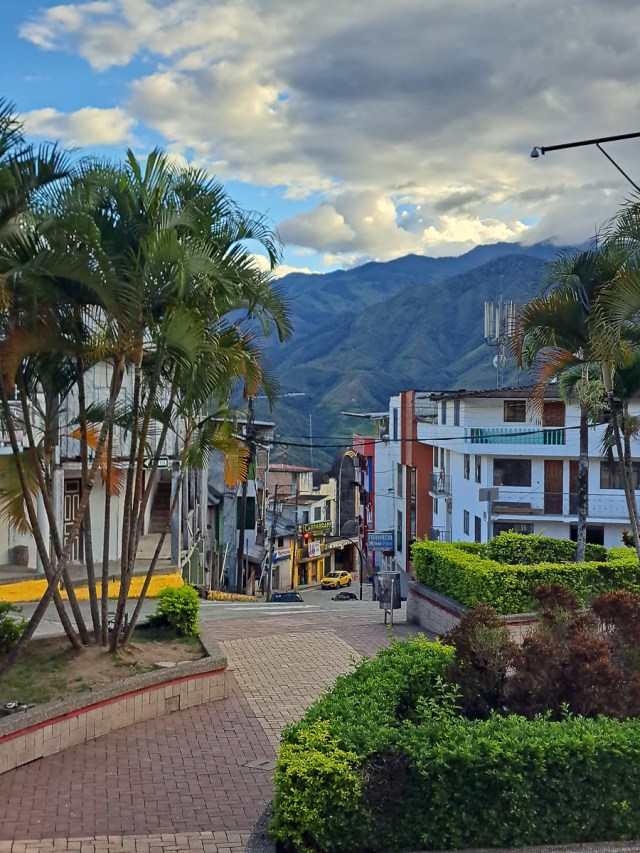
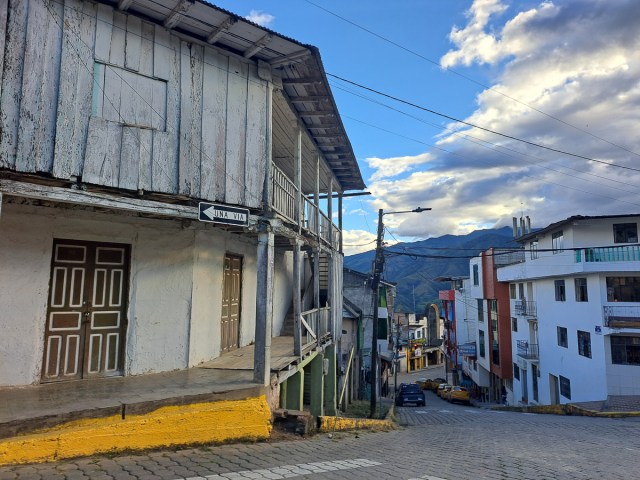
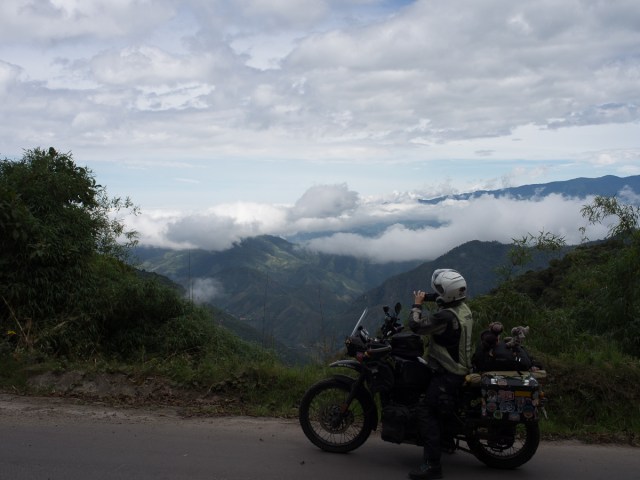
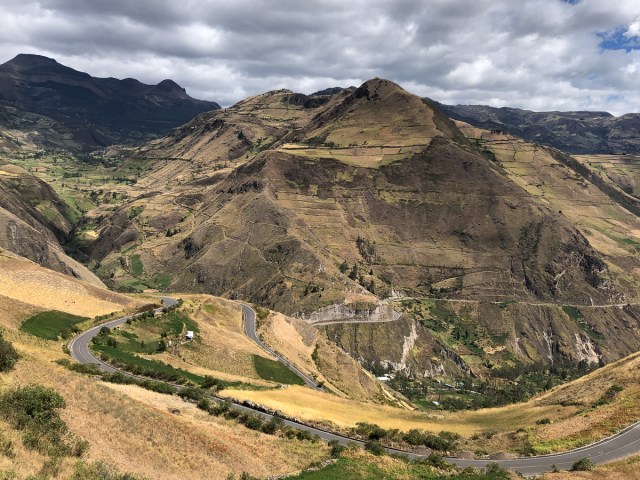
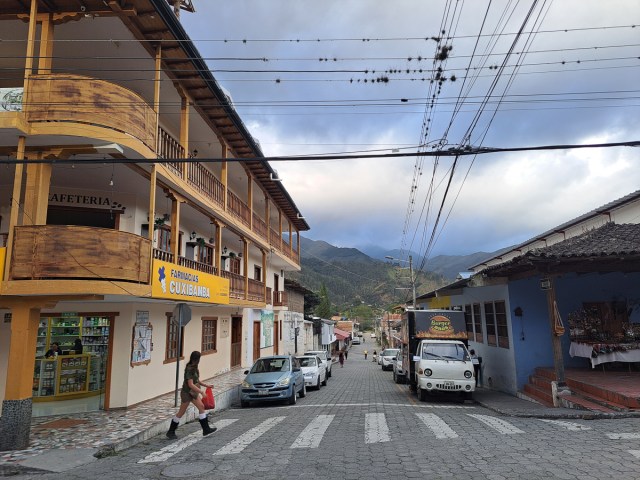
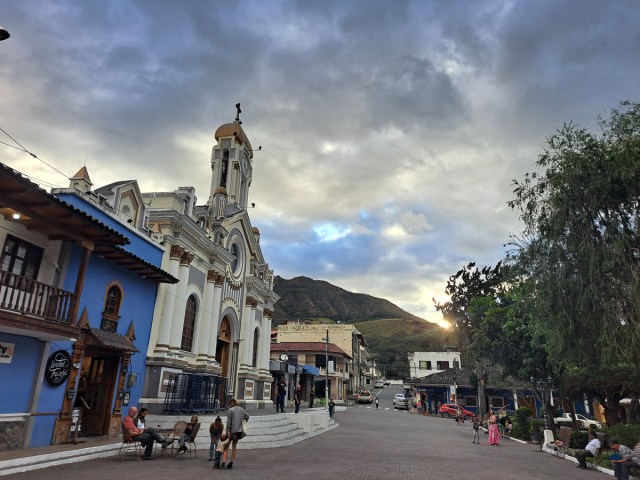
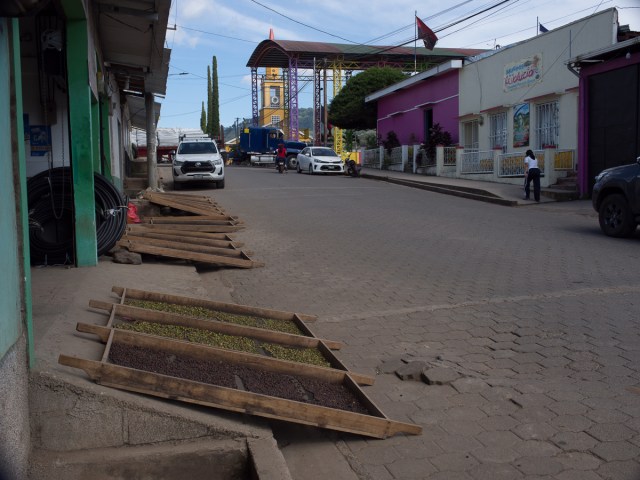
Settling into Ecuador we made our way down to Quito ticking a couple of boxes on the way.  The first was a Lonely Planet recommended scenic road from Otovalo out to Apuela.  The road was twisting up and down the mountain side and I’m sure the view was spectacular but shrouded in cloud we didn’t see a thing!  Our day at the village for a recommended ‘flat’ walk (no flogging up another mountain for me) gave better views as did the return trip back along the winding road to Otovalo.  Otovalo itself was the second attraction with it’s biggest in Ecuador outdoor market.
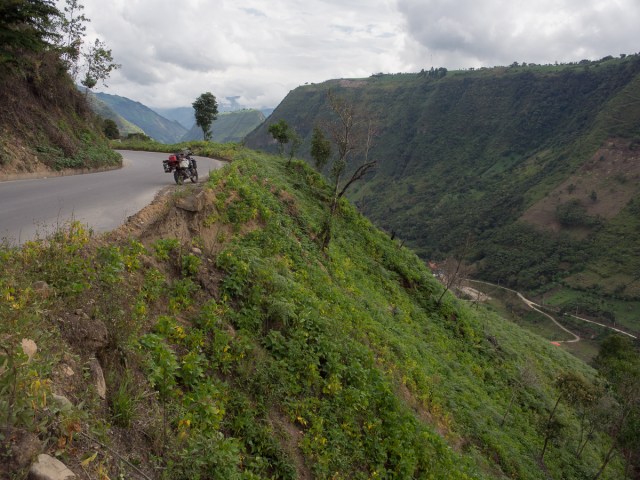
Our initial route to Quito was a little ambitious for us.  Recommended by a keen adventurer bike, & fellow Himalayan, rider, Redd.  One hundred metres up the track was enough to decide that it was probably going to get beyond my skill level.  We turned back and headed along the main roads turning onto the E20 for less traffic and some great views.

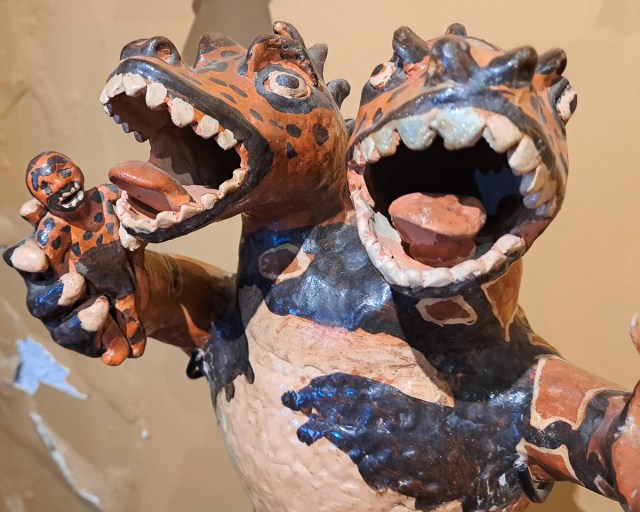
Quito itself was a bit of an errand stop. New (Australian!) tyres, replacement parts for my now broken GoPro mount and extra socks for Gid. We handed on Redd’s gloves that had arrived late at Donkey Sunrise.  We did visit a couple of museums and were pleased to see we’d moved on from the basic clay pots as the ancient indigenous people were very sophisticated from an early stage. But Quito itself was fairly mundane, at least the part we were in. Anyway, we had a nice rest in the AirBnb yuppie flat.
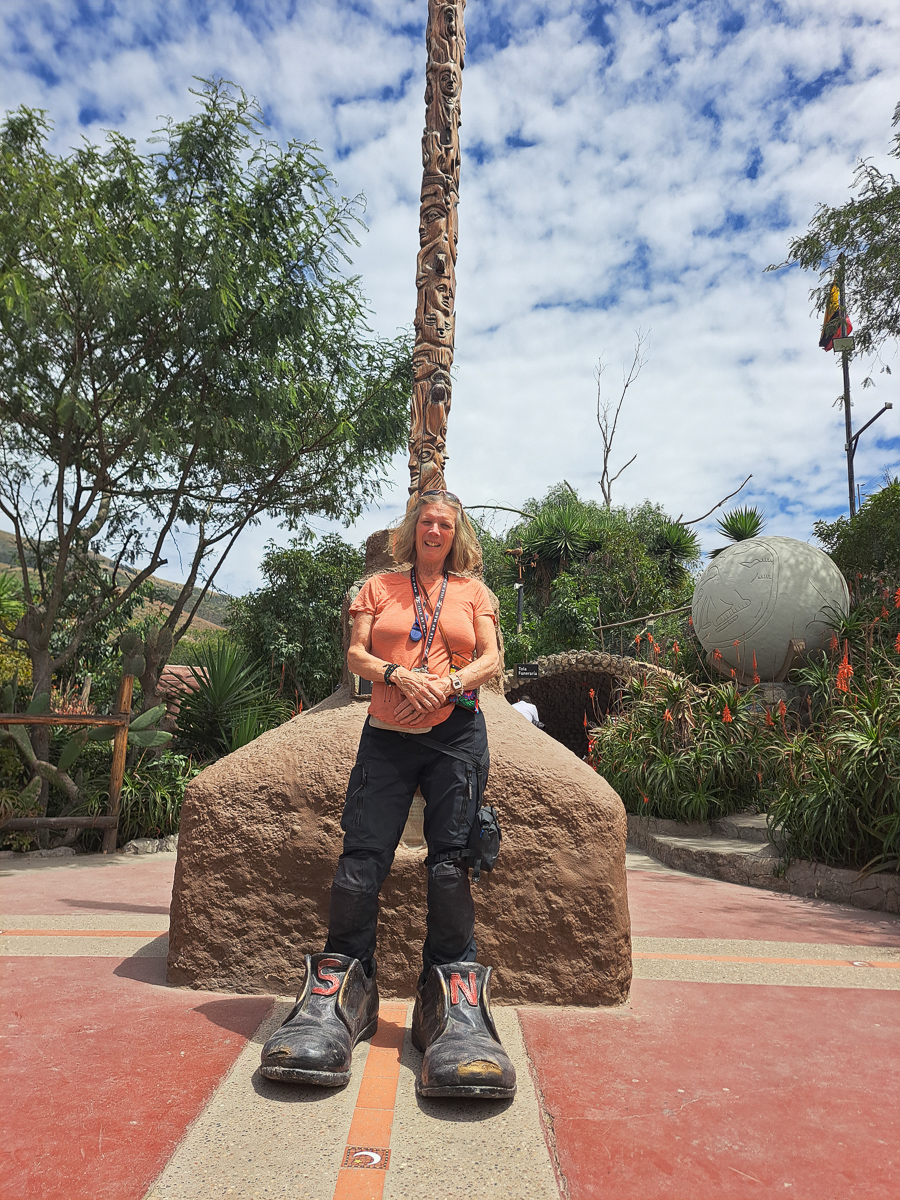
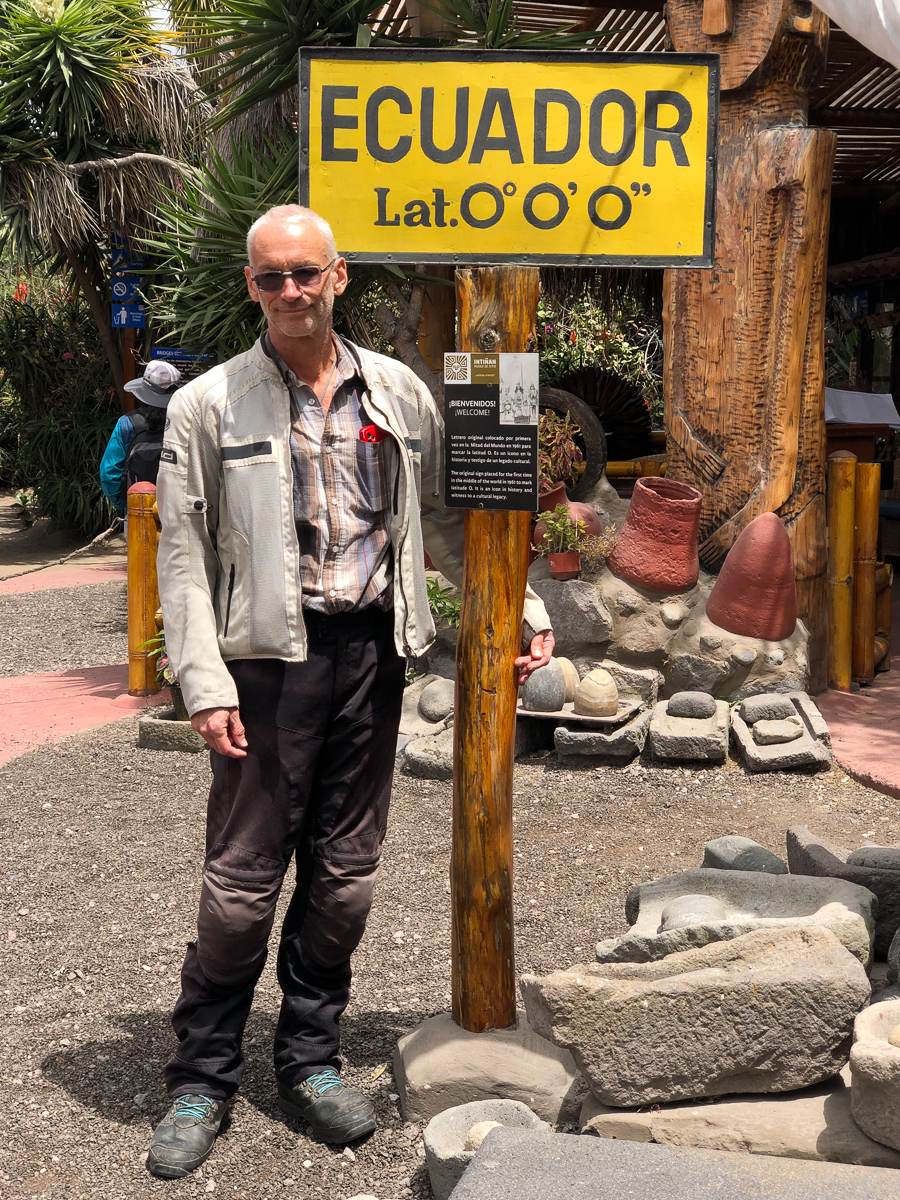
Having missed the equator line, foolishly whizzing across without noticing, we back tracked to the Museo Intinan and did the Northern Hemisphere / Southern Hemisphere tests before setting off south again.  Our route, recommended by one of the moto shops in Quito, avoided the PanAmerican highway again.  Enroute we should have been aware that things may turn interesting when we looped around the strategically placed bollards and a police car blocking the access to the road. The lane allowing traffic out was open so we bypassed the obstacles and set off.

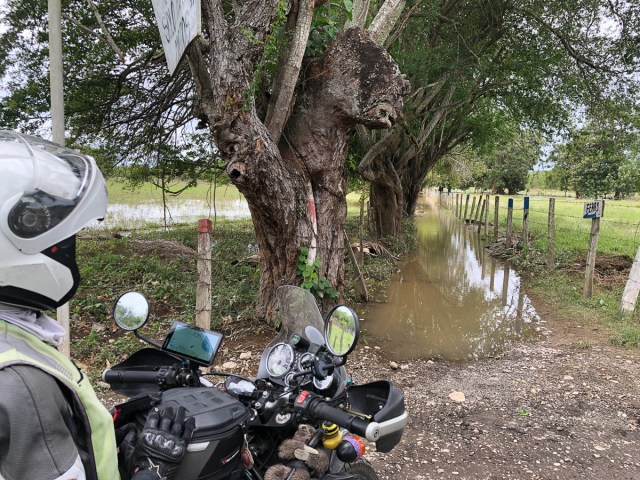
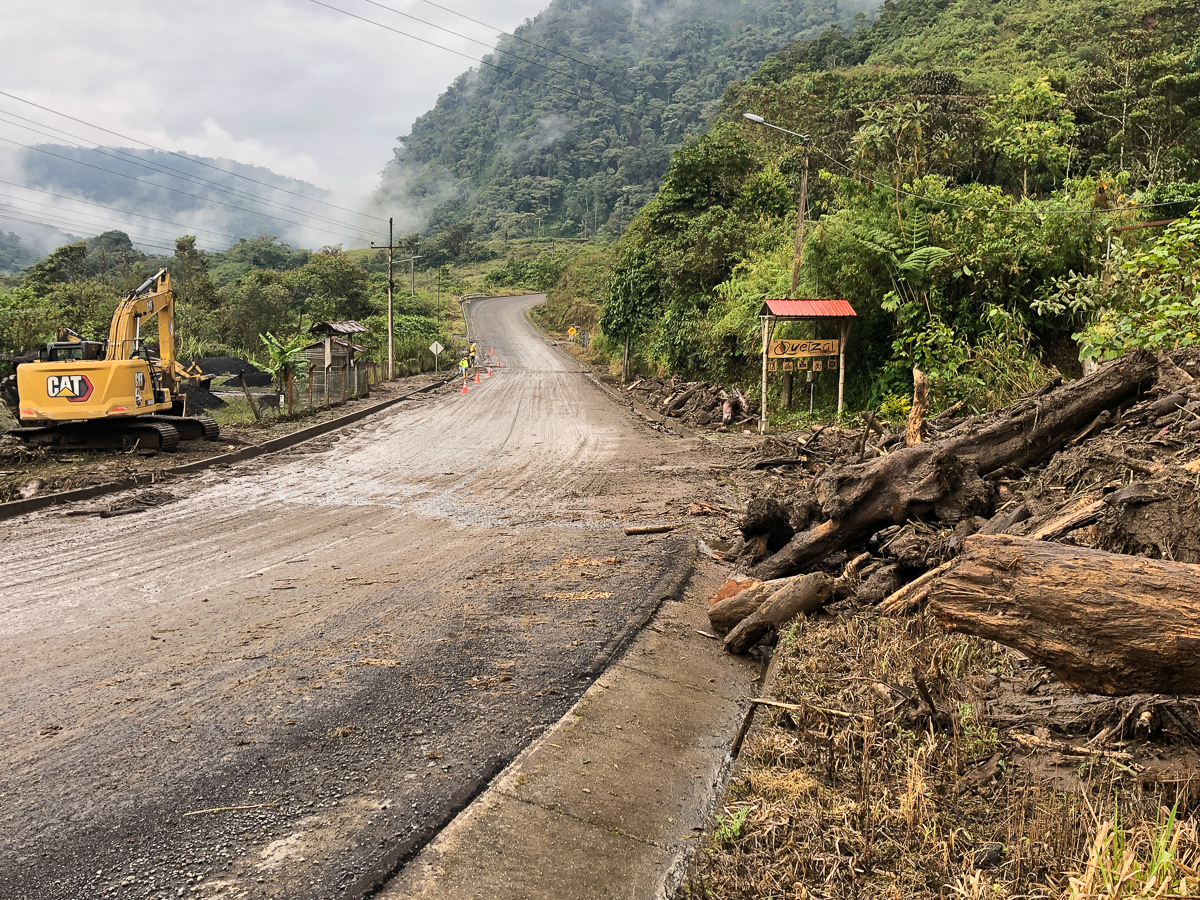
We thought we had the measure of the problems when we crossed a few minor patches where water was spanning the road. With so many waterfalls along the way it was to be expected as well as the odd bit of debris at the road edge.  Wrong!  Before very long we met the tail end of a fairly long traffic jam.  One advantage of the mountainous routes is that it’s frequently easy to see a fair way up or down the mountain side.  Being on motos it’s easy enough to jump the queue and get near the front.  A mix of various sized lorries paved the way, one aimed uphill and stuck in six inch mud, which had swept across the road as a part of a sizeable landslide, was blocking the road.  Workers were trying to dig out a route, aware of the precipitous drop metres away.  The lorry, to the cheers of the diggers, gave up and edged backwards.  A route opened up.  The erstwhile “workers” gleefully leapt off towards their own vehicles keen to get through the gap.  We being ready and waiting cautiously made our way through the channels of deep mud.

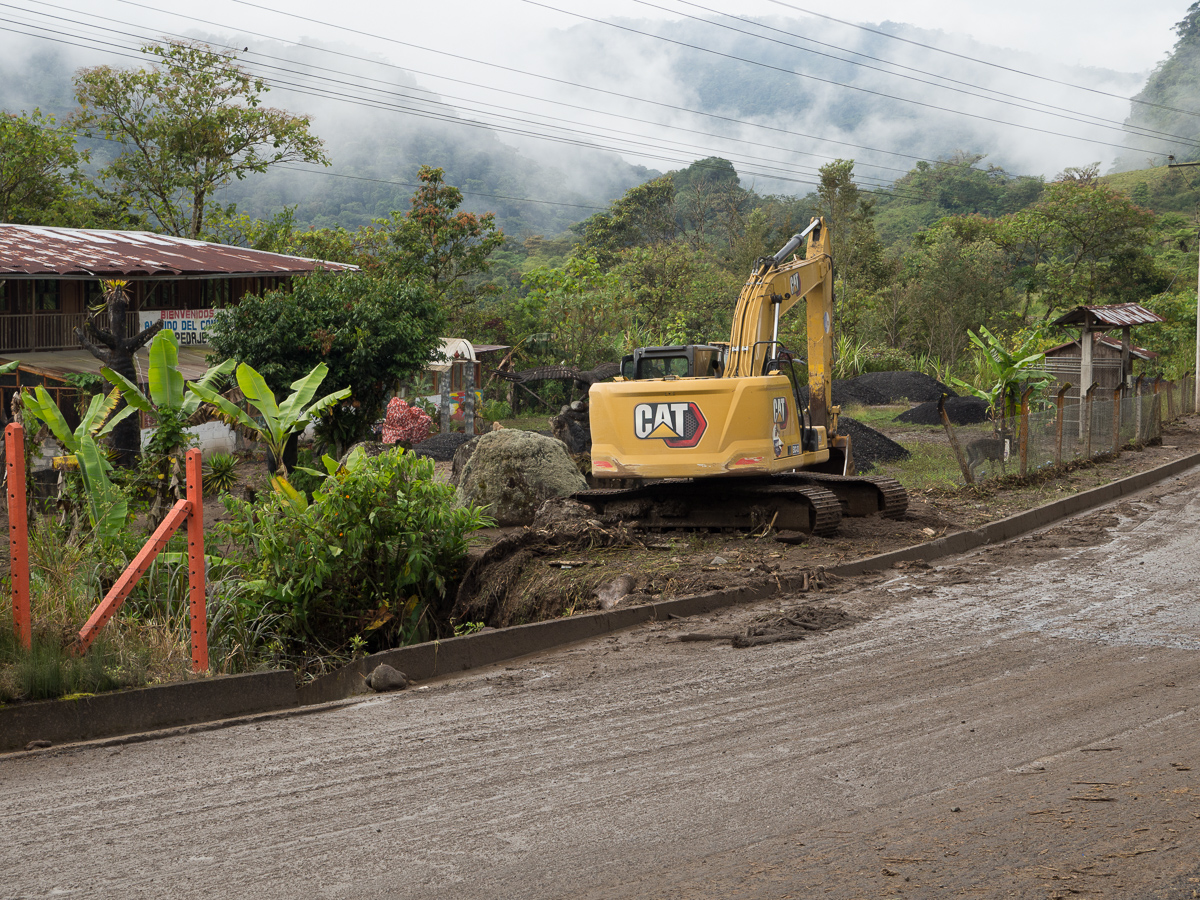
Through – that would be it then. But the road turned out to be a series of surprises.  Endless small floods crossing the road and other areas of landslides and deserted hotels before finally we found accommodation along the road side.  Yet again there were JCB diggers and workers with shovels clearing the road.  Our talented, artistic host told us of heavy rain falls in the last 24 hours.  The mountain stream running alongside his hospadje had burst its banks higher up the mountain bringing trees down in its wake, blocking the channel under the bridge, flooding out, trees and all, over the road and through his out buildings. The entrance to his property was six inches deep in mud and despite clearing up his extension, a tide line of mud was still there 15 inches up the wall. Fortunately, the Hims on their new chunky tyres trundled through said mud to a safe berth amongst piles of tarmac scrapings waiting, from before the flood, to go down as carpark topping. Clare managed to resist the very attractive orchid ceramics and colourful 80cm square canvases.

As we departed the following morning a neighbour was calling in. They couldn’t access their house as the bridge was washed away.  But Colombians are fast workers, already a backhoe had diverted from the roadworks, and spread a deep layer of the dry tarmac scrapings over the gateway mud, making our exit much easier, and crucially, reopening the business for customers without chunky new 50/50 tyres.
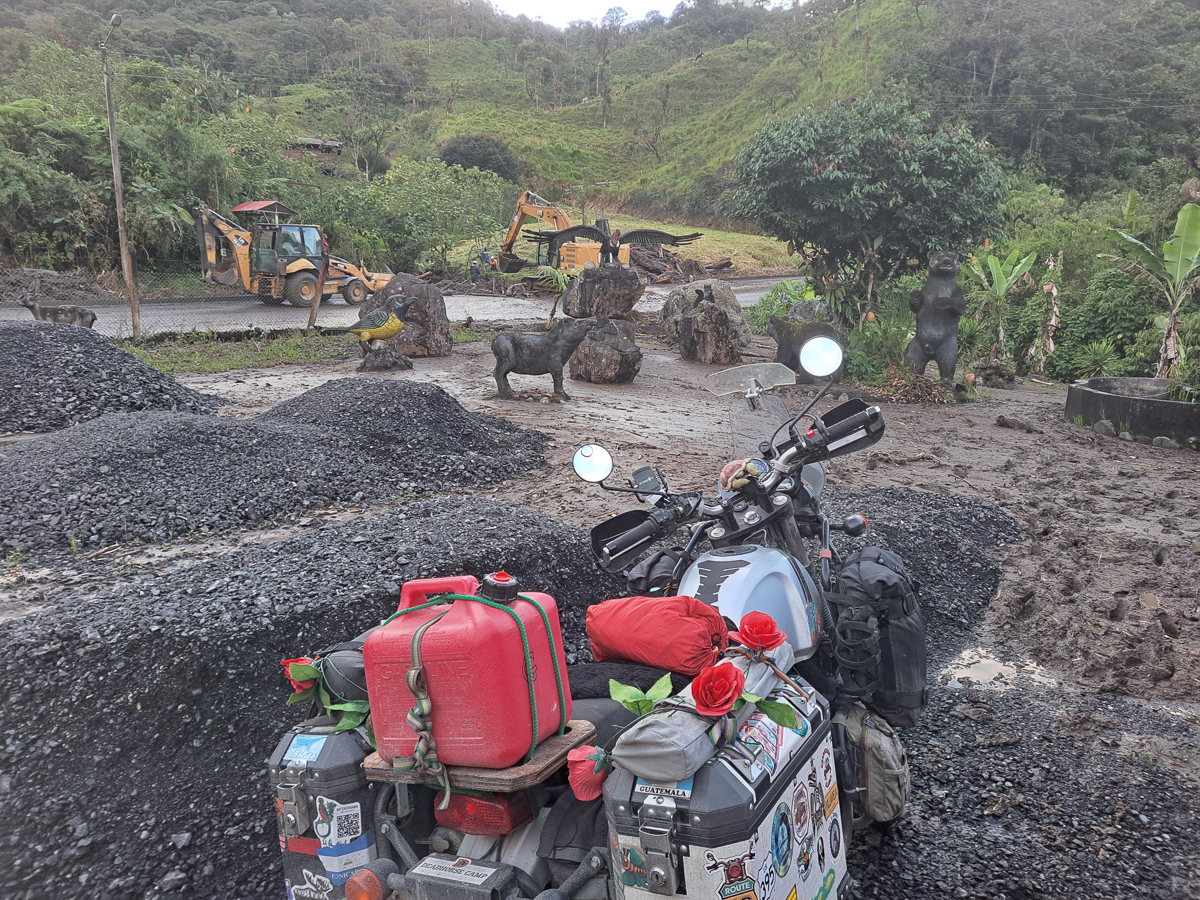
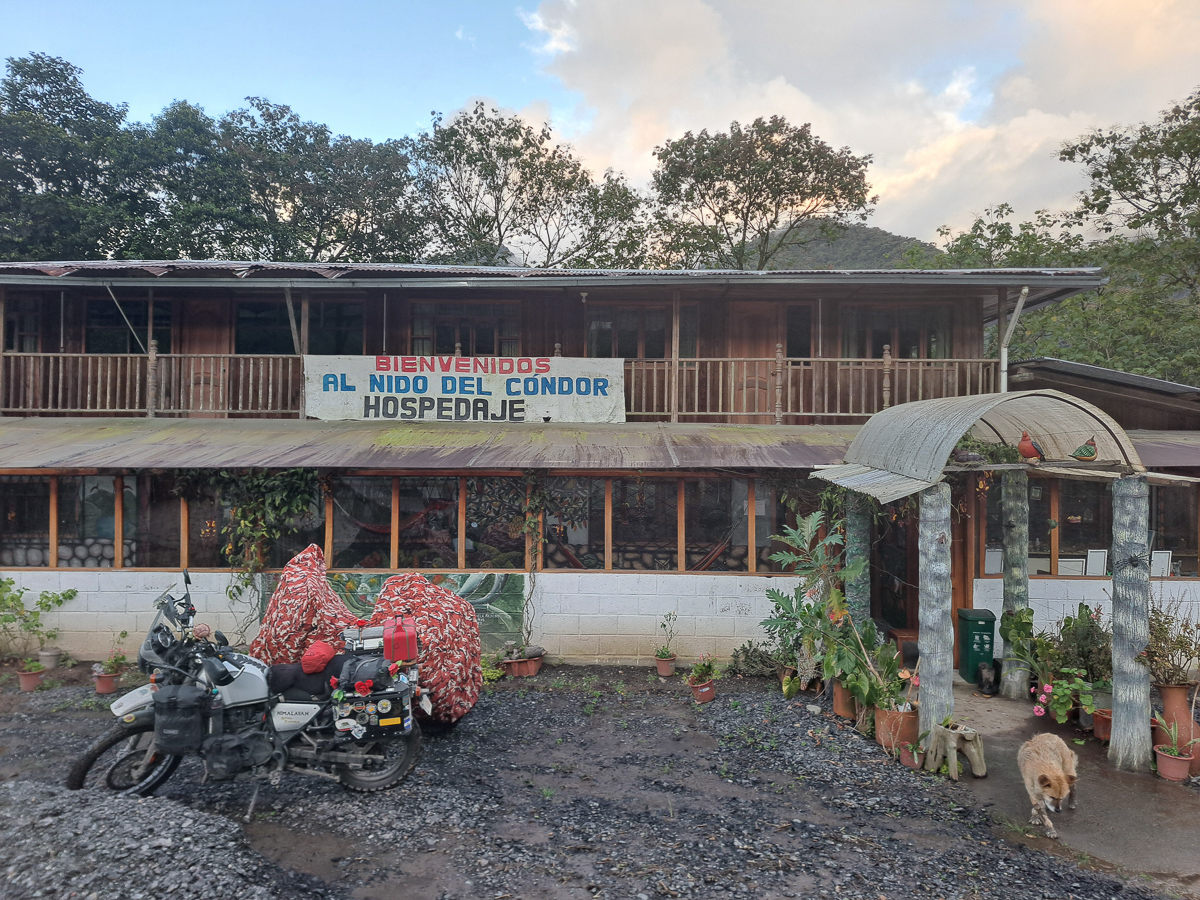
We set off again far more aware of the scale of the disaster happening around us.  Gid had rechecked the Government advice about states of emergency which was nothing to do with criminal safety as we’d anticipated but a month ago it had warned of floods and road closures in Ecuador.  Here we were in it.  For a second time on this mountain route we headed off cautiously thinking the worst was behind us. To a degree it was but we soon found more ahead as we arrived at the back of another queue, this time for a foot or more of water coursing across the road.

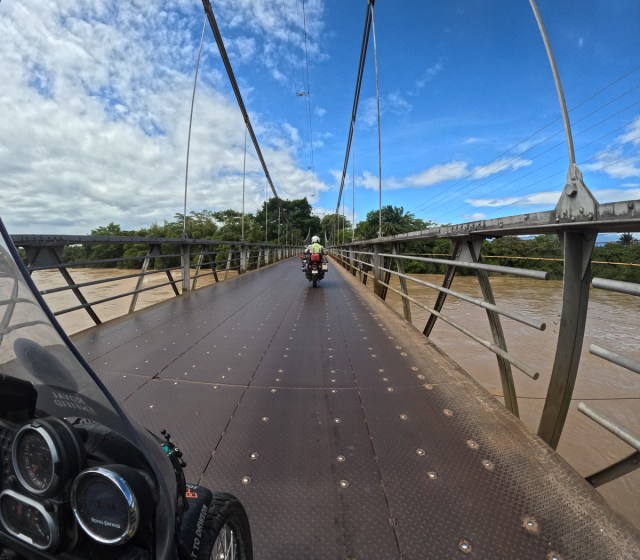
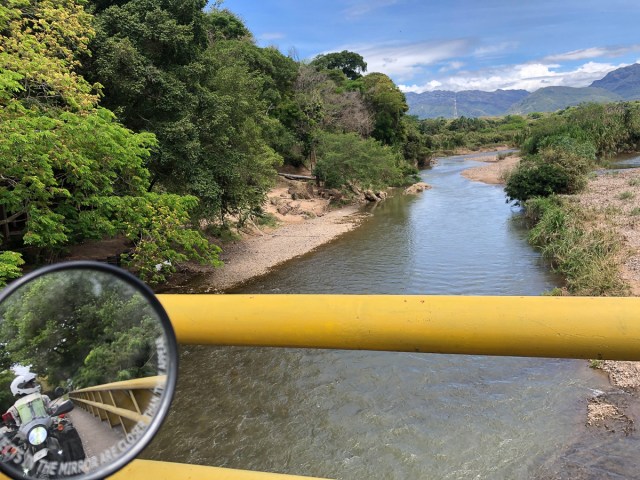
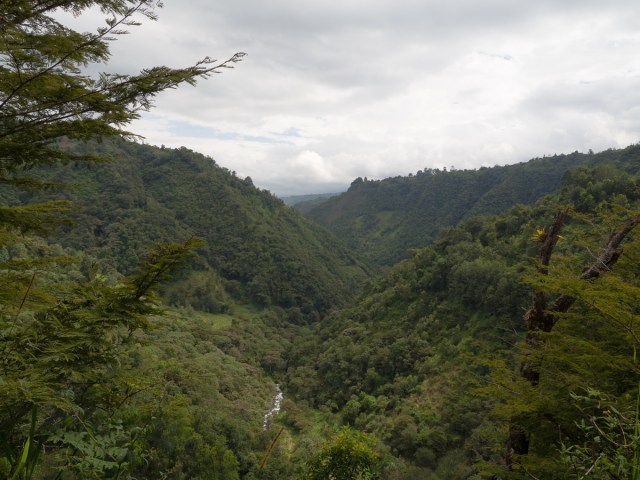
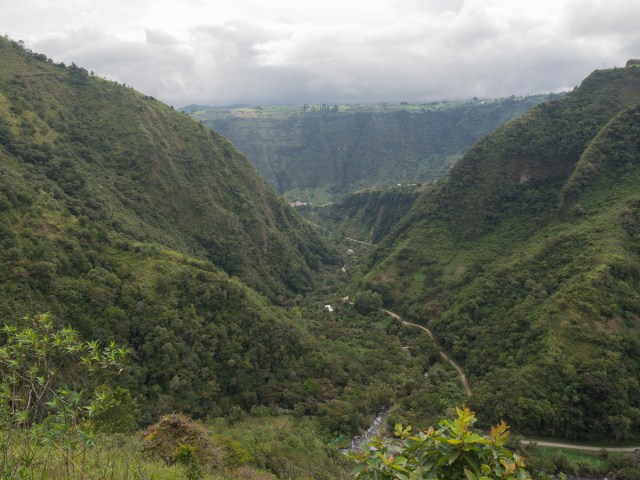
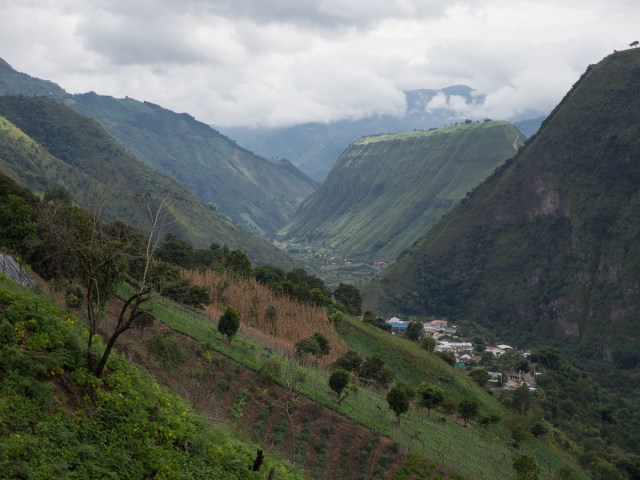
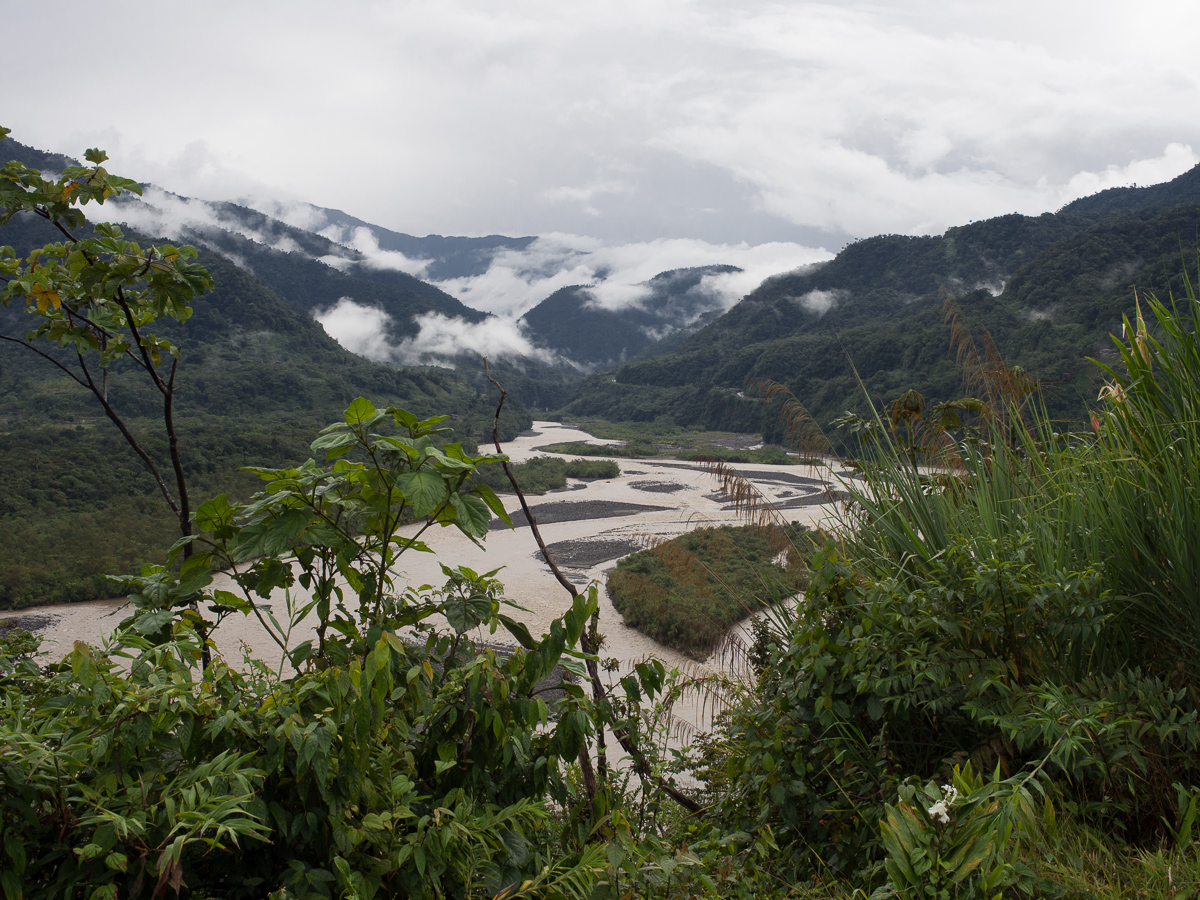
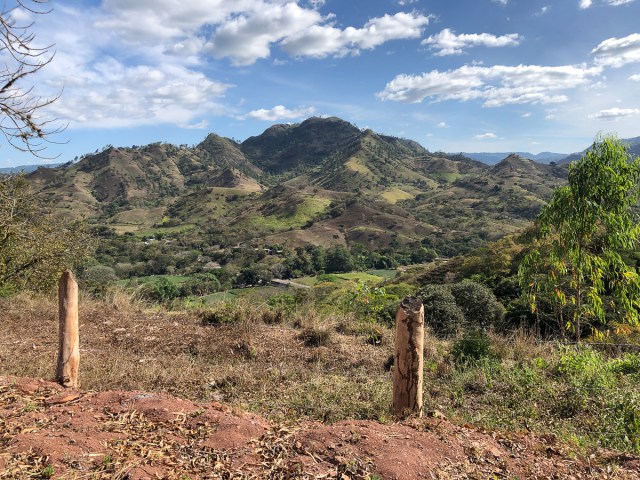
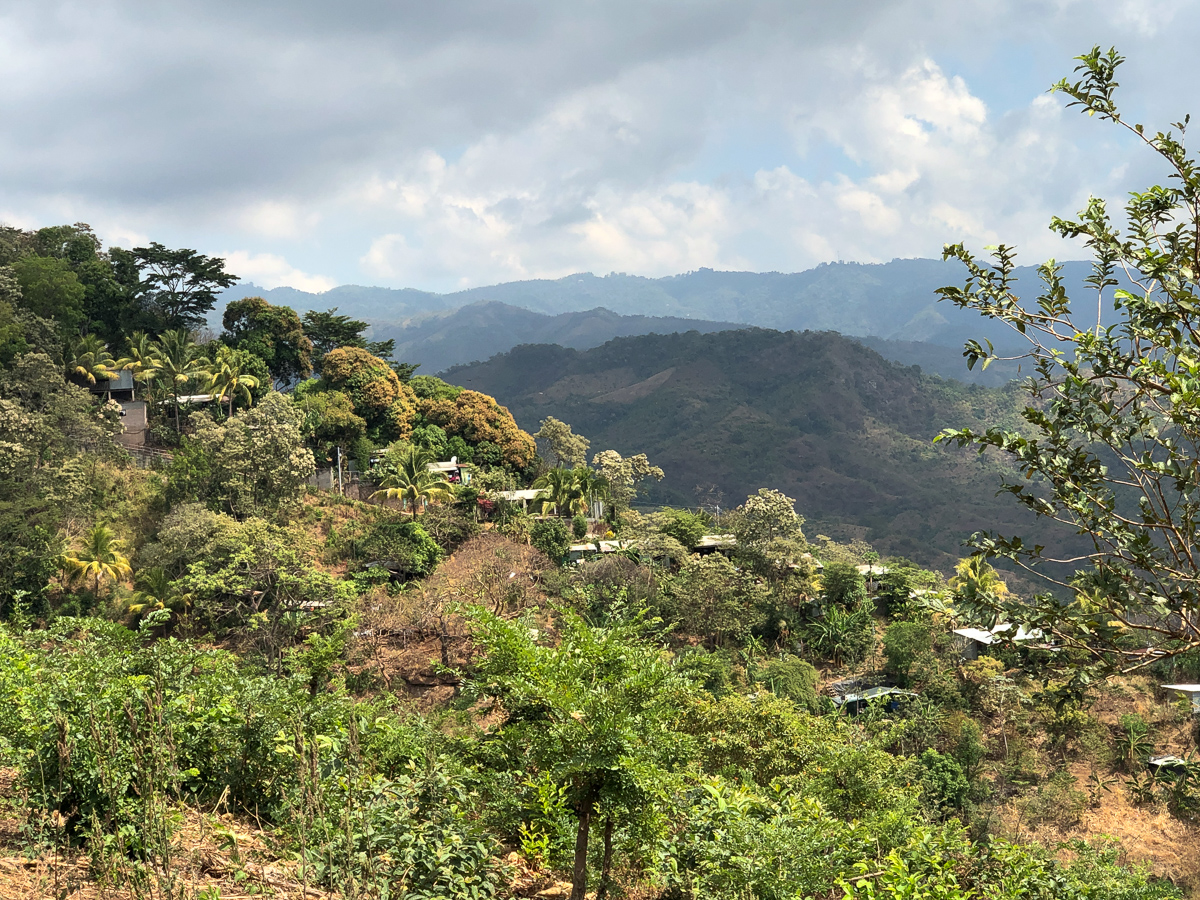
Over the saddle into another valley the region flattened out a little to give spectacular views. The frequent rivers we were crossing – fortunately on bridges – were brown and thundering along. The biggest in this area is 500m wide. No wonder hydroelectric power is the main power source in Ecuador, albeit severely affected by drought recently.
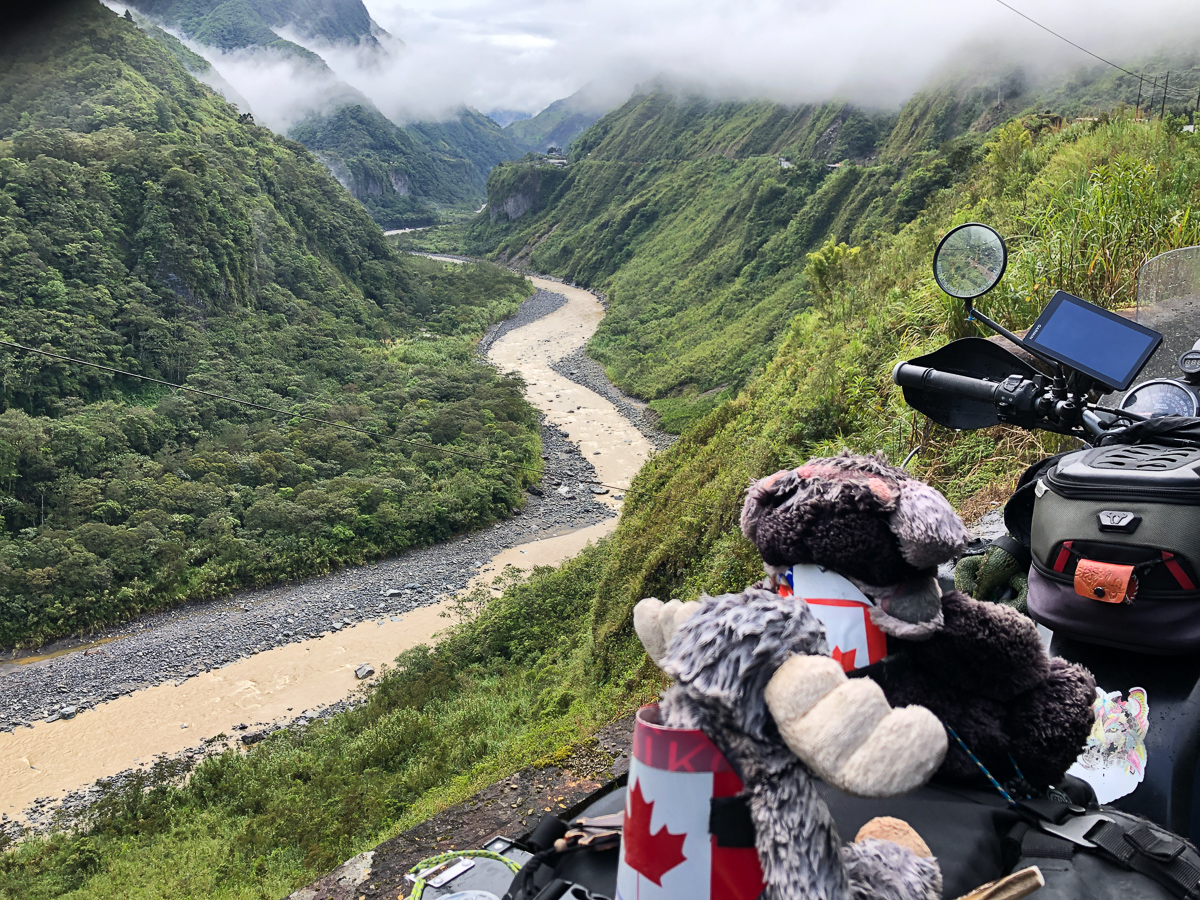
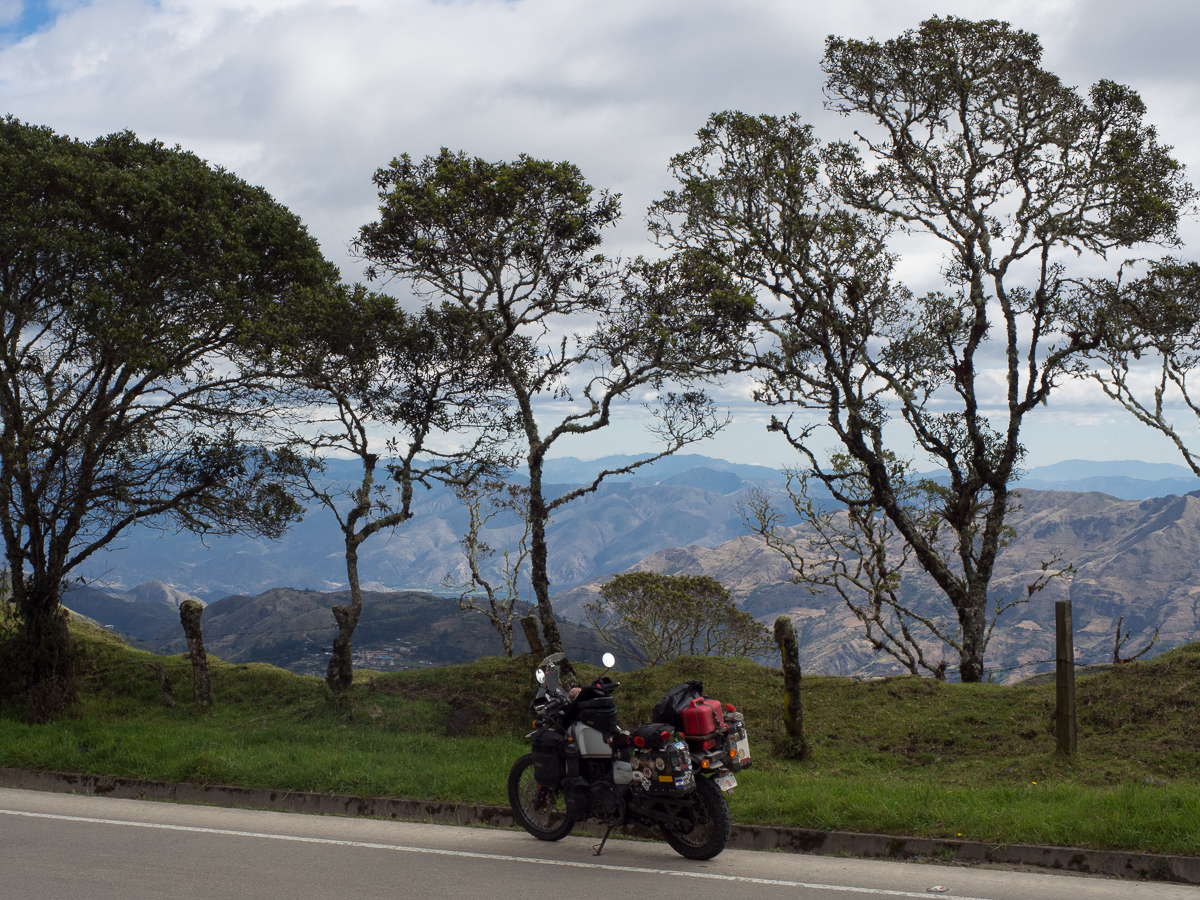
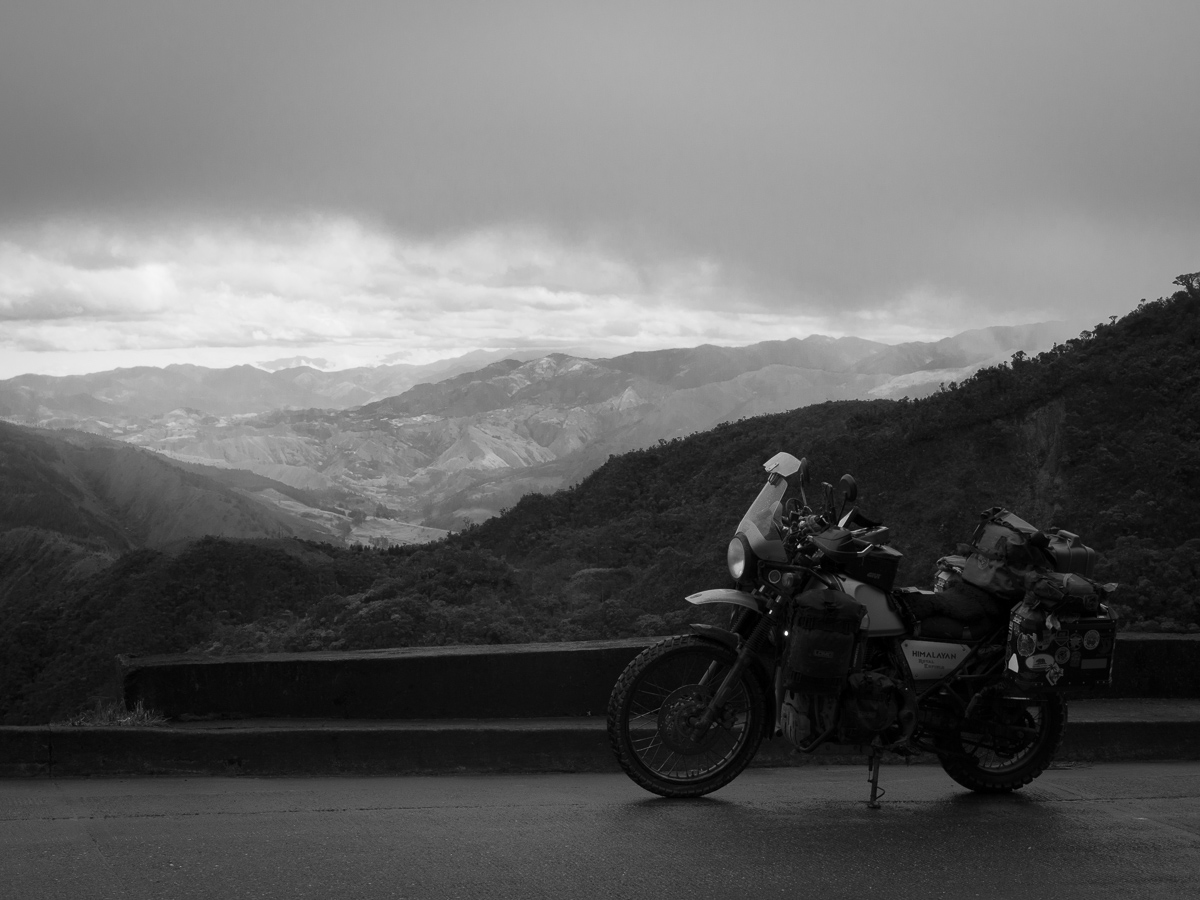
For the second day now Gid has checked the route profile before choosing clothes – up and down ranging up to 3700m with an average altitude of 2761m – snow possible at night on the higher ground. On the chilly side then but we’re getting used to it.  We hadn’t expected to get so cold when on the equator but soon realised that around 3000m high we were feeling chilly but drop back down to 2000m and potentially the extra clothing would need to come off.

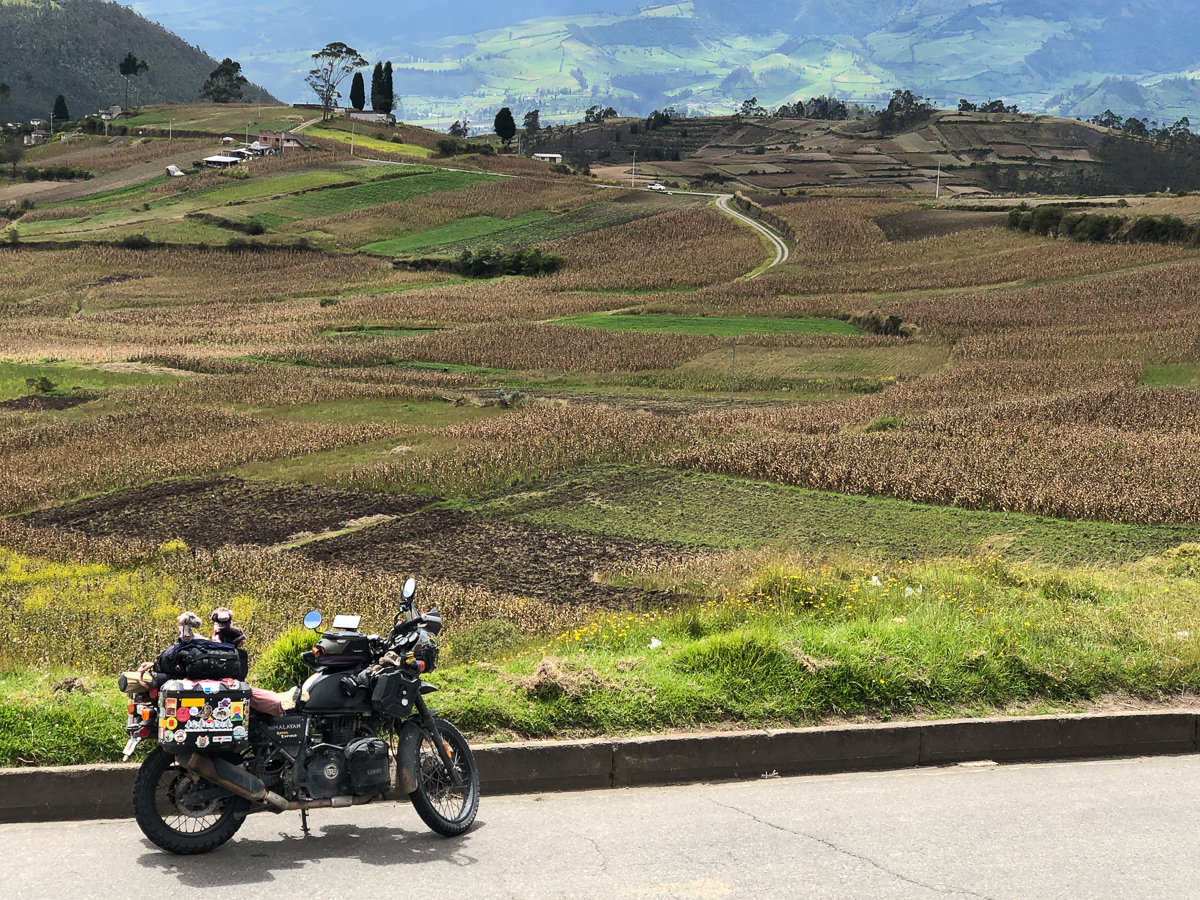
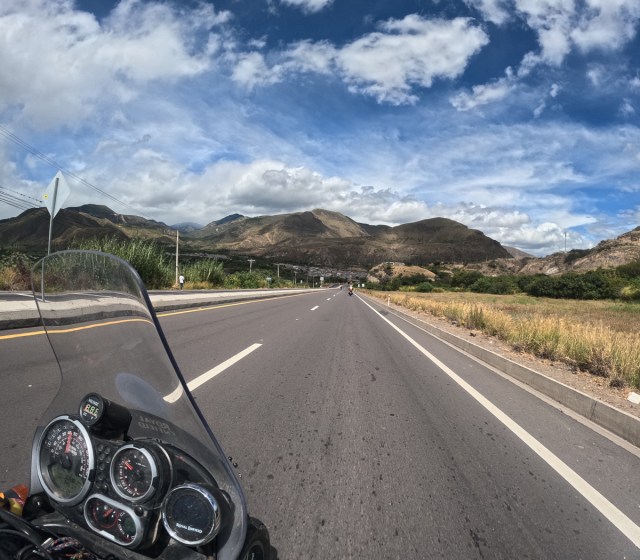
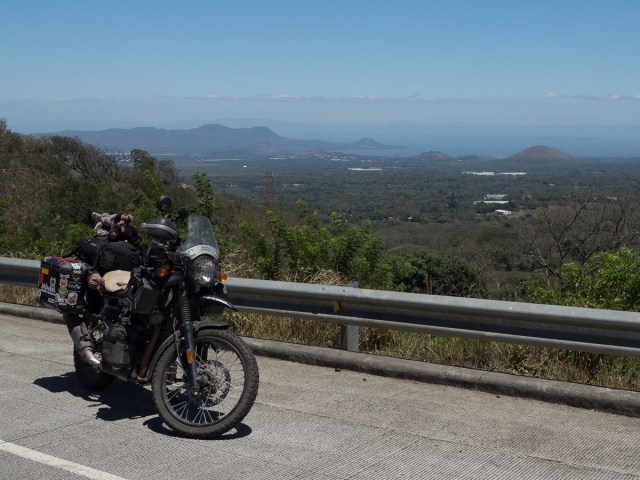
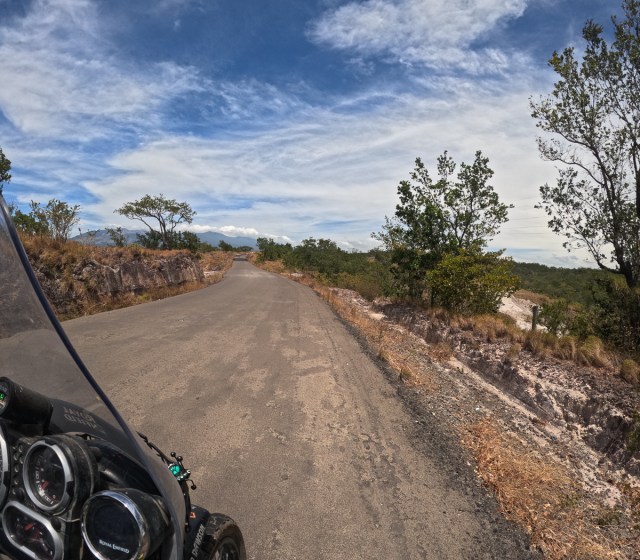
Heading further down through Ecuador we were back on the E35, the PanAmerican Highway.  Around the bigger towns it was a tedious four lane dual carriageway, although the traffic moved fairly quickly when not jammed up in queues.  Once clear of the towns it was a very pleasant winding road with a reliable good surface and sweeping bends. Our Hims could hardly rise to the occasion of speedy sweeping, for some knee-down corners.  The views were equally impressive with panoramic manicured pastures, cows, some hedges and enough trees to maintain a rural image. It could have been the Yorkshire Dales in England so cultivated it was.
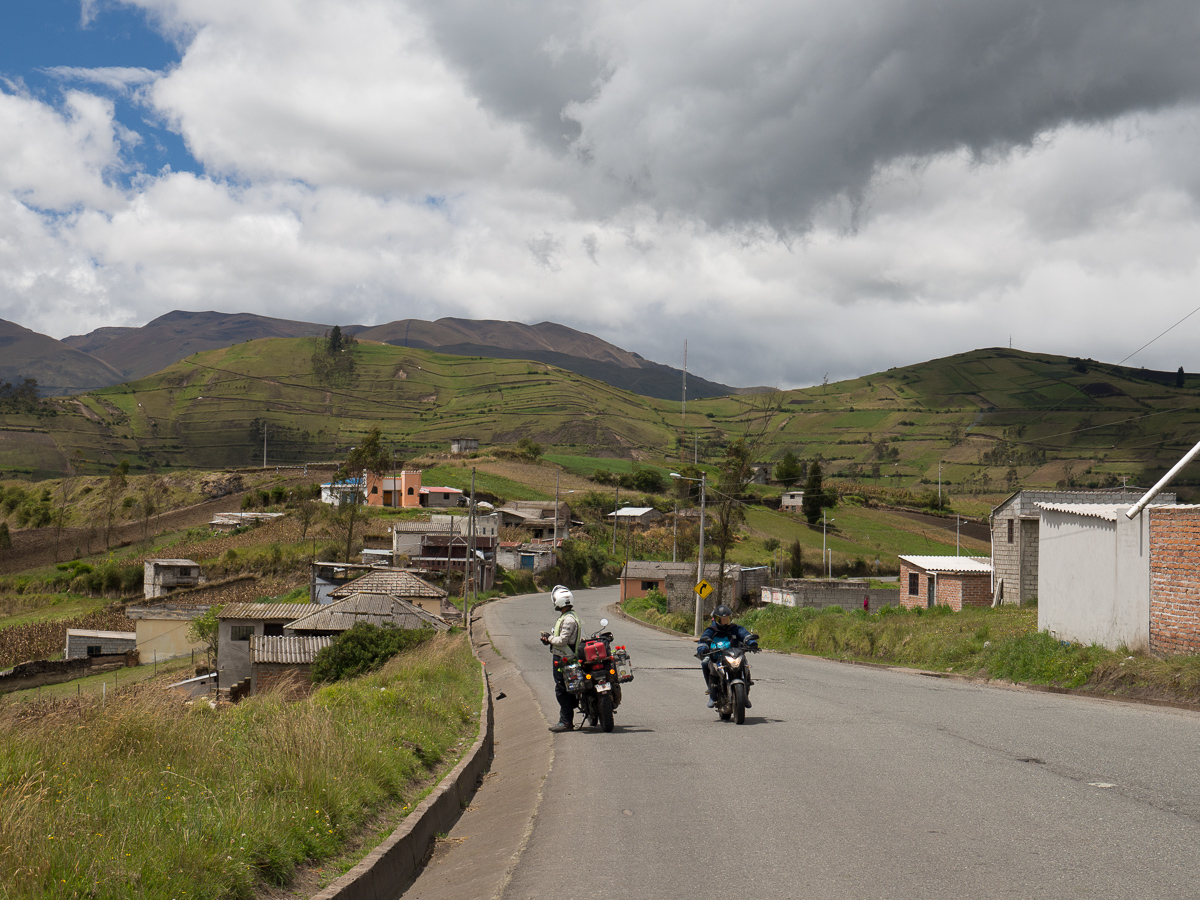
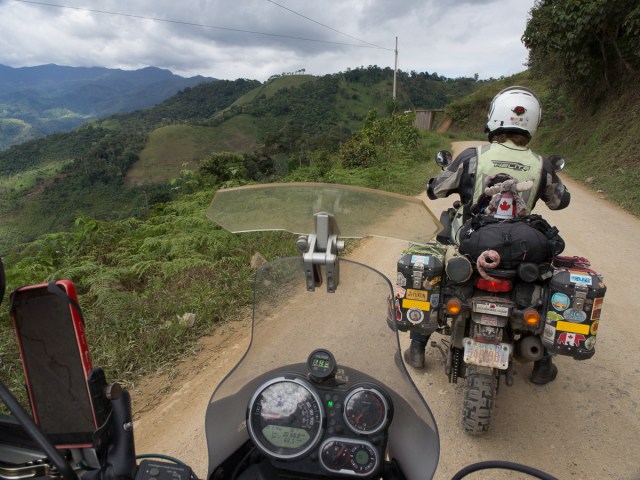
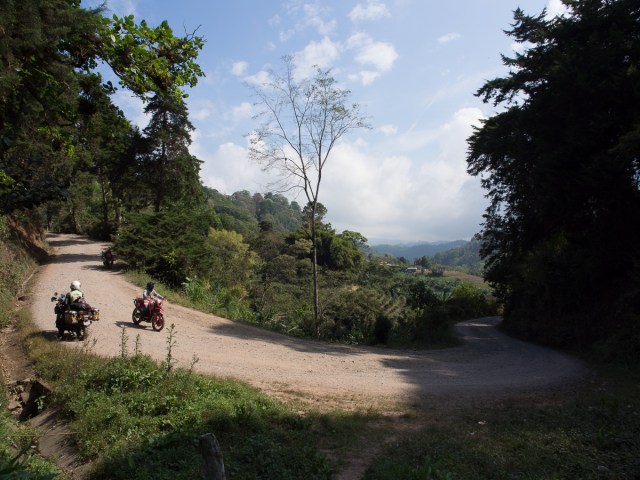
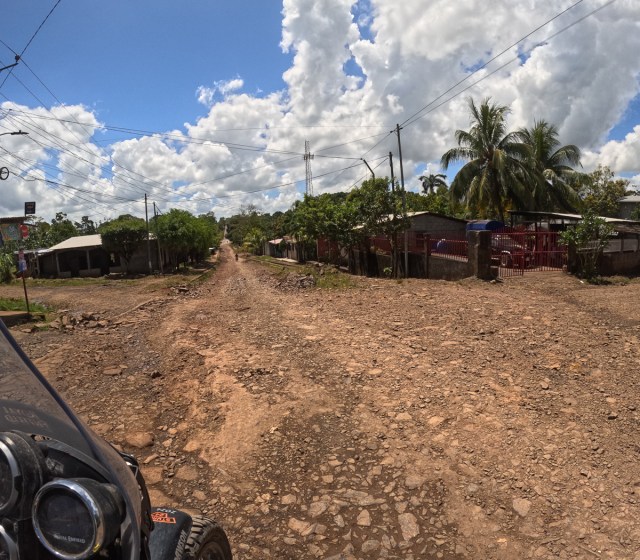
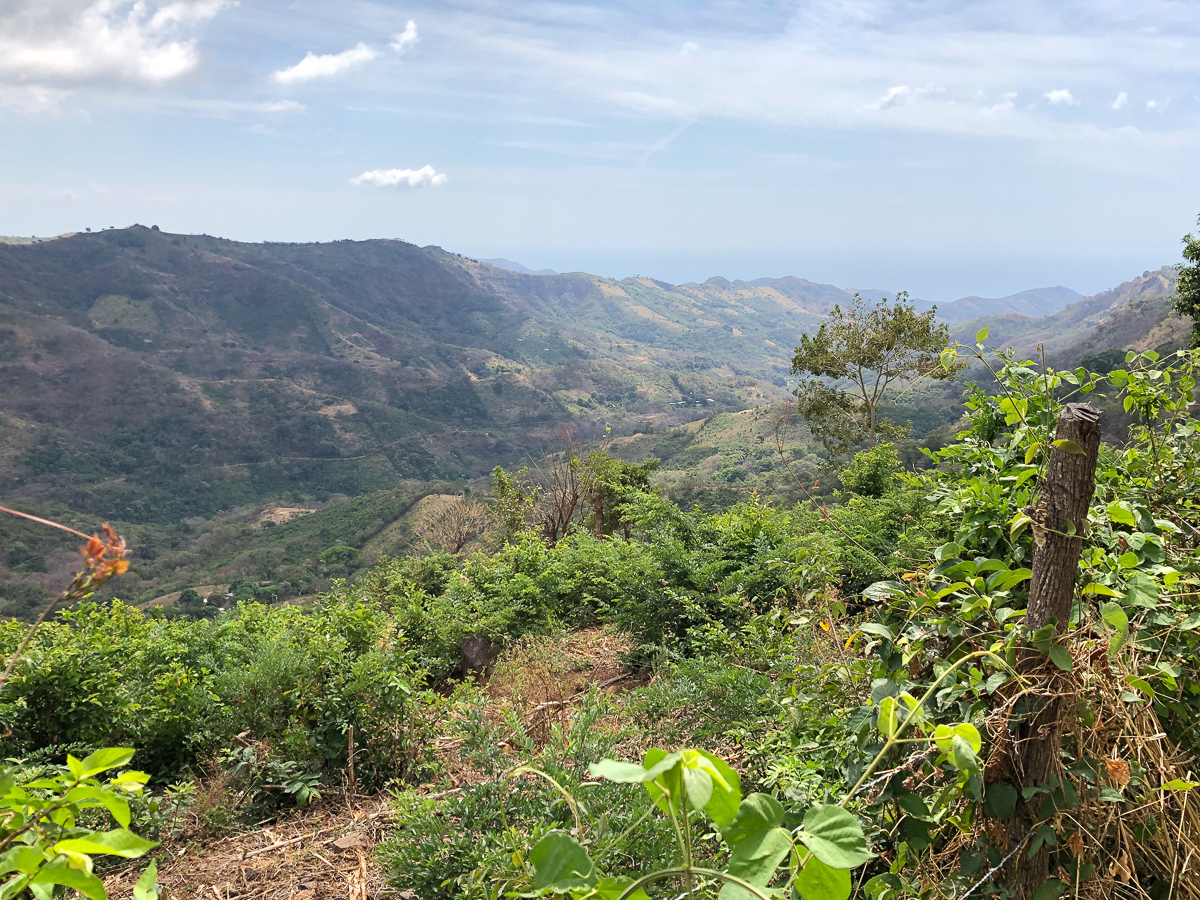
Our border crossing of choice was La Balsa.  It’s small with a minor mountain road approaching it. The road was metalled for the first half. That’s when it wasn’t blocked with land slides or just disintegrated into dirt/mud or collapsed away beneath the edge leaving gaps along the carriageway. The second half was dirt road but is narrower and probably in a better condition. Once again the views have been spectacular.  Recessions disappearing into the distance. Deep valleys carved by mountain rivers.  A final army checkpoint just before the steep ascent along a mountain ridge before a wiggly, and loose descent to the border hamlet. 
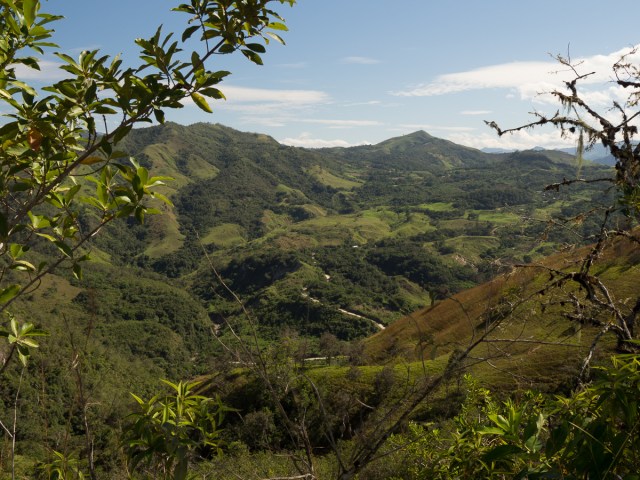
La Balsa was the best kind of border crossing. The dusty main street contained an equally dusty pickup and a few sleeping dogs. The pickup was noticeably better parked than the dogs. Time lapse photo frames would have been distinguished by the chickens being in different positions.  We stopped at the last, open sided, building.  An amiable policeman ambled out, gestured “park here”, and pointed us to the discreet immigration office.  A few minutes wait, and the solitary official did his bit, stamping our passports.  When we emerged, a full-sized coach emblazoned with a university logo was pulling in after descending the same twiddly dirt road – we’d got through immigration just before its 40 estudiantes!  We had to ask for the Aduana (customs) office, and there it was, shuttered.  Oh – 10am on a Saturday.  Next door said, ‘He might be in the restaurante, or asleep’.  Let’s try the restaurante.  We went back to ask our helpful policeman.  He grinned, and pointed to the young fatigued hombre sharing his table.  A few minutes later, TIPs cancelled, we trundled over the bridge to the Peruvian side.  Which had much newer, neater, bigger buildings, but was fundamentally the same.  There were more travellers here for the equally few and friendly officials to process, but we were still clear of the estudiantes, and after an hour or two we were rolling in Peru, land of the Incas and Paddington Bear!

A few final pictures:

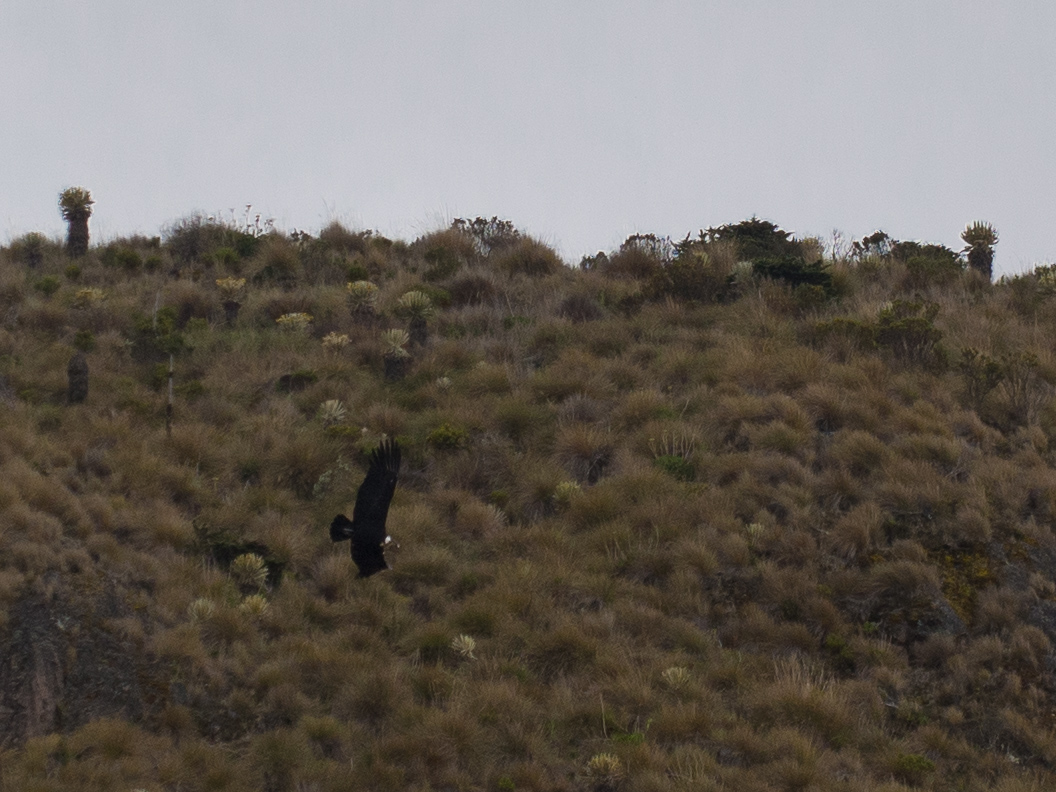
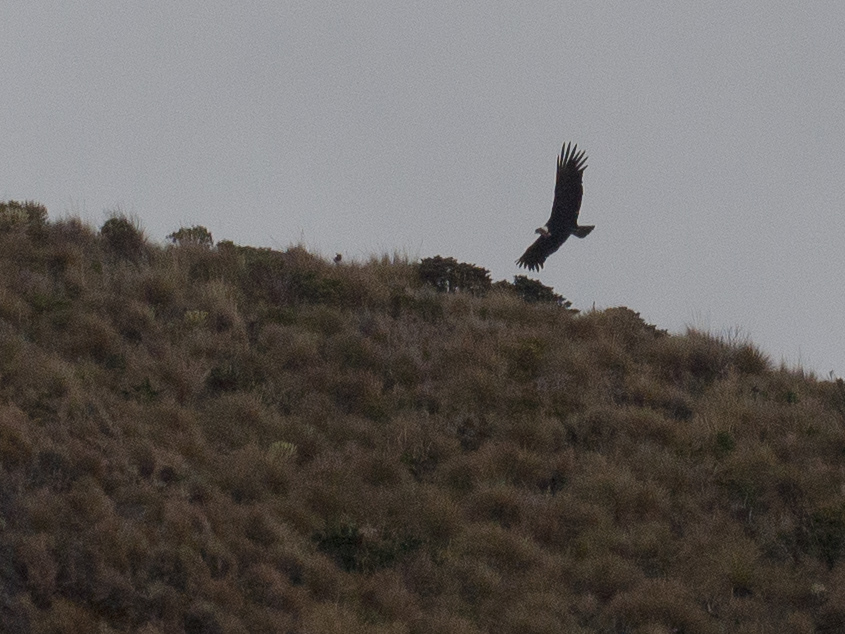
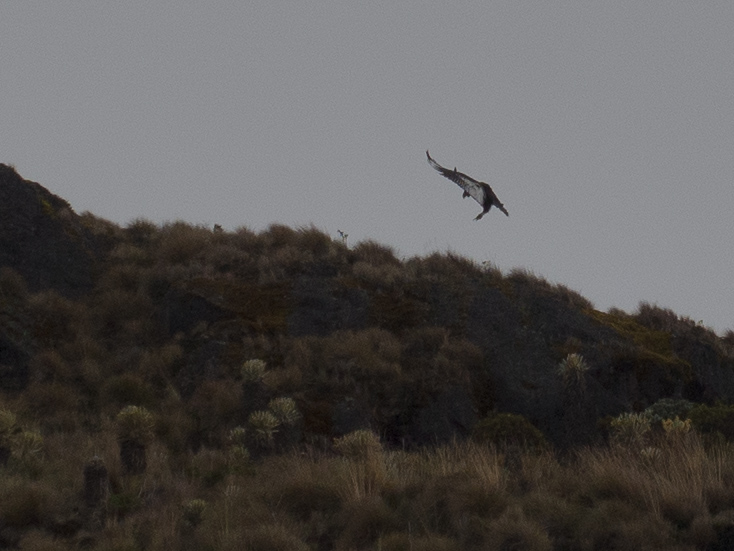
On a hike to Lago Otun in Colombia, we were lucky enough to see a brace of Andean Condors!

And an ad-hoc selection of photos from both countries:
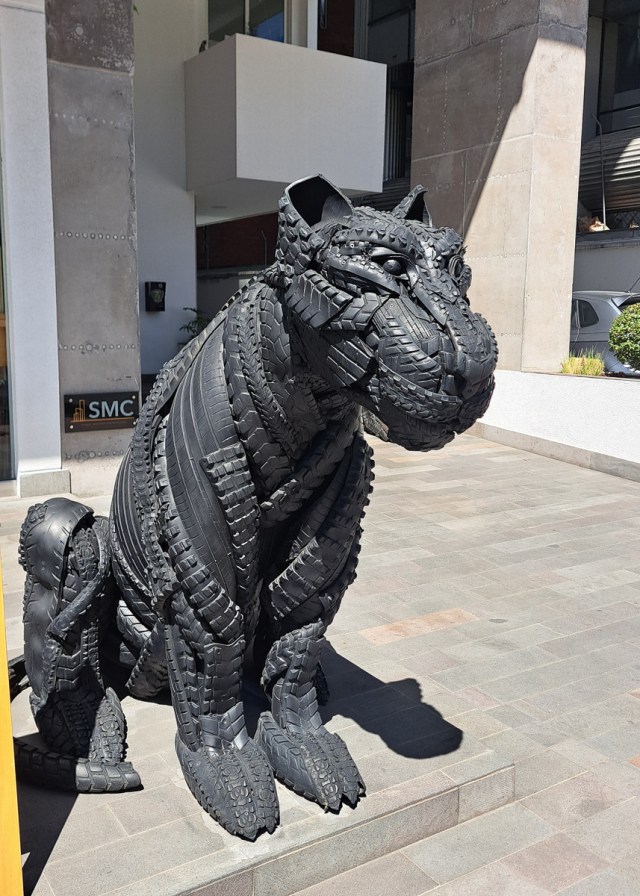
  • Cat (jaguar?) made of old tyres.

Nicaragua – Land of Shadows

I was a little anxious about entering Nicaragua.  In my mind, fed by various perhaps out of date articles, Nicaragua was going to be more lawless and therefore more dangerous to be in.  There are tales that the police are even more corrupt than usual. Both threats have been with us since entering Mexico. So far, either the reports are wrong, or we’ve been lucky.  But, we have seen more road accidents in Central America than we have ever before.

The Honduras-Nicaragua border crossing was particularly tedious and rather exasperating as we had to stop here then there and no one told us about the over there.  Having had our documents checked at one oficina and told now you can go that should have been  ‘now you can go over there to the next stage’.  Gid is very thorough at researching the requirements for each border crossing and not to be fobbed off, but even he didn’t foresee the number of times Nicaragua would check each document.  There were about 7 stages!  Regis, a fellow traveller we met in Leon told of how he was fined while exiting Honduras when imigracion saw that his entry documentation wasn’t properly stamped.  He had been illegal and had to pay the fine of $250 but only had $230.  He had to wait until a fellow French traveller baled him out!  Although we’ve done plenty of borders before, these are remarkably long winded, and it’s our first trip combining tedious borders with motorcycle import permits, really hot weather – and motorcycle clothing. We melt.

From a border we usually plan to stop pretty soon after, but the pueblo of Condega was out of rooms – “Convencion” – so we rode on along the main NIC1 highway to Esteli, to kip in a windowless concrete box with free condoms.  Our actual destination was San Juan de Limay, the nearest town to petroglyphs marked on the map but it was getting a bit late for that rather uncertain route.  We wanted to settle into the country before setting off on potentially rough tracks and start earlier in the day. 

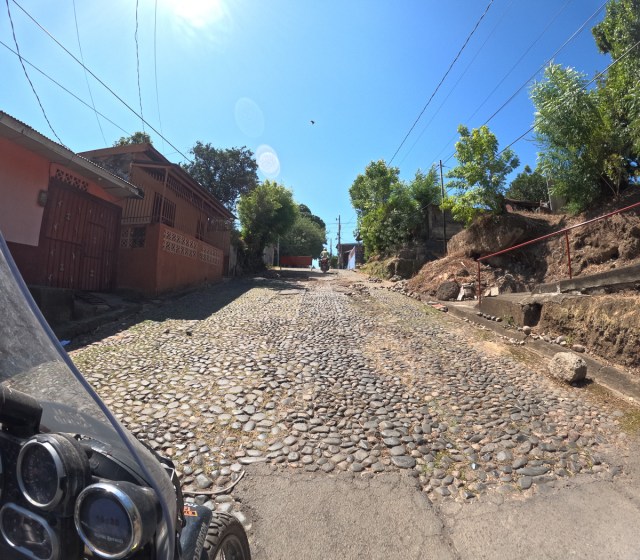
From Esteli there appeared to be a route cross-country but the advice was not to take this ‘short cut’ because of the potential for problems crossing the multiple rivers! We looped back north and round. The paper map showed the NIC38 as mostly dirt road, but OpenStreetMap said it was fairly major.  We turned onto a laid block surface which I had expected to revert back to dirt once out of the town but that wasn’t the case.  In the main it was a beautiful rural road all the way with fab views where we could actually stop and take a few photos, if we lifted our eyes above the endless twists and turns through the hills.

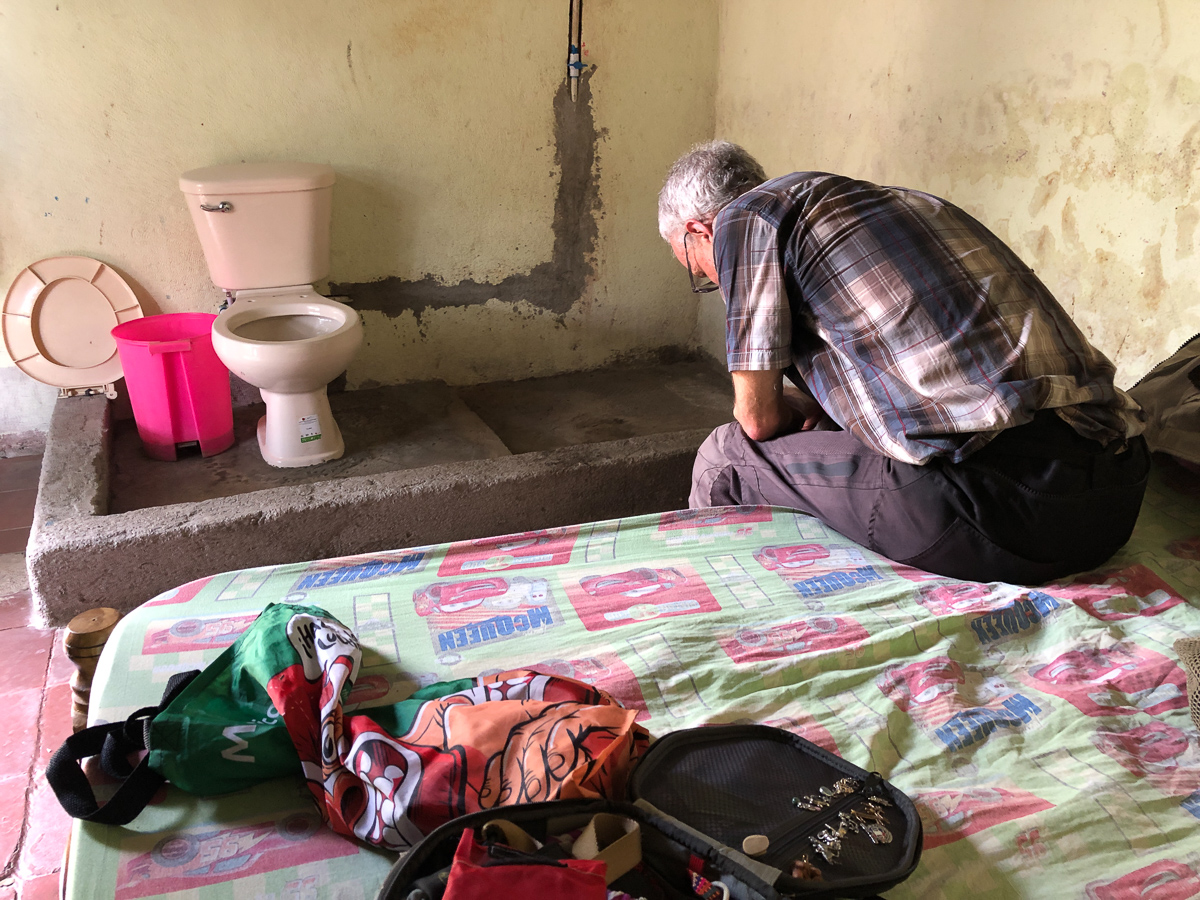
Our arrival at San Juan de Limay was quite amusing. It’s a small rural town, no tourist hotspot.  Gid had found three guest houses online but when we arrived the first didn’t seem to exist. We headed for the Parque Central to get our bearings in the town.  Pausing outside the Museo de la Revolution, to Gid’s annoyance I went in.  What were they going to tell me in there he was saying.  The very helpful young lady understood enough of what I was trying to explain.  She shut up shop and led us around the town on her trailie. The first two accommodations fell flat as they were full.  The third place we visited was still running and had space.  We’d never have found it – hospedage – lodging house – was badly spray painted on the gatepost .  This was it then.  I went to look at the room in a block that could have been the old stables out the back of the family house.  I came out in fits of laughter.  Gid was appalled at how rude that was but it bought new meaning to en-suite.  The room was small.  No problem there but it consisted of a bed and folding chair, a fan and a shower/toilet trough.  No towel, no sheet, no soap, NO TOILET PAPER, no door lock.  The sink was communal with a wash board and trough in front of the rooms.  They all caused us some amusement.  The shower head was at the top of a pipe as you’d expect but the slightest turn of the faucet and the head catapulted forwards spraying a gush of water over the gutter right onto Gid’s kit.  More hilarity but the cacophony that started at 4:15 was definitely a groan.  Our two cockerels were trying to wake the neighbour.   Any disturbance in the brood resulted in an almighty thud on the corrugated tin roof that was suspended above our walls.  To use the one socket in the room was a balancing act but it did the trick – we had a cup of tea in the morning.

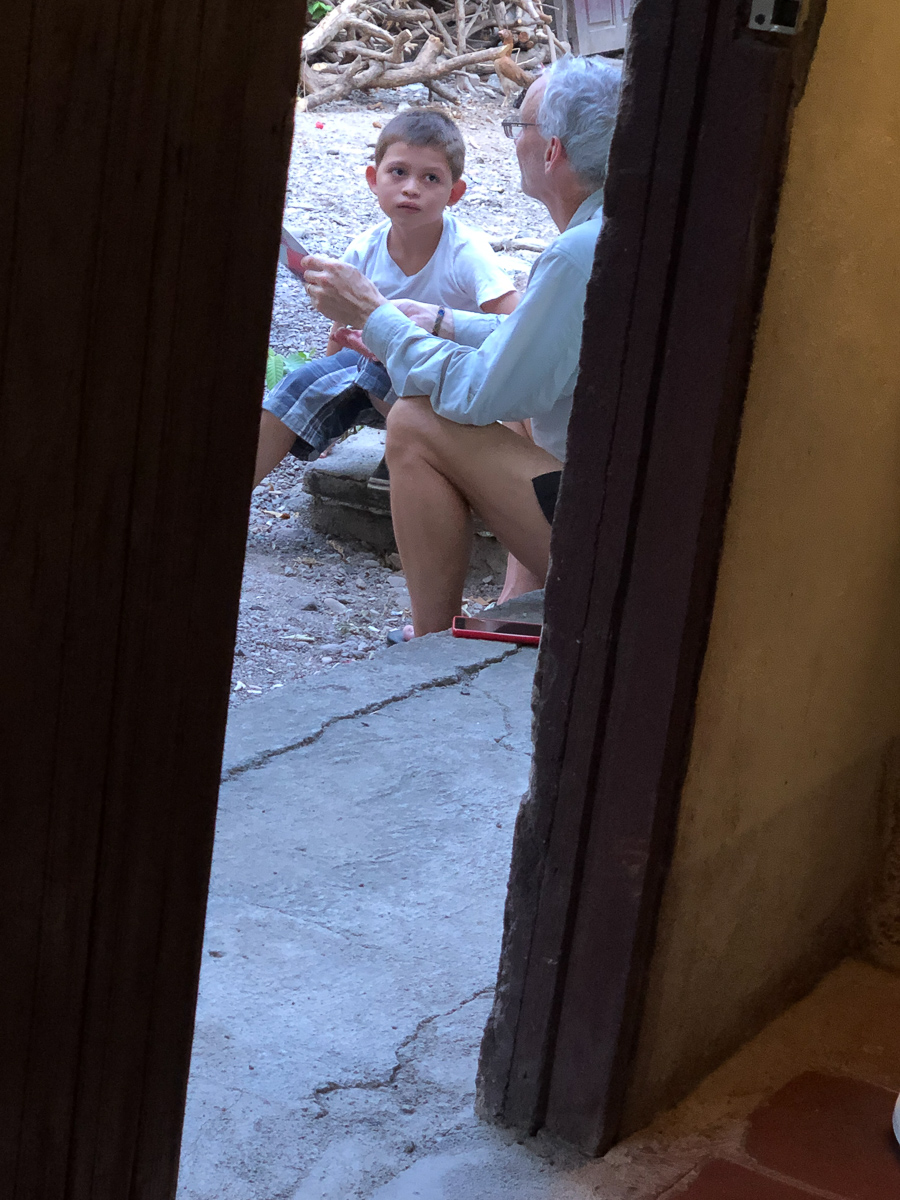
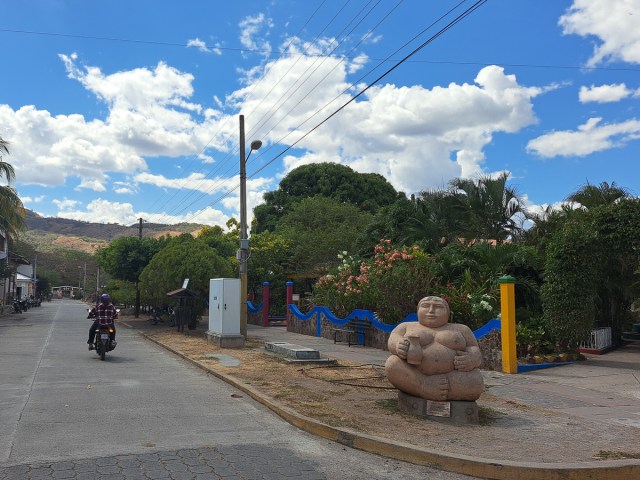
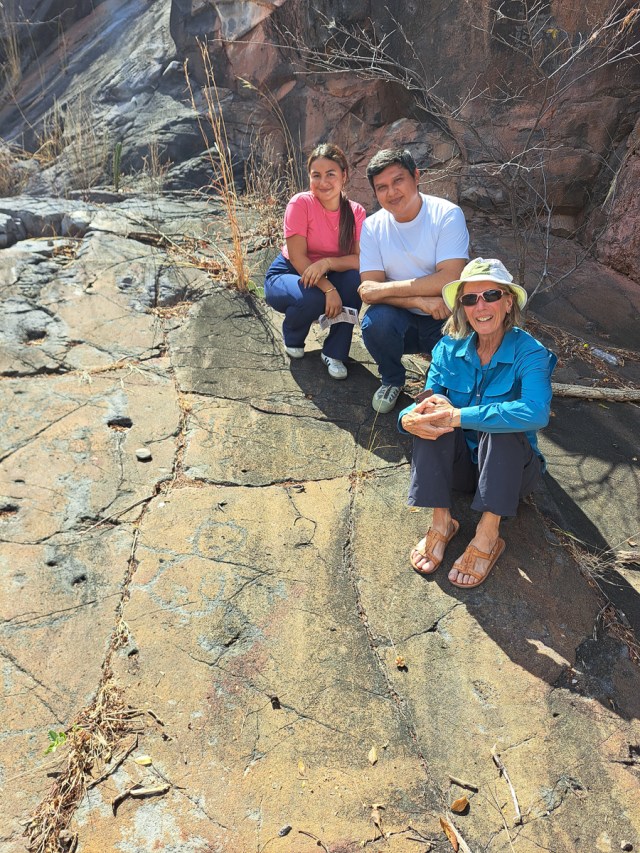
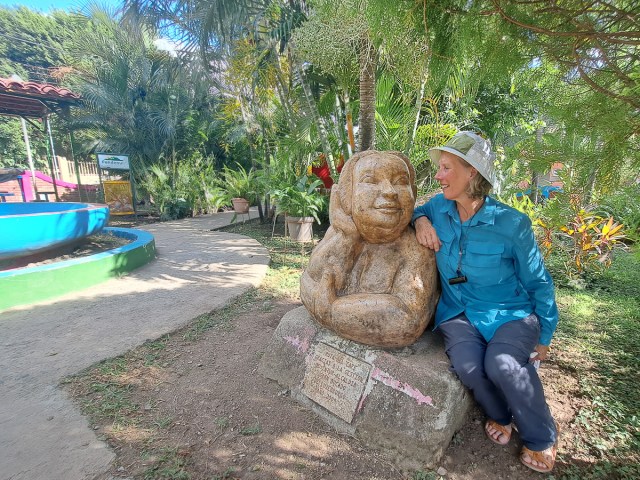
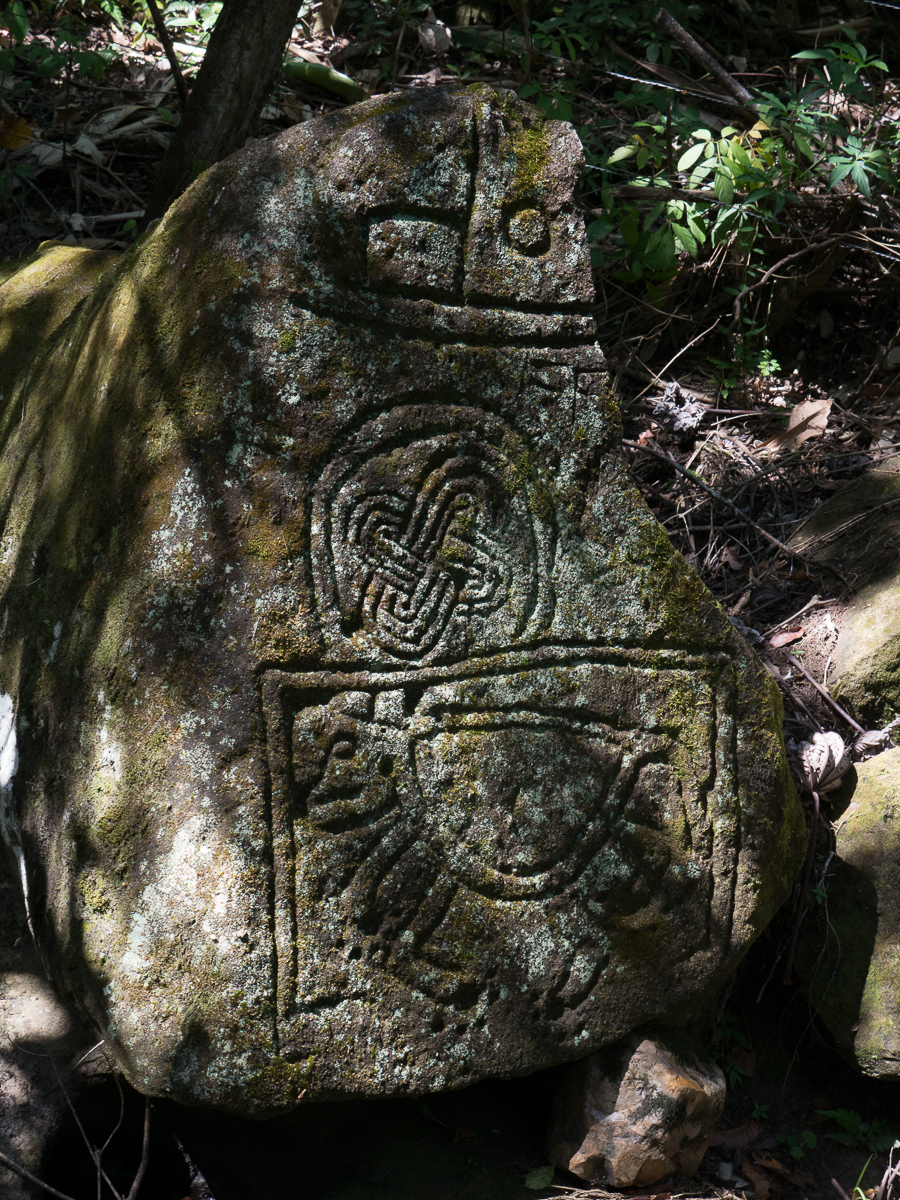
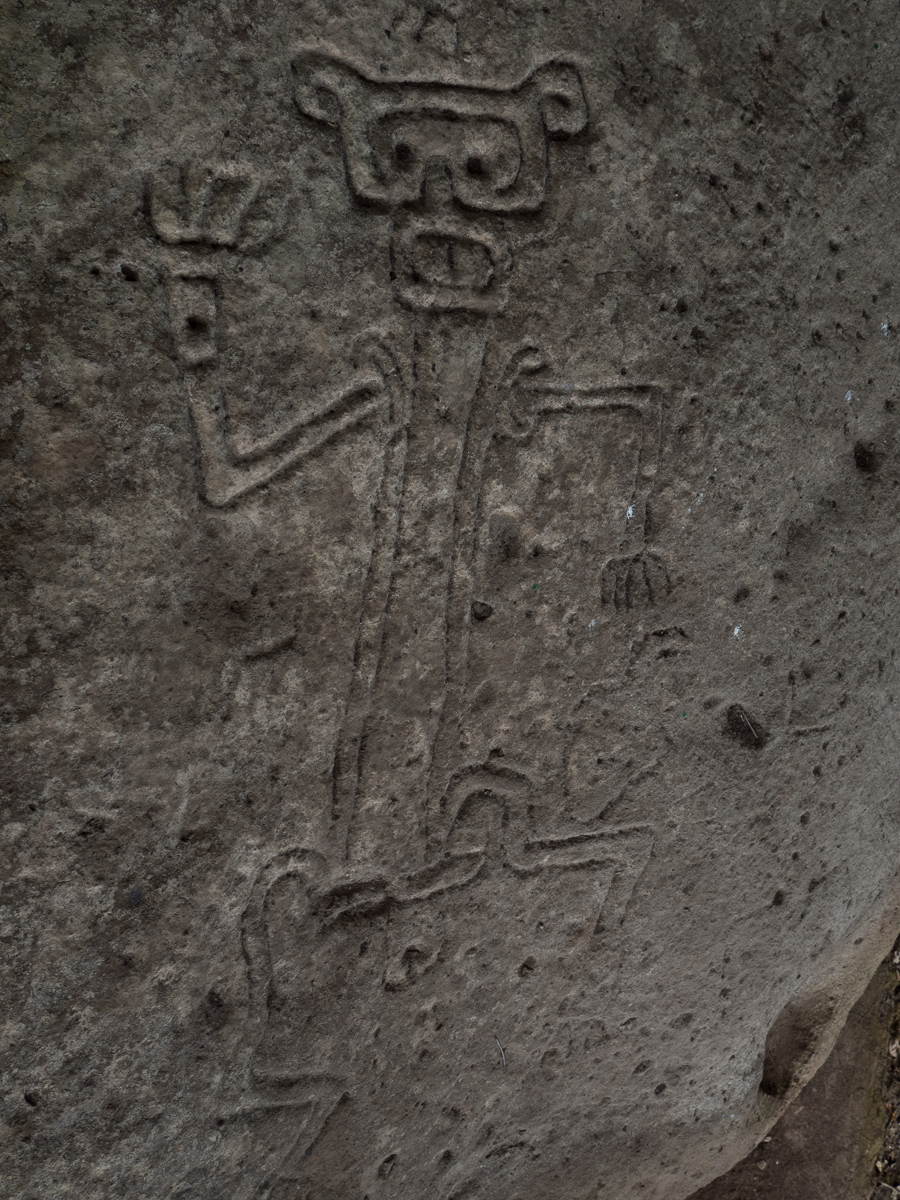
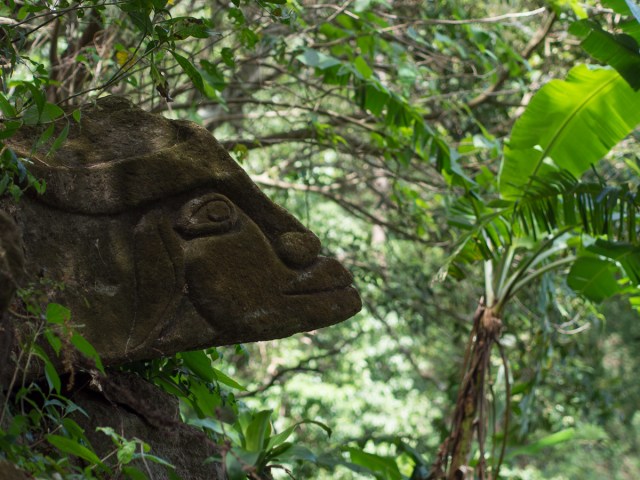
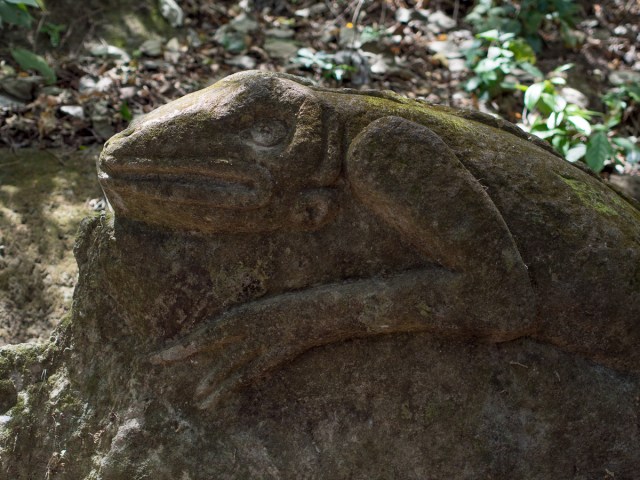
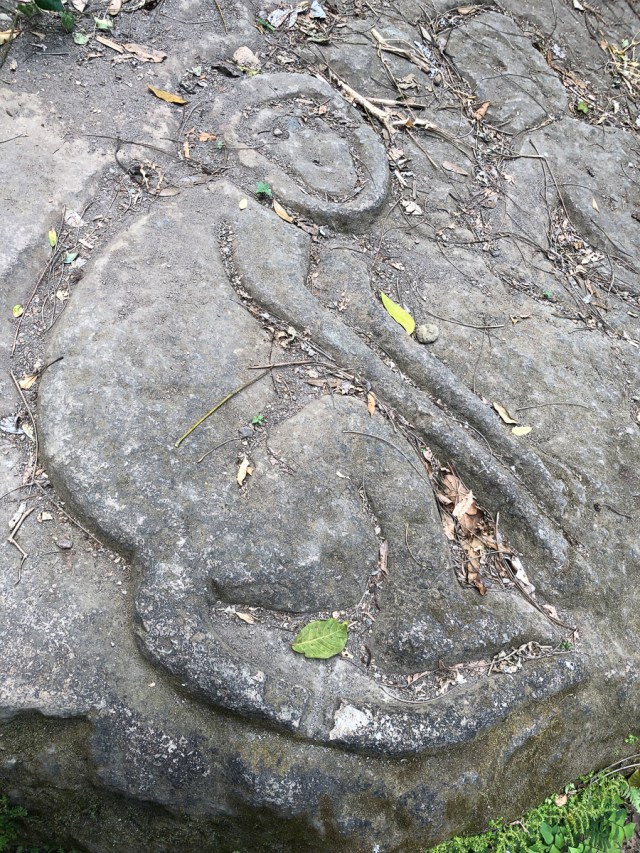
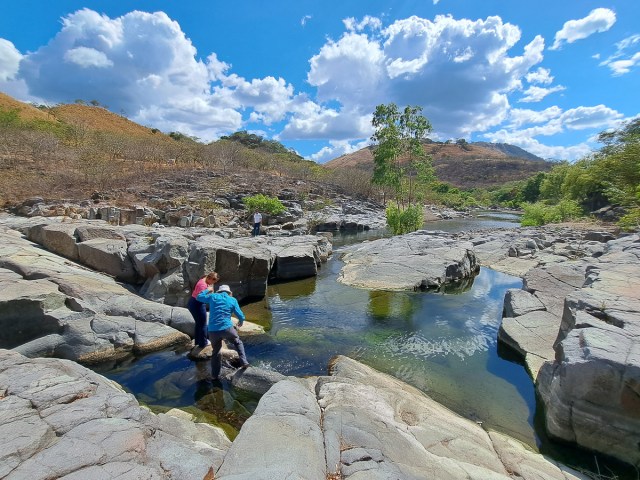
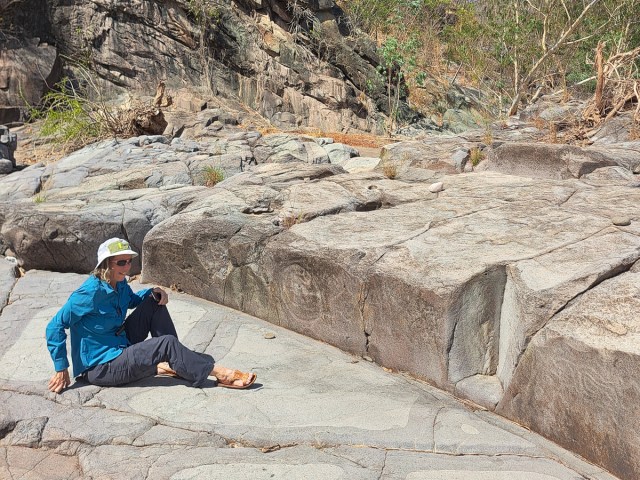
Having settled in we set off in sloppy sandals to see what we could find out about trips to the petroglyphs.  The town hall seemed a suitable place to start our enquires.  A rather grand name for an old single story building with a few offices.  The guard patrolling outside suggested the end door was the way to go.  He took us down there and spoke to the staff.  One very kind lady came out to check what it was we wanted and asked us to wait in the main entrance.  Thirty minutes later we were off!  They didn’t check whether it was possible but had arranged it there and then.  Five of us – three staff and the two of us, piled into the 4WD Toyota Hilux.  The lady passed us a leaflet of gordas – stone fat lady carvings that can be found around the town and local area.  I thought we were off to see some of these but no.  We took a back road out of the town and bounced along a dirt track, forded a small river and finally stopped at a pool.  The driver stayed put but the rest of us piled out and set off on foot clambering over rocks to cross the water flow.  What were we doing in flimsy footwear with not a camera between us?  Benito, the main guide, led the way and swept the debris off the few petroglyphs.  The young lady was new to the carvings too but was at least wearing trainers. Our return route was adorned with stops at a couple of local craft places – what a lovely day!

I had expected to move quickly through Nicaragua but in fact it has been the opposite.  Spurred on by near perfect road surfaces (everything is relative) and the relaxed nature of the people it’s been a pleasure to be here.  As always the people we meet and their recommendations of must see this or that has helped to forge our plans.

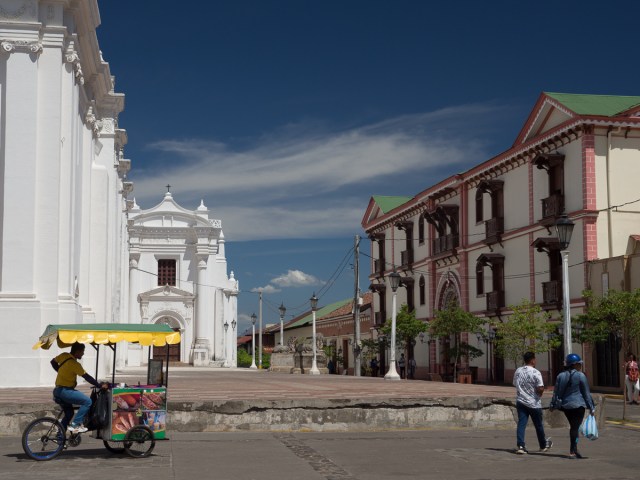
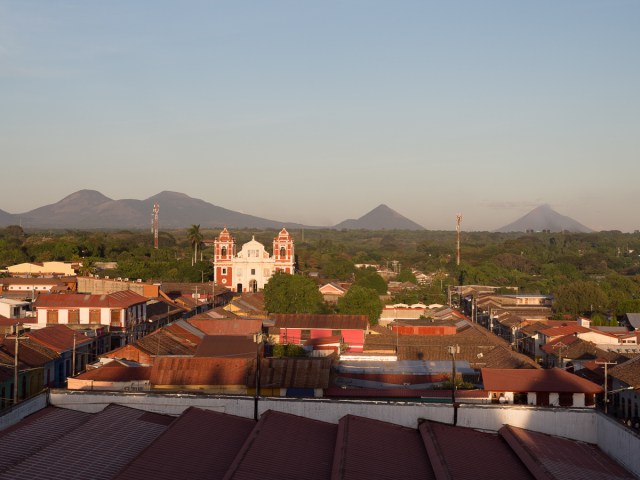
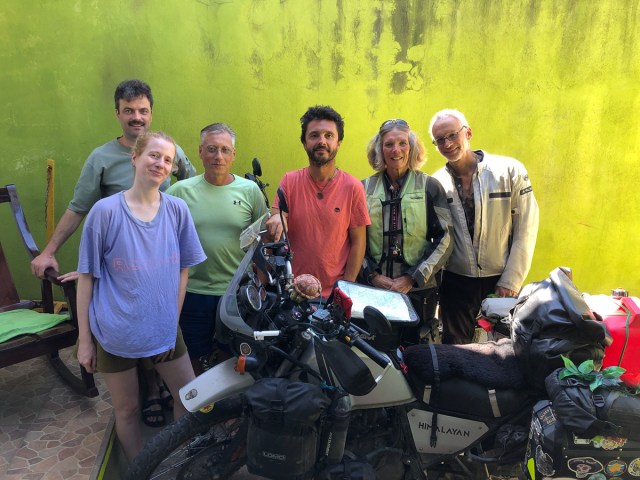
At Leon, our first stop after the petroglyphs, we stayed at Casa Lula hostel and bonded well with a lovely group of experienced travellers.  No one was in a rush, tales were exchanged, must visits suggested. The luxury hostel was a comfortable contrast to the Esteli condom box and Limay hospedage. A guided tour of the town very much focused on the revolution despite there being some lovely architecture too.  That isn’t so surprising as all the murals were of scenes from the revolution.  It may have been forty years ago but some murals were reworked as recently as six months ago to keep their political message fresh. Our guide, Antonio, explained the events portrayed and also some of the symbology.  Many of the characters (the deceased ones?) were painted with prominent shadows, and these represented their effects on Nicaraguan society and politics after their – mostly premature – deaths. Leon is Nicaragua’s intellectual – and revolutionary – hub, and while there were a fair few tourists, they didn’t swamp the place as they had in, say, Antigua, Guatemala.

One’s never far from politics anywhere in Nicaragua – red and black FSLN banners are everywhere, and on some roads I noted all the electricity poles were painted in the colours, too. It feels a bit one party state, although formally, it isn’t.

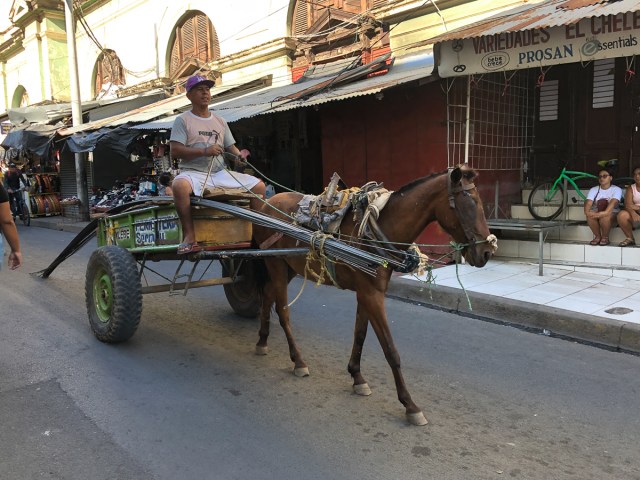
Thankfully our hostel host was interested in our petroglyphs excursion and pleased that we’d gone off the beaten track.  He lamented that most tourists hit the west coast going straight down the main road and out the other end.  ‘It’s such a pity,’ he said, ‘as Nicaragua has so much to offer and is a very safe place.’  Our horizons were expanding!  Nicaragua is one of the poorest countries in Central America, but also unusually – kind of – socialist. It’s also, currently, not terribly democratic. Some effects of this might be the lower murder rate, far fewer visible guns, the better highways, the better driving, the much greater use of beasts of burden, and the worst housing we’ve seen on this trip. Plus the curious phenomena of being begged by a chap who was fitted with a pacemaker – But then, since Belize, the Caribbean coast has offered a uniquely stylish form of begging.

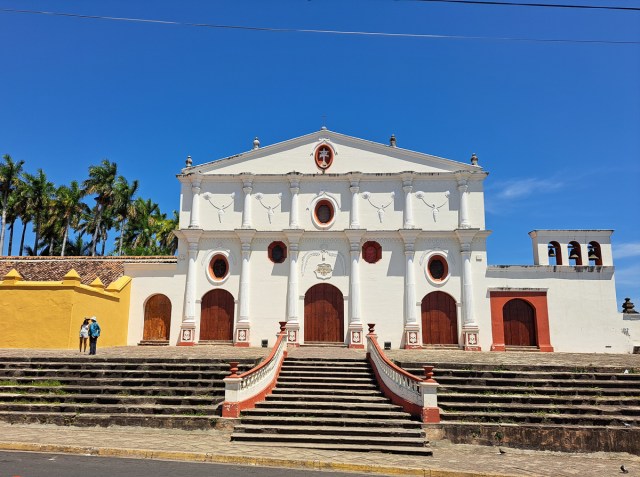
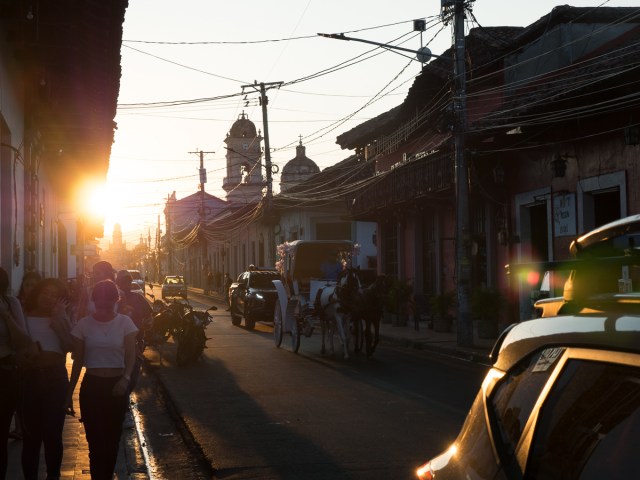
No matter where our new routing may take us Granada, just down from Leon, was next.  It’s the oldest city in Central America, with elegant buildings and lots of history. So it’s a must see destination and indeed is a very touristy town. It has a lovely promenade to edge Lake Nicaragua, and a small pier.  We stayed near the lake but were warned to go further along the shore away from the town centre to find more pleasant places to swim.  As I’ve said, everything is relative.  We did venture thus to risk a dip only to find that our swimming strokes stirred up one bit of rubbish or another.  One dip was plenty!  Shady trees and a strong morning “sea” breeze made it bearable in the 7am heat offering Gid a venue for a rare jog.

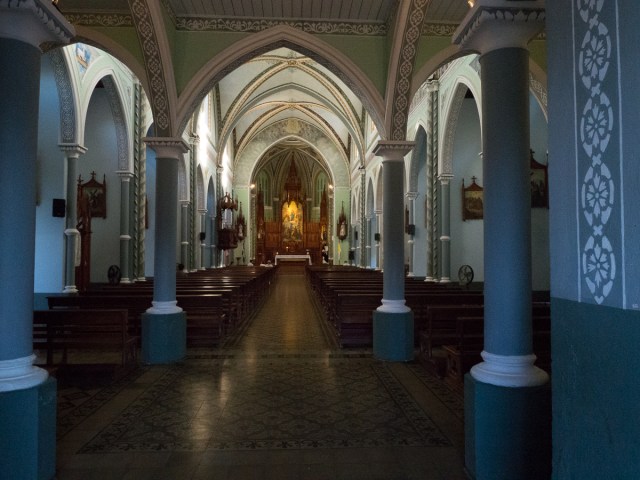
The town was lovely with a vibrant central square.  Despite the churches being flagged up as having splendid architecture and historical relevance they were in the main shut.  There were three on our bucket list to see: one we did see inside, a second we were able to peer into a rather dull side chapel when a service was taking place but the most ancient cathedral in Central America, the piece de resistance, was hidden behind its firmly shut doors with nothing to suggest opening times.  Circling it we found a very shabby rear door that advertised language lessons, but nothing about the cathedral itself.

A large part of northern Nicaragua is inaccessible jungle while the southern half has the 160km long Lago Nicaragua in the middle creating a this side of the lake or that side of the lake dichotomy.  Surprisingly there is a border post at the end of the east or west route down past the lake but no joining road at the bottom.  It’s an odd looking border, really, why doesn’t Costa Rica extend up to the shore of the lake? Presumably the Spanish Empire had a reason, when it demarcated the administrative boundaries this way.

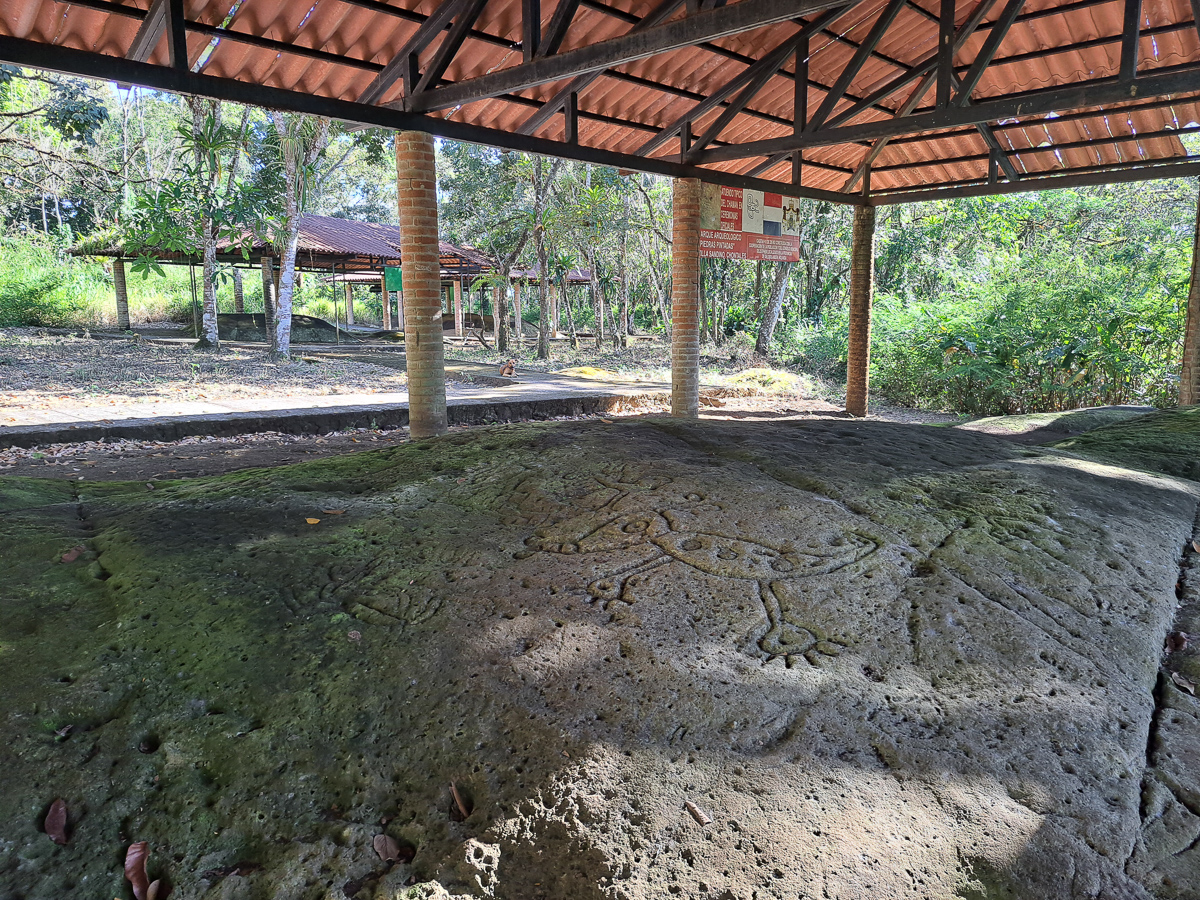
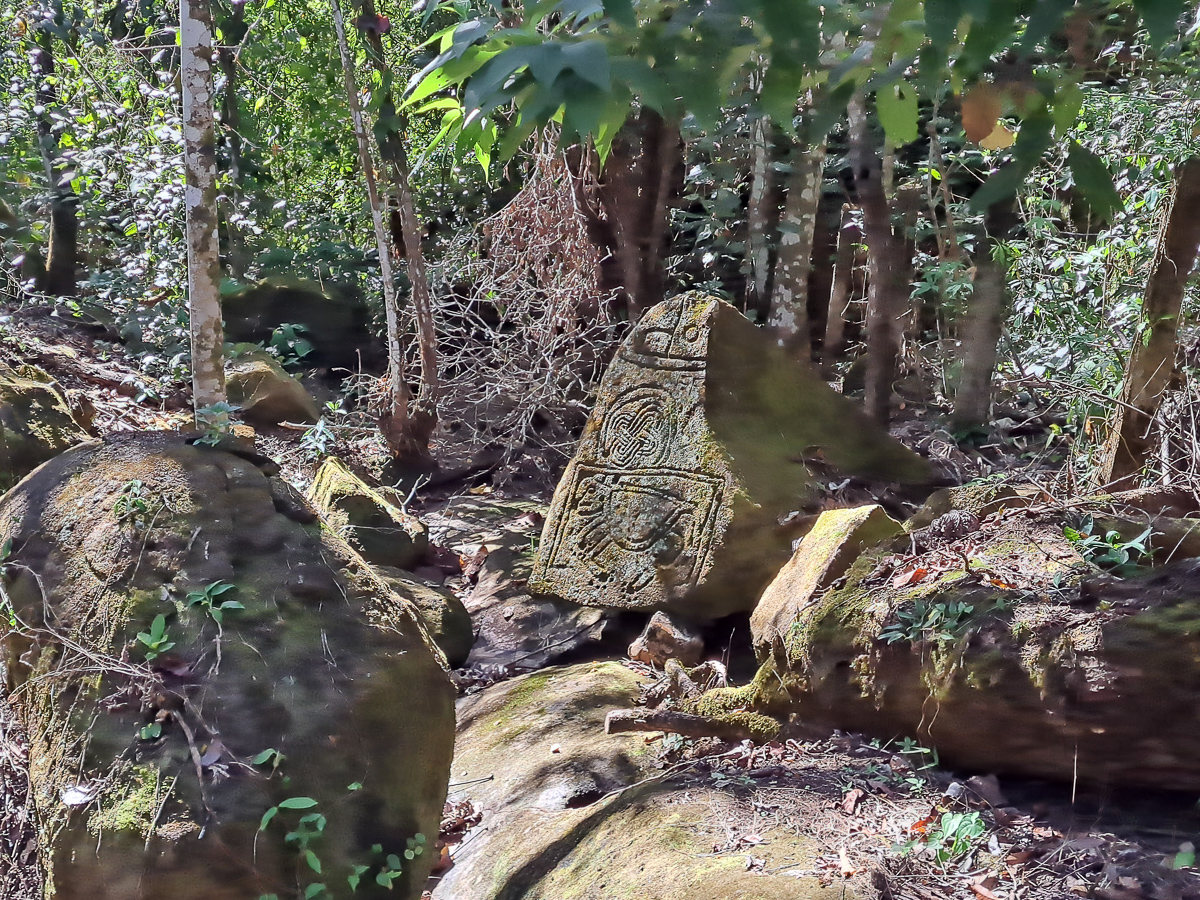
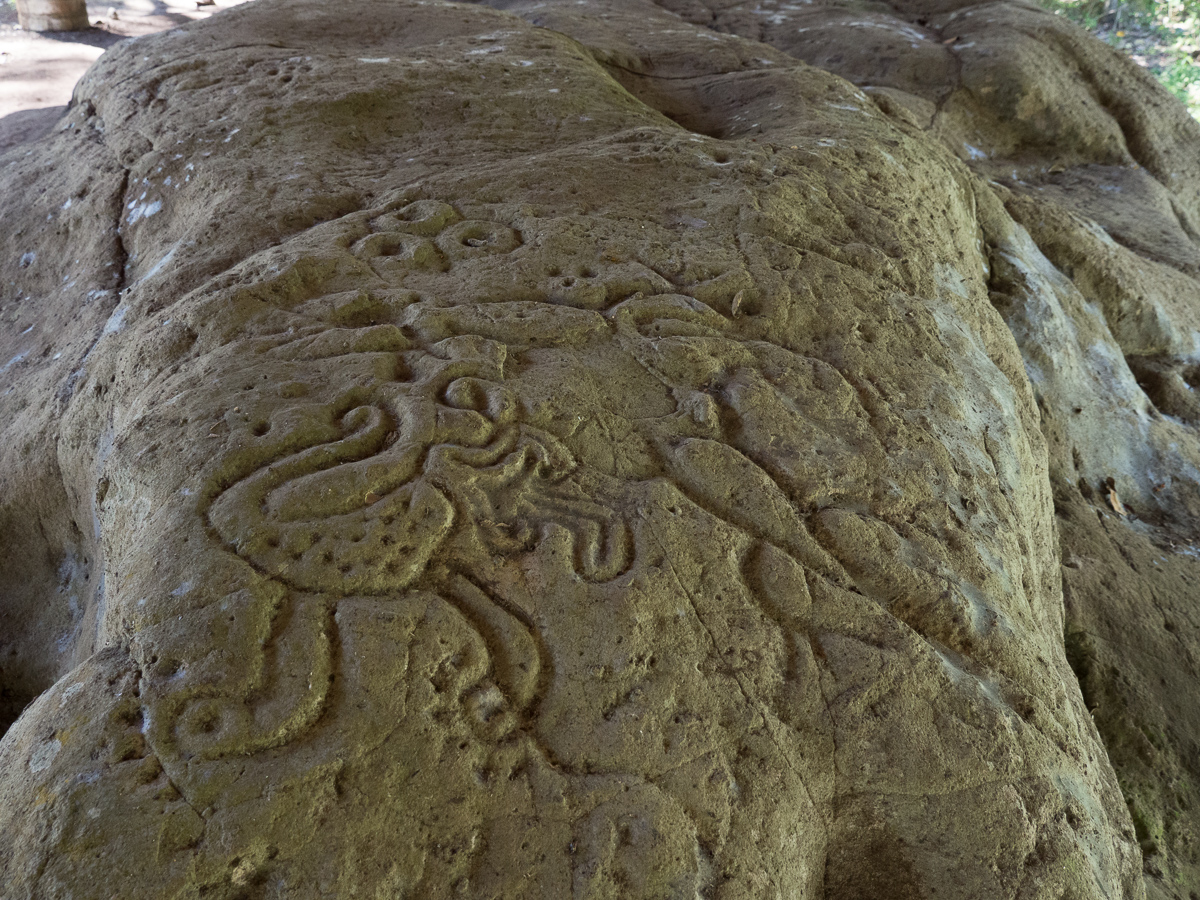
From Granada we took off slightly northwards curving back to reach the ‘that side of the lake’ more petroglyphs being a strong attraction.  Ok we’d seen some in very enjoyable and amusing circumstances but our National Geographic map has many references to them and surely some were going to be more impressive than the six carvings we’d seen.  They were!  Over 2000 we were told.  Many of them were highly graphic and in remarkably good condition for their 2000 years of existence.  We’d followed a sign from the highway 8 miles up a dirt road to reach the ranch style site.  A young guide took us around a trail explaining the meaning of the petroglyphs.  Many were to do with fertility and childbirth.  Some carved on standing stones showed the chief.  While another showed the dog he would eat.  We were now, after months, out of the Mayan area – these carvings were by the Chontales, but there were still some similarities of style.

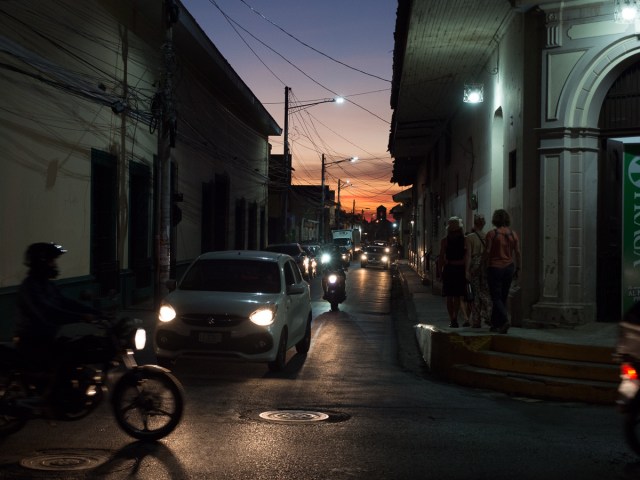
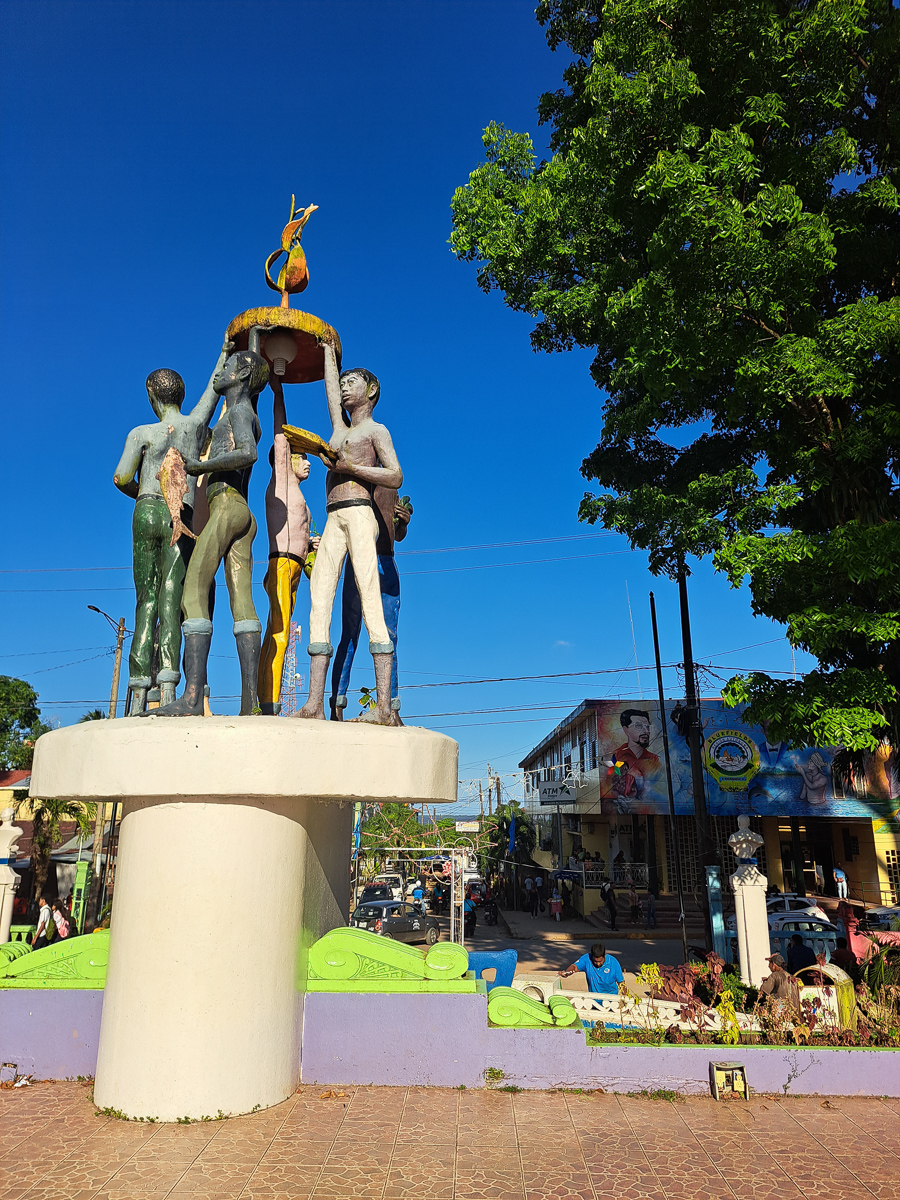
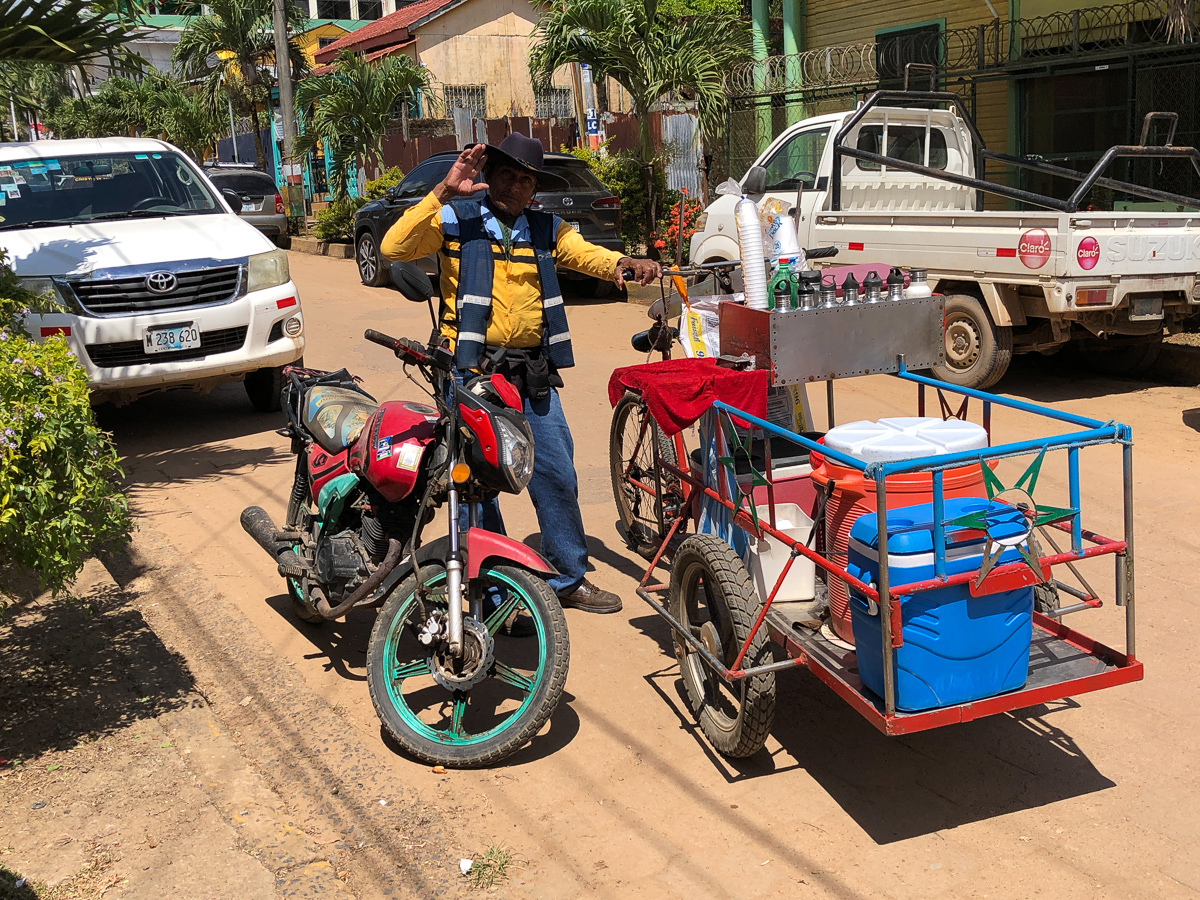
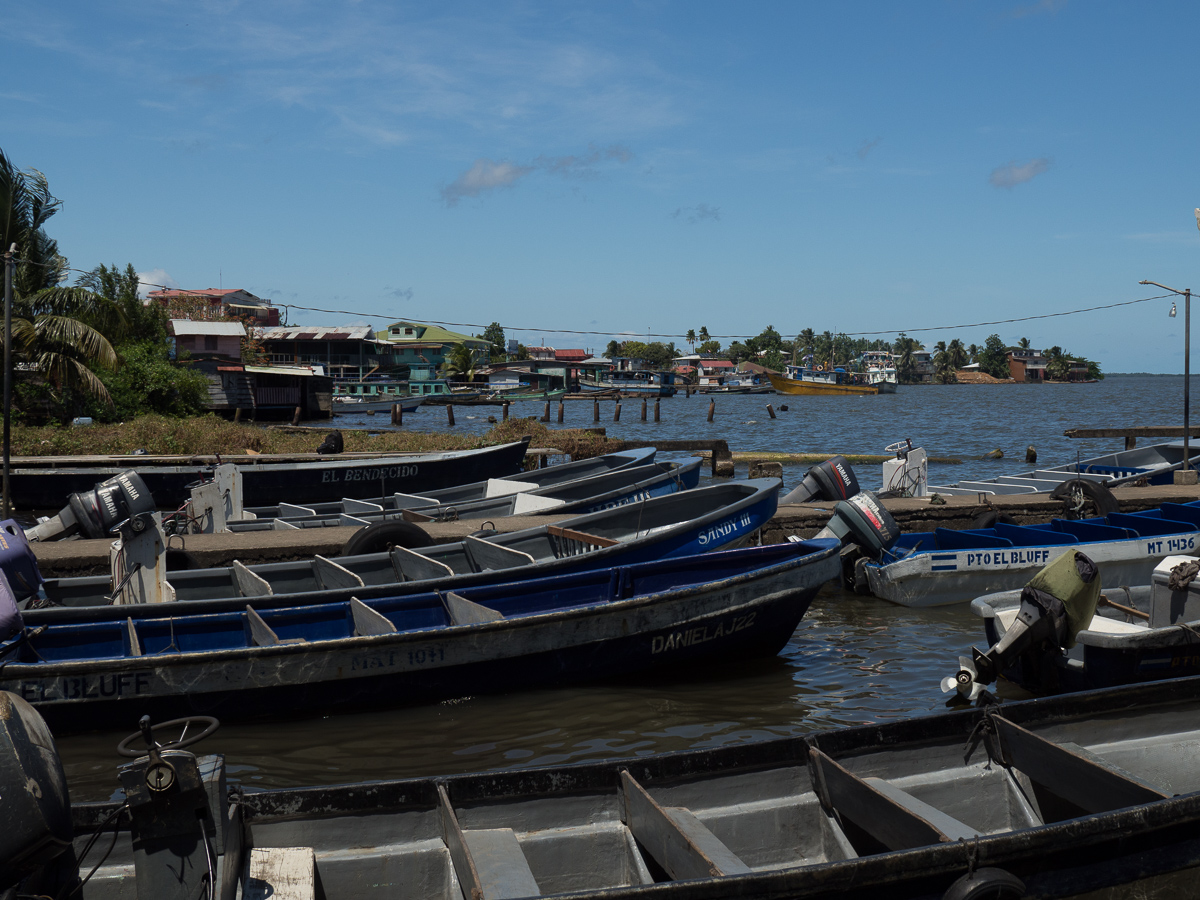
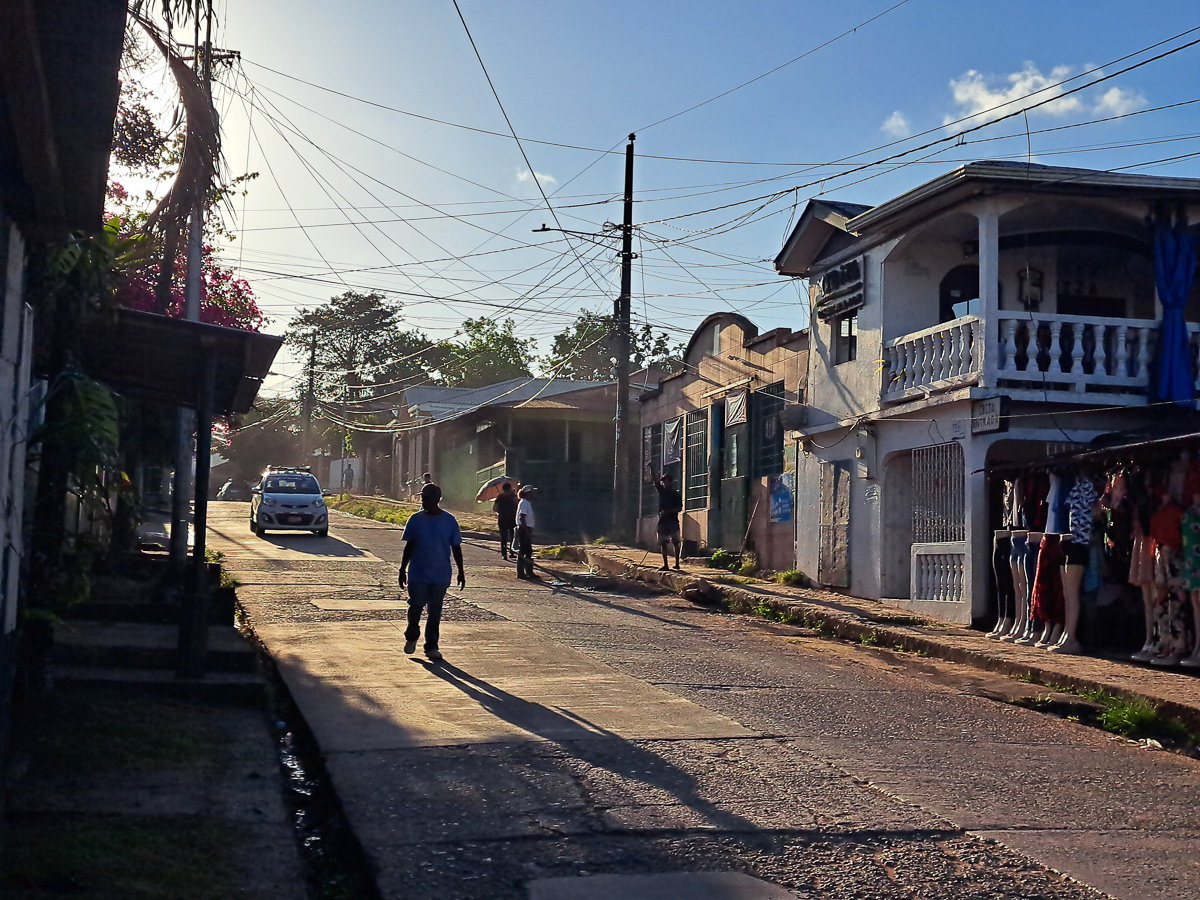
At the end of the NIC71 highway – mercifully now all paved, and really rather a lovely ride –  was Bluefields.  ‘We don’t see tourists down here.  They don’t come this far’, was one greeting we had.  It was a bustling town with a multitude of taxis.  Tichy cars that four people would pile into and off they crept, or lunged, forcing into a gap.  At least three taxis would fit across the narrow, bumpy streets, and frequently did. 

This eastern coast on the Caribbean is called the Moskito Coast after its original human, not insect, inhabitants. The Moskito Coast of Nicaragua (and coastal Honduras & what’s now Belize) was isolated from the Spanish Pacific coast, with only one through connection – via Lake Nicaragua and the San Juan River. Consequently it was associated mostly with the British-dominated Caribbean islands, and was part of the British Empire until around 1860. To this day, English is spoken in Bluefields. 

A museum told the tale of the slave trade dating back to the 15th century.  Two hundred years later it came to an end in British territories when the British Government offered to pay the slave owners £25 per slave.  They were never paid but the people were freed.  Quite a few freed slaves from the Caribbean islands came here at that time. That was the British/American slave trade of transatlantic journeys: The Spanish Empire’s slavery was quite different – the Spaniards enslaved the indigenous population of the Americas where they found them. That form of slavery was formally ended a little earlier, shortly after “New Spain” declared itself independent of “old” Spain in 1821, although “old” Spain waited another 20 years.
To this day most of the regional transport is by boat.  Bluefields’ connection to the capital Managua was by dirt road and riverboat until the new road was completed in the last five years.  Bluefields is Nicaragua’s Caribbean port, and the boat hub for the rest of the coast.

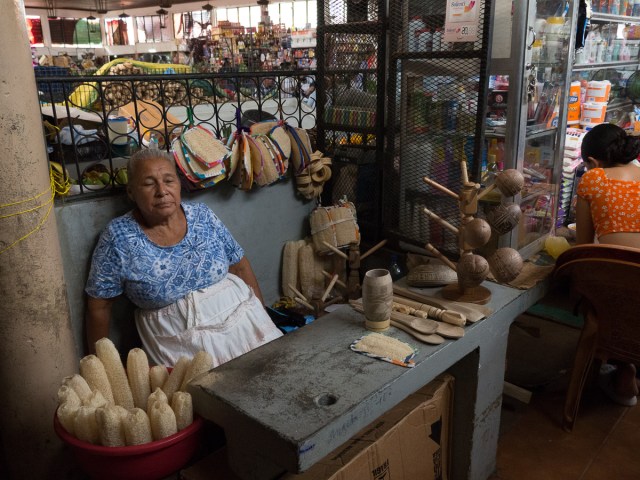
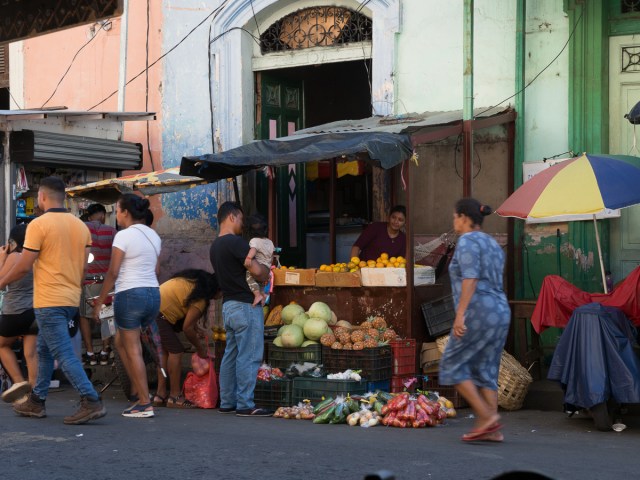
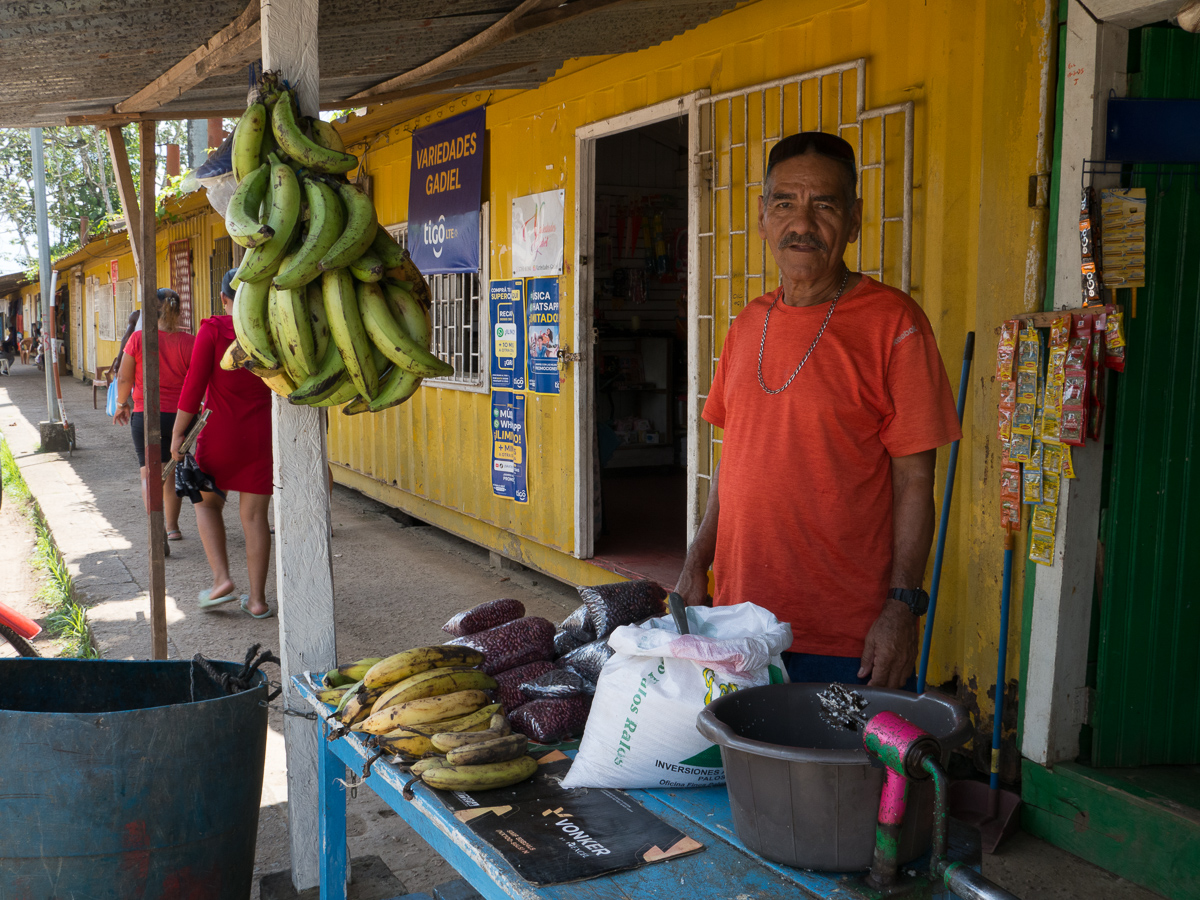
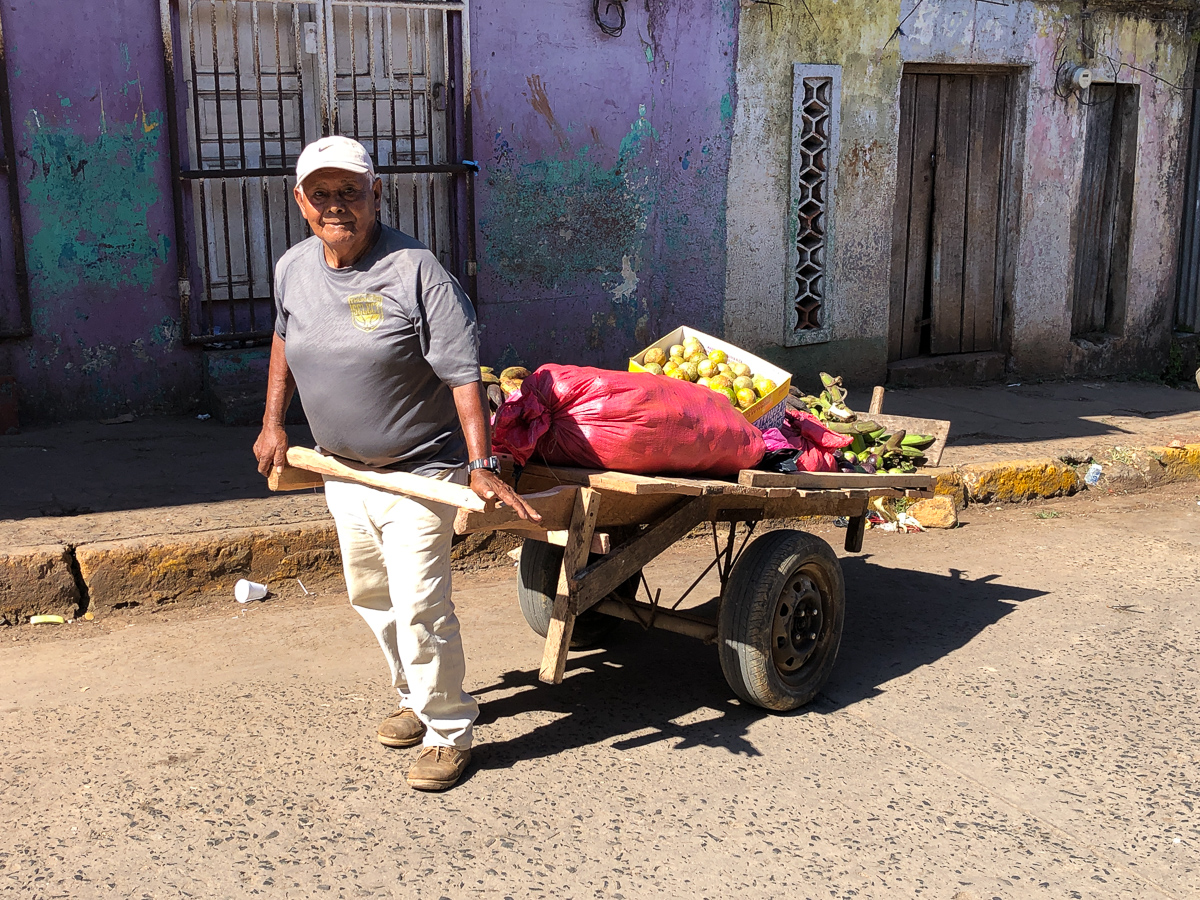
For me the market by the waters edge was the highlight of the town.  A small school hall sized market where people sat with their wares peering out of the gloom backlit by the opening at the far end where it reached a harbour arm.  Out on the harbour arm a few boats were secured, produce still piled high.  Gid was keen to try some of the novel fruits.  One lovely Nico hombre split his fruit open for Gid to try it.  One came my way too. Gid slurped through his and agreed to buy a few.  A bag was a problem but voila!  I had one.  The chap enthusiastically put a good dozen or so in and said “30 Cordobas” (about 70p).  Gid pulled out a 50 note which caused some concern as there was no change.  After a moments hesitation the man put another half dozen fruits into the bag despite our protestations and was then happy to keep the money.  I was highly amused as I’d given Gid my fruit too.  Thankfully, back in town a barrow man pulling his cart full of fruit passed me as I waited for Gid to buy groceries.  I carefully stopped the man whose tummy enabled him to support the bar no-handed.  There was a space on his cart so I quickly put most of the fruit on it smiling at him as I did so.   He soon realised what I was up to and didn’t seem to mind.

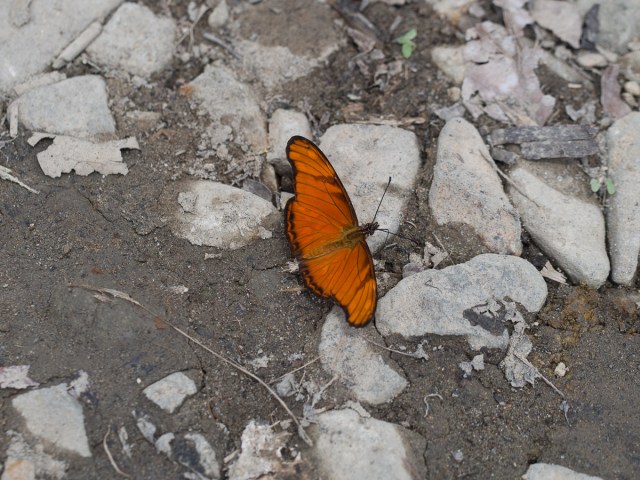
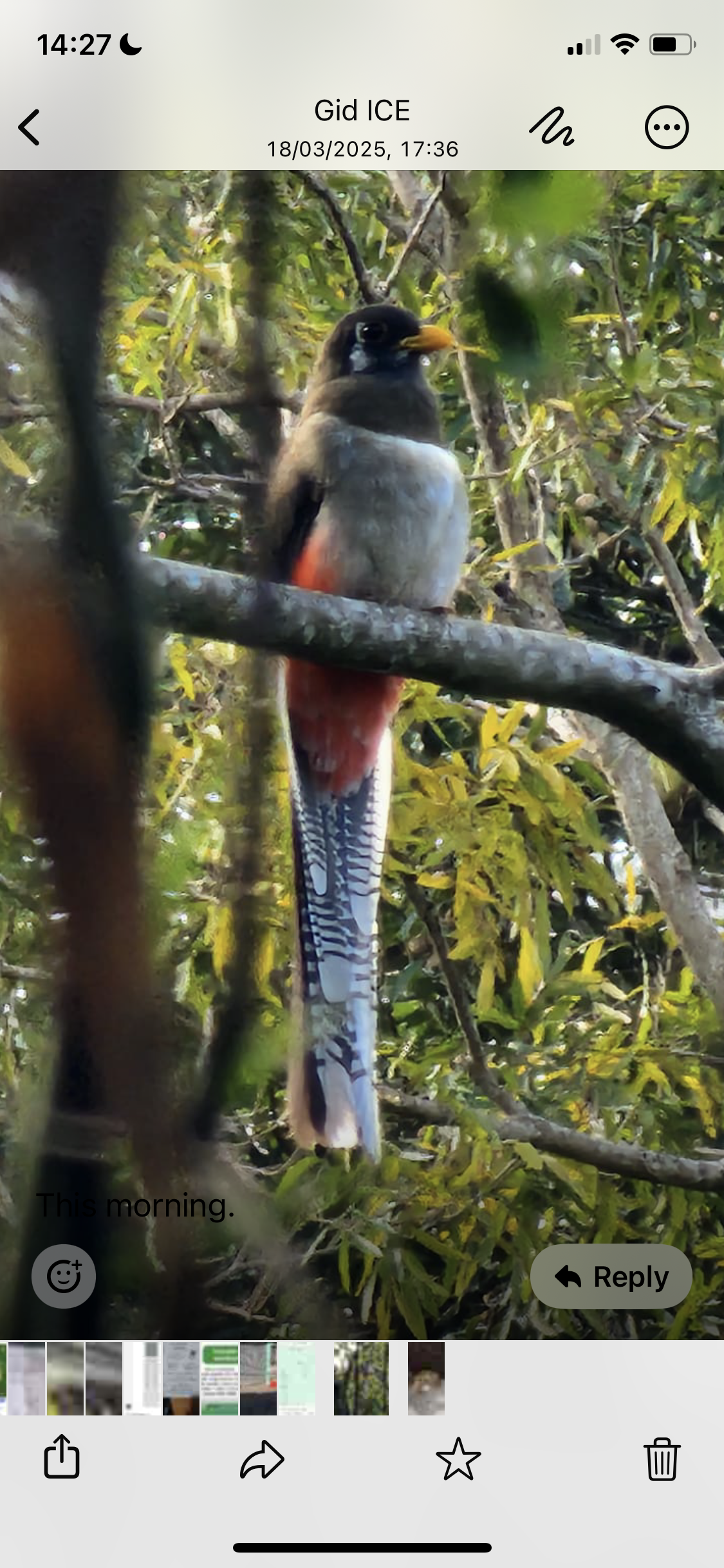
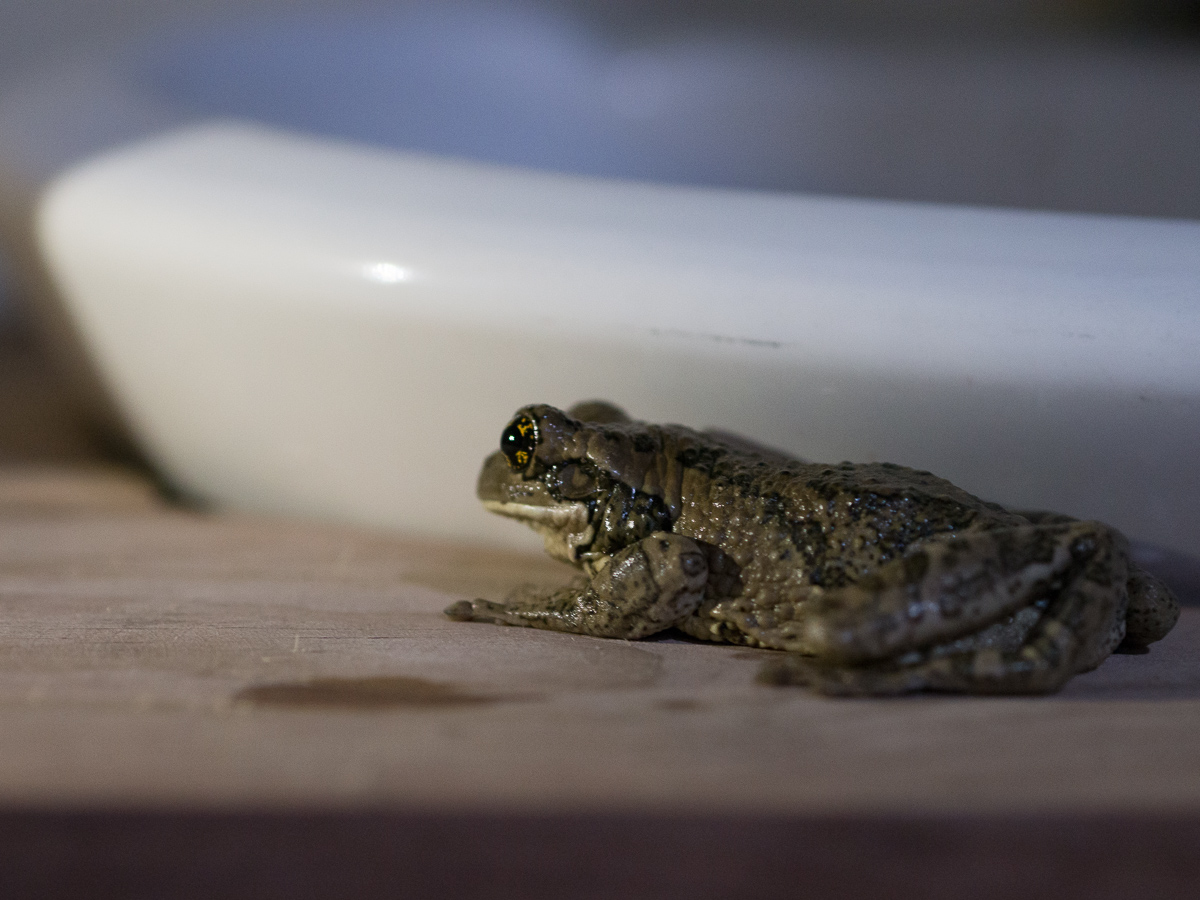
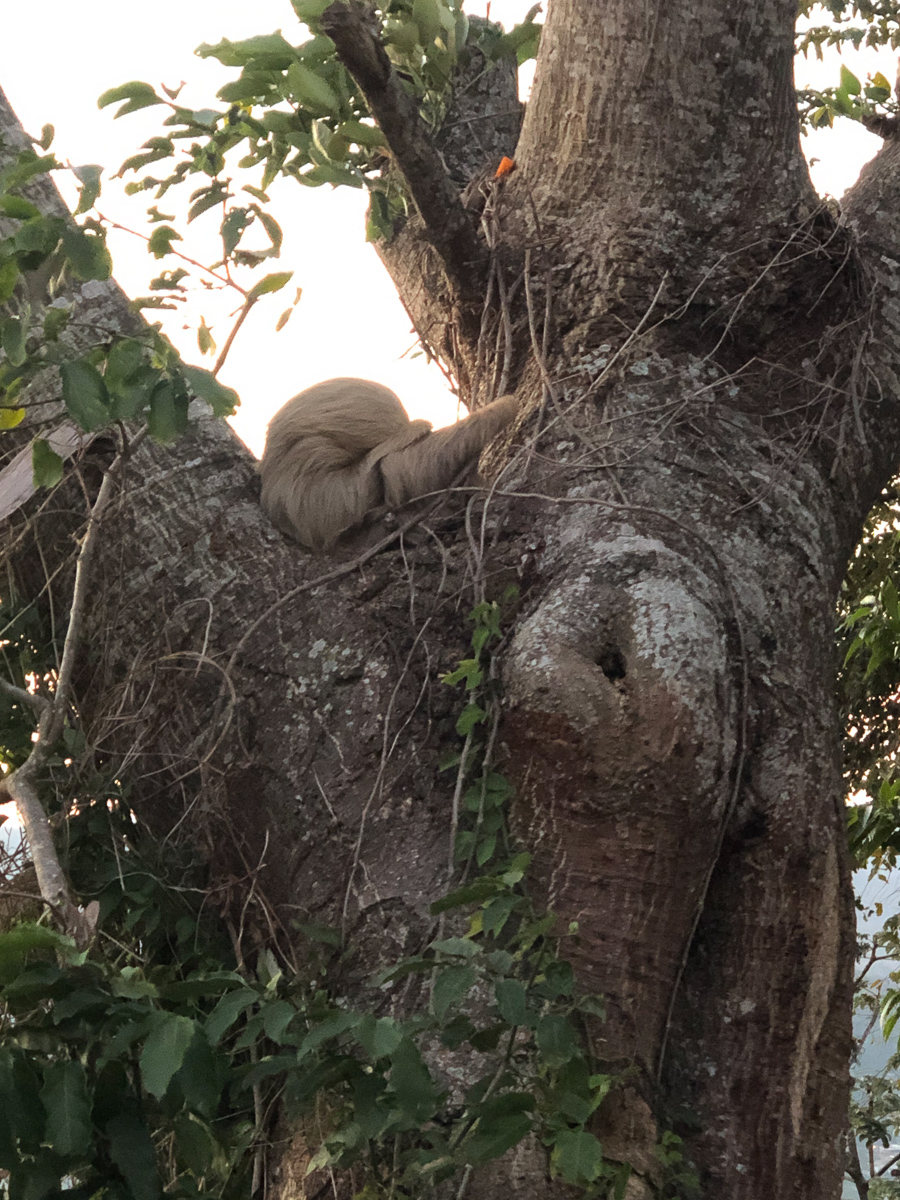
Our route through Nicaragua continued as we backtracked hunting for sloths and quetzals.  Having been fairly unsuccessful at finding much wildlife on our own we opted for guided tours.  One such tour overlooking Matagalpa resulted in guide David claiming for us a female quetzal, the national bird of Guatemala [Alas, when, later we looked at the photo with Nubie, a keen birdwatcher, it looked a lot more like an elegant trogon].  At the same location we had a sloth in a tree and a toad in our handbasin.  We were told, ‘Yes, there is a toad in the basin.  That’s where it lives.’. And did we mention the butterflies?

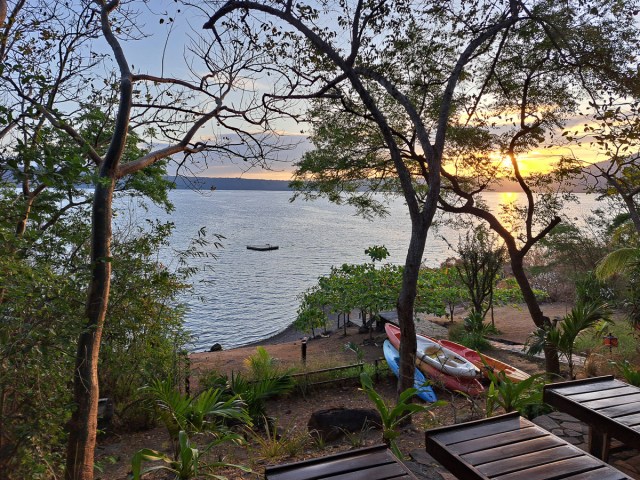
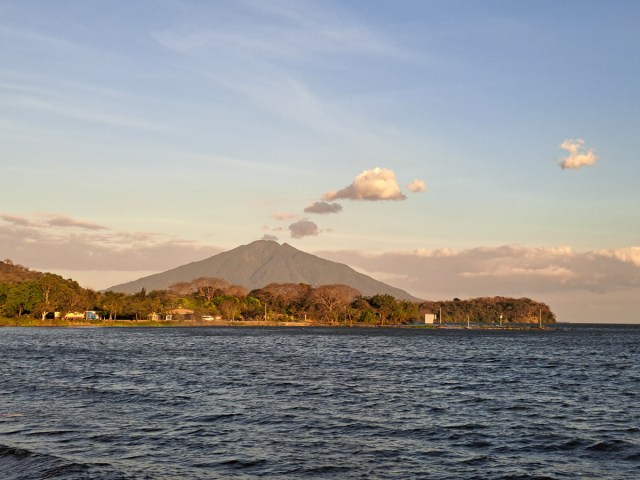
Lake Apoya was our best location.  The warm volcanic crater lake was clean enough to swim in. The hotel pontoon tantalisingly floating twenty metres away.  Our steep jungly trek up to the village at the craters rim, to the soundscape of howler monkeys, passed another load of stunning petroglyphs – completely unsigned and unexpected.  The lack of exposure to the elements may be why they are still so pronounced.

Ometepe island was another attempt to see sloths.  An online search suggested that they were around on Volcan Maderas.  Wrong!   Not here we were reliably told by locals.  The scenic ride around the eastern end of the island compensated for our lack of sloths.  Amusingly, when we passed a sign for petroglyphs we didn’t even stop. Mombacho on the mainland came up trumps though. We found our own sloth – distantly – curled up in a tree, then a guided night walk found one actually doing the sloth upside-down tree locomotion – hurrah!

Now by this point in the posting, our biking friends are chafing – what about the riding, how are the bikes? The roads are in pretty good nick, and more are surfaced than to the north. At least two long rides (38 and 71) were really nice, light traffic, good surface, entertaining and scenic roads. There’s a much more restrained feel to the driving and riding. That’s possibly because we saw a lot of police actually taking an interest in driving standards, which may be why foreign riders complain of “corruption” – the speed limit is maximum 80kph and even those roads have many short sections of much less.  A KTM Super Adventure might be hard to restrain: The Himis kept us out of trouble, but still blast past the lorries. Someone says it’s more fun to ride a slow bike fast, than a fast bike slow. The SUVs and new pickups still flew past, occasionally. 
But some of the accommodation – even posh places – have been up bloody awful tracks that we would have not voluntarily have tackled. The Himis seem to take it in their stride – first gear seems to chug up anything that can claim to be a route – but our skills and strength are strained and we arrive in a frazzled state of mind and a muck sweat.

There was a scary moment leaving our hostel in Matagalpa, coming down the very steep, loose, dirt track (can’t call it a road), Clare couldn’t hold the bike on the rear brake, pressing with all her strength. The 300 kilo combo of Clare, baggage, Indian steel and souvenirs was gaining speed! Fortunately it all stayed rubber down until the slope eased.

Photo – Peter Damsgaard

That’s when we spotted Clare had unexpectedly worn down her rear brake pads (not the fronts, of course there’s a set of those under her seat). Unfortunately, Royal Enfield have no presence in Nicaragua. The pads might have lasted until we got to San Jose, capital of Costa Rica, but Gid’s online researches revealed that possibly a very few local bikes shared the pad pattern, and after about half a dozen dealers and parts places (repuestos), somebody found a badly packaged set from Bajaj in the shop’s box of oddities. Alarmingly, they cost only $3. But they dropped in fine and do seem to work.  Adjusting Clare’s pedal higher has made it easier to apply more pressure, even seated, which seems to have been the actual problem.

I-Spy on the highway: The 1979 revolution didn’t enamour Nicaragua to the United States (remember the “Contra” affair?), so of course the USSR pitched in with support. Thus giving Gid a little entertainment spotting the USSR’s automotive antiques among the Toyotas and Chevrolets.
So, as we go on to Costa Rica, crossing a border from one on Central America’s poorest countries, to one of the richest – how was Nicaragua?  Just great.  It actually did feel safer than its northern neighbours, for example, police and security guards are still common, but less often armed.  It’s often quite underdeveloped, with an eye closed we can mistake poverty and improvisation for bucolic bliss, and tourists are rare enough to be welcomed.  The underdevelopment, and perhaps a degree of isolation after the revolution, mean that much more old growth forest remains than in some neighbours. The only regret, really, is that so many times, we stayed in accommodations run by foreigners, as we ofttimes didn’t find local places where we were headed.

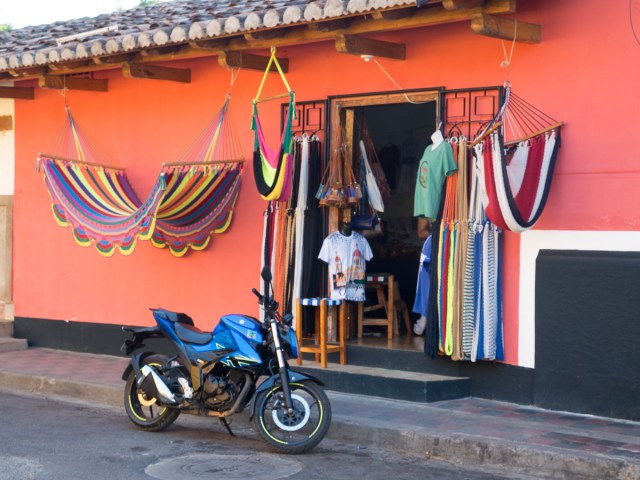
Finally, a few scenes from Nicaragua that don’t fit into the narrative above, but are just nice to see.

Browned Off? El Salvador

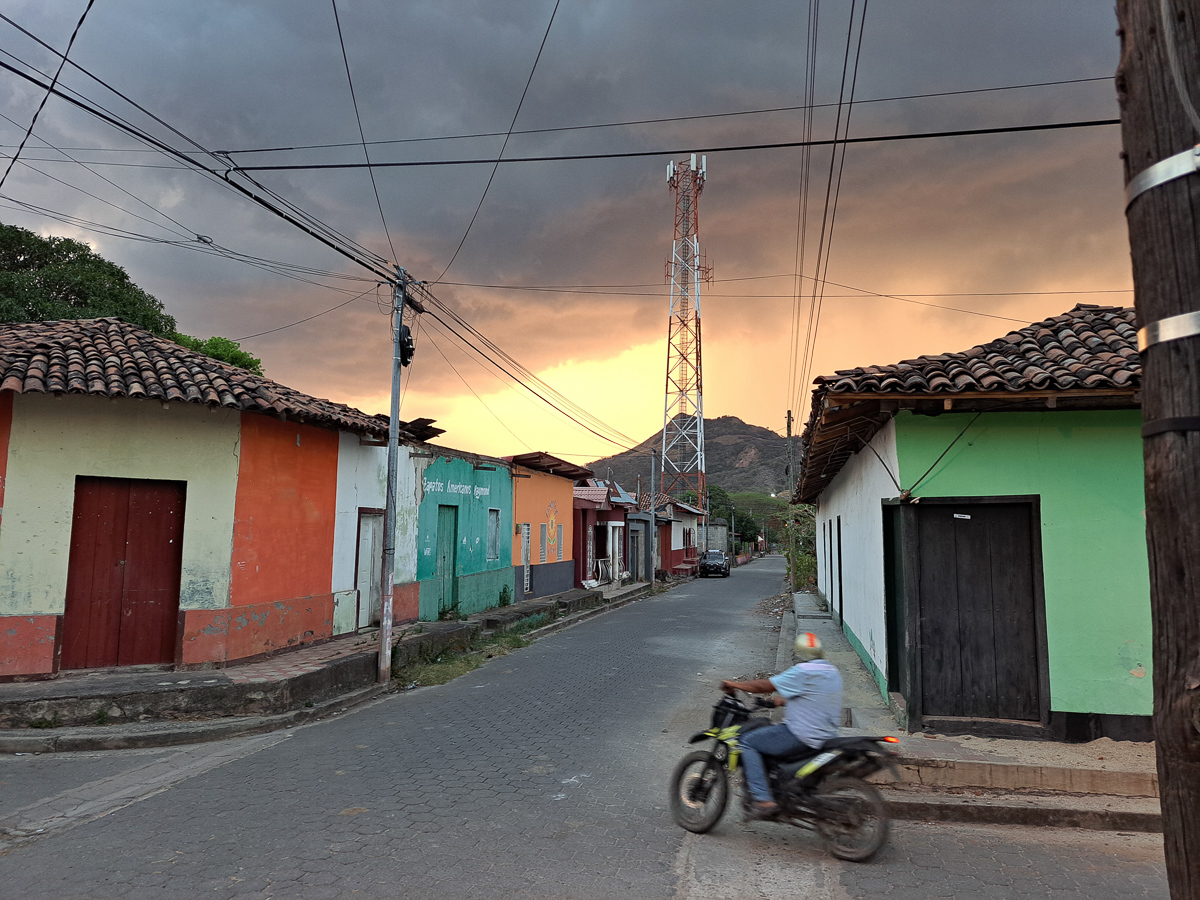
As we entered El Salvador, about the most crowded of the Central American states, and quite prosperous, we were immediately hit by the greater concentration of traffic.  Gone were the nippy little 150s, replaced by bumper to bumper SUVs.  Gone were the traditional Mayan costumes.  Gone were the streams of ladies carrying stacked up wares on their heads.  This could have been any town in England. We’ve been on the road now 8 1/2 months, the last 4 in Central America. We noticed that we were getting a bit browned off with our tourism options too.  “Shall we go and see X?”   Well, maybe not; it’s going to be very similar to the last three Xs we’ve recently seen:

  • Historic, charming, cobbled, cities of the Spanish Empire – check.
  • Elegant or elaborated catholic church – check.
  • Colourful local market – check.
  • Mayan ruin – check and check again.
  • Pre-Columbian anthropological museum – check.
  • National museum of country since independence – even these are getting a bit samey.
  • Beach with warm blue sea – check, although it never truly palls.
  • Volcano hike – Clare sez never again!
  • Souvenir shops – Gid has seen enough and more.
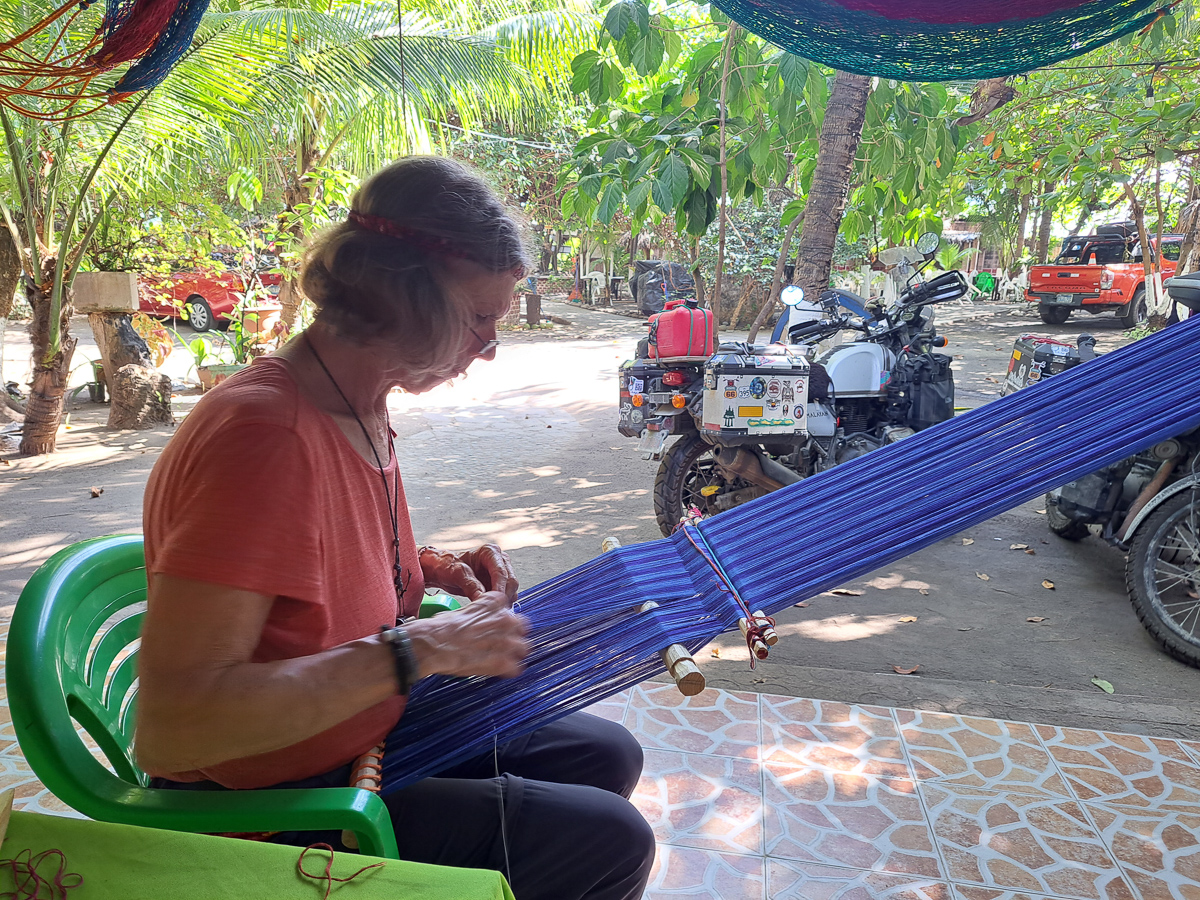
  • Weaving School – Still some potential
  • Spanish School – Not yet ready for more, are we?

Which was one reason we sort of dipped out of El Salvador. Our fault, not its. We made the mistake of crossing into El Salvador without a plan, other than noting that the obvious way south was initially the much promoted “Ruta de Flores”.  We did follow said ruta, but without the intended excursions into charming side-towns it was a pretty unspecial kind of ruta.  Reasonably smooth, vaguely bendy, sort of nice countryside, though not many flores to be seen. 

And briefly – after it, i.e. at lunchtime, we decided to bomb across this small country to the southeast, and try for a birdwatching boat tour near Jiquilisco in El Salvador’s largest estuary, an Unesco Biosphere reserve.  The boats went, apparently, from Puerto de Triunfo.  Google showed one hotel, which usually means there’s three or more local joints that would give us a convenience walking distance to the ferry. We ignored Lonely Planet’s 2018 advice to skip the town.

When we arrived in the afternoon, the dockside had proved hard to negotiate on the bikes.  The queue of traffic behind us was impatient as were the traffic controllers.  They only wanted to grab the parking fee, but we didn’t want to park. We were looking for an hotel and no-one had time to listen to us.   There was a cacophony of people wanting something, be it official or commercial but mainly – get out of the way!  Both Google and LP were right, there was only one hotel.  We eventually we found it in the gathering darkness tucked behind a bingo hall. It was physically good enough.  The owner seemed fine until we said one night, maybe two – her face fell.  The following morning she rather gruffly announced that we had to be out by 8am or pay a day fee, lousing up our plan of researching the boat trip early by foot and possibly staying another night.

We groused, cleared out quickly, and made a new plan certain now that we would also advise people to miss this place.  Back to the west! That sounds crazy, but we had always planned to enter and exit El Salvador in the west.  With a direct route from Guatemala into El Salvador there was little choice and Copan, possibly the best ruin site in Central America, in western Honduras wasn’t to be missed, requiring a return to the west (few travellers would voluntarily go through the border paperwork again to save a few miles). We’d visit El Salvador’s seaside instead.

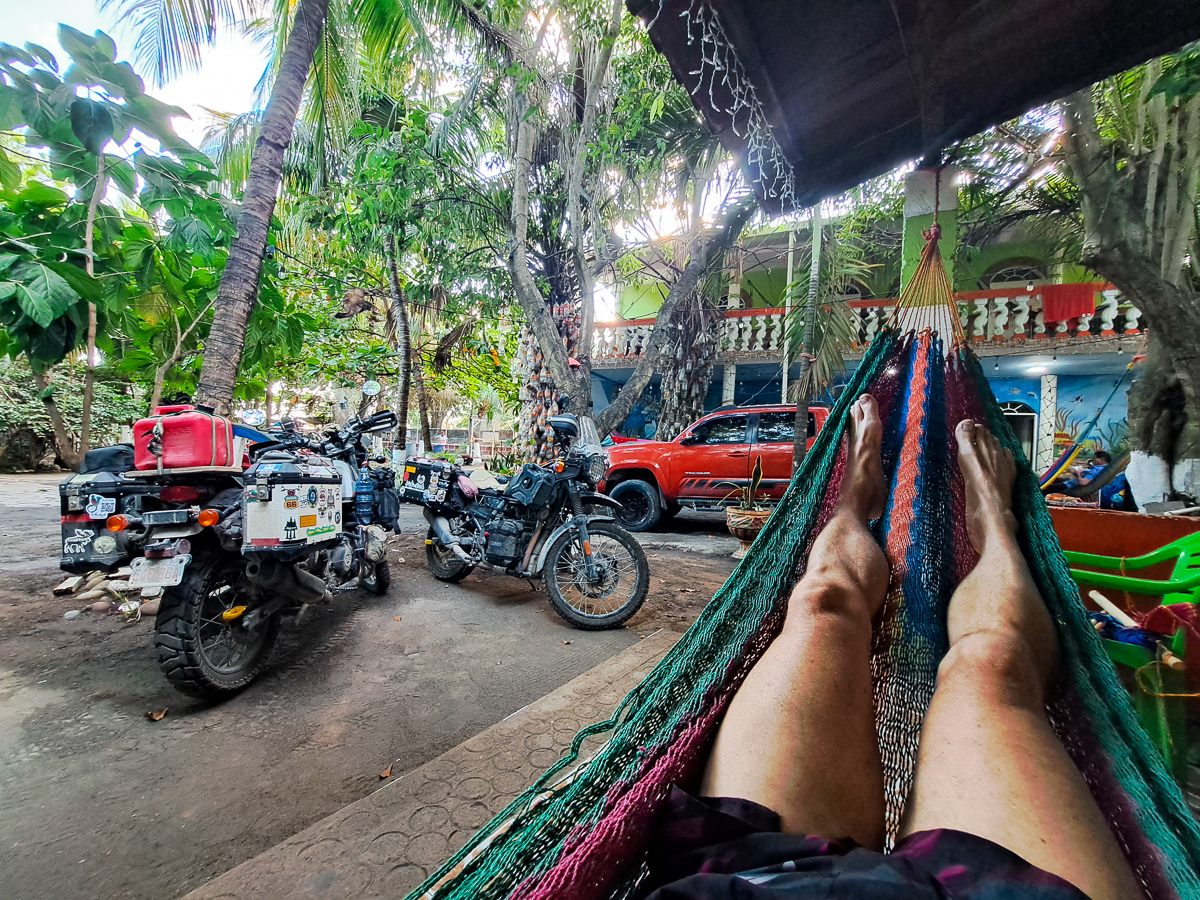
Fortunately, both LP and our hostel host in Antigua had agreed that El Tunco was a nice beach village, with a strong surfing flavour.  So we set a GPS pin for there and off we went. An easy ride on a good road, until they decided to dig it all up in La Libertad. That was a very sweaty last 20 miles. But reaching El Tunco, in need of a bed, we lucked right out. Pulling over when we saw three different hotel signs on one bend, Gid disappeared on foot. Two were pricey, shiny concrete boxes for prosperous tourists. Number three was great, locally owned, been there years, day access for locals and kids, big pool, basic restaurant, chickens, dogs, cats and children running loose. A palm shaded aircon room less than half the price of the previous two.

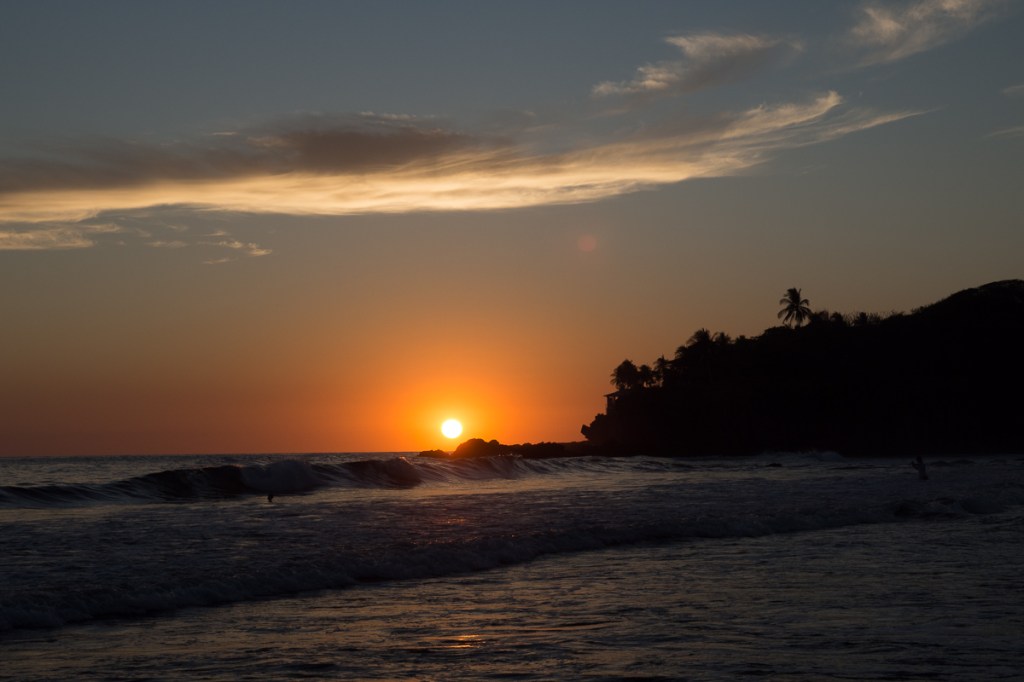
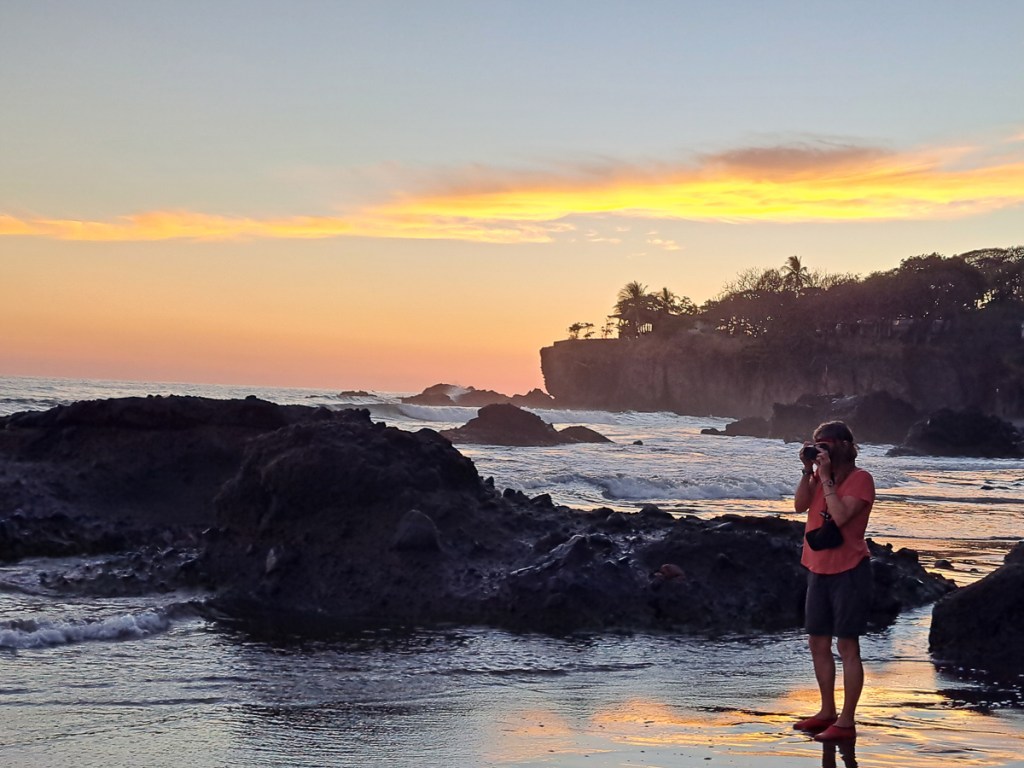
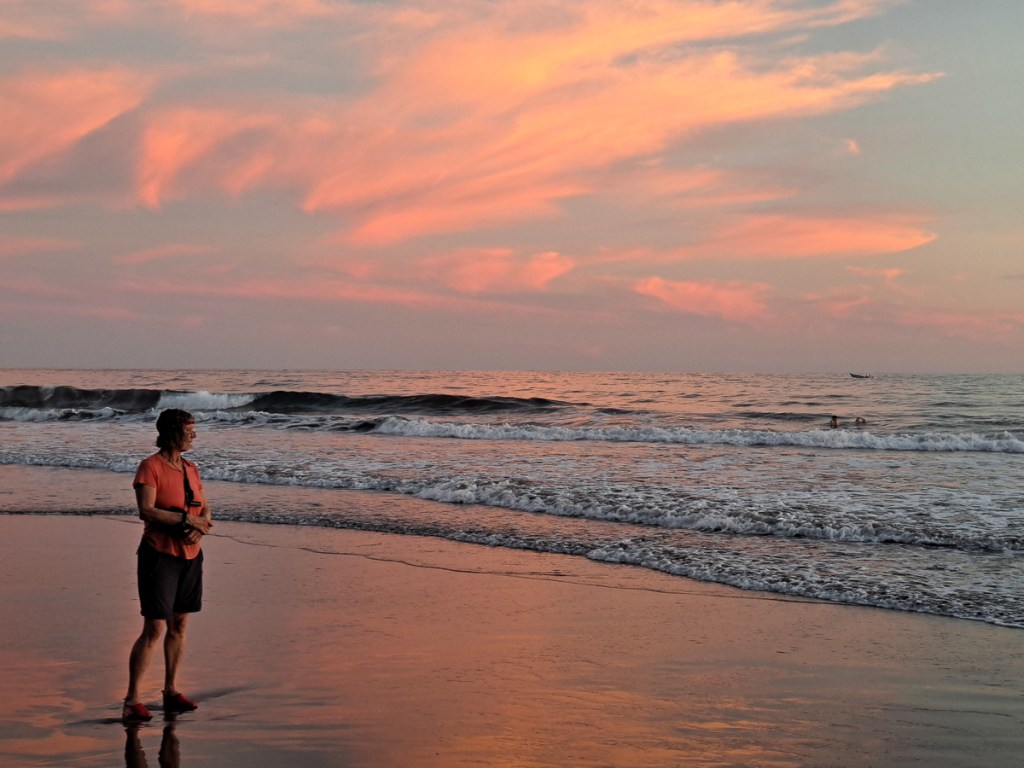
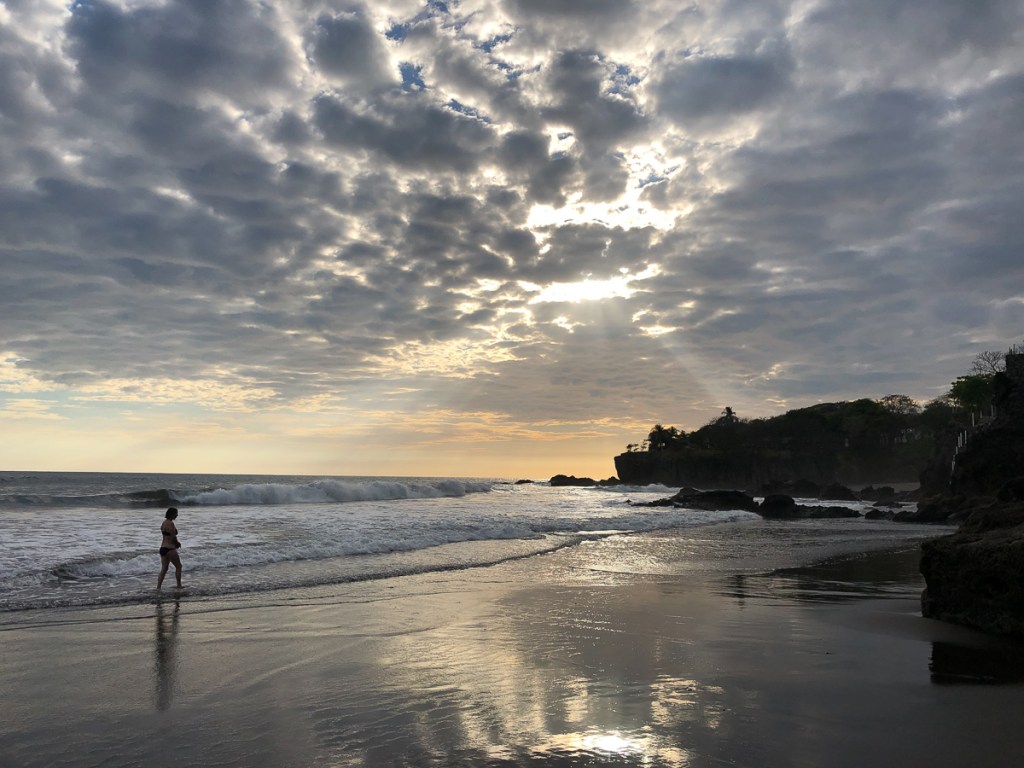
The beach only metres away was great – firm sand, nice little warm waves, free loan of bodyboard.  Local fishing boats launched off the beach in the late afternoon returning in time for breakfast.  The night’s catch was loaded onto trucks in cool boxes.  Our hotel was the first stop.  A carefully selected basket full of fish hanging under the scales couldn’t have been fresher.

And did we say it was a beautiful beach?

I managed a 5K run by doing five laps of the beach, then succumbed to a cold – in this heat!   Thereafter a daily stroll into the surf-dude nearby village for basic groceries was all I could manage. We stopped four nights. One evening was enlivened by a helicopter and lots of soldiers, as El President used a spare field next to our hotel for a visit to – something or someone. El Salvador was redeemed.

But we still legged it to the Honduras border, even though these borders are always horribly tedious, completing the paperwork for the bikes. Hmmm – we could have gone straight from Guatemala to Honduras, saving one border – but El Tunco was nice, even with a cold. We barely scratched the surface of El Salvador’s beauty and interest.

So, what are we left to do in Central America, the countries of Honduras, Nicaragua, Costa Rica and Panama? We have to recapture our mojo. Maybe some more nature hikes, because we really are in the jungle a lot of the time.  We’ve not been very successful at beastie spotting so far but what are we scared of?

  • Bandits?
  • Armed guards?
  • Getting lost?
  • Volcanos – definitely.
  • Jaguars – grrrr – be serious!

Entering Mexico – Baptism by Fire and Paper

We’d spent the previous afternoon filling in the forms at the campsite.  Gid’s android translated the info into English.  Mine didn’t.  I felt as though I was signing my life away with a blindfold over my eyes.  He was feeling challenged with his own form and didn’t need me constantly quizzing him.  We finally got there.  Paid up, two forms.  Copies of this, copies of that.  But one of them said we needed a paper copy and please arrive at the border with it.  We were crossing the border on a Sunday and suddenly we needed a paper copy.

On the way out of our Palomar campsite we’d called into the local convenience store.  The part time lady cheerfully said she’d ask the manager for a print as they did have a printer.  It all seemed quite hopeful.  The manageress arrived flushed and in a considerable flap.  ‘I do wish you hadn’t offered to do this,’ she admonished her assistant.  Despite three heads trying to solve the problems it was not going to happen – passwords, signals, connections – the list goes on.

Gid was keen to try the few random shops we passed.  I was more, ‘Of ‘cos they’ll let us in.  Are they really going to send umpteen tourists away?’  One more failed effort just before the Mexican border left us with no option.  We progressed forwards.  It all seemed very relaxed.  There were a few officers there in uniform but they just waved us through.  Gid exploded.  ‘We can’t just go through. We need our paperwork stamped and the bikes need to be registered.’  He conveyed this to one guy who casually pointed to the office at the side and told us to go through the barrier and come back to do the paper work!

The Mexican immigration office was to the right on a one-way street.  With no access to it we had to park further down the road and walk back.  The señor in the office was very patient as we tried to locate, from among the umpteen forms we’d saved, the ones that he wanted.  We emailed them to him so that he could print them out.  Stamped and dated off we went.  The vehicle importation was equally trouble free once we’d sorted out which paperwork equated to which bike and whose it was. Our recently hard-won, but very elementary Spanish hadn’t really been challenged, but it had had a little outing.

In.  Now we needed some Pesos.  Going down the main drag I spotted an ATM sign.  We pulled in behind a car.  Gid jumped off his bike and in he went.  Moments later un hombre policia appeared pen in hand opening the pages in his ticket book.  He pointed to the writing on the side of the kerb and said what must have been, ‘No Parking’.

‘Un momento, Un momento,’ I cried, calling to Gid through the intercom that he was about to get a parking ticket.

‘I’ve just put my card in, I can’t come now,’ he anxiously replied.

The policia was gesticulating that Gid’s bike needed be to moved.  I indicated that I would move it.  But of course as I swapped bikes mine was now illegally parked.  I was trying to wiggle Gid’s bike round mine when Gid reappeared.  Thankfully the policia seemed to despair of this comedy act and walked away.  Two bikes two riders, money, we were off.

As we set off down the road Gid informed me that a high proportion of the population have never taken a test.  Pay a little extra and the licence was yours is what most Mexicans did.  Somehow I was sensing that and the signage wasn’t as clear as we’d got used to either.  There were stop signs used in the same way as in the US but the accompanying stop line had been erased – some of the signs had suffered over the decades of time.  I ploughed straight through one.  Thankfully no one was coming.  Later we learnt that irrespective of red lights, Alto signs and what ever, ‘Get eye contact!’ before progressing, that’s the important thing. Things seem a little “loose” compared to the UK, Spain or USA, but it works on civility yet is not remotely in an Indian or Indonesian league.

Further down the road I was overtaken on the hard shoulder. A car just came careering past me on the inside.  Wow!  What was that?  The next half hour was a sharp learning curve.  The hard shoulder albeit much narrower than the road lane was regularly used to over take.  One vehicle straddled the solid white line that demarked the hard shoulder while the overtaking vehicle straddled the central solid yellow line.  All sorted then.  One good thing was that as the hard shoulder served as a lane, of sorts, it wasn’t full of debris. The crap was piled high in the pull outs and off the side of the road.  No $1000 fine here for littering.

Another surprise was the trucks passing along through the towns and along the highways with armed soldiers masked and in full uniform standing in the back.  Regular check points along the roads also told of the extent of the drugs problem in Mexico, a lot of it driven by the trade over the border in the USA.  The nearest we got to being searched was one bored pair of young military guys asking where we had come from and where we were going.  Other vehicles, mostly northbound, had numerous inspectors with torches pawing all over their trucks.  The bigger the vehicle the more extensive the search.  We settled into the new regime. The road to Ensenada passed through a scenic wine making area, and wasn’t heavily trafficked – a great introduction once we’d worked out the hard shoulder plan.

Ensanada was our first destination, for very prosaic reasons. But it was a joy to visit. The internet-booked motel was just fine, and after months in the western USA and Canada we could again wander around a town. While none of the pavements were consistently flat it had a centre we could amble through enjoying the atmosphere. Gid could have stayed a few more days, but after all the delays I was keen to get on. The plan was to travel the length of the Baja peninsular, then ferry across to the mainland. Interestingly, it was two weeks before the famous Baja 1000 desert race. We decided not to enter.

We’ve visited Spain a number of times and the similarities here were stark.  In some towns with buildings set back from the road, many things were broken down or in need of repair with the occasional thing half built while others had large murals and were brightly painted with bougainvillea adorning the walls. Whereas the western USA has almost everything in town concreted over, in the pueblos the road had a wide apron of dust – of course, everything was coated in it unless it moved.

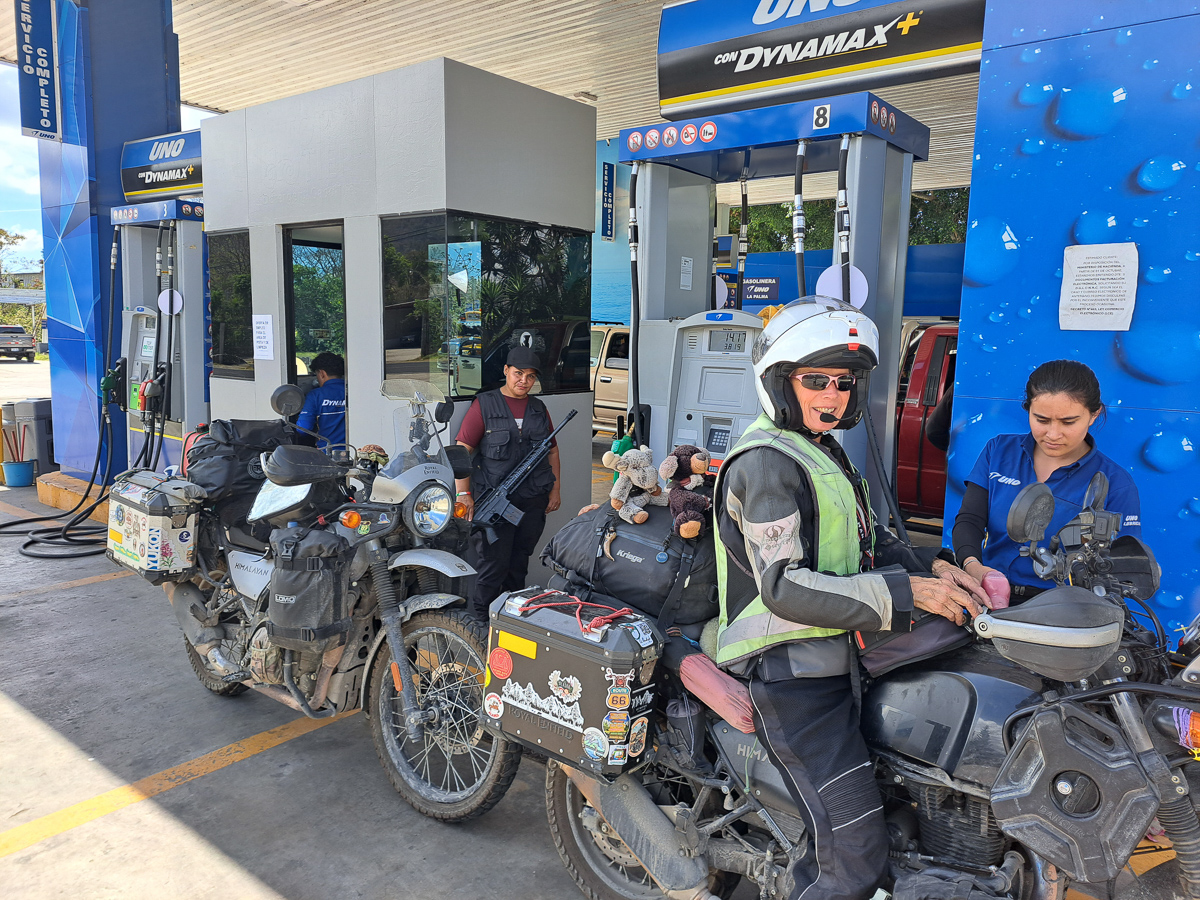
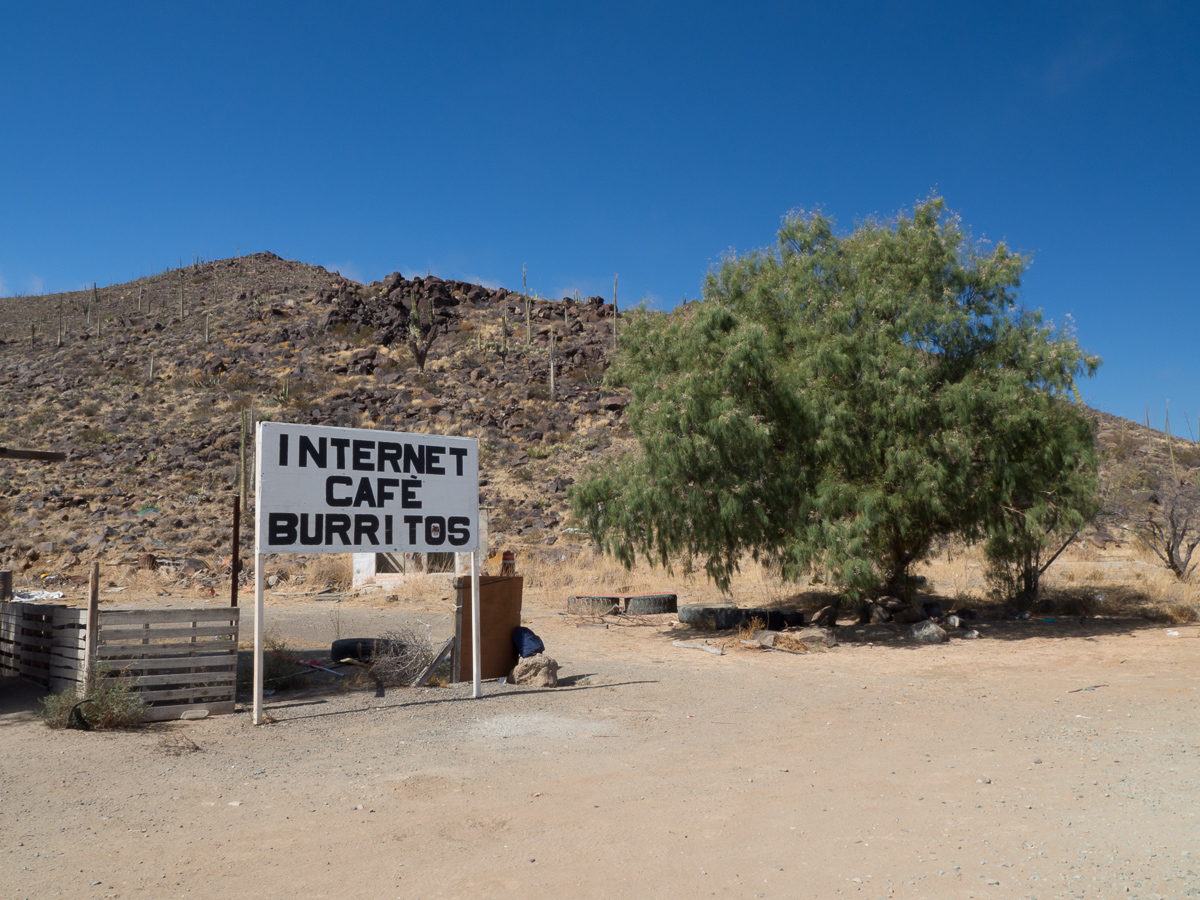
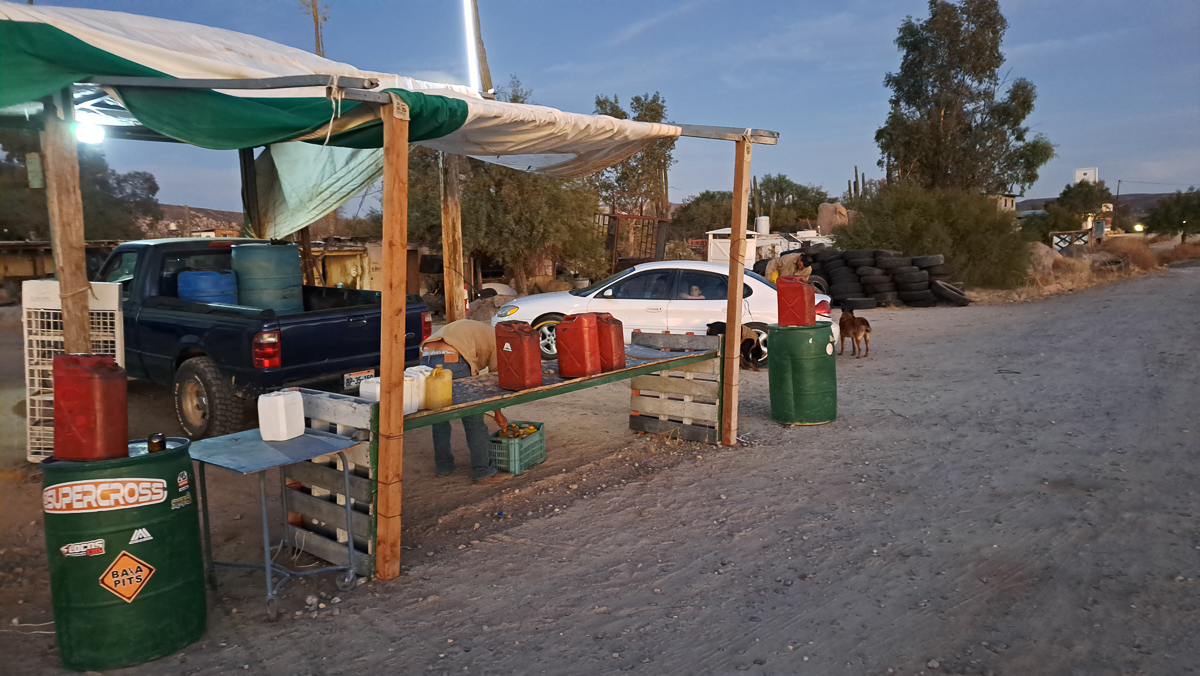
We’ve travelled fairly extensively across the globe, and it was a pleasure to see again local, improvised, low key services along the road. Home made as well as printed signs are common, and as Baja California is both very sparsely populated, and not highly developed, sometimes we needed to see that “man with a can” gas stop, or the little stall selling burritos (we hadn’t even been entirely sure what a burrito was). And every café had a “wifi” sign – the wifi may well have been the most reliable service. There were many “proper” gas stations, but interspersed with can men whom we really needed at least once pricey though he seemed. Very sugary pop is also always available, more difficult is avoiding it!

Another change – to us – is an expected one. In the USA we tended to avoid the trafficked and expensive megopolises, and skip from scenic park to scenic park, camping. In the less developed parts of the world, there are fewer campsites, debatably less safe, and our pounds go a lot further. So we tend to reverse the pattern and skip between cheap hotels in towns. Cheap hotels here can be jolly nice, usually best not booked through a big website – local rates are cheaper. El Hotel Frances was a memorable 19th century historic building, in rather mid-western style (but of probably tropical hardwood), but most are pretty new, Hispanically concrete. None has yet approached in cost the San Diego campsite!

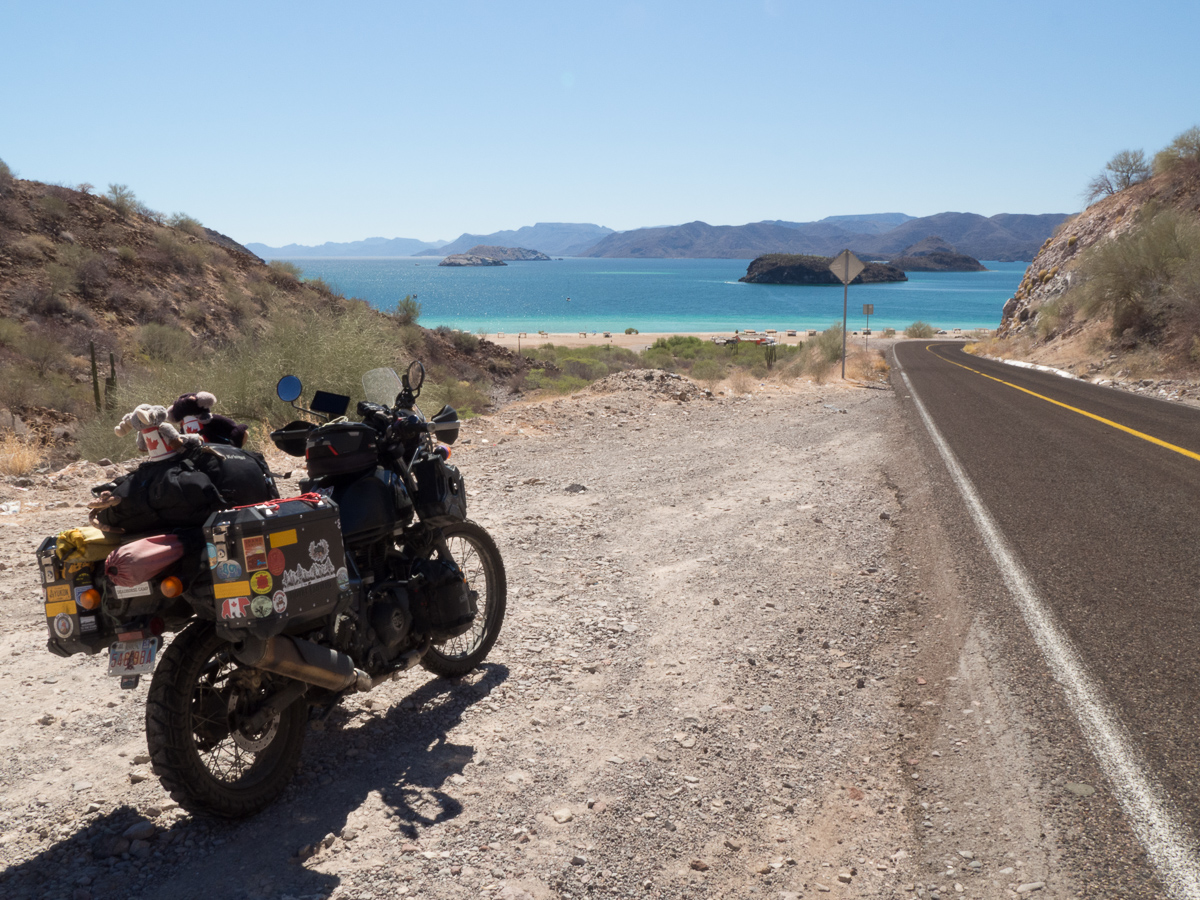
We still felt very wary of much adventure in Mexico and there’s only one main road down through the Baja peninsula which was generally ok, two lanes, little traffic, and relatively few slow bits through pueblos.  Occasionally it was a pristine new surface but at times a pitted pot-holed mess – no worse than our home town in the UK, but that’s not a 60mph road.  On our Himalayans we didn’t need to lose much speed to plough through whatever the road surface threw at us.  Along the grotty sections we even overtook some cars and trucks.  We passed a road repair team on a couple of occasions.  It was a truck loaded with tarmac and some spades.  The truck stopped. Out jumped the team.  One filled the hole, another raked it flat while a third flagged the approaching traffic.  All sorted.  Move on.  They had their work cut out!  More dangerous than the overtaking, and the potholes, was probably the occasional livestock, rare in the first place, that had gotten out of the fenced ranches and now munched at the roadside.

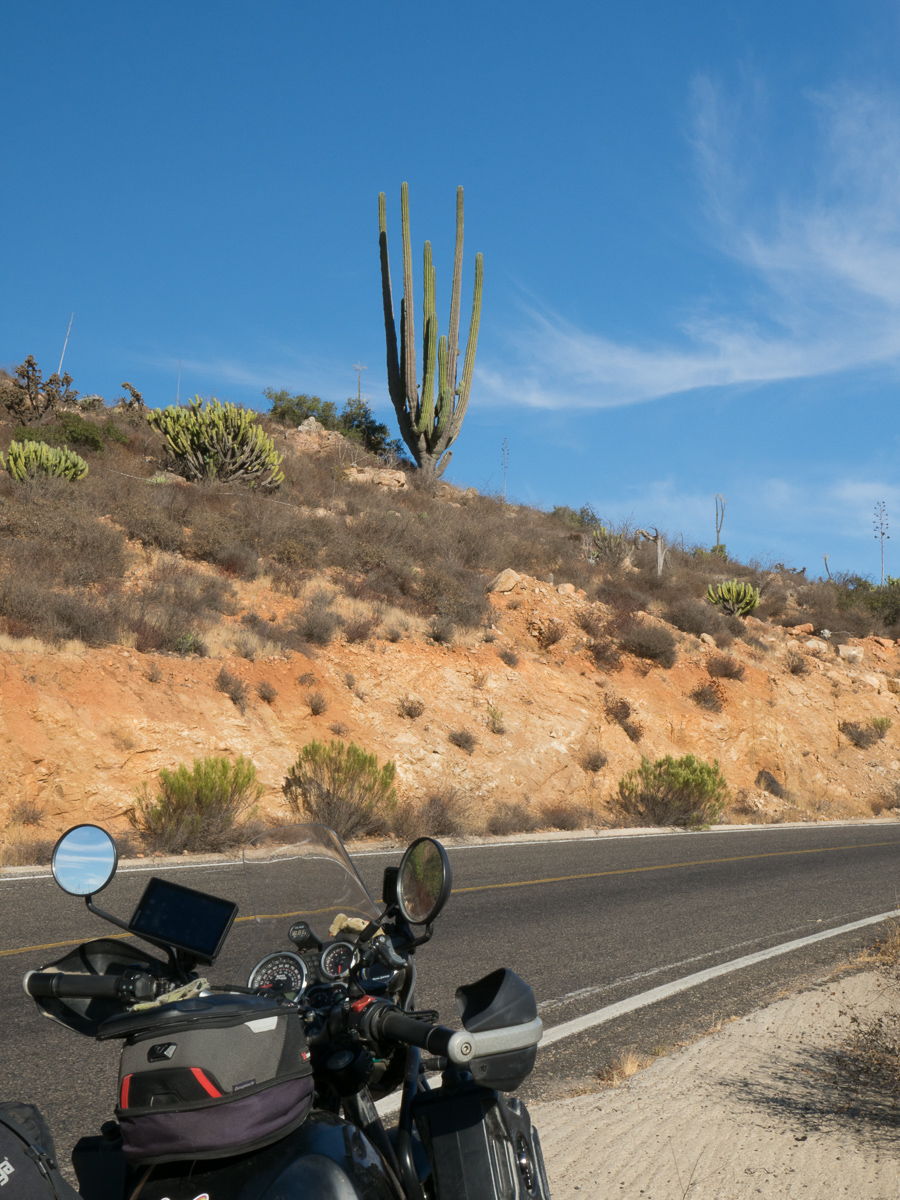
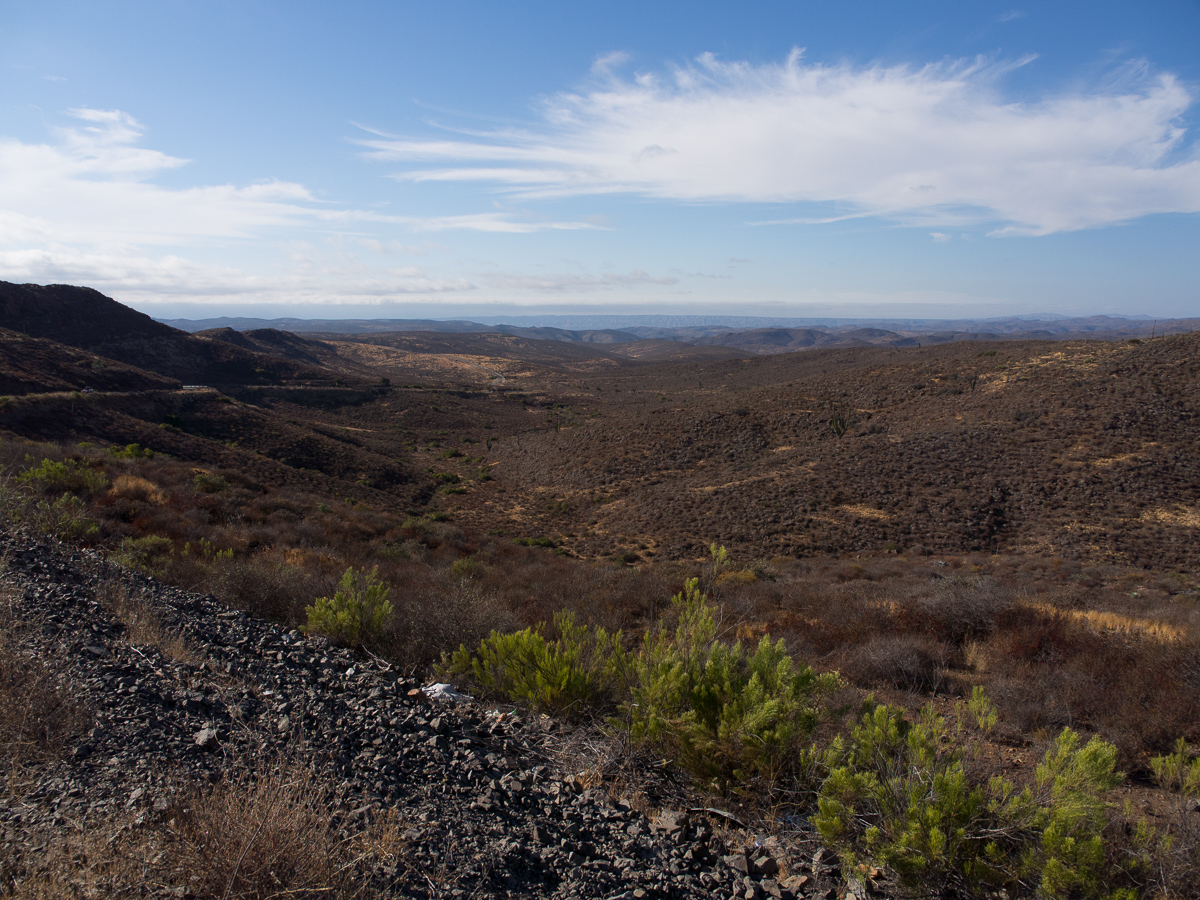
But plenty of the roadside was also lovely to look at, and especially in the north, quite curvy with fabulous views.

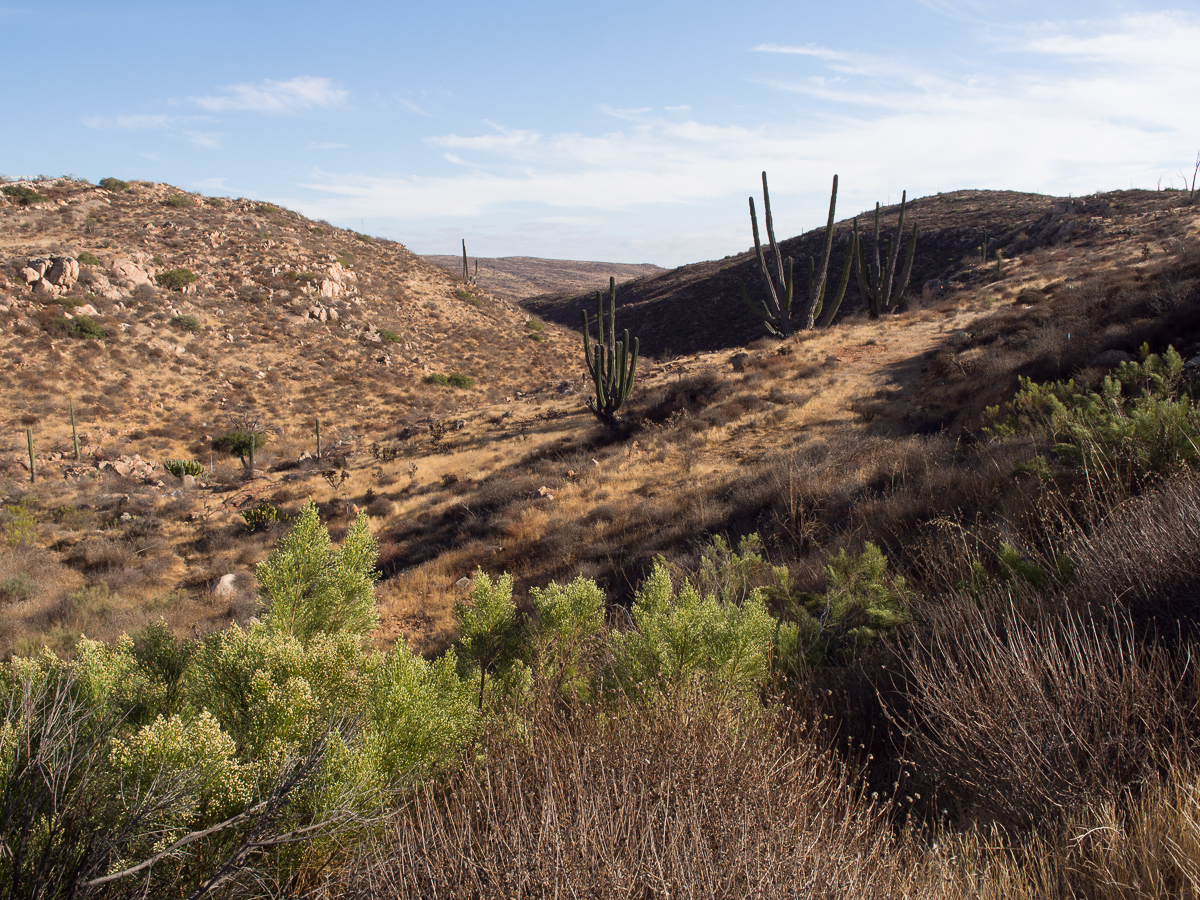
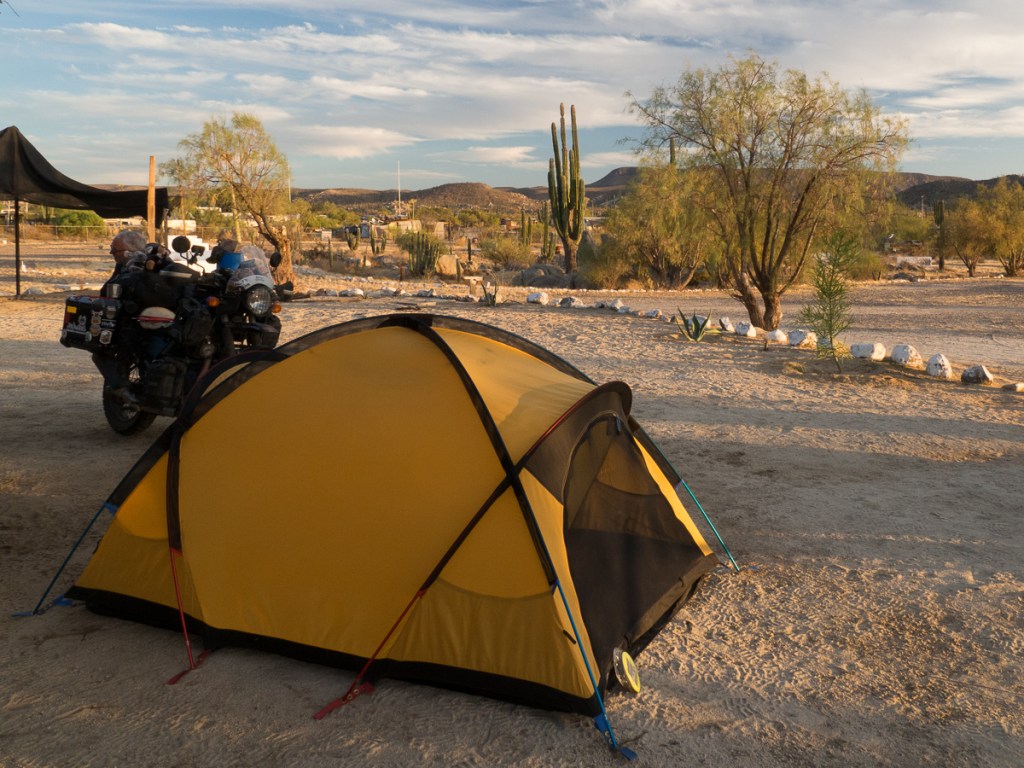
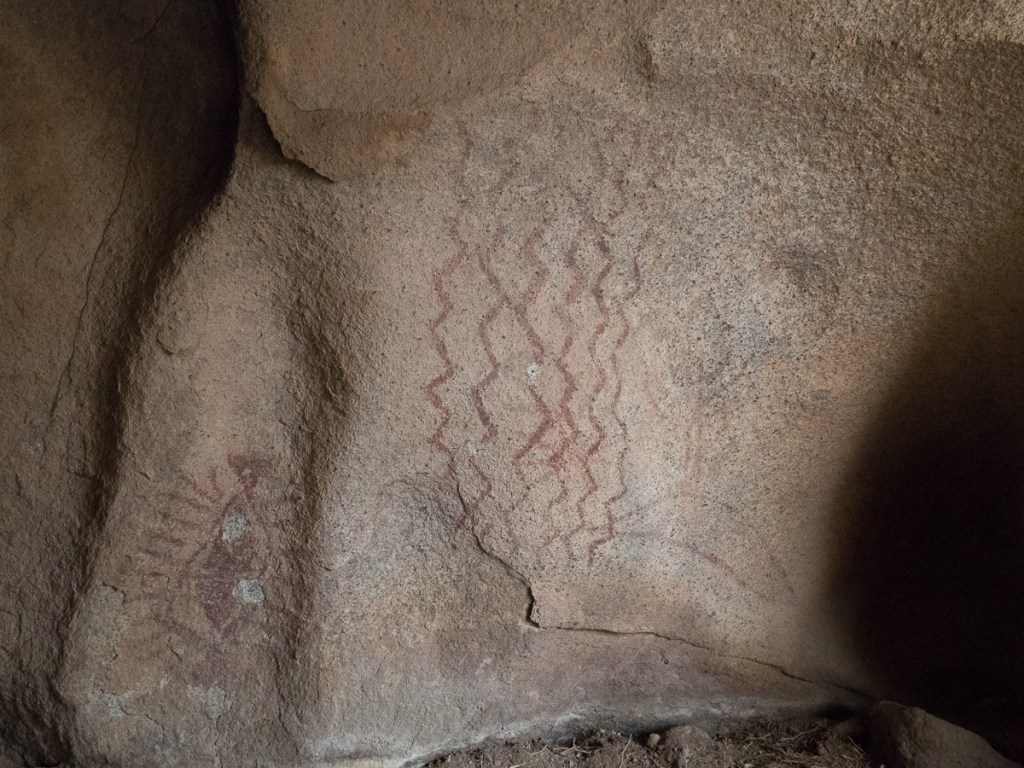
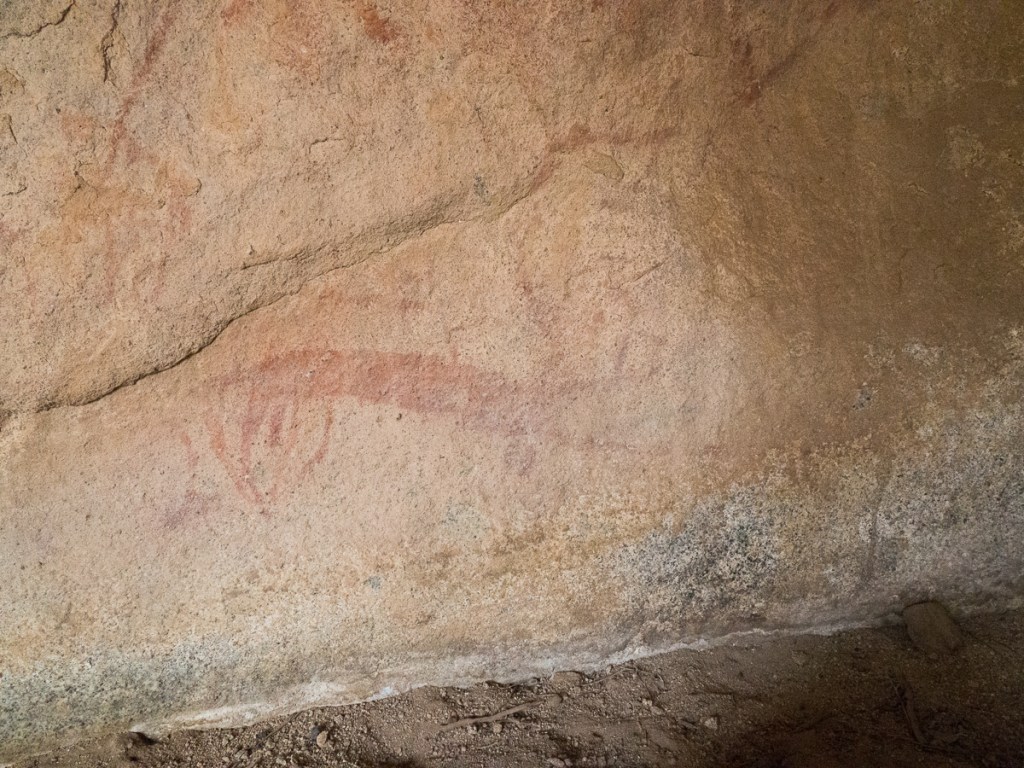
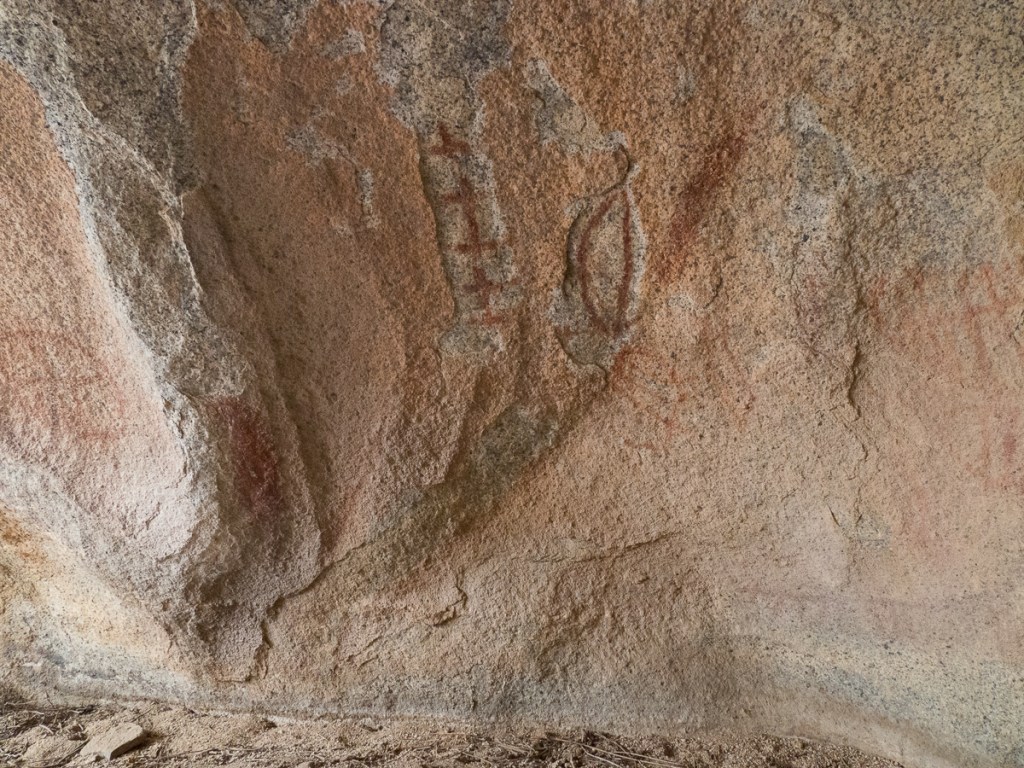
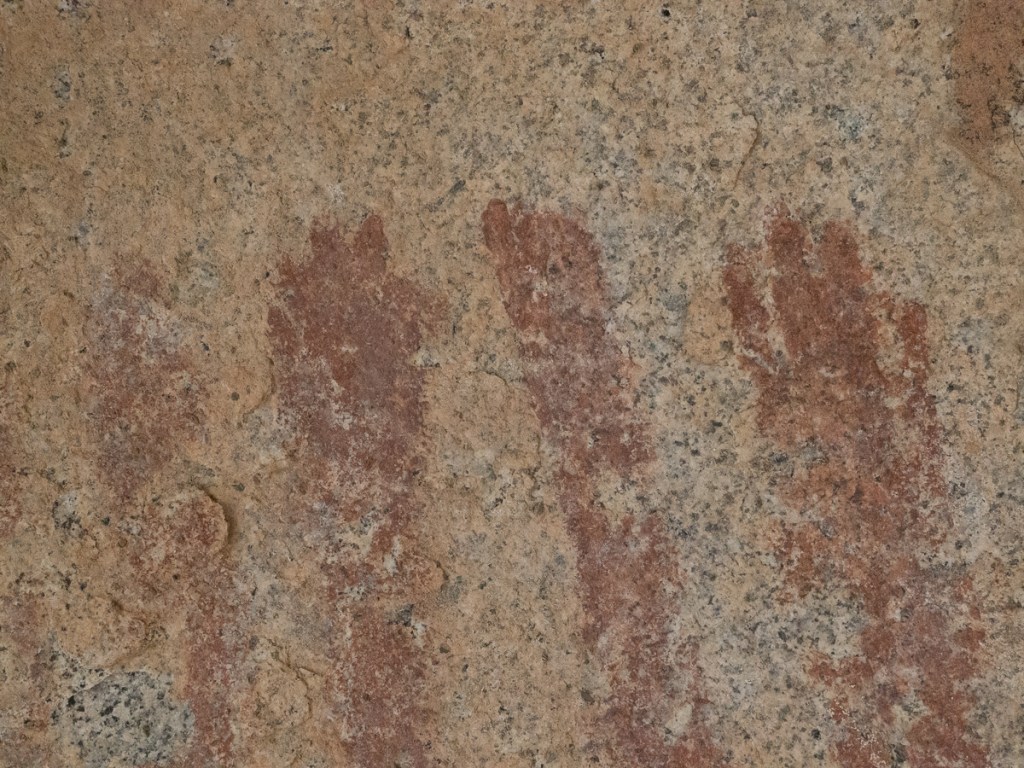
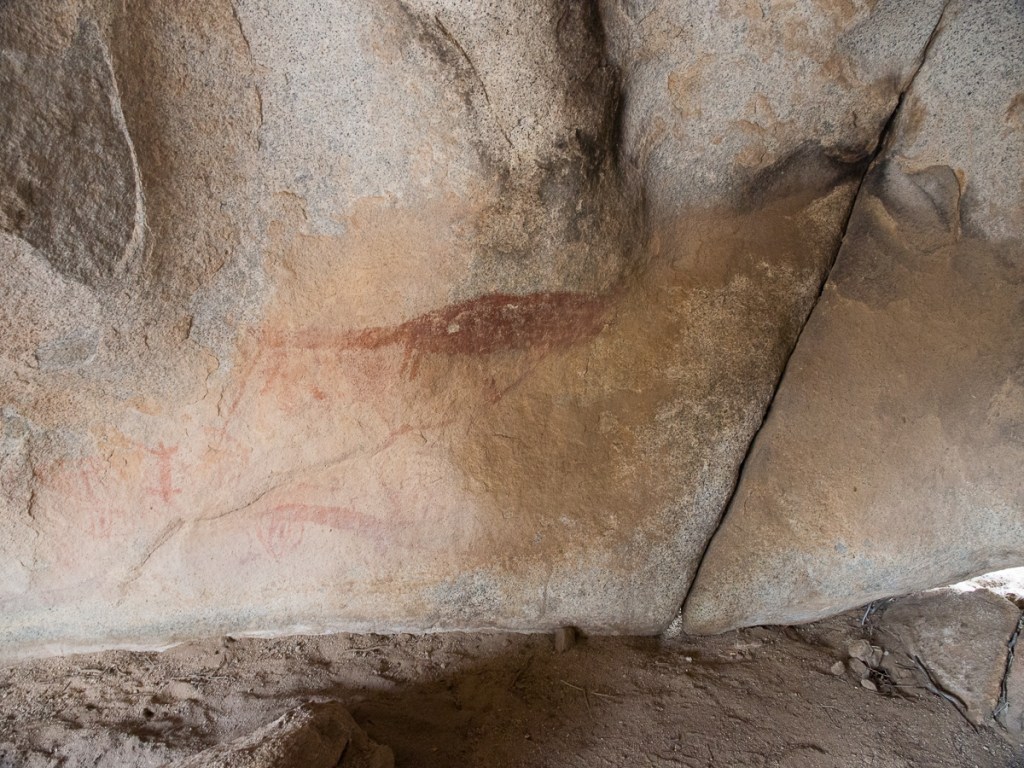
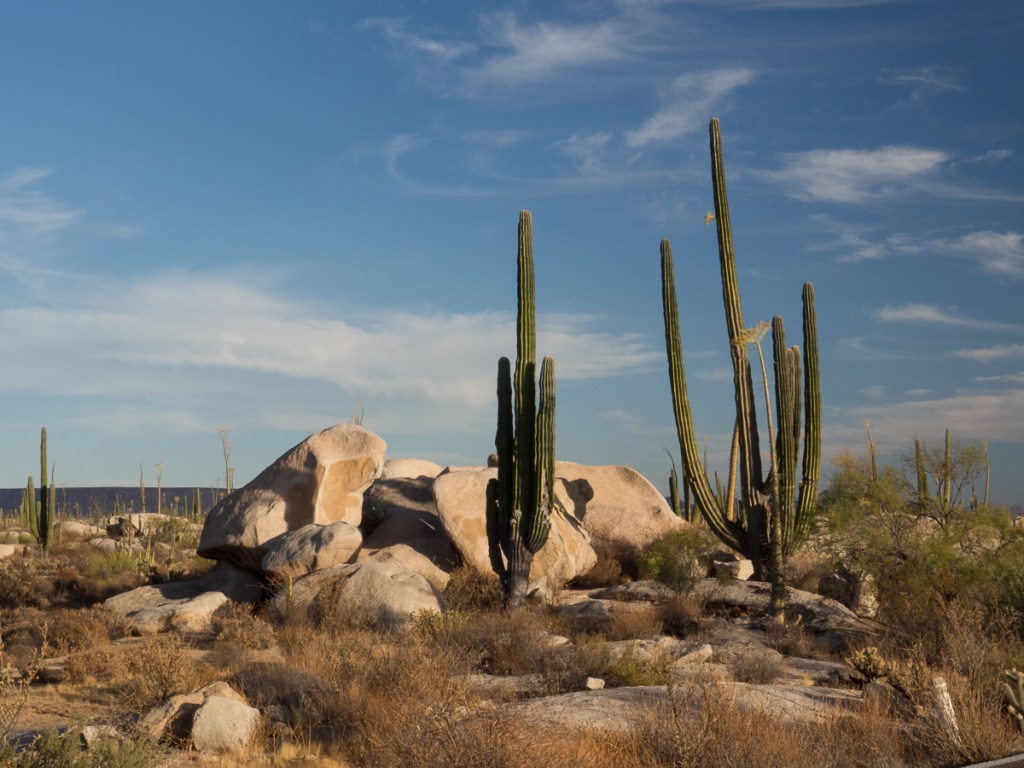
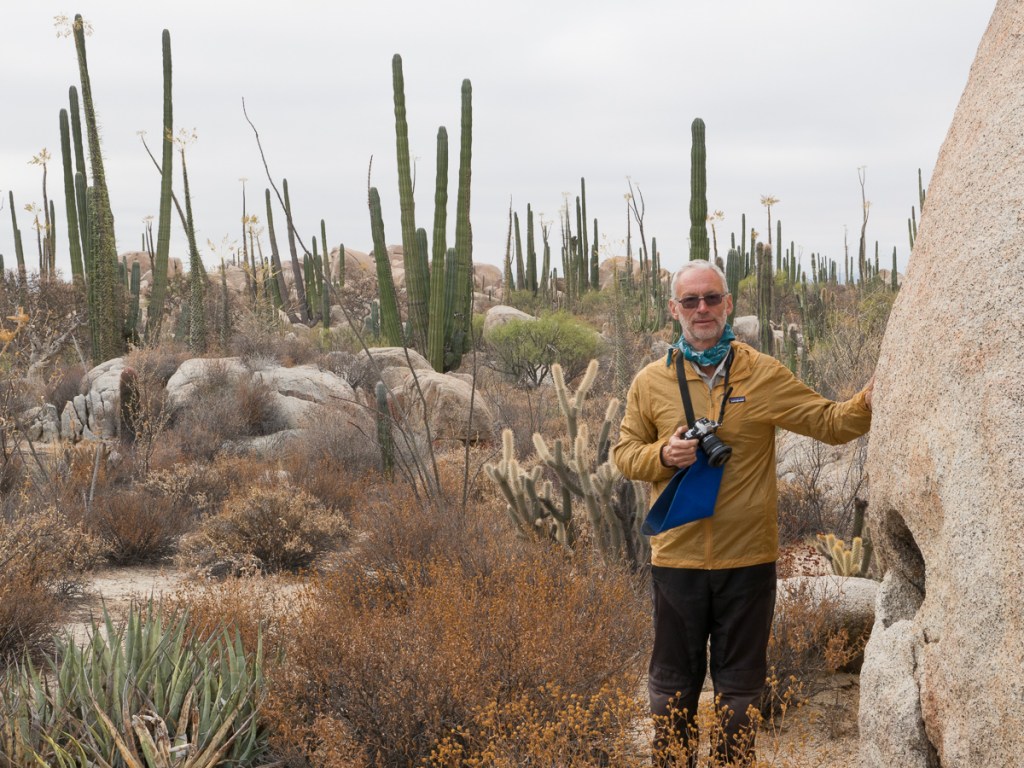
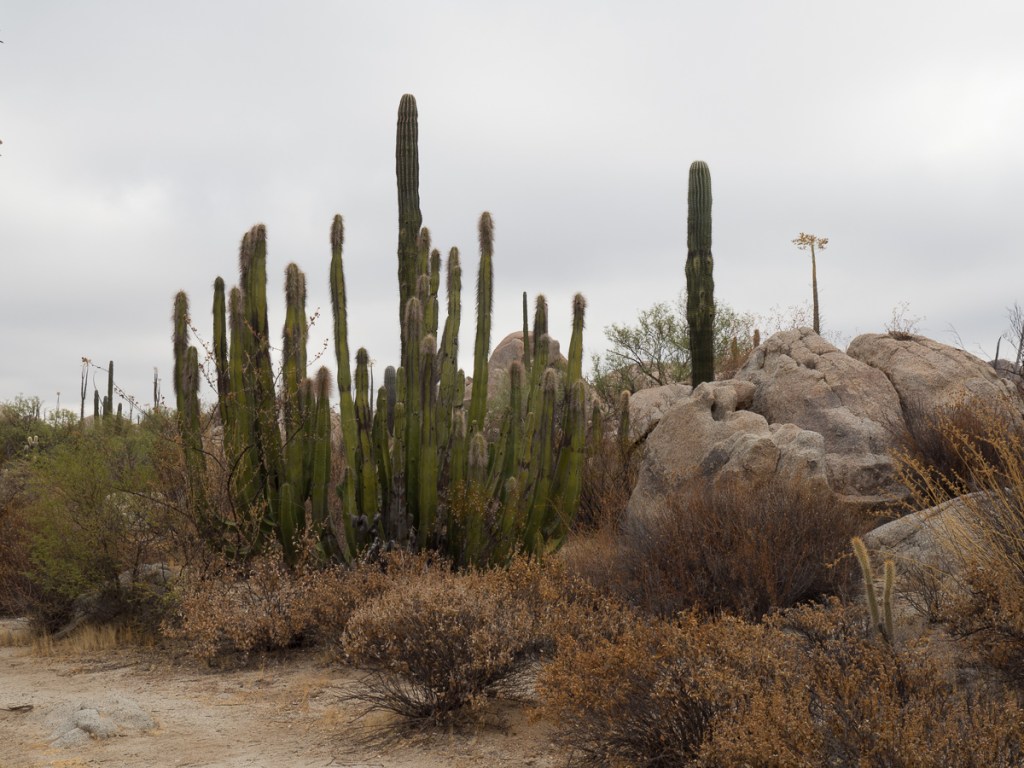
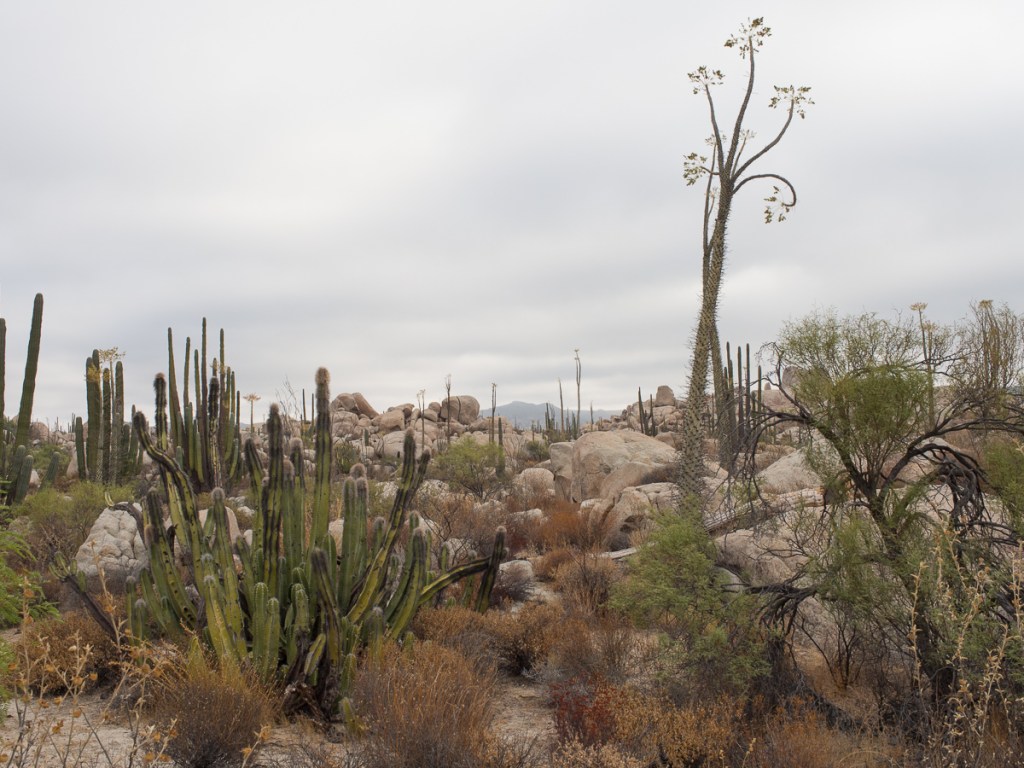
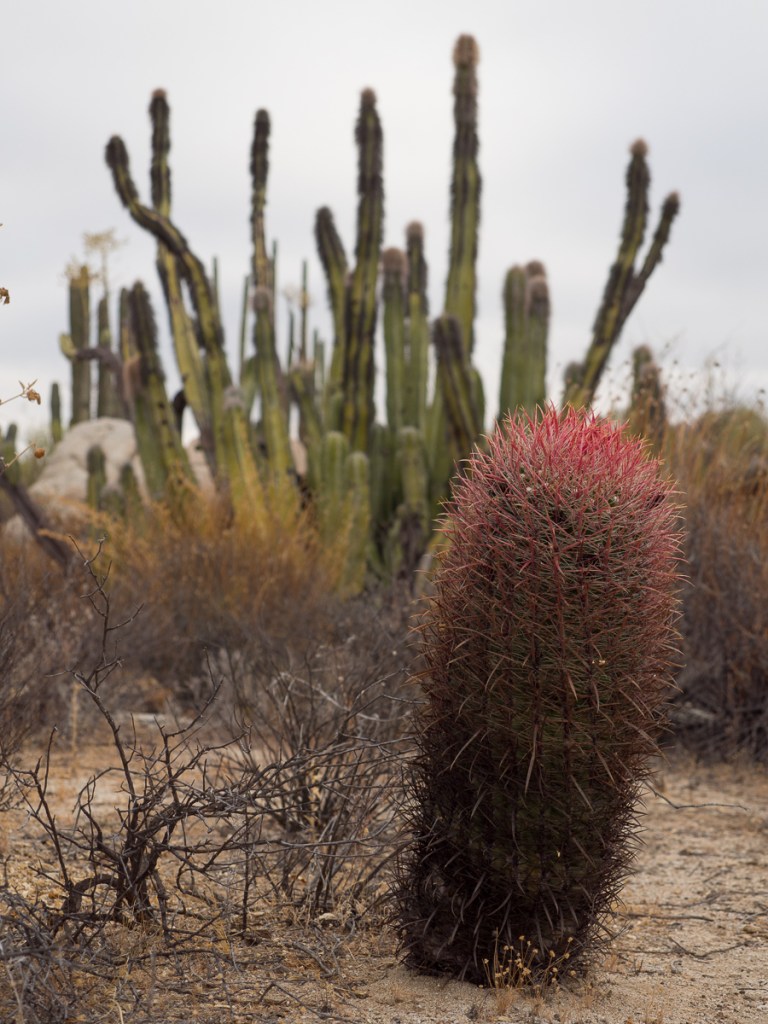
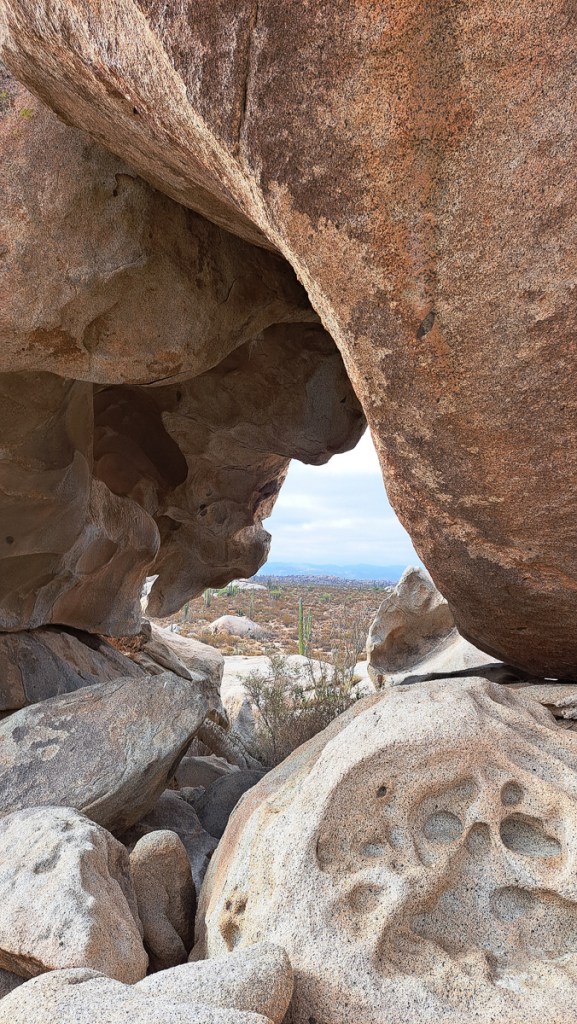
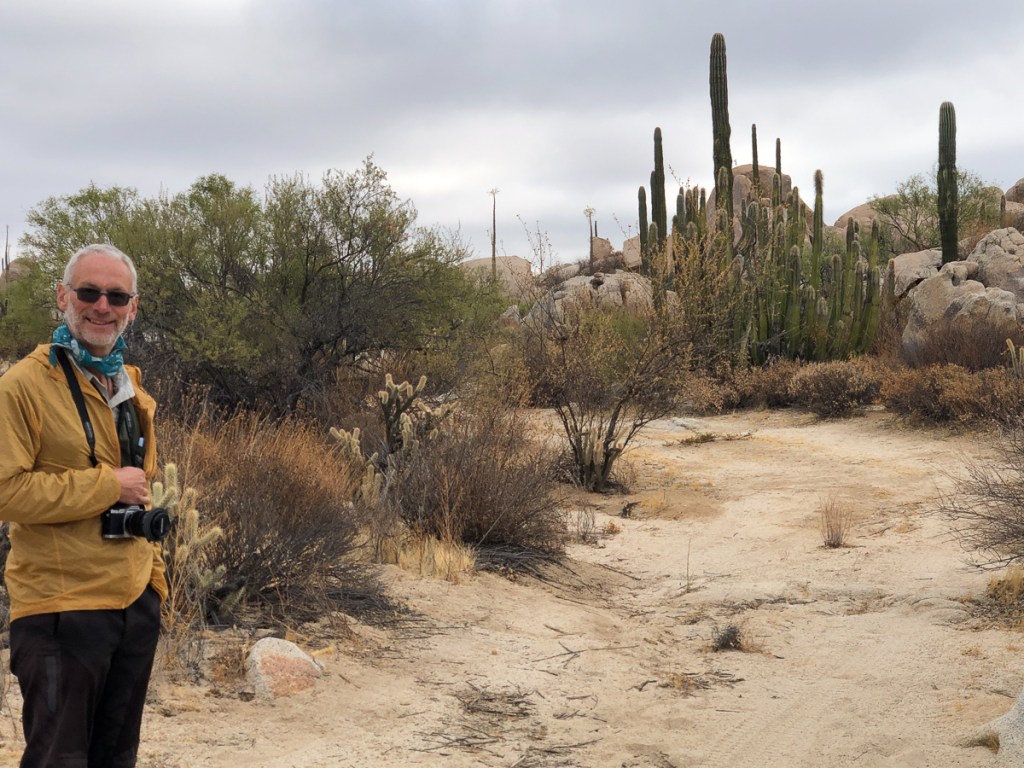
The country side we passed through changed from sparsely covered desert to a rich environment with many desert plants thriving.  Despite my resolution to not camp in Mexico on the grounds of personal safety we did camp at Cataviña.  We’d just passed a police station next to a deserted motel when we came across a small community: a campsite with two motorbikes and a tent inside a perimeter fence, opposite a taco shack and a fuel stop.  Encouraged by the gated entrance and bikers already camping we went in and were enthusiastically greeted.  We were staying then.  Alexandros spoke reasonable English and encouraged our efforts in Spanish.  He’d also done the southern half of our planned trip and gave us the book he’d written pointing out the pages that recorded his crossing of the Darien gap.  ‘Three weeks for the bikes,’ he said. ‘Three hours by plane for us.’  We spent a fabulous evening sharing tales.  A surprise bonus was the campsite’s tour of the desert by truck to see the painted caves just up the road and off in the desert.

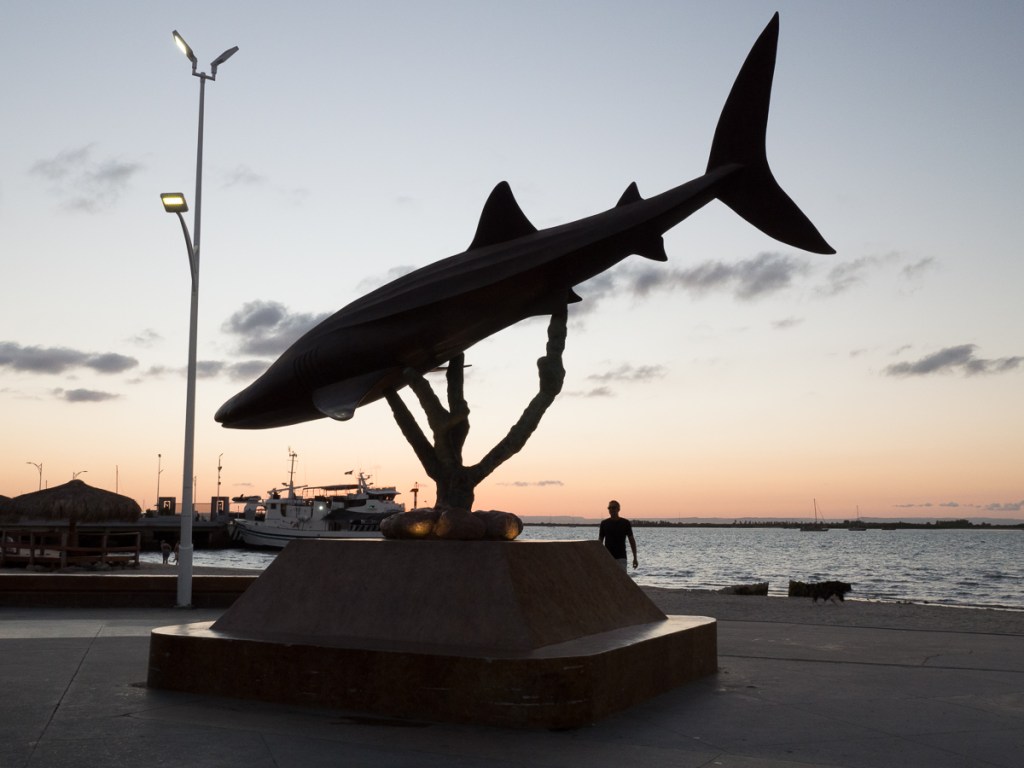
So, we’re off! ¡Vamos! Well, now we stopped in the lovely resort of La Paz, there is the ferry terminal, but it’s so nice we’ll pause awhile.

The Colossal Canyon and the Lonely Road

Apologies, we’re a little behind with our blog: It’s now October, and this relates our time in Arizona and Nevada, 25th Aug to 7th Sept. More soon! We also had a bit of an IT disaster and lost a lot of Clare’s pictures from August and September, so the imagery isn’t what it should be.

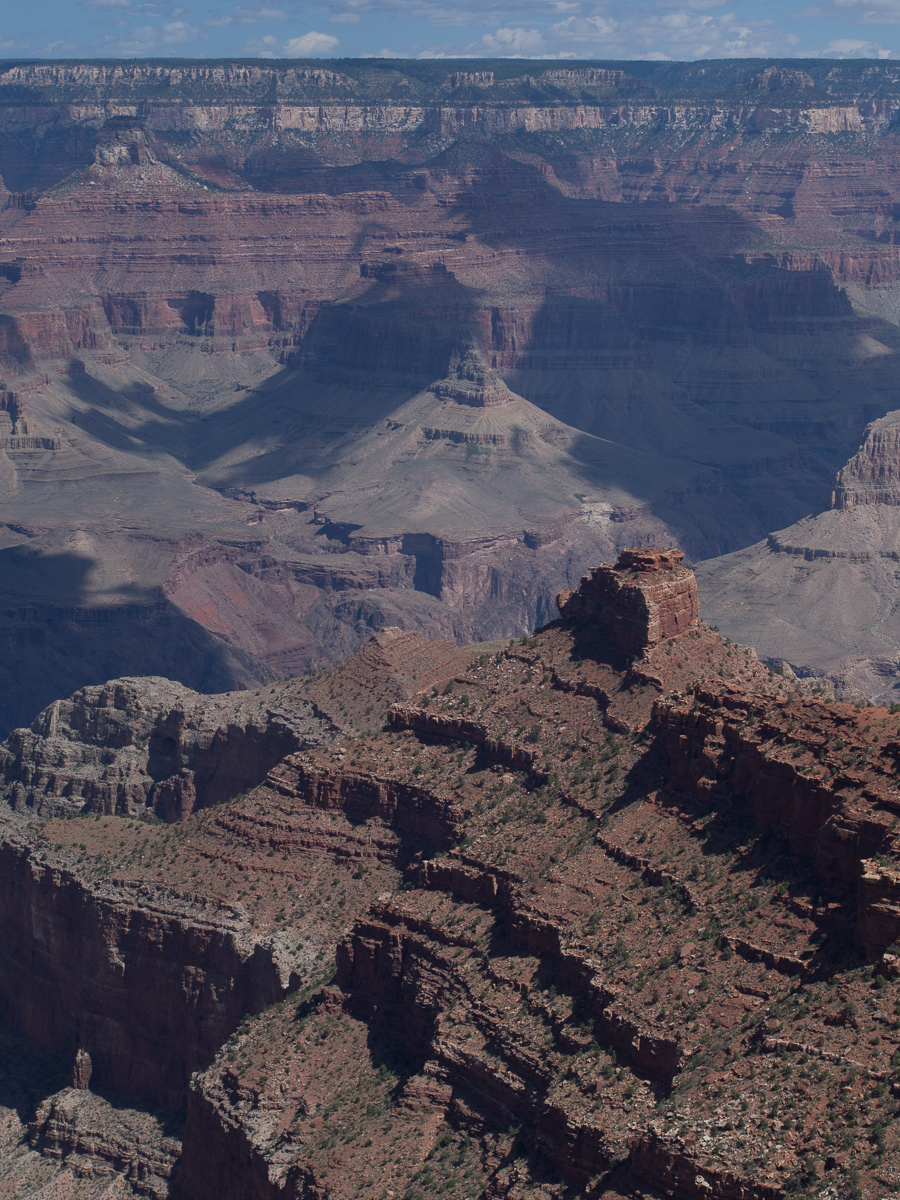
Next on the list of must see destinations was the Grand Canyon.  Having done our homework we knew that the Northern rim was thought to be the more spectacular of the two.  We set off from Flagstaff heading in totally the wrong direction – southwards.  We wanted to take in the scenic roads that were either marked on the map or had been recommended by other bikers.  But we were in luck – to get to the northern rim – we had to ride along the southern rim – bonus! Being a weekend the super route out and round to the south was rather over crowded and we were happy to get out of it but crowds were something we were going to have to get used to as we reached the more populated areas.

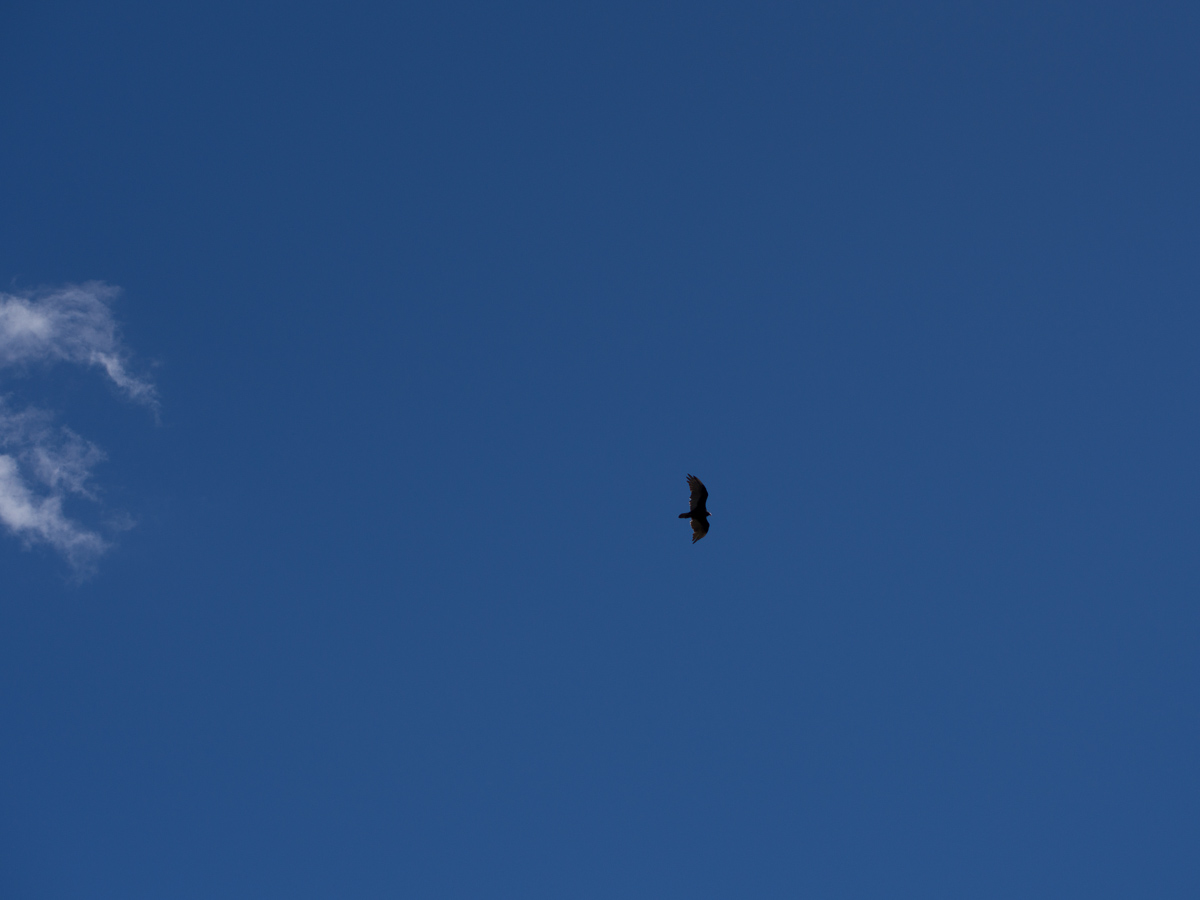
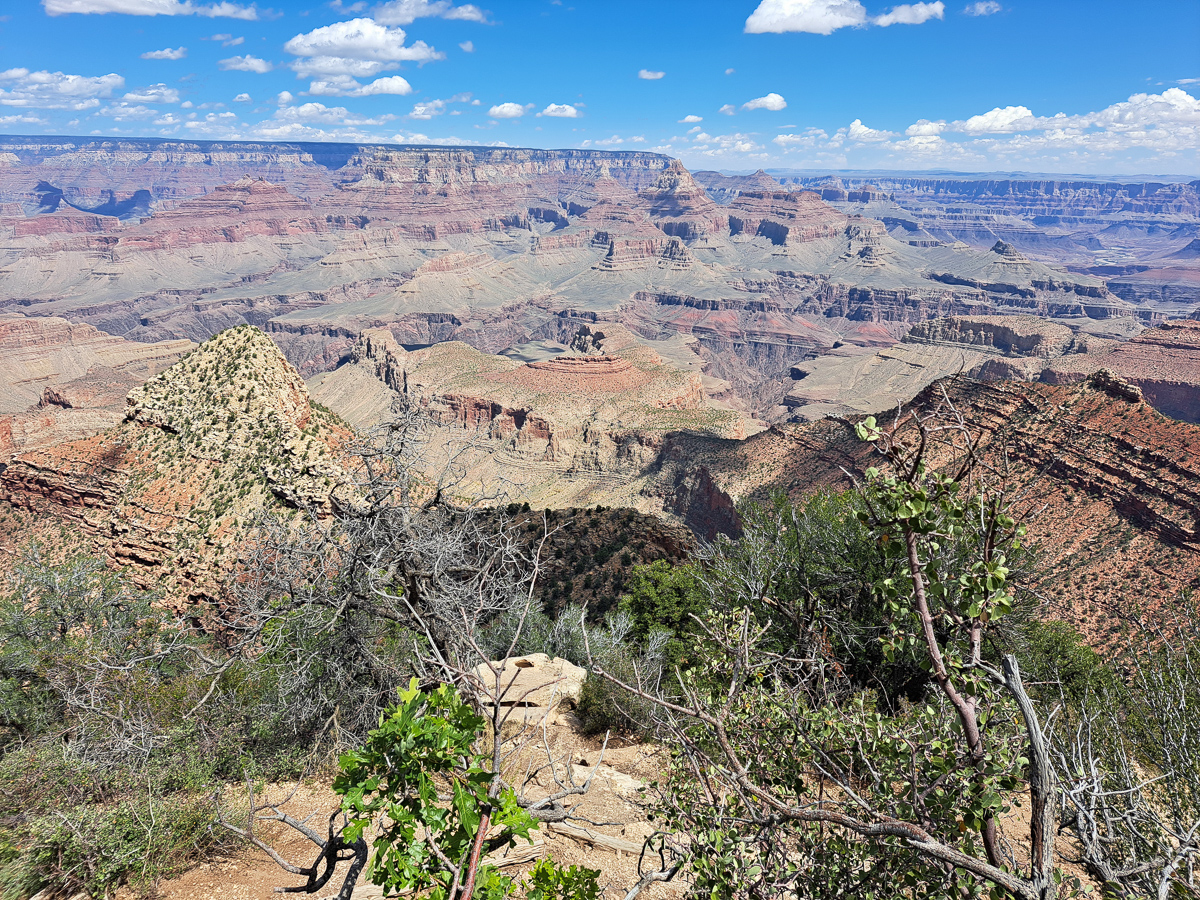
Along the southern rim we stopped at three vista points and learnt that the gorge was formed by opposing tectonic plates clashing and forcing each other up.  This created a raised plateau. From there the Colorado river cut through the rock.  Because there is not enough information left geologists don’t know why the river didn’t take an easier route around the outer edge.  The high levels of silt carried by the river have carved a deep gorge which continues to cut its course to this day.  The gorge was beautiful but the vultures stole the day.  Several vultures and some falcons rode the thermals swooping to and fro right in front of us.  ‘Have you got it?  Have you got it?’  we cried as another swept past.

Up at the Northern rim an elderly park guide was enthusing to us about the benefits of doing the North Rim road.  He told us that there were many viewing points and it was good use of our time.  But Gid was keen to do one of the walks.  Neither of us considered the whole day North Kaibab trail.  An 8 mi down 8 mi up marathon but we did think we could do one of the shorter ones.  Was there time for both?  ‘Of course there was,’ I exclaimed. And off we went.

On the rim road the information boards were very useful although I couldn’t see the ‘obvious’ fault lines on the southern side of the canyon.  We were excited to glimpse the Colorado river on a number of occasions as we stopped and started along the route.  We seemed to have swapped the birds for some views of the murky river.  I was pleased we’d seen both sides.

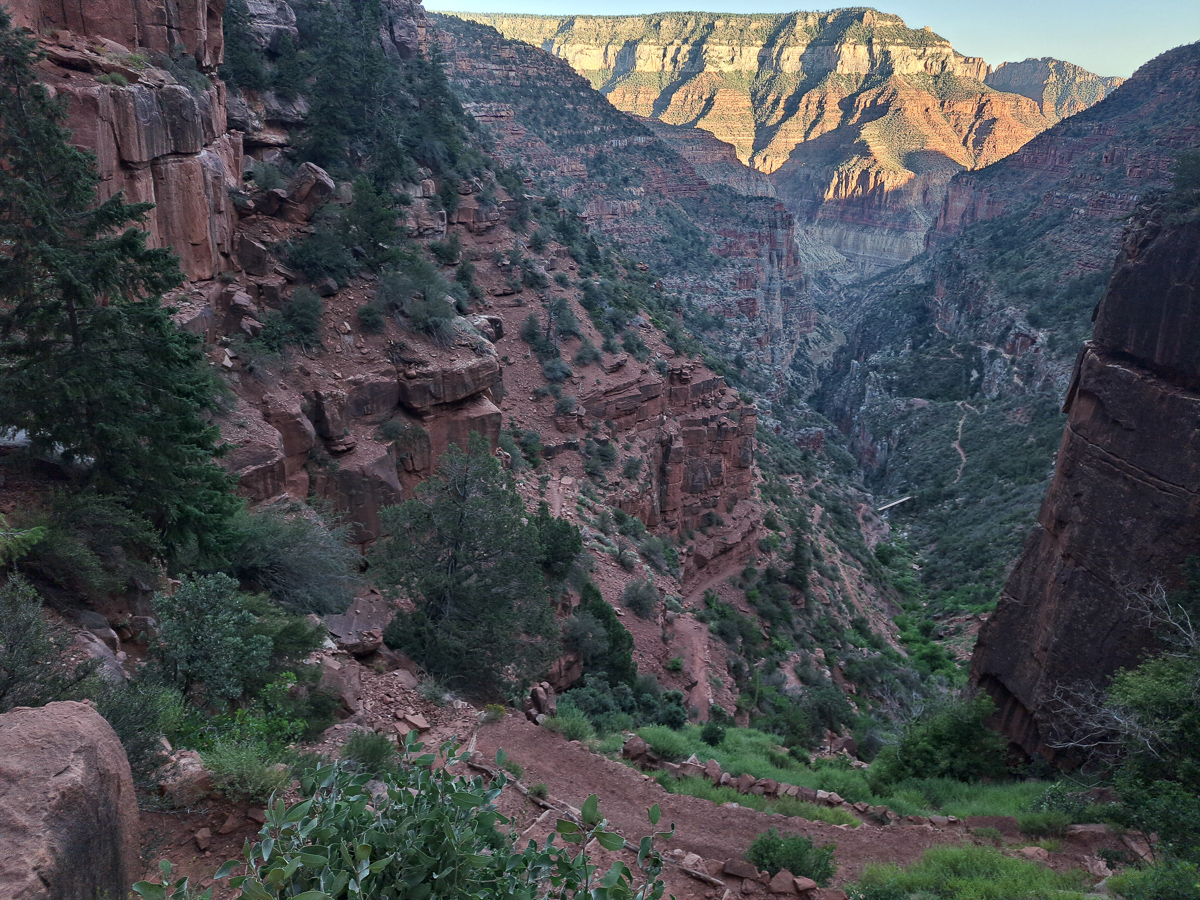
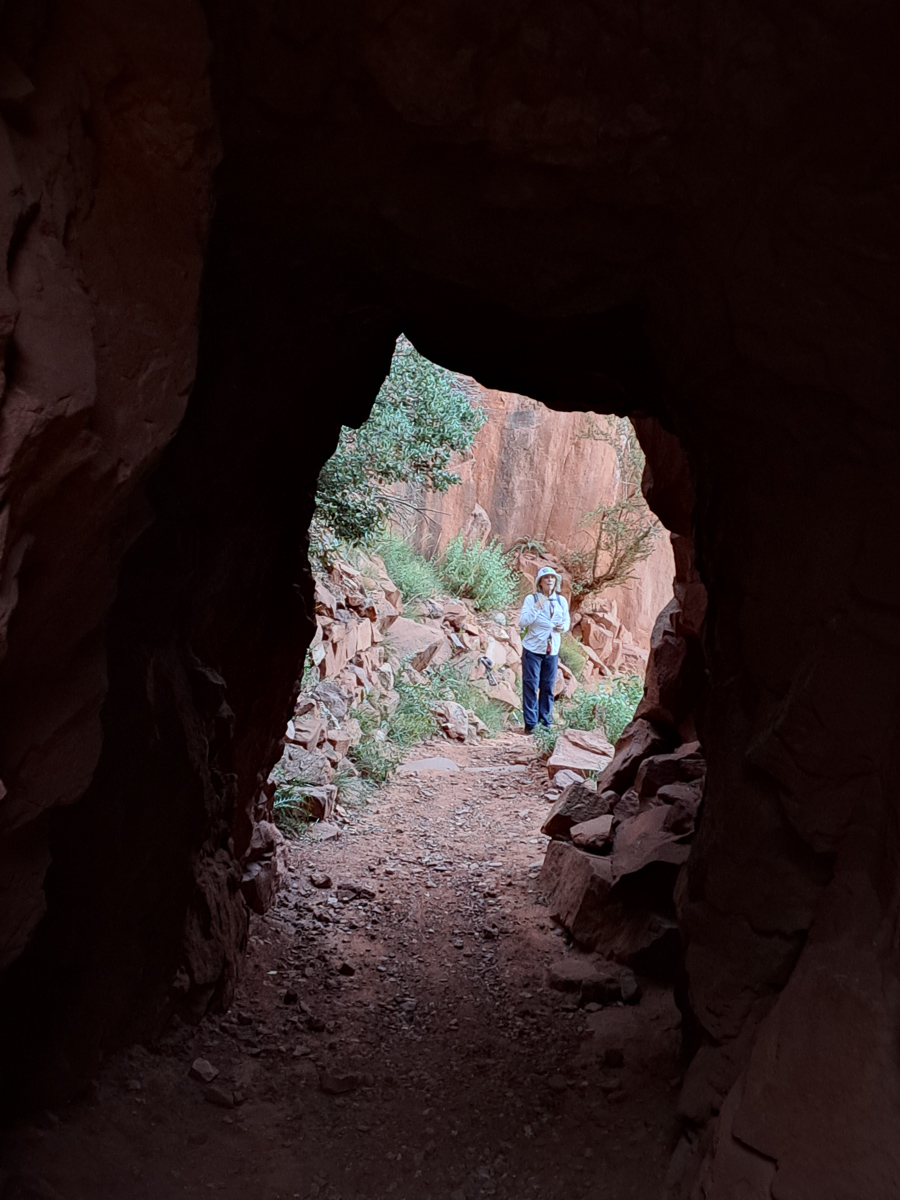
We hurried back to the start of the scenic tour road to pick up the hiking trail.  It was 5:15 when we set off on what was described as a 2-4hr hike.  We had torches and had been advised to take more water which we dutifully got.  Our walking speed is middling on most timed trails so I was predicting our return at around 8:15.  It’s dark by 8.  On a very uneven track how good was my torch?  Gid normally leads down hill and me coming back up, but I set off at a fair pace.  I wasn’t messing around we needed to speed this up.  Meeting a few people along the way was encouraging.  They were all on their way back but it was still nice to know we weren’t totally alone.  A few ‘not far now’ comments gave us encouragement but meeting a father and young daughter a few hundred metres short of our destination, Supai Tunnel, was quite a surprise.  We went through the tunnel, gazed down at the zig zagging path disappearing into the depths of the gorge and were ready to turn back.  One couple we’d met had done the whole day hike.  They’d set off at 8 in the morning and were on course to make it back completing their trek in just under 16 hours.

We made it back in good time just about catching up with the youngster and her dad.  Amazingly we did the round trip in just over two hours with just enough daylight, to pack our kit and set off back to the campsite.

We hadn’t got far the following morning before stopping for fuel.  Parked on the apron was a Royal Enfield Continental GT.  Paying for our fuel in the garage it was obvious who the Enfield belonged to.  This distinguished gent with a broad grin, a thick red beard and plaited hair readily admitted it was his bike.  We asked him about the unusual racking system he had and his tin seat.  Out we went to look at them.  He enthusiastically told us about his project to reduce the weight of the bike.  He lifted up the tin seat shaped to fit the gap between the metal rods and read from the bottom what the old seat had weighed and what his new tin seat weighed.  He proudly declared weight the saving.  He repeated this exercise with the side guards which were now leather flaps with another recorded saving.  The next project was the rear rack he declared.  That was trickly though as it had to take the cat.  At first I thought the bag of empty 5lt water bottles somehow housed the cat.  The cat, his travelling companion he informed us, was out prowling around back at camp.  The cat, he told us, could only manage three hours at a time on the bike.  With that saddle I’m sure I couldn’t manage any more.

Jamie Burns, the distinguished gent, had never been to Scotland even though he was directly related to Robert Burns the infamous Scottish poet.  ‘I  can’t go!’ he exclaimed.  ‘I’d have to set foot on English soil and I’ll never be doing that.’  A little later Gid pointed out the he must share some considerable empathy for the Native Americans with the atrocities that they suffered at the hands of the new settlers.  But he seemed to be handling American soil ok.

The Grand Canyon, Petrified Forest and our stop in Flagstaff ticked off Arizona: We were making good Pan-Am progress towards Ushuaia, on the southern tip of Argentina.  Next stop Mexico? Nope. North westwards to northern California.  We couldn’t miss the Pacific coast and the redwoods.  So we turned, heading back north up towards the northern tip of California.  We aren’t fond of megopolises, so for the second time, we avoided Salt Lake City, and this time, Las Vegas too progressing diagonally between them.  We’d soon have 12000mi under our belts so we chose Reno, Nevada, for a service stop.  It’s big enough to have everything, but not oppressively huge. Airbnb host Tyler was ok with us changing oil in the shade of his carport, and Royal Enfield dealer Eurobikes had got the service parts and our three new tyres in.

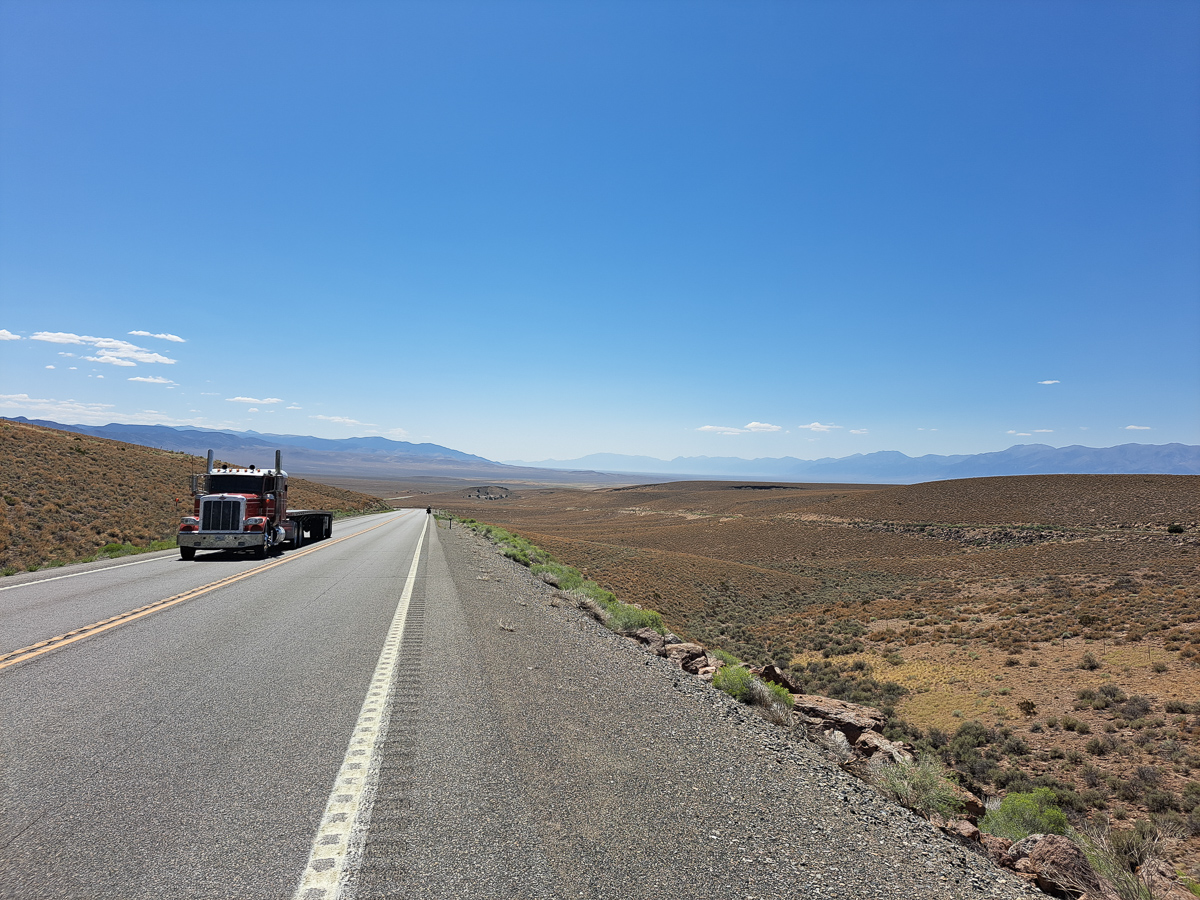
We headed westwards towards Reno along Highway 50 crossing the often empty Nevada, which passes just south of Reno. It’s dubbed ‘the loneliest Highway in America’ and served us well as it had little traffic.  The section we travelled from Ely to Silver Springs traversed great plains where there was very little to see except the next mountain range to cross.  It took ages crossing each plain, then we’d ascend up the mountains.  Most roads carve a pass through the summit with rocky cliffs towering on either side.  Pancake pass – 1988m – being the unusual one because it was flat.

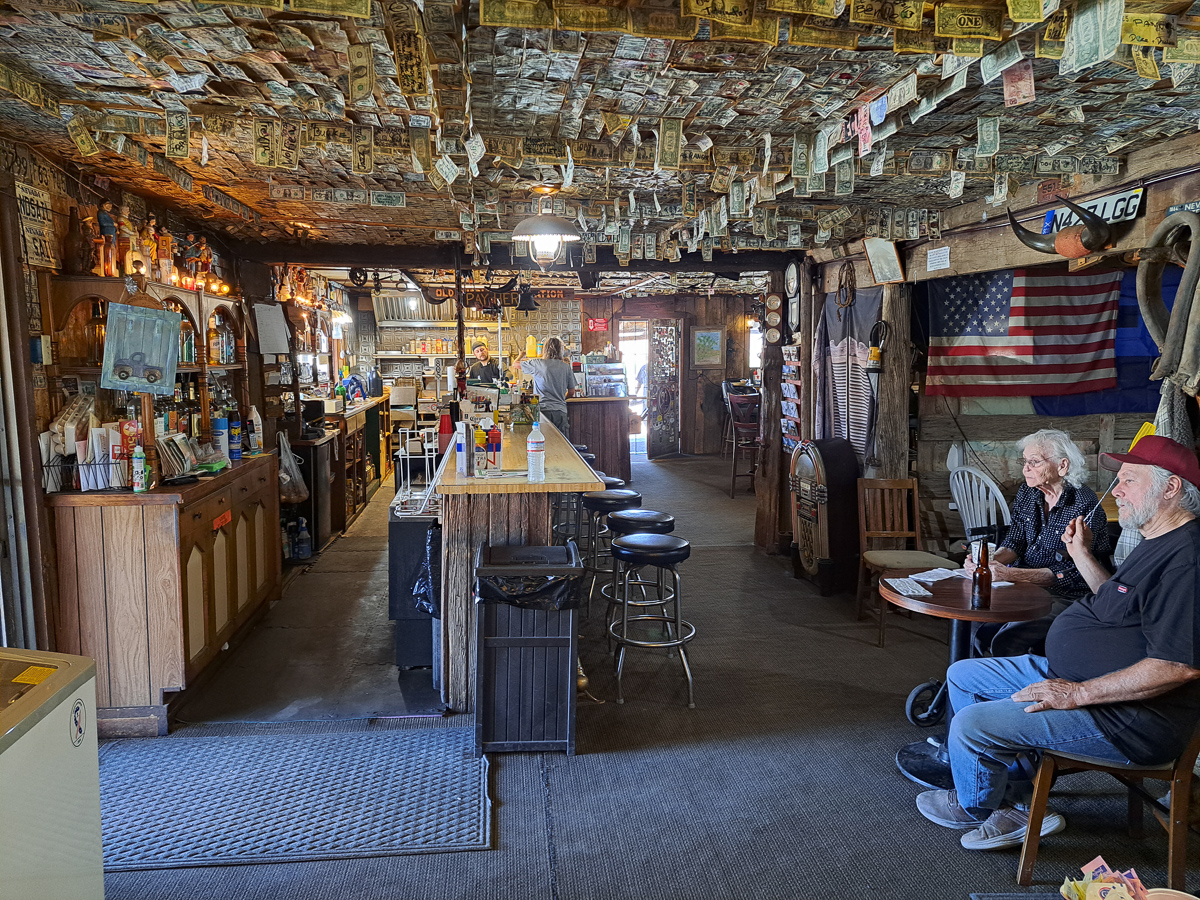
The Pony Express central change over point at Old Middlegate Station on HWY50 was a wonderful choice for a stopping place, full of memorabilia with posters for ”Wanted’ criminals – Dead or Alive’, legalised prostitution advertisements and pony express riders job offers not to be missed.   Providing, that is that, you were under 18 and preferably an orphan who was prepared for high risk and possible death from their chosen employment.  The place was stacked with relics from the past both inside and out.  A quaint mix of old and modern as the petrol pump boldly claimed ‘no lead’.  Not now perhaps but there’s been no shortage of lead flying around this place I’m sure.  To add to the authenticity signage pointed out that Ned Kelly’s house was a stone’s throw away.

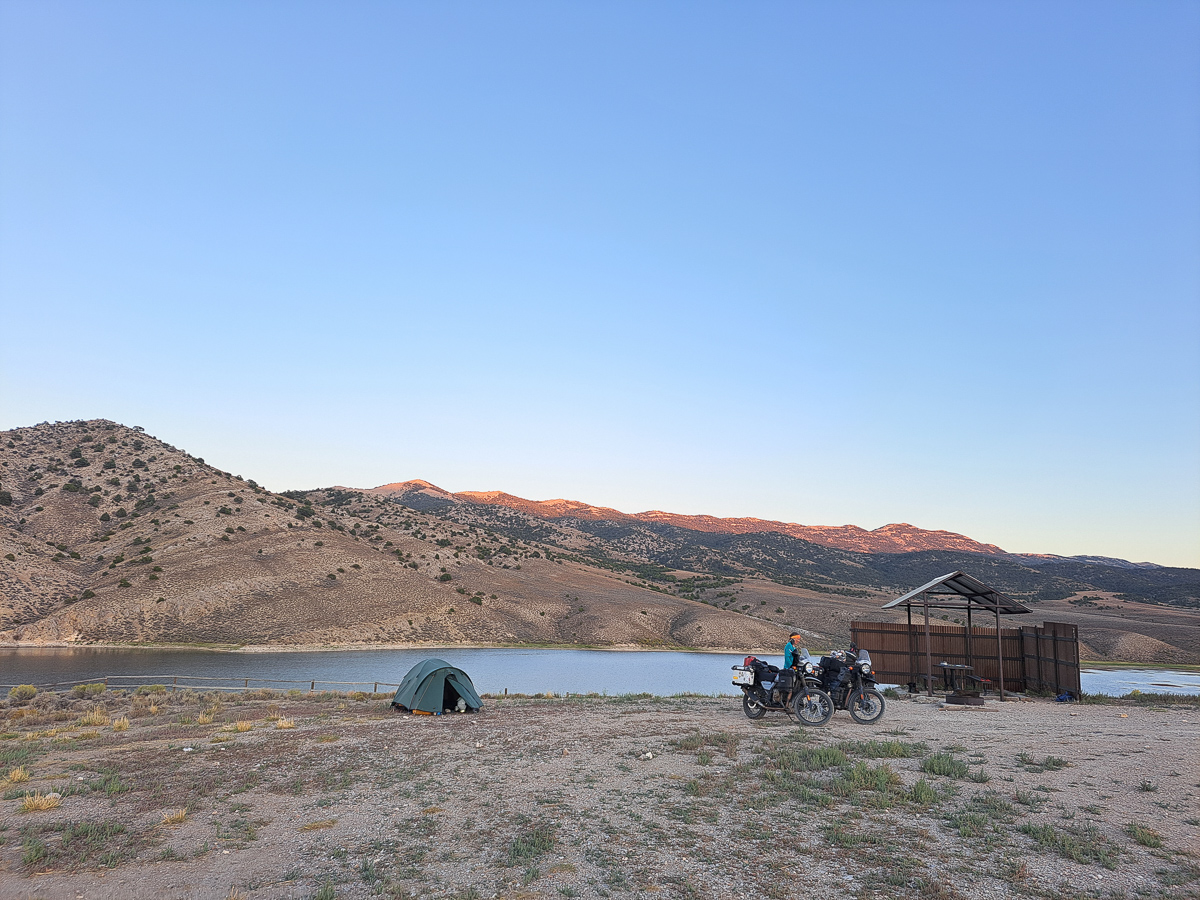
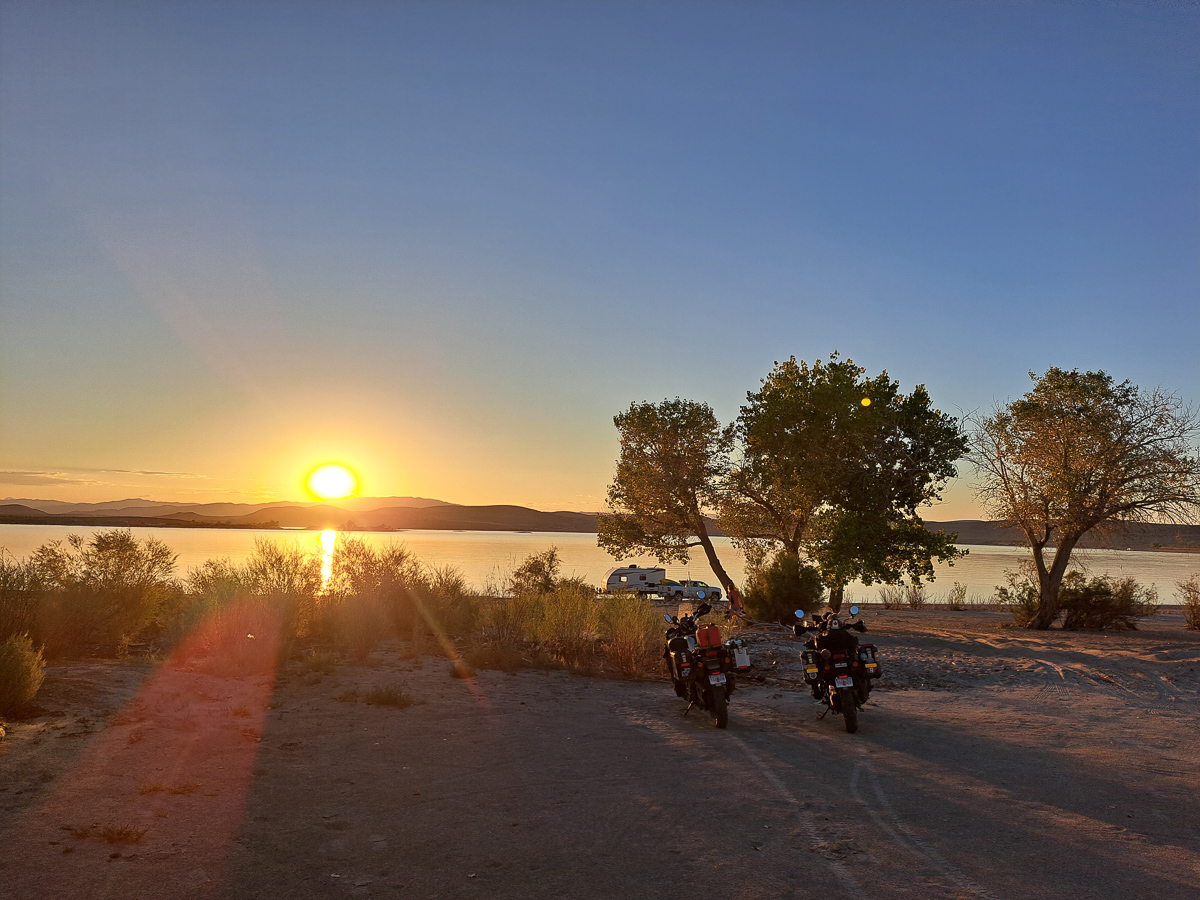
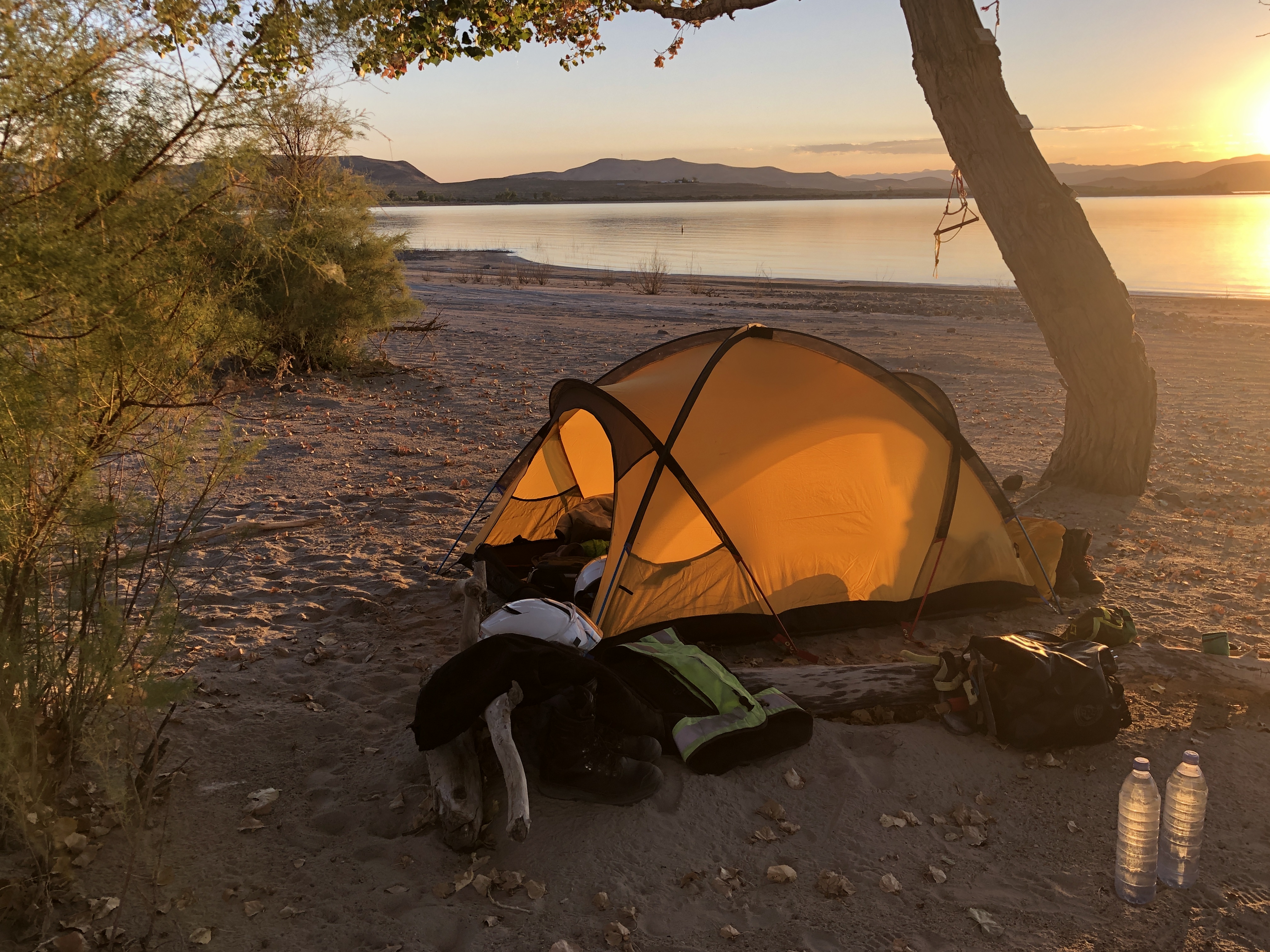
Our arrival in Reno was a little bit complicated, as we’d booked the Airbnb for Sunday onwards, not realising Monday was Labor Day.  Eurobikes and almost everywhere would be shut.  We needed to be close by Friday night, ready to hit the store Saturday morning to collect the service kits.  Experience told us that even ordinary summer weekends could crowd out the campsites leaving us struggling.  Lake Lahontan State Park was 30 miles out, a big reservoir with sandy shores, it seemed like a great retreat. We arrived with some trepidation about availability, but paid our fee at the unattended gate. We’d hoped for a pitch we could swim at, but there was a Red Warning stating that the lake was unfit for recreational purposes because the algae levels were unacceptably high. Oh no!  But we trundled round the shore, surveying the ad-hoc camping.  We found a beach spot facing the sunset: firm sand to park, soft sand and shady trees to camp. One RV right down on the shore was 50 metres away. The next units maybe 200m one way in a thicket, and 1000m the other.  On this side of the lake, people were swimming.  Definitely one of our nicest sites!  We stayed two nights, enjoying a starlit evening chat with the neighbours.

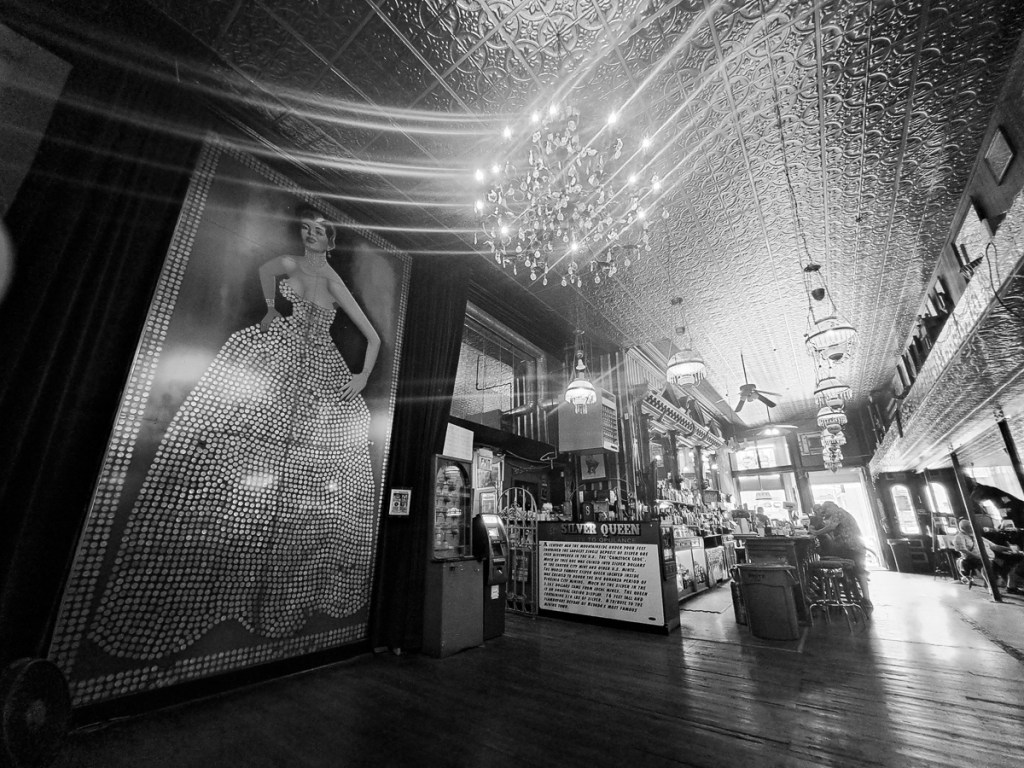
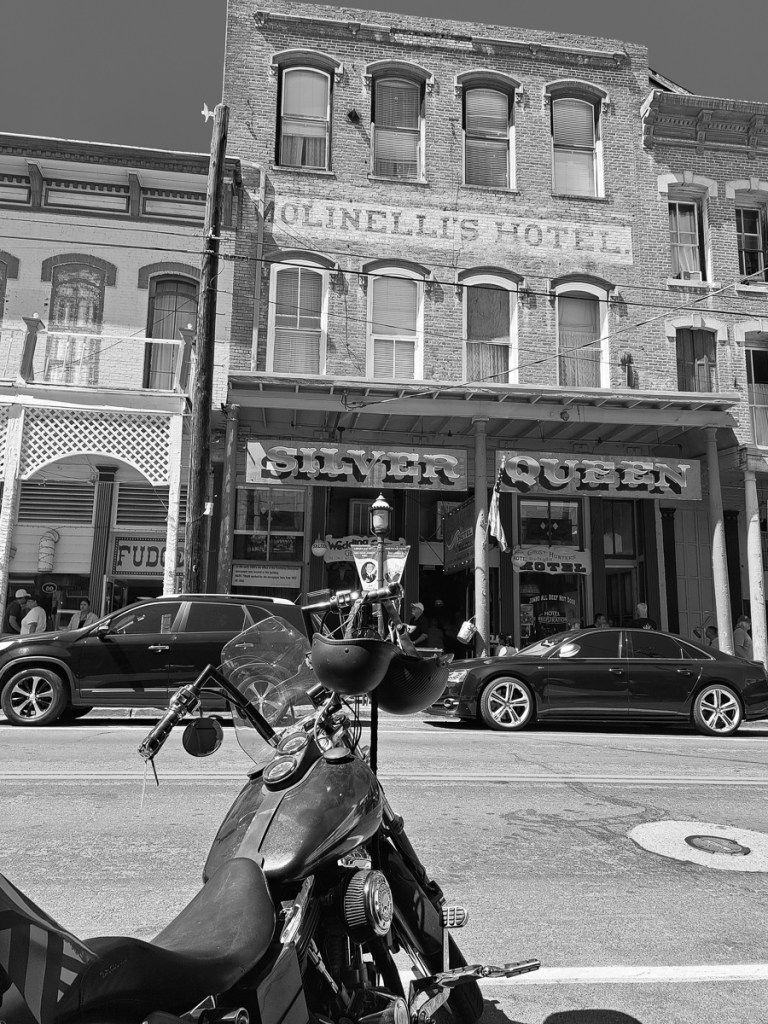
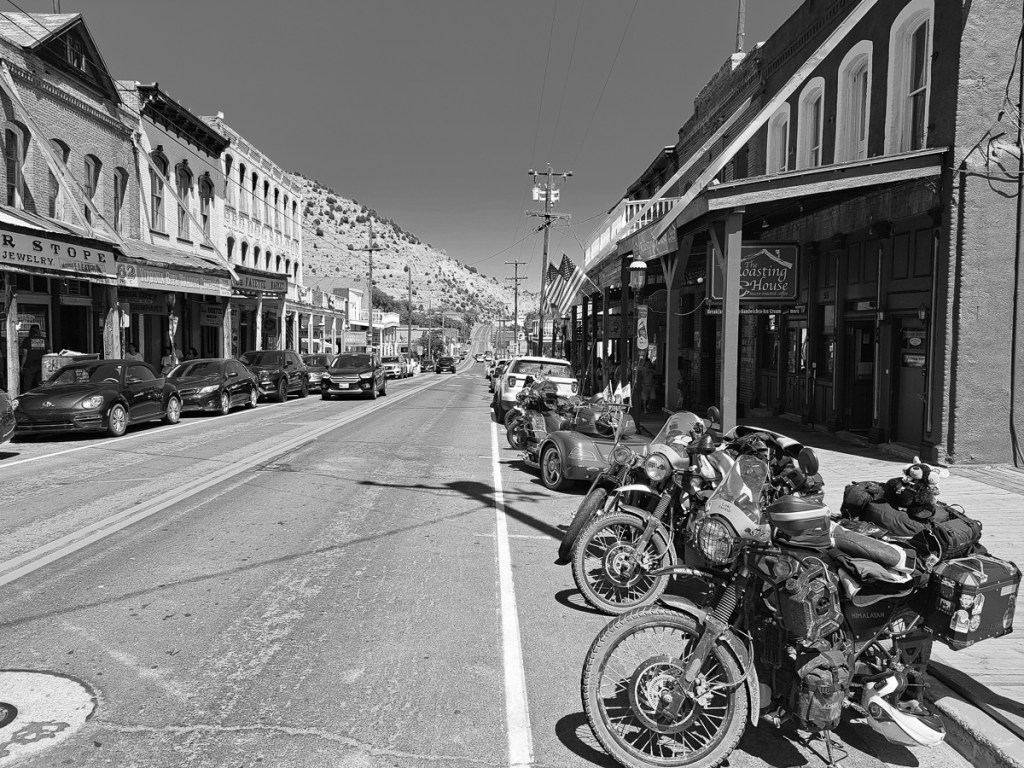
It was a short freeway ride to Reno on Saturday, but to return, we saw a wiggly back route going through Virginia City and tried it.  It turned out to be a local bikers’ favourite. Virginia City – City it says. Obviously swayed by the city part of it’s name I was expecting something big.  Bigger that is than a half mile main street, and not a lot else.  Rather than the boom and bust of many towns where a natural resource is found, Virginia City, once the mountain of silver under the city was depleted, has managed to maintain prominence albeit now as a tourist attraction.  Its high street is frozen in the style of 100 years ago with original buildings and facades, as are the rickety board walks beneath the overhangs.  There are tourist attractions like: the Silver Queen Hotel where the lady’s silver dress is a floor to ceiling art work modelled in silver dollars mined beneath the city.  There are many saloons, some with swing doors, eateries and tat shops, and events like camel races for the more competitive amongst us.

Mark Twain, at least his wax model, peers out of one window where he used to work as a newspaper reporter.  Words such as ‘never let the truth get in the way of a good story’, accredited to him, live on.  His famous novels, Huckleberry Finn and The Adventures of Tom Sawyer still make it onto many a reading list.  The local museum claiming ‘Of great interest to adults and children’ displays many relics from past life in the area. Virginia City became our regular route between Reno and Lahontan.

The servicing went to plan.  Having done it all before it was quicker this time. Now Gid is becoming familiar with the process he’ll let me play too – next service I hope to do the oil changes.

We’d noted the bike chains had needed occasional adjustment, but annoyingly, as we approached Reno, Gid was having to tighten them every couple of days.  Knackered. We ordered replacement chains and sprockets at the Reno dealer but RE gave no delivery date. Were they coming from Wisconsin or Chennai? We decided to wait into next week before requesting that they might be posted forwards.  The dealership had a branch at the coast and was happy for us to collect them en-route but we couldn’t continue to stay with Tyler.  With time to kill we needed a new home.

To get away from the bustle of city while we waited we went off to explore Lake Tahoe.  Our Lonely Planet guide book describes it as a very popular location for winter skiing with slightly fewer visitors in summer.  Wrong!  It, or rather its shoreline, was teeming with people.  Adding to the frustration most campsites were closed because the trails were being repaired and supplies were dumped in campgrounds.  We u-turned and got out of there as fast as possible, riding right back up the 9,000ft pass we’d come in on, returning to Mt Rose campsite near the top.  It was beautiful.  Pine trees spread around large boulders –  the sort of things that are called erratics in Norway having been randomly dropped by the receding glaciers but here they were at 10000 ft high!  It was beautifully peaceful, until the generators started.  The site host agreed that it was a beautiful area informing us, with a wry smile, that the noisy school group had left 2hrs ago. It was nice for one night, but we couldn’t think of a better option than returning to Lahontan. The exact same spot, and now the nearest neighbours were maybe 2km away. No cossies needed.

Having missed petroglyphs at the Petrified Trees NP I was keen to see the ones in this area.  Grimes Point, the site of the petroglyphs and the Hidden Cave, wasn’t far away and reportedly had the best examples so it had to be done.  We would have liked to have seen the Hidden Caves, also at the site, but on contacting the area office to arrange a guided trip we were informed that due to sickness that was off.  Thousands of years ago the Hidden Cave appears to have been a site of storage: furs, tools and remains of clothing were found there.  It’s under lock and key now to preserve the site for future generations but our wished for visit wasn’t going to happen.  On the self guided walk around the petroglyphs, the boards told us that human habitation in the area dates back to 8000 years ago.  Lahontan Lake, now some 20-30 miles away where our tent was, would once have been lapping the edge of this area.  The boulders, plenty big enough to hide behind, would have been the perfect site to hunt the animals who came to drink.  Shaman, responsible to communicating with the gods to ensure a successful hunt, may have been responsible for the pecked or carved rock art.

Finally – good news – the chains and sprockets were in. We’d already been on Bunk-a-Biker and made contact with a friendly soul who offered us a bed, a workshop, and a breaker bar, just over the border in California. We were off again, albeit only for 60 miles.