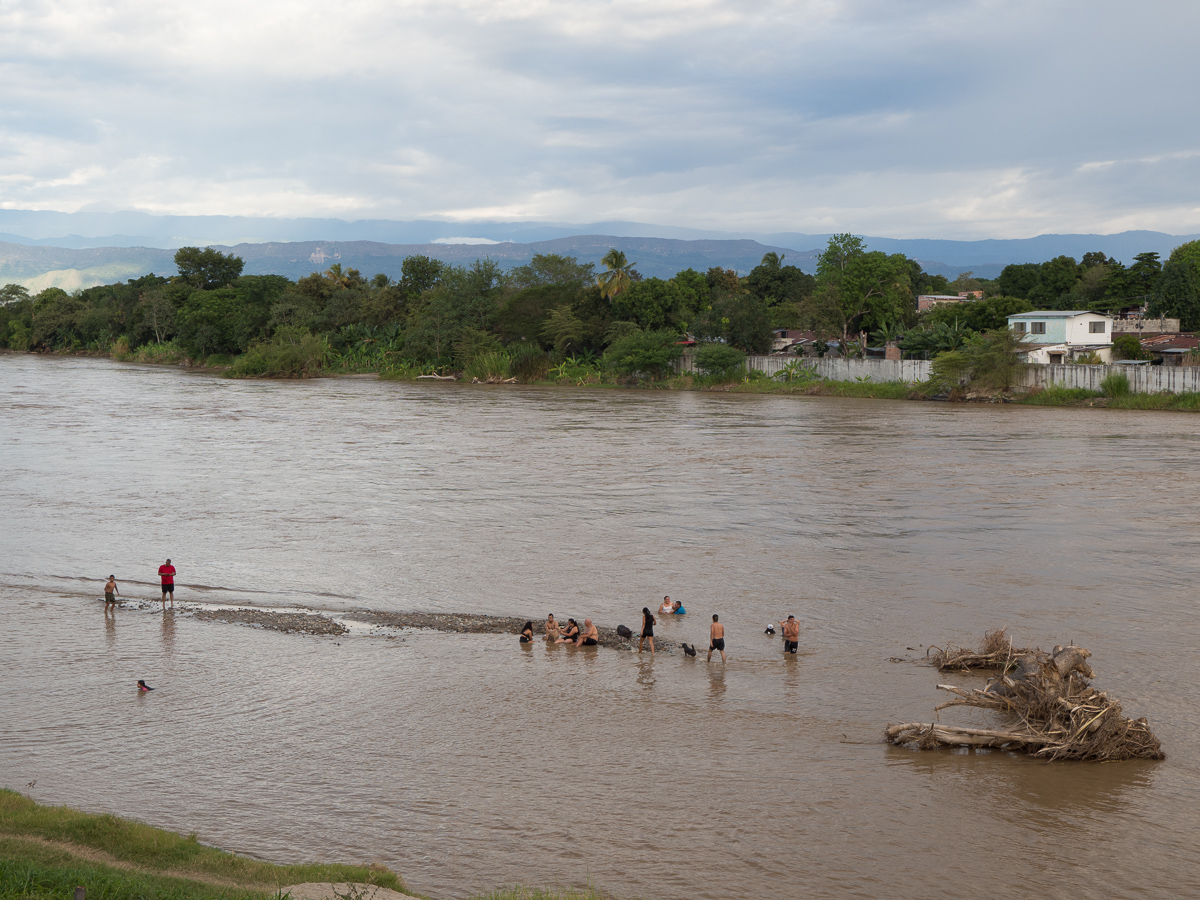
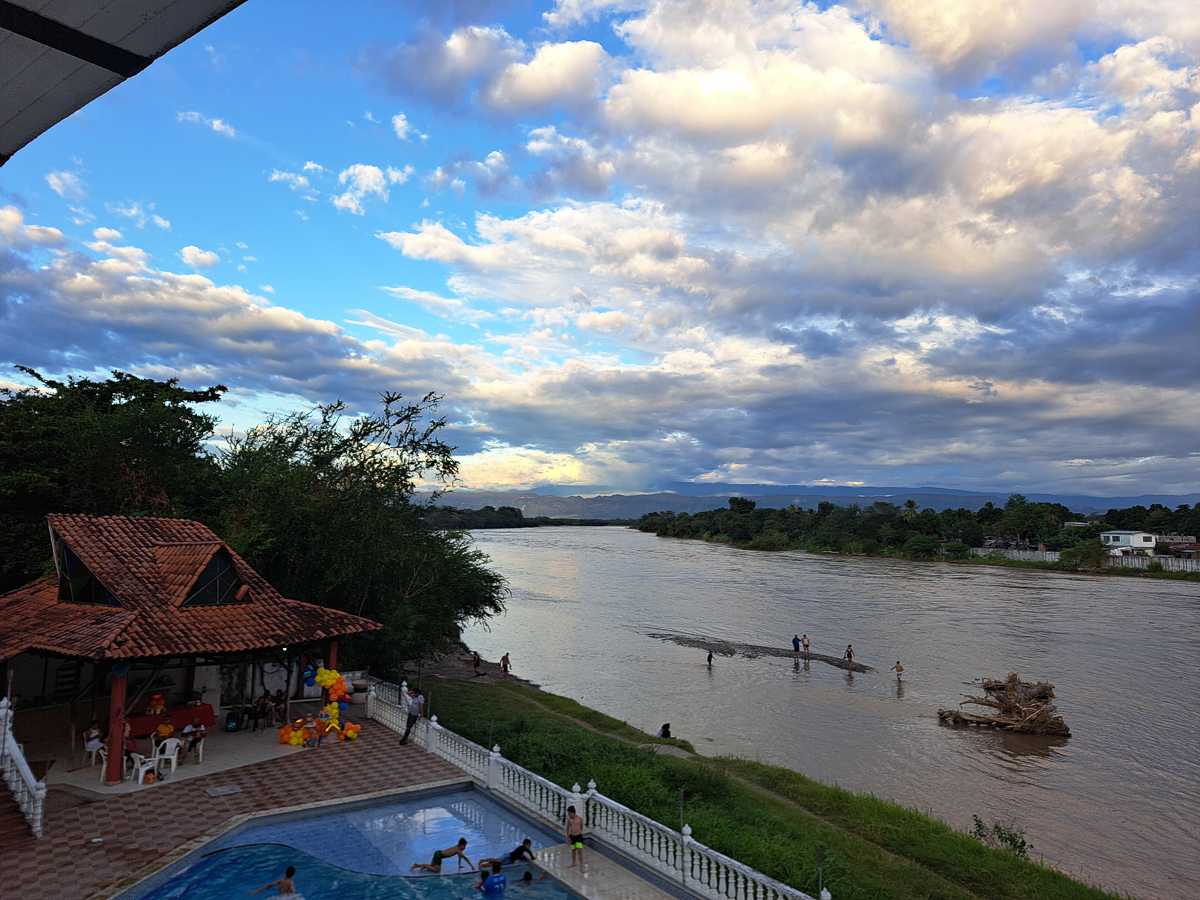
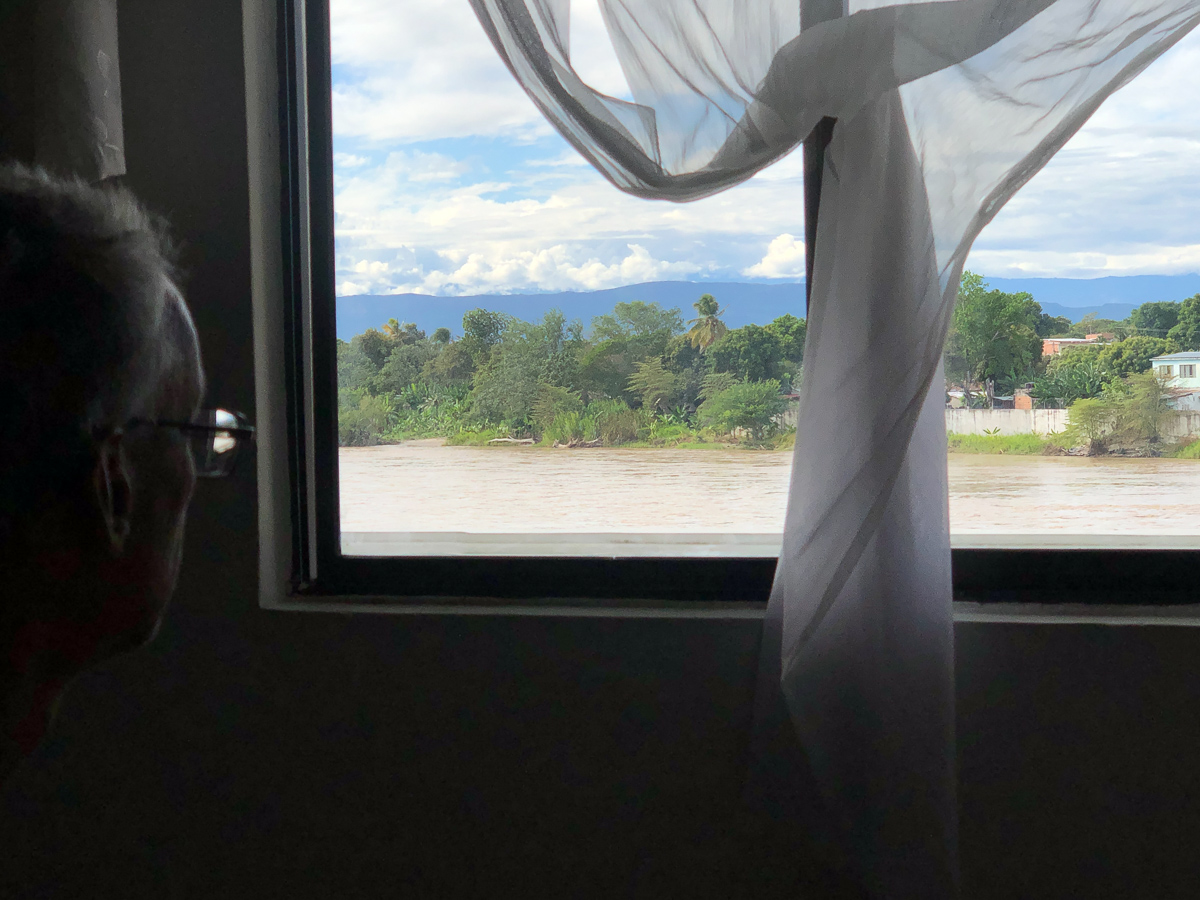
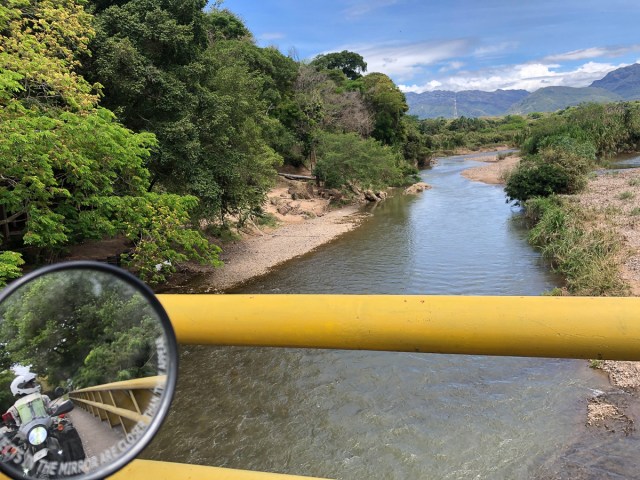
Sweeping back up and round seems to be our Colombian style. From Donkey Sunrise we headed back towards Bogota to cross the Cordillera Oriental (eastern mountain range) on our way down to Villaviejo to see the Tatacoa ’desert’. We knew we wouldn’t make it in a day so stopped in Saldaña with beautiful views of the river.
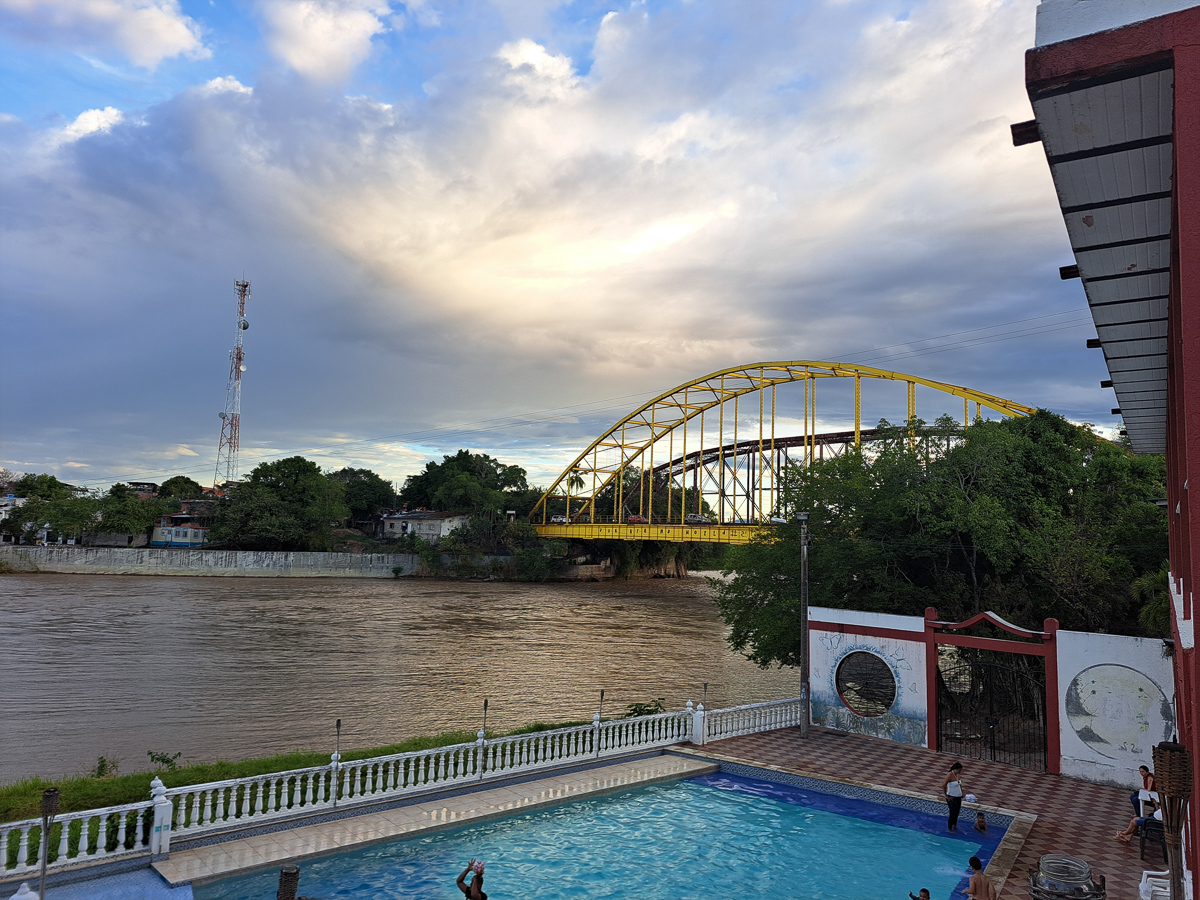
Setting off to complete our route to Villaviejo proved interesting as the hotelier was telling us the road was blocked. ‘The rice growers are protesting and have blocked the road,’ he said. We still had a fair way to go so thought we’d set off and see how far we could get. He hung around looking at his phone and strolled over to show us that it was possible to get through using the back roads but still didn’t mention, or we didn’t understand, that the road was blocked immediately – barely three hundred metres away. We set off crossed the bridge and there it was. Tractors and lorries blocking the road!
We snuck behind the lorry parked to our right and thought we’d cracked it as we were following a few other vehicles. The tarmac soon gave way to dirt but it wasn’t a bad road. After a few miles an approaching moto was talking to each driver. He told us we could take the next left. ‘Motos could get through but not four wheels,’ he said. The lane was a little sandy in places but ahead of one stationary truck we could see a few vehicles passing on the highway. All looked good. Approaching the end we started to notice something strange in front of the parked truck. Tractors had dumped a whole pile of mud over a metre high blocking the entire width of the road. One end was smoother where light bikes had nipped over and gone. Us, on our Hims, nearing 300kg weren’t going to nip over the loose dirt as demonstrated by a local, skinny old man on his 90cc step-through.
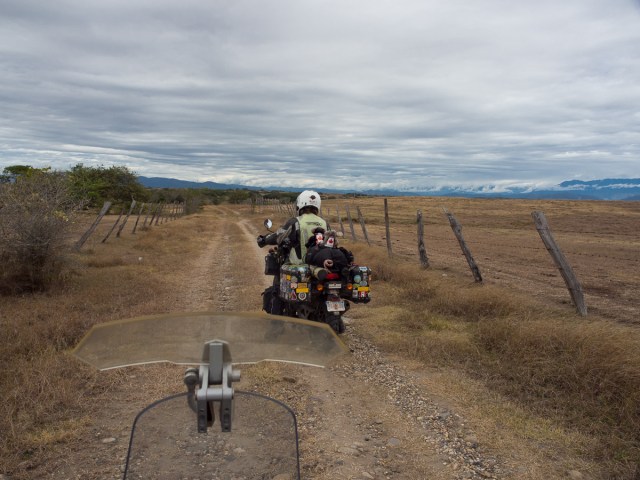
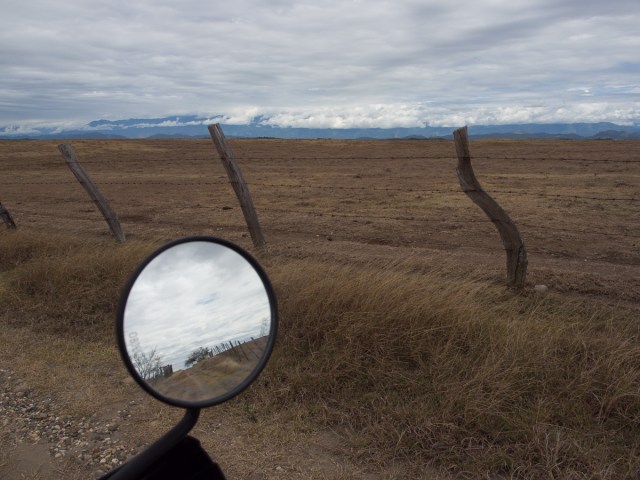
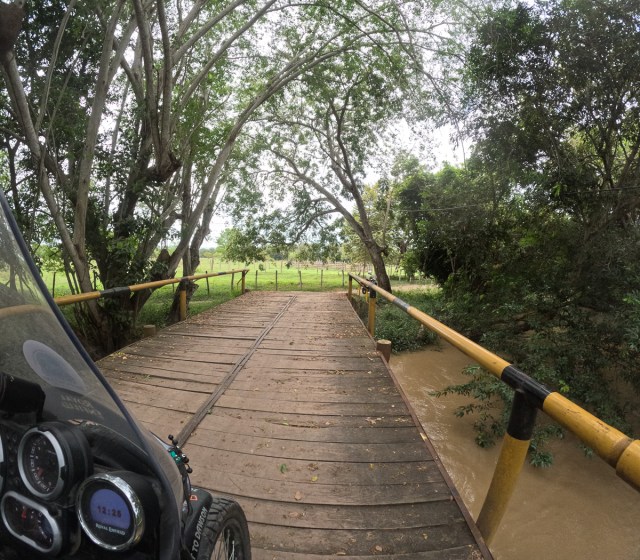
We turned back and set off again. This time heading off on a more remote track breaking away from the bigger dirt road. It was stony, rutted in places – a farmers track with beautiful views which crossed a stream and did, according to the SatNav, seem to make it back to the highway. None of the other wiggle-arounders seemed to share our route, but it was on our GPS as – something. Surely no one would bother to block this? One hour later having covered 8km we were speeding along the highway again.
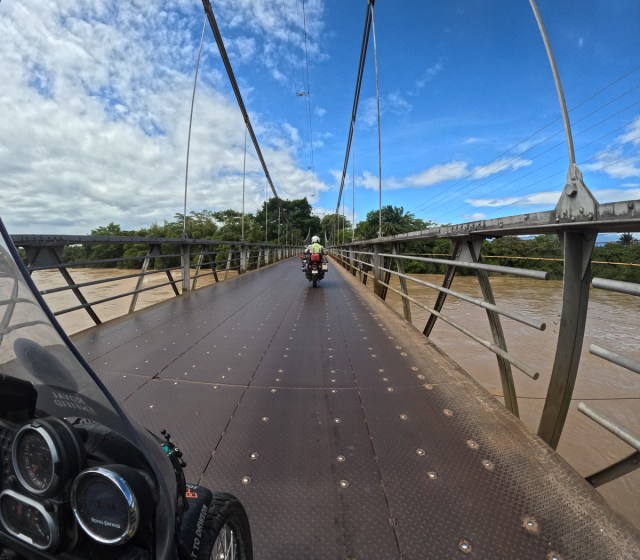
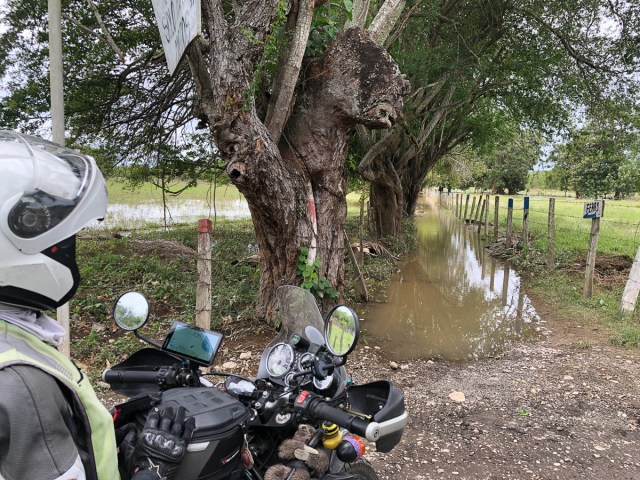
Our loss of time didn’t matter as our destination wasn’t too far away and we could cut off a chunk by taking the ferry across the river. We found our way through the town and down towards the river Magdalena. A big fast flowing river which unbeknownst to us was in spate. The water was swelling up over the nearby fields and flooded the route down to the moto ferry. A visible but distant local signalled with crossed forearms that the ferry was cancelled. Try the car ferry that’s back up the road a bit another local suggested. That was also out of action. A long loop to a bridge at Nieve then. An hour and a half later we arrived at our destination, Villaviejo.
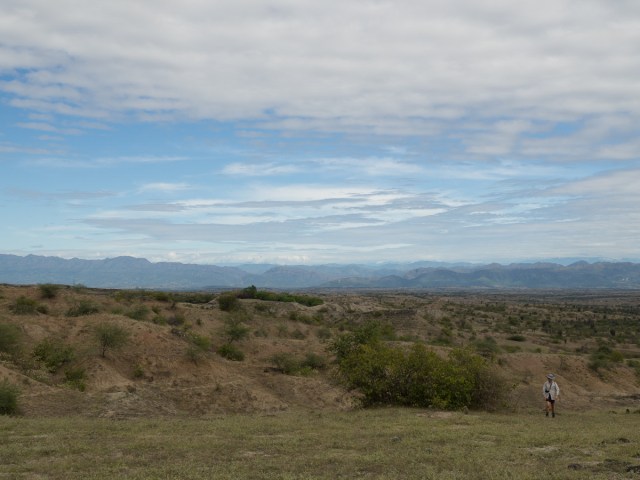
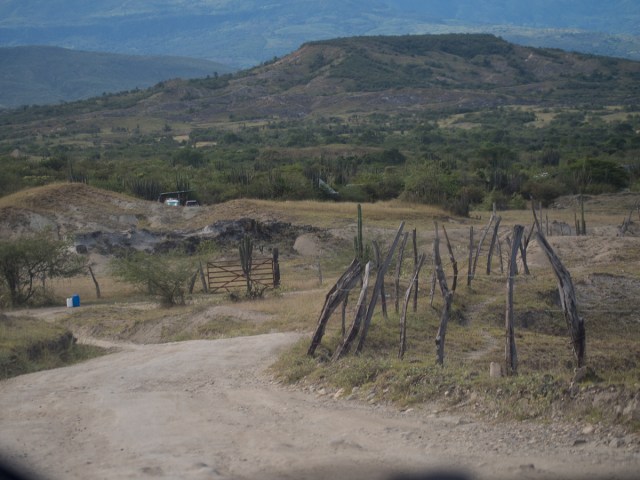
The Tatacoa desert ambles were very pleasant. Our guide, Catrina, was very knowledgeable describing geographical features as we strolled through the Gray gorge. After a siesta she picked us up, for part two of our day, in a tuktuk which is always great fun. She took us off to the Red canyons and later on up to an observatory. The observatory was small but perfectly functional. It’s owner Guilliame, a very knowledgeable man who enthused about his topic stating it was self funded and, as we were endlessly told, struggling financially. Having looked through the telescope we ended up on our backs peering up at the sky while he enthusiastically waved his torch around creating arcs in the sky. Thankfully Gid passed the trial and answered most of his questions when he stopped to draw breath and test us.
As we were released and returning to our feet I noticed something scurrying away. Initially I thought it might be a cockroach but it seemed rather big for that. I kept on about it and was just able to pick out it’s route in the dark. With a beam of light hitting it it was revealed to be a scorpion. We’d been snuggling up to a scorpion as we flapped our arms around pointing in the direction of this constellation or that.
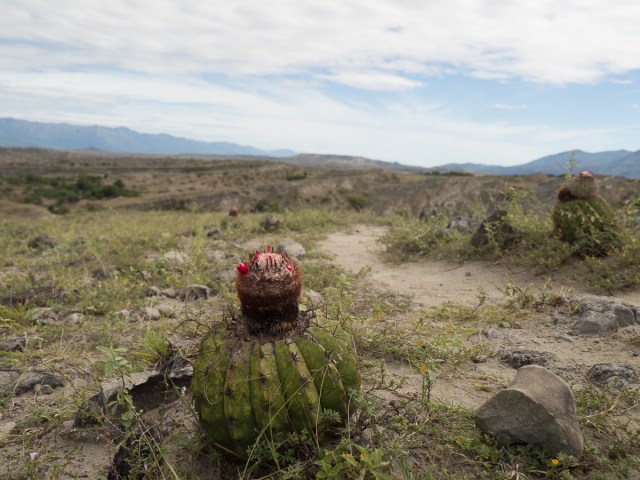
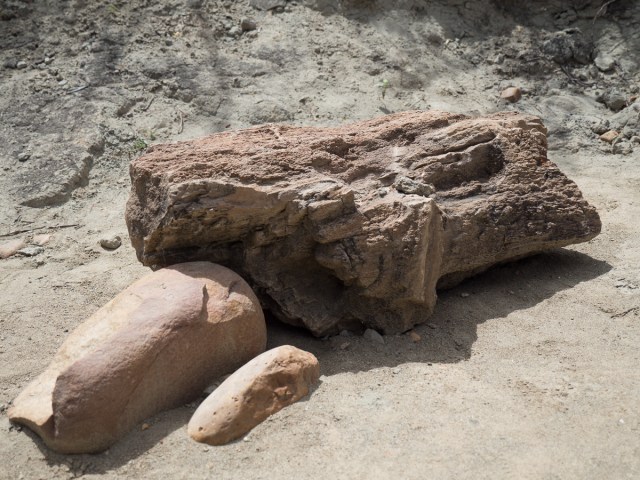
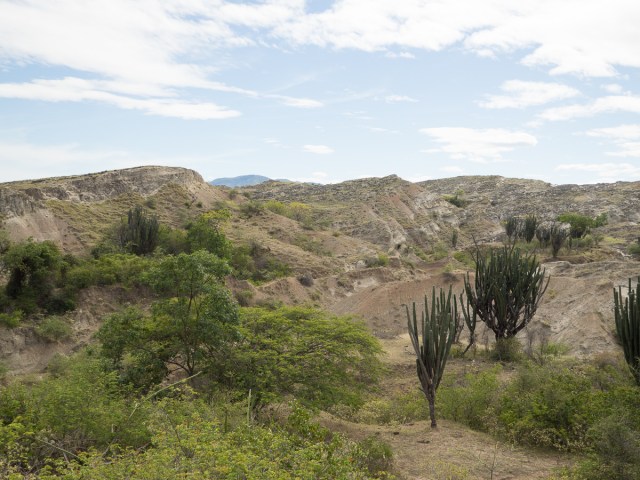
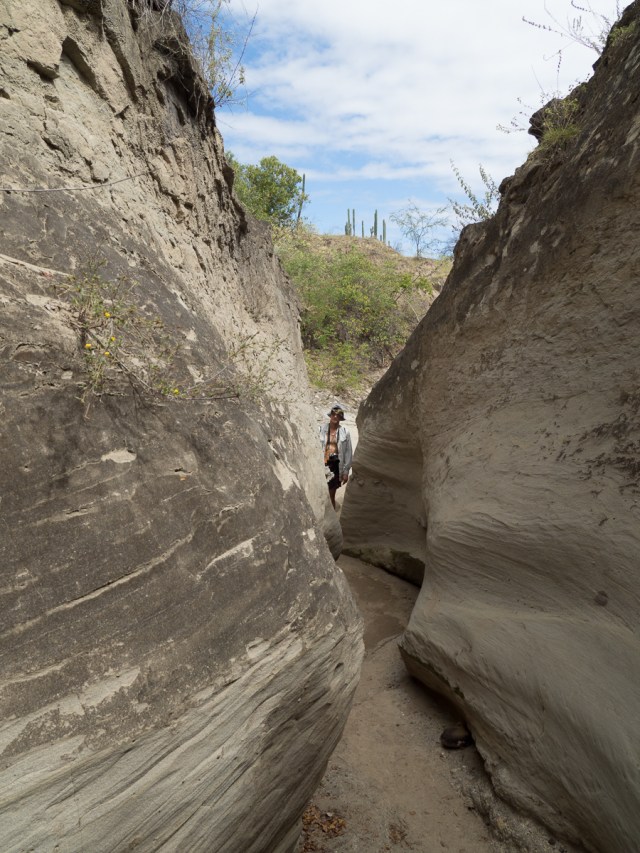
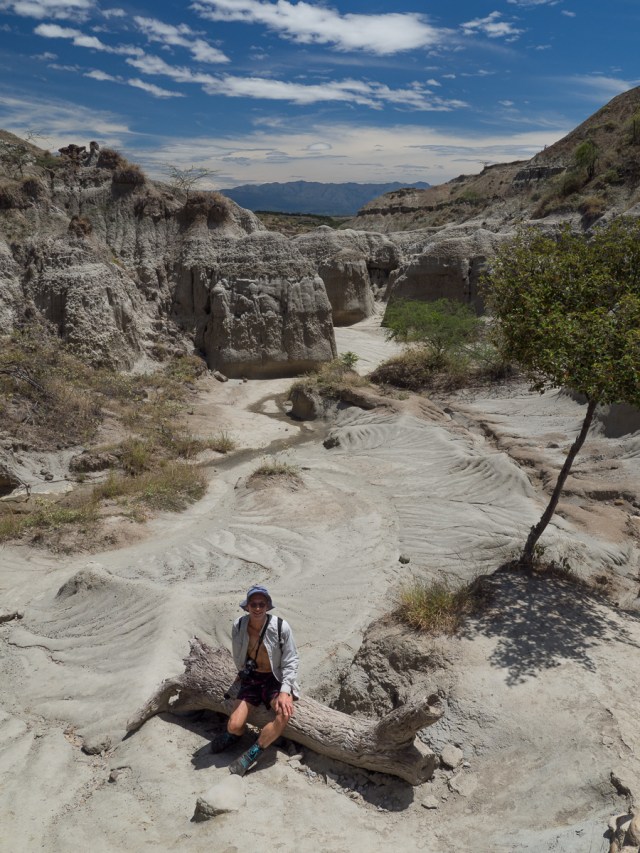
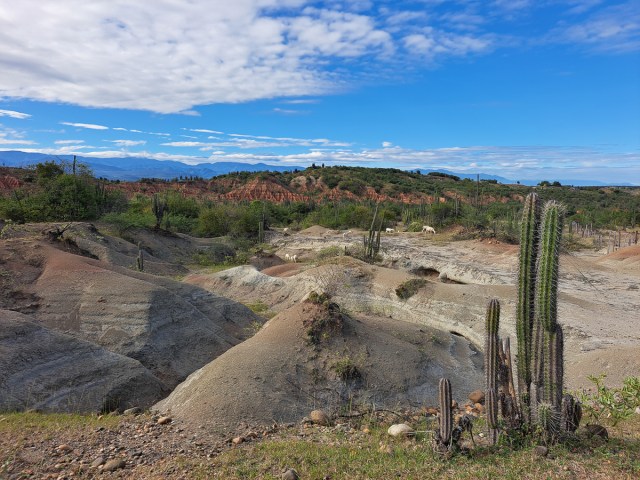
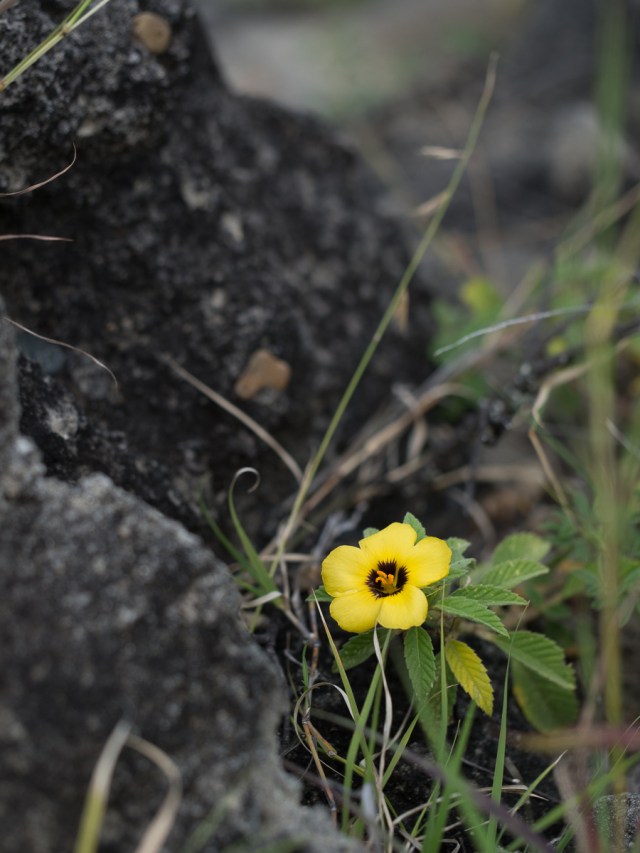
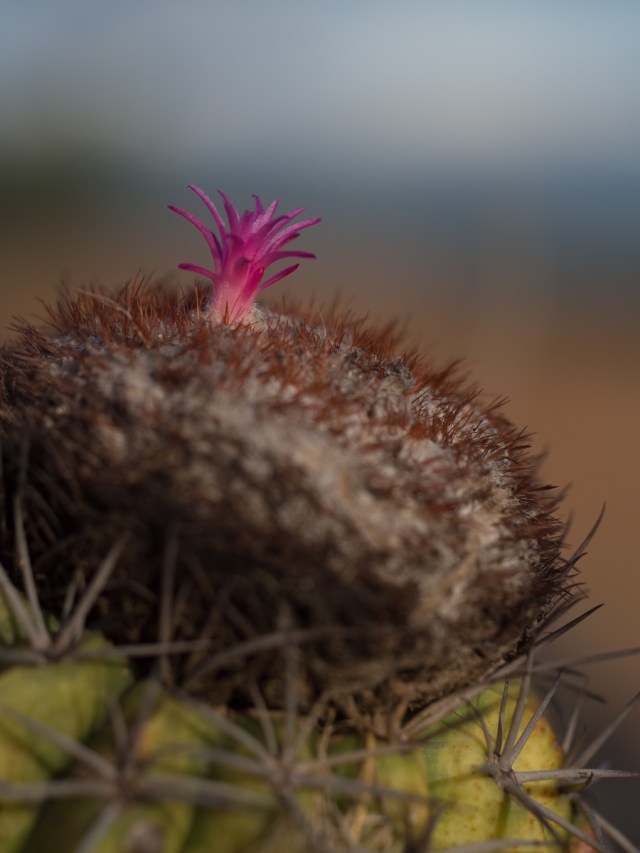
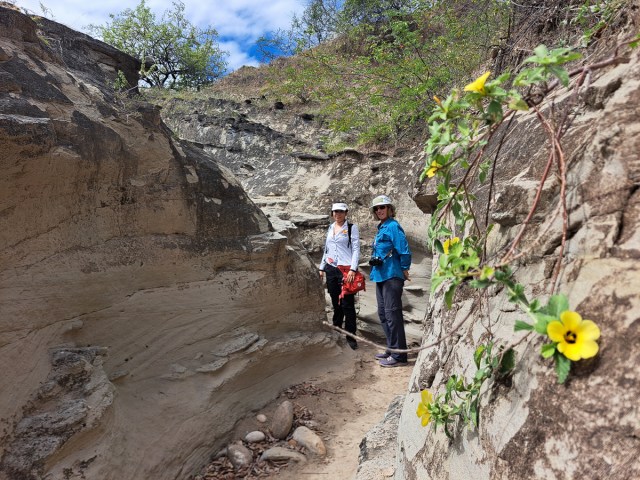
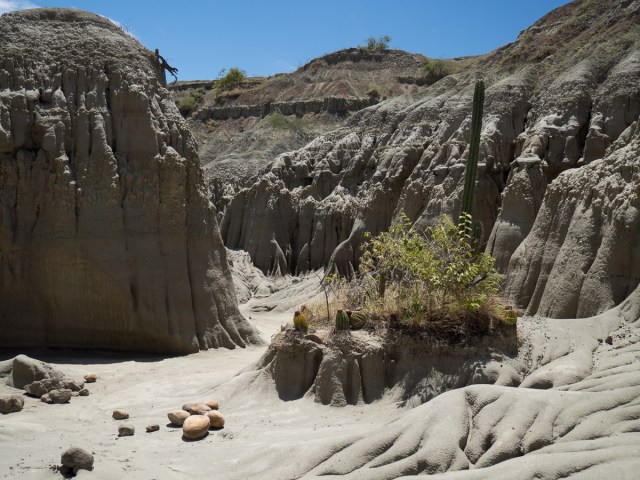
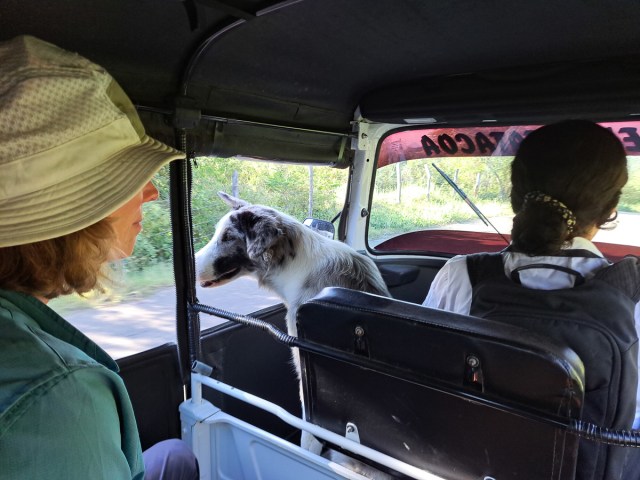
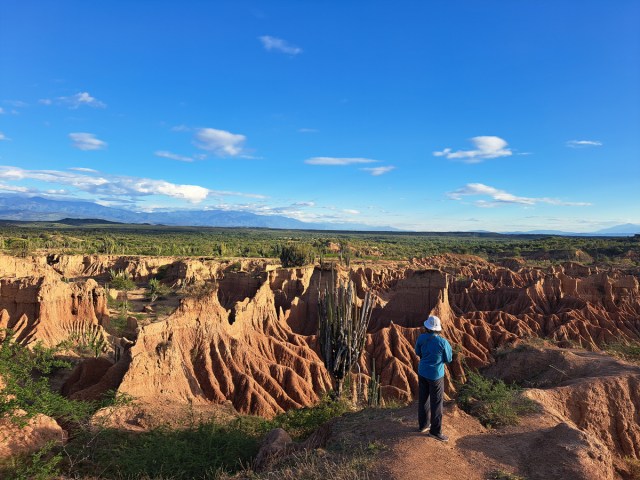
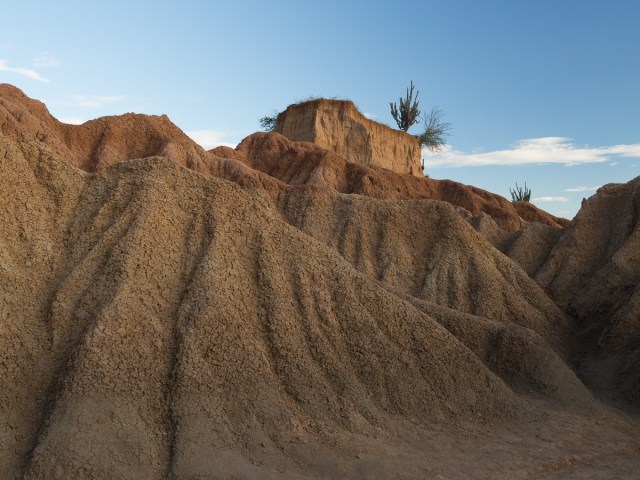
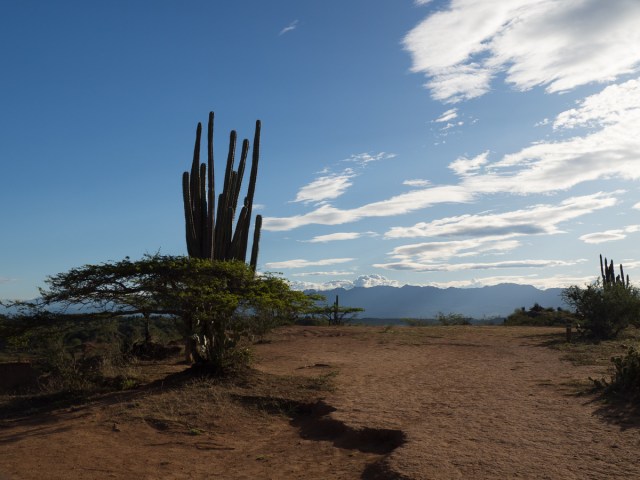

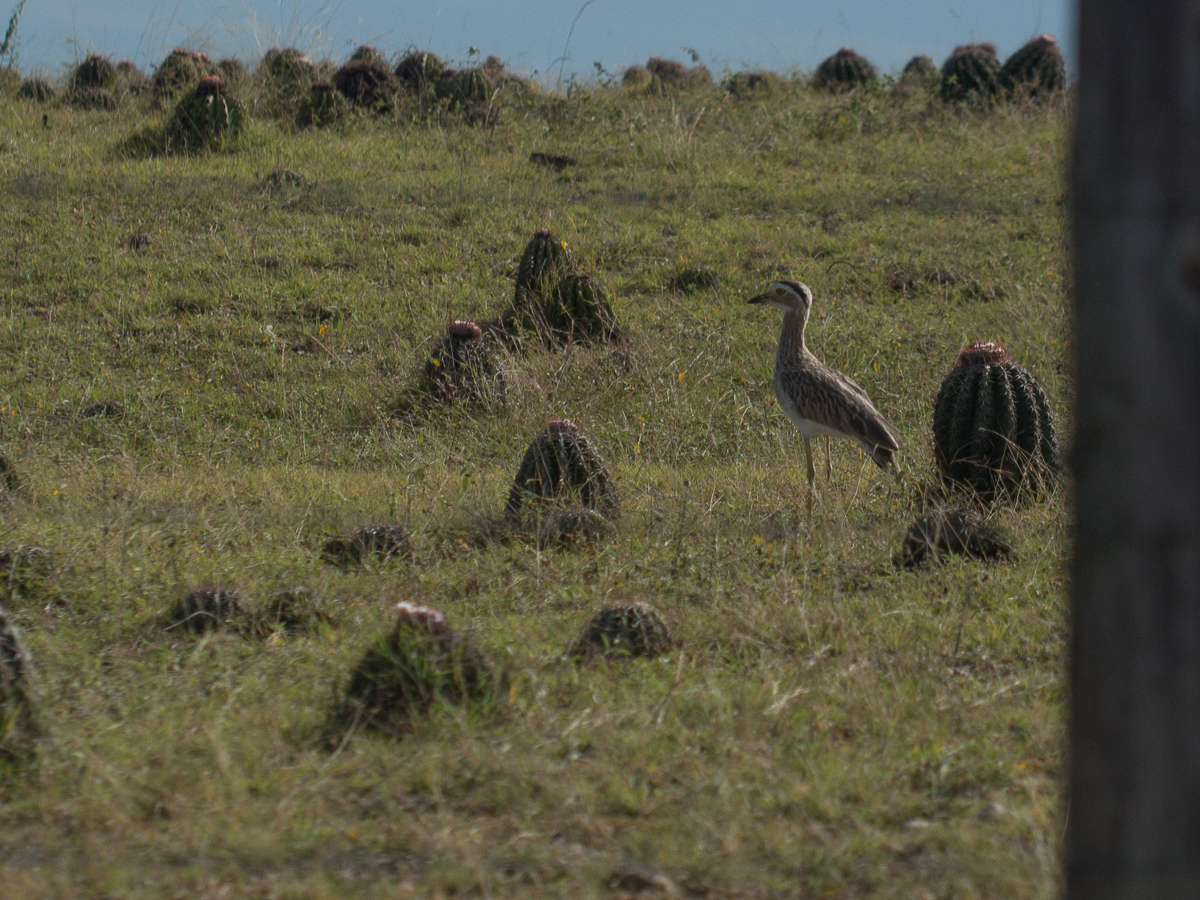
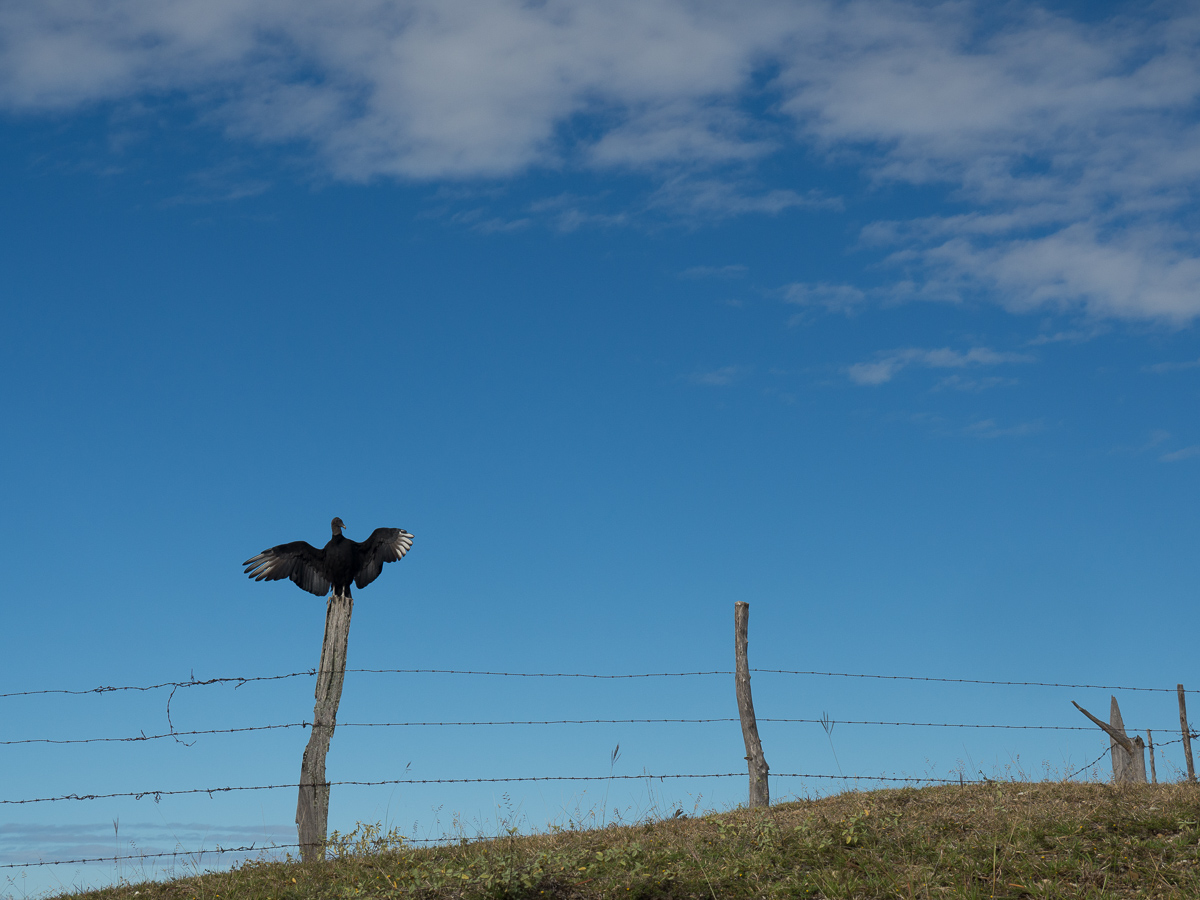
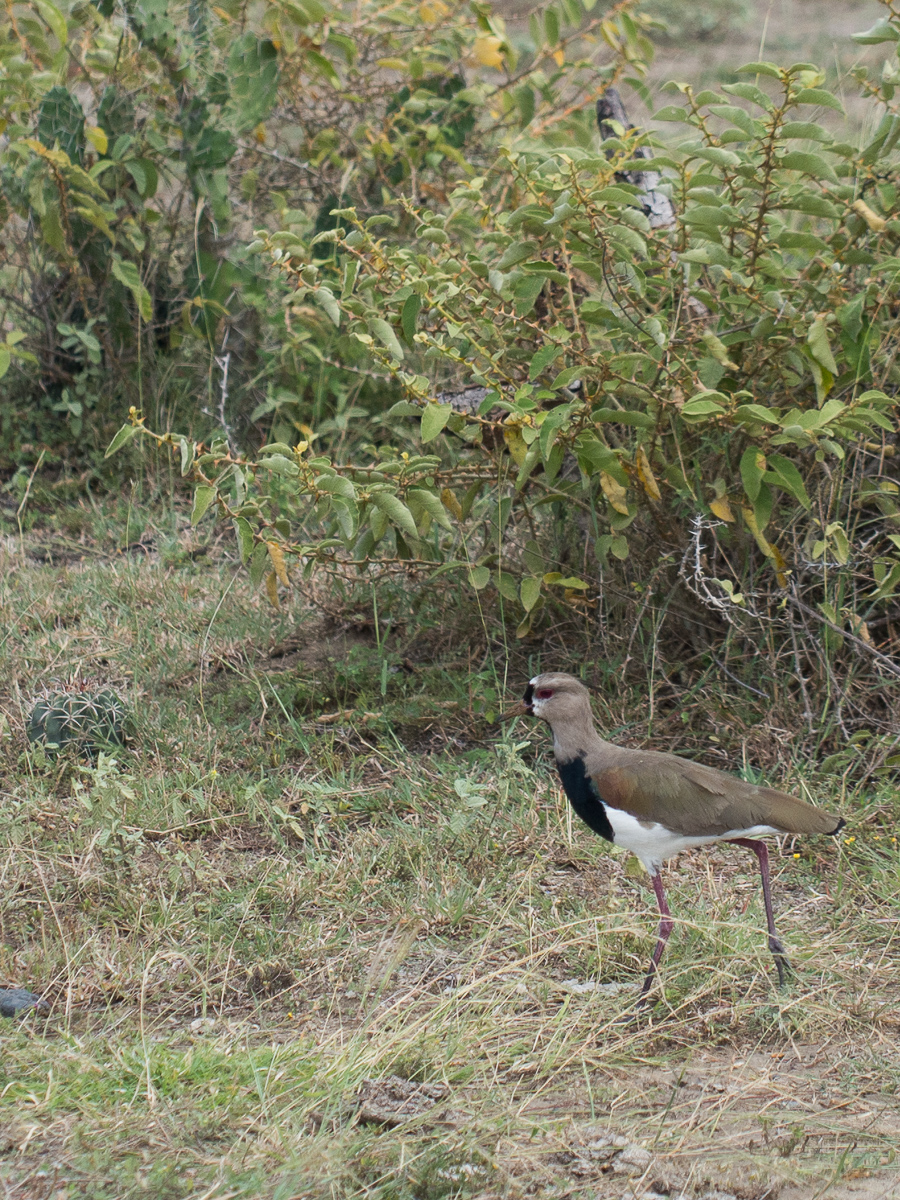
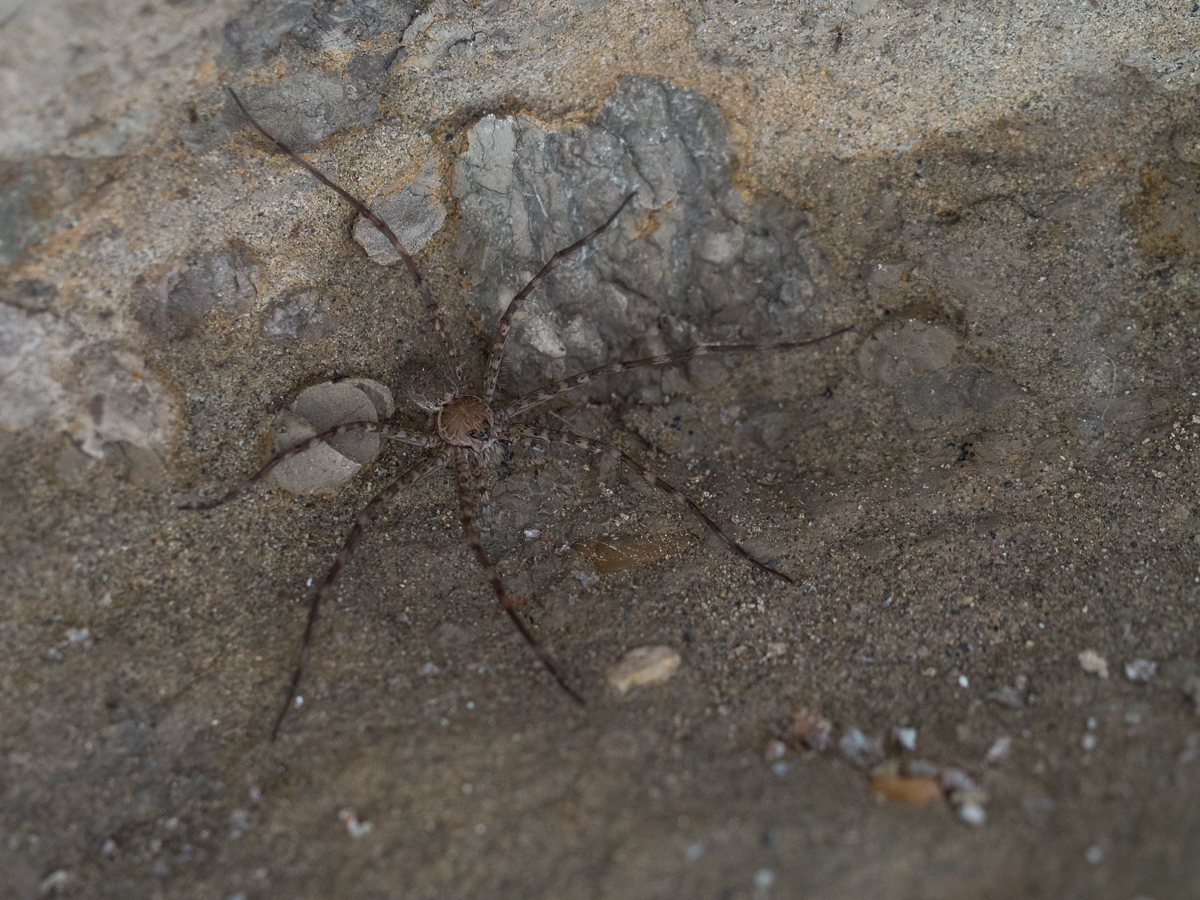
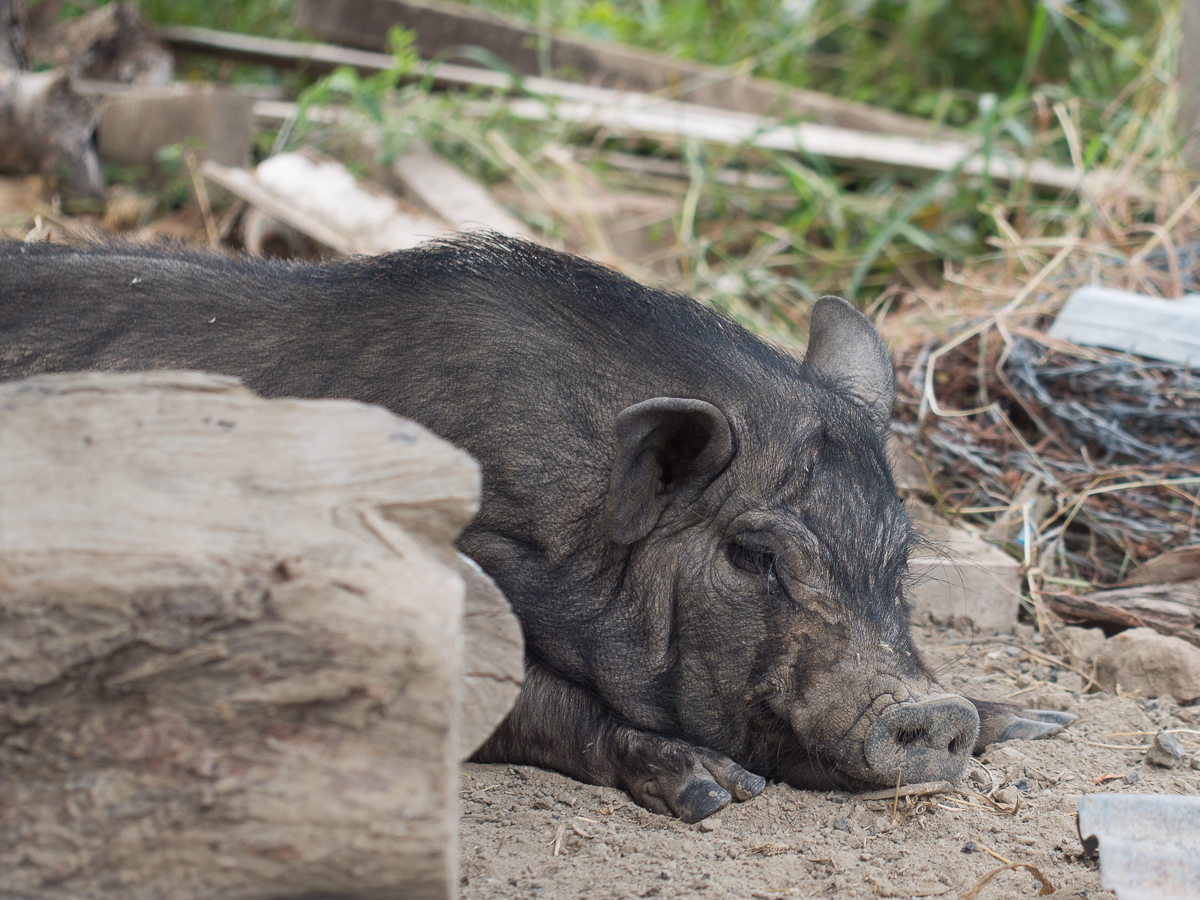
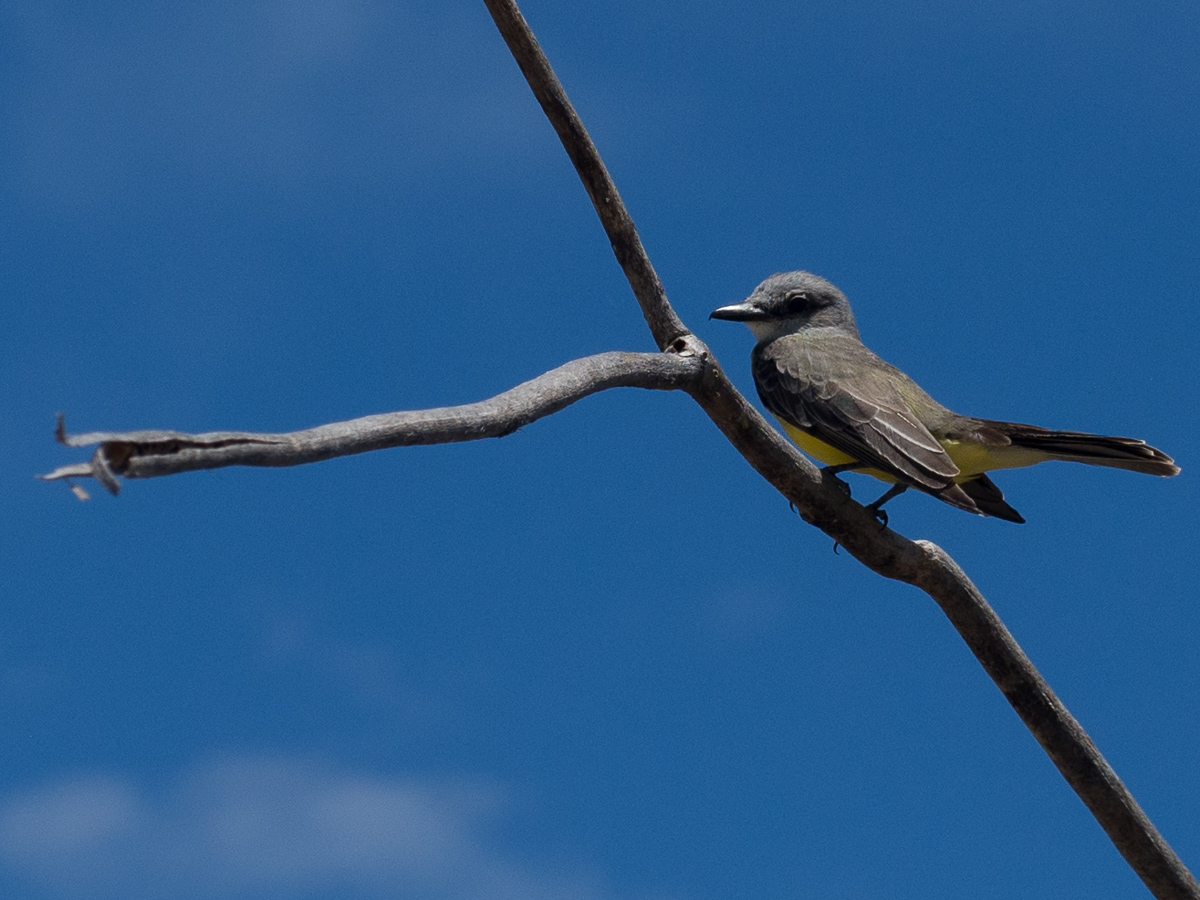
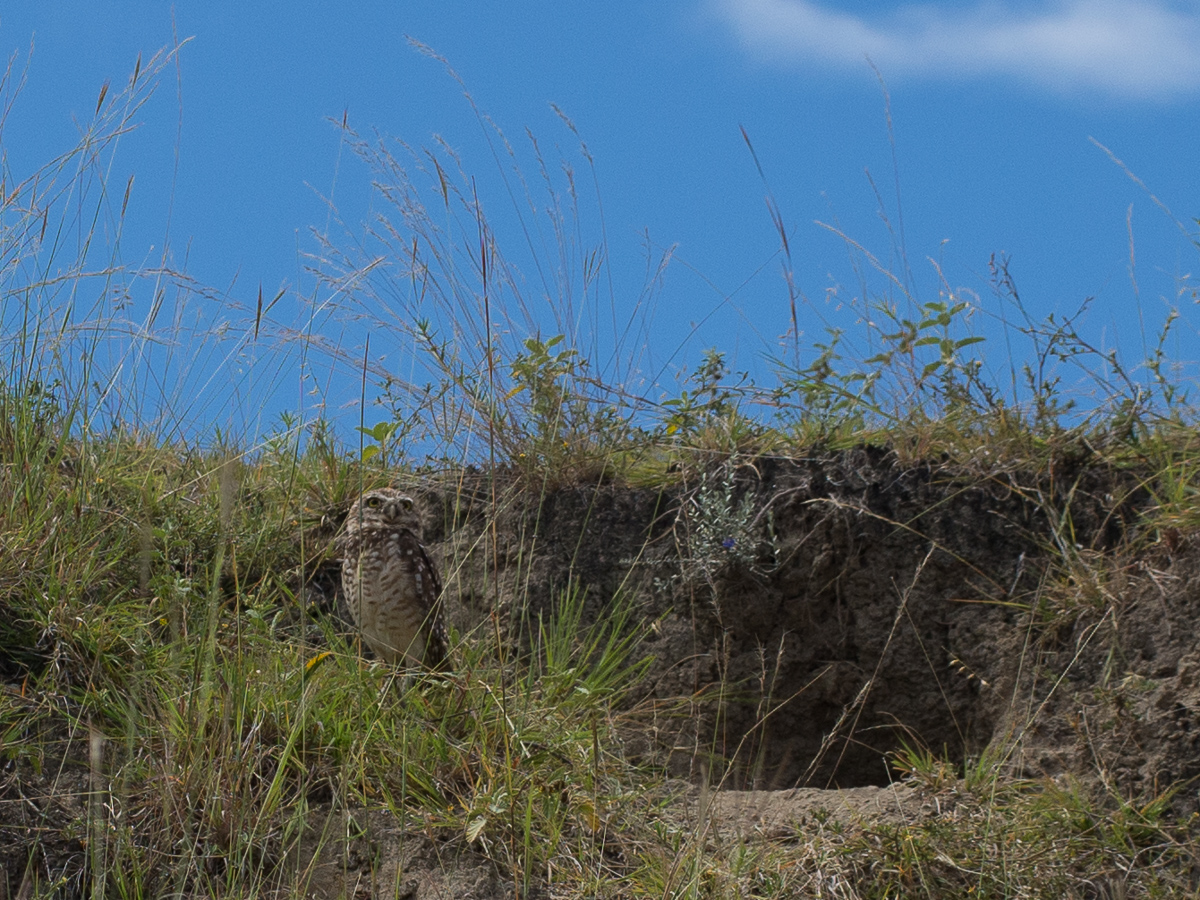
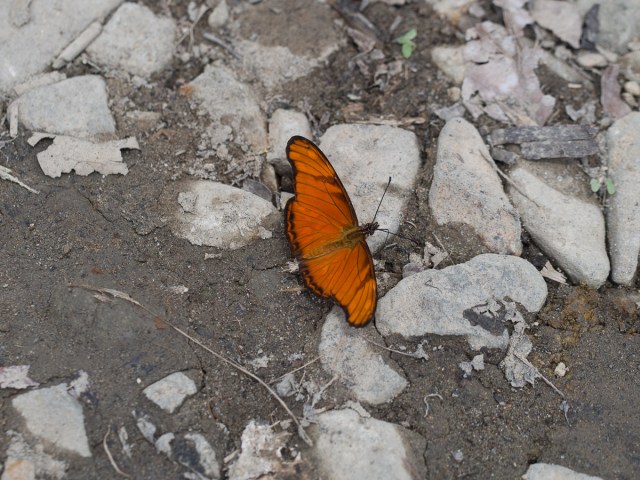
Tatacoa beasties can have their own gallery….



Time is pressing. We’ve taken thirteen months to get from Alaska down to southern Colombia. Two months in Colombia – we can finally spell it correctly. We’re about to cross into Ecuador where we will cross the equator. That’ll be half way then and we have four and a half months left on our travel insurance. That seems like very bad planning but the trip has to be completed inside nine months or over fifteen because of the limitations of the seasons. Having started in Alaska in June, at the onset of the summer, one year on it’s the start of the winter in the tip of the southern hemisphere. Apart from the possibility of snow at sea level in Ushuaia we have to cross the Andes mountain range to reach it. Hence we need to delay our arrival in the southern hemisphere in order to complete our trip. Our plan is to head down the warmer coastal route and cross the mountain range at the last possible chance in a hope that the mountain roads will be snow free and open. Fingers crossed.
But we still have to make progress southbound and getting that right is tricky. Our route from Villaviejo according to our navigation devices was three hours long when we set off but took seven hours thanks to another road block by the rice growers, road works where an endless stream of trucks came through and delayed us another half hour, followed by a political procession which also blocked the road. Add in a coffee break and lunch – the combination of the lot more than doubled the time it took. Over three or four months it should even out but we certainly need to err on the side of caution when estimating the time it will take.
Our plan has always been to stop just short of a border and cross the following morning. Hence we proceed through the three hour process and set off in the new country early to mid afternoon. Plenty of time to make a destination before it gets dark. But San Agustin was an awkward distance to the border. More than a day but not two days or so we thought. Gid was keen to throw in some planning time to reassess our schedule for our southerly route and thought that our previously planned half day visit to San Agustin Archaeological ruins would give that opportunity.
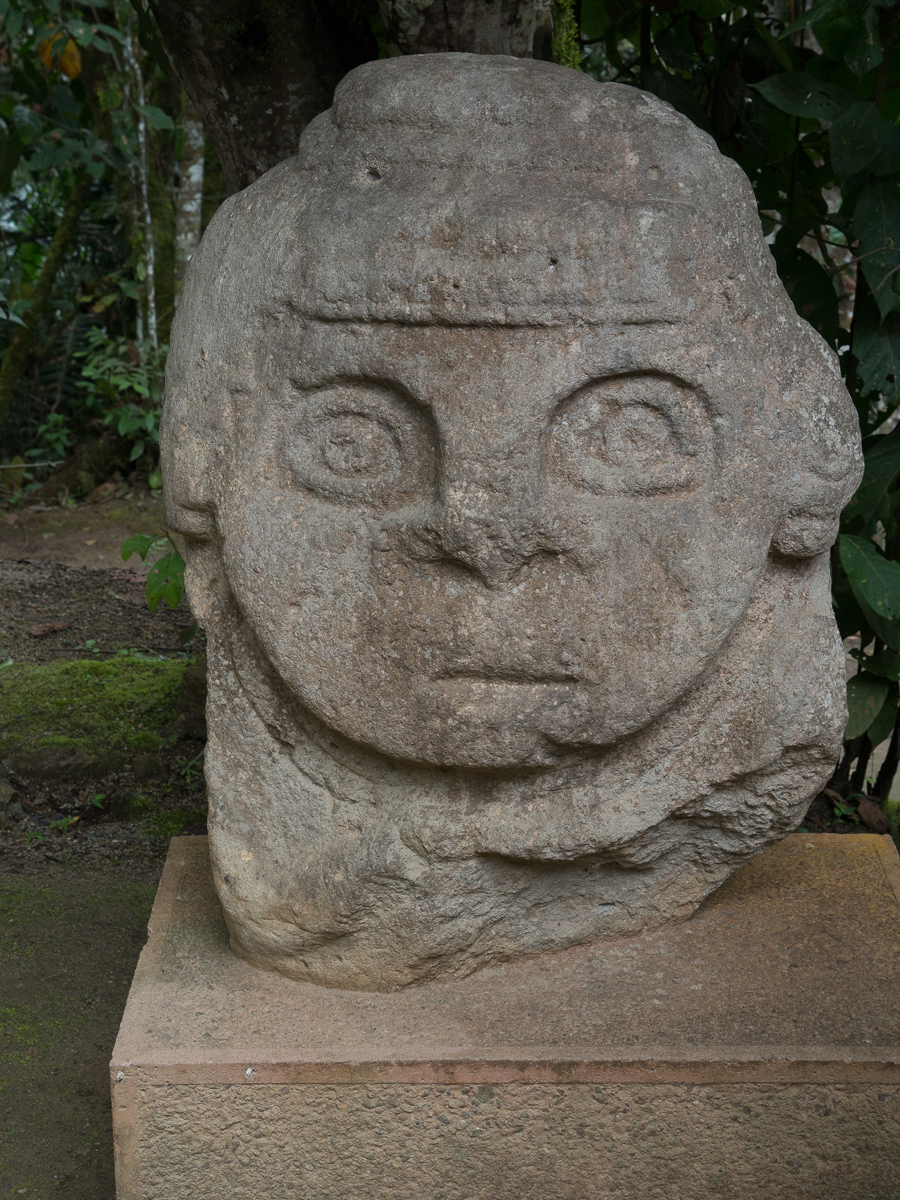
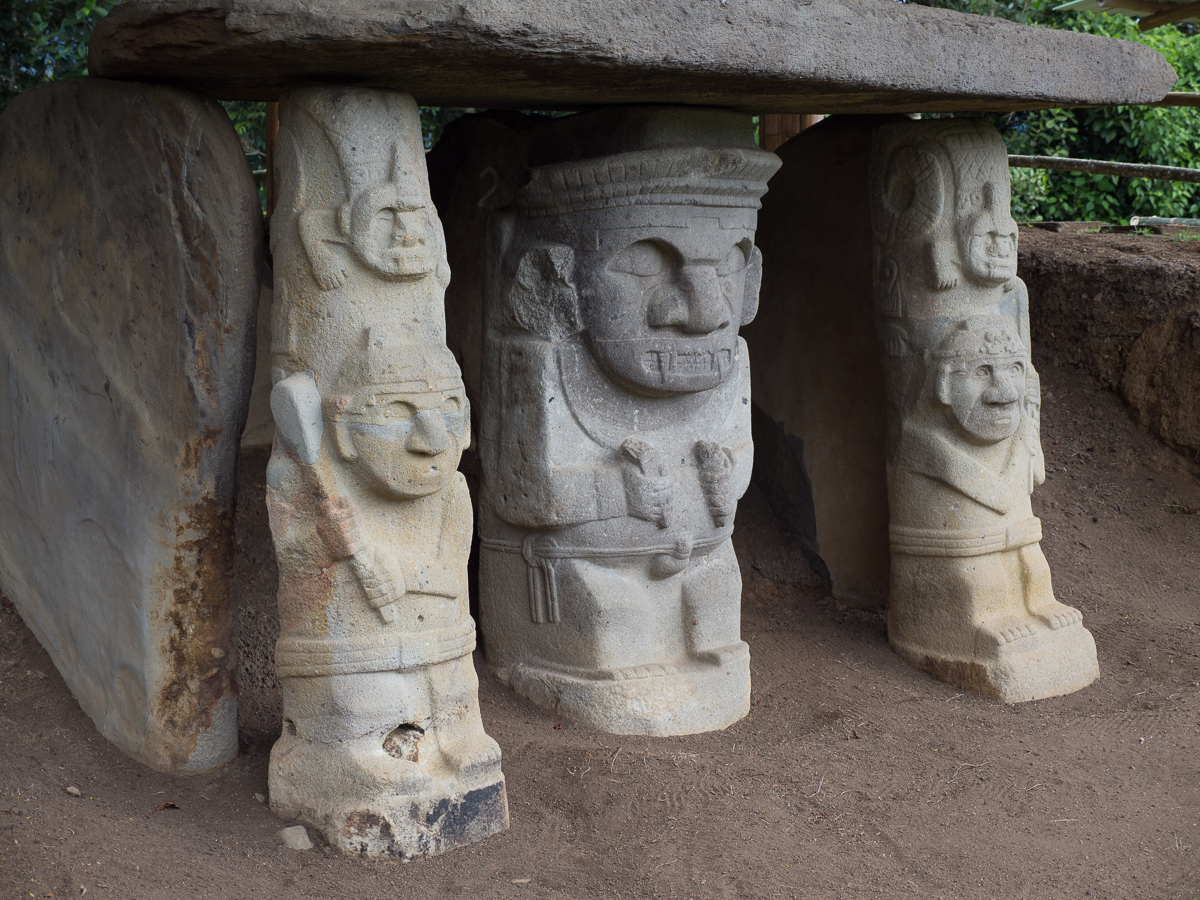
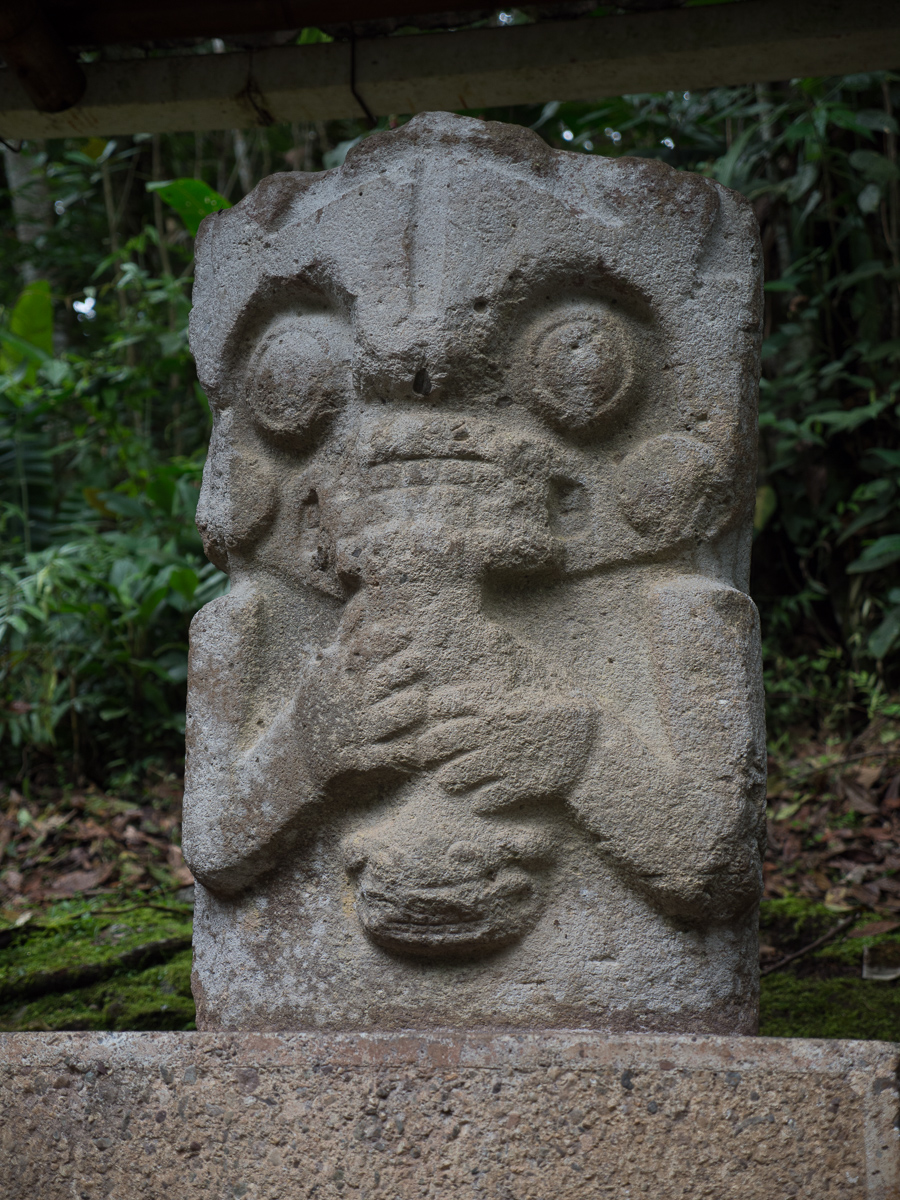
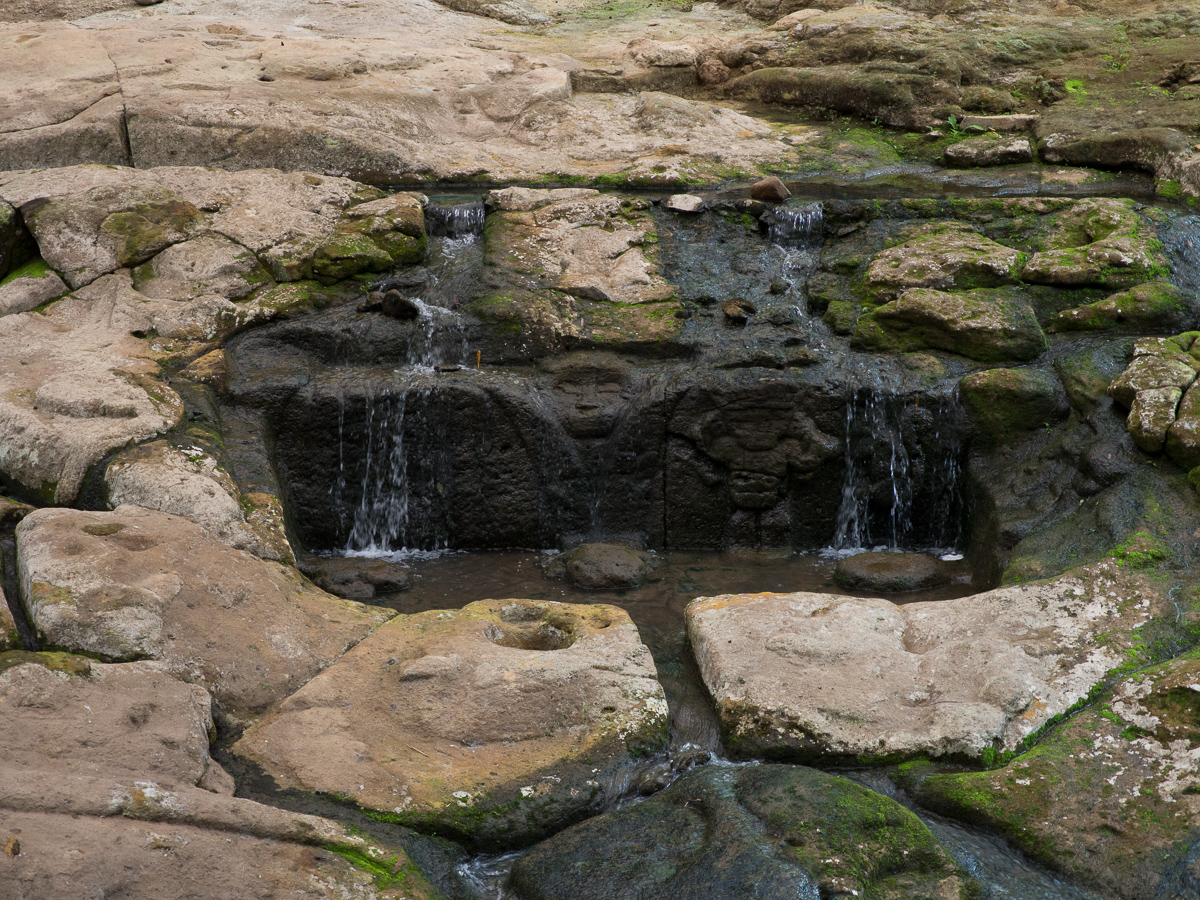
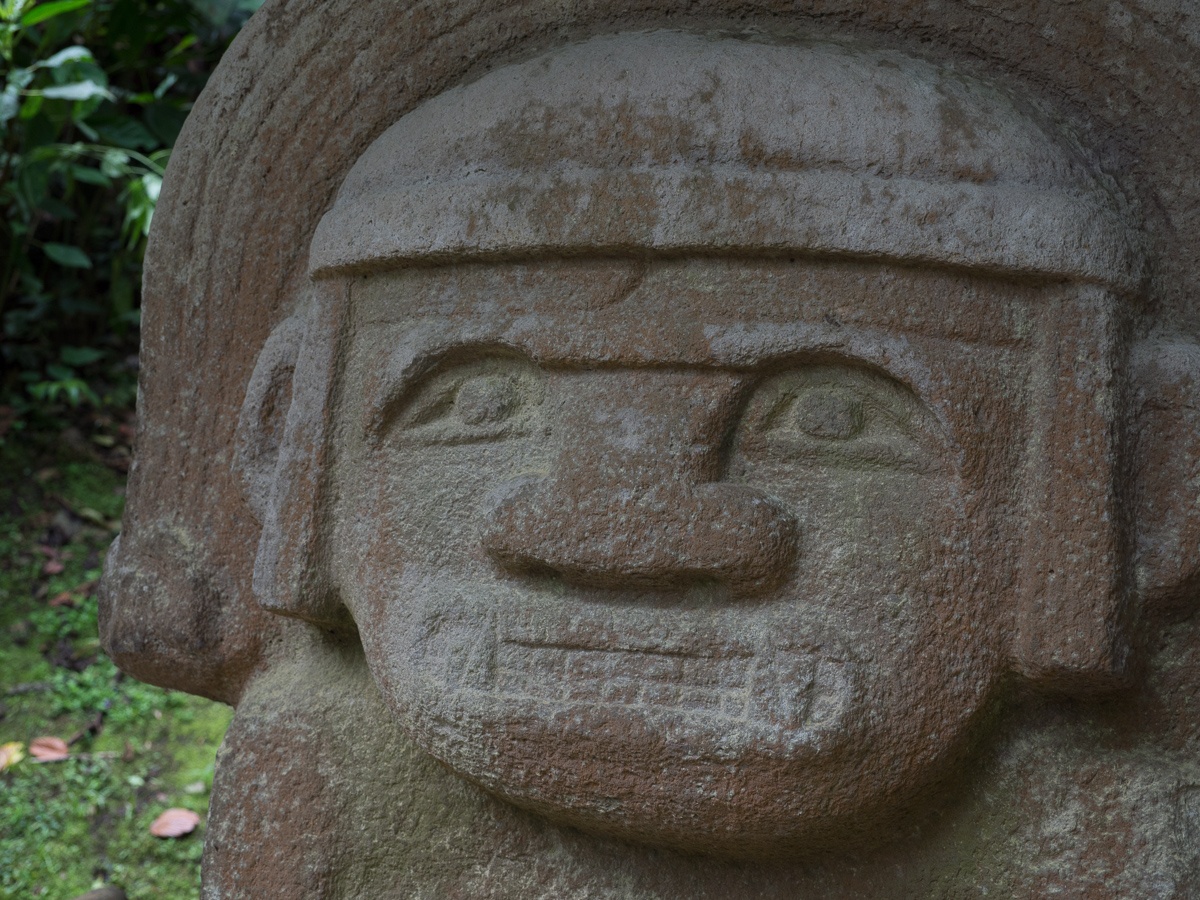

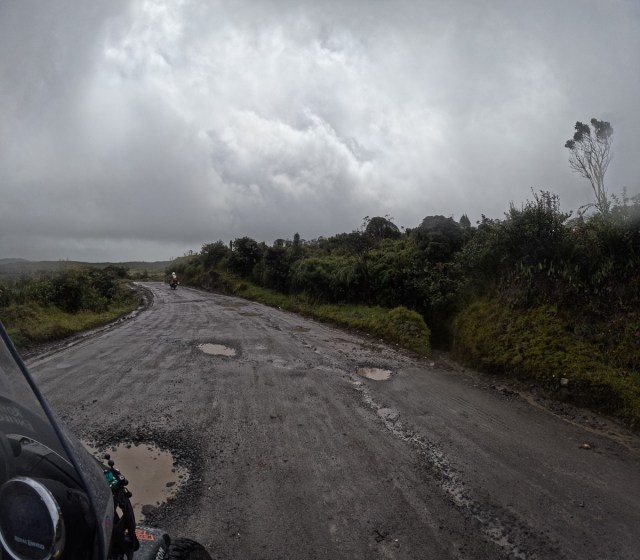
Leaving San Agustin we set off with a clearer idea of our timing but once again we were caught out by reality. Our host said it takes four hours to reach Popayan and looking at the map we had thought we’d make it a whole lot further south and be near the border for a next morning’s crossing. The 90km of dirt road, Ruta 20, across the Puracé National Natural Park in the pouring rain put paid to that. An adventure all on it’s own as we squeezed past articulated lorries who seemed to think of course the road was theirs (not that we argued) but at times we where struggling not to slide off the muddy road into the soft ‘gutter’ at the edge. Once through that we thought now we’d make up some time. That was before we came round a high mountain pass to look down into the valley, across a river, and up the other side. Blocked! A complete grid lock. Luckily, on motos we can squeeze past a lot of it but as it winds backwards and forwards down then up the mountain side it was again slow. We never did find out what the hold up was as at the front of the queue it was clear. But, the army had clearly been doing something major down at the river crossing, and received lots of hoots and thumbs up from appreciative citizens.
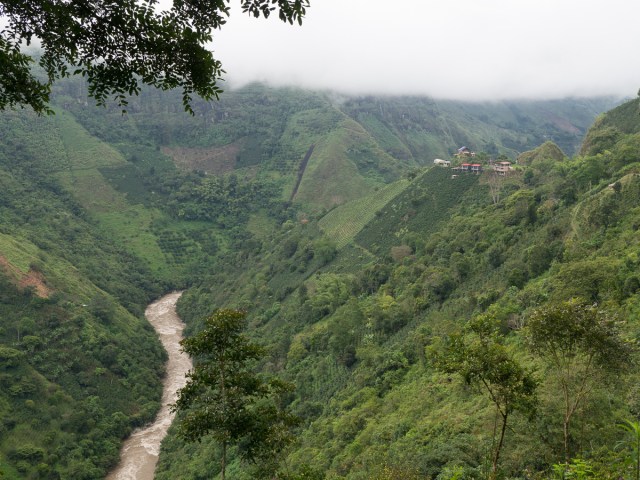
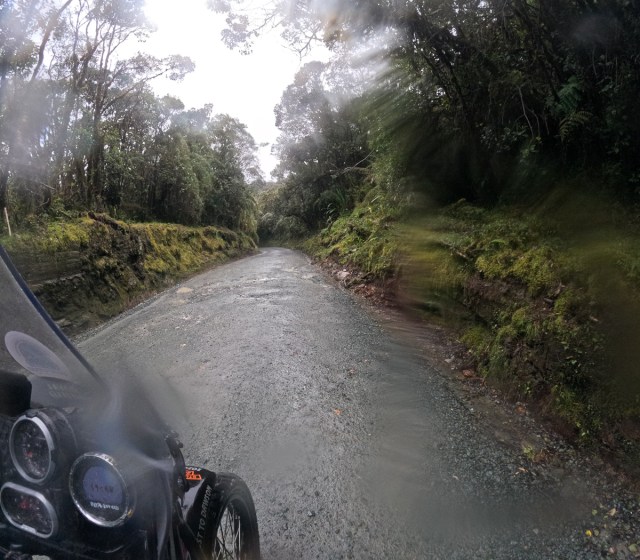



South of Popayan we found a roadside resort – both tired and frustrated we stopped. It had two splendid pools, a bar, and no electricity. With no idea of what was ahead we still hoped that with an early start we could make the border tomorrow. An early start was breakfast at eight. It wasn’t offered any earlier but if we’d known that it would be nearer eight thirty we might have declined in order to get on the road. We had a drink break and stopped to put on rain clothes as the weather deteriorated and we were climbing up into the clouds but pressed on along the fine Ruta 25 to make the border.
We arrived at the Ipiales border at 3pm. Having read that the South American borders are quicker than Central America’s we went ahead. We’ll be out in a couple of hours or so I thought. The passport paper work might be quicker but the queues weren’t and neither was the Ecuadorian Temporary Import Permit (TIP) for our bikes. Four hours later, already dusk, we left, finally on our way again. At eight o’clock we saw a big HOSTAL sign aglow in the darkness. We beeped at the gate and waved until the owners emerged to check us out. They opened up and weren’t our first Ecuadorian hosts nice! Soon Clare was wrapped in a big blanket with a mug of chocolate caliente, or two.
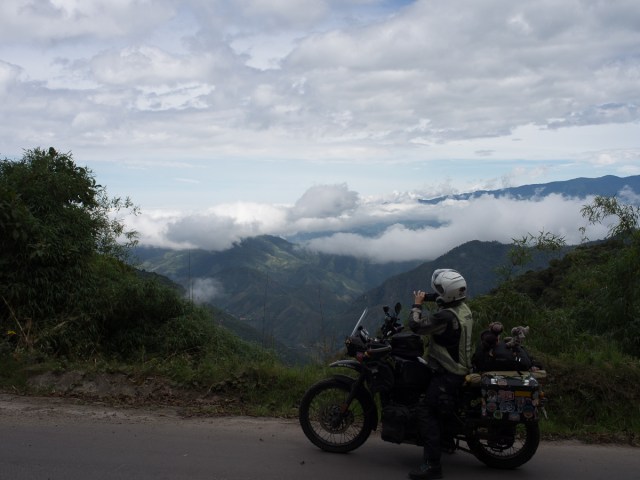
Settling into Ecuador we made our way down to Quito ticking a couple of boxes on the way. The first was a Lonely Planet recommended scenic road from Otovalo out to Apuela. The road was twisting up and down the mountain side and I’m sure the view was spectacular but shrouded in cloud we didn’t see a thing! Our day at the village for a recommended ‘flat’ walk (no flogging up another mountain for me) gave better views as did the return trip back along the winding road to Otovalo. Otovalo itself was the second attraction with it’s biggest in Ecuador outdoor market.
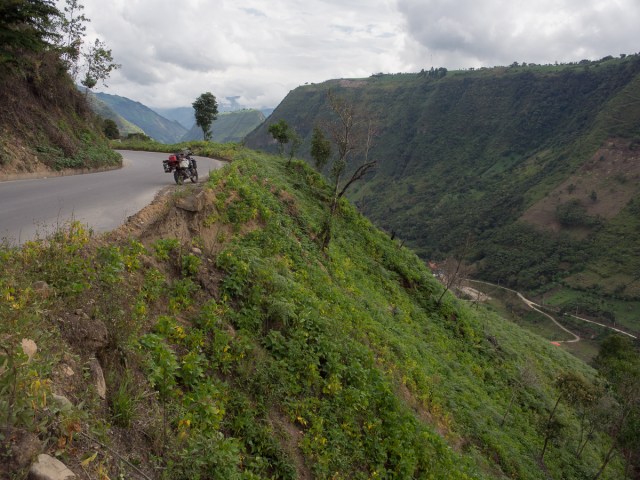
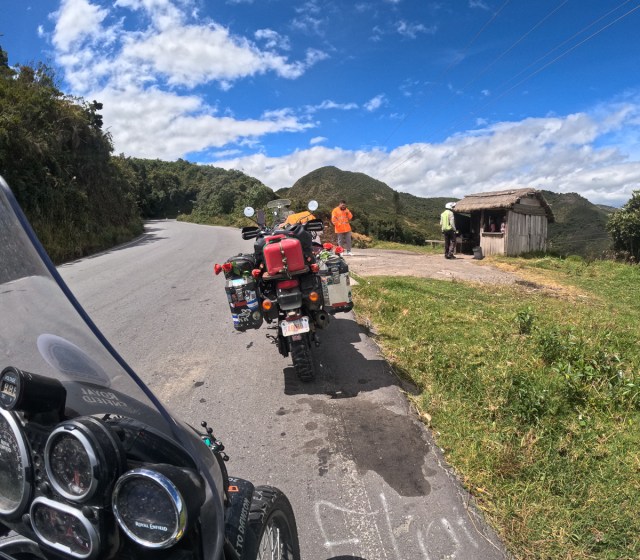

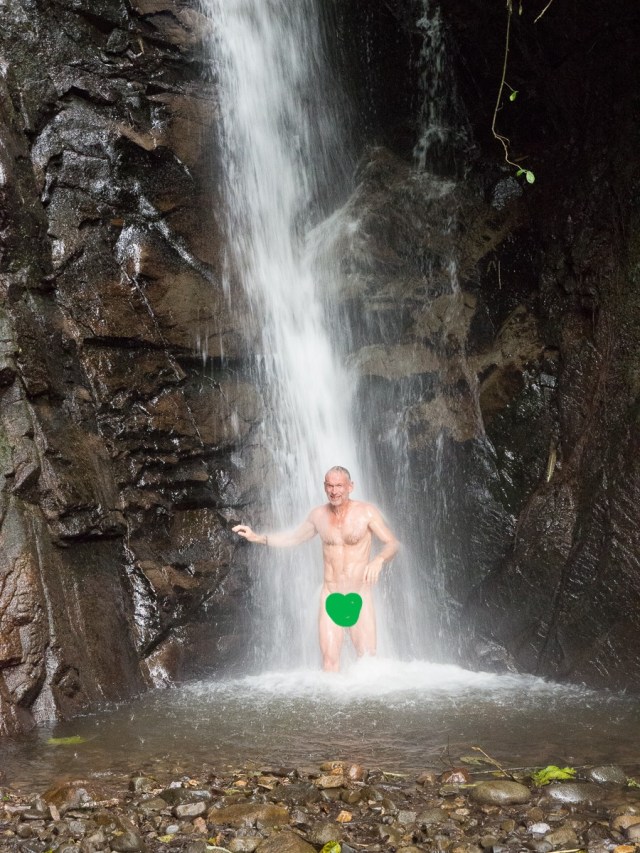
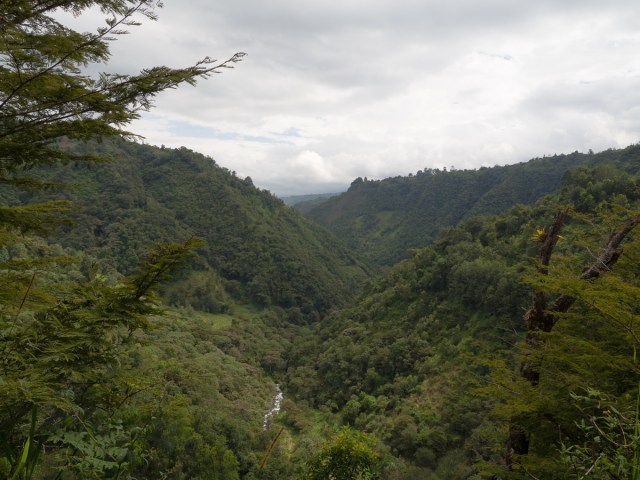
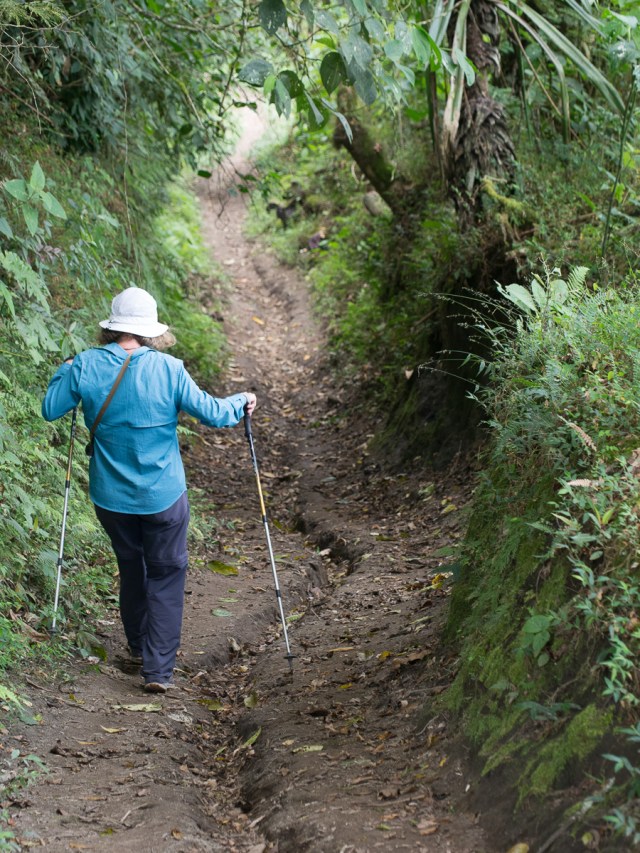
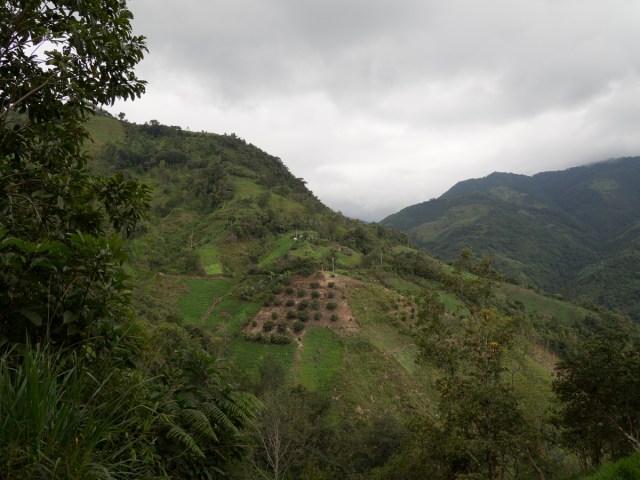

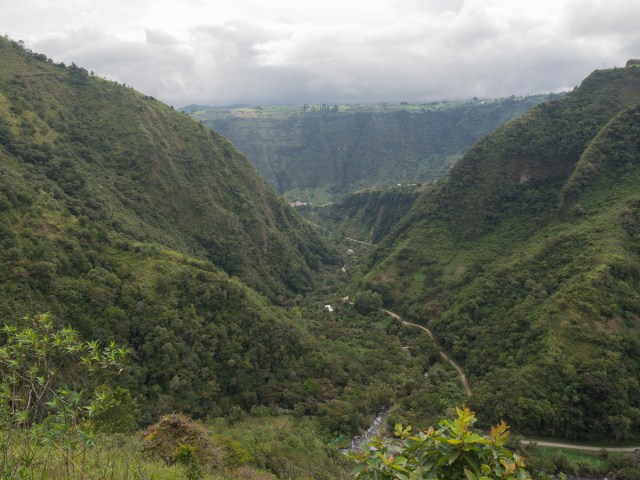
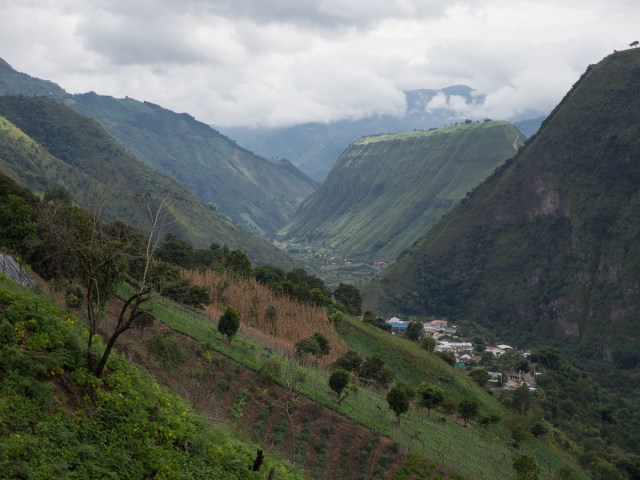
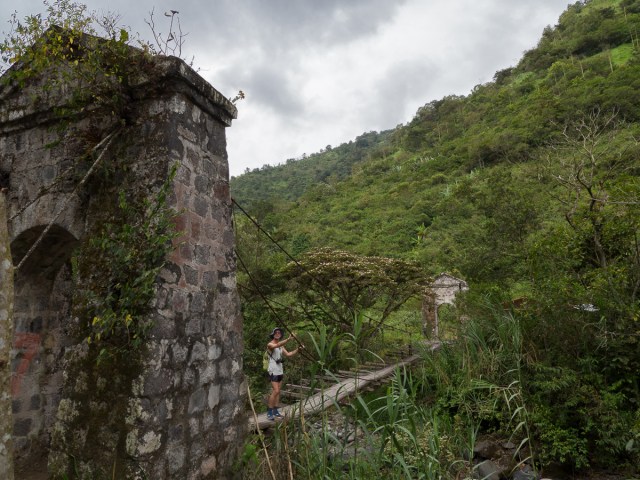
Our initial route to Quito was a little ambitious for us. Recommended by a keen adventurer bike, & fellow Himalayan, rider, Redd. One hundred metres up the track was enough to decide that it was probably going to get beyond my skill level. We turned back and headed along the main roads turning onto the E20 for less traffic and some great views.
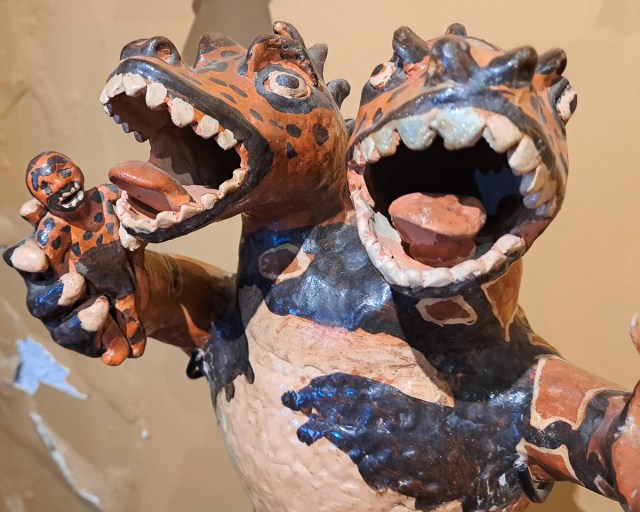
Quito itself was a bit of an errand stop. New (Australian!) tyres, replacement parts for my now broken GoPro mount and extra socks for Gid. We handed on Redd’s gloves that had arrived late at Donkey Sunrise. We did visit a couple of museums and were pleased to see we’d moved on from the basic clay pots as the ancient indigenous people were very sophisticated from an early stage. But Quito itself was fairly mundane, at least the part we were in. Anyway, we had a nice rest in the AirBnb yuppie flat.
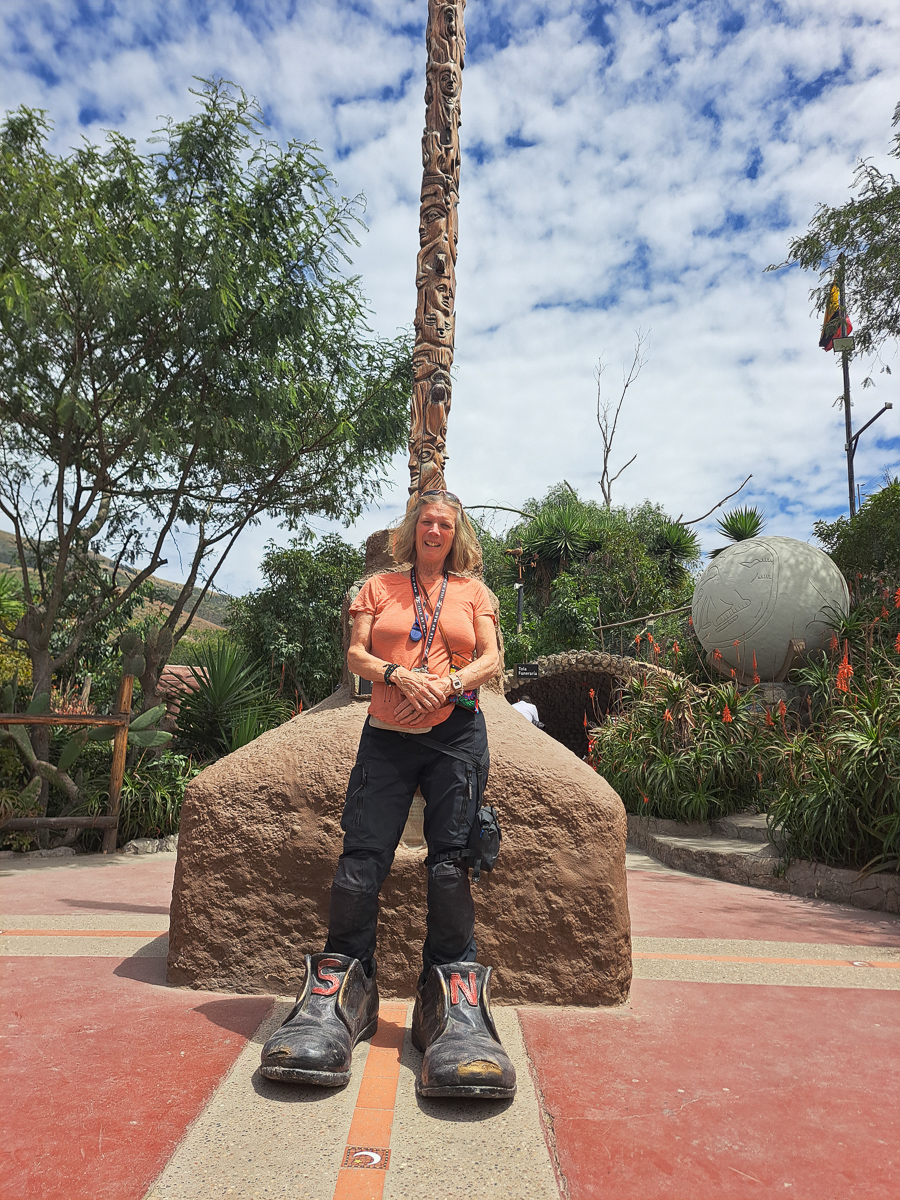
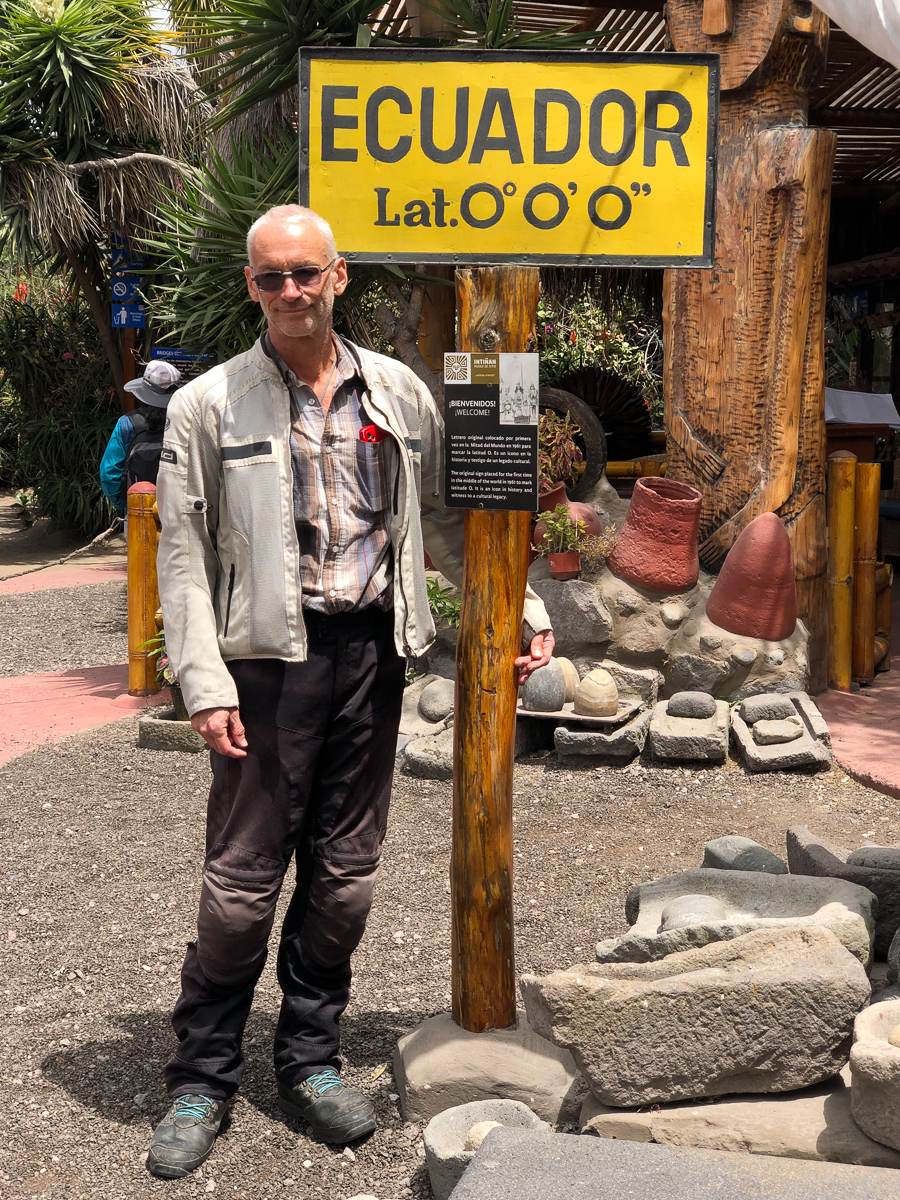
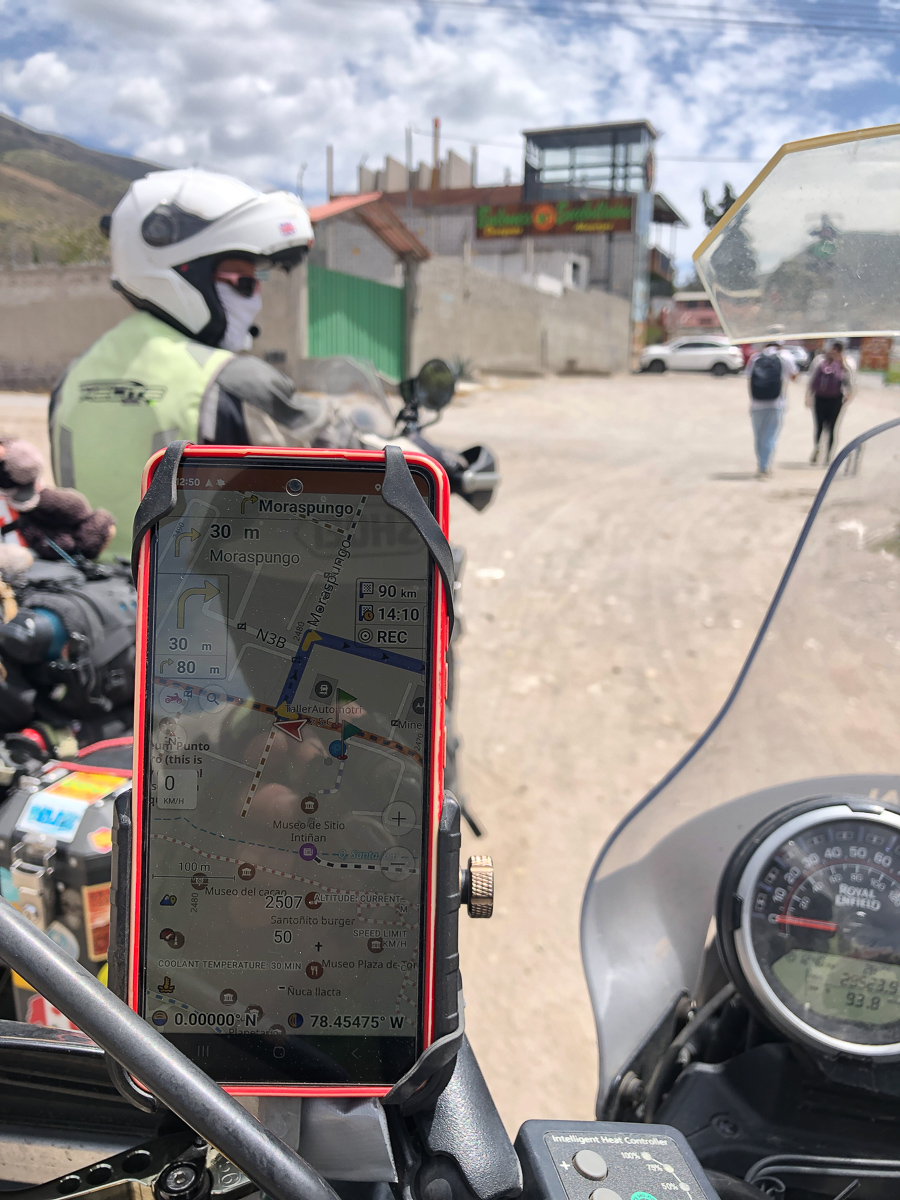
Having missed the equator line, foolishly whizzing across without noticing, we back tracked to the Museo Intinan and did the Northern Hemisphere / Southern Hemisphere tests before setting off south again. Our route, recommended by one of the moto shops in Quito, avoided the PanAmerican highway again. Enroute we should have been aware that things may turn interesting when we looped around the strategically placed bollards and a police car blocking the access to the road. The lane allowing traffic out was open so we bypassed the obstacles and set off.
We thought we had the measure of the problems when we crossed a few minor patches where water was spanning the road. With so many waterfalls along the way it was to be expected as well as the odd bit of debris at the road edge. Wrong! Before very long we met the tail end of a fairly long traffic jam. One advantage of the mountainous routes is that it’s frequently easy to see a fair way up or down the mountain side. Being on motos it’s easy enough to jump the queue and get near the front. A mix of various sized lorries paved the way, one aimed uphill and stuck in six inch mud, which had swept across the road as a part of a sizeable landslide, was blocking the road. Workers were trying to dig out a route, aware of the precipitous drop metres away. The lorry, to the cheers of the diggers, gave up and edged backwards. A route opened up. The erstwhile “workers” gleefully leapt off towards their own vehicles keen to get through the gap. We being ready and waiting cautiously made our way through the channels of deep mud.
Through – that would be it then. But the road turned out to be a series of surprises. Endless small floods crossing the road and other areas of landslides and deserted hotels before finally we found accommodation along the road side. Yet again there were JCB diggers and workers with shovels clearing the road. Our talented, artistic host told us of heavy rain falls in the last 24 hours. The mountain stream running alongside his hospadje had burst its banks higher up the mountain bringing trees down in its wake, blocking the channel under the bridge, flooding out, trees and all, over the road and through his out buildings. The entrance to his property was six inches deep in mud and despite clearing up his extension, a tide line of mud was still there 15 inches up the wall. Fortunately, the Hims on their new chunky tyres trundled through said mud to a safe berth amongst piles of tarmac scrapings waiting, from before the flood, to go down as carpark topping. Clare managed to resist the very attractive orchid ceramics and colourful 80cm square canvases.
As we departed the following morning a neighbour was calling in. They couldn’t access their house as the bridge was washed away. But Colombians are fast workers, already a backhoe had diverted from the roadworks, and spread a deep layer of the dry tarmac scrapings over the gateway mud, making our exit much easier, and crucially, reopening the business for customers without chunky new 50/50 tyres.
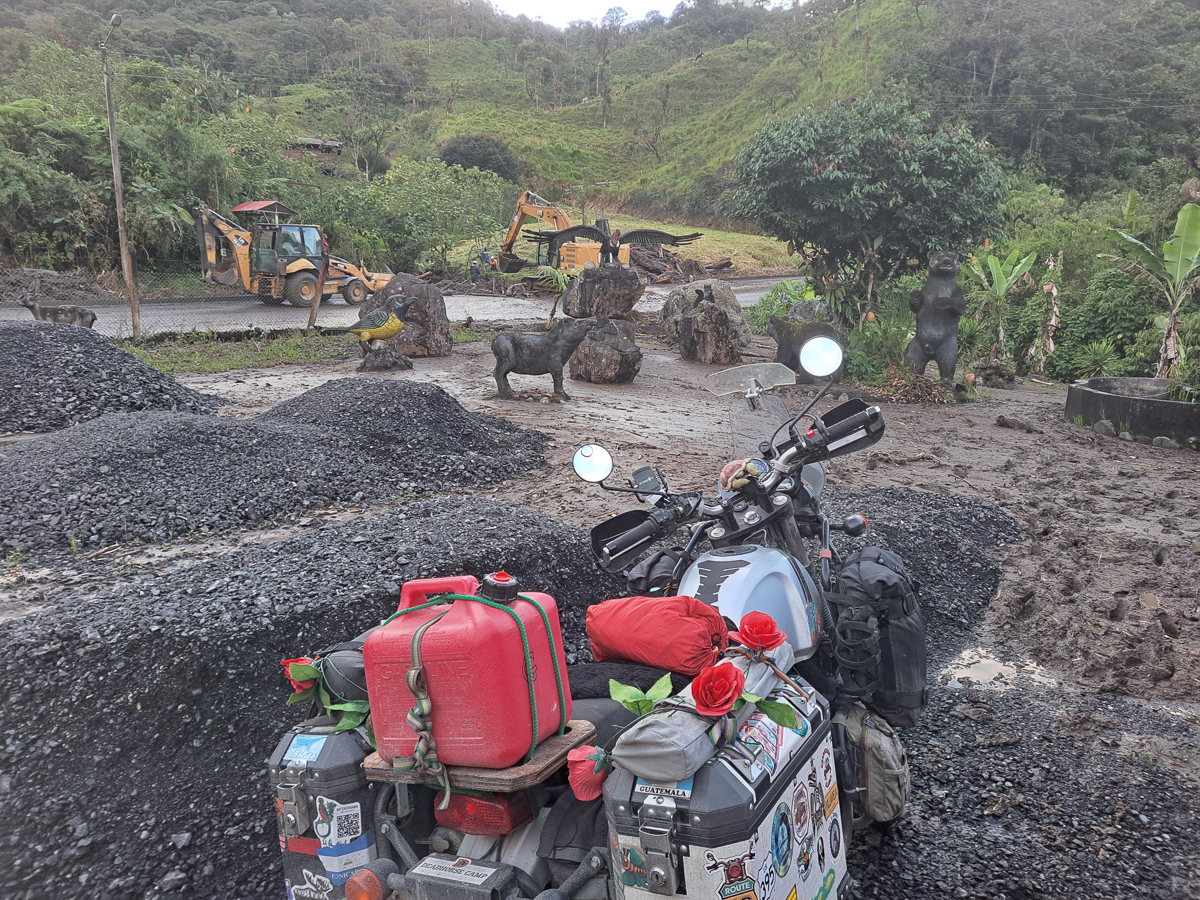
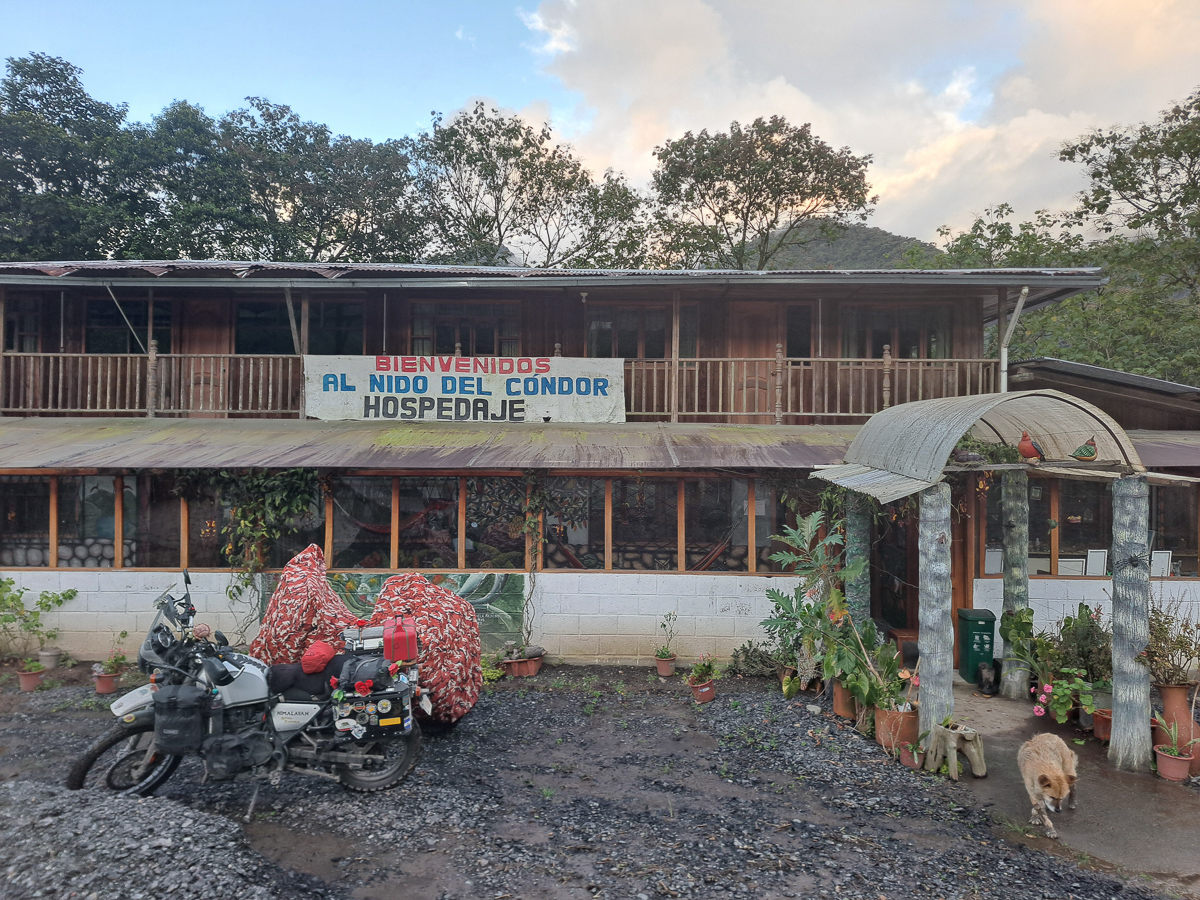
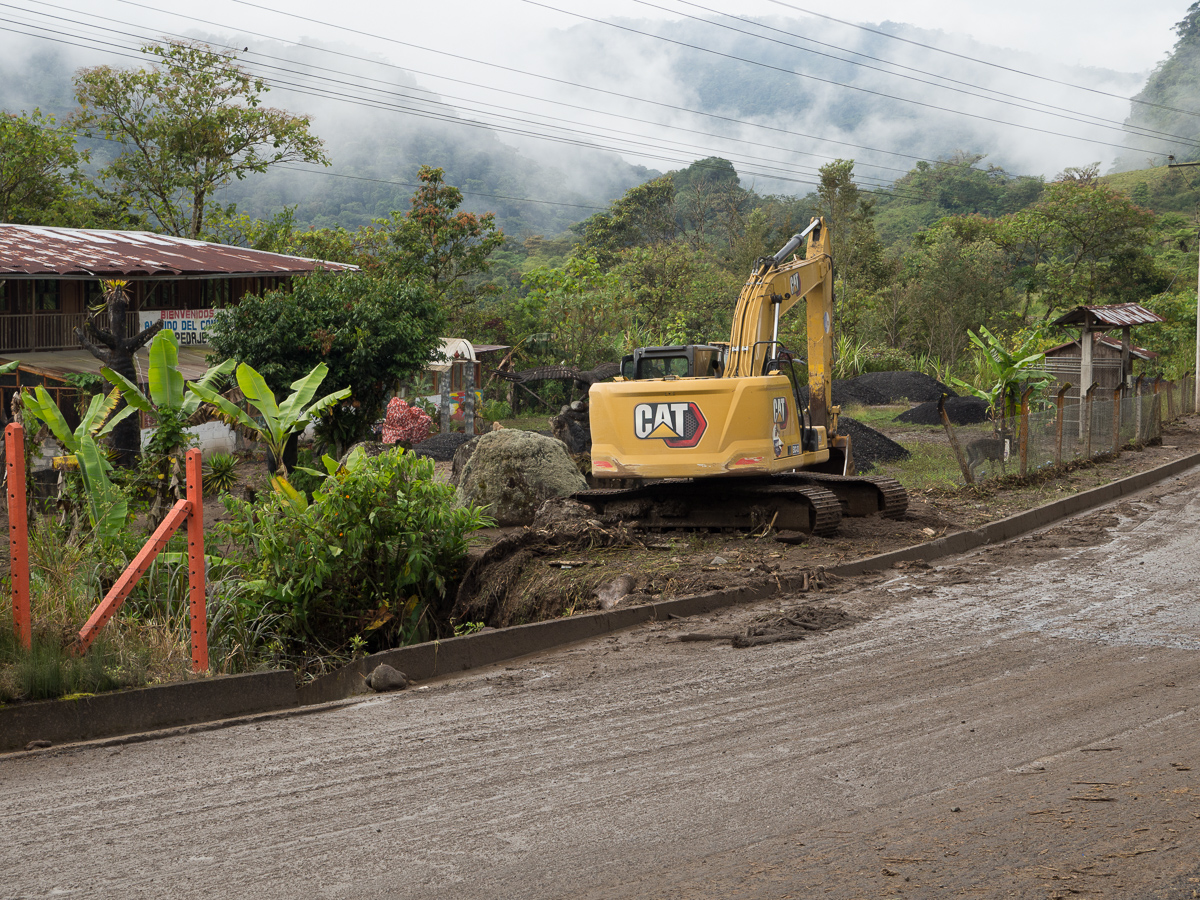
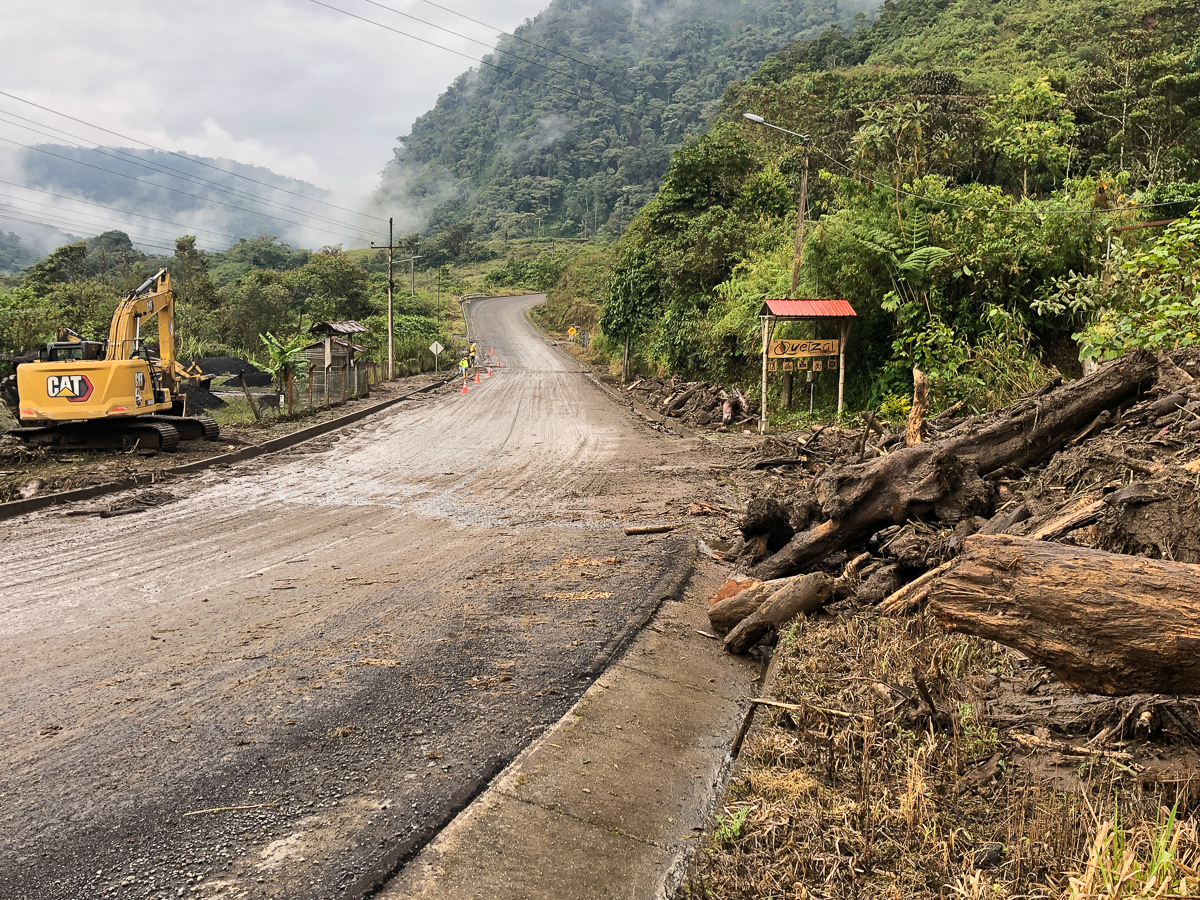
We set off again far more aware of the scale of the disaster happening around us. Gid had rechecked the Government advice about states of emergency which was nothing to do with criminal safety as we’d anticipated but a month ago it had warned of floods and road closures in Ecuador. Here we were in it. For a second time on this mountain route we headed off cautiously thinking the worst was behind us. To a degree it was but we soon found more ahead as we arrived at the back of another queue, this time for a foot or more of water coursing across the road.
Over the saddle into another valley the region flattened out a little to give spectacular views. The frequent rivers we were crossing – fortunately on bridges – were brown and thundering along. The biggest in this area is 500m wide. No wonder hydroelectric power is the main power source in Ecuador, albeit severely affected by drought recently.
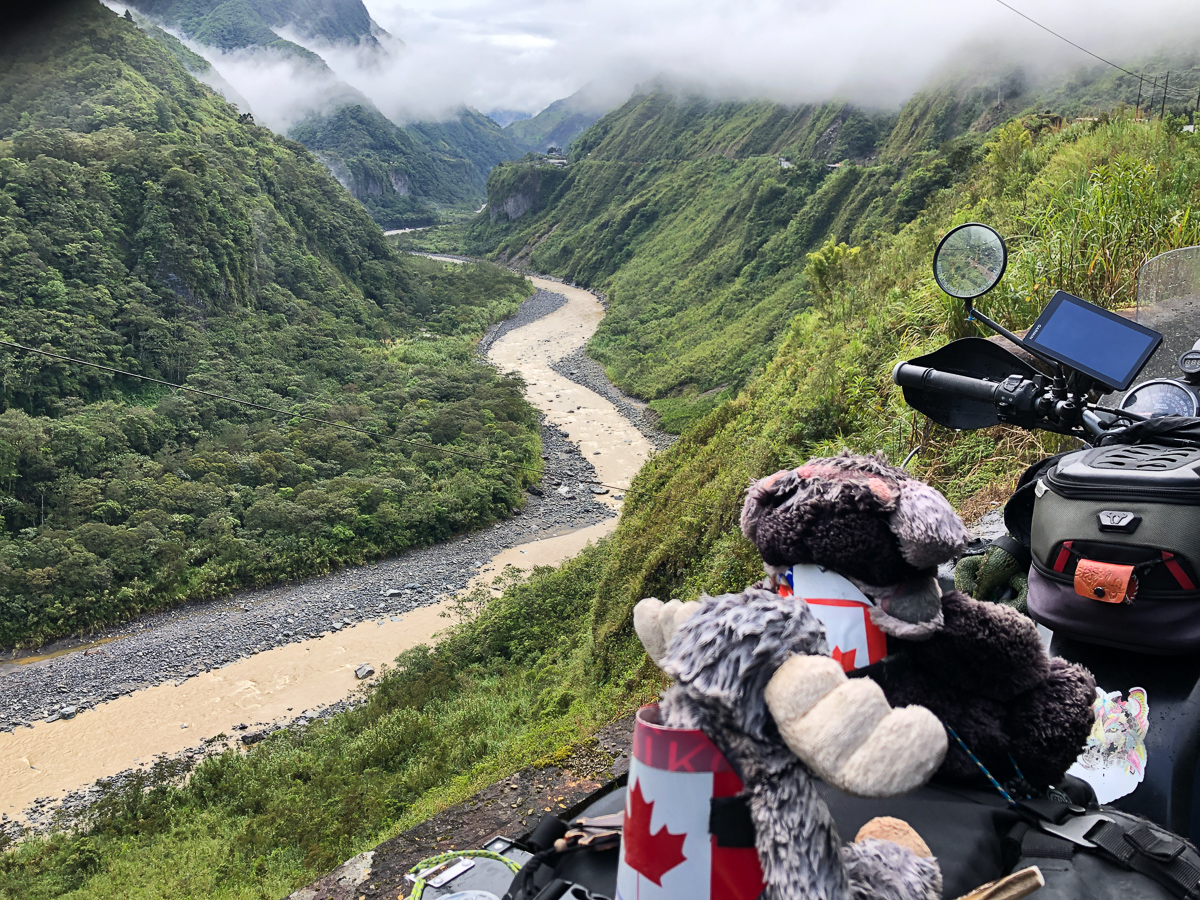
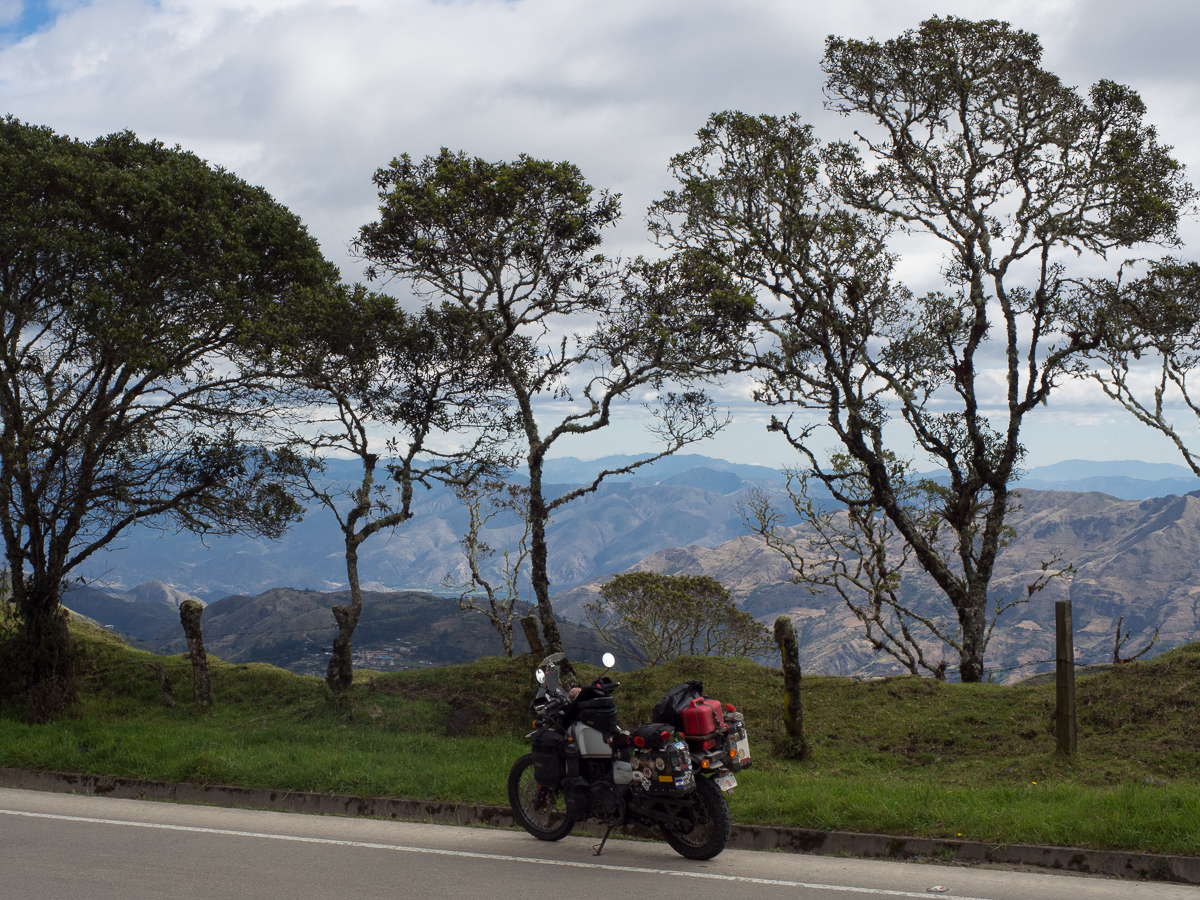
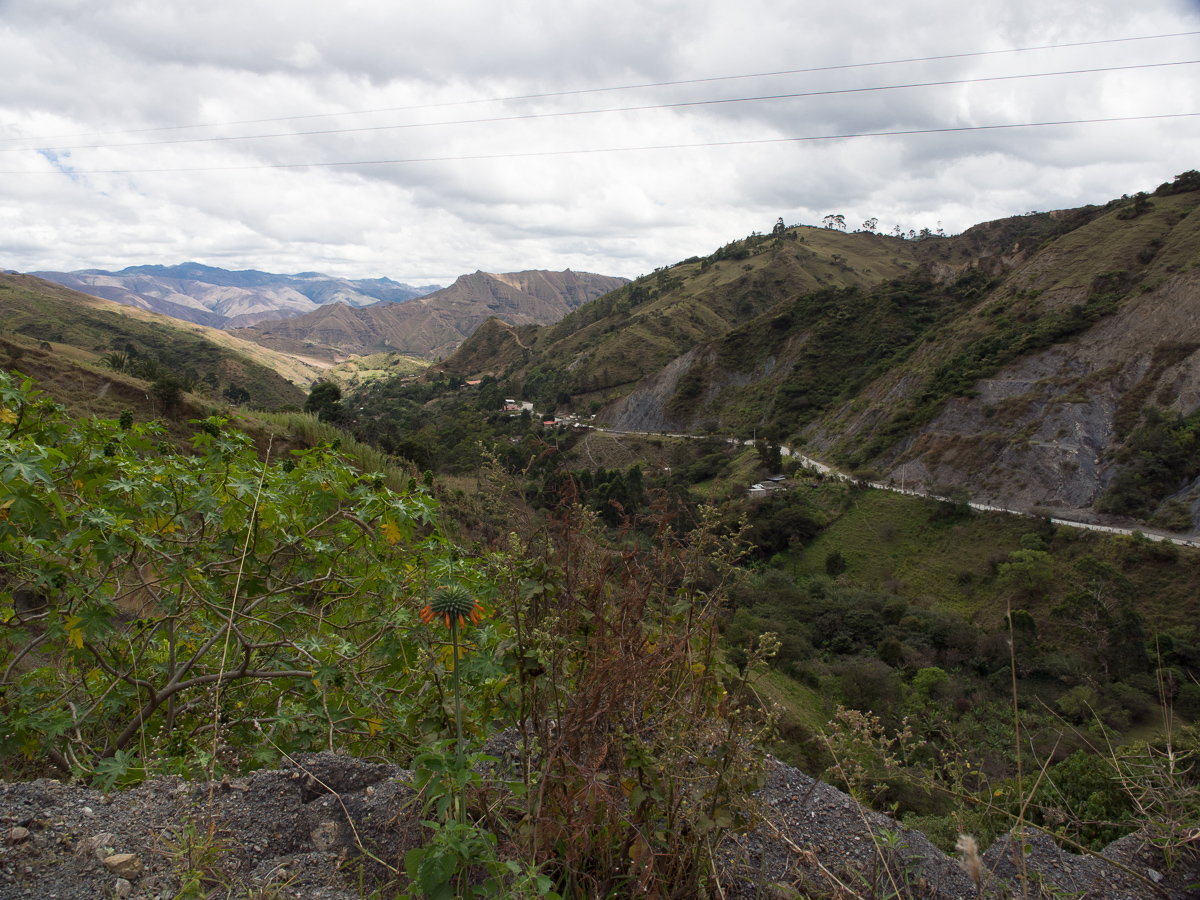
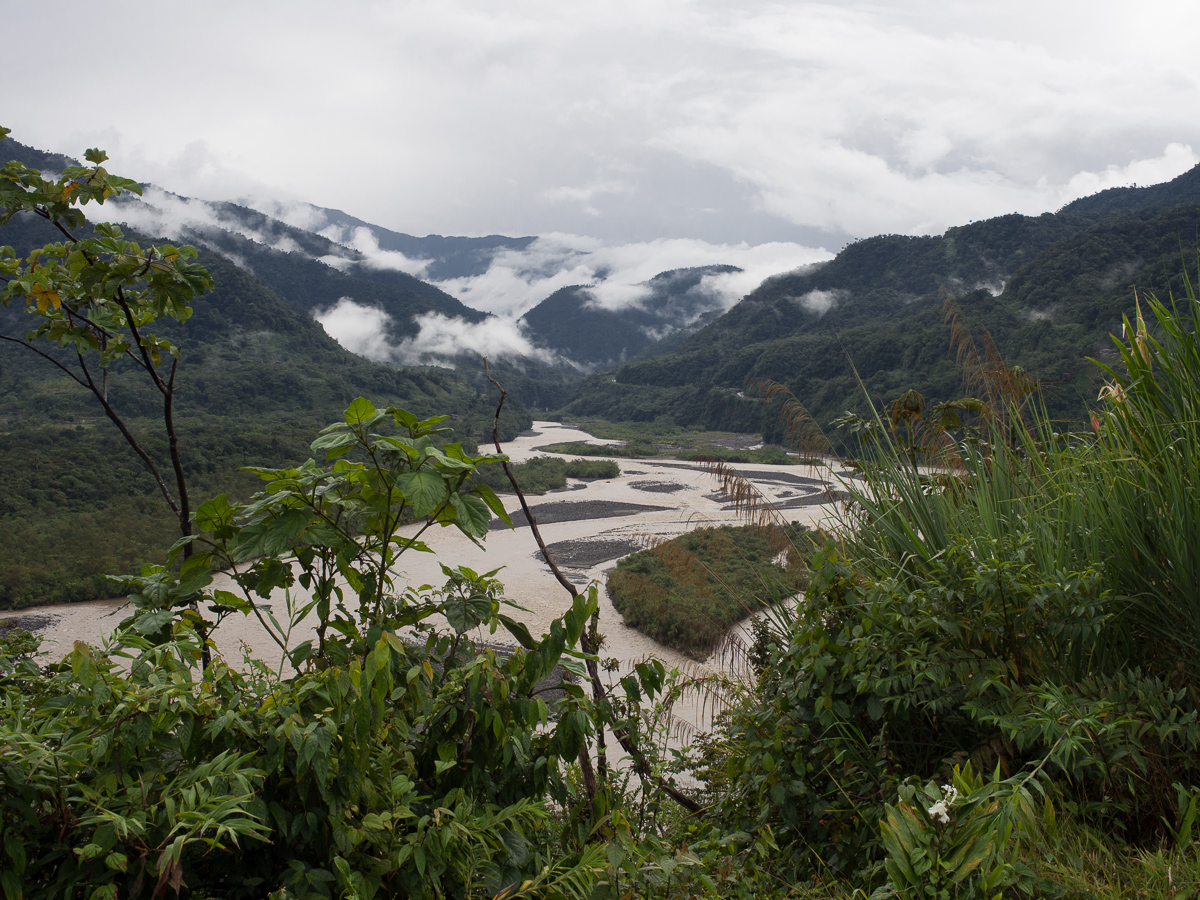
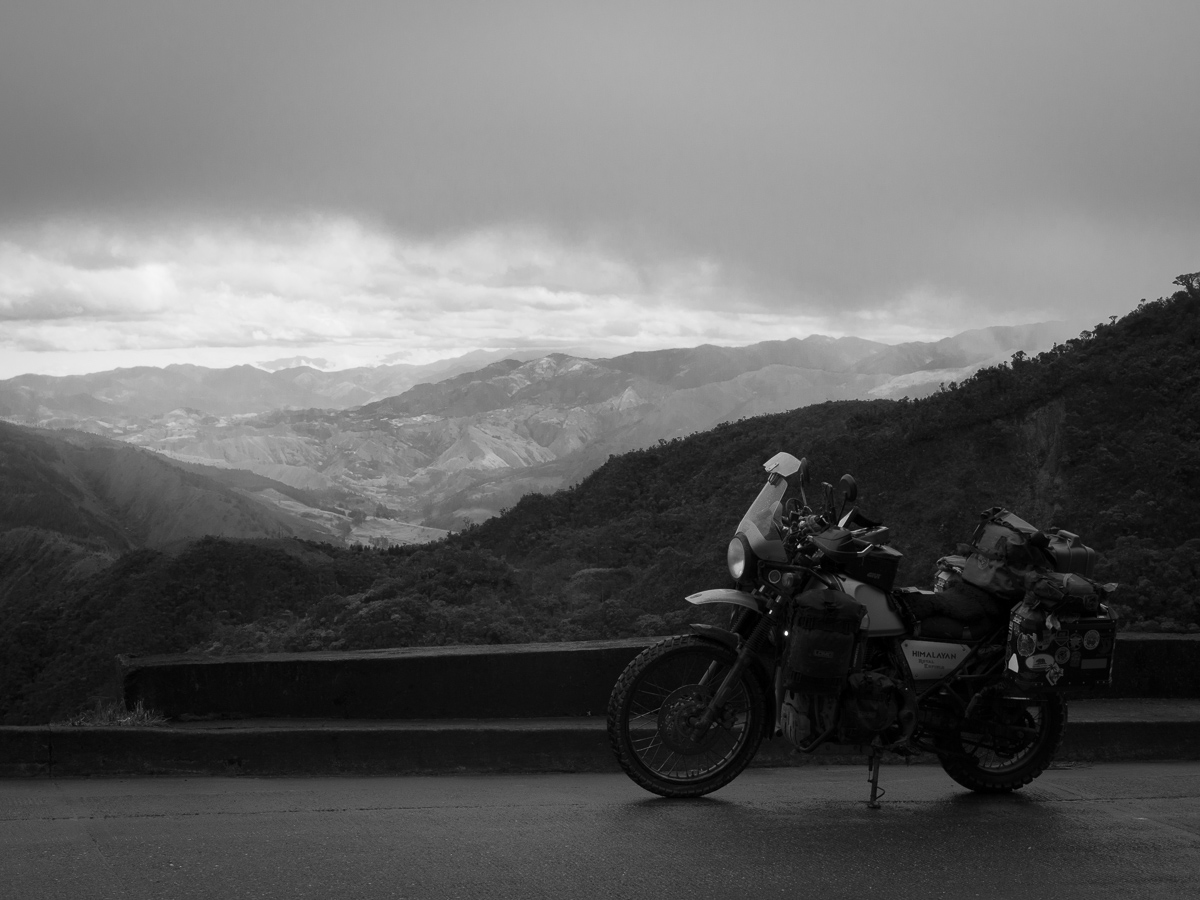
For the second day now Gid has checked the route profile before choosing clothes – up and down ranging up to 3700m with an average altitude of 2761m – snow possible at night on the higher ground. On the chilly side then but we’re getting used to it. We hadn’t expected to get so cold when on the equator but soon realised that around 3000m high we were feeling chilly but drop back down to 2000m and potentially the extra clothing would need to come off.
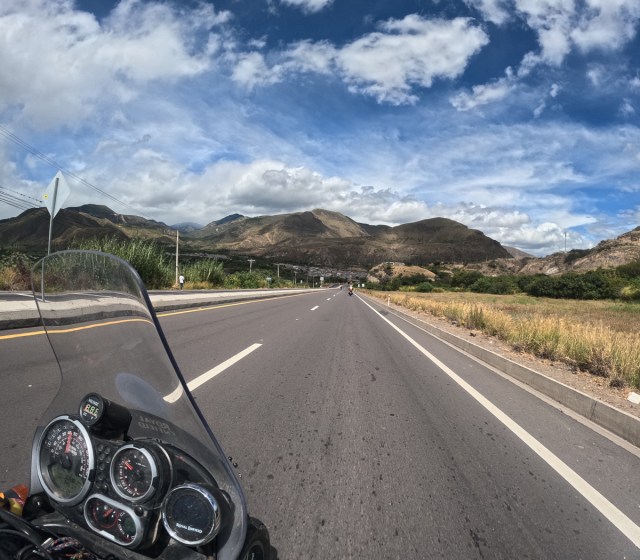
Heading further down through Ecuador we were back on the E35, the PanAmerican Highway. Around the bigger towns it was a tedious four lane dual carriageway, although the traffic moved fairly quickly when not jammed up in queues. Once clear of the towns it was a very pleasant winding road with a reliable good surface and sweeping bends. Our Hims could hardly rise to the occasion of speedy sweeping, for some knee-down corners. The views were equally impressive with panoramic manicured pastures, cows, some hedges and enough trees to maintain a rural image. It could have been the Yorkshire Dales in England so cultivated it was.
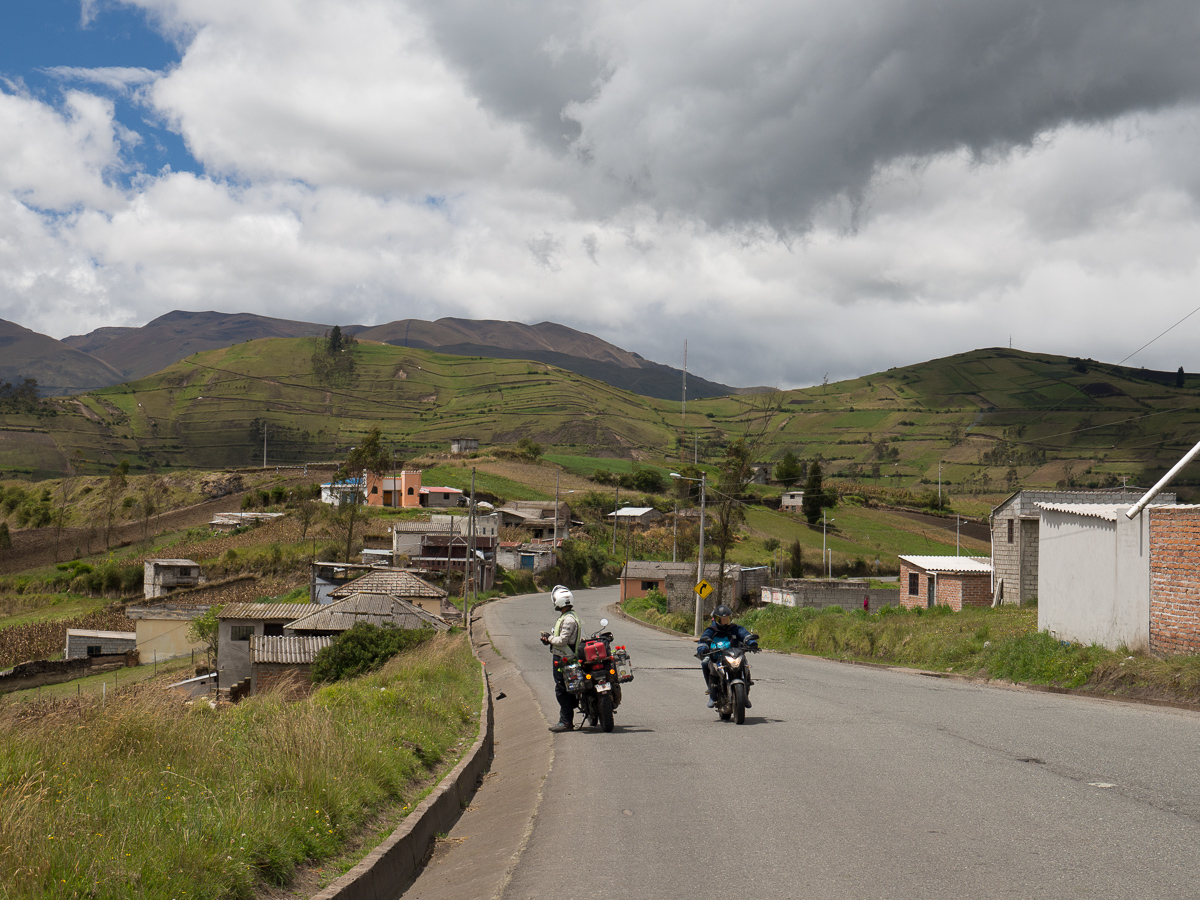

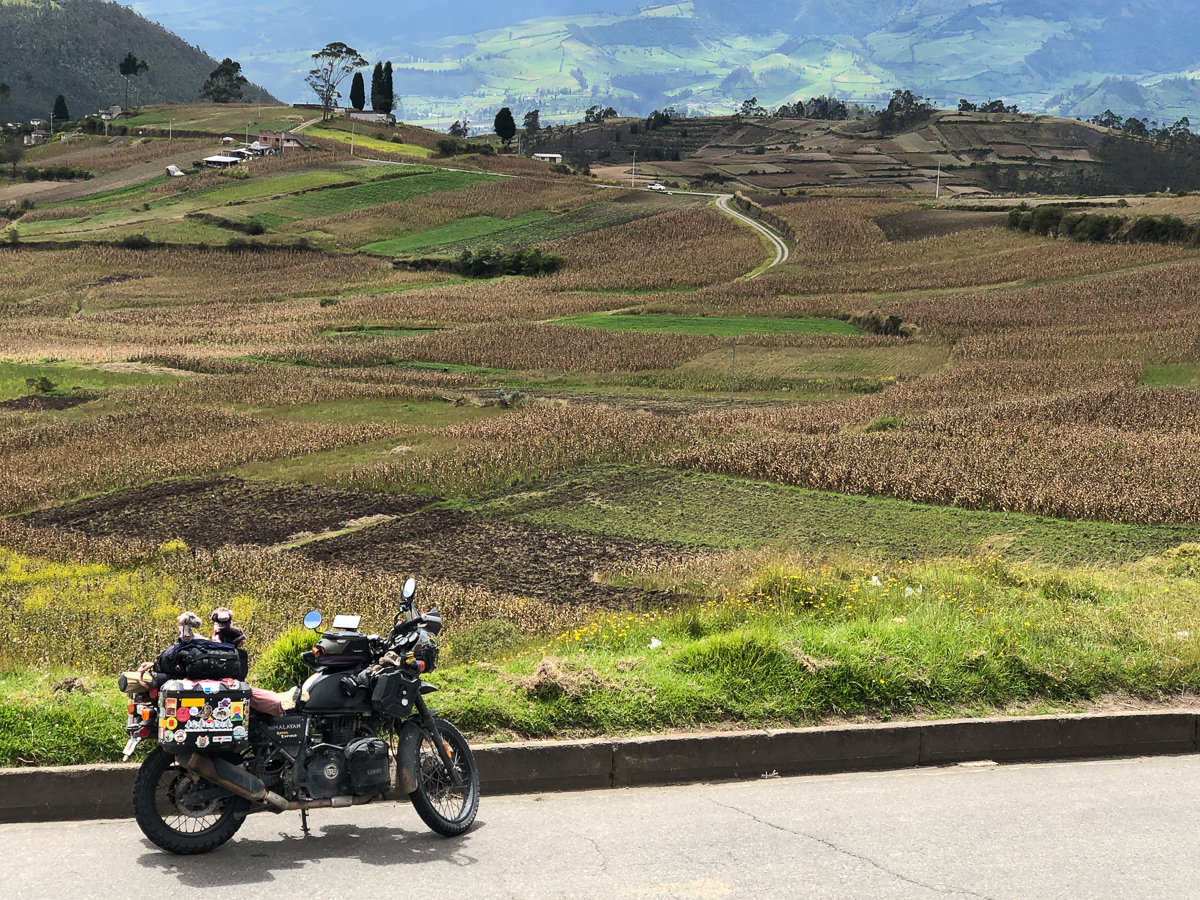
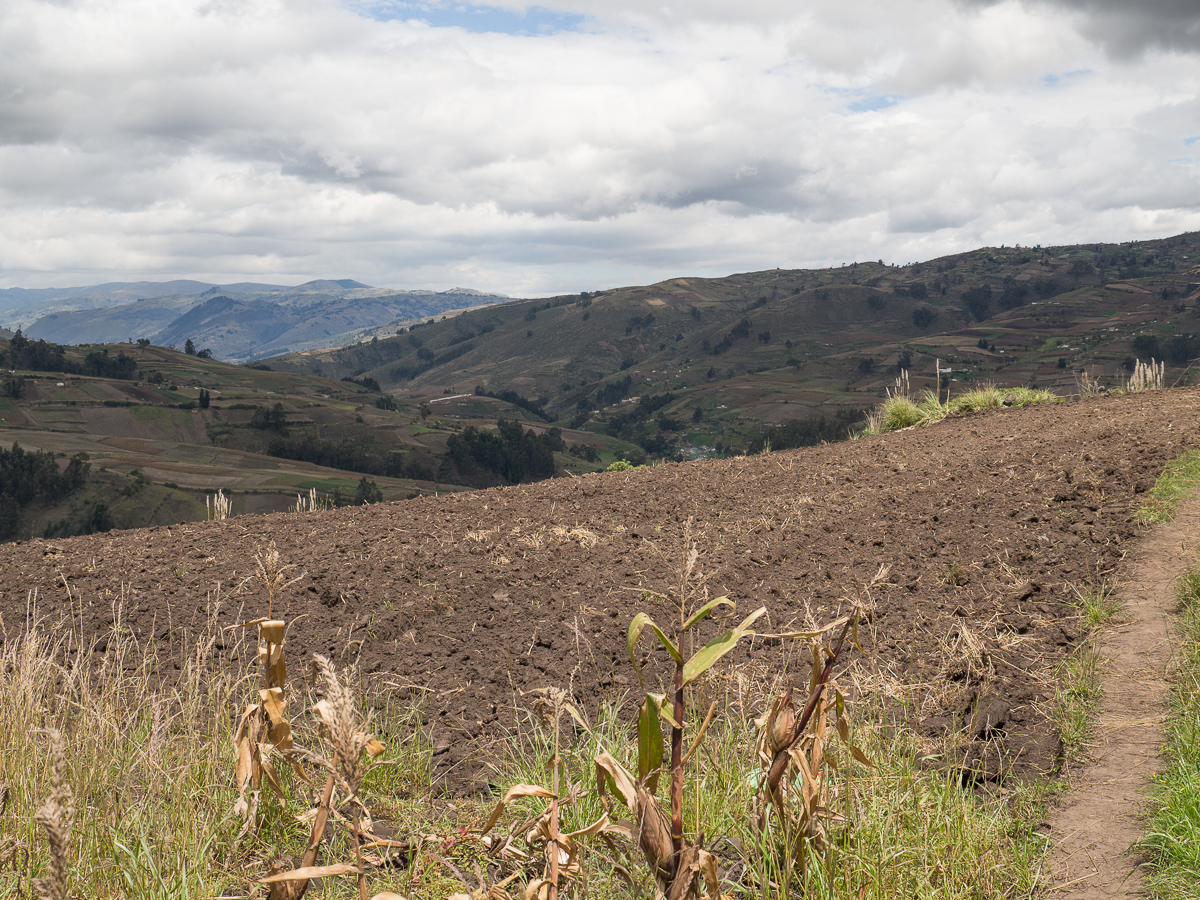
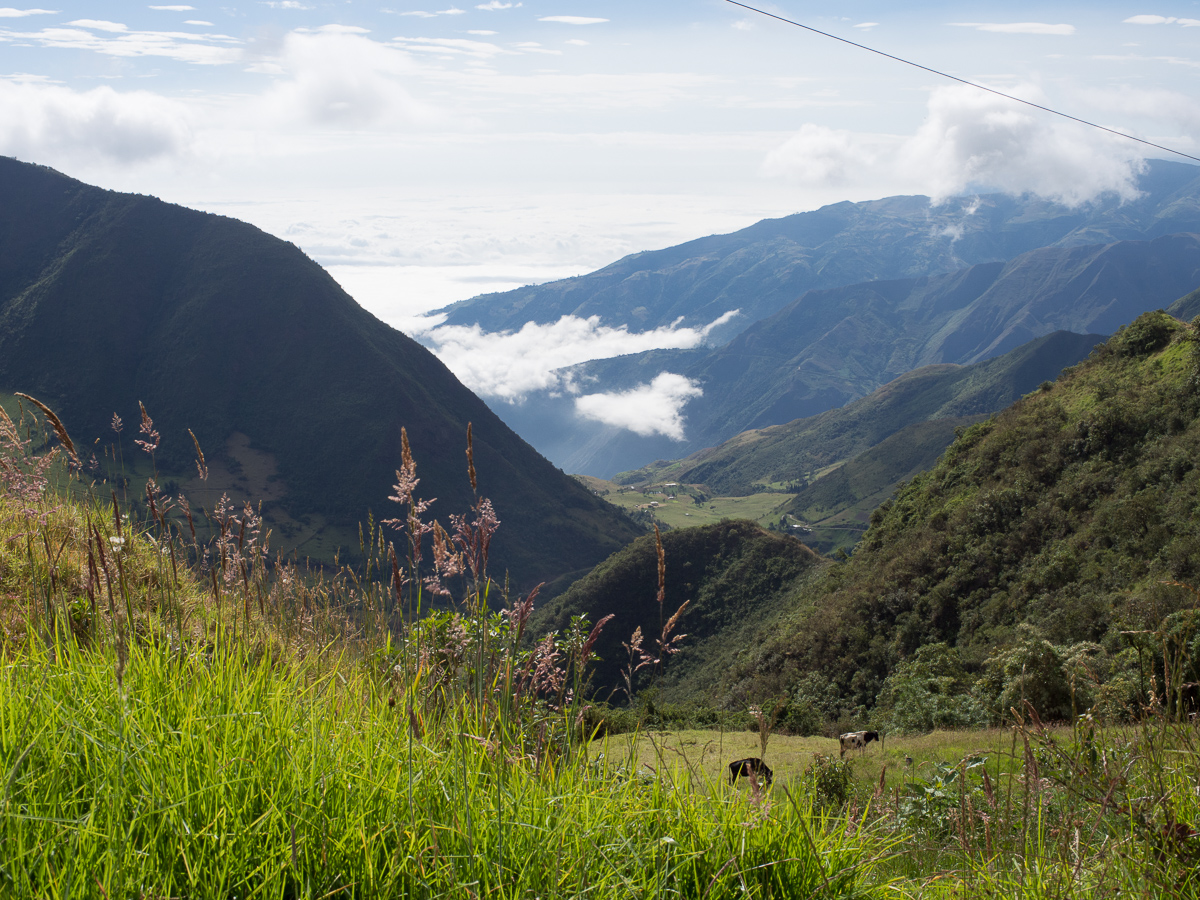
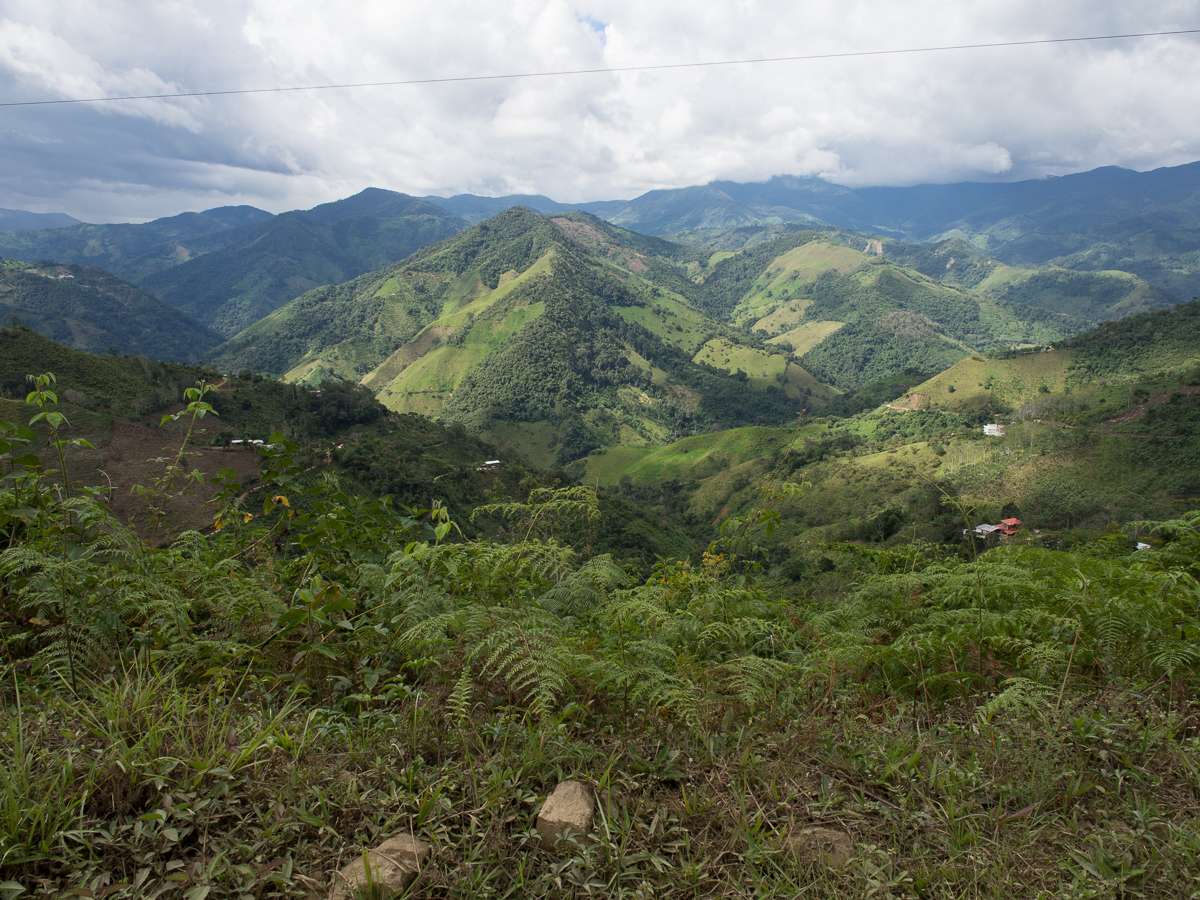
Our border crossing of choice was La Balsa. It’s small with a minor mountain road approaching it. The road was metalled for the first half. That’s when it wasn’t blocked with land slides or just disintegrated into dirt/mud or collapsed away beneath the edge leaving gaps along the carriageway. The second half was dirt road but is narrower and probably in a better condition. Once again the views have been spectacular. Recessions disappearing into the distance. Deep valleys carved by mountain rivers. A final army checkpoint just before the steep ascent along a mountain ridge before a wiggly, and loose descent to the border hamlet.
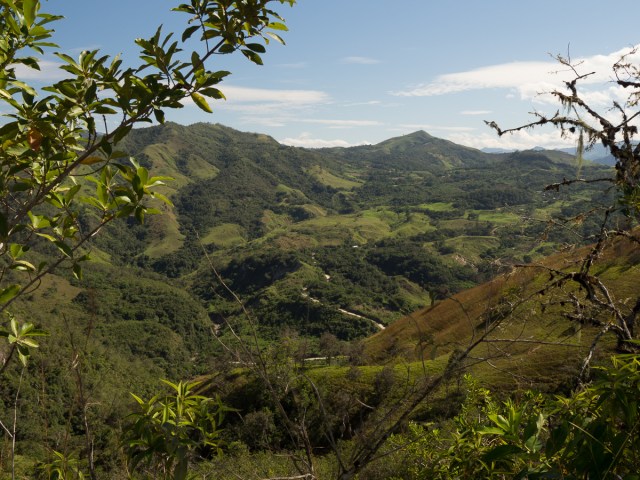
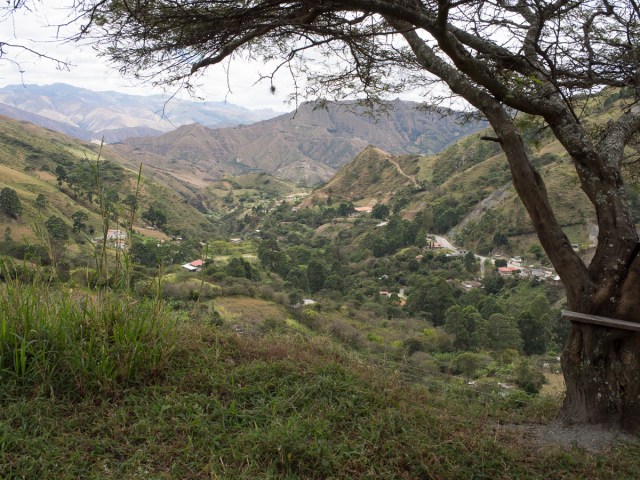
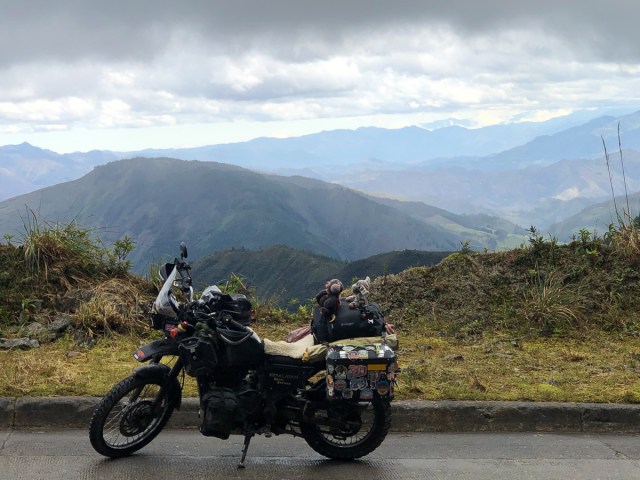
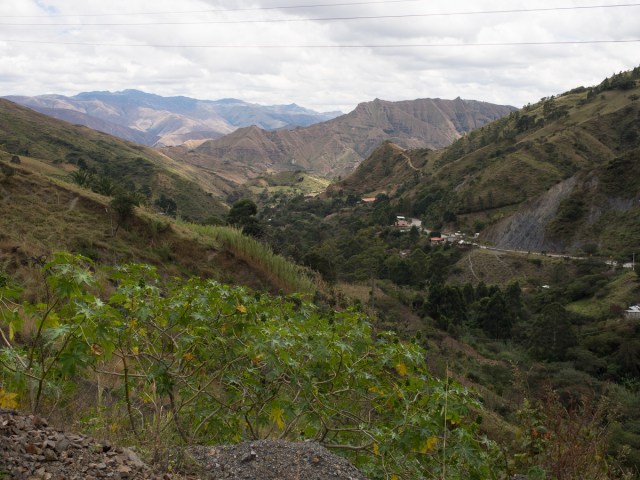
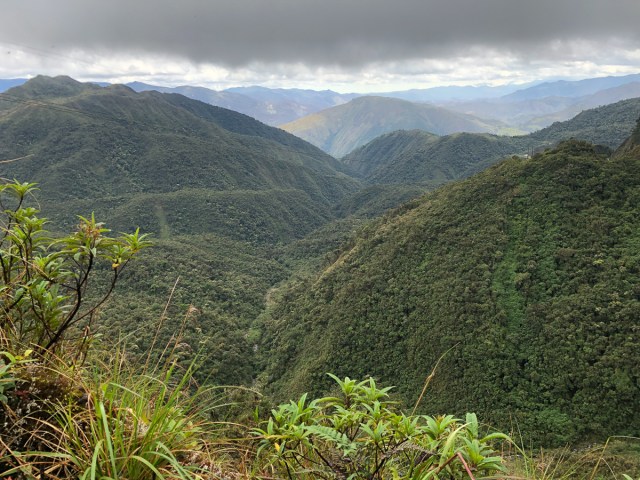
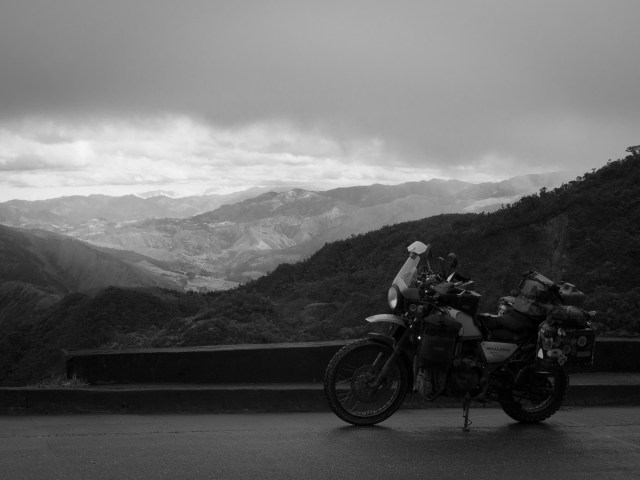
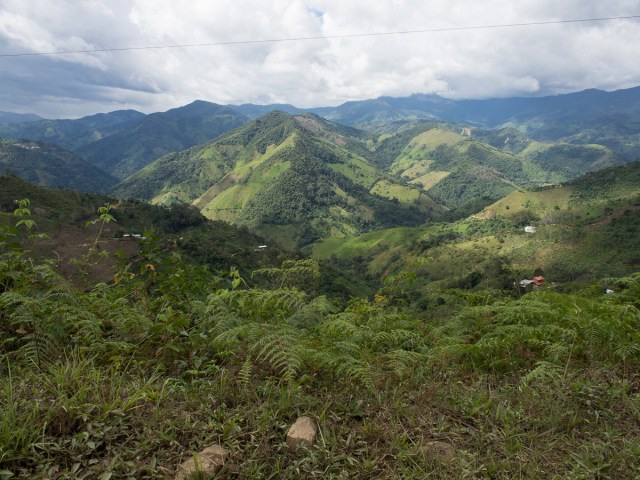
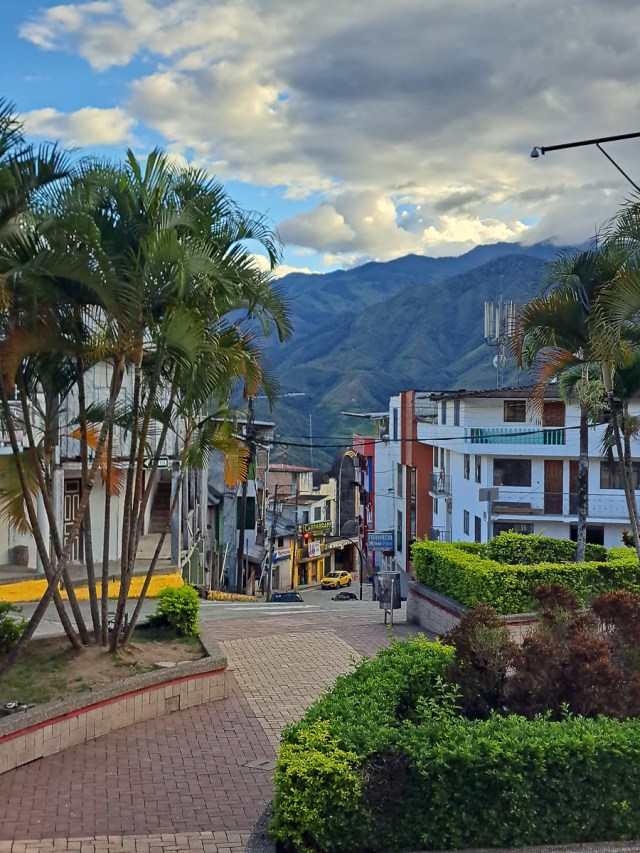
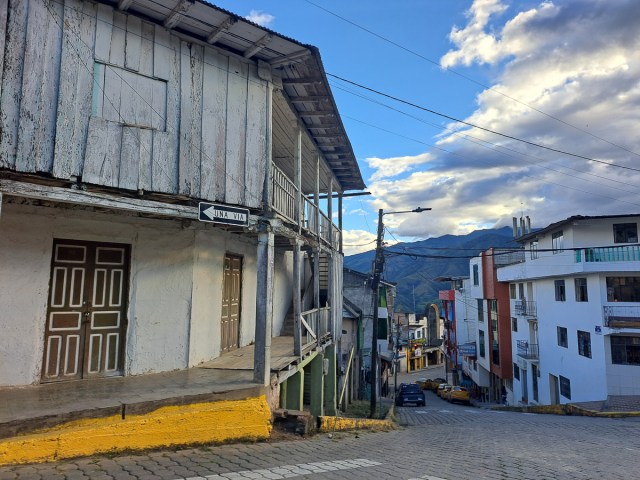
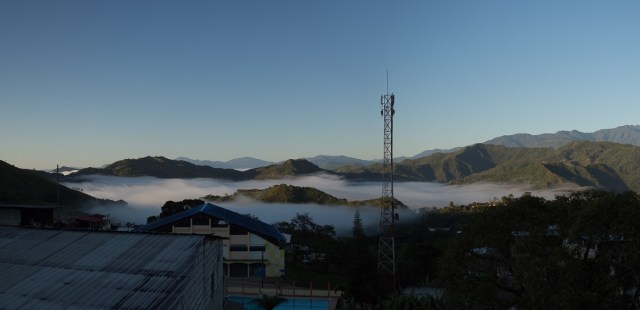
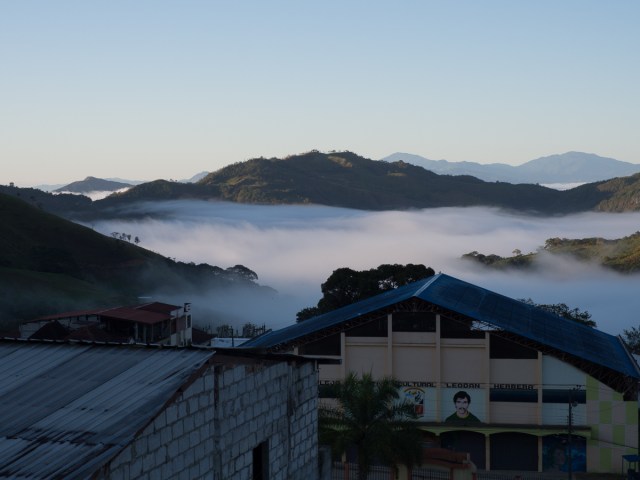

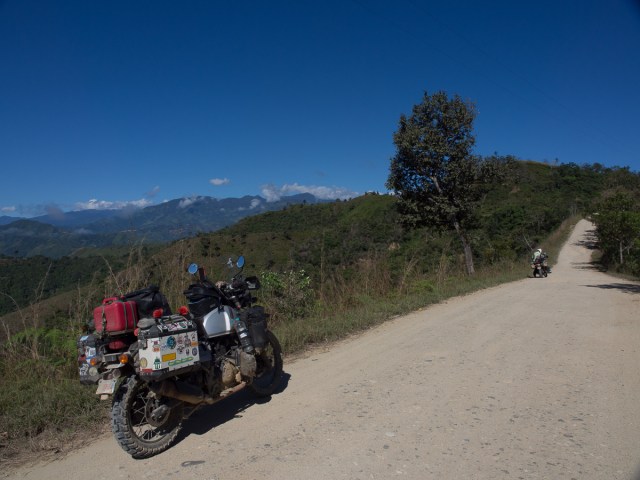
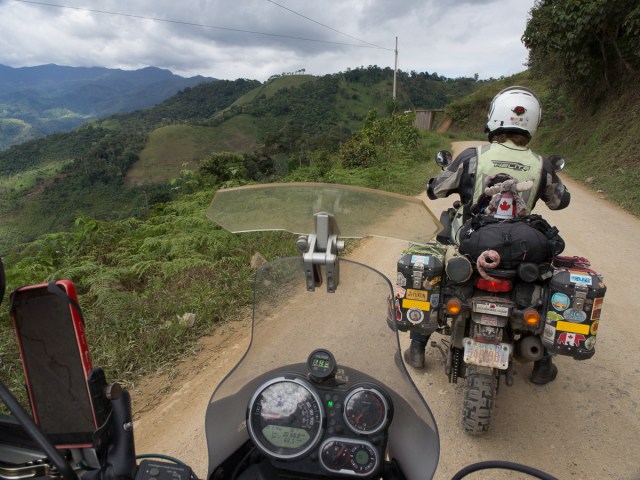
La Balsa was the best kind of border crossing. The dusty main street contained an equally dusty pickup and a few sleeping dogs. The pickup was noticeably better parked than the dogs. Time lapse photo frames would have been distinguished by the chickens being in different positions. We stopped at the last, open sided, building. An amiable policeman ambled out, gestured “park here”, and pointed us to the discreet immigration office. A few minutes wait, and the solitary official did his bit, stamping our passports. When we emerged, a full-sized coach emblazoned with a university logo was pulling in after descending the same twiddly dirt road – we’d got through immigration just before its 40 estudiantes! We had to ask for the Aduana (customs) office, and there it was, shuttered. Oh – 10am on a Saturday. Next door said, ‘He might be in the restaurante, or asleep’. Let’s try the restaurante. We went back to ask our helpful policeman. He grinned, and pointed to the young fatigued hombre sharing his table. A few minutes later, TIPs cancelled, we trundled over the bridge to the Peruvian side. Which had much newer, neater, bigger buildings, but was fundamentally the same. There were more travellers here for the equally few and friendly officials to process, but we were still clear of the estudiantes, and after an hour or two we were rolling in Peru, land of the Incas and Paddington Bear!
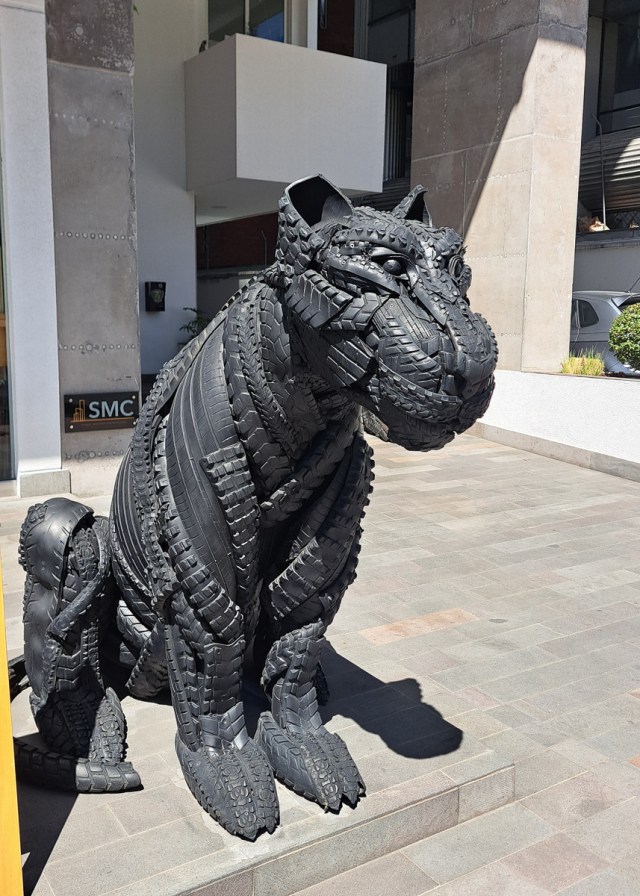
A few final pictures:
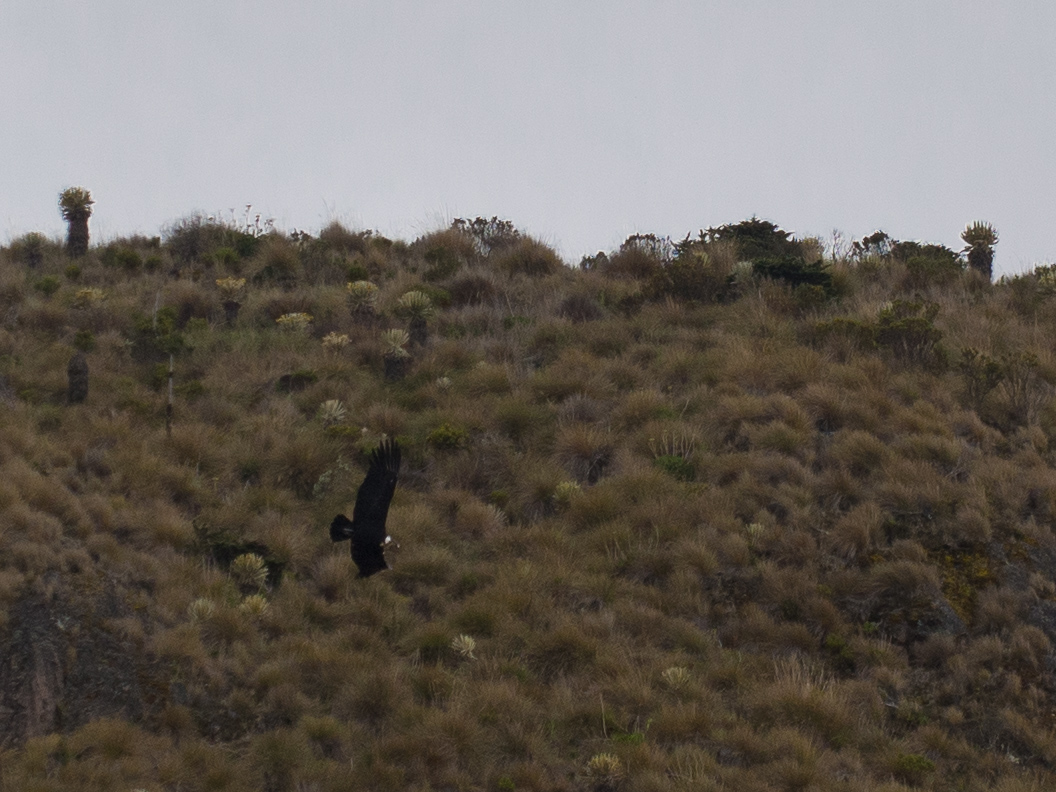
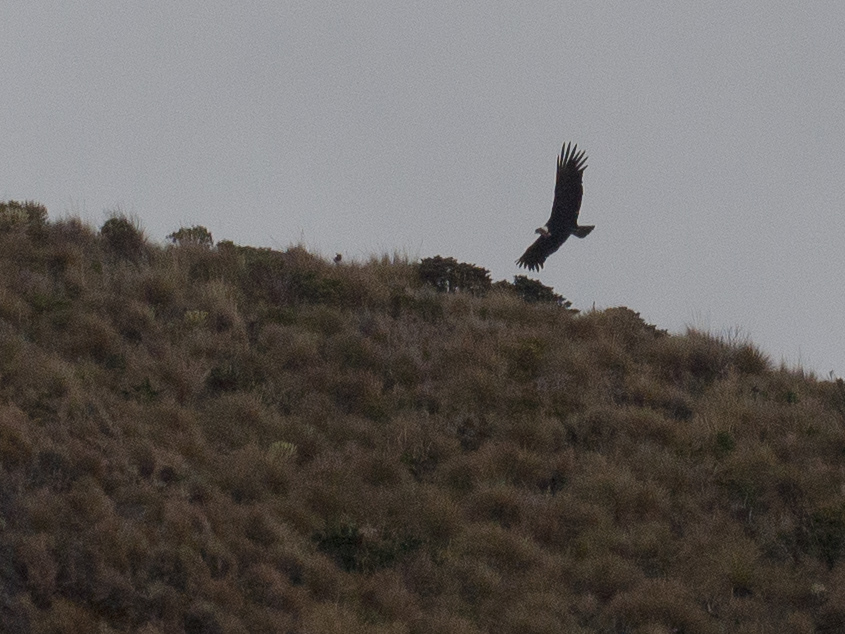
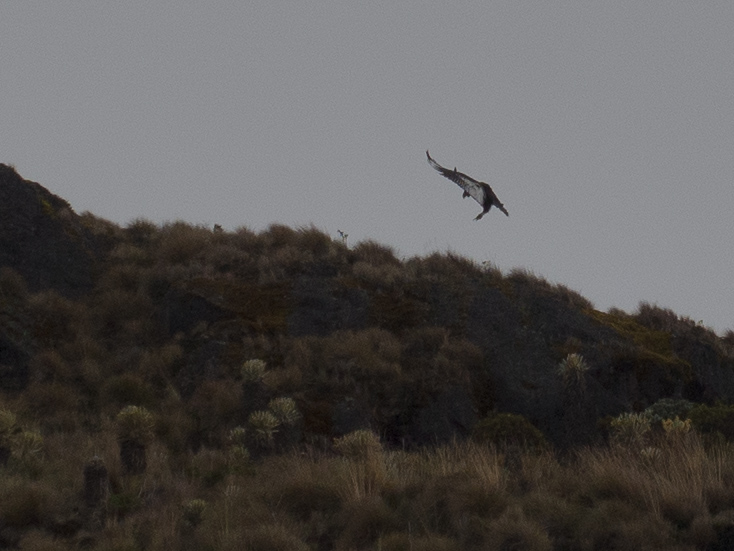
On a hike to Lago Otun in Colombia, we were lucky enough to see a brace of Andean Condors!

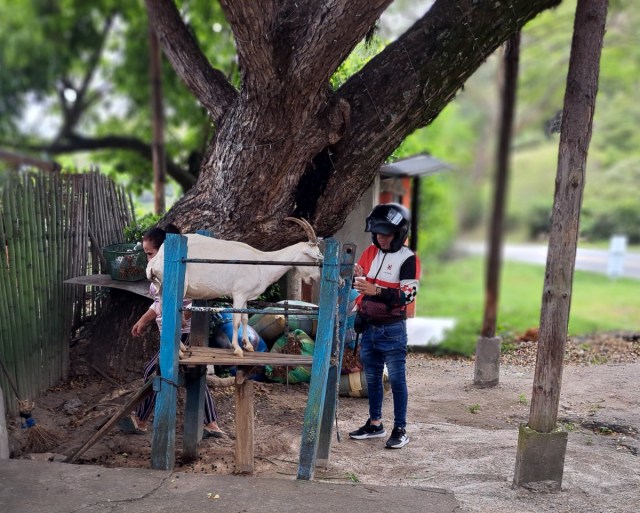
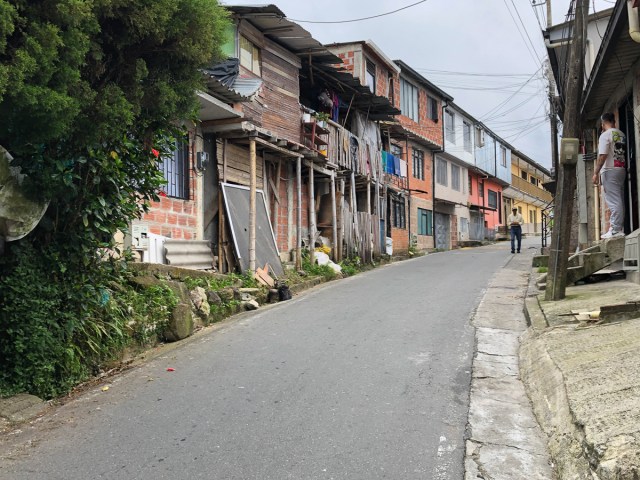
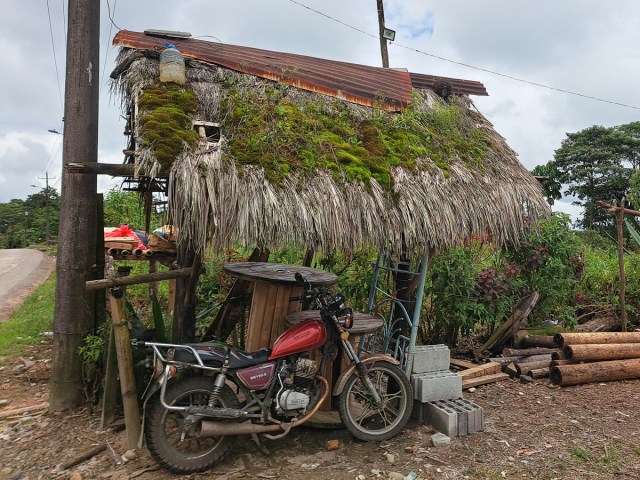
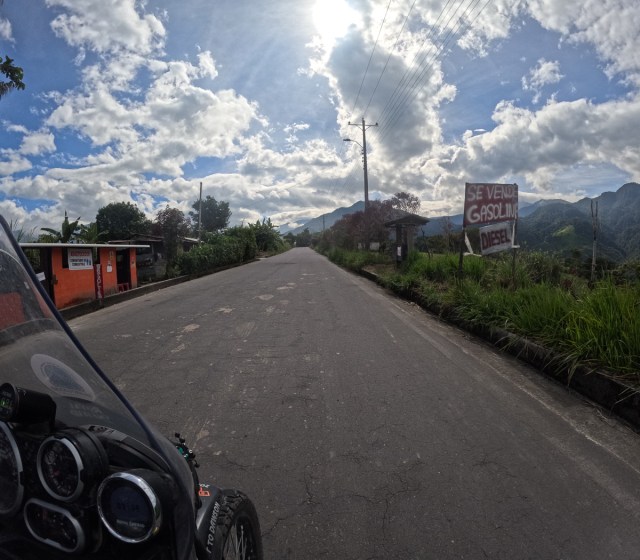
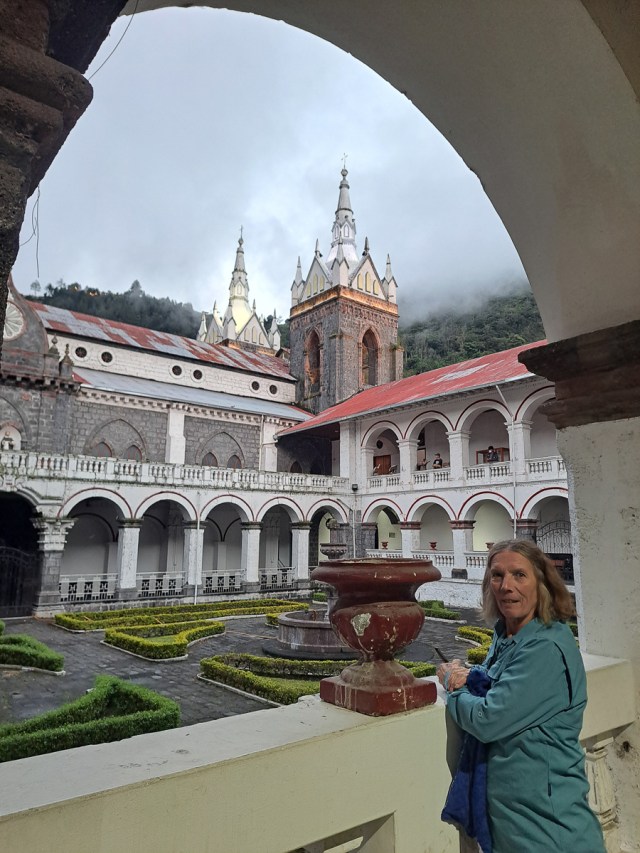
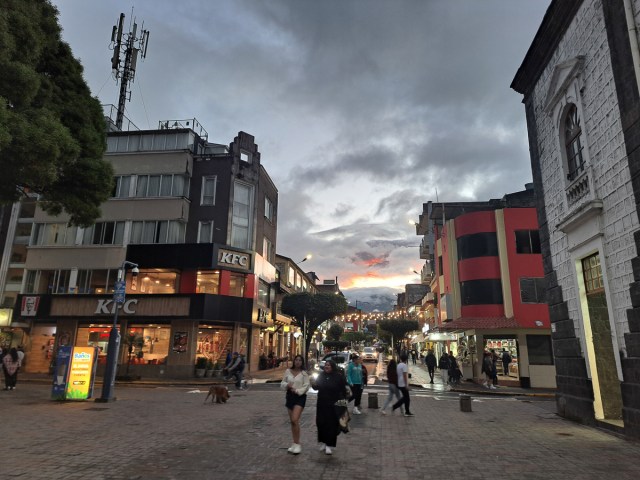
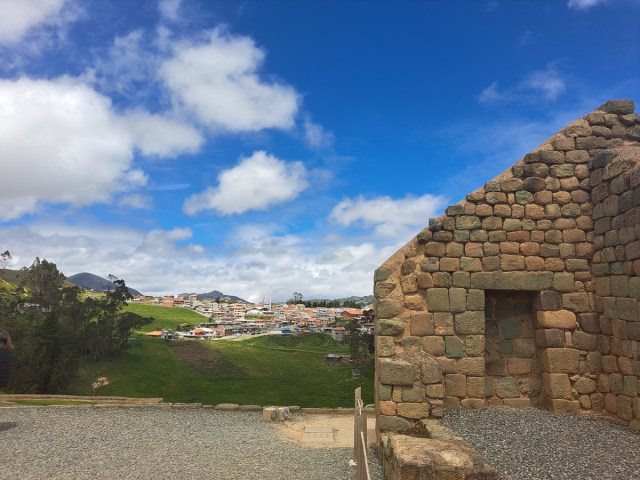
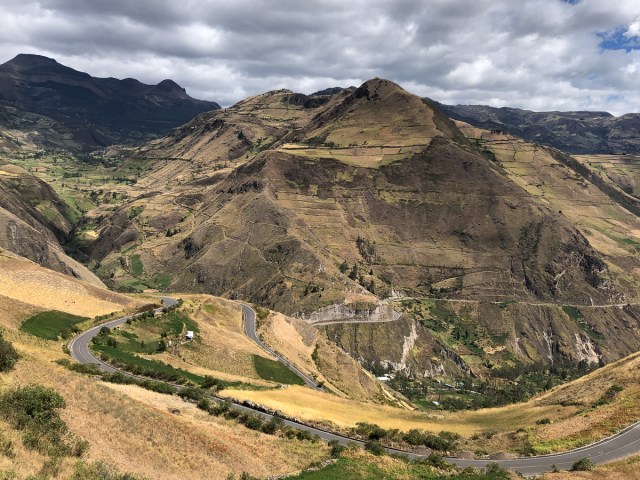
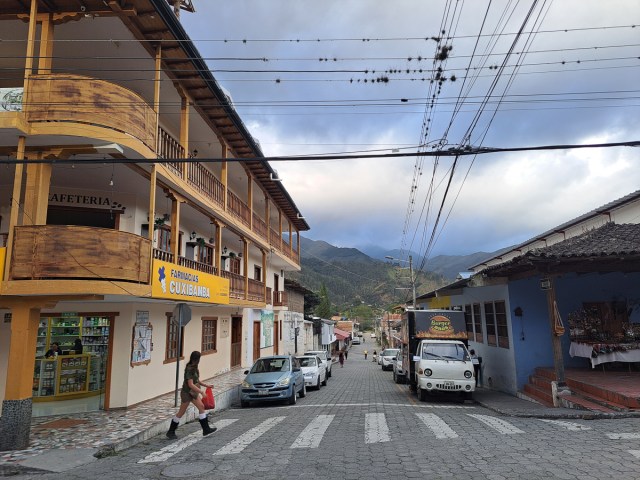
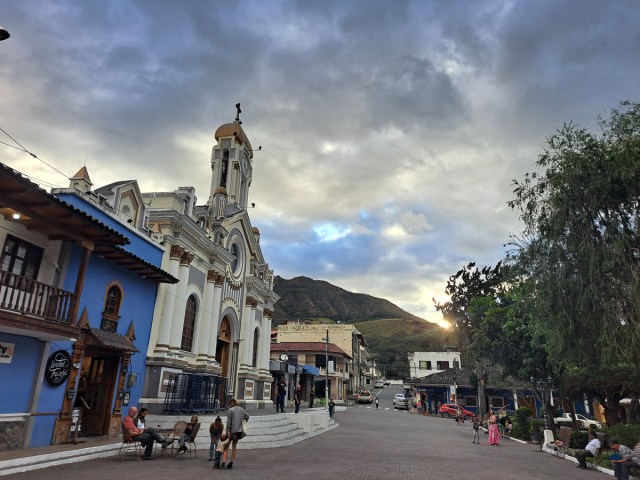
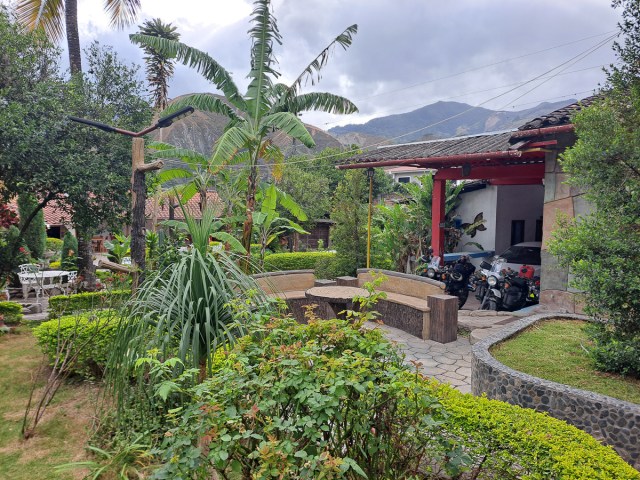
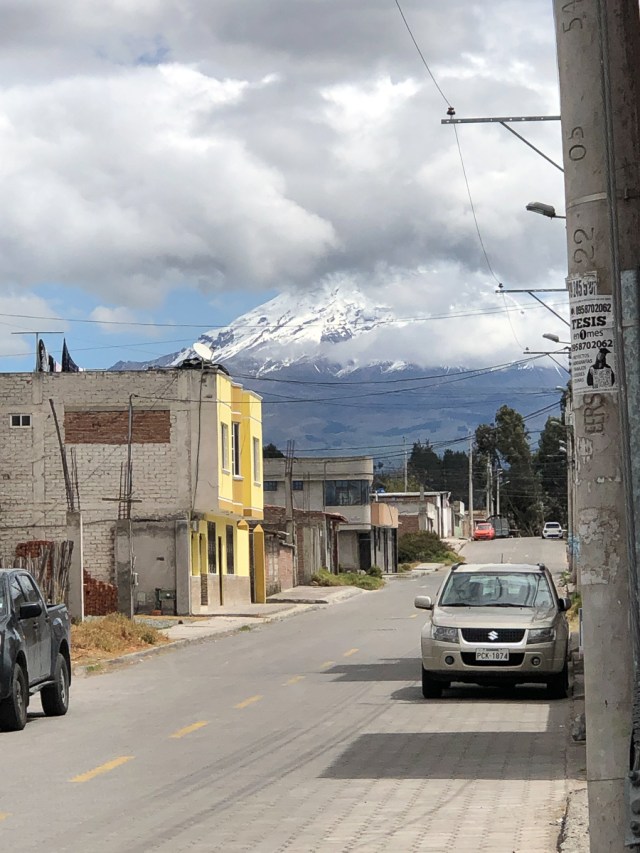
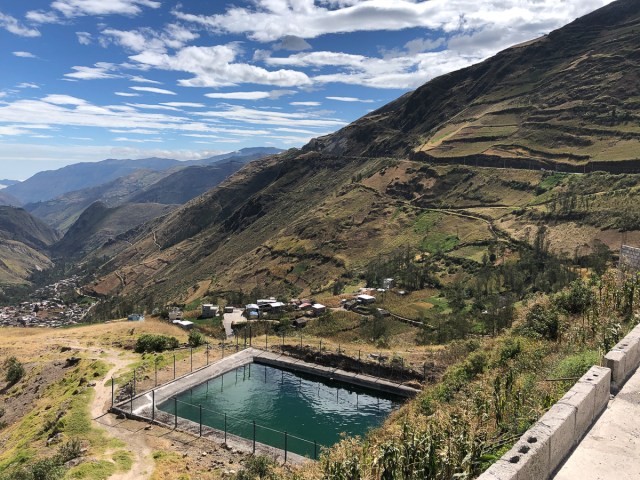
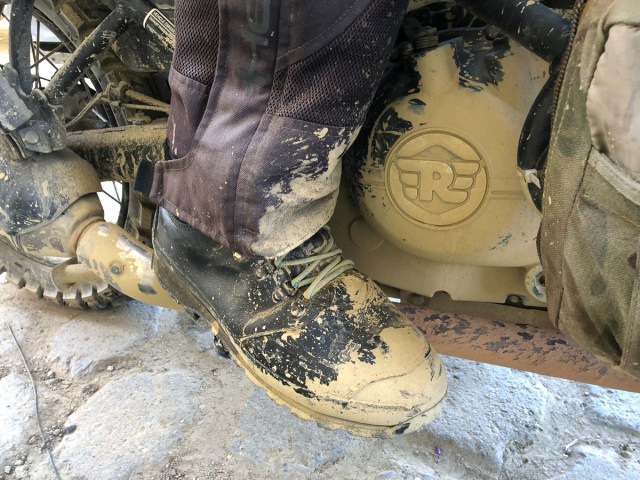
And an ad-hoc selection of photos from both countries:





 2silvercyclistsdotnet
Looks like your adventure was full of fun 🥰
LikeLiked by 1 person