Costa Rica

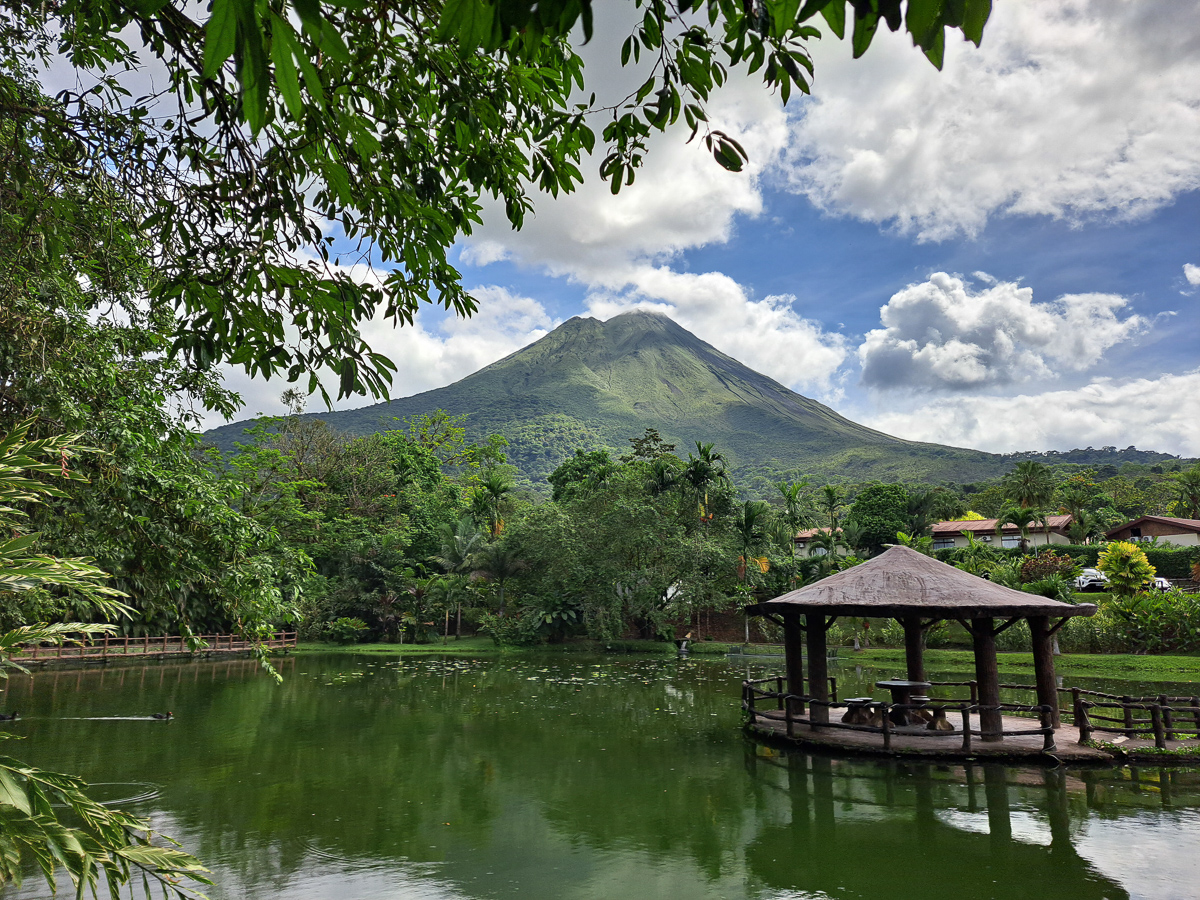
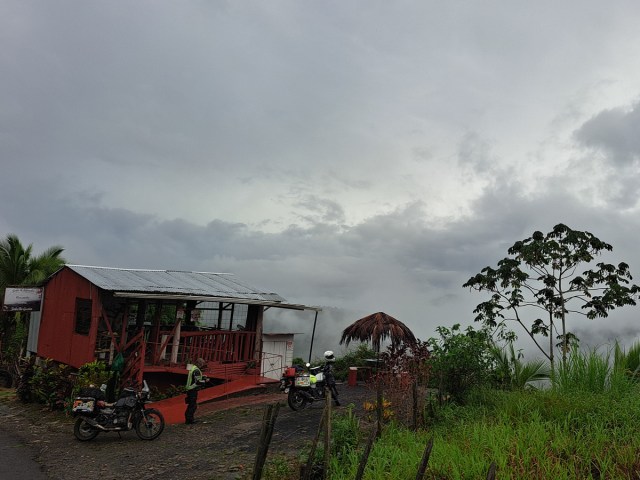
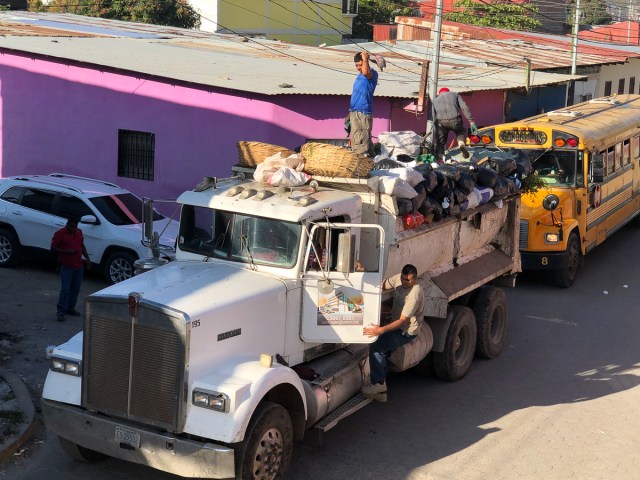
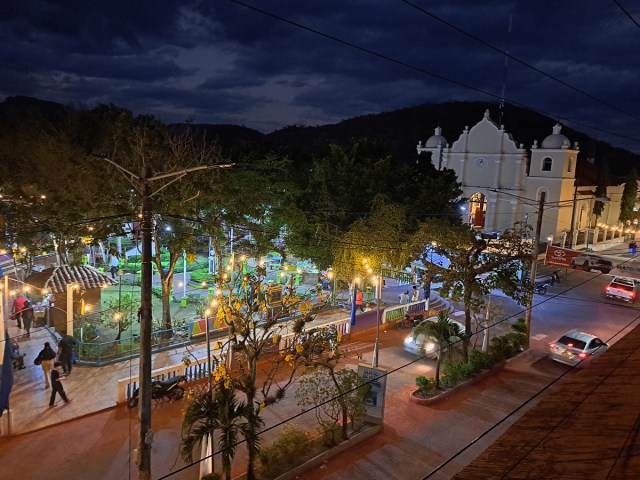
Costa Rica was near the top of my keen to visit countries.  Sadly, it’s obviously high up on a lot of other peoples’ lists too as many areas are full of tourist shops and attractions which are teeming with foreigners.  Everything was top dollar – the costs had rocketed!  Gid hasn’t stopped whinging.

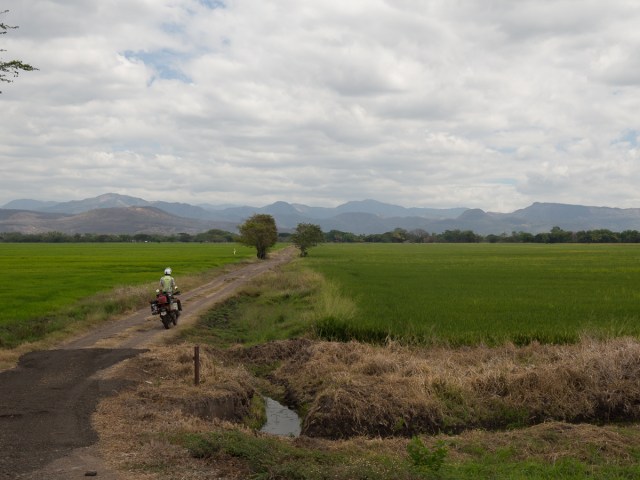
We picked a fair sized town, Liberia, for ease of finding our first accommodation in Costa Rica but found that full.  A motel along the highway just beyond it did the job although the roar of traffic through the night barely stopped.  The dipping pool was one very pleasing bonus after what felt like a long hot day – Central American border crossing days always feel like that, although pouring rain might be even worse.

Our second night’s stop was in a much more rural area, right on the edge of Rincon de Vieja National park, where we were told that we could stay for only one night because they had a coach load coming tomorrow – although a campsite was available.  This kind of booking was verified as common by a very nice English couple, who had joined us at the previous night’s motel, having just flown in from the UK and like us found the town up the road full.  They told us their itinerary and explained that when Booking.com says it’s full just phone the place and they’ve probably got space.  ‘The tour companies make block bookings and then can’t fill all the spaces so they’ll have rooms spare’ we were told.  Our hearts sank.  This was supposed to be one of my prized countries to explore and here we were on a roller coaster tourist track.

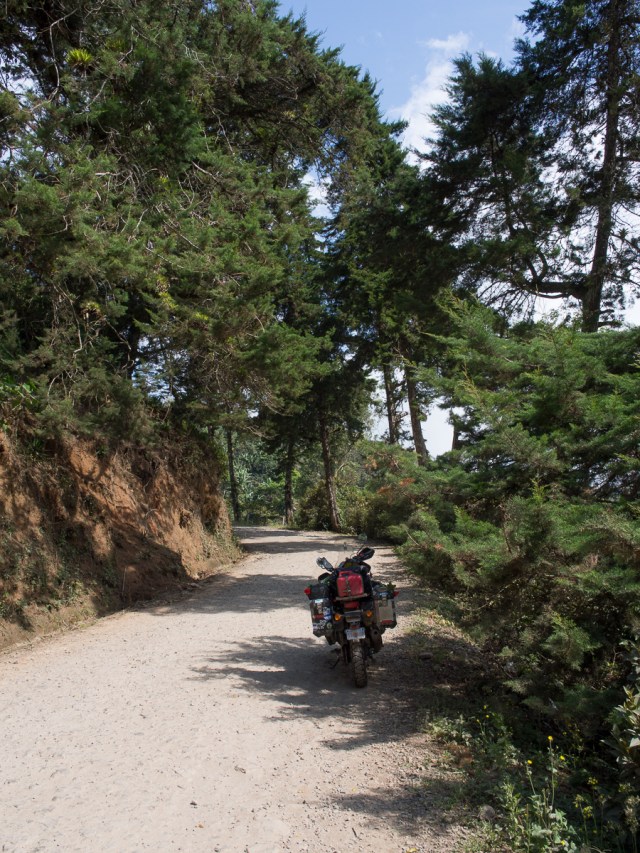
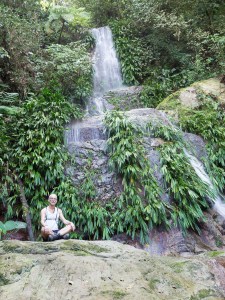
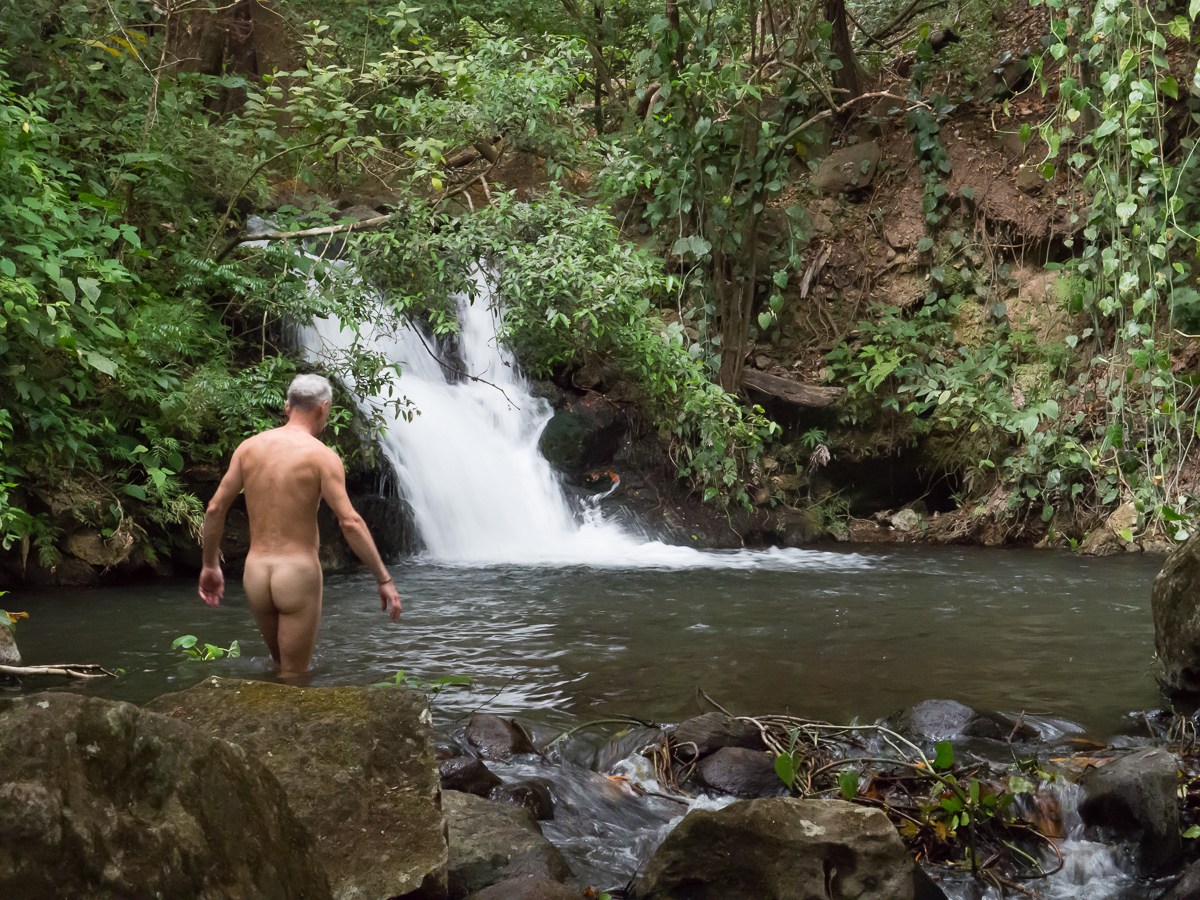
At Rincon de Vieja we did at least get away from the tourist trail approaching via it’s ‘back door’ along dirt roads to a shut gate.  Thankfully a man came out from the bushes, charging us a National Park entry fee he gave us access to the park.   Once settled in our accommodation we took a local walk through the woods to a cataract but got more than we bargained for.  The morning after I woke up at 4:15am in a panic because I had ‘things stuck to my legs’. Bed bugs?  No internet to check!  Ticks we discovered, once our online research told us to count their legs (8). Gid delved into the First Aid kit for the tick remover tool, and we spent a tedious hour clearing each other’s wrinkly bits. Sadly, we found a few more over the next 24 hours. I thought I’d probably picked them up weeing in the woods on our walk but we were both covered in them.  15 – 20 each!  We were still in a state of hysteria when, a few hours later, we piled into a car with two other people to go on a sloth seeking tour near La Fortuna.  With a sigh of relief we settled once the guide told us that there are no deer here so no Lymes Disease but a wash down with alcohol would be a good idea.

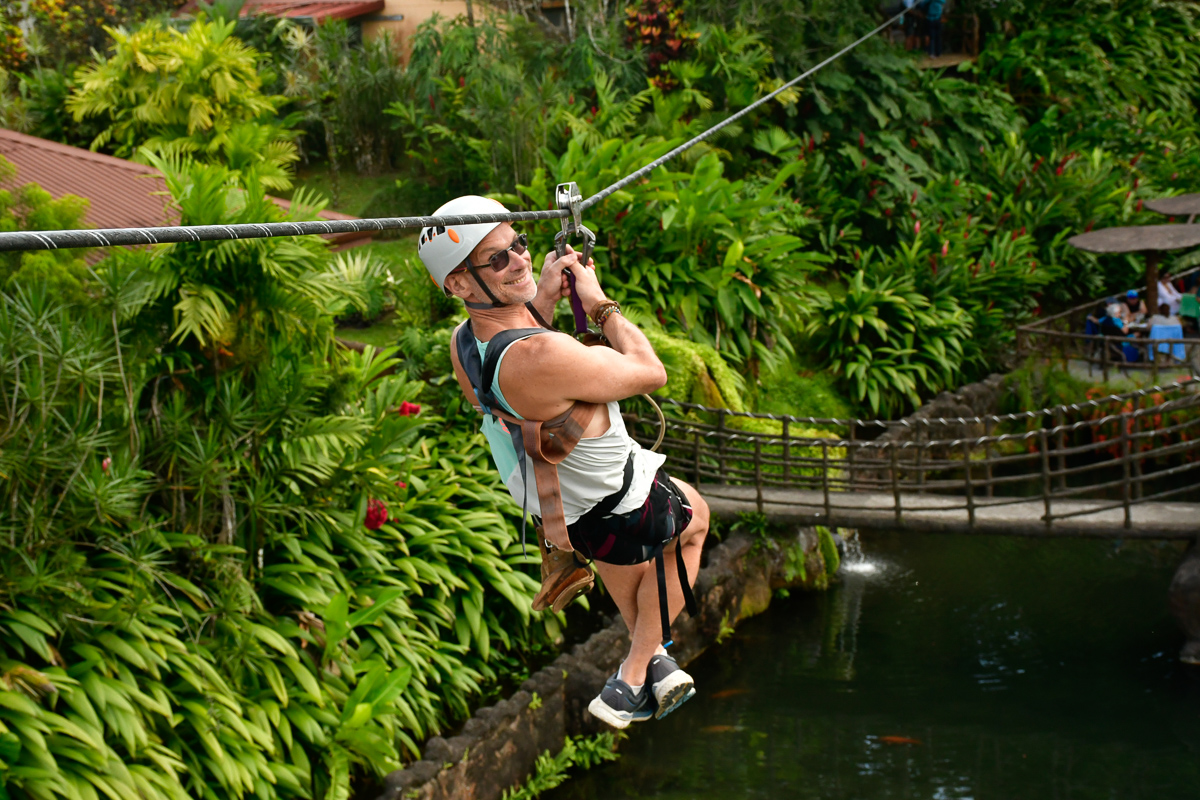
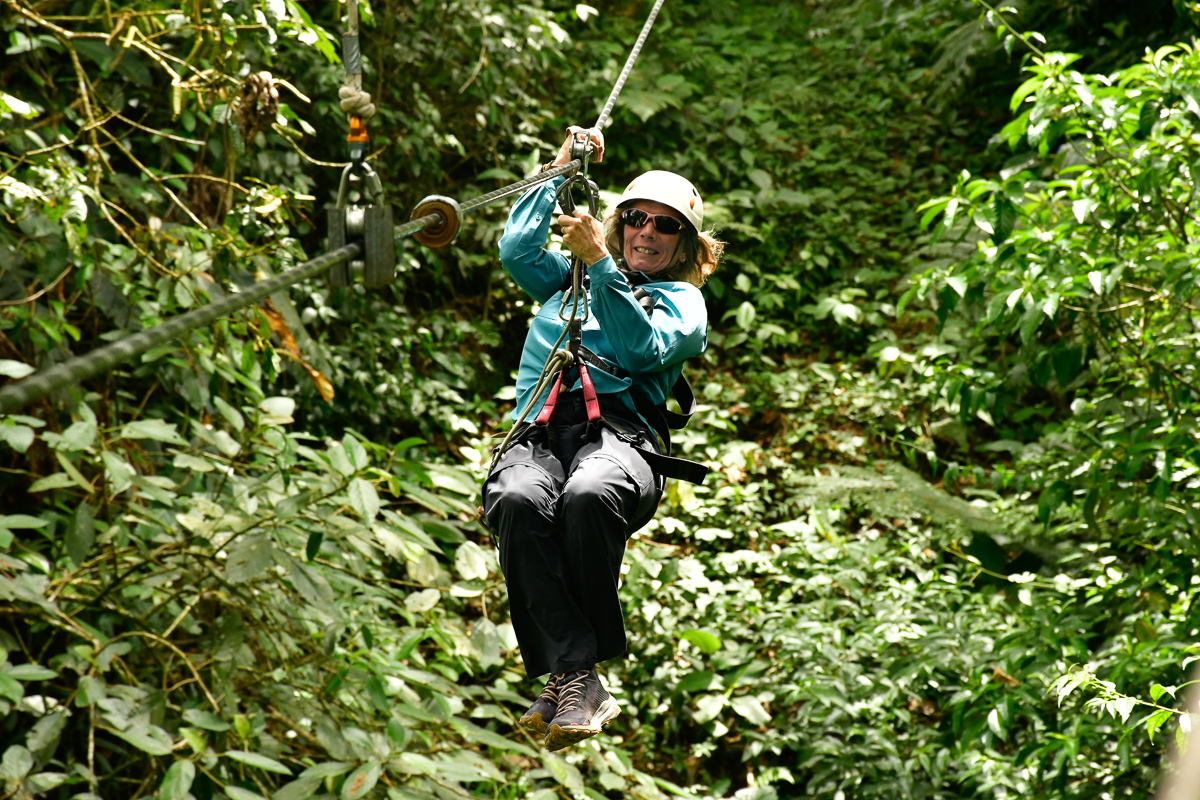
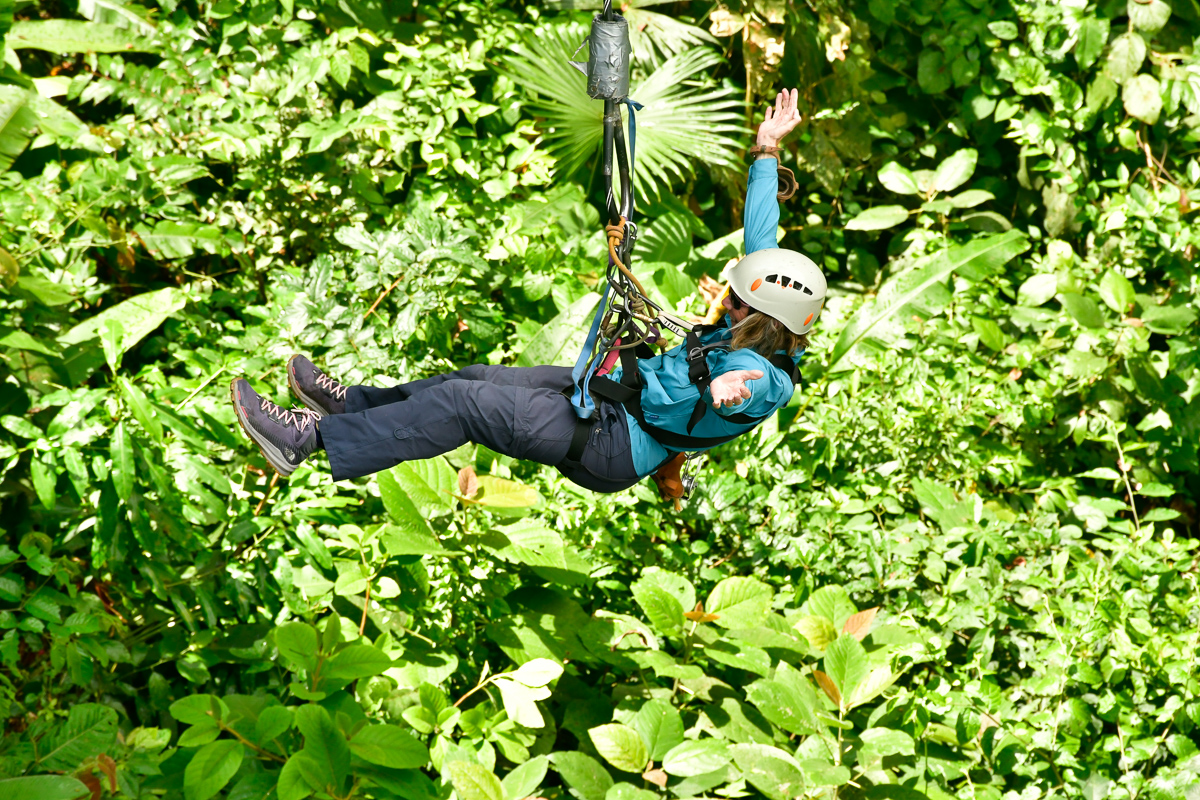
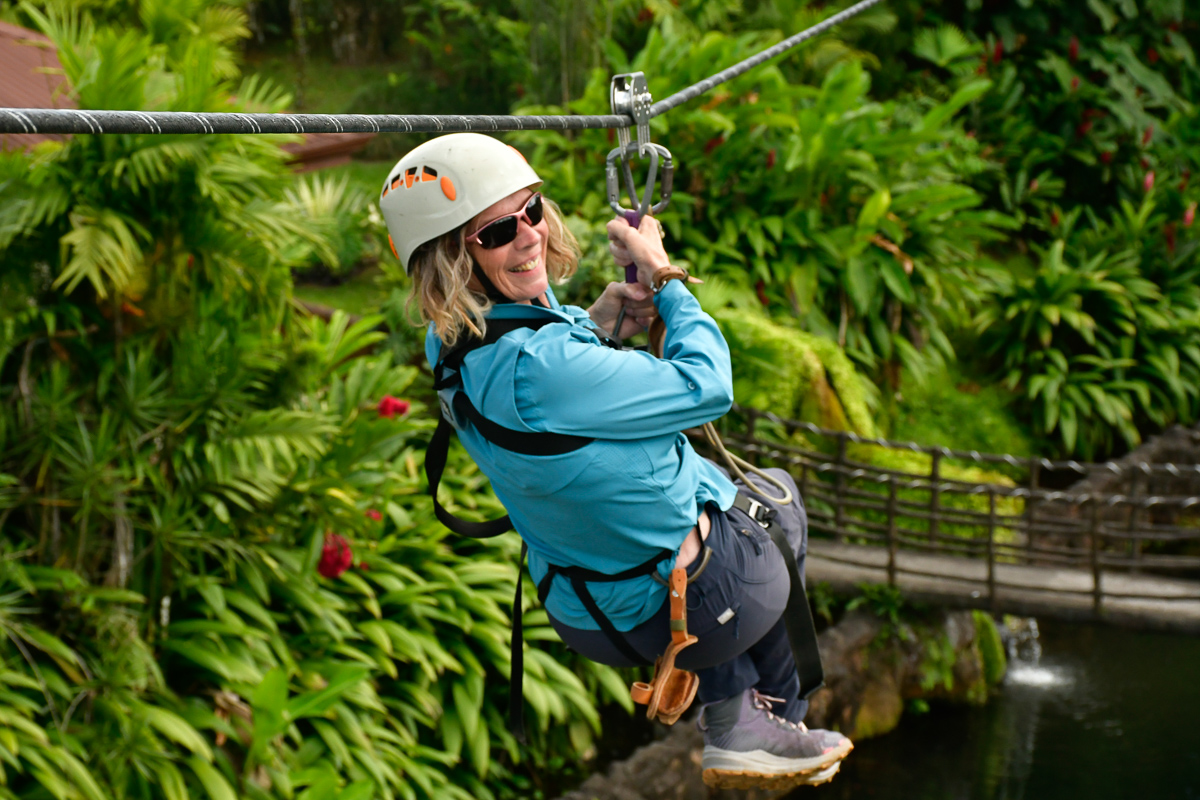
Reaching speeds of 70km per hour is quite exhilarating at first but by La Fortuna’s fifth zipline wire I was a bit ‘Done That’.  Thankfully there was a Tarzan swing line to try out too.  We both enjoyed the ride but wouldn’t seek it out again unlike our fellow zipliner who said she seeks them out and has done many. 
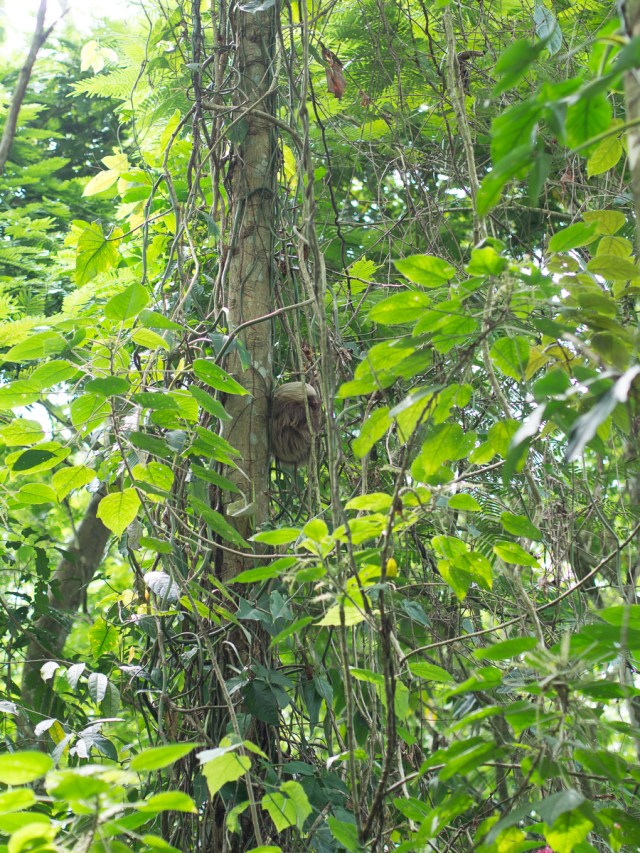
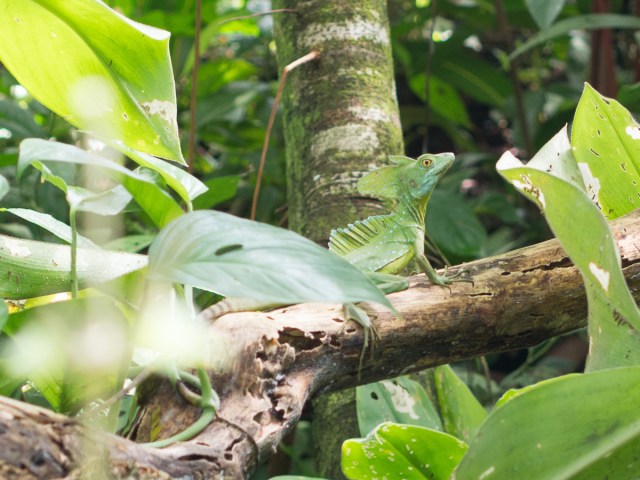
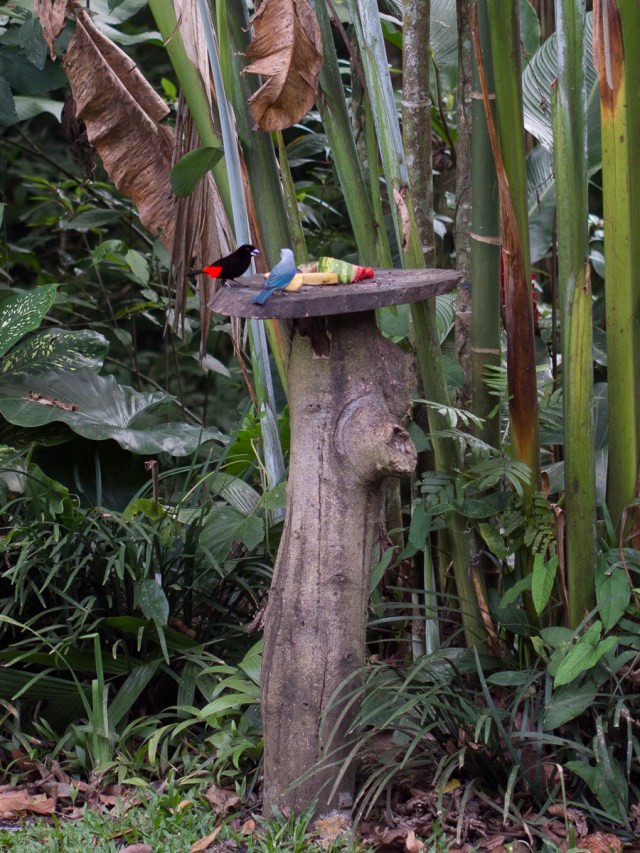
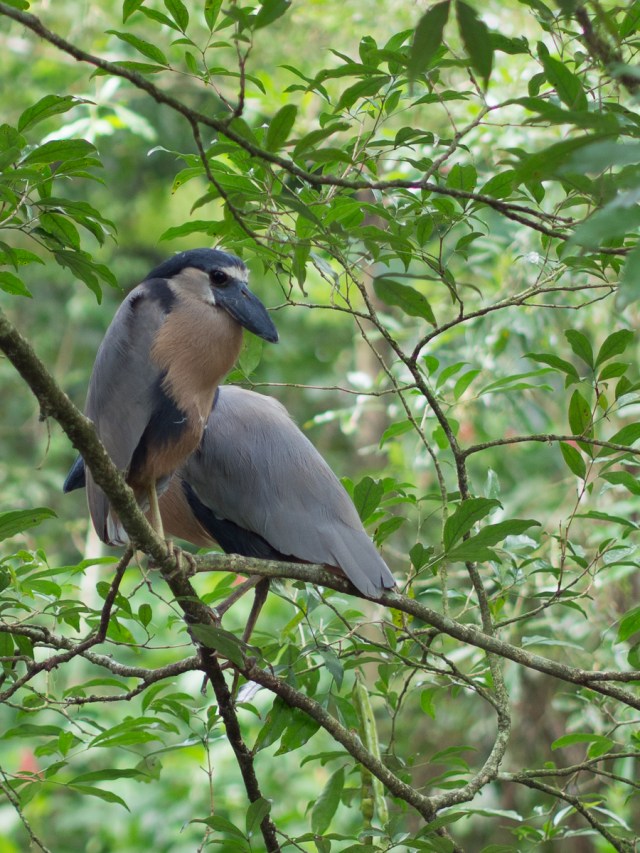
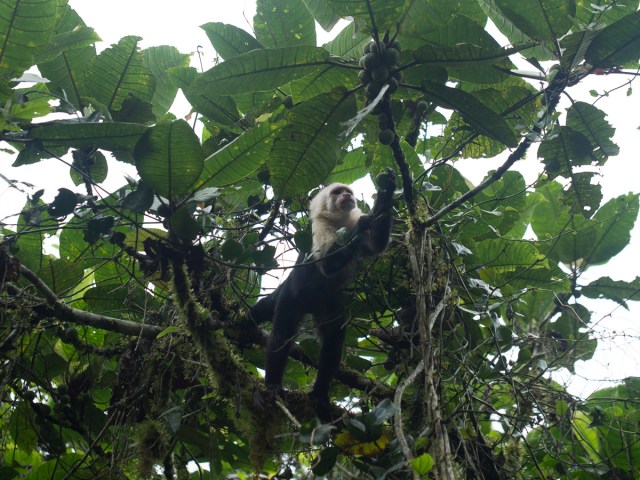
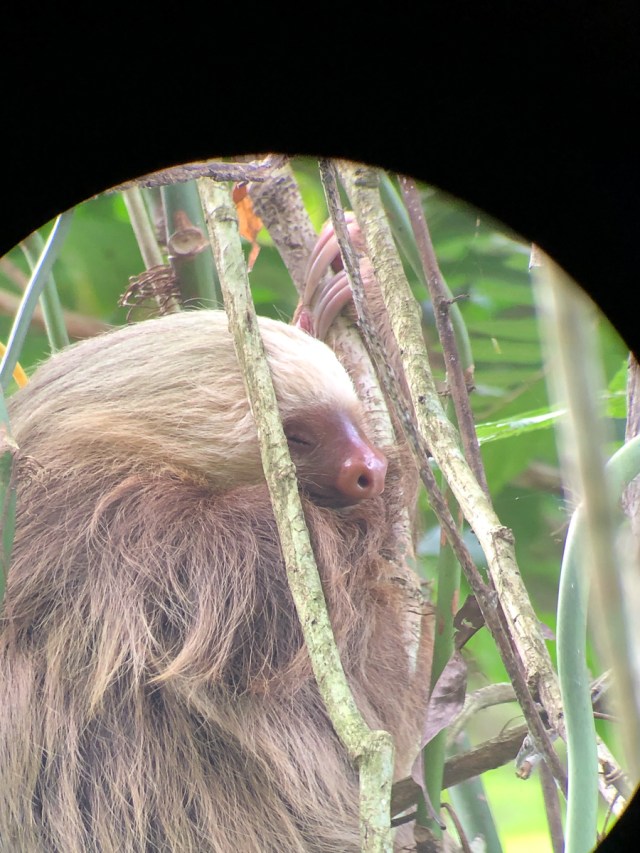
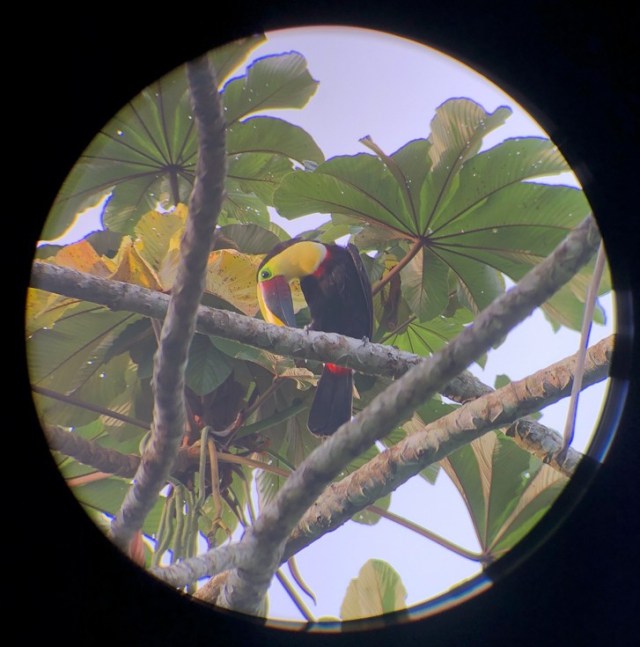
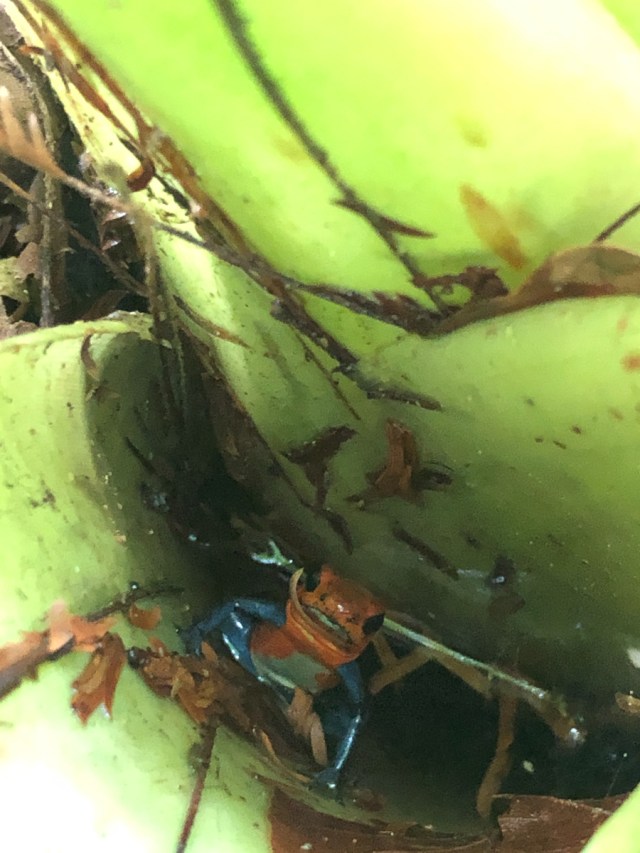
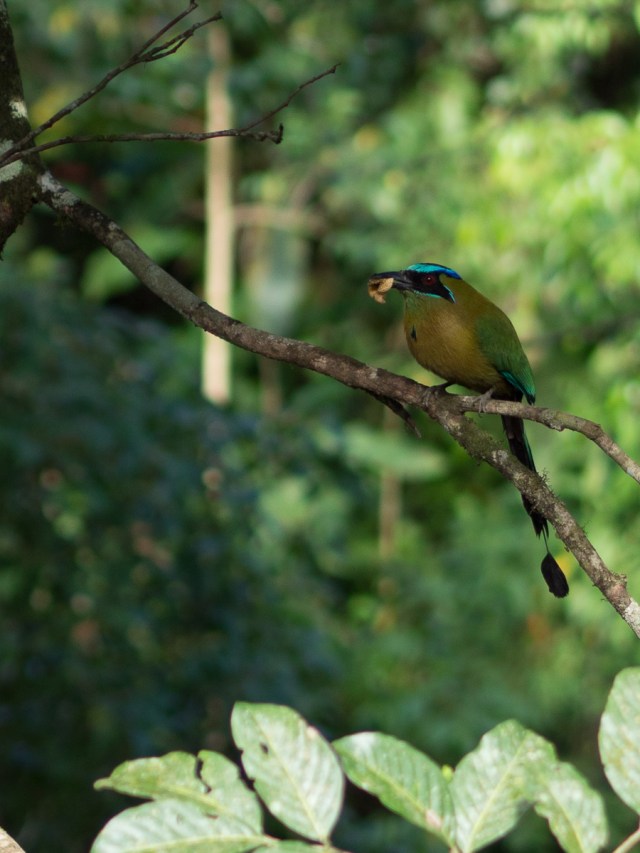
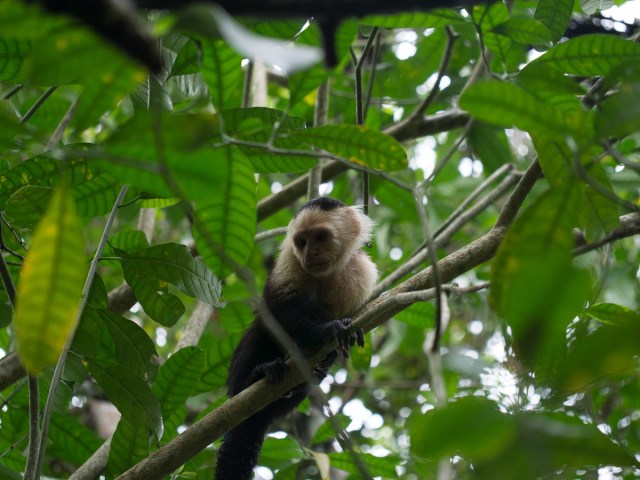
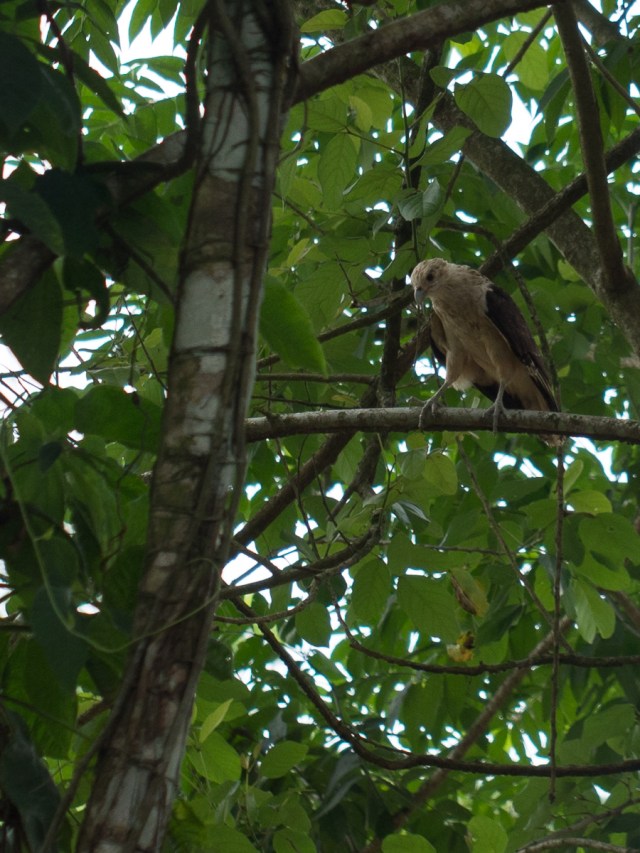
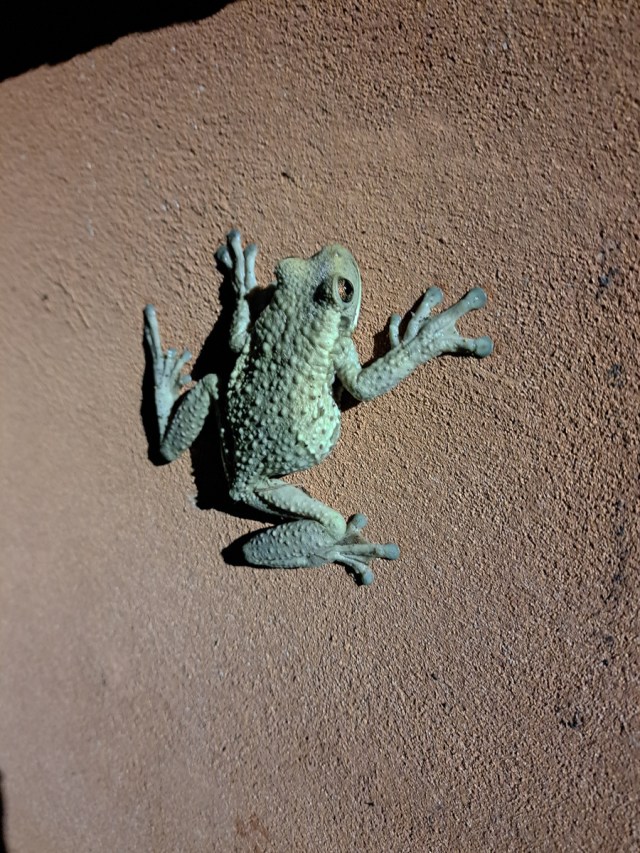
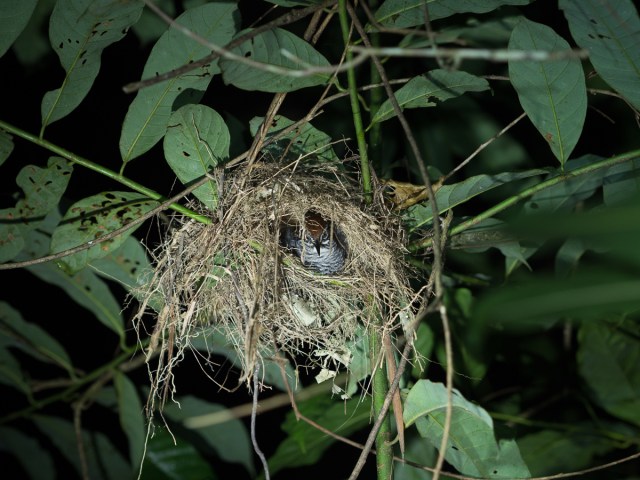
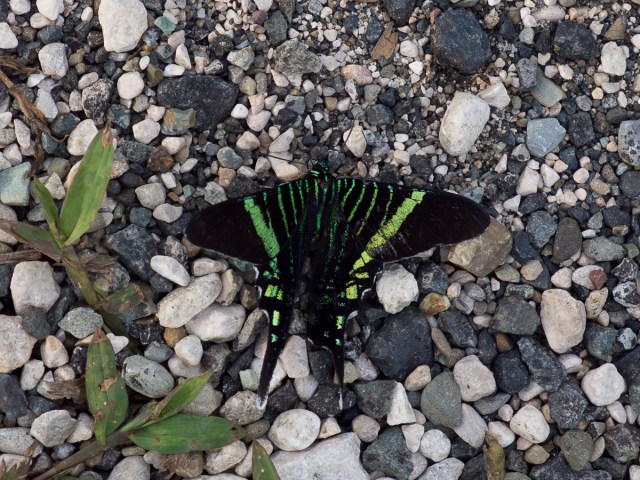
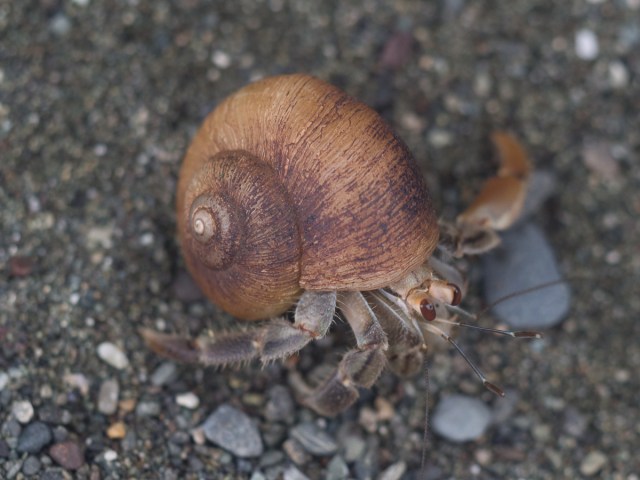
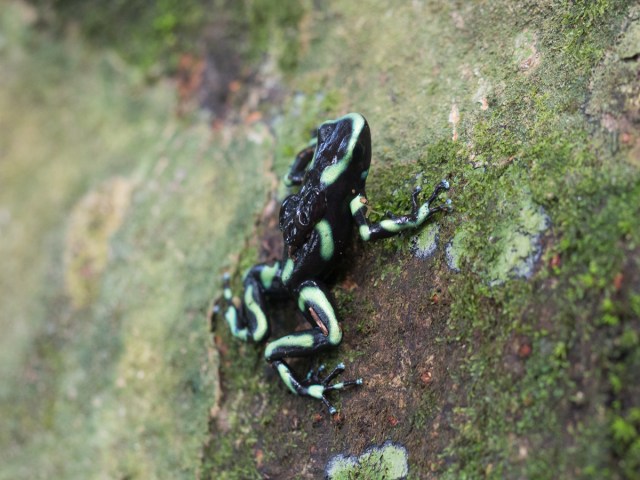
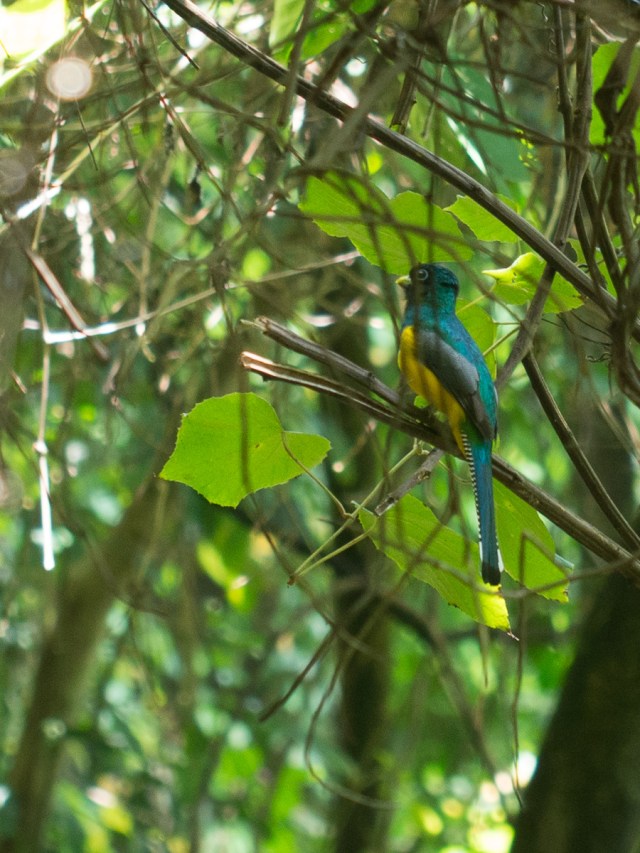
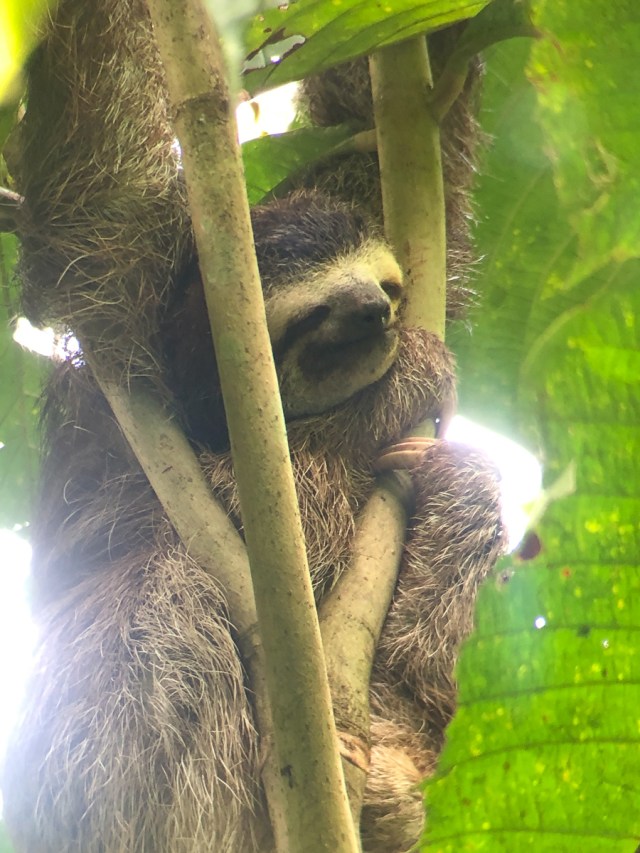
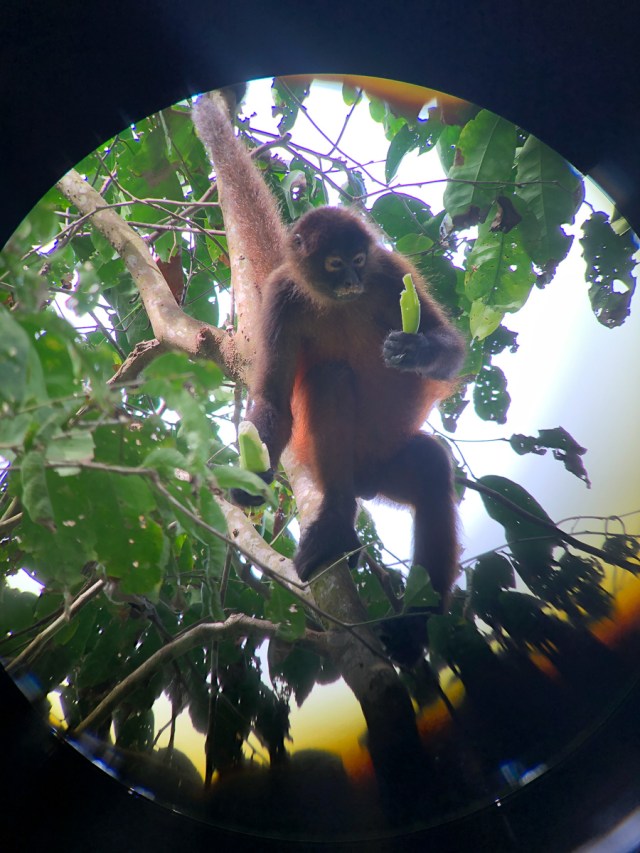
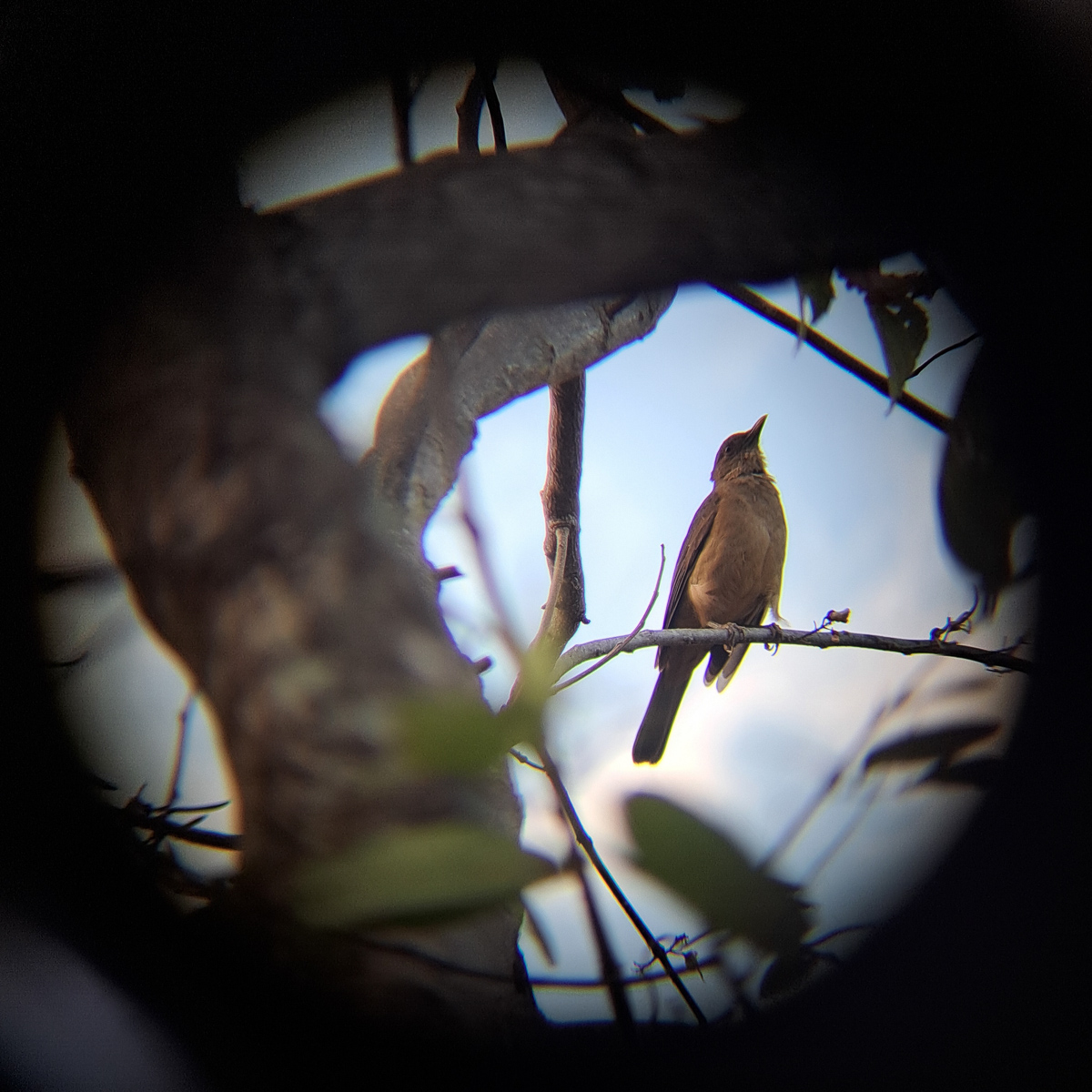
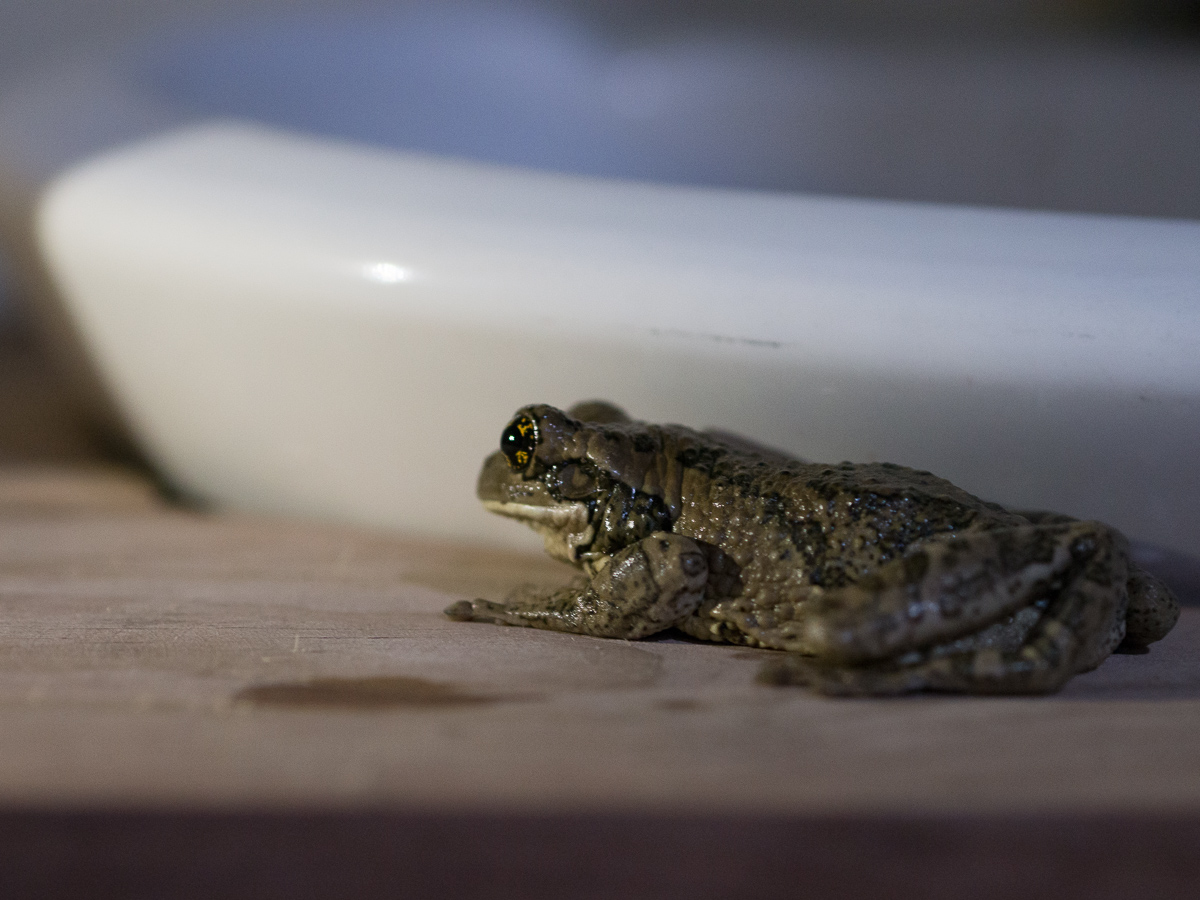
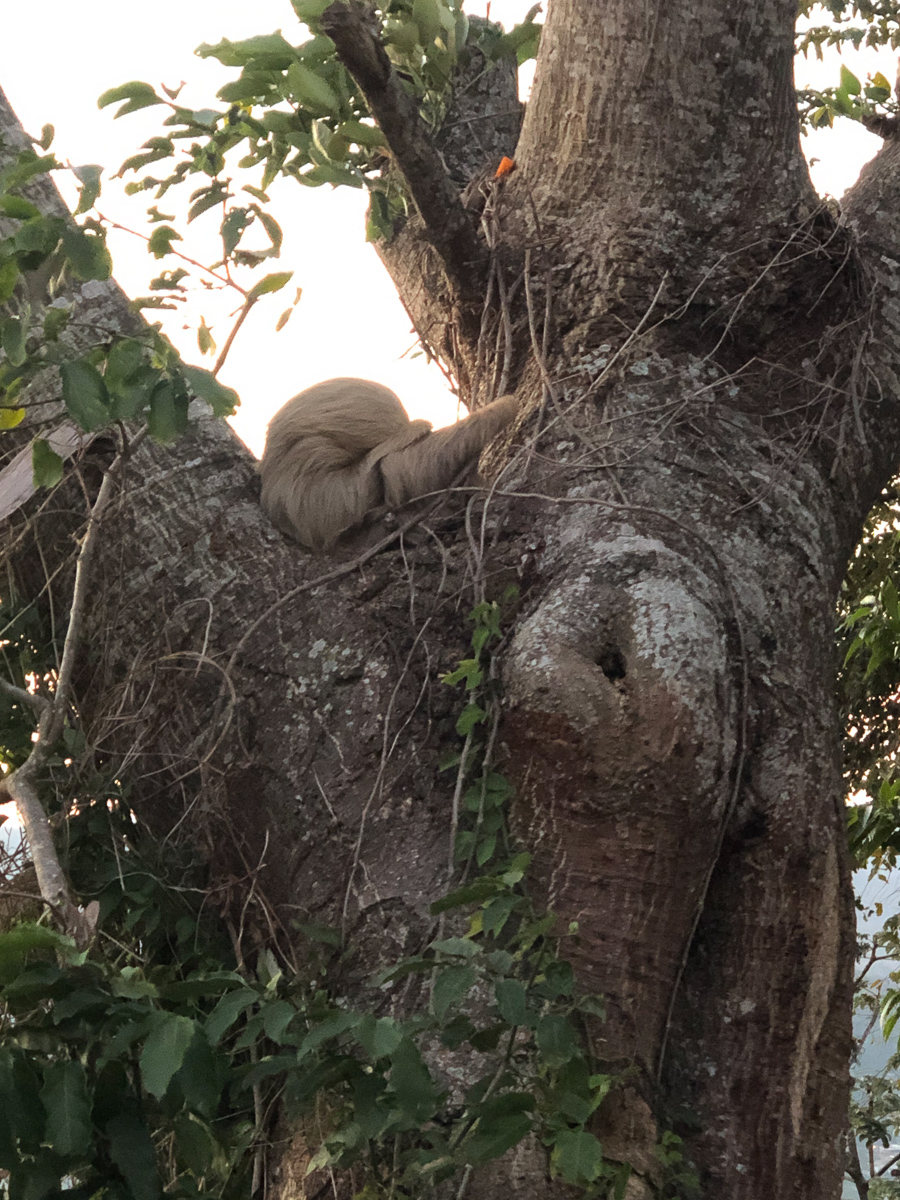
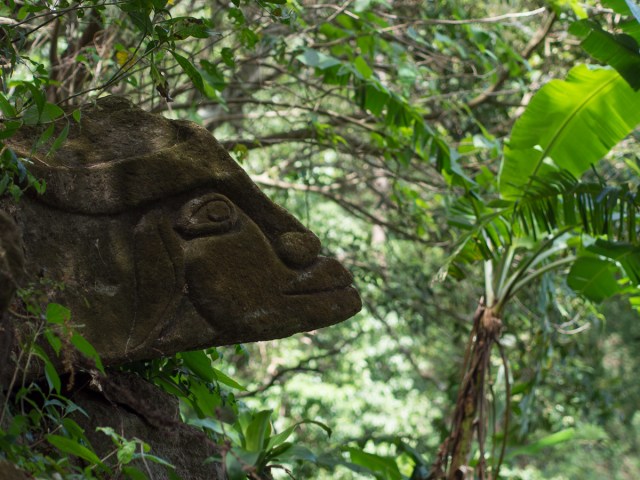
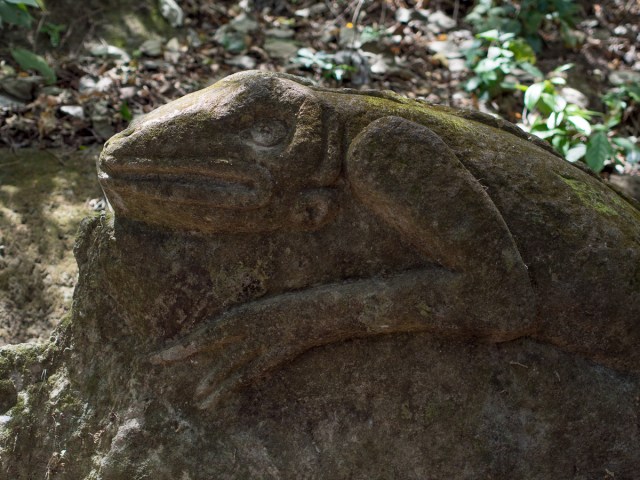
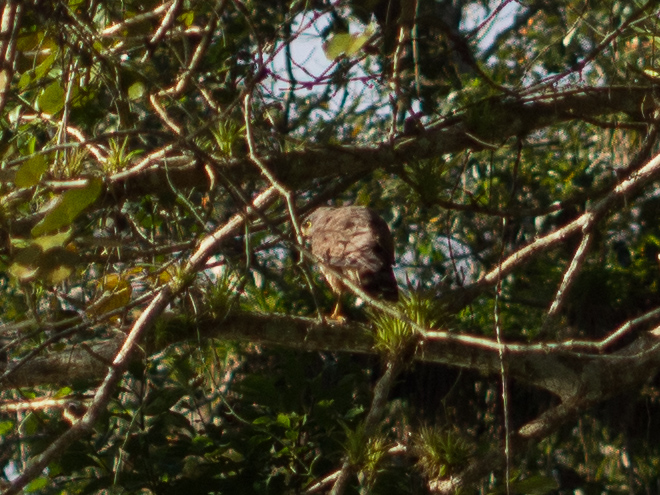
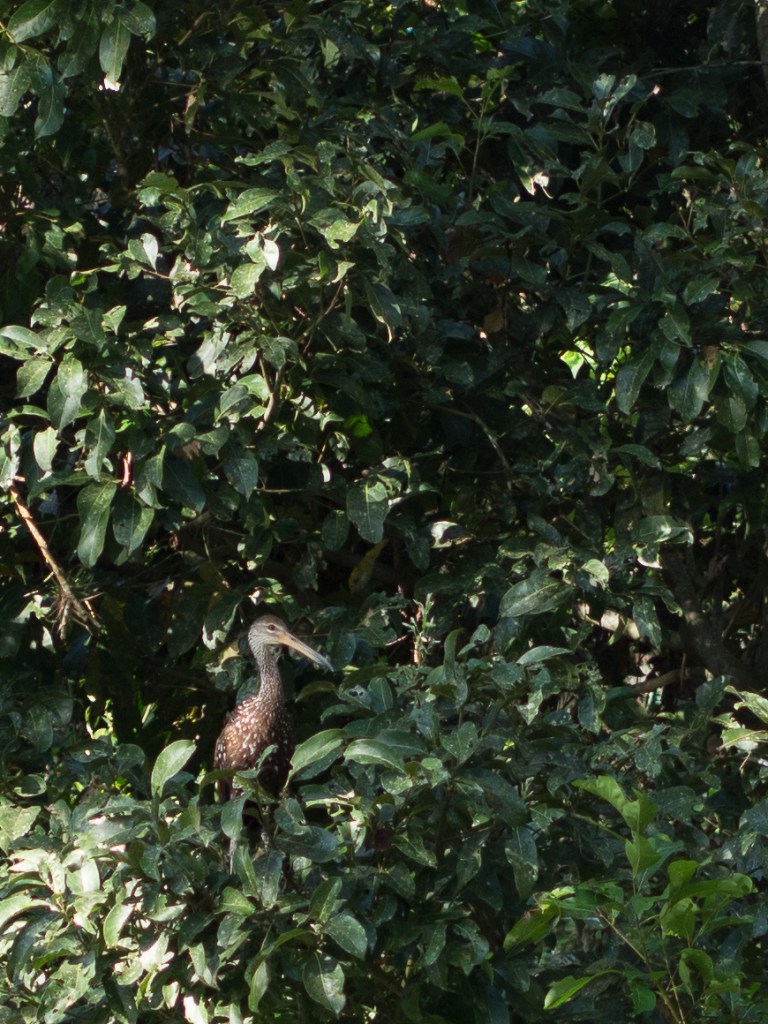
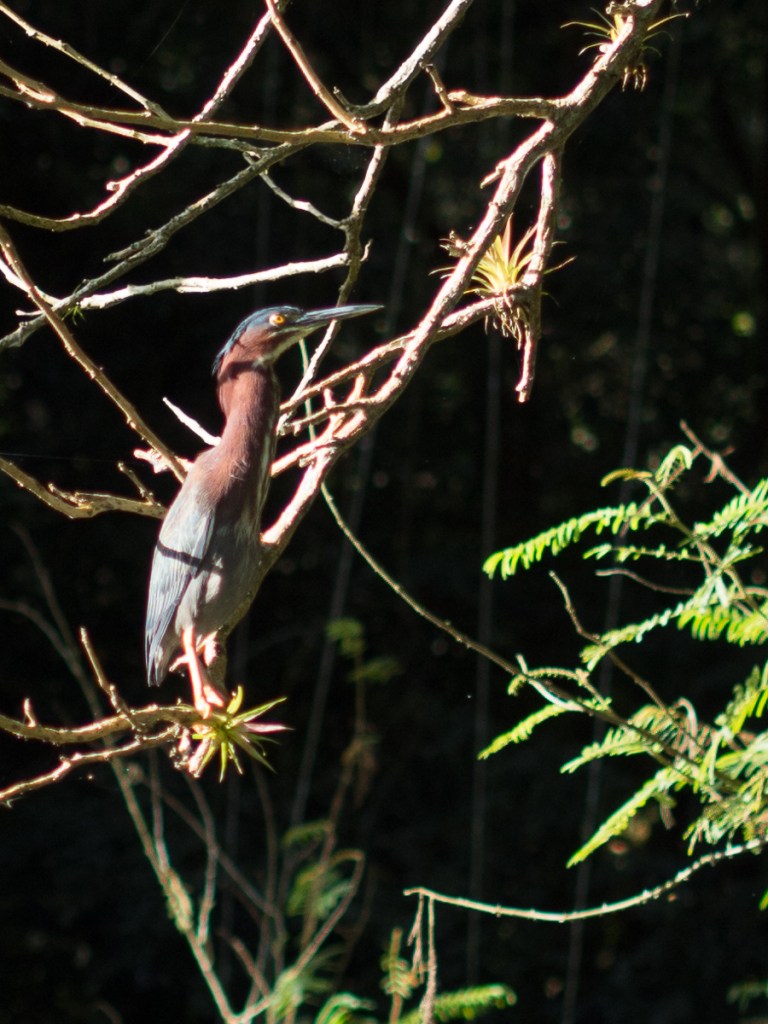
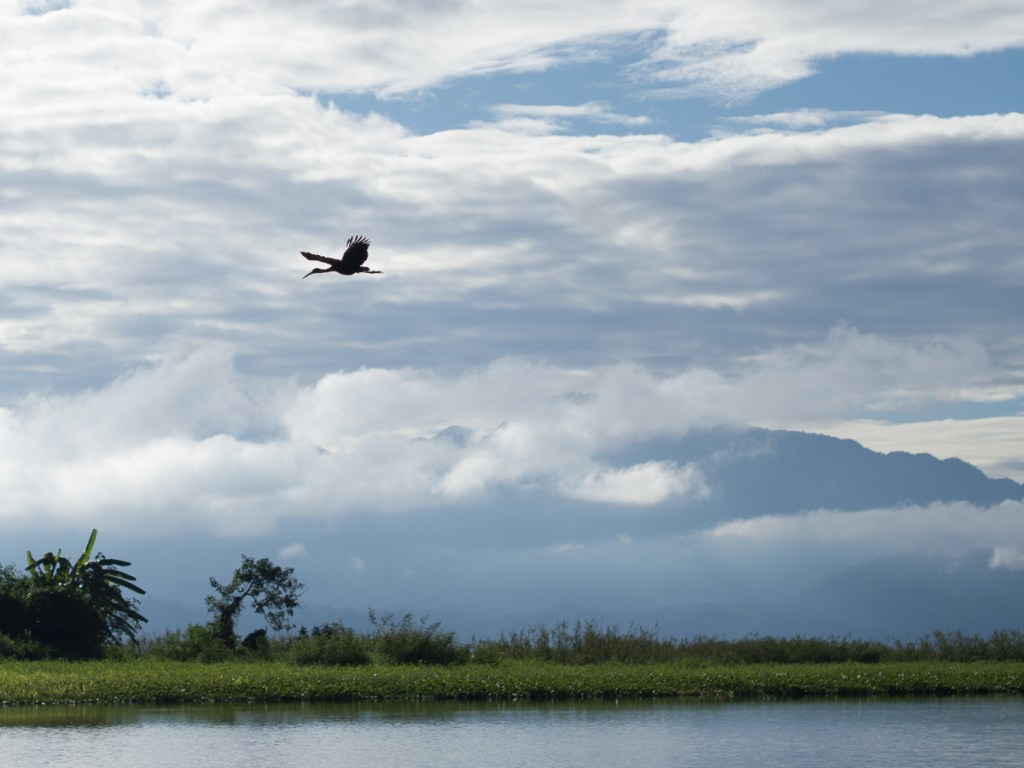
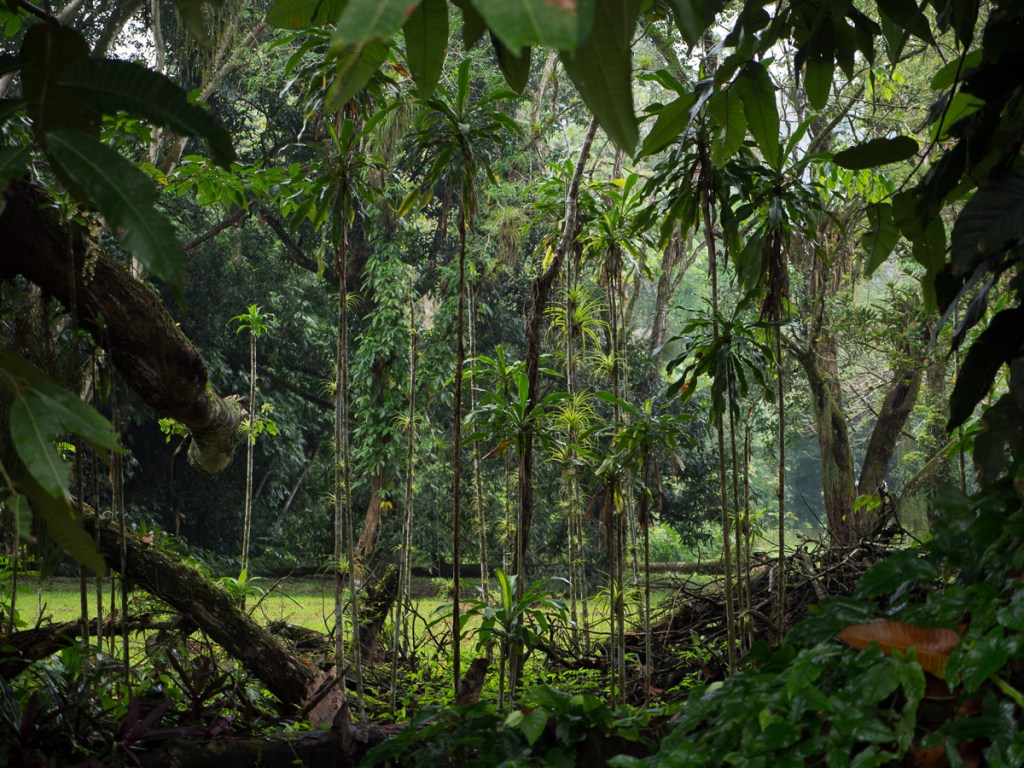
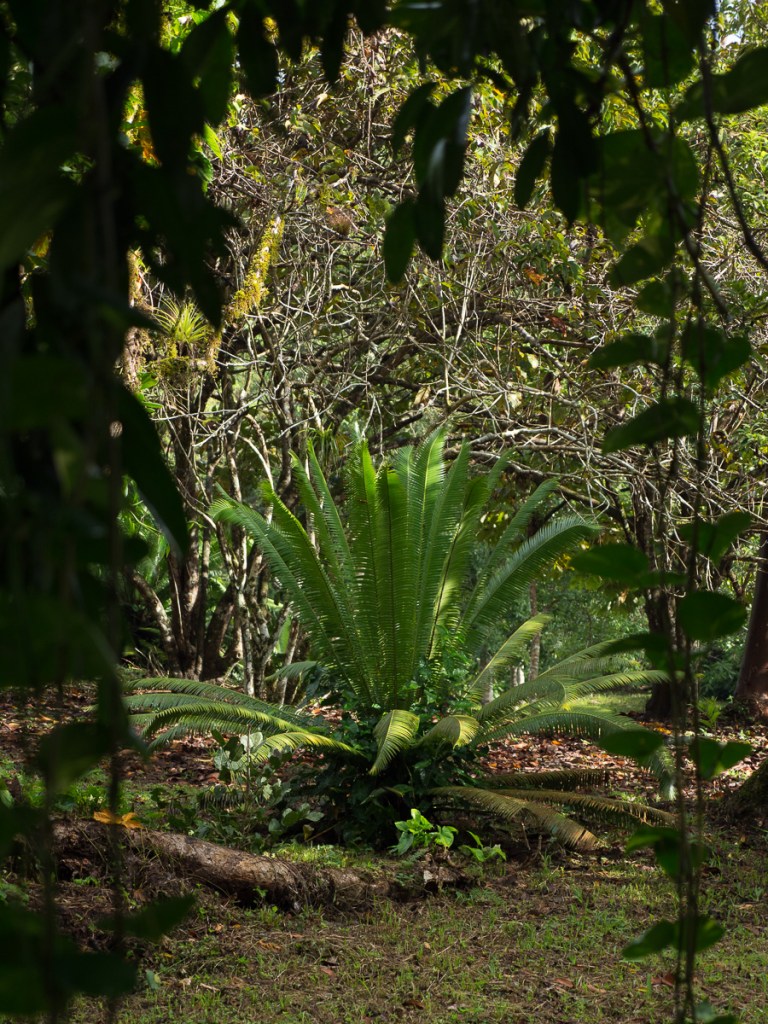
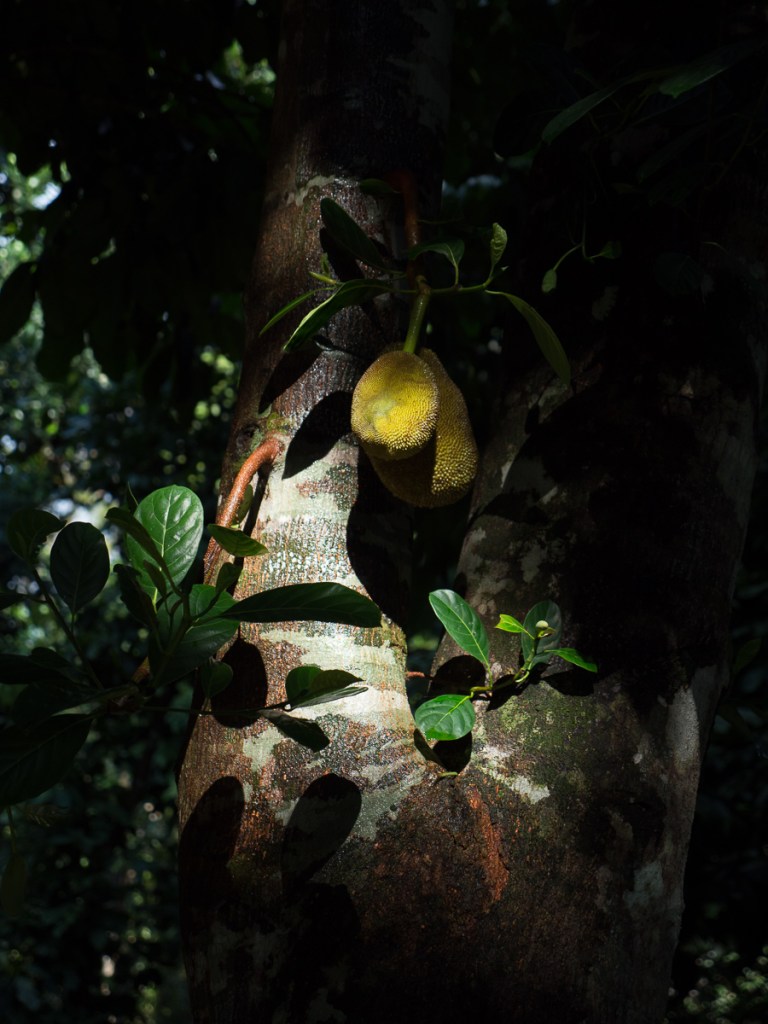
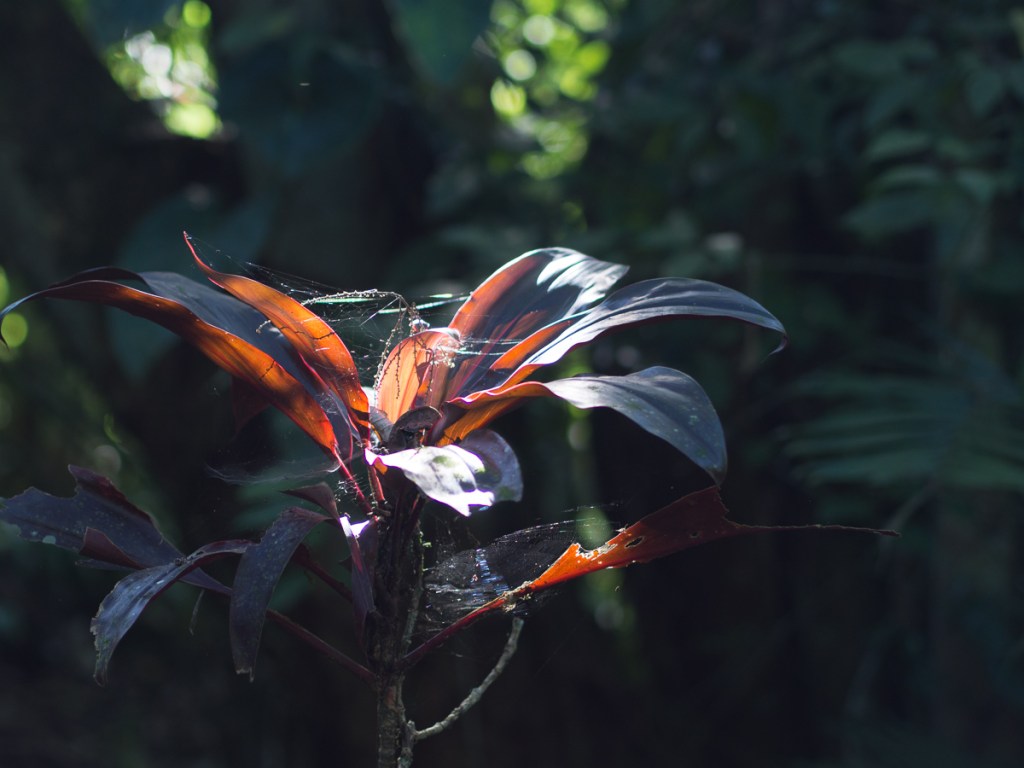
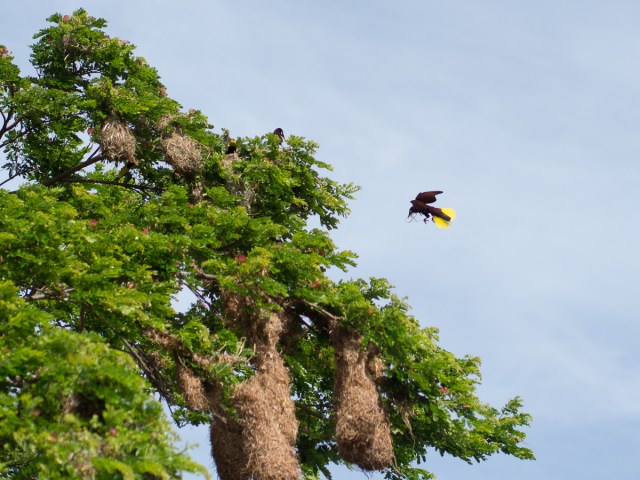
Our sloth tour and bird watching trip, both with guide Jose, had more lasting impact.  Seven sloths with one slightly moving was awesome as were the two different sorts of toucans on our bird watching tour. The local frogs were pretty cool too. Costa Rica is famously good for wildlife spotting, which is much easier with local guides who communally know where the beasties lurk. However, a rather sad observation has been made that the wildlife spotting is easy partly because so much forest has been cleared that the wildlife is now crammed into relatively small areas, separated from each other by grazing and farming clearances. The country clearly manifests a conservation ethic, but like the UK’s, a lot of primary forest is gone. With the realisation of what it’s lost Costa Rica is now trying to regenerate areas of forest.

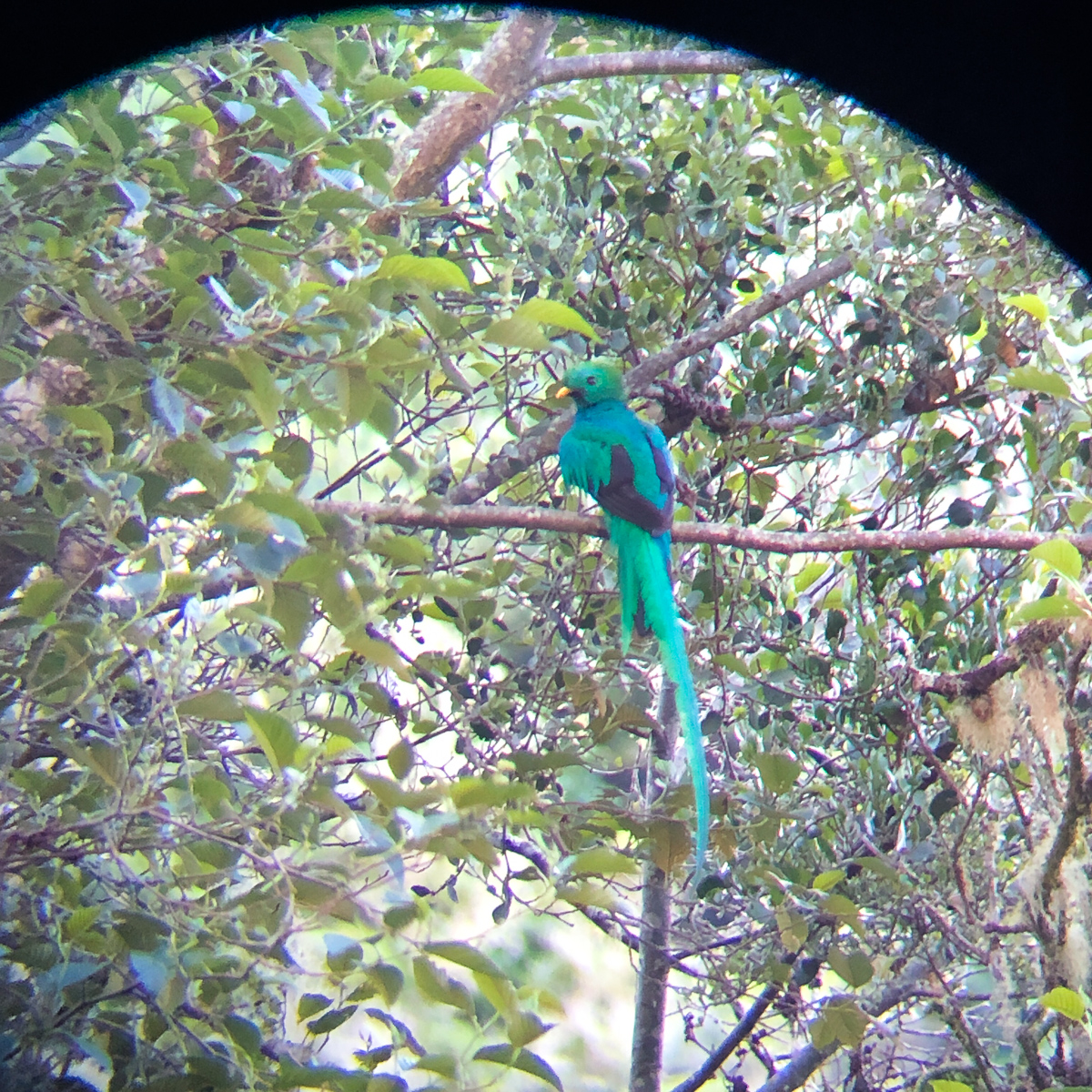
(Photos taken through a spotting scope were taken by the guides, using our phones).
San Jose

Having indulged in total tourism for a couple of days it was back to more serious stuff.  Our bikes were booked in to be serviced at a main dealer in San Jose and we had two parcels to collect.  One was from the UK.  A collection of lost, broken or never realised it would be so useful items collected by Jo, Gid’s sister, and sent to a DHL collection point.   A second parcel collected by Jared, a Bunk-a-Biker host, who had been kind enough to receive several Amazon orders.  Well, one order came twice and the third not at all.  Such was Amazon and the US postal system.  All gratefully received.  Christmas had come!

Gid: Although I had done the last few services, I decided to get the bikes professionally listened to at 24,000 miles, and certainly a quality wheel repair was beyond my abilities. My deteriorating front wheel was more thoroughly repaired than it had been in Mexico – the workshop replaced the steering head bearings too, presumably this was a consequence of the last few weeks wobbly front end.  We got new chains, although the current ones were not yet a problem, they had done 12,000 miles or so. We left the tyres, although they give us a dilemma – there’s plenty of tread left by road standards, but at what point will they become a liability on dirt and mud?

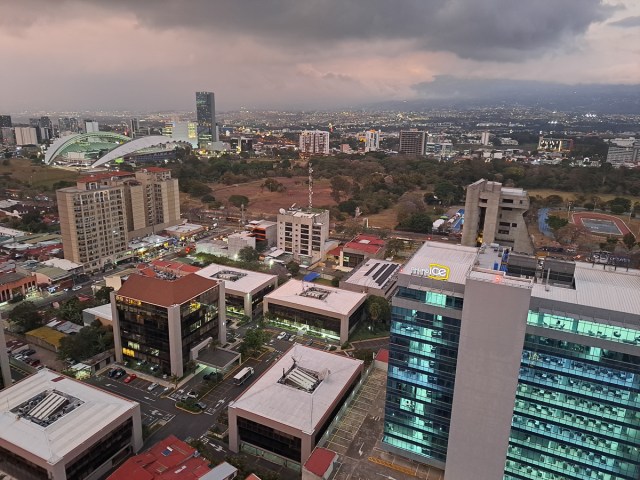
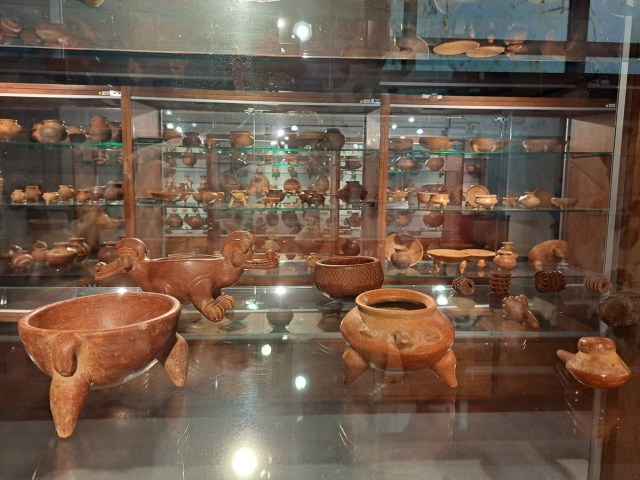
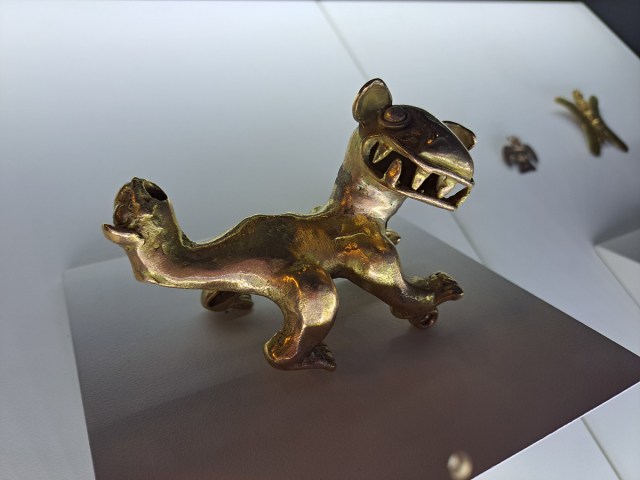
In San Jose, like in Mexico City and Guatemala City, our choice for a place to stay was a yuppie flat complex. This time we were on the 29th floor, in a studio flat, with spectacular views – including views into the next door flats – privacy was a little lacking. The building’s dĂ©cor was a so-Hispanic mix of really fancy, surrealist stuff, and unfinished blank concrete. But, it had good parking, and a really rather good gym. Legs didn’t really need a gym, with 29 flights of stairs available. There were a few interesting places to visit in San Jose, although, definitely, too many pots in the museum.

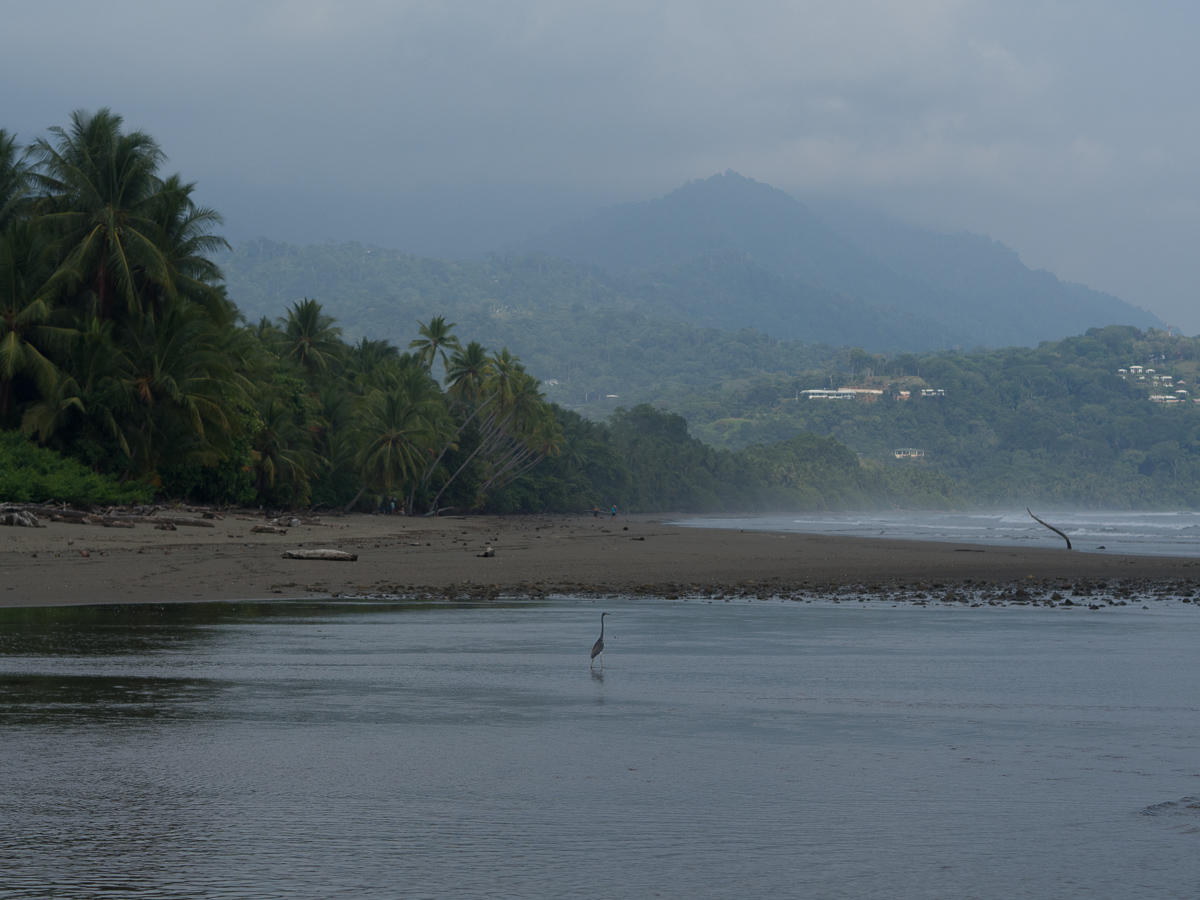
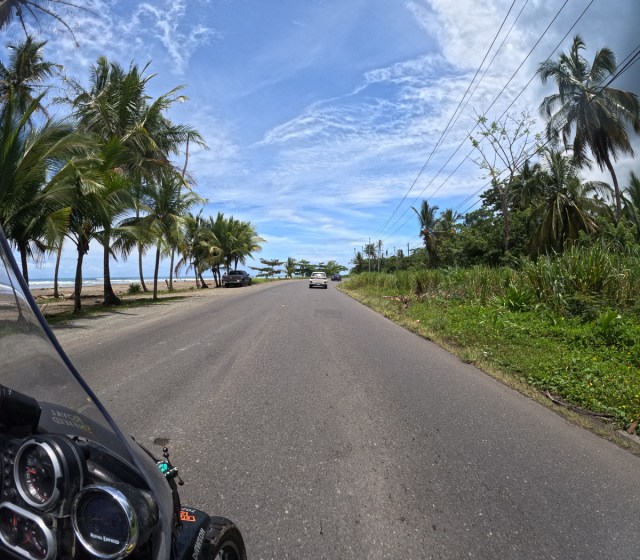
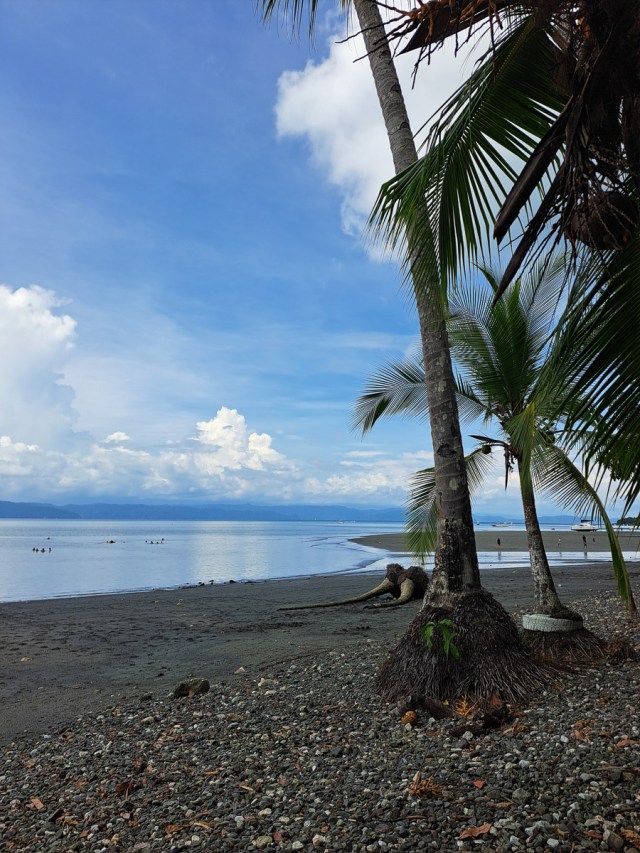
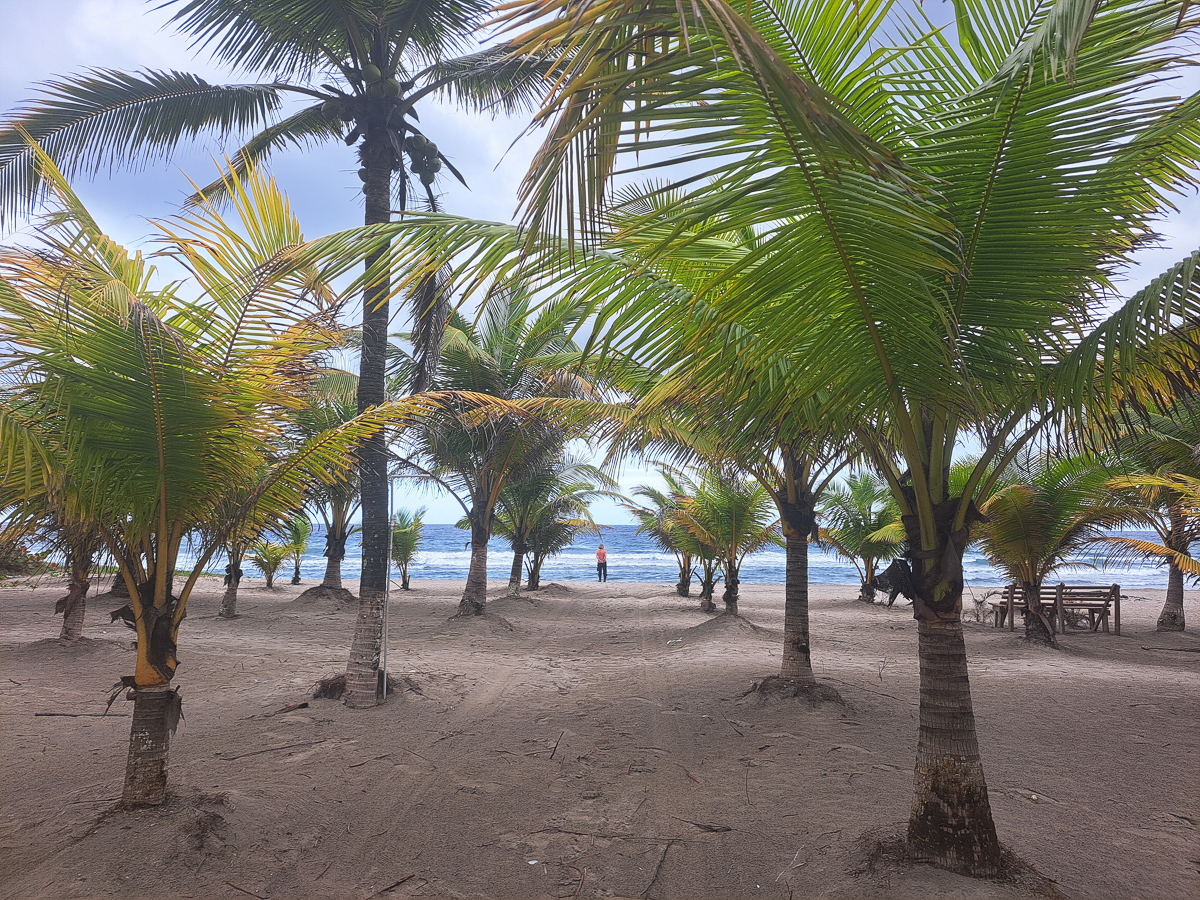
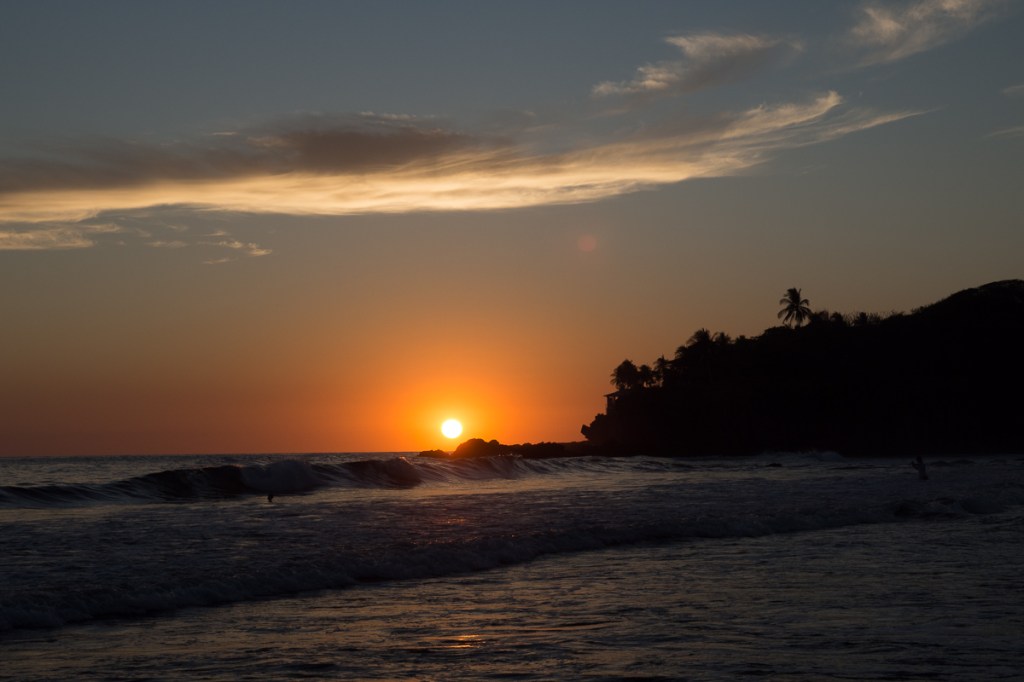
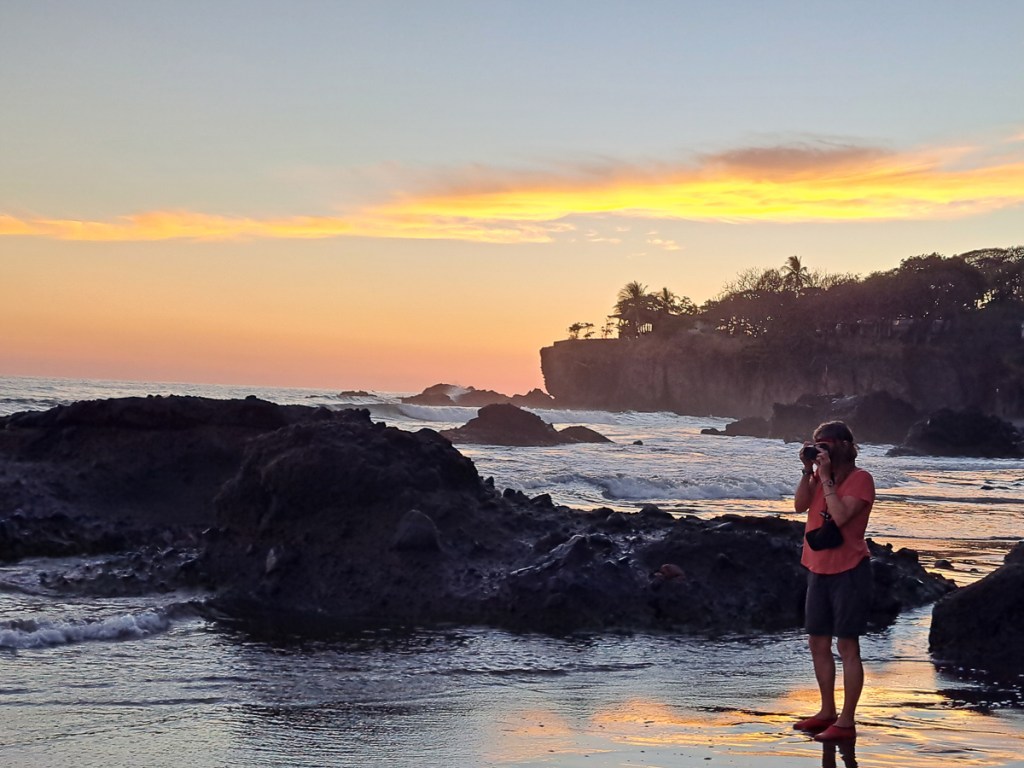
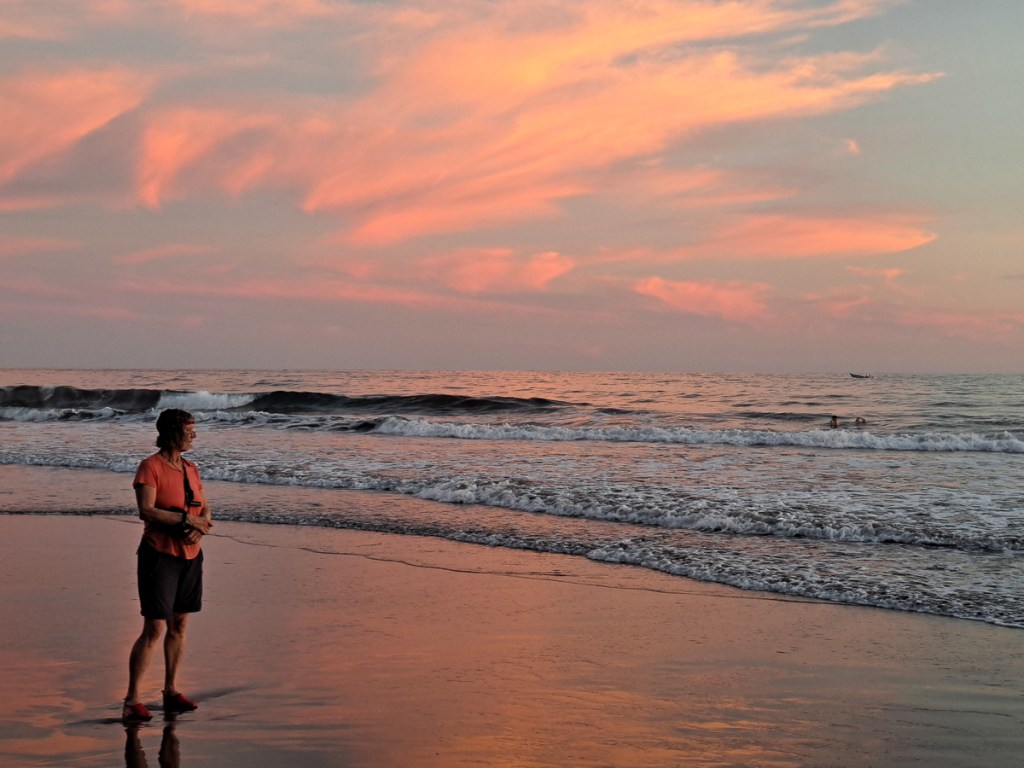
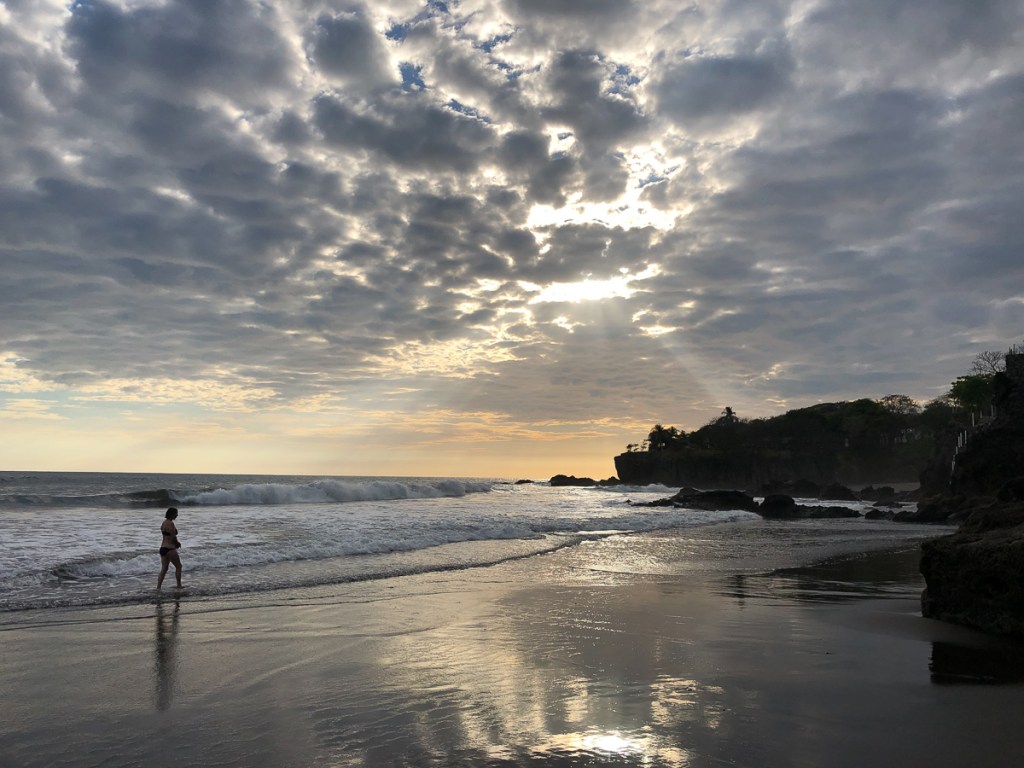
The Pacific beach at Uvita was a spectacular beauty, a cliched arc of pale sand with coconut palms on one side and blue waves on the other – waves and howler monkeys competing.  The serious boardies stay a little to the north, where Dominical has expert grade waves. Uvita has gentler stuff and was sparsely dotted with beachgoers and a few boardies at the small breaks. The sea water was cool bath temperature, barely cooling at all.  Although it was overcast, I was dripping sweat after 1 and a half laps of the beach, while Clare collected sand dollars and admired the agile crabs running over her foot.
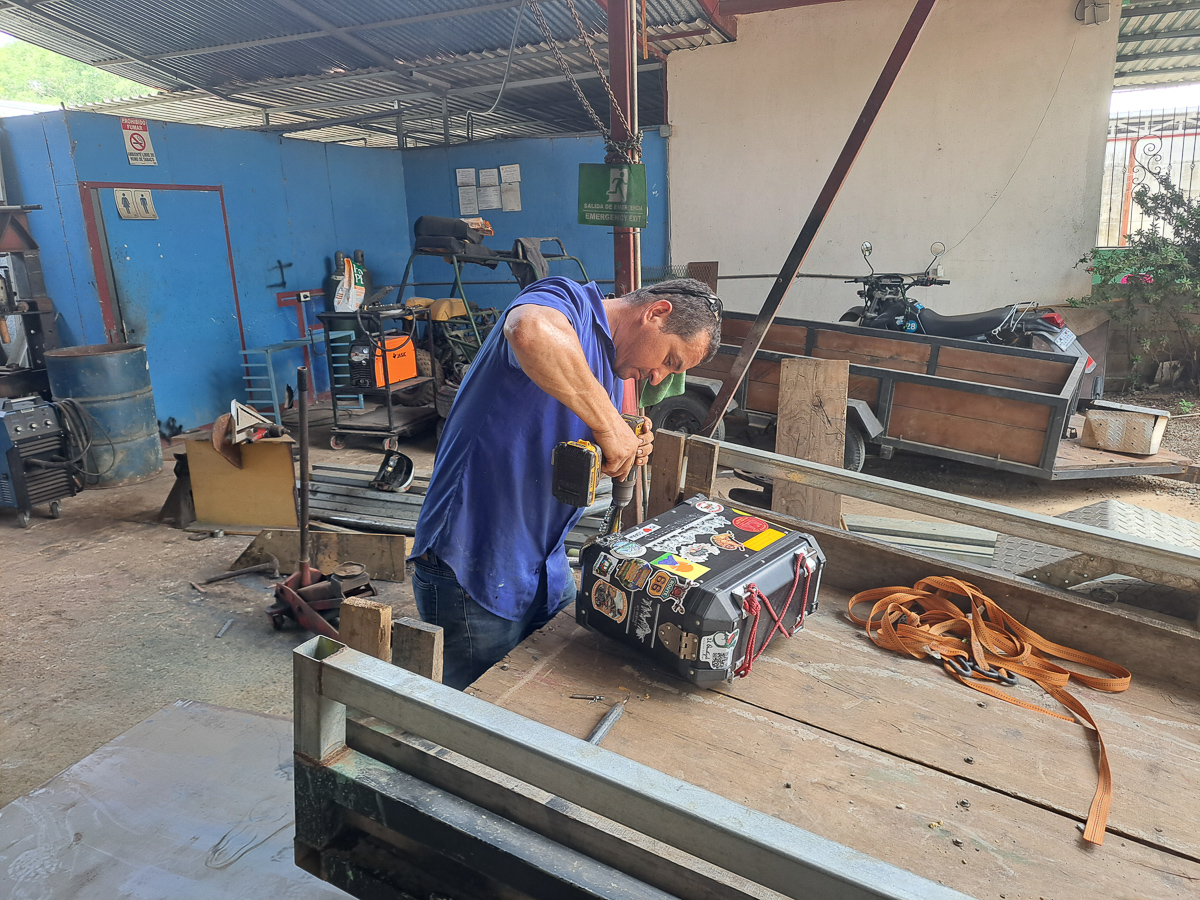
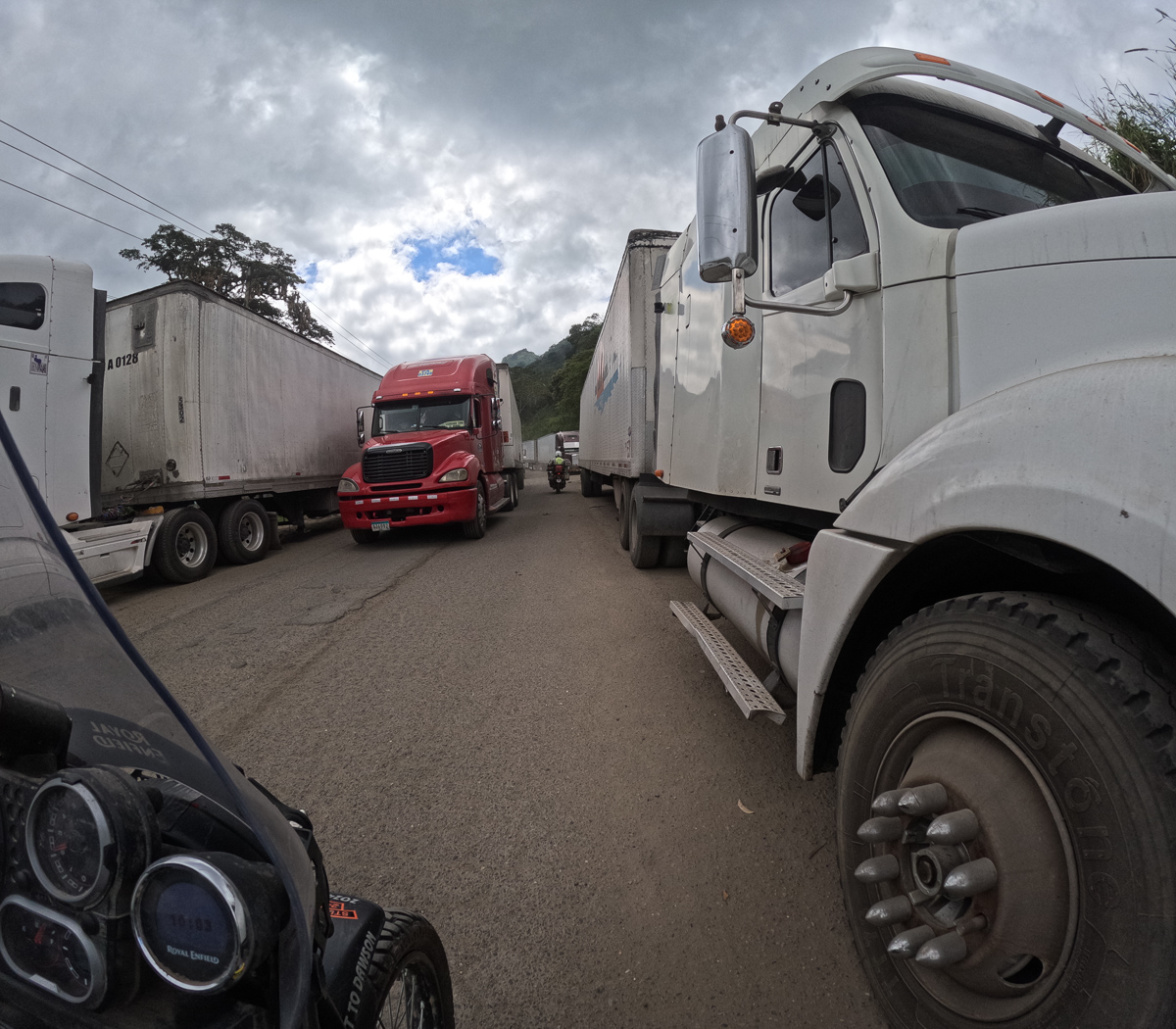
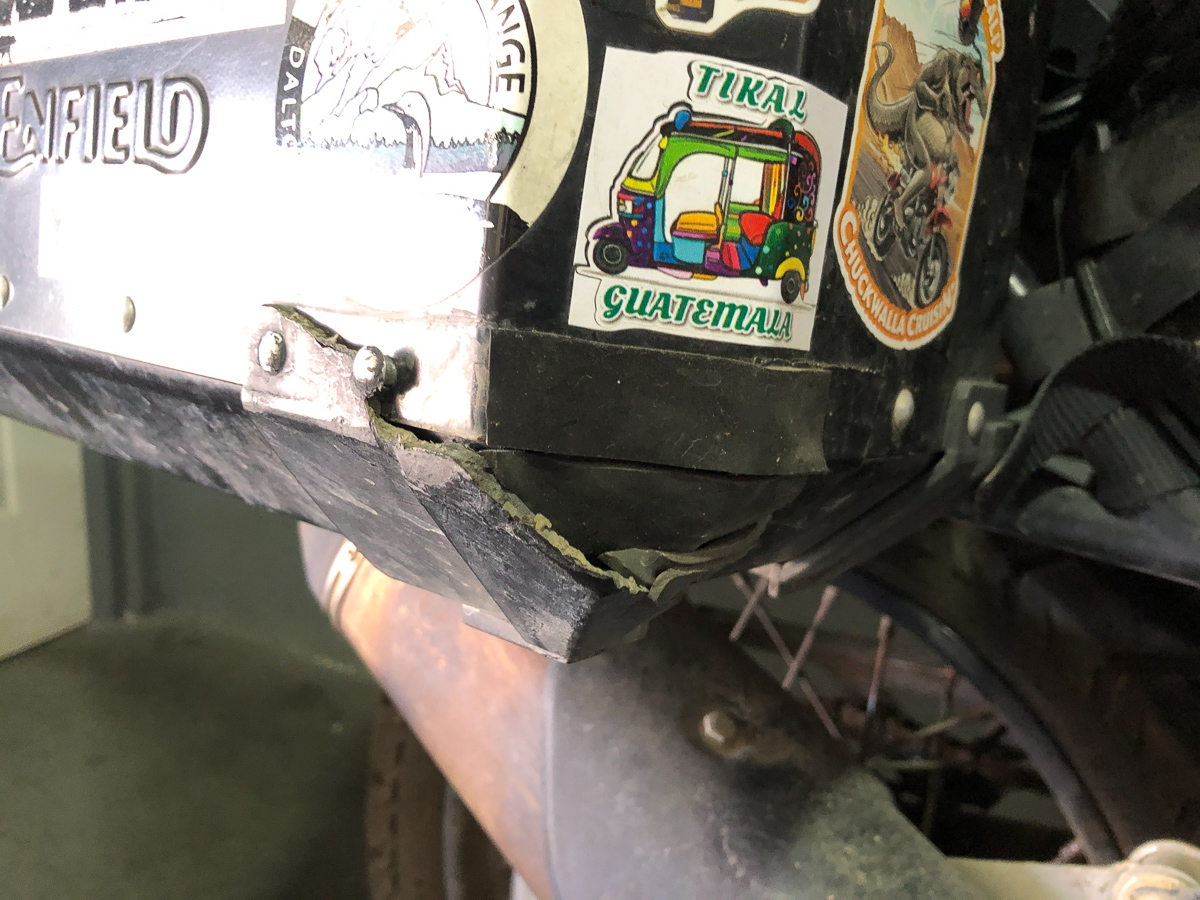
The only outstanding bike job was to fix my rear pannier.  I’d got too close to a truck when lane splitting in Guatemala City, and the truck’s extended wheel nuts took off my rear pannier corner protection.  A lucky escape!  I should never have been that close.  I could have gone flying.  There’s no spare part, so it has to be bodged:  At the coast a local surf board shaper had no interest in slapping some glass fibre on the corner but the metal worker down the road was happy to cannibalise the pannier’s rear inner corner protection to move it the the front outside corner where the pannier is far more likely to need protection even without me trying to vie for space with a trucker.
At this point, riding in drizzle and mist, we realised that our rear lights basically didn’t work, nor did our brake lights. I had fitted “upgrade” LED bulbs from the UK, in Mexico City (USA bikes are sold with ordinary bulb lamps, unlike everywhere else in the world who get LEDs from the get go. I think it’s called a “non-tariff barrier”). Anyway, obviously crap LEDs, as they’d deteriorated to near invisibility in 6,000 miles. Hazards on then, team! Fortunately the replacement spares (also LEDs) that I’d bought in Mexico City, proved nice and bright.

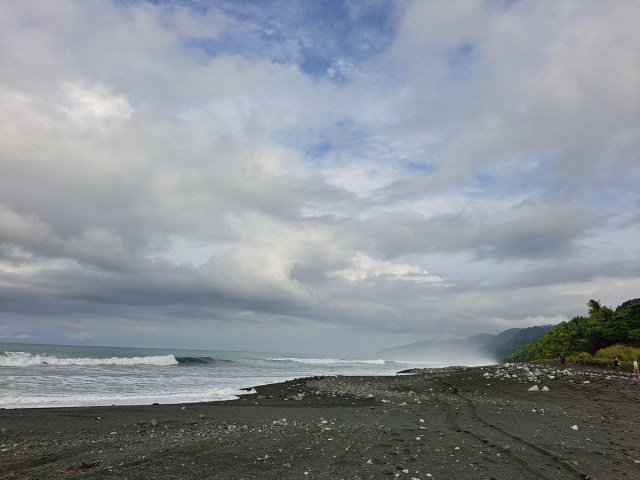
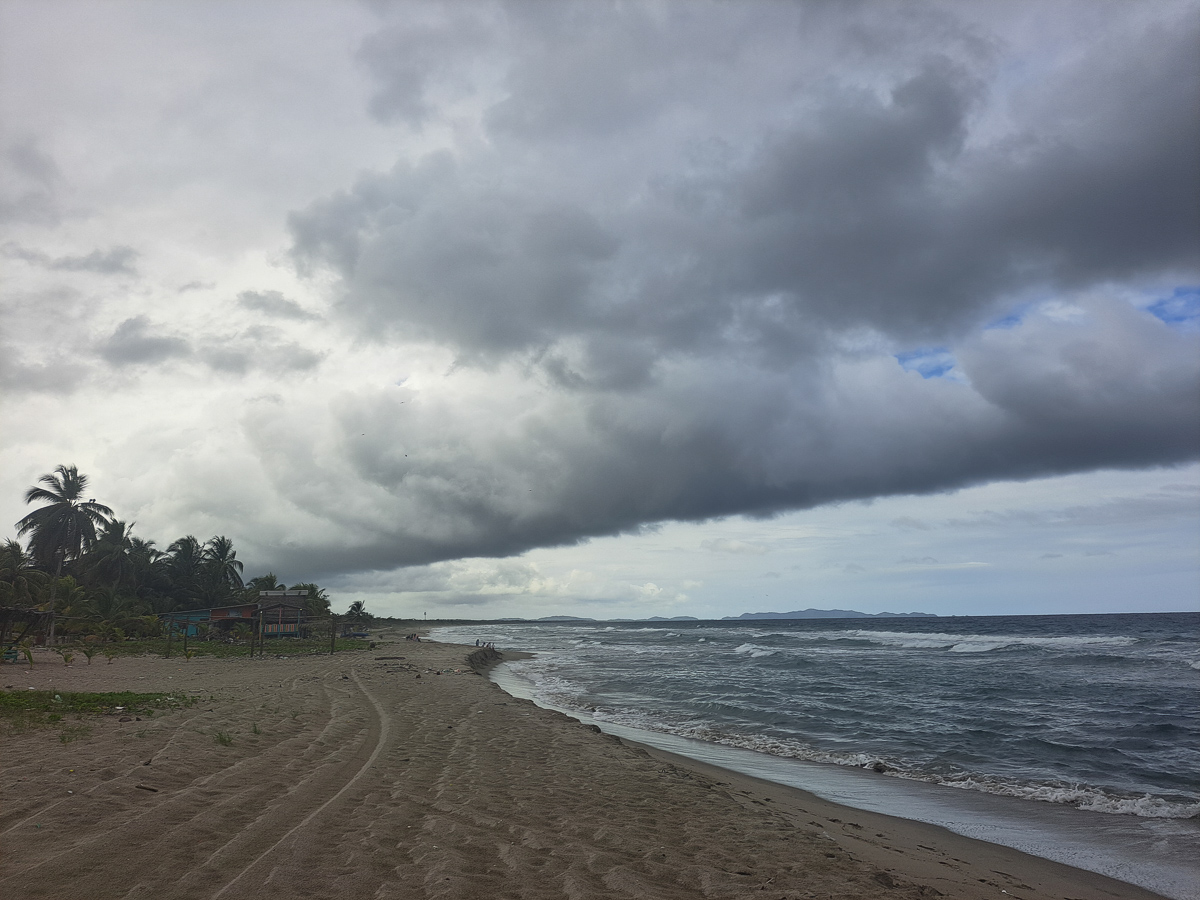
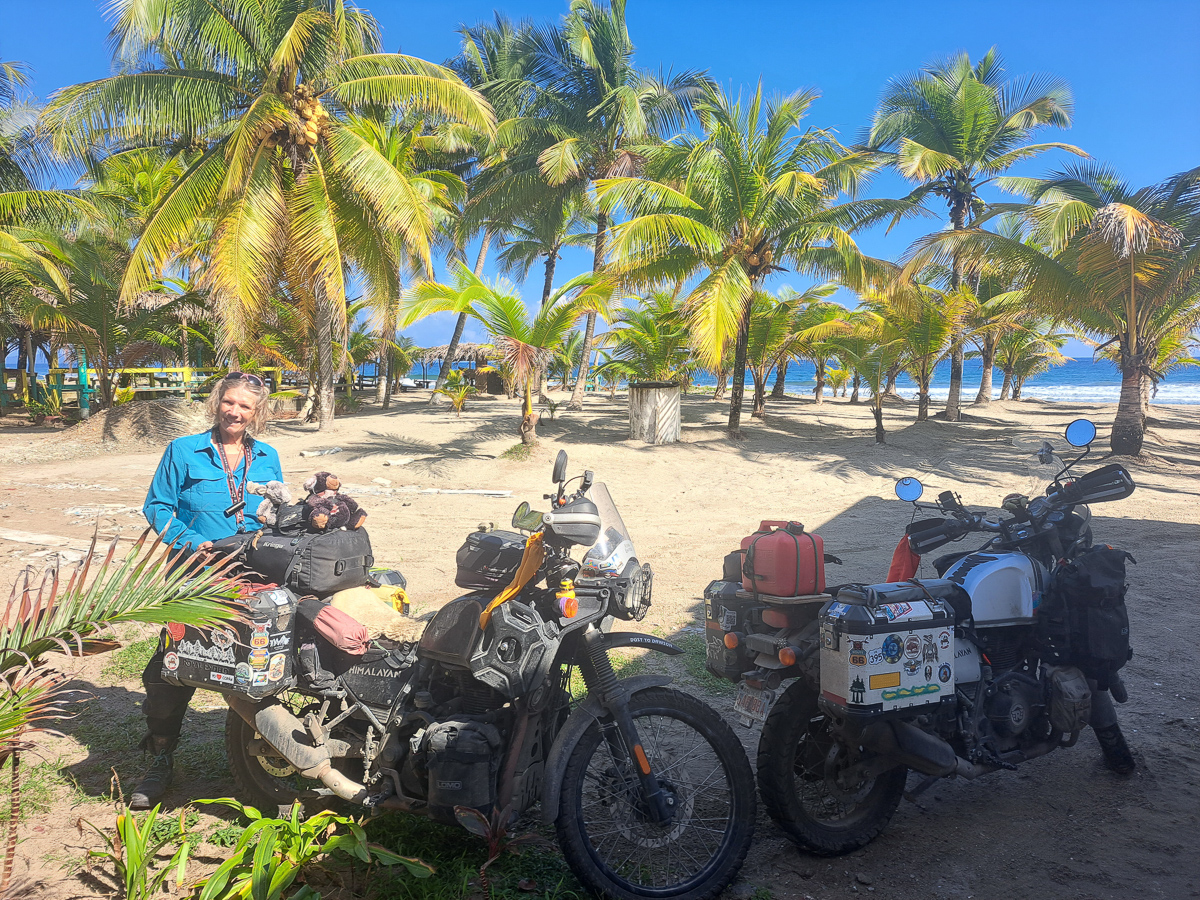
The Caribbean beach at Cahuita isn’t a patch on the Pacific beaches, but that wasn’t why we’d come. Lonely Planet states that despite some development in recent years it has kept its Caribbean vibe.  True enough, Bob Marley’s One Love amongst many other hits were blasting out of several brightly painted eateries along the coastal road.  Alas, whatever we planned here has to factor in the unseasonal cloud and rain that’s visiting us now.  Locals are appalled – it doesn’t do this. ‘Rain at this time of year will ruin the fruit crop.  The fruits will swell and burst!’  But yes, it’s overcast with some torrential showers. It’s one month short of the rainy season so whether we like it or not we need to get our act together to deal with this wet both on and off the bikes.  Two out of three of our recent dawn choruses had been thunder, the third howler monkeys.

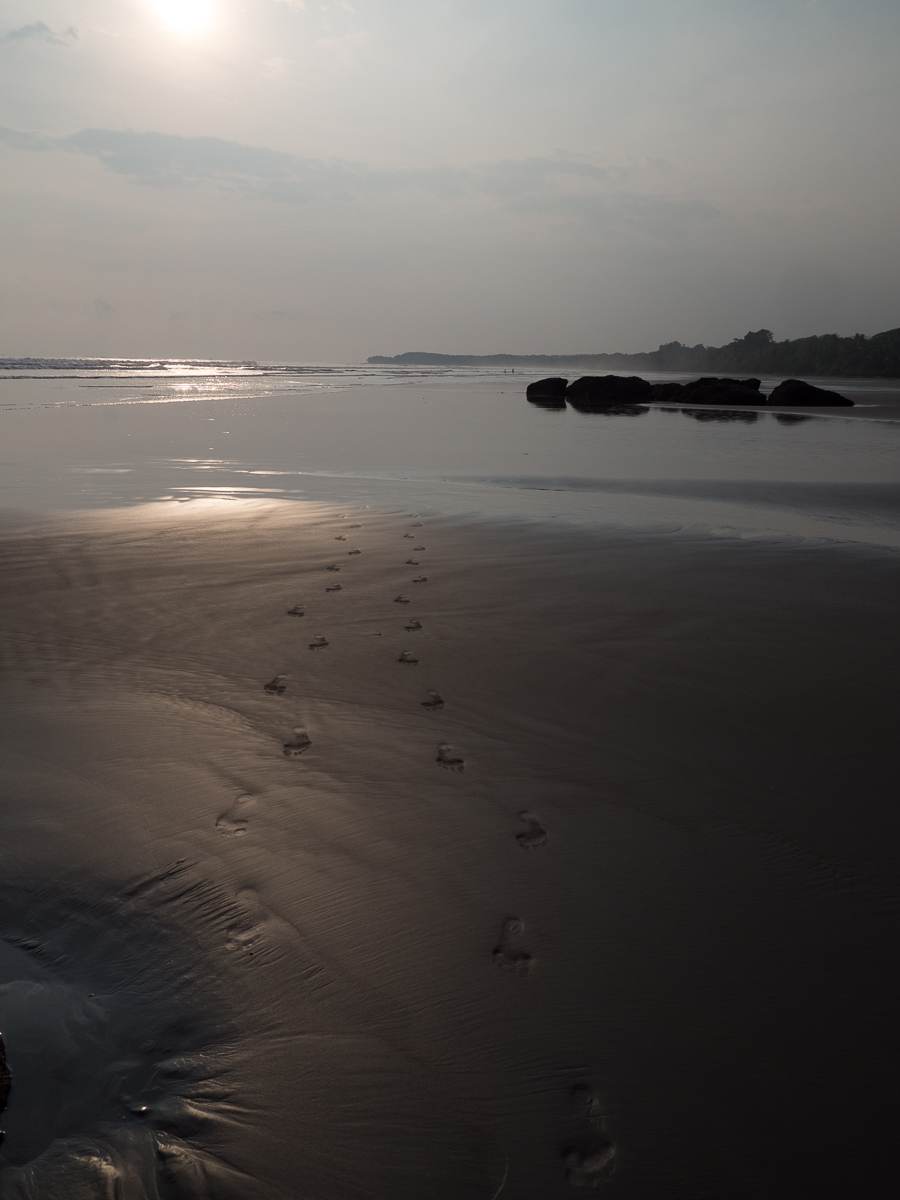
As the “unseasonal” rain continues day after day, gradually confirming that it’s just an early start to the rainy season, we should admit that although unhelpful, it ain’t that bad. Very often, the mornings are fine, with the humidity rising until rain breaks out in the afternoon. A lot of the rain falls overnight – thank goodness for Clare’s brilliant bike covers. We can mitigate it a lot by getting up, and getting going, early. It doesn’t rain every day, either. We do still get caught out occasionally though. And of course, it’s warm rain, being wet is just, well, wet. Not welcome-to-Scotland-in-August-dangerously-hypothermic-wet. Equally, I’ve worked it out now, that if I want to go for a run (which I fail to do weekly), we either have to be at a height of over 1500m, or it has to be raining, otherwise it’s too hot. Which leads to the odd, flapping, flatfooted experience of running in my basic Teva sandals, rather than trainers. Or just occasionally, the treat of running barefoot on a sandy beach.
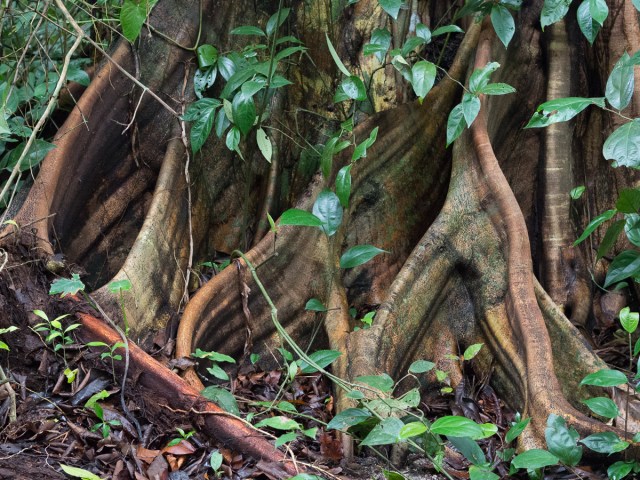
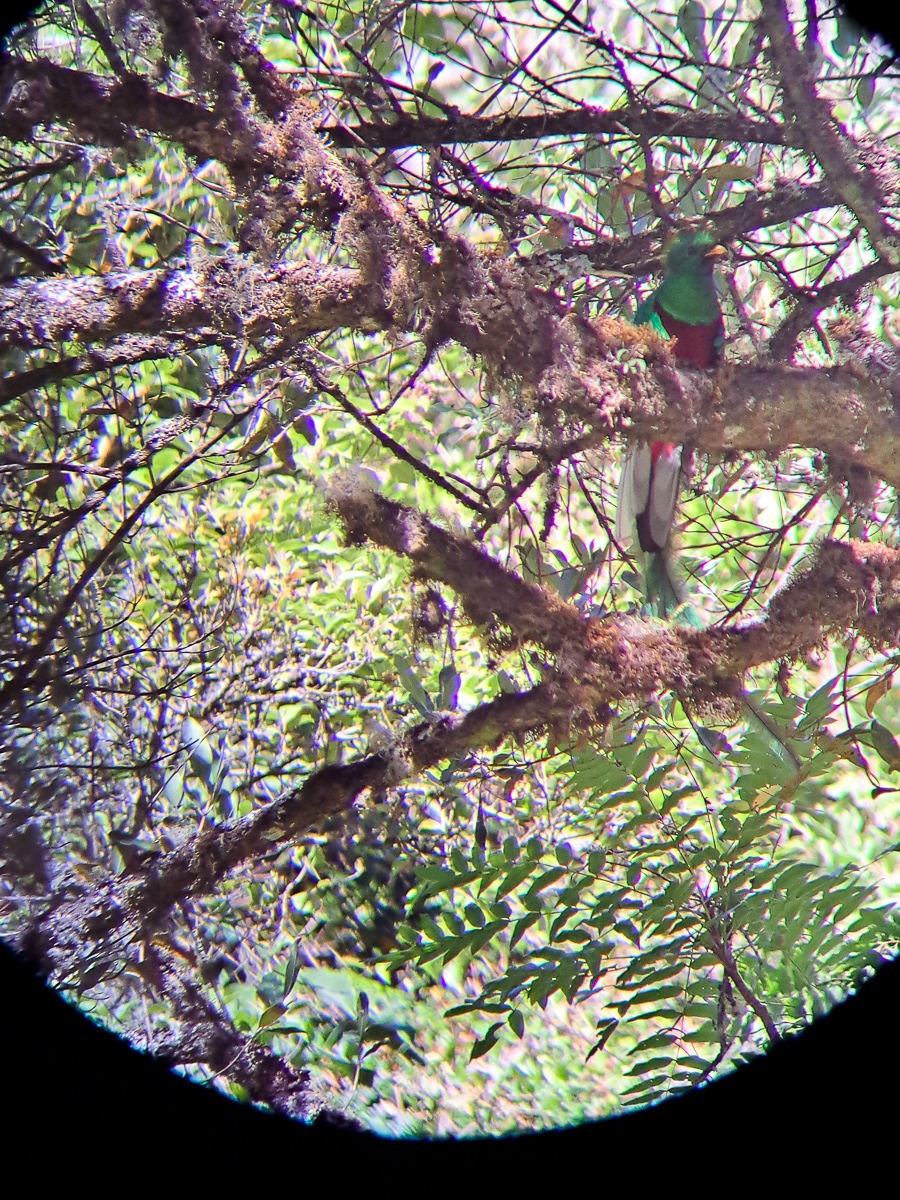
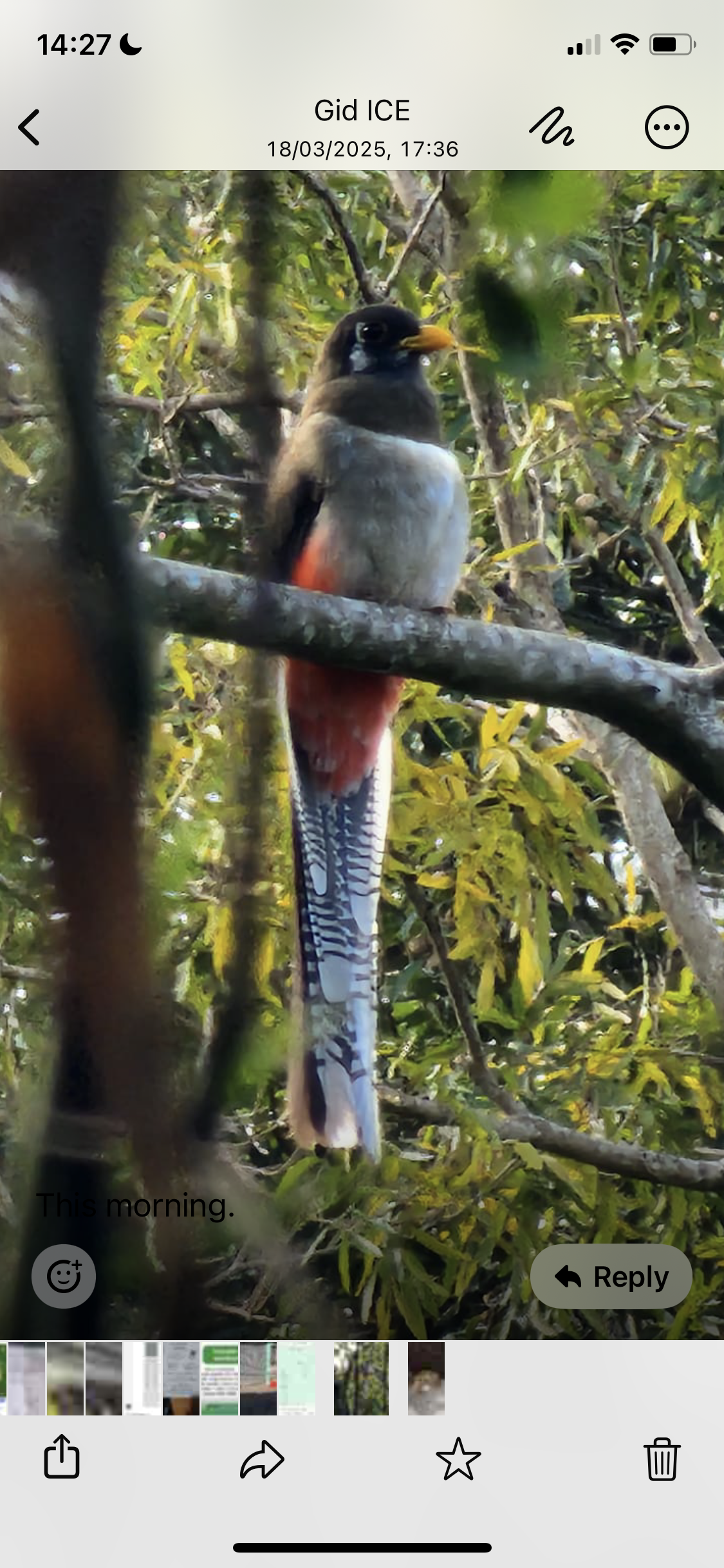
On the Caribbean we visited the Park National Cahuita but on this occasion we went for the option of a guide.  It’s about 50 – 50 whether or not we get a guide but with a guide we are guaranteed to see some prized wildlife in the area – they know where the beasties are, and the guides in an area share sightings.  This was again the case at the Quetzal National Park (actually just outside at San Gerado de Dota).  In the quetzal park we left at 05:30 with our guide Inaki to stand for the nearly an hour with just a few common birds in our view.  Inaki showed his prized pictures of quetzals, the National bird of Guatemala, in this tree to our left and that one behind us justifying why we were standing here.  Then a whirlwind hit.  The walkie-talkie squawked.  Cars were dashing past, we were legging it to the buggy.  There was a mass exodus down the road where every group found a spot to park, jumped out and joined the throng.  Scopes pitched, necks craned told us where the quetzal was. Three quetzals, in fact.
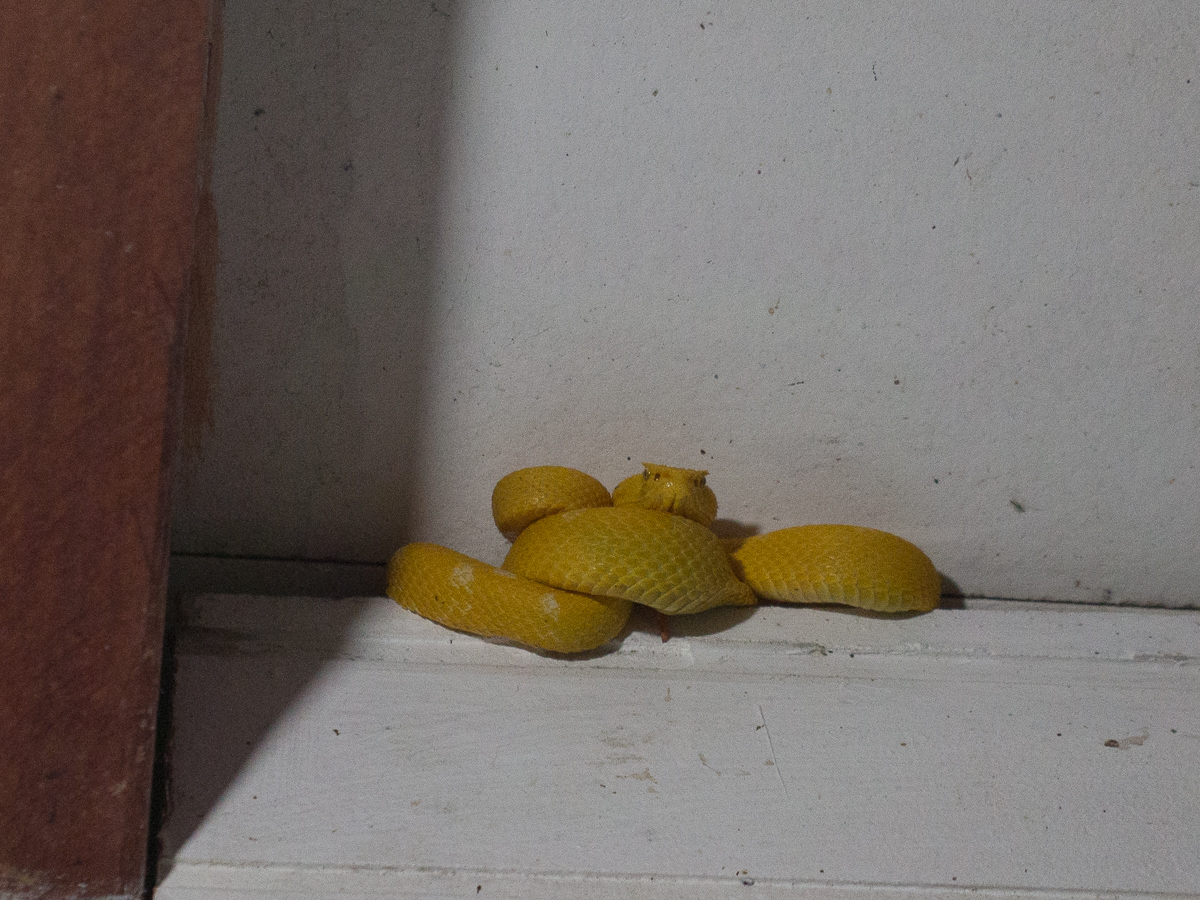
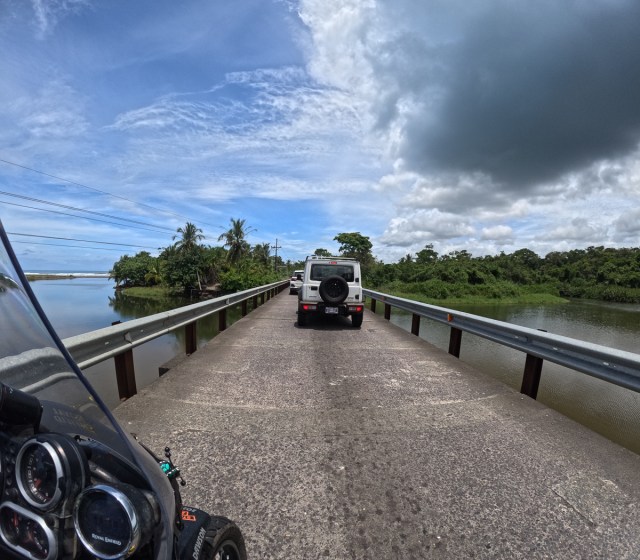
The dual carriageway, CR32, down towards Limon was our first experience of Costa Rican contraflow traffic.  Cars approaching us at speed was somewhat alarming.  ‘What the heck is this?’  A few more expletives passed between us as the odd car, truck or lorry came hurtling along from the other direction right towards us separated by a thin white line.  Initially, some obstacle was placed in the fast lane to force the traffic to merge into one.  Nothing unusual there.  There is often an obstacle in the road.  From there we were separated by the occasional plastic pole set into a small concrete disc.  So infrequent where they that occasionally a car would cross to overtake before weaving back into our lane.  We got kind of used to that but it went a step further on our return.  Out of the blue there were three arrows on obstacles semi blocking our road pointing leftwards across the central barrier.  Gingerly we went across with no further indication that this was correct.  ‘Local traffic,’ Gid said explaining some cars still on the other carriageway.  ‘It’ll soon cut across and join us.’  To be fair on coming traffic did seem to be using one lane but that was of little comfort when we were on our own.  Gradually we caught the traffic ahead but reversing lights were on.  It seemed to be stopped and even backing.   Just before them was a gap in the central reservation.  I was through it closely followed by Gid.  We’d no idea what was going on but had had enough of where we were when the road looked perfectly good to our right.  A few seconds later we could see that the contraflow lane that we had left was blocked.  That’s why the cars were backing up the dual carriageway.  They had to reverse back to the gap.

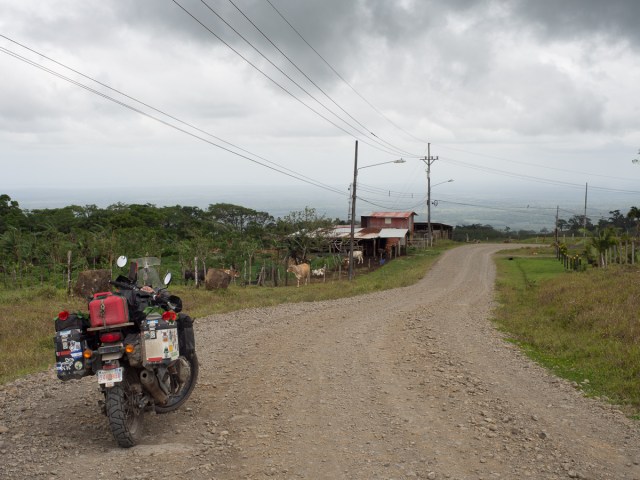
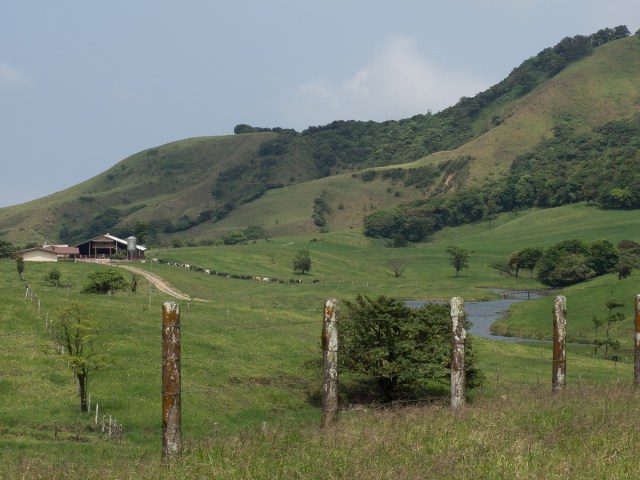
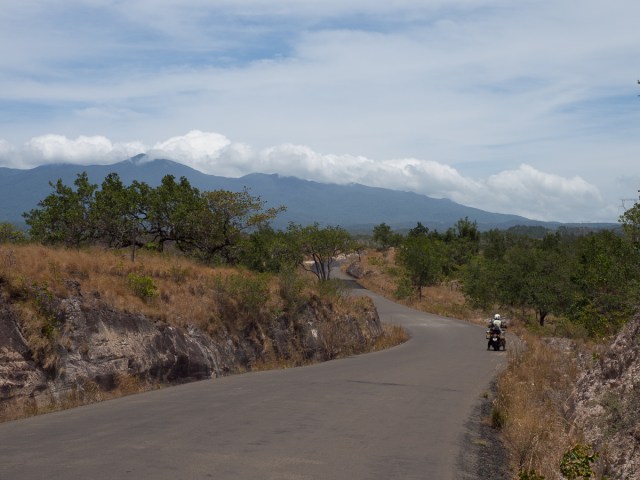
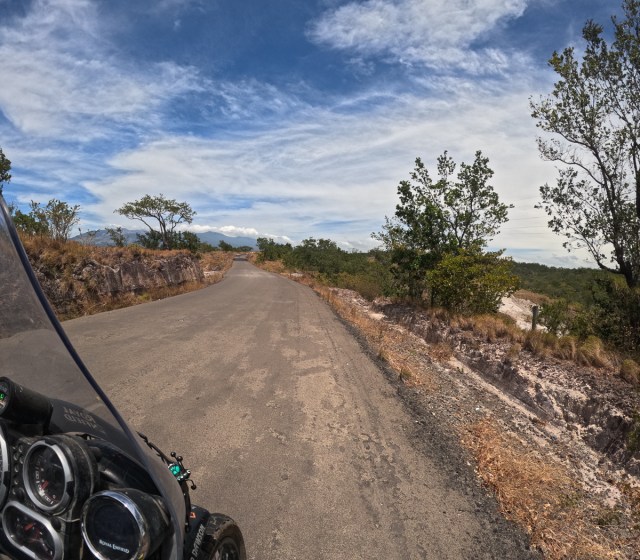
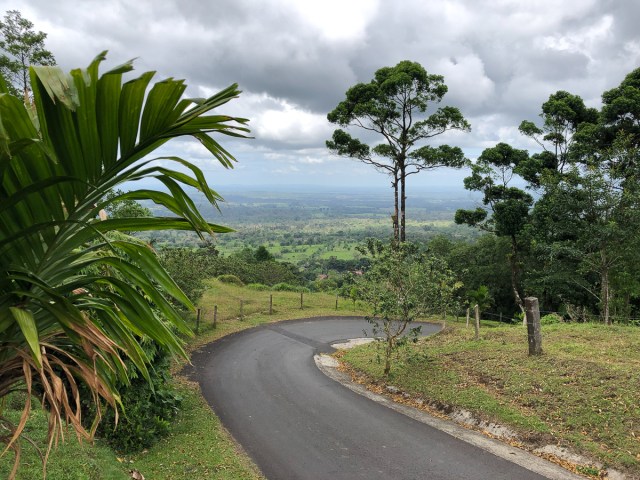
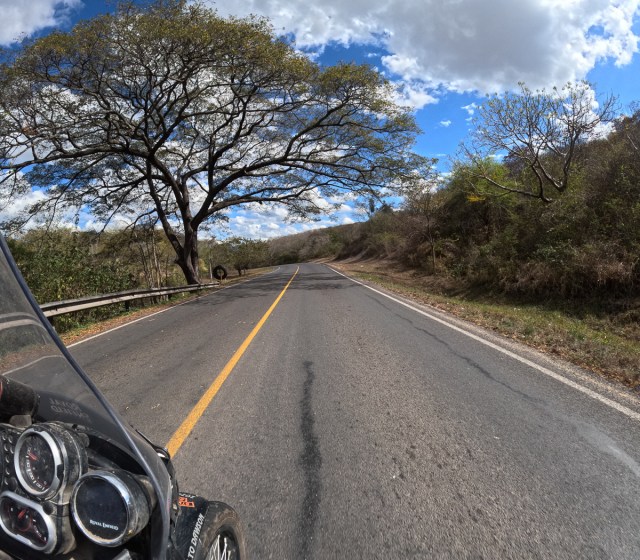
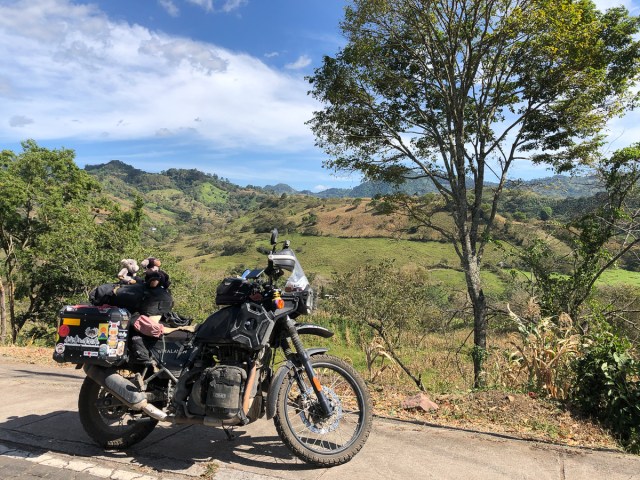
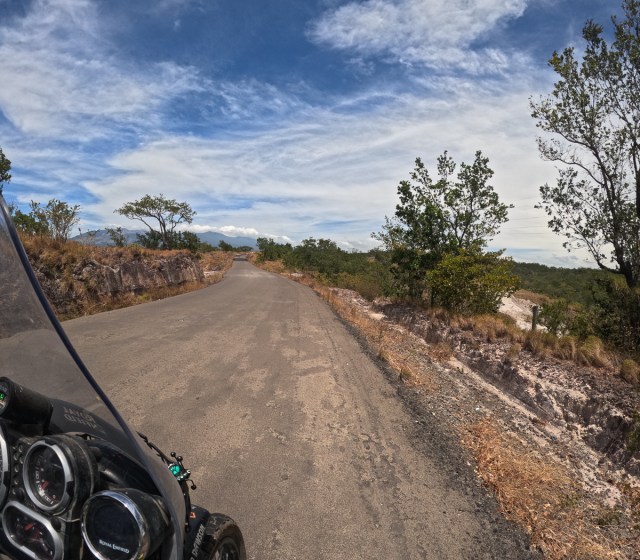
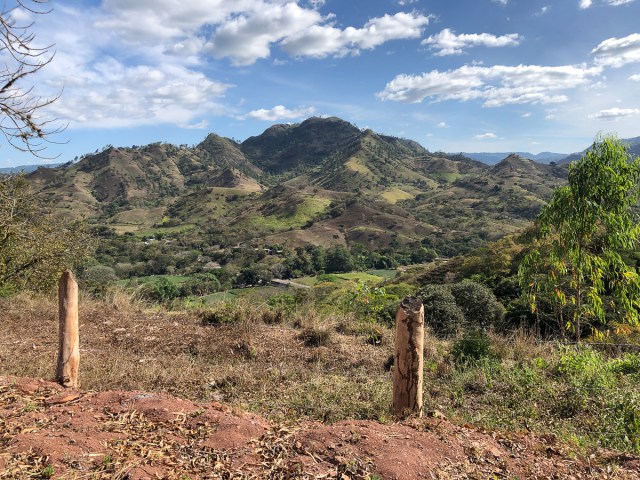
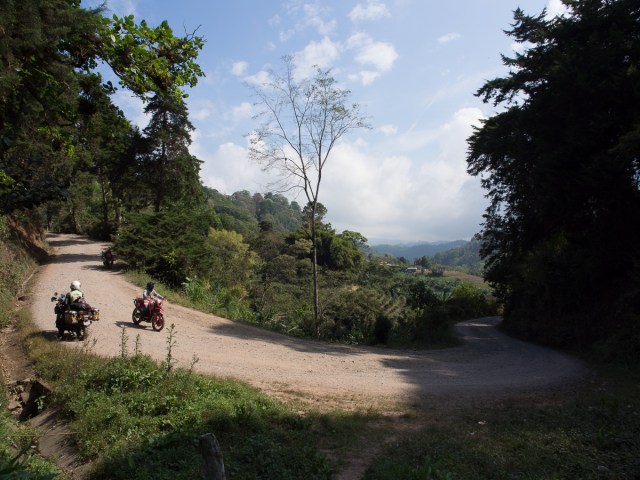
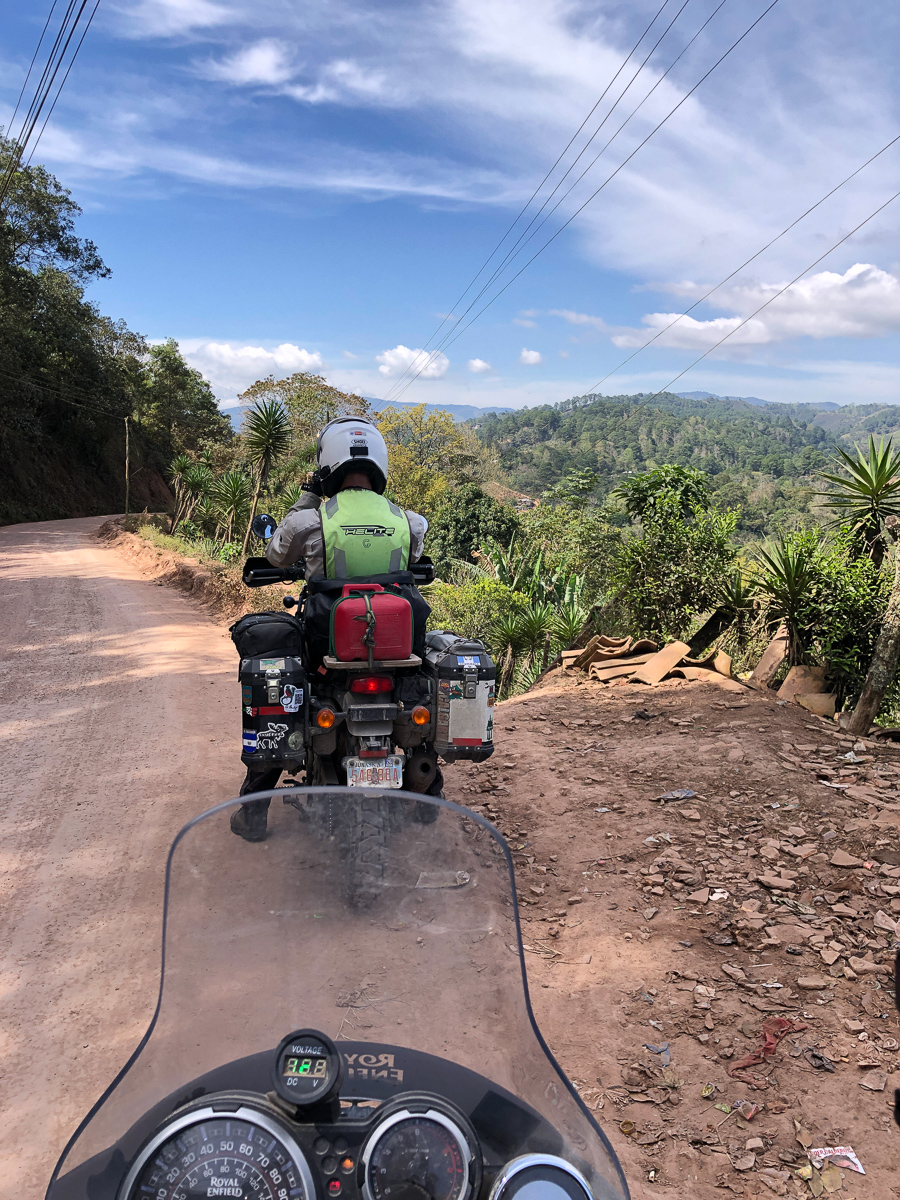
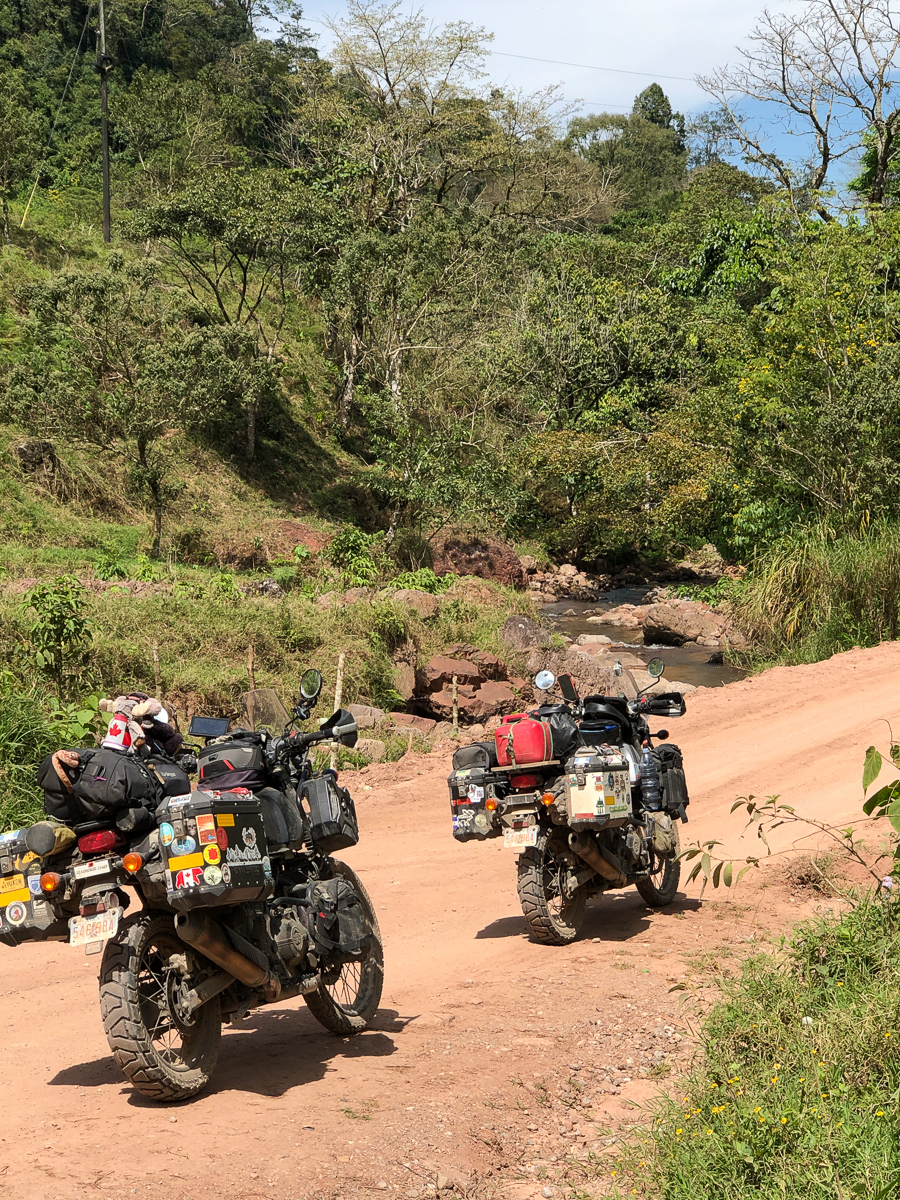
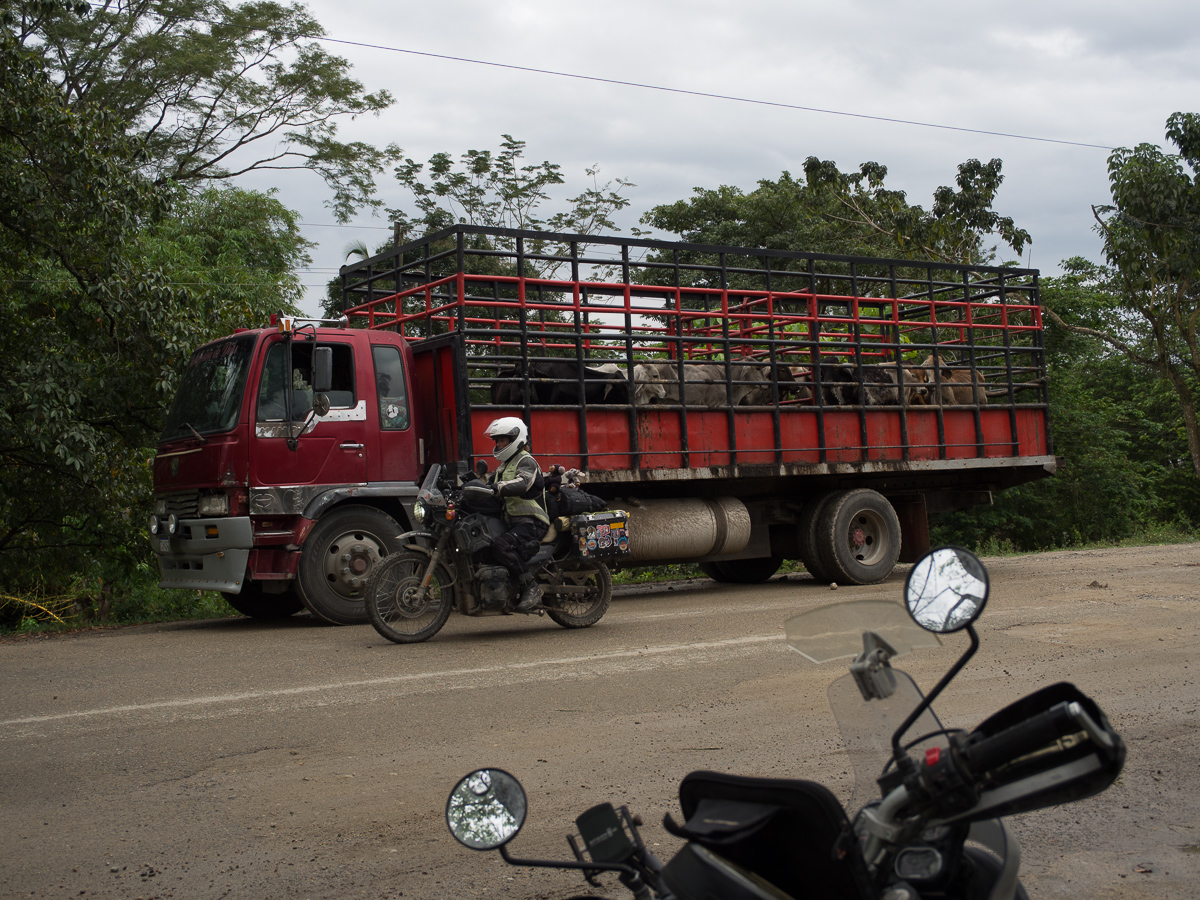
But moaning about the dual carriageway is rather missing the point about Costa Rican roads. It’s not a large country, so with two indented coasts and four mountain ranges up to 3,800m (https://lacgeo.com/mountain-ranges-costa-rica) many of the roads are twisty and steep. I don’t suppose Costa Rican bikers suffer much from “squared off” tyres. The ride from San Gerado de Dota to Puerto Jiminez was pretty much 170 miles of convolutions. Of course, a faster bike than the Him would have livened it up, but with such short sightlines at the incessant bends, going much faster might prove fatal. Often 30-40mph was ample. One thing we are seeing in CR though, first time since the USA or maybe Mexico, is locally registered “big” bikes. Whizzing past us, sometimes, but that’s fine by us, we don’t know the roads at all. Another aspect is that, curiously, as we sweat along in 35°C temperatures, some of the countryside looks like, well, Devon. Rolling hills, green grass, rickety fences, processions of cows heading for the milking shed. Curious indeed.
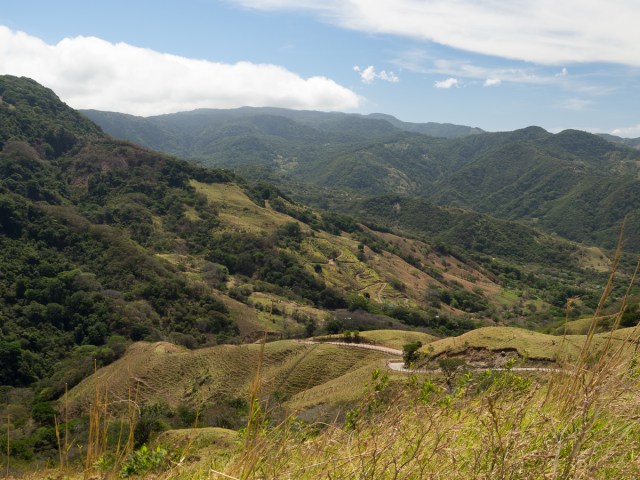
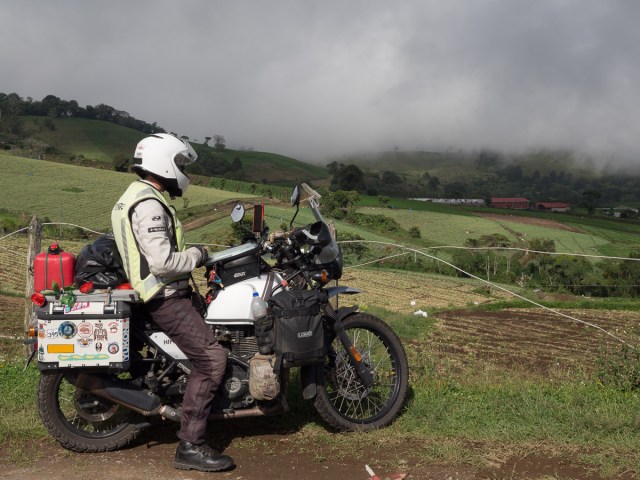
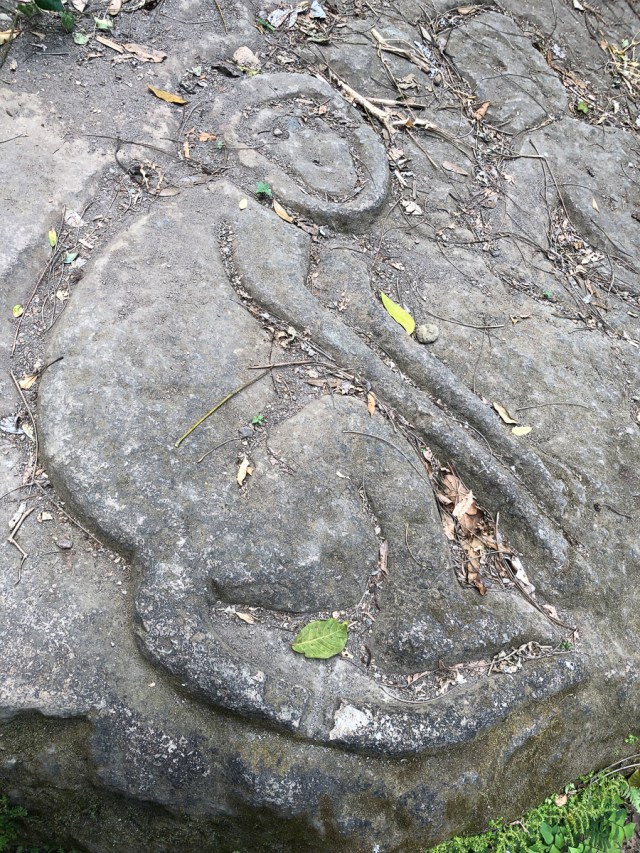
Guayab, our stopping point when returning along this road, is the site of the National Monument.  Pre-Colombian is the most specific information about the people who built this city.  The site is quite small compared to the Mayan ruins we’ve seen as the foundations of the buildings is all that is left together with two water cisterns and a section of road way.

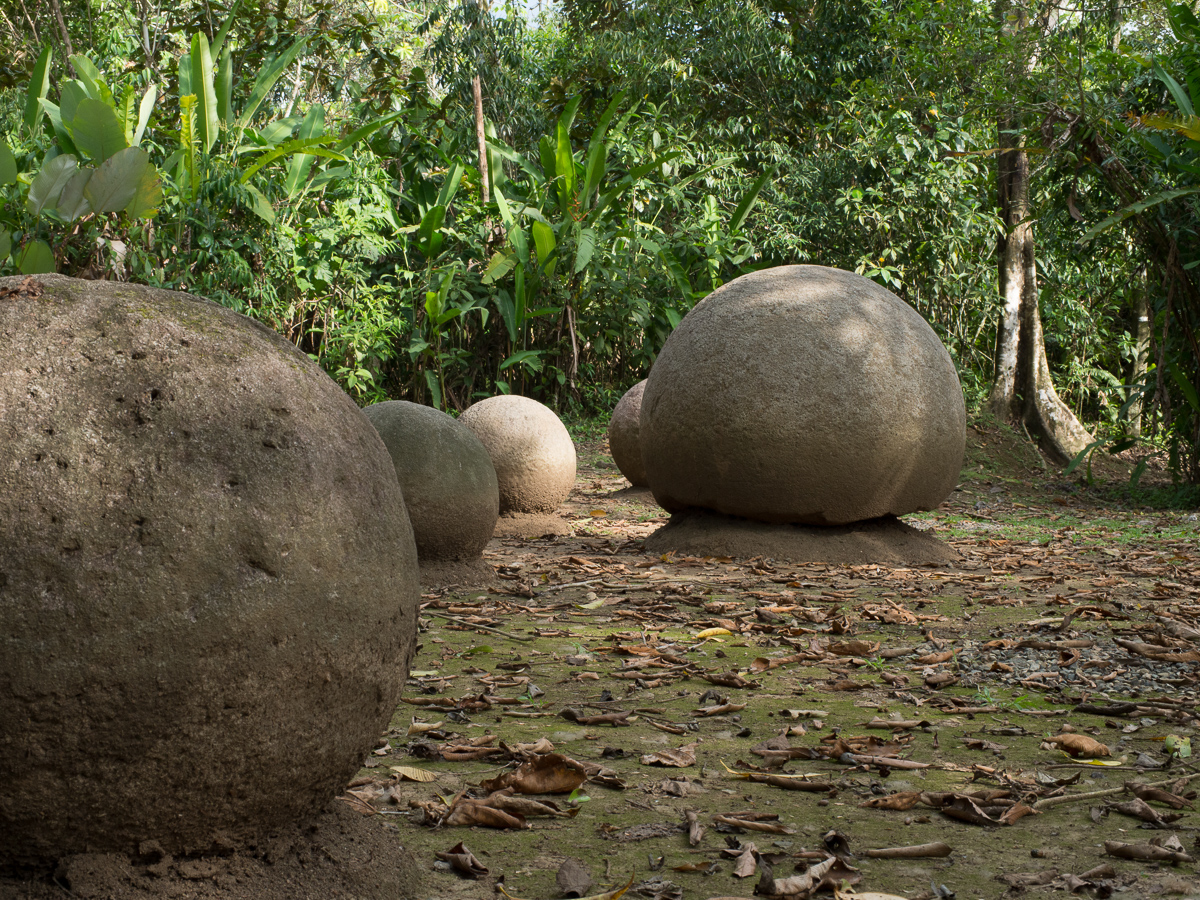
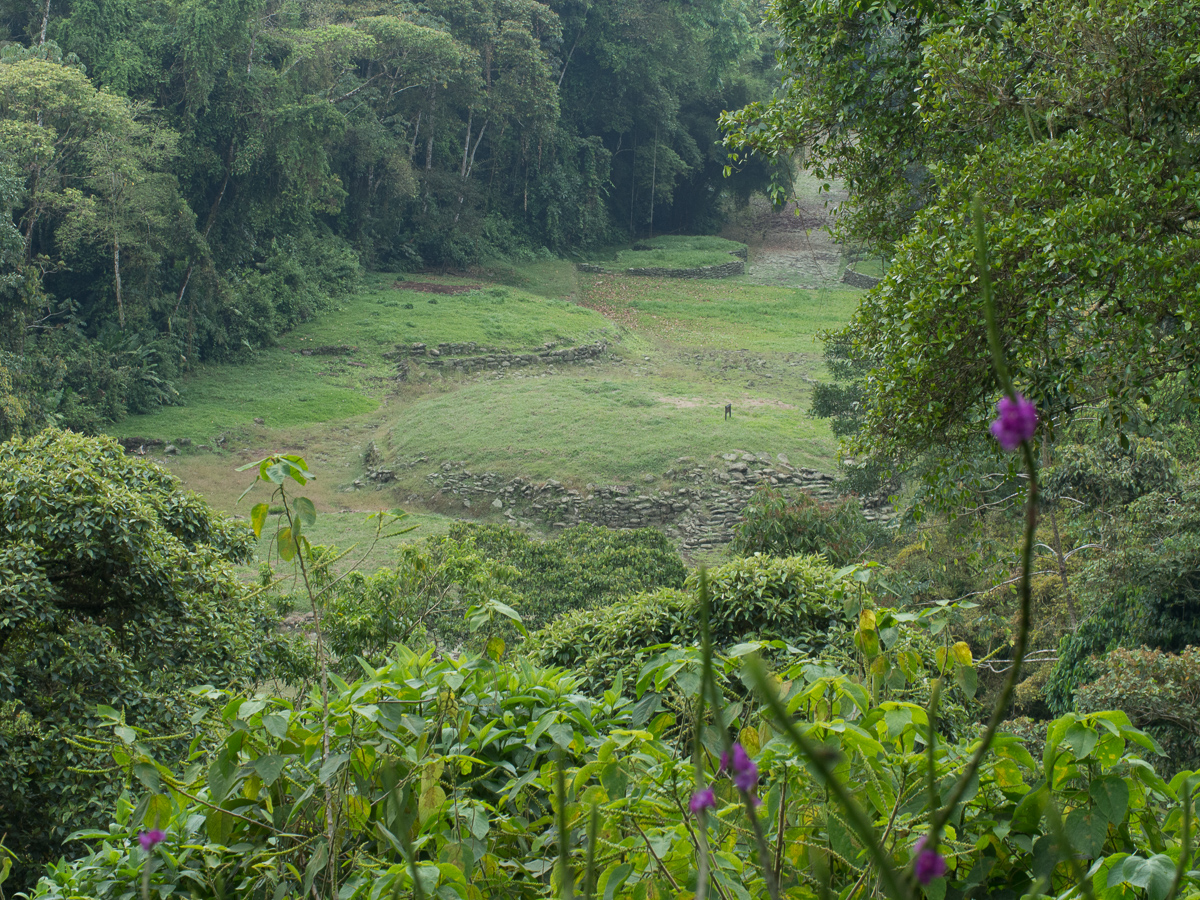
Later we were going to pass the turning to Sierpe which leads to the Finca 6 site – UNESCO listed since 2014 because it is of world significance and interest.  It is again the site of Pre-Colombian civilisations dating from 200BC to 800AD and had many strong similarities to the National Monument at Guayab.  They both had raised circular mounds bordered with large stones where it’s believed a large conical wooden hut was built, with a thatched roof.  The significance of Finca 6 and its surrounding area of lowland was the large stone balls varying from small to 2.6m wide.  The stone balls are, it is thought, a mark of prestige, power and honour when placed outside a house.  Others of the balls were placed to line up with the sun or moon in a similar way to stone henges extensively found in north western Europe which also align with the summer and winter solstices.  Although, similar to the henges, there is much debate as to the precise placing and use of these stone balls.  Only a few are thought to be in their original positions.  Certainly it must be quite an effort to reduce a large boulder to a near perfect sphere using only stone and bone tools, so they were obviously important.

Our last port of call was to the tip of the Oso peninsula, billed as the largest expanse of untouched wilderness in Costa Rica where from Puerto Jimeniz there is a unique opportunity to explore an area of ‘untouched’ wilderness.  At Surco, one tour operator, Sean the young salesman was busy selling us the benefits of a two day, over night trip to explore ‘untouched’ wilderness in the Corcovado National Park.  Despite my saying that I get quite sea sick he didn’t seem to think it was pertinent to tell us that the seas are quite rough at the moment which resulted in one boat flipping a couple of days ago.  He didn’t mention that either!  We settled for the one day more local trip. Oh yes, and it’s Easter: Everyone is on holiday and half of the businesses are shut. But there was quite a lot of wildlife going on at the wonderfully jungly Chosa Manglar hostel we stayed at.
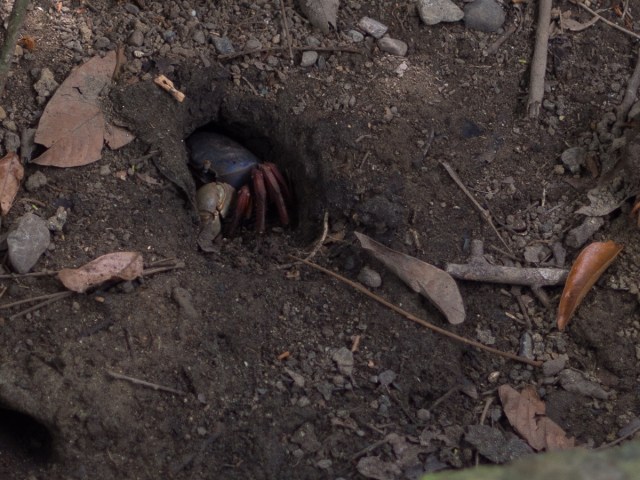
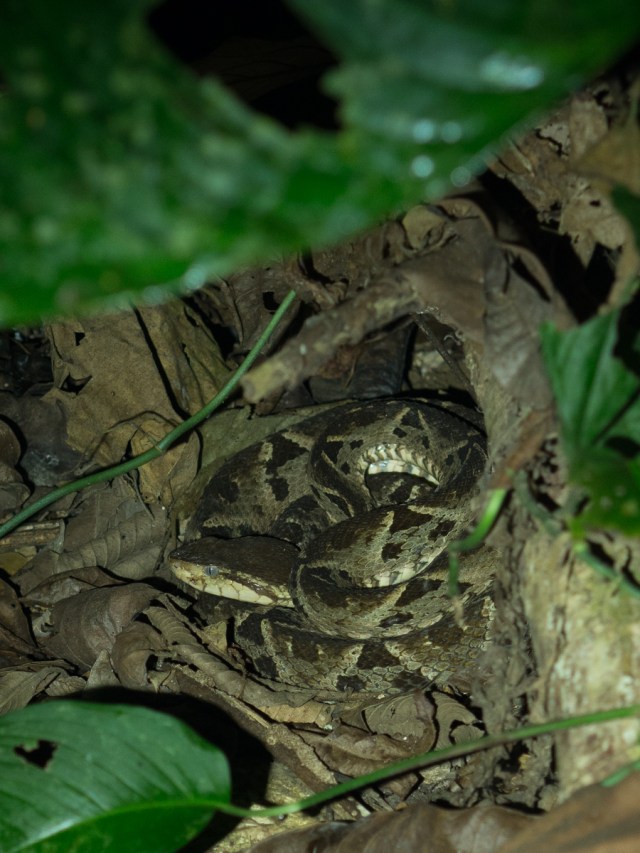
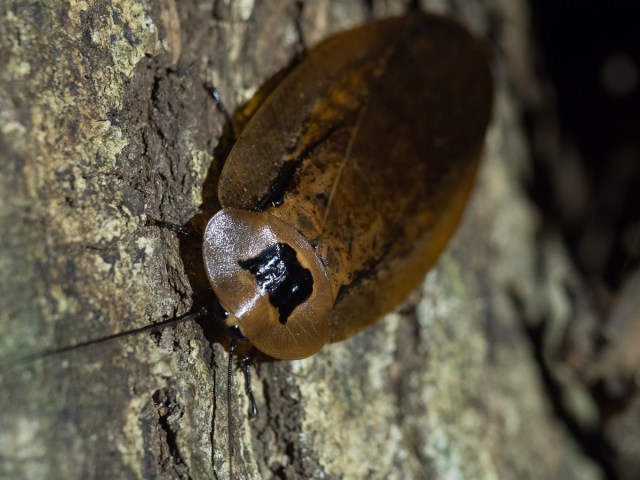
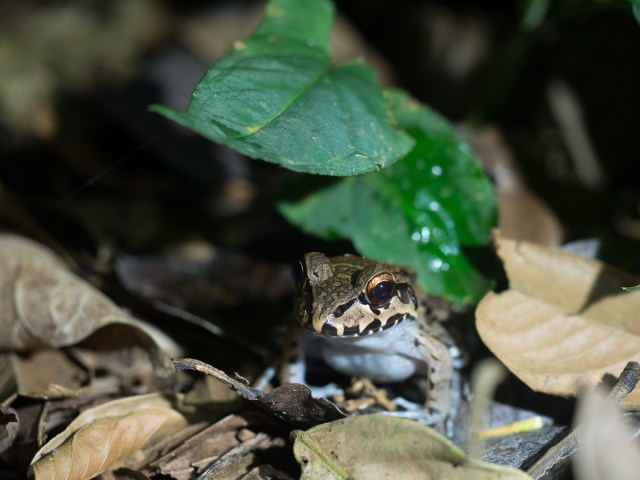
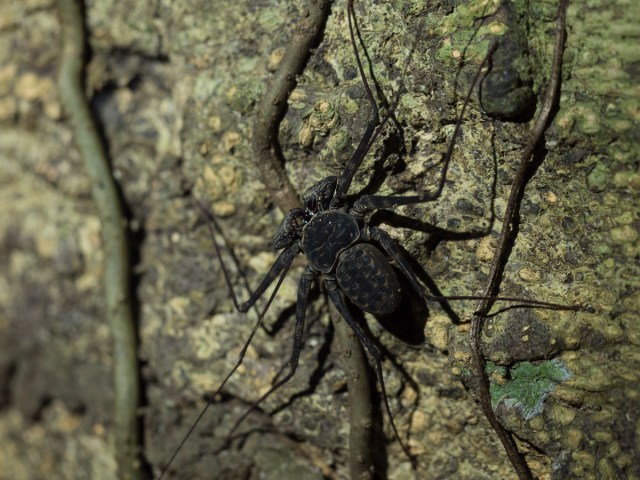
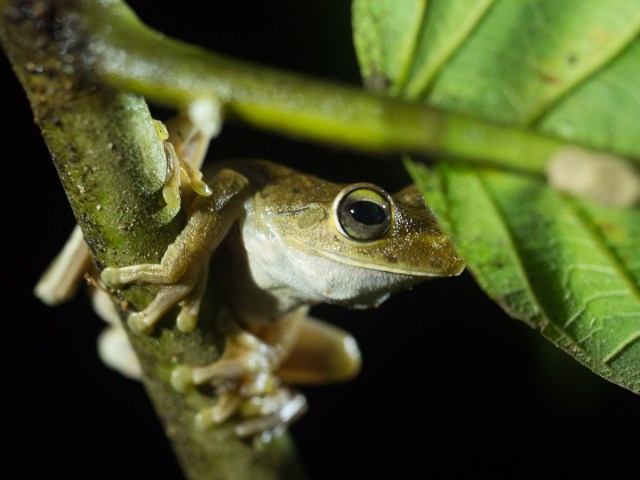
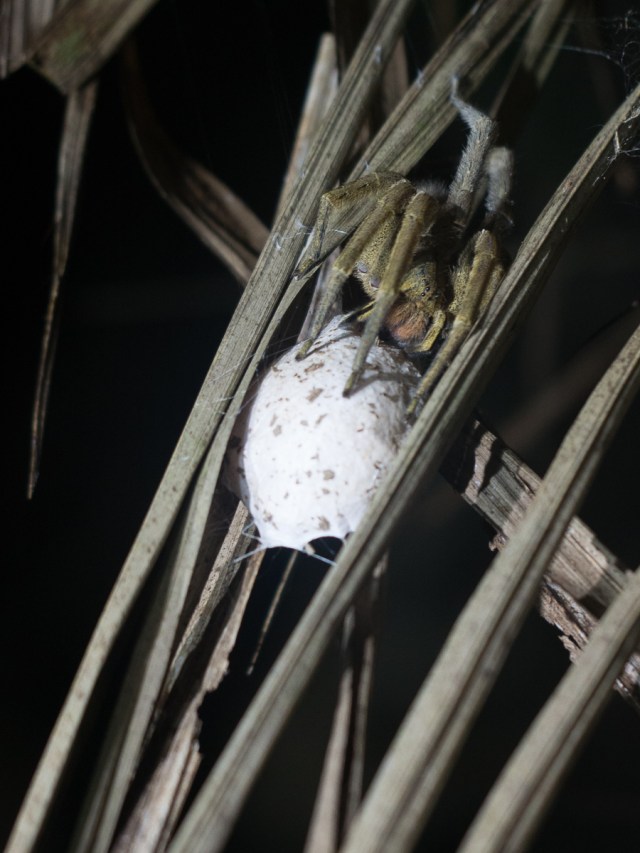
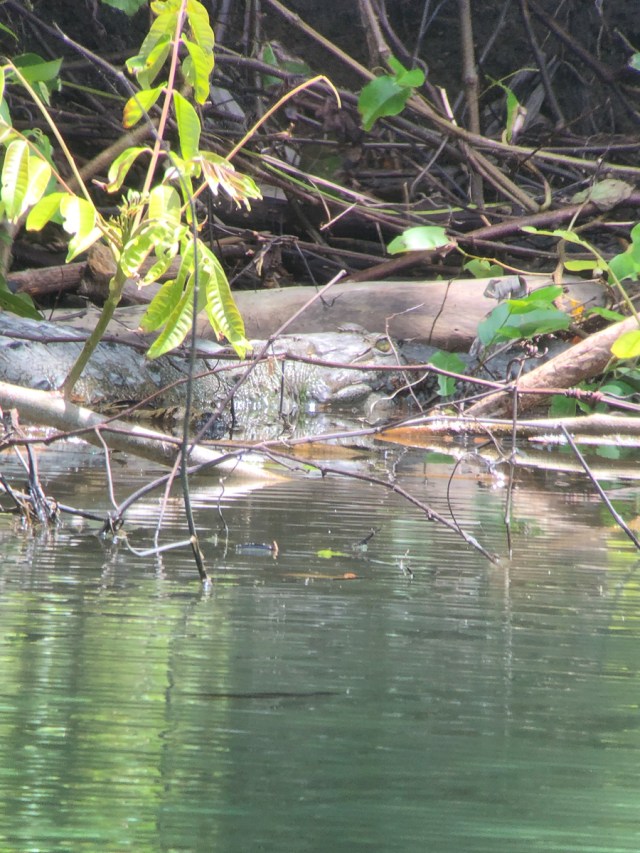
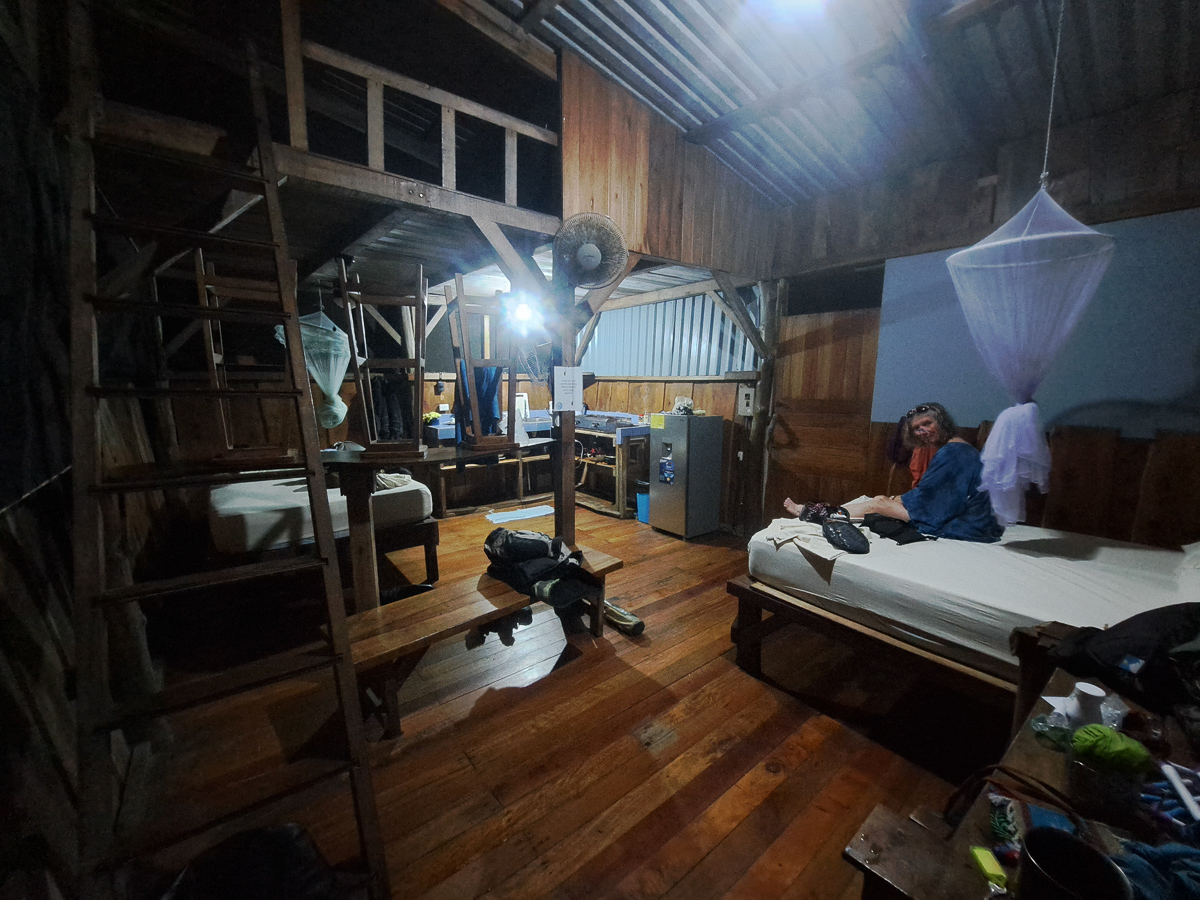
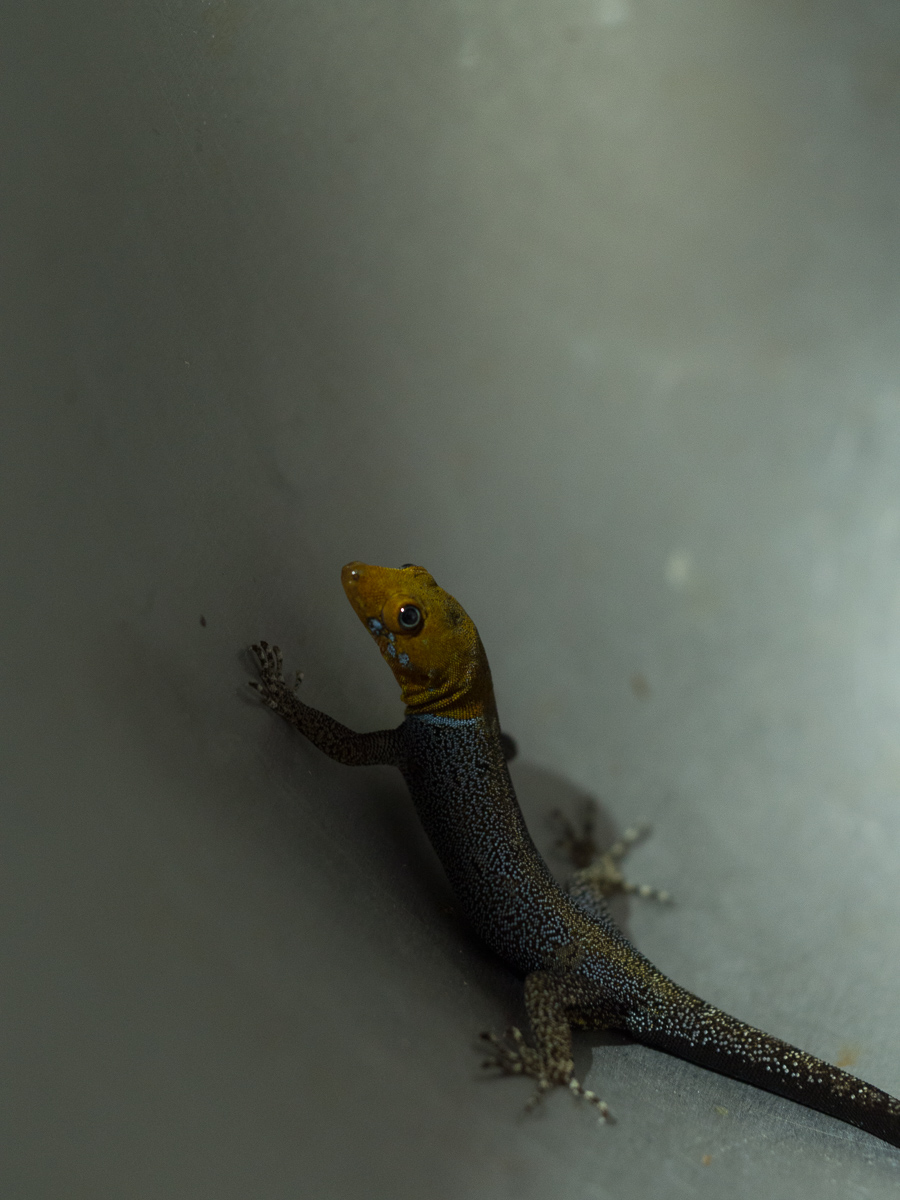
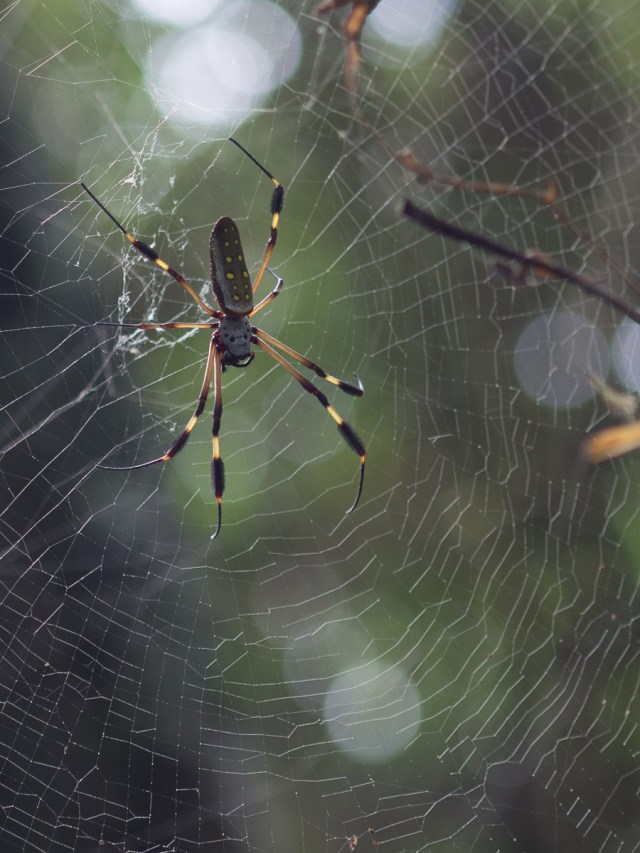
To compliment the untouched wilderness tour we took a local ‘night tour’ with the same Sean.  This was a tremendous success with us seeing numerous frogs, spiders and small things, three or four mammals and a couple of birds but the piece de resistance was a fer de lance snake.  One of the most deadly in Central America.  Gid’s cayman is also pretty cool. And I started getting to grips with the new 60mm macro lens that was the main thing we’d collected from Jared.
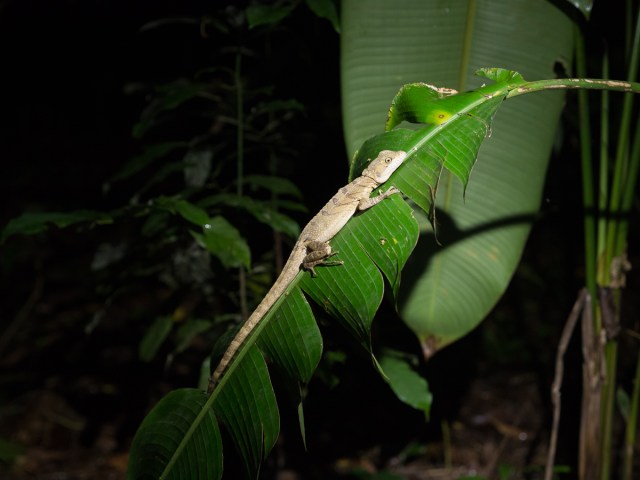
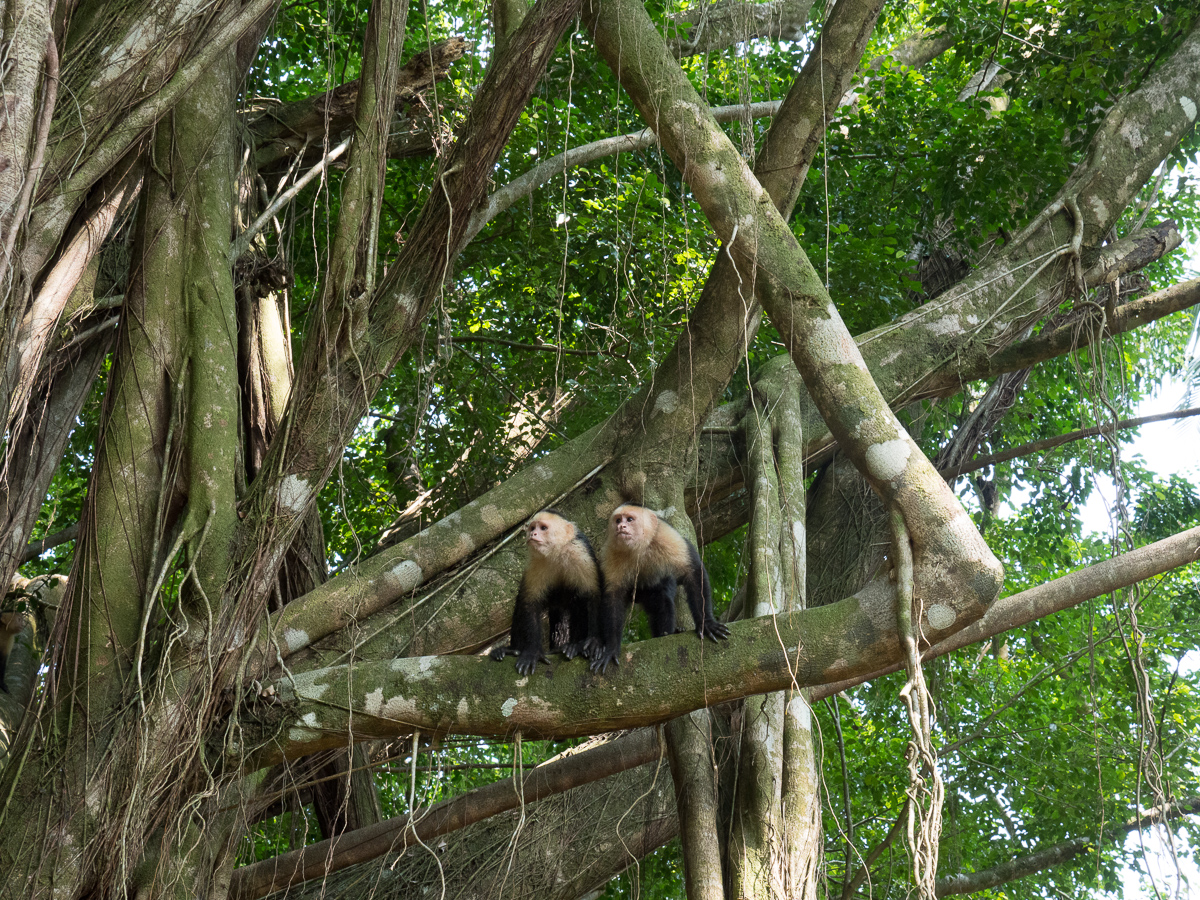
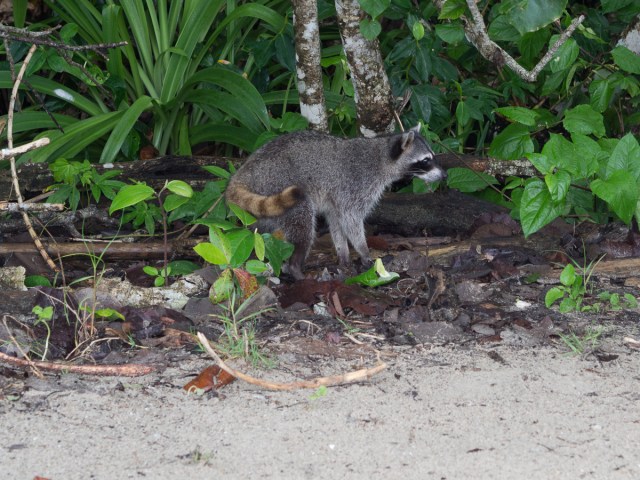
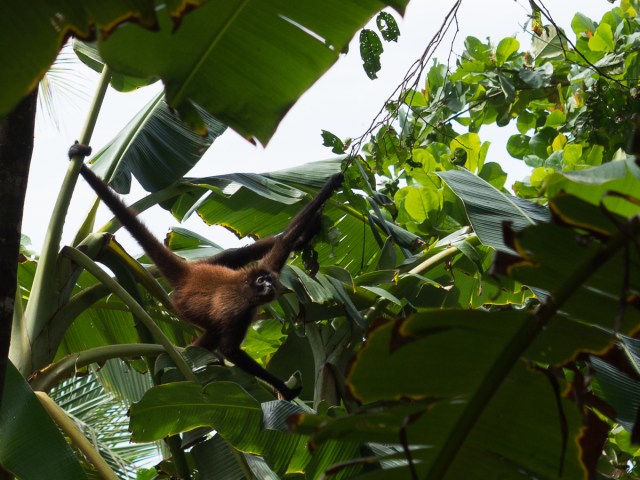
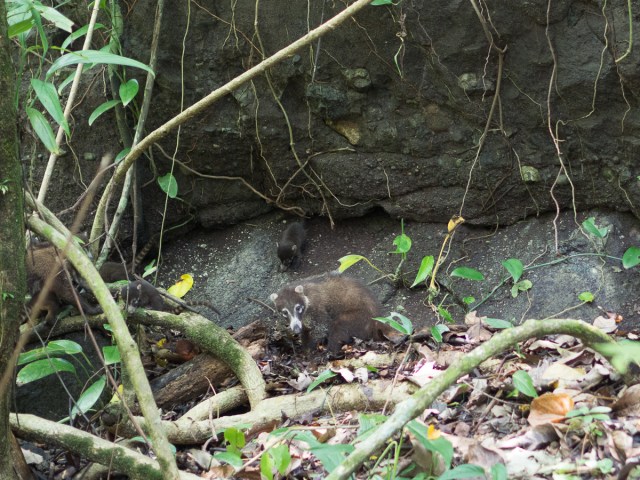
Four percent of the worlds biodiversity is in this small area of Costa Rica, the Corcovado National Park.  The day of our tour we set off full of expectation.  The ‘How to deal with a big cat interaction’ noticeboard raised the stakes.   But let’s get real here.  There were twenty or more of us split into different groups all with tour guides trying to justify their near extortionate charges.  Our guide Esteban, seemed to know the area well.  He was searching one spot saying that the green and black frogs are often here.  Right on cue – here are two.  The local animals must be very familiar with the whole routine and stay a discrete distance away unless they are quite relaxed about the whole performance. We saw families of coatis on our way out and finding them again on our return trip where I was no more than six metres away from the female and her kits.  Overall it was a fun experience with the crocodile and anteater at the top of our best sightings list. The scarlet macaws and squirrel, spider and capuchin monkeys were almost omnipresent and provide excellent entertainment value as did the coatis.
Nicaragua – Land of Shadows

I was a little anxious about entering Nicaragua.  In my mind, fed by various perhaps out of date articles, Nicaragua was going to be more lawless and therefore more dangerous to be in.  There are tales that the police are even more corrupt than usual. Both threats have been with us since entering Mexico. So far, either the reports are wrong, or we’ve been lucky.  But, we have seen more road accidents in Central America than we have ever before.

The Honduras-Nicaragua border crossing was particularly tedious and rather exasperating as we had to stop here then there and no one told us about the over there.  Having had our documents checked at one oficina and told now you can go that should have been  ‘now you can go over there to the next stage’.  Gid is very thorough at researching the requirements for each border crossing and not to be fobbed off, but even he didn’t foresee the number of times Nicaragua would check each document.  There were about 7 stages!  Regis, a fellow traveller we met in Leon told of how he was fined while exiting Honduras when imigracion saw that his entry documentation wasn’t properly stamped.  He had been illegal and had to pay the fine of $250 but only had $230.  He had to wait until a fellow French traveller baled him out!  Although we’ve done plenty of borders before, these are remarkably long winded, and it’s our first trip combining tedious borders with motorcycle import permits, really hot weather – and motorcycle clothing. We melt.

From a border we usually plan to stop pretty soon after, but the pueblo of Condega was out of rooms – “Convencion” – so we rode on along the main NIC1 highway to Esteli, to kip in a windowless concrete box with free condoms.  Our actual destination was San Juan de Limay, the nearest town to petroglyphs marked on the map but it was getting a bit late for that rather uncertain route.  We wanted to settle into the country before setting off on potentially rough tracks and start earlier in the day. 

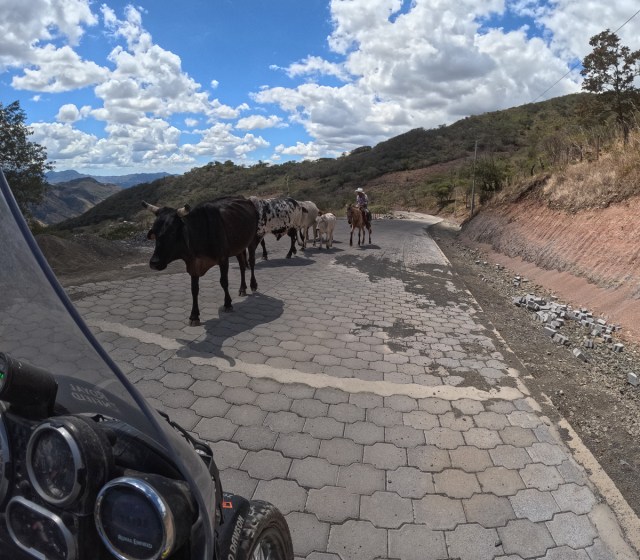
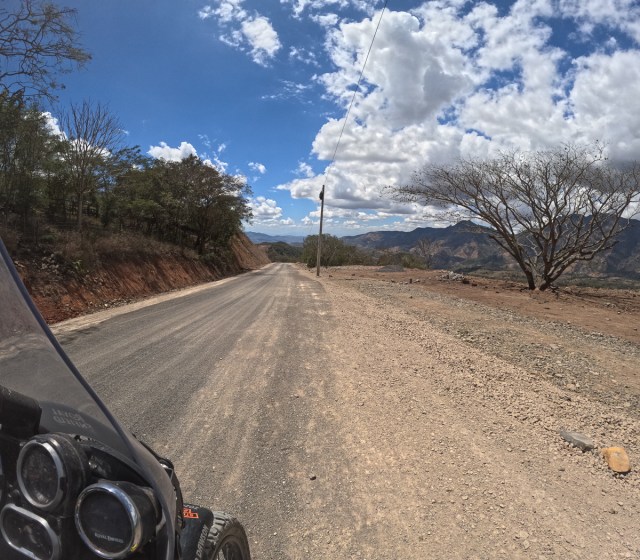
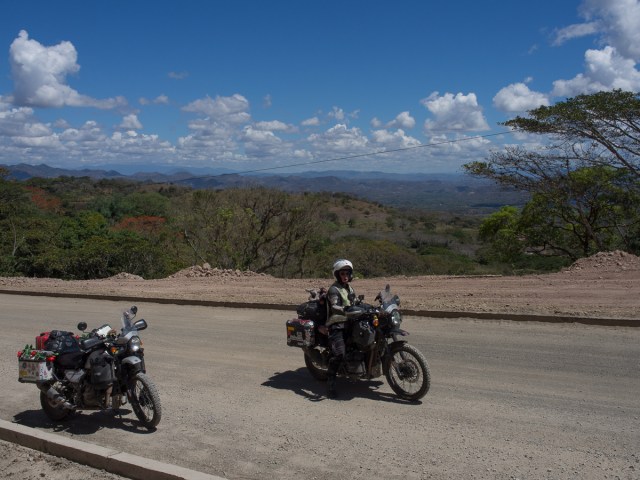
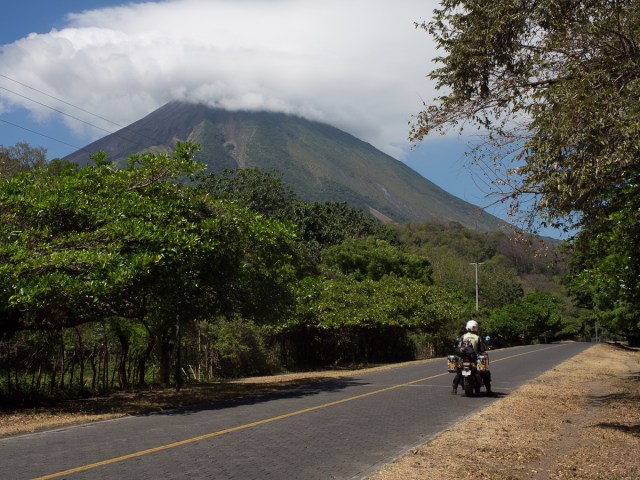
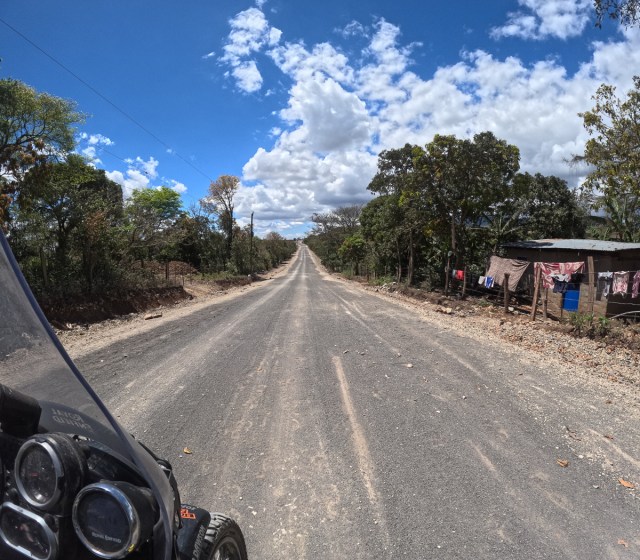
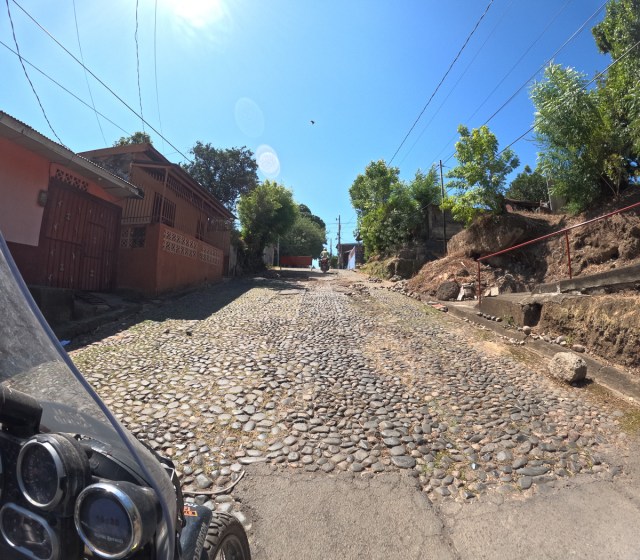
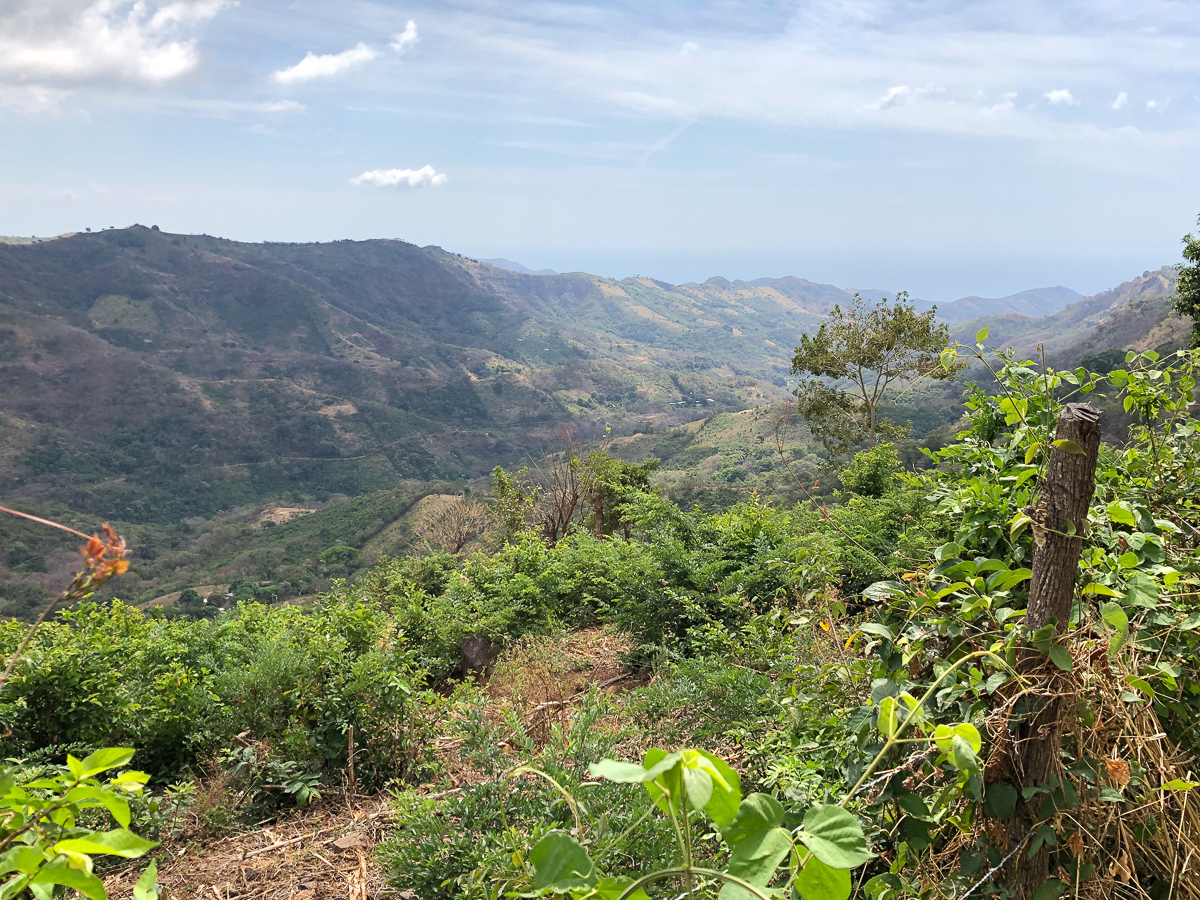
From Esteli there appeared to be a route cross-country but the advice was not to take this ‘short cut’ because of the potential for problems crossing the multiple rivers! We looped back north and round. The paper map showed the NIC38 as mostly dirt road, but OpenStreetMap said it was fairly major.  We turned onto a laid block surface which I had expected to revert back to dirt once out of the town but that wasn’t the case.  In the main it was a beautiful rural road all the way with fab views where we could actually stop and take a few photos, if we lifted our eyes above the endless twists and turns through the hills.

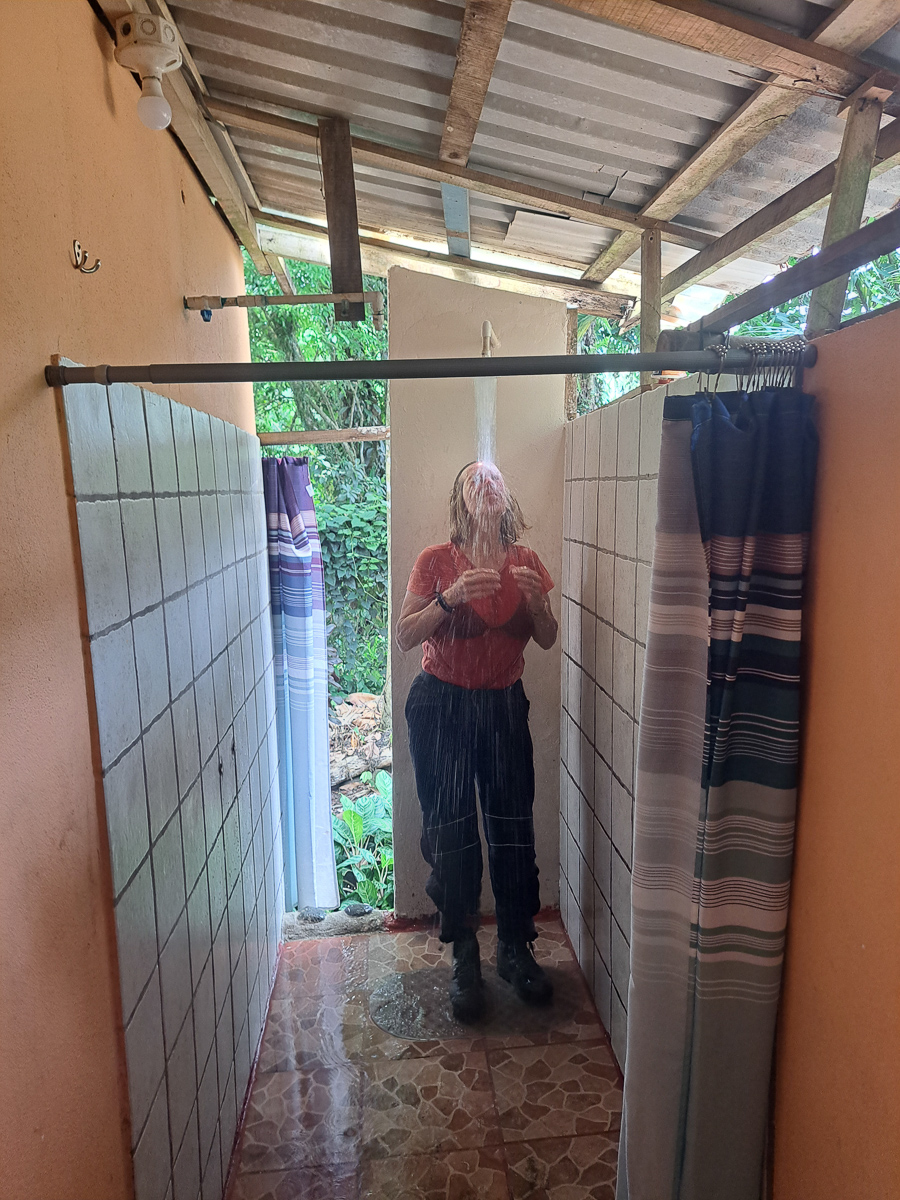
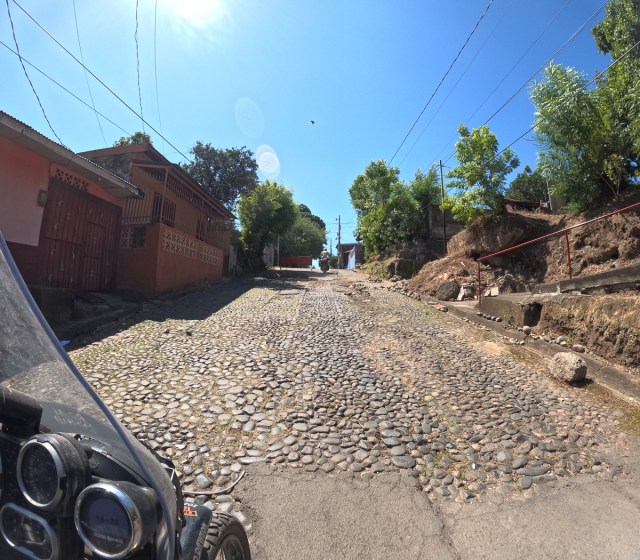
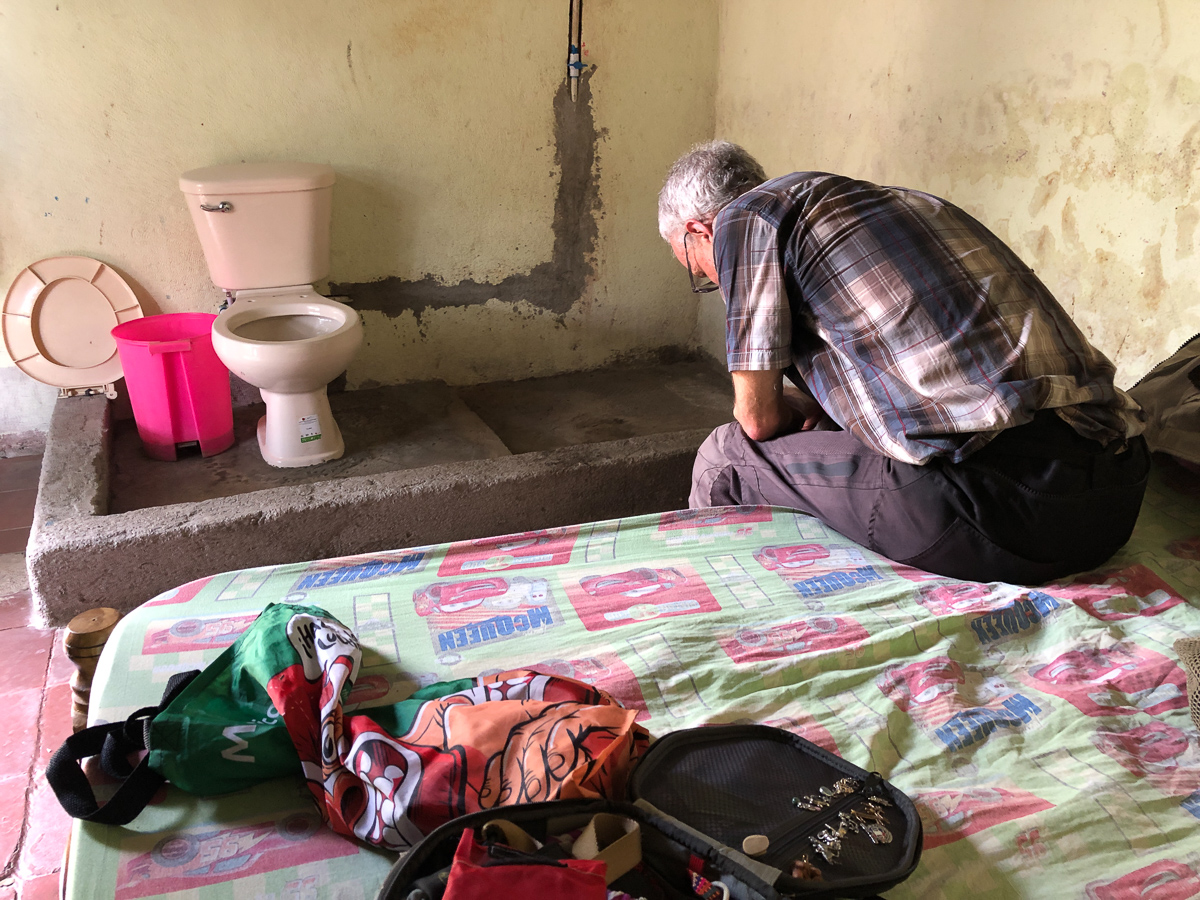
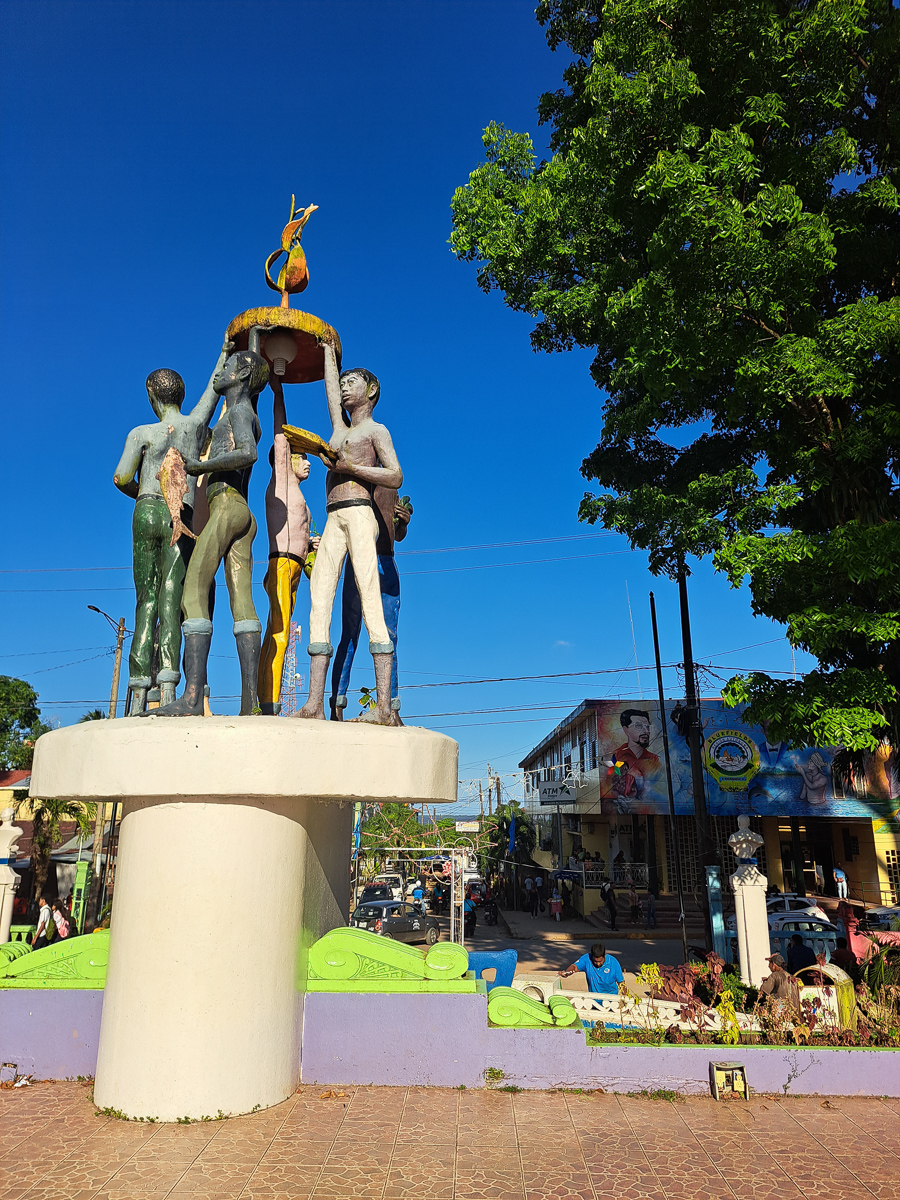
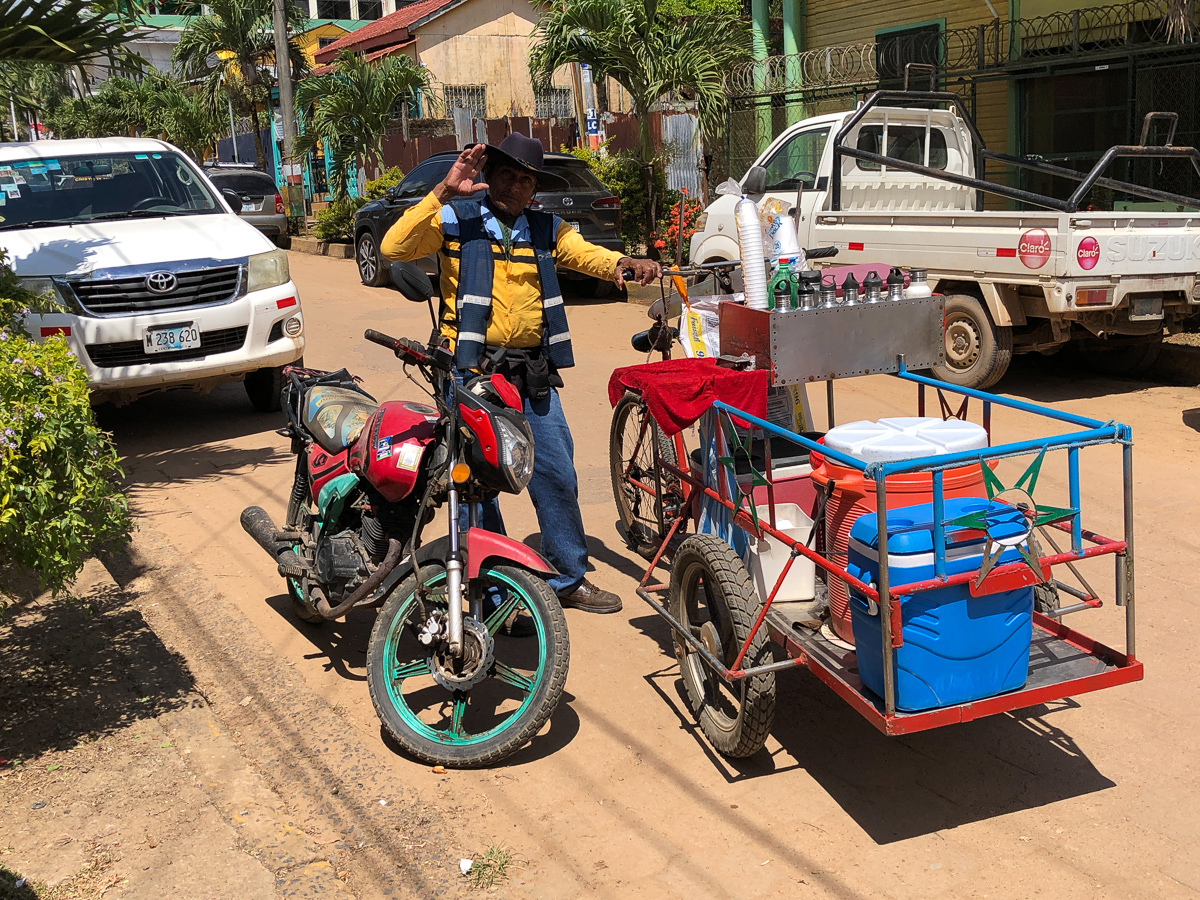
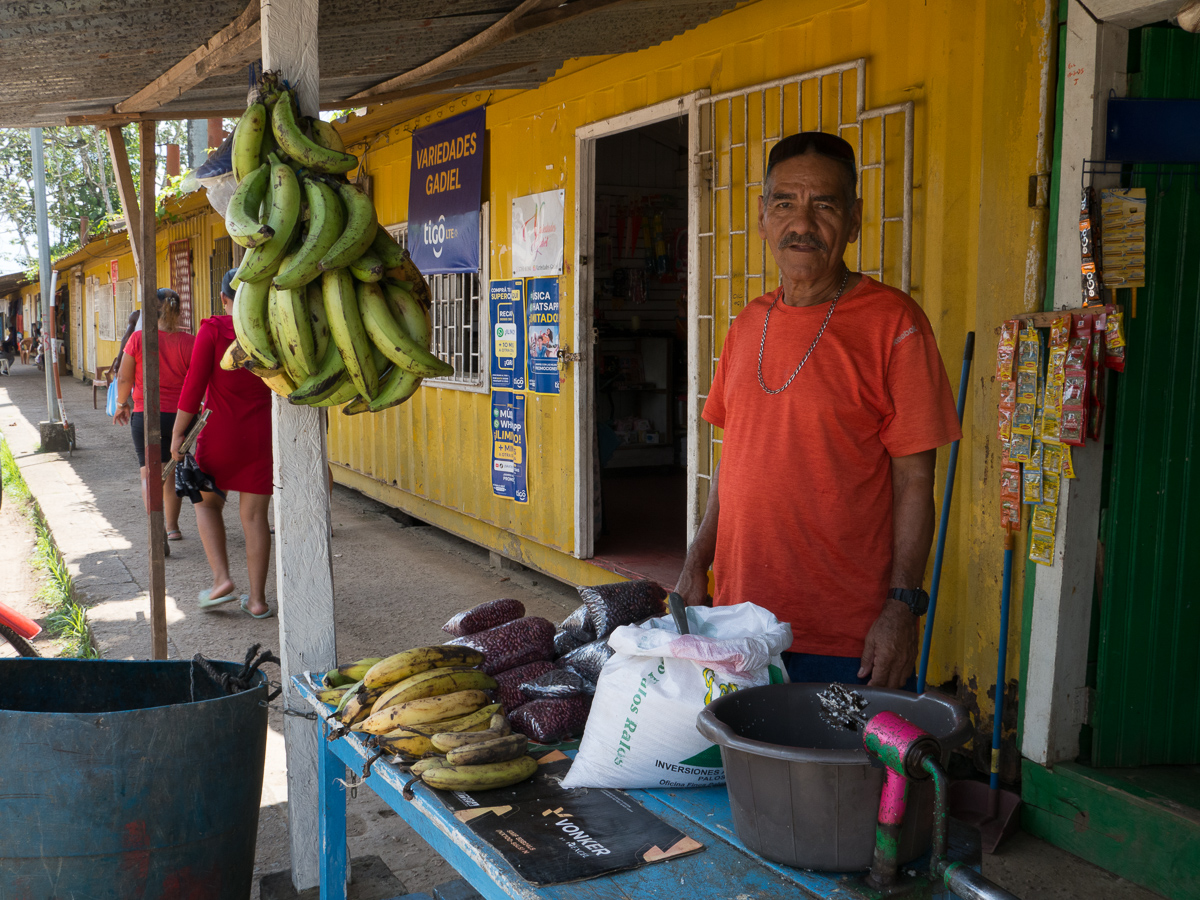
Our arrival at San Juan de Limay was quite amusing. It’s a small rural town, no tourist hotspot.  Gid had found three guest houses online but when we arrived the first didn’t seem to exist. We headed for the Parque Central to get our bearings in the town.  Pausing outside the Museo de la Revolution, to Gid’s annoyance I went in.  What were they going to tell me in there he was saying.  The very helpful young lady understood enough of what I was trying to explain.  She shut up shop and led us around the town on her trailie. The first two accommodations fell flat as they were full.  The third place we visited was still running and had space.  We’d never have found it – hospedage – lodging house – was badly spray painted on the gatepost .  This was it then.  I went to look at the room in a block that could have been the old stables out the back of the family house.  I came out in fits of laughter.  Gid was appalled at how rude that was but it bought new meaning to en-suite.  The room was small.  No problem there but it consisted of a bed and folding chair, a fan and a shower/toilet trough.  No towel, no sheet, no soap, NO TOILET PAPER, no door lock.  The sink was communal with a wash board and trough in front of the rooms.  They all caused us some amusement.  The shower head was at the top of a pipe as you’d expect but the slightest turn of the faucet and the head catapulted forwards spraying a gush of water over the gutter right onto Gid’s kit.  More hilarity but the cacophony that started at 4:15 was definitely a groan.  Our two cockerels were trying to wake the neighbour.   Any disturbance in the brood resulted in an almighty thud on the corrugated tin roof that was suspended above our walls.  To use the one socket in the room was a balancing act but it did the trick – we had a cup of tea in the morning.

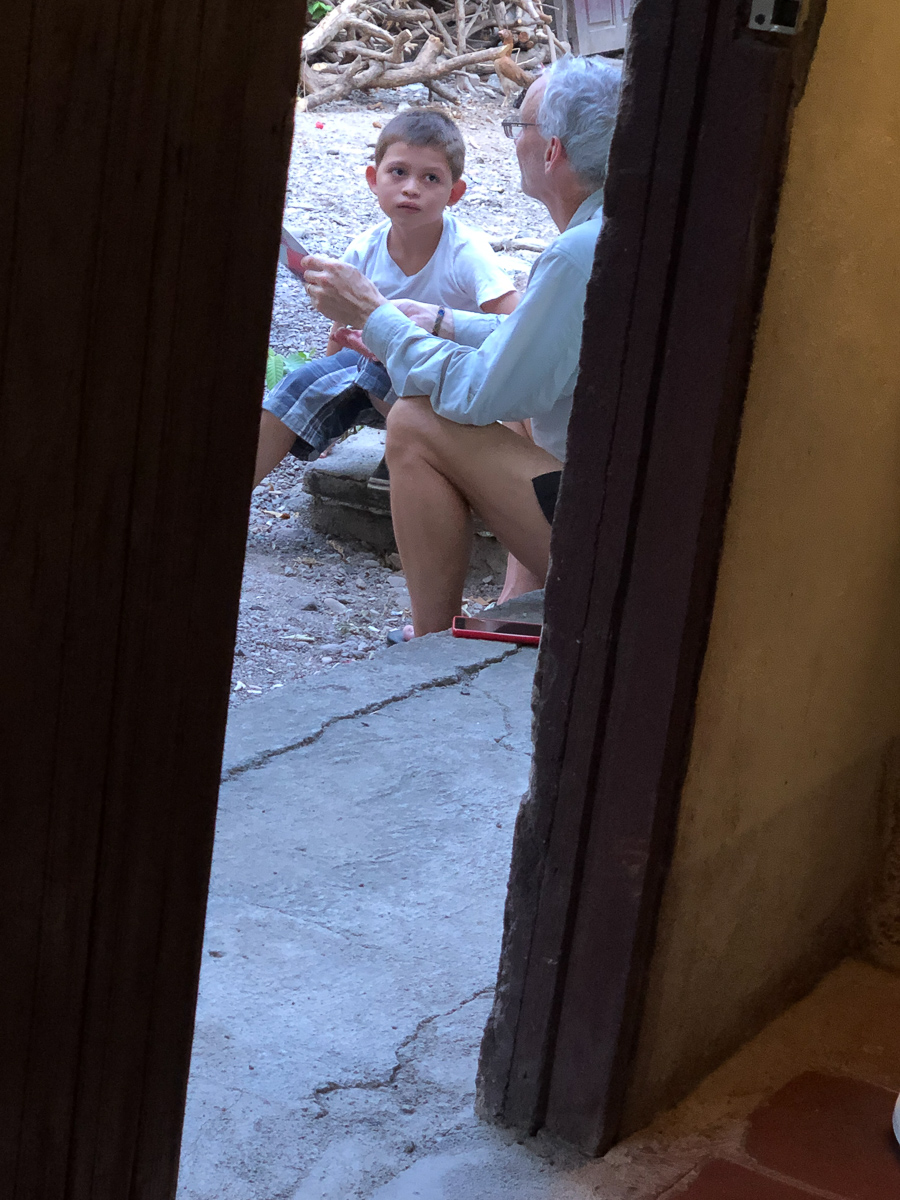
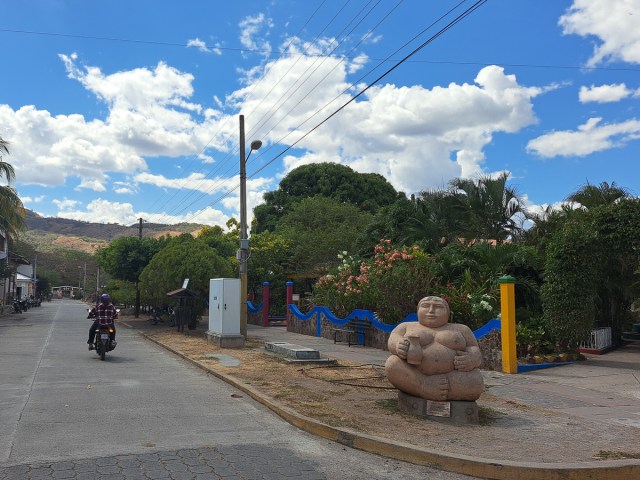
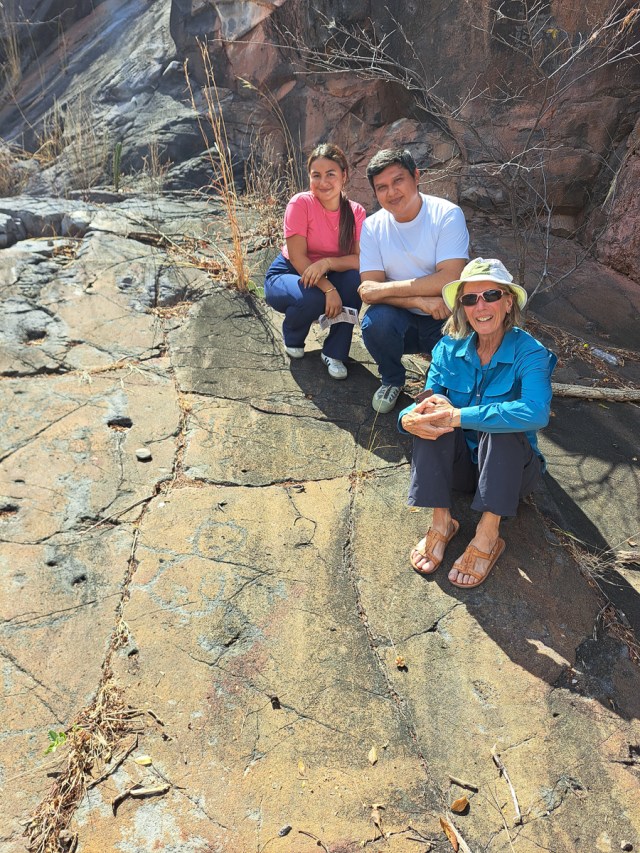
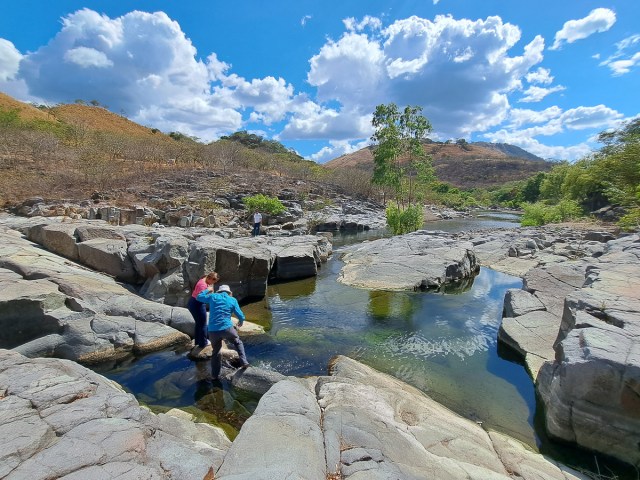
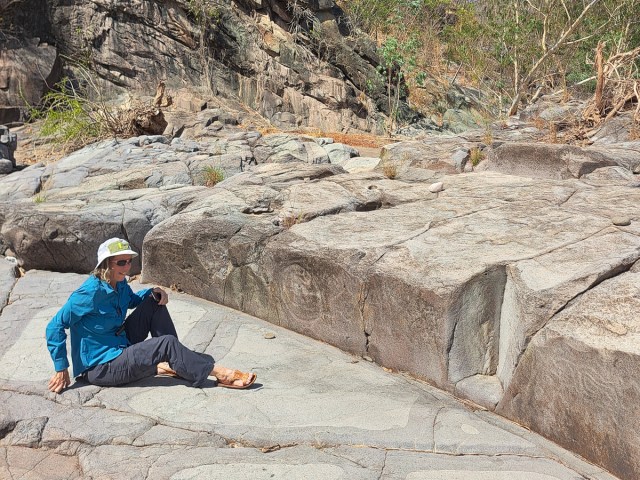
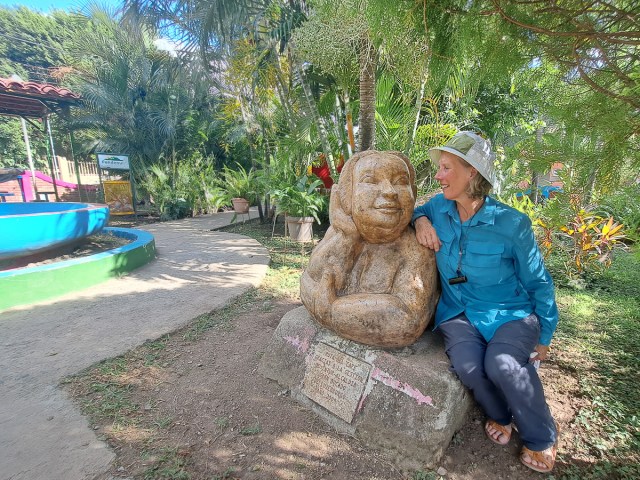
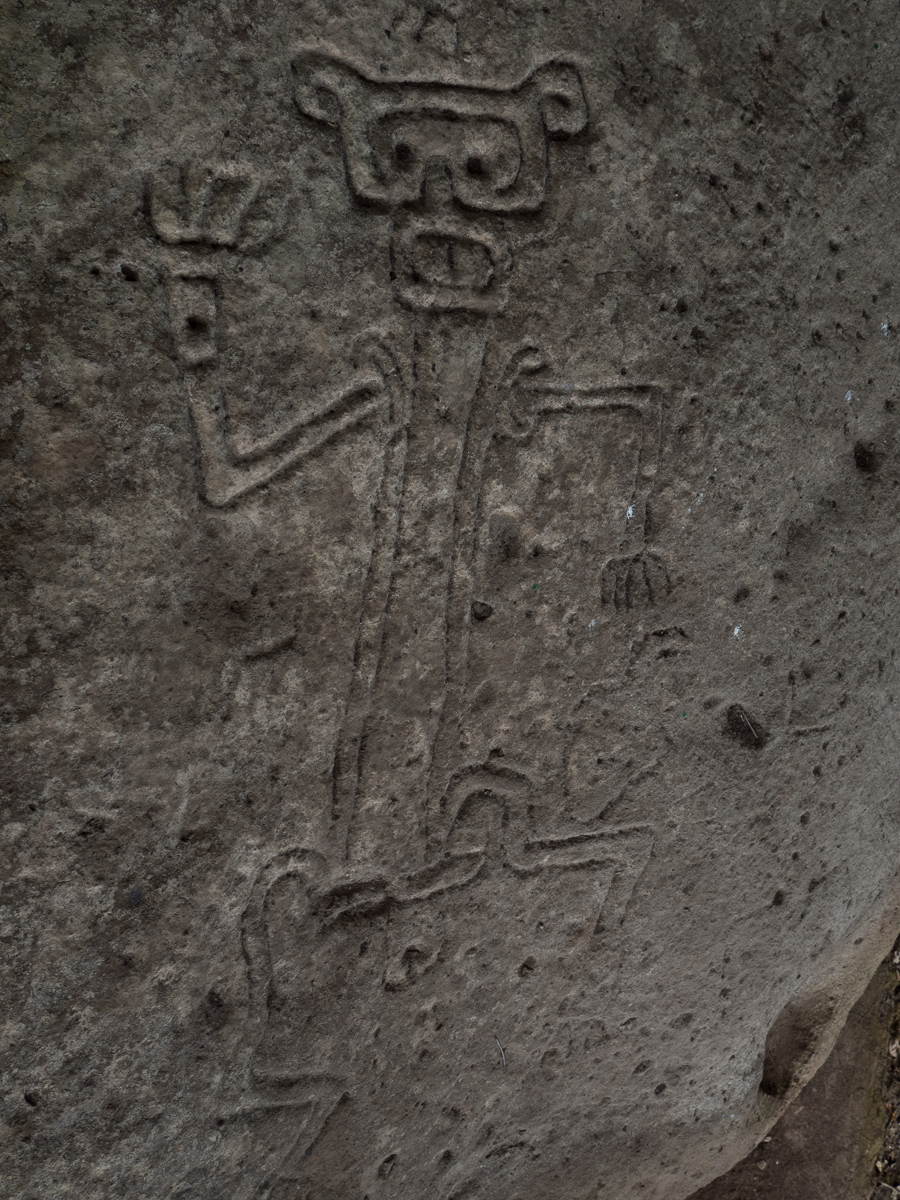
Having settled in we set off in sloppy sandals to see what we could find out about trips to the petroglyphs.  The town hall seemed a suitable place to start our enquires.  A rather grand name for an old single story building with a few offices.  The guard patrolling outside suggested the end door was the way to go.  He took us down there and spoke to the staff.  One very kind lady came out to check what it was we wanted and asked us to wait in the main entrance.  Thirty minutes later we were off!  They didn’t check whether it was possible but had arranged it there and then.  Five of us – three staff and the two of us, piled into the 4WD Toyota Hilux.  The lady passed us a leaflet of gordas – stone fat lady carvings that can be found around the town and local area.  I thought we were off to see some of these but no.  We took a back road out of the town and bounced along a dirt track, forded a small river and finally stopped at a pool.  The driver stayed put but the rest of us piled out and set off on foot clambering over rocks to cross the water flow.  What were we doing in flimsy footwear with not a camera between us?  Benito, the main guide, led the way and swept the debris off the few petroglyphs.  The young lady was new to the carvings too but was at least wearing trainers. Our return route was adorned with stops at a couple of local craft places – what a lovely day!

I had expected to move quickly through Nicaragua but in fact it has been the opposite.  Spurred on by near perfect road surfaces (everything is relative) and the relaxed nature of the people it’s been a pleasure to be here.  As always the people we meet and their recommendations of must see this or that has helped to forge our plans.

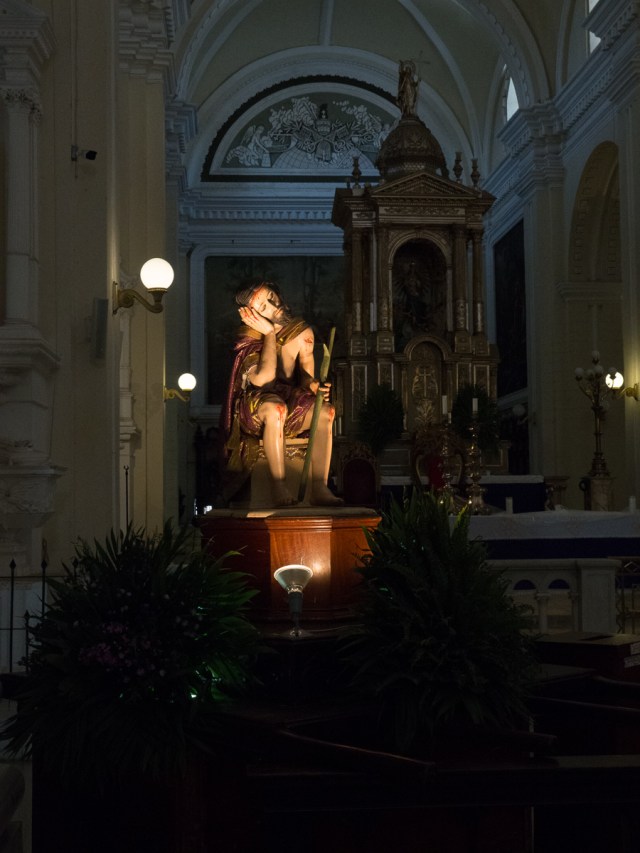
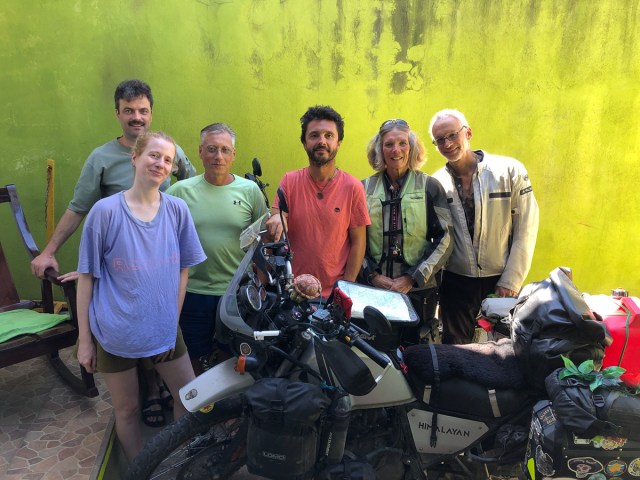
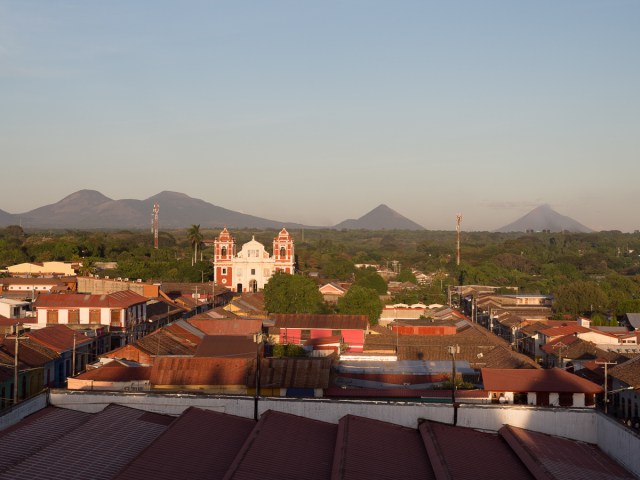
At Leon, our first stop after the petroglyphs, we stayed at Casa Lula hostel and bonded well with a lovely group of experienced travellers.  No one was in a rush, tales were exchanged, must visits suggested. The luxury hostel was a comfortable contrast to the Esteli condom box and Limay hospedage. A guided tour of the town very much focused on the revolution despite there being some lovely architecture too.  That isn’t so surprising as all the murals were of scenes from the revolution.  It may have been forty years ago but some murals were reworked as recently as six months ago to keep their political message fresh. Our guide, Antonio, explained the events portrayed and also some of the symbology.  Many of the characters (the deceased ones?) were painted with prominent shadows, and these represented their effects on Nicaraguan society and politics after their – mostly premature – deaths. Leon is Nicaragua’s intellectual – and revolutionary – hub, and while there were a fair few tourists, they didn’t swamp the place as they had in, say, Antigua, Guatemala.

One’s never far from politics anywhere in Nicaragua – red and black FSLN banners are everywhere, and on some roads I noted all the electricity poles were painted in the colours, too. It feels a bit one party state, although formally, it isn’t.

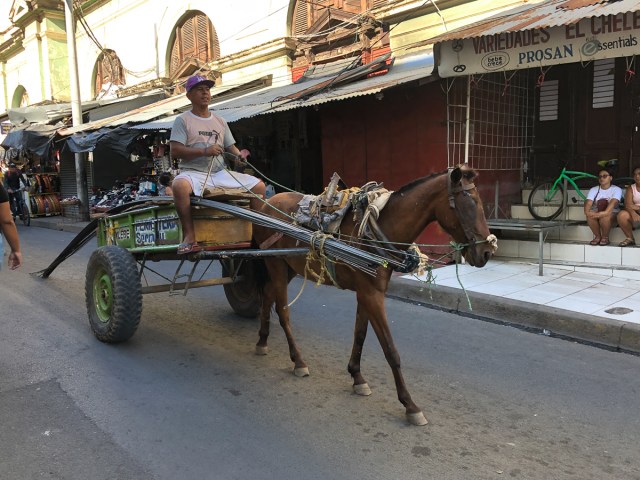
Thankfully our hostel host was interested in our petroglyphs excursion and pleased that we’d gone off the beaten track.  He lamented that most tourists hit the west coast going straight down the main road and out the other end.  ‘It’s such a pity,’ he said, ‘as Nicaragua has so much to offer and is a very safe place.’  Our horizons were expanding!  Nicaragua is one of the poorest countries in Central America, but also unusually – kind of – socialist. It’s also, currently, not terribly democratic. Some effects of this might be the lower murder rate, far fewer visible guns, the better highways, the better driving, the much greater use of beasts of burden, and the worst housing we’ve seen on this trip. Plus the curious phenomena of being begged by a chap who was fitted with a pacemaker – But then, since Belize, the Caribbean coast has offered a uniquely stylish form of begging.

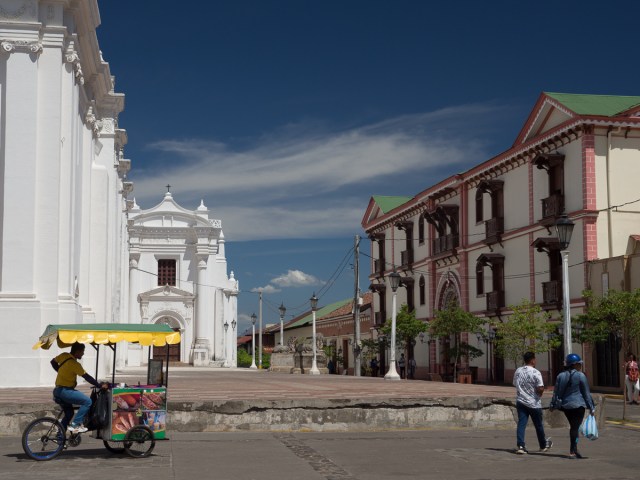
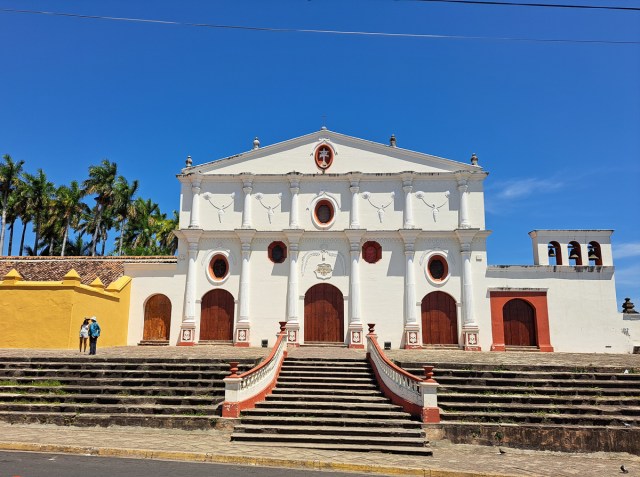
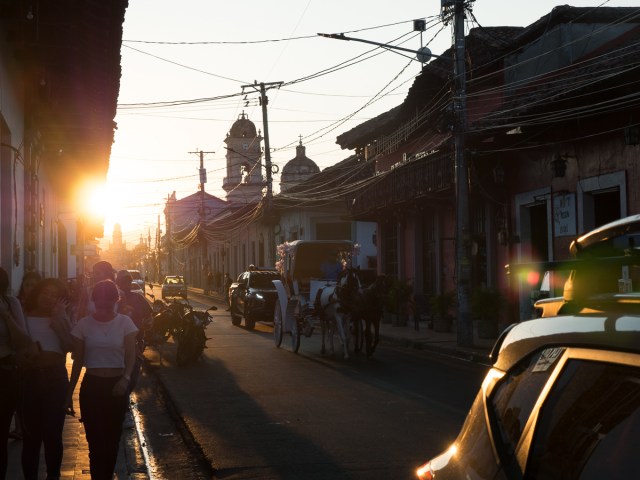
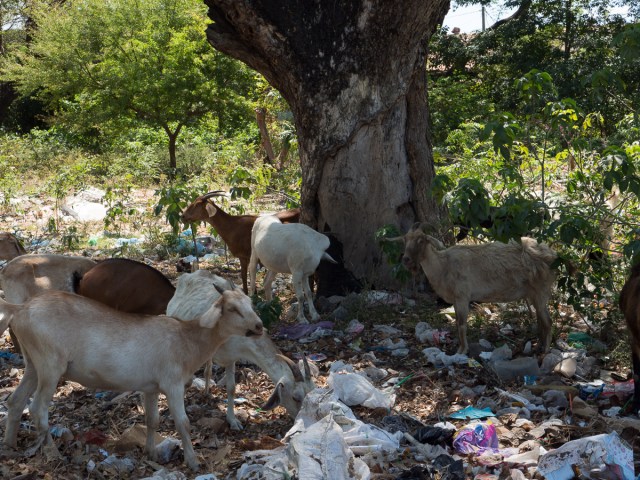
No matter where our new routing may take us Granada, just down from Leon, was next.  It’s the oldest city in Central America, with elegant buildings and lots of history. So it’s a must see destination and indeed is a very touristy town. It has a lovely promenade to edge Lake Nicaragua, and a small pier.  We stayed near the lake but were warned to go further along the shore away from the town centre to find more pleasant places to swim.  As I’ve said, everything is relative.  We did venture thus to risk a dip only to find that our swimming strokes stirred up one bit of rubbish or another.  One dip was plenty!  Shady trees and a strong morning “sea” breeze made it bearable in the 7am heat offering Gid a venue for a rare jog.

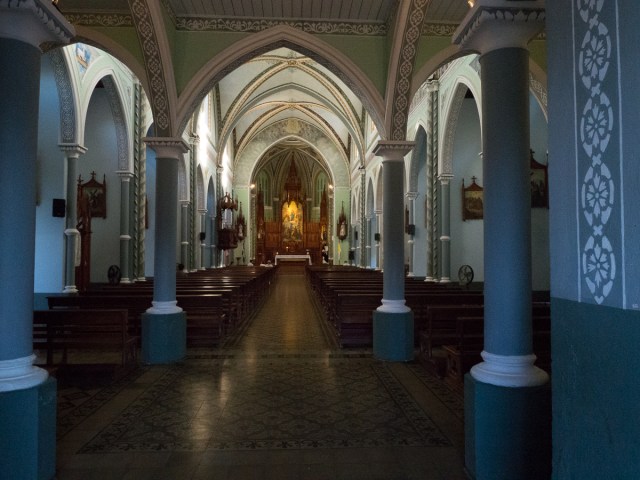
The town was lovely with a vibrant central square.  Despite the churches being flagged up as having splendid architecture and historical relevance they were in the main shut.  There were three on our bucket list to see: one we did see inside, a second we were able to peer into a rather dull side chapel when a service was taking place but the most ancient cathedral in Central America, the piece de resistance, was hidden behind its firmly shut doors with nothing to suggest opening times.  Circling it we found a very shabby rear door that advertised language lessons, but nothing about the cathedral itself.

A large part of northern Nicaragua is inaccessible jungle while the southern half has the 160km long Lago Nicaragua in the middle creating a this side of the lake or that side of the lake dichotomy.  Surprisingly there is a border post at the end of the east or west route down past the lake but no joining road at the bottom.  It’s an odd looking border, really, why doesn’t Costa Rica extend up to the shore of the lake? Presumably the Spanish Empire had a reason, when it demarcated the administrative boundaries this way.

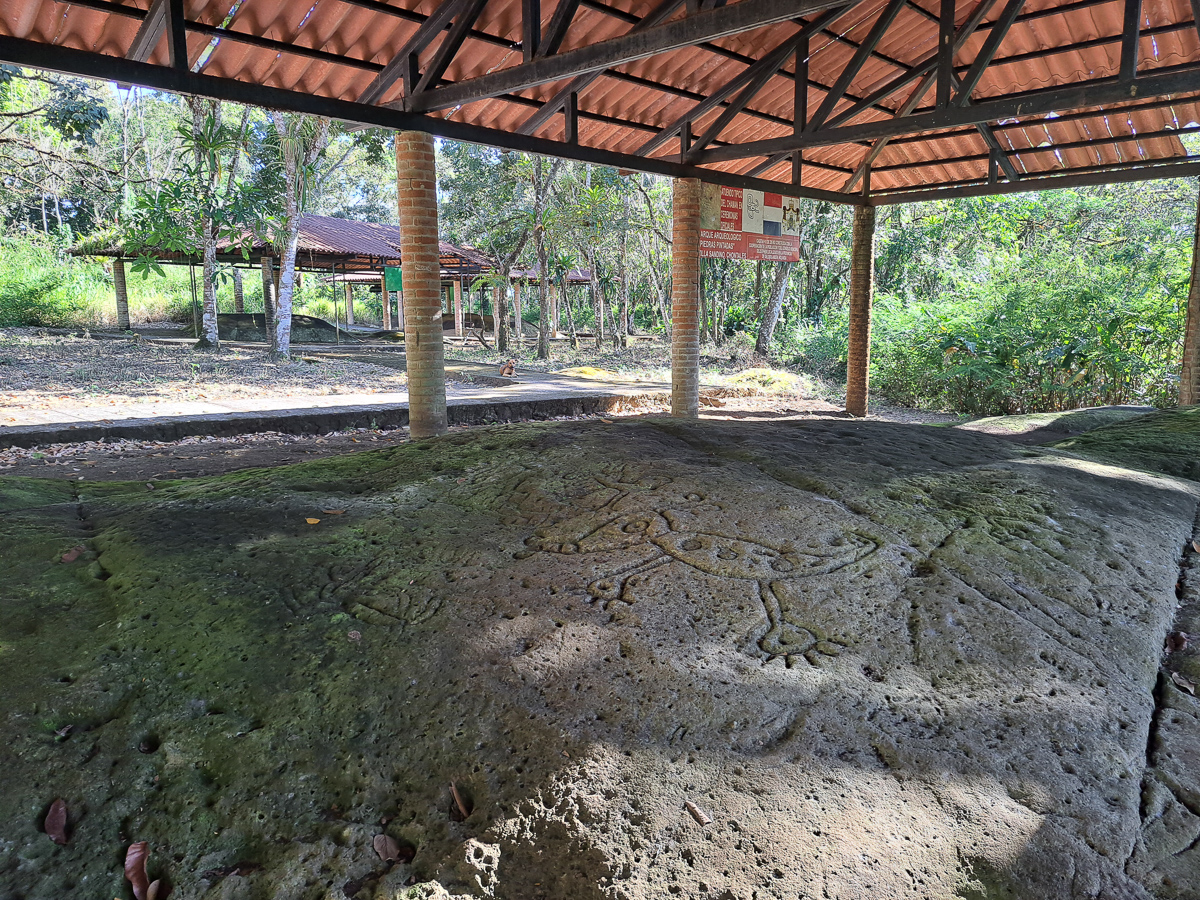
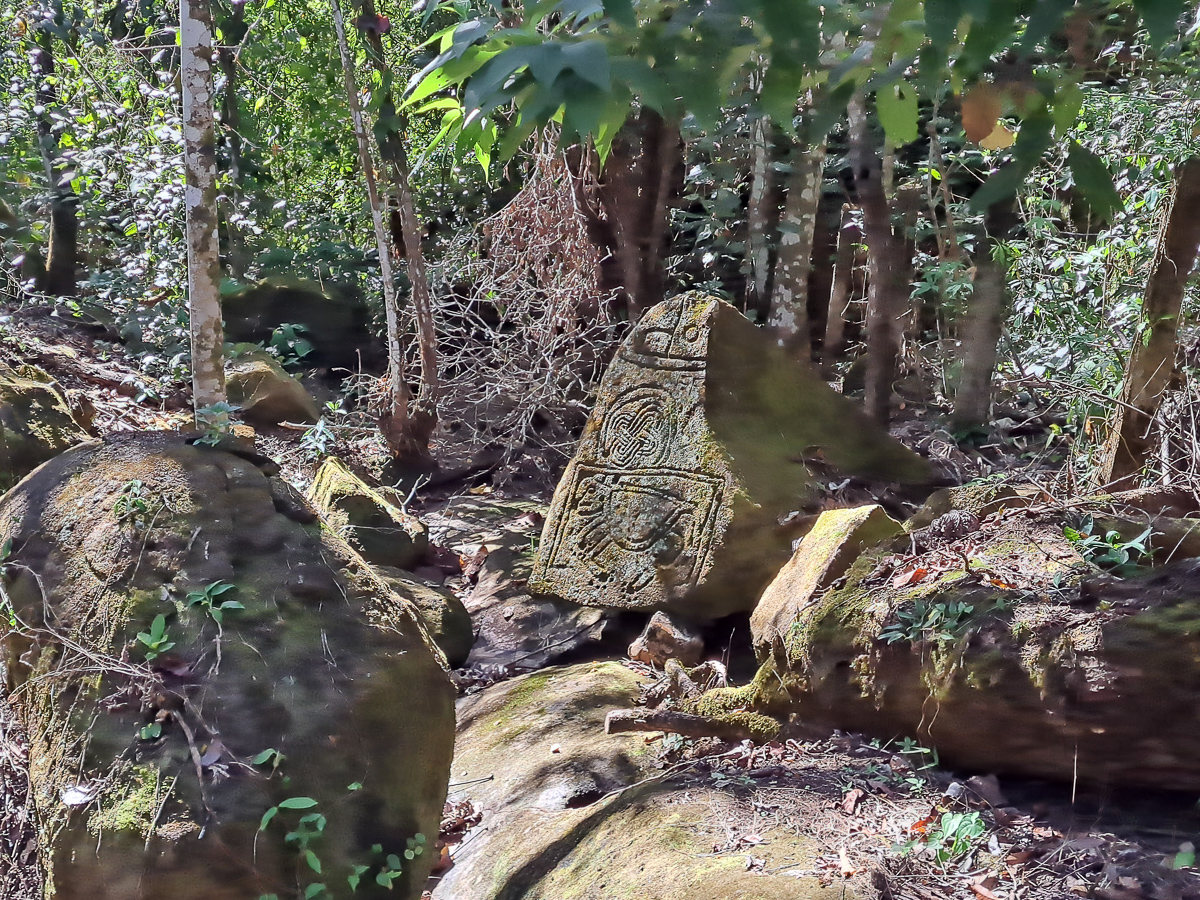
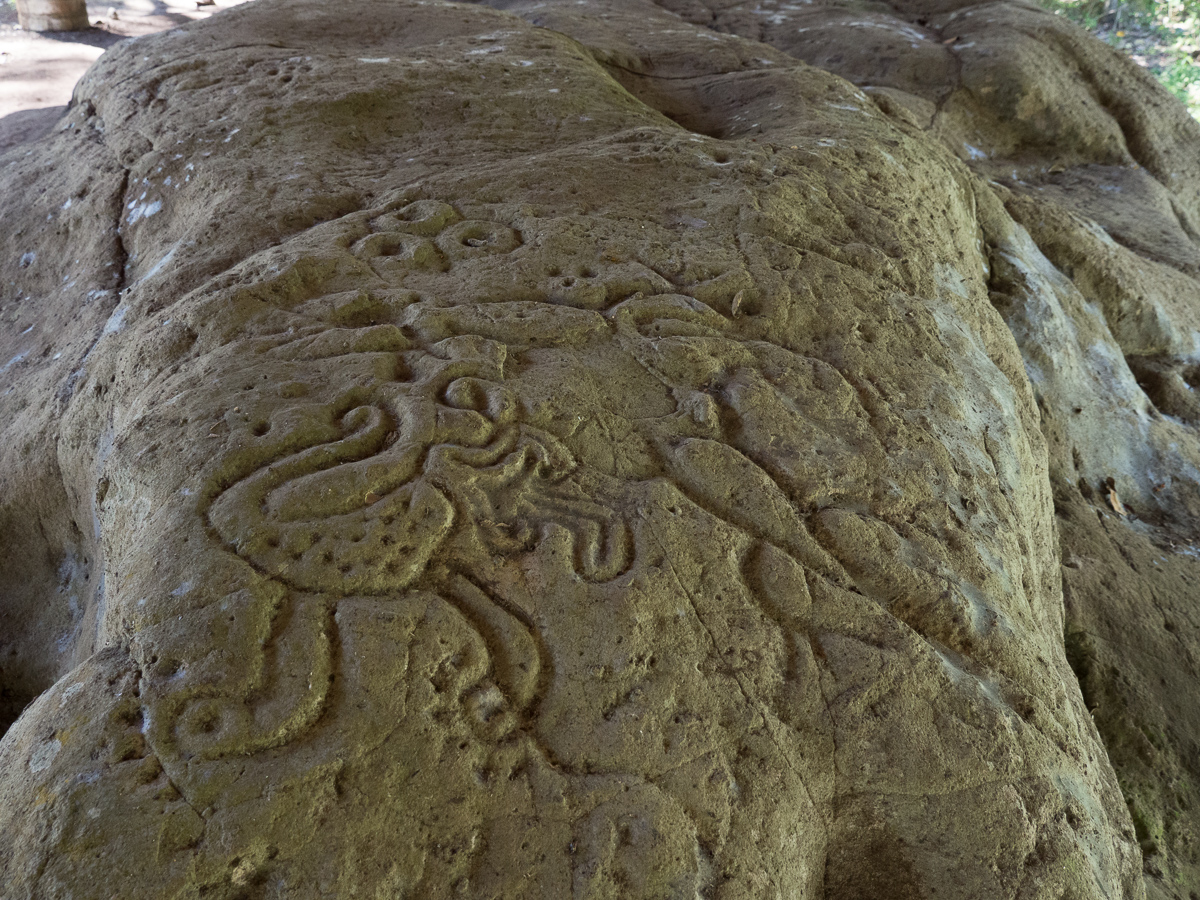
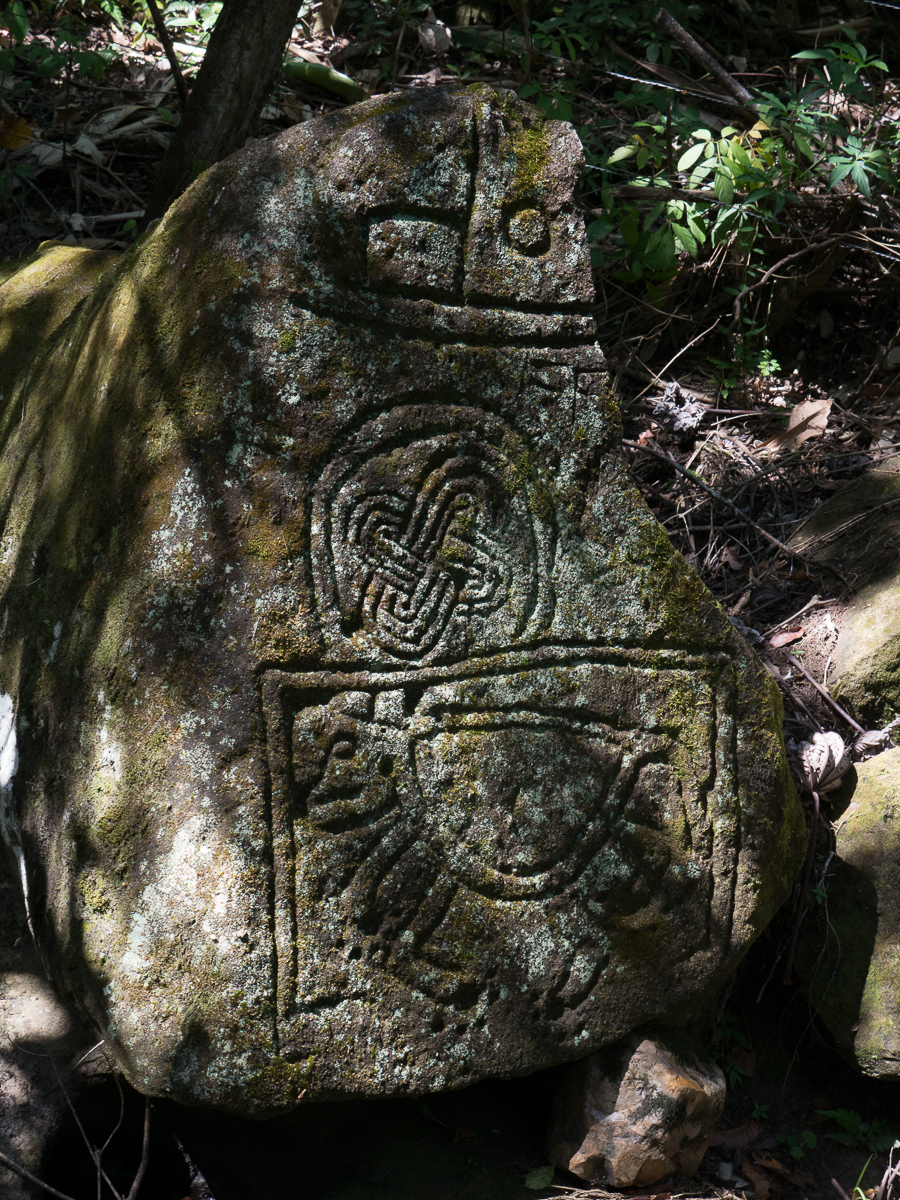
From Granada we took off slightly northwards curving back to reach the ‘that side of the lake’ more petroglyphs being a strong attraction.  Ok we’d seen some in very enjoyable and amusing circumstances but our National Geographic map has many references to them and surely some were going to be more impressive than the six carvings we’d seen.  They were!  Over 2000 we were told.  Many of them were highly graphic and in remarkably good condition for their 2000 years of existence.  We’d followed a sign from the highway 8 miles up a dirt road to reach the ranch style site.  A young guide took us around a trail explaining the meaning of the petroglyphs.  Many were to do with fertility and childbirth.  Some carved on standing stones showed the chief.  While another showed the dog he would eat.  We were now, after months, out of the Mayan area – these carvings were by the Chontales, but there were still some similarities of style.

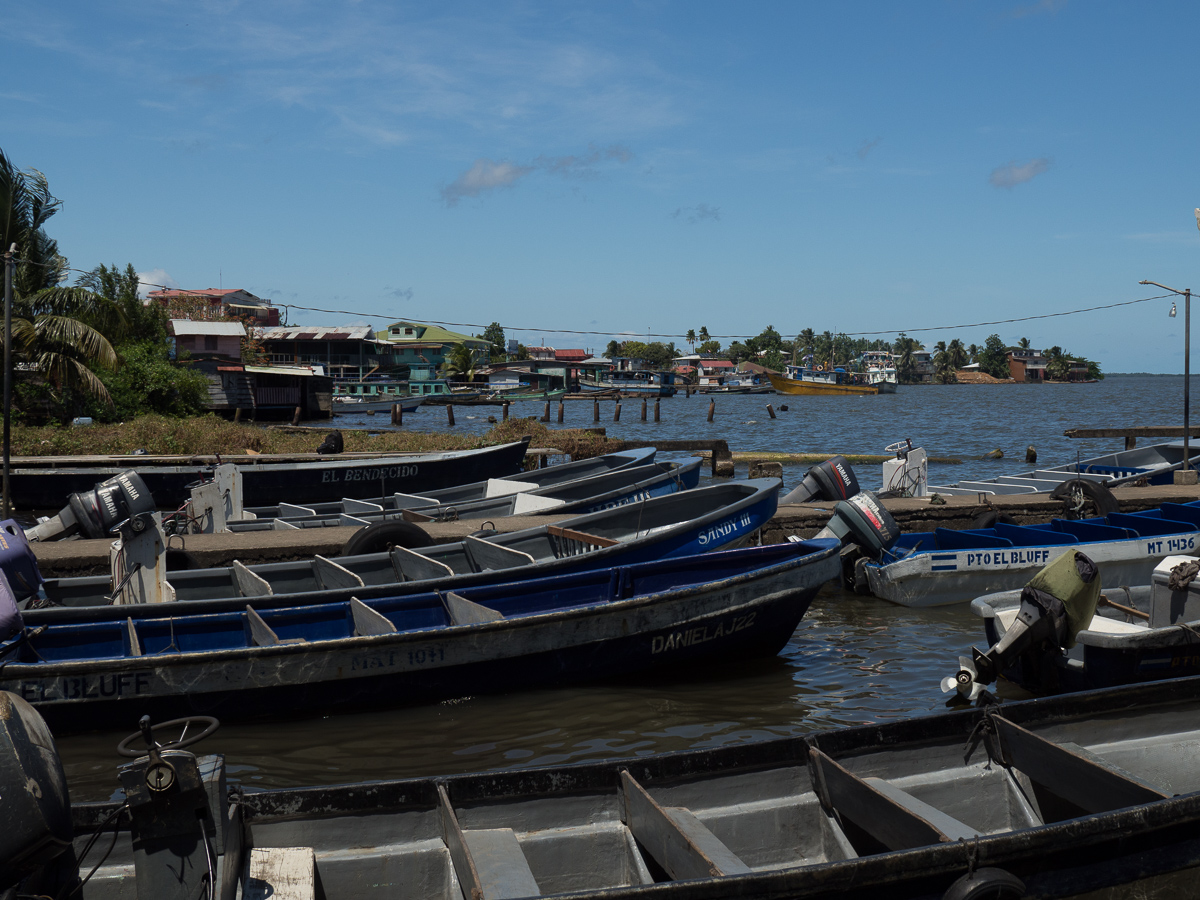
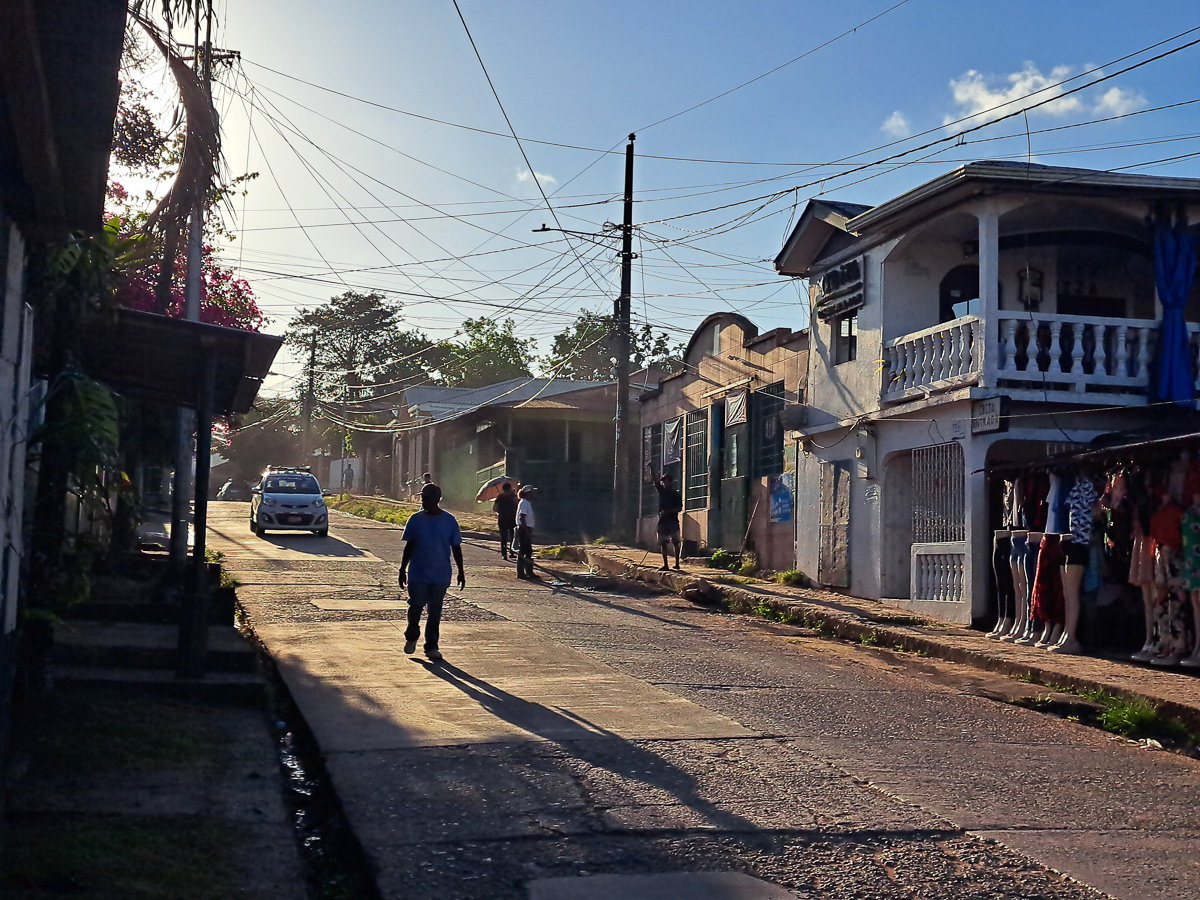
At the end of the NIC71 highway – mercifully now all paved, and really rather a lovely ride –  was Bluefields.  ‘We don’t see tourists down here.  They don’t come this far’, was one greeting we had.  It was a bustling town with a multitude of taxis.  Tichy cars that four people would pile into and off they crept, or lunged, forcing into a gap.  At least three taxis would fit across the narrow, bumpy streets, and frequently did. 
This eastern coast on the Caribbean is called the Moskito Coast after its original human, not insect, inhabitants. The Moskito Coast of Nicaragua (and coastal Honduras & what’s now Belize) was isolated from the Spanish Pacific coast, with only one through connection – via Lake Nicaragua and the San Juan River. Consequently it was associated mostly with the British-dominated Caribbean islands, and was part of the British Empire until around 1860. To this day, English is spoken in Bluefields. 
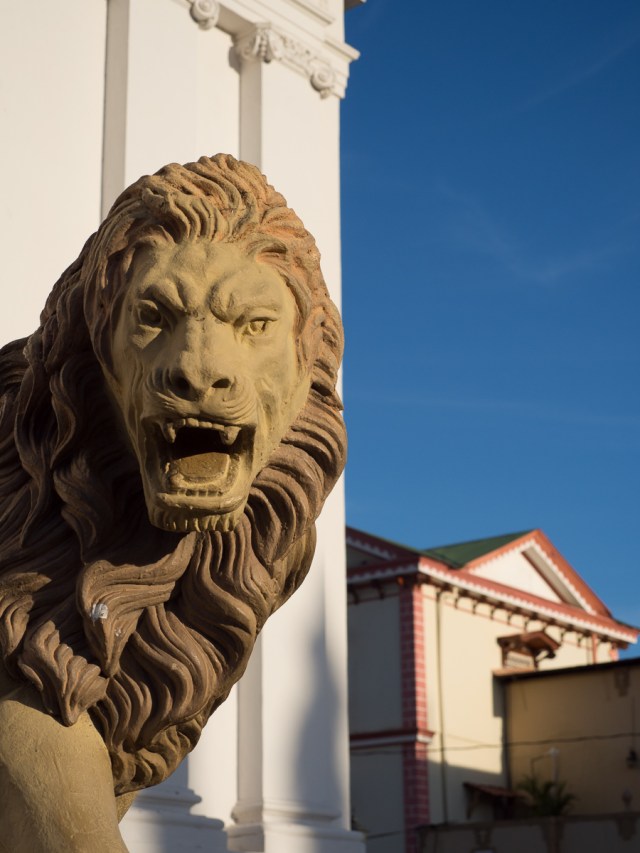
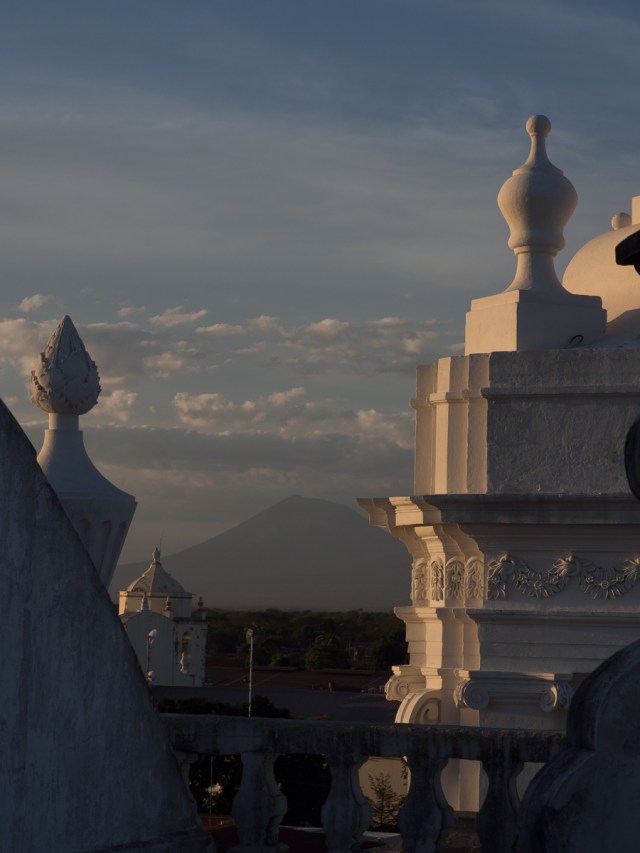
A museum told the tale of the slave trade dating back to the 15th century.  Two hundred years later it came to an end in British territories when the British Government offered to pay the slave owners ÂŁ25 per slave.  They were never paid but the people were freed.  Quite a few freed slaves from the Caribbean islands came here at that time. That was the British/American slave trade of transatlantic journeys: The Spanish Empire’s slavery was quite different – the Spaniards enslaved the indigenous population of the Americas where they found them. That form of slavery was formally ended a little earlier, shortly after “New Spain” declared itself independent of “old” Spain in 1821, although “old” Spain waited another 20 years.
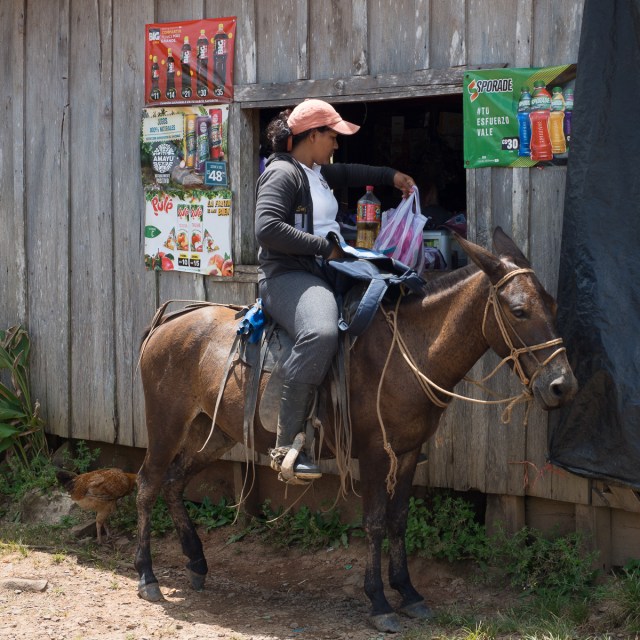
To this day most of the regional transport is by boat.  Bluefields’ connection to the capital Managua was by dirt road and riverboat until the new road was completed in the last five years.  Bluefields is Nicaragua’s Caribbean port, and the boat hub for the rest of the coast.

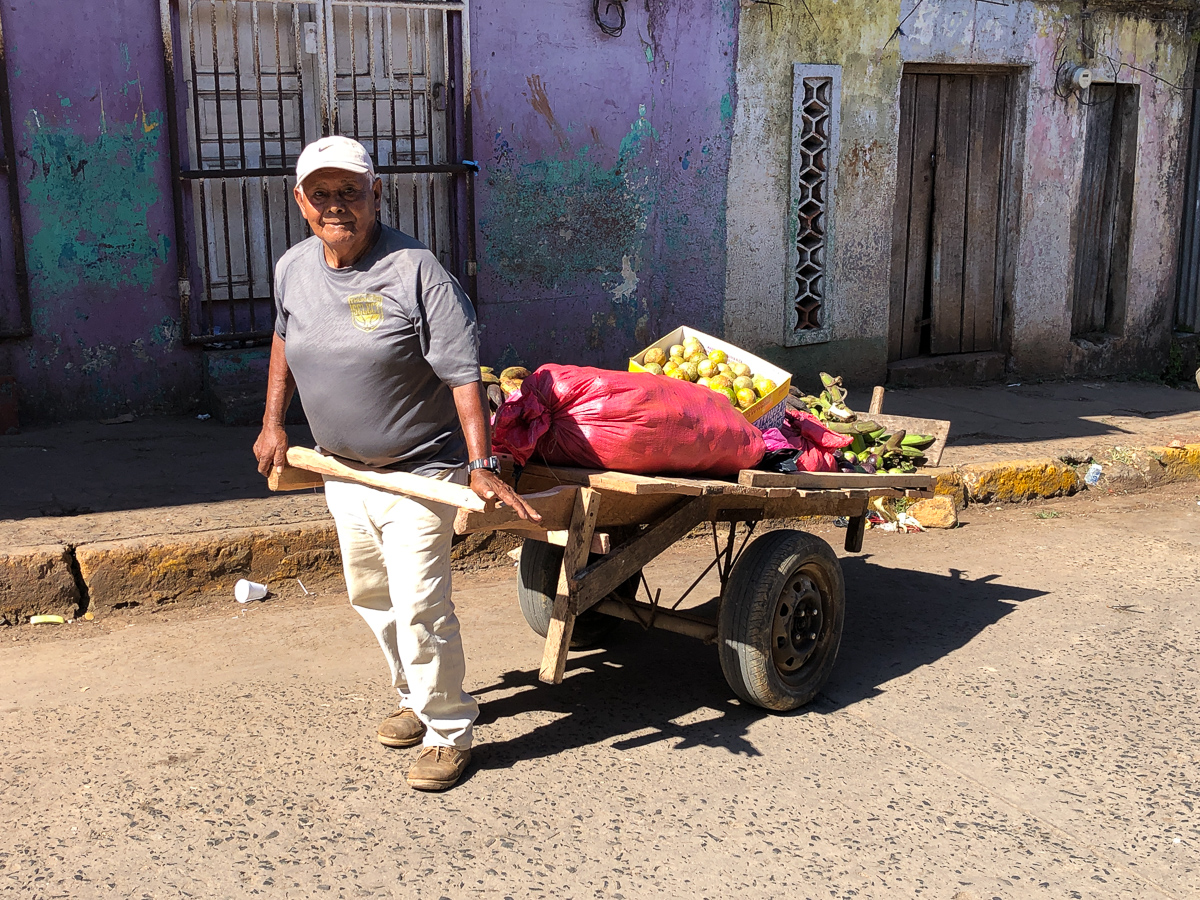
For me the market by the waters edge was the highlight of the town.  A small school hall sized market where people sat with their wares peering out of the gloom backlit by the opening at the far end where it reached a harbour arm.  Out on the harbour arm a few boats were secured, produce still piled high.  Gid was keen to try some of the novel fruits.  One lovely Nico hombre split his fruit open for Gid to try it.  One came my way too. Gid slurped through his and agreed to buy a few.  A bag was a problem but voila!  I had one.  The chap enthusiastically put a good dozen or so in and said “30 Cordobas” (about 70p).  Gid pulled out a 50 note which caused some concern as there was no change.  After a moments hesitation the man put another half dozen fruits into the bag despite our protestations and was then happy to keep the money.  I was highly amused as I’d given Gid my fruit too.  Thankfully, back in town a barrow man pulling his cart full of fruit passed me as I waited for Gid to buy groceries.  I carefully stopped the man whose tummy enabled him to support the bar no-handed.  There was a space on his cart so I quickly put most of the fruit on it smiling at him as I did so.   He soon realised what I was up to and didn’t seem to mind.

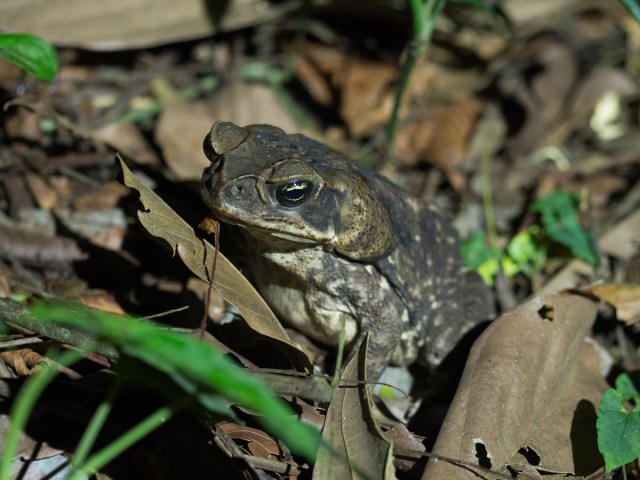
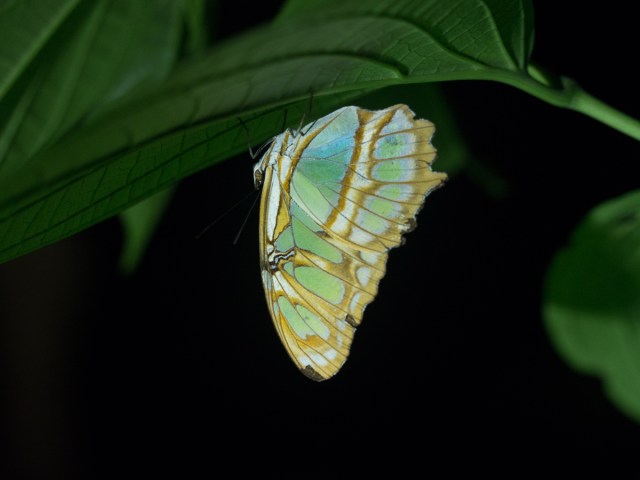
Our route through Nicaragua continued as we backtracked hunting for sloths and quetzals.  Having been fairly unsuccessful at finding much wildlife on our own we opted for guided tours.  One such tour overlooking Matagalpa resulted in guide David claiming for us a female quetzal, the national bird of Guatemala [Alas, when, later we looked at the photo with Nubie, a keen birdwatcher, it looked a lot more like an elegant trogon].  At the same location we had a sloth in a tree and a toad in our handbasin.  We were told, ‘Yes, there is a toad in the basin.  That’s where it lives.’. And did we mention the butterflies?

Lake Apoya was our best location.  The warm volcanic crater lake was clean enough to swim in. The hotel pontoon tantalisingly floating twenty metres away.  Our steep jungly trek up to the village at the craters rim, to the soundscape of howler monkeys, passed another load of stunning petroglyphs – completely unsigned and unexpected.  The lack of exposure to the elements may be why they are still so pronounced.

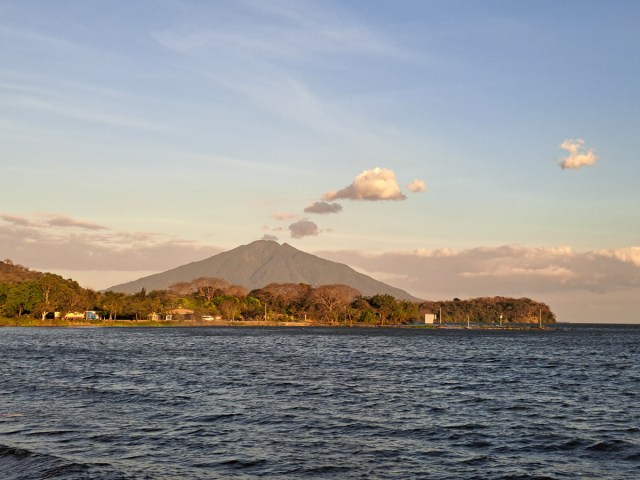
Ometepe island was another attempt to see sloths.  An online search suggested that they were around on Volcan Maderas.  Wrong!   Not here we were reliably told by locals.  The scenic ride around the eastern end of the island compensated for our lack of sloths.  Amusingly, when we passed a sign for petroglyphs we didn’t even stop. Mombacho on the mainland came up trumps though. We found our own sloth – distantly – curled up in a tree, then a guided night walk found one actually doing the sloth upside-down tree locomotion – hurrah!

Now by this point in the posting, our biking friends are chafing – what about the riding, how are the bikes? The roads are in pretty good nick, and more are surfaced than to the north. At least two long rides (38 and 71) were really nice, light traffic, good surface, entertaining and scenic roads. There’s a much more restrained feel to the driving and riding. That’s possibly because we saw a lot of police actually taking an interest in driving standards, which may be why foreign riders complain of “corruption” – the speed limit is maximum 80kph and even those roads have many short sections of much less.  A KTM Super Adventure might be hard to restrain: The Himis kept us out of trouble, but still blast past the lorries. Someone says it’s more fun to ride a slow bike fast, than a fast bike slow. The SUVs and new pickups still flew past, occasionally. 

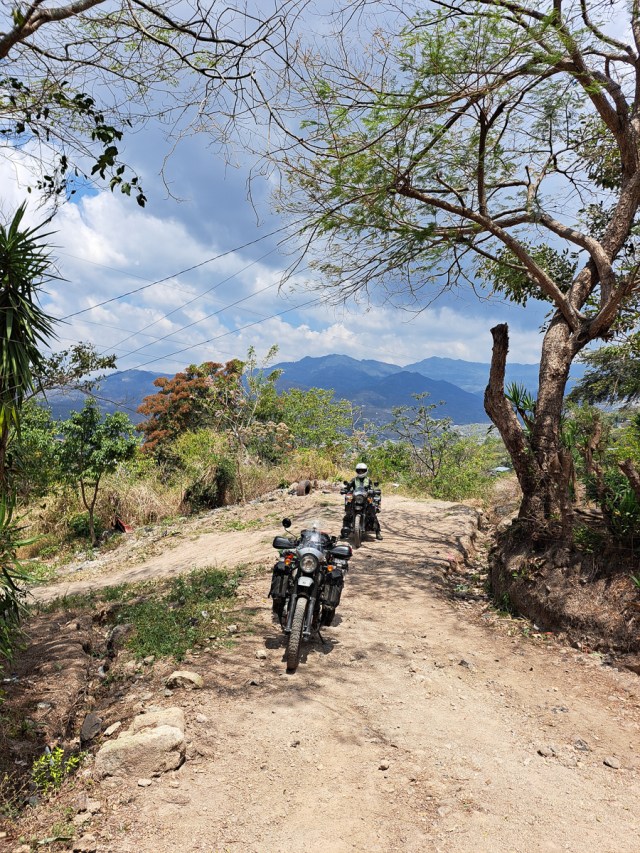
But some of the accommodation – even posh places – have been up bloody awful tracks that we would have not voluntarily have tackled. The Himis seem to take it in their stride – first gear seems to chug up anything that can claim to be a route – but our skills and strength are strained and we arrive in a frazzled state of mind and a muck sweat.

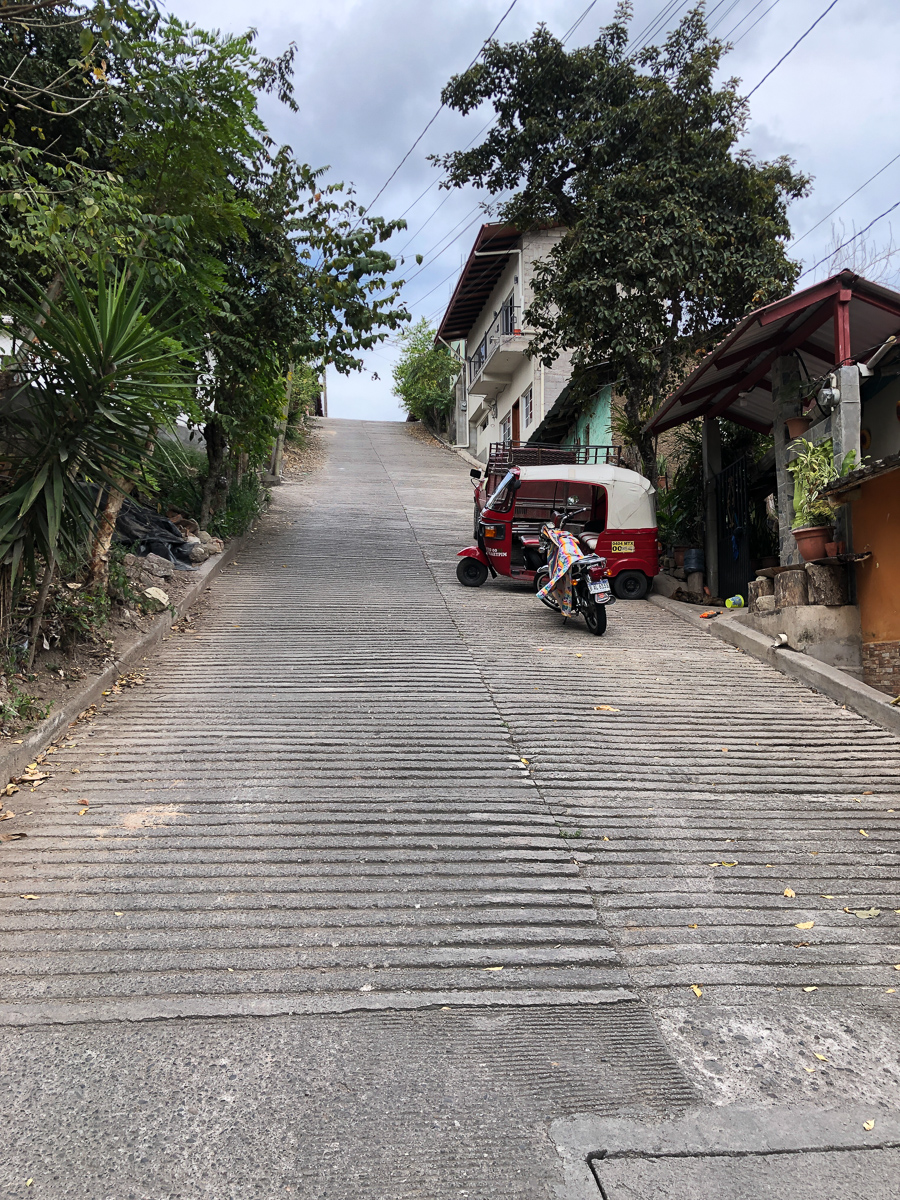
There was a scary moment leaving our hostel in Matagalpa, coming down the very steep, loose, dirt track (can’t call it a road), Clare couldn’t hold the bike on the rear brake, pressing with all her strength. The 300 kilo combo of Clare, baggage, Indian steel and souvenirs was gaining speed! Fortunately it all stayed rubber down until the slope eased.

Photo – Peter Damsgaard

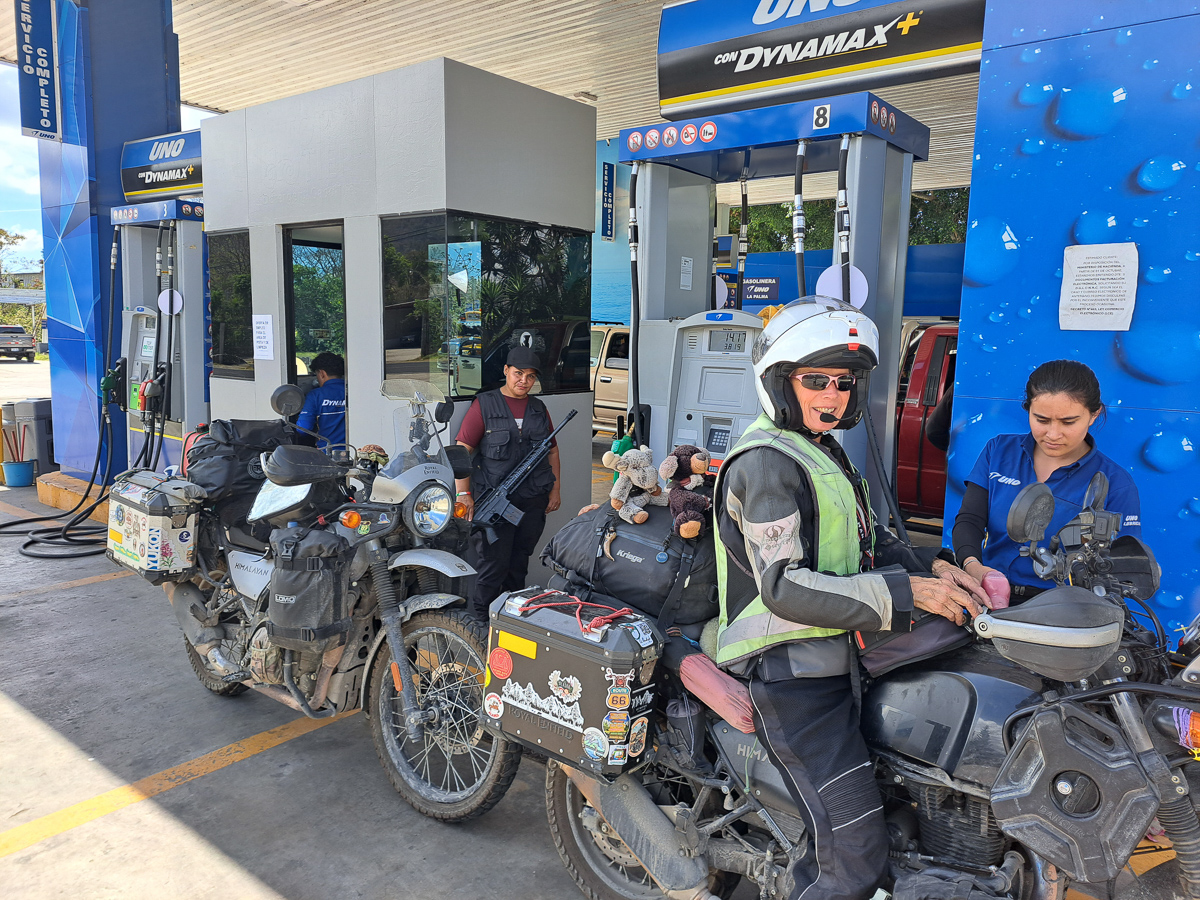
That’s when we spotted Clare had unexpectedly worn down her rear brake pads (not the fronts, of course there’s a set of those under her seat). Unfortunately, Royal Enfield have no presence in Nicaragua. The pads might have lasted until we got to San Jose, capital of Costa Rica, but Gid’s online researches revealed that possibly a very few local bikes shared the pad pattern, and after about half a dozen dealers and parts places (repuestos), somebody found a badly packaged set from Bajaj in the shop’s box of oddities. Alarmingly, they cost only $3. But they dropped in fine and do seem to work.  Adjusting Clare’s pedal higher has made it easier to apply more pressure, even seated, which seems to have been the actual problem.

I-Spy on the highway: The 1979 revolution didn’t enamour Nicaragua to the United States (remember the “Contra” affair?), so of course the USSR pitched in with support. Thus giving Gid a little entertainment spotting the USSR’s automotive antiques among the Toyotas and Chevrolets.

So, as we go on to Costa Rica, crossing a border from one on Central America’s poorest countries, to one of the richest – how was Nicaragua?  Just great.  It actually did feel safer than its northern neighbours, for example, police and security guards are still common, but less often armed.  It’s often quite underdeveloped, with an eye closed we can mistake poverty and improvisation for bucolic bliss, and tourists are rare enough to be welcomed.  The underdevelopment, and perhaps a degree of isolation after the revolution, mean that much more old growth forest remains than in some neighbours. The only regret, really, is that so many times, we stayed in accommodations run by foreigners, as we ofttimes didn’t find local places where we were headed.

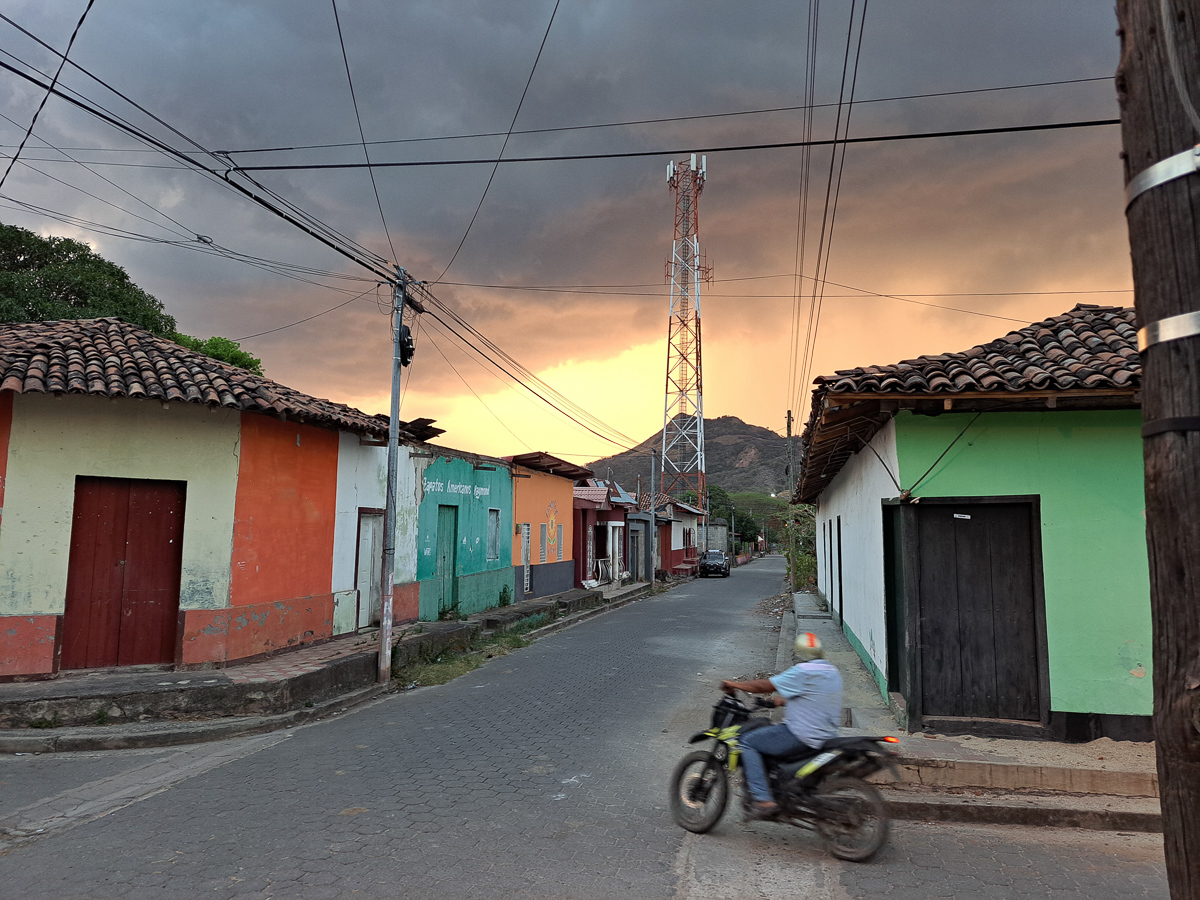
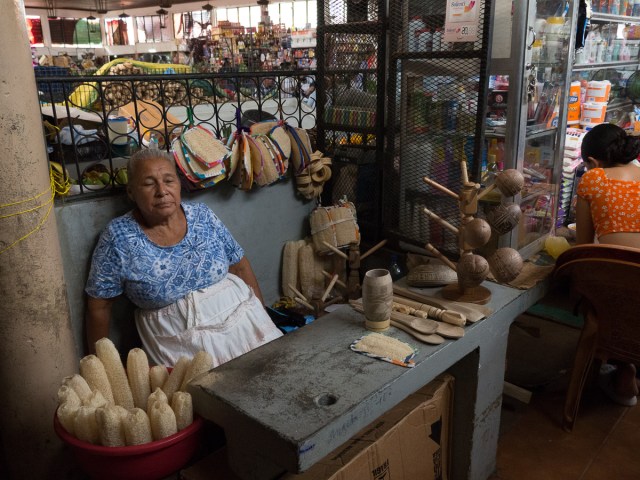
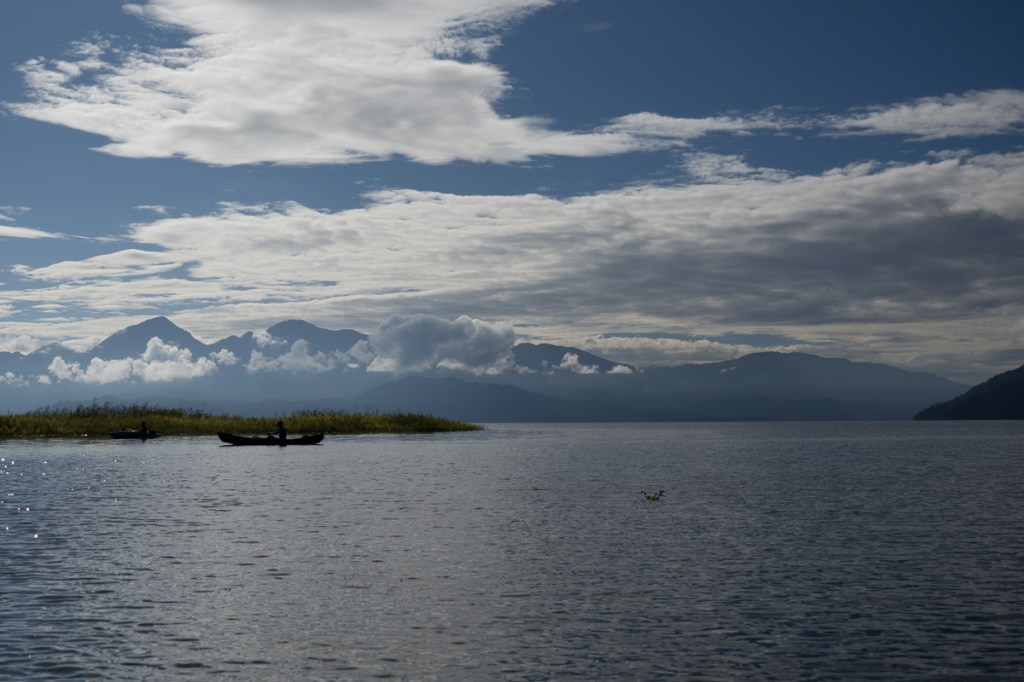
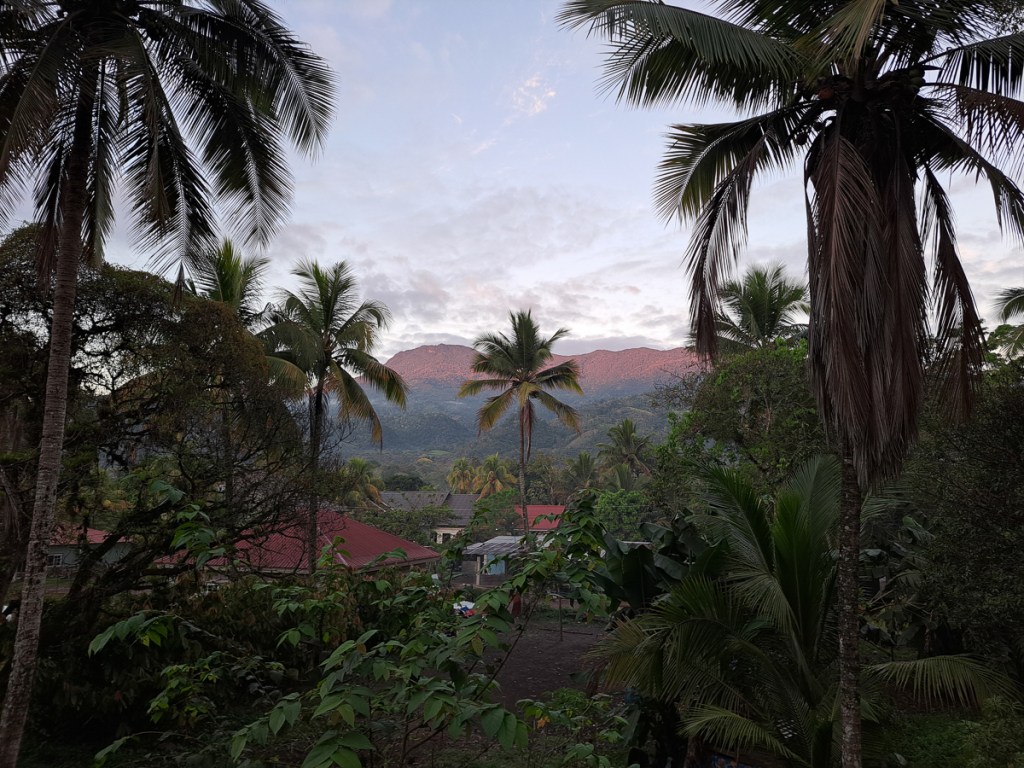
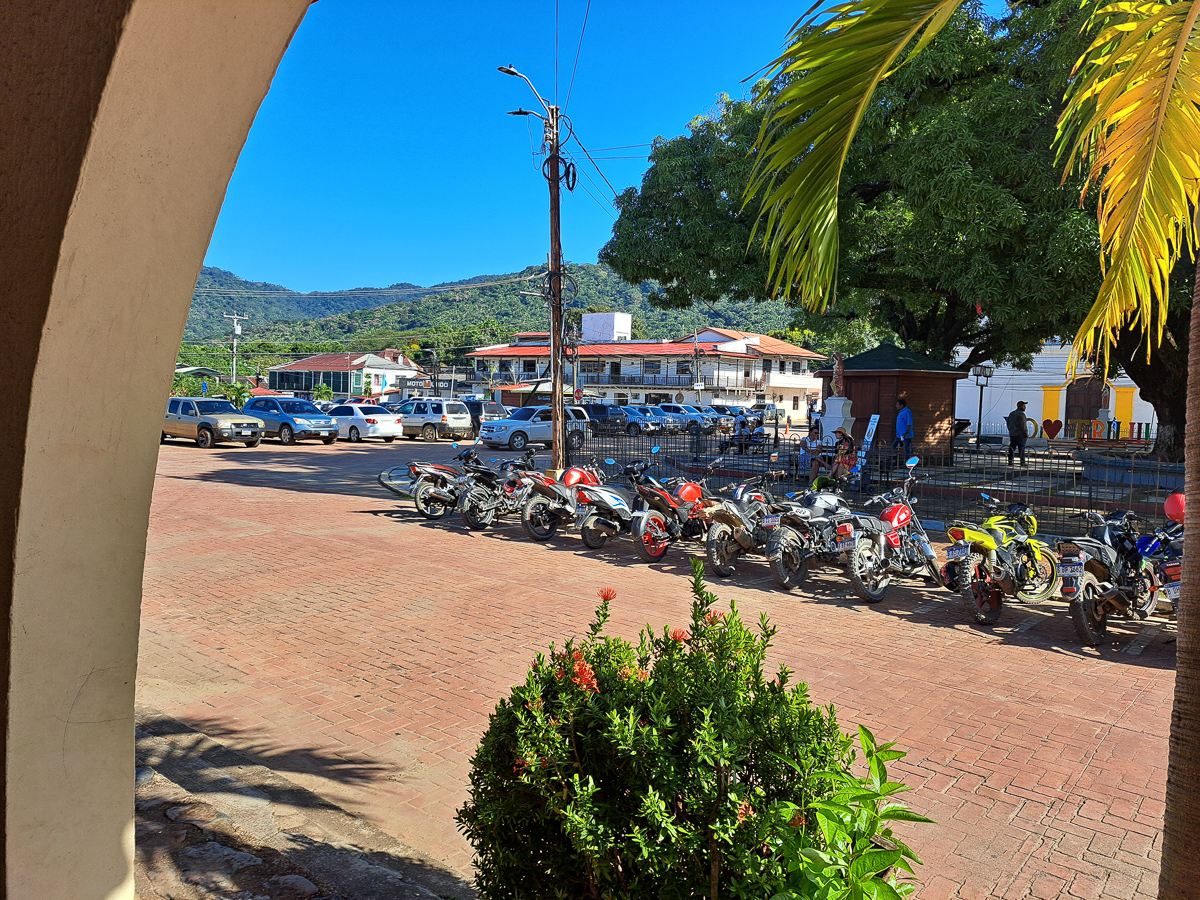
Finally, a few scenes from Nicaragua that don’t fit into the narrative above, but are just nice to see.

Honduras

After extending our beach stop in El Salvador to allow Gid to rise from his sickbed, it felt good to be back on our bikes and focused on covering distance. Well, some distance – our stops aren’t far apart in Central America, as there’s plenty to see. Most of these countries have nominally a middling population density, but in practice crowded urban areas, and middle density farming on the coastal plain and valley bottoms, leaving very few folks left to populate large areas in the hills or the north, toward the Caribbean coast. Much of which is still roadless jungle. Many of the small communities there are not connected by road to their countrymen. Being roadless, these large areas are not connected to us, either, we’re only in the more populous areas.

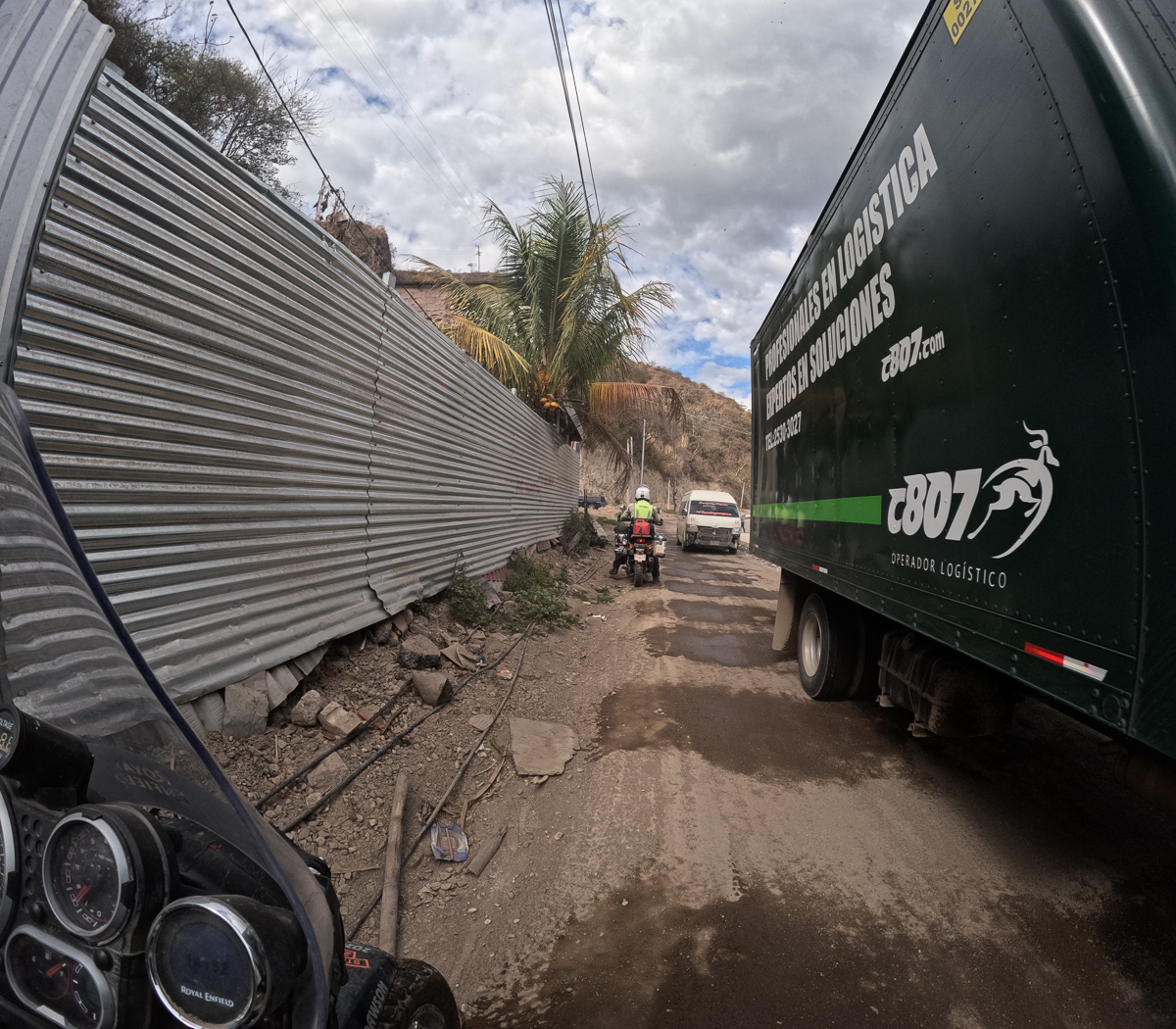
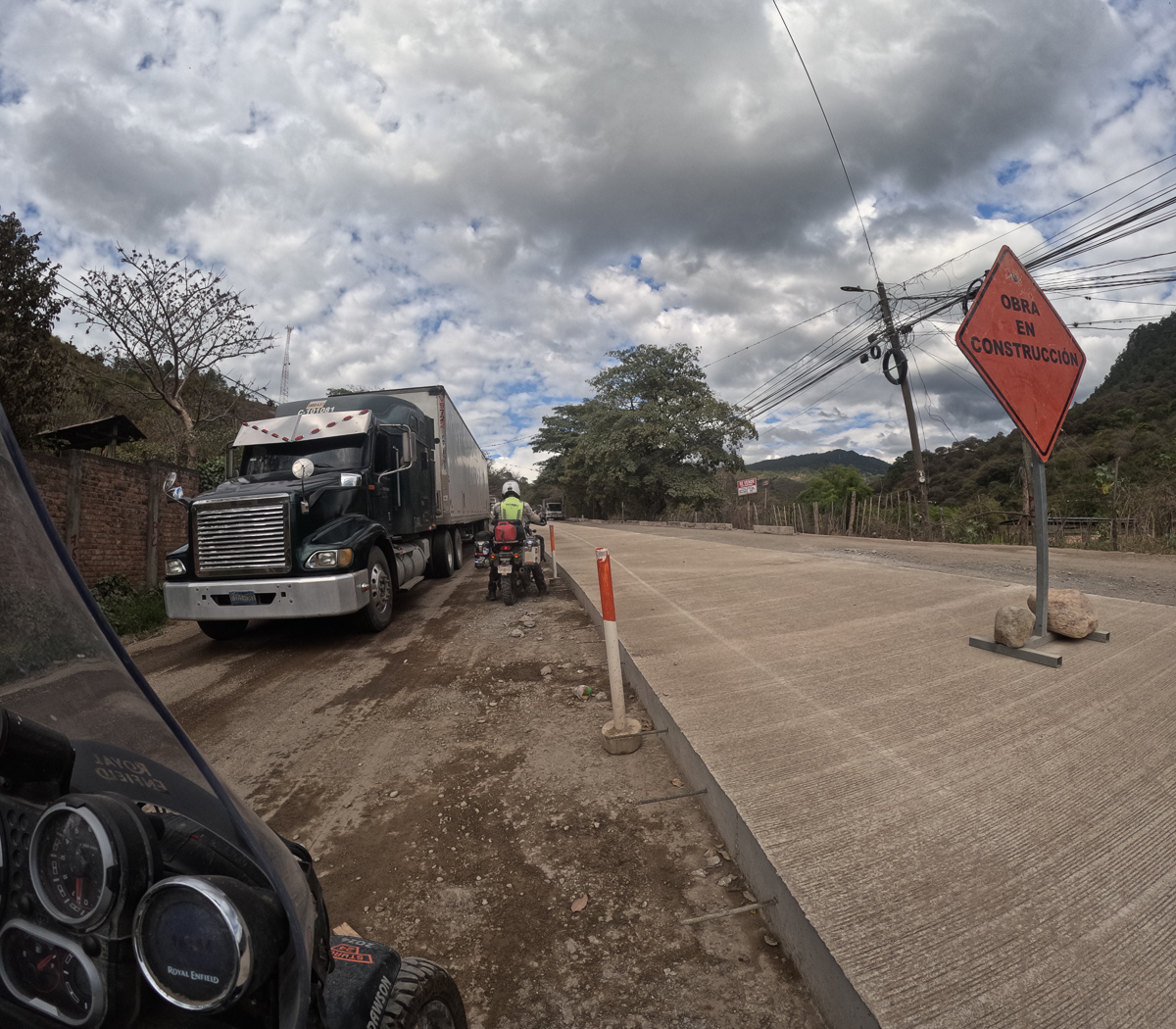
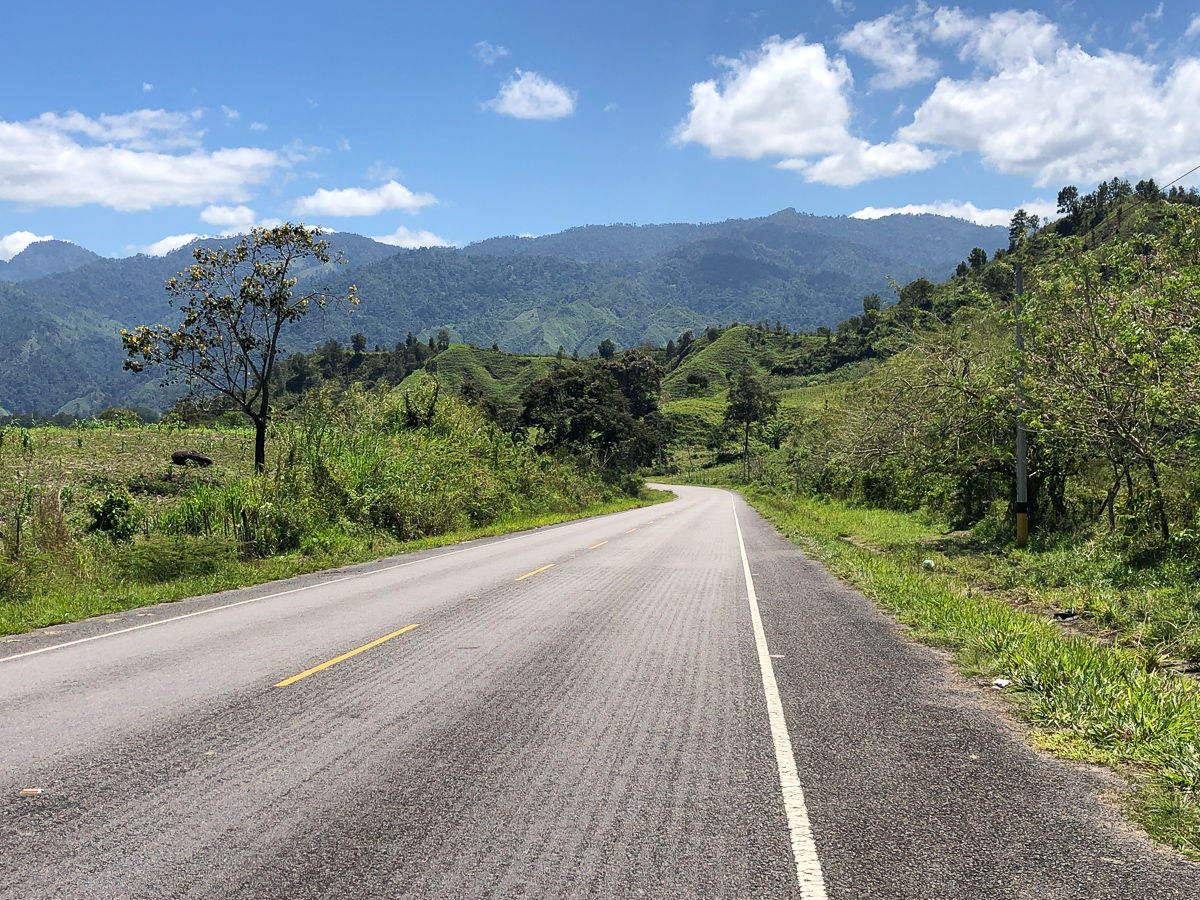
Copan Ruinas, our first Honduran destination, was slightly NW from our border crossing. After 2 hours in the border, Aduana, we were fairly focused on making some progress but then reality hit.  The road was still under construction.  Sections of it were near perfect but for some reason it had 2m bands of gravel every 150m or so.  No need for speed bumps here.  The views were beautiful but viewing spots are a luxury seldom found. Other parts of the road were very much still under construction but we soon learnt to go ‘native’.  Honduras is back to swarms of bikes.  At road works they weave their way to the front and beyond given half a chance.  On one such occasion we followed the bikers and a family of cyclists through on to the coned-off raised new road. Ten metres or so before the end of this section the lead bikes peeled off to the left, across the approaching traffic, along a dirt track bordering the road, through the petrol station and down a narrow lumpy path and back onto the road.  I stopped at the start of the footpath.  I wasn’t alone.  A man on his bike loaded with wood stopped too.  We dubiously looked at each other and the kangaroo jumps the bikers ahead were doing along the footpath.  Gid squeezed through.  He got 2/3 of the way along with his bike bucking all over the place and stopped on what seemed like a position stranded half over the next lump. After that moment of route planning, so Gid says, (or buttock clenching), the Him bounced through ok.  With a subtle shake of our heads the guy and I turned back.  We had to wait a short while before we could squeeze out alongside the approaching traffic.  Safe and sound off we went.

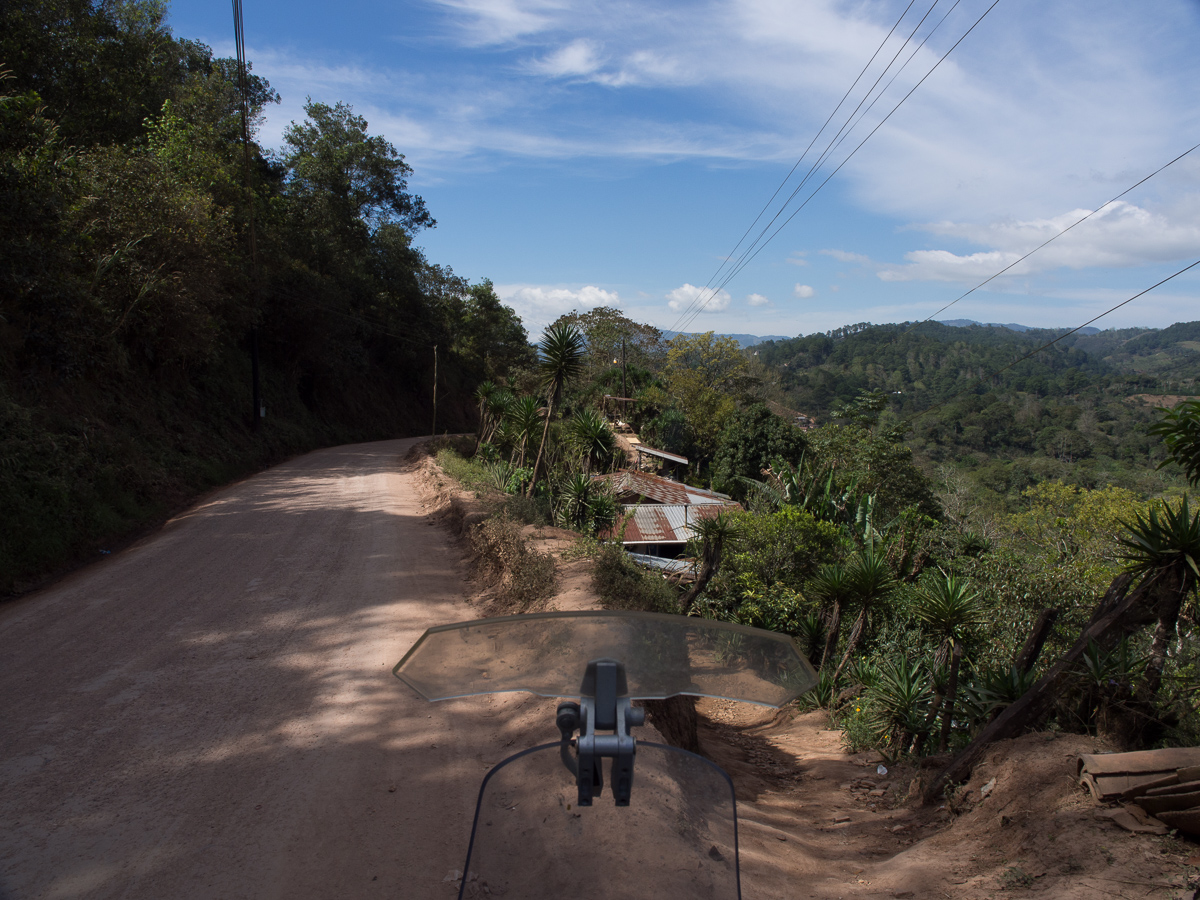
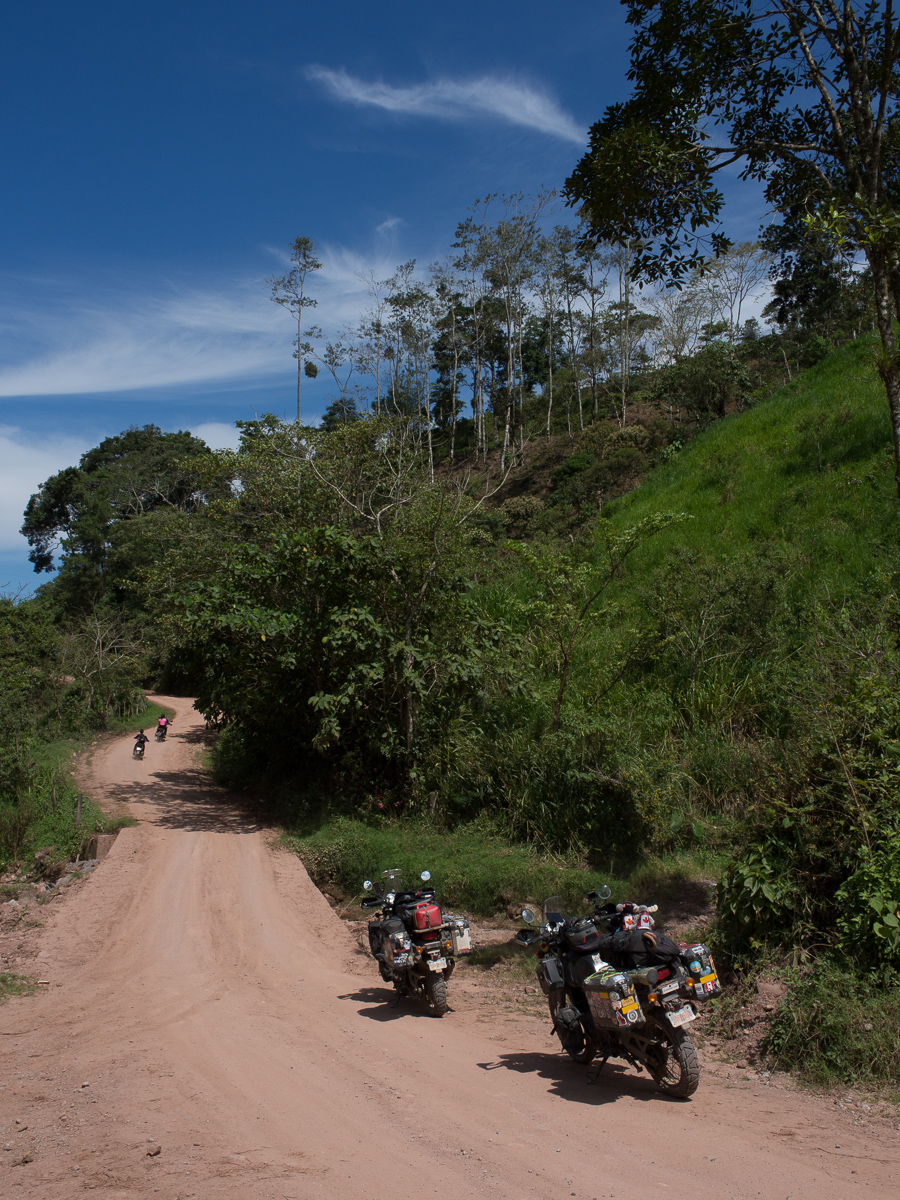
A little further along the road we took a turning.  Dirt road the navigation informed us but – wrong,  It was a newly laid 8km stretch of beautiful surfaced road with some wonderful views thrown in as we wound our way up and down mountain sides.  Encouraged by this we took the next dirt road too.  This 30km short cut bypassed a whole big loop around the top Gid informed me.  But no such luck this time. Although a definite road it was dust, gravel, ruts, gulleys, hills, descents and a ford , along which, in the main, a steady dribble of motos overtook us.  That was encouraging as it felt as if it was in constant use servicing the villages and other tracks along the way.  Nearing the end however, three men overtook us but then stayed just in front.  That was unnerving as they should have disappeared into the dust.  Why were they hanging back with us?  Thankfully it wasn’t too far until we were back on the main road.  Our escort went in the other direction.

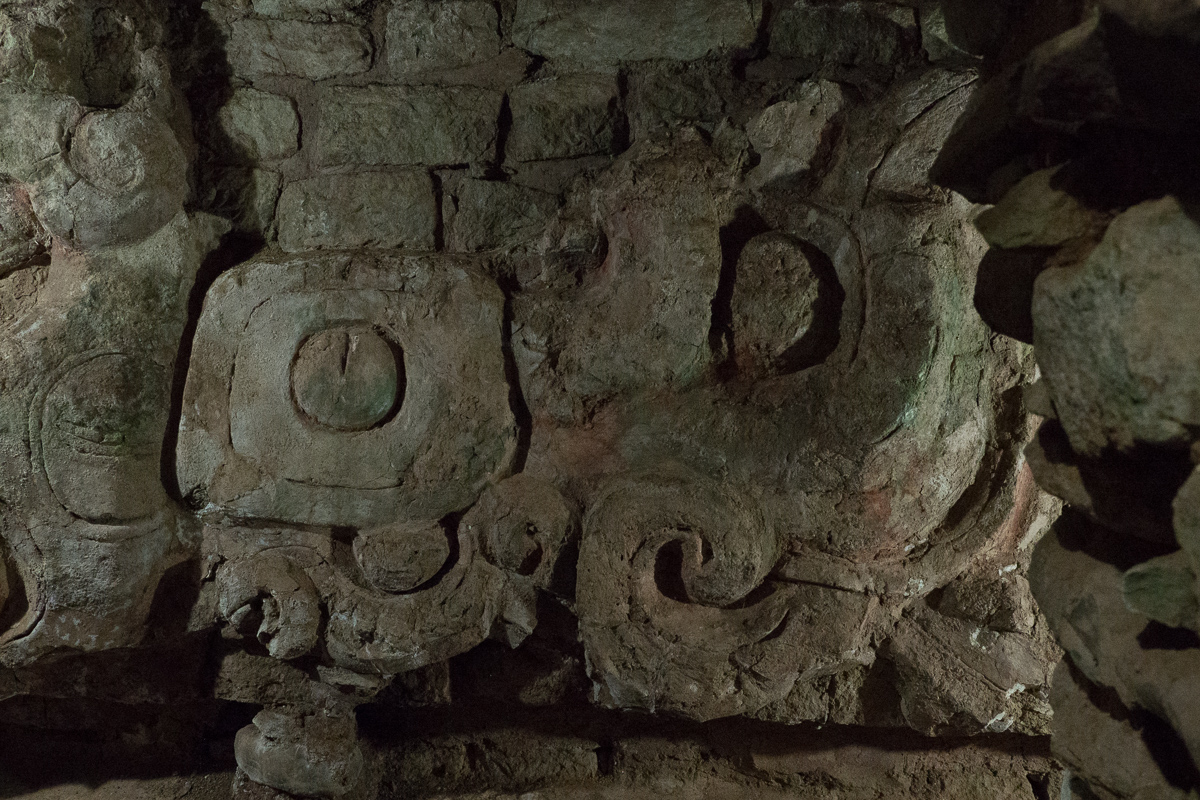
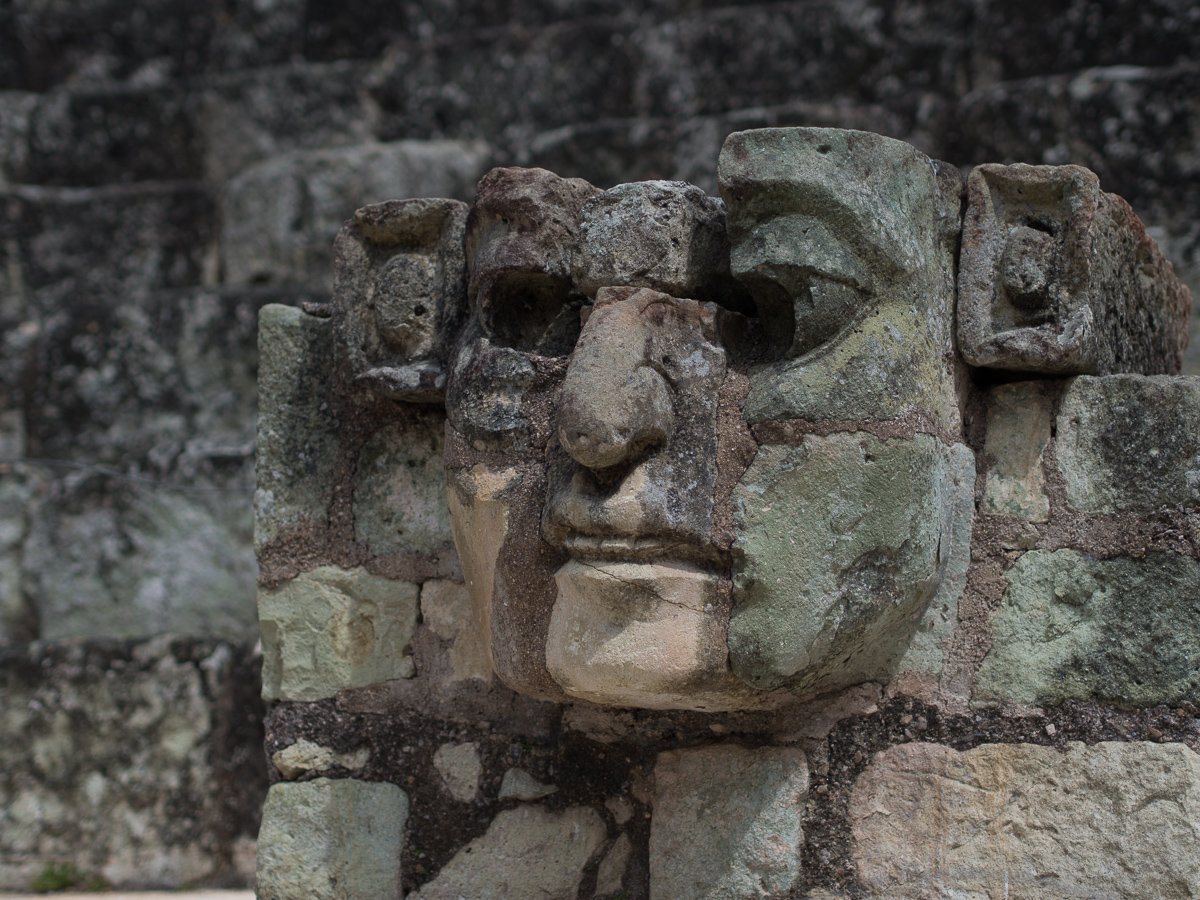
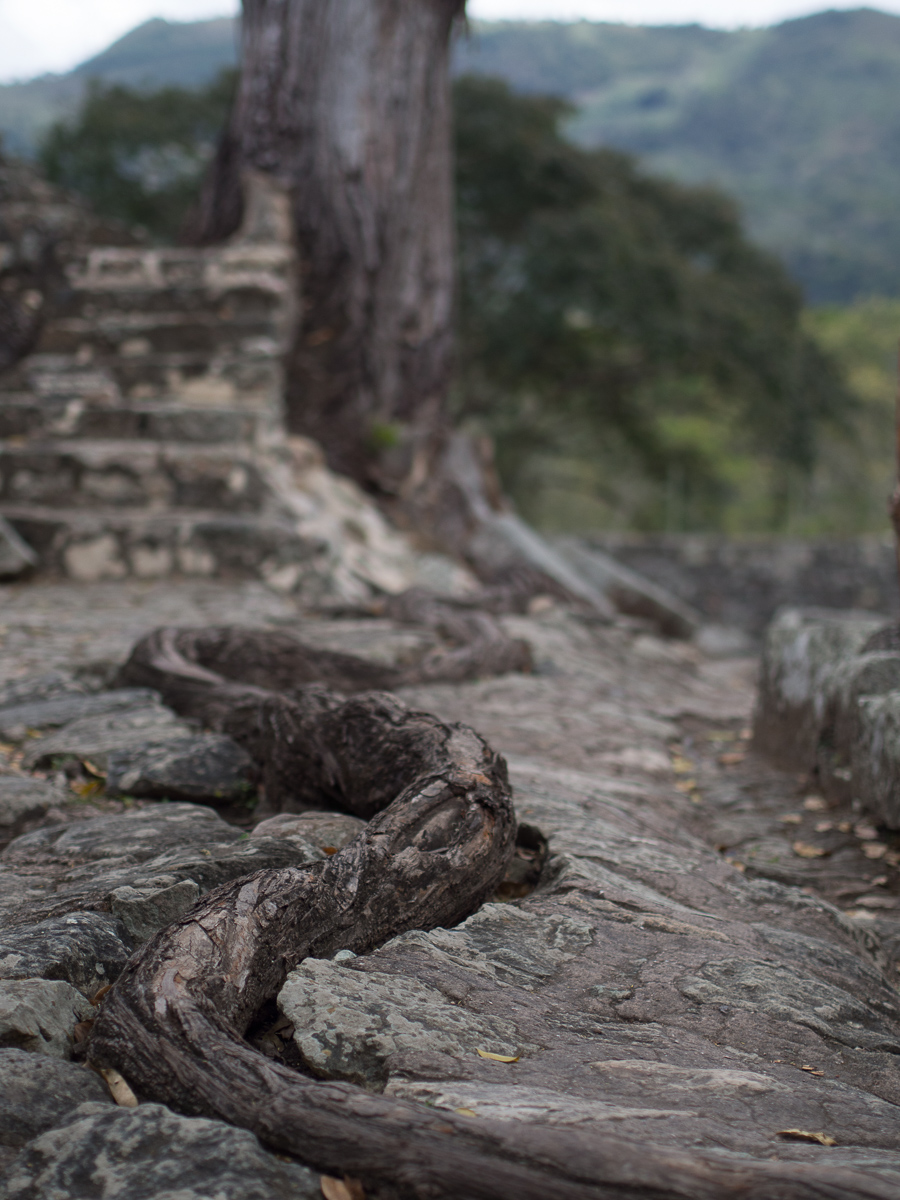
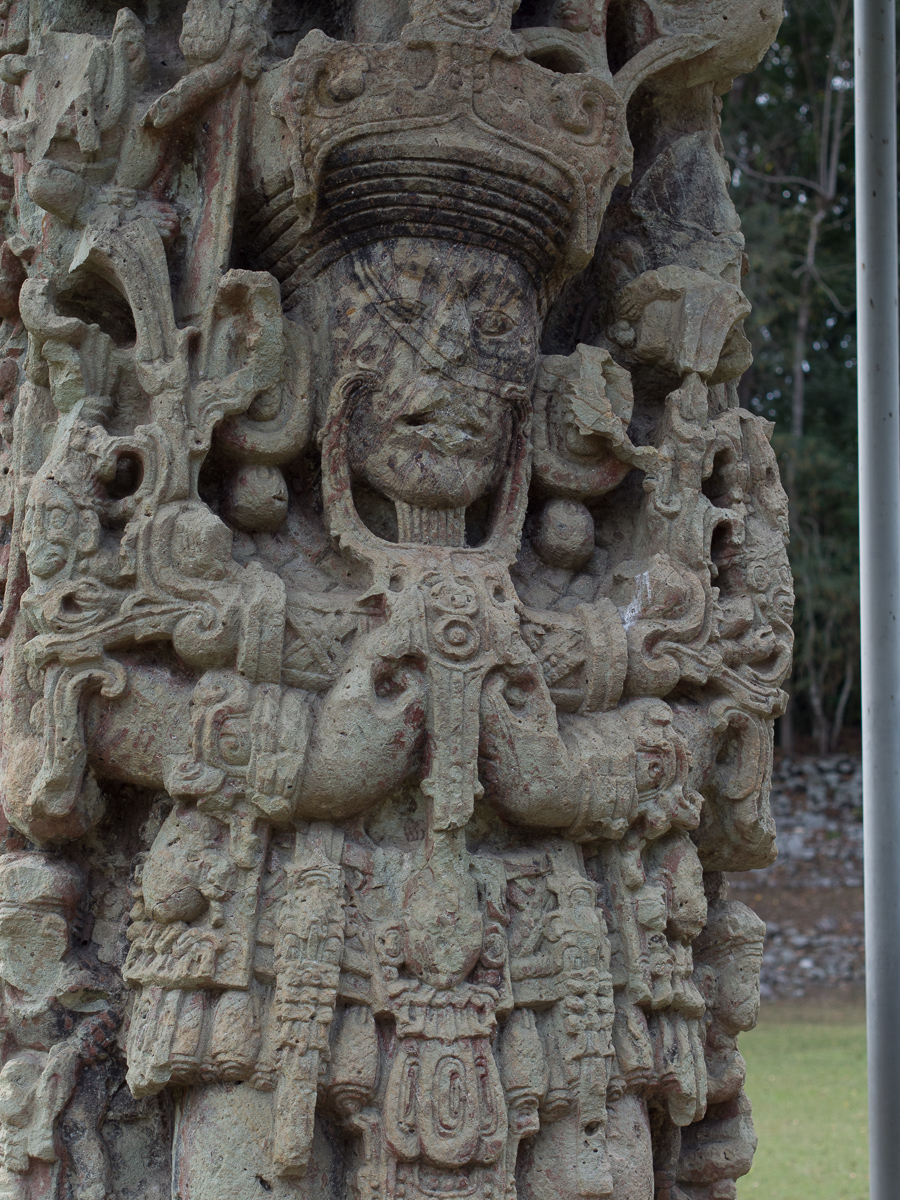
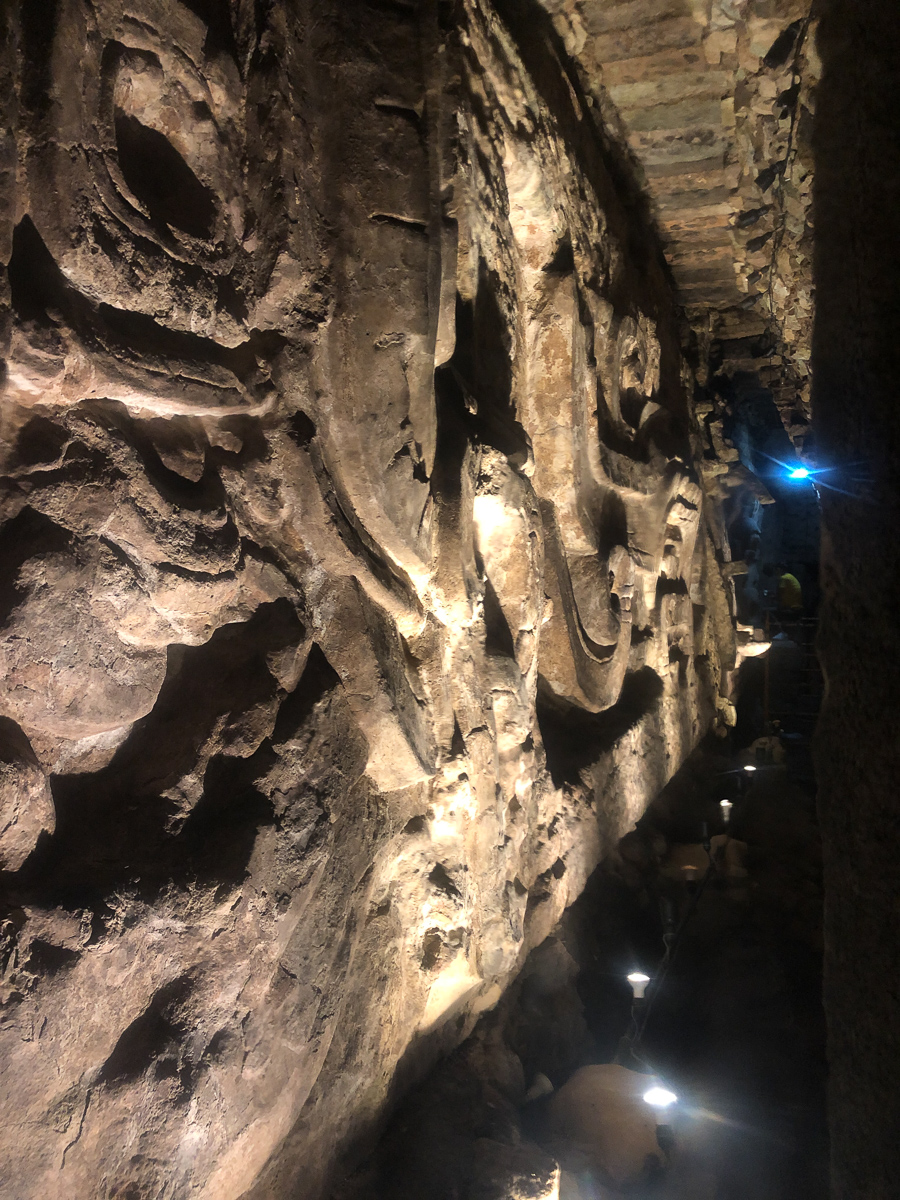
Copan Ruinas was delightful.  Although another cobbled ancient town it had retained some of its charm because it wasn’t so full of tourist shops or heaving with tourists.  When walking round the ruins themselves we were two out of four people in the place although a couple of groups were arriving as we left.  The main attraction of Copan ruins, another Unesco site, was the option to go down into two tunnels and look at the previous temples.  Because the temples were enlarged by successive kings who wanted their temple to be bigger and better, the carvings on the former temples had been covered and were still in very good condition.  Somehow it felt magical to glimpse at what had been hidden away.

 Archaeological work was very much still in action both on the surface and inside the tunnels which felt as though we were experiencing history as it was being uncovered.  The displays in its mini museum linked the Copan ruins to several of the temple sites that we have already visited. Copan is the last major and most southerly Maya site in Central America.

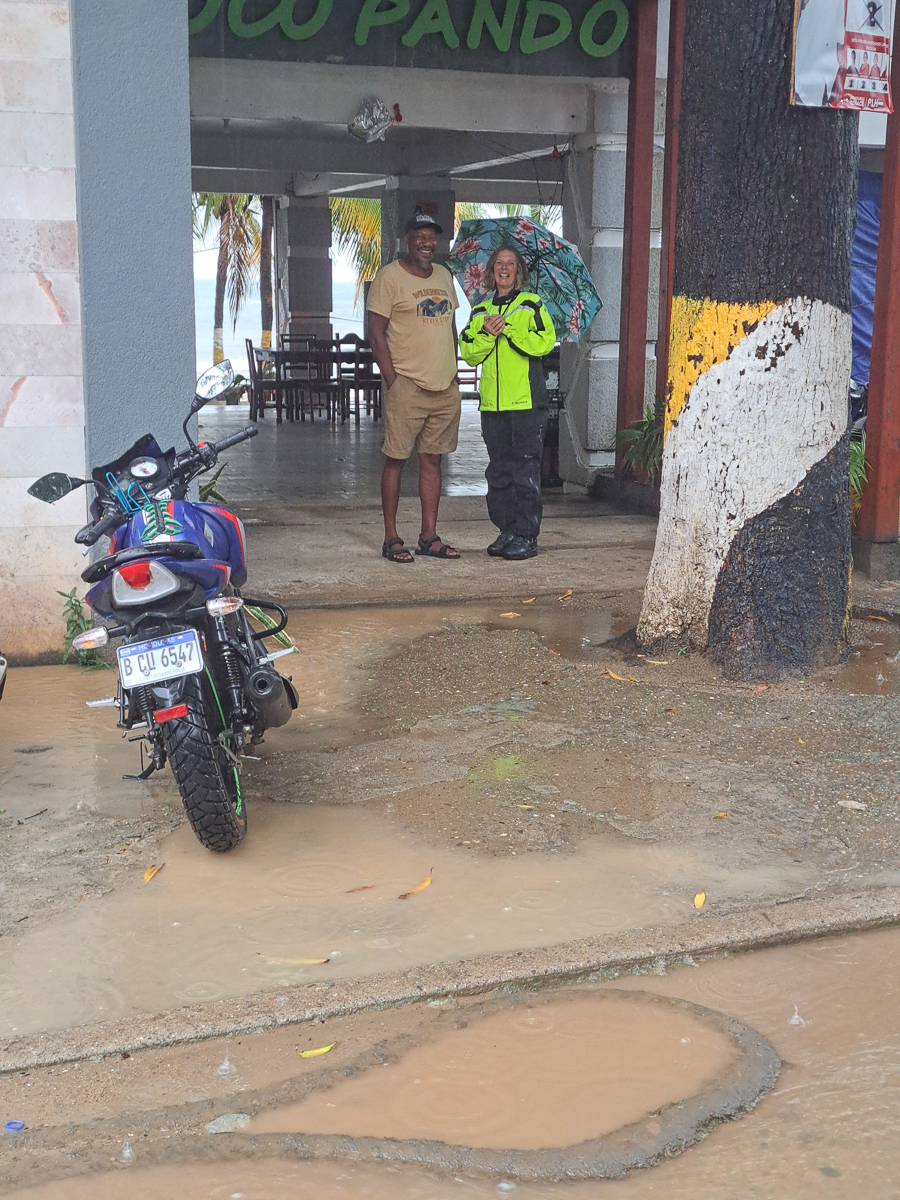
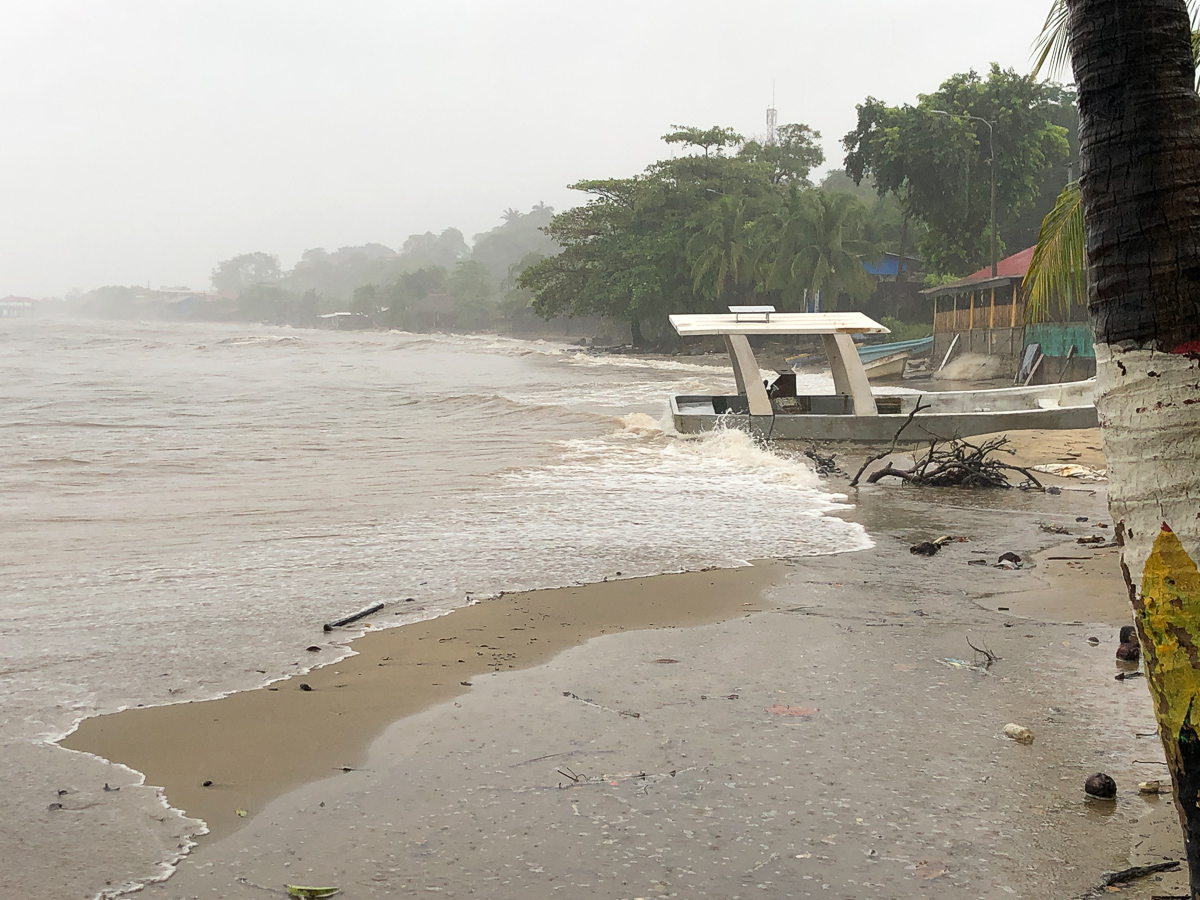
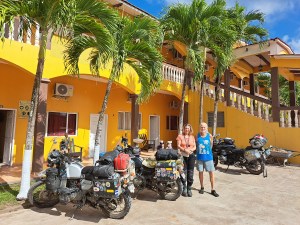
We decided to traverse Honduras along the northern, Caribbean coast. This has a wealth of cultures with eight different languages being spoken.  One of which is Garifuni – the Caribbean freed slave culture & its partly creole language scattered all along the Caribbean coast from Belize south.   Asking for milk at the local store in Tornabe proved interesting.   It wasn’t Spanish or English is all I can say. The place felt a bit like Hopkins in Belize, except zero tourists, as the locals were of African heritage and mooching around on foot. The only hotel, like most of the other buildings, was right on the beach, with our bikes parked on the sand between us and the sea. Locals wandering past. We had a comfy night, although it bucketed down at some point.

To get there, we’d swing by the famously beautiful Lago Yojoa.   Appealingly, we could stay in a micro-brewery.  When at Lago Yojoa we took another archaeological walk around Los Naranjos.  We were warned that the original temple was made of clay so had been left covered but that hadn’t sunk in until we arrived at the temple to see a relatively small grass mound and nothing more.  Thankfully a small museum at the site’s second entrance had a display informing us about the ruins and its place in history, being very old in Central American ruin terms.

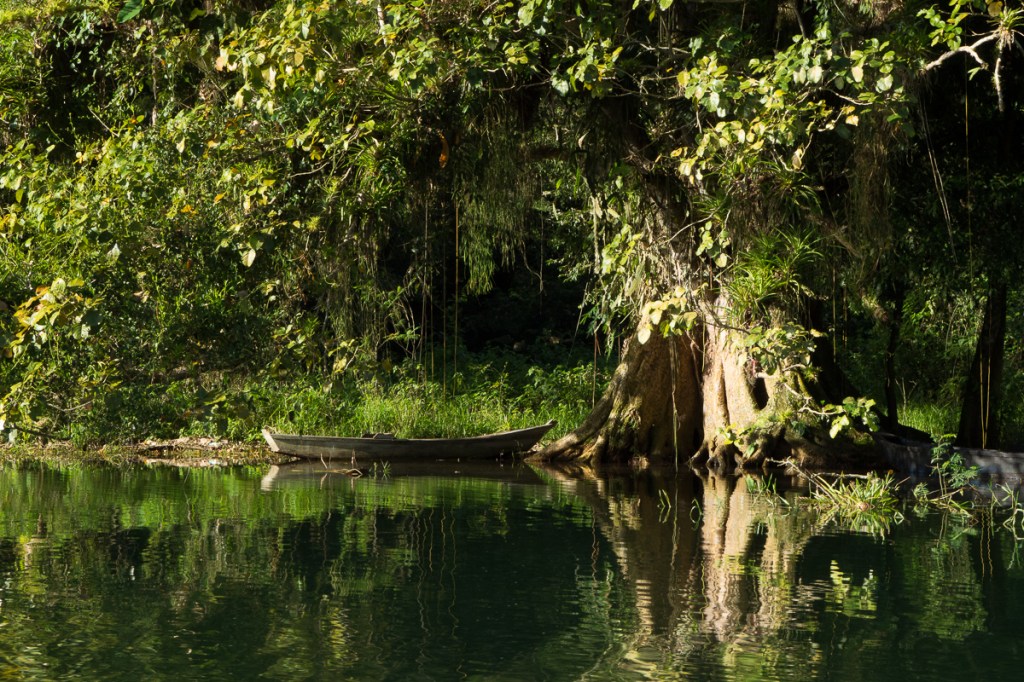
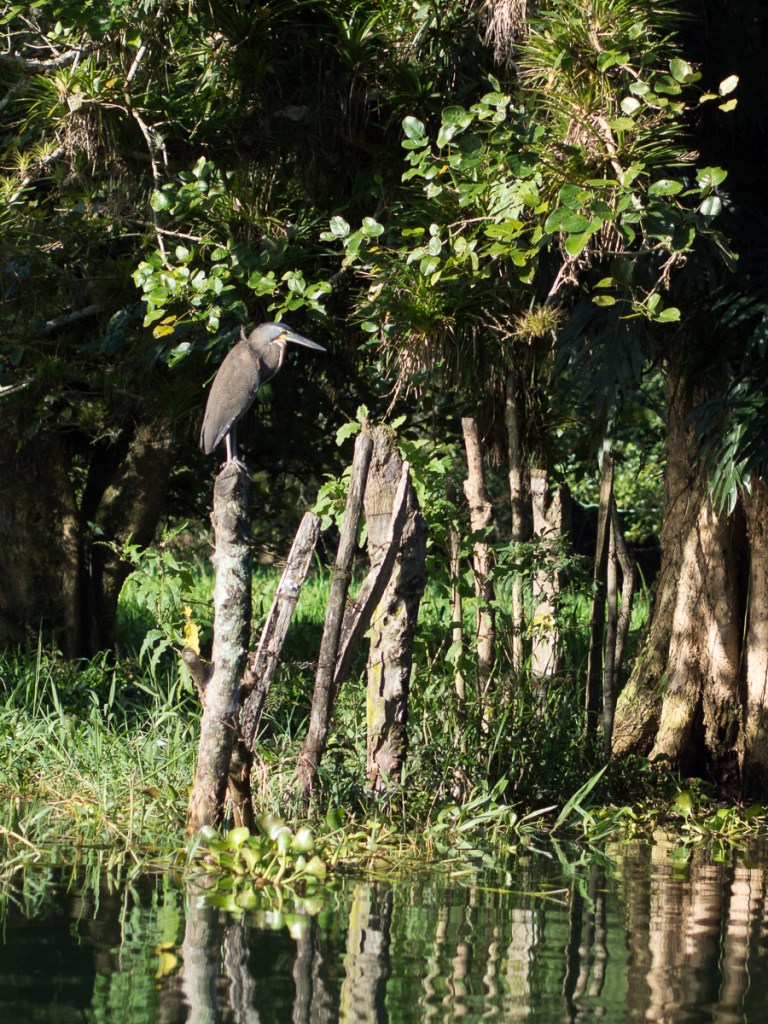
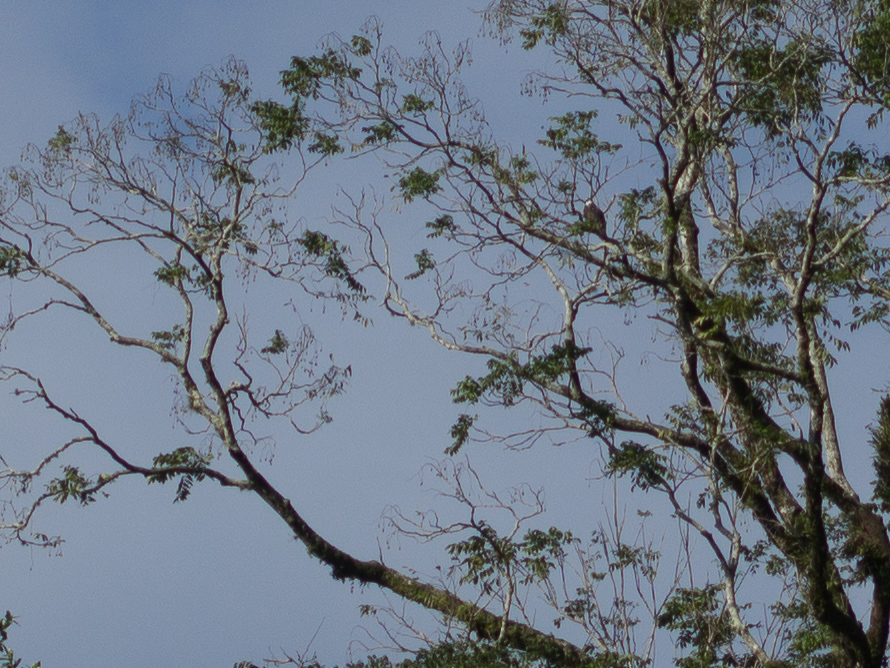
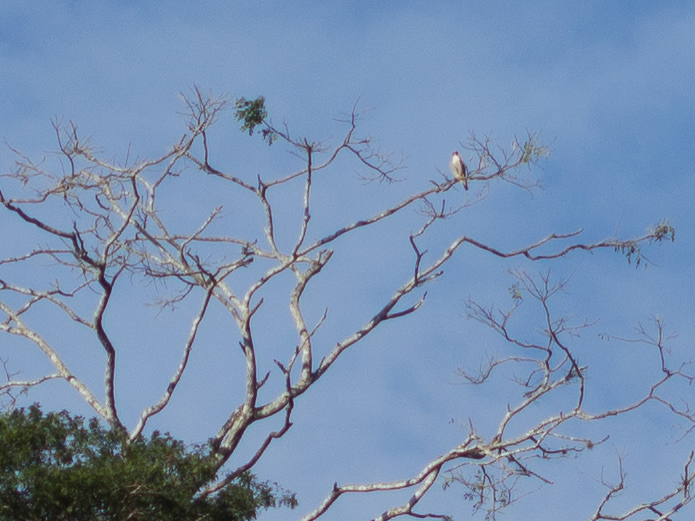
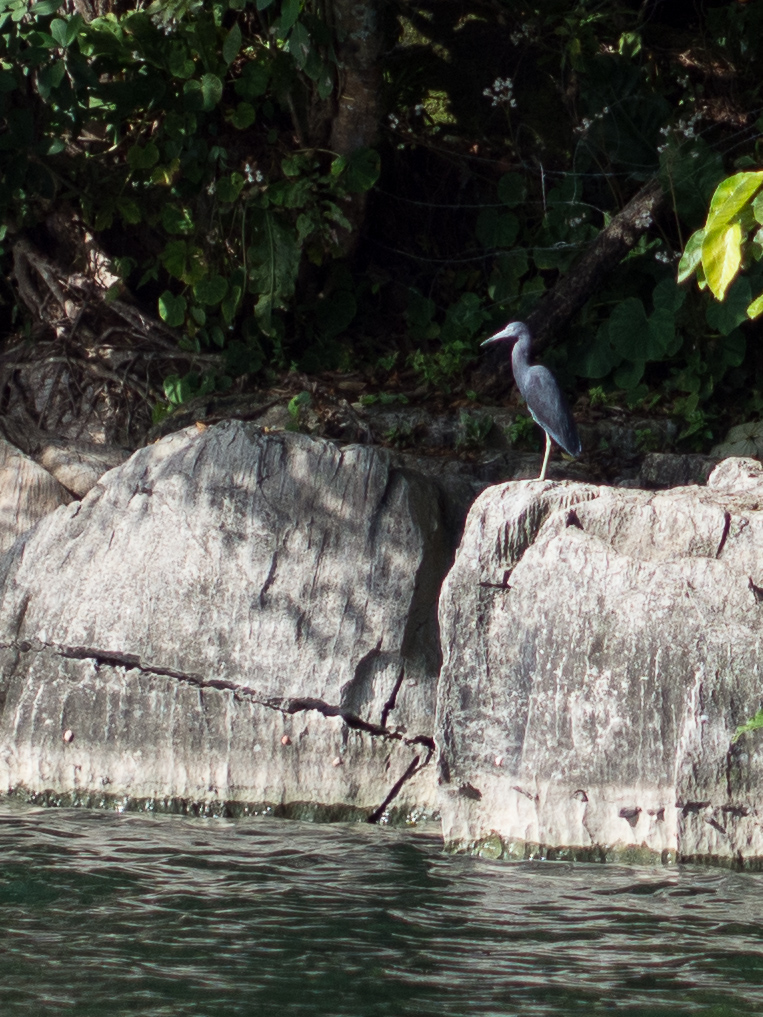
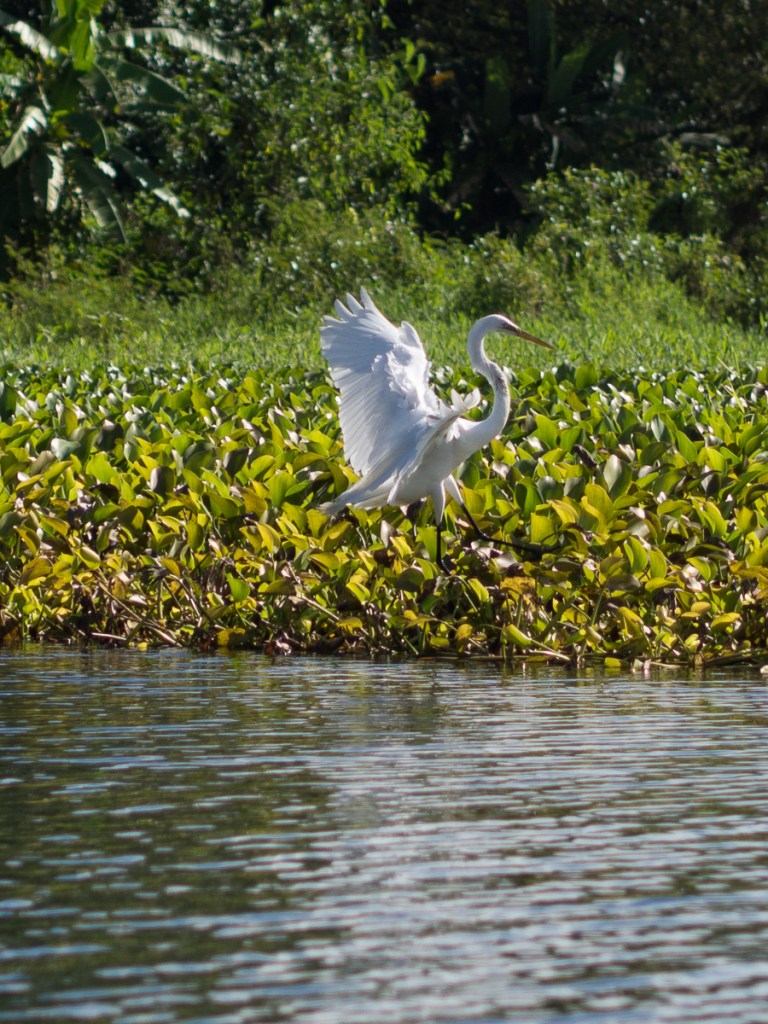
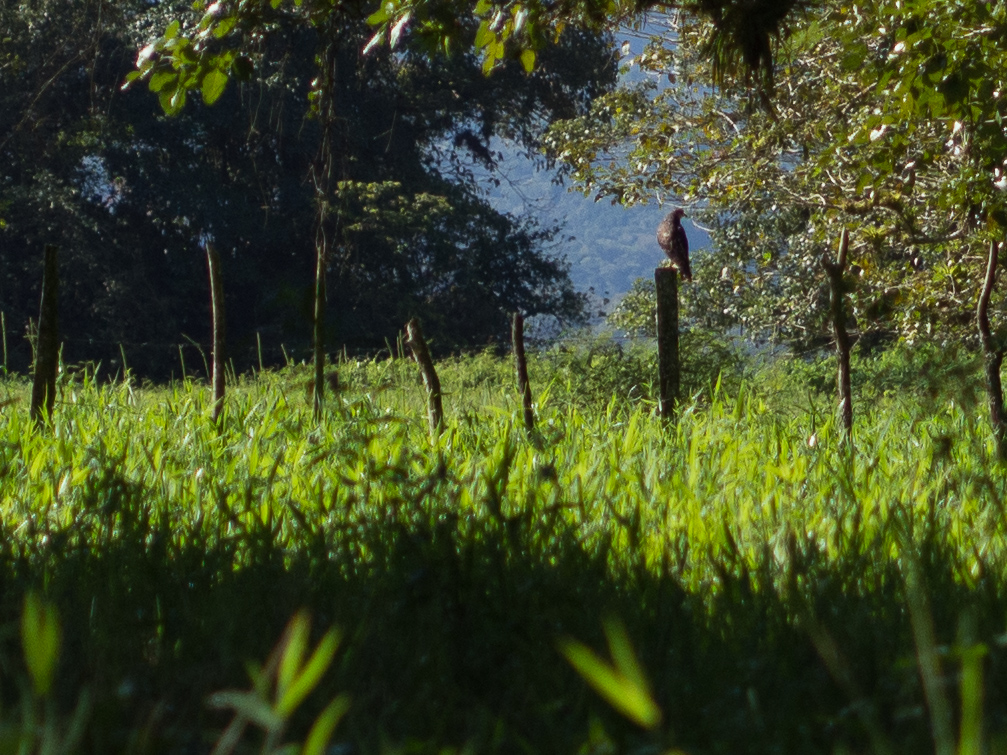
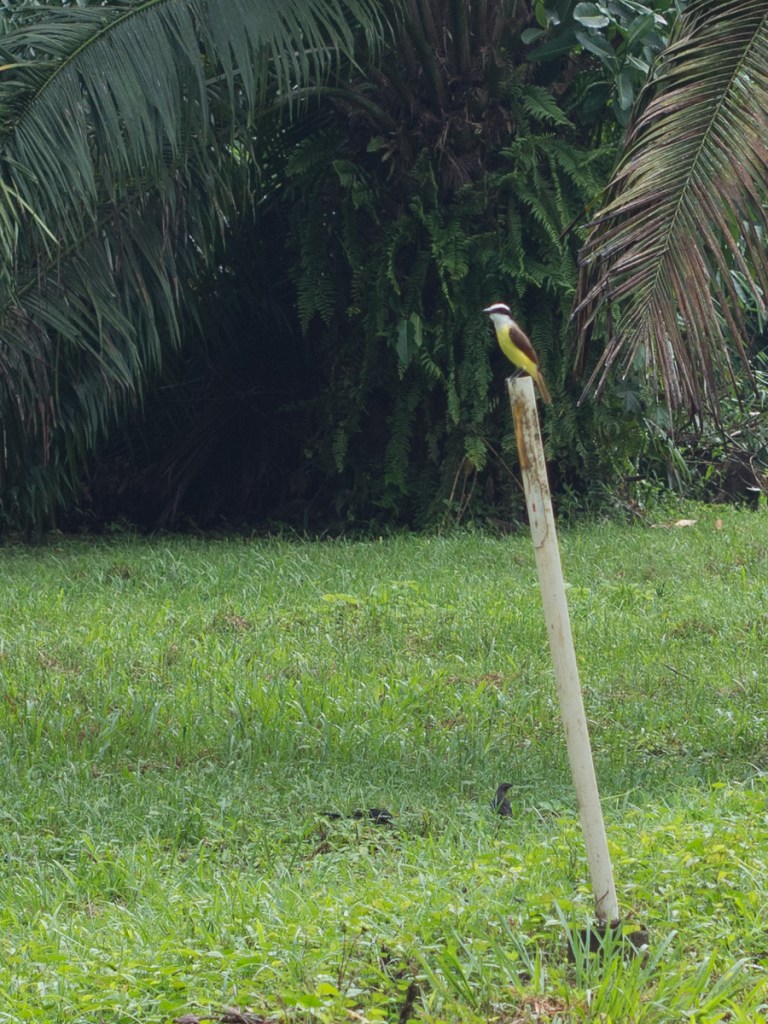
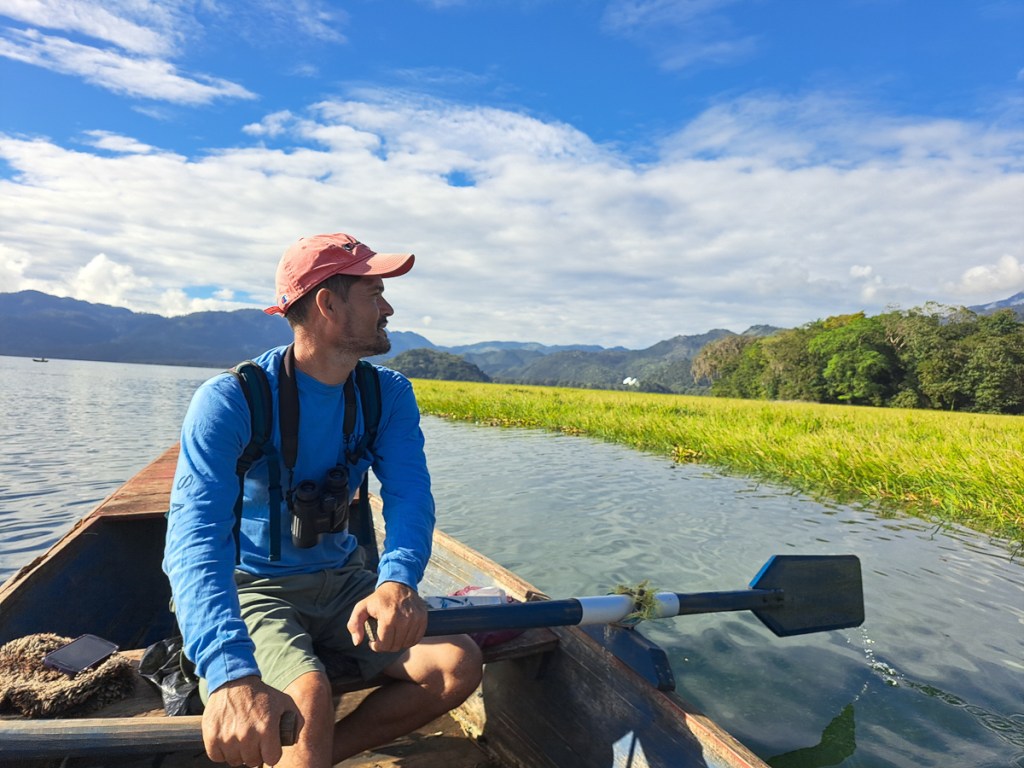
Both of us enjoy birdwatching and one of our best experiences was on Lake Yojoa.  We’d booked onto an early morning bird watching boat trip.  Honduras does boast a wonderful number of resident birds but our own efforts to see them have been fairly pitiful.  Our guide, Mattias, took us off to the canal armed with binoculars.  We hadn’t even reached the water before we were looking this way and that.  Two to three hours passed in perfect bliss as we were paddled along spotting various birds.  The highlight of the trip for me was the osprey.  Sitting high in a tree but clearly visible with binoculars it wasn’t far from a white chested hawk.  The pair were magnificent.  The osprey flew over which Gid spotted first.  Sadly I barely saw it. As we so quickly forget, Gid made notes of the different birds that were pointed out to us, many of them brightly coloured, and announced we’d seen over thirty species.   A few of them like the herons and fly catchers were almost omnipresent.

The botanical gardens at Tela was another attempt to see more wild life.  It was more of an arboretum but occupied a spacious area with signage informing us about some of the species.  We had hoped to see some birds here but in the heat of the afternoon nothing much was evident. We stayed onsite, in a splendid wooden cabin left over from the fruit company days, so the following morning took an amble in the softer light which was much more pleasant but still lacked wildlife.  When preparing to leave our host came to tell us that they was some issue up the track.  ‘Motos would get through,’ she said,  ‘pero no carros!’  True enough!  There had been rain overnight and a land slide. Part of the road was missing.  Cautiously we went through aware that a lot of the area looked sodden.

Gid hasn’t been interested in waterfalls.  To be fair in 2023 we toured Norway where in places there’s a stunning waterfall every 100 metres.  But link a waterfall walk with bird watching and we were off.  Three toucans almost make up for our cumulative zero quetzals. Our stop here was a guest house focussed on the local rafting tourism on the Rio Cangrejal. Right on the rocks by the white water river, it brought back a lot of memories of our paddling days.

Biking back along the muddy & potholed dirt road from the rafter’s guest house towards La Ceiba I had hoped that some of the slimy mud down the lane might have dried out a bit.  No such luck.  The drizzle started as we finished packing our bikes.  That together with last night’s rain ensured that it had remained a slushy, muddy, dirt and gravel road with numerous pot holes and oversized puddles.  Faced with a large muddy puddle and an on coming moto that was going to take the rim around the left hand edge I went for it straight through my side.  My bike squirmed a couple of times, some water splashed over into my boots but a bit of adrenaline kept me going and I didn’t slow down.  ‘ A twist of the wrist’ so the name sake book says will nine times out of ten get you through a problem.  It worked.  I was chuckling, the approaching biker, who had slowed to watch the drama, had a broad smile and gave a thumbs up.  Who else was on the road? – oh yes – an inexplicably abandoned porker.

Sodden was here to stay – we had a lot of heavy showers in Honduras.  We had set off at 9:30 with a 100mi to cover so expected to be there by lunch time.  With just a short lunch break we arrived sometime after three.  The potholes along the way had disintegrated into large areas of mud and broken road.  The traffic ahead of us on both sides was weaving across the road and slowly negotiation the holes.  We picked our way along the main road at times behind tired buses, trucks and tuk-tuks.  Consumed in clouds of exhaust as yet another overloaded knackered out X tried to pull away from the speed bumps or pot holes.  Frequently, at the speed bumps, we sped past.  Once we were officially on a dirt road the surface was in a much better condition.  Thankfully a lot of the traffic had also turned off by then so we were able to make better progress.

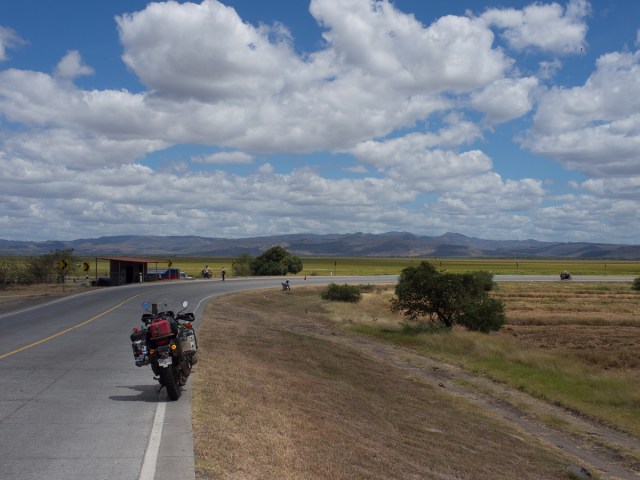
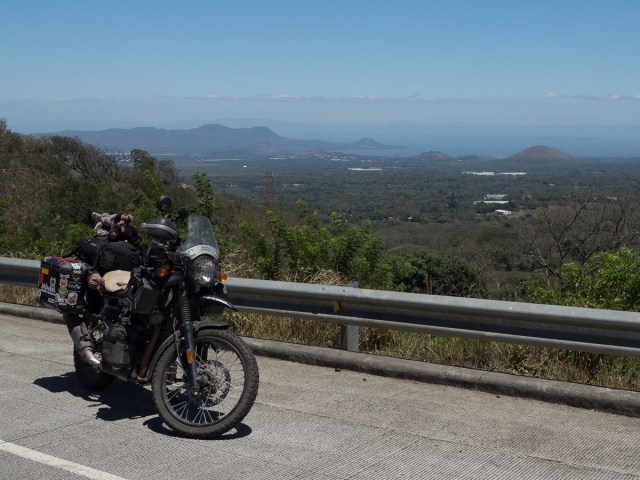
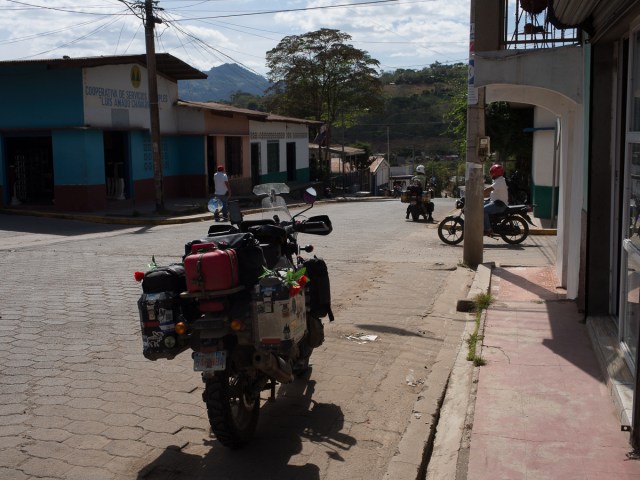
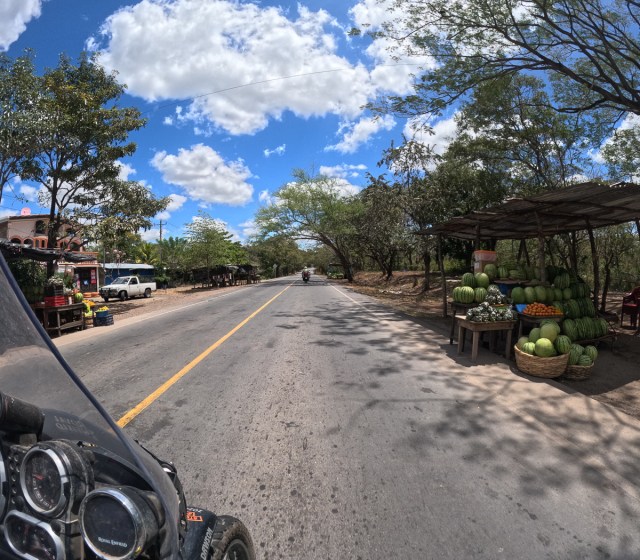
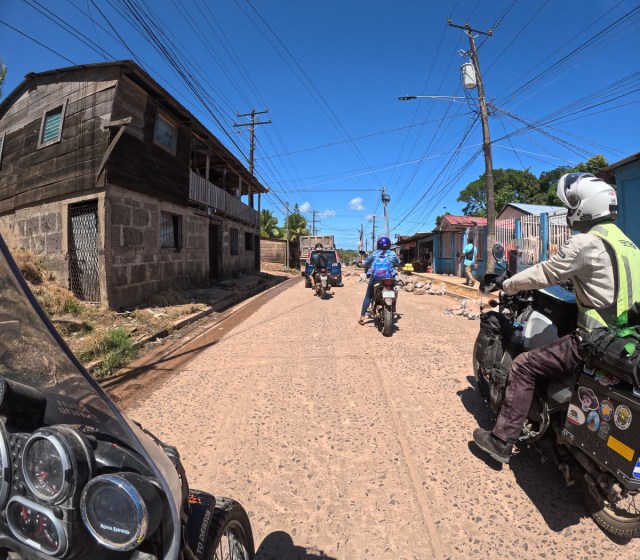
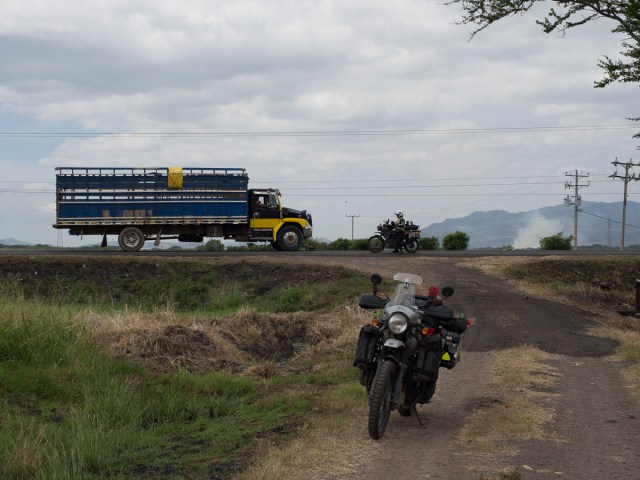
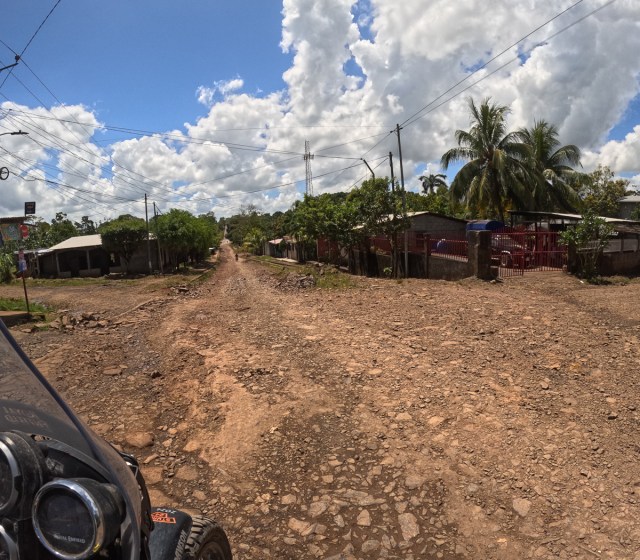
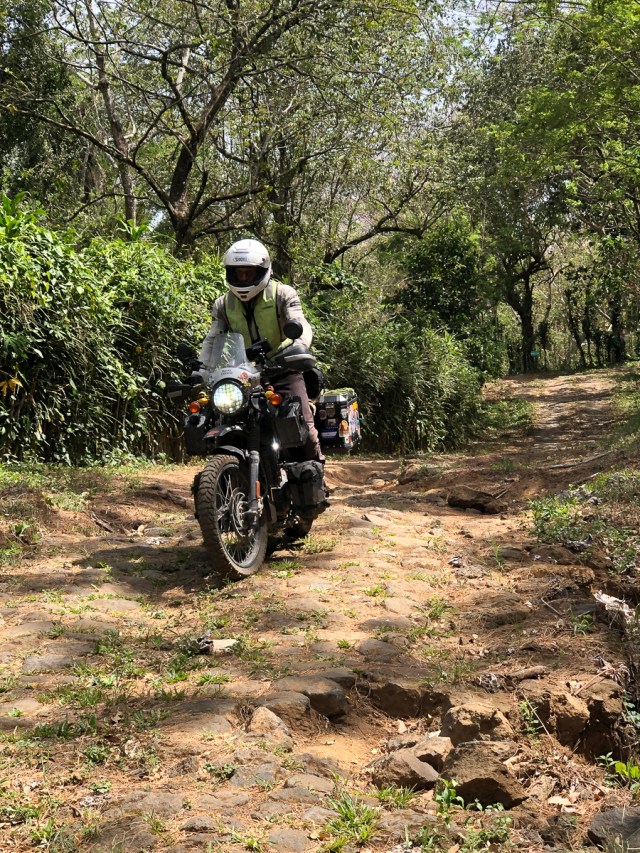
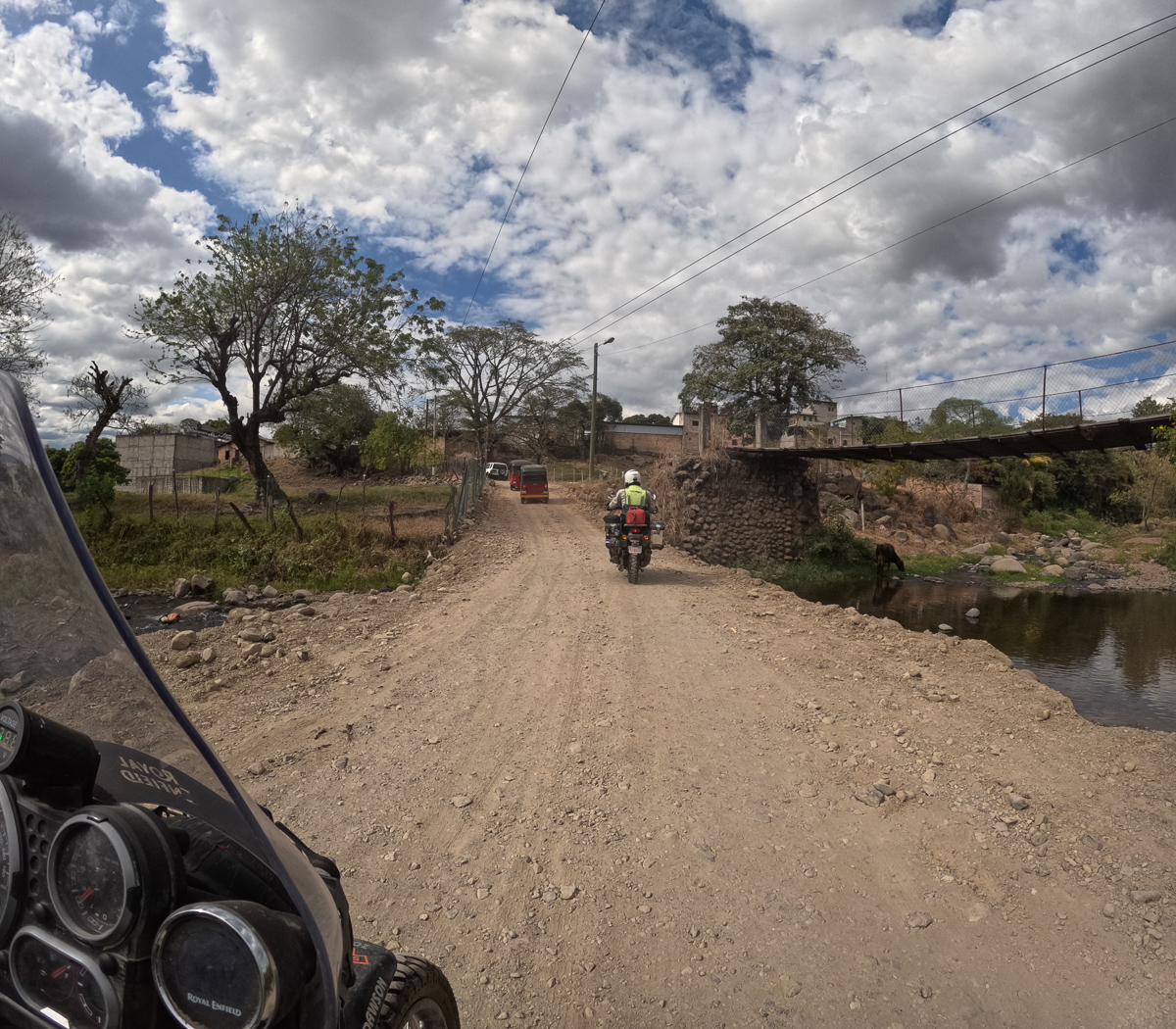
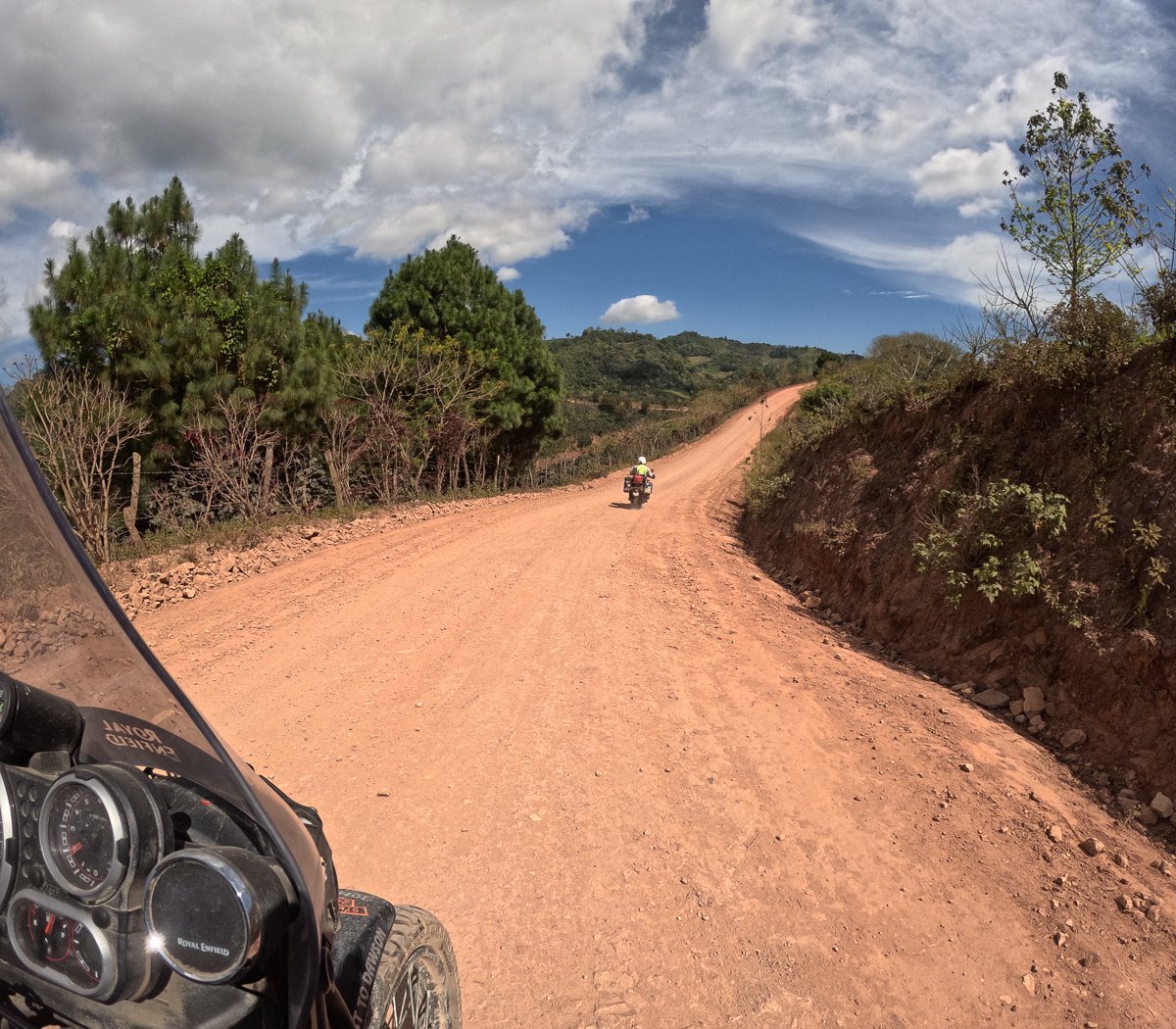
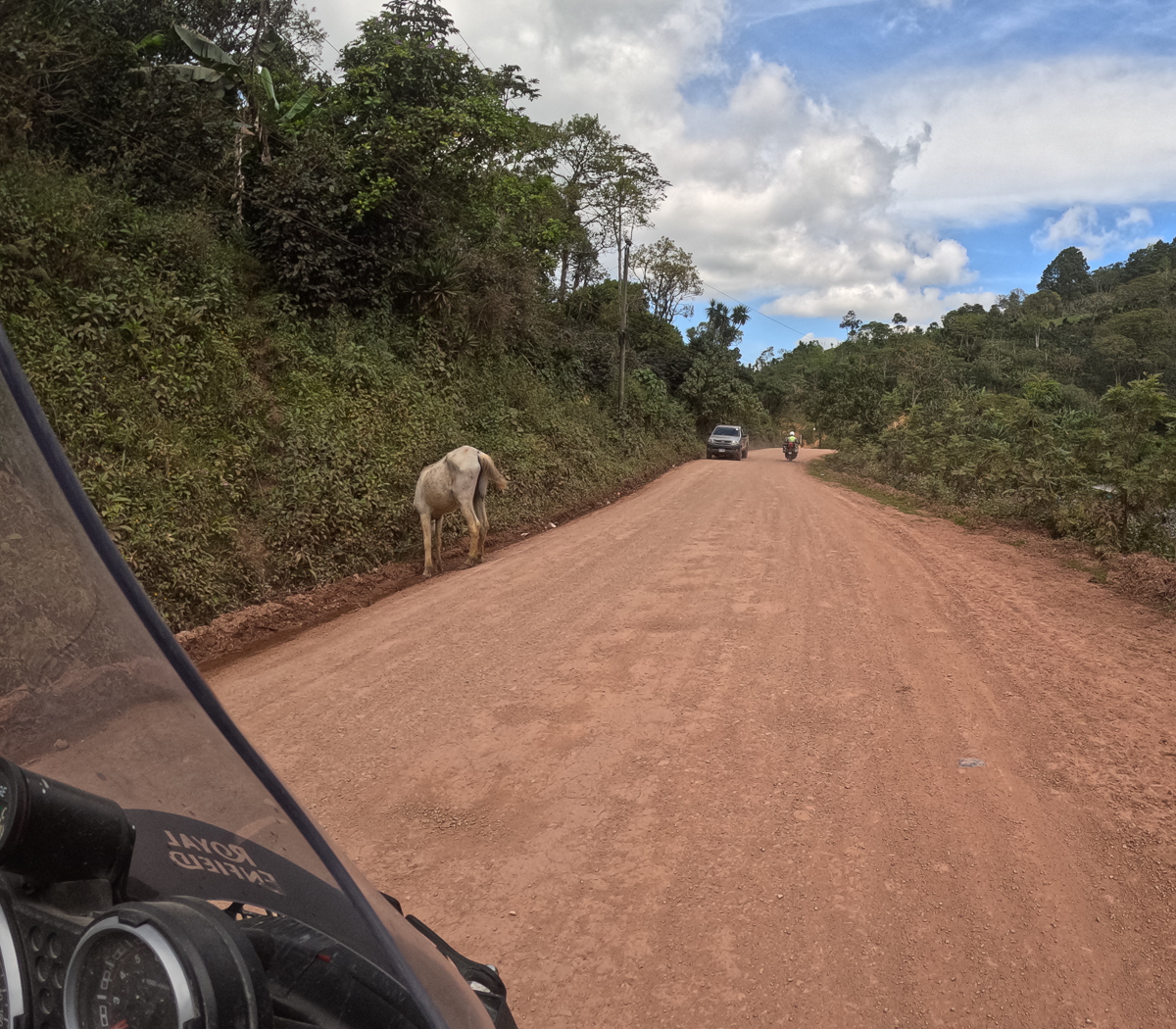
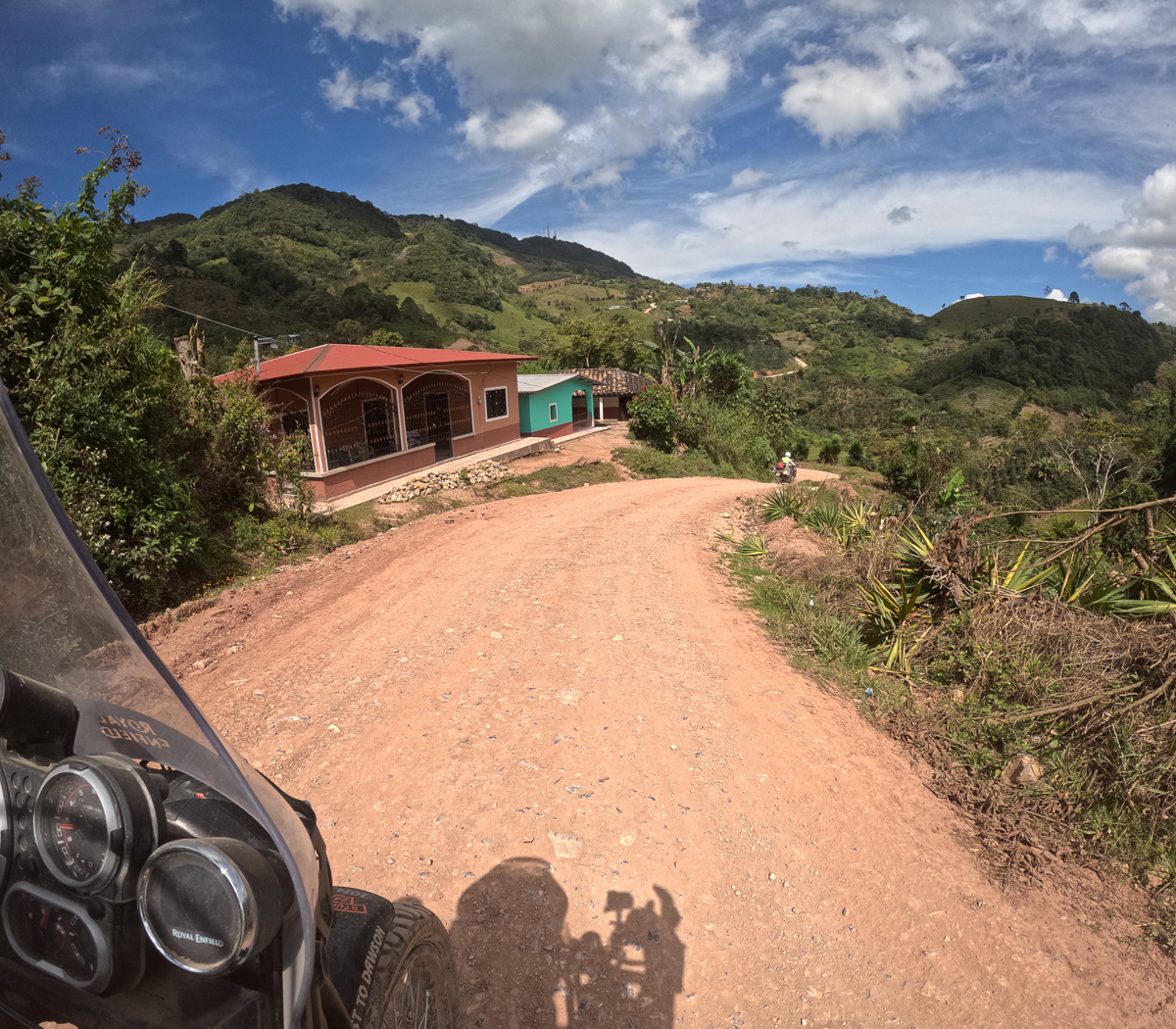
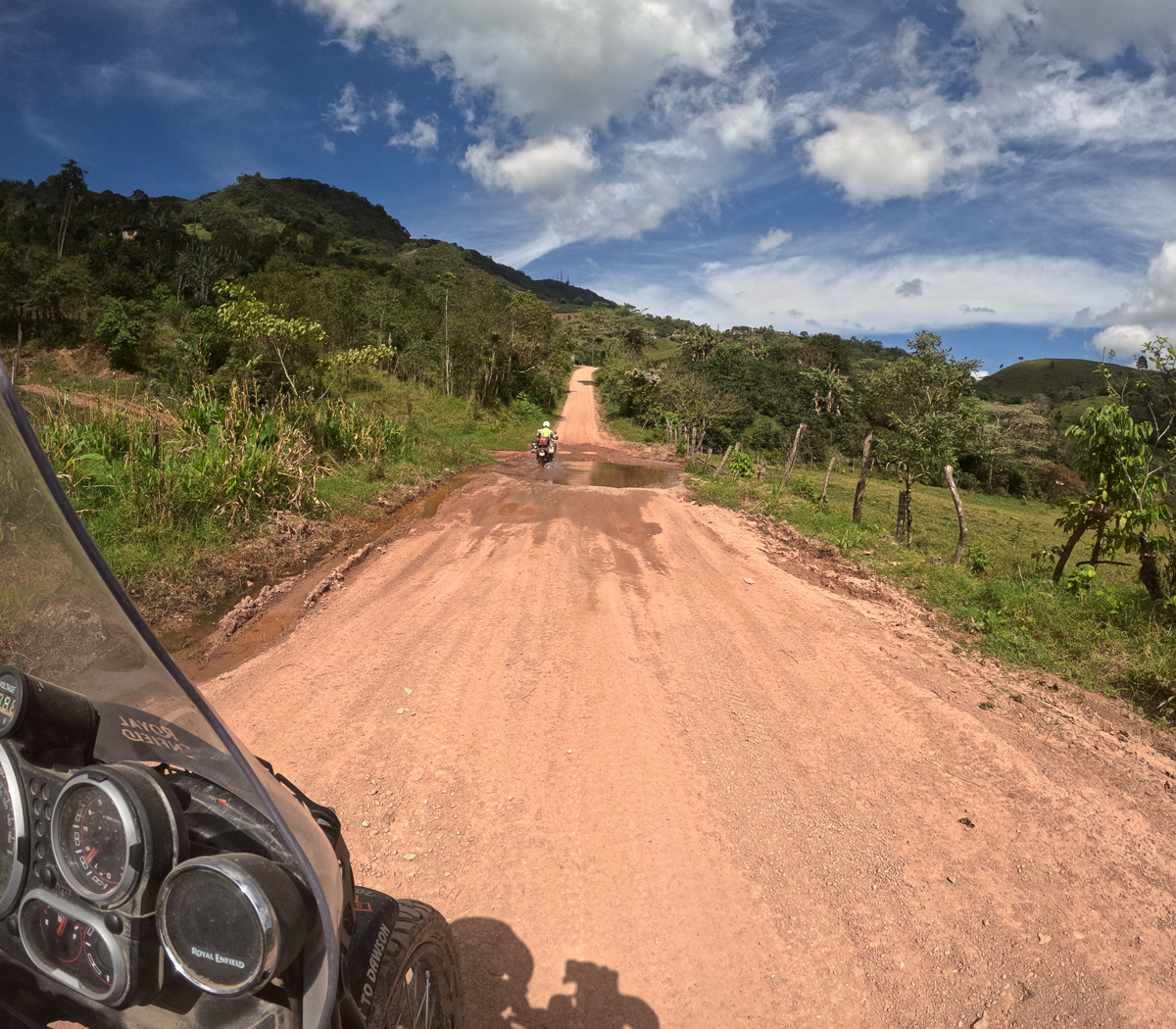
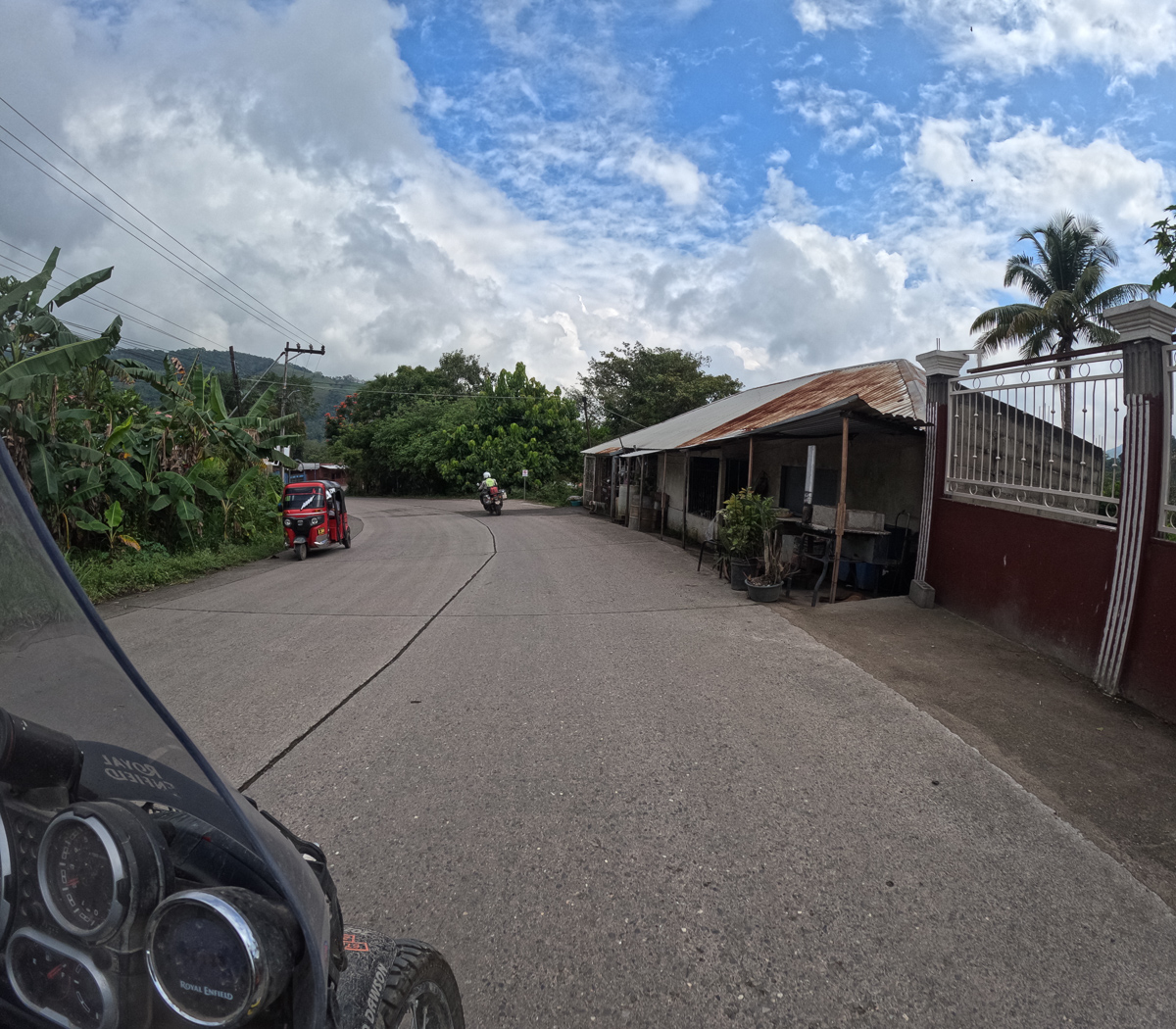
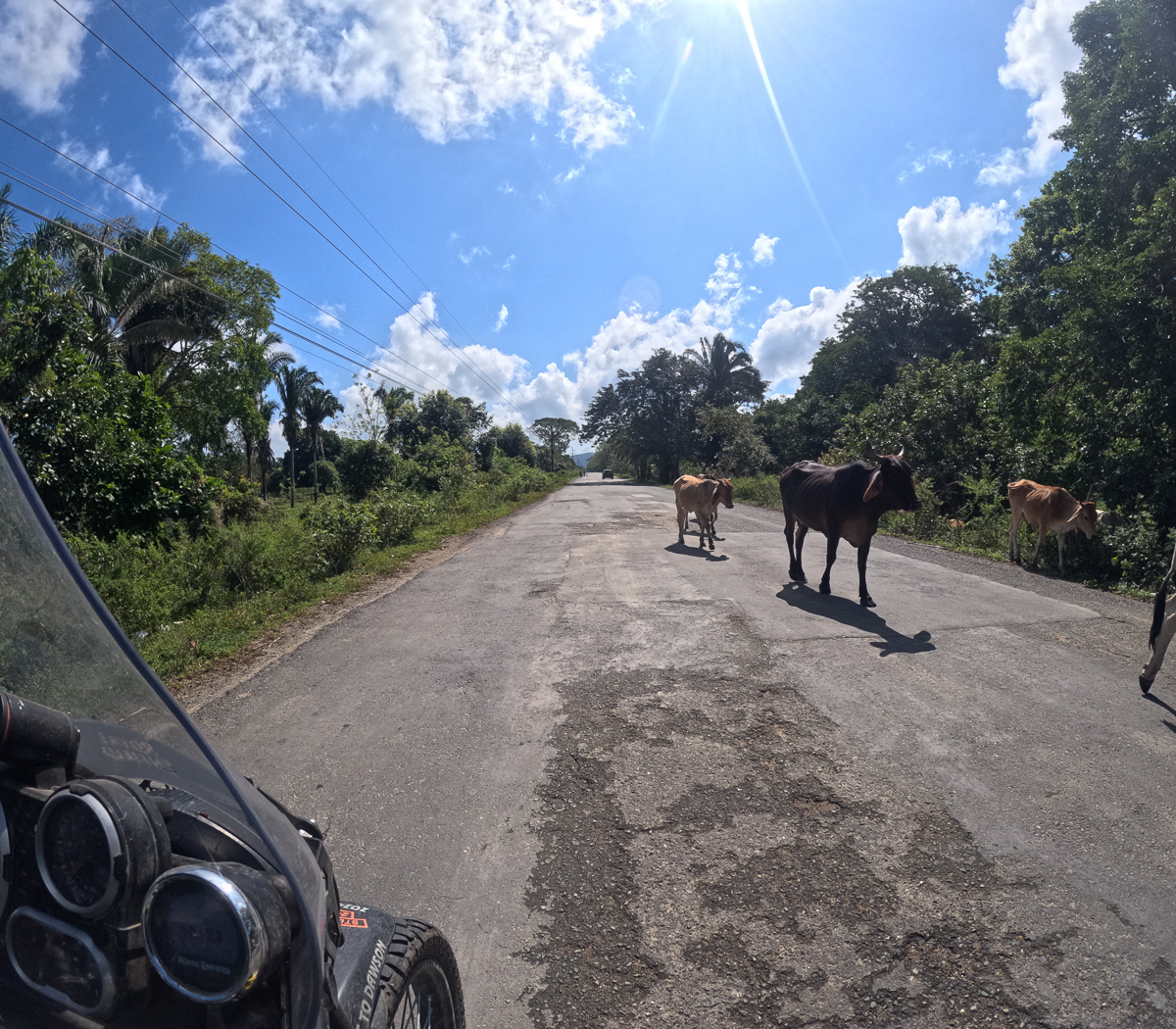
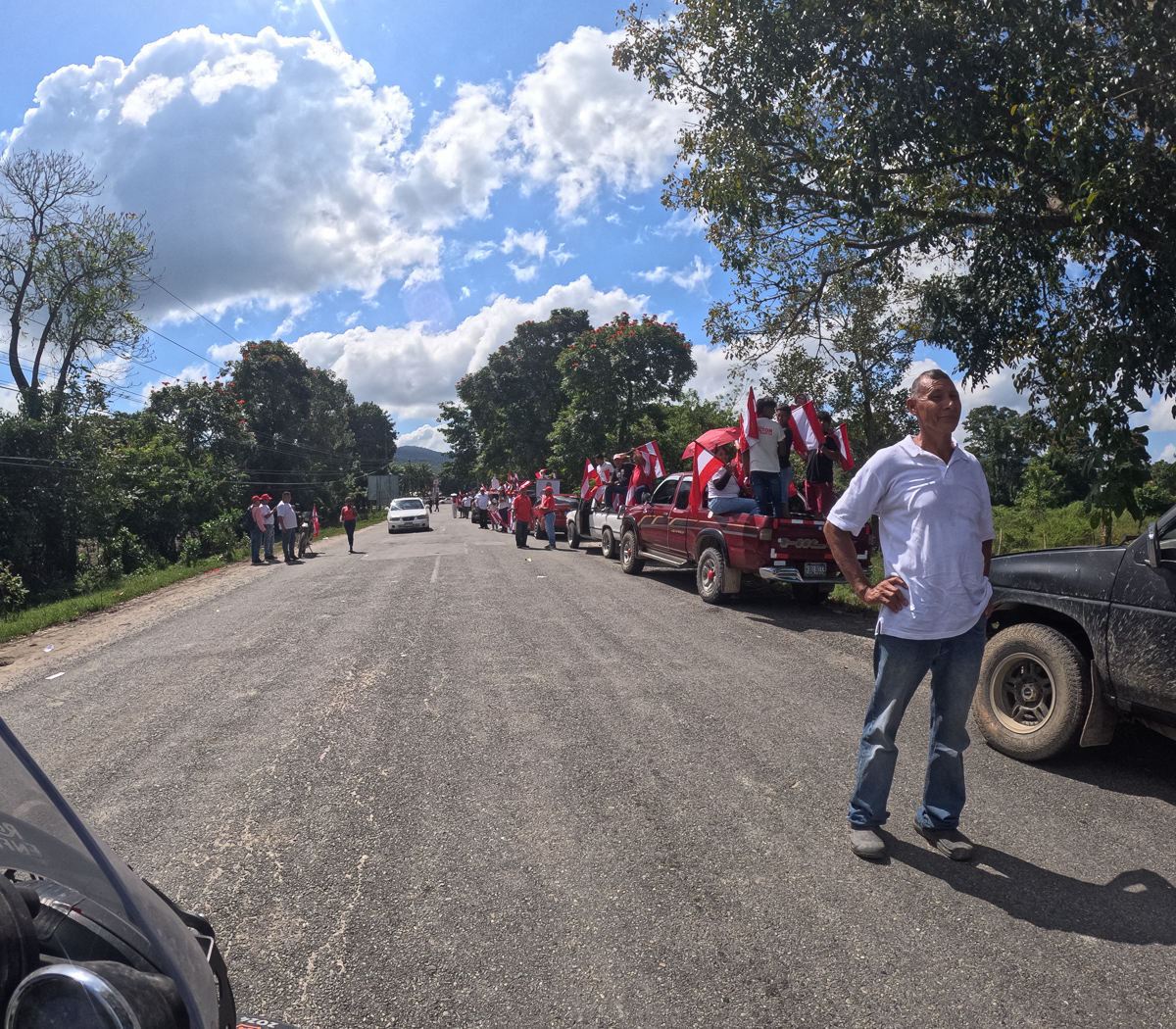
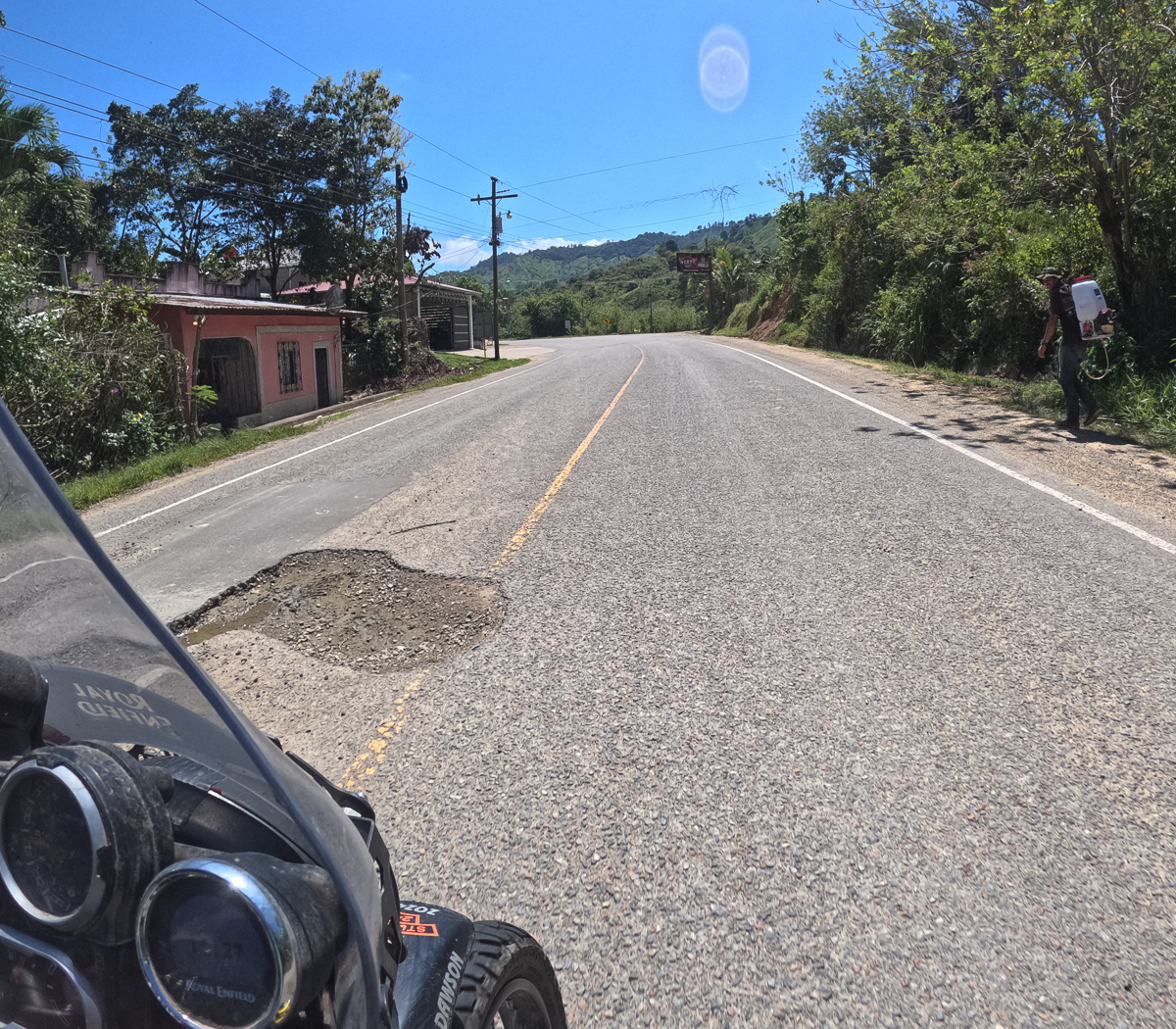
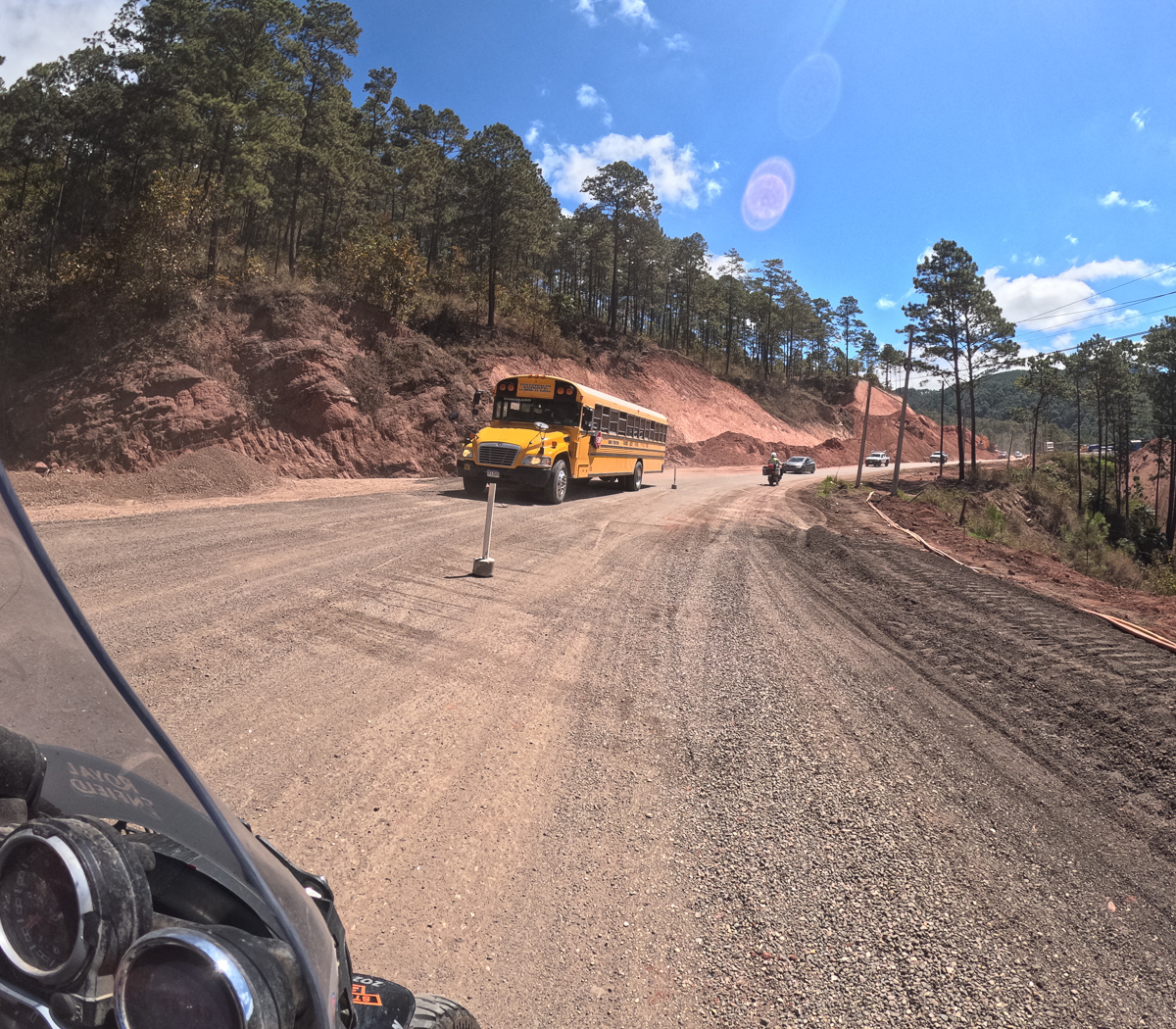
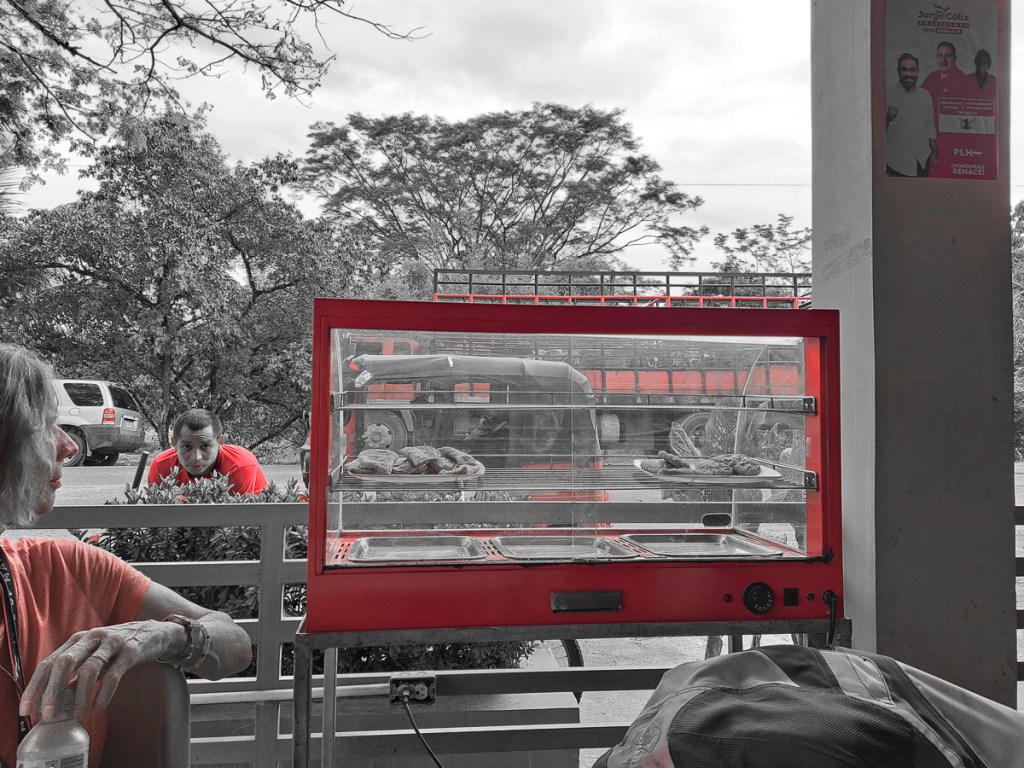
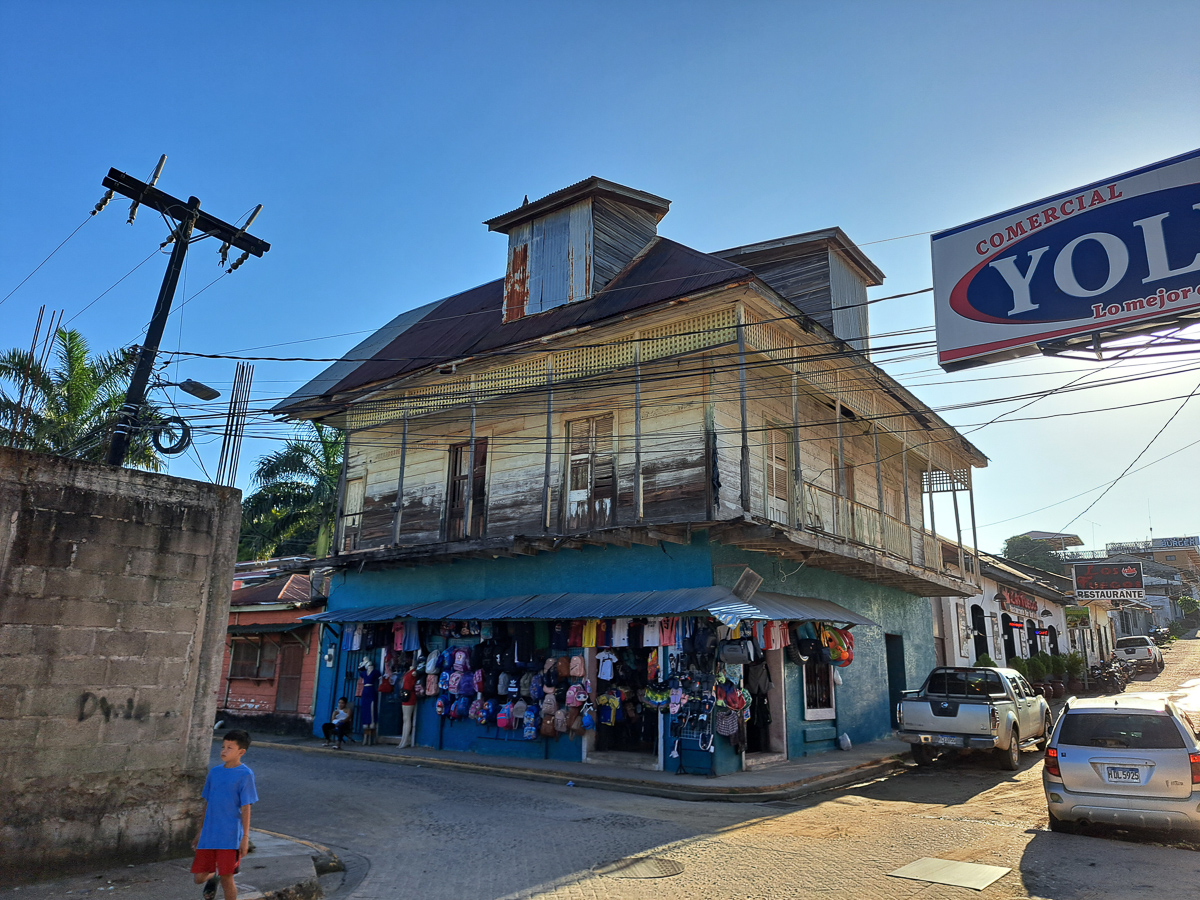
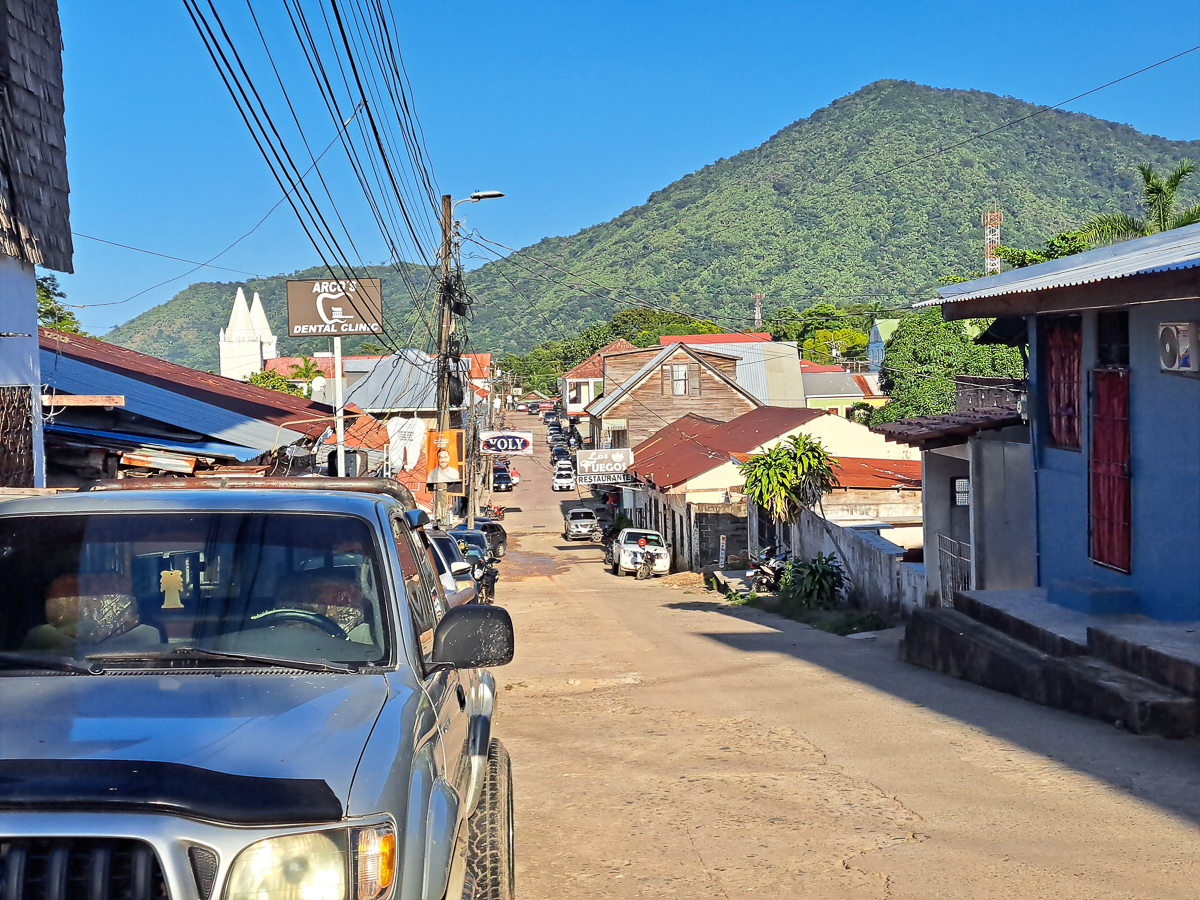
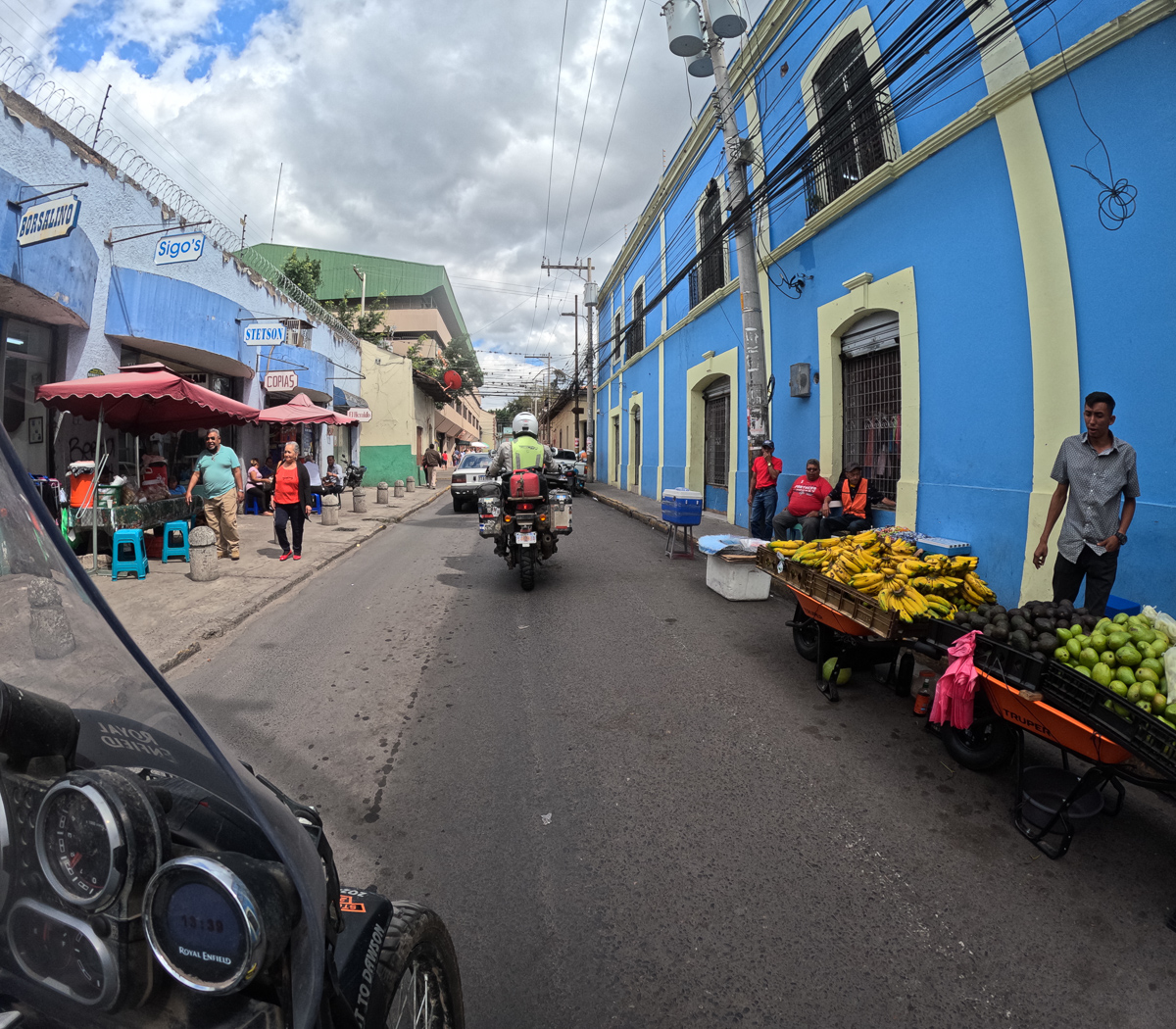
Here’s an assortment of Honduran road photos. We take more photos on dirt roads ‘cos there’s usually more to see, and time to look.

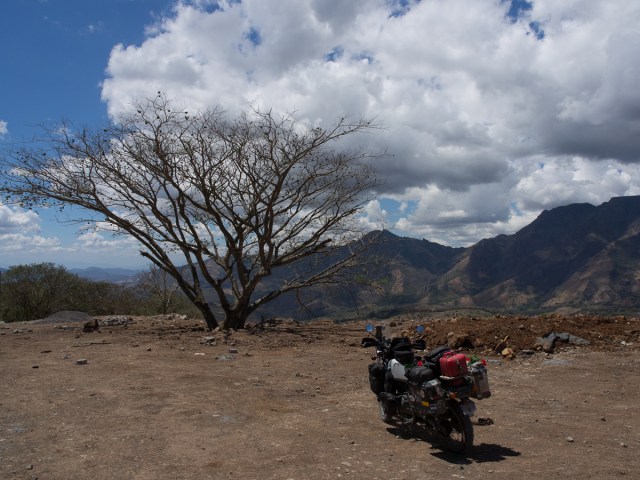
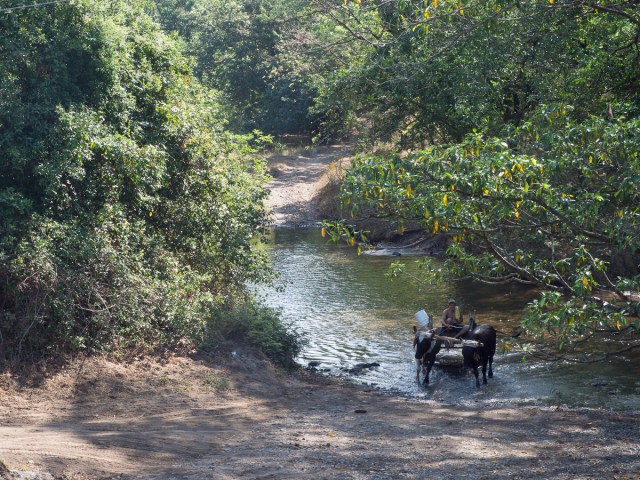
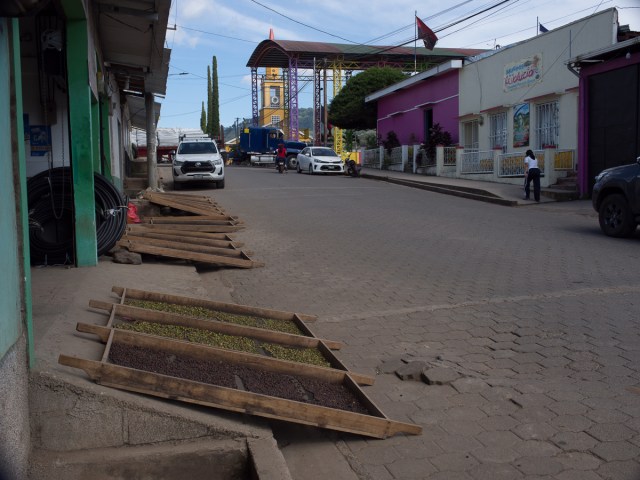
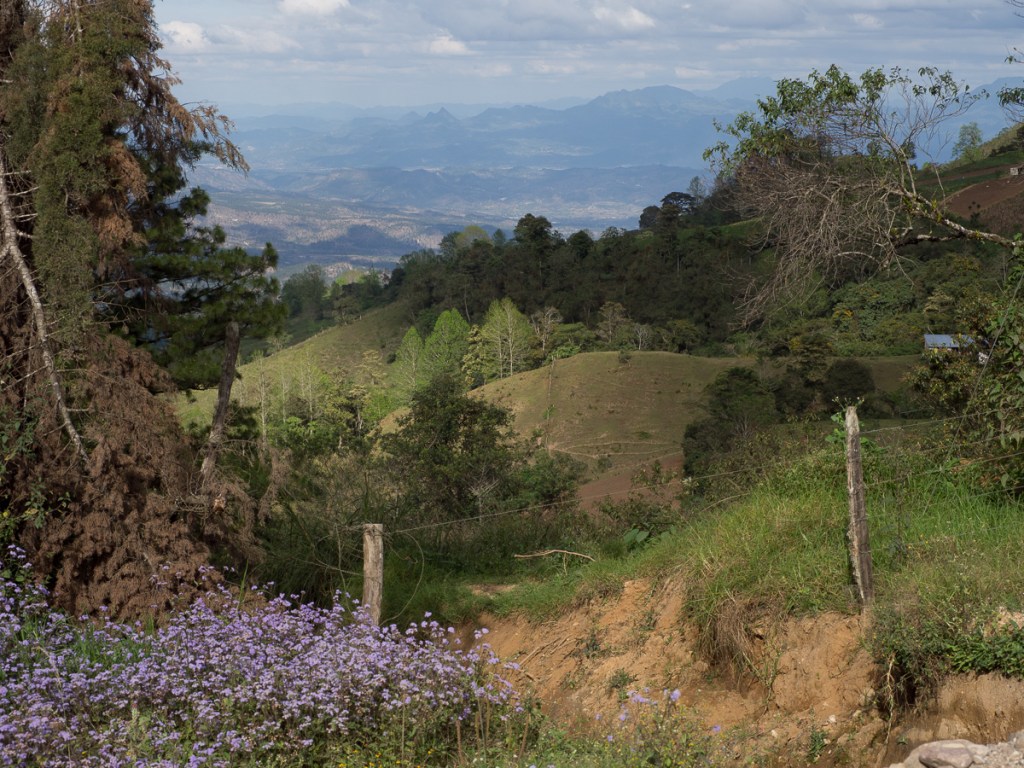
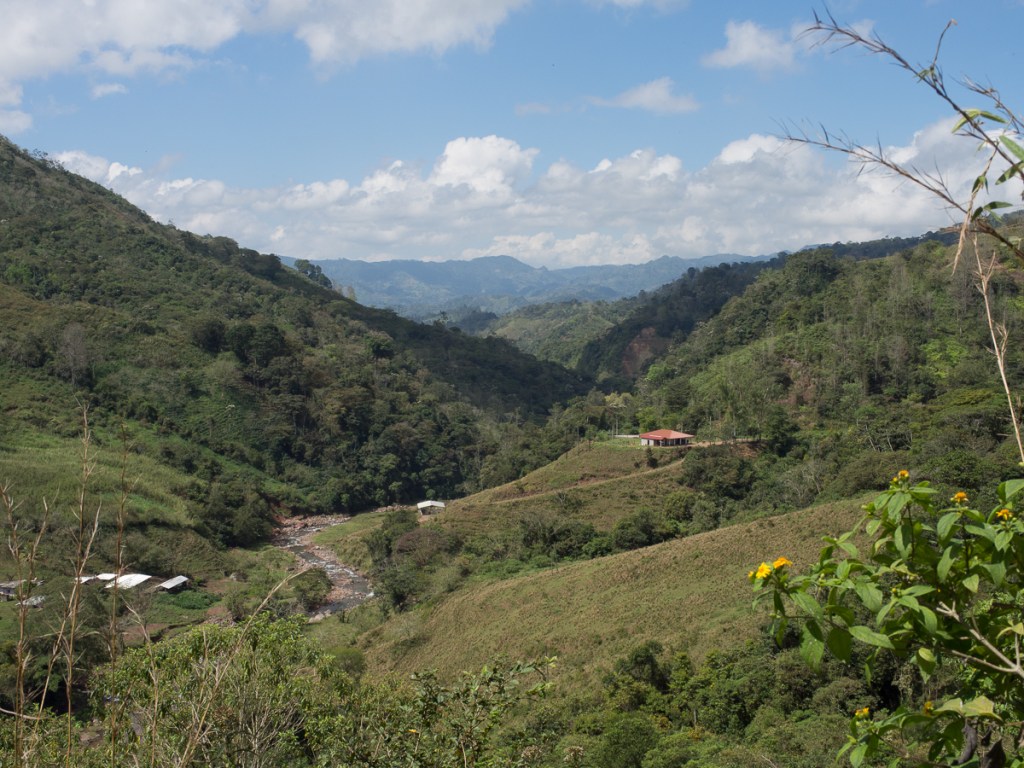
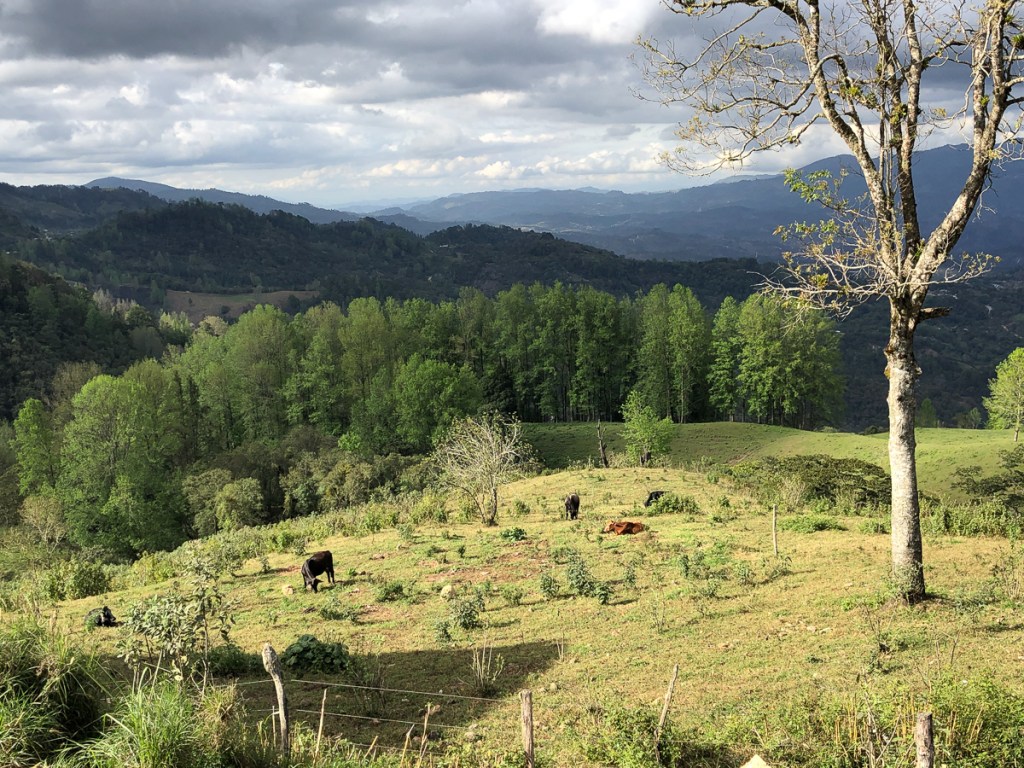
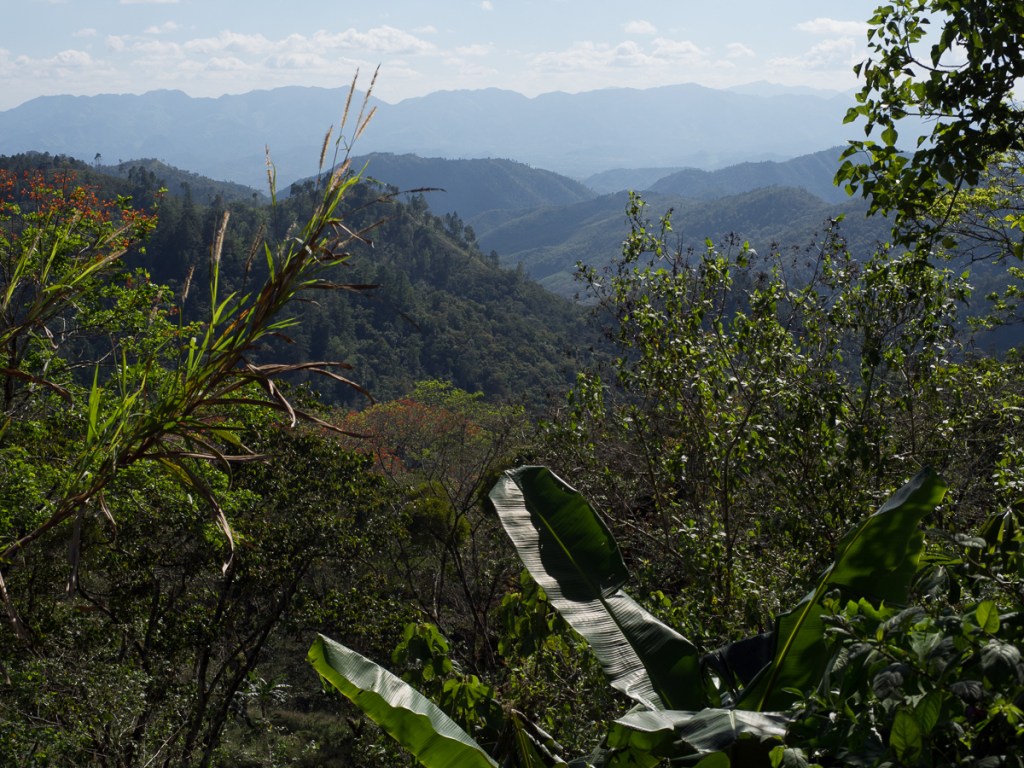
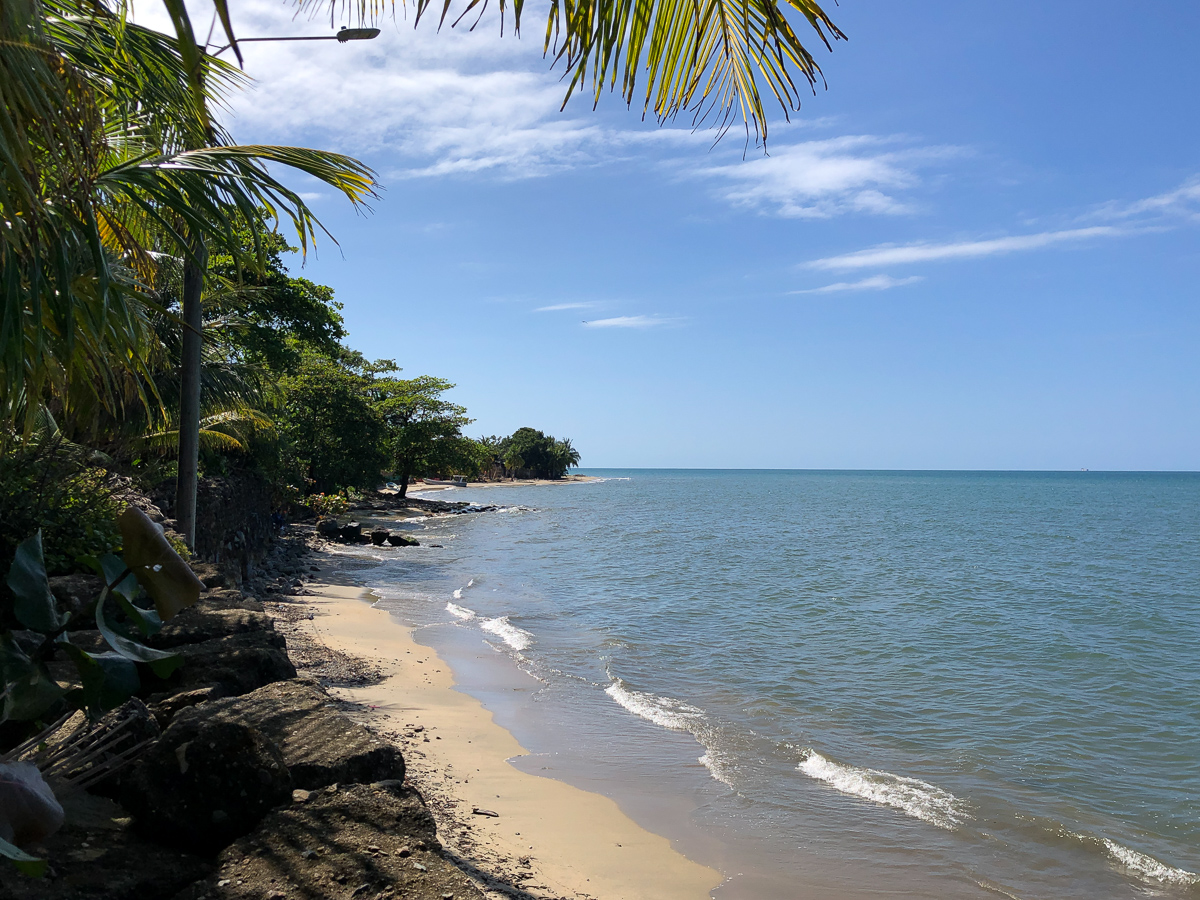
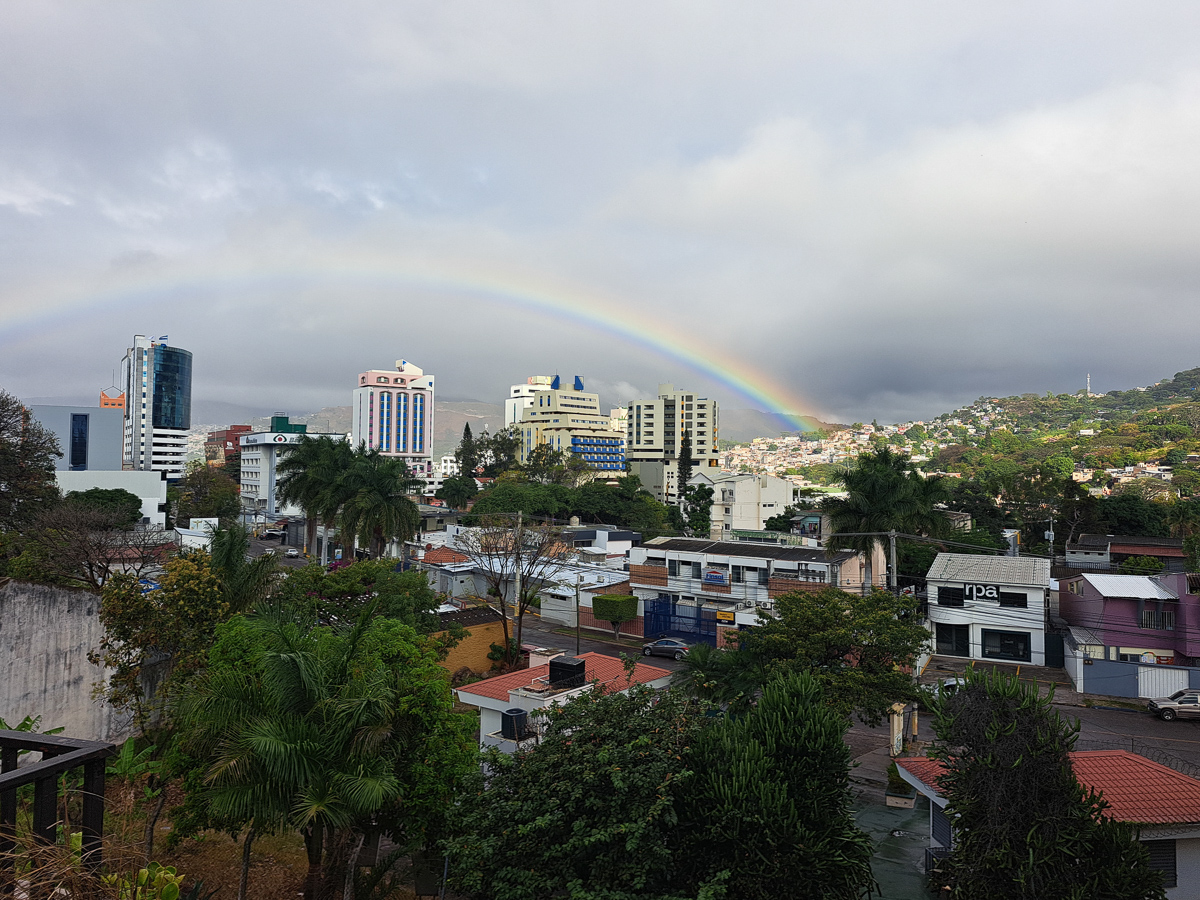
And here’s a few photos of what we could see from the road.

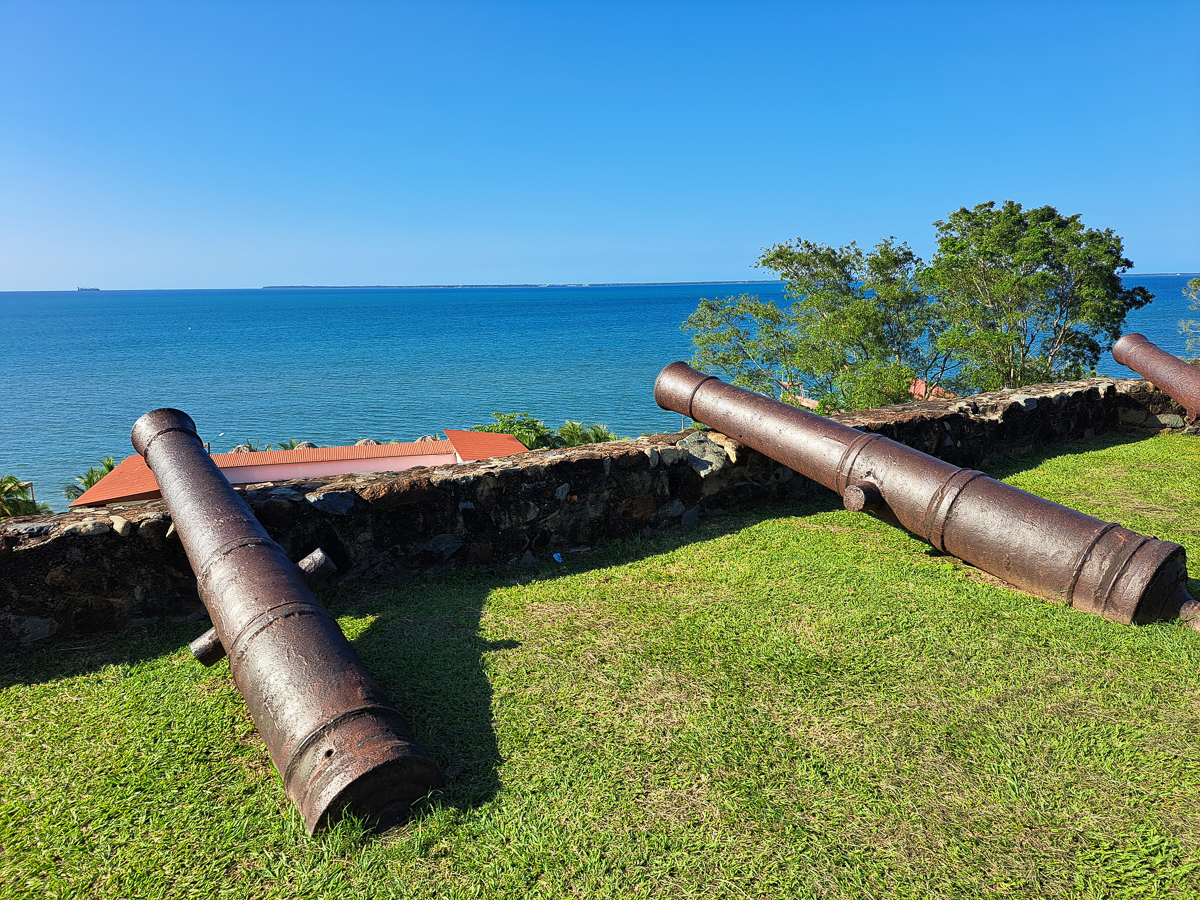
As far north-east as we could reasonably go, a couple of days at the beach at Trujillo was to round off our trip to Honduras.  Gid had highlighted the fort and a couple of historic points of interest in the small town. Yes, um, it was indeed small, but attractive enough, once it had stopped pouring with rain.

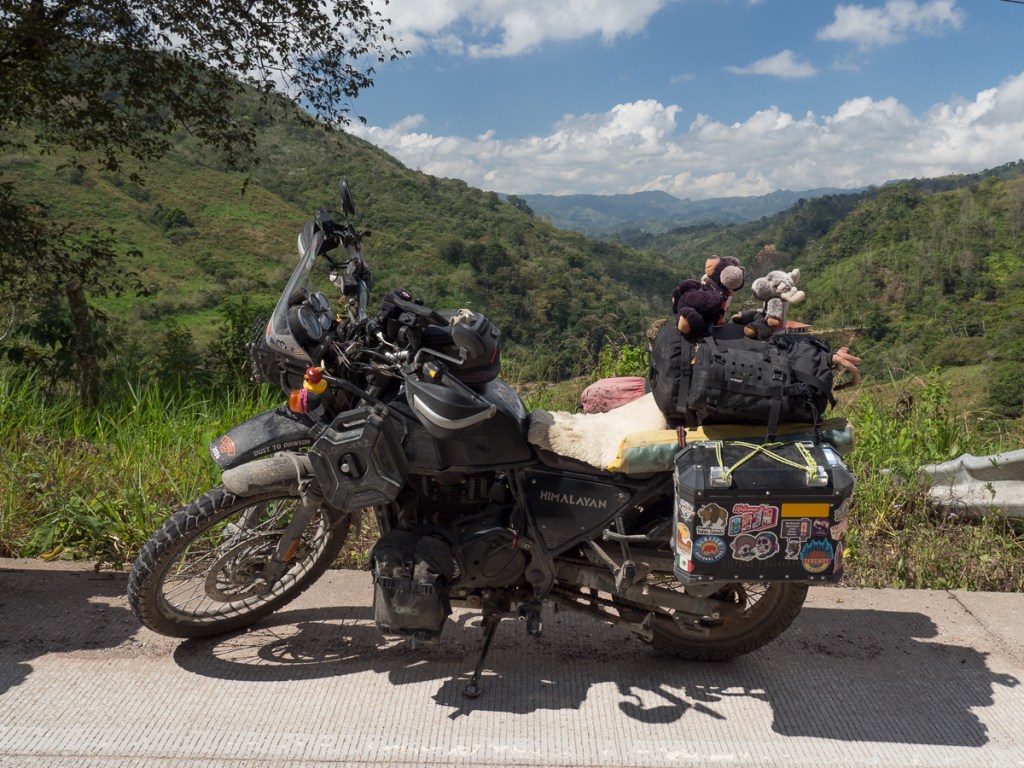
Leaving Trujillo we soon turned south and headed down a lovely road enroute for the capital city, Tegucigalpa.  It was the best road we’d been on for a while so we were merrily cruising along.   We soon realised that we had a third rider also on a touring bike tailing us.  After a brief roadside stop we agreed to a coffee somewhere ahead.  Steve, a Canadian rider, was on a tour to Panama – his version of the Snow Goose descent south for the winter.  We stopped together for the night and shared food, beer, and stories.  Steve’s BMW RS boxer was five times as powerful as our Himis, but the sporty suspension & position wasn’t so accommodating over speed bumps and potholes. He might have said it wasn’t entirely happy on the low octane gasoline, either.  But we’re all doing it, that’s the main thing.  Forums are full of “what bike for …” discussions, and journalists pontificate endlessly (with a nod to their advertisers!), but the best answer seems to be “the one you have”.  We do seem to be a bit off the moto tourist trail now, we no longer see occasional groups of looming, be-panniered, be-foglamped adventure bikes going the other way, or whizzing past us. Of course, just by time and distance, we’re getting beyond the range of a ride-from-home tour for North Americans with jobs and families needing them back soon.

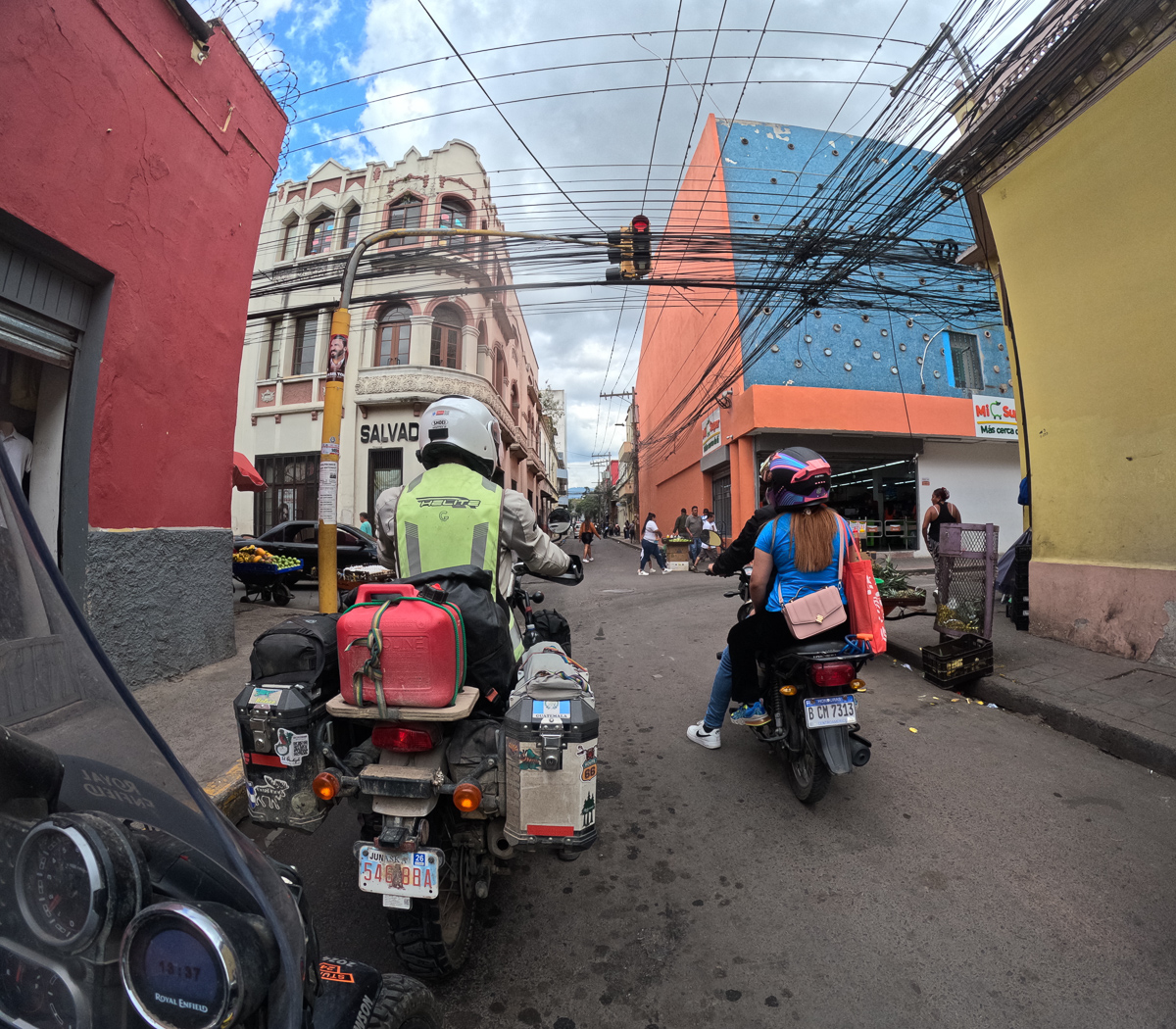
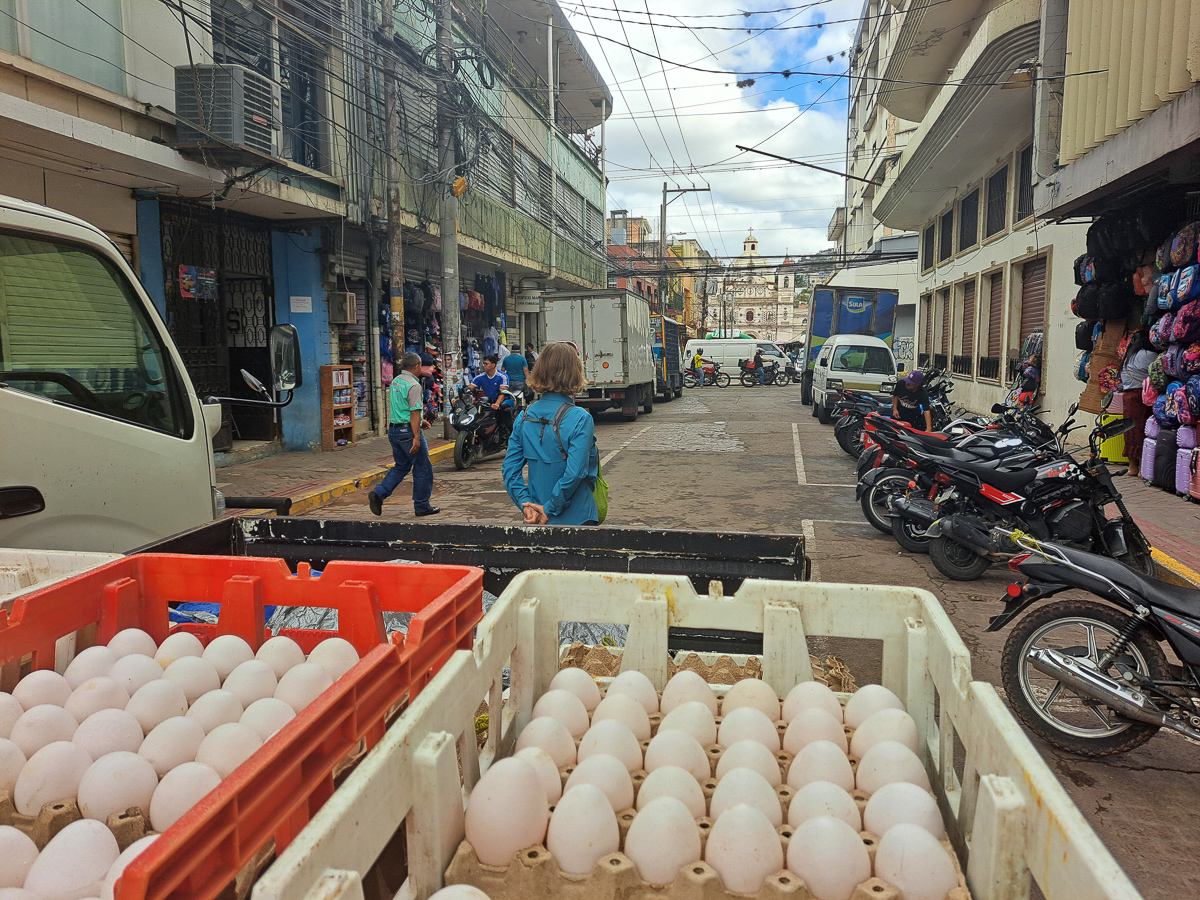
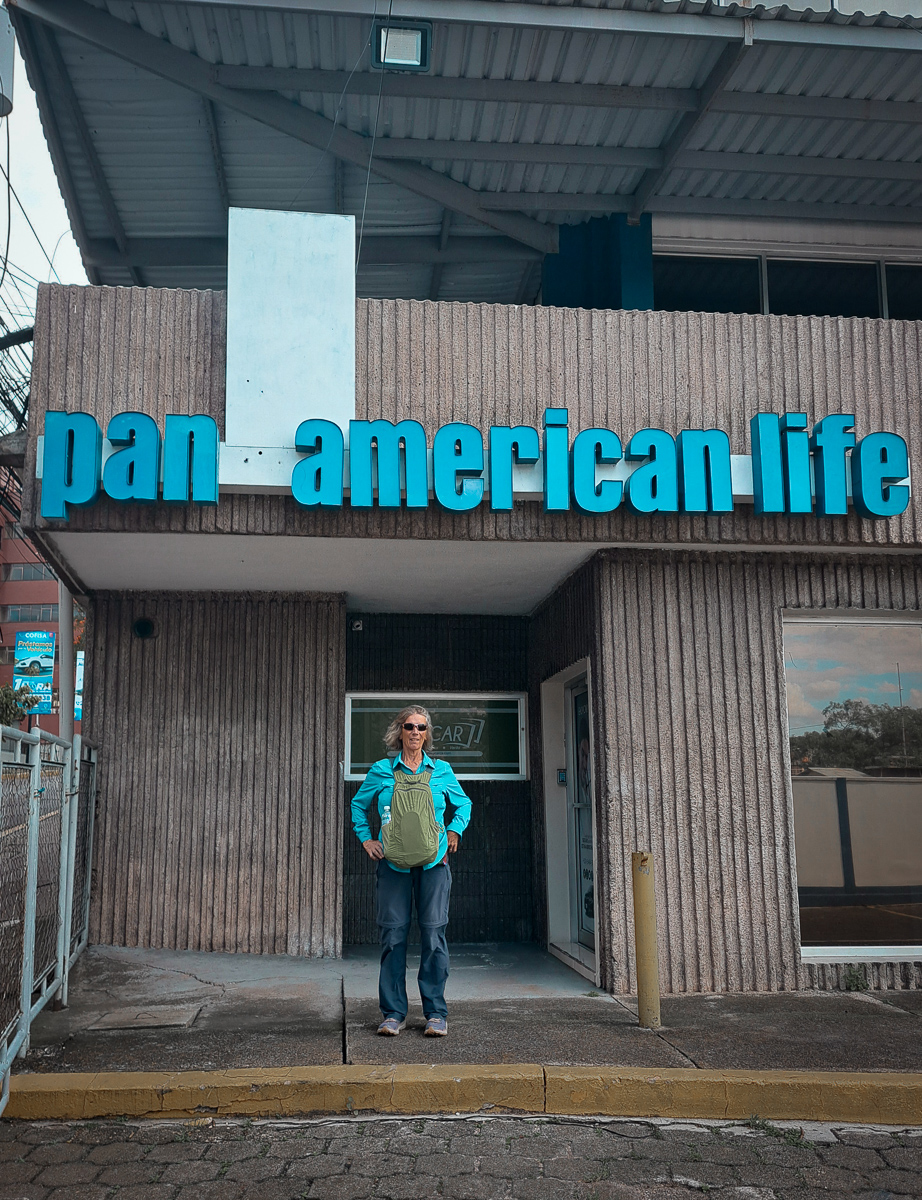
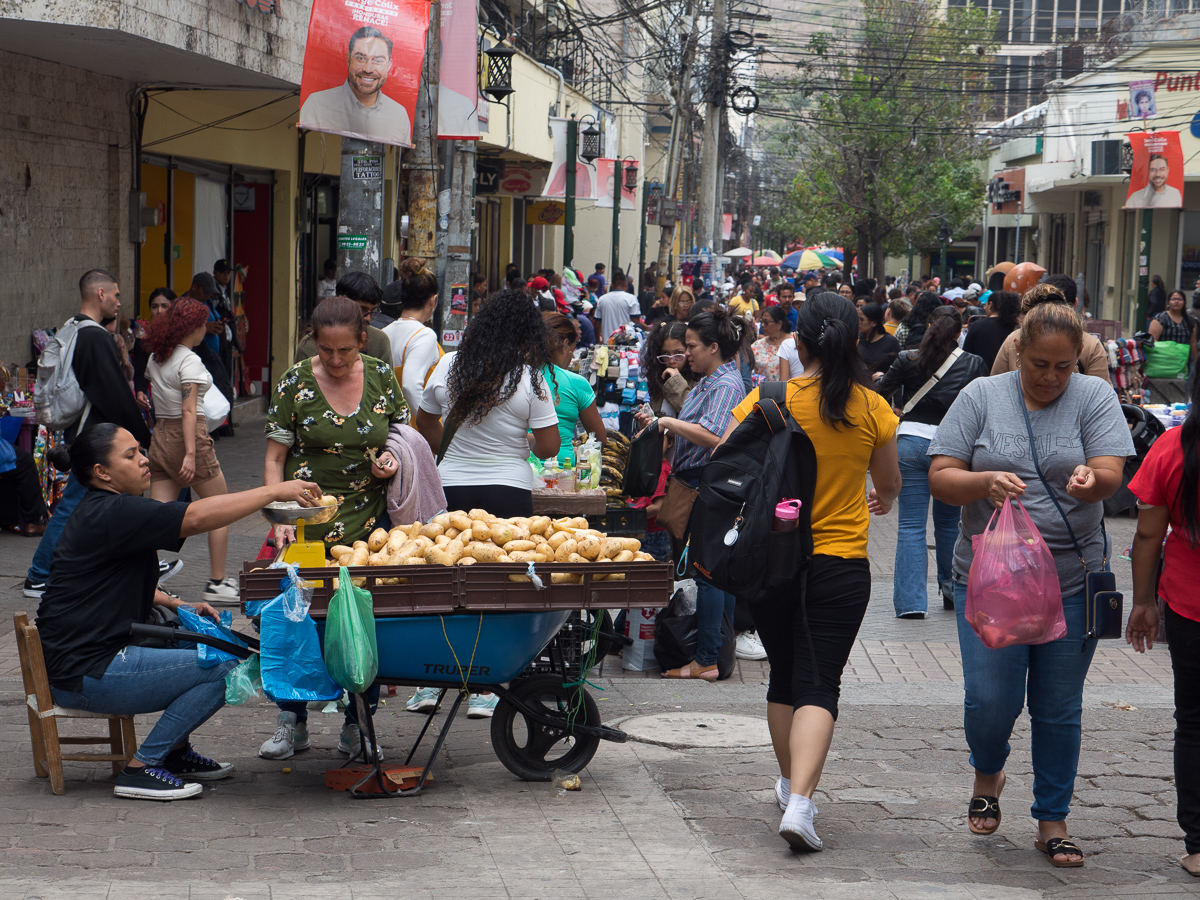
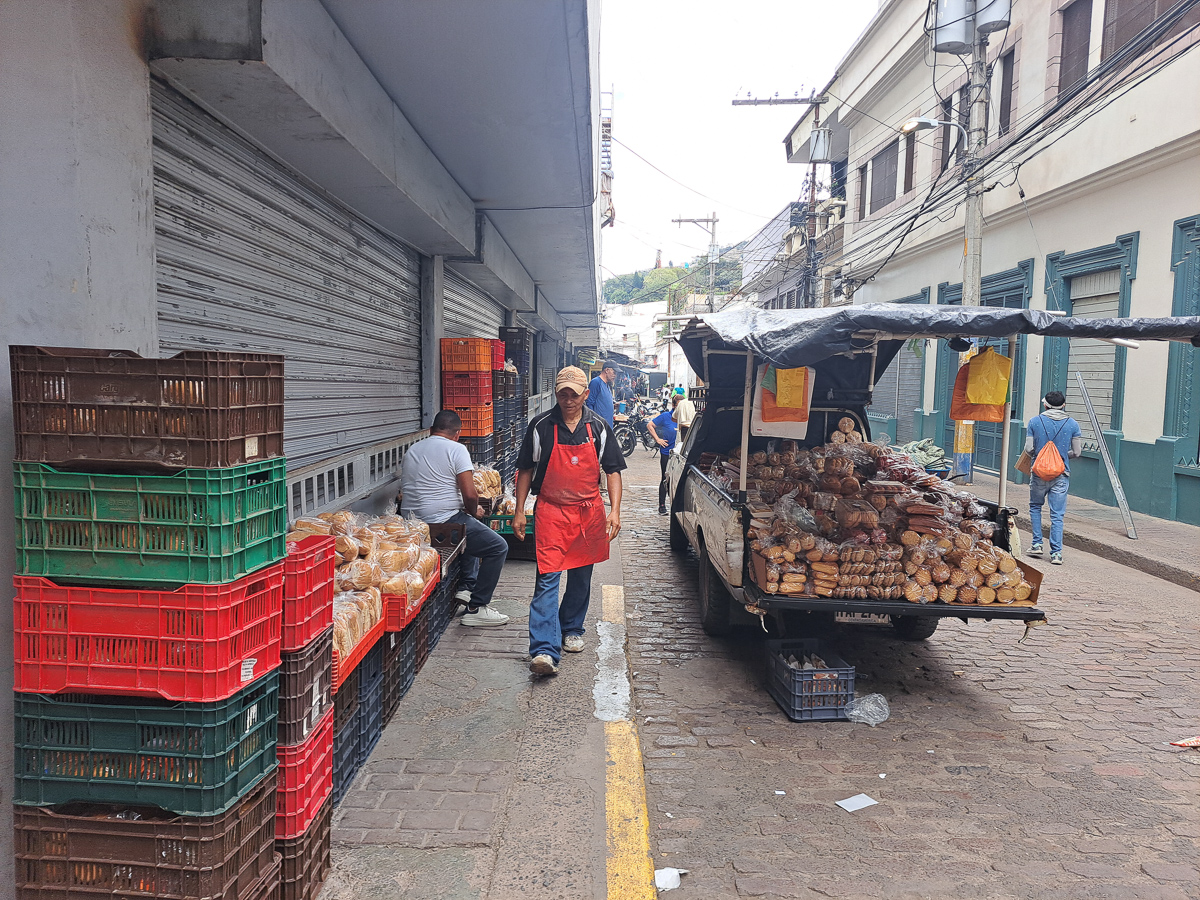
Honduras’s capital Tegucigalpa was busy but pleasant enough.  After all the usual online warnings about crime, the biggest threat was clearly as a pedestrian trying to cross the roads.  Maybe it was our location, but the traffic seemed more cramped and more urgent than either Mexico or Guatemala Cities.  Tegucigalpa is not reckoned to be much of a tourist destination, although we did visit a few places.  We were in the city because it had a Royal Enfield dealer, one of only 2 in Honduras, and I had discovered some loose spokes in my front wheel. I wanted to be nearby when I had my first ever go at a motorcycle spoked wheel tweak.  In the event, the adjustment seemed to go smoothly, and no parts or help were called upon.

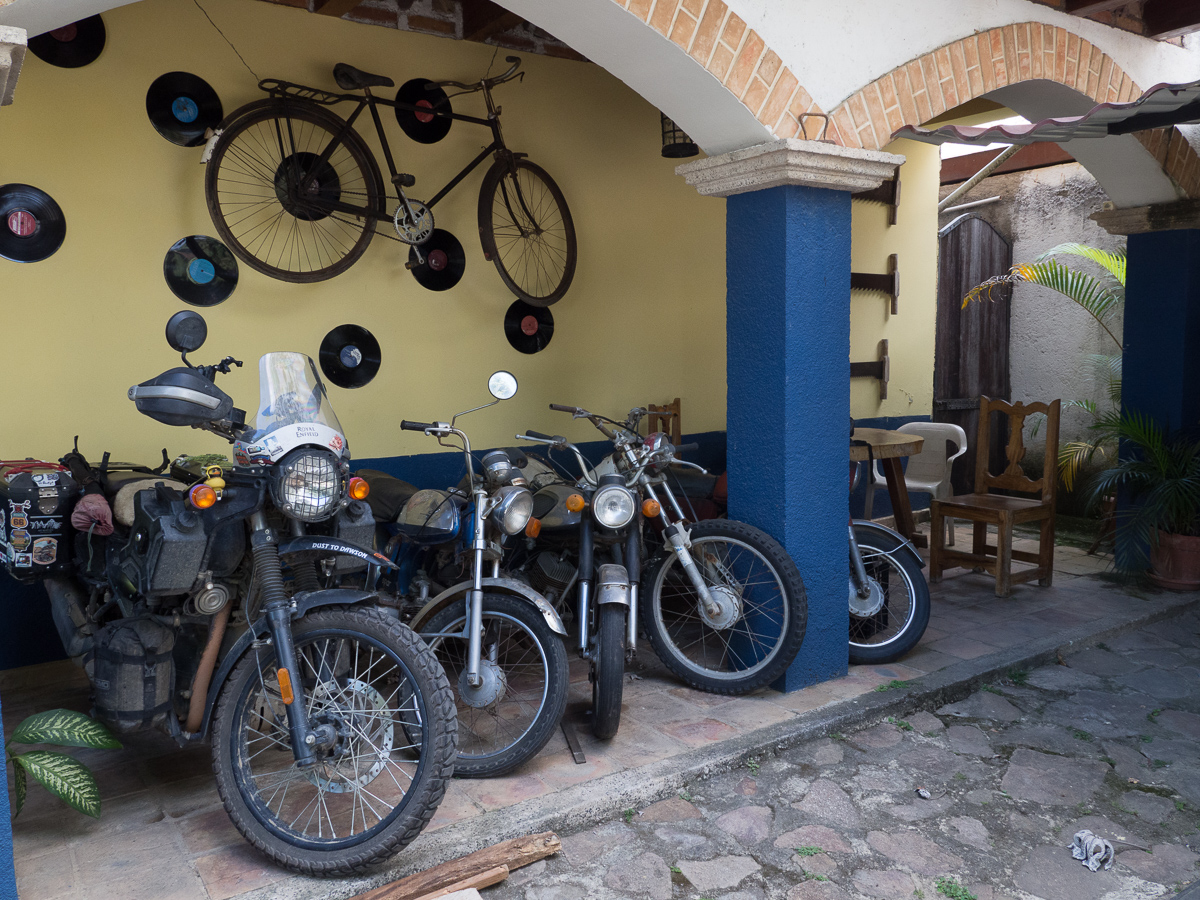
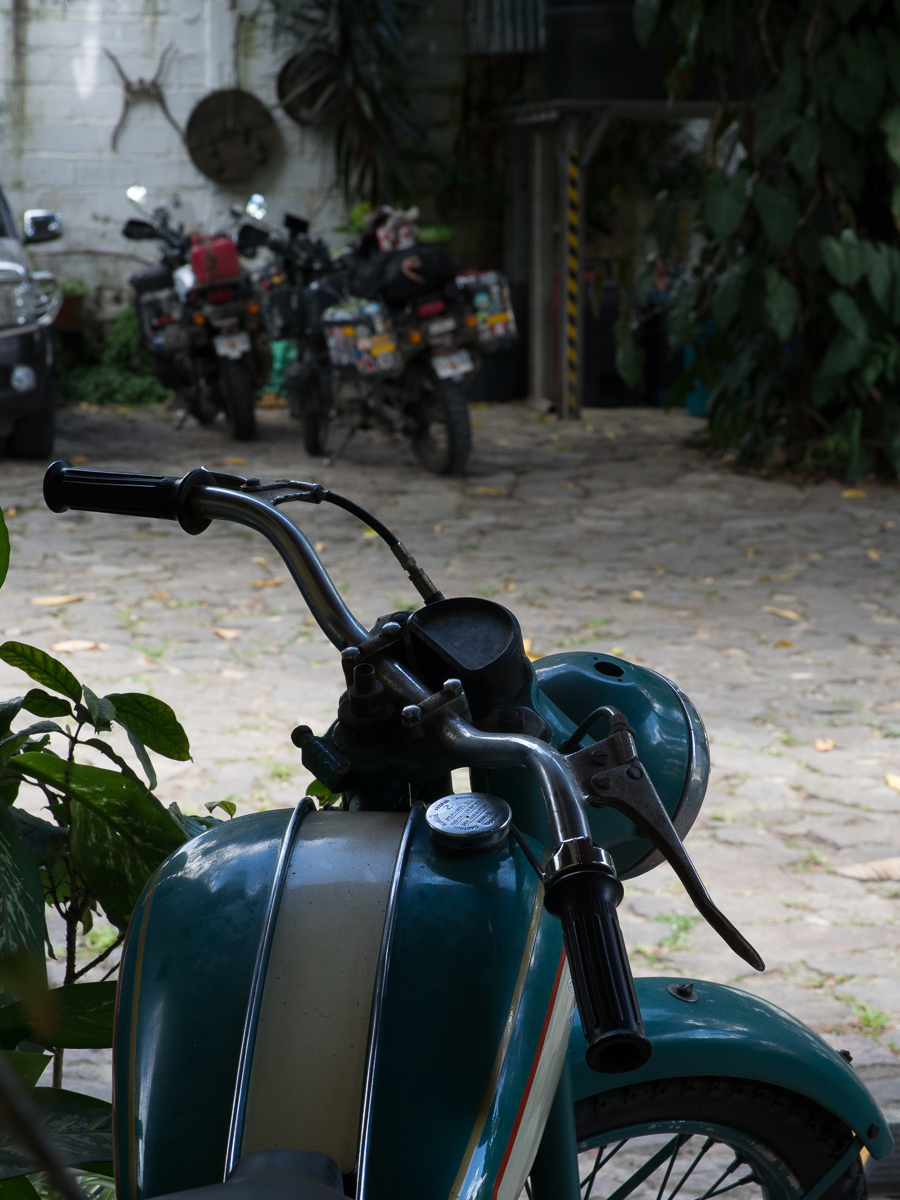
Although our Honduran visas were for 60 days, we were aware that the CA4 group of countries only gave us 90 days from entering Guatemala, so we had to exit both Honduras and Nicaragua, by 29th March. East of Tegucigalpa the Honduras/Nicaragua border hove into sight all to soon, after around 3 weeks in Honduras. Another border to cross, another country to plan. But just before that, Gid misunderstood what he was told about the nightly rate, and our last night in Honduras was rather a splendid indulgence, and a bit of a moto museum, too.

Browned Off? El Salvador

As we entered El Salvador, about the most crowded of the Central American states, and quite prosperous, we were immediately hit by the greater concentration of traffic.  Gone were the nippy little 150s, replaced by bumper to bumper SUVs.  Gone were the traditional Mayan costumes.  Gone were the streams of ladies carrying stacked up wares on their heads.  This could have been any town in England. We’ve been on the road now 8 1/2 months, the last 4 in Central America. We noticed that we were getting a bit browned off with our tourism options too.  “Shall we go and see X?”   Well, maybe not; it’s going to be very similar to the last three Xs we’ve recently seen:

  • Historic, charming, cobbled, cities of the Spanish Empire – check.
  • Elegant or elaborated catholic church – check.
  • Colourful local market – check.
  • Mayan ruin – check and check again.
  • Pre-Columbian anthropological museum – check.
  • National museum of country since independence – even these are getting a bit samey.
  • Beach with warm blue sea – check, although it never truly palls.
  • Volcano hike – Clare sez never again!
  • Souvenir shops – Gid has seen enough and more.
  • Weaving School – Still some potential
  • Spanish School – Not yet ready for more, are we?

Which was one reason we sort of dipped out of El Salvador. Our fault, not its. We made the mistake of crossing into El Salvador without a plan, other than noting that the obvious way south was initially the much promoted “Ruta de Flores”.  We did follow said ruta, but without the intended excursions into charming side-towns it was a pretty unspecial kind of ruta.  Reasonably smooth, vaguely bendy, sort of nice countryside, though not many flores to be seen. 

And briefly – after it, i.e. at lunchtime, we decided to bomb across this small country to the southeast, and try for a birdwatching boat tour near Jiquilisco in El Salvador’s largest estuary, an Unesco Biosphere reserve.  The boats went, apparently, from Puerto de Triunfo.  Google showed one hotel, which usually means there’s three or more local joints that would give us a convenience walking distance to the ferry. We ignored Lonely Planet’s 2018 advice to skip the town.

When we arrived in the afternoon, the dockside had proved hard to negotiate on the bikes.  The queue of traffic behind us was impatient as were the traffic controllers.  They only wanted to grab the parking fee, but we didn’t want to park. We were looking for an hotel and no-one had time to listen to us.   There was a cacophony of people wanting something, be it official or commercial but mainly – get out of the way!  Both Google and LP were right, there was only one hotel.  We eventually we found it in the gathering darkness tucked behind a bingo hall. It was physically good enough.  The owner seemed fine until we said one night, maybe two – her face fell.  The following morning she rather gruffly announced that we had to be out by 8am or pay a day fee, lousing up our plan of researching the boat trip early by foot and possibly staying another night.

We groused, cleared out quickly, and made a new plan certain now that we would also advise people to miss this place.  Back to the west! That sounds crazy, but we had always planned to enter and exit El Salvador in the west.  With a direct route from Guatemala into El Salvador there was little choice and Copan, possibly the best ruin site in Central America, in western Honduras wasn’t to be missed, requiring a return to the west (few travellers would voluntarily go through the border paperwork again to save a few miles). We’d visit El Salvador’s seaside instead.

Fortunately, both LP and our hostel host in Antigua had agreed that El Tunco was a nice beach village, with a strong surfing flavour.  So we set a GPS pin for there and off we went. An easy ride on a good road, until they decided to dig it all up in La Libertad. That was a very sweaty last 20 miles. But reaching El Tunco, in need of a bed, we lucked right out. Pulling over when we saw three different hotel signs on one bend, Gid disappeared on foot. Two were pricey, shiny concrete boxes for prosperous tourists. Number three was great, locally owned, been there years, day access for locals and kids, big pool, basic restaurant, chickens, dogs, cats and children running loose. A palm shaded aircon room less than half the price of the previous two.

The beach only metres away was great – firm sand, nice little warm waves, free loan of bodyboard.  Local fishing boats launched off the beach in the late afternoon returning in time for breakfast.  The night’s catch was loaded onto trucks in cool boxes.  Our hotel was the first stop.  A carefully selected basket full of fish hanging under the scales couldn’t have been fresher.

And did we say it was a beautiful beach?

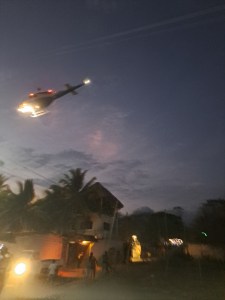
I managed a 5K run by doing five laps of the beach, then succumbed to a cold – in this heat!   Thereafter a daily stroll into the surf-dude nearby village for basic groceries was all I could manage. We stopped four nights. One evening was enlivened by a helicopter and lots of soldiers, as El President used a spare field next to our hotel for a visit to – something or someone. El Salvador was redeemed.

But we still legged it to the Honduras border, even though these borders are always horribly tedious, completing the paperwork for the bikes. Hmmm – we could have gone straight from Guatemala to Honduras, saving one border – but El Tunco was nice, even with a cold. We barely scratched the surface of El Salvador’s beauty and interest.

So, what are we left to do in Central America, the countries of Honduras, Nicaragua, Costa Rica and Panama? We have to recapture our mojo. Maybe some more nature hikes, because we really are in the jungle a lot of the time.  We’ve not been very successful at beastie spotting so far but what are we scared of?

  • Bandits?
  • Armed guards?
  • Getting lost?
  • Volcanos – definitely.
  • Jaguars – grrrr – be serious!

Missed Opportunities?

After the stunning views of Monument Valley, and the rocky heat of Utah, we decided to stop in the small city of Flagstaff, for a few days of motel civilisation over Clare’s birthday. It might also offer some wifi and shops, for practical things. Ok, it was the cheapest motel in Flagstaff, but it was comfy enough, especially after a small tent.

A relaxing few days, that was what it was supposed to be. I’d discovered the Petrified Forest National Park when idly looking through some advertising info.  We’d planned our next day – setting off from Flagstaff and doing a relaxing loop along scenic roads.  The Petrified National Park was only an hour and a half away.  Of course we could do that in a day.

In a day maybe but we set off at 1.30.  Gid was totally occupied with trying to pull together the resources for our next bike service, at 12,000 miles.  The bike specific service parts, and a location where we’d be permitted to do our oil change (think about it!), the latter needing to have a cover as now we seemed to be subjected to extreme sun and monsoon weather with massive amounts of rain most afternoons.  And tyres this time too.  Both front tyres are wearing smooth in places and Gid’s rear tyre has worn rather quicker than one would expect, and we had been very lucky in Whitehorse, where we’d previously got tyres, to find shops actually holding stock – normally an order has to be arranged. On top of that our chains were now showing considerable signs of wear.  After thousands of miles where they appeared not to wear at all, suddenly Gid was tightening them every 500 miles.  End of life was near. Whilst the chains themselves are sort of standard, the sprockets are not – again an order has to be placed… somewhere. Where? When?

Gid’s been quite concerned about his bike pulling slightly to one side, which may explain the fast rear tyre wear.  On a number of occasions he has been doing the ‘no hands’ bit to check how true the bike would run.  Initially his conclusion was that it was pulling to the right   ‘How does yours track?’ he’d ask me.  So once again I’d be going down the road with my hands in the air.  Mine seemed to run quite true but I wasn’t that keen on going hands free with a fully loaded bike.  We’d done this sort of thing on the i2i course back in our early days of learning to motorbike. It was about improving our balance and skills but I will never forget when I very nearly ran into the back of a car when going hands free and reading my comic returning from my newspaper round early in the morning, many decades ago!  Gid had tried to correct the error by relieving the fork clamps and next, tweaking the rear wheel alignment to pull the wheel slightly to the left but that had made it worse.  A couple of tweaks to the right had improved it but he wanted it professionally checked. The Royal Enfield dealer in Reno, our place of choice, was fully booked for the next two weeks and we’d be there in a few days.  Our preferred Reno accommodation, Air B&B host Tyler, with a car port, couldn’t extend our stay to take account of the delays with some of our service parts arriving later than hoped and we definitely needed the shelter to work on the bikes in this weather.

Before leaving America we are going to do one final loop back up and round to take in the coastal road – HWY1  as it’s supposed to be another of the  ‘can’t miss’ roads.  Another two thousand miles perhaps but that will be our final lap in the US.  From there we’ll be down in Mexico.  How easy will the servicing be down there?  It might be affordable not to do it ourselves (a DIY oil change and check over costs $200 for both bikes, a DIY valve check is $0, USA dealer shop prices are about $1400, this for a 6,000 mile service about every 7 weeks). But everything might well have to be arranged in Spanish.

From Flagstaff, starting after lunch, it took us a couple of hours to reach the Petrified Forest National Park. We went into the museum and Visitor centre.  Gid had read that in minutes it seemed – I took more than an hour.  I knew how petrification took place – vaguely, but found the information fascinating.  200,000,000 years ago back with the early dinosaurs all this had taken place.  It explained on a time-line that if a year was the wakening of the journey of life on earth the early life was about the summer, dinosaurs the autumn and man was the last 15mins – 11:45 on the 31st December!  Back with the dinosaurs these trees had fallen down into the river/stream been covered in silt and gradually turned to crystal, absorbing colour from the minerals around them.

We wandered off through the exhibits .  But again Gid hadn’t been totally ‘in the moment’ as the pressure of the servicing was all consuming.  I’d offered on a number of occasions to pull my weight with the mechanics but my approach is far more laid back.  ‘I wasn’t even doing my POWDDERSS checks every day,’ he’d chastised me.  No, barely once a week to be truthful (Gid says: Not even sure that’s true!).  I’d need a lot of support the do my own servicing and clearly it was far easier for Gid to do the lot.  Then he’d know it was done properly, was clearly in his mind!

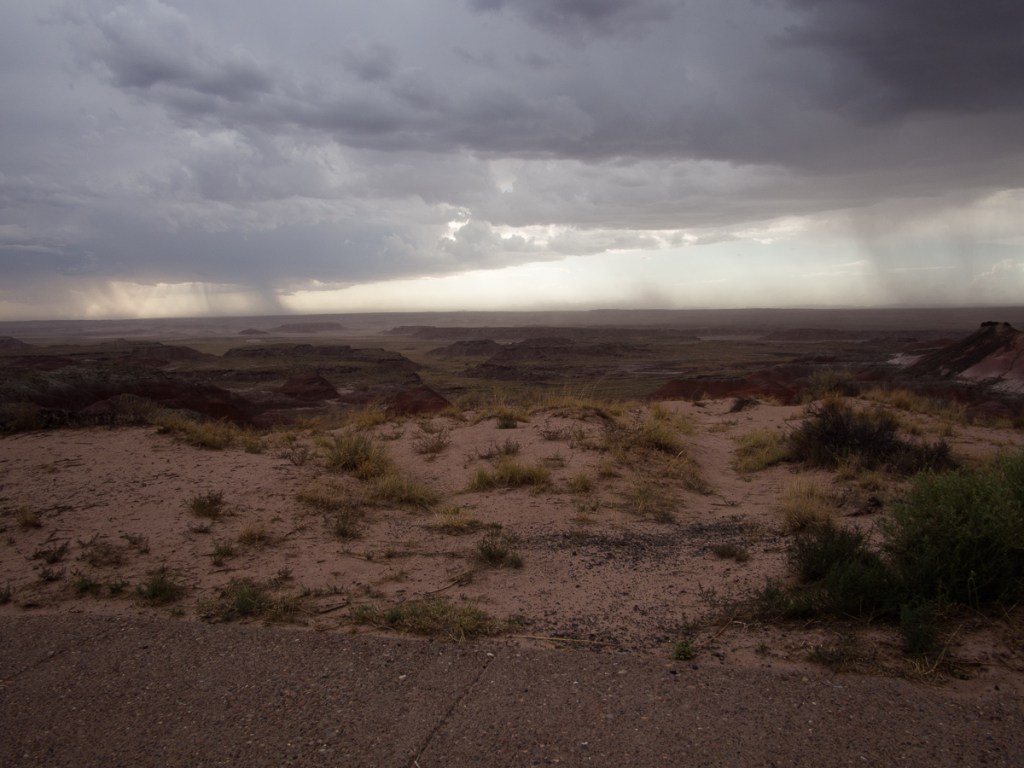
As we wondered round the exhibits I read some of the information but Gid was pressing forwards.  I think he did relax into the event but only briefly as ominous clouds were brewing with lightning flashes signalling the storm to come.  Once back at our bikes, whilst looking at the weather Gid asked what route were we talking home?  ‘Through the park and the Painted Desert‘, I’d replied.  He queried if I knew how long it was and suggested that I came back to the Visitor Centre to look at the map.  Yep, I knew how long it was and that it would probable take us another hour or so.  This was my trip – through the park we went but I had agreed that we wouldn’t stop at any of the other sites along the way. It was rather a dramatic ride, with lightning flashes on both sides of the road and strong winds.

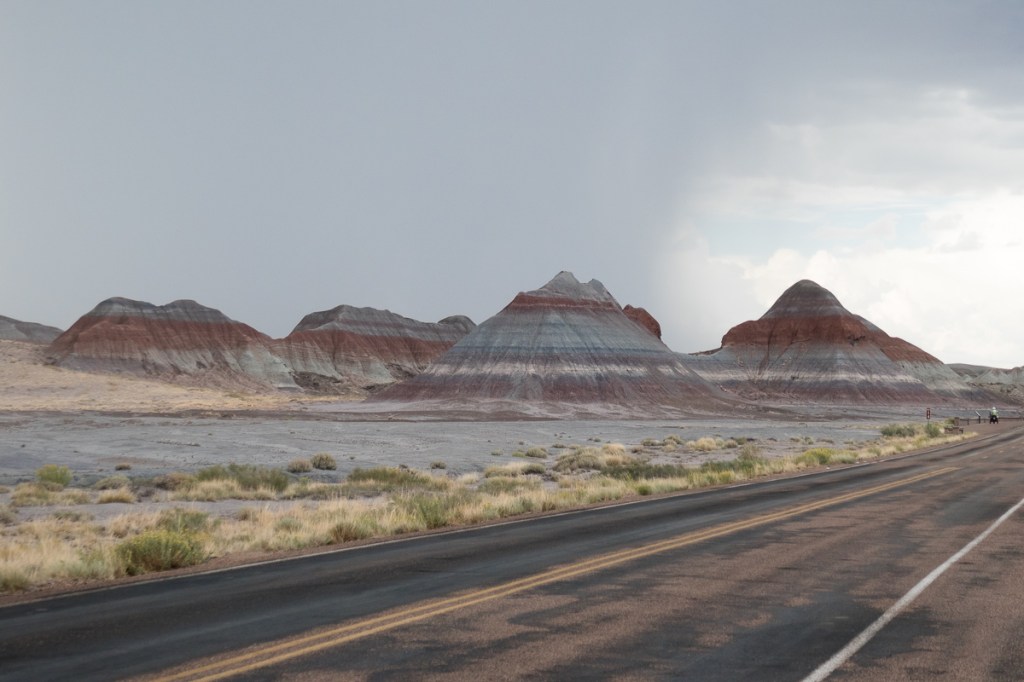
Arriving ‘home’ at eight o’clock Gid was straight into service mode urging me to focus on our campsites for the next week leading up the our arrival in Reno.  I’m not sure he’d thought of anything else all day. We’d booked the Air B&B for Sunday night but of course that meant we couldn’t pick up the service parts during the day.  I was still in Petrified Park mode.  I sat and read the booklet I’d picked up and was rather sad about the things we’d missed – petroglyphs, we’ve seen some before and very much enjoyed their creative form and direct link to so much history, and we’d missed the longest petrified log in the site together with some wonderful views and walks around the Painted Desert – an area of layered rock showing different periods in history as different sediments had left their colours of rock behind – one building on top of the other.

It seems there are more opportunities to see petroglyphs and many areas we have ridden through have got vivid rock colours displaying the high mineral content in this area.

MicroPost – We’re Home, we made it!

Just a very short “news” post. We had a final couple of days trundling across Brittany, and exploring St Malo (thanks to our last WarmShowers hosts Muriel in Loyat and Jean-Yves in St-Malo). This was something of a relief, as the last few weeks up the west coast of France have been some of the hardest – endless rain, everything closed, expensive, surprisingly bad drivers, and our emotions all over the place as we approached the end, and worse, real life. France gave us a final quick drenching as we left Jean-Yves place for the ferry terminal (5 minutes away!). Finally, a comfy overnight ferry to Portsmouth and a short day’s ride back home.

  • No rain, some sun
  • Oh, a cycle track out of Portsmouth
  • Unexpectedly mostly prudent & considerate drivers
  • A ginormous supermarket with reasonable prices
  • Hello everybody we missed.

Maybe South East England isn’t too bad after all.

We’ll do a last one or two real blog articles in due course. But in brief, here’s the final statistics:

  • 722 days (16th April 2016 to 11th April 2018)
  • 35085km ridden according to the bike computer (21800.8 miles). Well, a few of them might have been pushed up hills or through mud or sand!
  • 24 different countries excluding the UK, three to five of them twice, depending on how you count.
  • Two antipodes – places on opposite sides of the globe, near Wellington and Madrid.
  • Hundreds or thousands of wonderful people.
  • Six flights, and five ferries longer than river or bay crossings, four coach rides en route, three truck lifts, one train ride (these en-route, not counting side trips).
  • One visit home for a family funeral (five extra days and four extra flights).
  • About three sets of tyres and eight chains each. Two on the road welds, one fork replaced. One of the original wheels made it home, three were replaced.
  • Approximately 200Kg of souvenirs and redundant clothes sent back to home.

The End, for now.

Rain, Rain, Rain

We’re having a drought.  Haven’t had any rain for months. The Roman cistern is so low due to the lack of rain,’ were the cries we heard but the streets were jammed full of umbrellas: doorways blocked by umbrellas, umbrella stands packed with umbrellas, street sellers brandishing umbrellas, eye level – a sea of umbrellas.
I’m a cyclist too,’ explained one fed-up man cowering in a tavern. ‘Five days this week I’ve been soaked to the skin,. Today I’ve walked. So many months with no rain and now we’ve got it all at once.’ he exclaimed, arms flailing wildly.

_CTG0179-1

Bayonne

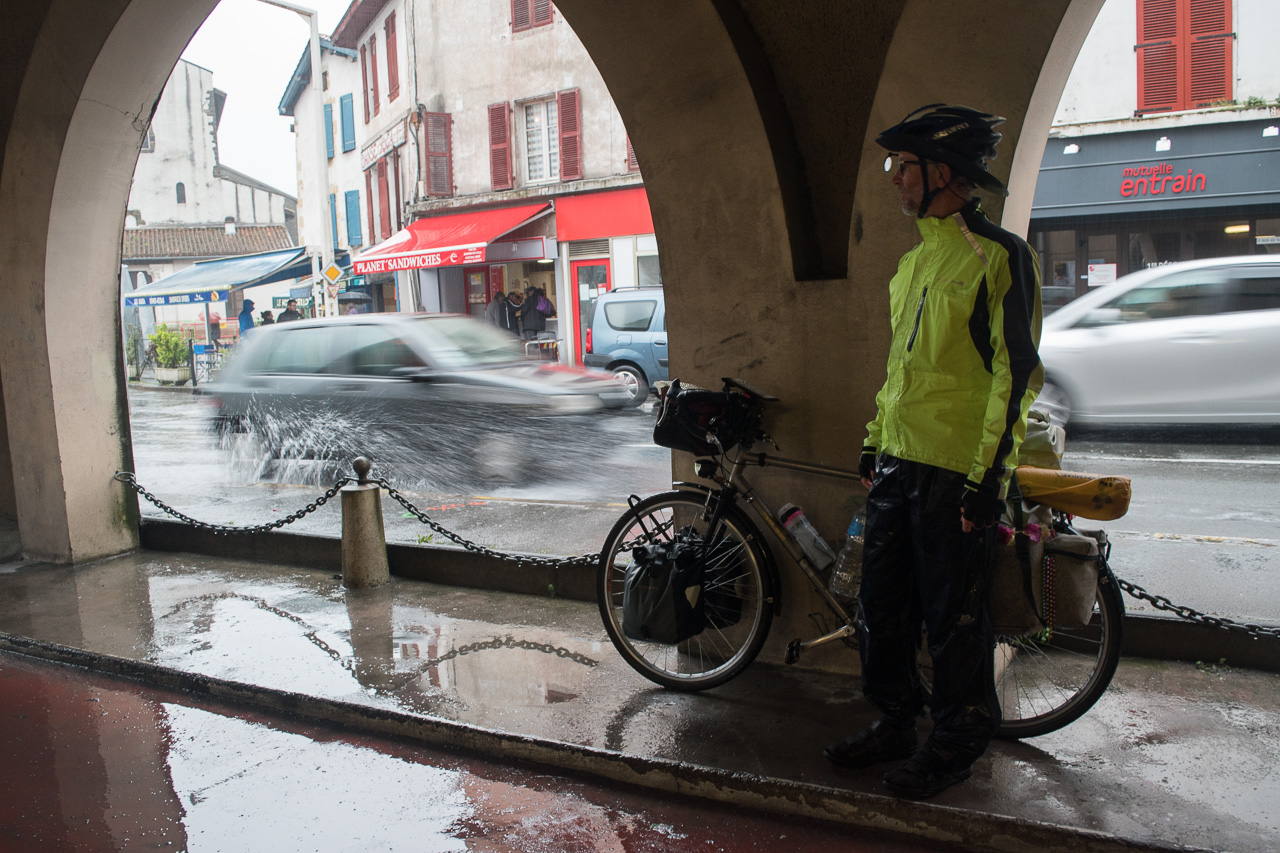
In amongst the armies of umbrellas were the two silver cyclists dressed from head to foot in water proof cycle clothes. Well nearly, I’ve only got sandals and I’m not sure my waterproof socks work anymore. ‘At least you’re properly dressed for the weather,’ said a Lisbon museum curator, as we wandered through his rooms, but he was clearly pondering over my ‘choice’ of footwear. Suitable it certainly wasn’t: In Segovia, spotting a Decathlon near our hostal, I dived in and upgraded back to boots for my off-bike footwear. It was Gid’s idea (back in Phoenix) to use sandals – and waterproof socks if necessary – off the bike, since he’s done the whole trip riding in sandals. But somehow, he didn’t ever actually do it off the bike; I enthusiastically took his lead. Oops.
Sporting our newly purchased rain hats, we were pretty water resistant in our cycling gear. With a slight bit of modification the hat fits under our cycle helmets adapted to allow the all important helmet mirror to work. Sun hat, rain hat, come what may, one-hat-does-all. One minor catch is that the brim is so good at stopping the rain from penetrating the fabric that a river flows off it when you tilt your head; on several occasions, nearly tipping a deluge of water into our bar bags as we looked down, cracking a hole under the lid, to sneak something out.
Walking around town, with very little exertion, the rain kit is perfect but for an entire days cycling all is not so good. Flying into Lisbon we had plunged full-on into hilly country. Whilst we’ve had a couple of flatter days hills dominate the terrain.
And as we got higher, the rain turned to snow or hail. Here we are in the minor range of mountains between Madrid and Segovia. You might see a skier or two in the background.
Cycling up hills in rain kit results in massive amounts of perspiration inside, soaking the clothing and lining the garments. Attempts at venting the attire allows the rain in. Gid seems to stay dryer is his relatively new jacket with arm pit ventilation while my, again newish, rain legs seem to do the trick. But older kit is showing signs of being beaten. Design flaws are exposed too – Gid’s Endura  jacket keeps him dry, but the “waterproof zip” front pocket actually is more of a bucket – after a day in the rain everything in it is awash as rain gets in, but not out. Amazingly, the waterproof sock system works pretty well. At least, it does for Gid. Clare’s are shorter, and older, and seem to leak – mind you, she has darned them (eh?). The Ortlieb and Carradice panniers do pretty well, but Gid’s rack bag and bar bag – both a decade old when we started – have wear holes, which inevitably leak.
Although our cased-up maps, and outdoorsy Garmin Edge work irrespective of the weather, the same can’t be said of the phones. We tend to use the phones especially for finding accommodation as we approach or search in some place (the Garmin doesn’t really do this level of detail). But arriving in Caceres, that went horribly wrong. Raindrops confuse the touchscreens, and torrential rain confuses them utterly. And as we tried our few pre-planned hostels, we realised the town was full. It was so wet it was difficult moving around the city or talking. We really needed those phones to work to show us the places to try. Eventually, old school, one helpful hostel owner, who couldn’t offer us accommodation, rang round the others to find us a space. Gracias Senora.
Our tent, which held off riverlets and heavy torrential rain several years ago in Alaska, is one such casualty. While crawling into the vestibule with weight on the groundsheet, water oozed up. I moved our foam mini mat over the offending area and tried to ignore it but by the morning water had seeped up through the inner tent leaving a soggy mess. Our aim that day was to crack a challenging mileage to make a major town. Helpful Warmshowers host Fernando had told us he could do the trip by lunchtime. With the Garmin set, off we went, panniers full of wet camping kit, up the nearest hill. We’d forgotten to tell our future host that we were actually not quite in the fortress town we’d told him but, in fact, we were the far side of the mountain it stood on!  It took us 1 1/4 hours to cover the 10km in pouring rain. The Garmin, repeatedly trying to take us on short cuts up one dirt track or another, finally succeeded as we took off on a short linking track to get us back on course. The start was fine but in the 1.5 km we had to cover at least half of it was steeply down some farmers lane with, in this rain, deep cut rivulets and wet rocks.
 _GRO4004 (2)
Once back on our future host’s nice smooth, nearly flat road we limped into the newest town with a hostel to cancel the rest of the day. Achieving merely a third of our target distance we draped the room with dripping tent, sleeping bags, mattresses etc.
All part of the adventure it seems. It’s good to read accounts of trips 20 years ago, before any of this electronic nonsense or longer, before breathable waterproofs and English being the universal travellers’ language, and then consider ourselves as lucky.
We had better note, that after some of our previous weather-related moans, so far in Europe, we’ve only had one day of bonkers headwind. Mostly winds have been light and/or on our backs. This may change as we approach France’s Atlantic coast.

Australia – Photos

Wow – what a lot of photos we took in Australia – getting on for a thousand each. Well, here’s a selection. There’s even more wildlife photos a few of which we’ll upload to the Birds and Beasties pages someday.

The Scenic Views, Part 1

The Scenic Views, Part 2

On the Road

Urban

Whale Watching

Hervey Bay, since you ask. Several times we saw whales from the coastal cliffs, down much of the SE coast. The humpbacks migrate that way.

The Best of the Rest of the Wildlife

The Holiday Snaps

End

Java – The Story

And So To Java. We pedalled away from Jakarta’s bus station in the early morning. The Garmin did a good job of finding a quiet way out. Jakarta was quiet – too quiet. Our relief at being away from Sumatra’s hills, and then the end of Ramadan, was short lived. Ramadan is immediately followed by Eid al-Fitr, which is by definition a religious event, but substantially experienced as a transport event; everybody in Java is on the roads. Java’s land mass is structured around a few massive volcanoes, the main roads weaving through on the flat bits in between. Alas, the smaller roads often don’t join up, so to get anywhere, everyone, including us, had to use the main, but only 2 lane, highways. Really, it was madness to cycle at that time. Cyclists would be best off spending Eid holed up, especially if they can join in the festivities.
It calmed down after about three days. Java’s crowded, narrow, bumpy major roads are at least relatively flat, and still alive after a week of good progress, we took a couple of days off in the historic, and more or less geographical, centre of Java, Yogyakarta, before continuing on to catch the short ferry to Bali.
Java has a big population in a not-so-big space.. Drivers are not so deliberately homicidal as Indian drivers, and they’re more inclined to look where they’re going, but the traffic is a lot denser, as Indian main roads are hugely bigger. As usual, it’s the bus drivers who are most aggressive and unwilling to share space or time. Well, they’ll happily ‘share’ your lane if they’re going the other way and want to overtake something. But the drivers are mostly ok, it’s the motorbike riders who are nuts. Well, more likely they’re happy, carefree folks who have no worries about any possibility of collision. Overtake a truck on the inside on a narrow blind bend – no problem. Overtaking is probably the Indonesian national sport, and often would earn many points for artistic flair and imagination. On the whole it felt less safe even than India, which is saying something. However, it was a lot less noisy than India, with only brief blasts of horns used beneficially. It got a bit less hectic as we worked our way east, taking loops via minor roads when we could.
Dear reader, you might get the impression that crossing Java by bike is a dumb plan: That’s about right. Whereas Sumatra, whilst being very tough, felt a worthwhile adventure. Bali’s roads we only experienced from the ferry to Denpasar, the capital, travelling mostly on the main road. It was somewhat less hectic than Java, and, crucially, the road was both a bit wider and in better repair. The last 40km or so on Bali’s minor roads were lovely, full of things to see.
So where are the photos?


Camera Club Special – Let’s Play ICM in a Cave!

Post dedicated to all our friends at Worthing Camera Club.

The limestone caves near Phetchaburi are lit up with coloured tubes. Beside the cave temples, there’s plenty of interesting drippy rock formations. But how to make a picture of them?

Needs to be a bit more alive, perhaps…

Ok, but only ok. And quite tedious, in a cave, without a tripod or flash gun. Hey, unlike an English cave, tripods aren’t banned 🙂 But I haven’t got one. My camera’s tiny detachable flash is, err, detached. And anyway no help, far too weedy, boringly white, and boringly stuck on top of the camera. So thank you Olympus for making a tiny lens that’s f1.8, that saved those photos. But I still had to get Clare to stand still for way longer than is normal. And can only shoot from an ideally placed stalagmite. And they’re not terribly exciting.

Which got me to remembering some of Worthing Camera Club’s winter lectures a few years back. Intentional Camera Movement is a respectable (ish) discipline that isn’t only “I forgot to bring my tripod to the bluebell wood”. So here are my Thai rocks:

This slideshow requires JavaScript.

PS: Most of those are colours as shot. A few are rather mucked about with in Lightroom.

Thanks for looking!