Now then, I understand that any literary project (!) needs a theme, or a focus. Well, the theme and focus of this posting is, it’s the bits which interrupted the flow of the narrative in the previous articles. Those are the bits we haven’t photos of – the extensive, super-low-density cities, where scarcely a human is seen, outside an A/C building or an A/C car. Frustrating on a motorcycle, one’s ears might be worn away pulling the helmet on and off – not that said item is compulsory in the mid-west, and one can understand why in this heat. It’s not at all about the very unfriendly Reno Sprouts supermarket whose security ejected us from the car park when we tried to eat the food we’d just bought there, oh no. Well, we are, I suppose, vagrants.
At the time of starting this post, we’ve taken a slice through the mid-west from border state Montana down to Flagstaff in Arizona. Then we’ve turned around and made our we northwest to Reno, Nevada, en-route to picking up the Pacific coast for our run down to Mexico. So it’s a good time to review our mid-west.
The national parks, wilderness and wildlife have been spectacular. But there’s also loads of interest in the not-famous bits: The highways, the quiet towns, the ranges of hills. And, it’s a motorcycle trip, so every so often someone will have to get all anal about bikes. Well, you can guess who writes now, fingers still black from oil changes.
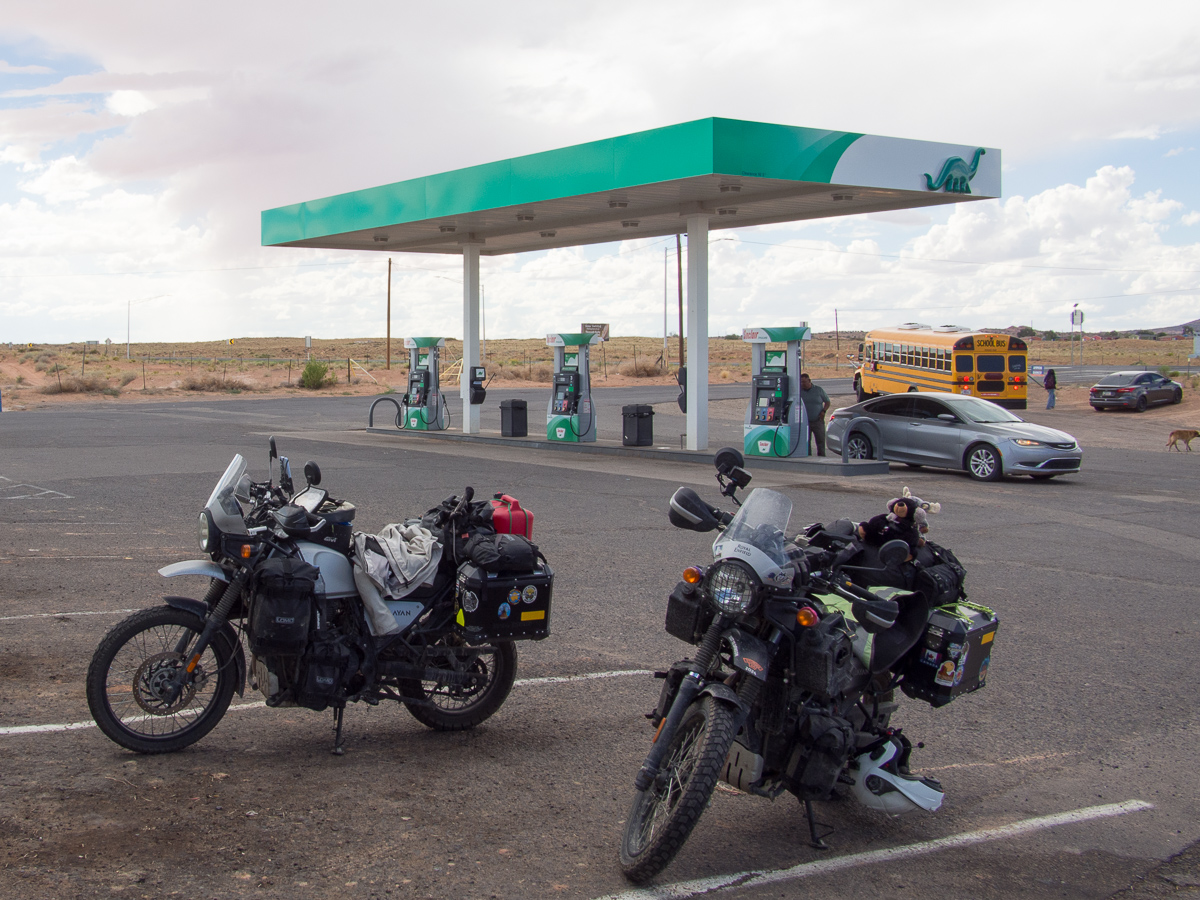
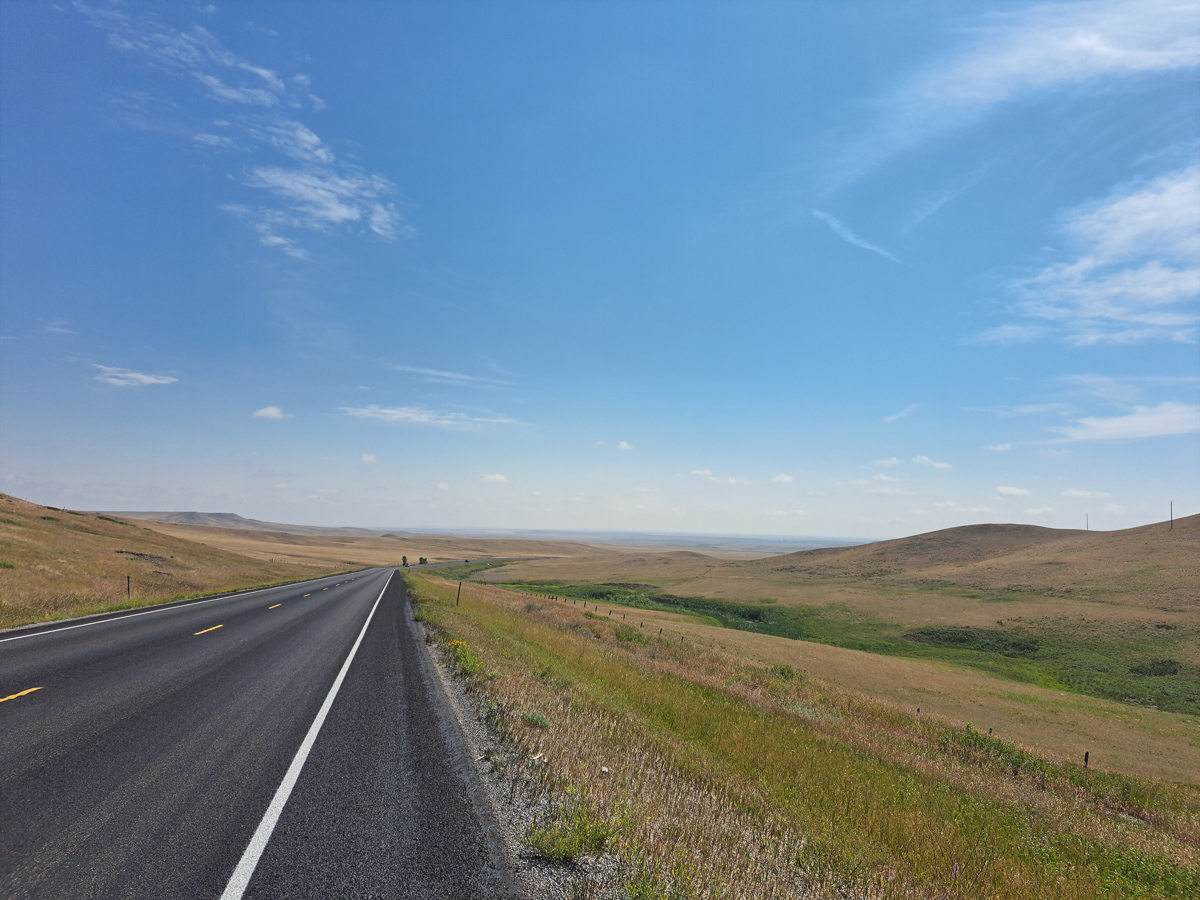
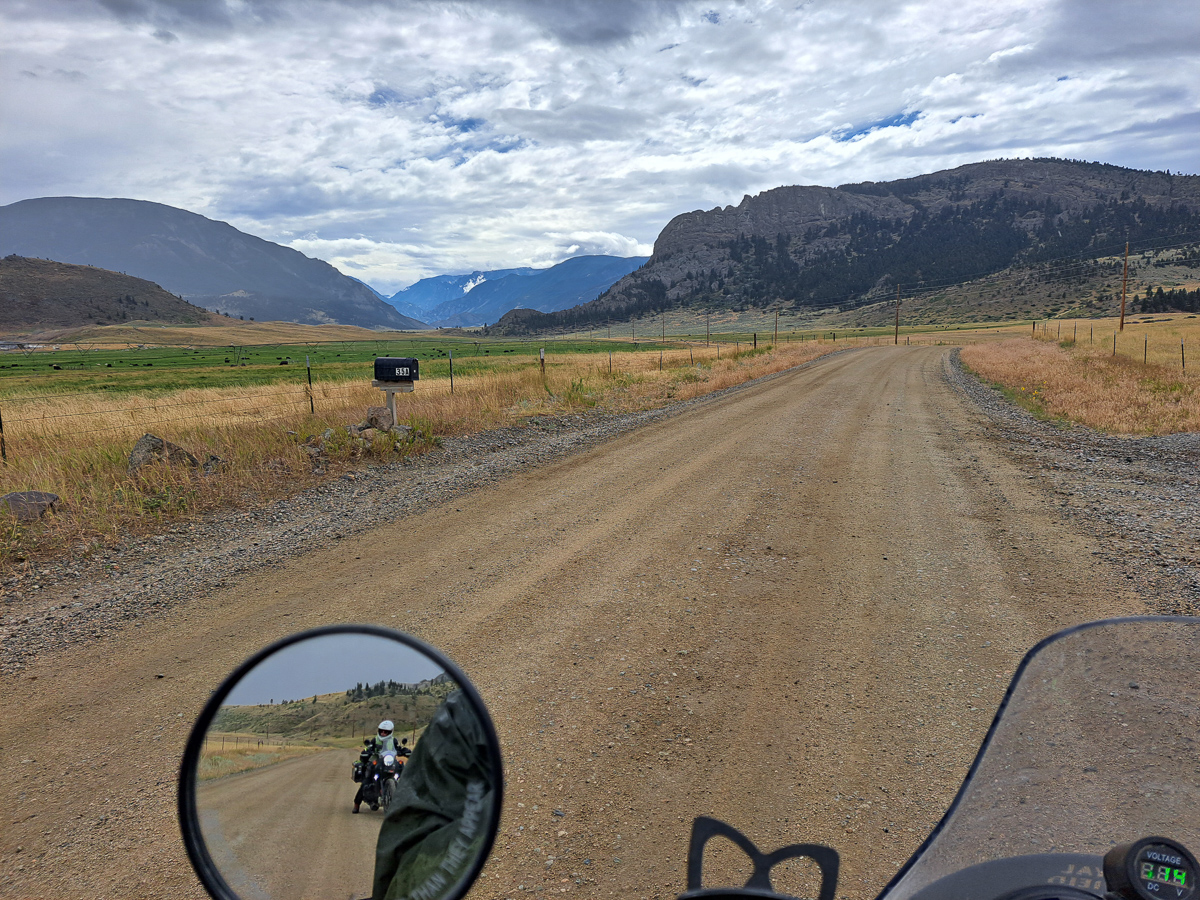
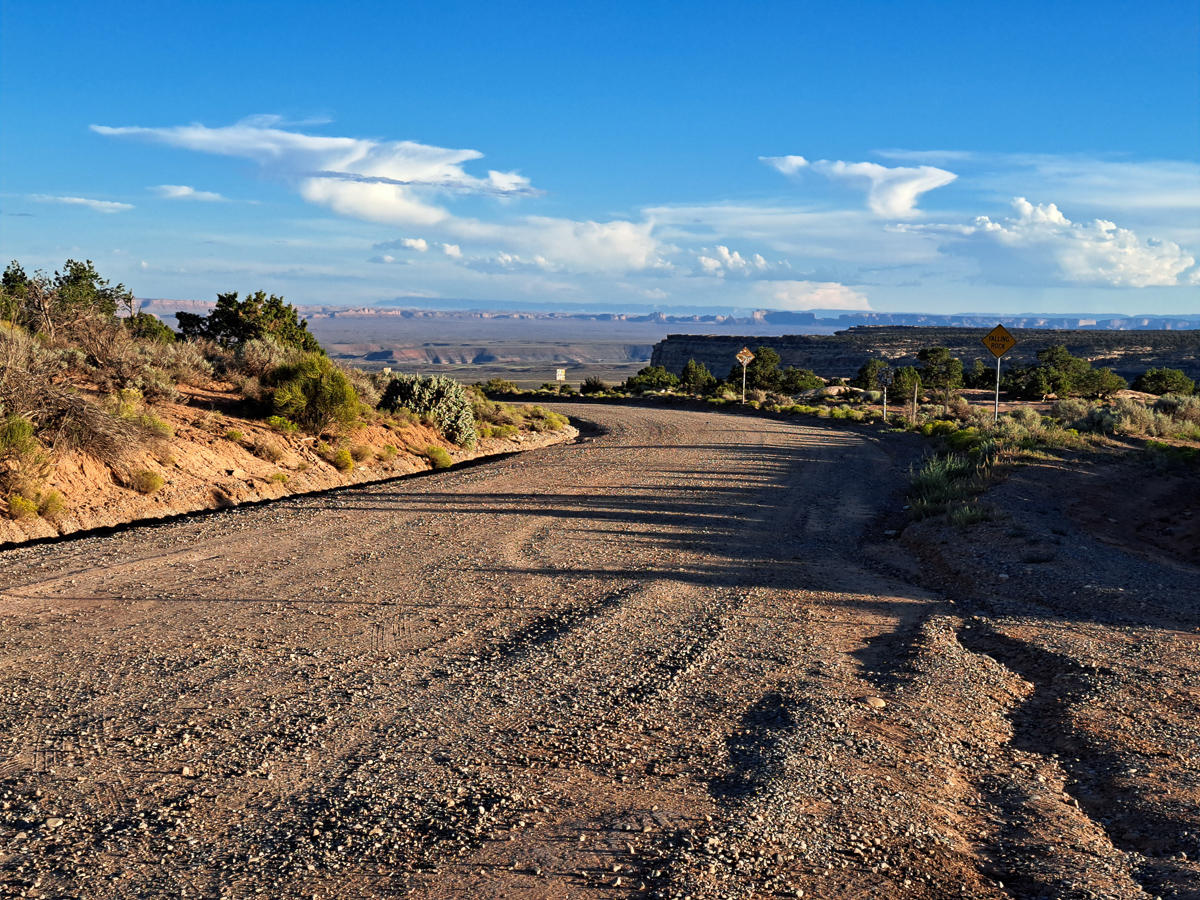
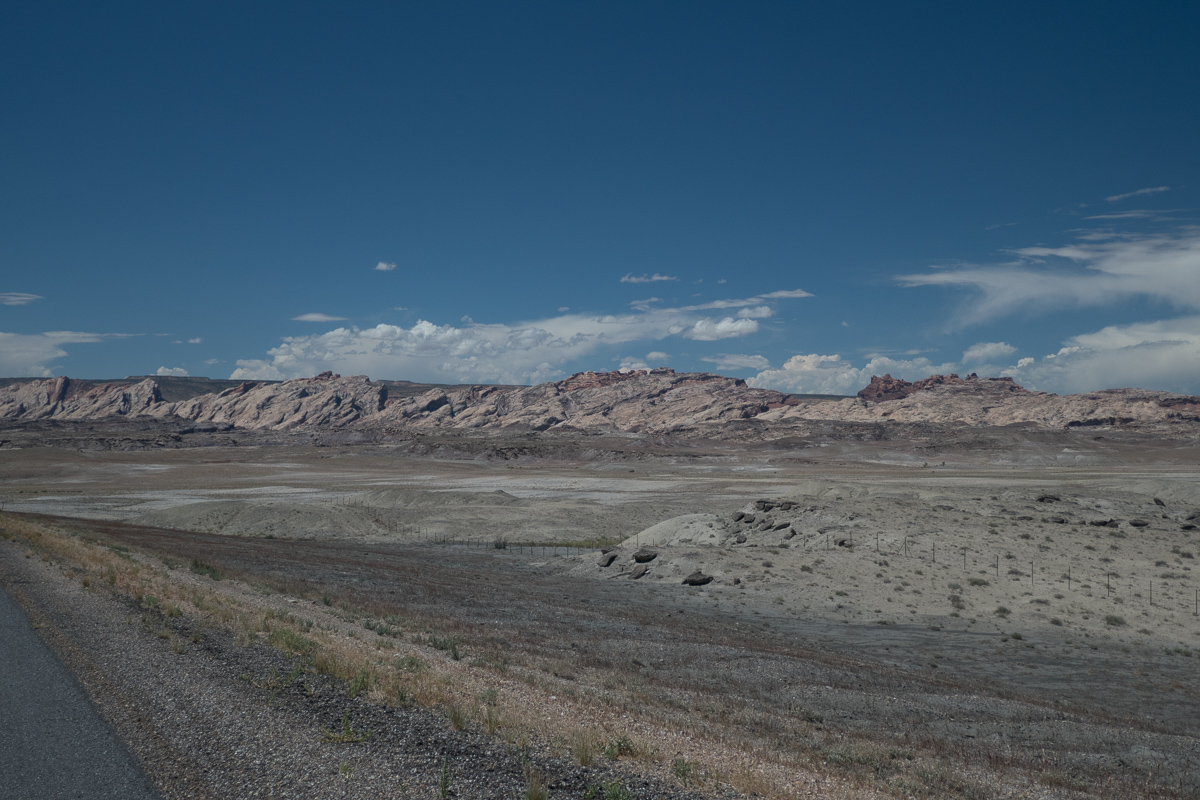
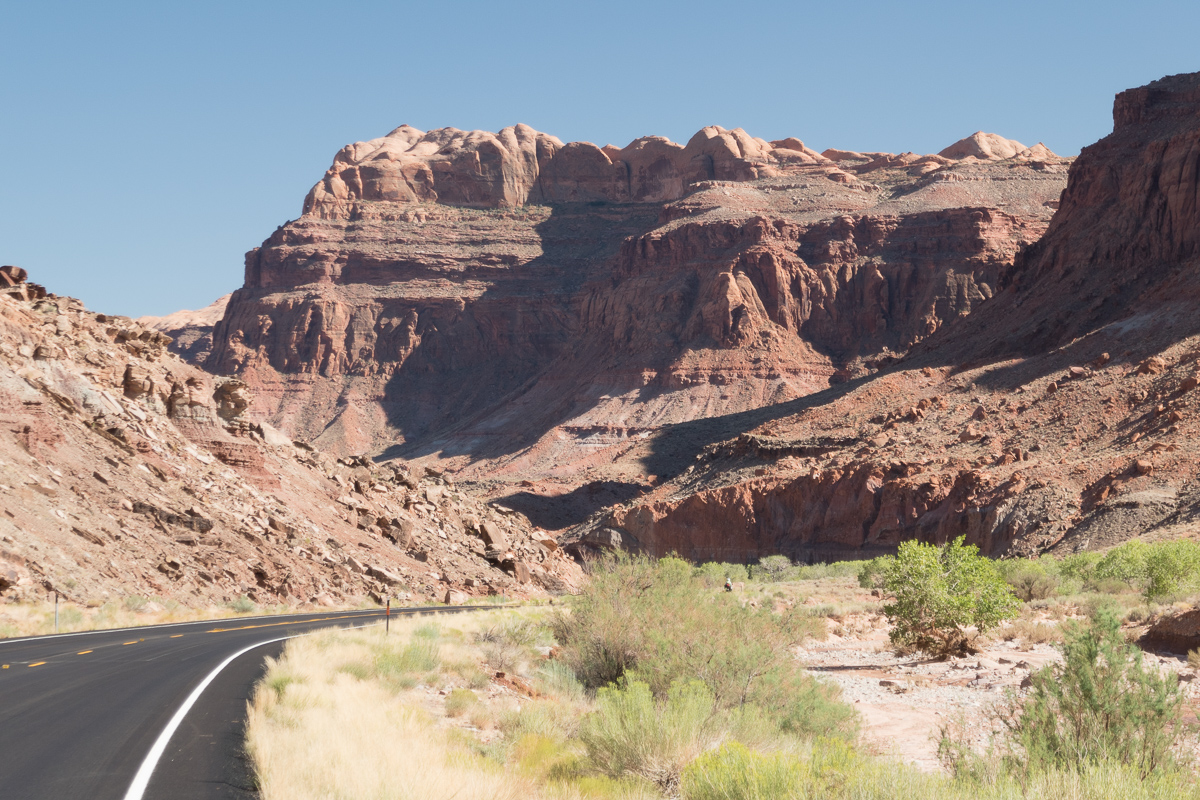
These inland states, abutting the Rockies, are all pretty high. Large parts of Montana, Wyoming, Utah are over 1,000 metres above sea level, if not 2,000 metres. The lowest points in those three are 557m, 945m, 664m – we didn’t visit Colorado, which floats entirely above 1000m. Passes in the mountains routinely exceed 3,000 metres. To think that our travel insurance company’s first policy offer had an altitude limit of 1,000 metres! That would have given us a very odd, frustrating, maybe impossible route, certainly not this inland one. As it is, Highway 89, and our diversions, have been splendid. Most of the roads are lightly trafficked. There are long, long, straight, flat sections, as per the classic photos, but also interesting little towns, hamlets along the way, and every so often, it goes all wiggly to get through a range of hills or mountains. Highway 50, east to Reno, is bleakly spectacular. We nearly had to resort to the fuel cans, it was so empty. Clare’s Garmin – I have no idea why it was even turned on – produced gems like “Turn left in 150 miles”. But such long runs make the stops more interesting.
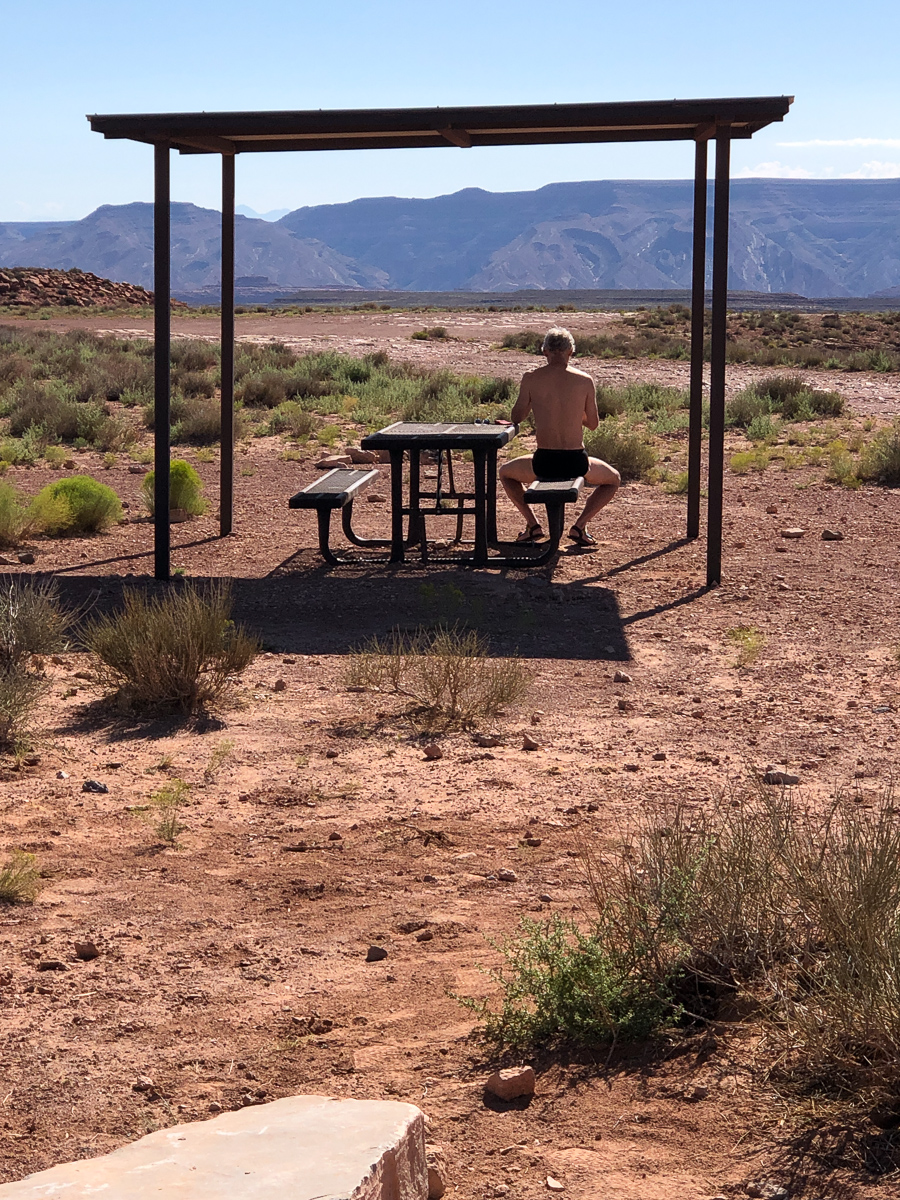
And being summer, far from the sea, it’s hot in the daytime. Very hot, although locals say it gets a lot hotter. Clare forked out for some basic mesh riding trousers, her posh Staedler suit getting too hot. I was in mesh from the start, but was latterly in not a lot underneath (sorry). As soon as the bikes halted, we made a rush for shade, ripping off gloves and helmets as we scuttled. It was often much cooler overnight, so camping was still ok, especially if there was shade for us after getting up. And from Montana, onwards, increasing as we prairie’d south it was prone to very wet thunderstorms in the afternoon or overnight.
At some of the stops, time itself seemed to be running a bit slow. Some of route 50 follows the old Pony Express route, and at Middlegate, an old Pony Express stop and the only gas for miles, no, leagues, four generations of the road house’s family were in the bar, albeit only the latest was working (and was she busy!). What was it like in great grandma’s day? We were too tired and thirsty to ask her.
The bikes have been struggling a bit. Let’s hope we get the math right here. A rough rule of thumb, apparently, is that an unsupercharged piston engine, like our Himalayans’, loses 3% of its power for every 1,000 feet of altitude. So over 6,000 feet or 2,000 metres, we’re down from 24hp, to 20hp. Quite a difference, and we’ve been well over that at times.
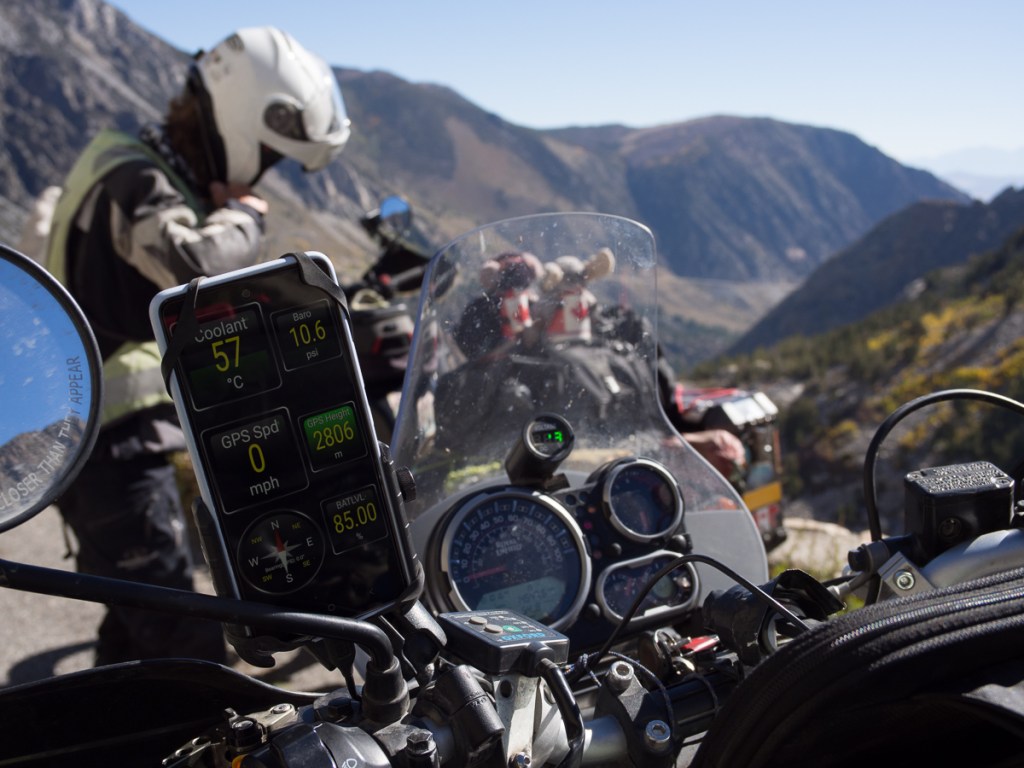
Look at the top right diagnostic – about 70% of a sea level value. This was in Yosemite.
And – thanks to the wonders of our Bluetooth diagnostic connectors, we can see our engine (oil) temperature go up and up, in the thin, hot, air. Some advice is that engine oil will start to deteriorate over 150C, and trying to keep it under that, at 2,000metres, in 37C air, often keeps us down to 40mph on climbs, even though the bike will manage a lot more. Descending to the northern California coast (cool and foggy), the bikes recovered a hearty spring in their step, and would again cruise at 60mph – although that’s rather noisy in our helmets, 55mph is a lot better. It’s a good job we’re mostly on quiet roads. In rural areas, as anywhere, the drivers are fine, but standards, courtesy, and personal space concepts are much eroded in cities. Only one guy tried to give us an earful: wheel in one hand, gesticulating wildly at us with his phone in the other, it’s most likely he’d looked up from his texting, and seen us at the last minute. I’m not sure that’d been our fault.
We’ve been trying to keep fit, despite leaving behind all our swimming and cycling and tennis. Clare’s got a skipping rope, and I (Gid) try to go for a run every so often. “Swimmers lungs” Clare rarely notices the altitude, but I was thinking I’d got really unfit, until I twigged I was running uphill at over 2,000 metres. Some of these runs feel quite exotic – out the back of the campsite, there’s often a trail. Deserted. Nobody visible, not even a plane in the sky. No sound except wind and birds and squirrels scuttling away. Well, and me puffing if it’s uphill. Another new running experience was Lake Lahontan, where I managed maybe 5Km barefoot on the firm sand beach.
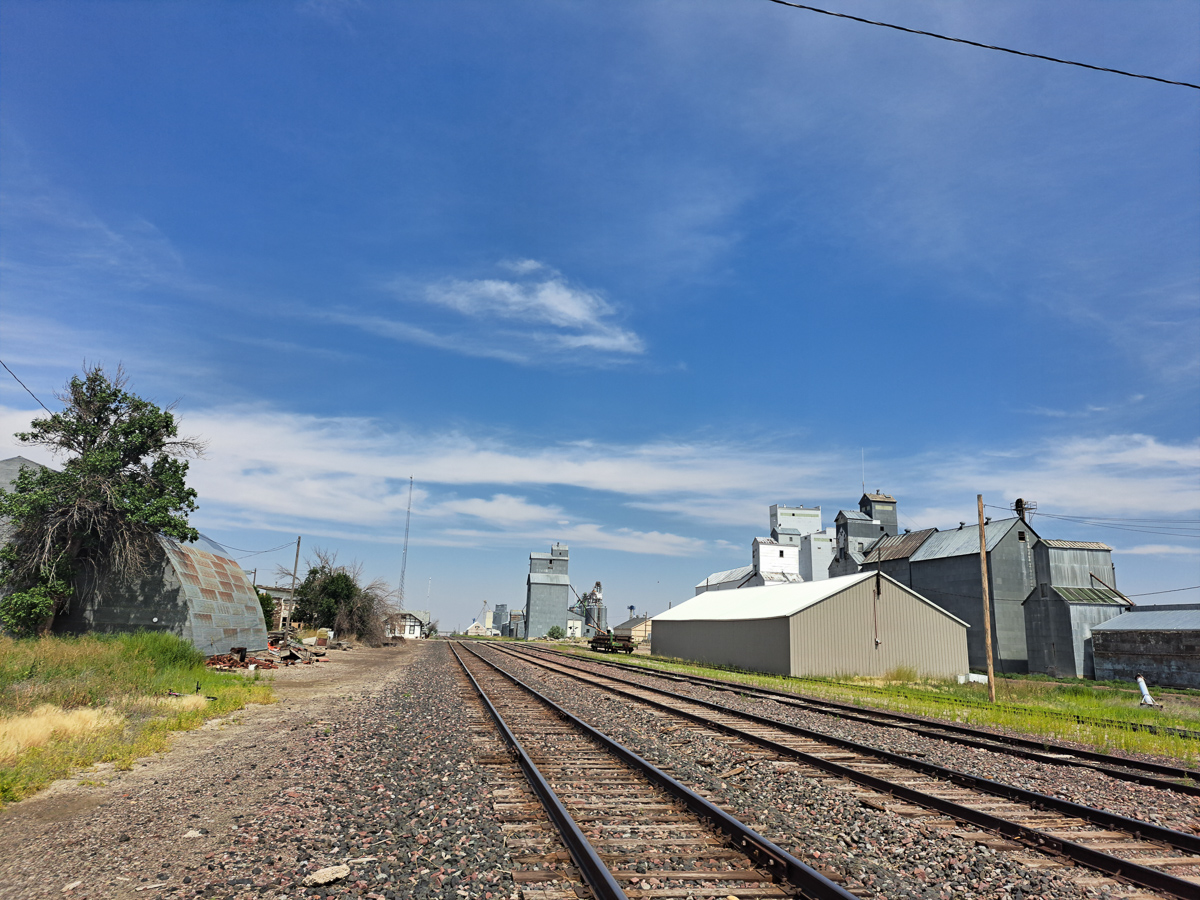
Let’s finish with some random mid-west Americana and highways.
So, we’re across the 45th parallel – back in the USA.
Once in the “contiguous USA” our plans were some what sketchy. We had three months and knew we wanted to leave going into Mexico travelling down the Baja peninsula. We had the big three National Parks earmarked, Yellowstone, Grand Canyon and Death Valley plus the HWY 89, recommended by National Geographical magazine and Dave in Edmonton, highlighted on the map. Dave and my cousin Debbie had both suggested things to see but somehow we hadn’t digested that into a formulated plan of what to do and see enroute.
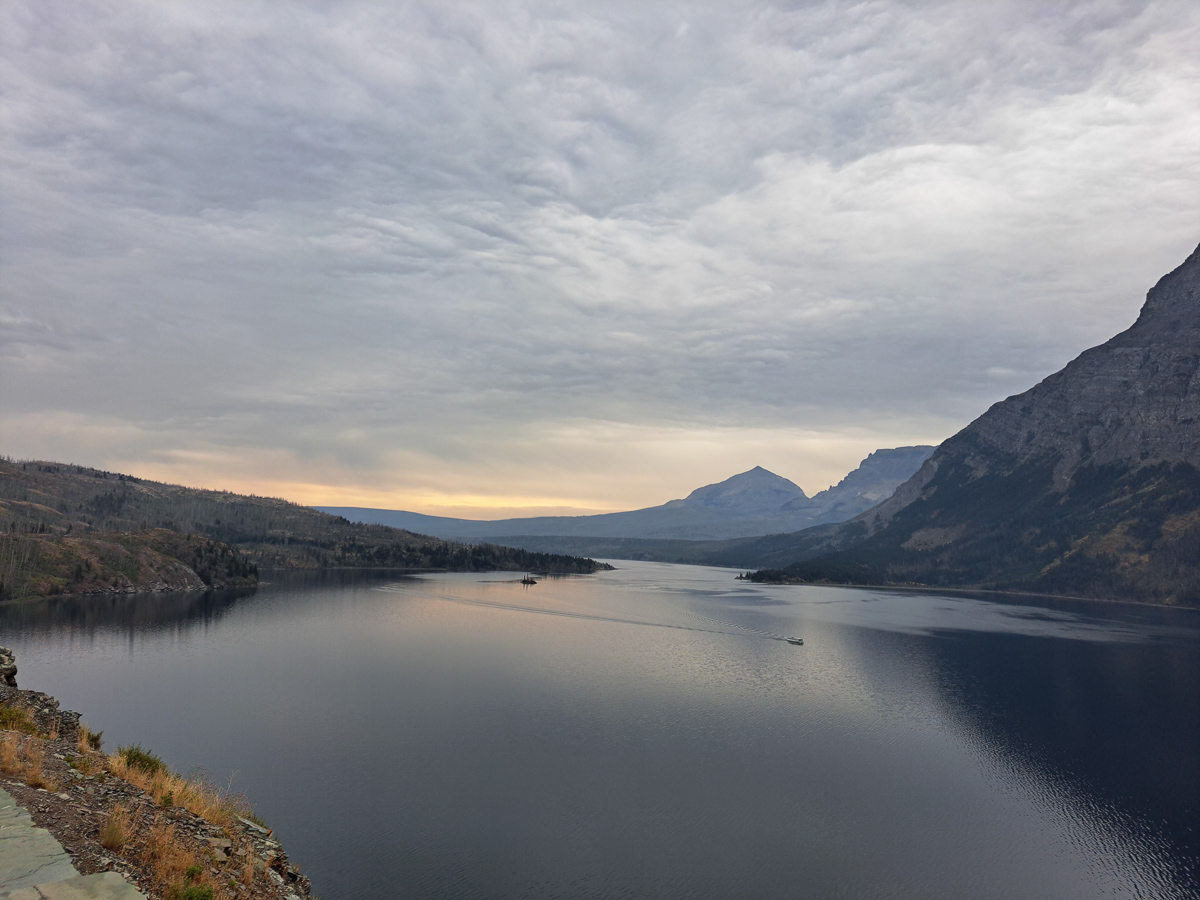
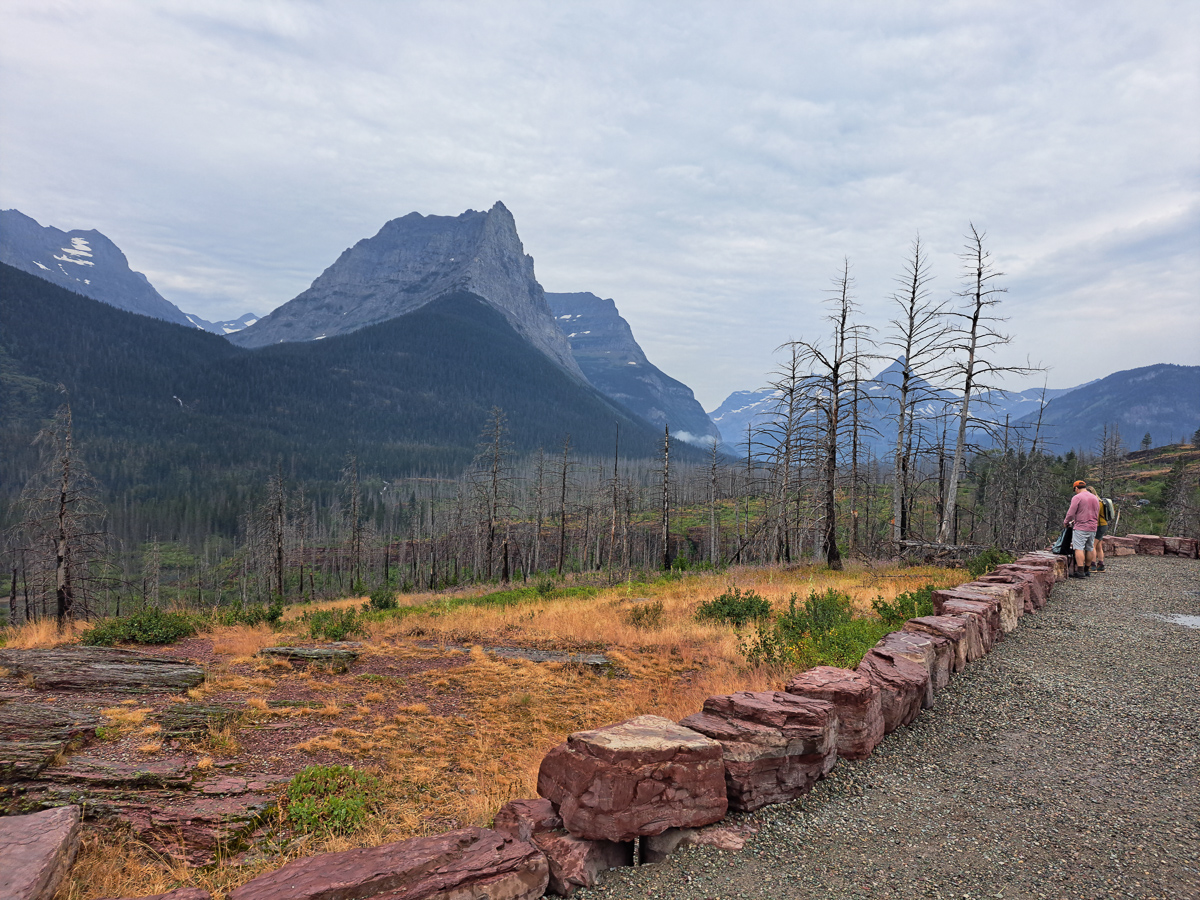
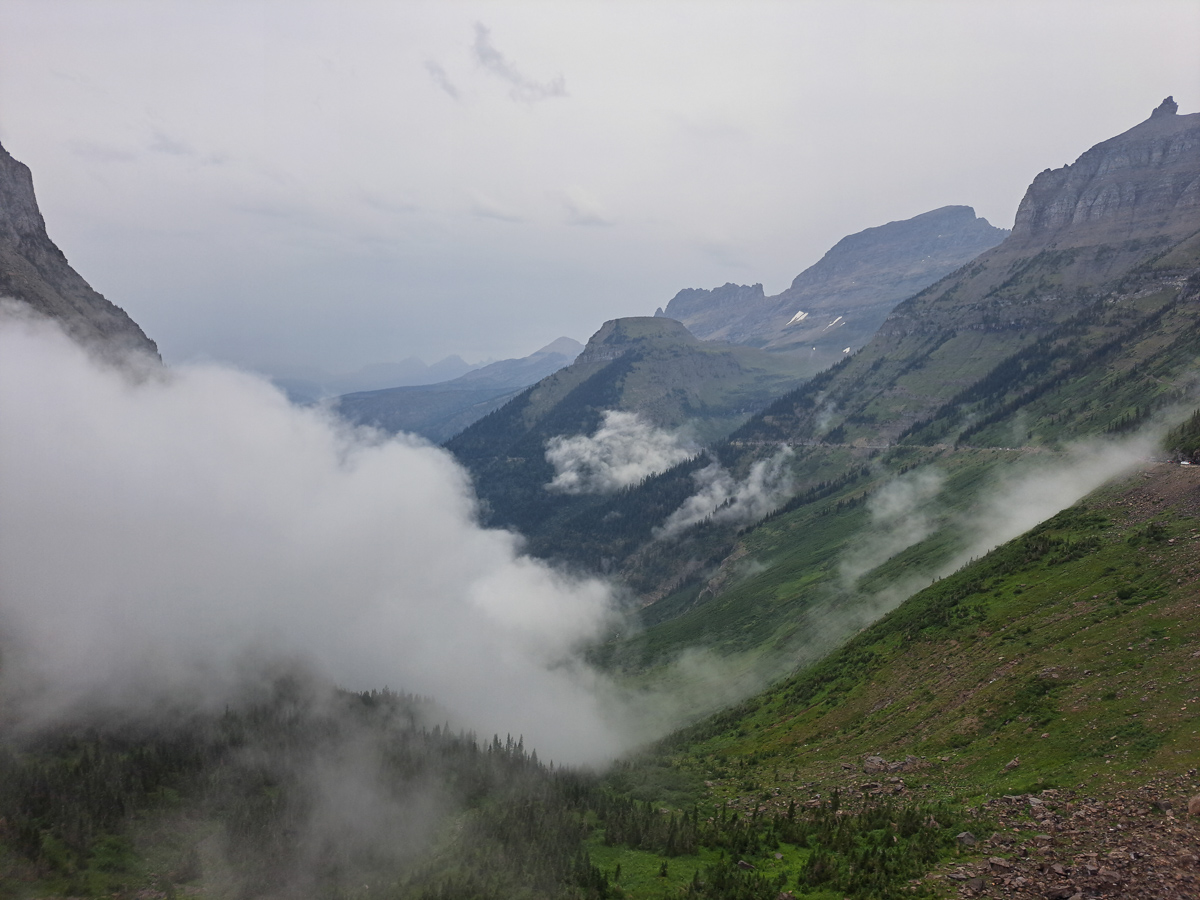
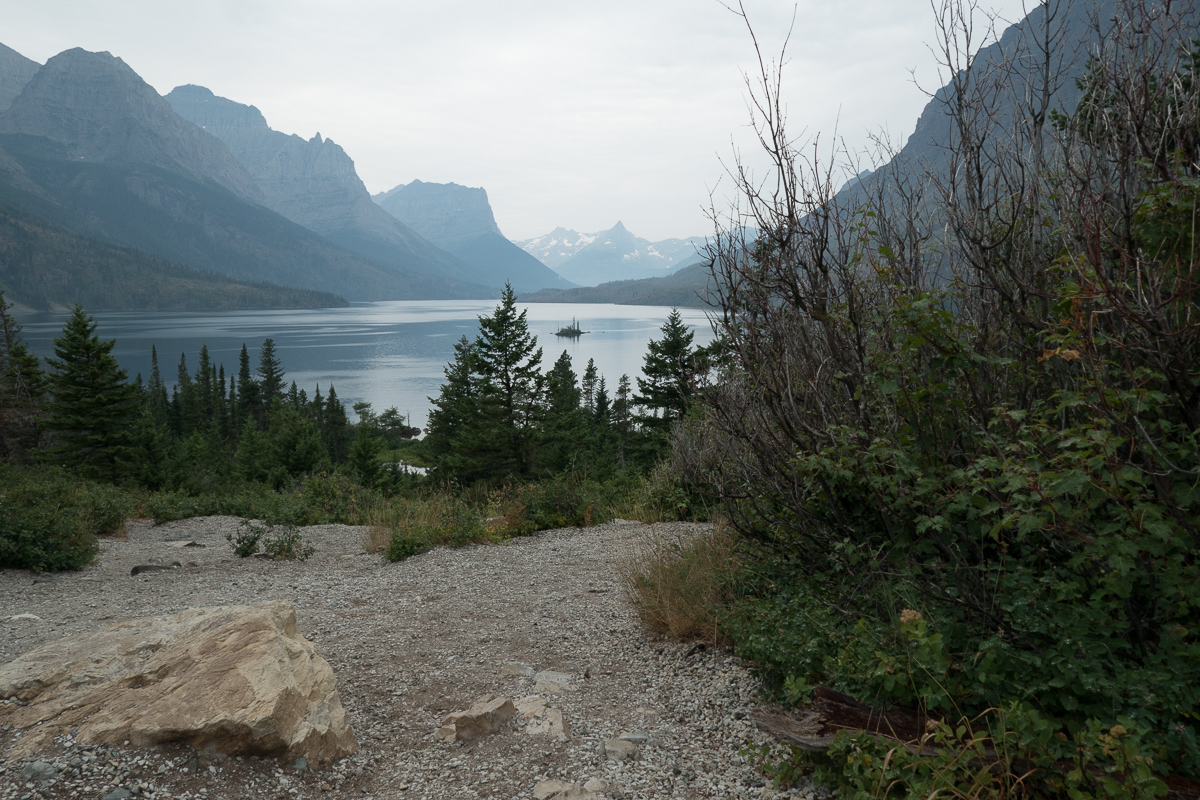
Hwy 89 took us straight into Montana’s Glacier Park. The scenic park road, Going to the Sun, took off westwards to a height of 2026m and seriously down the other side on mountain twisty roads. We were in a line of traffic doing the tourism trail but that didn’t seem to matter as everyone was progressing slowly admiring the fabulous views of mountains overlapping mountains – great recessions disappearing into the distance, stopping to take the must have photos at the named features. Fortunately we did too as the return route was marred by rain. It started out as drizzle that was supposed to stop by lunch time and indeed it did. However as the afternoon progressed so did the returning rain. Slight droplets to start with but slowly gaining in intensity without us seeming to notice. I hadn’t taken my normal rain precautions. Eventually it pissed down! By then it felt too late to fuss about the rain, we focused on finishing the trip. Once back at the start we cowered in the lodge drinking cups of tea. Umming and erring about our options we finally caved in and booked a room.
The following day my GoPro video camera, mounted on my handlebar, with the USB lead sticking out, was sick. It was sodden. Apart from visible water in the battery compartment it became evident that there was condensation inside the screen. Gutted at my stupidity we set about trying to rescue it from what seemed like its inevitable journey into the bin. A day on the bike with the battery door open revived it. Don’t know how I got away with that one!
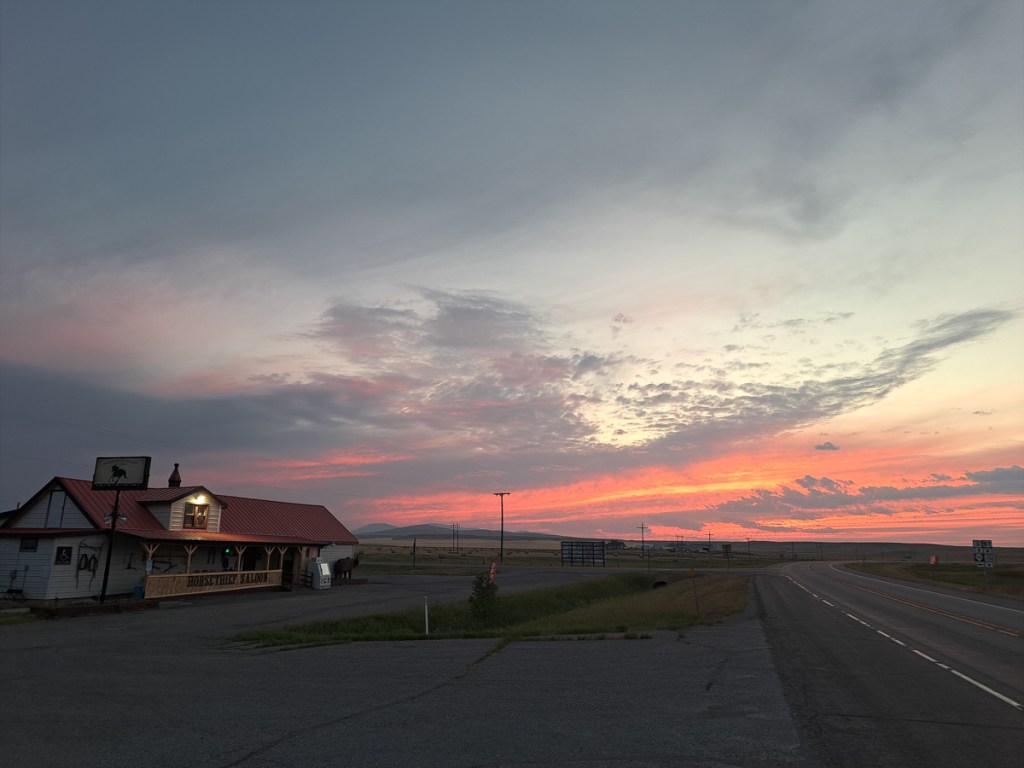
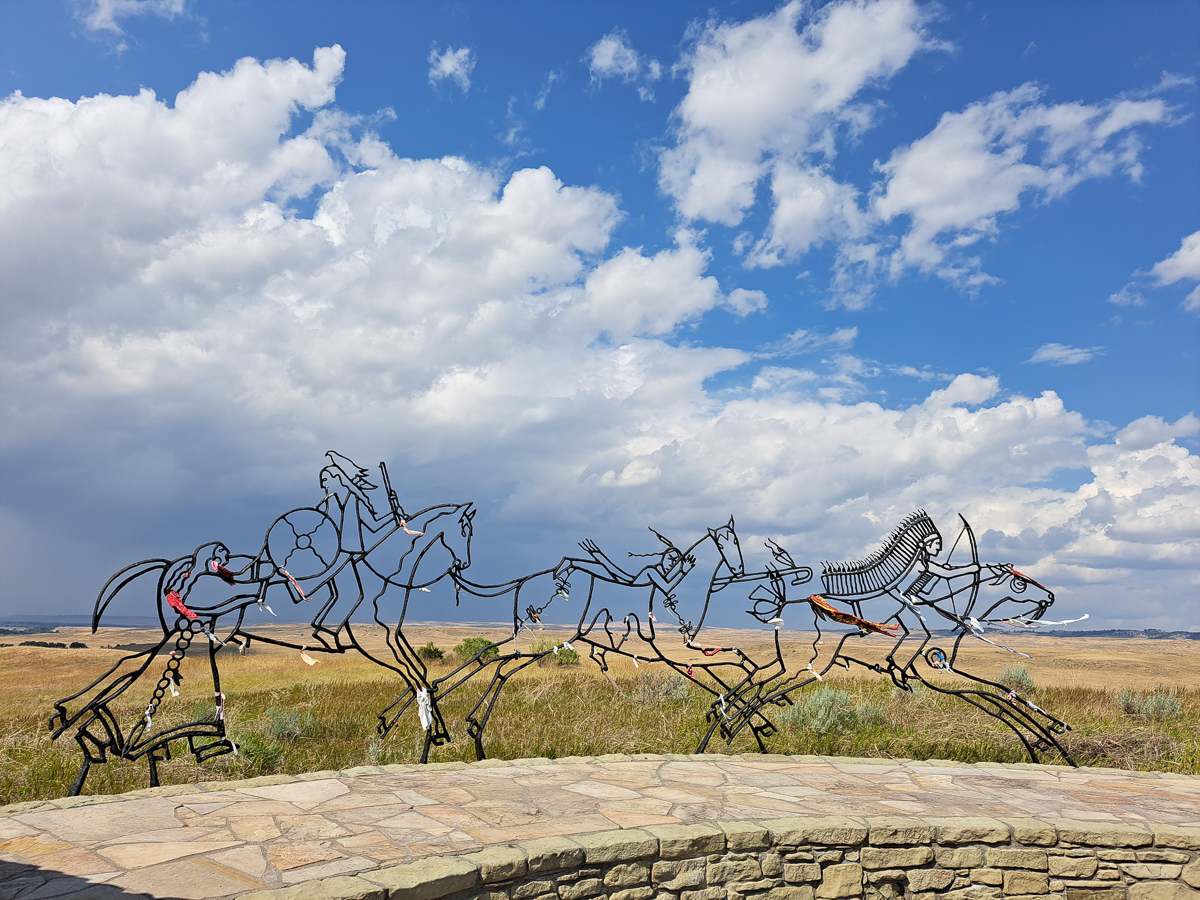
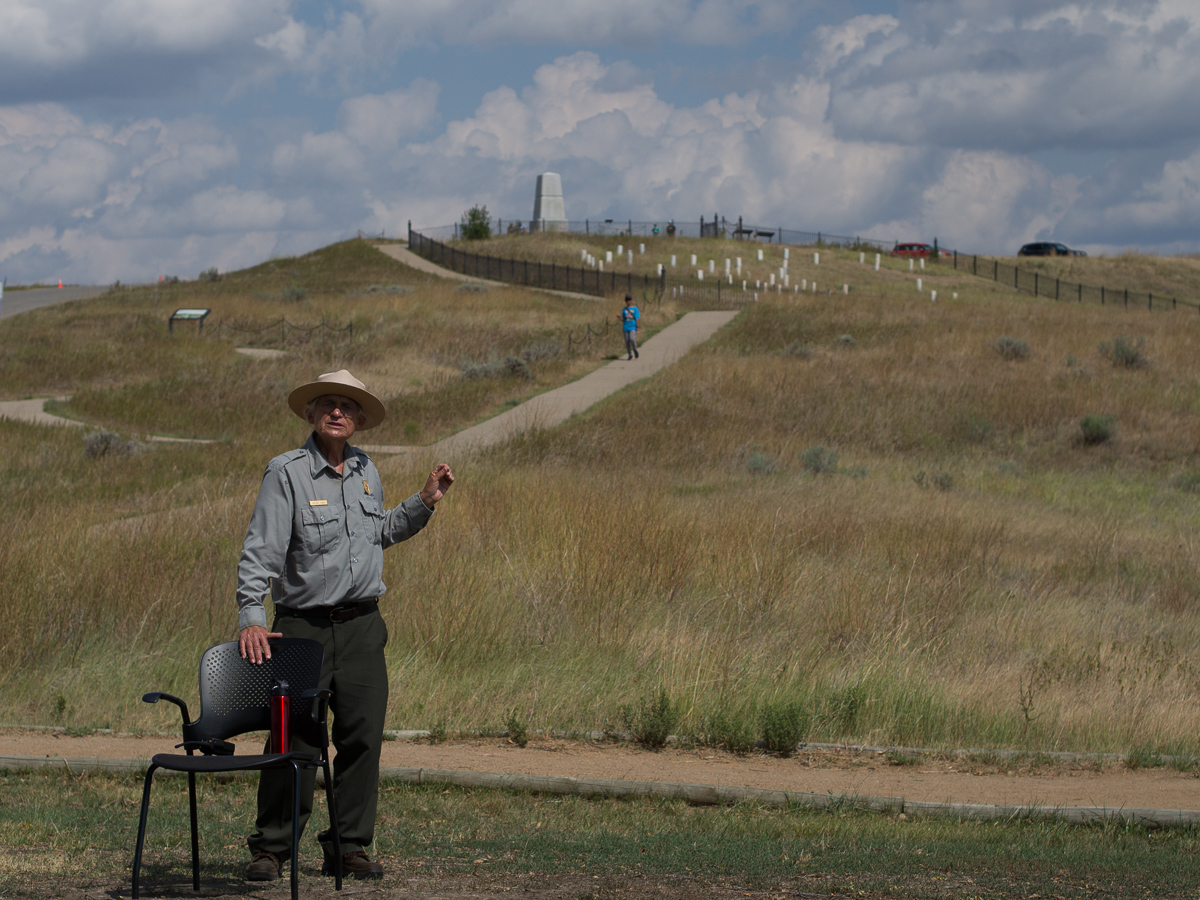
Gid decided he wanted to go and see the site of Custer’s last stand. Now it’s got a more sensitive or politically correct rename, after the location in which it took place, Little Big Horn. We trundled along enjoying the undulating scenery and nodding donkeys, noticing also the considerable lack of campsites. We spotted a small camping sign in the middle of nowhere some way before a lonely bar and u-turned to go back and check it out. Thankfully there were a couple of people out the back. One was the owner. Yes, we could camp. Even better we could kip in the chalet that was still being fitted out.
The Horse Thief Bar at Sunset
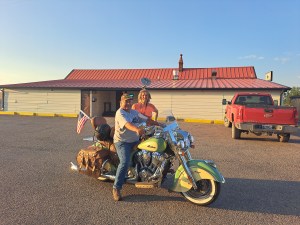
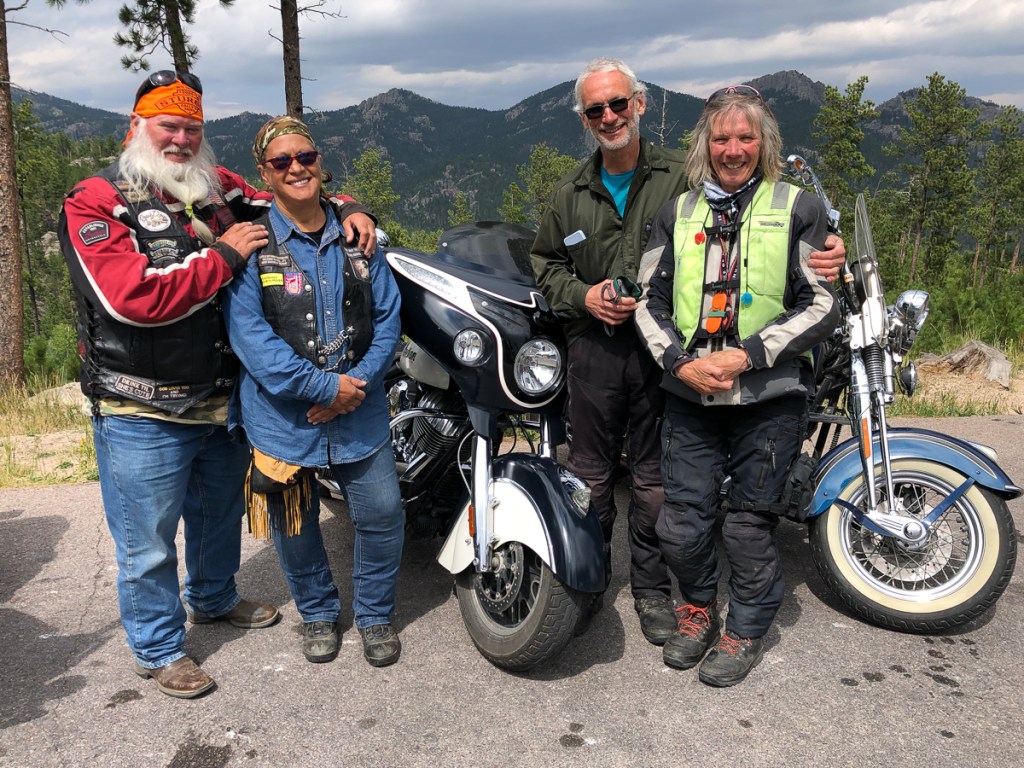
Eddie, the new owner of the Horse Thief Bar, was very pleased to put us up and spent the next hour or two telling us how he ‘d just got back from Sturgis with a new machine: a rather wonderful looking sage green & cream Indian motorbike complete with leather paniers and dangling tassels that he caressed.
Eddie, at the Horse Thief Bar
Eddie was horrified to think that we were going to Little Big Horn and not Sturgis. After all, Sturgis is an internationally acclaimed bike rally that was on this week – just another few hundred miles down the road!! We would love it he was telling us. The town comes to a standstill because of all the motorbikes!
Sturgis it is then. I’d read about it back in the UK but considered it too far east. Another 440mi to be precise. A twelve hour day later we arrived in the dark after a long hard flog into headwinds. But at least we’d identified a campsite in advance and could ride straight in.
Hog Heaven, a temporary campground was one of eight that encompassed the small town of Sturgis, South Dakota. It was $80/night, but well organised, spacious, and not at all squalid as English festival campsites notoriously are.
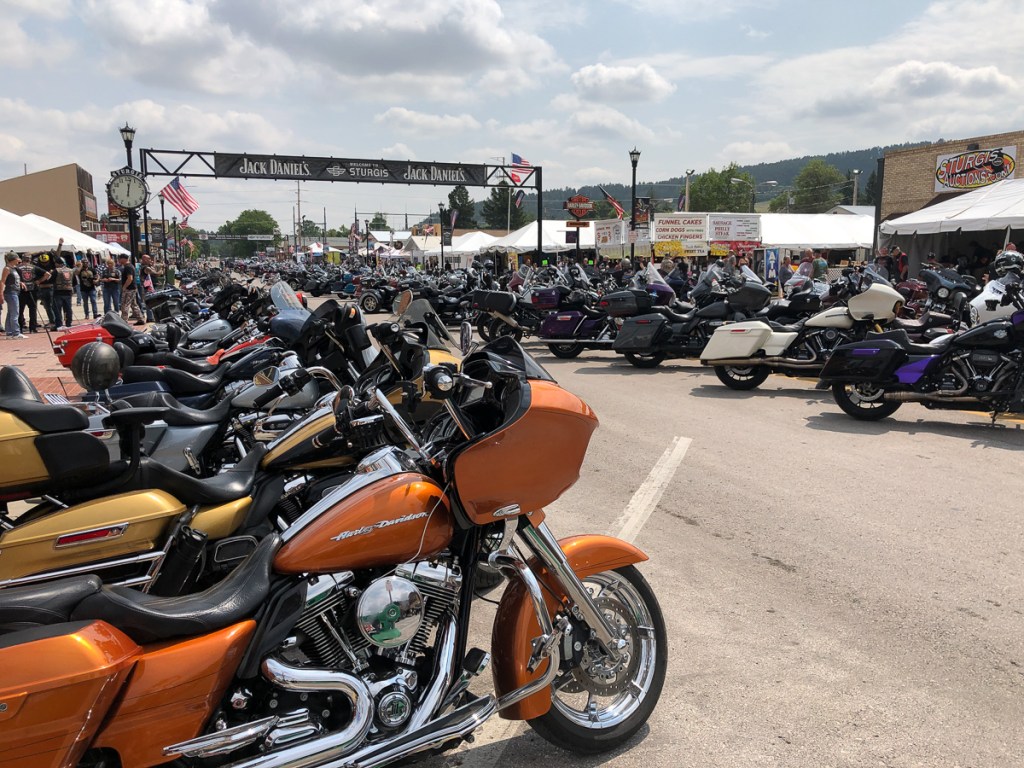
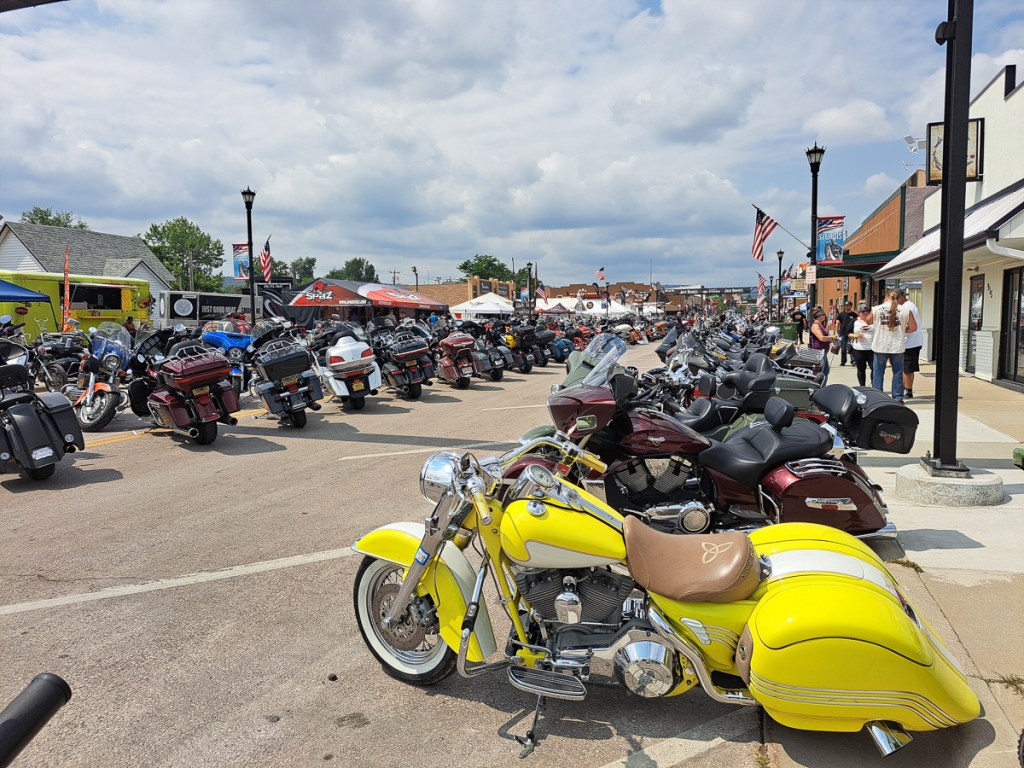
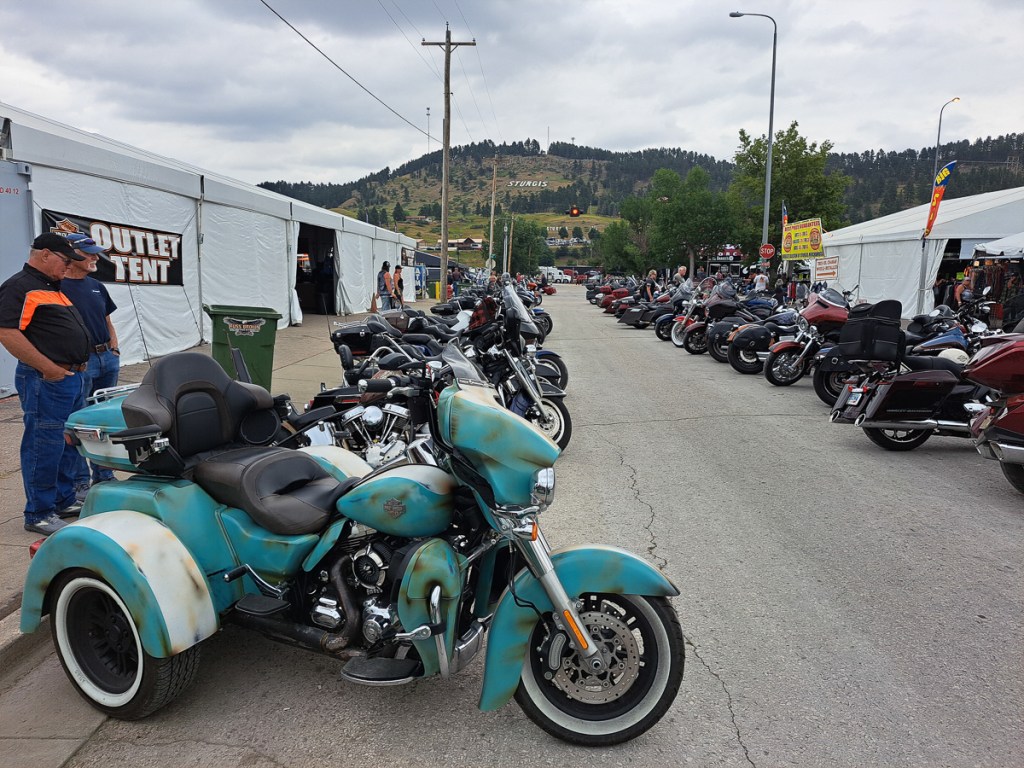
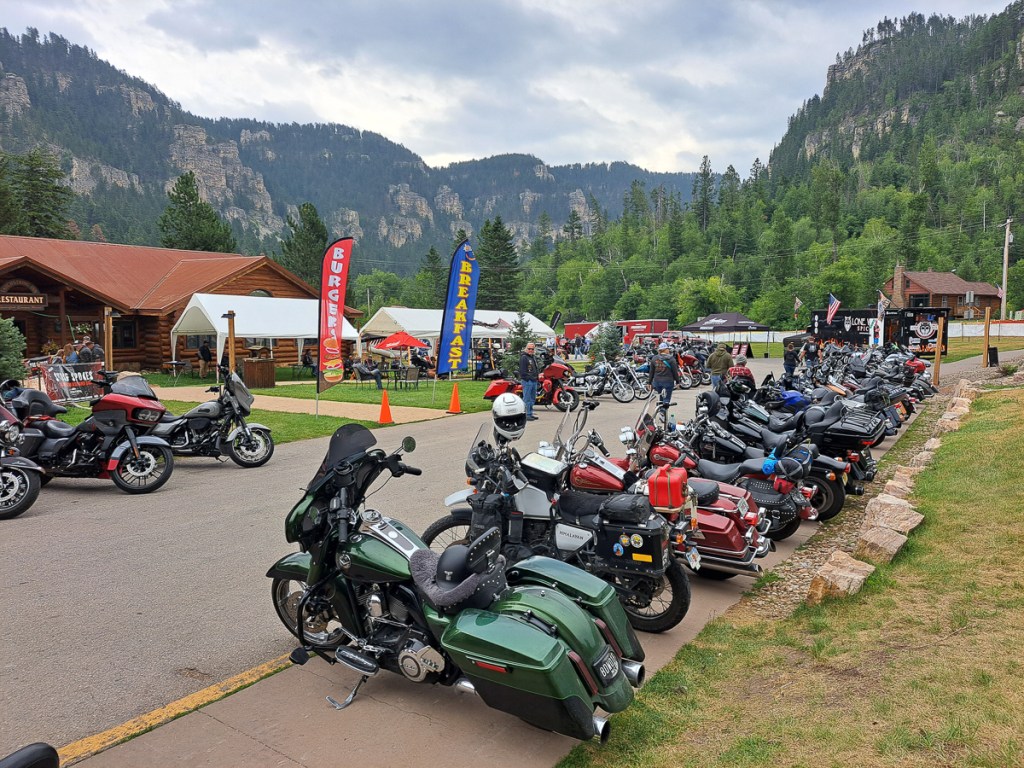
Sturgis, the bike rally, attacks hundreds of thousands of bikers every year for the one week long event. Now aging and many trailing their bikes to the event the numbers are starting to drop off. Some of the roads in the town were closed for bikers use only and the town was packed with tents and displays of biker kit and paraphernalia, not to mention plenty of opportunity to test ride and buy bikes – Harleys and Indians being the key brands. Live music was playing all day in the town and at our campsite every evening creating a real party atmosphere. A programme of events included: best beard and moustache, Jack Daniels tasting and BBQ, show us your boobs, although many didn’t need to enter any competition to tick that box. Scanty was the ‘clothing’ of some of the ladies about town.
The event is popular not only for the entertainment in Sturgis but also for the fabulous roads in the SD Black Hills, which offer half a dozen of the best bikers routes we’ve experienced in the US in one relatively small area. Roads like The Black Hills & Bad Lands, Devils tower, and Needles HWY are all comfortable day trips that attract bikers year on year for the multiple hairpins and twisties. Iron Mountain road is another favourite with it’s multiple twisties and natural narrow tunnels. One such tunnel had flaggers at each end because of it’s length and narrowness. It was quite something to emerge into the path of at least fifty bikers waiting to go through. All behind the flag man. Mt Rushmore was another popular site to visit.
The buzz lasted beyond the event itself but after four days we were ready to move on still discussing the amusement of this or that. On a more sobering note we arrived back at Little Big Horn for a history lesson on the disposable nature of treaties and how the needs of Native Americans have been frequently marginalise for the benefit of the White Settlers. It’s been easy to see where the Indian reservations are as we ride along because there is an air of greater poverty and run downness. Plus a few stray dogs – well, maybe “stray” is the anglo-centric view, perhaps they’re communal as in many Muslim countries.
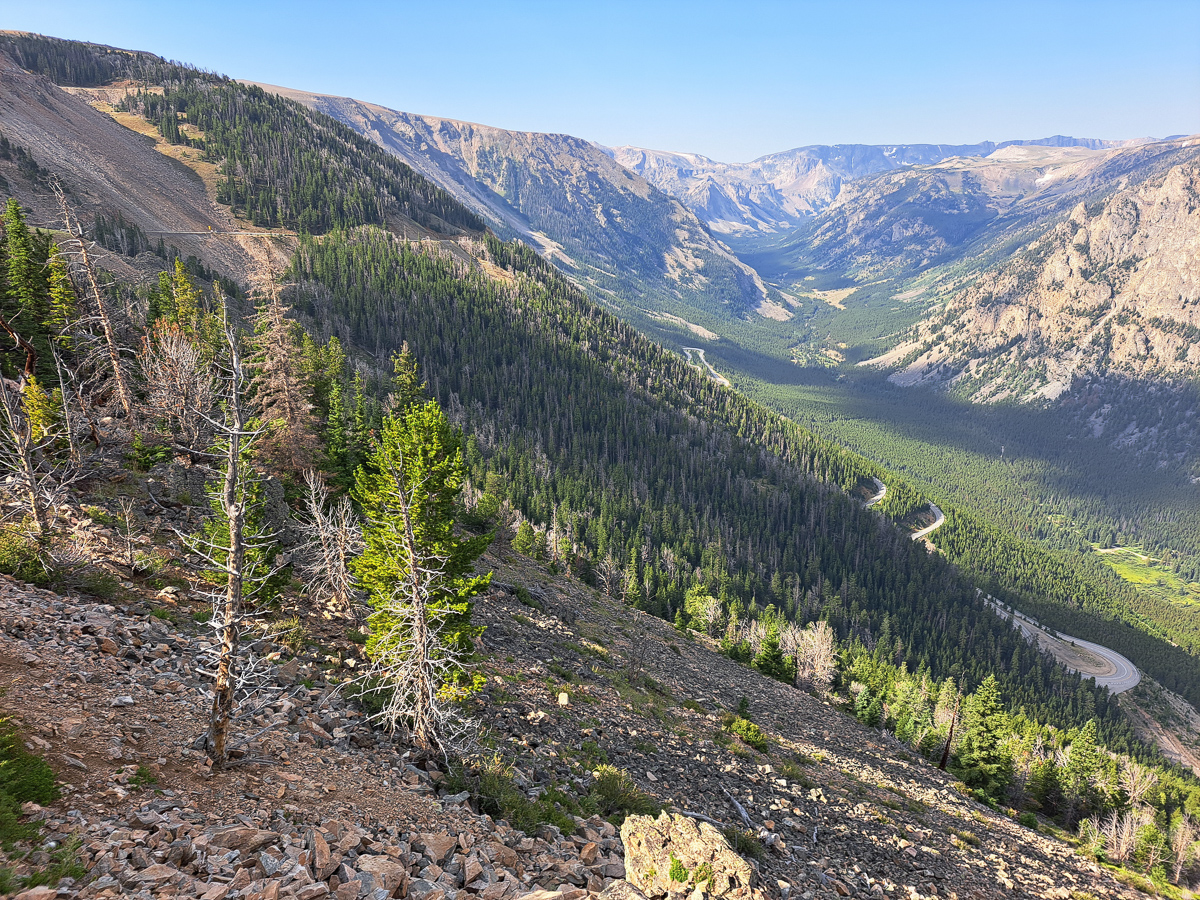
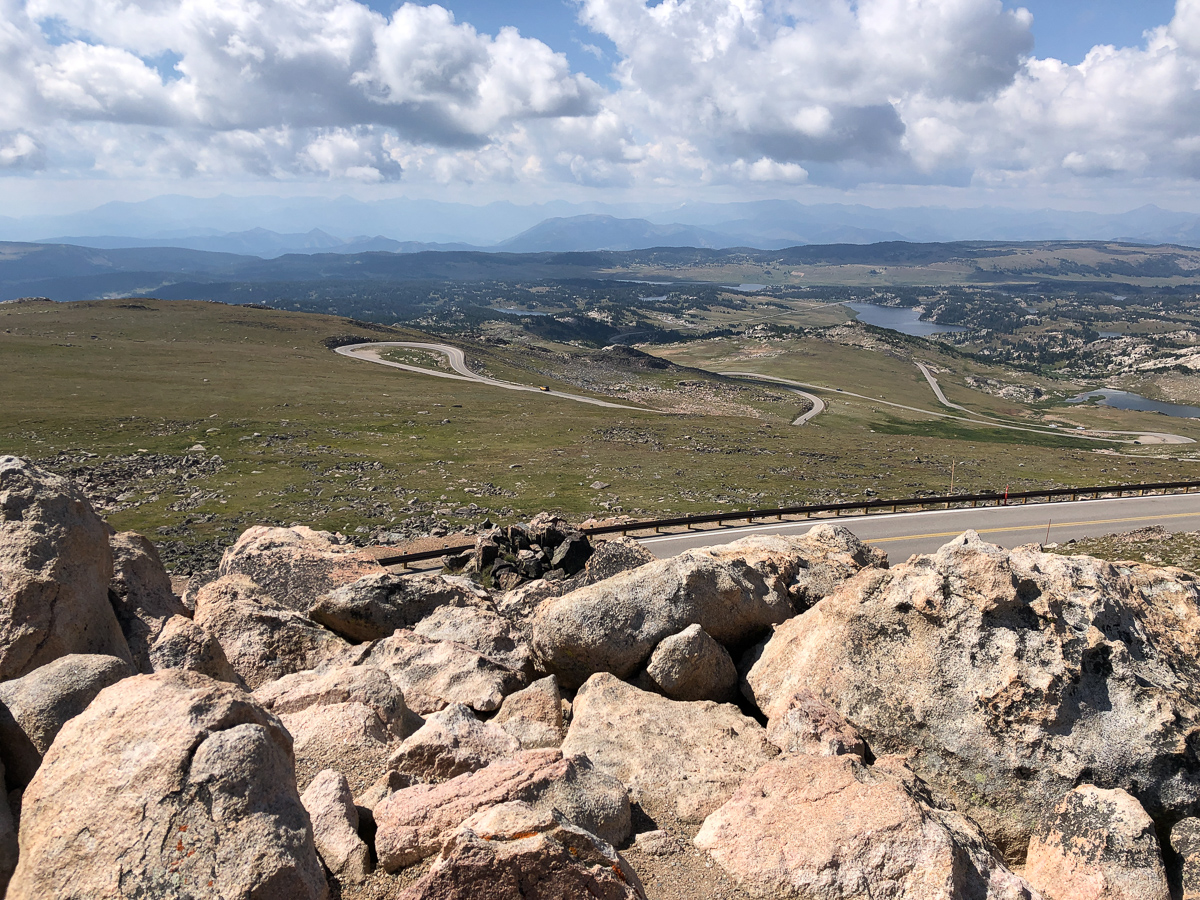
Yellowstone National Park in Wyoming was next. A truly stunning place! We approached from the north riding the spectacular Beartooth pass, wondering how even a National Park was going to trump this.
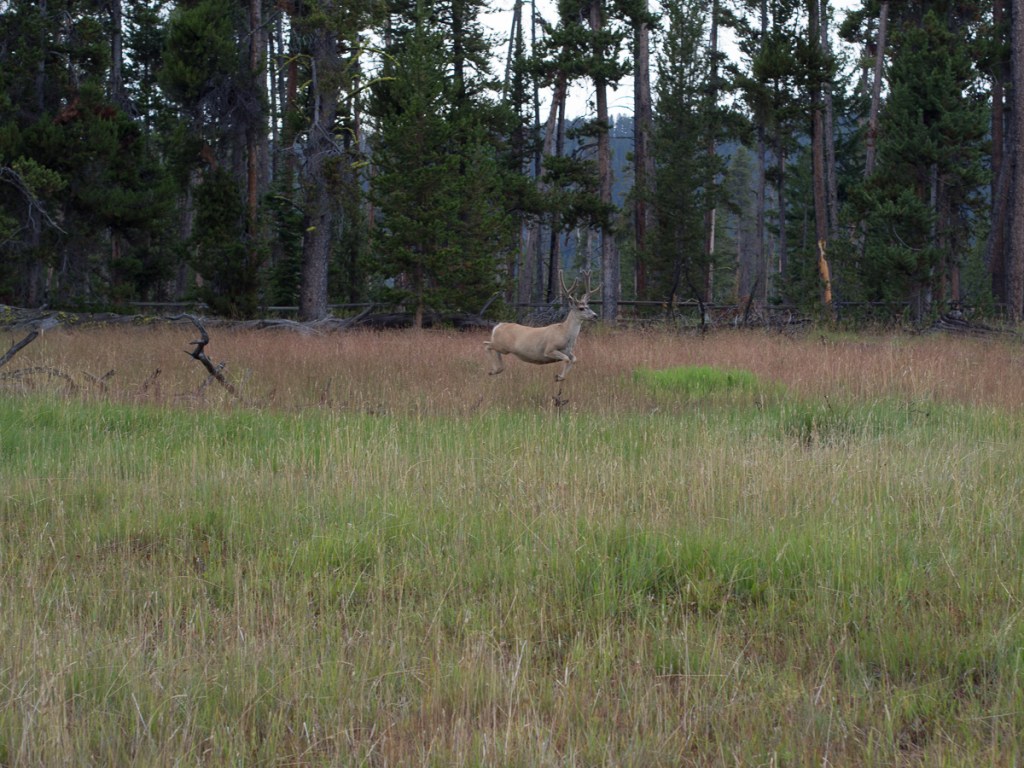
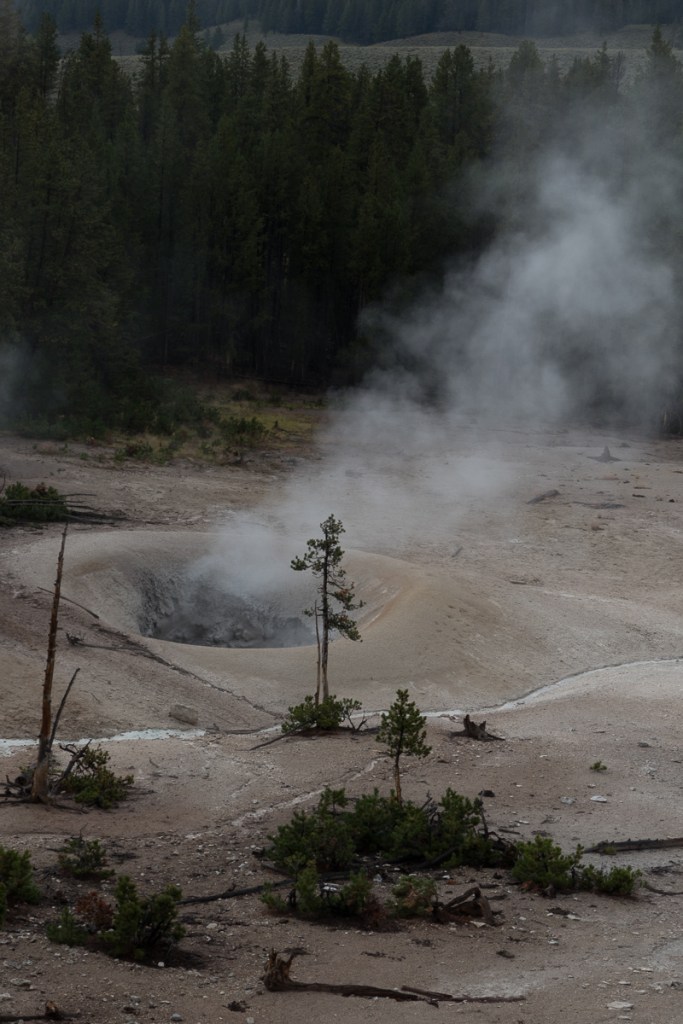
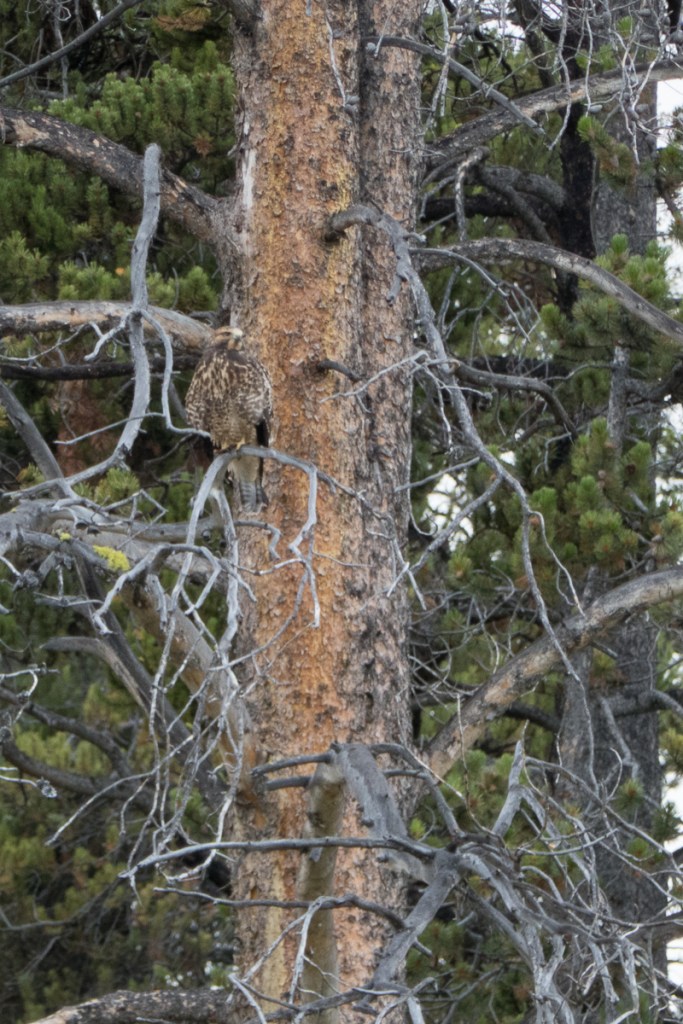
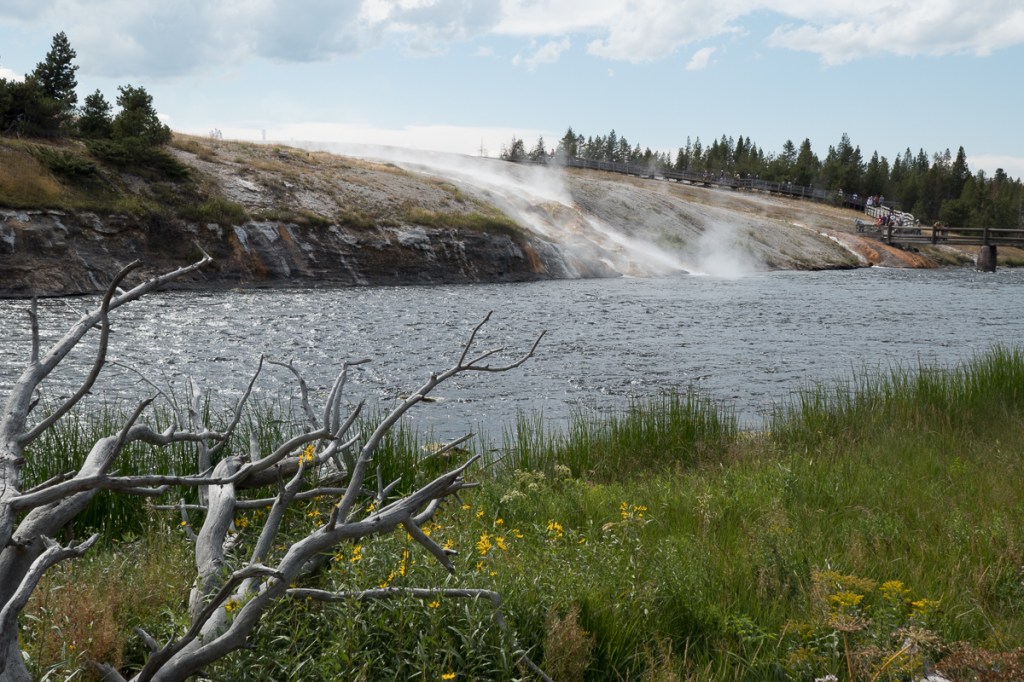
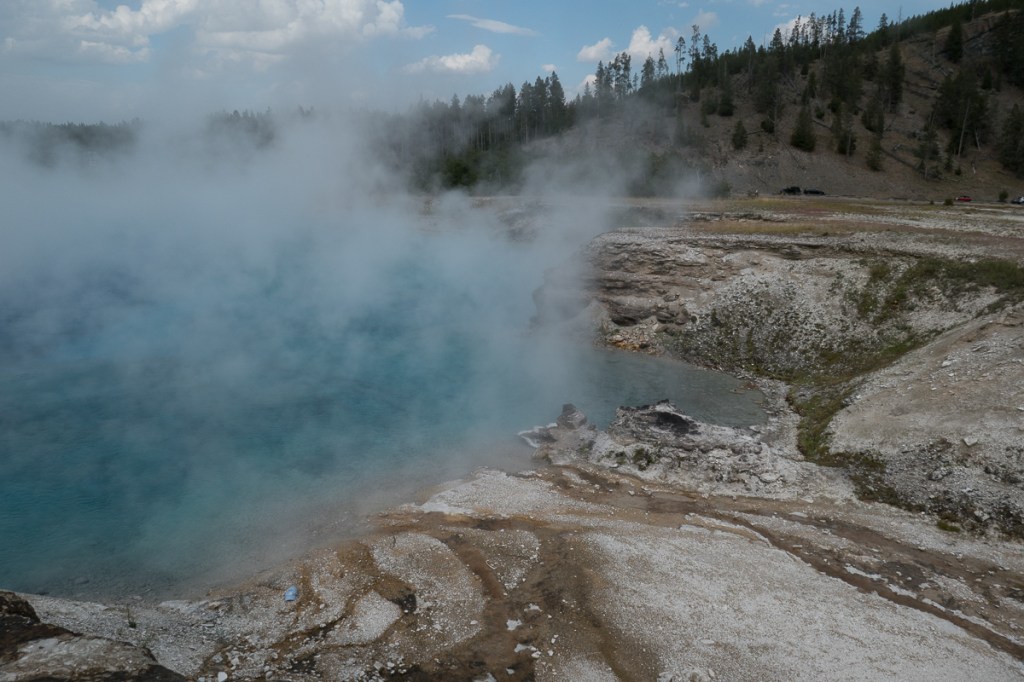
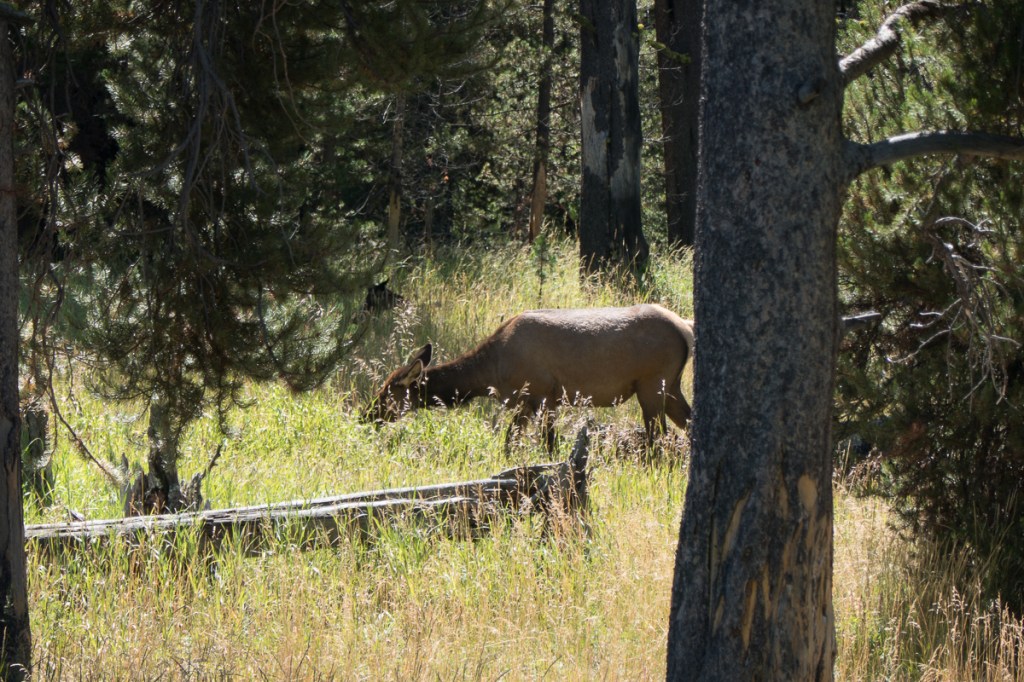
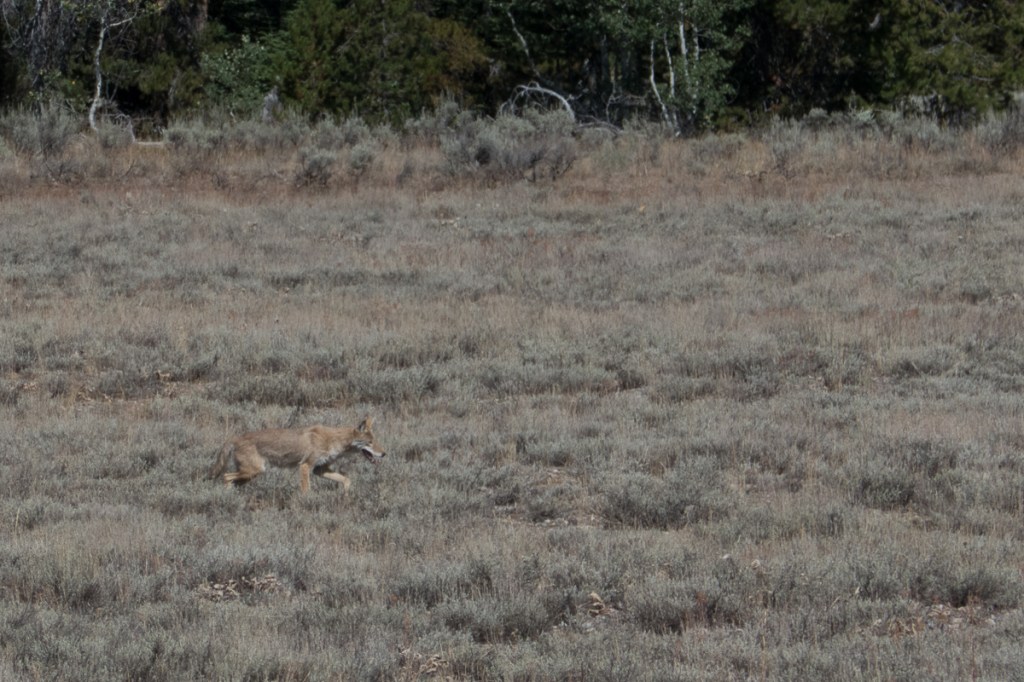
It did! Panoramic views of pastures with bison was the first wow point. Towering cliffs with mountain goats was a close second as was the mummy grizzly with two cubs. The latter both in the distance but still fantastic to see. From there the list continued to grow with birds of prey, elk, deer, coyote but the most impressive things were the geysers, blow holes and steaming sulphur pools.
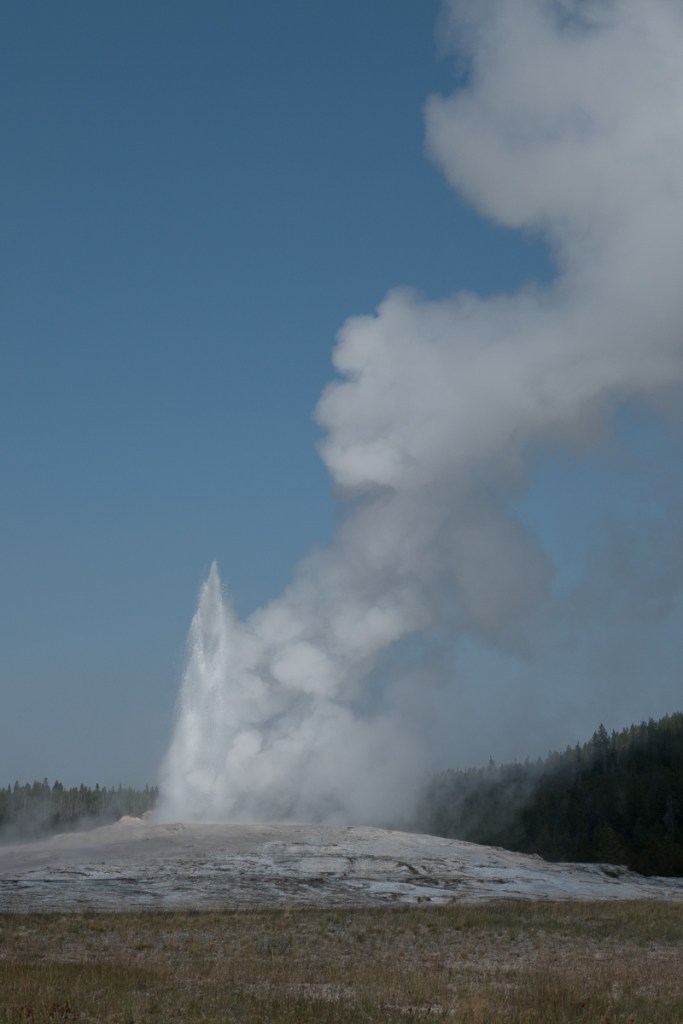
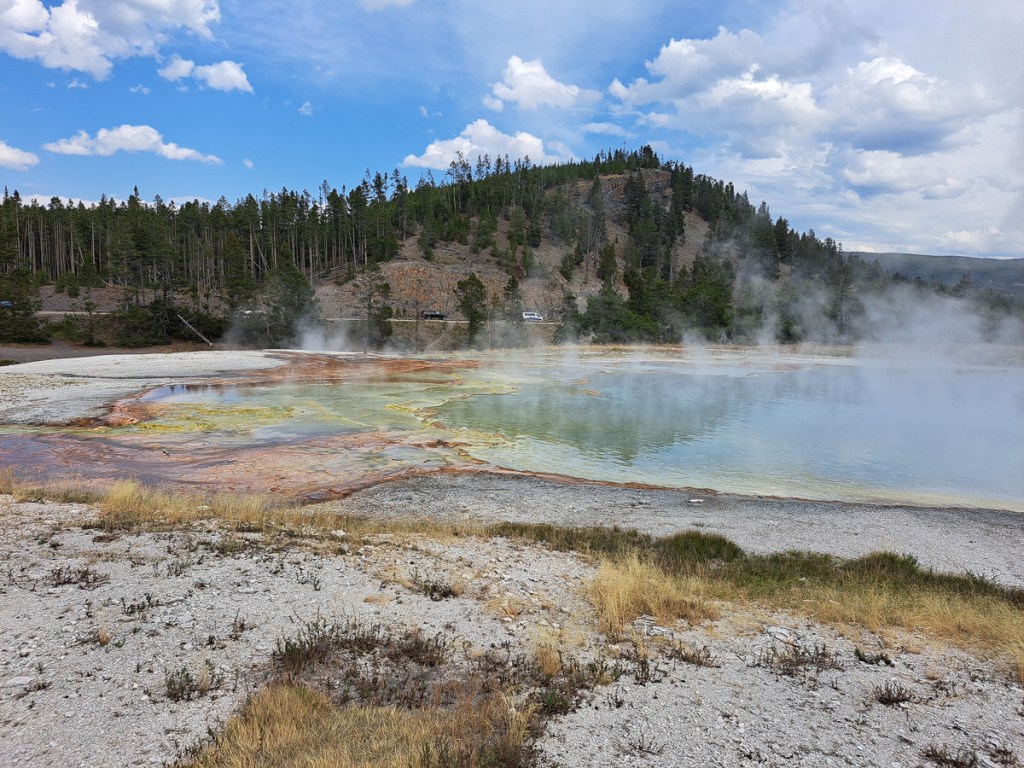
Yellowstone is one of the biggest geothermal & hydrothermal areas in the world. It is still an active volcano! Old Faithful is a geyser that has been closely monitored for decades to explain exactly what is taking place for it to blow every 90 mins-ish. Because the earth’s magma is only 5-7 kilometres below the ground in this area it heats the land and precipitation significantly. Rain water and snow-melt that seep into the land down cracks etc heats up very quickly. In the blow hole of Old Faithful there is a constriction near the top causing a greater amount of pressure as the rising hot water gets trapped. It finally explodes upwards with great force causing the geyser. The temperature at ground level when the ‘explosion’ takes place can exceed that of boiling water.
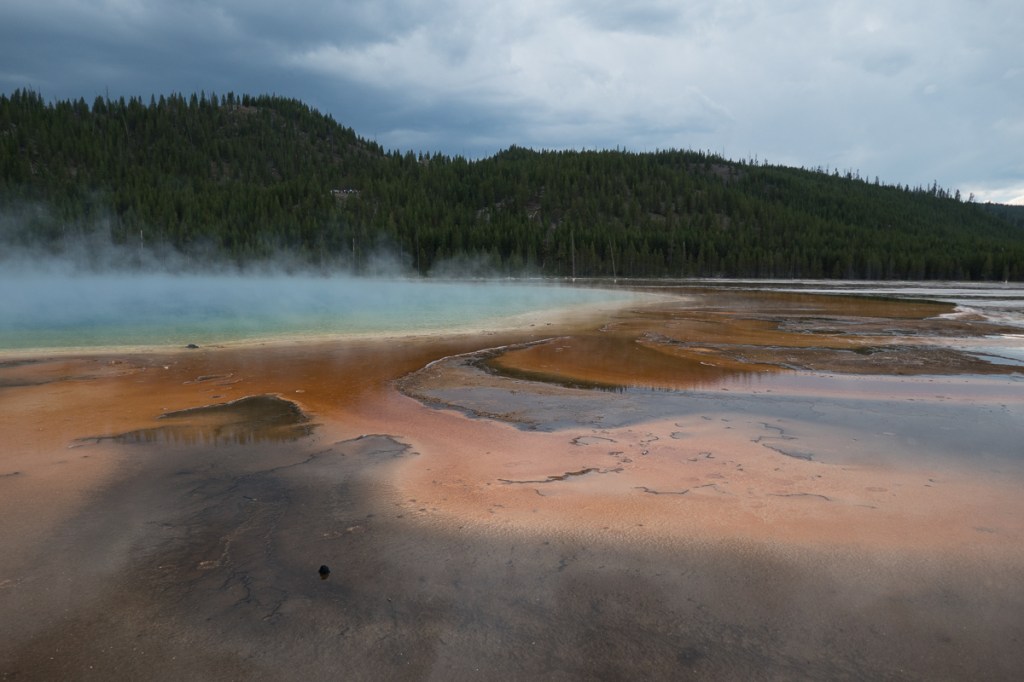
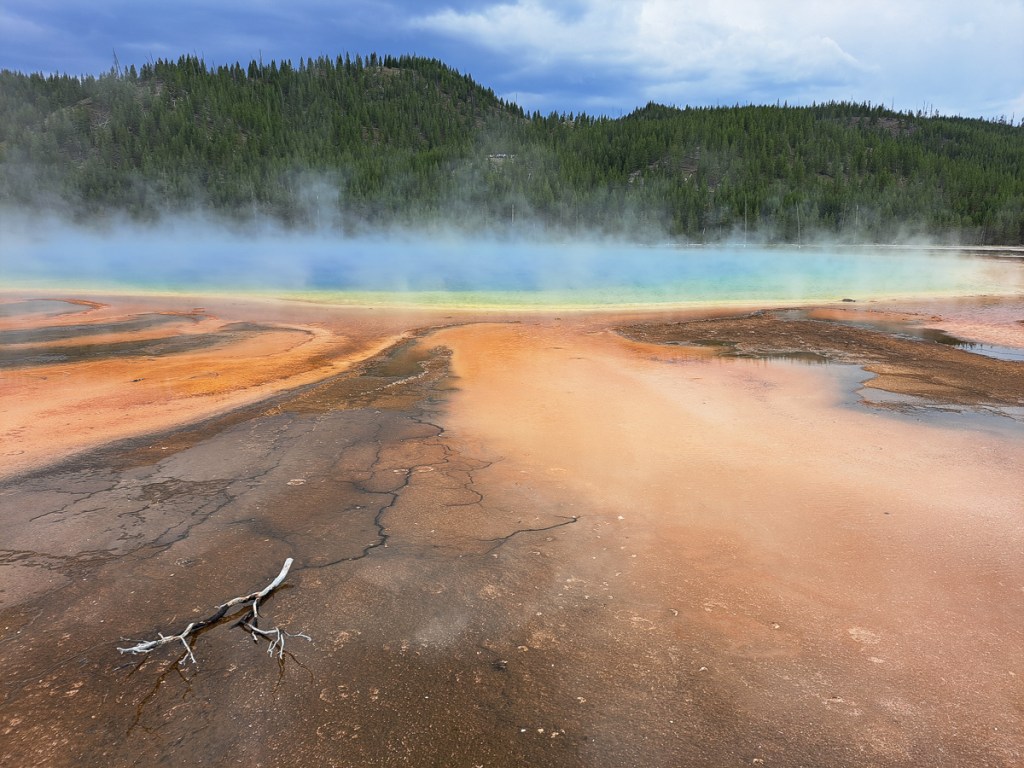
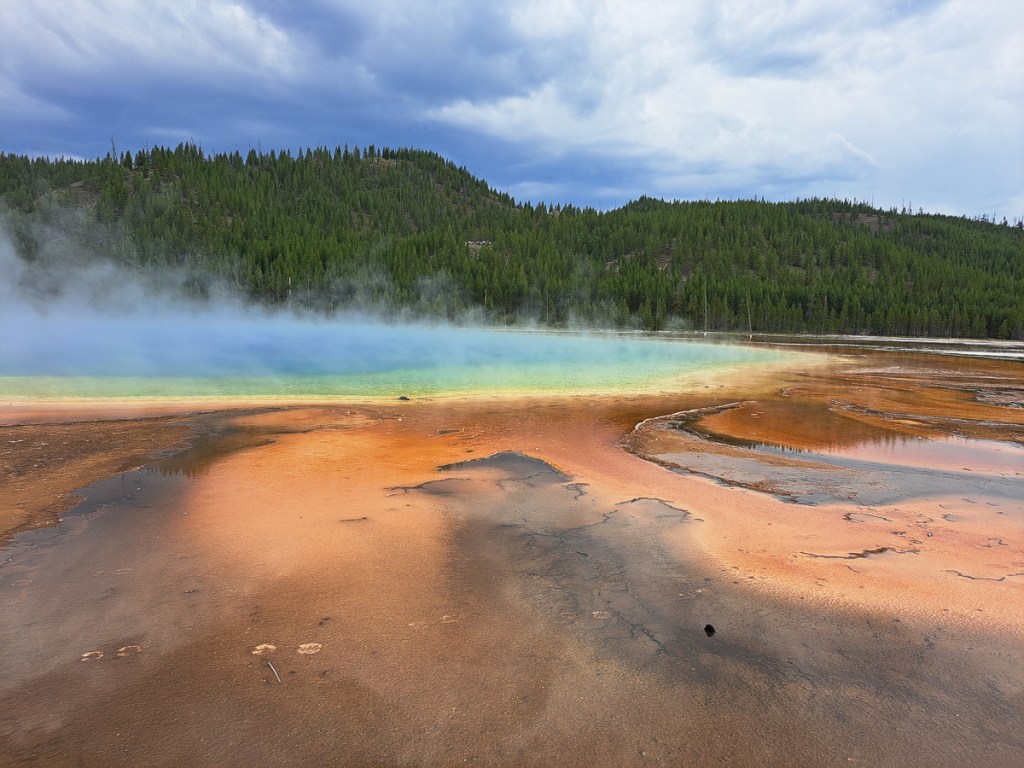
Another key feature is the Grand Prismatic Spring which has rainbow colours that look straight out of photoshop. It is caused by bacteria and other microorganisms that can withstand the extremely high temperatures. As the water moves away from the central point it cools and different microbes can grow and concentrate causing different colours the further away from the central point. Another wow moment!
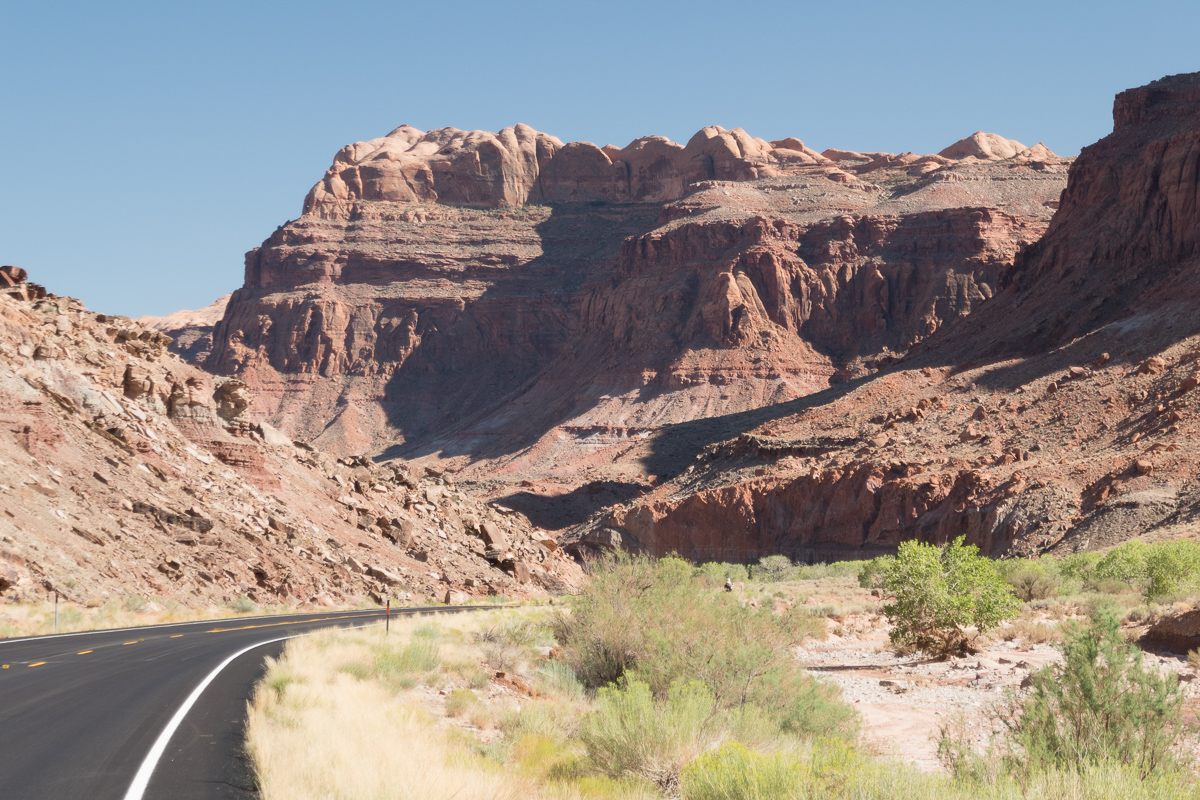
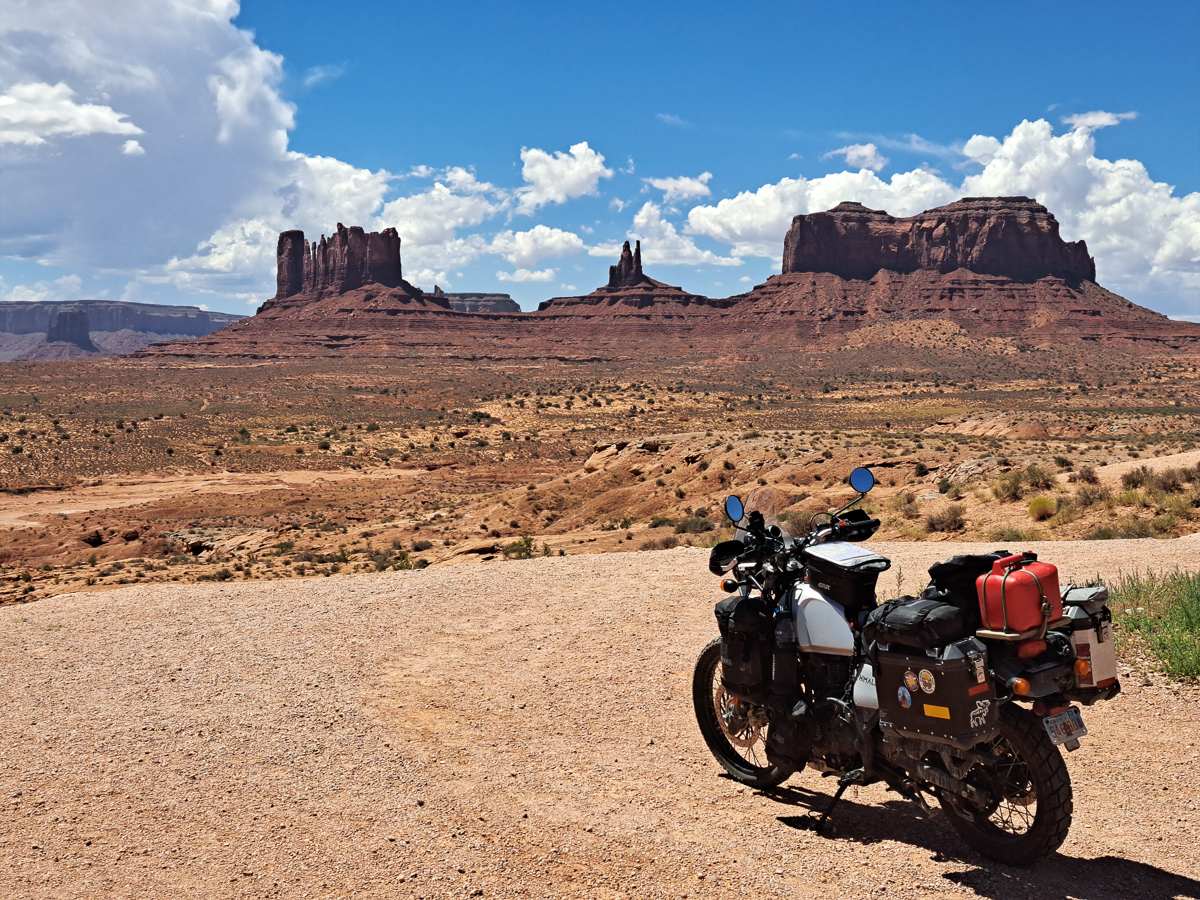
An alert reader may have spotted that our Route 89 plan was taking us through the third vertical column of states: Montana, Wyoming, Utah and finally Arizona. There were odd side trips and corners cut – Sturgis is in South Dakota, and somehow we were in Idaho for a bit. Gradually ticking off the Must See Sites, Yellowstone segued into Grand Teton National Park (nearly as interesting and much less crowded) then we passed through Utah, which was stunning rock, rock, rock, but not so prominently named until we dropped into Monument Valley, on the Utah/Arizona border.
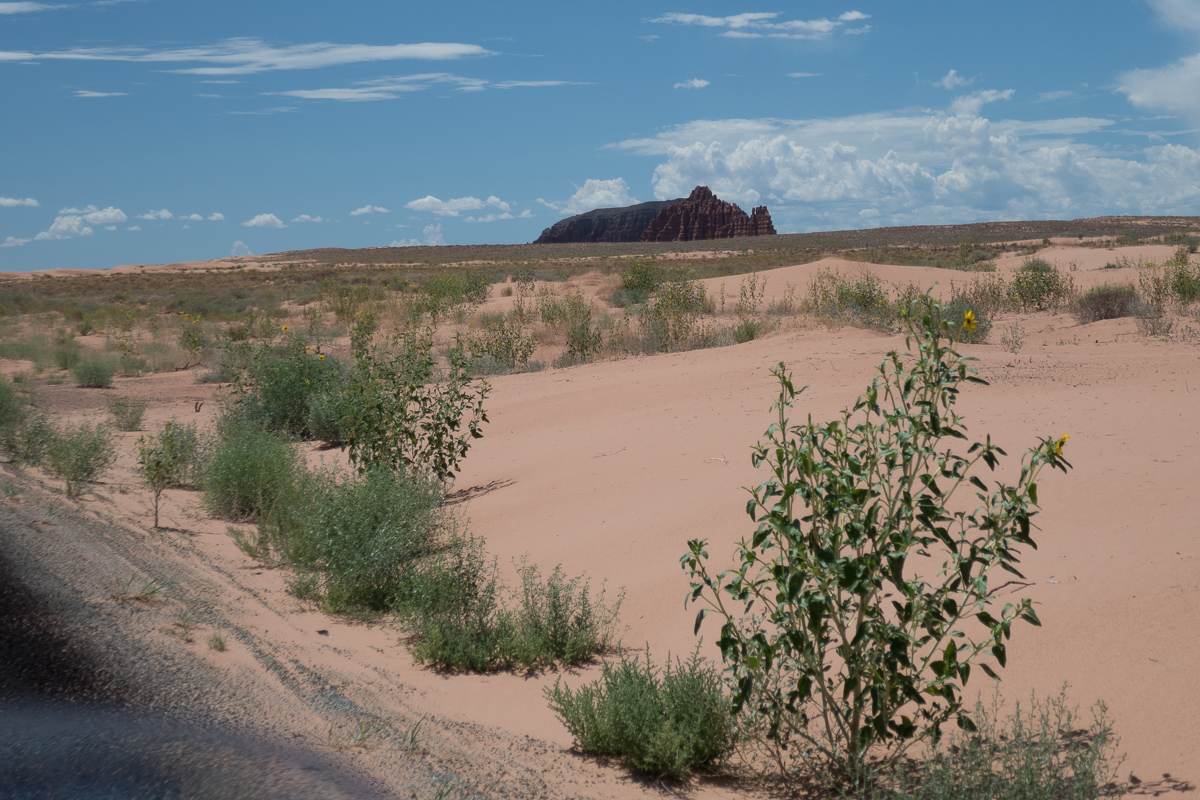
To get into Monument Valley, we were out of the almost continuous named National Forests into an area of desert. The transition from one to the other had us riding along roads with sparsely spaced mainly fir trees through rocky canyons until the trees disappeared altogether and the vista was thinly spread scraggy shrubs and sand. Gradually the shrubs disappeared too. During this time the wind increased significantly until we were both squealing through the intercom about the severe cross wind and sand storm streaming across the road. We were not quite horizontal but getting there! A large transporter overtook us causing the usual draught where we pinged away from the vehicle as the wind was blocked and true to form as it passed we got sucked into it’s wake but were very promptly spat out as the strong side wind caught us again.
This took place against a back drop of dark ominous clouds ahead of us to the left and right. Lightning jaggedly illuminating them sporadically. Our focus was fixed firmly on the small spot of blue sky and white clouds directly ahead separating the two. If only we could get there before being engulfed in the pending storms to its sides. What do you expect, a trucker at a gas station had told us. ‘This is the start of the monsoon season!’ Certainly our focus has moved on from mosquitoes and is now firmly on how to cope with the 38+ degree temperatures that lead into the rain storms where the temperatures drop to 14 degrees within minutes.
But these stormy conditions usually didn’t last long. Seeking shade was more common.
Apologies, this is published about 3 months after we got back! A certain lack of immediacy pervades it.
So, exit the wilds of Scandinavia to a different mode of touring. From here on,we have crowds of cities, book-loads of history.
We knew little of Finland before. One salient point striking us Britons, not just about Finland but everywhere until near home, was how recent so many countries are. From Finland through to Poland, for most of the last several hundred years they had been part of the Czar’s empire. Freed in the Russian Revolution, all but much of Finland were back under Russia’s thumb by 1940 or 45, until the end of the 1980s. So “independence” in the modern age lasted just 20 years or so, before restarting in 1990 or thereabouts. And in that 20 years, they’d fought amongst themselves quite a bit. In the last hundred years north eastern Europe’s national borders have been far from static, and don’t entirely match the language and cultural boundaries. So a lot of the “history” felt as if it were still lurking nearby, and might resume any moment. Well it did resume: The ongoing war in Ukraine added a very big dose of edginess to that feeling.
I should probably apologise for my historical ignorance demonstrated below, and for accidentally treading on anyone’s sensitivities.
We rented a budget apartment in Helsinki for a few days. Importantly, we were able to get one with secure parking, although access was convoluted. It was a sunny 4km hike into central Helsinki. Nice to wander and explore, as true tourists. We found a huge deli supermarket, the first time since Copenhagen there had been such a choice of yummy, or healthy, things. Though, no, there weren’t any paper maps of eastern Europe in the shops. Lots of history to visit and try to comprehend.
Russian Orthodox Architecture
Industrial era cannon on island of Suomenlinna outside Helsinki
WW11 Finnish submarine Vesikko
On 16th August, 2 months after our ferry to Holland, we boarded the comfy ferry from Helsinki, to Tallin, capital of Estonia. Aboard we chatted with pair of Latvian bikers and admired their Smartin Adventure luggage and crash protection on their bikes, a new TransAlp and a T7. Another young Lithuanian was on a CFMoto. Of course, we all had been to Nordkapp.
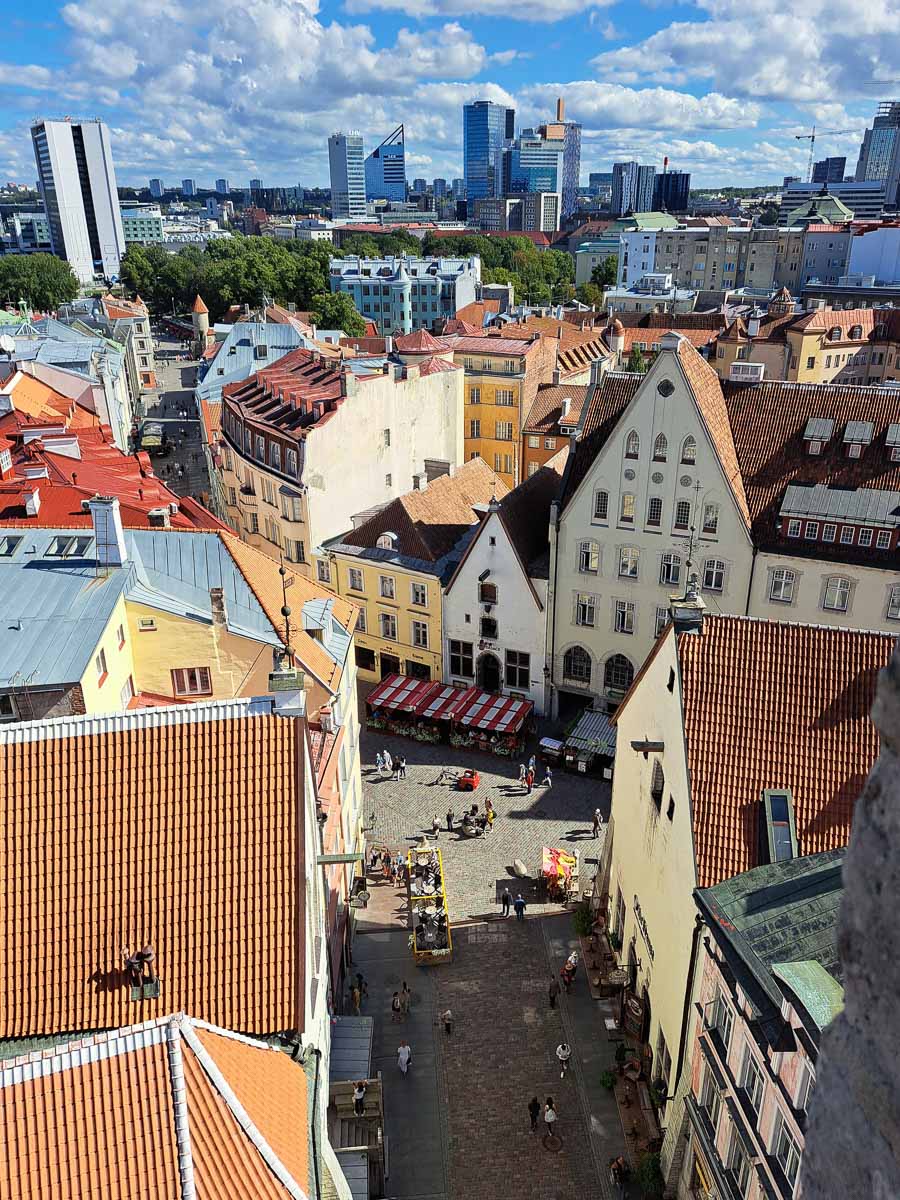
In Tallin we stayed at a curious camping-in-a-garden, in a sort of cubicle in a sort of gazebo. It worked well enough, and was walkable to the centre. It’s a lovely old town, although far less old than it looks, being rebuilt, after WW11 laid much of it flat. Like many Baltic ports, it is famously an “Hanseatic” city, founded by the medieval trading alliance. We started learning about the Livonians, and were surprised to learn that they and others brought (presumably, imposed) Christianity to these parts only around the time the Muslim Ottomans finally extinguished the Christian Byzantine Empire at Constantinople, in the 15th century, 800 years after the monks brought Christianity to the back-end-of-beyond island of Britain. But, of course, the Romans never controlled this territory or anywhere nearby. What did they ever do for us, eh?
We knew Clare’s bike would be due a major service while we were away, now it was due, and my rear tyre looked pretty sad. Unfortunately no outfit in Helsinki could fit the big service in over our three days planned stop, but Helsinki Honda did do me a new tyre. I’ve ended up defaulting to Bridgestone’s BT23, my earlier fitting of 80:20 road/offroad adventure tyres brought no reward on dry gravel tracks or wet grass, and they’re never in stock; the BT23s seem to always be ready, be it Oban, Worthing or Helsinki. Yamaha Tallin did Clare’s big service and a fork service too. Mechanic one of those slightly curmudgeonly sorts who will often go a bit beyond. Good value, that was. Two pillion runs as we shuttled about for a day exploring Tallin.
We explored further east in Estonia, along the northern coast, ending up in Narva, whose medieval fortress looks across a river at a contemporary Russian fortress. Nearby is a heavily secured border crossing, much less busy than it was before 2022. The mediaeval fortress was interesting to explore, but had been rebuilt. We recalled our cycling adventures in the ‘stans, also part of the Czar’s empire, later the Soviet Union, now independent. There also, the great historical castles were quite often thoroughly maintained, and kept in good repair. We saw a lot more of it as we worked our way west. A very different approach to here in the UK, dotted with scenic ruins, most of which have been left unrepaired since Cromwell blew them up.
We’re in Narva.That over there is Russia, the sea is not far to our right.
I’d always thought of the three Baltic states as “small”, but actually they are each very roughly twice the size of Wales; yet the combined population is less than twice that of Wales, so there’s plenty of forest. Somewhere in the Baltic capitals, we managed to acquire a paper road atlas of the three countries. It made planning a lot easier, and just fitted in my map case. Many of the minor roads were unsurfaced, often the atlas legend was a good guide. As remarked in our Finland posting, we’re pretty slow on dirt roads! Having escaped from the Soviet Union only 30 years ago, and being sparsely populated, the countryside in the Baltics is often a bit unimproved. As always in countries with lots of space, there are derelict buildings – it must make more sense to start again on a new plot.
It’s a small world. We stopped at a rather posh campsite, and there, again, was a German couple from the Tallin campsite-in-a-garden. Less probably then arrived 2 guys, Danes, a father on a Harley and son supporting in car, we’d met before at a curious backroad roadhouse in Finland. But, to confuse us, they’d parted from the second biking father & caged son they were then with, and, they’d exchanged facial hairstyles – the beard had moved to the son. Monthly shaves, like me! Beer was a reasonable €1.50 for a can, so I had my first since Denmark or Germany.
Speaking of beer, somewhere random in Estonia, we turned a corner on a country road, and dropped straight into a random breath test. Clear, of course, and no trouble, but a reminder that from Tallin on, there are really rather a lot of police about. In Scandinavia they are almost invisible. Poland, too, we were pulled over there for no apparent reason, and the cop’s explanation seemed rather, err, weak. Apparently there had been a lot of accidents, so he was certain he wanted to check our V5s (vehicle registration documents). Not sure how those avoid accidents, and he didn’t check our insurance, tyres, or breath. Perhaps he was just curious – seemed a nice chap.
We moved on to Latvia. And wondered in our ignorant English fashion – why are there three countries here, anyway? As so often: Language and religion. Each of the three is quite distinct: Estonia’s language is related to Finnish, and Lutheranism dominates religious life, plus a fair following of Orthodox churches. Latvia’s language is one of the last remnants of the Baltic family, and again Lutherans are the most common religious community. Lithuanian is also a Baltic language, but quite different from Latvian, and most of the population is Catholic. We were also noting, whenever we learned about recent history, that the monolithic Soviet Union, that dominated a lot of the UK’s foreign attention in our youth (the far off sixties, seventies and eighties), wasn’t quite so monolithic after all. The three Baltic states (and for that matter, the ‘stans) did a lot of stuff their own way, and were quite careful of their borders and differences. Much more like the USA than the UK, except that Russia was rather more dominant than the USA’s most populous state.
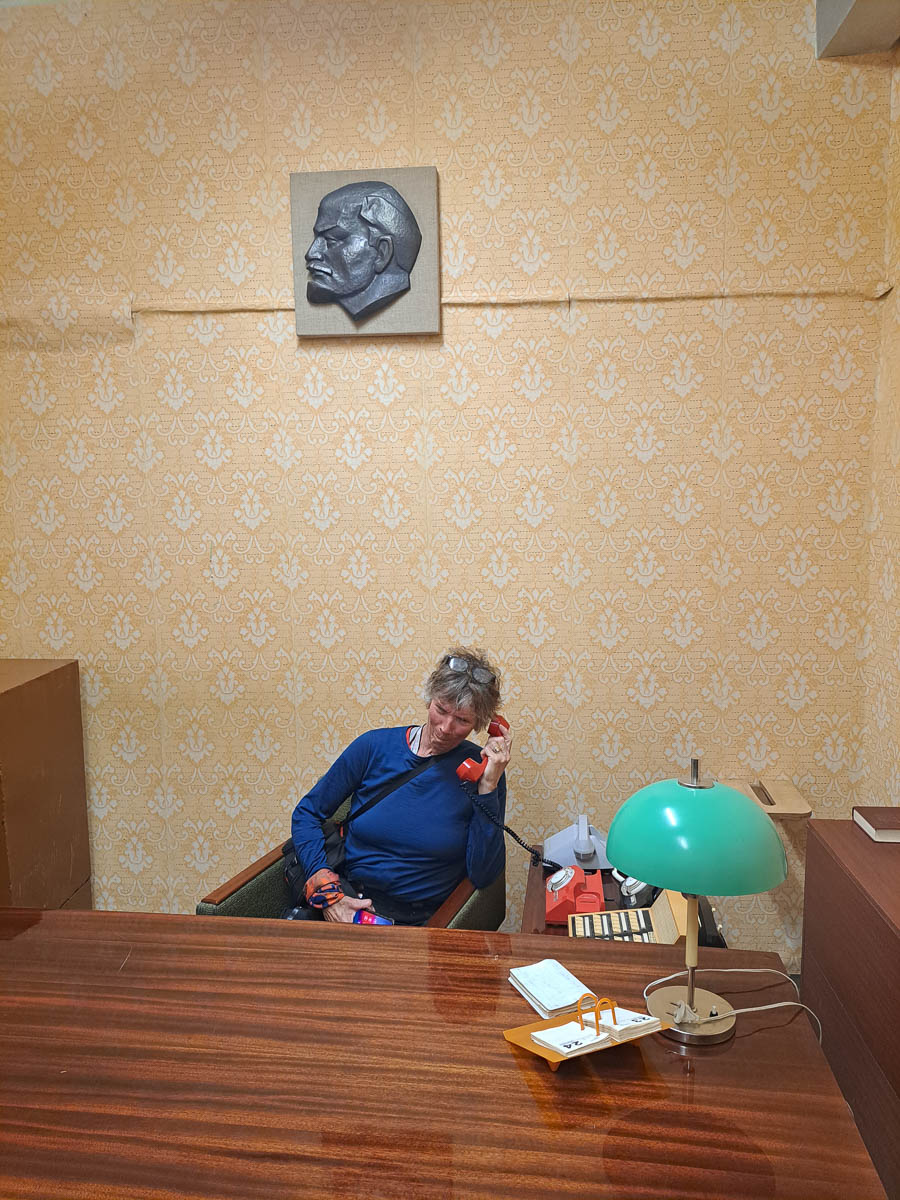
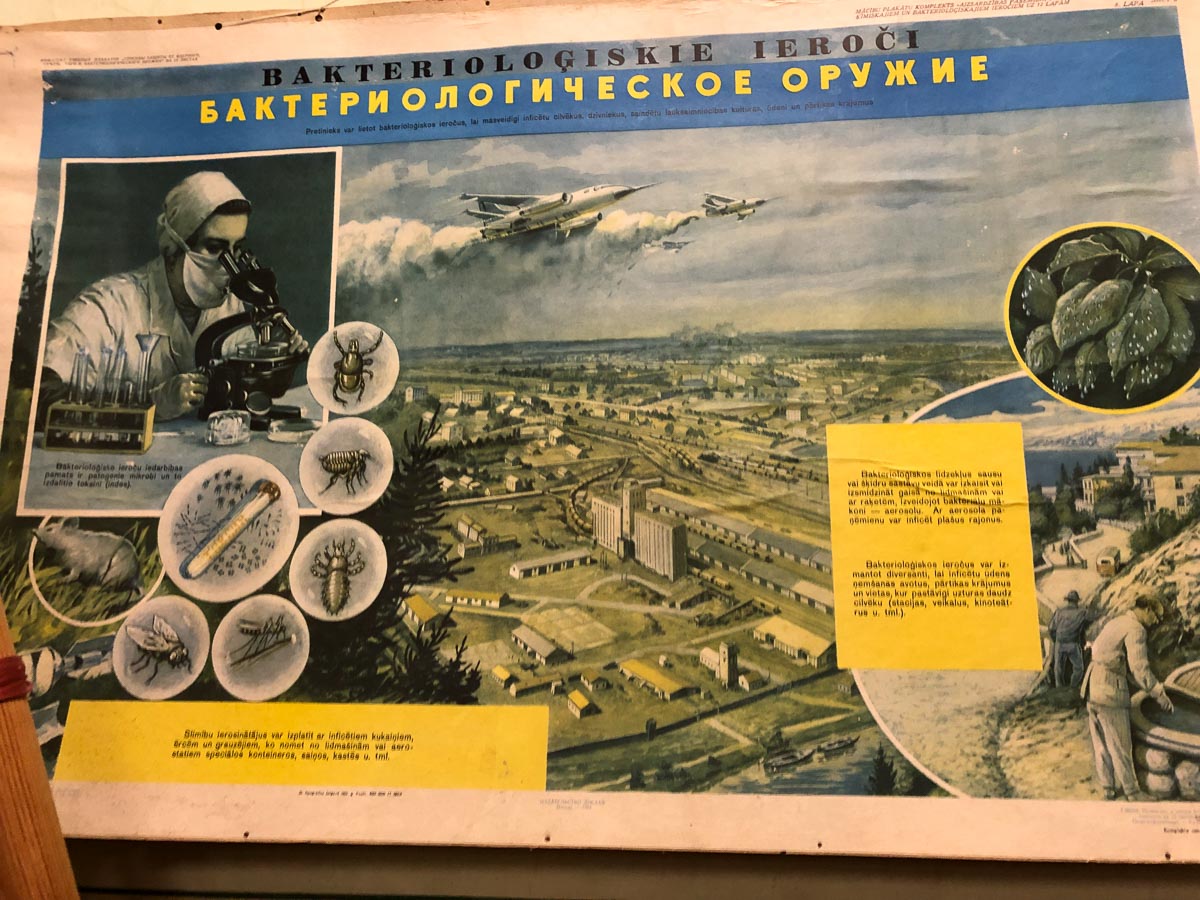
One of the most fascinating places in Latvia was a 1980s bunker, built by, and for, the government, so they could continue during and after a nuclear war (that’d be, ahem, our bombs then. Blush). The Latvian civilian politburo probably weren’t treated to the latest technology available, and, the Soviets didn’t much go on consumer electronics, and it had to work in a nuclear war, and, it was a bunker, so the technology and ambience looked pretty archaic. You could film Stalin, or Hitler, or Churchill working in this bunker and “continuity” wouldn’t baulk at almost all the equipment. It would have impressed Lloyd George or the Kaiser though. And it might still work, unlike modern electronics with a 5 year life. The generators do still work, as they use them to power the sanitorium above the bunker.
It’s ok – Clare doesn’t speak Latviski or Русский!
It might seem a bit of an odd, though pleasant and countrified, location for the, still operating, sanitorium, but apparently it was built there only to disguise the bunker. Did MI6 know about the bunker? Well, Latvia wasn’t alone – try googling “UK cold war bunker”. Indeed – Subterranea Britannica describes several, albeit smallish, cold war bunkers in our home county Sussex alone!
Bunker green by Dulux
They still run, we’re told
Not sure if way in or way out!
Tactfully, there’s no national emblem on those planes
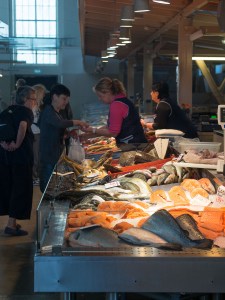
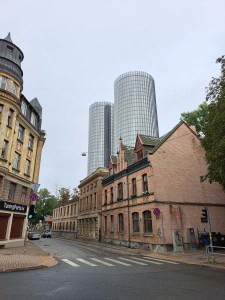
Riga gave us a shock by having an actual, congested, rush hour. After two months of absent or free traffic, this was a shock. Rather smelly, too, as many of the vehicles date from the early days of Europe’s diesel boom. Well, we have one at home, too. Riga’s old town was attractive, but mostly a late 20th century facsimile as it was flattened in WW2. We listened to a church organ concert and visited the city market. Perhaps Latvia has more liberal trade practices than it’s neighbours as I was able to buy medicines that needed a prescription in some countries (not in the UK), and a SIM card for Europe because my roaming had ended after 2 months (thanks Boris). We stayed in a cheap hotel, and were entertained by the top floor guests who were migrant workers – all men – from Uzbekistan, Kyrgyzstan and more. We had language-hampered reminiscences of our time in those lands. The communal kitchen was very well used, but fortunately I didn’t have to take Clare any plov.
Riga, new and old
Babushkas!
Riga, old and new
Out of town, sometimes in town, our time in the Baltics probably produced around one castle a day. There’s loads. Many are in good repair, some are ruins. Trakei was particularly striking.
Trakei, Lithuania
Trakei, Lithuania. What’s she done to deserve that?
Lithuania’s Hill of Crosses grabbed our attention shortly after crossing into Lithuania. Pretty much all summer, if we’d seen a religious site, it was Lutheran, or latterly, sometimes Orthodox. Hill of Crosses is all beads and Popes (three, IIRC). It was sort of charming, attractively scruffy, but also a little creepy. Its actual religious purpose is, well, it just is. No miracles or martyrdoms. It does
to mark an element of national consciousness for Lithuanians. Perhaps in repressive times crosses were tolerated and national symbols not.
We travelled east to Vilnius, capital of Lithuania. Vilnius is scarily close to the Belarussian border. Unusually for us, we didn’t think of going and peering over the fence, to add Belarus to our little list of countries we have seen close over a border, but not visited (for the record: Iran, China, Afghanistan, Russia). This is a tense part of the world: NATO countries’ territory squeezes nervously through a narrow gap between Russia and Belarus; and that exclave of Russia, Kaliningrad, is surrounded by NATO countries except for its Baltic coast.
Vilnius is a nice old town, mostly original as it wasn’t flattened in WW2. It’s also less medieval, less Hanseatic than the coastal capitals (the Hanseatic League was nautical), it’s more 18th or 19th century. But our enduring memory of it is the horrible museum of the worst period of the 20th century when they endured two Soviet occupations and one Nazi one. The small museum is actually in the old KGB premises and mostly details the Soviets’ appalling oppression and methods. It was also eye opening how long resistance against the Soviets endured, nearly till Stalin’s death.
Vilnius Cathedral, outside
Vilnius Cathedral, inside
So it’s no wonder that Vilnius was enthusiastically hosting its second Military Tattoo with bands and parades by many NATO allies. Just the second, in 2023: They started in 2022, odd that. It was free to attend, and we waited on a bench for it to open. We were joined by a military officer off duty with an injury. He had relatives studying in UK, and we chatted about, well, stuff. Alas, that was it for the entertainment, the VIPs were all in situ, the parade descended the boulevard towards our temporary auditorium, prepared for the ceremonial entry, and – the heavens opened. And how. Totally torrential, and it didn’t stop. Military intelligence had warned of it, and they’d been handing out free ponchos for a while, as even the VIPs had no roof. But this was mega rain. Even the submariners gave up*. Also, the wind started blowing parts of the auditorium over. The outside audience, including us, broke and ran, hiding under the great portico of Vilnius Cathedral. Which unfortunately was also very tall, and facing into the wind, so only kept some of the rain off. I think the event was abandoned.
*Fiction on my part, Lithuania does not operate submarines.
Off from Vilnius, by the afternoon we were in Poland …. what? I haven’t written about motorcycling in the Baltics? Oh? Well it’s fine. Pretty good, not too busy, main roads – where there are motorways we avoided them. Pleasant minor roads. A lot of forest, but it’s normally cut way way back from the road. A lot of the minor roads are unsurfaced, and many then have very loose surfaces, but aren’t much corrugated. Most of the countryside is flat, and the population is modest (and doubtless easily displaced in Czarist or Soviet times), so the roads are usually pretty straight. So unless you actively want to ride dirt roads, it’s not especially interesting riding. There were some pleasantly winding bits though. There are campsites, and cheap hotels, and apartments for short rents. Food is cheapish but you won’t find low fat yoghurt and muesli.
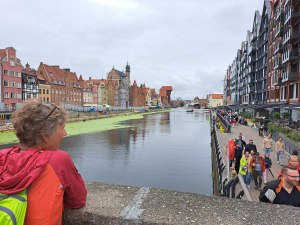
Oh yes, Poland. Ah Zlotys. Didn’t have any. But cards accepted, so we’re good. This border area of Poland is quietly pleasant, a sort of Kotzvolds perhaps. Everyone has been friendly all along, this is no different. I can’t remember if there was really a border; it’s all very European and easy. The day after, we arrived in Gdansk, as following our Baltic theme, we’d take the coast, rather than head for Warsaw and other cities. We rented a little apartment. With secure-ish parking, but rubbish instructions to get in. Including, we didn’t know that non-resident motor vehicles aren’t allowed in the day. So the apparent baffling one-way system is, actually, and really, a no-way system. Good job we didn’t know, because we got in, eventually. And, unusually for a flat advertised as in the city centre, it actually was.
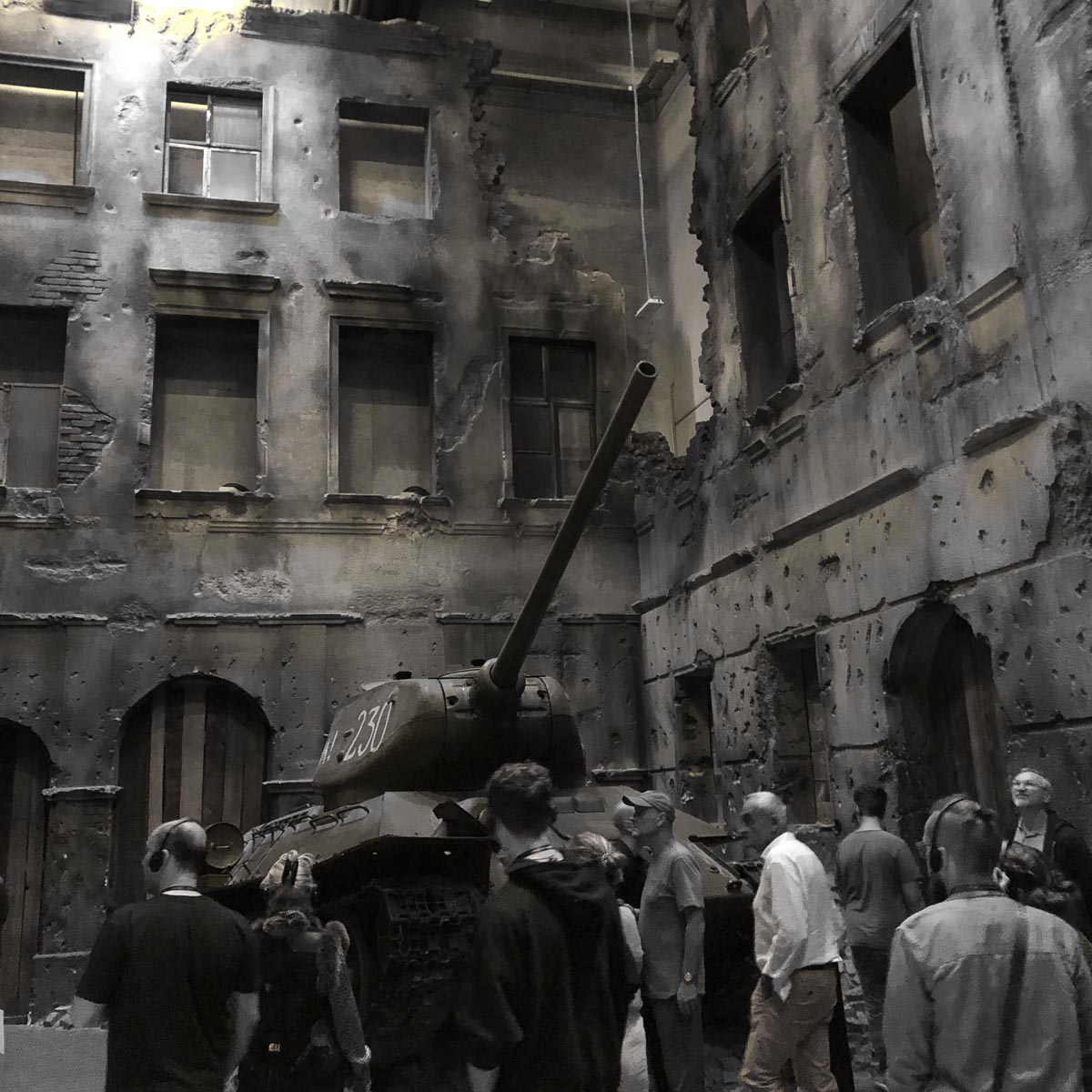
Gdansk is a fair sized city, yet the central old town area is compact and very walkable. Again, “old” town means rebuilt after WW11 to look like the old town. A clue is probably that walls and roofs tend to be straight. Attractive though. We spent a day sightseeing (and getting a haircut) and another day seeing most, though not all, of the WW11 museum. Like the museum in Vilnius, it could, maybe should, give one nightmares. Learned a lot. WW11 was large in Britain’s historical background during my 70s childhood, and I vaguely remembered the 37m+ death toll from WW11 – now we were in areas where the bloodbath was at its worst. In comparison, history I’ve read since suggests that the UK government was quite careful to limit its casualties to under 0.5m, as the memory of losing 4m in WW1 was fresh.
Now, following the Baltic coast west from Gdansk on motorcycles, for us, was a mediocre plan. This is Poland’s riviera, and like England’s, it has an air of having seen better days. But it was still crowded, and even at the fag end of the season, plenty of Poles and maybe others, were ambling about, idling outside tat shops or licking ice-creams. It’s not as pedestrian and bicycle friendly as Germany or Holland, but there’s a lot of crossings! Chug, chug went the bikes, 50kph almost all the way. Still we saw some beautiful beaches, the Baltic was warm and not very salty, and camping was cheapish.
We crossed into Germany, still in a holiday zone. Even though this was our first time ever in the ex-DDR, everything looked smarter, and bigger, and shinier, especially the prices. More cycle lanes. The Ruge campsites were organised to a painful level of do-this, don’t do that. It’s rather the same in our UK Camping and Caravan Club; could it be camping brings it on? Of course, if you actually got past the notices and systems and spoke to the Fraulein of the campsite, she couldn’t be more helpful. I can’t remember whether Poland or Germany, away from the coast, we stayed at a huge, old, much underused, disorganised campsite with creepy dark pathways to giant, echoing, slightly decrepit shower blocks. No notices there.
Although there were still lots of (other) tourists, the roads became much freer. The speed limit went back up to 100kph (for the first time on ordinary main roads since leaving Germany in June). More to the point, we welcomed the end of the ex-eastern bloc habit of posting micro limits covering a few metres, with ambiguous endings. 1 ferry, to island of Ruge, very scenic and perfect, very expensive.
At home we have a Simon Weir guidebook, and before we’d left home, we’d grabbed a few GPS files from it. They were nice roads, strung together with little bits of Autobahn. Little used autobahn at that, so the answers are: Just about 140kph true flat out in 6th, and gets-wobbly-at-the-front at about 170kph. But our IT was frustrating at times, and reversing GPS routes doesn’t work well when there are slip roads onto dual carriageways, especially if you don’t know the local town names. Oops. A cheerful old codger in the welcome caravan at a huge campsite relieved the frustration with a bit of comedy. He was a right joker he was, directed us to a wriggly pitch full of odd noises. Woke up in the morning to a tent full of molehills. I had a minor scare, thinking my bike was leaking oil, but it was just the very thin Norwegian “Racing” chain lube reacting to warm continental temperatures.
Celle, and SilberSee camping. Celle’s a charming old town, with enough to see. We stayed two days. The campsite was lovely, loads of space, freeform pitching, few punters, and a big, warm, lake with a beach. And a simple restaurant. We dived in and caved in. My diary says: “Decided to walk into Celle but bus arrived. Driver chatty, used to play darts with BAOTR at Bergen Belsen (!). Wandered town, old and neat and pretty, homogenous tho. Castle, more palace, outside impressive. Walked back via supermarket, but 500m from home the same bus driver insisted on giving us a freebie. Swam again”. We fixed a minor electrical issue on Clare’s bike and cleaned a leaking fork seal on mine, both satisfactorily.
The next campsite, the distinguished looking owner saw the bikes and became chatty. The more so as we each explored our previous travels. Stunning photos arrayed on his wall. Herr Wolf had had some epic journeys especially in Africa, way back when. On, natürlich, a BMW flat twin. With a sidecar, which, in retrospect, he wasn’t convinced about. The bike was still in his barn, worn and dusty and sans sidecar, but looking sound.
7th Sept. Having decided to skip a flog across the Ruhr and then Essex we entered France. The frontier signage was even less than usual. Clare didn’t notice until we sat down for lunch when I mentioned it. Immediately, a lady passed and said Bonjour, then Bon Appetit. Voila!
Our trip ended with some lovely French roads, charming villages, towns and cafes. A last minute booking on the Dieppe ferry, which drops us almost back home after a 4 hour crossing. Before that, a last leisurely coffee outside a harbourside cafe filled with old radios. Finally we survived the challenge of getting out of Newhaven, on the wrong, or right, side of the road, in the dark.
The Continent sees us off in style – two days before we’d have been thrown out!
We were away for just a few days short of our post-Brexit 90 day limit, and covered almost exactly 8,000 miles. What a lovely trip!
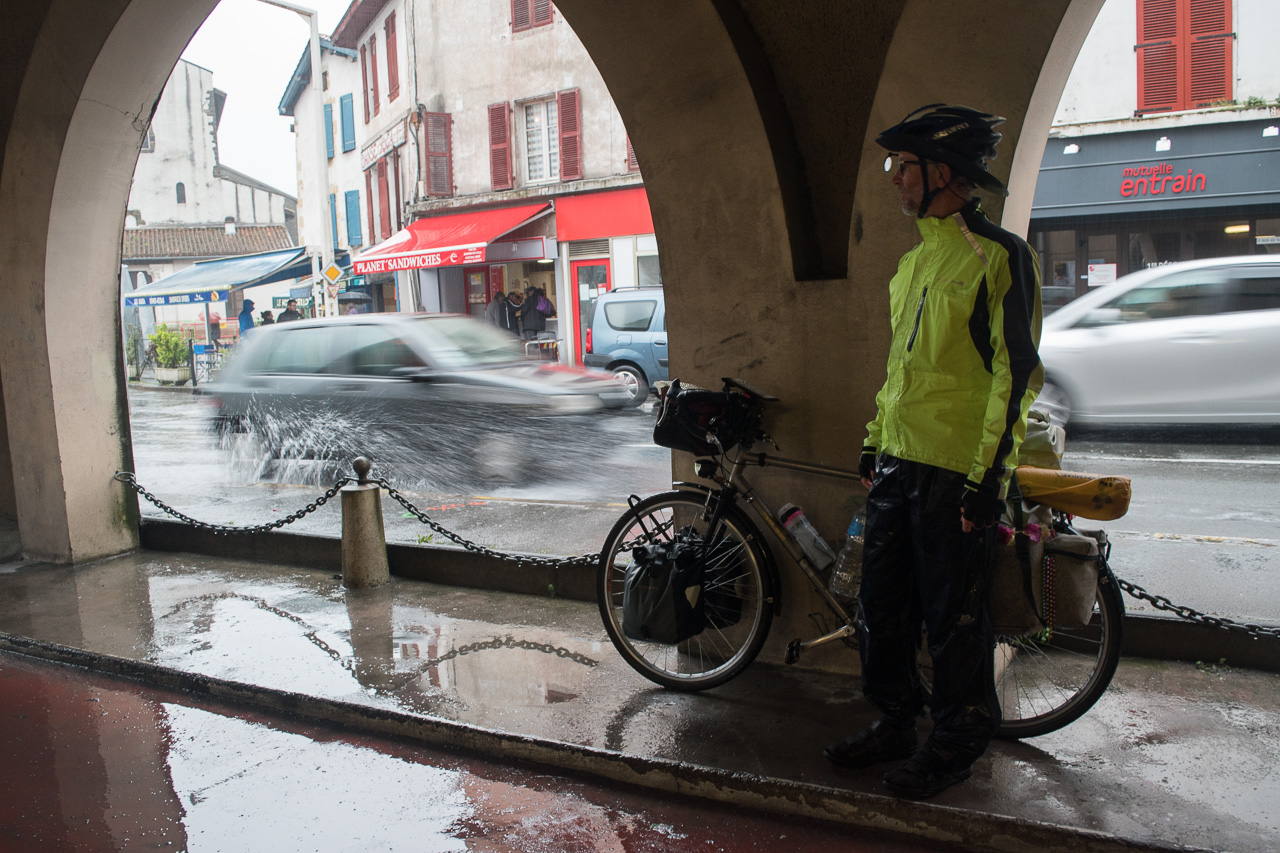
‘We’re having a drought. Haven’t had any rain for months. The Roman cistern is so low due to the lack of rain,’ were the cries we heard but the streets were jammed full of umbrellas: doorways blocked by umbrellas, umbrella stands packed with umbrellas, street sellers brandishing umbrellas, eye level – a sea of umbrellas.
‘I’m a cyclist too,’ explained one fed-up man cowering in a tavern. ‘Five days this week I’ve been soaked to the skin,. Today I’ve walked. So many months with no rain and now we’ve got it all at once.’ he exclaimed, arms flailing wildly.
Bayonne
In amongst the armies of umbrellas were the two silver cyclists dressed from head to foot in water proof cycle clothes. Well nearly, I’ve only got sandals and I’m not sure my waterproof socks work anymore. ‘At least you’re properly dressed for the weather,’ said a Lisbon museum curator, as we wandered through his rooms, but he was clearly pondering over my ‘choice’ of footwear. Suitable it certainly wasn’t: In Segovia, spotting a Decathlon near our hostal, I dived in and upgraded back to boots for my off-bike footwear. It was Gid’s idea (back in Phoenix) to use sandals – and waterproof socks if necessary – off the bike, since he’s done the whole trip riding in sandals. But somehow, he didn’t ever actually do it off the bike; I enthusiastically took his lead. Oops.
Sporting our newly purchased rain hats, we were pretty water resistant in our cycling gear. With a slight bit of modification the hat fits under our cycle helmets adapted to allow the all important helmet mirror to work. Sun hat, rain hat, come what may, one-hat-does-all. One minor catch is that the brim is so good at stopping the rain from penetrating the fabric that a river flows off it when you tilt your head; on several occasions, nearly tipping a deluge of water into our bar bags as we looked down, cracking a hole under the lid, to sneak something out.
Walking around town, with very little exertion, the rain kit is perfect but for an entire days cycling all is not so good. Flying into Lisbon we had plunged full-on into hilly country. Whilst we’ve had a couple of flatter days hills dominate the terrain.
And as we got higher, the rain turned to snow or hail. Here we are in the minor range of mountains between Madrid and Segovia. You might see a skier or two in the background.
Cycling up hills in rain kit results in massive amounts of perspiration inside, soaking the clothing and lining the garments. Attempts at venting the attire allows the rain in. Gid seems to stay dryer is his relatively new jacket with arm pit ventilation while my, again newish, rain legs seem to do the trick. But older kit is showing signs of being beaten. Design flaws are exposed too – Gid’s Endura jacket keeps him dry, but the “waterproof zip” front pocket actually is more of a bucket – after a day in the rain everything in it is awash as rain gets in, but not out. Amazingly, the waterproof sock system works pretty well. At least, it does for Gid. Clare’s are shorter, and older, and seem to leak – mind you, she has darned them (eh?). The Ortlieb and Carradice panniers do pretty well, but Gid’s rack bag and bar bag – both a decade old when we started – have wear holes, which inevitably leak.
Although our cased-up maps, and outdoorsy Garmin Edge work irrespective of the weather, the same can’t be said of the phones. We tend to use the phones especially for finding accommodation as we approach or search in some place (the Garmin doesn’t really do this level of detail). But arriving in Caceres, that went horribly wrong. Raindrops confuse the touchscreens, and torrential rain confuses them utterly. And as we tried our few pre-planned hostels, we realised the town was full. It was so wet it was difficult moving around the city or talking. We really needed those phones to work to show us the places to try. Eventually, old school, one helpful hostel owner, who couldn’t offer us accommodation, rang round the others to find us a space. Gracias Senora.
Our tent, which held off riverlets and heavy torrential rain several years ago in Alaska, is one such casualty. While crawling into the vestibule with weight on the groundsheet, water oozed up. I moved our foam mini mat over the offending area and tried to ignore it but by the morning water had seeped up through the inner tent leaving a soggy mess. Our aim that day was to crack a challenging mileage to make a major town. Helpful Warmshowers host Fernando had told us he could do the trip by lunchtime. With the Garmin set, off we went, panniers full of wet camping kit, up the nearest hill. We’d forgotten to tell our future host that we were actually not quite in the fortress town we’d told him but, in fact, we were the far side of the mountain it stood on! It took us 1 1/4 hours to cover the 10km in pouring rain. The Garmin, repeatedly trying to take us on short cuts up one dirt track or another, finally succeeded as we took off on a short linking track to get us back on course. The start was fine but in the 1.5 km we had to cover at least half of it was steeply down some farmers lane with, in this rain, deep cut rivulets and wet rocks.
Once back on our future host’s nice smooth, nearly flat road we limped into the newest town with a hostel to cancel the rest of the day. Achieving merely a third of our target distance we draped the room with dripping tent, sleeping bags, mattresses etc.
All part of the adventure it seems. It’s good to read accounts of trips 20 years ago, before any of this electronic nonsense or longer, before breathable waterproofs and English being the universal travellers’ language, and then consider ourselves as lucky.
We had better note, that after some of our previous weather-related moans, so far in Europe, we’ve only had one day of bonkers headwind. Mostly winds have been light and/or on our backs. This may change as we approach France’s Atlantic coast.
Looking back now, I realise what was missing from our route across the ‘States and come to think of it, since Southeast Asia – it was the ancient history.
From our outset we traveled across Europe progressing through, for us, more alien countries reaching a climax in India or perhaps Sumatra. Once in Australia much of the awe and wonder was lost. Having spent nearly 8 months in New World countries it has been quite an awakening to return to ancient history again. Even though we both spent part of the trip reading Guns, Germs & Steel , and other interesting works, the impact is greatest when the past is physically present.
Cycling down through Australia we weren’t wowed by Victoriana. Frequently there was just a plaque notifying us that some Victorian house had once been there. It’s simply far too plentiful in our own home town. There was a rare nod to the Aborigines ancient cultural history – an occasional sign informed the reader of the importance of a site or even once or twice a museum, but there was little evidence left by these societies. Neither of us can even recall any rock or cave paintings in Oz, although we’d seen them in India and the USA.
The celebrated – by some – Captain James Cook made several appearances on plaques and information boards. The town Seventeen Seventy is even named to commemorate his historic landing date, but that brings us into New World history. It’s interesting for sure, but not as awesome as Romans, Mughals or King Midas.
Equally in the USA, the Wild West was thrillingly different with, vast space, saguaro cacti, cowboy hats, boots, belts, team roping and the occasional fort or Spanish Mission. The 19th C forts in the west defended settlers from Indians while as we reached the southern coast it was the 18th C French and Brits who were the problem for the Spaniards. But as we cycled further east, in Gid’s words, ‘It’s the same dish with a few different spices.’ The fabric and cultural background was similar to our normal home lives. A few cliff dwellings in the desert hills hinted at more ancient cultures, but weren’t actually, so old.
Lots of places were delightful, NASA in Houston, New Orleans with its hip culture and wrought ironwork balconies a la Francais, the Keys with the island hopping despite large areas of hurricane damage around the Marathon area , the Everglades with its wonderful wildlife, Miami Beach with its 1920-30s Art Deco and bronzed beauties, to name a few.
But now in Lisbon we are back to ancient history in every direction you look – starting with bronze age, stone walls and mosaics from the Roman times, 400 year old tiles still adorning some houses, ancient narrow cobbled lanes winding up and down hills, a city center rebuilt after the great earthquake in 1755 . A Moorish castle, with breath taking views in every direction, built over ancient remains which were then rediscovered in 1938, providing yet another turn in history. Our cameras are drawn, cocked and firing every which way.
Floored by ancient history?
Caceres – Moorish cistern, recycling Roman & Visigoth columns
To be fair we did visit one monastery and chapel in Goliad, Southern Texas, dating from around 1700, and in the deep south there are wooden shacks which housed the cotton pickers and workers for other local industries but wooden shacks aren’t going to last centuries. It had never really dawned on me how rich Europe’s history, and Asia’s is, in comparison with the New World.
Yet for all the fascination and wonder of these ancient cities and palaces, I – this time Gid – think back also to the wide open plains and wide open country towns of Australia and the USA – and find these Iberian cities claustrophobic. It’s wonderful everything is close together and walkable via tiny lanes and steps. But one can’t take two steps without swerving around an old buffer or a fashionista or wandering tourists, there’s people everywhere, never mind the tiny, uneven sidewalks. Where do they build anything new? Why are all the rooms so small? I think home is going to feel exactly the same. Oh dear. Should I emigrate, or at least, move to Northumberland, the least densely populated county in England, with only 62 people per square kilometre, and Roman remains?
The United States has never been on my ‘must visit’ list. The awe and wonder has long since gone with the US continually in the limelight; splashed across the media for this reason or that. The States felt some how over familiar, un-exotic, and ‘the easy way’. Gid had occasionally posed the idea of going east across South America, denying that it would be his first choice for our way home; just waiting for me to bite, I felt.
But an hour or so after we arrived in LA, I was hooked. It didn’t have one or two beach volleyball courts, there were twelve of them lined up waiting for players. Roller blades, bikes, skateboards all zoomed past; the place was alive. As we cycled toward our host’s place in Korea Town, Gid pointed out the Hollywood sign on the hill in the distance. What a perfect start! Hollywood boulevard, Sunset boulevard, Route 66 here we come.
This slideshow requires JavaScript.
We were lucky to be staying with an enthusiastic local, Oscar, who was generous enough to take us on a guided tour for a day. Whizzing about on our bikes we visited the Griffiths Observatory, downtown, rode the metro with our bikes (yah boo LT) … and had the best tacos in town.
This slideshow requires JavaScript.
Under our own steam we wandered along Hollywood Boulevard, spotting the stars names in the pavement sidewalk. Besides a spattering of tourists like us, there were scores of movie wannabes, in costume, hustling for paid photo shoots. Instead, more economically, Clare opted to lie down with Rod Stewart and Burt Lancaster, and fire off selfies. She passed on Donald Trump though: he used to host a talk show, apparently. What have we missed?
Wide, long, hot, dusty streets – check
Grids, intersections, traffic lights – check
Glitzy mall – check
Elaborate Christmas decorations – check
Spanish spoken maybe more than English – check
Stretch limos, Ferraris; and Porsche runabouts – check
Movie cameras in use on the street – check
Black & white squad cars – check
Big red fire engines blasting through intersections – check
Palms and bougainvillea – check
Huge pickups with nothing in and rumbly engines – check
Empty lots and abandoned shops – check
Body beautiful workouts on the beach – check
Joggers left, right, and centre – check
A pier in San Diego reminded us of Worthing
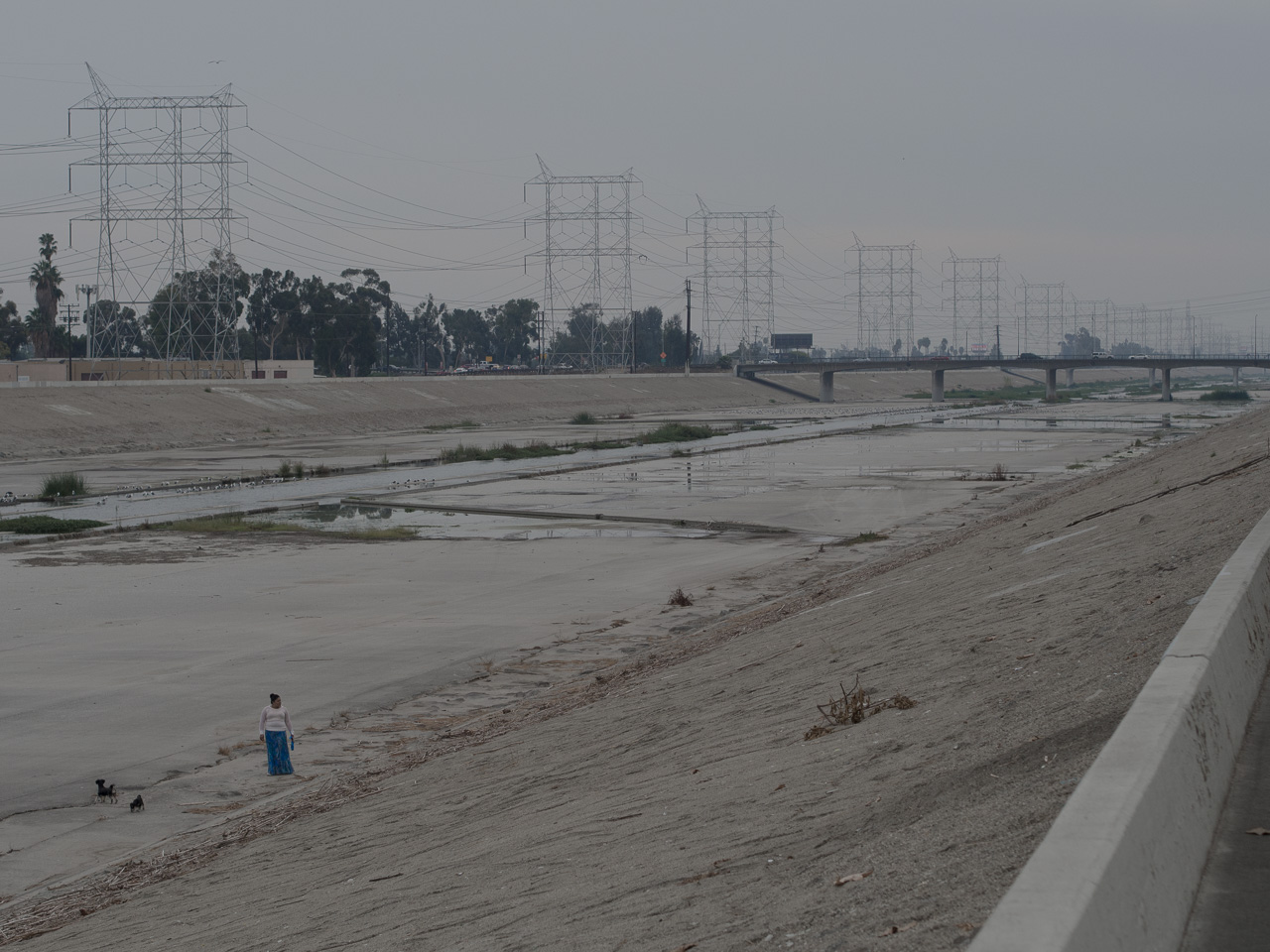
Gid was struck by the poverty evident amongst the splendour. Street walkers riffled through the bins, make-shift shelters filled hidey holes, and tents appeared along the concrete floodways. Shanty towns, where structures were covered with random sheets of plastic, that could have been straight out of India, filled areas of wasteland. Such ad-hoc homes were especially evident when we followed the cycleway along the enormous culverted drain – and each tent seemed to have a bicycle or several.
We’d chosen Cycle Route 90 – the USA Southern Tier coast to coast crossing, because during the fall it’s run as a commercial trip. Local ‘guided trips’ we’ve done before are picked for their scenery, points of interest and traffic free roads so we hoped this would be too. We would be cycling November to February, so we hoped staying well south would avoid frozen toes (and many mountains too).
This slideshow requires JavaScript.
To reach Route 90 we rode down the California coast, with eye watering camping costs but beautiful coastal views, to the starting point in San Diego, then turned eastwards and set out through California towards the desert. To our relief, camping costs plummeted, often being free and the occasional motel became affordable.
This slideshow requires JavaScript.
This was a different USA entirely. Small towns, widely spaced in the hills and sands. The days are short, so we often cycled through sunset, and occasionally met the dawn when we crawled out of the tent in the morning. Most days we meet at least one other cycle tourist, although most of them seem to be heading for South America rather than California. It’s a playground for the local big cities too. Motor bikes, quad bikes, buggies: big, medium and small career around sending out plumes of sand up behind them. Endlessly, we’re passed by towed buggies and all-terrain vehicles behind monster pickups and huge RVs. Unfortunately, while American freight drivers (“semis” mostly) seem responsible enough in passing or waiting, the RV boys seem unconscious of their width, bow-wave and tail suck; it’s a good job the roads are mostly wide and lightly trafficked.
This slideshow requires JavaScript.
With lots of space to leave things where they are, and a climate that’s kind to buildings, metalwork and even mummified roadkill, there’s lots of photogenic old stuff to take pictures of.
This slideshow requires JavaScript.
One disappointment so far, is that wildlife seems very timid. We’ve not seen much although, the humming birds were rather special and much too fast for our cameras . On the highway, there’s not even roadkill, until just recently a couple of flat & desiccated coyotes. Maybe morelive beasties will turn up further east.
Smaller, browner, pelican
Seen in the desert, medium size.
There must be loads more of these than we see.
Writing this, here we are in Wickenburg, AZ, a town of cowboys and rodeos – team roping capital of the world, it claims. But frustratingly, it’s Thanksgiving Day, so no rodeo today. Worse still, the local shops have run out of turkey, except for whole frozen ones. Chicken will have to do, cooked on the camping stove on the veranda of this comfy motel.
Wow – what a lot of photos we took in Australia – getting on for a thousand each. Well, here’s a selection. There’s even more wildlife photos a few of which we’ll upload to the Birds and Beasties pages someday.
The Scenic Views, Part 1
OLYMPUS DIGITAL CAMERA
OLYMPUS DIGITAL CAMERA
OLYMPUS DIGITAL CAMERA
OLYMPUS DIGITAL CAMERA
OLYMPUS DIGITAL CAMERA
OLYMPUS DIGITAL CAMERA
The Scenic Views, Part 2
On the Road
Victorian Rail Trail
Victorian Rail Trail
Victorian Rail Trail
Victorian Rail Trail local
Atherton Tablelands – a bit like Devon
OLYMPUS DIGITAL CAMERA
OLYMPUS DIGITAL CAMERA
A small road train. Note it’s politely passing right over – contrary to some stereotypes – they didn’t all though!
Nature meets rural meets urban
Sugar cane train
Farmers abandon old vehicles, like many places. They don’t rust much, and nothing grows on them. Forty years later, they’re still there.
How did they move the rest of the digger?
The Old Road. No, we didn’t.
Stoney Creek. A not uncommon name.
Yeppoon
Typical Queensland free campsite
Another abandodned railway
It’s a village. Honest.
Urban
War memorial, white wood church, American truck …the hat says “Australia”.
Our first view of Sydney Harbour Bridge
OLYMPUS DIGITAL CAMERA
OLYMPUS DIGITAL CAMERA
Yeppoon
I think this was Brisbane, heading in
Brisbane, heading out
Brisbane, again, I think.
Melbourne, well, St Kilda
Melbourne – lots of bicycles
Whale Watching
Hervey Bay, since you ask. Several times we saw whales from the coastal cliffs, down much of the SE coast. The humpbacks migrate that way.
Thar She Blows!
OLYMPUS DIGITAL CAMERA
OLYMPUS DIGITAL CAMERA
OLYMPUS DIGITAL CAMERA
There was some behaviour
OLYMPUS DIGITAL CAMERA
OLYMPUS DIGITAL CAMERA
OLYMPUS DIGITAL CAMERA
The Best of the Rest of the Wildlife
OLYMPUS DIGITAL CAMERA
Lesson one in sexing bats. A boy.
OLYMPUS DIGITAL CAMERA
OLYMPUS DIGITAL CAMERA
I’m ignoring you. Think it’s an immature Brahminy Kite.
Australians regard the ibis as pests, can’t think why….
OLYMPUS DIGITAL CAMERA
Dunno, Australia
White Bellied Sea Eagle
Guess!
Echidna – Long beaked I guess.
Goanna
Ok, it’s in a zoo. But it broke in.
OLYMPUS DIGITAL CAMERA
The Holiday Snaps
Raymond Island, first koala.
Passes the time…
One for the grandshildren -Oliver’s cross with Victoria!
We cycled only a couple of days in Bali, to Jimbaran, just south of the airport, for a comfy, cheap, tourist hotel, and especially, just round the corner from a really useful bike shop. That Surly Ogre with that bike packing kit was probably perfect for Sumatra.
From Bali we took a bikeless side trip to Flores and Rinca, where be dragons.
Clare in Bali
Gideon in Bali
OLYMPUS DIGITAL CAMERA
OLYMPUS DIGITAL CAMERA
OLYMPUS DIGITAL CAMERA
OLYMPUS DIGITAL CAMERA
OLYMPUS DIGITAL CAMERA
OLYMPUS DIGITAL CAMERA
Standard Indonesian Bike Fuel Station – Except the Balinese use vodka bottles!
Teamwork!
Clare in Flores
Clare on the Boat to Rinka
Gideon in Flores
OLYMPUS DIGITAL CAMERA
OLYMPUS DIGITAL CAMERA
OLYMPUS DIGITAL CAMERA
OLYMPUS DIGITAL CAMERA
OLYMPUS DIGITAL CAMERA
OLYMPUS DIGITAL CAMERA
OLYMPUS DIGITAL CAMERA
OLYMPUS DIGITAL CAMERA
OLYMPUS DIGITAL CAMERA
OLYMPUS DIGITAL CAMERA
OLYMPUS DIGITAL CAMERA
OLYMPUS DIGITAL CAMERA
OLYMPUS DIGITAL CAMERA
OLYMPUS DIGITAL CAMERA
OLYMPUS DIGITAL CAMERA
Clare’s Dragons
Gideon’s Dragons
OLYMPUS DIGITAL CAMERA
OLYMPUS DIGITAL CAMERA
OLYMPUS DIGITAL CAMERA
OLYMPUS DIGITAL CAMERA
Then we packed up, and probably marking the end of our most adventurous travels, left Asia and its bustle, noise, and low prices, for Australia.
Post dedicated to all our friends at Worthing Camera Club.
The limestone caves near Phetchaburi are lit up with coloured tubes. Beside the cave temples, there’s plenty of interesting drippy rock formations. But how to make a picture of them?
It’s a cliff, innit?
…and a bird…
Needs to be a bit more alive, perhaps…
Monster?
Add some human interest?
Ok, but only ok. And quite tedious, in a cave, without a tripod or flash gun. Hey, unlike an English cave, tripods aren’t banned 🙂 But I haven’t got one. My camera’s tiny detachable flash is, err, detached. And anyway no help, far too weedy, boringly white, and boringly stuck on top of the camera. So thank you Olympus for making a tiny lens that’s f1.8, that saved those photos. But I still had to get Clare to stand still for way longer than is normal. And can only shoot from an ideally placed stalagmite. And they’re not terribly exciting.
Which got me to remembering some of Worthing Camera Club’s winter lectures a few years back. Intentional Camera Movement is a respectable (ish) discipline that isn’t only “I forgot to bring my tripod to the bluebell wood”. So here are my Thai rocks:
This slideshow requires JavaScript.
PS: Most of those are colours as shot. A few are rather mucked about with in Lightroom.
I thought it would be interesting to see how the countries we pass through compare economically. Thanks to Wikipedia, it’s pretty easy.
Here’s a chart showing the Per Capita Income in each country we’ve passed through, or hope to pass through.
And here’s the same chart, adjusted for the cost of living in each country (called Purchasing Power Parity, or PPP).
PPP seems to have the effect of making the people in middle-income states better off. And Singapore.
We can even divide one by the other, to give us a rough Cost of Living Cycling. However, this is a bit rubbish, as in most of Europe, costs were kept down by camping. From about Bulgaria/Romania onwards, it felt a bit insecure rough camping, and hot – we really appreciated the comfort of a shower, so mostly stayed in guesthouses and cheap hotels. In tourist cities, that was often pretty cheap, but out on the road, I would guess that it very often was close to $20/night for a room for the two of us, irrespective of country. So far the most expensive nights have been Uzbekistan ($70 for a yurt), India (~$70 for a tent, ~$40 for a palace (really it was, gorgeous)), and Myanmar ($50 at two of the hotels, trading on scarcity). Not normally regarded as high-cost locations. The Caspian Sea ferry was also an expensive night, but did cover a fair bit of ground as we slept. The Tajikistan Toyota Tour was by far our most expensive week, but wasn’t exactly integral to the trip. And it didn’t include the (cheap) guesthouses!
Turkey, Uzbekistan and India have been most costly for souvenirs, not because of prices, but because of the wonderful handicrafts, and their availability, and perhaps more stop days, and maybe the timing of Christmas.
End of micropost!
(Note to self – master spreadsheet stored on cloud, in case plans change!)
















 2silvercyclistsdotnet