Into Serbia and Belgrade

It has felt very different.  We couldn’t read the signs and there are people bustling about in all the villages we’ve been through; street sellers at corners and along the roads, people harvesting small amounts of hay on the road side and people sitting on their seats outside their homes  and generally milling about.

We first headed to a larger town to get the currency sorted.  That done we headed away from the Danube and up a 8-13 % rather lengthy hill to reach the top of the national park.  The views were spectacular.


Cycling into Belgrade the traffic was initially rather heavy having got used to the minor roads through the countryside.  It’s a different skill set and you need your wits about you.  We were quite relieved when a Danube cycle way peeled off along the river bank.


Like all cities, Belgrade is very bustley but in Belgrade we’ve had to search harder for the outstanding architecture and city ‘treasures’.  The bins don’t appear big enough for the rubbish so there is a lot of garbage bagged up and left on the streets.  Bread rolls have been hung from bins for the people who are rummaging around for left overs and the lucky pigeons.  Off the main streets, like Budapest, buildings are often in a poor state of repair.

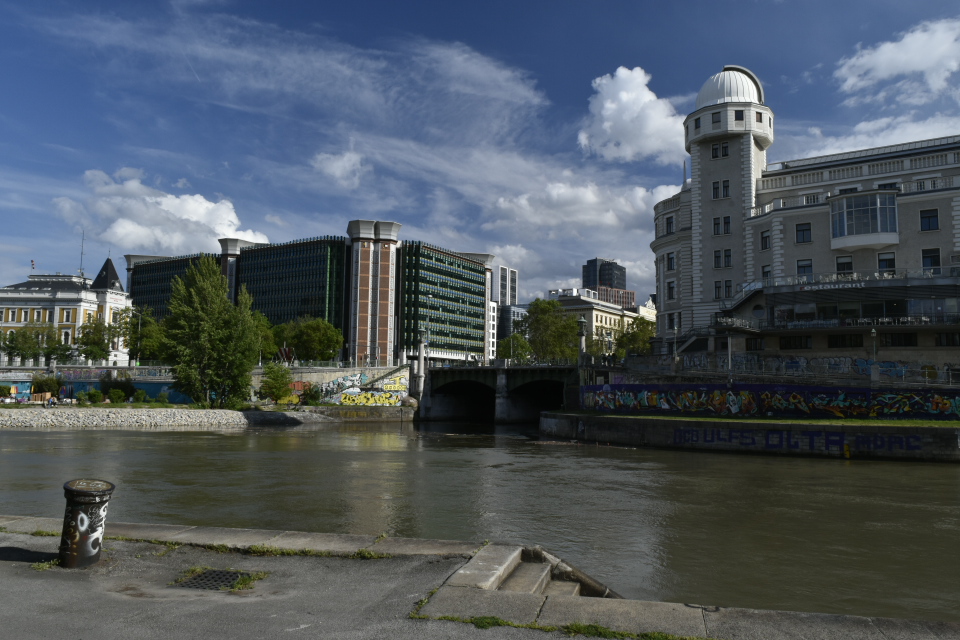
Again like a number of the cities we’ve been through, right back to Vienna, graffiti seems to be an accepted part of the street environment and there are large murals decorating some of the bare walls.


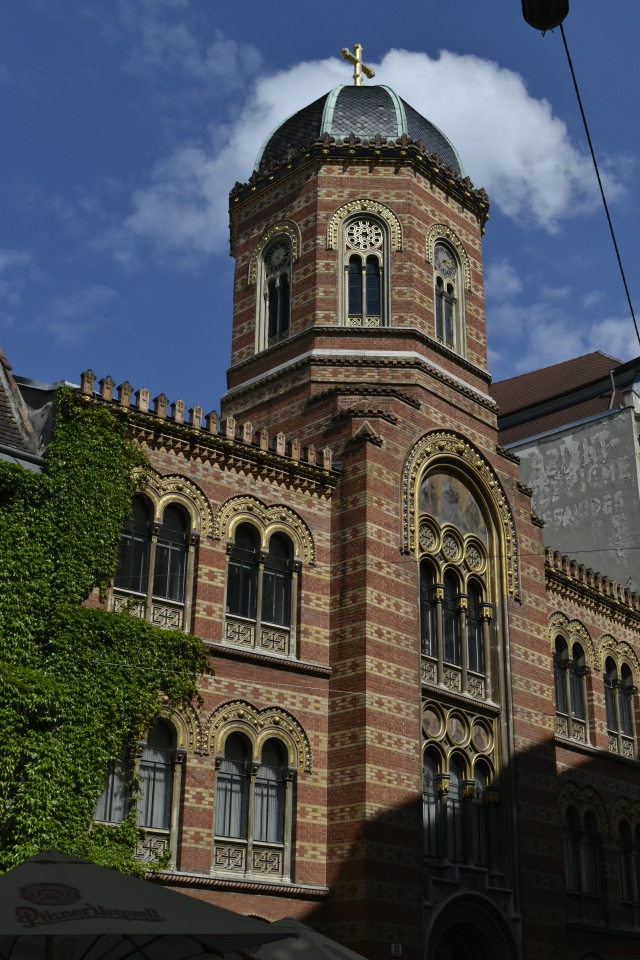
Two Serbian Orthodox churches, and one temple, in Belgrade.  One was highly decorated while the other was not but both are very beautiful in their own right.


Agricultural Observations

Agriculture and Wildflowers

As we’ve pedalled across Europe, several trends are quite clear.

Firstly, I’m writing this in Serbia, on 4th June. Barley in the fields is nearly ripe, and wheat is well grown. Walnut trees – there are loads – have their fruit half grown. The locals are harvesting cherries and strawberries in great abundance. So the seasonal effect of going south is clear. I expect in August everything here will be brown and dead, as John Bull revs up his combine harvester. It’s rather the reverse of our 2014 Kent to JOG ride, where we followed, then overtook, England and Scotland’s harvest. Added later: We cycled through the harvest in Turkey (June/July). Most of Turkey is quite elevated, so the harvest wasn’t as extra early as one might expect. In Uzbekistan (October) the grain harvest was long done. But at the end of October, in the Wakham and Panj valleys, it looked as if the grain harvest was only recently done, probably the growing season starts pretty late there.

Second, from France thru to Serbia, there’s a lot more wildflowers than are tolerated in the UK: England’s farmland seems sterile by comparison. There are differences as we travel- German and Austrian crops are weed free, but they have a lot of deep verges and wildflower hay meadows. From Hungary on, there’s still a fair bit of unmechanised farming and, for example, fields left fallow or poppies in barley crops, contrasting with occasional big, clean (sterile) acres, presumably where big Ag is getting involved.

Bird and Beastie Log has been moved to here.


Hungary and Croatia

Budapest was lovely, but also hot, tiring (cos of walking everywhere, especially hunting bike or gear shops!), and stressful (cos of visas). So it was great to leave and zip through the countryside.

The way out of Budapest was trouble free.  Our route took us along an island in the middle of the Danube where, at Rackeve, we found a pleasant spot next to the river for lunch and a swim. The river was actually warm here after several days of blazing sunshine as it isn’t a part of the main flow. A ferry ride got us back on the main land but immediately into problems with our route.

As the day was pressing on we were keen to make the campsite 10km further on.  We’d got used to, in Germany and Austria, that even if there was a main road we had to spend some time on there would be a cycle track along side it.  Not on this occasion.  The road was obviously rather new but not only was there no cycle track but bicycles were not allowed on it!  This lead to a trail of expletives from Gid and an instant search for another route.  Between the Garmin and the 1:400,000 map we hatched a plan; to go back through the village circle round using the minor roads and head back to the town where the campsite was.  Somehow Gid managed to convince me to take a slightly longer route which meant less doubling back but reaching the next campsite along the way.  If the navigation was correct there was a minor road out of the top of the nearby village that would by pass the main town and get us were we needed to be.  Firstly, Michelin’s minor road didn’t exist despite checking our location with some elderly gents, secondly, the loop round involved an awful lot of traveling north before we finally managed to turn south again.

After clocking up 127km, and originally leaving Budapest rather late, we arrived at the campsite after eight.  Mid tent pitching Zoë and Adrian strolled past.  They had taken a leisurely two days to reach this point.

Following our long day we had a slow start and ambled along the embankment.  We took another dip in the Danube and had an extended lunch break.  At 2:30pm the first of the thunder had started.  The sky was an ominous black in every direction and things were looking grim.  At that moment we passed an unexpected campsite sign.  Both of us were keen to dive in and get the tent up fast.  A storm last week had lasted 3 – 4 hours with some heavy rain and we were totally exposed along the embankment.  A speedy 10mins later the tent was up.  30 mins later the sun was out again and the ‘storm’ had passed over.  Amused by this, we twiddle our thumbs and wondered what to do.  The next campsite was 10 – 15 km further on, which was hardly worth moving for; the one after that was nearer 50km which too far to go, especially after yesterdays escapades with our route.  It wasn’t long before both of us were asleep, clearly in need of some extra rest.

Before going to bed we had investigated the immediate area and observed a herdsman taking his donkey, goats and flock of sheep to pastures new along the embankment.  We’d first witnessed this back in Germany and have seen it again since.  Whilst sitting across the small unpaved road from the campsite, at the waters edge we had speculated on the purpose of the two somewhat neglected pontoons.  Neither of us had predicted the sight we saw in the morning;  3 very large river boats were moored up, 2 in tandem.  Several coaches had also appeared to take the torrent of tourist emerging from the vessels.  Gid had wandered down to get a better look and was flagged down by a passing truck with two large tanks at the back.  It was very low on its springs and carefully negotiating the pot holes, advertising ‘Live Fish’ across its bonnet.  Musing over this while we ate our breakfast we also watched the shepherd ambling back along the embankment, stool under arm, with his dog rounding up the strays of his donkey, goats, and flock of sheep.  Had they seriously been gone all night?

The embankment route through Hungary has afforded us excellent views of the countryside.  On many occasions we have been looking out across well managed farmland, some of the fields are very large.  On one count there were seven tractors working on one field and the certainly weren’t crowding each other out.  Just occasionally we’d come across a cluster of bikes left in the grass in the middle of nowhere.  This led to a guessing game as to what they were doing there.  It was some time before we noticed the group of workers in a line, moving up between the rows of plants, hoeing the fields.  We’ve previously seen one elderly gentleman tottering between his rows of crops with a hoe but that was on a small field these workers were on an industrial sized crop.

_CTF1157

Gid whizzing along enbankment


Whizzing along the embankments where we are serenaded by crickets, bird song and, the occasional now, frog symphony is extremely delightful but on one occasion, when newly in Croatia, it went badly wrong.  We merrily took the embankment’s paved track immediately opposite a signpost, just like we have many times before, but on this occasion it lead to problems.  We skirted round the barriers, thinking nothing of it as it is regular practice, in the UK, where at times the cycle track sign is actually attached to the barrier; and in Hungary there were similar vehicle barriers with a tarmac cycle track laid round them. We stopped to ponder a bird of prey and its mate a little further off, both perched on a hay stacks,  (on a photo shoot back in England a similar bird of prey had been positioned on a hay stack because this was it’s natural habitat but we can’t remember what it was called), admired the hares without suspecting anything.  It was with great surprise when we arrived back at a minor Hungary / Croatia border. There was no route through and we were met with a barbed wire barrier.


Two cyclists approached on the other side, merely turned round and scooted off again.  Faced with this dilemma and the late time in the evening we decided to camp back from the border at the foot of the embankment on the recently harvested meadow.  Whilst eating our supper and considering a tortoise, a tractor appeared on the other side.  It stayed for a short while at the border before turning and disappearing.  It felt strange at the time but it didn’t raise any alarm bells.  We pitched our tent and went to bed – 3rd mistake.
We’d just settled into our slumbers when the tent was shaken together with gruff voices asking who was in there.  Gid emerged, I peered out behind him.  Two policemen asked to see our passports; recently used to cross the border there was no problem with these.  Having tried to explain how we came to be there the policemen were unimpressed making it clear we had to leave; a) the barriers had been ignored, b) this was not an official border crossing, c) we were in an area where hunting took place, d) there might be bombs in the nearby woods, and must leave immediately.
As the policemen waited nearby, we packed up rather rapidly.   Making our way back along the embankment one boar, which explained the stench we had passed earlier, and a couple of deer darted across the path.  By the time we reached the recommended town it was at approximately 1:30 am.  We’d disturbed numerous dogs along the way trying to find a pension or campsite that might be open but all to no avail. Turning up at the town at this late hour rallied all the strays into a united effort to herald our arrival.   We finally found a quiet spot tucked away safely for the remainder of the night, at about 2am.  At 7 in the morning, having made a speedy exit from our hiding spot, when the shops & cafés are open, the village was a much friendlier place.

We’ve since learnt that the Croatians don’t have any EuroVelo 6 – Danube cycle way tracks, we just use the roads.  So any sign, no matter what track it appears to be indicating, means the turning down the road.

The highway route has taken us away from the riverside and into many of the villages along the way.  The route to Ilok at the Croatia Serbia border was recommended by our Swiss friends, Zoë and Adrian, whom we’d bumped into again.  Despite the lack of cycle tracks it has been a good move as it is very interesting to get a glimpse of life in Croatia.  The streets we have cycled along have, in many ways, looked cosmopolitan.  They have had bungalows neatly lined up and, in the main, well cared for with attractive flower beds etc. except, every so often there is a bungalow in a serious state of dilapidation.  Gid’s theory is that this is probably be due to families abandoning properties back in the 1980s during the civil war.  It would certainly explain the number of houses that look abandoned and the water tower and telecoms tower we saw later, that each had several holes blown into the side of them, to the total ruination of at least the one that was supposed to hold water. The photo is of the telecoms tower – possibly still in use.

OLYMPUS DIGITAL CAMERA

Destroyed communications tower

Equally juxtaposed is when you get a glimpse into rear of the bungalows; they appear to be from a different world with chickens, animal pens and carts just like a farm yard perhaps displaying the dichotomy of new culture and old.

The people are very friendly, often waving us on or calling out hello.  Gid was highly amused when he raised his water bottle for a drink, in response, an oncoming lorry driver raised his beer bottle motioning a cheers salute.

Another lesson was to plan our border crossings better. A cursory map check of the Hungary Croatia border showed a town at it, so off we went, planning to camp a few km into Croatia. Oops. The town was entirely on Hungary’s side. So, no Croatian money! And it’s 5pm. The next border we got right, we stopped for the night in Croatia, spent all our Croatian cash on food in the morning, and routed in Serbia via an initial town, specifically to find a cash machine. Actually, in both Croatia and Serbia the Euro is widely accepted.
Very little sign of organised camping in Croatia, our second night there, at Ilok, we spent very comfortably at the Old Cinema hostel… with Zoë and Adrian.

To Budapest and a Short Stop

Off again.  As lovely as Vienna is it is great to be on the road again.
Whilst I was aware that the Danube is a very popular route I had never expected quite the number of people touring that we have met. Some days we’ve played leapfrog along the way with other touring cyclists where one or other of us has taken a break whilst the other whizzes past. On some occasions we have arrived at the same campsite for a couple of nights. With one couple we’d both taken time out in Vienna & our paths have just crossed again. This creates a great sense of comradery.  Equally, at times there have been 40 or 50 bikes lined up outside beer gardens or, at a random junction, 30 odd cyclists with many groups consisting of entire families.
Cyclists have entire routes with thorough signage & on one occasion a mirror was placed on a tight corner.  As we have moved on from Germany and Austria the quality of the tracks has deteriorated.  Here in Budapest there are  very few cycle paths around the city.  Mixing with the traffic adds another element to the cycling
As we’ve travelled through the countries I’ve been very interested to see how local people seem to have very long allotment or garden strips.  This has been evident since Germany and maybe earlier on.  Some of these strips have vegetables, fruit bushes or trees much the same as you’d see on a English allotment but many have a variety of different things such as  horses, chickens, ‘country garden’ flowers and shrubs and some a combination of the above.  The strips are quite skinny in comparison to their length so it looks very odd to see a horse, stable,  cart and bail of hay, on this long skinny strip.
On route to Budapest we enjoyed a short day taking a lunch time dip in the Danube and arriving at our campsite, in Esztergom, by 3pm.  Listed in Neale’s guide book as a delightful town we set off to explore the castle on a hill top, numerous churches and the usual cobbled streets.
After two days with some heavy rain & arriving at the campsite in a pretty sodden state, we’ve moved into a hostel for the  next three days that we’ll be spending in Budapest.  This gives us the added security of knowing that our kit is under lock and key and a  chance to dry out.
First impressions of Budapest are that it is awesome.  The Houses of Parliament are stunning.  Budapest is  quite small in comparison to London therefore the museums, grand hotels, monuments etc. are very near each other which has quite an impact, as in every direction you look, there is something stunning to see.
Now we’ve been here for a couple of days and moved off the well trodden tourist route another aspect of the city is coming to the fore.  Many of the back streets, whilst they can have very interesting little shops and eating places (we passed a street market area which was called A Jewish Street Eating Market) there is also a high degree of dilapidation in both the buildings, many needing cosmetic rendering, pointing and general repairs while others need more structural rebuilding, and the roads/paths.
We’ve visited a number of the key tourist sights which have been very splendid and also done a couple of museums and places of interest one of which was the main Jewish synagogue.  This was attached to a museum which outlined the impact of the Holocaust on the Jewish communities in Hungary and how they tried to secure their Jewish historic artefacts and culture through the years of persecution.  This, together with a wall recording the Jews who perished during this period and a memorial tree with every leaf naming a person, were very moving and powerful experiences.  The synagogue, whilst in principle similar to a church, was a very different and magnificent building.
The second museum we visited was about the torture of the Hungarian people during the Second World War and the Russian dictatorship that followed.  Again, this was a very moving and powerful portrayal of the impact it had on Hungary as a nation and the specific impact on citizens, families and communities during these times.

Last Photo-Call for Vienna

Well, that’s it, tomorrow we leave Vienna, albeit one of us will have to rush back by train on th’ appointed day, to collect visas. So, here’s a final photo-roll from Gideon’s pics.

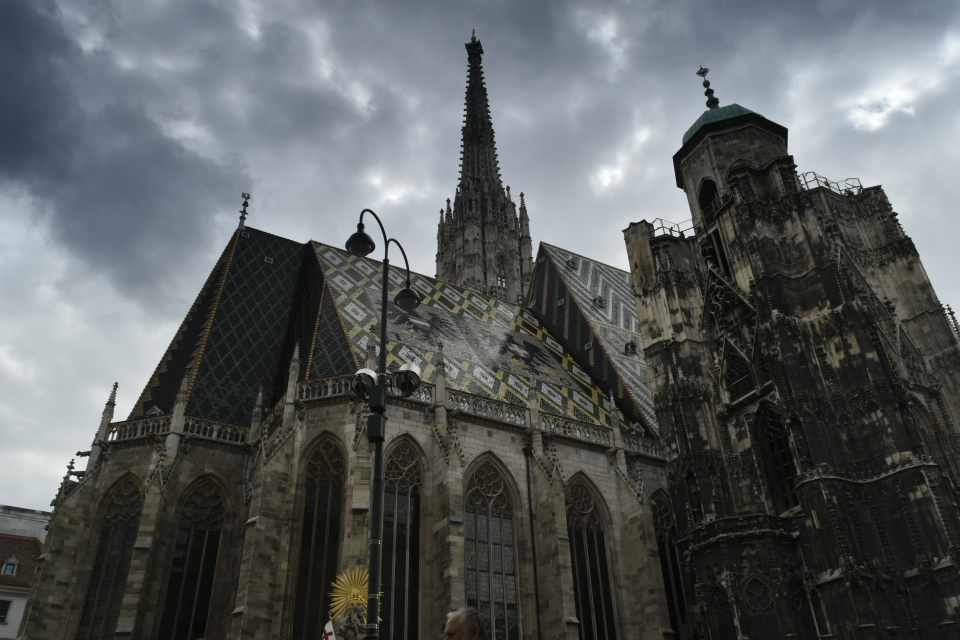
A view of St Peter’s dom, hiding the bits in scaffolding or not cleaned yet.

The Belvedere, we couldn’t quite get to the purpose of; it seems to have been basically a summer house, Hapsburg-style. Compared to many of Franz Joseph’s (later) creations, it is relatively unornate.

These fine fellows’ forefathers must’ve carved a lot of the fine stonework. No call for it today. Instead, they apply a superb level of craftsmanship to Vienna’s pavements (sidewalks). You could’ve played snooker on this patch, I swear they were polishing it. Nothing like Murphy’s “hit it with the back of a shovel’n’run”.

The Kaiser/Emperor was never going to take up cycle-touring. The court was often in travelling mode, but it wasn’t choosing titanium sporks. This is how they packed the candlesticks. Actually, the final decades of the Austro-Hungarian empire did coincide with the invention of bicycle and indeed cycle touring.

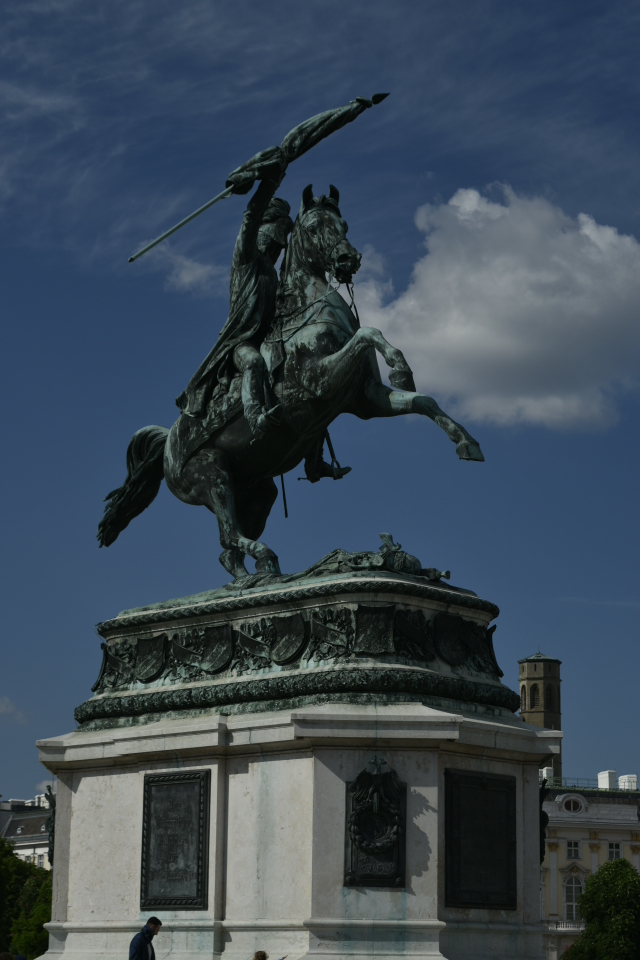
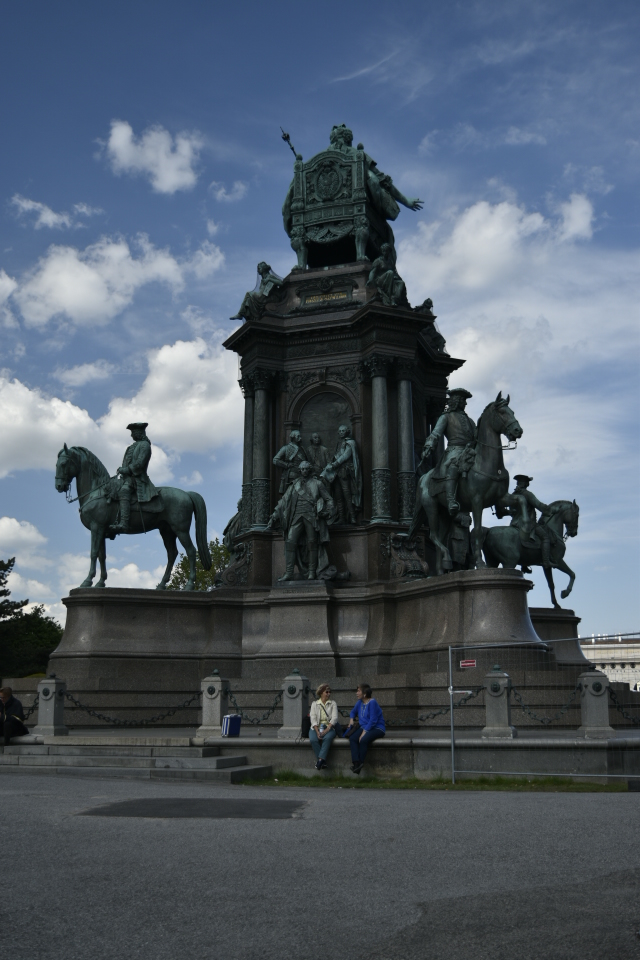
Vienna

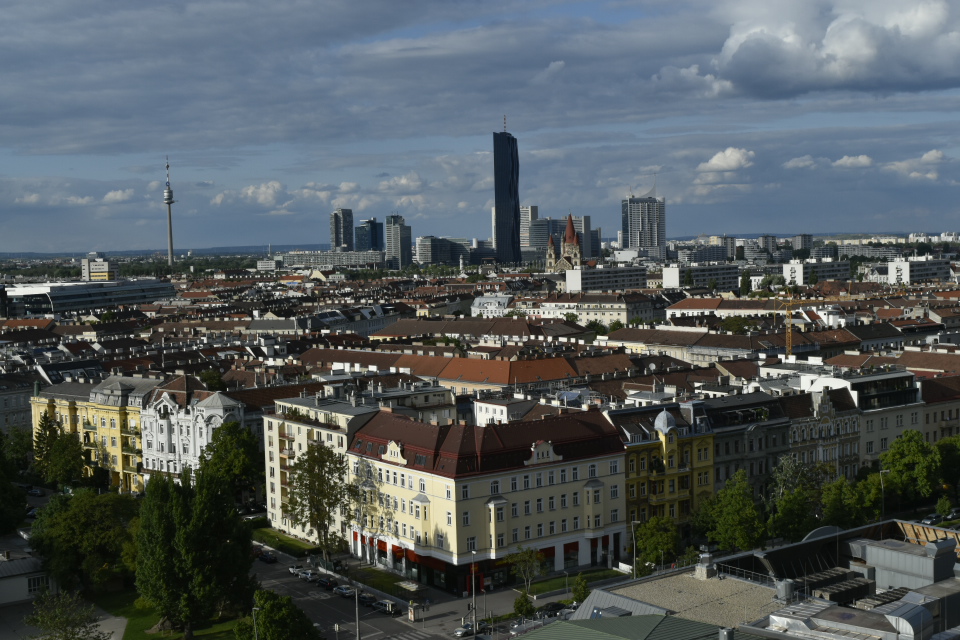
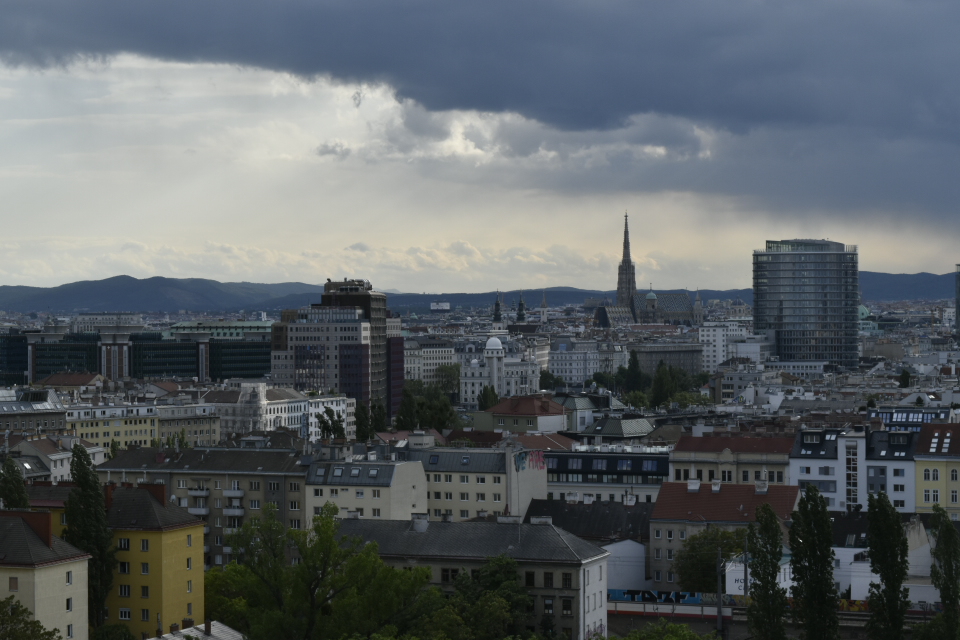
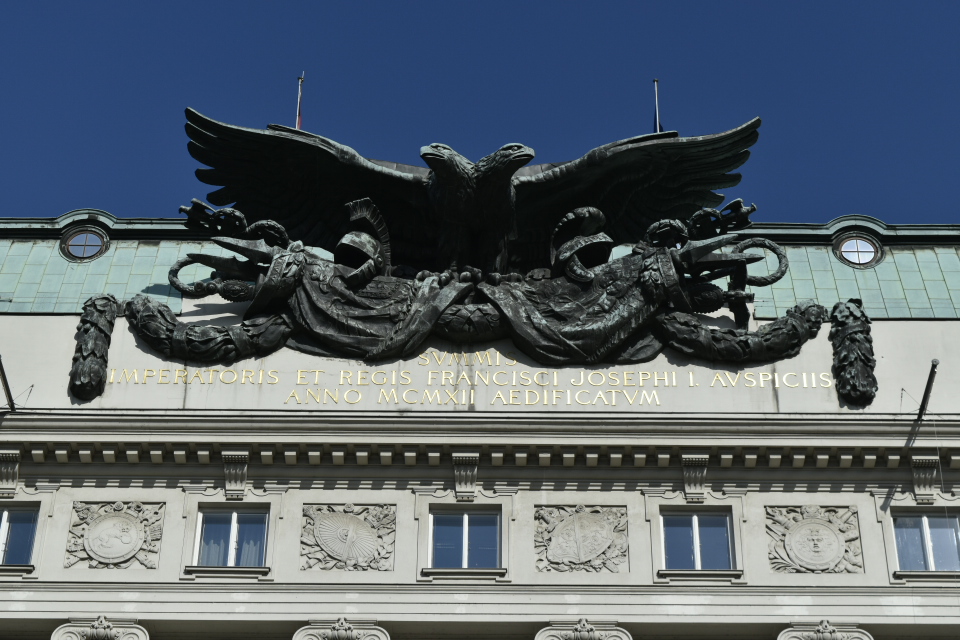
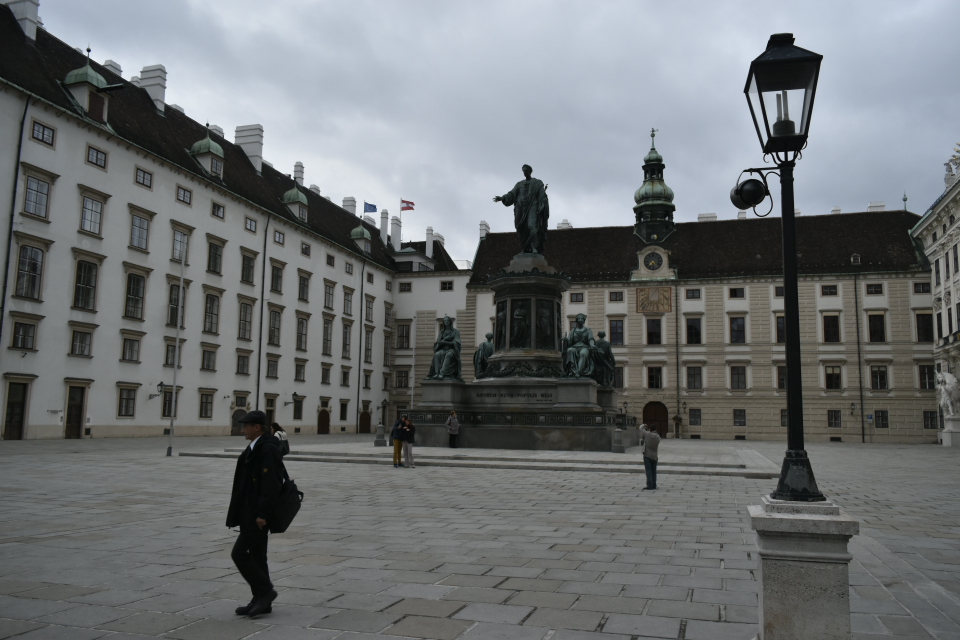
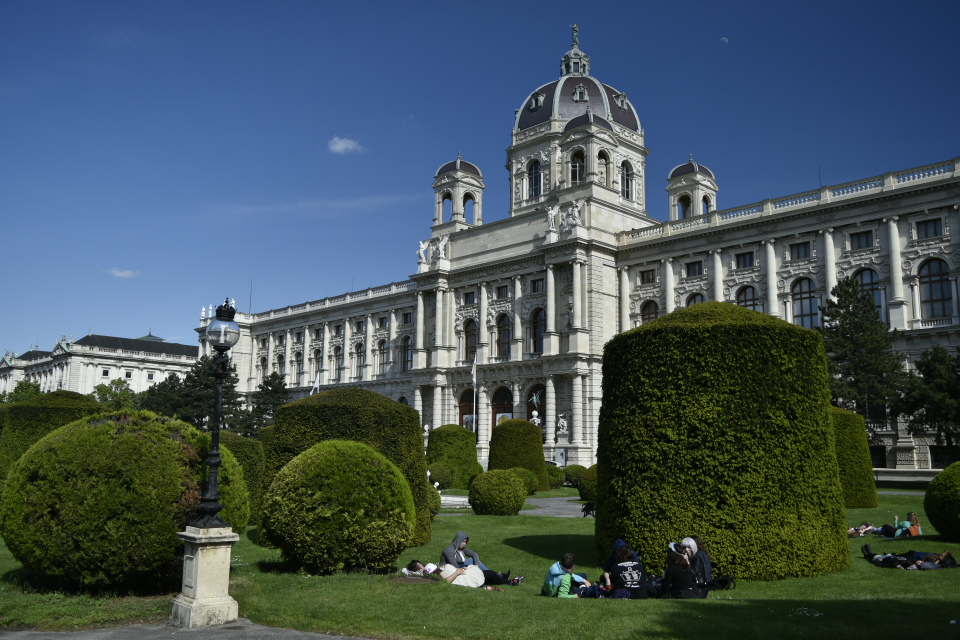
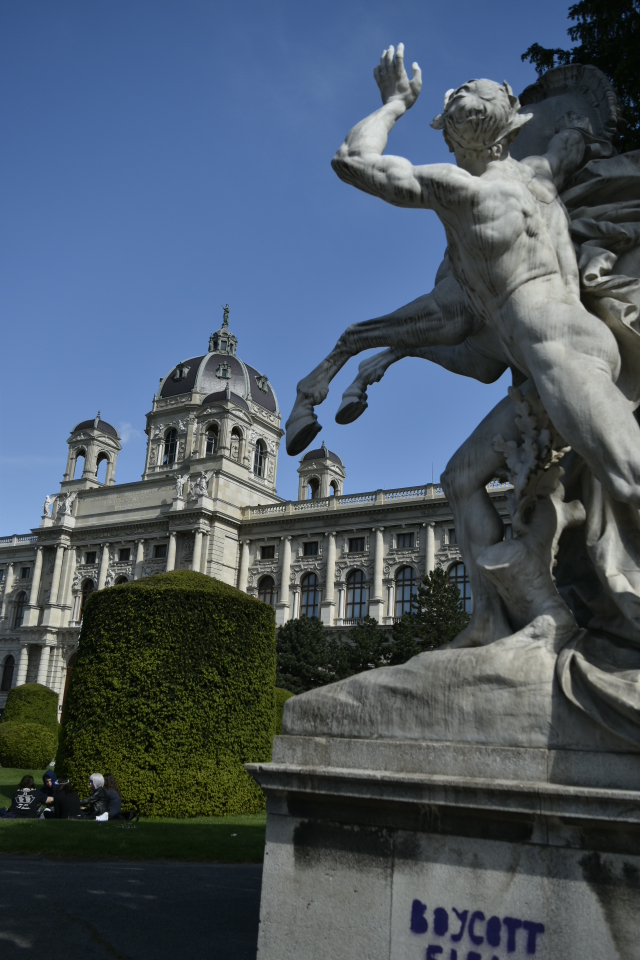
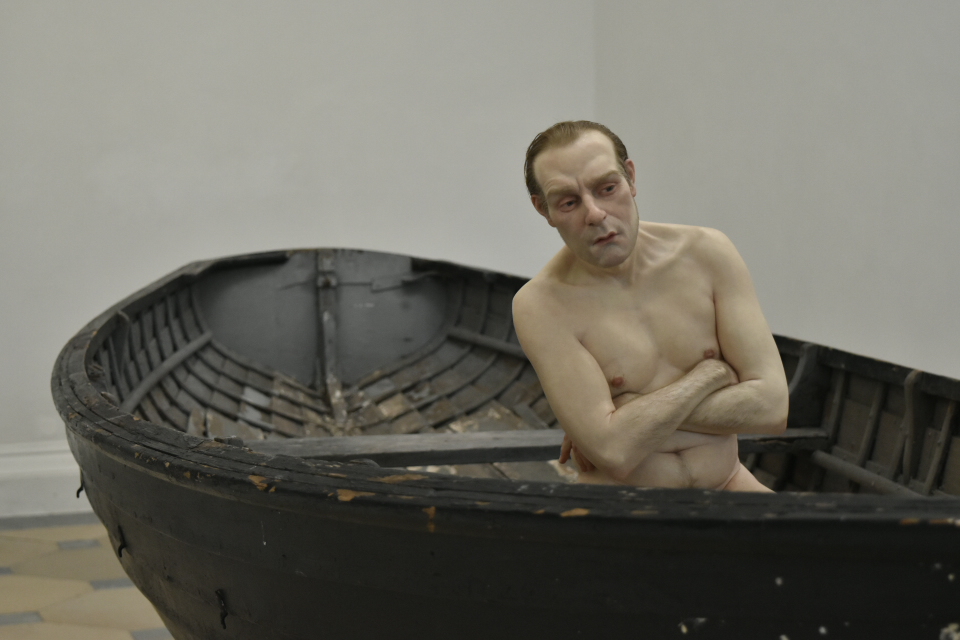
With a few days to wait we’re appreciating some of the many tourist atractions and fantastic architecture here in Vienna.

image

image

From the streets of Vienna.

image

image

image

image

image

This is our second day of sight seeing. Because Monday is a Bank Holiday we’ll have to do another one.

A Day In Vienna

image

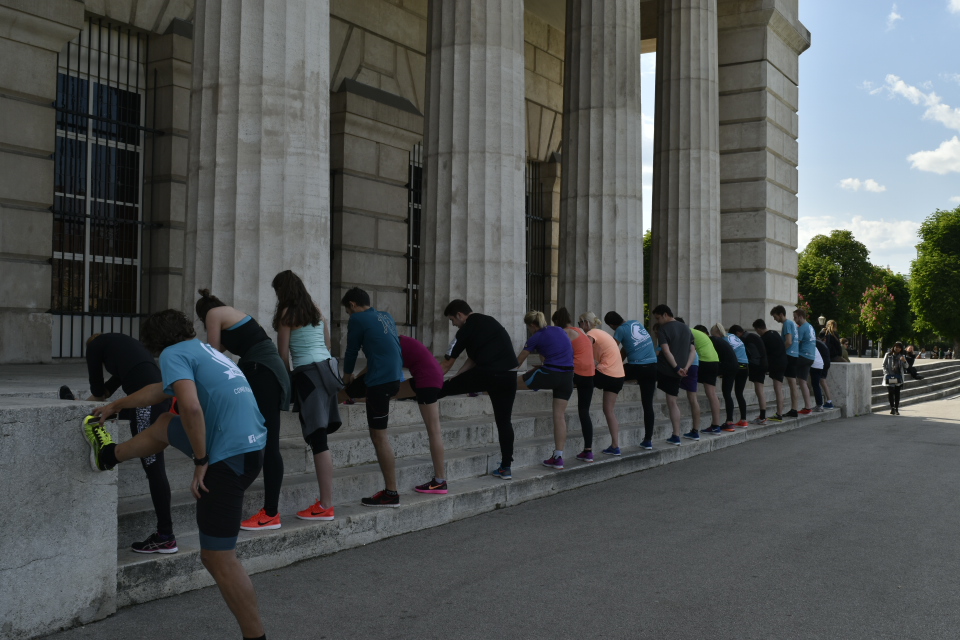
The Vienna running club limbering up.

image

We had always planned Vienna as a substantial stop, as all embassies are here. Then, in (I think) Deggendorf, we had the most wonderful bit of luck. Clare had got chatting with Monika, a solo cycletourer going the other way, aiming to reach the North Cape over three months. We were able to pass on a few tips about Norway (such as waterproof socks, value of; old post road, steepness of), and helped load maps.me onto Monika’s tablet, as we’d found it great for finding campsites, while not online, which she’d found an issue. Then Monika offered to let us use her flat in Vienna. Wow. Thanks Monika. Much nicer than a pension, and helps a lot with the budget. And helpful neighbours Helga and Andi let us in and set us up.

So: Friday: Get up and work out what to do. Revive visa research memories, and reread recent email from helpful David at Stantours. Started revising schedule based on current performance. Decide first priority is to get Uzbekistan visa. Check process (big form) and embassy opening hours: drat, it shuts at 12, in 30 minutes, no chance. Next opening is Wednesday. We’d better be ready…
Thus, into Vienna for sightseeing, bike repairs, and a few bits.

Bike shop #1, looks promising and quite different from German bike shops. A row of sleek racers fills the front, then MTBs, then utilities. The shop looks like it’s been here for decades, resembles an old fashioned chemist, with cabinets of wooden drawers and a counter. Few parts or glitzy clothing visible, though a glass case holds Campag Record kit, like jewellery. An old gent with fine moustaches comes to the counter, then fetches & presents a drawer containing Shimano dynamo hubs, 36 hole, with alternative axles. Usable at a pinch, but basic models, draggy, heavy and needing different spokes in the spares kit. We demur, and he suggests a few 100m up the street.

Bike shop #2, we hit lucky. It’s a more modern shop, but again, ungermanish, these urban Austrians clearly skip the utility jobs in favour of drop bars and carbon everything (Well, the utilities still fill the streets, but it is a workday). And the staff are expert conversationalists in English. And, bingo!, some of the stock bikes bear SP hubs. So, a new one is ordered, it seems we can get this job done in under a week, even with a bank holiday.

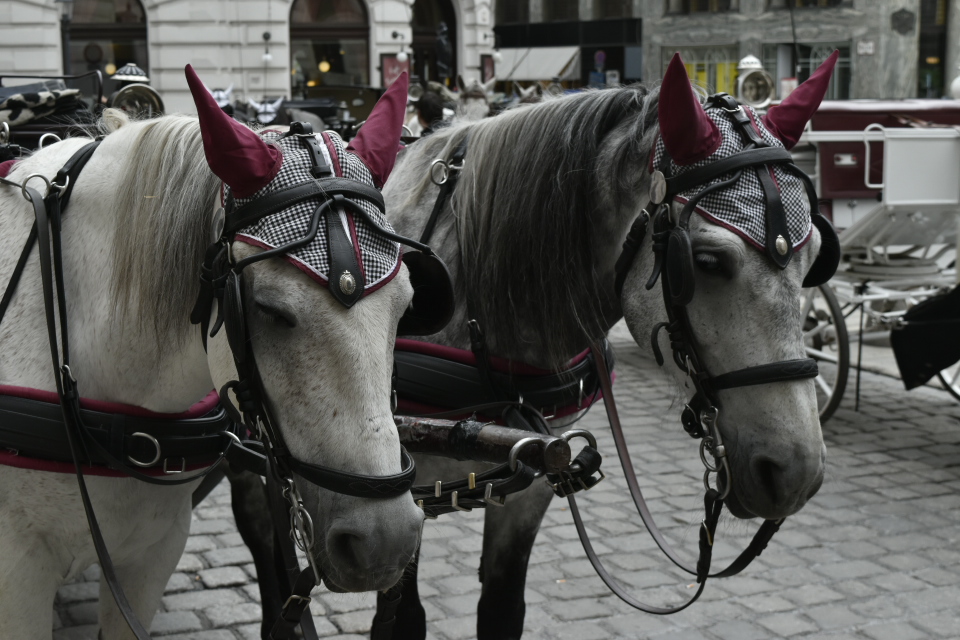
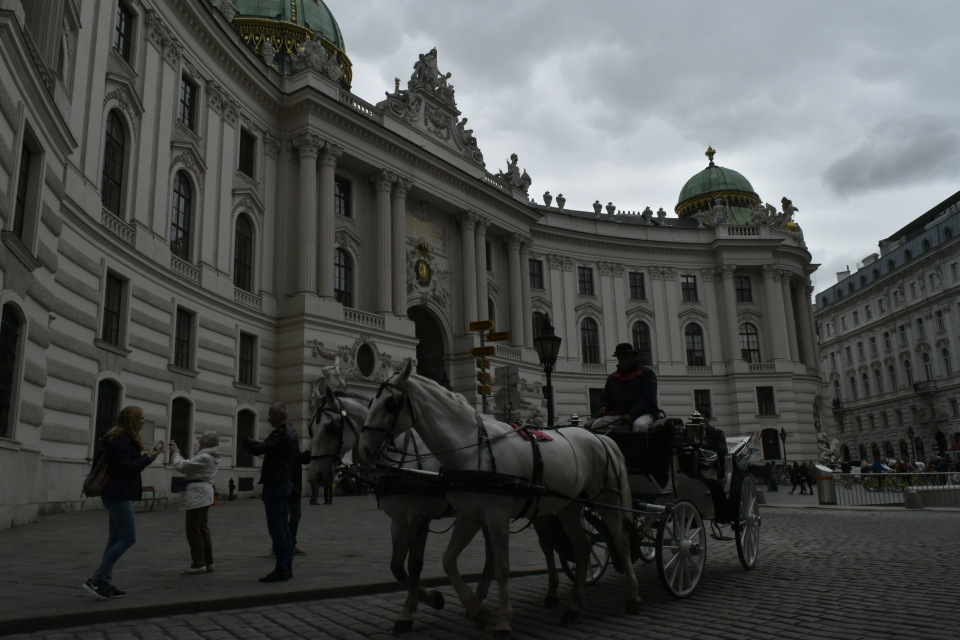
Then onwards, to the bookshop (maps & phrasebooks), and a few clothing refinements. And gawping at the huge array of spectacular buildings of the imperial past. And avoiding being run over by tram or elegant horse-drawn fiacre.

Now, curiously,  after all this frantic activity, we have an enforced long weekend of inactivity. Hmmm.

image

image

image

image

image

image

image

image

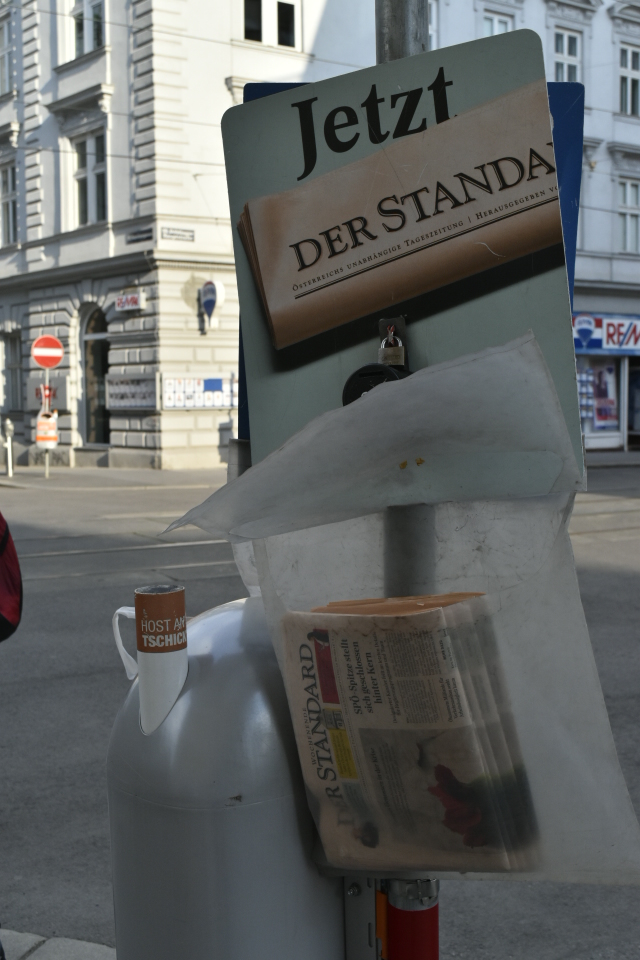
There are newspapers and some magazines for sale on street corners.

image

Along The Way To Vienna

We’ve reached Vienna.  We had a couple of full on days with headwinds but arrived before the rain set in.

image

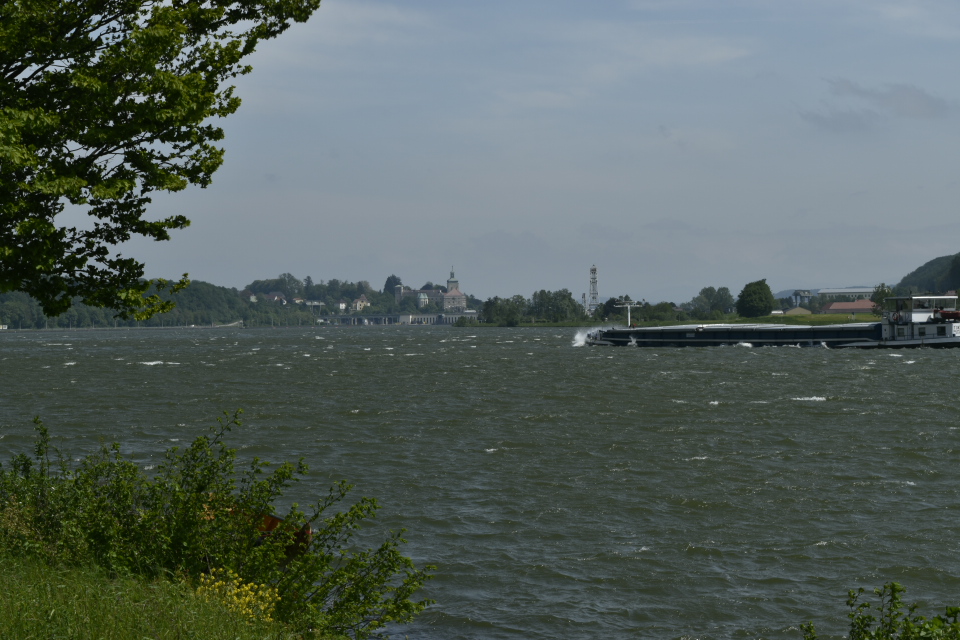
White horses on the river and a bow wave breaking on the barge.

We have been stunningly fortunate to be able to stay in Monika’s flat near the center of Vienna. Monika is busy cycling to North Cape & very kindly allowed us to use her flat.

The route has been very smooth, staying quite faithfully to the  bank.  This has worked against us in the strong headwinds we have had these last few days as there was no shelter. Some days we could only grind out 15kph or so, and 80km days have been hard work. Sunny & warm though. The penultimate day before Vienna, there were white horses on the river, really a stiff breeze.

image

But the last day, weather broke, misty and dull, few drizzly showers, but less wind, and we covered 117km to Vienna without hardship. It tipped down overnight, but we were snug!

image

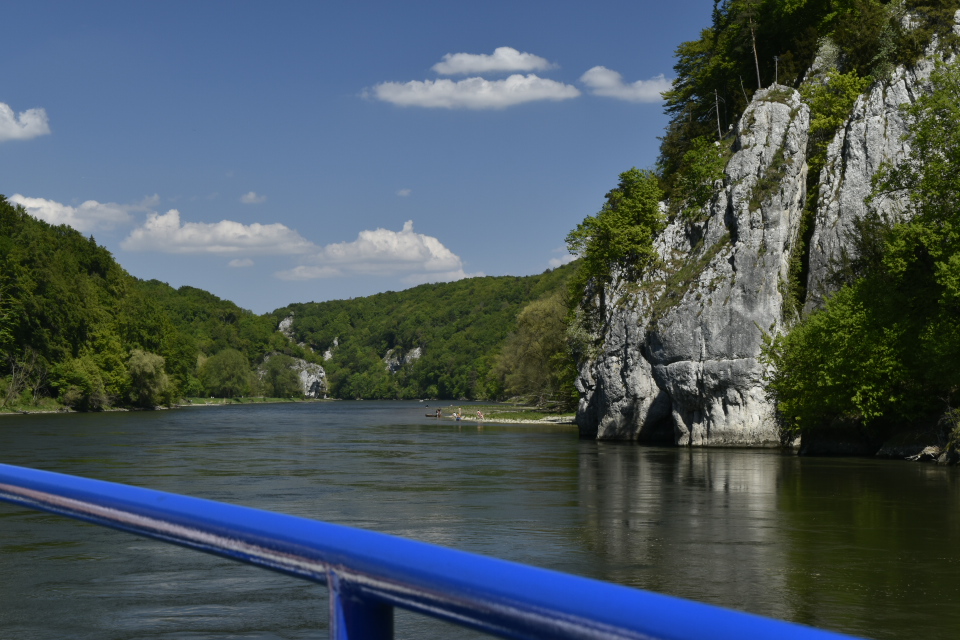
Broadly speaking, as we approached the Austrian border the Danube changed character.  We took a boat trip through the famous “breakthrough” gorge section where every prominent feature was named.

image

This rock is called The Maiden.  She looks rather pregnant to me.

The river continued with a narrow passage and steep hills either  side on into Austria where it eventually wiggled round the ‘great meander’ before widening out again, as we progressed further.
image

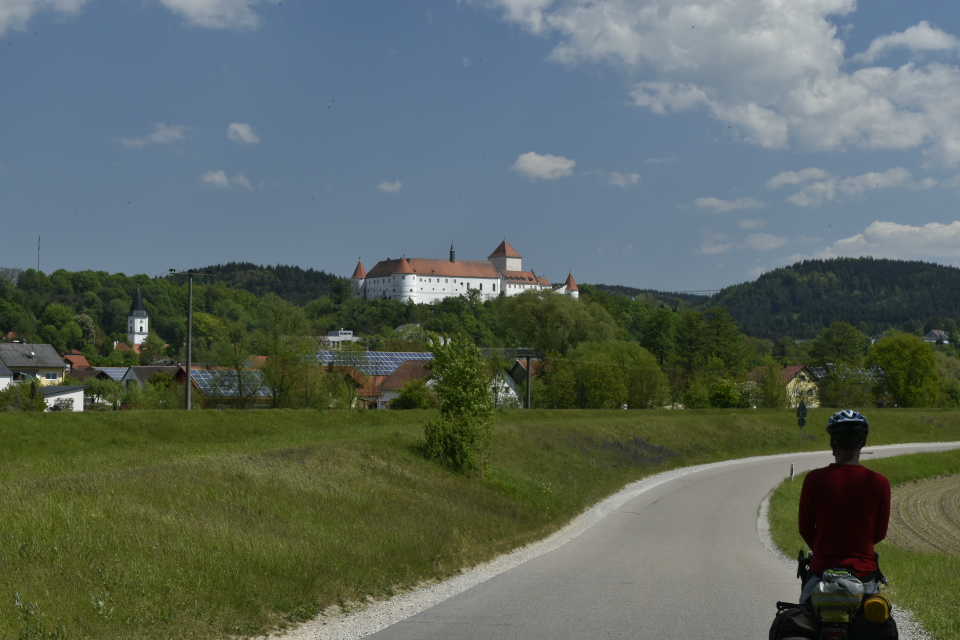
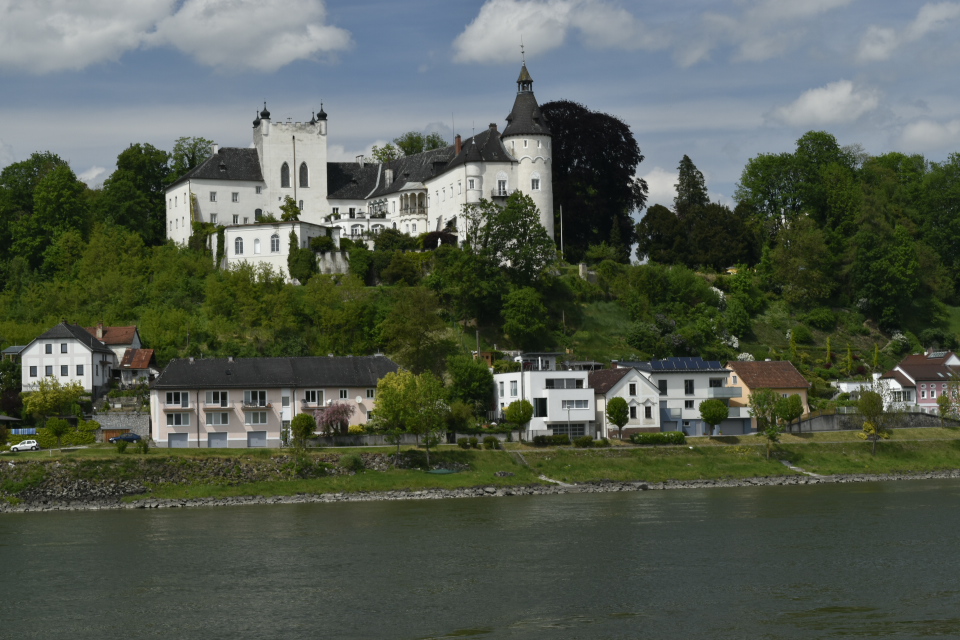
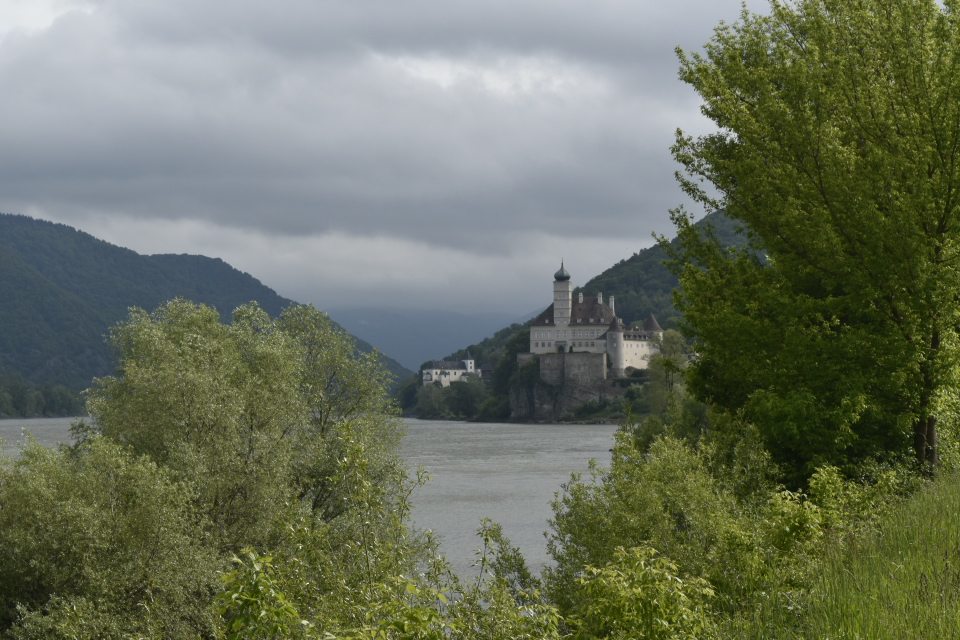
There were many beautiful castles, monasteries & churches high up on the hill tops through this section commanding excellent views of the river, that can be seen from miles away.

image

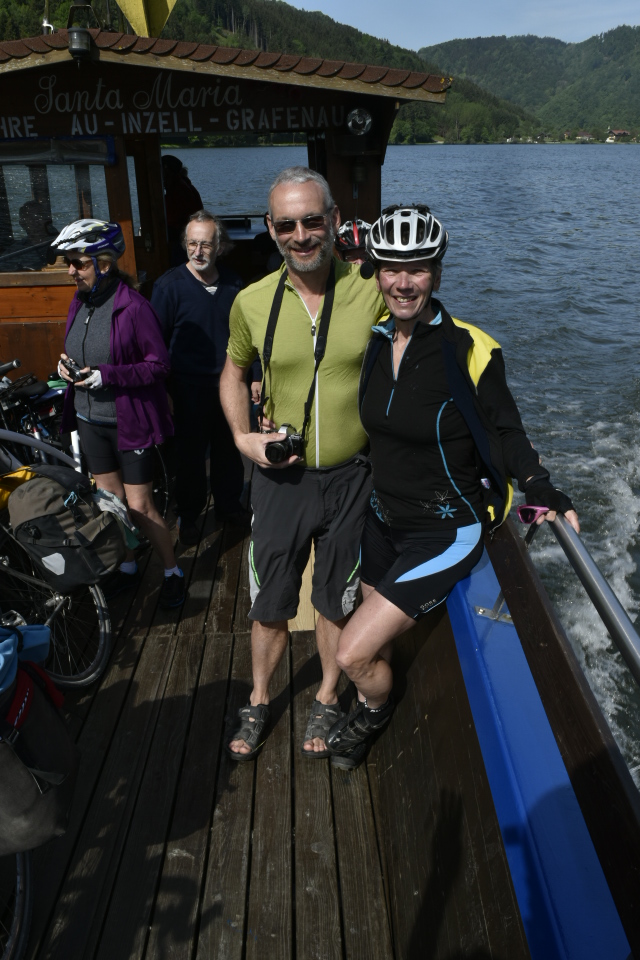
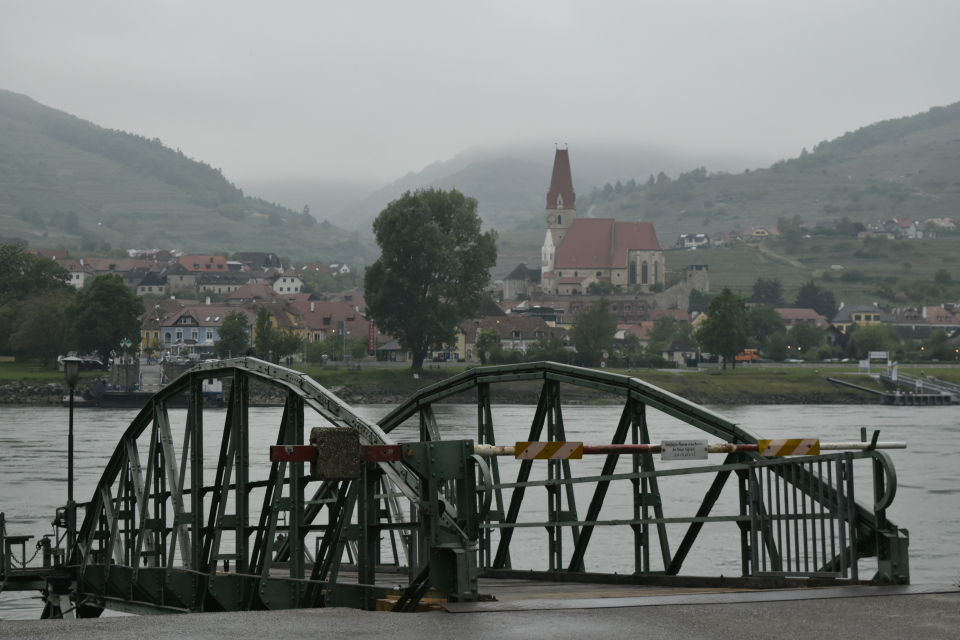
There are a lot of ferries, many taking bikes, well, there are a lot of radfarrers following the radweg.
image

The radweg runs on both sides, and one day we took ferries three times, not entirely necessarily. At €2.50 each pp, it made some dent in the daily budget (Which is about €30 each per day).

image

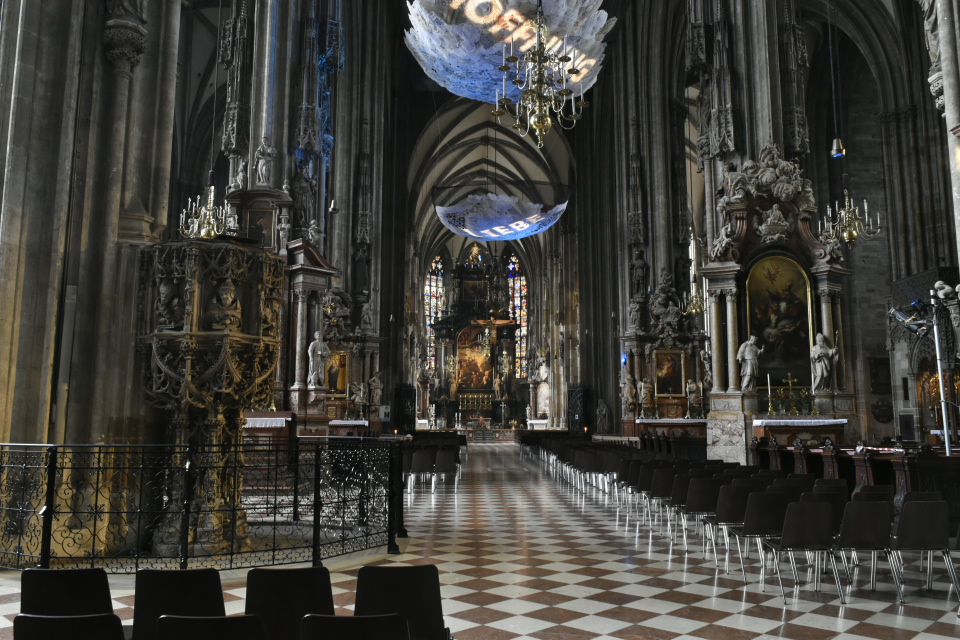
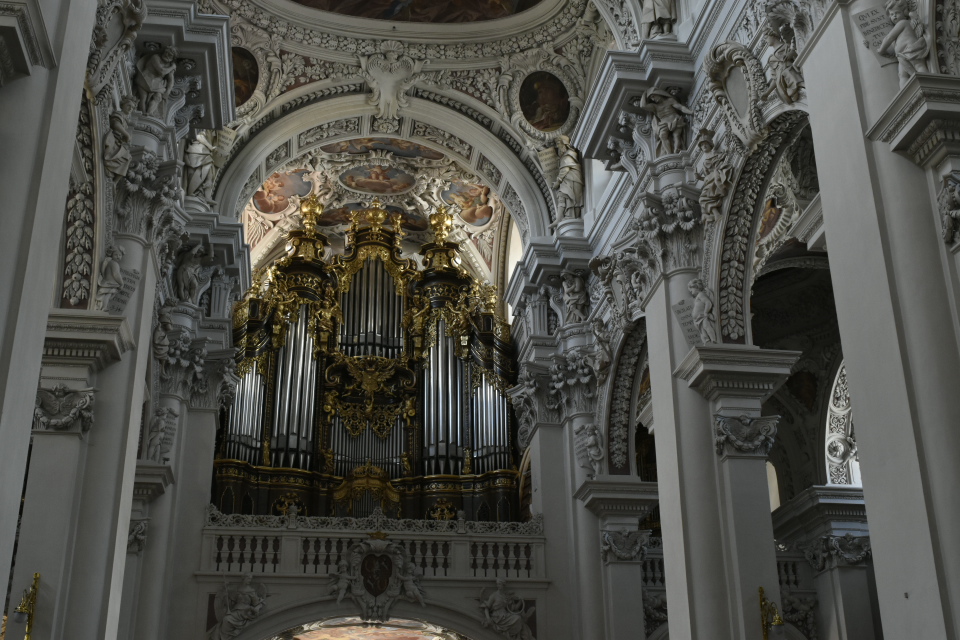
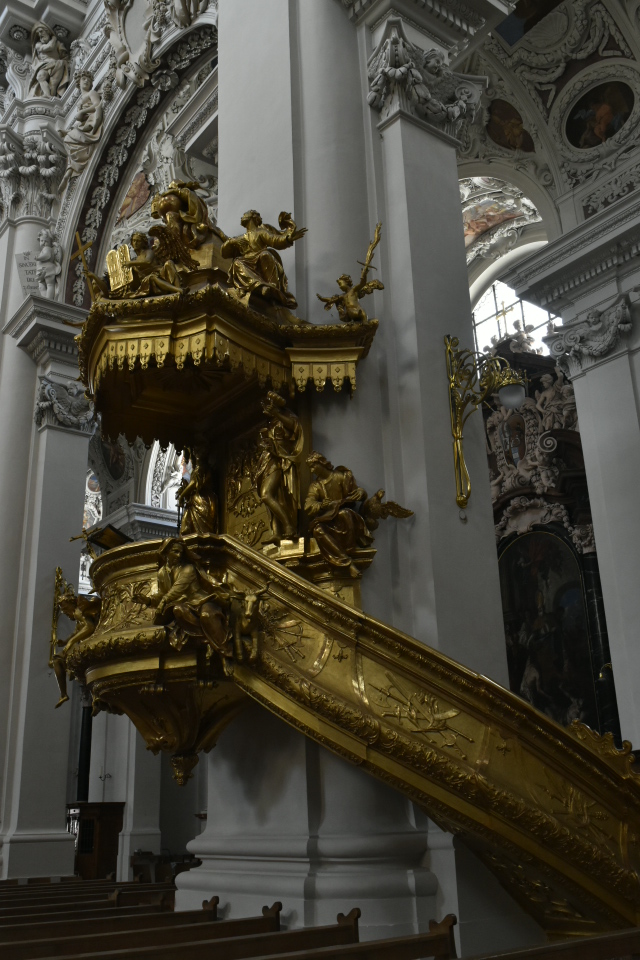
We’ve been inside a number of the churches when chilling out in the town centers & they are all very spectacular. The stone carvings much more extensive and, well, floweryer, than in England. We also remarked on the changing styles of church spires.

image

image

Since France really, we have seen little evidence of local rural life. Although we have frequently passed through agricultural land we’ve seen very little activity.  In Austria the crops have changed from arable into orchards and vineyards, although these are in small strips.

image

One older man in a leather apron was using a pitchfork to load hay onto a small cart & another was wandering across a good sized field of seedlings with a hoe but I had expected to see much more evidence of more ancient ways of life.  I guess it will come as we travel further east.

Ulm and the Start Of The Danube

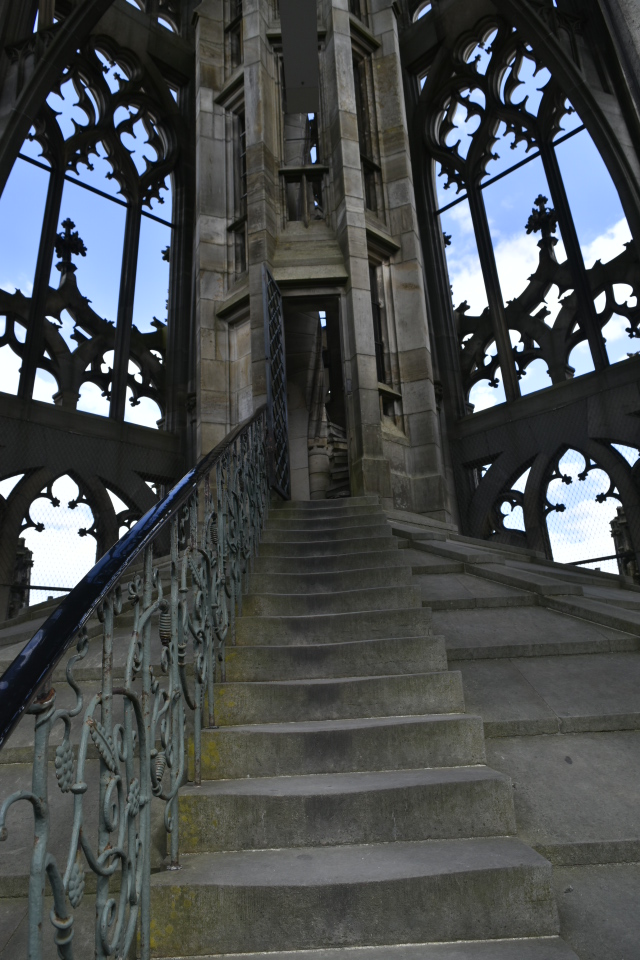
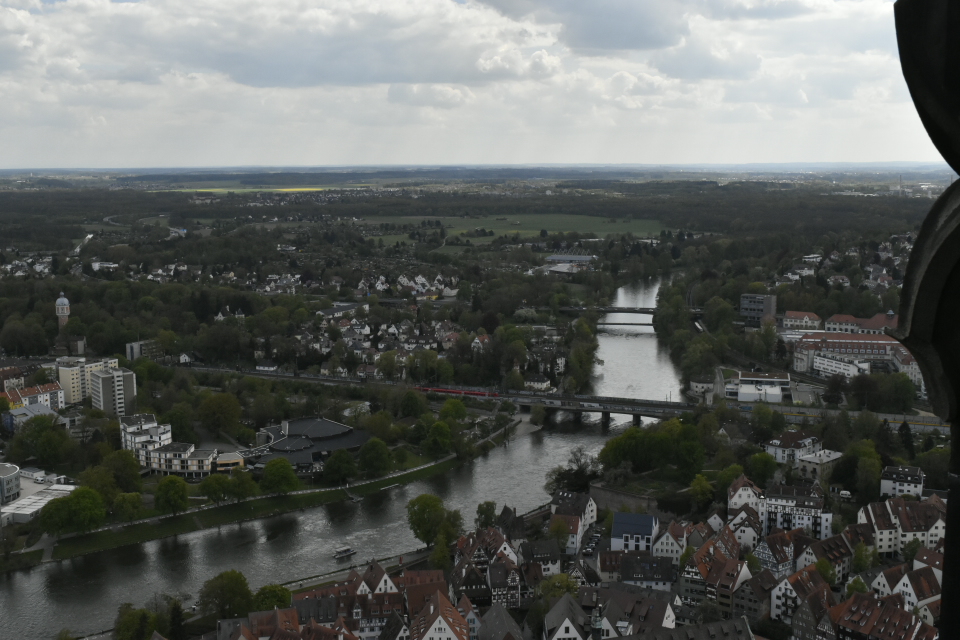
My introduction to the  Donau was on a day trip into Ulm.  With the chores done we turned tourist & climbed up the 768 steps to the top of Munster, the largest church tower in the world which had spectacular views of the city, countryside & River Danube. Last year Ulm celebrated 150 years of completion.  Cologne also celebrated the occasion whilst noting the old rivalry saying, congratulations to 150 years & 4 metres.

image

Approaching the last of the stairs.

image

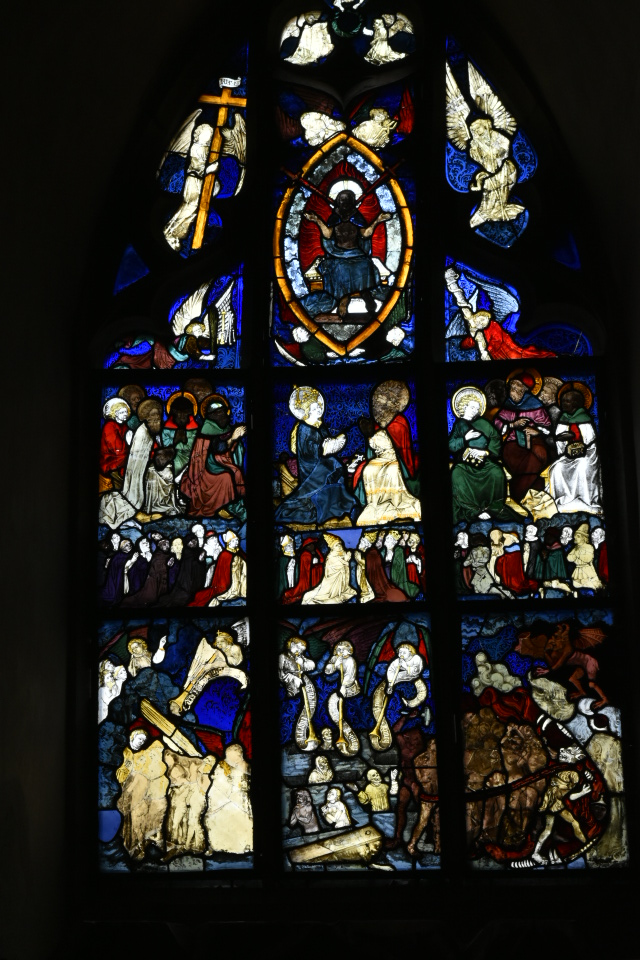
One of the ancient stain glass windows in the Ulm church.

image

View from the Munster (Minster) in Ulm.

image

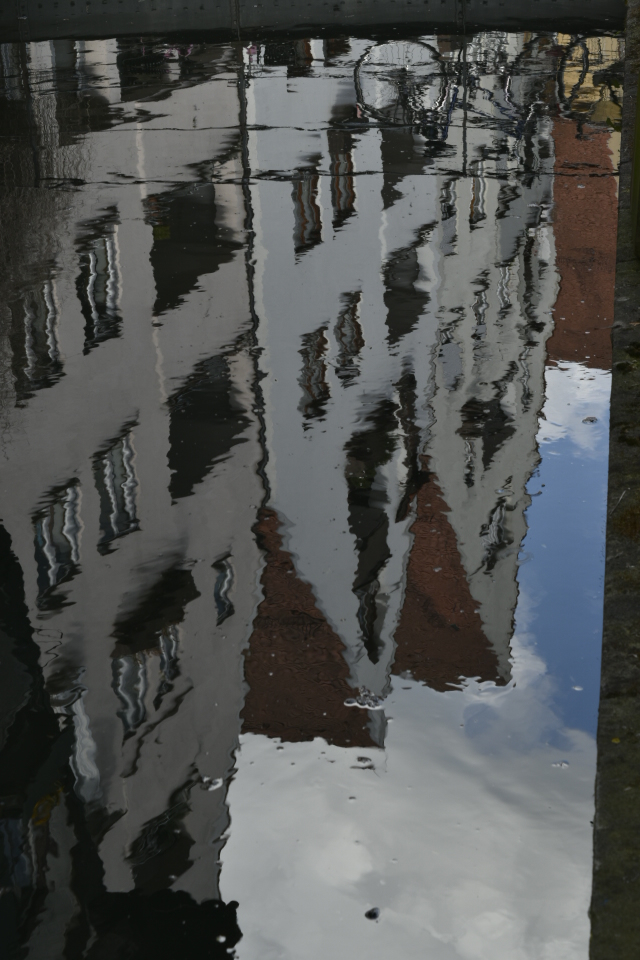
Reflections in the water ways through the old town in Ulm.

Both of us had expected to follow the river quite closely but having cycled many Sustrans routes in the past, where the North Sea Cycle Route goes through York in the UK, we should have known better.

Gid has had a flat tyre, in fact it’s an old one (an instant patch) that has failed after 9 months use, 6 / 1. Gid always gets the punctures, tee hee, but I have killed my down mattress by deflating it when kneeling on it.  A baffle broke & the inner tent looked as if there had been a snow storm.  Gid has also had gear failure on his bike, apart from the on-going shimmy, that dominates his packing proceedure and many hours of cycling, he has had a bearing brake in his front hub.

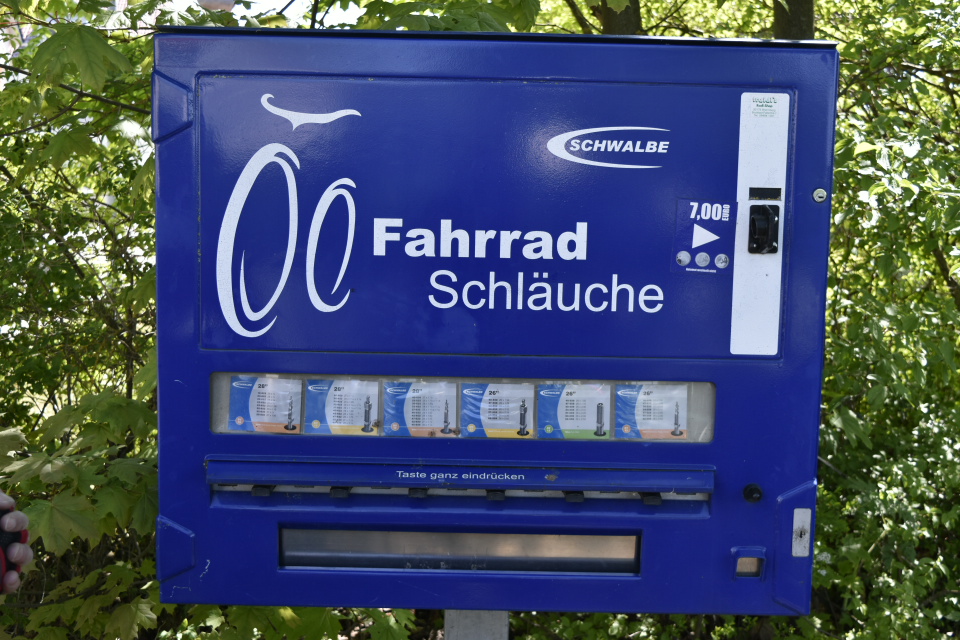
Along the route and generally scattered around are street dispensers selling inner tubes.  Gid hasn’t needed to purchase one yet!

image

As well as the stunning views and numerous castles along the route we are notching up a list of animals we’ve seen.

image

So far: far more hares than rabbits, snakes, a slow worm, deer, numerous buzzards that seem to follow tractors like the seagulls in England, to name a few. There is also a frequent cacophony of frog ‘song’.  Once one frog starts they all get going until it eventually quietens back down.