A night in a yurt at Ayuz Kala

We heard about this while in Nukus, the manager at the hotel there helped us make a rather un-firm booking (as we weren’t sure of our travel speed). In the end it was a fairly easy ride, and we got there in plenty of time to ramble around the ancient fortress of Ayuz Kala (or Ayuz Qala or  Ayuz Kale), next to the camp. We also met there a party of French (d’un certain age…) on a tour organised with coach transport and daily rides on a fleet of hire bikes – seemed a nice easy-going option. They were the first of many French tourists we met in Uzbekistan, there seems to be something of an affinity.

The ancient fortress itself was lovely, especially in the evening light. The main Ayuz Kala looked down upon two others, called Ayuz Kala 2 and 3.

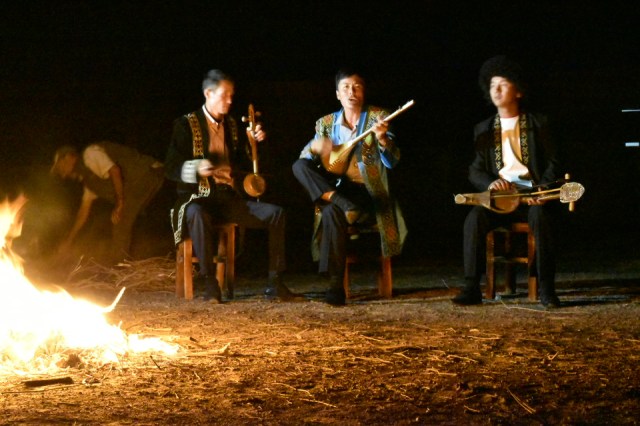
After returning from the fort, and a rather splendid supper – this being an altogether more civilised form of touring than cycletouring – we were treated to a concert of Karalkakpakstan music. We’re not sure if this is a standard part of the package, or only because of the presence of a film crew.

_ctf2297


The Aral Sea, or rather Not the Aral Sea

Sorry folks: This posting from the beginning of our time in Uzbekistan is published out of order, after some ‘later’ ones. We went on this taxi trip during a rest day at Kungrad.

Kungrad (also transliterated as Kongirot/Qo‘ng‘irot, all of which seem an improvement on an old name of Zheleznodorozhny) is not a major, or even minor, tourist town, but for a road traveller entering Uzbekistan from the west, it’s the first town of any size (see end of the last posting).

This western area of Uzbekistan is also known as Karakalpakstan, which in some senses can be regarded as a different country, with its own language, Karakalpakstani. We realised, too late to take much of a photo, it has its own hats, too – giant fuzzy wool ones, making the wearer resemble Michael Jackson circa 1975, if not usually so cute. As discussed in earlier postings from Georgia or Azerbaijan, in this part of the world there’s a complex overlap, or often difference, between the citizenship of the states, and the identity of individuals. There’s significantly more edge to being, for example, a Tajik in Uzbekistan (thus an Uzbekistani, but not an Uzbek), than being, say, a Scot in England, assuming you can work out who is such (Sorry Nicola). We were told by one local that Kyrgyz and Tajiks can be distinguished by nose size, and it is true that in the four ‘stans we visited, one can roughly distinguish different numerically dominant facial types. But just in case this doesn’t work, each ethnicity has its own hat as well.

Kungrad is about the nearest place on the main west-east road to the Aral Sea. The owner of the place where we stayed was happy to arrange a taxi excursion to Muynak, previously a significant port on the Aral Sea, now a desert town. To actually set toe in the remains of the sea involves a much longer road trip, substantially off road (If I remember correctly), we couldn’t face the hours in a car to see not much, so we settled for Muynak.

It’s rather a sad place, as you might expect. The town has helpfully lined up the abandoned hulks near the war memorial.


After Kungrad, we cycled on to Nukus, capital of Karakalpakstan. It has one tourist attraction – an outstanding modern art gallery. Where, naturally, we didn’t take pictures.


Ignorance is bliss – Van Golu to Dogubayazit

The big bus dropped us off in Tatvan, at the western tip of Van Golu, at about 5am.

_CTF0332

From there we cycled to an early stop at Adilcevaz. A small town trying to make the best of its scenic lakeside situation.

The next day’s ride took us off the north-east end of the lake to Muradiye. We stopped on the edge of town to ask a man in a van where the centre or an “oojooz otel” might be. He turned out to be a policeman (yes, that is a holster!), and promptly led us to the town’s teachers hotel, for another comfortable yet economical night.

For a while now a few people have been saying cycling in Turkey is dangerous.  But then so is cycling in Romania, India, the Stans and numerous other places.  It’s been difficult to ascertain why!  Firstly, it was Zoe and Adrian, who were selling their bikes in Istanbul and flying across Asia & going to continue their trip by hitch-hiking round India. Secondly, there was the man from Istanbul who thought we were mad cycling in his city but didn’t mention else where in Turkey.  His concern was linked to the drivers. However, Secil, from the bike touring store in Istanbul, advised us to take the southern route through Turkey so that we could enjoy the sights with no mention of any problems. And indeed, away from Istanbul and especially it’s developing third airport, traffic has been light and the roads feel safe enough.

We’d also done our research on the British Government site too, checking where it was ‘safe’ to go but this info., although explicit in saying where we needed to avoid, did not expand on the information and give reasons. We had assumed it was linked to the Syrian troubles as the restricted areas are down south near the border and we’ve seen more and more refugee camps – all small – as we have travelled further south. So we had fast tracked, by intercity bus, out of the strip of Turkey that was between the marked problem areas on the UK site. Safe, we thought.

Ramo, our guide in Malatya, advised us not to go near Agri, north east of Malatya,  because of trouble there but again, he didn’t say what kind of trouble. That swayed our decision to go further east & up the main road avoiding this town altogether.
 We arrived at Muradiye, happy that we’d done the first part by completing the eastward section, and now we would be turning north. However, standing at reception of the teacher’s hotel, a man in hospital theatre clothes said, ‘Why are you here? Don’t you know what’s going on here in Turkey?’  I replied rather lamely, yes I did know what was going on in Turkey, overlooking the word ‘here’ , assuming that he meant in Turkey generally, and the attempted coup, as opposed to this specific area.

We set off the following morning, with a couple of sight seeing spots to visit on the way, in mind.

Having done the visits and got the photos it was nearly lunch time.  We stopped at the next town, Caldiran, to get some provisions.

While Gid was getting our lunch time feast, an off-duty policemen came and asked where we were going.  I showed him on the map.  His response was, ‘It’s over the mountains, did I realise it was over the mountains’.  His English was very good so I joked saying, of course it was over the mountains, you can’t get anywhere in Turkey without going over mountains. He then explained that there was active guerrilla warfare in the mountains we would cross.  He carried on to explain that we would be fine.  They weren’t fighting tourists but don’t stop!  If someone tries to stop you or talk to you, we must keep going and not stop. This he stressed several times. It’s not clear if our 5kph uphill speed counts as going or stopped. The trouble spot was 25 km away, he’d  said. We would see soldiers on this route but that was normal, so not to worry about that.  If we had a problem phone 155.

We didn’t manage to swallow much of the lunch.  The pass reached an all time high for us at 2644m, but we took very few breaks, anxious to keep going.  It’s amazing what adrenalin can do. At first we saw a watch tower high on the eastern hill top.  This we now think may have been the Iranian border.  Shortly after, we passed armed soldiers  perched high up on an out-crop on the western side,  who, like everyone else, called ‘hello’ and waved. Thankfully, although in two places the road was constricted, presumably to facilitate road blocks, there was some traffic on the road which felt reassuring. So, not many photos from this spectacular ride…

As we passed through the higher part, the more immediate threat seemed to be dog attacks.  We’ve had a few weeks of peace from dogs but today they were back with a vengence.   The dogs, singularly, in 3s or bigger groups, didn’t get any closer than a metre or so away but that was far too close as they ran at us, often wolf sized and baring their teeth. Finally, Clare had enough and jumped off bike , grabbed her dog stick and went on the rampage.  This seemed to do the trick until the next lot arrived on the scene, game for a chase. These were not random dogs, each mini-pack was associated with a small flock of sheep and, usually, the small boy or boys in charge. When there was an adult shepherd, we didn’t have a problem.
The children, at times now, rather than just being keen to wave and say hello, are begging: “money money, money”. Well the boys do, not girls, but in this part of the world it seems to be the 10 year old boys who are out and about.  This was worst in the high pass, and got better as we descended, but it was capped, as we arrived at Dogubayazit, when two lads started off begging then progressed to persistently hauling on the backs of our bikes.

After a nights sleep we were determined to keep a balanced outlook so decided to visit the tourist sites just out of Dogubayazit.  The Ottoman – Ishak Pasha Palace,  built in 1700, was spectacular.  No need for bikes, a dolmus was only 2TL each, each way. The over looking castle was curious as it seemed to be a wall, with occasional towers , around the mountain top, with nothing inside, but climbing up it gave spectacular views of the palace.

There were quite a few visitors, but all appeared relatively local. We got there in a moderately crowded dolmus. The top carpark was largely used for picnicking and Bbqs. We really did seem to be the only exotics, although we saw a French registered car there too, but likely the owner was a Turk who lived in France.

While there, we very definitely heard automatic-gun fire coming from the mountains. On returning to our hotel we rechecked government warnings. The UK website was still the same – we were safe! The New Zealand site, on the other hand, was more cautious and gave specific towns, a number of which we have passed through, as well as saying all of Turkey was high risk and to be avoided. Hmmmm.  We decided to visit the local police station which is currently behind barricades, with armoured vehicles with guns on top, parked at the front, 50 odd metres from our hotel, for further advice.  They were quite explicit that we should not be cycling in this area and were prepared to accompany us to the local bus station to help arrange bus transport out.

This we did the next morning – dolmus to Igdir, then a mini-coach to Kars in north east Turkey.

Out and About in Malatya

Malatya and its surrounding area was probably second to Cappadocia in the “Must do and see in Turkey” lists on web sites.
Although we had set off from Goreme with every intention of ‘doing’ the Mount Nemrut area it started to look doubtful.  Firstly there was our get out of Turkey quick response to the attempted military coup.  Equally, we’d now struggled up one of the what appears to be many minor road 2000+metre passes and knew it would take us a long time to reach the area. Especially as Mount Nemrut itself was surrounded by  3000+ metre high mountains.
Plan B kicked in resulting in Ramo, recommended on the internet, picking us up from our hotel in Malatya to take us on a one day tour of the area.
First stop was the Roman bridge – Cendere Bridge. Having passed many dry river beds it was good to see water flowing.  This gave the locals the opportunity to demonstrate Turkish car cleaning.  Drive into the river and throw buckets of water over the car and the job’s done.
Our second stop was the ancient Kahta Roman castle.  Looking anything but Roman; it was nearing the completion of a renovation program which was going to leave it gleaming.  It had, in fact, been started during the Roman times and like many ancient buildings it had been expanded, redesigned and revamped over the centuries.  We later looked down on the castle which gave a much better impression of how extensive it was and how it was built along a ridge.
From here, just down the road, we visited Arsameia, summer residence of the Commagene rulers in the 3rd century BC. A number of rock carvings depicted scenes of the period and a couple of caves were well worth exploring.  Being the highest point in the area, the views were stunning.
Finally we made it to the big one – Mount Nemrut.  Listed in the UNESCO World Heritage site it demonstrates some of the earliest examples of rock carving.  The climb up again afforded us stunning views. The east side is more organised with the statue’s fallen off heads, remarkably well preserved, in front of the remains of each statue.  The west side, where we would be able to watch the sunset, was higgledy-piggledy but had better preserved heads.
The drive back, covering 80 odd km in 2 1/2 hours due to the steep mountainous terrain, led to a variety of conversational topics one of which resulted in us arranging a local tour of Malatya, with Ramo, during the next day as we were booked onto an over night intercity bus leaving us free during the day.
The local tour was great.  We visited the local ancient mosque, an ancient market place, the beheading criminals ‘blood cupola’, the old town with Ottoman houses.
But the most interesting place was Arslentepe, where ancient civilizations going back to early Mesomopotamia had occupied the same spot for thousands of years.  This was another site with global significance due to its mud structure, ‘cave’ paintings, examples of first swords suggesting the start of armed combat, and what acedemics have perceived to be the development of a structured society.
Archaeologists had been able to peel back the layers to find a throne with kneeling spot, a series of rooms – some with clay pots suggesting communal use, first swords made of copper, large clay pots for storage and seals suggesting a distribution system.

Cappadocia – Balloon Flight

Cappadocia was added to the route plan as it seemed to be a “must see” part of central Turkey, and the map showed “real” campsites. We didn’t actually study it until we were in Polatli: As soon as Clare read about the hot air balloon flights available in Cappadocia she was set on going. “I’ll have it as my birthday present!”. Emails, texts follow, and we’re booked. We have one rest day in Goreme, Cappadocia, then the flight. The reason the flight is not, by definition, on a rest day is, it requires a 4am pickup. Groan….
Anyway, both us and taxi are at the campsite entrance at 04:20. As the activity is fairly expensive, both taxi and then breakfast are included. Soon we’re at the launch site, in a throng of balloons,  minibuses, tourists, and great jets of flame.
 
We’re one of the last to set off, perhaps allowing our pilot to observe the wind directions better. One of the most impressive aspects of the flight is how he manages to take us around almost in a circle.
 
The baskets is quite big, with two or three of us tourists in each corner compartment, and the pilot in the middle. 11 souls in total.
 
The photos say more than words can. We expected great views. We didn’t expect the balloon to get so close to the clifftops, fairy chimneys and other things. A passenger from Saudi managed to pluck a leaf from a tree.
The objective when landing is to drop the basket onto the trailer. The pilot controls the height, rotation, and fine X position; the truck driver controls coarse X by snaking and Y. In our case it worked, with an error of perhaps 30cm in Y and 5 degrees of rotation, these corrected by heaves from the ground crew. Once clipped to the trailer, we climbed out, although Clare then fell off the trailer…
#VoyagerBalloons for more info (we got the “deluxe” package as a free upgrade when they consolidated flights; we booked via TurkeyTravelPlanner for an claimed discount).

Cappadocia – Caves and Ancient Civilisations

We wrote about the cave monastery we visited in Bulgaria earlier.

We almost missed Gordium, in fact we cycled past the little brown sign for it and ended up backtracking the next day in a taxi. The Gordium citadel is roughly contemporary with Stonehenge, but rather more clear in purpose; being the hub of the Phrygian civilisation. The “Midas Mound” tomb is impressive, although now reckoned to be Midas’s father. And there’s an informative museum, too.

After Gordium, we were cycling along a minor country road, with a mix of rough grass and fields around,  when we saw a knobbly outcrop, greatly undercut with caves. But we pressed on, until a few hundred metres later, saw another knobble, this time with an obviously carved-out and decorated entrance. Clearly we had to investigate. These were abandoned cave dwellings (or possibly graves), with interconnecting tunnels, and chambers. After an hour we resumed travel. In ancient Turkey, this didn’t even merit a roadside sign.


Later that day, passing through an ancient looking village, we saw above it extensive cave holes, mostly now used for storage or abandoned. It seems this whole region is riddled with them. It’s the volcanic tufa rock, that’s so soft it’s easy to carve out. Unfortunately, there’s clear evidence the caves often have a fairly short life – collapses and eroded remains abound.


The same day, already late, we saw another little brown sign “Tatlarin Underground City”. Wiser now, we knew we had to follow it up … dump all our hard-won height, down to the city and up again. But stunning though. Free admission, there was a caretaker who let us in (and a school group just afterwards, aaargh!). The site had a well-preserved cave church with frescoes, and extensive tunnelled chambers, of which enough were open to give us  backache.  Time being the main constraint, the tunnels were  both long (100m) and low (ouch).


Then we got to Cappadocia. Well, it’s a region, and the above (and us) maybe were already in it. In tourist terms, it’s often reduced to just around the tourist hub, the large village Goreme. At this place, the weird rock formations make the tufa into “fairy chimneys” which are extensively dug out for churches, houses (?) and graves. Of course there’s an underground city too, and nearby the citadel, also dug out, of Uchisar. Some of this we were fortunate to view from a balloon.

Last Photo-Call for Vienna

Well, that’s it, tomorrow we leave Vienna, albeit one of us will have to rush back by train on th’ appointed day, to collect visas. So, here’s a final photo-roll from Gideon’s pics.

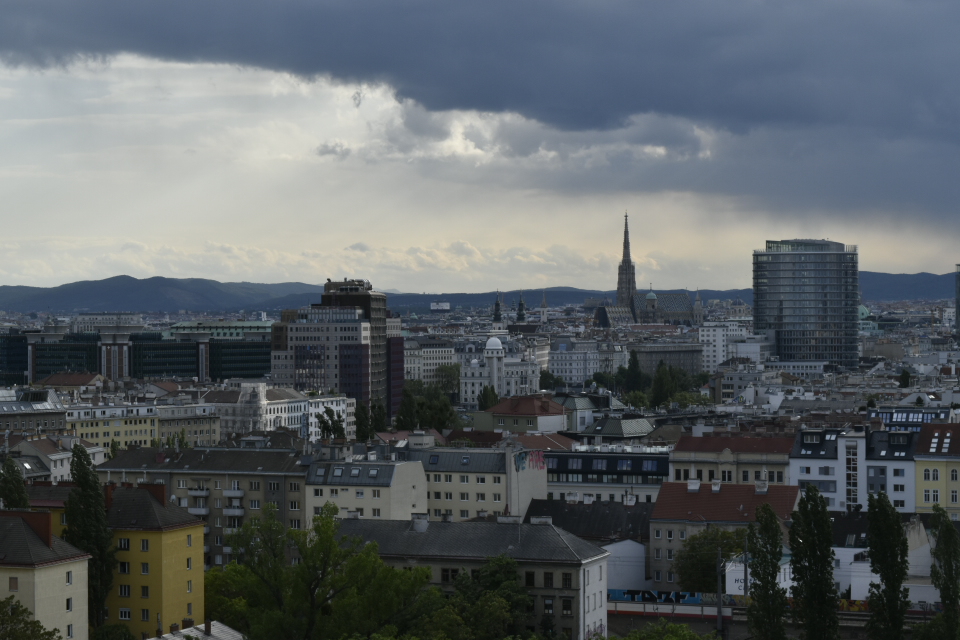
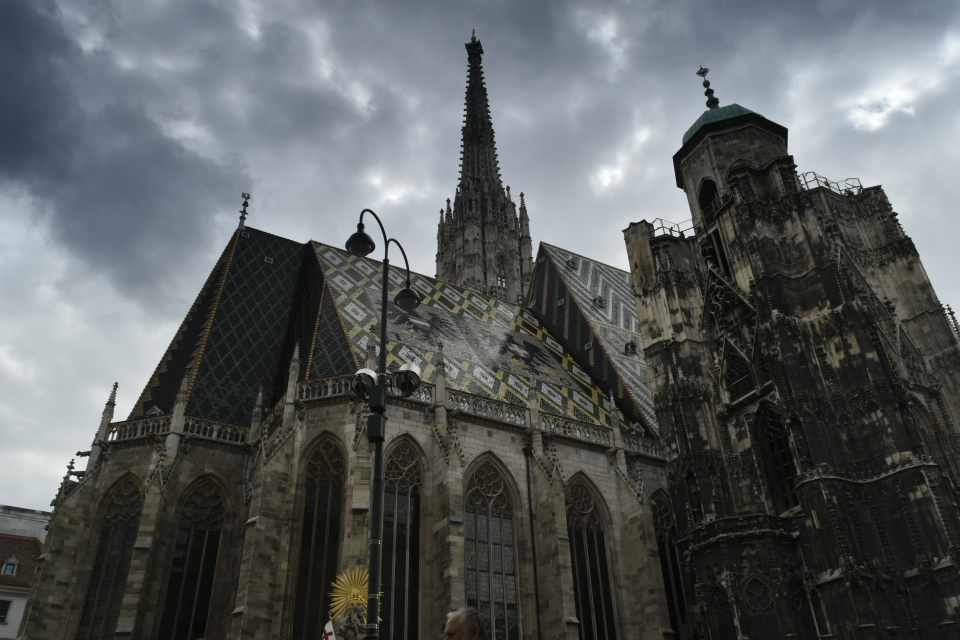
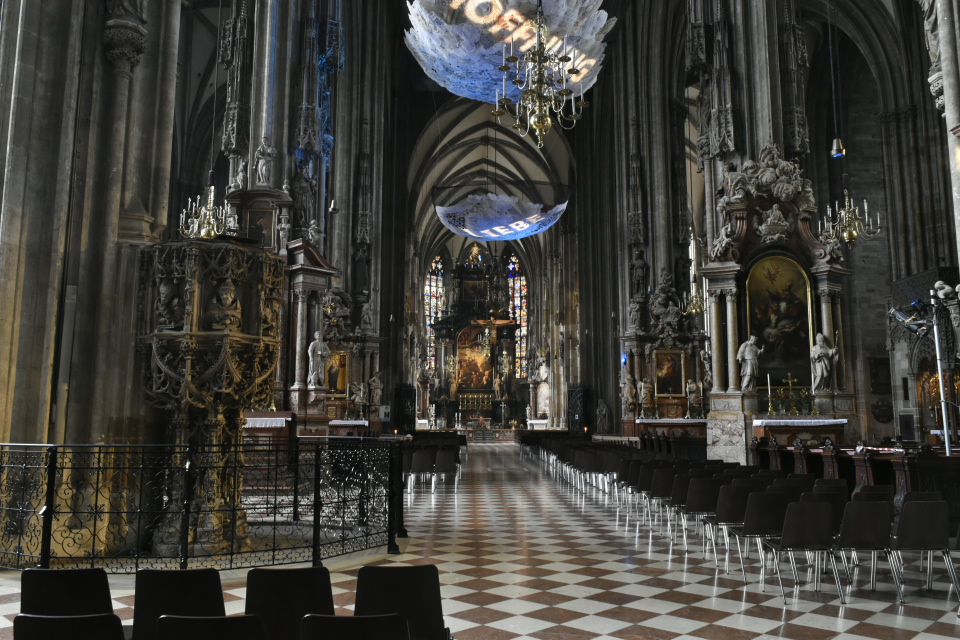
A view of St Peter’s dom, hiding the bits in scaffolding or not cleaned yet.

The Belvedere, we couldn’t quite get to the purpose of; it seems to have been basically a summer house, Hapsburg-style. Compared to many of Franz Joseph’s (later) creations, it is relatively unornate.

These fine fellows’ forefathers must’ve carved a lot of the fine stonework. No call for it today. Instead, they apply a superb level of craftsmanship to Vienna’s pavements (sidewalks). You could’ve played snooker on this patch, I swear they were polishing it. Nothing like Murphy’s “hit it with the back of a shovel’n’run”.

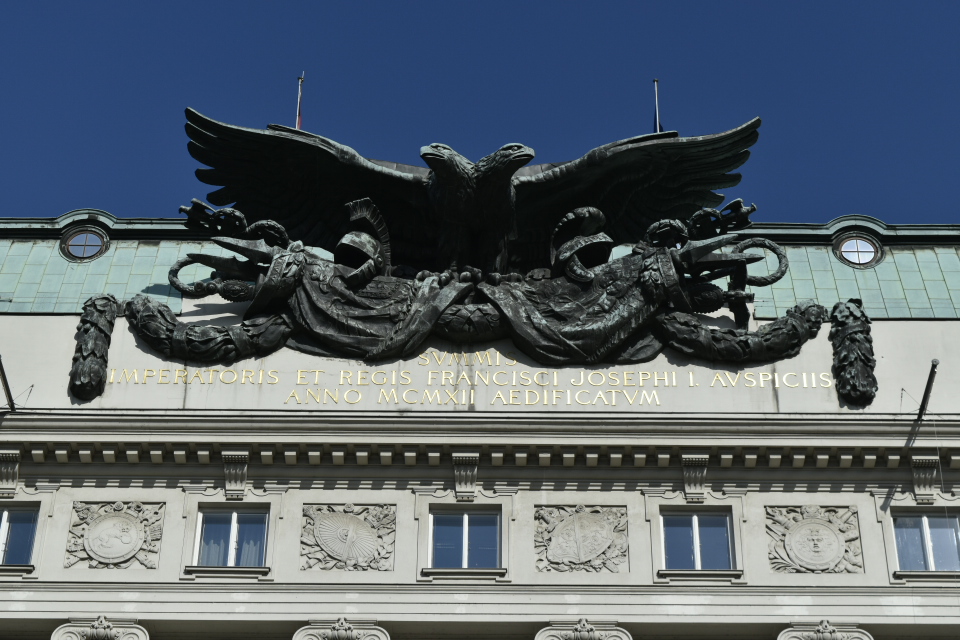
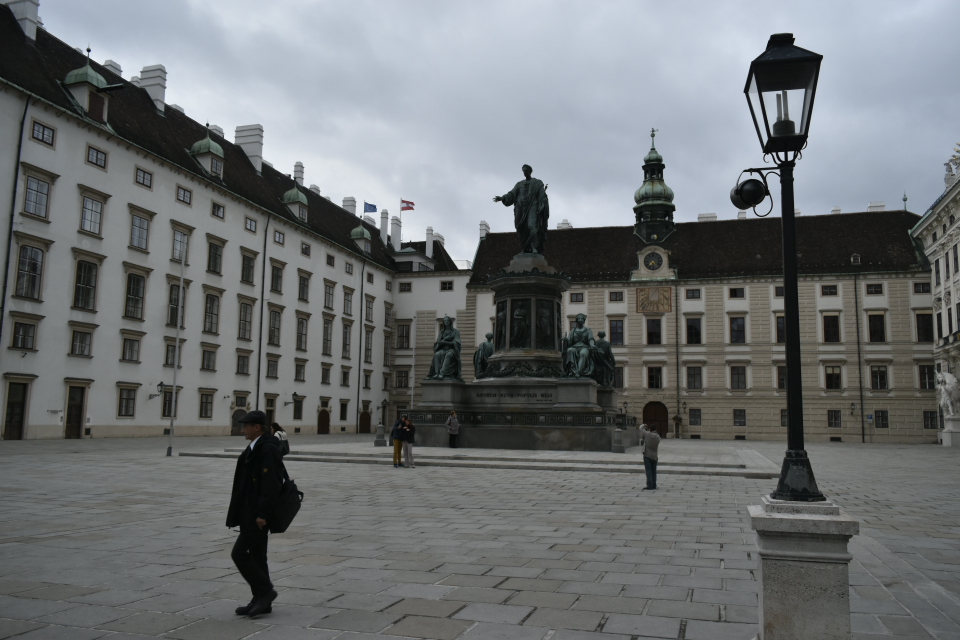
The Kaiser/Emperor was never going to take up cycle-touring. The court was often in travelling mode, but it wasn’t choosing titanium sporks. This is how they packed the candlesticks. Actually, the final decades of the Austro-Hungarian empire did coincide with the invention of bicycle and indeed cycle touring.

Vienna

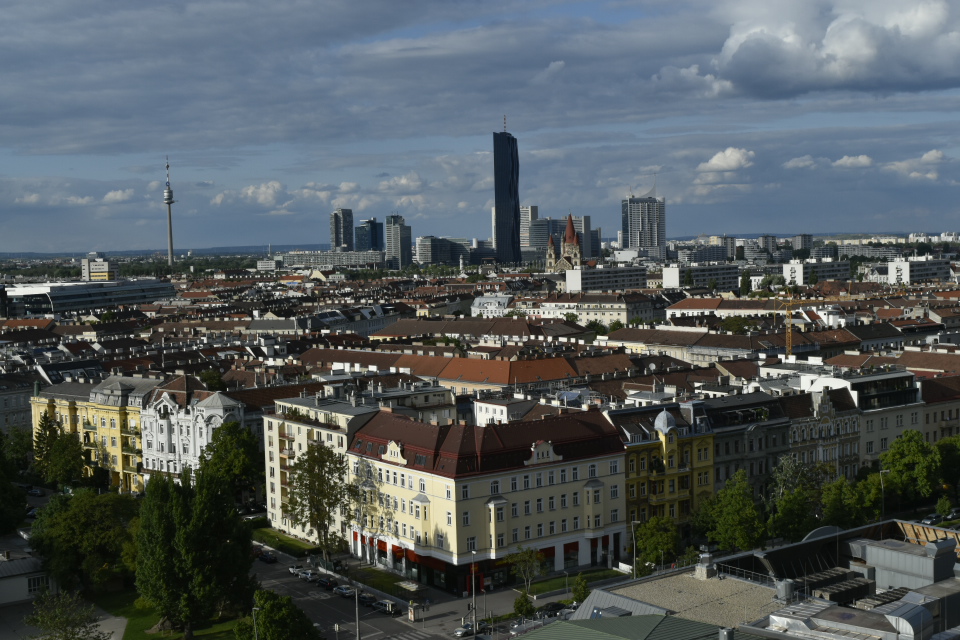
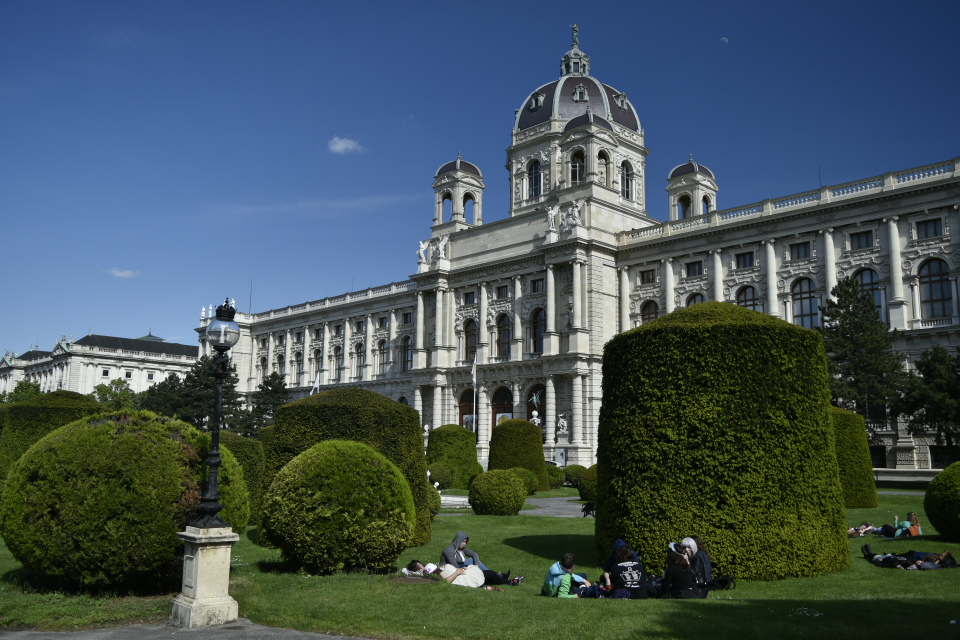
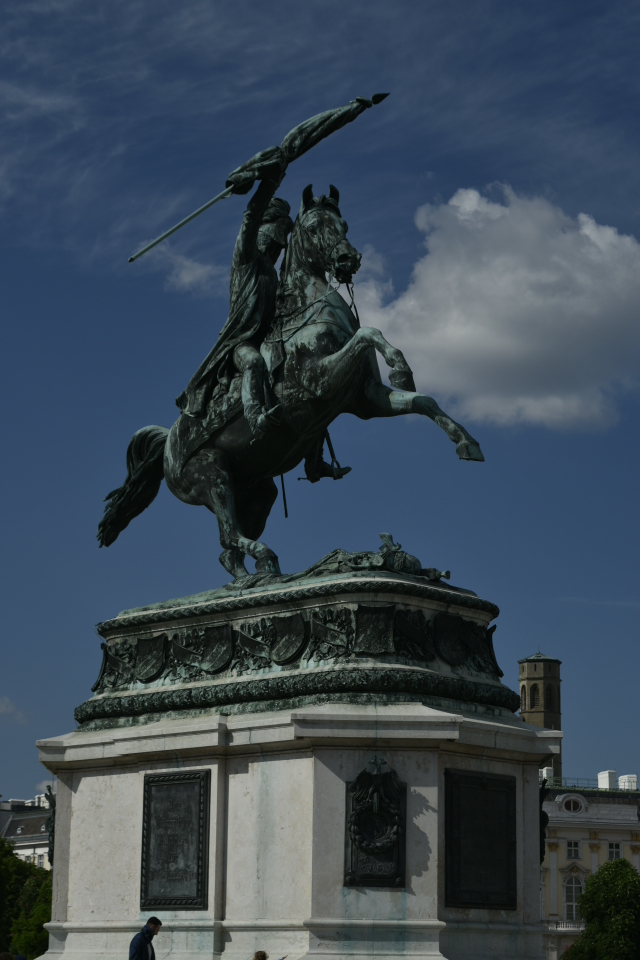
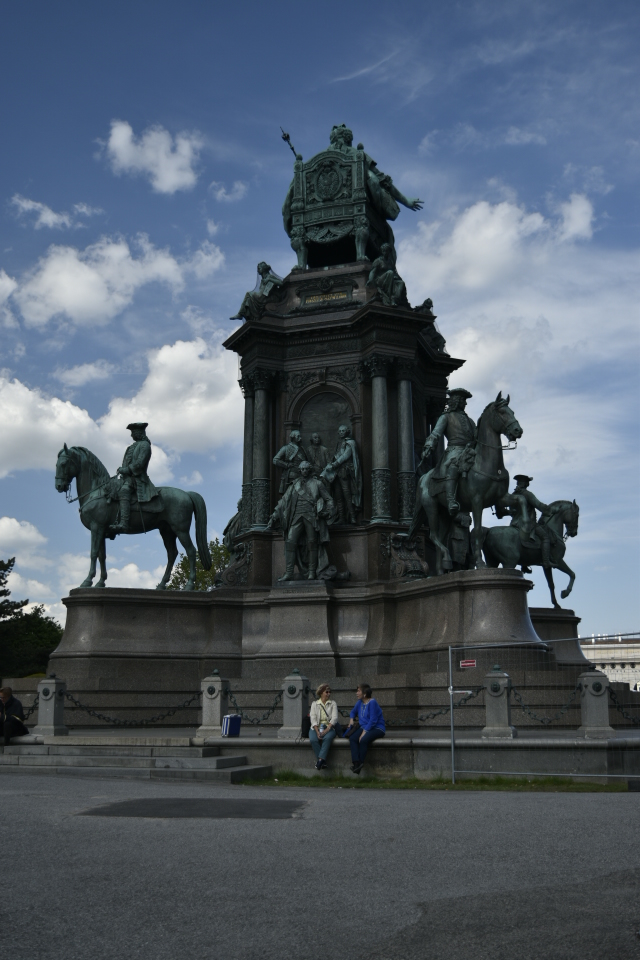
With a few days to wait we’re appreciating some of the many tourist atractions and fantastic architecture here in Vienna.

image

image

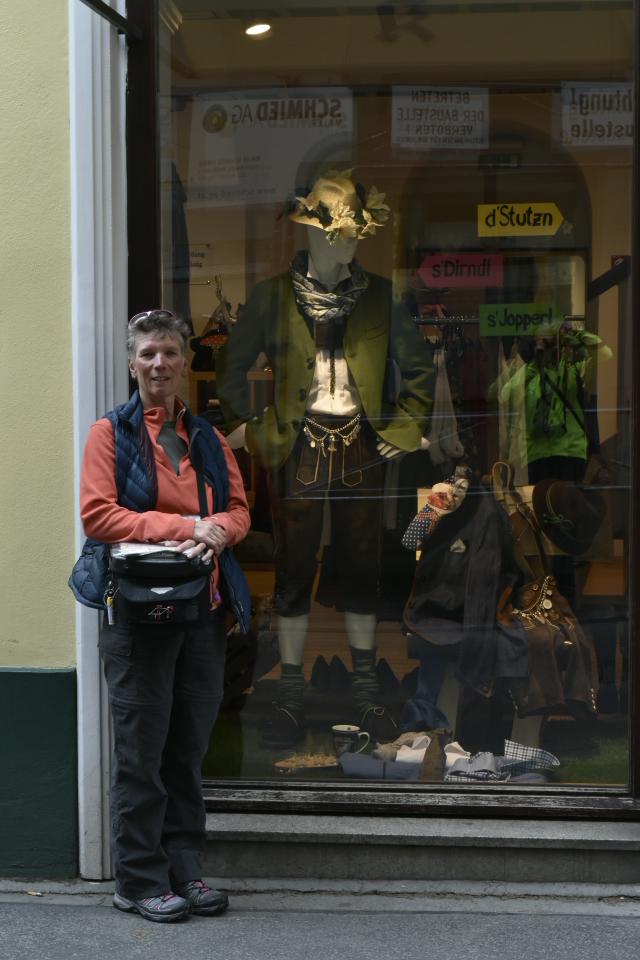
From the streets of Vienna.

image

image

image

image

image

This is our second day of sight seeing. Because Monday is a Bank Holiday we’ll have to do another one.

A Day In Vienna

image

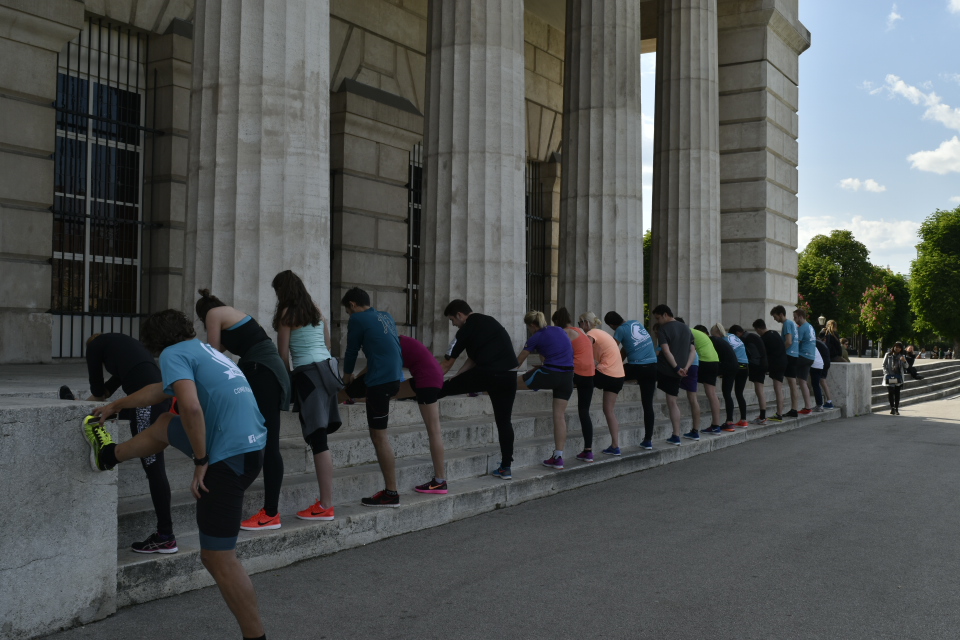
The Vienna running club limbering up.

image

We had always planned Vienna as a substantial stop, as all embassies are here. Then, in (I think) Deggendorf, we had the most wonderful bit of luck. Clare had got chatting with Monika, a solo cycletourer going the other way, aiming to reach the North Cape over three months. We were able to pass on a few tips about Norway (such as waterproof socks, value of; old post road, steepness of), and helped load maps.me onto Monika’s tablet, as we’d found it great for finding campsites, while not online, which she’d found an issue. Then Monika offered to let us use her flat in Vienna. Wow. Thanks Monika. Much nicer than a pension, and helps a lot with the budget. And helpful neighbours Helga and Andi let us in and set us up.

So: Friday: Get up and work out what to do. Revive visa research memories, and reread recent email from helpful David at Stantours. Started revising schedule based on current performance. Decide first priority is to get Uzbekistan visa. Check process (big form) and embassy opening hours: drat, it shuts at 12, in 30 minutes, no chance. Next opening is Wednesday. We’d better be ready…
Thus, into Vienna for sightseeing, bike repairs, and a few bits.

Bike shop #1, looks promising and quite different from German bike shops. A row of sleek racers fills the front, then MTBs, then utilities. The shop looks like it’s been here for decades, resembles an old fashioned chemist, with cabinets of wooden drawers and a counter. Few parts or glitzy clothing visible, though a glass case holds Campag Record kit, like jewellery. An old gent with fine moustaches comes to the counter, then fetches & presents a drawer containing Shimano dynamo hubs, 36 hole, with alternative axles. Usable at a pinch, but basic models, draggy, heavy and needing different spokes in the spares kit. We demur, and he suggests a few 100m up the street.

Bike shop #2, we hit lucky. It’s a more modern shop, but again, ungermanish, these urban Austrians clearly skip the utility jobs in favour of drop bars and carbon everything (Well, the utilities still fill the streets, but it is a workday). And the staff are expert conversationalists in English. And, bingo!, some of the stock bikes bear SP hubs. So, a new one is ordered, it seems we can get this job done in under a week, even with a bank holiday.

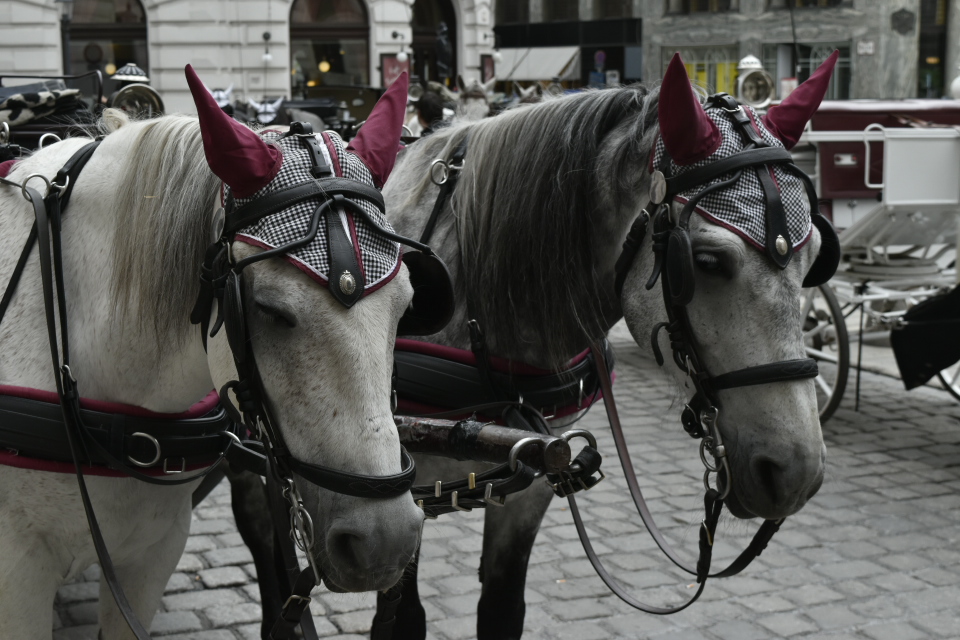
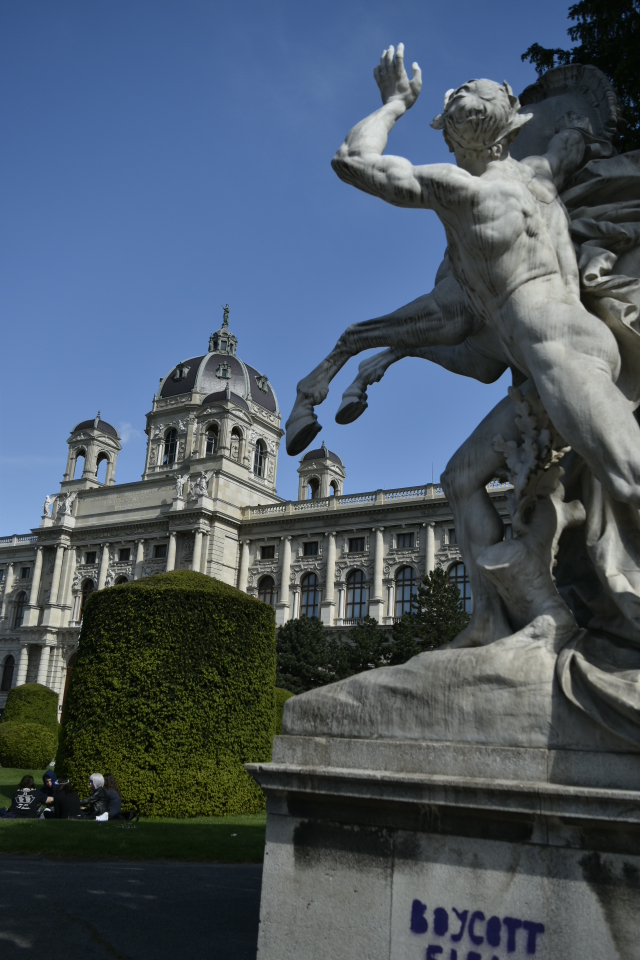
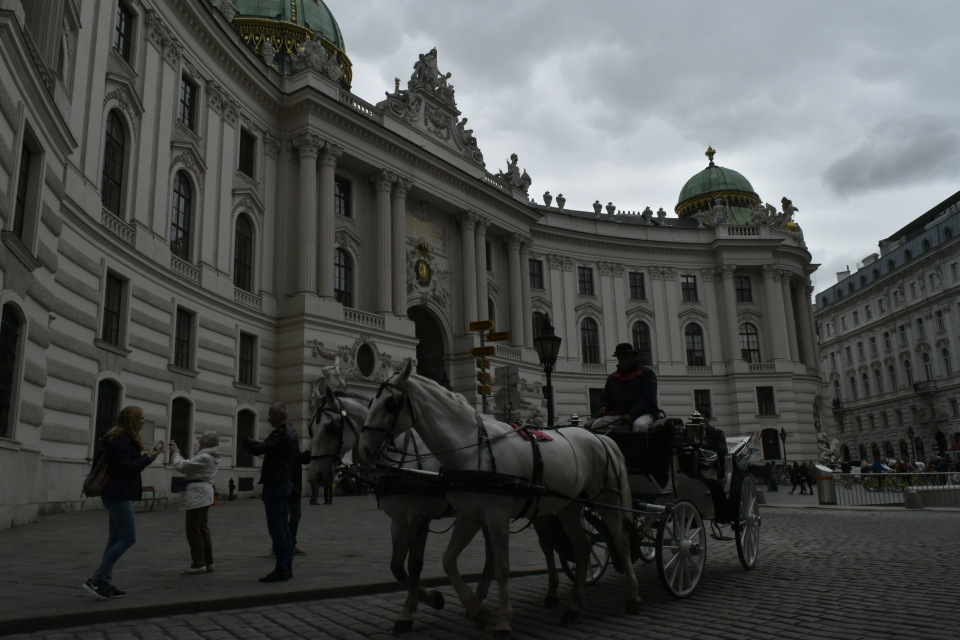
Then onwards, to the bookshop (maps & phrasebooks), and a few clothing refinements. And gawping at the huge array of spectacular buildings of the imperial past. And avoiding being run over by tram or elegant horse-drawn fiacre.

Now, curiously,  after all this frantic activity, we have an enforced long weekend of inactivity. Hmmm.

image

image

image

image

image

image

image

image

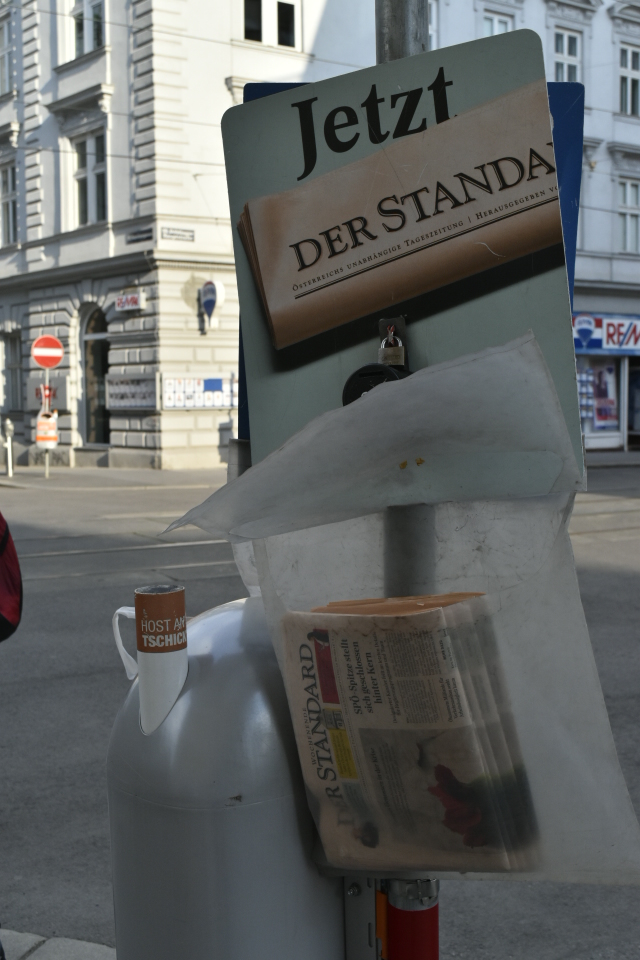
There are newspapers and some magazines for sale on street corners.

image